The menopause gap: why some women suffer more and get less care

Source: The Conversation – UK – By Dipa Kamdar, Senior Lecturer in Pharmacy Practice, Kingston University

Mama Belle and the kids/Shutterstock

Menopause is often described as “the change”, but for millions of women worldwide it is more than a biological milestone. It is a cultural, social and medical turning point. While most women experience menopause, their journeys are not the same. Ethnicity, culture and access to healthcare shape how symptoms are felt, understood and treated. These differences are rarely acknowledged, leaving many women invisible in public conversations about midlife health.

Menopause marks the end of reproductive years and is defined clinically as 12 months after the final menstrual period. Natural menopause usually occurs between the ages of 45 and 55, with the average age in the UK being 51. The transition that leads up to it, known as perimenopause, can last several years and is characterised by fluctuating hormone levels, particularly oestrogen.

Up to 80 percent of women develop symptoms linked to falling levels of oestrogen, progesterone and testosterone. Researchers have identified more than 40 possible symptoms. Because oestrogen acts on receptors throughout the body, its loss is associated with increased risks of long-term health issues such as osteoporosis, heart disease, diabetes and mood disorders.

Symptoms vary widely. Hot flushes, night sweats and sleep disturbances are common, as are mood changes, joint pain, vaginal dryness and reduced libido. Symptoms can last an average of seven years. Although these effects are widespread, their intensity and meaning differ across cultures. Research including the The Study of Women’s Health Across the Nation and further work by the British Menopause Society highlights notable variations in how menopause is experienced. There appear to be some differences in hormonal patterns across ethnic groups, although more research is needed to understand why symptoms differ.

Women of African and Caribbean descent tend to experience more severe and longer-lasting vasomotor symptoms, including hot flushes and night sweats. Sleep problems, mental health issues and weight gain are also reported more often. Cultural expectations and stigma can make open discussion difficult, leaving many women without appropriate support.

Women of South Asian descent (India, Pakistan and neighbouring regions) tend to reach menopause earlier, with average ages around 46 to 47 years compared with 51 in western populations. Earlier menopause increases the risk of long-term health conditions such as heart disease. South Asian women also report more urogenital symptoms, such as vaginal dryness, urinary issues and reduced libido. However, conversation about sexual health is often limited due to cultural norms.

Women of East Asian descent (China, Japan and others) often report fewer hot flushes but more musculoskeletal pain, forgetfulness and low libido. In many East Asian cultures, menopause is viewed as a natural stage of ageing, which reduces the likelihood of seeking medical support.

Women of White European heritage report vasomotor symptoms more frequently than East Asian women, but often with less intensity than those experienced by African and Caribbean women. Although access to healthcare is generally greater, inequalities still affect diagnosis and treatment.

Across many minority communities, social stigma and cultural silence remain significant barriers. In some cultures, menopause is associated with loss of femininity or fertility, discouraging women from discussing symptoms. In others it is viewed as a natural process that does not require medical input. Some women prefer natural approaches to symptom management, often due to cultural beliefs or limited trust in medical interventions.

Practical barriers make access to care even more difficult. Language barriers can prevent effective communication with clinicians. Health literacy gaps mean many women are unaware of options such as hormone replacement therapy (HRT). Educational materials often lack representation, with leaflets failing to depict women from diverse backgrounds. Many women report feeling dismissed when seeking help. Socioeconomic inequalities including lower income and limited access to healthcare further widen gaps in symptom management and long-term health outcomes. These issues are compounded by mistrust of the healthcare system, often rooted in historical and ongoing inequities.

For the first time, women aged 40 to 74 attending NHS health checks will now be asked about menopausal symptoms. By embedding menopause into routine checks, policymakers hope to normalise discussion, improve diagnosis and ensure that all women receive appropriate support. However, the benefits may not be evenly distributed. Evidence shows that some women from ethnically minoritised communities are less likely to access these health checks, particularly those who already face barriers to recognition and treatment. If uptake remains unequal, the policy may unintentionally reinforce disparities rather than address them. The challenge for the NHS will be to adapt outreach and service delivery so that menopause support reaches the women who need it most.

Addressing these inequalities requires culturally sensitive healthcare. Information needs to be available in multiple languages and formats, including clear explanations of symptoms, consequences and treatment options, both hormonal and non hormonal. Healthcare professionals must be trained to recognise cultural differences in how symptoms are described and interpreted. Women also need safe spaces to discuss their experiences without judgement.

Menopause is not only a phase of symptom management. It is a critical stage for long-term health. Menopause is universal, but its experience is not. Biological variation, cultural norms and systemic inequalities shape how women navigate this transition. Recognising these differences is essential for building equitable healthcare that supports all women, regardless of ethnicity or culture, through one of life’s most significant milestones.

The Conversation

Dipa Kamdar does not work for, consult, own shares in or receive funding from any company or organisation that would benefit from this article, and has disclosed no relevant affiliations beyond their academic appointment.

ref. The menopause gap: why some women suffer more and get less care – https://theconversation.com/the-menopause-gap-why-some-women-suffer-more-and-get-less-care-272753

The five best TV shows about the American revolution – recommended by a historian

Source: The Conversation – UK – By Stuart Salmon, Tutor in History, University of Stirling; University of Edinburgh

Any discussion of films and TV series about the American revolution has to start with a caveat. There have been historical movies for as long as there have been movies, but films and TV series about the great founding event of the US have been thin on the ground, certainly until the 21st century.

In 1917, an American director was even prosecuted for making Spirit of 76, a film about the revolution that criticised America’s new ally Great Britain. It wasn’t until 1985 that Hollywood tried a big budget retelling of the American revolution, with Revolution (1985).

Sadly the Al Pacino vehicle, while spectacular, had an incoherent storyline and was an unmistakable flop. It was another 15 years before Hollywood tried again with The Patriot (2000). The Patriot was more financially successful but arguably even less popular among the historical community (including myself).

Amid all these flops, however, a few gems emerged in a different medium – television. I’m a historian of the American revolution and these are my favourite ways the story has been told on TV.


Read more:
During World War I, a silent film spoke volumes about freedom of speech


1. Turn: Washington’s Spies (2014-17)

This four season AMC TV series stars Jamie Bell as patriot spy Abraham Woodhull, who was a leading figure George Washinton’s successful spy network, the Culper Ring. The series was based on the book Washington’s Spies by Alexander Rose (2006).

The series has 40 episodes, and each one is action packed. For me, it conjures up the secret war of the revolution brilliantly. The series explores some of the most intriguing characters of the war of independence, but most interesting for me was Ksenia Solo’s interpretation of Peggy Shippen, an American woman who spied for the British then married patriot hero Benedict Arnold and helped him defect to the British. This is a major plot line in the later seasons.

The trailer for Turn: Washington’s Spies.

The series’ main villain was British officer John Graves Simcoe (Samuel Roukin), whose historical counterpart was a very different character to the one portrayed in the series. His memoir is one of the key primary sources for the British experience of the war of independence. I have been lucky enough to read Simcoe’s handwritten copy.

2. John Adams (2008)

This wonderful HBO miniseries stars Paul Giamatti and Laura Linney as John and Abigail Adams, the power couple of the American revolution. The series is based on the book John Adams by David McCullough (2001). Linney and Giamatti both won Emmy awards for the show and brilliantly portray their complex but likeable characters.

The trailer for John Adams.

While John Adams is in the title, his wife Abigail has an equal role in the series. My favourite scene is where Abigail puts herself and her children in smallpox quarantine in revolutionary war Boston. This happened as shown and sheds light on the bizarre quarantine regime where people would sew small particles of smallpox spores into their skin and shut themselves away for at least two weeks in the hope of catching a lighter version of the disease but building immunity.

The series creates a great picture of two hugely influential figures in the American revolution and the history of the US. The couple arguably established many of the key features of the role of president and first lady. They wrote each other thousands of letters in their 54 year marriage but the most fascinating is Abigail’s letter to John on the eve of the Declaration of Independence (John played the key role in getting it passed by Congress). She urges John to “remember the ladies”. It is a hugely important early feminist document, which is now widely used as a teaching aid.

3. Franklin (2024)

This Apple TV+ miniseries is based on the book Dr Franklin Goes to France: How America Was Born in Monarchist Europe by Stacy Schiff (2005). It chronicles Benjamin Franklin’s attempts to get an alliance with France during the war of independence.

The trailer for Franklin.

Directed by Tim Van Patten and featuring a strong performance by Michael Douglas in the titular role the series covers some of the same historical ground as John Adams. Both Adams (played by Eddie Marsan) and Franklin spent much of the revolutionary war in Europe attempting to secure alliances with the European powers.

This series is very entertaining and gives a warts and all picture of Franklin as a septuagenarian. For an account of the young Franklin, his autobiography is well worth a read and it also gives a great picture of life in colonial Pennsylvania.

4. Liberty! The American Revolution (1997)

If there was just one film or TV series that inspired me to study, write about and teach the American revolution, it was this six-part documentary. It reached me at exactly the right time – about a year before I began my final year undergraduate course on the American revolution.

The first part of Liberty! The American Revolution.

The series contains contributions from some of the key historians of the American revolution, such as Pauline Maier, Gordon Wood and Bernard Bailyn. It also has readings of the words of participants on both sides of the American revolution by actors including a pre-fame Phillip Seymour Hoffman. The wide-ranging coverage spawned an excellent tie-in book.

While it did not neglect to show the diversity of the American revolution, more attention could have been paid the contributions of women, African Americans and Indigenous Americans. Historian Gary Nash’s book the Unknown American Revolution (2005) was one of key works in recognising this diversity. There have been other documentaries on the American revolution but it was this one which shaped the course of my career in history.

5. Hamilton (2021)

While technically a televised stage show (available to watch on Disney+), Hamilton is undoubtedly the most popular work of media with an American revolutionary theme. Drawing on Ron Chernow’s biography of the first US treasury secretary Alexander Hamilton, Lin Manuel Miranda’s hip-hop musical tells the tale of it’s eponymous founding father with amazing energy and humour.

The trailer for Hamilton.

I have been intrigued by the musical’s anti-hero/villain Aaron Burr since reading Gore Vidal’s novel Burr (1973) as a teenager and Leslie Odom Jr. does a wonderful job at bringing across the conflicted third vice president. Jonathan Groff, meanwhile, nearly steals the whole film as George III, despite only appearing for a few minutes.

The film covers the years 1776 to 1804 without seeming to miss many momentous events. While the best way to see Hamilton is live, until there is a big-budget film adaptation this is only way to enjoy the show with the original Broadway cast. Historically, it takes some liberties – Hamilton was not as enlightened on slavery as the musical suggests for example – but it gives a wonderful impression of the revolutionary era.

Do you have a favourite television show about the American Revolution that didn’t make our list? Let us know in the comments below.


Looking for something good? Cut through the noise with a carefully curated selection of the latest releases, live events and exhibitions, straight to your inbox every fortnight, on Fridays. Sign up here.


The Conversation

Stuart Salmon is affiliated with Universities and Colleges Union (UCU).

ref. The five best TV shows about the American revolution – recommended by a historian – https://theconversation.com/the-five-best-tv-shows-about-the-american-revolution-recommended-by-a-historian-270612

What the US strike on Venezuela could mean for global oil prices

Source: The Conversation – UK – By Adi Imsirovic, Lecturer in Energy Systems, University of Oxford

Venezuela’s state-owned PDVSA has been used as a cash cow by Maduro. JBula_62/Shutterstock

The capture of former Venezuelan president Nicolás Maduro by the US intelligence services and armed forces has resulted in a frenzy of speculation about its consequences. But there is no doubt that the events were closely linked to the oil riches of the country. While the political situation in Venezuela remains fluid, there is far more certainty about its position as an oil producer.

For a start, Venezuela has one of the highest proven oil reserves in the world. The number frequently thrown around is 300 billion barrels, more than any other country, including Saudi Arabia.

But it’s important to be cautious about the numbers coming from the outside of the Organisation for Economic Cooperation and Development (OECD). Statistics used within the OECD clearly distinguish between proved, probable, possible and contingent reserves and require consistency over time.

Proven reserves are defined as the oil in the ground that can be extracted economically, with the prevailing technology. It is a variable, not a constant – and the Venezuelan reserves estimate goes back to 2008.

As oil prices increase, the reserves increase too. This is because higher profits can justify the higher costs of extracting additional oil that would otherwise remain in the ground.

Initial production is usually easy due to the natural gas pressure of the well. Over time, this pressure falls and additional measures such as gas and water injection may have to be used – and these are expensive.

In 2008, the international oil prices approached US$140 (£104) a barrel. Currently, most of the Venezuelan oil sells at a US$25 discount to the Brent benchmark, at around US$35 a barrel. All other things being equal, the current proven oil reserves may be well below 100 billion barrels – less than a third of the figure that’s frequently cited.

The problem with Venezuela’s oil

Most Venezuelan oil is very heavy (tar-like) and contains a lot of sulphur. This makes production and transportation very expensive. Heavy oil needs to be diluted with naphtha (a liquid hydrocarbon) or gas oil first, and sulphur must be removed during the processing with expensive hydrogen.

Only very sophisticated refineries on the US Gulf Coast and some new refineries in India, the Middle East and China can process this kind of oil. It is no coincidence that Venezuelan oil is sold at huge discounts relative to other grades.

American oil companies started their activities in Venezuela almost a century ago, and by 1960s, the US was the largest foreign investor in the country. In line with most countries in the Organization of the Petroleum Exporting Countries (Opec), the Venezuelan oil industry was nationalised in 1971 and turned into the country’s oil monopoly, Petróleos de Venezuela SA (PDVSA).

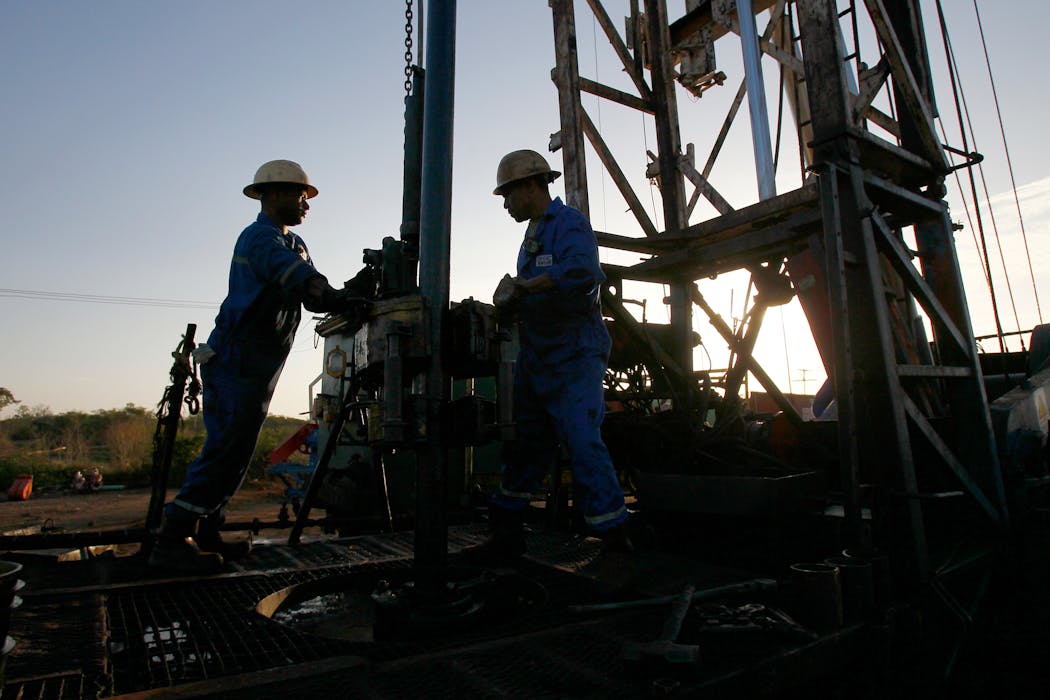
The Venezuelan oil industry then suffered from decades of political mismanagement, purges and US sanctions. Due to the lack of investment, production in the country has fallen from over three million barrels a day (mbd) in the early 2000s to below one mbd last year (see the graph below). This decline was particularly noticeable during the Maduro regime when the ruling party used PDVSA as a cash cow, investing little or nothing back into the industry.


Read more:
What does international law tell us about the US seizure of an oil tanker off the coast of Venezuela?


Due to the state of the oil sector, even a relatively small increase in oil production in Venezuela would require billions of dollars of investment. A significant increase would require years of massive funding – even with a stable political environment.

It is not clear that events in Venezuela will have any significant immediate impact on the global oil market. The initial reaction was for the oil price to fall. But the global oil market is oversupplied right now and even the total loss of Venezuelan exports (which is unlikely) would have only a minor impact on the prices.

The decline of Venezuelan oil production:

In the long term, the state of the industry can only improve (barring wars and civil strife). Additional barrels from Venezuela would only make life harder for Opec and other producers by making the oversupply worse. Indeed, oil prices tumbled again after US President Donald Trump vowed to seize up to 50 million barrels of Venezuelan oil.

Claims that the events would hurt China seem overblown. China (together with India) has been a major buyer of Venezuelan oil, but it represented no more than 5% of the volume of Chinese imports. Canada is another producer of heavy oil, and it has been shifting its exports from the US to China for some time. This trend is likely to continue.

Overall, there is little economic rationale for a “takeover” of the Venezuelan oil industry. If the US wanted Venezuelan oil, it could simply have lifted the sanctions imposed by Trump in 2019 and let their oil companies buy it, like everyone else.

It is the long-term political consequences of this legally dubious US action that are worrying the oil market. President Trump appears to have a growing appetite for military adventure which may include further attacks on Iran, a major oil-producing nation and a member of Opec.

Nobody is quite sure what Trump may do next, and the US action may also be used to legitimise Russia’s invasion of Ukraine. This had already rattled energy markets. The last thing the oil market needs right now is more uncertainty.

The Conversation

Adi Imsirovic does not work for, consult, own shares in or receive funding from any company or organisation that would benefit from this article, and has disclosed no relevant affiliations beyond their academic appointment.

ref. What the US strike on Venezuela could mean for global oil prices – https://theconversation.com/what-the-us-strike-on-venezuela-could-mean-for-global-oil-prices-272858

‘Metamaterials’ could transform our lives – and sports equipment is at the vanguard

Source: The Conversation – UK – By Thomas Allen, Senior Lecturer, Department of Engineering, Manchester Metropolitan University

Metamaterials – artificially made materials with properties that aren’t found in the natural world – are poised to transform daily life. Their unique properties are enhancing products from sporting goods to consumer electronics and beyond.

As a sports engineer and the person leading on health applications within the UKRI-funded UK Metamaterials Network, I have unique insights into how metamaterials are enhancing sporting goods.

Specifically, they are helping to make sport and exercise more accessible, inclusive, and safer.

Metamaterials are made with meta-atoms (Figure 1). These building blocks have a specific geometry that has been engineered to allow the material to perform specific functions and have particular properties. Their functions may be related to acoustics, chemistry, electromagnetism, magnetism, or the material’s mechanical properties.

Metamaterials and sport

Metamaterials sit between products and materials. They are not materials in the traditional sense because their design is intrinsically linked to that of the product they are used within to enhance performance.

The rapid-uptake, multibillion dollar sporting goods sector has relatively low barriers to market entry, making it an ideal space for testing new and emerging technologies.

As a result, it has been an early adopter of metamaterials, particularly mechanical metamaterials (Figure 2), as described in an Institution of Mechanical Engineers report on sports engineering.

Auxetic metamaterials have been widely explored and adopted within sporting goods. Auxetic behaviour is an example of a “negative property”, achievable with metamaterials (Figure 3). Materials with negative properties behave in the opposite way to conventional expectations. When we stretch a conventional material lengthwise, its cross section will contract.

Auxetic metamaterials behave in the opposite way, with their cross section expanding when we stretch them lengthwise. This unusual and counterintuitive behaviour can improve the performance of sporting goods. The property is described by something called Poisson’s ratio, which is a measure of the deformation in a material in response to the direction of loading (force).

Auxetic metamaterials can improve comfort, fit, and impact protection in products such as body protection and helmets. They exhibit synclastic curvature, meaning they form a “dome shape” when bent, which may improve the fit of helmets and knee pads, for example.

Their enhanced indentation resistance allows for more flexible body protection that can still protect against concentrated loads, such as from impacts with rocks and studs. Auxetics can also control unwanted vibrations, which is useful in equipment like bats, bikes, rackets, skis, and snowboards. Other examples of sporting goods featuring mechanical metamaterial geometries include airless basketballs, bike saddles, and footwear.

The potential for metamaterials extends beyond traditional sporting goods. They could help people with disabilities and injuries to play sport and exercise. Potential applications span braces, prosthetics, orthotics, and rehabilitation devices. Because such items are typically classed as medical devices, they are subject to more stringent regulations than sporting goods, posing challenges for the uptake of metamaterials.

Other types of metamaterials besides mechanical could bring benefits to the sport and exercise sector. This includes metamaterial-enhanced products that could actively adapt their properties to fit the movement pattern, shape, and size of the user. For these reasons, metamaterials have the potential to make sport and exercise products more inclusive for a diverse range of users.

Metamaterial research in the UK

Metamaterials are engineered to have extraordinary properties that make products smaller, lighter, simpler, and more powerful. On December 1, 2025, the Institution of Mechanical Engineers published a policy report on unlocking the potential of metamaterials. The report was produced in partnership with our UK Metamaterials Network. It offers a perspective on how we can harness metamaterials to drive innovation, strengthen industry and address global challenges.

That said, several challenges must be addressed for their full potential to be realised. First, the UK must continue doing fundamental research to remain globally competitive in this field. Second, adoption by industry is slow, highlighting the need to bridge research and commercialisation.

Third, metamaterial prototypes are often made using methods that are not well-suited for mass production, limiting their potential to be scaled up. Fourth, a skilled workforce is needed to develop and deploy these technologies effectively. Raising awareness, establishing shared definitions, and testing products featuring metamaterials against agreed standards are critical to drive adoption and foster public trust.

Challenges of metamaterials in sport

Appropriate standards and regulations in sport help designers, increase consumer confidence in products, and support international trade. Sports products must often comply with safety standards and rules set by sports governing bodies. There may even be value in having specific standards for metamaterials, offering unified definitions and test frameworks.

Manufacturing presents another challenge. Metamaterials used within sporting goods are typically made using established methods like 3D printing, machining, and injection moulding. Because the enhanced properties of metamaterials often rely on complex geometric arrangements, they can be costly and slow to mass produce. This highlights a need for efficient manufacturing methods.

Despite these challenges, metamaterials are becoming increasingly common in sporting goods. I have only highlighted a few in this article, but I would imagine that they will become even more commonplace in the future. Being able to tailor unique material properties to their function, as well as making them suited to specific individuals, makes metamaterials a powerful tool for sports engineers.

This is a really exciting time for metamaterials in the UK, and in the sports engineering sector, specifically. I am looking forward to seeing this specialised technology continue to make sport and exercise more accessible, inclusive, and safer.

The Conversation

Thomas Allen receives funding from the Engineering and Physical Sciences Research Council (EPSRC) as a co-investigator of the UK Metamaterials Network. He worked with HEAD Sport GmbH on auxetic composites for rackets and supervises a PhD student funded by Rheon Labs Ltd. He was an author of the IMechE reports on metamaterials and sports engineering.

ref. ‘Metamaterials’ could transform our lives – and sports equipment is at the vanguard – https://theconversation.com/metamaterials-could-transform-our-lives-and-sports-equipment-is-at-the-vanguard-270840

How worried should we be that political leaders keep making oblique Nazi references?

Source: The Conversation – UK – By David L Collinson, Distinguished Professor of Leadership and Organisation, Lancaster University

Several high-profile political leaders have in recent months been seen apparently dabbling in Nazi allusions. In many cases, dog whistle messages send oblique signals to supporters. These are pitched at a frequency that most listeners can’t hear but are meaningful to those seeking confirmation of their own views.

When challenged, the people using these tactics often respond with strong and furious rebuttals. After emphasising their shock that they would be associated with Nazi imagery or ideas, they typically go on the offensive. They express indignation and moral outrage. Then, they demand an apology.

These hostile counterattacks often place their critics on the defensive. If the allusion to the Nazis becomes too obvious to deny, perpetrators typically claim they weren’t aware of the historical association and insist it was all an innocent mistake.

This is the dog whistle playbook: strategic ambiguity followed by belligerent counterattack, and then, if needed, plausible deniability.

Of the many recent cases of Nazi allusions, Elon Musk’s straight-arm salute – a gesture he performed twice at a rally celebrating Donald Trump’s second inauguration – is one of the most notorious.

Far from denying he’d made the gestures, Musk went on the attack dismissing criticisms as “pure propaganda”. He argued that critics in the Democratic party were conducting “ideological witchhunts” and needed “better dirty tricks” because Adolf Hitler references are “sooo tired”. Musk also made a series of Nazi-themed puns on social media.

One month later, Steve Bannon, Donald Trump’s one-time chief strategist and key figure in the Maga movement, also made a straight-arm salute at the conservative political action conference. Unlike Musk, Bannon denied any Nazi intent, describing the gesture as a “wave”. While Bannon was able to insist this wasn’t a Nazi salute, his critics’ outrage might have helped send a signal to Nazi sympathisers, reinforcing their loyalty and support.

Within the space of a few weeks in 2025, two senior figures in the Maga movement had been engulfed in controversies surrounding alleged Nazi salutes. For years, Trump has flirted with Nazi imagery, given comfort and even pardons to far-right extremists and been reluctant to criticise white supremacists. In November 2025 Trump reposted an AI-generated image of himself in front of what looked a lot like a Nazi eagle emblem (but without the swastika).

He has called political opponents “vermin” and argued that immigrants are “poisoning the blood of our country”. These words are associated with Hitler. Trump has also been quoted as saying “Hitler did some good things” and for asking US generals to be more like those of the Third Reich.

The dictator’s playbook

In Germany, dog whistles are a particularly sinister aspect of far-right politics, communicating coded signals that appear to convey a secret admiration for the Nazis. Such messages are often innocent enough to pass over the heads of the masses, yet iconic enough to resonate with others.

In 2024 Björn Höcke, one of the leading figures of the Alternative for Germany (AfD) party, was found guilty of knowingly using a Nazi slogan “Alles für Deutschland” at a rally. This slogan is forbidden under German law. It was the central slogan of the SA or Storm Troopers, Hitler’s paramilitary group from the Weimar years. Höcke insisted he was innocent because he was unaware of the Nazi links.

And if we reexamine Hitler’s own playbook, his speech to workers at the Siemens Dynamo Works factory in November 1933 never mentioned the word “Jews”. When Hitler talked of a “small rootless international clique” his supporters knew exactly to whom he was referring. Once Hitler had consolidated the power of the Nazis, this gave them, and many others, permission to vilify and scapegoat Jews more explicitly. In effect, the permission-giving facilitated the incremental usurpation of power.

While substantial differences clearly exist between the Third Reich and contemporary politics, there also seem to be disturbing overlaps. Rather than ensuring their messages could never be confused with Nazi references, some leaders seem comfortable using dog whistle signals and strategic ambiguity, hostile counterattacks and plausible deniability.

Some Nazi allusions might be viewed as innocent mistakes or as historical accident but their continued prevalence is starting to look like more than a coincidence.

The Conversation

The authors do not work for, consult, own shares in or receive funding from any company or organisation that would benefit from this article, and have disclosed no relevant affiliations beyond their academic appointment.

ref. How worried should we be that political leaders keep making oblique Nazi references? – https://theconversation.com/how-worried-should-we-be-that-political-leaders-keep-making-oblique-nazi-references-271893

Climate education proposals will prepare young people in England for changing careers and society

Source: The Conversation – UK – By Andrew Charlton-Perez, Head of School of Mathematical, Physical and Computational Sciences and Professor of Meteorology, University of Reading

PeopleImages/Shutterstock

The review of the national curriculum and assessment in England has proposed three big sets of changes for climate education.

First, to prepare learners for a changing world, it suggests that climate education should be one of five big “applied knowledge areas”: key points of focus that cut across all subject disciplines within the curriculum.

Second, as part of making citizenship teaching compulsory for all key stages, it proposes that age-appropriate climate education should be part of primary teaching. Third, it proposes that climate education is expanded and modernised within specific subjects: geography, science and design and technology.

If implemented together, these changes would bring education in England closer to the comprehensive coverage of climate, sustainability and nature that many people in the sector, including ourselves, have long recommended. It would begin to align education in England with countries around the world, such as Lebanon and Argentina that are seeking to bring climate education into their curricula. Young people have also long been clear about their ambitions for climate education.

The review focuses on the school curriculum. But its effects would extend across the whole education system. What is taught in schools shapes the knowledge, skills and expectations that young people bring into further and higher education. The review will influence qualification design, teacher training and school inspection priorities.

The response to the review has, however, been mixed. Laura Trott, shadow education secretary, has said that “forcing primary schools to use precious time to teach deprived pupils about media literacy and climate change before ensuring that they can read, write and add up is not going to encourage social mobility”.

At the other end of the spectrum, the Climate Majority Project expressed disappointment that the review framed climate as a technical or economic issue, “rather than the all-encompassing context shaping every young person’s future”.

Jobs for the future

The backdrop to the review’s proposals is the accelerating green transition and its impact on UK jobs and growth. Without improved climate education, school leavers in the UK are likely to remain at a significant disadvantage compared with their international peers.

In some countries, such as Sweden and Italy, education for sustainable development is a universal entitlement, meaning they’re better suited for the jobs of the green transition.

The case for climate education goes much further. It’s about preparing young people for the world they already inhabit: one increasingly shaped by climate change, biodiversity loss and limited resources. High-quality climate education helps learners make sense of these realities. It allows them to build critical thinking and problem-solving skills. Importantly, they can connect their learning to real-world purpose.

Children on field trip outdoors
Climate education helps young people understand the world they already live in.
NITINAI THABTHONG/Shutterstock

And far from detracting from core learning or social mobility, climate education deepens both. Global benchmarking systems such as Pisa, which compares education worldwide, increasingly recognise environmental literacy as an indicator of quality education.

The UK’s independent Climate Change Committee, which advises government on how to adapt and prepare for climate change as well as holding them accountable, has warned of the dangers of skills shortages. A lack of climate-related skills, the committee claims, are already constraining the country’s ability to prepare for and respond to climate change impacts. These include extreme weather, heatwaves and flooding.

Ensuring that all young people develop strong climate and nature literacy will therefore be essential for both personal resilience and national prosperity. This matters for every learner, regardless of whether they enter an explicitly “green” profession. All jobs and sectors will need to adapt.

There’s work to be done, though, in making the recommended changes a reality in schools. Luckily, there is already a substantial body of work showing how the curriculum could be changed.

Student campaign organisation Teach the Future has carried out a project that systematically reviews the existing English national curriculum. It suggests precise edits to embed climate and ecological education throughout. Sustainability, climate science and ecological justice are integrated into existing subjects, rather than treated as optional extras.

Alongside that sits the curriculum for climate literacy developed by the Royal Meteorological Society. University College London has also put together a detailed policy proposal. Together, these documents provide a robust foundation for the teams appointed to draft the new curriculum.

Curriculum change is much more than a framework for particular subjects. These changes will only make a genuine difference to learners, schools and society when every teacher has access to high-quality professional development and teaching resources. Consistent sector-wide standards should ensure that all young people benefit.

The curriculum review gives the education system in England a clear opportunity. Climate should be part of a high-quality education system.

The Conversation

Andrew Charlton-Perez receives funding from the Department for Education. He is affiliated, in a personal capacity, with the Labour party as a member and campaigner.

Charlotte works for the Environmental Association for Universities and Colleges (EAUC), who are recipients of Department for Education funding to support the delivery of the Climate Ambassadors project. In a personal rather than professional capacity, she is affiliated with the Green Party.

ref. Climate education proposals will prepare young people in England for changing careers and society – https://theconversation.com/climate-education-proposals-will-prepare-young-people-in-england-for-changing-careers-and-society-270733

A speeding clock could solve Darwin’s mystery of gaps in animal fossil records

Source: The Conversation – UK – By Max Telford, Jodrell Professor of Zoology and Comparative Anatomy, UCL

Trilobites were among the first complex animals. Couperfield/Shutterstock

The oldest fossilised remains of complex animals appear suddenly in the fossil record, and as if from nowhere, in rocks that are 538 million years old.

The very oldest of these are simple fossilised marks (called Treptichnus) made by something worm-like with a head and a tail. A host of other animals appear rapidly, ancestors of the diverse animal groups we know today: ancient crab-like arthropods, shelled molluscs and the forebears of starfish and sea urchins.

The rapid arrival of animals so different to each other (and their absence in even slightly older rocks) was a headache for Charles Darwin because it seemed to go against his idea of gradual evolution – and it has confused scientists ever since. However, a recent paper may provide a solution.

In 1859, Darwin wrote in On the Origin of Species: “If my theory be true … during these vast … periods of time, the world swarmed with living creatures. To the question why we do not find records of these vast primordial periods, I can give no satisfactory answer.”

Today, scientists are in disagreement about when these ancient animals evolved. The problem stems from a late 20th-century invention called the molecular
clock
.

As I explain in my book the Tree of Life, the molecular clock relies on the idea that changes to genes accumulate steadily, like the regular ticks of a grandfather clock. If this idea holds true then simply counting the number of genetic differences between any two animals will let us calculate how distantly related they are – how old their shared ancestor is.

For example, humans and chimpanzees separated 6 million years ago. Let’s say that one chimpanzee gene shows six genetic differences from its human counterpart. As long as the ticks of the molecular clock are regular, this would tell us that one genetic difference between two species corresponds to one million years.

The molecular clock should allow us to place evolutionary events in geological time right across the tree of life.

When zoologists first used molecular clocks in this way, they came to the
extraordinary conclusion that the ancestor of all complex animals lived as long as
1.2 billion years ago. Subsequent improvements now give much more sensible estimates for the age of the animal ancestor at around 570 million years old. But this is still roughly 30 million years older than the first fossils.

This 30-million-year-long gap is actually rather helpful to Darwin. It means that there was plenty of time for the ancestor of complex animals to evolve, unhurriedly splitting to make new species which natural selection could gradually transform into forms as distinct as fish, crabs, snails and starfish.

The problem is that this ancient date leaves us with the idea that a host of ancient animals must have swum, slithered and crawled through these ancient seas for 30 million years without leaving a single fossil. Researchers expect gaps in the fossil record but this one would be a whopper.

Red starfish under water.
Starfish evolved their shape hundreds of millions of years ago.
Rich Carey/Shutterstock

A popular explanation for the missing fossils is that, for 30 million years, complex animals were tiny and squishy and so hard to fossilise. And then, around 540 million years ago, so the theory goes, these tiny animals began to grow larger, perhaps due to increasing oxygen levels. It is this increase in size that some scientists have used to explain the sudden appearance of complex animals in the fossil record.

The new paper by palaeontologist Graham Budd and mathematician Richard Mann gives a different explanation for the chasm between the ancient ancestor predicted by the molecular clock, and the more sudden, later appearance of complex fossils. Budd and Mann suggest that the molecular clock may not tick quite as regularly as we thought.

The new idea is that the moment that any big group of organisms first appears, evolution speeds up.

To return to our example, for a period of a few million years our imaginary clock could have ticked not once per million years but twice. A faster ticking clock would make it appear as if more time was passing, like pressing fast forward on a video, and this would push the age of the animal ancestor further back into the past.

Faster changing genes would also allow the animals’ appearance to change more quickly. This solves Darwin’s dilemma as it would make it easier for the various branches of the animal tree to become different from each other. The first animal ancestor could quickly diversify into vertebrates, molluscs, arthropods and starfish.

The overall effect of the new idea is to bring the age of the ancestor of complex animals much more in line with the appearance in the fossil record of its immediate descendants.

While the speeding clock idea needs testing, it could explain other mismatches between molecular clocks and fossil record. Perhaps the first flowering plants really existed for tens of millions of years before finally leaving a fossil. And it could help settle scientific debates about whether early primates, carnivores and rodents really lived alongside the last dinosaurs.

For the origins of the animals at least, I feel sure that Darwin would approve.

This article features references to books that have been included for editorial reasons, and may contain links to bookshop.org. If you click on one of the links and go on to buy something from bookshop.org The Conversation UK may earn a commission.

The Conversation

Max Telford does not work for, consult, own shares in or receive funding from any company or organisation that would benefit from this article, and has disclosed no relevant affiliations beyond their academic appointment.

ref. A speeding clock could solve Darwin’s mystery of gaps in animal fossil records – https://theconversation.com/a-speeding-clock-could-solve-darwins-mystery-of-gaps-in-animal-fossil-records-263988

Is Keir Starmer’s silence on Venezuela a mistake? What history tells us

Source: The Conversation – UK – By Martin Farr, Senior Lecturer in Contemporary British History, Newcastle University

It is unlikely that within the first few days of a great global event – one moreover triggered by its closest ally launching a coup and kidnapping a head of state – a British government has said so little. It took 16 hours for it to say anything at all, and then, not much. And it has said not much thereafter.

So little said, at such length: the prime minister, in his Sunday morning BBC TV interview; James Kariuki, chargé d’affaires in the UK Mission to the United Nations at Monday morning’s Security Council emergency session; and Yvette Cooper, foreign secretary, for over two hours in the House of Commons on Monday evening.

Yvette Cooper speaking in parliament.
The Foreign secretary makes a lengthy statement to the Commons on Venezuela.
Parliament TV

This is both explicable and arguable. For Britain, Venezuela is not particularly significant. There are trade interests but it is far away, of foreign tongue; absent from domestic political discourse. The last time a British prime minister and a Venezuelan president met – Tony Blair and Hugo Chavez – was in 2001.

However, other than in times of actual war (1812) the nadir in US-UK relations concerned Venezuela. A long-forgotten crisis was triggered in 1895 by a dispute over the border between it and British Guiana. The spat elicited the equally forgotten Olney corollary – a proposition from the US government which nonetheless repays reacquaintance in light of recent developments: “Today the United States is practically sovereign on this continent.”

The present crisis similarly concerns hemispheric hegemony. It evokes the better-known 1823 Monroe doctrine, as a warning to the old world to stay out of the new. It adds resource competition (oil: Venezuela has rather a lot, much of it exported to China), while challenging the post-1945 “rules-based order” (reminding us that it was only ever convention-based) and threatening to replace it with one based largely on power. And there’s the upending of the 1648 Westphalian states system, which found fulfilment 300 years later in the creation of the UN.

Hence fears as to what precedent the president has set. Outrage at the Security Council from Russia and China was purely performative given that Trump could not have done more to legitimise their plans for Ukraine and Taiwan. Moscow was almost wistful, admiring how the Americans had managed with Venezuela in an hour what they had failed to do with Ukraine in four years.

Channelling James Monroe and Richard Olney, but with Ukrainian ally Volodymyr Zelenskyy in mind much more than either, Keir Starmer would never break publicly with Trump over something in the Americas. Canada is the exception, as was made clear in the pushback against the US when Trump suggested a Commonwealth realm should become America’s “51st state”.

Silence buys influence?

Insofar as the UK government has a distinct response, it’s that there should be a transition to democracy in Venezuela, ideally by including opposition figures. Trump has said he won’t pursue so left-field an option.

The lack of contact with the president – Starmer unwisely saying publicly that he was seeking it – is embarrassing, and summoned the inevitable clichés about puppets and poodles. The hope (increasingly more than the expectation) is that silence buys influence.

If that was not a green light from the UK, there is one red line. Greenland. The clarity of the government’s response to Trump’s predations is surprising, if the reason for it is not. Denmark has long been a close UK ally, not least over Ukraine. But siding publicly with Copenhagen over Washington is something else Starmer would not ordinarily have been expecting to have to do.

But American-led international crises have upended other Labour premiers. In 1950, Clement Attlee rearmed for the Korean War, with cuts in public spending to pay for it. Labour was out of office the following year.

The next decade, Harold Wilson declined to have a public opinion over the Vietnam war, thereby infuriating both the Americans and the young he enfranchised in 1969. Labour was out of office the following year.

The best known example remains Iraq. On the back of two landslide election triumphs in 2003, Blair split his party and inflamed the public. Labour’s parliamentary majority was slashed two years later. Unquestioning support for an American president became Blair’s nemesis.

He was comfortable with that. But Trump has transgressed the only recognisable facet of what political identity Starmer actually has: adherence to the rule of law, and international law at that. Yet he can only be mute.

The apparent inconsistencies between Starmer’s past and present can be reconciled by the elemental fact that he’s prime minister. What animated the student, the activist, the lawyer, the MP, cannot in office.

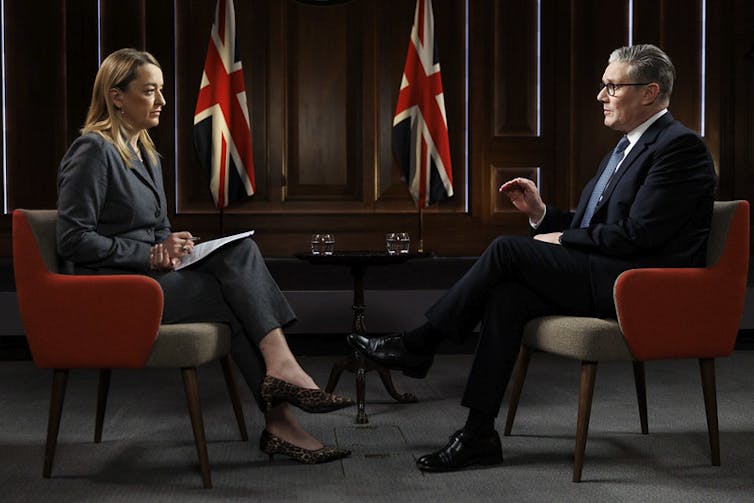
Laura Kuenssberg and Keir Starmer sitting opposite each other.
The prime minister in a New Year’s interview with the BBC.
Flickr/Number 10, CC BY-NC-ND

But it is that failure – that refusal – to opine that most exasperates MPs. Cooper’s fractious Venezuela statement highlighted fissures within Labour that are evident whenever the US, or Israel, is concerned.

Maduro was the kind of leader who gives leftwing governments a bad name, which is why only the hard left – Richard Burgon, John McDonnell – are incensed. The main threats to Starmer’s leadership come from the soft left – Angela Rayner, Andy Burnham – where such affairs have less salience, and the right – Wes Streeting, Al Carns – where they’re merely awkward.

For May’s impending local and national elections the impact may be clearer, and graver. The Liberal Democrats, Greens, Your Party, SNP and Plaid Cymru accept gratefully a gift that will go on giving on innumerable doorsteps throughout the spring.

The Conservatives happen to agree with the government’s policy, if not necessarily its delivery. Few of their voters will care about recondite international law. Fewer still, Reform UK voters. Almost unheard of, Nigel Farage, too, has been mute.

Desperate to engineer a narrative reset in 2026, Starmer, this mildest of prime ministers – politically, temperamentally – now finds himself faced with the so-called Donroe doctrine, Trump’s “update” to the Monroe doctrine.

It would be somewhat to understate to say that this was not the start to the year for which Starmer was hoping. As we gaze upon the most imperial of presidencies, he can only dream of a similar premiership.

The Conversation

Martin Farr does not work for, consult, own shares in or receive funding from any company or organisation that would benefit from this article, and has disclosed no relevant affiliations beyond their academic appointment.

ref. Is Keir Starmer’s silence on Venezuela a mistake? What history tells us – https://theconversation.com/is-keir-starmers-silence-on-venezuela-a-mistake-what-history-tells-us-272837

Should AI be allowed to resurrect the dead?

Source: The Conversation – UK – By James Muldoon, Associate Professor in Management, University of Essex

The growing industry of ‘grieftech’ enables people to interact with dead relatives. Deepbrain AI

When Roro (not her real name) lost her mother to cancer, the grief felt bottomless. In her mid-20s and working as a content creator in China, she was haunted by the unfinished nature of their relationship. Their bond had always been complicated – shaped by unspoken resentments and a childhood in which care was often followed closely by criticism.

After her mother’s death, Roro found herself unable to reconcile the messiness of their past with the silence that followed. She shared her struggles with her followers on the Chinese social media platform Xiaohongshu (meaning “Little Red Book”), hoping to help them with their own journeys of healing.

Her writing caught the attention of the operators of AI character generator Xingye, who invited her to create an AI version of her mother as a public chatbot.

“I wrote about my mother, documenting all the important events in her life and then creating a story where she was resurrected in an AI world,” Roro told me through a translator. “You write out the major life events that shape the protagonist’s personality, and you define their behavioural patterns. Once you’ve done that, the AI can generate responses on its own. After it generates outputs, you can continue adjusting it based on what you want it to be.”

During the training process, Roro began to reinterpret her past with her mother, altering elements of their story to create a more idealised figure – a gentler and more attentive version of her. This helped her to process the loss, resulting in the creation of Xia (霞), a public chatbot with which her followers could also interact.

After its release, Roro received a message from a friend saying her mum would be so proud of her. “I broke down in tears,” Roro said. “It was incredibly healing. That’s why I wanted to create something like this – not just to heal myself, but also to provide others with something that might say the words they needed to hear.”

Grief in the age of deathbots

As I recount in my new book Love Machines, Roro’s story reflects the new possibilities technology has opened for people to cope with grief through conversational AI. Large language models can be trained using personal material including emails, texts, voice notes and social media posts to mimic the conversational style of a deceased loved one.

These “deathbots” or “griefbots” are one of the more controversial use cases of AI chatbots. Some are text-based, while others also depict the person through a video avatar. US “grieftech” company You, Only Virtual, for example, creates a chatbot from conversations (both spoken and written) between the deceased and one of their living friends or relatives, producing a version of how they appeared to that particular person.

Video by The Guardian.

While some deathbots remain static representations of a person at the time of their death, others are given access to the internet and can “evolve” through conversations. You, Only Virtual’s CEO, Justin Harrison, argues it would not be an authentic version of a deceased person if their AI could not keep up with the times and respond to new information.

But this raises a host of difficult questions about whether estimating the development of a human personality is even possible with current technology, and what effect interacting with such an entity could have on a deceased person’s loved ones.

Xingye, the platform on which Roro created her late mother’s chatbot, is one of the key prompts for proposed new regulations from China’s Cyberspace Administration, the national internet content regulator and censor, which seek to reduce the potential emotional harm of “human-like interactive AI services”.

What does digital resurrection do to grief?

Deathbots fundamentally change the process of mourning because, unlike seeing old letters or photos of the deceased, interacting with generative AI can introduce new and unexpected elements into the grieving process. For Roro, creating and interacting with an AI version of her mother felt surprisingly therapeutic, allowing her to articulate feelings she never voiced and achieve a sense of closure.

But not everyone shares this experience, including London-based journalist Lottie Hayton, who lost both her parents suddenly in 2022 and wrote about her experiences recreating them with AI. She said she found the simulations uncanny and distressing: the technology wasn’t quite there, and the clumsy imitations felt as if they cheapened her real memories rather than honoured them.

Official trailer for the grieftech documentary Eternal You.

There are also important ethical questions about whose consent is required for the creation of a deathbot, where they would be allowed to be displayed and what impact they could have on other family members and friends.

Does one relative’s desire to create a symbolic companion who helps them make sense of their loss give them the right to display a deathbot publicly on their social media account, where others will see it – potentially exacerbating their grief? What happens when different relatives disagree about whether a parent or partner would have wanted to be digitally resurrected at all?

The companies creating these deathbots are not neutral grief counsellors; they are commercial platforms driven by familiar incentives around growth, engagement and data harvesting. This creates a tension between what is emotionally healthy for users and what is profitable for firms. A deathbot that people visit compulsively, or struggle to stop talking to, may be a business success but a psychological trap.

These risks don’t mean we should ban all experiments with AI-mediated grief or dismiss the genuine comfort some people, like Roro, find in them. But they do mean that decisions about “resurrecting” the dead can’t be left solely to start-ups and venture capital.

The industry needs clear rules about consent, limits on how posthumous data can be used, and design standards that prioritise psychological wellbeing over endless engagement. Ultimately, the question is not just whether AI should be allowed to resurrect the dead, but who gets to do so, on what terms, and at what cost.

This article includes a link to bookshop.org. If you click the link and go on to buy from bookshop.org, The Conversation UK may earn a commission.

The Conversation

James Muldoon does not work for, consult, own shares in or receive funding from any company or organisation that would benefit from this article, and has disclosed no relevant affiliations beyond their academic appointment. James is the author of Love Machines: How Artificial Intelligence is Transforming Our Relationships (Faber).

ref. Should AI be allowed to resurrect the dead? – https://theconversation.com/should-ai-be-allowed-to-resurrect-the-dead-272643

Buy-now-pay-later rules in the UK will change in 2026, but will they offer protection or exclusion?

Source: The Conversation – UK – By Adeola Y. Oyebowale, Assistant Professor in Banking, University of Doha for Science and Technology

New rules are coming. Andrey_Popov/Shutterstock

Buy-now-pay-later is an appealing proposition. You get what you want now, but you delay settling the bill until later, with no interest and no fees.

It’s how lots of things are bought. The UK’s buy-now-pay-later (BNPL) sector has nearly 23 million users and was worth £28 billion in 2025.

In 2026 though, it will face a major transformation. From mid-July, its lenders – the likes of Klarna and PayPal – will be regulated in the UK for the first time by the Financial Conduct Authority watchdog.

This marks a major change for a sector that has largely operated outside consumer credit regulation – and could fundamentally change how millions of people manage their their finances.

The government says the new legislation is designed to protect shoppers, end the “wild west” of some BNPL schemes, and even drive economic growth.

So from July, BNPL lenders will have to run affordability checks. They will also need to be more transparent about terms and conditions, establish a proper system for handling customer complaints, and prove that they are financially stable.

And it’s easy to see why the sector might require a bit more oversight. A quarter of UK users have experienced late payment charges, with younger shoppers increasingly affected by missed payments. (BNPL providers make money out of this, but their primary revenue comes from taking a percentage of each BNPL transaction from the retailer, plus a service fee.)

There is also research which suggests that many people use credit cards (typically carrying interest rates of around 20%) to make their interest-free BNPL payments, raising serious questions about financial literacy and debt spirals.

But the coming protections may significantly change the market, imposing operational costs that could affect smaller providers. This may lead to greater market dominance by major players like Klarna and Clearpay, potentially stifling innovation and reducing choice.

And choice is surely what has made BNPL so appealing and successful in the first place. It was an innovative new payment method that disrupted the world of traditional credit.

Research in behavioural economics shows us that people tend to favour instant rewards and consider split payments to be more manageable.

Aussie rules

The UK’s change to BNPL regulation follows a similar move in Australia in June 2025. And while it is too early for a definitive evaluation, not everything there has run as smoothly as anticipated.

Banks, now legally required to scrutinise all financial commitments during credit assessments are reportedly advising some customers to close BNPL accounts to improve their borrowing capacity. It has also been claimed that consumers who used BNPL to manage cash flow sensibly now face barriers to accessing mortgages.

The same problems may be avoided in the UK, if affordability checks are designed to fit BNPL’s short-term, interest-free nature. Yet whether this provides sufficient protection remains contentious. Research shows that nearly one in five BNPL users are layering debt, using credit cards to fund their payments.

But strict regulation creates a significant risk of its own. Research on consumer credit regulation suggests that if BNPL becomes inaccessible, vulnerable consumers do not simply stop borrowing. Instead they borrow elsewhere, often at much greater cost.

They may turn to overdrafts with punishing fees, payday lenders with minimal oversight, or informal lending with no consumer protection.

Looking at who uses BNPL, the demographic data complicates this further. With usage concentrated in deprived areas and among younger populations, the regulatory framework will disproportionately affect financially constrained groups.

For these users, BNPL often serves as a budgeting tool allowing the cost of groceries or other essential purchases to be managed over time. Affordability checks might protect some people from overextending themselves financially, but they will also mean transactions are declined for responsible people using BNPL to manage predictable, necessary expenses.

Klarna app on phone next to calendar with dates circled.
BNPL can be used to manage expenses.
Ascannio/Shutterstock

The regulations will succeed or fail based on outcomes we can only measure later on. So if BNPL default rates decline but unauthorised overdraft usage rises, a problem has been shifted rather than solved.

Likewise, analysing which demographic groups are most often refused BNPL permission will show whether regulation disproportionately excludes the vulnerable populations it aims to protect.

Either way, millions of BNPL users will experience material changes to a financial tool many have integrated into routine spending patterns. For some, particularly those at risk of debt spirals, increased protections will prevent financial harm.

For others, including responsible users managing cash flow during temporary shortfalls, affordability checks may create new barriers without providing any meaningful protection at all.

The Conversation

The authors do not work for, consult, own shares in or receive funding from any company or organisation that would benefit from this article, and have disclosed no relevant affiliations beyond their academic appointment.

ref. Buy-now-pay-later rules in the UK will change in 2026, but will they offer protection or exclusion? – https://theconversation.com/buy-now-pay-later-rules-in-the-uk-will-change-in-2026-but-will-they-offer-protection-or-exclusion-263763