I taught art in a high-security prison – Waiting for the Out took me straight back to my classroom

Source: The Conversation – UK – By Abigail Harrison Moore, Professor of Art History and Museum Studies, School of Fine Art, History of Art and Cultural Studies, University of Leeds

Watching Waiting for the Out, the BBC’s flagship new drama series, transported me straight back to my classroom in HMP Wakefield in the mid-1990s. This decaying Victorian building at the heart of a challenged city in the north of England is one of the UK’s ten category-A, high-security prisons for men. Many inmates are on life or whole-life sentences.

I was a naive, young graduate from Yorkshire with limited teaching experience, no teaching qualification and certainly no knowledge of prison education. I was looking to fund my part-time PhD – a qualification that was becoming the prerequisite for employment in universities.

Teaching art and the humanities at HMP Wakefield changed my life, making me the educator and campaigner I am today. As the publicity for Waiting for the Out says: “Freedom isn’t always on the outside.”

This refers to the mental health challenges of the main character, Dan (Josh Finan), a philosophy teacher in a category-B prison somewhere in London, and also his students (men both outside and inside the prison walls). But it also speaks directly to what I came to realise about the power of art education.

The trailer for Waiting for the Out.

In an excruciating but true-to-my-experience dinner party scene, Dan is questioned about why he teaches in a prison. He challenges the other guests’ naive assumptions based on the fact he is a “nepo baby” of former prisoners in his family – his father, uncle and brother. The party concludes that all he does is provide a “two-hour holiday in [the inmates’] heads”.

While this might be seen to dismiss the usual rehabilitative justifications for prison teaching, it is the most accurate description I have yet come across. This series is based on the real-life experiences of a prison educator – Andy West’s 2022 memoir The Life Inside – and it shows.

As a woman teaching in Wakefield – a prison that has been the subject of tabloid speculation due to the infamy of some inmates and the nature of the men’s crimes – I was and still am asked to defend my decision to work there. For many of my students, the only freedom to think critically for themselves, and to develop the communication, analytical and life skills needed for release, was in that prison classroom.

What I learned, and what we see in this drama, was the impact of background. I was a “nice middle-class girl”, brought up in a small Yorkshire town and educated at a good comprehensive school. Some of the men I was teaching, like those in the drama, had not had an education at all. They had learned behaviour in their homes and on the streets that contributed to them being in a category-A prison by the age of 18.

This is not to excuse their crimes – we were required to constantly remind ourselves of these as a protection from manipulation and influence – but to acknowledge the potential of lifelong access to education, even for prisoners.

As the dinner party conversation emphasises, educators cannot “save” inmates and will fail if they try. They just need to teach and (as the classroom scenes often show) challenge their students carefully, ask questions and laugh. I learned that humour was a key way to diffuse difficulties and build trust. I was also aware of my role in changing some of my student’s assumptions about women, as is illustrated carefully and thoughtfully in this drama.

The experience of learning how and why we teach art history, art and the humanities in that prison classroom has driven my work ever since. Thirty years on, as a professor of art history who spends much time battling to enable access to my subject, I found Waiting for the Out speaks directly to the importance and power of teaching.

As the series demonstrates, illiteracy levels are incredibly high among the prison population. As the story of Dris (Francis Lovehall) illustrates, to be unable to read is both humiliating and disabling for men wanting to improve themselves and their relationships with their children while inside.

I will never forget the moment when one of the men in my basic skills class was asked by a prison officer why a painting we had been exploring in class was “impressionist”. His historically driven, thought-provoking response clearly demonstrated the power of art history to build confidence in communication, offer different ways of thinking about the world, and generate different types of conversation between guard and inmate.

Jane Featherstone, the executive producer of Waiting for the Out, sent West’s book to the programme writers. She has spoken of investing in [“visionary story tellers”](https://www.sister.net/about/jane-featherstone “) and has campaigned for better arts education in UK schools, describing the lack of culture in the national curriculum in 2017 as “a deprivation of opportunities for children to reach their full potential as human beings”.

This drive to invest in stories about education that makes a difference has also led her to fund Featherstone Fellowships at the University of Leeds, for art teachers from across the UK to do research that demonstrates the power of art education.

With Waiting for the Out, Featherstone has produced a TV drama that focuses deeply on the power of teaching the arts and humanities in prisons. The fact it does this while also exploring mental health, misogyny, gender politics and the impact of family and social contexts shows the importance of the classroom as a space to potentially influence change.

Watching Waiting for the Out brought back memories for me – but it also spoke to the fundamental need to empower teachers and enable education for all. This incredible drama demonstrates why access to arts education matters, even for those who society wants to forget.


Looking for something good? Cut through the noise with a carefully curated selection of the latest releases, live events and exhibitions, straight to your inbox every fortnight, on Fridays. Sign up here.


This article features references to books that have been included for editorial reasons, and may contain links to bookshop.org. If you click on one of the links and go on to buy something from bookshop.org The Conversation UK may earn a commission.

The Conversation

Abigail Harrison Moore has received funding from the Arts and Humanities Research Council and Research England. Art Teachers Connect is delivered in partnership with the Paul Mellon Centre.

ref. I taught art in a high-security prison – Waiting for the Out took me straight back to my classroom – https://theconversation.com/i-taught-art-in-a-high-security-prison-waiting-for-the-out-took-me-straight-back-to-my-classroom-272959

The surprising way you could improve your finances in 2026, according to research

Source: The Conversation – UK – By Dominik Piehlmaier, Visiting Fellow, Cambridge Judge Business School

iHumnoi/Shutterstock

When people talk about improving financial literacy, the conversation often focuses on teaching practical skills: how to budget, how to save, how to avoid debt. These lessons feel concrete and actionable. But recent research suggests that the most effective way to change your financial behaviour might be something far less obvious: learning in a more abstract, flexible way.

The new year is often a time when people vow to get a grip on their personal finances. My recent study with my colleague Dee Warmath explored why traditional financial education often fails to translate into good habits that leave us better off.

We found that while people generally do need to improve their financial literacy, simply teaching facts and formulas isn’t enough. What really matters is how adaptable your financial knowledge is when life throws you a curveball.

Most financial education programmes, such as those offered to undergraduate students at university, rely on explicit learning. This means teaching rules and definitions, then testing whether you can recall them. That approach works well for exams, but real life rarely looks like a textbook. You might know the importance of saving, but when your car breaks down or a friend invites you on a last-minute trip, those rules can feel distant.

Our study argues that knowledge exists on a continuum. At one end is the rigid, factual understanding of things like compound interest and inflation. At the other is flexible knowledge – that is to say, the ability to apply principles in unfamiliar situations. We hypothesised that the more flexible your knowledge, the more likely you are to act on it when circumstances change.

Putting it to the test

To see if this theory held up, we ran a multi-session experiment with undergraduate students, most aged 18-22 and from various degree programmes (excluding finance majors). One group received traditional lessons focused on explicit knowledge of finance: definitions, formulas and quizzes. Another group learned through semi-flexible methods, practising with varying scenarios. A third group engaged in fully flexible learning, tackling hands-on challenges that mirrored real-world dilemmas.

In the fully flexible learning group, participants practised strategic thinking through these hands-on challenges. This included allocating limited resources across competing priorities or working through ambiguous scenarios with no single “right” answer. This encouraged them to weigh trade-offs, anticipate consequences and adapt when conditions change. The goal was to build mental agility, so that they learned how to approach complex choices rather than rely on fixed formulas.

Students chose between two distinct options for how to allocate resources, each with trade-offs between immediate rewards and delayed outcomes. As an example, one choice offered an immediate payment of US$45 (£33) for taking part in the experiment or a delayed payment of US$54 five days later. This represented an annual interest rate of more than 1,000%.

Overall, the results were striking. Students who learned in this more abstract, adaptable way were significantly more likely to adopt positive financial behaviour. This was measured by the likelihood of identifying and choosing the option that would maximise their payoffs. They didn’t just know what to do, they actually did it.

In contrast, those who focused on specific lessons seemed to struggle to apply their knowledge outside the classroom. Our research suggests that abstract learning helps you build mental models that can be reshaped as situations change.

Instead of memorising a rule like “always save 10% of what you earn”, you learn how to think about trade-offs, priorities and long-term goals. That mindset makes it easier to navigate unexpected expenses or tempting splurges.

In other words, teaching people what to think is less powerful than teaching them how to think. Many universities offer free online courses on how to use these flexible tools in the course of your daily life.

mother and young child slotting a coin into a piggy bank and smiling.
Saving is good but managing financial curveballs is better.
Prostock-studio/Shutterstock

If we want financial education to work, programmes need to move beyond rote learning. Here are a few ideas inspired by our study:

  1. use scenario-based exercises that mimic real-life challenges
  2. encourage reflection so learners connect principles to their own circumstances
  3. focus on problem-solving rather than memorising, helping students adapt when rules don’t fit perfectly.

This approach doesn’t just apply to money. Whether you’re teaching healthy living habits, sustainability or digital safety, the same principle holds. Flexible knowledge drives behaviour change.

Improving financial literacy is still important, but it’s not the whole story. The real breakthrough comes when education equips people to handle complexity and uncertainty. Life rarely follows a script, and neither should our learning.

So if you want to improve your finances, don’t just learn the tips and tricks. Seek out experiences that challenge you to think broadly and adapt. It turns out that the most practical skill you can learn might be the ability to apply abstract ideas when reality gets messy.

The Conversation

Dominik Piehlmaier does not work for, consult, own shares in or receive funding from any company or organisation that would benefit from this article, and has disclosed no relevant affiliations beyond their academic appointment.

ref. The surprising way you could improve your finances in 2026, according to research – https://theconversation.com/the-surprising-way-you-could-improve-your-finances-in-2026-according-to-research-272739

Greenland, Venezuela and the ‘Donroe doctrine’

Source: The Conversation – UK – By Jonathan Este, Senior International Affairs Editor, Associate Editor, The Conversation

This newsletter was first published in The Conversation UK’s World Affairs Briefing email. Sign up to receive weekly analysis of the latest developments in international relations, direct to your inbox.


Watching Donald Trump and his defence and national security team announcing the US raid on Caracas on Saturday, it was hard not to conclude that while the US president was clearly using a script, there were points at which he seemed to be extemporising. At times he appeared as if he may be inventing US foreign policy as he went along, much to the visible discomfort of his secretary of state, Marco Rubio.

It must be challenging presenting a coherent message about American intentions in the region when the justification for the raid shifts randomly from a law enforcement operation to apprehend a “narco-terrorist”, to regime change to replace an illegitimate leader, to a bid to take control of the world’s largest oil reserves.

All of these have been canvassed in the days since. And, five days after the raid, it’s still not 100% clear what the US plans to do. But even so, it felt like a fairly important inflection point in global geopolitics: the point at which the US president and his senior advisers said out loud – and with particular emphasis – that the Trump administration will do whatever it likes, regardless of what anyone might think.

As the US secretary of defense, Pete Hegseth, told the assembled reporters and TV audiences around the world: “America can project our will anywhere, anytime.” He added: “This is America first. This is peace through strength. Welcome to 2026.”

Rubio, meanwhile, made sure everyone would be clear that this administration is serious: “I hope what people now understand is that we have a president [who] when he tells you that he’s going to do something, when he tells you he’s going to address a problem, he means it. He actions it.”

So what are we to make of Trump’s repeated assertions that the US plans to take control of Greenland, by fair means or foul? Denmark, of which Greenland is a part, is certainly taking the prospect seriously.

The country’s prime minister, Mette Frederiksen, warned this week that an aggressive attack on a Nato member by another Nato member would spell an end to the alliance. And on the face of it you’d have to think she’s right: the alliance was set up in 1949 to ensure peace in Europe. Its key clause, article 5, demands that an attack on one member state is considered an attack on the alliance as a whole.

But David Dunn, Mark Webber and Stefan Wolff, international security experts at the University of Birmingham, believe there is no need to panic – at least not yet. Nato has weathered deep disputes between member states before now. It got through Suez in the 1950s and the cod war between the UK and Iceland and the confrontation between Greece and Turkey over Cyprus in the 1970s.

But an aggressive move on Greenland, while not necessarily destroying Nato, would be likely to paralyse the alliance at a time when collective security is of paramount importance. Our three experts counsel caution at this point: US security concerns in the region could be addressed without an outright takeover of Greenland.

And, they write, with the US midterms approaching, the US president could well find himself distracted by more important domestic political concerns – particularly if his Republican party loses control of either or both houses of Congress. In other words, patience, vigilance and caution – for the present – are the advisable course of action for America’s European allies.


Read more:
US action against Greenland would undermine Nato, but now is not the time to panic


It’s a measure of how fast-moving the geopolitical situation has become that we spent Saturday worrying about the implications of the kidnapping of Venezuela’s president, Nicolás Maduro, but by Sunday the future of Greenland was on everyone’s lips.

This may well be down to a tweet posted on Saturday evening by Republican influencer Katie Miller, the wife of Stephen Miller, the White House deputy chief of staff. She posted a picture of Greenland overlaid with the Stars and Stripes and headed with the single word: “soon”. This prompted the Atlantic, in an interview with the US president the following morning, to enquire about the tweet and ask what the Trump administation’s intentions are toward Greenland. And suddenly the news agenda shifted.

Katie Miller is privy to the innermost workings of the administration. Her husband is one of Trump’s closest aides and, many believe, a key ideologue, having been steeped in America First ideology for his entire career. This week in an interview with CNN, Stephen Miller spelled out, in the starkest terms, his boss’s modus operandi: the notion that might is right. Or, as Miller put it: “We’re a superpower. And under President Trump, we are going to conduct ourselves as a superpower.”

Natasha Lindstaedt has traced Stephen Miller’s political evolution, from right-wing schoolboy the right hand of the 47th US president.


Read more:
Stephen Miller: portrait of Donald Trump’s ideologue-in-chief


What the ‘Donroe doctrine’ means for Venezuela

We had advance warning of this aggressive foreign policy stance late last year when the US published its national security strategy, in which it reasserted the two centuries-old Monroe doctrine, with its assertion that the US regards the western hemisphere as its exclusive backyard in which it should have carte blanche to impose its will on other nations.

Trump himself referred to this in his press conference to announce Operation Absolute Resolve: “They now call it the ‘Donroe’ document.” Stefan Wolff believes this assertive new stance in America’s backyard is an indication of a shift in the global order over the 12 months of Trump’s second term, in which the US, Russia and China essentially divide the world into three spheres of influence.

If the US can act with impunity in what he regards to be America’s backyard, he warns, what does this mean for Vladmir Putin’s war in Ukraine or Xi Jinping’s ambition to “reunite” Taiwan with mainland China, if necessary by force.


Read more:
Donald Trump’s raid on Venezuela foreshadows a new ‘great power’ carve-up of the world


Pablo Uchoa meanwhile – a former BBC journalist now researching Latin American politics at University College London’s Institute of the Americas – believes that Maduro is the guinea pig for Trump’s new aggressive stance.

Nicolás Maduro, handcuffed and wearing prison clothes, with Drug Enforcement Agency officers with theiur faces obscured.
In custody: Nicolás Maduro, handcuffed and wearing prison clothes, with Drug Enforcement Agency officers.
X

Uchoa, a biographer of Maduro’s populist predecessor, Hugo Chavez, warns of the US president’s hints about US intentions towards Columbia and Cuba, identifying Venezuela as the “laboratory where Trump has decided to flex America’s geopolitical muscles”.


Read more:
The ‘Donroe doctrine’: Maduro is the guinea pig for Donald Trump’s new world order


But how do Venezuelans feel about their president being snatched from his Caracas bunker? Matt Wilde and Harry Rogers, geographers at the University of Leicester, have been interviewing Venezuelans living in Spain, the US and Venezuela and were in Madrid talking to expats when the news of Maduro’s kidnapping broke on Saturday. They noted a range of emotions: much joy at the downfall of a controversial leader who many viewed as a brutal and illegitimate dictator, but also fear about what might happen next in their country.


Read more:
Venezuelans are reacting to Maduro’s capture with anger, fear, hope and joy


All about oil

If, as the US president has repeatedly stressed, the US raid on Venezuela was as much about taking control of the country’s oil supplies as anything else, it’s worth taking a look at what this might mean for oil prices.

With the prospect of the opening up of access to Venezuela’s “proven reserves” of more than 300 billion barrels of oil, you’d expect the price to fall – and indeed that has been the initial reaction, especially since Trump vowed to seize up to 50 million barrels of Venezuelan oil.

But Adi Imsirovic, a lecturer in energy systems at the University of Oxford, cautions that the situation is far less clear cut. It is likely to take years for Venezuelan oil production to recover from the long-term decline it has experienced over the past two decades. And the uncertainty caused by geopolitical turmoil tends to send oil prices up, not down.


Read more:
What the US strike on Venezuela could mean for global oil prices


It was no doubt with oil on their minds that the Trump administration ordered the boarding of two tankers linked to Venezuela on the grounds they were in breach of sanctions – one of which was sailing under a Russian flag. As they insist: they can do what they like, when they like. It’s down to experts in maritime law, such as Andrew Serdy of the University of Southampton to figure out the legality of the exercise.


Read more:
US boards a ship sailing under a Russian flag: what we know and don’t know about the legal position


Sign up to receive our weekly World Affairs Briefing newsletter from The Conversation UK. Every Thursday we’ll bring you expert analysis of the big stories in international relations.


The Conversation

ref. Greenland, Venezuela and the ‘Donroe doctrine’ – https://theconversation.com/greenland-venezuela-and-the-donroe-doctrine-273041

Other people’s backgrounds shape their social position, but I worked hard for mine – the paradox in how we view status

Source: The Conversation – UK – By Joe Greenwood-Hau, Youth Poll Lecturer, John Smith Centre, University of Glasgow

Roman Samborskyi/Shutterstock

The concept of “hard work v privilege”, and what either one says about someone’s social status, is an important one.

Politicians regularly draw dividing lines between “hardworking families” and those receiving “handouts”. Others distinguish between those whose wealth increases while they sleep, and small business owners who work hard for their incomes.

All these points stress the difference between people who have earned their social positions and those who supposedly enjoy “unearned” advantages. In each case, hard work is seen as a good reason to receive rewards, while being gifted them – due to birth, systemic advantage or the “generosity” of the state – is viewed less positively.

So common is this view, that people are often uncomfortable recognising how their backgrounds have helped them in their own lives. They also respond negatively when they feel that their statuses are under threat. This can lead to support for radical political parties as a way to protect their social positions, especially where they feel that others are being unfairly advantaged.

As I show in my new book, people often have different explanations for the statuses of others than for their own status. While they take credit for their own social status on the basis of hard work, they often attribute other people’s statuses to their backgrounds.

In a survey of 1,405 British adults, I asked people to rank a list of brief explanations for their own social positions, including “hard work” and “background” (left open to respondents’ interpretations).

Fifty per cent of them ranked “hard work” as the most important reason, but 7% said it had no part to play. At the same time, 18% of people ranked their “background” as the most important reason for their social position, while a similar percentage said it had no part to play.

I also asked people to rank the same explanations in relation to differences in social positions more generally. In this case, 25% ranked “hard work” as the most important explanation, but 38% say that it has no part to play. Turning to “background,” 41% ranked it as the most important explanation for differences in social position, while fewer than 27% say it has no part to play.

Piles of coins at different heights with tiny figurines of people on top of them
What factors affect whether you get ahead in life?
Hyejin Kang/Shutterstock

Taken together, we see that twice as many people ranked “hard work” as the most important reason for their own position, than for differences in social position more generally. By contrast, when considering “background,” twice as many people ranked it as the most important reason for general differences in social position than for their own social position.

These stark differences show the need to measure people’s explanations for their own status separately from their explanations for status in society more widely.

Recognising privilege

People are right to recognise the role of structural factors in driving social inequality in general. Research from the Joseph Rowntree Foundation shows that factors such as family type, access to high-quality education and disability affect poverty rates and inequality.

Social mobility is shaped by your parents’ socioeconomic background. The gender pay gap is slowly declining, but persists. And, while the story varies across different ethnic groups, ethnic inequalities also continue to be important.

But despite the continued importance of structural drivers of inequality, my research suggests that people seek to emphasise a positive story about how they have achieved their own social positions. They appear to be more comfortable recognising the workings of privilege – both as it elevates some and marginalises others – in society than in their own lives.

This is also reflected in how people talk about their statuses. In interviews, when asked to describe their social position, research participants sought to emphasise that they do not have it too easy. Even people who recognised that they are relatively fortunate often qualified the observation:

  • “I’ve always been reasonably well off without being, you know, in the, kind of, super tax bracket.”

  • “We’re not filthy rich, but it’s not too much of a struggle.”

  • “[I had a] solid middle-class upbringing. Not massively wealthy but certainly by no means struggling.”

There is, then, a deep unease with recognising our own privilege, both in terms of the status that we hold and how we gained it. This does not, however, mean that everyone who thinks they worked hard for their position refuses to recognise that unearned privilege exists. It’s just that we are more likely to do it in relation to others, and to save ourselves the emotional discomfort of acknowledging our own advantage or disadvantage.

The Conversation

Joe Greenwood-Hau has received funding from the Economic and Social Research Council and the British Academy. He is affiliated with the John Smith Centre and the University of Glasgow.

ref. Other people’s backgrounds shape their social position, but I worked hard for mine – the paradox in how we view status – https://theconversation.com/other-peoples-backgrounds-shape-their-social-position-but-i-worked-hard-for-mine-the-paradox-in-how-we-view-status-270730

Melatonin and childhood sleep problems: what parents should know

Source: The Conversation – UK – By Dipa Kamdar, Senior Lecturer in Pharmacy Practice, Kingston University

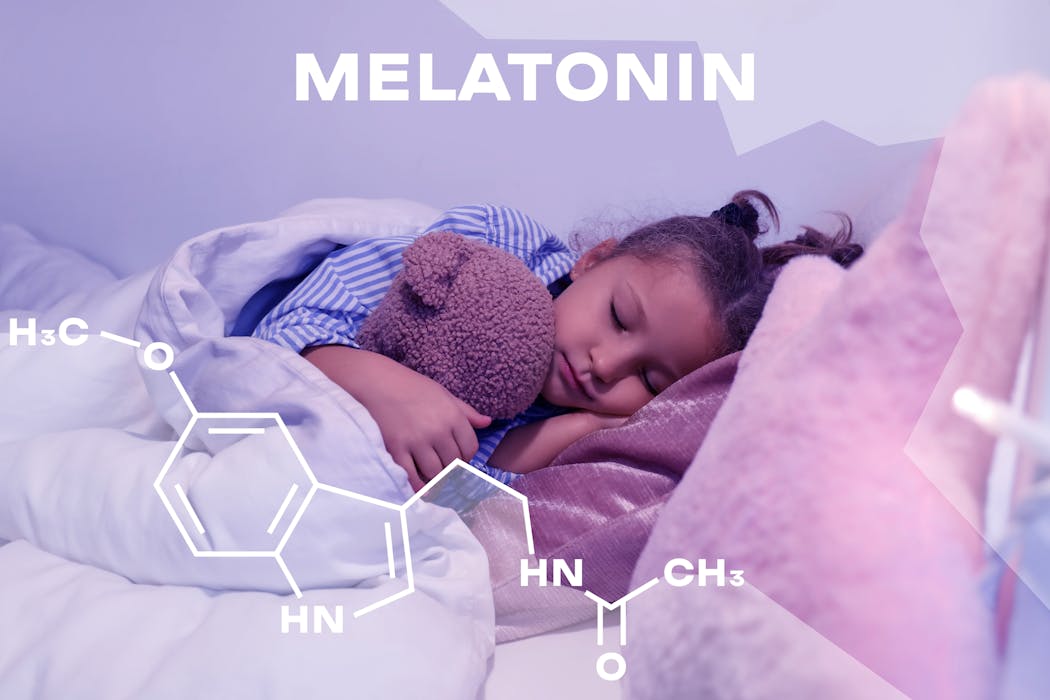
Melatonin use in children is rising fast. But long-term safety data is limited and regulation varies wildly. Pixel-Shot/Shutterstock

As families return to school-term routines, sleep difficulties often resurface. For many parents, particularly those raising children with neurodevelopmental conditions, melatonin has become a widely discussed option. Yet its growing use raises important questions about regulation, effectiveness and safety.

Melatonin is a hormone naturally produced by the pineal gland in the brain. It plays a key role in regulating the sleep–wake cycle, the body’s internal clock that helps us feel alert during the day and sleepy at night. Melatonin levels usually rise in response to darkness, signalling that it is time to sleep. The medication sold as melatonin is a synthetic version of this naturally occurring hormone.

In adults, melatonin is commonly used to manage jet lag or sleep disruption linked to shift work fatigue. In recent years, however, its use in children has increased. In England, overall melatonin use has risen sharply, from around two prescriptions per 1,000 people in 2008 to nearly 20 per 1,000 by 2019, representing a tenfold increase.

In the UK, melatonin is available only on prescription. It is licensed for the short-term treatment of insomnia in adults aged 55 and over. There are also limited melatonin preparations licensed for use in children with neurodevelopmental conditions or genetic brain conditions that disrupt normal sleep patterns.

Children with neurodevelopmental disorders commonly experience sleep difficulties. These may include problems falling asleep, irregular sleep–wake patterns, frequent night waking and shorter overall sleep duration.


Read more:
Can kids overdose on melatonin gummies? Yes, and an online store has suspended sales


In contrast, in the US melatonin is regulated as a dietary supplement rather than a medicine. It can be purchased in supermarkets and online without medical oversight. This looser regulation has raised concerns. Studies have found that the actual melatonin content in US supplements often differs substantially from what is stated on the label: in one analysis the measured amounts ranged from about 83% less than advertised to up to 478% more.

The scientific evidence for melatonin’s effectiveness in children is mixed, though there is some support for its use in specific groups. A trial involving children with autism spectrum disorder (ASD) found that those taking melatonin slept, on average, about 32 minutes longer than those given a placebo, after accounting for other factors that influence sleep. Melatonin also helped children fall asleep around 25 minutes faster.

Similar benefits have been reported in children with attention-deficit hyperactivity disorder (ADHD), where melatonin helped address disruptions to circadian rhythms, the body’s internal timing system, and improved overall sleep. A 2023 review examined children and adolescents with idiopathic chronic insomnia, meaning long-lasting insomnia with no identifiable medical cause.

It found moderate improvements in sleep, alongside an increase in side effects, though no serious adverse effects were reported. The authors recommended that melatonin should be used only when sleep problems persist despite non-pharmacological approaches, regardless of whether a child has ASD or ADHD.

Evidence on long-term benefit remains limited. Most clinical trials last only a few weeks or months. A 2024 UK clinical audit analysed data from more than 4,000 children and adolescents prescribed melatonin. It found wide variation in prescribing practices. While melatonin was usually started appropriately, follow-up was often poor. In many cases, prescriptions were continued without checking whether the medication was still effective or necessary.

Melatonin is often perceived as “natural”, but this does not mean it is risk-free. Its safety profile has been examined in a review of more than 30 clinical trials across different age groups. Daily doses ranged from very small amounts, such as 0.15mg, to higher doses of up to 12mg. Although a few studies followed participants for as long as 29 weeks, most were short-term, typically lasting no more than a month.

Across these trials, side effects were generally uncommon and mild. The most frequently reported included daytime sleepiness, headaches, dizziness, minor sleep disturbances and occasional drops in body temperature.

More serious effects, such as agitation, fatigue, mood changes, nightmares, skin irritation or heart palpitations, were rare. When side effects did occur, they usually resolved within a few days or stopped once melatonin was discontinued. Overall, melatonin appears to be well tolerated for most users, but the quality of evidence is low and robust long-term safety data is lacking.

A separate review focusing on children and adolescents similarly found that side effects were usually mild and non-serious. However, the authors noted mixed evidence suggesting that long-term use might affect pubertal development, highlighting an area where further research is needed.

More recently, a study reported a possible association between long-term melatonin use and heart failure in adults. However, the findings were not conclusive. Taken together, the lack of clear long-term safety evidence across all age groups reinforces the need for cautious prescribing and further high-quality research.

Regulation plays a major role in how closely melatonin use is monitored. In the UK, where it is only available on prescription, clinicians are expected to review its ongoing need, yet audits suggest this does not consistently happen. In the US, where melatonin is readily available as a supplement, families may understandably turn to it earlier, sometimes before trying behavioural approaches that may be equally or more effective.

Behavioural and environmental strategies remain the first-line approach for childhood sleep difficulties. These include maintaining consistent bedtime routines, limiting screen use in the hour before bed and optimising light exposure by keeping evenings dim and mornings bright. R

egular daytime exercise may help promote sleep, while avoiding sugary foods and caffeine before bedtime can reduce restlessness. Addressing anxiety and sensory sensitivities is particularly important for children with neurodivergence. Cognitive behavioural therapy for insomnia (CBT-I), adapted for children, can also be effective.


Read more:
Screen time is contributing to chronic sleep deprivation in tweens and teens – a pediatric sleep expert explains how critical sleep is to kids’ mental health


When these strategies are insufficient and sleep problems significantly affect a child’s wellbeing, melatonin may be considered under medical supervision. It should be used as part of a broader sleep plan rather than as a standalone solution.

The contrast between the UK’s prescription-only system and the US supplement market highlights how uneven the safeguards are. Ultimately, what children need most is support that prioritises strong foundations for healthy sleep.

The Conversation

Dipa Kamdar does not work for, consult, own shares in or receive funding from any company or organisation that would benefit from this article, and has disclosed no relevant affiliations beyond their academic appointment.

ref. Melatonin and childhood sleep problems: what parents should know – https://theconversation.com/melatonin-and-childhood-sleep-problems-what-parents-should-know-271665

Want to read more? Two experts give their tips on what you can do

Source: The Conversation – UK – By Paty Paliokosta, Associate Professor of Special and Inclusive Education, Kingston University

Makistock/Shutterstock

Reading promises so much: better mental health, a sense of wellbeing, cultural and educational enrichment, even greater confidence and eloquence.

It sounds irresistible; yet for many of us, the reality is very different. Half of the adults in the UK don’t read regularly for pleasure, and more than one in ten find reading difficult.

So why does something so rewarding feel so hard to do? For many adults, a disinterest in reading may well start in childhood. In 2025, only about one in three children and young people aged eight to 18 reported enjoying reading in their free time. And then if children do not see their own parents reading, they are unlikely to see being immersed in a book as a good use of leisure time.

The government’s Education Committee has recently launched an inquiry to explore how to keep the joy of reading alive.

In our research, we both (through different angles) explore ways to get people reading for joy.

Different ways of reading

Many people grow up feeling excluded from the joy of reading, and this may linger into adulthood. Research consistently shows that both children and adults with dyslexia or ADHD report lower levels of enjoyment and therefore tend to read less frequently.

This can be exacerbated by systemic school approaches and priorities that associate reading with national and international tests. Reading is reduced to a performance metric, rather than a source of pleasure.

Simple changes, such as altering the physical properties of the titles you read, or choosing graphic novels, can make a big difference. Neurodivergent readers can access books from publishers that specialise in using accessible fonts, layouts and language, for example.

Audiobooks offer another powerful alternative. Despite the relationship between brain representations of information perceived by listening versus reading is unclear, neuroscience research shows the way our brain represents meaning is nearly the same whether we are listening or reading.

Woman with headphones smiling while she washes dishes
Listening to an audiobook counts as reading!
Prostock-studio/Shutterstock

Audiobooks can transform stories from something squeezed in between deadlines into travel companions, kitchen buddies, or late-night unwinders. Accessible on phones, tablets, smart speakers and even through library loans, audiobooks fit seamlessly into busy lives. They can be a great way to get into books for those of us with low reading stamina who need frequent breaks.

For people with ADHD, audiobooks allow for physical movement while reading. They also engage young children effortlessly. Children, as young as three giggle through lively audio tales and tackle complex narratives with ease.

One of us (Paty) recalls her daughter proudly saying she could “see” the stories in her head – like her own private cinema – even preferring them to TV shows. What she didn’t know was that every laugh and every imagined scene was quietly building vocabulary and nurturing a love for books.

Read socially

The social dimensions and shared experiences of reading have been repeatedly highlighted. An example of tackling some of the systemic barriers around reading for pleasure in big scale is the KU Big Read project, launched by one of us (Alison Baverstock) in 2015 and which ran until 2024-25.

Before they started their undergraduate course, new students at Kingston University received a free book in the post – along with a letter from the author referring to their feelings just before starting university.

This gave everyone a shared experience, and a book to talk about, before the nerve-wracking first day. The transition to higher education is a momentous step, and the university saw a significant reduction in the dropout rate in its first year of the project.

The book consistently acted as a connector across the university, with staff and students helping to choose the book for the year ahead.

Men in book group
Look for a book group or online community to discuss what you read.
LightField Studios/Shutterstock

We invite you to put this into practice in your own lives. Look for an in-person or online book group or read-along, and make reading social. The book group that one of us (Paty) attends isn’t about pure literary critique, but about human connection.

Make reading a pleasure, not a chore

The charity Reading Force founded by one of us (Alison Baverstock), which promotes the use of shared reading to keep military families connected, has always encouraged making reading fun rather than a laboured and compulsory process. Families are given special scrapbooks to record their shared experience of reading together and the word “literacy” is never mentioned.

Reading is promoted as a fun activity for families, with colourful resources, free books and events with key authors such as charity patron Sir Michael Morpurgo. For families whose access to books may be limited, this can be a gentle, non-judgemental and exciting pathway. Feedback from this process has shown profound connection, wellbeing and emotional satisfaction.

This emotional satisfaction by reading things they would like to read as opposed to imposed ones is of utmost importance. Pick something that engages you, not the book you think you should be reading.

Representation and reading

Feeling represented in the stories you read – whether through your background, values, or identity – can be a powerful way to build a love for books.

Adults from diverse backgrounds have benefited from joining bilingual groups with their children, creating stories together and engaging with books. The gains are significant, not only in literacy and cultural belonging but also in stronger connections with their community.

When books showcase a variety of cultures and include characters of all abilities as central figures, they become more relatable and inviting for readers from all walks of life. And it is never too late.

The Conversation

Alison Baverstock is the founder and director of the charity Reading Force (1159890) which is funded by grants from organisations, charities and benevolent individuals/institutions.

Paty Paliokosta does not work for, consult, own shares in or receive funding from any company or organisation that would benefit from this article, and has disclosed no relevant affiliations beyond their academic appointment.

ref. Want to read more? Two experts give their tips on what you can do – https://theconversation.com/want-to-read-more-two-experts-give-their-tips-on-what-you-can-do-269450

A few reasons to feel hopeful about the climate in 2026

Source: The Conversation – UK – By Will de Freitas, Environment + Energy Editor, The Conversation

Renewables are becoming a logical economic choice across the world. Quality Stock Arts / shutterstock

This roundup of The Conversation’s climate coverage was first published in our award-winning weekly climate action newsletter, Imagine.

2025 was a brutal year for the climate: record temperatures, ever more extreme weather and so on. We rarely got a break from the bad news.

This week, rather than saying what’s going wrong, Imagine is looking at what’s starting to go right – and why it matters.

This isn’t blind faith. It’s what some academics call “grounded optimism”, based on data, momentum and the surprising resilience of people and ecosystems.

A positive tipping point?

We rightly spend a lot of time worrying about climate tipping points – the terrifying thresholds beyond which ecosystems collapse. Earlier this week we looked at the prospects of a sudden collapse in coral reefs, for instance.

But we rarely hear about “positive tipping points”. These are the moments when a sustainable technology or action becomes so affordable or popular that it kickstarts “irreversible, self-propelling change”.

The UK may have just passed one (tipping points, as the coral reefs author notes, are best noticed in hindsight). That’s according to Kai Greenlees and Steven R. Smith of the University of Exeter, who say the electric vehicle market is an example of a positive tipping point in action.

Despite misinformation campaigns, sales have surged in the UK, driven by a simple reality: they are getting cheaper and better.

“The more people buy them”, Greenlees and Smith write, “the cheaper and better they get, which makes even more people buy them – a self-propelling change towards a low-carbon road transport system.”

electric cars charging
Electric cars aren’t perfect, and many academics say we should move away from private car ownership. But for now, this is a welcome tipping point.
William Barton / shutterstock

At the time of writing, the authors only had access to 2024 data, when electric vehicles made up 19.6% of new cars in the UK.

That figure, they wrote, “puts this sector close to the critical 20-25% range for triggering the phase of self-propelling adoption, according to positive tipping points theory”.

Data for 2025 UK sales was released on Tuesday. The share of electric vehicles? 23.4%.


Read more:
UK may be on verge of triggering a ‘positive tipping point’ for tackling climate change


From crisis to innovation

In Pakistan, solar is booming – not because of climate pledges, or activist pressure, but because the grid has become expensive and unreliable. Something similar is playing out across south Asia, says Reihana Mohideen of the University of Melbourne.

Mohideen writes:

“Importantly, these moves often aren’t about climate change. Reasons range from cutting dependence on expensive fossil fuels and international market volatility to reducing reliance on unreliable power grids to finding ways to boost livelihoods.”

The world recently passed a massive milestone: renewables have finally overtaken coal to become the world’s leading source of electricity. And some of the most exciting developments are taking place in less wealthy economies.

Whether it’s Nepal moving to electric vehicles to stop relying on imported petrol or the Maldives installing solar because diesel is too expensive to ship to outer islands, Mohideen says the result is the same: clean energy is no longer just for rich nations. It is becoming a logical economic choice everywhere.


Read more:
Renewables have now passed coal globally – and growth is fastest in countries like Bhutan and Nepal


China doubles down

We can’t talk about global hope without considering the world’s largest emitter.

This newsletter has noted before the confusing paradox of China fast rolling out green technologies while still burning a colossal amount of coal to keep the lights on.

In an article on China’s five green economy challenges in 2026, Chee Meng Tan of the University of Nottingham notes the country’s grid can’t quite handle all the new solar power, while a cut-throat price war threatens progress on electric vehicles.

But Beijing is doubling down on greening its economy, he says, and still aims to achieve “‘carbon peaking’, where carbon dioxide emissions have reached a ceiling by 2030, and ‘carbon neutrality’, where net carbon dioxide emissions have been driven down to zero by 2060.”

The challenges Tan identifies will need to be overcome. But the sheer scale of investment suggests that in China the momentum is now undeniably pointed towards a low-carbon future.


Read more:
China’s five green economy challenges in 2026


Where the wild things thrive

Finally, some good news for climate-threatened ecosystems.

It’s easy to assume that global warming hits everywhere equally. But nature isn’t that simple. Researchers working in east Africa and California’s Sierra Nevada mountains have identified what they call “climate change refugia”.

These are specific pockets of resilience that remain buffered from the worst effects of warming. They can be quite small scale: a shaded meadow, a deep lake, or a valley that harbours cool air.

Toni Lyn Morelli of UMass Amherst and Diana Stralberg of the University of Alberta have written about their work identifying and mapping these safe havens. Their work means conservationists can prioritise protecting the specific meadows where ground squirrels can survive, or the corridors in Tanzania where elephants and lions can find enough water to endure a drought.

Morelli and Stralberg say that by “identifying and protecting the places where species can survive the longest, we can buy crucial decades for ecosystems”.


Read more:
Where the wild things thrive: Finding and protecting nature’s climate change safe havens


Don’t have time to read about climate change as much as you’d like?

Get a weekly roundup in your inbox instead. Every Wednesday, The Conversation’s environment editor writes Imagine, a short email that goes a little deeper into just one climate issue. Join the 45,000+ readers who’ve subscribed so far.


The Conversation

ref. A few reasons to feel hopeful about the climate in 2026 – https://theconversation.com/a-few-reasons-to-feel-hopeful-about-the-climate-in-2026-272930

All My Sons: director Ivo Van Hove powers up Arthur Miller’s post-war play with a Greek tragedy staging

Source: The Conversation – UK – By Will Shüler, Vice-Dean of Education and Senior Lecturer, School of Performing and Digital Arts, Royal Holloway, University of London

Belgian theatre director Ivo Van Hove is no stranger to American playwright Arthur Miller, directing acclaimed productions of A View From the Bridge at the Young Vic in 2014, with a transfer to London’s West End in 2015, and The Crucible on Broadway in 2016. Now he has another hit on his hands with his latest production of Miller’s All My Sons.

While Van Hove is known for using technology such as video screens on stage, this stripped-back production at the Wyndham Theatre allows the intensity of the play to reveal itself unfiltered.

Written in 1946, Miller’s play is set in a small nondescript post-war American town, and revolves around Joe Keller (Bryan Cranston), a former manufacturer of military aircraft parts, who has built a comfortable life and established himself as a respected figure in the community.

When only one of his sons, Chris (Paapa Esseidu), comes home from the war, it leaves their mother Kate (Marianne Jean-Baptiste) pining for news of her missing son, Larry. Four years later, Kate is forced to confront the possibility that Larry is never coming home when his former girlfriend Ann (Hayley Squires) gets engaged to Chris.

Ann is also the daughter of Joe’s former business partner, imprisoned during the war for selling faulty aircraft components that led to the deaths of American soldiers. Ann’s brother George arrives to stop her from marrying Chris and accuses Joe of being the one responsible for the defective parts – and by extension the reason Larry is missing. What unfolds is a relentless investigation of what we choose to believe and what we choose to take responsibility for within families and society.

The stripped-back nature of the production allows for the captivating performances to sing. Cranston, Esseidu, Jean-Baptiste and Squires all give faultless performances that keep audiences captivated throughout. The play’s climax, when Cranston utters the line the play is named for, is genuinely heartwrenching.

Power of the Greek tradition

In the programme notes, Van Hove articulates his distaste for Miller being performed “very realistically and very naturalistically”. Instead, he points to Miller’s works as “more akin to the emotional savagery of a Greek tragedy”. In many ways, this staging recalls strong Greek theatre roots and engages imaginatively with the ancient form.

The scenery and lighting design by Jan Versweyveld mirror the space in ancient Greek theatre, an area I explore in my work. Historically, Greek tragedies were mostly set outside of a house and the stage consisted of a facade structure with one central door.

In All My Sons, the main characters come from the house to have their familial and social discussions and disagreements in public. The only glimpses of indoors are through a large circle above the door – less a window and more a cutaway into the interior, echoing the way ancient Greek theatre would stage elements of plays on top of the central house structure.

Scenically, the play begins with a striking image of Kate outside at night, beneath an imposing tree that topples in a storm and comes crashing to the earth. The tree remains unrooted but fixed in the centre of the stage throughout the play, a silent tribute to the missing son, still at the centre of their lives.

This echoes the opening of Aeschylus’ Prometheus Bound, which begins with the protagonist being nailed to rock where he stays throughout the tragedy. These scenic choices pick up on the influence of ancient tragic structure on Miller’s piece.

All My Sons charts the downfall of Joe, a pillar of the community, who is brought low through his own hubris – reminiscent of Sophocles’ Oedipus, Aeschylus’ Agamemnon, and Euripides’ Bacchae.

The plot involves other classic Greek tragedy tropes, such as a long-lost figure returning with news about the past, and children being polluted by the sins of their parents. The denouement is precisely as Aristotle prescribes for a tragedy: a simultaneous discovery of information and a reversal of fortunes.

An essential component to Greek tragedy is the chorus. While we do not get a singing-dancing one in Miller’s play, the neighbour characters (Jim and Sue Bayliss, Lydia and Frank Lubey, and little Bert) function like a Greek chorus.

They observe and comment on the action, push the storyline forward and are there to listen to the characters articulate their thoughts. Importantly, their presence is felt when they are offstage, as Joe, Chris, and Ann are all consumed by how the neighbourhood perceives them.

Most striking is the play’s engagement with a mythic past. First staged in 1947, in All My Sons Miller was referencing the second world war. In this production, no specific war is mentioned, nor is a specific time period evoked by the scenery design or costumes. As such, the play feels set in a different and unspecified time, creating distance between the world of the play and the spectator.

This technique is employed by Miller in The Crucible, which critiques 1950s McCarthyism by setting a play during the Salem witch trials in late 17th-century Massachusetts.

This is precisely how Greek tragedies were set: in a distant, mythic past. This allowed spectators in ancient times to reflect on the themes and ideas of the play in relation to their own world, without the play coming across as too on the nose or moralising.

With All My Sons, what becomes striking is how apposite the play is in relation to our world: to what extent will we allow capitalism to go unchecked? How does the society work if people are not accountable for their actions? And to what extent can other people’s bad decisions be used to justify our own?

Like a Greek tragedy, this production picks at a societal scab and forces us to confront the raw wound beneath. All My Sons is an excellent example of contemporary theatre engaging with historic theatre traditions to mesmerising effect.

All My Sons is on at the Wyndham Theatre, London until March 7 2026.


Looking for something good? Cut through the noise with a carefully curated selection of the latest releases, live events and exhibitions, straight to your inbox every fortnight, on Fridays. Sign up here.


The Conversation

Will Shüler does not work for, consult, own shares in or receive funding from any company or organisation that would benefit from this article, and has disclosed no relevant affiliations beyond their academic appointment.

ref. All My Sons: director Ivo Van Hove powers up Arthur Miller’s post-war play with a Greek tragedy staging – https://theconversation.com/all-my-sons-director-ivo-van-hove-powers-up-arthur-millers-post-war-play-with-a-greek-tragedy-staging-272917

People as young as 50 can need a hip replacement – here’s everything you need to know about this common surgery

Source: The Conversation – UK – By Mark Wilkinson, Professor of Orthopaedics, University of Sheffield

Modern hip replacements can last for 20 or 30 years. Yok_onepiece/ Shutterstock

Around 117,000 people living in England and Wales had a hip replacement in 2024. Although hip replacements are often thought of as a surgery that mainly older people need, reports from previous years show that around 43% of these operations are done in people aged 50 to 69 years old.

There are many reasons someone in their 50s might need to have a hip replacement. Having the operation done when necessary – regardless of how young you may be – can help you get back to a pain free, active lifestyle.

Why would someone in their 50s need a hip replacement?

The main reason a person in their 50s would need to have a hip replacement is due to arthritis. Although this condition is more common as people get older, it can still happen in younger people. Take Liam Gallagher, for instance. The 53-year-old underwent hip surgery in 2023 due to arthritis.

Arthritis occurs when the cartilage surrounding a joint begins wearing down over time – leading to pain, stiffness and reduced mobility.

Usually, arthritis of the hip is caused by a problem with the shape of the hip joint. For some this is due to hip dysplasia – a problem with the hip that can be evident at birth, where the joint hasn’t developed properly.

Problems with the hip joint can also emerge as young children grow – a condition known as Perthes’ disease.

The hip joint can become misshapen in teenage years as well, developing a bump where the joint meets the thigh bone. This is called a cam lesion and is a very common cause of early arthritis in men.

The other type of hip damage that can occur in younger people is joint inflammation caused by inflammatory arthritis – though this is less common. Inflammatory arthritis occurs when the body mistakenly attacks the hip joint, leading to symptoms such as pain, stiffness and weakness in the joint.

Although most people with inflammatory arthritis will be prescribed medication to treat it, sometimes symptoms can worsen. In such instances, a hip replacement may be performed to help reduce symptoms.

Are more young people having hip replacements?

Hip arthritis isn’t becoming more common in younger people. However, as hip replacements continue to improve and patient demand changes, surgeons are offering it to patients at a younger age.

The surgery is safe and reliable, so we can treat younger patients with greater confidence of long-term success.

Recent improvements in materials and surgical techniques also means a modern hip replacement can last for at least 20 to 30 years in patients – meaning many years of pain relief and mobility.

Is it better to have a hip replacement when you’re younger?

The right time to have surgery depends less on your age and more on your general health – considering the amount of pain and disability your hip is causing. You need to carefully weigh the benefits and risks of surgery against the problems arthritis causes for your life.

Younger patients don’t necessarily have a faster recovery or achieve better outcomes than older patients. It depends, in part, on why they needed surgery.

Younger patients can also have different expectations of what they’ll be able to do with their hip replacement. For example, some may want to get back to high levels of physical activity that just might not be possible. Although a hip replacement can improve mobility and reduce pain, it can’t give you back the joints you had when you were a teen.

A woman with short white hair holds her hip in pain.
A hip replacement can reduce pain and improve mobility.
Photoroyalty/ Shutterstock

It’s true as well that joint replacements don’t tend to last as long in younger patients compared to older patients. This is partly because young people are generally more active – and also because they simply have longer to live and more time to wear out the implant.

Does the surgery differ in younger patients?

In principle, hip replacement surgery is the same operation no matter your age. But there are some slight variations.

In patients aged 70 and older, the prosthesis components are usually glued to fix them to the bone, commonly called a cemented hip. The moving parts are typically made of metal and plastic.

But in younger people, the surgeon may use implants that rely on bone growing onto the surface to fix the replacement joint in place – commonly called a cementless (or uncemented) hip. The moving part of the joint will also be separate to the part that fixes onto the bone. This means they can easily be changed if they become very worn over the years without having to change the whole joint replacement.

In younger people, the moving parts may also be made of different materials – such as ceramic, as it’s more hard-wearing than metal.

How have hip replacements changed over the years?

The biggest advance in joint replacement materials came about with the development of very hard-wearing plastics and ceramics about 15 to 20 years ago.

These have transformed the life expectancy of a joint replacement which means that the majority of modern replacements now last decades. This is quite a different expectation to hip replacement surgery done in the 1980s or 1990s, which only lasted around ten years.

Could new therapies reduce the need for hip replacements someday?

New surgical techniques and therapies are being explored to see whether they may improve hip replacement outcomes.

For instance, a clinical trial is currently underway to understand whether robotic-assisted surgery leads to better hip replacement outcomes compared to conventional surgery techniques.

The use of 3D printing also appears to be promising. This technology allows for complicated implant shapes to be made. This would be beneficial in rare instances where a standard prosthesis wouldn’t fit properly.

Stem cell therapy may hold promise too. This therapy could reduce or eliminate the need for joint replacement entirely by treating arthritis itself. However, we don’t yet have clear clinical evidence showing this treatment works. It will still be years before researchers know if it’s a safe and reliable therapy for arthritis.

Hip replacement surgery is very safe and effective and current implants should last several decades. While new technologies and treatments are emerging, the bar is set very high to achieve better outcomes than conventional hip replacement surgery.

The Conversation

Mark Wilkinson receives funding from Arthritis UK, Medical Research Council, UKRI, and the Health Quality Improvement Partnership.

ref. People as young as 50 can need a hip replacement – here’s everything you need to know about this common surgery – https://theconversation.com/people-as-young-as-50-can-need-a-hip-replacement-heres-everything-you-need-to-know-about-this-common-surgery-269051

Why hedgehogs used to be hated

Source: The Conversation – UK – By Kate Davies, PhD candidate, Nottingham Trent University

Part of an illustration by an unknown artist from around 1250 showing a hedgehog stealing fruit. Getty Open Content., FAL

Hedgehogs have been part of human culture for thousands of years. Across different societies, they’ve been symbols of fertility, protection and healing, as well as fear, superstition and suspicion.

Today, 17 species of hedgehog are found across Europe, Africa and Asia, many of which live in close proximity to people, a closeness that has helped shape the stories told about them.

Long before written history, hedgehog-like imagery could be found in symbolic art linked to fertility and renewal, suggesting these animals mattered to people for far longer than written records can reveal.

In ancient Egypt, they were seen as guides and protectors, admired for their ability to survive winter through hibernation, a powerful symbol of rebirth. However, the Egyptians also hunted them for sport and used their spines in folk remedies, including those thought to cure baldness.

Hedgehogs also historically took on more unsettling roles. In parts of China, early stories described hedgehog spirits that could shapeshift into human form and bring misfortune. Later traditions, however, recast them as sacred household protectors and healers.

Hedgehogs playing as part of the illustrations for Alice in Wonderland
From the illustrated Alice in Wonderland.
From the British Library archive

Hedgehogs’ horrible history

In Britain, hedgehogs were viewed largely as negative until relatively recently. During the middle ages, they were closely associated with witchcraft. One widespread belief was that witches could transform into hedgehogs to cause harm and mischief. They were also thought to sneak into fields at night to steal milk directly from cows’ udders.

Another long standing belief was that hedgehogs carried stolen fruit on their spines. Medieval illustrations often showed them sneaking through orchards with apples skewered on their backs, an image that still appears in children’s books and birthday party treats today. Some long-standing myths also persist, with well meaning people offering them milk, despite hedgehogs being lactose intolerant.

Although some of these stories survive today as charming curiosities, others had more serious consequences. Hedgehogs were officially classed as “vermin” under the Preservation of Grain Act 1532, alongside a long list of other animals.

Parishes were required to kill them, with bounties of three pence paid for each hedgehog, a significant sum at the time. Communities that failed to meet their quotas could even be fined. Hedgehogs remained on these vermin lists for centuries.

It’s estimated that over the 140 years from 1660 to 1800, around half a million hedgehogs were destroyed in this way – a figure comparable to a substantial proportion of the UK’s current population. And they weren’t alone, wildcats, otters and pine marten (to name but a few) were all once persecuted in the same way, and are now among the UK’s most legally protected species, after suffering significant population declines.

Persecution and protection

Although this act was eventually repealed, the killing of hedgehogs continued well into the 19th and early 20th centuries, particularly on shooting estates. Records suggest that tens of thousands were destroyed each year during this period, with the numbers killed declining between the 1960s and early 1980s. This may reflect changing attitudes and the introduction of wildlife protection legislation, but it is also possible that hedgehogs were becoming scarcer.

An illustrated text page and an image of a hedgehog and a wolf.
A 15th century illustrated text about a hedgehog and a wolf.
Getty’s Open Content Program., FAL

Today, hedgehogs are seen very differently in the UK at least. In 2016 they were voted Britain’s favourite mammal, beating red foxes, which came in second place, by a considerable margin. Public affection for hedgehogs has fuelled garden conservation campaigns, dedicated charities and a growing network of rehabilitation centres, caring for sick and injured animals – often supported by members of the public who actively manage gardens with hedgehogs in mind.

While attitudes towards hedgehogs have improved dramatically in recent decades, this has not been enough to halt their decline, with the species recently reclassified as “near threatened” on the International Union for Conservation of Nature red list. Understanding our cultural journey and changing attitudes towards hedgehogs helps explain both our desire to protect them and some of the mistakes we still make.

It also offers a warning, other species once dismissed as pests only gained serious protection once their declines became impossible to ignore. Species such as badgers and foxes continue to provoke strong and divided public opinion, much as hedgehogs once did – a reminder of how strongly stories shape which animals we choose to protect.

The hedgehogs journey from feared pest to beloved garden icon shows how powerful human stories can be, both in harming wildlife and in motivating protection. But affection alone isn’t enough.

Myths that once justified persecution still linger in softer forms, shaping well-meaning but sometimes harmful behaviour. Right now hedgehogs need protection. Simple actions, such as offering a shallow dish of water, creating hedgehog-friendly gardens, providing escape routes from garden ponds and reducing pesticide use, will all help to save this now much-loved mammal.

The Conversation

Kate Davies does not work for, consult, own shares in or receive funding from any company or organisation that would benefit from this article, and has disclosed no relevant affiliations beyond their academic appointment.

ref. Why hedgehogs used to be hated – https://theconversation.com/why-hedgehogs-used-to-be-hated-272376