Weight loss drugs make it harder to get the nutrients you need – here’s what to do about it

Source: The Conversation – UK – By Rachel Woods, Senior Lecturer in Physiology, University of Lincoln

Weight-loss drugs such as Ozempic, Wegovy and Mounjaro work primarily by reducing hunger. They mimic a hormone the body already produces called glucagon-like peptide-1 (GLP-1), which helps regulate appetite and feelings of fullness.

By slowing how quickly food leaves the stomach and acting on appetite centres in the brain, the drugs help people feel full sooner and stay fuller for longer, often without the constant hunger that makes many diets difficult to maintain.

The appetite-suppressing effect of these drugs can be substantial. Studies suggest people taking GLP-1 medications reduce their energy intake by between 16% and 40%.

But when food intake drops, the body still needs essential vitamins, minerals and protein to keep cells, muscles and organs functioning properly. If those nutrients are not packed into a smaller amount of food, deficiencies can develop.

Higher food intake generally increases the likelihood of meeting vitamin and mineral needs. Eating a varied diet across the week usually helps cover nutritional gaps, even if some meals are low in nutrients. But when portions shrink, that safety net disappears. With less food on the plate, food choices need to be more deliberate.

This is not a new problem. Traditional calorie-restricted diets have always carried a risk of nutrient deficiencies. The difference is that most of those diets failed because people struggled to stick to them. Ironically, that lack of adherence sometimes limited the long-term nutritional risks. When people returned to eating more normally, deficiencies could be corrected.

GLP-1 drugs change that pattern. Research shows many people regain weight quickly if they stop taking them, which means these medications might be used long term. That raises a new concern. If nutrient deficiencies develop while someone is eating much less, and that pattern continues for months or years, those deficiencies may persist and lead to problems such as muscle loss, weakened immunity, anaemia, bone loss or impaired neurological function.

Because GLP-1 drugs have only recently become widely used for weight loss, long-term data on nutritional outcomes are still limited. It is also difficult for people to recognise deficiencies without blood tests, as symptoms such as fatigue, weakness or hair loss can be vague and easily overlooked.

Early warning signs are already appearing. One study of people taking GLP-1 drugs who had lost weight and were preparing for joint replacement surgery found higher rates of malnutrition and severe malnutrition. Blood tests showed lower levels of key proteins, suggesting inadequate overall nutrition.

Another study surveyed people using GLP-1 drugs about what they ate. Many reported diets low in fibre, calcium, iron, magnesium, potassium and several vitamins, including A, C, D and E. Intakes of fruit, vegetables, grains and dairy were also below recommended levels.

Because this study relied on self-reported dietary data from a relatively small group, the findings may be affected by inaccurate recall or under-reporting, and cannot be assumed to apply to everyone. Even so, the results highlight a pattern that warrants attention.

Stronger evidence comes from a large observational study of people prescribed GLP-1 drugs. Within six months, about 13% had been diagnosed with a nutritional deficiency. Within a year, that figure rose to more than 22%. These included vitamin and mineral deficiencies, iron-deficiency anaemia and protein deficiency.

Protein deficiency is particularly concerning because protein is essential for maintaining muscle mass, strength and physical function. Weight loss often involves losing muscle as well as fat, and this can occur with GLP-1 drugs. Too little protein accelerates muscle loss, which can affect balance, mobility and long-term metabolic health. Resistance exercise can help protect muscle, but without sufficient dietary protein, its benefits are limited.


Read more:
How eggs can help you come off Wegovy – cracking the problem of weight-regain


In rare but serious cases, eating too little while taking GLP-1 drugs has led to medical emergencies. One case report describes a patient taking tirzepatide who developed severe dehydration and ketoacidosis after persistent diarrhoea and very low food intake. Ketoacidosis occurs when the body is forced to burn large amounts of fat for energy, producing acidic compounds that can become life-threatening if they build up.

There have also been rare reports of people developing severe vitamin B1 deficiency after prolonged nausea and minimal eating on GLP-1 drugs. This condition, known as Wernicke encephalopathy, affects the brain and can cause confusion, coordination problems and lasting neurological damage if not treated promptly.

Nutrient-dense foods

People using GLP-1 drugs need to prioritise nutrient-dense foods that deliver a high amount of vitamins, minerals, fibre and protein relative to their calorie content.

Yet a recent review found that many people taking GLP-1 drugs receive little or no meaningful nutrition advice. Without guidance, it can be difficult to meet your nutritional needs when appetite is dramatically reduced.

Many people with obesity already face a higher risk of nutrient deficiencies, including iron and vitamin B6. Chronic inflammation can interfere with how nutrients are absorbed and used by the body. Eating less while taking GLP-1 drugs may therefore worsen existing nutritional vulnerabilities.

This helps explain the growing interest in nutrient-dense ready meals marketed for people using GLP-1 drugs. These meals are typically high in fibre and designed to deliver more nutrition per calorie. In principle, this matches what people on appetite-suppressing medications need.

However, there is nothing magical about these products. The same nutritional goals can be achieved at home for less money. Adding seeds, nuts or nut butters to meals, using grains like quinoa, and stirring vegetables and lentils into sauces, soups and stews can all significantly boost nutrient intake. Keeping a small selection of nutrient-dense ingredients on hand and adding one or two to each meal can make a real difference.

That said, convenience matters. For people with limited time, cooking skills or nutrition knowledge – and who can afford them – prepared meals designed to be nutrient dense may be a helpful option.

GLP-1 drugs are powerful tools for weight loss. But they do not just change how much people eat. They change how carefully people need to think about what they eat. Until longer-term evidence is available, focusing on nutrient density, adequate protein and regular resistance exercise remains essential for anyone using these medications.

The Conversation

Rachel Woods does not work for, consult, own shares in or receive funding from any company or organisation that would benefit from this article, and has disclosed no relevant affiliations beyond their academic appointment.

ref. Weight loss drugs make it harder to get the nutrients you need – here’s what to do about it – https://theconversation.com/weight-loss-drugs-make-it-harder-to-get-the-nutrients-you-need-heres-what-to-do-about-it-272936
How markets have cashed in on Maduro’s capture in Venezuela – and why it’s raising questions

Source: The Conversation – UK – By Daniele D’Alvia, Lecturer in Banking and Finance Law, Queen Mary University of London

amilciar/Shutterstock

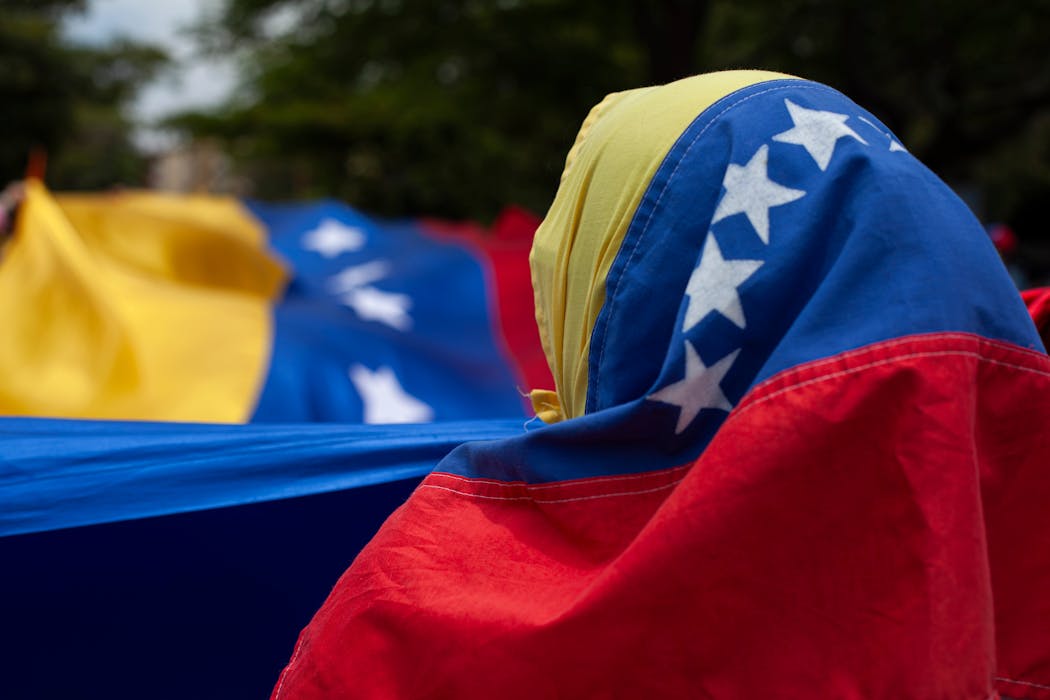
On January 3, the world watched in disbelief as the Venezuelan president, Nicolás Maduro, was captured by US forces. It was a dramatic geopolitical event that would reverberate not just in Washington and Caracas, but deep into global financial markets.

Financial speculation erupted across prediction platforms, bond markets and even cryptocurrency. It was a frenzy that, for some, translated into enormous profits – something I have looked at closely since 2023.

At the same time, Donald Trump’s personal wealth has reportedly soared amid broader shifts in financial markets and his own crypto ventures. It was reported that the value of the US president’s crypto-related holdings may have increased by US$140 million (£104 million) following the Venezuela raid. It feeds into a broader trend of rapid growth in digital assets tied to the president and his family.

What this episode reveals is not only how geopolitics shapes markets, but how intertwined political power, speculation and personal wealth have become. This matters not just to investors but to ordinary citizens. The world’s future has rarely been more uncertain, but according to American economist Frank Knight, uncertainty is the road to profit.

Prediction markets are platforms where people bet on political or real-world outcomes. Users can buy and sell shares representing yes/no responses concerning the outcome of anything from sporting events, celebrity news or political shakeups. On Polymarket, an online prediction market, one anonymous trader turned a stake of around US$34,000 into more than US$400,000 by betting that Maduro would be ousted by the end of January.

Polymarket later announced however that bets on Maduro’s capture did not qualify and that it will not pay out. In a statement, it said the bet referred to “US military operations intended to establish control” in Venezuela.

But nonetheless, the potential windfall sent shock waves through the financial press. How did this platform user know? Were they lucky, or did someone with an inside track get there first? This has fuelled debate about whether prediction markets are legitimate aggregators of information or thinly regulated gambling platforms ripe for ethically questionable insider gains.

Cryptocurrency and prediction markets overlap in other ways. Many of these platforms – including those backed or acquired by major crypto players – operate on blockchain infrastructure and allow wagers in digital assets.

Trump’s impulse to loosen regulatory oversight has, over his tenure, tended to benefit crypto markets. While it’s too soon to quantify any direct effect on his personal holdings, the symbolic link between political risk and crypto valuation is unmistakable to investors who see turmoil as volatility they can profit from.

But in Washington, politicians are now proposing insider-trading restrictions specific to prediction platforms.

Turning distress into dollars

If prediction markets are the high-risk, high-return fringe of this story, the surge in Venezuelan sovereign bonds is its mainstream financial counterpart.

For years Venezuela’s government and state oil company Petróleos de Venezuela SA (PDVSA) defaulted on billions in debt, with bonds trading at deep discounts. When Maduro was captured and the prospect of a political reset seemed real, those distressed bonds jumped sharply. Some rose nearly 20% in value as investors saw the prospect of debt restructuring or an easing of US sanctions.

Hedge funds and other institutional investors that had taken long positions in on this beaten-down debt suddenly found themselves on the brink of sizeable profits. This was not a gamble on an election or a crypto token – it was a political event changing credit risk expectations.

It is the kind of speculation that made headlines in the 1990s sovereign debt crises and again in Greek bonds during the eurozone turmoil. But it’s rare to see such dramatic moves tied to a single operation.

The bond rally illustrates how modern markets internalise geopolitical risk: when a regime change seemed possible, investors put money down that the new status quo would repair economic ties, unlock oil revenues and legitimise Venezuelan debt. The fact that this rally came so quickly after the raid shows how responsive markets are to political surprises.

Beyond prediction bets and debt traders, a third wave of speculation rippled through energy stocks and broader markets.

US companies – particularly Chevron, which already holds Venezuelan interests – saw their shares jump as investors priced in the possibility of the US gaining access to Venezuela’s vast oil reserves. News that Washington may exercise temporary control over Venezuelan oil sales only amplified this narrative, sending energy stocks indexes and broader market indices higher in the days after the raid.

The rally was not universal – global oil prices were more muted and even fell at times as markets assessed potential oversupply scenarios. But the broader trend was clear: geopolitical change in a major oil-producing nation quickly raised hopes of higher share prices for some energy firms.

This is not just Wall Street optimism – it reflects real strategic thinking about how a post-Maduro Venezuela might unlock tens of millions of barrels of oil and rekindle investment in one of the world’s largest reserves. It is a reminder that behind seemingly chaotic headlines, markets are always trying to price tomorrow’s economic reality today.

The capture of Maduro was a financial event as well as a political one. It exposed how deeply intertwined markets and geopolitics have become – and how much profit awaits those who can read the signals first.

The Conversation

Daniele D’Alvia does not work for, consult, own shares in or receive funding from any company or organisation that would benefit from this article, and has disclosed no relevant affiliations beyond their academic appointment.

ref. How markets have cashed in on Maduro’s capture in Venezuela – and why it’s raising questions – https://theconversation.com/how-markets-have-cashed-in-on-maduros-capture-in-venezuela-and-why-its-raising-questions-273059

Humanoid robots or human connection? What Elon Musk’s Optimus reveals about our AI ambitions

Source: The Conversation – UK – By Berry Billingsley, Director of AI, Digital and Online Development, Swansea University

Optimus is a general-purpose robotic humanoid under development by Tesla. Raman Shaunia/Shutterstock

When Elon Musk talks about robotics, he rarely hides the ambition behind the dream.

Tesla’s Optimus is pitched as an all-purpose humanoid robot that can do the heavy lifting on factory floors and free us from drudgery at home. Tesla is targeting a million of these robots in the next decade.

But is Musk likely to succeed? A few years ago, the thought of a friendly, capable household robot belonged in science fiction. We could imagine machines that danced, shifted boxes or played chess, but not ones that understood us well enough to be genuinely helpful. Then came generative artificial intelligence, or gen AI.

Whether your first encounter was with ChatGPT, Gemini or Copilot, many of us felt the same jolt of surprise. Here was a bot that seemed to understand us in a way we didn’t expect. That has made Musk’s dream of a robot companion feel if not close then certainly closer.

Imagine leafing through a catalogue of robots the way we browse for home appliances. If a personal robot still feels too expensive, perhaps we might hire one part time. Maybe a dance instructor that doubles as a therapist. Families could club together to buy a robot for an elderly relative. Some people might even buy one for themselves.

The future Musk describes isn’t just mechanical, it’s emotional.

Why the humanoid shape matters

The idea of robots that look like us can seem creepy and threatening. But there’s also a practical explanation for the drive to make robots that look like us.

A dishwasher is essentially a robot but you have to load it yourself. A humanoid robot with hands and fingers could clear the table, load the dishwasher and then feed the pets too. In other words, engineers create humanoid robots because the world is designed for human bodies.

But the humanoid form also carries an emotional charge. A machine with a face and limbs hints at something more than functionality. It’s a promise of intelligence, empathy or companionship. Optimus taps into that deep cultural imagery. It is part practical engineering, part theatre and part invitation to believe we are close to creating machines that can live alongside us.

There are moments when a personal robot might be genuinely welcoming. Anyone who has been ill, or cared for someone who is, can imagine the appeal of a helper that preserves dignity and independence. Robots, unlike humans, are not born to judge. But there is also a risk in outsourcing too much of our social world to machines.

If a robot is always there to tidy up the mess, practical or emotional, we may lose some of the tolerance and empathy that come from living among other people.

That is where the question of design becomes crucial. In the most dystopian version of life with generative AI-powered, chatty, dexterous robots, we retreat indoors, sealed into our homes and attended to by machines that are endlessly “understanding” and quietly adoring. Convenience is maximised, but something else is lost.

If sociability really does matter – if it is worth a little extra inconvenience to practise being human with other humans rather than only with chatbots – then the challenge becomes a practical one. How do we engineer a future that nudges us towards one another, instead of gently pulling us apart?

One option is to rethink where conversation lies. Rather than building all-purpose, ever-chatty assistants into every corner of our lives, we could distribute AI across devices and limit what those devices talk about. For example, a washing machine might discuss laundry, while a navigation system might discuss routes. But open-ended chatter, the kind that shapes identity, values and relationships, remains something that people do with people.

At a collective level, this kind of design choice could reshape workplaces and shared spaces, turning them back into environments that cultivate human conversation. That is, of course, only possible if people are encouraged to show up in person, and to put their phones away.


Read more:
The science of human touch – and why it’s so hard to replicate in robots


The real design challenge is not how to make machines more attentive to us, but how to make them better at guiding us back towards one another

So, it is worth asking what kind of domestic future we are quietly building. Will the robots we invite inside help us connect, or simply keep us company?

Good bots, bad bots

A good bot could help a socially anxious child get to school. It may nudge a lonely teenager towards local activities. Or it may tell a cantankerous old person: “There’s a crime club starting in an hour at the library. We can pick up a paper on the way.”

A bad bot leaves us exactly where we are: increasingly comfortable with a machine and less comfortable with each other.

Musk’s humanoid dream may yet become real. The question is whether machines like Optimus will help us build stronger communities, or quietly erode the human connections we need most.

The Conversation

Berry Billingsley is the Director of AI, Digital and Online Development at Swansea University

ref. Humanoid robots or human connection? What Elon Musk’s Optimus reveals about our AI ambitions – https://theconversation.com/humanoid-robots-or-human-connection-what-elon-musks-optimus-reveals-about-our-ai-ambitions-269757

The UK’s childhood vaccination schedule just changed. Here’s why that’s actually reassuring

Source: The Conversation – UK – By Charlie Firth, PhD Candidate, Paediatrics, University of Oxford

oneinchpunch/Shutterstock.com

The UK has updated its childhood immunisation schedule. For parents who had already mapped out their child’s vaccination appointments in their heads, the announcement might have come as an unwelcome surprise.

The changes include routine protection against chickenpox through the combined MMRV vaccine, the removal of the Hib/MenC vaccine (which helps protect against two of the causes of meningitis and blood poisoning) from the one-year appointment, and a new vaccination visit at 18 months – bringing forward the MMRV vaccine, and adding a different Hib containing vaccine.

If you’re a parent, you might be wondering why the schedule you’d been expecting has suddenly changed. It’s natural to feel uncertain when something that seemed settled becomes unfamiliar. But changes like these are actually a routine part of how vaccination programmes work – and understanding why they happen can be reassuring rather than worrying.

When vaccination schedules stay the same for years, they fade into the background of family life. You know when appointments are due, your health visitor or GP knows the routine, and immunisation becomes just another part of early childhood – like weaning or starting nursery. It’s only when things change that we really notice the system at all.

Why schedules change

Vaccination schedules aren’t meant to stay frozen in time. In the UK, an expert committee called the Joint Committee on Vaccination and Immunisation (JCVI) regularly reviews evidence from clinical trials, safety monitoring, disease tracking and studies of how vaccines perform in real life. When the evidence shows a better way to protect children that is also cost-effective, recommendations are updated.

The addition of chickenpox vaccination is a good example (the “V” in MMRV stands for varicella, the virus that causes chickenpox). Many of us remember having chickenpox as children and might assume it’s always mild. But the evidence shows it can lead to serious complications, such as skin infections, pneumonia or brain swelling, sometime requiring treatment in a hospital. It also causes disruption through school absence and parents having to take time off work.

A child with chickenpox.
Chickenpox is mostly mild, but serious complications can develop.
Denis Val/Shutterstock.com

Delivering chickenpox protection through the combined MMRV vaccine makes practical sense too. Combination vaccines are widely used around the world – MMRV has been standard in Canada, Australia and Germany for years – and are designed to reduce the number of injections and clinic visits without compromising safety or effectiveness.

The new 18-month visit came about for different reasons and shows how one change can ripple through the whole schedule. The manufacturer of the Hib-MenC vaccine (Menitorix), given at one year, told the JCVI it would stop making it for commercial reasons.

The committee looked at the evidence and concluded that a MenC booster is no longer needed in infancy because the UK has a good control of meningococcal C disease, thanks to the MenACWY vaccine. It is given to teenagers, but can protect the whole population through herd immunity.

But children still need continued protection against Haemophilus influenzae type b (Hib), a serious bacterial infection. So an extra dose of the six-in-one vaccine – which protects against diphtheria, tetanus, whooping cough, polio, Hib and hepatitis B – is now given at 18 months.

The new appointment also allows the second MMRV dose to be given earlier, increasing protection against measles, mumps, rubella and chickenpox at a younger age. This matters because of recent outbreaks. Some parts of London have been offering the second MMR dose earlier, between 15 and 18 months, since the early 2000s. This approach led to higher overall uptake by age five compared with later appointments.

Vaccination programmes tend to work best when they’re unremarkable – when they just happen in the background of family life. A new visit, a new vaccine or a new combination brings the schedule back into view and prompts people to look again at a system they’d previously taken for granted.

This isn’t unique to vaccination. Any kind of infrastructure becomes most noticeable when it’s adjusted – think of roadworks or changes to school term dates. In vaccination, these moments can prompt questions about why change is happening, how decisions are made, and what’s different from before. These questions aren’t a sign of mistrust. They show people engaging with health systems exactly as they should.

New vaccines are developed, existing ones are made more effective, and diseases become more or less common. The latest changes to the UK immunisation schedule aren’t exceptional – they’re part of the continuing work needed to keep a complex public health system functioning over time.

Moments of change briefly reveal the work that routine usually hides. They show that vaccination programmes aren’t fixed systems, but ones that are constantly fine-tuned to keep children and adults protected.

The Conversation

Charlie Firth receives funding from the National Institute for Health Research.

ref. The UK’s childhood vaccination schedule just changed. Here’s why that’s actually reassuring – https://theconversation.com/the-uks-childhood-vaccination-schedule-just-changed-heres-why-thats-actually-reassuring-272746

What lies ahead for Latin America after the Venezuela raid?

Source: The Conversation – UK – By Nicolas Forsans, Professor of Management and Co-director of the Centre for Latin American & Caribbean Studies, University of Essex

The Trump administration has justified the recent capture of Venezuelan leader Nicolás Maduro as a law enforcement operation to dismantle a “narco‑state”. It also claimed it would break Venezuela’s ties to China, Russia and Iran, and put the world’s largest known oil reserves back under US‑friendly control.

This mix of counter‑narcotics, great power rivalry and energy security had already been elevated to a central priority by the administration in its national security strategy. Published in late 2025, the document announced a pledge to “reassert and enforce American preeminence in the western hemisphere” and deny “strategically vital assets” to rival powers.

Donald Trump has referred to this hemispheric project as the “Donroe doctrine”, casting it as a revival of the Monroe doctrine policy of the 19th century through which the US sought to stop European powers from meddling in the Americas. He seems to be seeking to tighten the US grip on Latin America by rewarding loyal governments and punishing defiant ones.

If Venezuela is the first test case of the Donroe doctrine, several other Latin American countries now sit squarely in Washington’s crosshairs. The most immediate target is Cuba, which the US has opposed since 1959 when communist revolutionary Fidel Castro overthrew a US-backed regime there.

Trump and his secretary of state, Marco Rubio, have openly hinted that Cuba could be Washington’s next target. They have described Cuba as “ready to fall” after the loss of Venezuelan oil and have boasted that there is no need for direct intervention because economic collapse will finish the job.

Cuba is enduring its worst crisis since 1959. Blackouts now regularly last up to 20 hours, real wages are collapsing and roughly 1 million Cubans have fled the country since 2021. This is all happening as Venezuelan crude oil is being redirected under US control.

For over two decades, Venezuela has provided Cuba with fuel and financing in exchange for doctors, teachers and security personnel – 32 of whom were killed in the US capture of Maduro, according to the Cuban government. Strangling Cuba’s remaining lifelines may well be enough to topple the government there without US forces needing to fire a single shot.

It is possible that Mexico will also soon come under fire. Mexico has quietly become Cuba’s main oil supplier, shipping roughly 12,000 barrels per day in 2025 to account for about 44% of the island’s crude imports. This is unlikely to please the Trump administration, which has recently renewed its threats to “do something” about Mexican drug cartels.

The raid in Venezuela’s capital, Caracas, took six months of meticulous planning and required an extraordinary amount of resources. So it is unrealistic to expect similar raids on other Latin American countries. However, targeted military strikes cannot be excluded.

Speaking on Fox News’s “Hannity” show on January 8, Trump said: “We are going to start now hitting land with regard to the cartels. The cartels are running Mexico.” He did not provide further details about the plans.

Mexico’s president, Claudia Sheinbaum, is trying to construct protective buffers. She has combined condemnation of the raid on Caracas with intense cooperation with the US on migration and security. This includes a deal for Mexico’s navy to intercept suspected drug-running boats near its coastline before US forces do.

But as part of a strategy that pushes US dominance of Latin America, Trump has already floated classifying Mexico’s cartels as terrorist organisations and the fentanyl they traffic across the border as a weapon of mass destruction. These are legal framings that could be used to justify strikes on Mexican soil in the name of counter-narcotics in the near future.

Trump’s other targets

Colombia, historically Washington’s closest military ally in South America, has flipped from “pillar” to possible target. The country’s president, Gustavo Petro, has been one of the loudest critics of the Venezuela raid. He called it an “abhorrent violation” of Latin American sovereignty committed by “enslavers”, adding that it constituted a “spectacle of death” comparable to Nazi Germany’s 1937 carpet bombing of Guernica in Spain.

Trump, who imposed sanctions on Petro and his family in October, responded by labelling the Colombian president a “sick man who likes making cocaine and selling it to the United States”. He then mused that a Venezuela‑style operation in Colombia “sounds good to me” before a hastily arranged phone call and White House invitation dialled back the immediate threat.

How long the conciliation between the two men lasts remains to be seen. Colombia has entered a heated presidential campaign season in which Trump’s remarks are already being read as an attempt to tilt the race, much as his interventions shaped recent contests in Argentina and Honduras.

Further down the hierarchy, Nicaragua’s government will also have watched events unfold in Venezuela with terror. Long treated in Washington as part of a trilogy of dictatorships with Cuba and Venezuela, Nicaragua features in US indictments against Maduro as a transit point for cocaine flights. Nicaragua was also recently designated by the US as a key drug‑transit country.

The unusually cautious statement on the Venezuela raid by Nicaraguan presidential couple Daniel Ortega and Rosario Murillo, as well as the rapid reinforcement of the presidential compound in the capital Managua, suggest a regime that knows it could be next in line should Trump choose to extend his “narco‑terrorism” narrative.

Trump appears to be turning longstanding US concerns – drugs, migration and interference by other major powers – into a flexible toolbox for coercion in Latin America. Countries that defy Washington or host its rivals risk being framed as security threats, stripped of economic lifelines and, possibly, targeted militarily.

Those that keep their heads down may avoid immediate punishment. But this comes at the price of treating hemispheric dominance as a fact of life rather than a doctrine to be resisted.

The Conversation

Nicolas Forsans does not work for, consult, own shares in or receive funding from any company or organisation that would benefit from this article, and has disclosed no relevant affiliations beyond their academic appointment.

ref. What lies ahead for Latin America after the Venezuela raid? – https://theconversation.com/what-lies-ahead-for-latin-america-after-the-venezuela-raid-272774

India’s 60 million street dogs are turning from village scavengers to city territory defenders

Source: The Conversation – UK – By Nishant Kumar, India Alliance Fellow, National Centre for Biological Science, Bangalore & Department of Biology, University of Oxford

Dasarath Deka / shutterstock

Growing up in rural India, my grandmother would feed the village dog half a chapati and a bowl of milk each afternoon, surely insufficient for its needs. The dog survived by scavenging from nearby homes. Years later, living in Delhi, I encountered street dogs refusing biscuits, overfed by households competing to care for them.

India’s unique mix of religious and cultural values creates a deep tolerance for non-humans and wildlife among rich and poor alike, often rooted in millennia of coexistence. People consciously endure significant risks to coexist with animals. However, this dynamic is shifting as cities grow and their dogs become more territorial in crowded and more littered shared spaces.

India has at least 60 million free-ranging dogs, an estimate more than a decade old. More recent surveys found about 1 million in Delhi alone. Relatedly, India also accounts for more than a third of global rabies deaths.

Unlike most western countries, Indian culture and laws forbid culling. Dogs must instead be caught, sterilised, vaccinated and – crucially – returned to their exact territory. In practice, these mandates are frequently ignored.

Things changed in August 2025. After several children were mauled by street dogs, the country’s supreme court briefly ordered all street dogs in Delhi and the surrounding region be rounded up and placed in shelters or pounds, promising dog-free streets for the first time in decades.

The order was unworkable – there simply aren’t shelters for millions of dogs – and sparked a fierce backlash from animal rights groups. Within two days, the court reversed its decision and reinstated the long-standing sterilisation policy.

Subsequent rulings have narrowed the focus. In November 2025 the court ordered dogs be removed from schools, hospitals and public transport zones nationwide, while adding restrictions on public feeding and encouraging fencing to keep dogs away.

Most recently, on January 7, 2026, it directed authorities to fence and secure all of India’s 1.5 million schools and colleges from dogs – all within just eight weeks. Yet, like the earlier order, the aggressive timeline ignores the infrastructure challenges and is unlikely to significantly reduce the frequency of bites or resulting infection. The court is currently holding hearings with interested parties, as it tries to find a middle ground between mass removal of dogs and animal welfare concerns.

The nation is divided. It seems the state cannot kill these dogs, nor house them, nor control them. The question of what to do with them is one of public safety and animal welfare, but also something deeper: the latest chapter in one of evolution’s most remarkable partnerships.

An experiment in coexistence

Dogs are the only vertebrate species that followed human migration out of Africa into every climate and settlement. While the exact moment of domestication is uncertain, we know that dogs evolved to live alongside humans. But our cross-species ties now face unprecedented challenge of tropical urbanism.

three dogs growling at each other in India
Urban street dogs can be very territorial.
thinkpaws.org

In the past few centuries, as dogs earned their way into our homes, humans created over 400 breeds, fine-tuned for companionship, work or aesthetics. This co-evolution matters, as it means dogs are attuned to human cues and form strong attachments to specific people and places. In urban India, where dogs are unowned but aren’t truly wild, that attachment expresses itself as territorial behaviour over a home or someone who feeds them.

India’s unique social-ecological laboratory

India offers an unparalleled window into this relationship. Historically, street dogs served as scavengers. In poorer communities, they still do. But in more prosperous districts, they are now intentionally fed.

street scene in India with lots of street animals
Dogs, pigs, cows and humans all coexisting.
thinkpaws.org

Preliminary research in Delhi I carried out with my colleague Bharti Sharma reveals dogs organise into packs around specific households where a few committed feeders can meet nearly 100% of their dietary needs. This supports much higher dog densities than scavenging ever could.

The urban collision

This is where ancient coexistence collides with modern urban design. Indian streets are multi-use spaces. In tropical climates, waste pickers and blue-collar workers often operate at night – the very hours when dogs are most territorial, and when the wealthier residents who feed them are asleep.

Dogs have adapted their behaviour – barking, chasing, occasionally biting – in ways that get unintentionally rewarded by feeders but create hazards for others. The statistics are sobering: millions of bites and thousands of rabies deaths each year.

Yet some backlash to the supreme court’s mandates was inevitable. As gentrification changes who gets to decide what urban life should look like, a conflict of values has emerged. Some value shared animal presence, while others prioritise risk elimination.

The path forward

We may have reached “peak mutualism” in India’s cities. Despite daily nuisances everyone suffers – the barking, the chasing – millions still feed these dogs. Yet the same dog that wags its tail at familiar feeders may bite someone new. This is not irrational aggression; it is territorial protection born of deep association with a specific human community.

Western cities culled their street dogs long ago because social priorities were more uniform. India’s diversity means no such consensus exists. It may take another 20 or 30 years before its urban population uniformly sees the presence of territorial dogs as intolerable.

As India urbanises, it must decide whether to maintain spaces for ancient relationships that predate cities themselves, or follow the western path of total management. My grandmother’s half-chapati ritual represented an older compact: minimal investment, peaceful coexistence and mutual benefit. Delhi’s overfed, territory-defending dogs represent a new, more intensified intimacy – and it is unclear whether this serves either species well.

The Conversation

Nishant Kumar receives funding from the DBT/Wellcome Trust India Alliance Fellowship.

He is a DBT/Wellcome Trust India Alliance Fellow hosted at the National Centre for Biological Science, TIFR, Bangalore, India. Department of Biology, University of Oxford is his overseas host for the fellowship. In addition, he is the co-founder and Chief-Scientist of a research think-tank in Delhi, called Thinkpaws: www.Thinkpaws.org.

ref. India’s 60 million street dogs are turning from village scavengers to city territory defenders – https://theconversation.com/indias-60-million-street-dogs-are-turning-from-village-scavengers-to-city-territory-defenders-272751

How astronomers plan to detect the signatures of alien life in the atmospheres of distant planets

Source: The Conversation – UK – By Carole Haswell, Professor of Astrophysics, The Open University

We live in a very exciting time: answers to some of the oldest questions humanity has conceived are within our grasp. One of these is whether Earth is the only place that harbours life.

In the last 30 years, the question of whether the Sun is unique in hosting a planetary system has been resoundingly answered: we now know of thousands of exoplanets orbiting other stars.

But can we use telescopes to detect whether any of these distant worlds also harbour life? A promising method is to analyse the gases present in the atmospheres of these planets.

We now know of more than 6,000 exoplanets. With so many now catalogued, there are a number of ways to narrow down which worlds are the most promising for biology. Using the planet’s distance from its host star, for example, astronomers can work out its likely temperature.

Earth is the only planet in the Solar System with liquid water oceans on its surface, so mild temperatures are a possible requirement for a habitable planet. Whether a planet has the correct temperature for liquid water is strongly influenced by the presence and nature of the planet’s atmosphere.

Astonishingly, we can identify molecules present in the atmospheres of exoplanets. Quantum mechanics causes each atmospheric chemical to have its own distinct barcode-like pattern, which it leaves on the light passing through it. By collecting starlight that has been filtered through an exoplanet’s atmosphere, telescopes can see the barcodes of the molecules making up that atmosphere.

To take advantage of this, the planet needs to transit – pass in front of – the star from our point of view. This means it only works for a small fraction of known exoplanets.

The strength of the signal depends on the abundance of the molecule in the atmosphere: stronger for the most abundant molecules and gradually weaker as the abundance decreases. This means it is generally easiest to detect the dominant molecules, though this is not always true. Some of the barcodes are intrinsically strong, while others are weak.

For example, Earth’s atmosphere is dominated by diatomic nitrogen (N₂), but this molecule has a feeble barcode compared to the much less abundant diatomic oxygen (O₂), ozone (O₃), carbon dioxide (CO₂) and water (H₂O).

Detecting molecules

The James Webb Space Telescope (JWST) is a large space telescope which collects light at infrared wavelengths. It has been used to probe the atmospheres of a variety of exoplanets.

The detection of molecular imprints in the atmosphere of an exoplanet is not completely straightforward. Different teams of workers can derive different results as a consequence of making slightly different choices in the way they handle the same data. But despite these difficulties, reproducible and robust detections of molecules have been made. Simple molecules with strong barcodes such as methane, carbon dioxide and water have been detected.

Habitable Worlds Observatory
The Habitable Worlds Observatory could launch in the 2040s.
Nasa Scientific Visualization Studio

Planets larger than Earth but smaller than Neptune – so called sub-Neptunes – are the most common type of known exoplanet. It was for one of these planets, K2-18b, that a bold claim of a detection of a biosignature was made in 2025. The analysis detected dimethyl sulphide, with a claimed less-than-once-chance-in-1,000 that this detection was spurious.

On Earth, dimethyl sulphide is produced by phytoplankton in the oceans, but is rapidly broken down in seawater illuminated by sunlight. As K2-18b may be a
planet completely covered by a water ocean, the detection of dimethyl sulphide in its atmosphere could imply an ongoing supply of it from microbial marine life there.

Re-examination of the K2-18b dimethyl sulphide detection by other researchers casts doubt on this claim. Most significant was the 2025 demonstration by Arizona State University’s Luis Welbanks and colleagues that the choice of molecular barcodes to include in the analysis radically affected the results.

They found that numerous alternatives, not explored in the original paper, provided equally good or better fits to the measured data.

For Earth-sized planets which are presumably rocky, it is quite challenging to detect an atmosphere at all with JWST. However, the future is promising, as a number of planned missions will allow us to learn a lot more about planets which may be similar to the Earth.

Upcoming missions

With a planned launch in 2026, the European Space Agency’s Plato telescope will identify planets far more similar to Earth and suitable for transmission spectroscopy than those we currently know of.

Nasa’s Nancy Grace Roman space telescope, which is set to launch in 2029, will pioneer coronagraphic techniques that allow starlight to be cancelled out so the very much dimmer planets orbiting nearby stars can be studied directly.

The European Space Agency’s Ariel telescope, with a planned launch in 2029, is a dedicated transmission spectroscopy mission, designed to have the capabilities to determine the compositions of exoplanet atmospheres.

Nasa’s Habitable Worlds Observatory (HWO) is currently in the planning stages. This mission will use a coronagraph to study around 25 Earth-like planets, looking for a variety of hallmarks of habitability.

HWO will have broad wavelength coverage from the ultraviolet out to the near-infrared. If a twin of the Earth were orbiting one of HWO’s nearby target stars, the telescope would collect the starlight reflected from the planet. This reflected starlight would include the barcode signatures of diatomic oxygen (O₂) and other gases characteristic of our planet’s atmosphere. It would also reveal a signature of starlight being absorbed by photosynthesising plants: the so-called “vegetation red edge”.

Earth’s surface is divided into land and oceans, which reflect light differently. HWO would be able to reconstruct a low-resolution map of the surface from the changes in the reflected light as continents and oceans rotate in and out of view.

So the future looks very promising. With the spacecraft set to launch in coming years, we might close in on the question of whether Earth is unique in hosting life.

The Conversation

Carole Haswell receives funding from STFC.

ref. How astronomers plan to detect the signatures of alien life in the atmospheres of distant planets – https://theconversation.com/how-astronomers-plan-to-detect-the-signatures-of-alien-life-in-the-atmospheres-of-distant-planets-272821

Dementia at just 24-years-old – how Britain’s youngest sufferer may help researchers understand the disease

Source: The Conversation – UK – By Rahul Sidhu, PhD Candidate, Neuroscience, University of Sheffield

The family’s decision to donate Yarham’s brain to research will help unlock secrets about frontotemporal dementia. ahmetmapush/ Shutterstock

A UK man who is thought to be Britain’s youngest dementia sufferer recently passed away from the disease at only 24 years old. Andre Yarham, from Norfolk in England, was just 22 when he was first diagnosed with dementia.

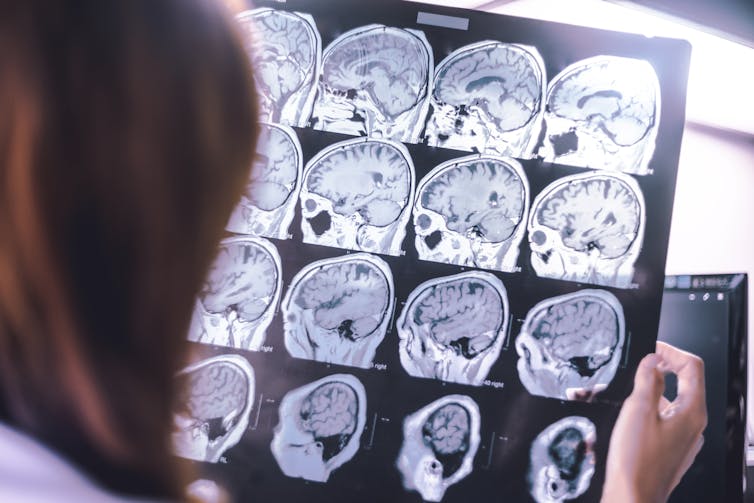
At the age of 24, most brains are still settling into adulthood. But Yarham’s brain looked decades older — resembling the brain of a 70-year-old, according to the MRI scan that helped diagnose him with the disease.

Yarham initially began exhibiting symptoms of dementia in 2022, with family saying he had become increasingly forgetful and would sometimes have a blank expression on his face.

In the final stages of his life, he lost his speech, could no longer care for himself, behaved “inappropriately” and was bound to his wheelchair.

Dementia is usually associated with old age. However, some forms of dementia can strike astonishingly early and move frighteningly fast. Take frontotemporal dementia, for instance. This was the form of dementia that Yarham was diagnosed with.

Unlike Alzheimer’s disease, which tends to affect memory first, frontotemporal dementia attacks the parts of the brain involved in personality, behaviour and language. These regions sit behind the forehead and above the ears in the frontal and temporal lobes.

These areas help us plan, control impulses, understand speech and express ourselves. When they’re damaged, people may change in ways that are deeply distressing for families – becoming withdrawn, impulsive or unable to communicate.

Frontotemporal dementia is a less common form of dementia, thought to account for around one in 20 cases. What makes it especially cruel is that it can appear in young adulthood.

In many cases, frontotemporal dementia has a strong genetic component. Changes in specific genes can disrupt how brain cells handle proteins. Instead of these proteins being broken down and recycled, they clump together inside the neurons (brain cells) – interfering with their ability to function and survive. Over time, affected brain cells stop working and die. As more cells are lost, the brain tissue itself shrinks.

Why this process can sometimes begin so early in life is still not fully understood. However, when a person has a powerful genetic mutation, the disease does not need decades to unfold. Instead, the mutation allows the damage to accelerate and the brain’s usual resilience fails.

Brain scans carried out while Yarham was alive showed striking shrinkage for someone so young. But to compare Yarham’s brain with that of someone in their 70s would be misleading. His brain had not “aged faster” in the usual sense. Instead, large numbers of neurons had been lost in a short period of time because of the disease.

A doctor or nurse holds up a collection of MRI brain scans.
Scans of Yarham’s brain revealed it was decades older than he was.
Atthapon Raksthaput/ Shutterstock

In healthy ageing, the brain changes slowly. Certain regions become a little thinner, but the overall structure remains intact for decades. But in aggressive forms of dementia, whole brain networks collapse at once.


Read more:
A 19-year-old is the youngest person to be diagnosed with Alzheimer’s disease – the cause is a mystery


In frontotemporal dementia, the frontal and temporal lobes can shrink dramatically. As these regions deteriorate, people lose the abilities that those areas support – including speech, emotional control and decision-making abilities. This would explain why Yarham lost language so late but so suddenly – and why his need for full-time care escalated so quickly.

Brain donation

Yarham’s family decided to donate his brain to research. This is an extraordinary gift – one that transforms tragedy into hope for others.

Dementia currently has no cure. Once symptoms begin, there’s no way to stop them and treatments which slow symptoms have limited effects. Part of the reason for this is because the brain is vastly complex and still not entirely understood. Every donated brain helps close that gap.

Brains affected by very early dementia are exceptionally rare. Each donated brain allows scientists to study, in fine detail, what went wrong at the level of cells and proteins. Although brain scans can tell us what brain parts have been lost, only donated tissue can reveal why.

Researchers can examine which proteins accumulated, which cell types were most vulnerable and how inflammation and immune responses may have contributed to the damage. That knowledge feeds directly into efforts to develop treatments that slow, stop or even prevent dementia.

The family’s decision to allow scientists to study tissue from such a rare, early-onset case of frontotemporal dementia could help unlock secrets that may guide treatments for generations to come.

As a neuroscientist, I have been asked how something like this can happen to someone so young. The honest answer is that we are only beginning to understand the biology that makes some brains vulnerable from the very start.

Cases like this underline why sustained investment in brain research, and the generosity of people willing to donate tissue, matters so deeply. The 24-year-old’s story is a reminder that dementia is not a single disease, and not a problem confined to old age. Understanding why it happened will be one small step toward making sure it does not happen again.

The Conversation

Rahul Sidhu does not work for, consult, own shares in or receive funding from any company or organisation that would benefit from this article, and has disclosed no relevant affiliations beyond their academic appointment.

ref. Dementia at just 24-years-old – how Britain’s youngest sufferer may help researchers understand the disease – https://theconversation.com/dementia-at-just-24-years-old-how-britains-youngest-sufferer-may-help-researchers-understand-the-disease-272972

Four ways to understand what’s going on with the US, Denmark and Greenland

Source: The Conversation – UK – By Ian Manners, Professor, Department of Political Science, Lund University

Shutterstock/Michal Balada

European countries, and Denmark in particular, are scrambling to respond to threats from US officials over the future of Greenland.

Having successfully taken out the leadership of Venezuela in a raid on January 3, an emboldened US government is talking about simply taking Greenland for itself.

Various European leaders have expressed their concern but haven’t been able to formulate a coherent response to the betrayal by a supposed ally.

Since the September 11 attacks in 2001, Danish governments have willingly participated in US-led invasions of Afghanistan (2001-2021) and Iraq (2003-2007). The rightward movement across the Danish political spectrum had led to Denmark rejecting some Nordic and EU cooperation in favour of pro-US transatlanticism.

However, the 2022 Russian invasion of Ukraine led to a rethink of Danish foreign policy. The country joined the EU’s common security and defence policy and tightened cooperation with recent Nato members Finland and Sweden.

And when Trump came to power for the second time, the chaotic rightward swing of US foreign policy left Denmark reaching out for support from its EU colleagues over the challenge to Greenland.

While a member of the European Union, Denmark has placed itself at the bloc’s periphery since copying the UK in opting out of the euro and from cooperation in justice and home affairs. But any US invasion of Greenland is likely to break Denmark’s fixed exchange rate policy with the euro (and before that the deutschmark) that has been in place since 1982. So there are economic implications as well as territorial.

The fallout from the US’s threats, and certainly any US intervention in Greenland, go much further than Denmark. While the EU tried to stay in step with the US in its support of Ukraine during Joe Biden’s presidency, since the re-election of Trump, EU member states have very much fallen out with the US. During 2025, the US and EU clashed over trade and tariffs, social media regulation, environment and agriculture policies.

But the latest developments demonstrate that Trump’s US can no longer be trusted as a long-term ally – to Greenland and Denmark, the EU and Europe.

This is a crisis engulfing many countries and triggered by many drivers. In order to understand this complex situation, we can use four different analytical approaches from academic thinking. These can help us contextualise not just the Greenland case, but also the emerging multipolar world of “might makes right”.

1. Realism

Currently the most popular approach comes from within the conservative tradition of “realism”. This predicts every state will act in their own national interest.

In this framing, Trump’s actions are part of the emergence of a multipolar world, in which the great powers are the US, China, India and Russia. In this world, it makes sense for Russia to invade Ukraine to counter the US, for the US to seize assets in Venezuela and Greenland to counter China, and for China to invade Taiwan to counter the US.

2. The new elites

Many think that to understand the events of the past few years, including Trump’s return and Vladimir Putin’s foreign policies, you need to look beyond conservative or liberal explanations to seek out who holds power and influence in the global superpowers. That means the wealthy families, corporations and oligarchs who exert control over the politics of the ruling elite through media and campaign power and finance.

In the cases of Venezuela and Greenland there are two factors at work – the US rejection of the rule of law and the desire for personal wealth via energy resources. But the timing is also important. The operation in Venezuela has been the only story to eclipse the Epstein files in the news in many months.

3. The decline of the liberal order

Many academic explanations see these recent events in the context of the decline of a “liberal order” dominated by the US, Europe, the “developed world” and the UN. In this view, the actions of Putin and Trump are seen as the last days of international law, the importance of the UN, and what western nations see as a system based on multilateralism.

However, this approach tends to overlook the continued dominance of the global north in these systems. The lack of support for the US and EU’s defence of Ukraine has been repeatedly demonstrated in the unwillingness of many global south countries, including China and India, to condemn the Russian invasion in the UN general assembly. It would be interesting to see how such voting would play out if it related to a US invasion of Greenland.

4. The planetary approach

The final – and most important – view is found in the planetary politics approach. This approach is based on the simple observation that so many planetary crises, such as global heating, mass extinctions of wildlife, climate refugees, rising autocracy and the return of international conflict are deeply interrelated and so can only be understood when considered together.

From this perspective it is Greenland’s sustainability and Greenlanders’ lives that must shape the understanding of Denmark’s and other European responses to Trump’s claims. It is through acknowledging the deep relationship that indigenous people have to their ecology that solutions can be found.

And Greenlanders have already expressed their vision for the future. Living on the frontline of the climate crisis, they want an economy built on resilience – not on ego-driven political drama.

While it’s quick and easy to to judge the events in Venezuela or Greenland in terms of the daily news cycle, the four perspectives set out here force people to think for themselves how best to understand complex international crises.

There is, however, a final observation to emphasise. Only one of these perspectives is likely to bring any way of thinking ourselves out of our planetary political crisis.

The Conversation

Ian Manners has received funding from EU Horizon Europe, Independent Research Fund Denmark, and Riksbankens Jubileumsfond.

ref. Four ways to understand what’s going on with the US, Denmark and Greenland – https://theconversation.com/four-ways-to-understand-whats-going-on-with-the-us-denmark-and-greenland-272873

‘That’s not how I pictured it’ – why book-to-film adaptations so often disappoint

Source: The Conversation – UK – By Julia Thomas, Professor of English Literature, Cardiff University

As Hamnet arrives on the big screen, many fans of the book may feel a familiar mix of excitement and trepidation. They may wonder how the film will bring to life Maggie O’Farrell’s intimate portrayal of Shakespeare’s wife, Agnes, and the loss of their son.

There is the thrill of seeing a beloved story imagined on screen. But there is also a quieter fear: that the film will not look like the version already playing in our heads.

For many of us, novels are not just read. They are seen. We carry their worlds in our “mind’s eye”, which is a phrase borrowed, fittingly, from Hamlet itself. When a film adaptation fails to match those private images, disappointment often follows. This is the moment when a viewer may find themselves thinking, or saying aloud, “that’s not how I pictured it”.

The source of this reaction lies in the cognitive process of reading. For most readers, this involves the creation of images in the mind’s eye. We picture scenes, events and characters, however vague or vivid these mental impressions might be. Mental visualisation can form part of the pleasure of reading, immersing the reader in the novel.

We rarely stop to examine these inner images or even notice that we are forming them. Often, we become aware of them only when they are disrupted and when the images on screen fail to align with what we had imagined. It is precisely this gap between mental and material images that may lead to feelings of dissatisfaction, disappointment and even disorientation.

Film adaptations can provoke the “that’s not how I pictured it” reaction, but the complaint itself has a much longer history. It stretches back to the pre-cinematic world of the 19th century, as my research shows. At that time, illustrations – the pictures that appeared in books, magazines and newspapers – were increasingly viewed as a threat to readers’ mental imagery.

The 19th century was the great age of illustration. New printing technology enabled an unprecedented proliferation of images, with texts, from novels to newspapers, adorned with pictures. This expansion brought with it new anxiety about the effects of illustration on readers’ mental visualisation.

When pictures appeared alongside words, as in the case of Charles Dickens’s novels, critics worried that they prevented readers from mentally picturing scenes for themselves. Once a reader had seen illustrator George Cruikshank’s images of Fagin, it was difficult to imagine the character in any other way.

A particular problem arose with works that were first published without illustrations and later re-published in illustrated form. By this point, readers had already mentally visualised the characters and scenes for themselves. Many described feelings of displeasure and disturbance when illustrations failed to coincide with what they had imagined.

A contemporary reviewer of an illustrated novel in 1843 observed that, for readers who had already visualised a novel’s characters, it was very difficult to reconcile themselves to new pictures. Another commented that such illustrations were rarely encountered “without disturbance and discomfort”.

Even the artist Edward Burne-Jones, who illustrated several classic texts, including the works of Chaucer, acknowledged the disappointment that arose when illustrative images failed to coincide with mental ones.

Aphantasia

Yet not everyone responded to illustrations with disappointment. For many readers, illustrated texts were a source of pleasure, especially for those who lacked the capacity to form mental pictures while reading. The term “aphantasia” has only recently been coined to describe the absence of a mind’s eye. It is estimated that around 4% of the global population do not mentally visualise.

Although the word itself was not used in the 19th century, debates about illustrated books frequently acknowledged the value of images for readers who did not mentally picture the words. George du Maurier, himself an illustrator and novelist, argued that illustrators worked primarily for such readers, whom he believed to be the majority.


Read more:
Aphantasia: ten years since I coined the term for lacking a mind’s eye – the journey so far


For aphantasic readers and viewers, the problem of visual mismatch does not arise, since no prior images are formed. In the 19th century, such readers could read illustrated books without the discomfort reported by others, just as they can watch contemporary film adaptations without pre-existing visual expectations. In this sense, screen adaptations may be not only less jarring, but also positively liberating, transforming the words on the page into images that the imagination does not supply.

For those of us who do visualise as we read, however, disappointment at a film adaptation need not signal failure, either of the film or of the imagination. On the contrary, it offers a rare glimpse into the workings of the mind’s eye, revealing just how personal and embodied our engagement with novels really is. Rather than protesting “that’s not how I pictured it”, we might pause to ask why it isn’t, and what that discrepancy reveals about what we see, and what we don’t see, when we read.

The Conversation

Julia Thomas does not work for, consult, own shares in or receive funding from any company or organisation that would benefit from this article, and has disclosed no relevant affiliations beyond their academic appointment.

ref. ‘That’s not how I pictured it’ – why book-to-film adaptations so often disappoint – https://theconversation.com/thats-not-how-i-pictured-it-why-book-to-film-adaptations-so-often-disappoint-272960