The boarding of the Marinera and the rise of the shadow fleet in hybrid warfare

Source: The Conversation – UK – By Basil Germond, Professor of International Security, School of Global Affairs, Lancaster University

The Marinera, previously Bella 1, was sailing under a Russian flag. X

The dramatic seizure of the Russian-flagged tanker Marinera/Bella 1 in the north Atlantic, carried out by the US coastguard with British support, underscores the collision between maritime law and power politics.

Under the United Nations Convention on the Law of the Sea (Unclos), ships on the high seas enjoy freedom of navigation and fall under the exclusive jurisdiction of their flag state. (However, boarding a vessel without consent is lawful in exceptional cases such as piracy, statelessness, hot pursuit or under a UN mandate.)

The US has justified the operation through domestic sanctions law and a federal warrant. These sanctions were part of a broader US oil-export blockade targeting shipments of Venezuelan crude, specifically sanctioning tankers involved in transporting oil for the Venezuelan government and affiliated entities. They were not directed at Russia generally.

The US and the UK emphasised the vessel’s “statelessness”. Indeed, the tanker’s mid-voyage switch to a Russian flag raises questions about the regularity of its re-registration.

Under maritime law, fraudulent reflagging is a violation that can render a vessel stateless and open the door to enforcement. In this case, this position is obviously contested by Russia, which claims that a proper re-registration happened.

Moscow’s protest and reported naval shadowing – Russia reportedly dispatched a submarine and at least one surface vessel in proximity but did not engage – highlight the geopolitical stakes. When legal ambiguity meets strategic rivalry, the high seas become a stage for confrontation.

But the Marinera affair is more than a clash over a sanctioned vessel. It exposes the fragility of maritime law. Unclos was designed for a world of consensus, not for shadow fleets and geopolitical rivalries. Yet, from the Middle East to Venezuela to Ukraine, enforcement is moving from courtrooms to contested waters – and the risk of miscalculation and escalation is growing.

What is striking is how quickly “shadow fleets” – that is, clandestine vessels operating outside normal maritime governance to move sanctioned or high-risk commodities while concealing their true origin, ownership, or destination – have become central to global geopolitical tensions.

Their operations raise serious safety, insurance and accountability concerns. But for countries facing western sanctions, they are vital. Russia, for instance, is using its shadow fleet to generate revenue for its war effort by selling oil in defiance of international sanctions.

Russia and its war against Ukraine is one of two major flashpoints, the other being the various measures being taken by the US against Venezuela and Iran. In both cases, one side (Venezuela, Iran and Russia) uses shadow fleets to bypass American or western sanctions.

The other (US and Ukraine) meanwhile – each for their own reasons – aims to disrupt these operations. And they do so increasingly through the use of force.

For Ukraine, this is happening in the context of an open armed conflict (outside the remit of Unclos, a peacetime instrument). This arguably makes its attacks on commercial assets that aid Russia’s war machine legitimate under the logic of war.

For the US, enforcement stems from the sanctions regime and domestic law. So, the boarding of the Marinera signals Washington’s willingness to enforce sanctions outside its own territory, even at the risk of provoking Moscow. Although the re-registration might arguably be non-compliant with Unclos, the vessel was de facto sailing under the Russian flag.

US coastguard boards the Marinera (footage suppied).

Kremlin humiliated

In less than a week, the US has arrested Venezuelan president Nicolás Maduro
(a Kremlin ally), announced its withdrawal from numerous international organisations, boarded a vessel displaying the Russian flag, and issued bold statements of aggressive intent about other sovereign nations.

This suggests the Trump administration has entered a new phase of implementing the 2025 national security strategy. The strategy is to challenge the status quo through a calculated shift in risk management. It is clearly willing to accept short-term geopolitical uncertainty in exchange for what the administration frames as long-term national resilience.

The US decision to board a vessel sailing under a Russian flag is deeply embarrassing for the Kremlin. This humiliation comes just days after successful US strikes on Venezuela, an ally of Russia, underscoring Moscow’s inability to shield its partners. The episode follows similar failures with Assad in Syria and with Iran – the latter also exposing the ineffectiveness of Russian-supplied air defence systems.

The repercussions are global. Russia’s war in Ukraine now reaches beyond the Black Sea, extending into the Mediterranean – even possibly as far as west Africa – with strikes on suspected Russian sanctions‑evading vessels. The attack in the Mediterranean has been officially claimed by Ukraine, while the one off Senegal remains unacknowledged, though it appears to follow similar patterns.

The US–Venezuela crisis combines regime politics, narcotics and shadow fleet dynamics. And two of the world’s biggest economies, India and China, which are major consumers of Russian oil, are deeply entangled, giving these maritime developments a truly international scope.

The question remains as to whether the use of force will deter shadow fleet operations. These operate within a now well-established business model, with unscrupulous owners and captains willing to make easy money out of illegal and dodgy operations.

These are backed by Russia, Iran and, until now, Venezuela and enabled by willing buyers and open registries (national ship registries that allow foreign-owned vessels to register under their flag with minimal requirements, often for lower costs and fewer regulations).

That makes prospects for deterrence bleak. Yet the use of force against civilian shipping in neutral or international waters, almost unprecedented outside major wars, could mark a turning point.

On one hand, it demonstrates that Unclos cannot serve as a shield for sanctions evasion. On the other, it reinforces power politics at sea, opening the door to more hybrid warfare in the maritime domain. This dynamic could ultimately play into Moscow’s hands, given Russia’s proven expertise in hybrid and grey zone warfare.

The Conversation

Basil Germond does not work for, consult, own shares in or receive funding from any company or organisation that would benefit from this article, and has disclosed no relevant affiliations beyond their academic appointment.

ref. The boarding of the Marinera and the rise of the shadow fleet in hybrid warfare – https://theconversation.com/the-boarding-of-the-marinera-and-the-rise-of-the-shadow-fleet-in-hybrid-warfare-273024

Chemistry is stuck in the dark ages – ‘chemputation’ can bring it into the digital world

Source: The Conversation – UK – By Lee Cronin, Regius Chair of Chemistry, University of Glasgow

In Chemify’s laboratories, AI-proposed molecules are compiled into chemical code which robots execute and test in real time. Chris James/Chemify, CC BY-NC-SA

Chemistry deals with that most fundamental subject: matter. New drugs, materials and batteries all depend on our ability to make new molecules. But discovery of new substances is slow, expensive and fragile. Each molecule is treated as a bespoke craft project. If a synthesis works in one lab, it often fails in another.

The problem is that any single molecule could have an almost infinite number of routes to creation. These routes are published as static text, stripped of the context, timing and error correction that made them work in the first place. So while chemistry is often presented as one of the most advanced sciences, its day-to-day practice remains surprisingly manual.

For centuries prior to the emergence of modern chemistry, alchemists worked by hand, mixing substances, adjusting conditions by feel, passing knowledge from teacher to student while keeping many secrets. Today’s chemists use far more analytical tools, yet the core workflow has barely changed.

We still design molecules manually using the rules of chemistry, then ask highly trained humans to translate these ideas into reality in the laboratory, step by step, reaction by reaction.

At the same time, we are living through an explosion in artificial intelligence and robotics – and chemists have rushed to apply these tools to molecular discovery. AI systems can propose millions of candidate molecules, rate and optimise them, and even suggest reaction pathways.

But frustratingly, these tools frequently hallucinate chemicals that cannot be made, because (unlike in the case of proteins) no one has yet captured all the practical rules for making molecules digitally.

Chemistry cannot become truly digital unless it is programmable. In other words, we need to be able to write down, in a machine-readable way, how to assemble molecules – including instructions, conditionals, loops and error handling – and then execute these instructions on different hardware in different places with the same outcome.

Without a language that allows chemistry to be executed, not just described, today’s cutting-edge AI tools risk generating little more than plausible-looking illusions of new chemical substances. This is where using the computer as an architecture to build a digital chemistry system, or “chemputer”, becomes imperative in my view.

Digital chemistry at the University of Glasgow.

Before computers, calculation was manual and mechanical. People used slide rules, tables and specialist devices built for specific tasks. But when Alan Turing showed that any computable problem could be expressed as instructions for a simple abstract machine, computation was liberated from having to be done on specific hardware – and progress became exponential.

Chemistry has never made that jump. Akin to chefs using individual methods to achieve the perfect souffle, researchers around the world have different ways of preparing chemicals. So while automation in chemistry exists, research remains largely artisanal in nature.

An AI can design a thousand hypothetical drugs overnight. But if each one requires a human chemist to manually work out how to make it because the molecules generated are not constrained by the real-world rules of chemistry, we have simply moved the bottleneck. Design has gone digital, making has not.

Chemistry by computers

To properly digitise chemistry, we need a programmable language for matter to encode these real-world rules. This idea led me, with colleagues in my research laboratory at the University of Glasgow, to develop the process of chemputation back in 2012.

We built a concrete abstraction of what a chemical code would look like – with steps such as “add/subtract matter then add/subtract energy”. By translating these steps into binary code, it was possible to build the components of a chemputer.

The premise is simple. Chemistry can be treated as a form of computation carried out in the physical world. Instead of publishing chemistry as prose, it is published in executable code, as described in our new preprinted article. Reagents are data. Operations like mixing, heating, separating and purifying are instructions. A range of machines, such as those shown in the image below, play the role of processors.

Elements of the chemputation process.
Lee Cronin, CC BY-NC-SA

Once chemistry becomes programmable, we expect many things to change. Reproducibility improves because processes are no longer interpreted by humans. Sharing becomes meaningful because a synthesis can be run, not re-imagined. Importantly, programmable chemistry allows feedback loops for error correction, with sensors monitoring reactions in real time.

Self-driving laboratories

Our ambitions for chemputation took a major step forward in June 2025 when Chemify, our University of Glasgow corporate spin-out, launched the world’s first chemifarm. At this facility in Glasgow’s Maryhill district, the process of chemputation is applied to making new molecules for drug and materials discovery.

It uses AI and robotics to enable the entire system to “self-learn”, and thus get better at making more advanced molecules over time. Discovery becomes an iterative, programmable process rather than a linear gamble.

This fits with the wider emergence of “self-driving” laboratories – robotic labs we pioneered that use AI and automation to enhance the speed and breadth of research.

Chemistry began as alchemy – a human art shaped by intuition and mystery, making potions, manipulating precious metals and building the first laboratory equipment. It has since grown into a rigorous science, yet never fully escaped its manual roots. If we want chemistry to keep pace with the digital age, especially in an era dominated by AI, we must now finish that transition.

The Conversation

Lee Cronin is the CEO and shareholder in Chemify and is the regius Professor at the University of Glasgow and recieves funding from many organisations including the UKRI Engineering and Physical Sciences Research Council.

ref. Chemistry is stuck in the dark ages – ‘chemputation’ can bring it into the digital world – https://theconversation.com/chemistry-is-stuck-in-the-dark-ages-chemputation-can-bring-it-into-the-digital-world-272610

Hamnet: by centring Anne Hathaway, this sensuous film gives Shakespeare’s world new life

Source: The Conversation – UK – By Roberta Garrett, Senior Lecturer in Literature and Cultural Studies, University of East London

For films and books about Shakespeare’s life, there is little source material to draw on beyond the few known facts of the great writer’s parentage, hometown, marriage, children, property and death. Shakespeare biopics therefore require considerable speculation and invention on the part of writers and directors.

Director Chloe Zhao’s earthy and sensuous film Hamnet is based on the book by Maggie O’ Farrell, who also co-wrote the screenplay. It not only foregrounds Shakespeare’s personal rather than professional life but does this by focusing chiefly on the experience of his previously maligned wife, Anne Hathaway (referred to as Agnes in the film).

From the 18th century to well into the 20th, Shakespeare biographers and researchers tended to represent Hathaway in highly negative terms. She was viewed as the “shrewish” wife that Shakespeare impregnated, was forced to marry and later escaped by fleeing Stratford for the exciting world of the London theatre.

This perception of Hathaway is grounded in sexist assumptions drawn from the few known facts of their marriage. Namely, that she was eight years his senior, he was only 18 when they wed, she was already pregnant and he spent many years of their marriage working in London.

The trailer for Hamnet.

The popular 1998 romantic comedy, Shakespeare in Love, reproduced the “shrewish” Hathaway narrative. She is absent from the film, but Shakespeare (Joseph Fiennes) dolefully comments on his sexless, loveless marriage and finds genuine passion instead with London-based heroine, Viola (Gwyneth Paltrow).

The more recent film, All Is True (2018) offers a different view. It depicts Hathaway and Shakespeare’s marriage in their twilight years, when the playwright has resettled in Stratford and is finally mourning the death of his son, Hamnet. Although Hathaway is central to the drama, she is depicted as an ageing and conformist provincial wife. Casting Judy Dench in the role alongside the much younger Kenneth Branagh as Shakespeare, also accentuated their age difference.

Hamnet’s Agnes

In sharp contrast, Hamnet’s Agnes (Jessie Buckley) is a young, robust and free-spirited woman who is associated with nature rather than dull domesticity.

Zhao and O’Farrell establish the themes of the film early on by opening with a scene of Agnes wandering in the richly toned mossy forest with her hawk. This view of Agnes draws on Shakespeare’s vision of the magical “green world”. But it also captures the atmosphere and skilled world-building of O’Farrell’s novel in which Agnes, like her long dead mother, is skilled and knowledgeable in turning herbs and flowers into remedies that are valued by the local community.

While many representations of Elizabethan life are centred on the largely male-dominated culture of politics and courtly life, Hamnet offers an account of the busy and productive life of an ordinary (if eccentric) Elizabethan wife and mother. Agnes is in charge of the labour-intensive life of the household. Her family home is situated in the centre of Stratford, boarded by a muddy, dirty, bustling thoroughfare. Women are shown as managing the core human processes of birth and death, birthing in an all-female environment and desperately struggling to keep their children alive in an age of precarious health and mortality.

As other critics have argued, the film’s climax – in which Hamlet is interpreted as the artistic expression of Shakespeare’s personal grief over the loss of his son – is one of the less convincing aspects of the film. Hamlet is essentially a revenge tragedy and Shakespeare’s plots were largely derived from classical and historical sources rather than personal experience.

Yet its heart-wrenching portrayal of Agnes’ anguish over her child’s untimely death is moving and persuasive, offsetting the modern misconception that as child mortality was higher, these experiences were less painful. The death of Hamnet is therefore recast as a tragedy for his mother, who birthed and raised him, rather than just the writer-genius, Shakespeare.

Hamnet’s representation of Agnes/Anne is, of course, almost entirely speculative. Only the wealthiest of women were literate at this time, so unlike her husband, Hathaway left no written traces. However, as Zhao and O’Farrell’s feminist film clearly illustrates, women’s lack of formal education and career opportunities did not mean that they contributed less to their communities – or that we should regard their lives as less meaningful.


Looking for something good? Cut through the noise with a carefully curated selection of the latest releases, live events and exhibitions, straight to your inbox every fortnight, on Fridays. Sign up here.


The Conversation

Roberta Garrett does not work for, consult, own shares in or receive funding from any company or organisation that would benefit from this article, and has disclosed no relevant affiliations beyond their academic appointment.

ref. Hamnet: by centring Anne Hathaway, this sensuous film gives Shakespeare’s world new life – https://theconversation.com/hamnet-by-centring-anne-hathaway-this-sensuous-film-gives-shakespeares-world-new-life-272969

How medieval monks tried to stay warm in the winter

Source: The Conversation – UK – By Giles Gasper, Professor in High Medieval History, Durham University

A medieval woodcutter chops down branches for firewood. Bequest of George Blumenthal, 1941

The best location for a monastery was one that was close to water and wood. Many monastic chroniclers mention this.

Orderic Vitalis, born in England near Shrewsbury in 1075 and sent to the Norman monastery of St Évroult at the age of five, was explicit about this twin need. Water for washing, sanitation, drinking, for making ink, for making lime mortar, and wood for building, and perhaps for keeping warm.

The Benedictine version of monastic life was the most popular across the medieval period, although many others existed. The rule attributed to St Benedict was set down, in 73 chapters, to provide guidance for how monks should live their lives. They should be focused on the world that is to come, on life after death, as well as on obedience and humility.

Monks could not own anything or have personal wealth, even though monasteries as institutions could be very rich indeed. Material comfort was not high on the agenda, at least in theory. Indeed, a contrasting relationship between material discomfort and spiritual worth is often identifiable in the religious expression of the period. In many ways it was seen as the greater the physical discomfort, the greater the spiritual value. The Cistercians, who emerged as a distinctive monastic grouping at the very end of the 11th century, and who followed the Rule of St Benedict too, laid great emphasis on austerity in all areas of their lives.

The regulation of monastic communities provides the context for their attitudes towards being cold. Concession to cold in the Rule of Benedict was limited – that monks in colder regions would need more clothes is recognised. In general the only difference between winter and summer wear was a thick and woolly cowl (a hood which extended across the shoulders) for the colder months and otherwise a thinner one.

Benedict was writing in 6th-century Italy. Conditions in northern regions in later medieval centuries were quite different, in many respects, to the early medieval Mediterranean. Not least in how cold monasteries could get. Orderic had a description of the effects of the winter at the end of his fourth book (of 13) of his Historia ecclesiastica. After writing a little about disputes and clashes on the frontier between Normandy and Maine, in what is now France, he notes that:

Mortal men are oppressed by many misfortunes, which would fill great volumes if the whole take of them were written down. But now, numbed by the winter cold, I turn to other pursuits; and weary with toil, resolve to end my present book here. When the warmth of spring returns I will relate in the following books everything that I have only briefly touched upon or omitted altogether.

But one room in a monastery was kept warm in cold weather. The calefactorium, or calefactory, that is to say, the warming room, was equipped with a fire, and in some cases other treats.

Very few buildings within monastic compounds had fireplaces. The church buildings would have been unheated, and so would the dormitories. The warming house was an unusual and important location in this respect. While some warming rooms were larger they would still not have been able to fit all that many people in at a time. It is easy to imagine a group of ten or so monks huddled round the fireplace, with wood crackling, talking quietly (talking was also discouraged in monastic houses), and seeking some measure of warmth in a cold environment. And that image is probably not far from the truth.

Despite their evident value to the community warming houses do not feature prominently in written records. Nevertheless, surviving examples of buildings and textual references do allow insights into monastic lives, and the difference that the calefactory must have made. Examples from medieval England included the Cistercian house of Meaux in Yorkshire. Founded in 1141 nothing survives of the building but an extensive chronicle does.

The record of new buildings made under Abbot Thomas from 1182 onwards includes mention not only of a fine refectory (dining room) for the monks, built in stone, but also the warming house and a small kitchen. That these should be be entered into the chronicle amongst the achievements of the abbot, as a record to future generations of the community, says a lot about the value placed upon it. It is of interest too that while the refectory went up quickly, paid for by a donor to the monastery, the kitchen and warming room were put together gradually and as resource allowed.

The value of fire

While the warming house of Meaux exists only in its historical record, good surviving examples of other warming houses are common enough. Rievaulx Abbey in north Yorkshire is a good example.

The warming house at Rievaulx is next to the refectory, and was altered quite substantially over the period from the 12th to the 16th century. Eventually two storeys, the warming complex also included clothes-washing facilities for the monks in winter.

And then to Durham. Here we turn to The Rites of Durham, a wonderful treatise from the 16th century (and later), the last memory of the practices of the pre-Reformation monastic house.

It reveals that the warming room, here referred to as a common house, was on the right-hand side as you exited the cloister. And inside there was:

a fyer keept all winter for the mouncks to come and warme at, being allowed no fire but that onely; except the masters and officers which had their seuerall fires.

While medieval buildings were difficult to heat, the presence of warm rooms was an indication of the value put on warmth. And in the case of the Durham Cathedral priory’s common house the monks were provided with additional treats around Christmas time, if the account is to be believed. Figs, raisins, cakes and ale were offered and taken in moderation.

Don’t have time to read about climate change as much as you’d like?

Get a weekly roundup in your inbox instead. Every Wednesday, The Conversation’s environment editor writes Imagine, a short email that goes a little deeper into just one climate issue. Join the 47,000+ readers who’ve subscribed so far.


The Conversation

Giles Gasper receives funding from Arts and Humanities Research Council, Research England, the John Templeton Foundation and the Leverhulme Trust

ref. How medieval monks tried to stay warm in the winter – https://theconversation.com/how-medieval-monks-tried-to-stay-warm-in-the-winter-270829

What 2026 could hold for the UK housing market

Source: The Conversation – UK – By Alper Kara, Head of Department of Economics, Finance & Accounting, Brunel University of London

Clare Louise Jackson/Shutterstock

For many UK households, 2025 marked the beginning of the end of the mortgage rate shocks of the previous year. And while that did not mean a return to cheap borrowing, the easing of interest rates was clearly visible over the course of the year.

The Bank of England’s base rate, a key determinant of mortgage pricing, fell from 4.75% in January 2025 to 3.75% in December.

And mortgage rates followed suit. For a typical first-time buyer (a two-year fixed deal with a 10% deposit) rates fell from around 5.35% in January to about 4.49% by the end of the year.

House prices, meanwhile, did not surge, with annual growth slowed to around 0.7%. Overall, 2025 looked more like a period of cooling and stabilisation – certainly one of the calmer years for the housing market in the past decade.

And that calmness could be about to continue. Most forecasts suggest that the Bank of England base rate could fall further, potentially towards 3.25% by the end of 2026.

But the December 2025 decision is a useful reality check. While the Bank cut rates to 3.75%, it was by a narrow vote (five for, four against). That close split shows the Bank is still cautious about cutting interest rates too quickly.

This matters because mortgage rates do not simply track the base rate. Fixed-rate mortgages are priced mainly off what markets expect to happen over the next few years.

When markets start to anticipate cuts, lenders can reduce fixed rates before the Bank acts. And when those expected cuts are already priced in, there is less room for dramatic further falls.

That helps explain why borrowers may not see mortgage rates drop as far as they hope even if the base rate continues edging down. Those drops are often priced in early, and the remaining reductions can be slower and smaller.

Given the direction of travel, a reasonable expectation is that mortgage rates in 2026 will be a little lower, and a little less volatile.

By the end of 2026, if the base rate settles near the lower end of expectations at around 3.25%, mortgage rates are more likely to stabilise rather than fall sharply. Best deals might dip just below 3.5%, but most borrowers are still likely to face rates in the 3.75–4% range.

Predictable property?

Competition between lenders may help at the margins, but bigger falls would require clearer evidence that inflation pressures are easing sustainably, allowing the Bank to keep cutting rates beyond 2026.

If mortgage rates fall modestly and become more predictable, research suggests that the housing market typically responds with improved confidence. More people may feel they are able to move, and buyers are less likely to wait around while they wait for clarity.

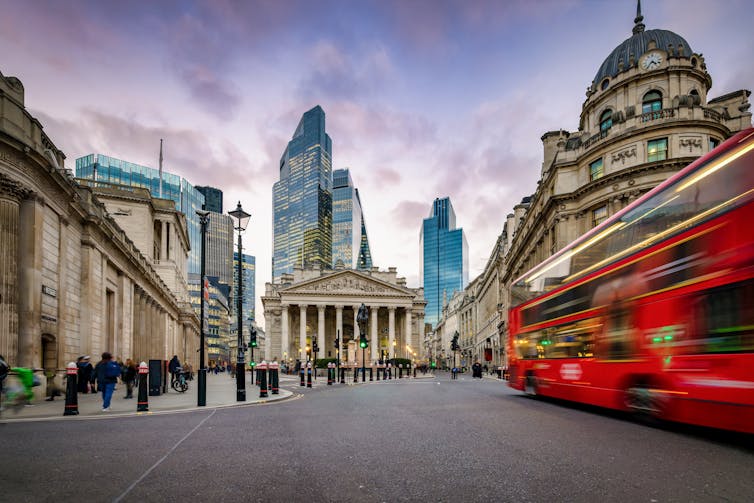
Bank of England street view.
All eyes on the Bank of England.
Sven Hansche/Shutterstock

But the general expectation for UK house prices in 2026 is modest growth rather than a runaway market. The Nationwide building society expects annual house price growth to remain broadly in the 2% to 4% range. Halifax’s predictions – of 1% to 3% – are more cautious.

Overall then, 2026 is likely to be a year of stabilisation with mortgage rates slightly lower, but not a return to the ultra-low rates of 2010s. But for households, the year should feel calmer and more predictable, with fewer mortgage shocks, supported by gradually improving affordability.

That said, borrowing is unlikely to feel cheap. And it is important not to assume that a falling base rate automatically guarantees cheaper mortgages, as much of that expectation may already be priced in.

For remortgagers, 2026 may bring fewer surprises, but it will still reward preparation. Households coming off very low fixed rates should start shopping early, compare product transfers with the open market, and pay attention to total costs, not just the headline rate.

For first-time buyers, 2026 may be not the worst time to buy. When rates stabilise and affordability improves gradually, planning becomes easier. But they should still be cautious about overstretching. A slightly cheaper mortgage does not necessarily offset high prices and transaction costs – or the ongoing cost-of-living pressures that many households face.

The Conversation

Alper Kara does not work for, consult, own shares in or receive funding from any company or organisation that would benefit from this article, and has disclosed no relevant affiliations beyond their academic appointment.

ref. What 2026 could hold for the UK housing market – https://theconversation.com/what-2026-could-hold-for-the-uk-housing-market-272403

Greenland is rich in natural resources – a geologist explains why

Source: The Conversation – UK – By Jonathan Paul, Associate Professor in Earth Science, Royal Holloway, University of London

Greenland’s concentration of natural resource wealth is tied to its hugely varied geological history over the past 4 billion years. Jane Rix/Shutterstock

Greenland, the largest island on Earth, possesses some of the richest stores of natural resources anywhere in the world.

These include critical raw materials – resources such as lithium and rare earth elements (REEs) that are essential for green technologies, but whose production and sustainability are highly sensitive – plus other valuable minerals and metals, and a huge volume of hydrocarbons including oil and gas.

Three of Greenland’s REE-bearing deposits, deep under the ice, may be among the world’s largest by volume, holding great potential for the manufacture of batteries and electrical components essential to the global energy transition.

The scale of Greenland’s hydrocarbon potential and mineral wealth has stimulated extensive research by Denmark and the US into the commercial and environmental viability of new activities like mining. The US Geological Survey estimates that onshore northeast Greenland (including ice-covered areas) contains around 31 billion barrels of oil-equivalent in hydrocarbons – similar to the US’s entire volume of proven crude oil reserves.

But Greenland’s ice-free area, which is nearly double the size of the UK, forms less than a fifth of the island’s total surface area – raising the possibility that huge stores of unexplored natural resources are present beneath the ice.

Greenland’s concentration of natural resource wealth is tied to its hugely varied geological history over the past 4 billion years. Some of the oldest rocks on Earth can be found here, as well as truck-sized lumps of native (not meteorite-derived) iron. Diamond-bearing kimberlite “pipes” were discovered in the 1970s but have yet to be exploited, largely due to the logistical challenges of mining them.

Geologically speaking, it is highly unusual (and exciting for geologists like me) for one area to have experienced all three key ways that natural resources – from oil and gas to REEs and gems – are generated. These processes relate to episodes of mountain building, rifting (crustal relaxation and extension), and volcanic activity.

Greenland was shaped by many prolonged periods of mountain building. These compressive forces broke up its crust, allowing gold, gems such as rubies, and graphite to be deposited in the faults and fractures. Graphite is crucial for the production of lithium batteries but remains “underexplored”, according to the Geological Survey of Denmark and Greenland, relative to major producers such as China and South Korea.

But the greatest proportion of Greenland’s natural resources originates from its periods of rifting – including, most recently, the formation of the Atlantic Ocean from the beginning of the Jurassic Period just over 200 million years ago.

Map of Greenland's major geologic provinces with their rock types.
Greenland’s major geologic provinces with rock types and ages.
Geophysical Research Letters, CC BY-NC-SA

Greenland’s onshore sedimentary basins such as the Jameson Land Basin appear to hold the greatest potential of oil and gas reserves, analogous to Norway’s hydrocarbon-rich continental shelf. However, prohibitively high costs have limited commercial exploration. There is also a growing body of research suggesting potentially extensive petroleum systems ringing the entirety of offshore Greenland.

Metals such as lead, copper, iron and zinc are also present in the onshore (mostly ice-free) sedimentary basins, and have been worked locally, on a small scale, since 1780.

Difficult-to-source rare earth elements

While not as intimately related to volcanic activity as nearby Iceland – which, uniquely, sits at the intersection of a mid-ocean ridge and a mantle plume – many of Greenland’s critical raw materials owe their existence to its volcanic history.

REEs such as niobium, tantalum and ytterbium have been discovered in igneous rock layers – similar to the discovery (and subsequent mining) of silver and zinc reserves in south-west England, which were deposited by warm hydrothermal waters circulating at the tip of large volcanic intrusions.

Critically among REEs, Greenland is also predicted to hold sufficient sub-ice reserves of dysprosium and neodymium to satisfy more than a quarter of predicted future global demand – a combined total of nearly 40 million tonnes.

These elements are increasingly seen as the most economically important yet difficult to source REEs because of their indispensable role in wind power, electric motors for clean road transport, and magnets in high-temperature settings like nuclear reactors.

The development of known deposits such as Kvanefield in southern Greenland – not to mention those not yet discovered in the island’s central rocky core – could easily affect the global REE market, owing to their relative global scarcity.

An unfortunate dilemma

The global energy transition came about due to increasing public recognition of the manifold threats of burning fossil fuels. But climate change has major implications for the availability of many of Greenland’s natural resources that are currently blanketed by kilometres of ice – and which are a key part of that energy transition.

An area the size of Albania has melted since 1995, and this trend is likely to accelerate unless global carbon emissions fall sharply in the near future.

Recent advances in survey techniques, such as the use of ground-penetrating radar, allow us to peer with increasing certainty beneath the ice. We are now able to obtain an accurate picture of bedrock topography below up to 2 km of ice cover, providing clues as to the potential mineral resources in Greenland’s subsurface.

However, progress is slow in prospecting under the ice – and sustainable extraction is likely to prove even harder.

Soon, an unfortunate dilemma may need to be addressed. Should Greenland’s increasingly available resource wealth be extracted with gusto, in order to sustain and enhance the energy transition? But doing so will add to the effects of climate change on Greenland and beyond, including despoiling much of its pristine landscape and contributing to rising sea levels that could swamp its coastal settlements.

Currently, all mining and resource extraction activities are heavily regulated by the government of Greenland through comprehensive legal frameworks dating from the 1970s. However, pressures to loosen these controls, and to grant new licences for exploration and exploitation, may increase amid the US’s strong interest in Greenland’s future.

The Conversation

Jonathan Paul does not work for, consult, own shares in or receive funding from any company or organisation that would benefit from this article, and has disclosed no relevant affiliations beyond their academic appointment.

ref. Greenland is rich in natural resources – a geologist explains why – https://theconversation.com/greenland-is-rich-in-natural-resources-a-geologist-explains-why-273022

As the US eyes Greenland, Europe must turn a global problem into an opportunity

Source: The Conversation – UK – By Francesco Grillo, Academic Fellow, Department of Social and Political Sciences, Bocconi University

Shutterstock/Bendix M

The so-called world order and the international rule of law are both officially dead in the wake of operation “absolute resolve”, the US infiltration of Venezuela to capture its president Nicolás Maduro.

It is true that both have been sick for some time – and Venezuela is a demonstration of this. Maduro was condemned by foreign leaders for illegally seizing power as long ago as 2013 – years before Donald Trump even became president. No concrete action was ever taken.

Operation “absolute resolve”, however, is a red line crossed.

Even when the US invaded Panama in 1989, there was some attempt to preserve a world order that no longer seems to matter. This invasion (more humbly named “just cause”) was anticipated by a declaration of war that came from Panama. The US Congress was, at least, informed and some countries even tried a mediation.

More importantly, the reaction when the US went ahead was much stronger. Even before the capture of Panamanian president Manuel Noriega, the General Assembly of the United Nations, the Organization of the American States (which includes the US) condemned the invasion as illegal. The European Parliament did the same immediately after.

In the case of Venezuela, the silence is deafening. And seeing that no one has challenged it, the US government has immediately started talking about taking Greenland, hinting that it wouldn’t even need to use force. The world order is dead because nobody is willing to defend it.

However, it is equally evident that the alternative to the defunct world order cannot be no order at all. It’s not feasible that the world should operate according to the law of the jungle. It is too complex and big to be governed by just one empire.

This much was acknowledged even in the controversial US security strategy published at the end of 2025, which says that US elites “badly miscalculated America’s willingness to shoulder forever global burdens” and that “they overestimated America’s ability to fund … a massive military, diplomatic, intelligence, and foreign aid complex”.

“We live in a world in which you can talk all you want about international niceties and everything else,” Stephen Miller, deputy chief of staff to Donald Trump, now says of the US’s changed vision. “But we live in a world, in the real world…that is governed by strength, that is governed by force, that is governed by power.”

But a world governed on these terms is obviously a world heading towards mutual destruction. In such a system, all countries would, legitimately, scramble to defend themselves militarily. For those countries not already equipped, the pursuit of nuclear weapons would be the only obvious route to invulnerability.

Turning crisis into opportunity

So, what should Europe do in the face of this problem? And in the current world order, it’s possible that I do really mean Europe rather than the EU.

This situation requires cooperation with the UK, Norway, and probably Canada and Switzerland. If necessary, it may require moving ahead without Hungary or whichever other EU countries are still doubtful about the need for an urgent, defence-based European integration.

In theory, a world without a world order is a much greater problem for Europe than for any other economy of the world. According to the World Bank, trade with other countries represents more than 60% of the five biggest GDPs in Europe but less than 40% of the GDPs of China, the US and Russia.

However, Europe is also probably the part of the world that is best equipped to try to be the broker a new framework. It has fewer enemies than other contenders and more friends (16 of the 20 countries whose passports enable entry to other states without a visa are European).

It has the strongest tradition of being a global meeting place (the top five host cities for international organisations are all in Europe).

So yes, Europe can, in theory, transform its biggest problem into its biggest opportunity. Indeed, I would even say that the only way to survive the chaos is by being ambitious. Europe must present itself as the only credible broker of a difficult and yet indispensable new world order.

Miller is right that this will take force, strength and power – but it is the force of standing up without double or triple standards over defending those rights that once inspired a “universal declaration” inspired by the United States.

It is about having the strength of ideas for drafting new institutions to reinforce those values. But also, it’s about having the power, even one based on a military deterrence, to defend freedom if somebody wants to impose a different vision of what civilisations are about.

Will Europe find the courage to be strong? It probably needs a trigger to wake up. Greenland could be that trigger.

If Europeans don’t manage to negotiate what they’ve mastered so far – another humiliating compromise that would only serve US interests and reinforce Miller’s worldview – then an incident over Greenland may be the end of an alliance that is already increasingly unstable. But it would also be an opportunity to draft a new vision for governing the world.

The Conversation

Francesco Grillo is affiliated with the think tank Vision which is the convenor of the Siena conference on the Europe of the Future.

ref. As the US eyes Greenland, Europe must turn a global problem into an opportunity – https://theconversation.com/as-the-us-eyes-greenland-europe-must-turn-a-global-problem-into-an-opportunity-272872

Your dog’s dinner could be worse for the planet than your own – new research

Source: The Conversation – UK – By John Harvey, PhD Researcher, Global Agriculture and Food Systems, University of Edinburgh; University of Exeter

Pixel-Shot/Shutterstock

Cutting down the amount of meat we eat helps reduce greenhouse gas emissions associated with agriculture. But what about the meat that our pet dogs eat?

Our new study shows that feeding dogs can have a larger negative effect on the environment than the food their owners eat. For a collie or English springer spaniel-sized dog (weighing 20kg), 40% of tested dog foods have a higher climate impact than a human vegan diet, and 10% exceed emissions from a high-meat human diet.

Dog food comprises a significant part of the global food system. We have calculated that producing ingredients for dog food contributes around 0.9-1.3% of the UK’s total greenhouse gas emissions. Globally, producing enough food for all dogs could create emissions equivalent to 59-99% of those from burning jet fuel in commercial aviation.

The type of animal product used to produce pet food really matters. The environmental footprint of dog food differs for prime cuts and offal or trimmings.

Cuts like chicken breast or beef mince are used in some dog foods but are also commonly eaten by people. Selling these “prime cuts” provides around 93-98% of the money from selling an animal carcass.

By-products like offal and trimmings – which are less sought after for human consumption, much cheaper, but highly nutritious – are widely used in pet food. We assign more of an animal’s environmental footprint to high-value cuts and less to these by-products.

Greenhouse gas emissions for different types of dog foods:

Some previous studies have given by-products the same environmental impact by weight as the highest‑value cuts, directly using figures calculated for human food. This “double counts” livestock impacts and substantially overestimates the footprint of pet food.

A practical problem for pet owners and researchers like us is that it’s difficult to find out which parts of the carcass are in a product. Our study used mathematical models to estimate the composition based on the ingredients list and nutritional composition of each food.


Read more:
Is your pooch better or worse off on a cereal-free diet?


Labelling guidelines allow broad terms such as “meat and animal derivatives”. These give manufacturers flexibility to change recipes but make it hard to distinguish between foods mainly based on low-value cuts and those rich in prime meat. Ingredients listed as chicken may be fresh, dehydrated (made from low value offcuts) or a mixture, and recipes are commercially sensitive.

For this reason, we adjusted our assumptions about nutrient content, environmental consequences of specific ingredients and the comparative values of meat products when estimating feed compositions. After repeating this process 1,000 times, one pattern was consistent: higher shares of prime meat drove up negative environmental effects.

yellow background, jack russell eating meat from table
Higher shares of prime meat in dog food drives negative environmental impacts.
Inna Vlasova/Shutterstock

Improved labelling – for example, indicating the proportion of prime meat v by‑products – would enable owners to make informed choices and allow better scrutiny of “sustainable” claims.

The format of pet food also matters. Some owners see raw and grain-free diets as more natural, although for many dogs these diets may offer no benefits and could introduce health risks, including nutritional imbalances and bacterial risks for dogs and their owners. Studies show that carefully formulated plant-based diets can meet dogs’ nutritional needs with similar health outcomes to meat containing diets, and there is increasing acceptance of this feeding approach from veterinary professionals.

On average, wet foods (for example, tinned or those packed in foil trays) and raw foods had more of a negative environmental effect than dry kibble. Grain-free options also have a greater environmental footprint than foods not marketed in this way. While the few plant-based diets we studied tend to be slightly less environmentally damaging than average meat-based ones, particularly among wet foods, this advantage is small compared to the difference between wet or raw and dry foods.


Read more:
Vegan diet has just 30% of the environmental impact of a high-meat diet, major study finds


There are exceptions. For example, the lowest impact wet foods we studied had lower emissions than the typical dry food. And, the foods with the absolute lowest negative environmental consequences we tested included meat by-products.

There are other protein sources being marketed as sustainable alternatives to feed dogs, the most widely marketed example being insects. We haven’t studied these in detail yet, but plan to in the future, while taking into account ongoing scientific debate about how large the real-world environmental benefits of insect production are.

Wet foods – and probably raw foods requiring refrigeration or freezing – tend to have greater greenhouse gas emissions from packaging and transportation. This further increases the chance that choosing these food types is less environmentally friendly.

Vegan v wolf diets

Pet food choices can provoke strong emotions. One of us should we name them?, a veterinary surgeon working on environmental sustainability, regularly sees owners torn between ideals of dogs as meat‑eating “wolves” and their wish to reduce environmental harm.

Our study shows that it’s not simply a matter of choosing between vegan diets and raw meat. Simple rules like “dry always has a lower environmental footprint than wet” do not hold for every product. The ingredient mix within each product is key.

So, for owners looking to reduce the environmental footprint of their pet food, it’s important to know that choosing grain-free, wet or raw foods can result in higher negative environmental effects compared to standard dry kibble foods. Regardless of food type chosen, selecting foods that use genuine animal by‑products or plant proteins rather than competing directly with meat humans typically eat is also preferable.

Dog foods showed over 65 times more variation in the effect they have on the planet, compared to a 2.5-fold difference between vegan and high-meat human diets. The potential to reduce – or increase – environmental damage by changing dog diets is enormous. By choosing meat products wisely for pet food and making labelling clearer, we can cut this hidden part of our food footprint and have healthy, well-fed dogs.


Don’t have time to read about climate change as much as you’d like?

Get a weekly roundup in your inbox instead. Every Wednesday, The Conversation’s environment editor writes Imagine, a short email that goes a little deeper into just one climate issue. Join the 47,000+ readers who’ve subscribed so far.


The Conversation

John Harvey receives funding from the Biotechnology and Biological Sci­ences Research Council (BBSRC), grant number BB/T00875X/1.

Vera Eory, SRUC, is credited as a co-author of the study and she collaborated with us during writing this article.

Peter Alexander and Sarah Crowley do not work for, consult, own shares in or receive funding from any company or organisation that would benefit from this article, and have disclosed no relevant affiliations beyond their academic appointment.

ref. Your dog’s dinner could be worse for the planet than your own – new research – https://theconversation.com/your-dogs-dinner-could-be-worse-for-the-planet-than-your-own-new-research-271865

Stopping weight-loss jabs leads to much faster rebound than thought – so are they still worth it?

Source: The Conversation – UK – By Sam West, Postdoctoral Researcher, Primary Care Health Sciences, University of Oxford

martenaba/Shutterstock.com

Weight-loss injections, like Wegovy and Mounjaro, have been hailed as gamechangers. In clinical trials, people lost an average of 15%-20% of their body weight – results that seemed almost miraculous compared to traditional diet and exercise programmes.

Today, one in 50 people in the UK are using these treatments. Most of them – around 90% – are paying privately, at a cost of £120-£250 per month. But there’s a catch: more than half of people stop taking the drugs within a year, with cost being the main reason.

Our latest research reveals what happens next, and it’s sobering. On average, in clinical trials, people regain all the weight they lost within just 18 months of stopping the medication.

That’s surprisingly quick – almost four times faster than the weight regain seen after stopping weight-loss programmes based on diet and physical activity. The health improvements vanish too, with blood pressure, cholesterol and blood sugar levels returning to where they started.

Person taking their own blood pressure.
Health benefits vanish too.
ThamKC/Shutterstock.com

This matters because it means these drugs may need to be taken long-term – potentially for life – to maintain the benefits. Some private providers offer intensive support alongside the medication, and our review showed this helped people lose on average an extra 4.6kg. But there was no evidence that support during or after stopping the drugs helped to slow weight regain.

The rapid rebound raises serious questions about fairness and whether these treatments represent good value for the NHS. Obesity is far more common among people living in deprived areas, who are also least able to afford private treatment. NHS access is crucial to ensuring everyone gets equal care, regardless of their income.

The NHS is gradually rolling out these medications, but only to people with severe obesity (BMI over 40) and four obesity-related conditions, such as high blood pressure. That means many people who could benefit are effectively excluded unless they can pay privately.

Costs may eventually fall as existing drug patents expire and cheaper oral versions are developed, but that could take years. In the meantime, we need to make sure NHS access to these medications delivers the best possible value so more people can benefit.

Cost v benefits

The National Institute for Health and Care Excellence approved these drugs for NHS use because it judged them cost-effective by its usual standards. But those calculations assumed treatment would last two years, with weight being regained after three years of stopping. Our data shows that if treatment ends, weight comes back surprisingly quickly.

We also found that the improvements in things like blood pressure and cholesterol – the main reasons the NHS treats obesity – disappeared within the same timescale. This means the treatments may need to be continued long term to achieve lasting weight loss and health benefits, which completely changes the cost calculations.

More research is needed to estimate how cost-effective these medications really are, outside carefully controlled clinical trials, and for the actual patients being treated.

For people with obesity who don’t yet qualify for the medication based on the strict NHS criteria, the medication may not be cost-effective for widespread NHS use until the price drops substantially.

For this population, traditional weight management programmes remain the foundation of obesity treatment. Total diet replacement programmes, during which people eat nutritionally balanced soups and shakes instead of regular food for eight to 12 weeks, can achieve similar weight loss to the medications at a fraction of the cost.

Group-based weight-loss programmes, such as WW and Slimming World, achieve smaller average weight losses but can be cost-effective and even save the NHS money.

The new weight-loss medications have shown just how desperately people want help to lose weight. But the question of value for money remains unclear. Making cheaper weight-loss programmes available to anyone with obesity who wants support would allow fairer access to treatment and improve public health, though individual results are likely to be less dramatic than what could be achieved with long-term medication.

The Conversation

Sam West receives funding from the National Institute of Health Research and is a co-investigator on three weight loss trials funded by the Novo Nordisk Foundation.

Dimitrios Koutoukidis receives funding from the National Institute of Health Research and is principal investigator in publicly-funded investigator-led research studies where Oviva and Nestle Health Sciences have contributed to the costs or delivery of weight-loss interventions. He supervised an iCASE PhD studentship where Second Nature was an industry partner.

Susan Jebb receives research grant funding from National Institute of Health Research and is principal investigator in a research programme funded by the Novo Nordisk Foundation

Oviva, Second Nature, Nestle Health Sciences have contributed to the costs or delivery of weight-loss interventions as part of some of research studies funded by the National Institute of Health Research.

ref. Stopping weight-loss jabs leads to much faster rebound than thought – so are they still worth it? – https://theconversation.com/stopping-weight-loss-jabs-leads-to-much-faster-rebound-than-thought-so-are-they-still-worth-it-272314

Stephen Miller: portrait of Donald Trump’s ideologue-in-chief

Source: The Conversation – UK – By Natasha Lindstaedt, Professor in the Department of Government, University of Essex

During a recent interview with CNN host Jake Tapper, the White House deputy chief of staff, Stephen Miller, laid out what appears to be the core of the new ideology driving US foreign policy: the notion that might is right. Or, as he put it: “We’re a superpower. And under President Trump, we are going to conduct ourselves as a superpower.”

Miller was referring to the Trump administration’s ambitions to take control of Greenland, if necessary by force. “We live in a world in which you can talk all you want about international niceties and everything else,” he told Tapper. “But we live in a world, in the real world … that is governed by strength, that is governed by force, that is governed by power.”

The 40-year-old Californian is one of Trump’s most trustworthy advisers and also one of the longest serving, having joined Trump’s first campaign in January 2016. While the president’s first administration had a revolving door of different appointees, many of whom who barely lasted a year, Miller is one of a handful of advisers to serve in both Trump’s first and second terms.

The two reportedly have a close working relationship, meeting daily along with Trump’s chief of staff, Susie Wiles, to go through Trump’s diary and review the executive orders to be signed. Having started out as a speechwriter, Miller’s position has evolved to focus more on interpreting the president’s ideas and executing them as policy initiatives. He is also understood to be a key liaison point between the White House and Capitol Hill, where he briefs lawmakers on Trump’s plans.

Origins of an extremist

Miller’s extreme ideas did not come out of nowhere. In contrast to the vice-president, J.D. Vance and secretary of state, Marco Rubio, whose ideologies have evolved significantly to be in line with Trump’s agenda, Miller has had a long history of supporting radical America First style policies.

While in high school in Santa Monica, Miller is said to have complained about students having to pick up rubbish, saying janitorial staff should do it instead. As a 16-year-old he contributed an article to a local website, criticising his fellow Hispanic students for a lack of language skills.

While at Duke University, where he studied political science, he contributed a number of articles to the college website, attacking multiculturalism and championing right-wing issues. He was also part of a group at Duke, Students For Academic Freedom, that criticised what they saw as political bias among faculty staff. These ideas would resurface in his attack on universities as a Trump administration official.

Moving to Washington, Miller first worked as an aide to then Republican representative Michele Bachmann before taking a job with Republican senator Jeff Sessions as press secretary. One of his main focuses was in developing critiques of immigration, collaborating with groups such as the Federation for American Immigration Reform and the Centre for Immigration Studies.

This is where he developed the ideas that have formed the backbone of the Trump administration’s anti-immigration policies, including the now notorious family separation policy, by which children were often taken from their parents – who were subject to prosecution for attempting to cross the US southern border illegally. The policy was judged to be so harsh that the UN openly condemned it as cruel and unnecessary.

Immigration has been one of the main focuses of Miller’s work in Trump’s second term. He is understood to behind the decision to deploy immigration and customs enforcement agents en masse on the streets of US cities with power to detain and deport suspected illegal immigrants. Other radical policies bearing Miller’s hallmark are the plan to end the American policy of birthright citizenship, in contravention of the 14th amendment to the US constitution.

But then many of the policy ideas he espouses have brought Miller into conflict with American constitutional law. He has publicly declared that in some circumstances it should be permissible to suspend a person’s habeas corpus right to a trial before they can be imprisoned and he has questioned the power of the judiciary to hold the administration to account over executive decisions on matters such as deportations and due process.

Personality politics

If relatively unknown during Trump’s first term, Miller’s profile has grown considerably in the first 12 months of the second Trump administration. A YouGov poll conducted in September 2025 found that 50% of respondents had heard of him and he had a popularity rating of 18%.

But if he is disliked and feared by many on Capitol Hill, as well as among the wider public, Miller has an ideological ally and staunch supporter in his wife Katie, who achieved instant fame on January 3 after tweeting a map of Greenland with the US flag superimposed on it, accompanied by the word “SOON”.

Within hours the US president had voiced his intention to intervene in Greenland for reasons of national security and to secure access to its huge reserves of mineral resources.

Like her husband, Katie worked in the first Trump administration, at the department of homeland security. She once told a reporter that even the administration’s separation policy was not a problem for her, claiming: “DHS sent me to the border to see the separations for myself, to try to make me more compassionate, but it didn’t work.”

She now runs The Katie Miller podcast, which she established as a “place for conservative women to gather online”. Among other things, it provides a regular and uncritical platform for administration officials.

But the Millers’ growing public profile could prove to be a double-edged sword for the Trump administration. Despite saying out loud what many on the far-right of the Republican party want to hear, their apparent extremism is increasingly a focus for Trump’s critics. California’s democrat governor Gavin Newsom – generally thought to be preparing for a presidential run in 2024, has taken to referring to Miller as Voldemort, the personification of evil in the Harry Potter novels.

All of which is unlikely to resonate well with the independent voters that the Republicans desperately need to win over if they are not to lose vital ground in November’s midterm elections.

The Conversation

Natasha Lindstaedt does not work for, consult, own shares in or receive funding from any company or organisation that would benefit from this article, and has disclosed no relevant affiliations beyond their academic appointment.

ref. Stephen Miller: portrait of Donald Trump’s ideologue-in-chief – https://theconversation.com/stephen-miller-portrait-of-donald-trumps-ideologue-in-chief-272869