Rosalía’s LUX: why the ‘pop-versus-classical’ question misses the point

Source: The Conversation – UK – By Andrew J. Green, Lecturer in the Anthropology of Music, King’s College London

LUX, the new album from Spanish singer-songwriter Rosalía, has been critically lauded. But opinion is divided among some commentators on whether it should be considered pop or classical music.

Much of LUX “sounds closer to classical music than it does to anything in the charts”, according to Guardian reviewer Alexis Petridis. Elle magazine describes Lux as “inspired by classical orchestral music and opera – but imbued with influences of pop, electronic, hip-hop, and more”.

And writing in the New York Times, Joshua Barone asks, “How much of the album is really classical music?” before concluding: “At the end of the day, [Rosalía] has made a pop album with a big budget.”

Even given the assumption that we have a very good idea of what (western) classical music “is” or “isn’t” – and we don’t – it isn’t very helpful to think of LUX in these terms.

LUX does prominently feature the London Symphony Orchestra, with arrangements by composer Caroline Shaw. There are two tracks with a particularly strong western classical influence: Mio Christo Piange Diamanti and the album’s lead single Berghain.

But Lux is a long album, which mostly features solidly pop songwriting, with brief, catchy, syncopated melodies and trap-style triplet flows (in which three syllables are sung or rapped over one beat). As on avant-pop classics like Björk’s Vespertine (2001) or Arca’s self-titled album (2017), conventional, appealing melodic songwriting often comes alongside a disposition not to settle.

The tonality implied by the songwriting is sometimes undermined by the orchestration, the rhythm is subtle or submerged, and there’s a fairly complex song structure which means that the listener requires repeat listens to get comfortable.

On an intense and complexly assembled album, it’s best to pick out a relatively straightforward example. One of my favourite moments on LUX is the stripped-down breakdown section about two-and-a-half minutes into La Yugular.

La Yugular by Rosalía.

Here the orchestra drops out, and Rosalía sings in triple metre (that is, three beats in a bar) with only kettledrums accompanying her. From here, the music starts to build in pitch and intensity.

Due to the instrumentation, it’s perhaps easy to hear a “classical” sound in this section. But the songwriting fits into what we might expect of pop. The vocal line is divided into syncopated, catchy, brief lines, while the kettledrums often emphasise the off-beat.

Let’s imagine we could switch out the kettledrums, and have electronically generated bass such as 808 bass playing the same line. Let’s say we auto-tune the voice too. With such an arrangement, this section of La Yugular would fit squarely into her 2022 album Motomami (for example, on tracks CUUUUuuuuuute or Saoko).

On Lux, Rosalía frequently uses the kettledrum for lines that, on Motomami, were recorded on electronic bass. The point is that here as elsewhere, focusing too much on the orchestra can get in the way of us noticing continuities between the songwriting on Motomami and Lux.

This is, of course, what we might expect from an album by a mainstream pop songwriter in collaboration with the London Symphony Orchestra. But dig a little deeper and we also ought to start questioning the conceptual distinction between “popular” and “classical”.

Genre distinctions

LUX mostly combines western pop style with Iberian and Latin American influences. There are strains of flamenco throughout the album, most obviously in La Rumba del Perdón and Mundo Nuevo.

LUX constantly hints at a reggaeton influence too. De Madrugá is based on a hemiola rhythm, the rhythmic basis of dozens of popular music traditions across the Iberian and Latin American world.

Finally, Dios Es Un Stalker is particularly ingenious. This song’s rhythm is, in effect, a deconstructed salsa rhythm which opens with only the bass line (so-called “bajo tumbao”). The salsa rhythm is fully put together only in the last 30 seconds, after a climactic key change.

Berghain by Rosalía.

There’s a particularly interesting case in the waltz rhythm played on the guitar in La Perla and the first part of La Yugular. In his review, Petridis focuses on a moment of levity towards the end of the former track: “On the waltz-time La Perla, a particularly dramatic set of strings and brass is followed by the sound of the singer giggling, as if she’s keen to undercut any pretensions.”

Of course, the waltz has its origins in European classical music, which is the association that Petridis is clearly making. But waltzes are also characteristic of multiple genres of Latin American popular music. This is especially the case in northern Mexico, where waltzes are played by música norteña bands, by mariachi groups, by banda ensembles and more.

La Perla places this history into reverse: the track opens with regional Mexican act Yahritza Y Su Esencia playing a Mexican-style waltz rhythm and concludes with the London Symphony Orchestra playing a European-style ballroom waltz. LUX tells us something that Anglophone reviewers often miss: especially when Iberian and Latin American music is in the mix, it’s not quite so easy to separate “classical” and “popular”.

So, the claim that Lux might constitute “classical music” has to end with us questioning quite a few things: the distinction between classical and popular, the exclusion of non-Anglophone music from the stories most often told about popular music and – most importantly – whether anyone really cares anymore whether music “qualifies” as “classical”. LUX deserves to be heard on its own terms, as an ambitious, self-aware and wildly inventive piece of work.


Looking for something good? Cut through the noise with a carefully curated selection of the latest releases, live events and exhibitions, straight to your inbox every fortnight, on Fridays. Sign up here.


The Conversation

Andrew J. Green does not work for, consult, own shares in or receive funding from any company or organisation that would benefit from this article, and has disclosed no relevant affiliations beyond their academic appointment.

ref. Rosalía’s LUX: why the ‘pop-versus-classical’ question misses the point – https://theconversation.com/rosalias-lux-why-the-pop-versus-classical-question-misses-the-point-269743

UN backs Trump’s plan for Gaza but Palestinian statehood remains a distant prospect

Source: The Conversation – UK – By Leonie Fleischmann, Senior Lecturer in International Politics, City St George’s, University of London

The UN security council has voted to adopt a resolution endorsing US president Donald Trump’s plan to end the war in Gaza. However, while the resolution references a credible pathway to Palestinian self-determination and statehood, the road to such an outcome is far from determined.

The resolution, which received 13 votes in favour and none against, with abstentions from Russia and China, paves the way for a Trump-chaired transitional authority to supervise Gaza’s reconstruction and recovery. It also authorises the arrival of peacekeepers for an international stabilisation force to oversee border areas, provide security and demilitarise the Gaza Strip.

These proposals were first outlined in late September, when Trump unveiled a 20-point plan to end the conflict in Gaza. The White House reported at the time that the plan had “galvanised a chorus of international praise as the potential pivotal turning point” for ending the war between Israel and Hamas.

It was a result of this plan and diplomatic efforts led by Steve Witkoff, the US special envoy to the Middle East, that a ceasefire was put into effect on October 10. This ceasefire has seen a partial withdrawal of Israeli troops from parts of Gaza and the return of all the living – and most of the deceased – hostages to Israel.

However, the ceasefire remains fragile and Israel has reportedly violated it consistently with continued attacks. Torrential rain is also causing floods across the Gaza Strip, bringing more devastation to the war-torn area. It is thus vital that progress is made towards rebuilding the lives of Palestinians in Gaza.

But it remains uncertain whether Trump’s plan will provide a complete solution. As is often the problem with internationally imposed plans, the wording is vague and therefore open to interpretation and manipulation. Specifically, clause 19 of the plan is ambiguous.

It states that only once the Palestinian Authority (PA), the body that exercises administrative responsibility over Palestinians in the West Bank, has reformed itself and the rebuilding of Gaza is under way, “the conditions may finally be in place for a credible pathway to Palestinian self-determination and statehood”. This leaves plenty of room for the path to be knocked off course.

Barriers to statehood

There are four significant barriers to establishing a Palestinian state. First is that there are no concrete details within Trump’s plan about what a future Palestinian state will look like. None of the main sticking points around achieving a two-state solution have been ironed out.

These include questions around the status of Jerusalem, which Israelis and Palestinians both want as their capital city. There are also disagreements around where to draw the line between Israel and a future Palestine, as well as the “right of return” for the millions of Palestinian refugees currently living abroad.

A second barrier to Palestinian statehood is that it will not be quick or easy to meet the conditions required for a political process towards a two-state solution to begin. The PA is accused of facing a “crisis of legitimacy”. The president of the PA, Mahmoud Abbas, and Fatah, its dominant political party, are deeply unpopular among Palestinians.

In a September 2024 poll conducted by the Palestinian Centre for Policy and Survey Research, just 6% of Palestinians said they would vote for Abbas in an election. And the PA itself is widely criticised for systemic corruption, nepotism, clientelism and bureaucratic malfeasance. Reform and regaining the support of Palestinians will be difficult to achieve.

Rebuilding Gaza will also be no easy feat. The UN estimates that reconstruction alone will cost US$50 billion (£38 billion), with even the most optimistic projections suggesting it will take a decade to rebuild. At what point during these processes will it be deemed the appropriate time to return to the question of a Palestinian state?

The third barrier is Hamas which, having rejected the UN’s resolution, threatens to derail the peace plan entirely. Hamas wrote on Telegram after the resolution passed that the plan “imposes an international guardianship mechanism on the Gaza Strip, which our people and their factions reject”.

Some commentators have argued that the imposition of external control over Gaza, and the tying of Palestinian statehood to externally generated conditions, reflects “a continuation of colonialist logic rather than a genuine pathway to self-determination”. If the Palestinians are going to achieve self-determination, they need to do so on their own terms.

Hamas has now reiterated its refusal to disarm, arguing that its fight against Israel is legitimate resistance. Israel and its western allies have made the disarmament of Hamas a non-negotiable demand for ending the war.

The fourth, and probably most significant, barrier is that the Israeli government remains staunchly opposed to the formation of a Palestinian state. Israel’s prime minister, Benjamin Netanyahu, did applaud Trump for his efforts to secure peace in a social media post following the UN vote.

However, he then told his cabinet that Israel’s opposition to a Palestinian state remains “firm and unchanged”. Netanyahu later confirmed that Israel supported only the steps within the plan that insist upon “full demilitarisation, disarmament and the deradicalisation of Gaza”.

Far-right leaders in his governing coalition, alongside violent settlers, are at the same time changing facts on the ground in the West Bank. They are doing so by establishing Israeli government-sanctioned settlements on Palestinian land, which are considered illegal under international law. The construction of these settlements amounts to de facto annexation, thwarting the possibility of future Palestinian sovereignty.

We are a long way off from concrete discussions of Palestinian statehood. But despite the many problems in Trump’s plan, it does provide some hope that at least the Palestinians in Gaza will be able to begin to rebuild their lives. Efforts must be made to ensure neither Hamas or Israel make any moves to derail this potential.

The Conversation

Leonie Fleischmann does not work for, consult, own shares in or receive funding from any company or organisation that would benefit from this article, and has disclosed no relevant affiliations beyond their academic appointment.

ref. UN backs Trump’s plan for Gaza but Palestinian statehood remains a distant prospect – https://theconversation.com/un-backs-trumps-plan-for-gaza-but-palestinian-statehood-remains-a-distant-prospect-270116

Game of Wool: Fair Isle knitting row reveals why culture and tradition matter

Source: The Conversation – UK – By Lynn Abrams, Chair of Modern History, School of Humanities, University of Glasgow

Knitters and crafters had been anticipating Channel 4’s new craft show Game of Wool for some time. Knitting, so long the poor relation of the textile crafts, was finally to take centre stage on primetime television.

Hosted by former Olympic diver and knitting convert Tom Daley, the show draws on the creative and technical skills of Di Gilpin and Shelia Greenwell – two of Scotland’s most high-profile hand-knitting specialists as judges. Game of Wool was set to join the BBC’s Great British Sewing Bee as a window onto the skills of amateur makers.

Yet, shortly after the first episode aired, the show found itself at the centre of a right old stooshie (a good Scottish word for a row). Advocates of Fair Isle knitting – the two-coloured stranded knitting technique and style with its origins in the eponymous island in Shetland – made their feelings known about the competitors’ first task: to knit a Fair Isle tank top in just 12 hours.

Online discussion groups were scathing about the task itself and the workarounds required – chunky wool, large gauge needles – to knit such a garment in such a short space of time.

The distinctive Fair Isle technique and style, with rows of two-coloured stranded design containing large motifs such as the “OXO” pattern alternating with “peerie” (small) patterned rows, had been misleadingly represented, it was claimed.

So why did a competitive task on a game show engender such a spirited debate?

Fair Isle motifs have been deployed frequently outside Fair Isle and Shetland by top designers and knitwear manufacturers. The term Fair Isle is often used to denote almost any kind of multi-coloured knitwear. And yet while its origins are disputed, inhabitants of this small island and the larger archipelago of Shetland have been knitting Fair Isle garments for generations, developing individual colourways and motifs.

Traditionally Fair Isle garments were knitted using local wool from Shetland sheep, in natural harmonising colours such as black, moorit (brown) and fawn, or with yarn dyed indigo (blue), madder (red) and yellow.

It was in the 1920s that the “all-over” Fair Isle sweater (a garment knitted entirely in stranded colourwork) was popularised by the Prince of Wales, leading to high demand for the colourful styles far beyond their original location. By the 1930s Shetland knitters were experimenting with new patterns, colours and materials. And manufacturers in Shetland and elsewhere (including overseas), appropriated the hand-knitted designs for machine-knitted garments once machines capable of knitting Fair Isle patterns became available.

Culture, tradition and livelihoods

So what is at stake for the knitting community in Shetland when a game show seemingly misappropriates a traditional craft practice? The issues for Shetland’s contemporary knitting community concern the economic and cultural viability and authenticity of a craft with long and deep associations with this place.

Knitting here through the 19th and much of the 20th centuries, before the arrival of the oil industry, was an essential occupation for the majority of women. Whether knitting was conducted on needles or on a hand-operated knitting machine, it was poorly rewarded. Knitters still struggle to command fair prices for their garments in a marketplace dominated by mass-produced knitwear.

The modern knitting economy of the islands has a vibrant face, attracting thousands of textile tourists and knitting practitioners each year, not least during the annual Shetland Wool Week in October. But this craft needs protecting and maintaining if it is to survive.

Just one example of the vulnerability of this indigenous craft to the economic and cultural power of the fashion industry was the incorporation of independent knitwear designer-maker Mati Ventrillon’s designs into Chanel’s 2016 Métiers d’art collection without attribution.

For Ventrillon, her designs, referencing historic local motifs and colours, are inseparable from Fair Isle the place, and her own life there as a knitter, crofter (a smallholding farmer in the Highlands) and member of a community of just 60 people.

In the wake of the furore that followed the Chanel show, she told the Business of Fashion: “All of these extra things – the things that I have to do, that I can’t ignore – they’re all part of the reason why these are luxury items. You’re not only paying for the quality of the knitting, but for the hardship and the challenging lifestyle that is required to live and work off this island. And it has to be from this island because where else can Fair Isle knitwear come from, but Fair Isle?”

Ultimately Game of Wool has cast a valuable spotlight on a heritage craft under threat despite its global profile. SOK, the Shetland Organisation of Knitters, has been founded in the wake of this debate, to preserve, promote and protect Shetland’s heritage knitting skills and culture.

Place matters. The craft product and the skills required to make a knitted garment embody a relationship between maker and place expressed through distinctiveness of materials, style, colourways, motifs and techniques. And although the power and reach of mass production has, in many cases, diluted this relationship, the original context of Fair Isle production remains important to both those who make it and those who wear it.


Looking for something good? Cut through the noise with a carefully curated selection of the latest releases, live events and exhibitions, straight to your inbox every fortnight, on Fridays. Sign up here.


The Conversation

Lynn Abrams received funding from UKRI for the research project “Fleece to Fashion. Economies and Culture of Knitting in Scotland” https://fleecetofashion.gla.ac.uk/

ref. Game of Wool: Fair Isle knitting row reveals why culture and tradition matter – https://theconversation.com/game-of-wool-fair-isle-knitting-row-reveals-why-culture-and-tradition-matter-270108

The growing paranoia of British politics

Source: The Conversation – UK – By Matthew Flinders, Founding Director of the Sir Bernard Crick Centre for the Public Understanding of Politics, University of Sheffield

Conspiratorial narratives have always swirled around the corridors of Number 10. Studies of the British style of government have, for decades, explored the role of unofficial briefings and the leaking of information to embarrass colleagues or put an issue on the agenda.

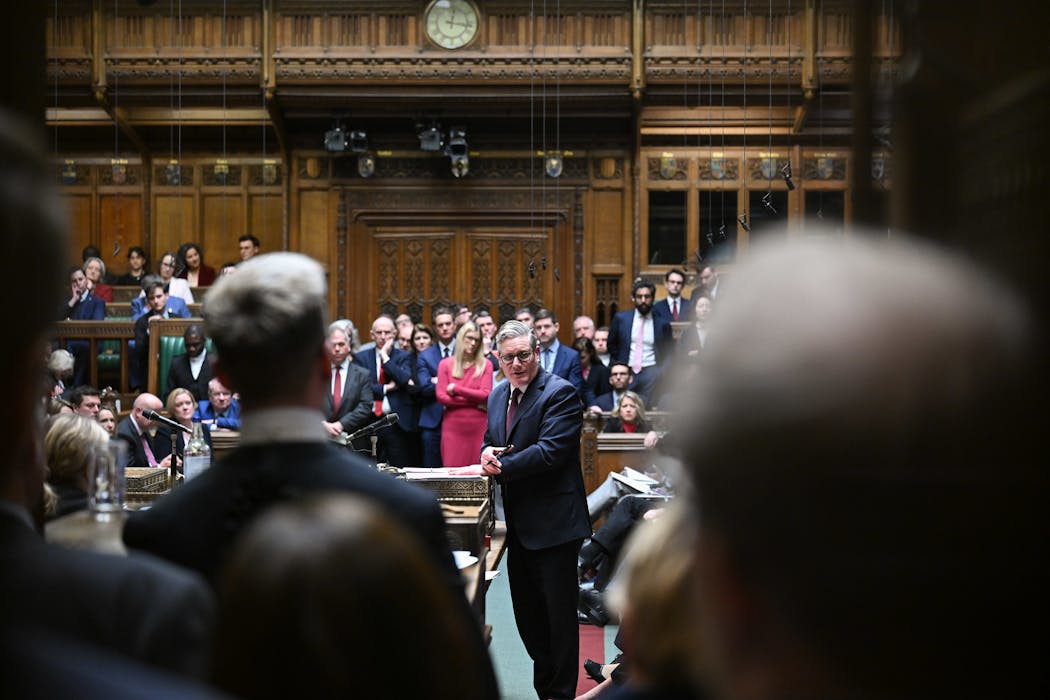
Recent allegations of a plot by associates of Keir Starmer were designed to smoke out a perceived impending leadership challenge to the prime minister, and focused attention squarely on Wes Streeting who denied being involved in a plot.

It was a pre-emptive strike in the form of a briefing strategy in an attempt to forestall a phantom coup. This odd episode quickly fizzled out. But now the furore has calmed down, a question emerges: what does it tell us about the state of Starmer’s government and British politics more generally?

The answer is that it points to the emergence of a new and increasingly paranoid style in British politics – one which revolves around exaggeration, suspicion and conspiratorial fantasy.

The notion of a paranoid style was first developed by historian Richard Hofstadter in relation to American politics, especially in the context of fears of communist sympathies during the early cold war. Put simply, it describes a model of political reasoning in which everything is seen through a conspiratorial lens.

All prime ministers are paranoid. Such paranoia comes from having to sit and smile around a cabinet table when you know that most of your hyper-competitive colleagues hanker after your job.

John Grigg’s biographies of the first world war prime minister David Lloyd George suggest he was generally convinced his colleagues were always about to oust him. Anthony Eden entered into a paranoid atmosphere over what became the 1956 Suez canal crisis that saw Britain humiliated on the world stage.

Harold Wilson governed with a profound and persistent suspicion about the security services, and in the the late 1960s his levels of paranoia spiked whenever Roy Jenkins received positive reviews for his helmsmanship of the Treasury. Towards the end of her time in No. 10, Margaret Thatcher developed a fortress mentality based on a belief that ministers were “not on her side”.

Health secretary Wes Streeting
Health secretary Wes Streeting at the centre of the latest drama.
Fred Duval/Shutterstock

If this is the traditional or “old” style of paranoia, Starmer is now projecting something very different. His is not a paranoia primarily born of concern for external threats or stalking horses. It reflects a deeper awareness that a vacuum exists at the apex of British government, and at some point this weakness will lead to a challenge.

Being a vanilla politician was good for Starmer in opposition. Being bland, avoiding contentious topics and promoting pragmatism provided very little for opponents to attack. But there is a widespread feeling in Westminster that, in office, the lack of clear ideological conviction has left the government rudderless and notably unable to offer the British public a positive vision about where they want to take the country and why (and at what cost).

It is in this context that Starmer now faces more challenges from backbench Labour MPs, after unveiling an overhaul of the UK’s asylum policies. Not a good position for a prime minister with the worst popularity ratings since polling began.

Systemic conspiracism

For Hofstadter, a paranoid style was characterised by apocalyptic crisis language, conspiratorial explanations of political events and attribution of national decline to hidden forces. It involved moral dualism (“patriots v traitors”) and an existential sense of dispossession (“the country is being stolen”).

See the link to British politics? Think I’m paranoid?

This paranoid style is not linked to an individual politician’s supposed clinical or psychological condition. This is systemic conspiracism, not personal suspicion.

It emerges out of a wider social-psychological pathology and a collapse in trust in the institutions and processes of democratic politics, combined with the social amplification of siege narratives that constantly promote polarisation.

Since Brexit, this paranoid style has become normalised in Britain. A country once famed for its stability, governing competence and broadly balanced civic culture is now dominated by a paranoid culture. Unlike historical instances that were confined to individual leaders, this is is now diffuse, populist-inflected and embedded across the political spectrum.

This is the deeper story that exists behind bungled briefings – and it’s a worrying one. It risks generating permission structures for norm-breaking, accelerating radicalisation and polarisation, weakening policy capacity and fuelling a doom loop cycle of failure – which creates more paranoia.

The climate of British politics has and is therefore changing. It is in recognising this broader shift that we can have a deeper understanding of the slow death of Starmer’s government. The old rules no longer apply, and the “good chaps” don’t know how to govern.

Or maybe I am just paranoid.

The Conversation

Matthew Flinders does not work for, consult, own shares in or receive funding from any company or organisation that would benefit from this article, and has disclosed no relevant affiliations beyond their academic appointment.

ref. The growing paranoia of British politics – https://theconversation.com/the-growing-paranoia-of-british-politics-269867

ADHD: even one bout of physical activity might help kids better learn in school

Source: The Conversation – UK – By Karah Dring, Senior Lecturer in Exercise and Health, Nottingham Trent University

The cognitive benefits of exercise even lasted into the next day. Lopolo/ Shutterstock

Attention deficit hyperactivity disorder (ADHD) is the most common disability diagnosis in children globally. It’s estimated to affect around 8% of children aged 3-12 years, and around 6% of teenagers aged 12-18 years.

ADHD can make school difficult for children – affecting their behaviour in class, their attendance and their academic performance. But research my colleagues and I conducted has shown why physical activity may be one way of helping children with ADHD to thrive in school.

To conduct our research, we had 27 children aged 9-11 years (all with ADHD) complete two trials.

The first trial involved a 30-minute exercise circuit that also engaged their brains. The exercise circuit involved several stations. For instance, at one station the children played “Simon Says,” while at another, they did a coordination task where they had to bounce and pass a basketball with alternating hands with a classmate.

The second trial acted as a control, so the children didn’t do any activity but instead rested in their seats in their classroom.

To determine whether the one-off exercise game supported the children with ADHD, they also completed three cognitive tests on a laptop. These were done before the exercise, immediately after the exercise and the morning after the exercise. The tests were also repeated at the same time of day during the rested control period for comparison.

The first cognitive test was the Stroop test, which measures a person’s ability to suppress an impulse. The second test was the Sternberg Paradigm, which measured short-term memory. The third was a visual search test, which measured perception (the process of organising and interpreting information).

Interestingly, the children with ADHD performed better on each of the cognitive tests following the exercise activity when compared with doing no exercise.

But while the children answered the questions accurately, it did take them slightly longer to do so. This is an important finding, given that children with ADHD typically struggle with impulsivity (those hasty acts that occur without thought). Showing that exercise can help these children to slow down and achieve more correct answers feels promising for supporting them in the school environment.

Another important finding from our study was that the benefits of the cognitively engaging exercise (which was performed in the afternoon) extended into the following morning. This is one of the first studies to show that the benefits of exercise in children with ADHD persist into the next day.

This was a small study and more research is needed. But it again feels promising that these benefits continue into the day after the exercise has taken place supporting both children and their teachers for an extended period.

Our study has also shown that it doesn’t take a lot of intense exercise to help children with ADHD in the classroom. The activity was short, simple and could easily be delivered by teachers during the school day.

Exercise and learning

Importantly, our study does not stand alone in showing that one-off bouts of exercise are beneficial for supporting children with ADHD.

Other studies have shown that games-based activities in particular tend to be more beneficial in improving cognitive outcomes in children with ADHD.

Four children running on an outdoor track.
Other types of exercise, such as running, can also have benefits for learning.
Master1305/ Shutterstock

For instance, a review we conducted revealed that physical activity which has a cognitive component has greater cognitive benefits for children with ADHD compared with longer-duration exercises (such as running and cycling).

That said, there are also benefits observed from doing longer bouts of exercise. For instance, research has shown that a one off bout of running or cycling for between 20-45 minutes at a moderate intensity also benefits inhibitory control and cognitive flexibility (defined as switching between thinking patterns and managing multiple concepts simultaneously).

But current evidence suggests that just 20 minutes of endurance exercise is sufficient to boost cognitive benefits in children with ADHD.

A growing body of evidence also suggests that not only can a one-off bout of exercise be useful, but that the benefits of movement can extend across several different domains of cognitive function – all of which tend to be impaired with ADHD. These include attention, inhibitory control (related to impulsivity) and cognitive flexibility.

This may all sound promising, but the physical activity levels of children with ADHD are a major concern. It has recently been reported that children with ADHD are 21% less likely to meet the physical activity guidelines than their peers.

Some of the barriers to physical activity for children with ADHD include low motivation, low self-efficacy (a belief in their ability) and difficulties managing big emotions in an environment that can feel overwhelming.

Much more research is needed to support children with ADHD to engage with exercise. But what is promising is the variety of exercises that can improve cognitive function in children with the condition – from endurance sports to mixed martial arts and games-based activities.

The Conversation

Karah Dring receives funding from The Waterloo Foundation to conduct some of the studies included in this article.

This work was supported by The Waterloo Foundation.

ref. ADHD: even one bout of physical activity might help kids better learn in school – https://theconversation.com/adhd-even-one-bout-of-physical-activity-might-help-kids-better-learn-in-school-269315

How household contracts could be fueling UK inflation

Source: The Conversation – UK – By Lorenza Rossi, Professor in Economics, Lancaster University

Dean Clarke/Shutterstock

UK inflation has dropped to 3.6% but it remains well above the Bank of England’s 2% target. Beyond broader global uncertainties, there are also factors within our own homes that are quietly sustaining this stubborn issue. Namely, automatic annual price uplifts in everyday contracts for things like mobile phones and utilities.

UK inflation is expected to become the highest in the G7 this year and next. In turn, surging costs for fuel, raw materials and transport are putting pressure on businesses.

And these pressures can seriously threaten profits. This is particularly true for fixed-price contracts for anything from telecoms and insurance services to utilities and public procurement agreements.

To safeguard themselves, many suppliers now seek to include automatic price-adjustment provisions (known as indexation clauses) in their agreements. These link contract prices to an external index such as consumer prices or their own costs.

Inflation-linked pricing has already driven above-inflation increases in mobile and broadband bills. Communications regulator Ofcom banned mid-contract price rises linked to inflation from this year. This came after it found that around six in ten broadband and mobile customers faced annual rises linked to inflation plus a fixed 3.9%.

As a result of the move, many companies have switched to fixed annual price rises, stated in pounds and pence, at the time of signing. This change has improved transparency, but the underlying issue remains.

Annual price increases are often set above the actual inflation rate. When prices are automatically adjusted by more than inflation (through inflation-plus clauses, or what has been called “turbo price indexation”) they can create a multiplier effect. Higher prices feed into higher costs and expectations, which in turn push inflation up further.

This self-reinforcing cycle makes it harder for inflation to return to the Bank of England’s 2% target and amplifies cost-of-living pressures.

The problem extends far beyond telecoms. Public-sector and business-to-business contracts often include similar clauses, embedding annual price increases regardless of economic conditions. For instance, one UK catering contract we saw stated: “All prices quoted are subject to a 10% increase as of 1 October annually.”

Government procurement rules acknowledge the practice. The Ministry of Defence’s spending watchdog instructs defence contractors and the MoD to build in an “escalation factor” to reflect expected inflation when determining allowable costs. At least for government contracts, this escalation factor is meant to capture the estimated effects of inflation rather than being fixed at an earlier date or detached from a price index.

Although these clauses were originally meant to protect firms from rising costs, they now risk locking in inflation. This sustains price increases even when cost pressures ease.

It also weakens the effectiveness of monetary policy – in this case, interest rate changes – because when companies automatically increase prices, higher interest rates take longer to slow inflation. And of course, it erodes the purchasing power of households on fixed incomes.

Breaking the inflation loop

New regulation aimed at improving transparency (as with the Ofcom case) is an important precedent. It’s also a model for other regulators in sectors such as energy, insurance and public procurement, where competition remains weak. However, Ofcom’s approach could be refined in three ways.

First, where consumers lack bargaining power (especially in sectors such as utilities, insurance or business services) regulators should act more broadly to limit unfair contract terms and prevent automatic price increases that go beyond inflation. And they should continue to pursue more competition in their sectors as a long-term goal.

Second, regulators could restrict unconditional price increases that are not linked to inflation or clear cost measures. Inflation caps could be introduced instead. For example, price increases could track the Bank of England’s 2% target, with a small margin of adjustment based on the previous year’s average. This would still give suppliers some flexibility to cover real cost changes, while preventing excessive or uneven increases.

Third, transparency is essential. Beyond Ofcom’s ban on inflation-linked price rises in telecoms, regulators could force suppliers to separate the original base price from the uplifted portion that reflects inflation or indexation.

Showing both figures would make it easier for customers to see how the increase has been calculated. This would allow clearer comparisons within a company’s own deals – for example, between flexible and fixed-price contracts – and across producers.

Beyond this, the rules around public bodies’ contracts could be modernised. Automatic annual price increases written into “escalation clauses” should be replaced with adjustments explicitly linked to recent or forecast inflation. This would ensure that public contracts reflect actual economic conditions, rather than guaranteeing price increases by default.

Voluntary codes of practice could also have a place. Industry bodies, for example in telecoms or catering, could adopt clearer and more transparent pricing standards. Requiring firms to publish the formulas they use in consumer and business-to-business contracts would make it easier for customers to compare.

Most recently, the Competition and Markets Authority launched a major consumer-protection drive focused on online pricing practices – a sign that regulators are scrutinising how companies present and justify price increases.

woman signing a contract on her phone
Dot the Is, cross the Ts and check the indexation clause.
KT Stock photos/Shutterstock

For consumers, it’s worth checking contracts carefully before signing – especially small-print clauses referring to “annual adjustments”, “indexation” or “inflation-linked increases”. These can lock in automatic price hikes that may exceed inflation. Asking providers to explain how these clauses work, or negotiating fixed-price terms, can help avoid unexpected costs later on.

At the end of the day, the government, Bank of England and regulators should be working together to ensure that indexed contracts do not undermine efforts to bring inflation down. Recognising and reviewing inflation-linked pricing practices could help explain why UK inflation remains stubbornly above target – and why monetary policy and interest rate changes alone may not be sufficient to bring it down.

The Conversation

The authors do not work for, consult, own shares in or receive funding from any company or organisation that would benefit from this article, and have disclosed no relevant affiliations beyond their academic appointment.

ref. How household contracts could be fueling UK inflation – https://theconversation.com/how-household-contracts-could-be-fueling-uk-inflation-269146

Five ways to make the ocean economy more sustainable and just

Source: The Conversation – UK – By Susan Gourvenec, Royal Academy of Engineering Chair in Emerging Technologies – Intelligent & Resilient Ocean Engineering, University of Southampton

Sustainable seaweed farming contributes to a blue ocean economy. Kanurism/Shutterstock

The ocean has long been treated as boundless – a frontier for extraction and a sink for waste. This perception has driven decades of exploitation and neglect, pushing marine systems toward irreversible decline. Yet with urgent, collective action, recovery remains within reach, offering renewed global benefits for people, nature and economies.

The world is at a fork in the road regarding the environmental and economic health of our ocean, and the welfare of those who depend on it. Decisions made now will determine whether we perpetuate an unsustainable “grey” ocean economy (one that is dominated by unsustainable and unjust practices) or take a path to a regenerative and just “blue” economy that supports equitable outcomes for communities, ecosystems and economic systems.

Our team’s recent study captures a snapshot of the current ocean economy, forecasts to the mid-century, and outlines different ways forward.

If the world carries on the “business as usual” path, the ocean economy will remain dominated by fossil fuel extraction, overfishing, unsustainable aquaculture and polluting shipping. Ocean health will be further burdened by the influx of land-based waste.

This raises the risk of environmental collapse and deepens global inequality by disproportionately affecting people who are least responsible for those damaging activities. This destabilises the ocean economy.

Even a probable path shaped by optimistic changes won’t meet mid-century decarbonisation and sustainability targets, and will exacerbate global inequalities. Fossil fuels are still expected to supply over 70% of offshore energy by 2050, while offshore wind growth remains too slow to meet climate targets.

Seafood production will rise through aquaculture as climate change, overfishing and illegal, unregulated and unreported fishing reduce potential for wild catch, with forecasted harvests still exceeding sustainable limits. And shipping emissions remain a major challenge, as International Maritime Organization’s targets face delays due to slow technological progress and adoption.

From grey to blue

But it doesn’t have to be this way. Growing pressure from civil society, non-governmental organisations and grassroot campaigners is prompting corporations, private sector coalitions, financiers and governments to make the bold shifts needed for a blue economy.

Future ocean strategies must address the inequities at the heart of unsustainable ocean-based sectors that create a persistent tension between environmental protection and rising global demands.


Read more:
The world has finally noticed that the ocean is a finite resource


The blue economy offers a path forward. Responsible ocean stewardship can drive prosperity, reduce inequality and safeguard ecosystems. Evidence shows that investing in offshore wind, sustainable seafood, cleaner shipping, and mangrove restoration could yield benefits over five times the cost by 2050. Transformative action can break from a legacy of extractivism and shift the grey ocean economy toward a blue economy that benefits all.

Moving towards a blue economy now will be easier, cheaper and fairer than dealing with the consequences later. This involves five key steps: reduce fossil fuels, increase renewables, improve the sustainability of fishing and shipping, plus cut polluting waste from land-based agriculture and coastal cities – which must be planned and implemented inclusively and equitably.

offshore wind turbines, blue sea
Offshore wind is an engineered solution that contributes to a blue economy.
fokke baarssen/Shutterstock

Five key steps

Glimmers of blue already exist in the ocean economy around the globe.

Countries such as Denmark, France, Ireland and Costa Rica have banned fossil fuel exploration and production. This proves that with strong political will, nationwide transformation is possible.

While New Zealand was one of the first to go down this path, the current government recently reversed the ban – demonstrating that without additional legally binding requirements or collective responsibility, governments can always backtrack.

Denmark, once the EU’s largest oil producer, is now the country with the largest proportion of electricity produced from wind power, with nearly half of that capacity offshore. A transformation that took less than two decades.

International policy to eliminate government subsidies that support environmentally destructive fishing practices can drive global action. Communities can also drive initiatives for sustainable food production. For example, hundreds of fishers in Mauritius, are diversifying and growing seaweed as a nutrient-rich food source and sustainably sourced fertiliser.

mangroves trees, calm sea
Mangroves play a key role in building ocean resilience and contribute to a blue economy.
Craig139/Shutterstock


Read more:
Mauritius needs stewardship, not leadership, to keep global respect


Shipping innovations include internationally coordinated green corridors. At a local level, harnessing a natural sandbar at Lekki, Nigeria protects port infrastructure and enhances coastal ecosystems without needing to manufacture a harbour wall made from concrete or steel.

Countries including Pakistan and Madagascar have restored mangroves to reduce flood risk and support sustainable fishing while benefiting biodiversity and storing carbon.

Some UN initiatives are tackling ocean pollution from land-based activities such as litter, including plastic pollution, run-off from fertilisers and sewage. For example, farmers in countries including Ecuador, India, Kenya and Vietnam are switching to less polluting fertilisers and reducing agricultural plastic waste. This has prevented over 51,000 tonnes of hazardous pesticides and 20,000 tonnes of plastic waste from being released into the ocean.

Intentional change in policies, laws, and institutions that manage human activities affecting marine environments can curb corporate control and promote equity in ocean governance – helping shape a blue economy. This can include recognising the ocean as a living entity with its own rights, planning ocean use with fairness in mind, and sharing knowledge and money to support nature-based solutions.

Charting a path to a blue economy is essential to prevent severe climate disruption and irreversible harm to marine ecosystems and society. The health of our ocean – and our planet – hinges on the strategies we adopt and the decisions we make now.


Don’t have time to read about climate change as much as you’d like?

Get a weekly roundup in your inbox instead. Every Wednesday, The Conversation’s environment editor writes Imagine, a short email that goes a little deeper into just one climate issue. Join the 47,000+ readers who’ve subscribed so far.


The Conversation

Part of the research contributing to this article was funded by the UK Government Development, Concepts and Doctrine Centre to support the Global Strategic Trends Programme https://www.gov.uk/government/publications/global-strategic-trends-out-to-2055. Susan Gourvenec is supported by the Royal Academy of Engineering through the Chairs in Emerging Technologies scheme.

Wassim Dbouk is affiliated with the Green Party

ref. Five ways to make the ocean economy more sustainable and just – https://theconversation.com/five-ways-to-make-the-ocean-economy-more-sustainable-and-just-268803

When did kissing evolve and did humans and Neanderthals get off with each other? New research

Source: The Conversation – UK – By Matilda Brindle, Postdoctoral researcher, University of Oxford

Moncar0/Shutterstock

If I asked you to imagine your dream snog, chances are it wouldn’t be with a
Neanderthal; burly and hirsute as they may be. However, my team’s new research
suggests that these squat beefcakes might have been right up your ancestors’
street.

In our new paper, colleagues and I investigated kissing in monkeys and apes, including modern humans and Neanderthals, to reconstruct its evolutionary history for the first time.

Before we could do this, we needed to construct a definition of kissing that was
applicable across a wide variety of animals. This sounds simple, but lots of
behaviour looks like kissing at first glance.

Many primates pre-chew food for their offspring and feed this to them orally (a
behaviour known as premastication). Ants also exchange fluid and food mouth-to-mouth in a process known as trophallaxis. Sometimes they do this mouth-to-anus too, but that is harder to mistake for a kiss. Tropical French grunt fish can also be seen passionately locking lips. However, this behaviour is no French kiss. It is part of a dominance display known as “kiss-fighting”.

We excluded kissing-like behaviour from our definition. We also excluded interactions that might be accidental or occur between members of different species, such as when dogs lick their owners’ mouths (or the time a capuchin monkey tried to snog me, but that’s a different story).

Taking all this into account, we define kissing as non-aggressive, directed, mouth-to-mouth contact between members of the same species, that doesn’t involve food
transfer. By this definition, all sorts of animals kiss, from polar bears enjoying spirited rounds of tonsil-tennis, to prairie dogs softly canoodling.

We used this definition to trawl published scientific papers, searching for observations of kissing in the group of monkeys and apes that evolved in Africa, Asia and Europe. It turns out that a handful of monkeys, and most apes, have been observed to kiss, with the exception of Eastern gorillas and the small apes (gibbons and siamangs).

The type of kiss can vary, both within and between species. Kissing between bonobos tends to be an exclusively sensual affair with “prolonged tongue-tongue interaction”. Other apes have a spicy side too, sometimes kissing as foreplay, or during sex.

Kissing also occurs in affectionate, platonic contexts across most apes, such as when mothers kiss their infants, or during greetings and reconciliation.

We combined this data with information on the evolutionary relationships between different species, in what is known as a phylogenetic comparative analysis. This technique allowed us to model the evolutionary history of kissing, and explore whether it was likely to have been present in the ancestors of different groups of species.

Our results paint early apes in an amorous light, showing that the ancestors of large apes were kissing each other as far back as 21.5 – 16.9 million years ago. Clearly, they were onto a good thing because they’ve been at it ever since, apart from Eastern gorillas, who just don’t seem to be into it.

Our reconstructions also shed light on the proclivities of Neanderthals who, it turns out, were also likely to be partial to a good smooch. Previous research shows that modern humans and Neanderthals shared an oral microbe long after the two species diverged into separate lineages. For this to happen, the microbes had to have been transferred between the two species. In other words, they were swapping saliva.

There could, of course, be an innocent explanation for this. Perhaps the two species were simply sharing food with one another over a friendly campfire. On the
other hand, when you consider that most people of non-African descent have some
Neanderthal ancestry, alongside our finding that kissing was present in Neanderthals, a saucier picture emerges.

So, did humans and Neanderthals get off with each other? Unfortunately, kissing
doesn’t preserve in the fossil record, so we’ll never be able to say for sure, but the evidence certainly points in that direction. One thing I can say for certain is that I’ll never look at a Neanderthal the same way again.

The Conversation

Matilda Brindle has previously received funding from the Natural Environment Research Council and the Leakey Foundation

ref. When did kissing evolve and did humans and Neanderthals get off with each other? New research – https://theconversation.com/when-did-kissing-evolve-and-did-humans-and-neanderthals-get-off-with-each-other-new-research-269210

Wicked: For Good – the second part of this reimagining of Oz takes a much darker political turn

Source: The Conversation – UK – By Julian Woolford, Head of Musical Theatre, GSA, University of Surrey

The Wicked Witch of the West is back in part two of the film adaptation, of Wicked. Part one recounted the musical’s first half and with an interval of a year, audiences can now find out what happened to Elphaba (Cynthia Erivo) after she learned to fly and set off on a mission to save the animals of Oz from the Wizard’s (Jeff Goldblum) vilification

The Legally Blonde light-heartedness of Shiz University is in the past and the second part, Wicked: For Good, has moved into more sinister political territory. This story emphasises the Wizard’s oppression of the animals as he makes them second-class citizens. It also charts the slow rise of fascism in Oz.


Read more:
Wicked review: a stunning film adaptation that avoids all the usual pitfalls of moving musicals from the stage to the screen


Elphaba is now mounting a one-woman rebellion against the Wizard and, slowly, raises the consciousness of her frenemy Glinda and Fiyero, Captain of the Guard and Glinda’s betrothed.

Ariana Grande’s Glinda has a considerably clearer arc in this movie than onstage. The live musical focuses on Elphaba’s journey and Glinda makes abrupt hand-break turns of realisation. In the film, however, Grande captures her slow disillusionment with the politics of Oz while growing to understand that she still benefits from it.

Grande’s performance is helped by The Girl in the Bubble, one of the two new songs added to the stage score. In this song Glinda chooses her side in the conflict. Grande’s revelatory performance proves her as an actress of considerable depth and remarkable subtlety.

The other new song, There’s No Place Like Home is Elphaba’s rallying call to the animals to stay and fight for Oz. It has less dramatic impetus but emphasises her reasons for fighting the Wizard when all of Oz is bowing to his will. It could be read as an anthem for refugees and the dispossessed everywhere.


Read more:
Wicked’s Defying Gravity is a musical theatre anthem – and a battle cry for outsiders


Erivo, a queer black woman, delivers a powerhouse performance. Director John Chu’s expert use of close-ups allows the actors to convey the delicacy of emotional shifts in a manner that is impossible onstage, and Erivo can break your heart with a single glance.

Unusually for a movie adaptation, the two-part story of Wicked features the complete score of the stage musical. There are changes, like the opening number Thank Goodness and The March of the Witch Hunters, which are both considerably expanded.

They have decided to keep the one number that sits uncomfortably in the stage show, the upbeat Wonderful. In this song the Wizard attempts to woo Elphaba to join him in power. Chu has added Glinda to this number to emphasise Elphaba’s ambivalence, but the light-hearted nature of moment is awkward, especially considering the more serious tone of the movie.


Read more:
Wicked’s depiction of disability is refreshing – thanks to authentic casting and an accessible set


Wonderful’s tonal shift also presents certain characters in different lights. Jeff Goldblum’s Wizard is more obviously self-serving than in part one and Michelle Yeoh’s Madame Morrible, now promoted to the Wizard’s right-hand woman is seen as clearly clinging to power. Also, Elphaba’s wheelchair-bound sister Nessarose and the Munchkin, Boq, start to feature more as their part in Dorothy’s tale are revealed.

The engagement with the wider world of The Wizard of Oz is vital to this movie. Part one is concerned with Elphaba and Glinda’s early relationship and establishes the socio-political background, a story that the writer Gregory Maguire entirely imagined in his book, Wicked: The Life and Times of the Wicked Witch of the West (1995) – the original source of the musical. In this film, however, the events of L. Frank Baum’s 1900 novel The Wizard of Oz (and the subsequent movie) are vital.

However, Maguire smartly keeps Dorothy Gale mostly in the background and the film follows suit. She never speaks, her face is never seen, and no actress is credited in the role.

At some point, there is clearly going to be a fan edit that splices the 1939 The Wizard of Oz starring Judy Garland with both Wicked movies to create a complete journey for both Elphaba and Dorothy. But it is testament to the Wicked creators that, to my eyes, there appear to be no moments where these tales contradict each other, save for the Wicked Witch of the East’s magic slippers.


Read more:
Wizard of Oz: why this extraordinary movie has been so influential


In Baum’s original novel the slippers are silver but were changed to ruby by MGM to showcase their new Technicolor process (along with the Wicked Witch’s skin becoming green). But the studio declined to give the Wicked creators the copyright to the change, and so, in both stage musical and movie the slippers remain silver.

Chu and his design team cleverly, and sometimes subtly, reference The Wizard of Oz: Fiyero’s horse is blue, the train changes colour depending on who is travelling and Nessarose’s silver slippers glow ruby as Elphaba enchants her from her wheelchair. While the designs of both the Scarecrow and Tinman echo the 1939 movie, the only major departure is the Cowardly Lion, here rendered in CGI as a realistic anthropomorphic feline, rather than the vaudevillian in a furry suit of Bert Lahr’s performance.

Obviously Wicked and Wicked: For Good should really be considered a single movie, a remarkably successful screen adaptation that manages to respect all the underlying source material to create a truly epic movie musical. I wish I could take Baum to witness the entire five hours.


This article features references to books that have been included for editorial reasons, and may contain links to bookshop.org. If you click on one of the links and go on to buy something from bookshop.org The Conversation UK may earn a commission.


Looking for something good? Cut through the noise with a carefully curated selection of the latest releases, live events and exhibitions, straight to your inbox every fortnight, on Fridays. Sign up here.


The Conversation

Julian Woolford does not work for, consult, own shares in or receive funding from any company or organisation that would benefit from this article, and has disclosed no relevant affiliations beyond their academic appointment.

ref. Wicked: For Good – the second part of this reimagining of Oz takes a much darker political turn – https://theconversation.com/wicked-for-good-the-second-part-of-this-reimagining-of-oz-takes-a-much-darker-political-turn-269971

Calling Israel an ‘apartheid state’ doesn’t help anyone

Source: The Conversation – UK – By Tahani Mustafa, Lecturer in International Relations, King’s College London

Over the years, a charge that has repeatedly been levelled at the state of Israel is that is operates an “apartheid state”. And it’s easy to see why Israel’s opponents return to this argument.

The country’s regime of institutionalised separation and discrimination in occupied Palestine appears to meet the definition of apartheid under international law as set out by the United Nations in 1976. The international convention on the suppression and punishment of the crime of apartheid defines the system as “similar policies and practices of racial segregation and discrimination as practised in southern Africa”.

This, it says, amounts to “inhuman acts committed for the purpose of establishing and maintaining domination by one racial group of persons over any other racial group of persons and systematically oppressing them”.

But having spent years as an analyst of Palestinian security and governance, I believe that labelling Israel as an apartheid state is misleading, precisely because of the considerable differences between Israel and apartheid-era South Africa. It does not speak to the lived experience of many of the Palestinians under Israel’s occupation, and its use risks marginalising them in their struggle for their national and human rights.

Language matters. Ultimately the term apartheid obscures as much as it reveals. It diverts attention from the ongoing and seemingly intractable conflict. It ignores Israel’s justifiable need to ensure security for its people. It also does nothing to further the cause of Palestinian self-determination.

Instead it focuses on largely inconsequential arguments about the extent to which Israel does or does not resemble the former South African regime.

There are clearly parallels to be drawn between Israel’s treatment of Palestinians and the conditions listed above that define apartheid. No Palestinian – anywhere in Israel or occupied Palestine – is equal to an Israeli under the law.

Further, while any Jewish person anywhere in the world can become a citizen of Israel, no Palestinian has the right of return to their homeland. No Palestinian can return to their family’s home in Israel itself, while Palestinians in the diaspora have to get the approval of the Israeli authorities to return to occupied Palestine, an almost impossible task.

Palestinians in the West Bank and East Jerusalem face sweeping restrictions on their movements. Large numbers face the confiscation of their land and harsh and discriminatory treatment that has forced people from their homes in what amounts to forcible population transfer. Many cannot live where they want and do not have even the most basic civil rights.

Those living in Gaza have, in effect, been confined to a large prison camp which – even before the current conflict began in October 2023 – has restricted imports of food and goods for decades and subjected inhabitants to regular destructive and lethal assaults.

But the problem with naming Israel as an apartheid state is that the term has become more than a strictly legal description of the situation. And it ignores the fact that the two situations operate under completely different logic.

In South Africa, white people wanted black people for labour. Most Israelis appear to want Palestinians out. A poll taken in May 2025 found overwhelming support among Israelis for the expulsion of Palestinians from Gaza and majority support for the expulsion of Israeli Arabs.

Many Palestinian citizens of Israel have latched on to the term apartheid because it describes their reality as second-class citizens in an ethno-national Jewish state. And many in the Palestinian diaspora have embraced the term because of their lived experience, deprived of their original nationality and unable to return to their family’s homes while any Jewish person can return and claim a citizenship they are denied.

National self-determination

Palestinians who use the term apartheid state often also embrace the solution inherent in the term. The aim is to end the apartheid conditions and live alongside Jews in a single democratic state as equals. This would transform Palestinians’ long struggle for self-determination into something more akin to a civil rights movement.

But not all Palestinians view the term in this way or embrace the one-state solution. This is where calling Israel an apartheid state becomes most problematic. While many of the Palestinians who live in occupied Palestine recognise the legal validity of the term, not all feel that it adequately captures their reality.

Some therefore prefer the term “settler colonialism”. It feels to them like a more appropriate concept in terms of the solutions it suggests. They believe a just two-state solution would allow them to keep their land while reclaiming their rights in that land and even potentially regaining land that has been lost.

Many in occupied Palestine do not want to compromise on their national rights to self-determination. They want separation from Israelis as much as Israelis want it from them.

But in general, Palestinians are realistic about the limitations of both one-state and two-state solutions They could easily be marginalised by either solution. In the former, they risk becoming de facto second-class citizens in a state dominated by Jewish Israelis. In the latter there is the very real prospect that they will end up living in a series of isolated enclaves akin to native reservations, enjoying only the most attenuated sovereignty.

However, many realise they have to compromise. In any one-state solution, they will have to compromise on their national rights, while under a two-state solution they will have to compromise on territory, settling for a state that constitutes 22% or less of the territory of historic Palestine. This willingness to compromise is rooted in realism born out of despair not hope.

The Palestinian national movement is arguably weaker than it has ever been. It is fragmenting along geographic and partisan lines. Palestinians in the diaspora, those who have Israeli citizenship and those in the West Bank and Gaza can hold very different views and there are significant divisions even within those four broad groupings. These divides have become ever more intractable over the past two years of conflict in Gaza.

So, painting Israel as an apartheid state is unrealistic when it comes to the situation faced by Palestinians. It’s a concept that achieves little in terms of a future strategy and, at the same time, undermines Palestinian unity.

The Conversation

Tahani Mustafa does not work for, consult, own shares in or receive funding from any company or organisation that would benefit from this article, and has disclosed no relevant affiliations beyond their academic appointment.

ref. Calling Israel an ‘apartheid state’ doesn’t help anyone – https://theconversation.com/calling-israel-an-apartheid-state-doesnt-help-anyone-268949