Bolivia’s ‘capitalism for all’ project sparks backlash for selling-out on natural resources

Source: The Conversation – UK – By Enrique Castañón Ballivián, Lecturer in International Development, UCL

Bolivia’s political landscape has changed dramatically since August 2025, when a general election ended the Movement for Socialism (Mas) party’s rule after nearly two decades. Its presence in Congress has all but vanished, with rightwing parties now commanding an overwhelming majority.

The new president, Rodrigo Paz Pereira, campaigned with the rightwing populist slogan: fé, familia y patria (faith, family and homeland). He swept to victory in large part due to the widespread popularity of his running mate and now vice-president, Edmand Lara.

As the son of former Bolivian president Jaime Paz Zamora, who led Bolivia from 1989 to 1993, Paz Pereira represents a new generation of the country’s traditional political elite. But Lara, a former police captain who has become prominent on social media since 2023, comes from the popular classes.

The unlikely pair benefited from a strong desire among the Bolivian people for change amid a severe economic crisis marked by a shortage of US dollars and annual inflation of nearly 20%. They also took advantage of widespread distrust of reticence towards politicians from previous governments.

In his November inaugural address, Paz Pereira denounced that Mas had left what he called an estado tranca (obstructing state). He pledged to replace it with a smaller, technocratic state capable of attracting foreign investment. This model of state reform is part of his broader neoliberal project of “capitalism for all”, an ill-defined entrepreneurial vision that celebrates informality.

Paz Pereira’s government soon revealed the contours of its economic and political agenda in Decree 5503. The decree included over 100 articles covering numerous issues such as fuel subsidies, taxes, emergency powers, resource governance and fiscal and monetary policy.

The government presented the decree almost exclusively as a measure to end longstanding fossil fuel subsidies. These subsidies, which were introduced in 1997, had become largely unsustainable with the decline of Bolivia’s gas exports since 2017. The decree ended the subsidies, replacing them with modest increments to the minimum salary and state pensions.

Other, more problematic elements of the decree that overlooked established procedures and the stipulations of Bolivia’s constitution were soon exposed. These included measures to grant the government emergency powers without the required justification, as well as major changes to the nationwide tax regime without legislative approval.

The decree also introduced extraordinary powers for the central bank to acquire limitless external debt without mechanisms of democratic control. And it established a “fast track” mechanism for the approval of contracts for the extraction of strategic natural resources. Contracts would be awarded without legislative oversight or the required processes of environmental impact assessment and informed consent of Indigenous people.

Such a “fast track” mechanism openly revived what was known as the entreguista character of the Bolivian state, which had historically been prevalent under elite rule. This is a term used throughout Latin America to criticise governments or policies perceived as giving away a country’s national interests by, for example, surrendering control of natural resources.

Bolivia is home to the world’s largest known lithium deposit in the department of Potosí, estimated at 23 million tonnes. Lithium is a critical component in the batteries that power electric vehicles and smartphones, as well as in high-tech weapons systems. Bolivia is also well-endowed with other critical minerals such as tin, silver and antimony.

Nationalist movements have fiercely opposed entreguista policies in Bolivia before. These movements have inspired major political events, including a revolution in 1952 that overthrew the ruling oligarchy.

They also led to the so-called water and gas wars in 2000 and 2003. These were periods of social unrest arising over government plans to privatise the water supply in the central city of Cochabamba and export natural gas through Chile, respectively.

As noted in 2006 by Tom Perreault, a researcher at Syracuse University in New York, Bolivian people see tin or gas “not only as natural resources, but as national resources as well, that is, resources that properly belong to the nation and its people”.

This sentiment was captured recently by Bolivian researcher Gustavo Calle. In an article published on January 13, he said that by suggesting strategic resources will be exploited by foreign companies without meaningful control, Decree 5503 touched “the most sensitive vein of the popular nationalism”.

Repealing the decree

Two days after the government published the decree on December 17, Bolivia’s main workers’ organisation, the Bolivian Workers’ Centre, declared a general strike. It asked its members to mobilise, demanding the abrogation of the decree.

Then, on January 5, the largest Indigenous organisations joined the protests. They paralysed the country with more than 50 road blockades. And a march named “Bolivia is not for sale” later entered the capital city of La Paz, bringing together numerous sectors of society.

Paz Pereira portrayed the leaders of the mobilisation as reckless individuals defending their own privileges. He also pledged not to back down against “criminals”. But after nearly 28 days of protests, the government finally conceded and abrogated the decree on January 11.

The government’s image has taken a hit. However, unlike the government during the gas war, its legitimacy has not been challenged. That period of unrest ultimately resulted in the resignation of President Gonzalo Sánchez de Lozada.

Paz Pereira’s defeat is also only partial. The elimination of the fossil fuel subsidies has now been consolidated. And the government is currently preparing a new authoritarian law to sanction road blockages as criminal offences.

In a recent interview with the Financial Times, Paz Pereira also sought to portray the popular opposition to his entreguista policies as being carried out by a mere minority of former Mas leader Evo Morales’ followers.

In the absence of an alternative political project, the new government appears to be in a strong position to impose its agenda. Yet the strength and explosive potential of resource nationalist sentiments in the country should not be discounted.

The Conversation

Enrique Castañón Ballivián does not work for, consult, own shares in or receive funding from any company or organisation that would benefit from this article, and has disclosed no relevant affiliations beyond their academic appointment.

ref. Bolivia’s ‘capitalism for all’ project sparks backlash for selling-out on natural resources – https://theconversation.com/bolivias-capitalism-for-all-project-sparks-backlash-for-selling-out-on-natural-resources-275009


From bodybuilding to the local gym: how performance-enhancing drugs can damage the heart

Source: The Conversation – UK – By David Oxborough, Professor of Echocardiography and Cardiovascular Physiology, Liverpool John Moores University

Gym-goers who use IPEDs may not be aware of their heart harms. Andrii Iemelianenko/ Shutterstock

Image and performance-enhancing drugs (IPEDs), such as steroids and human growth hormone, can harm the heart – and it isn’t just elite bodybuilders who are at risk.

With a growing number of everyday gym-goers taking these drugs to improve their fitness or enhance their appearance, what was once a niche issue in competitive sports is quickly becoming a wider public health concern.

For decades, bodybuilders and athletes have used IPEDs including anabolic steroids, human growth hormone, peptides and selective androgen receptor modulators (SARMs), to increase muscle size, boost strength and improve physical appearance.

But in recent years, the number of regular gym-goers using IPEDs has become a growing concern. Estimates from 2014 suggested around 3% of regular gym-goers globally used IPEDs. These figures are now more than ten years old and probably underestimate current use.


Read more:
Peptides: performance-boosting, anti-ageing drugs or dangerous snake oil?


Although the demand to have an unrealistic, idealised body has existed for generations, social media has amplified these pressures. Social media has also made it easier to access IPEDs. These factors might help to explain why people who use apps such as TikTok and Instagram are more likely to use anabolic steroids.

But while social media may be normalising the use of IPEDs to achieve the perfect physique and peak fitness, it’s important gym-goers know about the serious costs these drugs can have on heart health.

Research from Italy shows that competitive male bodybuilders who use IPEDs have a ten-times higher risk of sudden cardiac death compared with athletes who don’t use performance-enhancing drugs.

Studies have shown that female athletes who use IPEDs also have a higher risk of sudden cardiac death compared to non-users – though their risk is slightly (7%) lower compared to men.

These deaths are linked to a range of heart conditions caused or worsened by IPED use. These include cardiomyopathy (disease of the heart muscle), myocardial fibrosis (scarring of the heart), abnormal thickening of the heart wall, early-onset coronary artery disease, heart rhythm disturbances and stroke.

Research shows anabolic steroids can alter cell signalling pathways involved in heart growth and remodelling, disrupt hormonal regulation and increase blood pressure. Steroids can also cause adverse changes in lipid (fat) levels that cause plaques (fatty deposits) to form in the arteries.

Together, these changes weaken the heart and make it less efficient at supplying the body with blood. Even in people who appear fit, this hidden damage can leave the heart more vulnerable to failure, rhythm problems and sudden cardiac events.

A fit man injects a small needle into his bicep.
It’s not just elite bodybuilders anymore who are putting their heart at risk.
George Rudy/ Shutterstock

These findings are deeply concerning – not just for elite bodybuilders, but for regular gym users who may be taking unregulated drugs with little awareness of the risks.

Heart changes

At Liverpool John Moores University, we have spent the past six years studying heart health in people who use IPEDs. Our research looked at around 100 users, most in their early 30s, ranging from elite bodybuilders to recreational gym users. These users were then compared against non-users.

We used electrocardiography (ECG), which records the heart’s electrical activity, and echocardiography, an ultrasound scan of the heart. These tools allowed us to assess all four chambers of the heart and detect early signs of heart problems that may not yet be causing symptoms.

We found that IPED users had a larger and heavier left ventricle (the main pumping chamber of the heart). This was due to having a bigger cavity and thicker heart muscle. Notably, these differences in heart shape and structure still existed, even after accounting for increased body size.

Importantly, these changes are linked to reduced heart function. Using advanced imaging techniques, we were then able to show subtle but significant impairments in how the left ventricle contracted and relaxed.

Our research has also identified increased stiffness of the left atrium (the chamber that receives blood from the lungs). This feature is often only seen in the early stages of heart disease.

Similar harmful effects are also seen on the right side of the heart, which plays a key role in pumping blood to the lungs – showing that IPED use affects all chambers of the heart.

Most of the participants in our studies had used a median weekly dose of 1108mg for around seven years – a dose consistent with the typical doses used by the bodybuilding community. The higher the dose and the longer these drugs are used are linked with more negative changes in the heart.

The next step of our research is to examine how a typical four to five month drug “cycle” – a period where users progressively increase the dose and number of substances they use to reach a peak in physique or dose – affects heart structure and function. We especially want to know how it affects the way the heart responds during exercise.

We also plan to look at female IPED users, a group that has largely been overlooked in previous research.


Read more:
More women are using steroids – and many don’t know the risks


Reducing risk starts with stopping IPED use – or avoiding them to begin with. While this is the most effective way to reduce risk, harm-reduction approaches such as reducing dose, avoiding black-market drugs, addressing psychological drivers of use, and regular heart screening may help limit damage and encourage safer choices.

However, we still know very little about whether heart damage improves after cessation, particularly after years of use. To address this, our research group plans to follow a group of users for the next ten to 20 years.

With more than one million IPED users in the UK, this is rapidly becoming a significant public health issue. Raising awareness of the harms of IPED use is critical.

The Conversation

The authors do not work for, consult, own shares in or receive funding from any company or organisation that would benefit from this article, and have disclosed no relevant affiliations beyond their academic appointment.

ref. From bodybuilding to the local gym: how performance-enhancing drugs can damage the heart – https://theconversation.com/from-bodybuilding-to-the-local-gym-how-performance-enhancing-drugs-can-damage-the-heart-273273

How diverse voices are transforming the UN’s climate science

Source: The Conversation – UK – By Hannah Cloke, Professor of Hydrology, University of Reading

Olena Illustrations/Shutterstock

An environmental expert from Nigeria, a climate policy consultant from Kenya, an oceanographer from Indonesia and an Indigenous social development specialist from the Philippines will are among dozens of experts in the UK this month as the UN’s top climate body meets to rewrite the the rules for compiling the world’s most important climate reports.

The workshops at the University of Reading from February 10 to 12 will lay the groundwork for bringing diverse knowledge into the next report by the UN climate science body, the Intergovernmental Panel on Climate Change (IPCC). The seventh assessment report, known as AR7, will be published in 2028 and finalised the following year.

There are two big themes under discussion. One workshop examines how artificial intelligence (AI) tools can help scientists review growing volumes of climate research. AI is revolutionising scientific research, with its ability to conduct faster analysis of complex data than traditional computer models. AI weather and climate models are already becoming integrated into the information provided through meteorological services such as the Met Office.

Another workshop explores how Indigenous and local knowledge can be integrated into these assessments alongside standard scientific findings. For decades, IPCC reports have been built primarily on peer-reviewed scientific papers from academic institutions, mostly in the world’s wealthier nations. These workshops explore how to better include Indigenous knowledge, local observations and expertise from communities that are experiencing climate change first hand.

This could not come at a more important time. A few weeks ago, the US withdrew its participation from the IPCC process. Now, a new cadre of experts from across the world are coming to the UK to make climate science more inclusive and AR7 preparation continues with 195 member countries. The work goes on, but the US absence leaves gaps in emissions reporting and funding.

graphic with colourful background, people of all races holding hands
Indigenous knowledge is being integrated into the UN’s climate reports.
melitas/Shutterstock

Credible, yet unconventional

Bringing in diverse voices is essential to the report’s success. If IPCC reports reflect only one way of understanding the world, they can miss crucial insights. As other sectors have found again and again, a lack of diversity in the workforce leads to a lack of insight. The environment sector remains one of the least diverse, with only 3.5% of people working in environmental jobs identifying as being from an ethnic minority. Diverse voices and critical discussions are key to making robust, inclusive and future-proof decisions.

Through my work developing flood forecasting systems across Africa, Asia and Latin America, I’ve learned this directly. After Cyclone Idai hit Mozambique in 2019, the Global Flood Awareness System, a service that provides openly accessible information about upcoming floods across the world, was used to help target relief where it was most needed.

In Uganda, working with the humanitarian agency Uganda Red Cross and the Red Cross Climate Centre, our forecasts helped 5,000 people evacuate before roads were cut. In Bangladesh’s river basins, improving forecasts meant understanding how communities interpret flood risk. In Kenya, choosing the right forecasting approach required learning from the people who have lived with these rivers for generations.

Climate science has traditionally valued certain types of expertise. Peer-reviewed papers and university credentials do matter. But expertise also comes from generations of farmers building up understanding of local weather patterns or Indigenous knowledge about the land, forests and rivers. Scientific models, combined with community knowledge, produce better outcomes than either alone.

For the result of its latest report to be credible, the IPCC needs the best evidence from all sources, because that is what produces the best science.

The Conversation

Hannah Cloke advises the Environment Agency, the European Centre for Medium-range Weather Forecasts, the Copernicus Emergency Management Service, local and national governments and humanitarian agencies on the forecasting and warning of natural hazards. She is a member of the UKRI Natural Environment Research Council and a fellow of the European Centre for Medium-range Weather Forecasts. Her research is funded by the UKRI Engineering & Physical Sciences Research Council, the UKRI Natural Environment Research Council, the Foreign, Commonwealth & Development Office and the European Commission.

ref. How diverse voices are transforming the UN’s climate science – https://theconversation.com/how-diverse-voices-are-transforming-the-uns-climate-science-275259

The brilliant and bizarre ways birds use their sense of smell – from natural cologne to pest control

Source: The Conversation – UK – By Joey Baxter, PhD Candidate in Biosciences, University of Sheffield

Blue tits sniff out herbs to line their nests with. taviphoto/Shutterstock

When we think about birds, we often picture their colourful plumage: the iridescence of a peacock’s tail or the electric blue flash of a kingfisher. Or we might consider how they use voices, from the song of the nightingale to the coo of a dove or the shriek of a jay.

So it’s easy to imagine that vision and hearing must be the senses these birds use to explore their environment and interact with each other. However, smell is also vital to birds for navigating, foraging and even communicating. Yet this sense is often underestimated or ignored entirely.

Some of the blame for this long-standing underestimation can be assigned to influential 19th century naturalists like John James Audobon, whose early experiments on turkey vultures led him to conclude that they could not smell and must use sight to locate their carcass suppers.

He presented vultures with paintings of dead sheep, which they pecked away at. But when he shrouded putrid carrion with plant material the vultures ignored it. However, later work revealed flaws in Audobon’s research – these birds prefer fresher meat and locate it using scent, even when it is visually obscured.

The turkey vulture’s keen sense of smell was put to use by oil company engineers in 1930s California. Workers were having trouble with leaks along a 42-mile-long natural gas pipeline but noticed that vultures would often congregate around these leaks. Natural gas alone is odourless, but a chemical called ethyl mercaptan is added so humans can detect its distinctive eggy smell at close range. Ethyl mercaptan is also released by decomposing meat, so vultures associate it with food. The engineers used this to their advantage, intentionally pumping through large doses of ethyl mercaptan and observing the vultures to pinpoint and repair leaks.

Image of small round bird with long tail perched on a twig.
Long-tailed tits are known for their family bonds.
SanderMeertinsPhotography/Shutterstock

More recently, research has explored the many ways that birds use their sense of smell in the wild. At the University of Sheffield, I am investigating whether long-tailed tits, a small UK garden bird, might use their sense of smell to recognise family members. Like we humans often help close family with childcare, long-tailed tits will feed chicks belonging to siblings, parents and children during the breeding season. How these little birds identify who is and isn’t a close relative is not entirely clear yet, but their scents may hold the key.

Starlings and blue tits, meanwhile, use scent to seek out aromatic plants such as yarrow, hogweed and elder, which they weave into their nests. The strong-smelling compounds in these plants defend their chicks against parasites, in the same way that we might use citronella to ward off mosquitoes.

Bird with big fluffy crest feeding chicks in tree.
Hoopoe chicks have a distinct pong.
Piotr Krzeslak/Shutterstock

Hoopoe chicks manufacture their own chemical defences. These are colourful birds with a long, curved bill and a distinctive orange crown of feathers. Young hoopoes produce a thick, dark, foul-smelling substance called preen oil from a gland just above their tail that contains bacteria. These beneficial bacteria break the preen oil down into pungent chemicals that keep germs at bay.

New Zealand’s national icon, the flightless kiwi, is mostly nocturnal and feeds on worms and insects found underground, so cannot rely on vision when foraging. Instead, kiwis have nostrils at the very tip of their long bills, which they probe the earth with to sniff out their subterranean prey.

Small fluffy bird with long beak,
Kiwi birds have nostrils at the end of their bills.
Mastak80/Shutterstock

Crested auklets are small, black seabirds that smell like tangerines. This odour is produced by special feathers and is involved in social communication. Both male and female auklets will rub their bills into the nape of another bird’s neck to get a good whiff, using this smell to assess their quality as a potential mate. So, it pays to produce a good strong dose of this natural cologne.

Petrels and shearwaters fly across hundreds of kilometres of open ocean in search of sustenance, using their sense of smell to detect dimethyl sulfide (DMS), a chemical produced by phytoplankton (microscopic plant-like organisms). The odour of this chemical, often compared to that of boiled cabbage, signals where in the sea is likely to be rich with food. Additionally, the varying intensity of this chemical allows them to create an olfactory map in their heads for navigating back to their nests on land.

Black birds with crest and orange beak perch on rock.
Can anyone else smell tangerine?
tryton2011/Shutterstock

Sadly, this impressive olfactory ability can land these birds in trouble. Ocean plastic causes blooms of phytoplankton, which pump DMS into the air in unusual quantities. Seabirds can be confused by these chemicals that are usually associated with food and will often consume the plastic, which can be fatal. Because of their reliance on scent for foraging, DMS-sensitive birds, which also include albatrosses, are nearly six times more likely than other species to ingest plastic.

Like birds, humans have been historically underappreciated when it comes to smell. An idea that – again – largely stems from the pontifications of 19th century scientists.

Humans, however, are sensitive to an enormous range of odours. One experiment showed that, when blindfolded, human participants could track the scent of chocolate across a field. We use our sense of smell all the time in our daily lives – sometimes without fully realising it – in avoiding danger (noticing the smell of smoke), selecting food (passing up off milk or picking a particularly ripe orange) or even choosing a partner. Research suggests people are often drawn to the odour of those with a very different set of immune genes to their own.

So, even for animals that don’t have a dominant sense of smell, odours form a key part of the way they interact with the world.

The Conversation

Joey Baxter receives funding from UK Research & Innovation (UKRI), via the Engineering and Physical Sciences Research Council (EPSRC).

ref. The brilliant and bizarre ways birds use their sense of smell – from natural cologne to pest control – https://theconversation.com/the-brilliant-and-bizarre-ways-birds-use-their-sense-of-smell-from-natural-cologne-to-pest-control-274571

Farcical peace talks in Abu Dhabi resolve nothing as Ukraine shivers under Russia’s winter onslaught

Source: The Conversation – UK – By Stefan Wolff, Professor of International Security, University of Birmingham

Russia, Ukraine and the US met for a second time this week for trilateral talks to discuss a possible cessation of hostilities. Once again little was resolved apart from a prisoner swap, something that has happened several times over the four years of the full-scale conflict between the two countries.

The lack of any substantive breakthrough was fairly predictable, given the circumstances. This week’s meeting got off to the same depressing start as the first one had the week before. On February 3, the night before the three sides gathered in Abu Dhabi, a massive barrage of 521 drones and cruise missiles once again targeted critical civilian infrastructure in Ukrainian cities, including the capital, Kyiv.

And while the talks were in full swing, Russia followed up on its nighttime strikes by deploying cluster munitions against a market in Druzhkivka, one of the embattled cities in what remains of Ukraine’s fortress belt in the Donetsk region.

Not the most auspicious start to talks that aim to stop fighting between the two sides. Add to that the fact that the basic negotiating positions of Moscow and Kyiv remain as far apart as ever, and any prospect of an imminent breakthrough to peace in Ukraine quickly evaporates.

The more technical discussions on military issues, including specifics of a ceasefire and how it would be monitored, appear to be generally more constructive. Apart from a prisoner exchange, no further agreement was reached. But even such small confidence-building steps are useful. And even where no agreement is feasible for now, identifying likely issues and mapping solutions that are potentially acceptable to Moscow and Kyiv is important preparatory work for a future settlement.

However, without a breakthrough on political issues it does not get the conflict parties closer to a peace deal. These political issues remain centred on the question of territory. Russia insists on the so-called “Anchorage formula”. Ukraine withdraws from those areas of Donetsk it still controls and Russia agrees to freezing the frontlines elsewhere.

Kyiv has repeatedly made clear that this is unacceptable. US mediation efforts, to date, have been unable to break this deadlock.

The political impasse, however, clearly extends beyond territory. Without naming any specific blockages to a deal, Yury Ushakov, a key advisor to the Russian president, Vladimir Putin, recently noted that there were other contested issues holding up agreement. Very likely among them are the security guarantees that Ukraine has been demanding to make sure that Russia will not renege on a settlement.

These future security guarantees appear to have been agreed between Kyiv and its European and American partners. They involve a gradual escalating response to Russian ceasefire violations, ultimately involving direct European and US military involvement.

Potholes in the road to peace

The Kremlin’s opposition to such an arrangement is hardly surprising. But it casts further doubt on how sincere Putin is about a durable peace agreement with Ukraine. In turn, it explains Kyiv’s reluctance to make any concessions, let alone those on the current scale of Russian demands.

What complicates these discussions further is the fact that the US is linking the provision of security guarantees for Kyiv to Ukrainian concessions on territory along the lines of the Moscow-endorsed Anchorage formula.

This might seem a sensible and fair compromise, but there are some obvious problems with it. First, it relies on the dependability of the US as an ultimate security backstop. But (particularly European) confidence in how dependable US pledges actually are has been severely eroded during the first 12 months of Donald Trump’s second term in the White House.

Second, Europe is moving painfully slowly to fill the void left by the US decision to halt funding to Ukraine. The details of a €90 billion (£78 billion) loan agreed in principle by EU leaders in December, have only just been finalised.

Doubts – as voiced by Nato secretary-general, Mark Rutte – also persist about whether, even in the long term, Europe has a credible prospect of developing sufficiently independent military capabilities outside the transatlantic alliance.

Few incentives to reach a deal

As a result, there are few incentives for Kyiv to bow to US pressure and give up more territory to Russia in exchange for security guarantees that may not be as ironclad in reality as they appear on paper. Likewise, it makes little sense for Moscow to accept even a hypothetical western security guarantee in exchange for territory that the Kremlin remains confident it can take by force if necessary.

Map of east Ukraine showing the battlelines.
Contested territory: Russia wants Ukraine to give up the remainder of the Donetsk region it currently occupies.
Institute for the Study of War, FAL

Following Xi Jinping’s public affirmation of Chinese support for Russia in a video call between the two countries’ presidents on the anniversary of the declaration of their “no-limits partnership” in February 2022, Putin is unlikely to feel any real pressure to change his position.

Putin will feel further reassured in his position by the fact that there is still no progress on a new sanctions bill in the US senate – four weeks after Trump allegedly “greenlit” the legislation. In addition, Trump’s top Ukraine negotiators – Steve Witkoff and Jared Kushner – are now also engaged in negotiations with Iran. This further diminishes US diplomatic capacity and is only going to reinforce Moscow’s intransigence.

Any claims of progress in the negotiations in Abu Dhabi are therefore at best over-optimistic and at worst self-deluding. And if such claims come from Putin’s envoy Kirill Dmitriev, they once more underscore that US mediation between Russia and Ukraine serves the primary purpose of restoring economic relations between Moscow and Washington. Like Kushner and Witkoff, Dmitriev is first and foremost a businessman.

Not only does this parallel track of Russia-US economic talks explain Trump’s reluctance to put any meaningful pressure on Putin, it also betrays the deep irony of the US approach to ending the war. As Europe painfully learned over more than two decades of engagement with Putin’s Russia, economic integration does not curb the Kremlin’s expansionism but enables it.

The Conversation

Stefan Wolff is a past recipient of grant funding from the Natural Environment Research Council of the UK, the United States Institute of Peace, the Economic and Social Research Council of the UK, the British Academy, the NATO Science for Peace Programme, the EU Framework Programmes 6 and 7 and Horizon 2020, as well as the EU’s Jean Monnet Programme. He is a Trustee and Honorary Treasurer of the Political Studies Association of the UK and a Senior Research Fellow at the Foreign Policy Centre in London.

ref. Farcical peace talks in Abu Dhabi resolve nothing as Ukraine shivers under Russia’s winter onslaught – https://theconversation.com/farcical-peace-talks-in-abu-dhabi-resolve-nothing-as-ukraine-shivers-under-russias-winter-onslaught-275138

Ukraine is being left out in the cold

Source: The Conversation – UK – By Jonathan Este, Senior International Affairs Editor, Associate Editor, The Conversation

This article was first published in The Conversation UK’s World Affairs Briefing email. Sign up to receive weekly analysis of the latest developments in international relations, direct to your inbox.


January and February are the cruellest months in Ukraine. For the past week, temperatures in Kyiv have hovered between lows of -19°C and highs of -6°C. The Ukrainian capital gets about nine hours of daylight per day. And the relentless Russian bombardment of Ukraine’s energy infrastructure has meant that, for the most part, people are shivering in the dark in the coldest winter in a decade.

At one point in January, things were so bad that Kyiv’s mayor, Vitali Klitschko, ordered anyone who could to leave the city to leave and find refuge in places with alternative sources of power and heating.

There are conflicting reports as to whether the Russian president, Vladimir Putin, honoured the commitment he reportedly made to Donald Trump to order a one-week pause on attacks on Ukraine’s power infrastructure. The US president insisted he had, Ukrainians said he hadn’t and that, in any case, Russia was attacking so many Ukrainian targets that it was hard to tell when the “power truce” actually began and when it ended.

At the time, Kremlin mouthpiece Dmitry Peskov said that the goal was the “creation of favourable conditions for holding talks”. It’s no coincidence that the nights before both recent rounds of three-way talks between Russian, Ukrainian and American negotiators saw massive Russian bombardment of critical civilian infrastructure in Kyiv and other Ukrainian cities.

And, once again, the talks have failed to achieve very much. After the most recent day of negotiations in Abu Dhabi, some progress has been made on prisoner swaps, but little else of any substance has been agreed. As Stefan Wolff notes, the two sides are so far apart in their negotiating positions that there’s little or no chance of seeing a meaningful peace agreement any time soon.

Wolff, an expert in international security at the University of Birmingham who has written regularly for The Conversation since the full-scale invasion nearly four years ago, sees a series of potholes on the road to peace, many of which Trump has helped to dig.

For example, on the vexed issue of territory, Putin takes as his starting point what has become known as the “Anchorage formula”, apparently agreed with the US president when the pair met in Alaska last August. This holds that in return for security guarantees from Kyiv’s allies (the coalition of the willing in Europe, but – of course – principally the US), Ukraine will withdraw from the portion of the Donbas that it still holds after four years of bitter fighting.

Zelensky, for his part, remains adamant that this is a non-starter. Meanwhile Putin is equally adamant that he will not accept non-Ukrainian boots on the ground as guarantors of a ceasefire. Add to that, Trump’s mercurial approach to security guarantees and his apparent desire to link any peace deal to some sort of business upside for the US, and you understand why Wolff concludes that: “Any claims of progress in the negotiations in Abu Dhabi are therefore at best over-optimistic and at worst self-deluding.”


Read more:
Farcical peace talks continue in Abu Dhabi as Ukraine shivers under Russia’s winter onslaught


Take Putin’s stipulation that Kyiv must withdraw its military from the rest of the Donbas. This, write Rod Thornton and Marina Miron of King’s College London, would be tantamount to suicide for Ukraine. The “Donbas line” has held up Russia’s westward advance for the best part of four years.

It comprises a row of fortified cities linked by a line of seven distinct defensive layers which Russian troops would need to overcome to move further into central Ukraine.

Given the rate of attrition, particularly on Russia’s side (at last count, estimates are that Russian casualties have mounted to 1.2 million killed, inured or missing – more than double those of Ukraine) you can understand why Putin’s military planners are so keen to avoid their troops having to face these sophisticated killing zones.


Read more:
Trump wants Ukraine to give up the Donbas in return for security guarantees. It could be fatal for Kyiv


To sum up: the post-second world war order is in disarray, Nato is looking shakier by the week, a major war is raging in Europe and the Chinese leader, Xi Jinping, is reportedly becoming increasingly insistent about China’s claim over the future of Taiwan in his recent phone call with the US president. So now’s a good time to note that the New Start nuclear arms control treaty has just expired, prompting speculation on all sides as to the likelihood of a new nuclear arms race.


Read more:
New Start’s expiration will make the world less safe – even if it doesn’t spark another nuclear arms race


Xi’s military purge

Talking of China, reports emerged recently that Xi has purged another of his top generals. The removal of Zhang Youxia, vice-chair of China’s central military commission (CMC), which is chaired by Xi, means that all but one of the members of that powerful body have lost their positions in the past three years.

China-watcher Kerry Brown, of the Lau China Institute at King’s College London, tracks XI’s record of purging senior officials since his early days in charge. When considering what this might mean for Taiwan, it’s worth noting that Zhang was the last remaining senior military commander with actual combat experience, having fought in the war against Vietnam in the late 1970s. This may mean that China will need to regroup and reorganise before it could consider mounting any aggressive action against Taiwan. All eyes will be on who replaces Zhang.


Read more:
Why Xi purged China’s top military general


Competing visions for Gaza

On the sidelines of the World Economic Forum in Davos the other week, shortly after the US president launched his Board of Peace, the dignitaries who had signed up to the board were given a presentation on the future of Gaza by two members of the board’s executive committee: Steve Witkoff and Jared Kushner.

It was a similar vision to one publicised by the US president last year and featured gleaming office towers, data centres, luxury beachfront resorts and modern transport hubs. Like a similar plan unveiled by Israel last year, it’s not immediately clear what part the 2.1 million residents of Gaza may play in the reconstruction of their homeland.

Timothy J. Dixon, an expert in urban futures at the University of Reading, has run his ruler over the competing visions for the future of Gaza and spells out some of the considerable challenges that lie ahead for anyone taking on this gargantuan task.

Not the least of them is doing something with the estimated 61 million tonnes of rubble under which there is likely to be large amounts of unexploded ordnance and human remains.

Whether there is any justice in this for the people of Gaza themselves remains to be seen. One plan for reconstruction, the Gaza Phoenix plan, was developed by a consortium of local and regional planners and “preserves Gaza’s identity, its heritage and its people”. Or at least, that’s the aim. It sounds optimistic, but as Dixon points out, the most successful plans for large-scale reconstruction – most notably the Marshall plan for the rebuilding of Europe after 1945 – “involved close engagement with civil society and local communities to achieve success”.


Sign up to receive our weekly World Affairs Briefing newsletter from The Conversation UK. Every Thursday we’ll bring you expert analysis of the big stories in international relations.


The Conversation

ref. Ukraine is being left out in the cold – https://theconversation.com/ukraine-is-being-left-out-in-the-cold-275260

What exactly is misconduct in public office and could Peter Mandelson be convicted?

Source: The Conversation – UK – By Jeremy Horder, Professor of Criminal Law, London School of Economics, London School of Economics and Political Science

Peter Mandelson, former UK ambassador to the United States, is currently under investigation by the Metropolitan Police concerning an allegation of criminal misconduct in public office.

The allegation centres on evidence that Mandelson passed sensitive, confidential information – received in his capacity as a minister – to Jeffrey Epstein and his associates.

If that is true, then it is, of course, not the first time that ministerial confidences have been breached. However, what makes this case potentially serious is the possibility that the information passed to Epstein was known to be likely to assist Epstein financially and that this favour may have been bound up with a relationship between the men in which Epstein conferred financial benefits on Mandelson.

The offence of misconduct in public office – described by famous legal commentator Sir William Blackstone in 1765 as “a crime of deep malignity” – dates back many centuries. It carries a maximum sentence of life imprisonment. In most cases, a significant prison sentence is imposed on a convicted offender – and there are around 25 to 50 convictions each year. Misconduct in public office is what lawyers call a common law offence. That is to say, it is an offence invented and developed (like the definition of murder) by judges, without parliamentary intervention.

In its modern form, the offence has three main elements. The accused must have been acting in an official capacity at the time of the alleged offence, they must have wilfully misconducted themselves and their conduct must have fallen “so far below acceptable standards that it amounts to an abuse of the public’s trust”.

Prosecutors must be confident that the evidence for these elements points to a reasonable prospect of conviction and separately that there is sufficient public interest in prosecution.

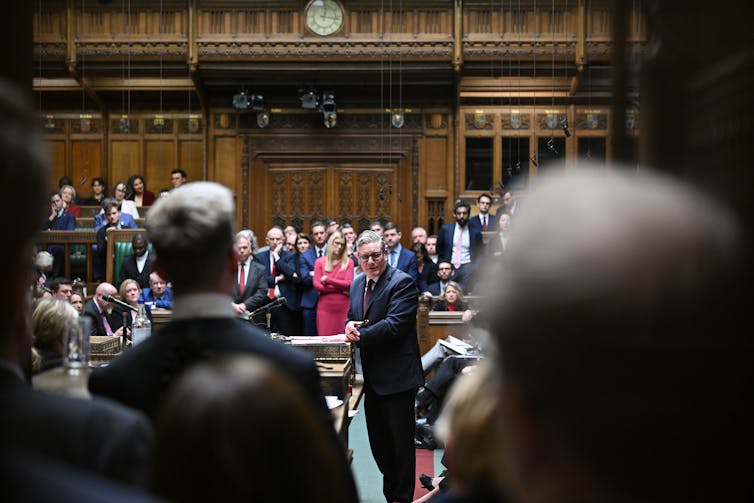
Keir Starmer at the dispatch box in the House of Commons.
Keir Starmer faces questions over Mandelson in PMQs.
Flickr/UK Parliament, CC BY-NC-ND

A typical case might be one in which a prison officer accepts money for passing information to a prisoner on the whereabouts of the latter’s former criminal associates. Such cases are ones in which the offence operates in a broadly top-down manner: servants of the state entrusted with powers are called to account for the knowing misuse of those powers.

However, the offence can also operate in a more bottom-up manner. Those holding the highest elected or judicial offices can themselves be criminally accountable for misuse of power, if need be, through a private prosecution launched by an ordinary citizen or a pressure group. For example, the MPs in the so-called expenses scandal who knowingly made false claims were convicted of false accounting, but they could all equally have been charged with misconduct in public office.

Corruption in public office?

In Mandelson’s case, there seems to be evidence that while acting in a public capacity as a minister (element one), he wilfully – knowingly – misconducted himself (element two). He must have known that it was wrong to share confidential information with Epstein if he received it in a ministerial capacity.

The key is probably element three: did his wilful misconduct fall so far short of what is expected of a holder of ministerial office as to amount to an abuse of the public’s trust? Misconduct in public office is a serious offence, and so this is a high bar to surmount. Central to the determination of element three will be whether information was wrongly disclosed for a purpose itself involving significant impropriety, such as benefiting a private individual financially.

There is also the possibility that such an improper purpose was also associated with corruption. If the information was disclosed as part of an exchange of favours, that makes the case stronger for saying that there was an abuse of the public’s trust. Corrupt activity has long been equated in law with the abuse of public trust. Proof of both improper purpose and corruption would be very serious indeed.

The lapse of time, and his political disgrace, may have diminished the public interest in prosecuting Mandelson; and it should be noted that public outrage is not the same as public interest. Even so, he would be well advised to find himself a first-rate lawyer.

The Conversation

Jeremy Horder does not work for, consult, own shares in or receive funding from any company or organisation that would benefit from this article, and has disclosed no relevant affiliations beyond their academic appointment.

ref. What exactly is misconduct in public office and could Peter Mandelson be convicted? – https://theconversation.com/what-exactly-is-misconduct-in-public-office-and-could-peter-mandelson-be-convicted-275122

How the UK government plans to limit ‘forever chemical’ pollution – and what’s missing

Source: The Conversation – UK – By Ivan Kourtchev, Associate Professor, Centre for Agroecology, Water and Resilience, Coventry University

Forever chemicals known as Pfas are often found in waterproof, stain-resistant or iron-easy clothing, including school uniforms. Pixel-Shot/Shutterstock

The UK government has published its first national plan to deal with per- and polyfluoroalkyl substances, better known as Pfas or “forever chemicals”. These chemicals have been used for decades in products such as firefighting foams, non-stick cookware, clothing, electronics and many industrial processes. Because many Pfas do not break down easily, they are now widely detected in the environment and in human blood and tissues.

The policy document, Pfas Plan: Building a Safer Future Together, follows growing public concern, media investigations and years of pressure from scientists calling for stronger controls. This marks an important moment for UK chemicals policy. The plan represents a step forward, but it avoids many of the hardest regulatory choices associated with Pfas.

In practical terms, this could include restricting Pfas-treated finishes from school uniforms and children’s clothing. In parts of the US, including California, state-level rules have already restricted or banned Pfas in textiles, effectively eliminating their use in everyday clothing, including school uniforms.

Unlike many pollutants, Pfas are not a single substance. There are several thousand Pfas in use or in circulation, each with different properties and behaviours. Some have been linked to health effects, such as liver toxicity, developmental problems and negative effects on the immune system. For many others, evidence remains sparse or uncertain.

Pfas are also highly mobile. They can be transported through air, deposited onto land or water, and then re-enter the atmosphere or food chain. Contamination measured in one location may originate from industrial activity, waste handling, consumer products or historic uses far away. This transboundary behaviour is well known in environmental science, but Pfas amplify the challenge because of their persistence.


Read more:
PFAS: you can’t smell, see or taste these chemicals, but they are everywhere – and they’re highly toxic to humans


In the UK, regulation has so far focused on a small number (fewer than a dozen) of well-studied Pfas, mainly through drinking water standards. This has left the wider group of Pfas, and their long-term accumulation in air and soil, largely outside the scope of formal regulation.

The new Pfas plan is intended to provide that framework. Rather than introducing sweeping new bans, it sets out how Pfas risks should be assessed and managed over time, with a strong emphasis on coordination across government, regulators, researchers and industry.

A central element of the plan is its focus on evidence. It recognises that Pfas pollution is not limited to water and soil, but also includes air emissions from manufacturing, industrial processes and waste treatment. Expanding monitoring across air, land and water is intended to improve understanding of sources, pathways and exposure, and to support more targeted controls in future.

The plan also commits to reviewing existing regulatory tools. This includes consultation on limits for Pfas in drinking water, closer scrutiny of industrial emissions and assessment of how current chemicals legislation could be applied more effectively to Pfas as a group. Research into the toxicity of Pfas in food and food packaging, plus more effective detection methods and safer alternatives forms part of this longer-term approach. Some Pfas uses such as medical devices are acknowledged as difficult to replace in the short term.

man's hand filling up glass with tap water in kitchen with flowers in background
Until now, Pfas have traditionally been monitored and regulated through drinking water.
Boris023/Shutterstock

A starting point

At the same time, the new plan leaves many hard decisions for later. It does not ban Pfas as a class, set timelines for phase-outs or define which uses should ultimately be considered essential. Much depends on future consultations and how quickly new evidence emerges.

This caution has attracted criticism, but it reflects a real constraint. New Pfas continue to enter the market, sometimes as replacements for substances that have already been restricted. Others occur as impurities or degradation products that are not routinely monitored. Regulating a group of chemicals that continues to evolve is inherently difficult, particularly when emissions are diffuse and exposure pathways complex.

In July 2025, the EU adopted a new Chemicals Industry Action Plan to support a transition away from Pfas through measures such as innovation, substitution, and improved data generation. In parallel, the European Chemicals Agency is assessing a proposed Pfas group restriction – its opinion is expected to be announced by the end of 2026 to inform a subsequent European Commission proposal to phase out Pfas.

The UK’s new plan acknowledges that historic Pfas contamination already exists and commits to developing guidance and technical tools to support its management. What remains unclear is how large-scale remediation would be prioritised or funded. Experience from heavily contaminated areas in Belgium, particularly around industrial hotspots near Antwerp, shows that cleaning up legacy Pfas pollution can take decades and involve very high costs.

Taken together, the UK’s Pfas plan is best seen as a starting point rather than a solution. It brings air, water and land into a single policy debate and recognises that Pfas pose a long-term challenge rather than a short-term compliance issue.

Whether it leads to meaningful reductions in exposure will depend on what follows: how quickly methods capable of addressing the many thousands of Pfas in commerce and the environment are developed and validated; how monitoring data is used; how rapidly regulatory reviews translate into enforceable standards; and whether future decisions prevent new Pfas problems from emerging.

For now, the plan does not solve the Pfas problem. But it makes clear that Pfas are no longer a peripheral issue, and that dealing with them will require sustained scientific effort and difficult policy choices over many years.


Don’t have time to read about climate change as much as you’d like?

Get a weekly roundup in your inbox instead. Every Wednesday, The Conversation’s environment editor writes Imagine, a short email that goes a little deeper into just one climate issue. Join the 47,000+ readers who’ve subscribed so far.


The Conversation

Ivan Kourtchev does not work for, consult, own shares in or receive funding from any company or organisation that would benefit from this article, and has disclosed no relevant affiliations beyond their academic appointment.

ref. How the UK government plans to limit ‘forever chemical’ pollution – and what’s missing – https://theconversation.com/how-the-uk-government-plans-to-limit-forever-chemical-pollution-and-whats-missing-275191

House burping: what is this German habit and is it good for your health?

Source: The Conversation – UK – By Vikram Niranjan, Assistant Professor in Public Health, School of Medicine, Health Research Institute, University of Limerick

CTatiana/Shutterstock.com

“House burping” is the latest thing cluttering people’s feeds: short clips of people flinging open every window and door, announcing they’re “burping” their home to get rid of stale, germ-filled air. Behind the playful name is a serious question: does this actually make a home healthier, or are people just swapping indoor germs for outdoor pollution?

In Germany, this trend looks less like a revolution and more like everyday life. Lüften – literally “airing out” – and Stoßlüften, or “shock ventilation”, have long involved opening windows wide for a few minutes to let fresh air race through, even in the depths of winter. Some German rental contracts even mention regular airing as part of looking after the property, mainly to prevent damp and mould.

The health logic is simple. Indoor air collects moisture from showers and cooking, smoke and particles from stoves and candles, chemicals from cleaning sprays and furniture, and tiny particles and viruses that people breathe out.

In a previous study my colleagues and I conducted, we found many diseases linked to indoor air pollution. Over time, these build up, especially in well-insulated homes that keep heat – and pollution – in. When the house is “burped”, the sudden rush of outdoor air dilutes this mixture and pushes a good chunk of it outside.

This is particularly important for infections that spread through the air. During the COVID pandemic, public health agencies stressed that better ventilation – including simply opening windows – could help cut the risk of catching the virus indoors. In one classroom study, opening all windows and doors dropped carbon dioxide levels by about 60% and reduced a simulated “viral load” by more than 97% over an eight-hour day, shrinking the area with higher infection risk to around 15% of the room.

Pets breathe the same air and can act as early warning signs of trouble. Veterinary studies link poor indoor air to lung irritation in dogs and cats, especially near the floor where particles settle – a reminder that stale air harms the whole household.

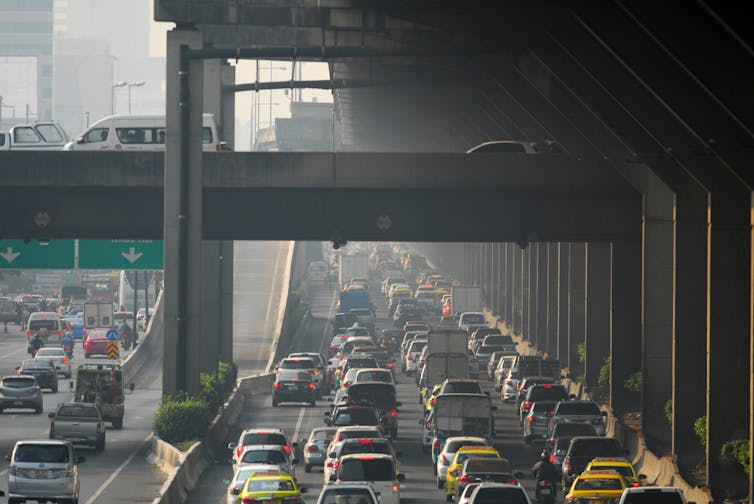
But the air outside is not always clean. Tiny particles from traffic and factories, and gases such as nitrogen dioxide, damage the heart, lungs and brain and are now recognised as major causes of illness and early death. In many cities, most of the fine particles inside homes and schools actually come from outside and seep in through gaps, vents and, of course, open windows.

A motorway at rush hour.
Air pollution damages many organs – not just the lungs.
Emaruchi/Shutterstock.com

Where you live shapes that trade-off. Homes close to busy main roads or motorways tend to have higher levels of traffic-related particles and nitrogen dioxide indoors, especially when windows facing the road are opened.

A study in inner-city schools found that the closer a school was to major roads, the higher the levels of traffic-related PM2.5 (microscopic air pollution particles small enough to be inhaled deep into the lungs), nitrogen dioxide and black carbon measured inside classrooms.

That means flinging open roadside windows at rush hour may bring in a surge of exhaust, tyre and brake dust just as traffic pollution peaks. For people with asthma, heart disease or chronic lung problems, that extra pollution can undo some of the health benefits of better ventilation.

The picture looks different in greener, quieter areas. When schools and homes are surrounded by more trees and green space and are further from main roads, indoor levels of traffic-related particles tend to be lower. Vegetation can help filter some particles from the air and break up plumes of pollution from nearby roads.

The right time to burp

Timing also matters. In many cities, outdoor pollution is highest during the morning and evening commute and lower late at night or in the middle of the day. Short bursts of house burping outside these peaks – or just after rain, which can temporarily wash some particles from the air – may offer a better balance between infection control and pollution exposure.

Poor indoor air does not stop at the lungs. Studies link higher levels of fine particles and carbon dioxide to poorer concentration, slower thinking and raised risks of anxiety and depression. A stuffy home quietly chips away at mood and mental sharpness for everyone inside.

How the burp is done makes a difference to comfort and energy bills. German-style Stoßlüften, where all windows are opened fully for a short time, rapidly exchanges air but does not cool walls and furniture as much as leaving a small window open all day. Cross-ventilation – opening windows on opposite sides of the home – usually shifts air faster.

Treating COPD (a chronic lung disease) from poor indoor air can cost thousands yearly in drugs and hospital stays – a lifelong burden once diagnosed. Opening windows for five minutes in winter loses just pennies in heat. Fresh air now beats massive medical bills later.

For most households, a practical middle ground is possible. House burping is more likely to be helpful when it is done in short bursts, away from busy traffic times, and on the sides of the home that face quieter streets or greener spaces.

So the social media trend has a point, even if the name raises a smile. A home that never burps is likely to have higher levels of indoor pollution and a greater build-up of exhaled air, especially during virus season. Give your home a mini spa break at the right time: throw open the windows, let it burp out the stale air, and invite a burst of fresh stuff in. Your lungs, brain and pets will thank you.

The Conversation

Vikram Niranjan does not work for, consult, own shares in or receive funding from any company or organisation that would benefit from this article, and has disclosed no relevant affiliations beyond their academic appointment.

ref. House burping: what is this German habit and is it good for your health? – https://theconversation.com/house-burping-what-is-this-german-habit-and-is-it-good-for-your-health-274552

Why athletes at the 2026 Winter Olympics are finally being given more power to monetise their performances

Source: The Conversation – UK – By Andy Miah, Chair in Science Communication & Future Media, University of Salford

Grindstone Media Group/Shutterstock

The 2026 Winter Olympics have come at a turning point in sport in terms of how Olympians are allowed to monetise their performances. In December, the governing body the International Olympic Committee (IOC) announced that, for the first time, Olympians would have access to footage from their competitions to use for their personal branding and promotion.

In this pilot phase, the material will not be from these Milan Cortina Winter Olympics, but from the previous Games in Beijing in 2022. According to the new Olympian Highlights Programme, athletes who competed in China can have access to 60 seconds of their competition to use on their personal channels to celebrate their achievements during these Games.

But what does this mean, why does it matter, and why is it happening now?

While the permission might not sound like a big deal, the moving image of Olympic competition is the most valuable asset of the entire Olympic movement. It is highly protected due to the exclusive television rights agreements around the world, which have secured the economic fortunes of the Olympic industry for decades.

Today, the rights to the video content of the Games competitions is what makes money for the Olympic movement. The billions of pounds they generate contribute both to the Olympic programme, and also to schemes like Olympic Solidarity supporting federations and nations around the world. But this was not always the case.

In the early years of Olympic competition, broadcasters had free rein to cover the Games. This was seen as a great opportunity to share the Olympic message with the world. The sport then was treated more like news, whereas now it is predominantly entertainment, commercialised and exploited to grow the Olympic industry.

Tightly controlled media content remains the most effective way to monetise the Olympic programme. But this meant athletes could not use video material from their competitions, for fear that this could compromise the exclusivity agreed between the IOC and broadcasters.

Athletes’ frustrations

Similarly, Olympians have been severely restricted in what they can share from their Olympic experience, especially during Games time itself. The IOC Olympic Charter sets out these limitations to avoid things like ambush marketing (when a potential sponsor tries to use the Games period to promote their product in a way that undermines an official sponsor).

For Olympians with a personal sponsor, it means limiting the exposure of this affiliation during Games time, instead prioritising their official team partnership.

Loosening controls on competition videos is an important step to letting Olympians leverage their celebrity status at a time when they’re in the spotlight. Yet it also reflects a changing set of circumstances around media culture. For 20 years, there has been a steady transition of audience habits away from living room TVs towards mobile phones and social media.

This transition had caused the industry anxiety over whether it would hit viewing figures and reduce the value of rights deals. And so Olympic organisers have monitored web traffic and sent warnings to anyone infringing upon their intellectual property.

Torvill and Dean’s 1984 gold-medal winning performance was watched by around 24 million people in the UK alone. But Rowan Atkinson as Mr Bean at the London 2012 opening ceremony has had 142 million views on the Olympics YouTube channel.

Today, that mindset is different. There is a recognition that social media amplifies the opportunity to monetise Olympic assets. Video tracking technology can intervene directly when something is posted and limit exposure of unapproved content shares. Or it can simply monetise it with adverts. These capabilities are expanding – and becoming more complicated – with the rise of artificial intelligence (AI).

Provisions for social media sharing for athletes and others with accreditation have been evolving over recent Games. At the London 2012 Olympics, IOC social media guidelines did not allow any video from Olympic venues to be posted. In contrast, for Paris 2024, athletes were allowed to share video of their Olympic journey (but not their performance) with up to two minutes from each competition venue.

The guidance for Milan Cortina goes even further to encourage sharing. But it still prohibits athletes from posting this premium video content between one hour before competition and within one hour after, the crucial window for broadcasters.

Ultimately, giving permission to use video from the Games events is also about recognising the athletes’ own ability to attract audiences. On the days leading to Paris 2024, behind-the-scenes footage from athletes often became prominent social media posts, including viral footage of the athletes’ cardboard beds.

This showed candid moments from athletes before the TV coverage began. Audiences appeared to love this – and leaning into it is crucial for the Olympic movement in these changing times.

For decades, the IOC has shouted about how far the Olympic message travels during each Games, articulating this in terms of television hours watched across the world. Yet, television has changed too. After Rio 2016, there was a shift in the IOC’s language, moving from “television” to “live-streamed” hours, to reflect the new ways in which audiences are exposed to the Olympic Games.

The economic direction of international sport and the growing importance of non-traditional partnerships, such as those with Airbnb, Uber and Alibaba, show that the future of the Olympic Games is wedded to the technological culture of the time. While the technology of the 20th century was television, now sport is intimately connected to the rise of AI. Its integration within social media will be key to how users create and consume Olympic content.

In this way, 60 seconds of footage from a previous Olympic competition is not just a move towards empowering athletes. It is also a step towards safeguarding the future of the Olympic Games at a time of remarkable change in the media. The influencer economy is becoming the new unit of audience attraction and it’s crucial that the Olympic movement embraces this.

The Conversation

Andy Miah does not work for, consult, own shares in or receive funding from any company or organisation that would benefit from this article, and has disclosed no relevant affiliations beyond their academic appointment.

ref. Why athletes at the 2026 Winter Olympics are finally being given more power to monetise their performances – https://theconversation.com/why-athletes-at-the-2026-winter-olympics-are-finally-being-given-more-power-to-monetise-their-performances-275185