How scientists and artists can collaborate to cut through ‘ecofatigue’ and inspire positive action

Source: The Conversation – UK – By Ian Williams, Professor of Applied Environmental Science, University of Southampton

Pairing scientists with an artist-in-residence can cut through “ecofatigue” (feelings of overwhelm or exhaustion about environment issues that lead to apathy and inaction), spark emotion and change the way people deal with plastics.

My team and I recently published a study that demonstrated this is a low-cost and feasible way to tackle plastic waste in towns.

In a quiet gallery space in London, visitors paused before 13 luminous coastal scenes. Throwaway bottles bobbed in the surf; snack wrappers frayed into microplastic constellations. Many people left this exhibition determined to change their own habits.

These paintings were part of my team’s project called Trace-P (Transitioning to a circular economy for plastics with an artist-in-residence) which involves turning environmental evidence into compelling art, then measuring what the public do as a result.

Decades of leaflets, posters and worthy campaigns about plastic pollution haven’t shifted behaviour fast enough. Research (including our own previous work) shows that emotion, storytelling and “intergenerational influence” – ideas flowing from children to adults – can outperform dry facts alone. Throughout that previous project, 99% of audiences reported higher awareness, 70% intended to change how they dispose of electronic or e-waste and 65% planned to repair or reuse their belongings more. That success inspired us to test an art-led model for plastics.

The global context is stark. More than 400 million tonnes of plastic are produced each year. Only around 9% of that is mechanically recycled worldwide. A global plan to end plastic pollution by 2040 will require deep shifts in policy and markets to eliminate problematic items, scale reuse and design products that are suitable for recycling.

Art cannot deliver those reforms, but it can mobilise public demand for them.

Our plastics researchers collaborated with a professional artist, Susannah Pal. After interviews and laboratory visits, she produced a series of tragicomic (humorously sad) seascapes. In addition to running public exhibitions in London and Southampton, Pal held an online and in-person drawing workshop for the public.

Visitors learnt about the science of marine litter pathways, microplastics and consumption patterns through powerful imagery that intended to trigger emotion rather than through facts and data. We collected feedback from participants and gallery visitors via on-site in-person surveys, Post-it note “reaction walls” where people could scribble their comments and impressions of the artwork and social media posts by visitors.

Our paper, recently published in the Journal of Cleaner Production, calls this approach “com-art”. This combination of creative skills with scientific evidence can improve communication with the general public and lead to more positive action.

Viewers told us that the artworks educated them about sources and negative effects of plastic pollution. They also said that the art provoked emotions – from sadness to resolve – that helped the messages stick and encouraged them to cut personal plastic use or question throwaway lifestyles.

The feedstock problem

Europe’s plastics system is inching towards circularity via new policies and technologies such as deposit return schemes, but not nearly fast enough. In 2022, circular plastics accounted for 13.5% of new products. EU plastic recycling has essentially stalled, with plastic packaging recycling rates hovering around 40–42%.

Huge amounts of plastic waste are sent for incineration and valuable feedstock (the fossil fuel-based raw materials used to make plastic) is burned instead of being recycled or redirected back into manufacturing.

Public support for reuse, deposit return schemes and better sorting of contaminated waste is the missing multiplier.

Globally, governments are negotiating a treaty to end plastic pollution. To reach its proposed goals, citizens will need to accept refills, returnables and redesigned packaging. Art projects like ours can engage citizens with changes to everyday routines around plastic consumption and disposal.


Read more:
How Captain Planet cartoons shaped my awareness of the nature crisis


From inspiration to influence

Cities, schools and museums can start by making art part of their waste strategy. A local artist-in-residence, hosted by a council gallery, museum or library, costs little (a few thousand pounds) compared with large-scale infrastructure projects (that cost millions).

Art projects can help unlock more enthusiasm from citizens for deposit return schemes (refundable deposits for returning containers), reuse pilots or new recycling sorting rules. Artists can jointly create exhibitions with local schools to harness intergenerational influence. You can use short before- and after-project surveys to see what works.

Art interventions often deliver powerful but shortlived boosts in awareness and intent. By reinforcing moments – new shows, classroom projects, hands-on repair events – we can extend this awareness. It is also worth repeating art activities to reinforce messages.

Emotion opens the door to action, and convenient systems keep people walking through it. Exhibitions can be ideal opportunities to recruit residents to refill trials, deposit return collections or school “plastic-free lunch” weeks. These events can showcase possible next steps for people to take through QR codes and sign-ups to activities or maps of refill points, for example.

Plastics touch everything: health, climate, local jobs. Moving to a circular economy will take regulation, redesign and investment and public imagination. Our study shows that artists make the science more legible, memorable and motivating – and this can spark change in communities.


Don’t have time to read about climate change as much as you’d like?

Get a weekly roundup in your inbox instead. Every Wednesday, The Conversation’s environment editor writes Imagine, a short email that goes a little deeper into just one climate issue. Join the 47,000+ readers who’ve subscribed so far.


The Conversation

Ian Williams received funding from UK Research Councils to support this work. TRACE-P was supported by the Engineering and Physical Sciences Research Council’s Impact Acceleration Account (EPSRC IAA 2017-2020). IAAs are strategic awards provided to institutions to support knowledge exchange and impact from their EPSRC-funded research. Ian also acknowledges support from the EPSRC Centre for Doctoral Training in Sustainable Infrastructure Systems (EP/L01582X/1).

ref. How scientists and artists can collaborate to cut through ‘ecofatigue’ and inspire positive action – https://theconversation.com/how-scientists-and-artists-can-collaborate-to-cut-through-ecofatigue-and-inspire-positive-action-274667


Your morning coffee might protect your brain as you age – here’s the sweet spot

Source: The Conversation – UK – By Eef Hogervorst, Professor of Biological Psychology, Loughborough University

Barillo_Images/Shutterstock.com

Scientists have found that drinking two to three cups of coffee a day may significantly reduce your risk of developing dementia, but drinking more won’t help protect your brain any further.

A major study tracked 131,821 American nurses and health professionals for up to 43 years, starting when they were in their early 40s. During this time, 11,033 people – around 8% – developed dementia. But those who drank moderate amounts of caffeinated coffee or tea were notably less likely to be among them.

The protective effect was strongest in people aged 75 or younger, who saw their dementia risk drop by 35% if they consumed around 250mg-300mg of caffeine daily – roughly two to three cups of coffee. Crucially, drinking more than this didn’t provide any extra benefit.

Women in the study reported drinking around four and a half cups of coffee or tea per day when they joined, while men drank around two and a half cups. Those who drank more caffeinated coffee tended to be younger, but they also drank more alcohol, smoked and consumed more calories – factors that all have been found to increase dementia risk.

Interestingly, people who drank more decaffeinated coffee showed faster memory decline. Researchers believe this is probably because people switched to decaf after developing sleep problems, raised blood pressure, or heart rhythm disturbances – all of which are themselves linked to cognitive decline and dementia.

Why caffeine might protect the brain

There are sound biological reasons why caffeine could help keep our brains healthy. It works by blocking adenosine, a chemical that dampens the activity of brain messengers like dopamine and acetylcholine. These brain messengers (or neurotransmitters) can become less active as we age and in conditions such as Alzheimer’s disease, so caffeine’s stimulating effect may help counteract this decline.

Caffeine also appears to work through other mechanisms, including reducing inflammation and helping regulate blood sugar metabolism. People who did not have dementia (yet?) but drank more than two cups of coffee daily throughout their lives had lower levels of the toxic amyloid plaques, abundantly found in people’s brains who have Alzheimer’s disease.

Coffee and tea also contain many other beneficial compounds with antioxidant and blood vessel benefits which can all protect the ageing brain.

The American study found that only one to two cups of tea were linked to the best protection against dementia, which may reflect the fact that people in the US drink less tea than coffee overall. Green tea wasn’t examined separately, although most studies suggest it also protects against dementia.

Why does more caffeine stop being helpful? The researchers suggest it may be down to how our bodies break down coffee. Very high doses can also disrupt sleep and increase anxiety, which undermines any brain benefits.

A principle established back in 1908, known as the Yerkes-Dodson law, shows that when we become too stimulated – whether from anxiety or too much coffee – our mental performance starts to decline.

A mug of tea with milk.
Tea may also protect against Alzheimer’s.
Food Shop/Shutterstock.com

The findings from professional healthcare workers may not apply to everyone. But when researchers combined results from 38 other studies, they found similar results: caffeine drinkers had a 6%-16% lower dementia risk than non-drinkers, with one to three cups of coffee being optimal. Good news for tea lovers – in this broader analysis, drinking more tea was linked to greater protection.

Moderate caffeine intake doesn’t increase long-term blood pressure risk and may even reduce cardiovascular disease risk, which shares many risk factors with dementia. However, people with very high blood pressure are advised to limit themselves to perhaps one cup a day.

It’s worth noting that using “cups” as a measure doesn’t account for how much caffeine these actually contain. Fresh beans brewed at home contain different amounts of caffeine and can affect cholesterol levels differently than instant coffee, for instance.

But you don’t need much to feel a benefit. Even low doses of 40mg-60mg can improve alertness and mood in middle-aged people who normally did not drink (much) caffeine. More is not always better.

The Conversation

Eef Hogervorst has done consultancies for media (including the BBC) and Proctor & Gamble on nutrients and cognitive function/dementia risk. And she has received funding from ARUK, ISPF and British Council /Newton Trust to investigate nutrition and dementia risk in Indonesia.

ref. Your morning coffee might protect your brain as you age – here’s the sweet spot – https://theconversation.com/your-morning-coffee-might-protect-your-brain-as-you-age-heres-the-sweet-spot-275451

Keir Starmer on the ropes as Scottish party leader calls for his resignation

Source: The Conversation – UK – By Martin Farr, Senior Lecturer in Contemporary British History, Newcastle University

When they disintegrate, governments often do so slowly, then quickly. Despite dragooned public statements of support from the cabinet, the government of Keir Starmer gives every appearance of entering that second phase.

In the wake of the scandal surrounding former Washington ambassador Peter Mandelson and his ties to deceased sex offender Jeffrey Epstein, Starmer lost his chief of staff Morgan McSweeney, who had championed Mandelson for the role. Then the PM lost his press secretary, Tim Allan.

Then, in a live press conference, he lost the leader of the Scottish Labour party, Anas Sarwar. Eighteen months ago, Starmer could not have been closer to Sarwar. Now he has cut his national leader adrift and called for Starmer to resign.

Sarwar is not in Westminster. Sarwar has to fight an election in Scotland in May, and Starmer and the Westminster Labour government has been a liability for Scottish Labour for over a year. Sarwar had to act to have any chance of mounting a challenge against the governing Scottish National Party in those elections.

Sarwar’s actions may be be the most impactful, owing to the political momentum he has now so dramatically accelerated. But McSweeney’s resignation is the more significant development. The last line of defence for a prime minister is their chief of staff, and Sweeney was much more than that.

Party leaders and prime ministers have come not to be able to live without them, but so often are forced to. The chief of staff is part human, part metaphor: a conduit, a pressure valve, a lightning rod.

When forced out, their principal rarely lasts long, albeit as much for the related erosion of their authority as prime minister as in what that chief of staff may personally have provided. But McSweeney, a brilliant electoral tactician and party organiser with no experience of government, was also in the wrong job. And Starmer put him there.

The Mandelson scandal

Much of what is taking place is what takes place when governments are old, or infirm, but much is also new, or at least new in effect. To write a rudimentary historical political equation: Marconi plus Profumo equals Mandelson.

The 1912 Marconi scandal revolved around shady share dealing on the part of those around the chancellor of the exchequer, David Lloyd George. The 1963 Profumo affair involved the minister for war sharing his bed with a woman who also shared hers with the Russian naval attache – and in the year of the Cuban missile crisis.


Read more:
The fall of Peter Mandelson and the many questions the UK government must now answer


Marconi remains the most serious financial scandal in modern British politics, though Lloyd George survived. John Profumo resigned, but for lying to MPs. No secrets were divulged, but the political establishment was discredited, and the lives of young women were ruined. The Mandelson scandal combines both, and to greater effect. And is still ongoing.

The effect of Epstein continues to corrode. Endless news channel recycling of footage of Starmer and Mandelson roaring with tactile laughter as they approach the cameras at the UK embassy in Washington DC only a year ago has become a visual backdrop to the crisis. The king is now routinely heckled in public over Epstein.

The end of the line?

The history of chiefs of staff is a short one. The first chief, indicative of the move to an increasingly presidential premiership, was Jonathan Powell, who served without personal controversy throughout Tony Blair’s decade as prime minister. Fiona Hill and Nick Timothy provided the political smarts for (another politically dysfunctional) prime minister, Theresa May. They accepted responsibility for the disastrous 2017 general election, but only delayed May’s defenestration.

Harold Wilson had his “kitchen cabinet”, including Marcia Williams, Joe Haines and Gerald Kaufman, who damaged the prime minister by osmosis. Margaret Thatcher was too strong a leader to need one, though she had advisers she relied on.

This is potentially much more damaging for Starmer than for any of his predecessors. It is, almost as much if not more so, McSweeney’s government as it is Starmer’s, and Starmer himself is as much McSweeney’s creation as much as he is his own man. It may have been significant that in his resignation statement McSweeney wrote: “I have always believed there are moments when you must accept your responsibility and step aside for the bigger cause.”

The McSweeney project, born in opposition, was to reclaim the Labour party from the Corbynite left, and present it as a competent and moderate alternative to a chaotic and dysfunctional period of Conservative government. Starmer, effectively, was recruited for this job by McSweeney for that purpose. To that extent the 2024 general election revealed the project to have been completely successful. Hundreds of Labour MPs owed their election to McSweeney. But then, what next?

Starmer, as with Tony Blair and David Cameron, became prime minister without any experience of government. Unlike Blair or Cameron, however, he also had no serious experience of politics: hence his need for, and appointment of, McSweeney.

For Starmer, the prime minister is the monarch’s first minister, first lord of the treasury, head of government, minister for civil service; the country’s representative internationally. He has never fully appreciated that the prime minister is also a politician. If they are not, they will soon be found out.

Political skills are not sufficient, but they are necessary. Ted Heath did not have them either, but he at least knew about governing. Starmer was found out some time ago and now a concatenation of circumstance – Mandelson, Allan, Sarwar, the looming byelection in Gorton and Denton (a formally safe seat that Labour looks set to lose), the May elections in Scotland and Wales and in English councils – has provided the moment.

McSweeney’s departure has probably clarified Starmer’s fate – he has never been weaker. But there is still no obvious alternative. This may provide Starmer with the time during which he hopes personnel changes may help provide a reset.

If this is the end for Starmer, a serious and damaging pattern in British politics and public life will have been reinforced. Since David Cameron stepped down in 2016, no prime minister has lasted more than about three years. The impatience and intolerance of voters with the political classes has increased, and will only increase further.

Starmer’s was always a dual leadership, and then premiership, held with someone who effectively saved him the trouble of thinking. He is now on his own.

The Conversation

Martin Farr does not work for, consult, own shares in or receive funding from any company or organisation that would benefit from this article, and has disclosed no relevant affiliations beyond their academic appointment.

ref. Keir Starmer on the ropes as Scottish party leader calls for his resignation – https://theconversation.com/keir-starmer-on-the-ropes-as-scottish-party-leader-calls-for-his-resignation-275488

The workplace wasn’t designed for humans – and it shows

Source: The Conversation – UK – By Christine Ipsen, Professor in Technology Implementation, Technical University of Denmark

Work designed for maximum output often treats people like expendable resources—and burnout is the predictable result. pexels/shvetsa, CC BY-SA

Input. Output. Targets met. Value created. Performance delivered. Strip work down to its essentials and for many people, this is what remains: a machine-like focus on producing, performing and optimising.

The system keeps moving – often with little concern for the human energy, attention and resilience required to keep it running. Over time, this can lead to stress, ill-health, disengagement and burnout. Almost half of employees worldwide say they’re currently burned out and nearly three-quarters of US workers report that workplace stress affects their mental health.

But exhaustion isn’t a personal failing – it’s built into the system. Indeed, this way of organising work is not accidental. It has deep roots in how modern workplaces were designed.

Much of this thinking dates back to the late 19th century and the work of Frederick Taylor, a US engineer whose ideas helped shape modern management. Taylor was widely known for his methods to improve industrial efficiency, by treating workers as parts of a machine – measured, paced and optimised.

Obviously, a lot has changed since Frederick Taylor’s time – we understand far more about mental health and people’s capacity for work. Yet, many workplaces still operate in this way – with a strict focus on performance and goals.

A new way of viewing work

These high levels of stress, ill-health and burnout made us reflect. As concern grows about exhausting natural resources in the name of profit, we began to question whether workplaces are doing the same to people – using them up for productivity, with little thought for the long-term cost.

While organisational psychology highlights motivation, engagement and well-being as drivers of performance, it often overlooks a crucial issue: what happens to people’s time, energy, skills and relationships once they are spent at work?

Many models of work assume these human resources are limitless, focusing on outputs rather than what is left behind. But without opportunities to recover and regenerate, this way of working leads to depletion, disengagement and ultimately burnout.

A man sits at a computer looking stressed, holding his head in his hands.
High performance, low battery.
pexels/diimejii, CC BY

But what if work didn’t have to use people up to get results? What if productivity and well-being weren’t in competition, but part of the same system?

Drawing on ideas from the circular economy, along with management theory and organisational psychology, we propose a different way of thinking about work. We call it circular work.

Circular work flips the usual logic. Instead of treating people’s time, energy and skills as resources to be consumed, it sees work as a cycle – where effort is matched with recovery, learning and renewal. The goal isn’t just short-term output, but work that people can sustain without burning out.

At its core, circular work connects employee well-being and organisational performance and is built around four simple ideas:

  • all human work resources are connected – energy, skills, knowledge and relationships affect each other

  • it’s possible to recover and regenerate spent work resources – rest, support, and learning help employees bounce back

  • work can build or drain resources – how work is designed determines whether people thrive or are thwarted

  • sustainable work grows from protected and renewed resources – investing in well-being and development helps to sustain people and organisations.

Humans not machines

The idea of renewing people’s energy and skills can sound radical in today’s target-driven work culture.

But renewal isn’t a luxury. It starts with a simple truth: people are not infinite or endlessly replaceable. Work can drain our energy, attention and health –sometimes in ways that take years to undo. Designing work as though this doesn’t matter comes at a real cost.

In practice, regeneration shows up in everyday management. Decisions about workload, autonomy, recovery time, recognition and support determines whether work depletes people or helps them recover and grow. Put simply, human needs and well-being have to sit at the centre of how work is organised.

Psychological safety is part of this. Regenerative workplaces are those where people can speak up, raise concerns and take reasonable risks without fear of blame.

This is where leadership really matters. Organisations need to ask hard questions about the true impact of management practices: do they drive absence, presenteeism and turnover – or do they enable learning, growth and renewal? Rewarding managers and teams who protect well-being reduces stress, retains talent and makes organisations places people want to work.

The bottom line is, as long as work is designed like a machine to maximise output, burnout will remain its most predictable outcome. But sustainable performance is possible. It just means actually designing workplaces that protect — and renew — the people working in them.


This article was commissioned as part of a partnership between
Videnskab.dk and The Conversation.

The Conversation

The authors do not work for, consult, own shares in or receive funding from any company or organisation that would benefit from this article, and have disclosed no relevant affiliations beyond their academic appointment.

ref. The workplace wasn’t designed for humans – and it shows – https://theconversation.com/the-workplace-wasnt-designed-for-humans-and-it-shows-269127

US-Iran talks are not a countdown to conflict

Source: The Conversation – UK – By Bamo Nouri, Honorary Research Fellow, Department of International Politics, City St George’s, University of London

When Iranian and US officials met for talks in the Omani capital of Muscat on February 6, many journalists and analysts were speculating as to whether diplomacy will fail and whether war will inevitably follow. But that framing misses the deeper reality of this moment. The more important question is why both sides have returned to the negotiating table at all, despite years of hostility, sanctions, proxy conflict and open threats.

The anxiety that has surrounded the talks is understandable. Washington warned its citizens to leave Iran hours before the talks took place, fuelling speculation about military strikes. US officials outlined sweeping demands that go far beyond wanting to curb Iran’s ambition to possess nuclear weapons. And recent history offers no shortage of examples where negotiations have collapsed into violence.

But treating the talks as a countdown to conflict misunderstands diplomacy and the balance of power in the Middle East today. Negotiations are not a single test of resolve, nor a one-off gamble on peace. The talks in Oman were not a final reckoning but an opening move. They reflect a shared recognition in Washington and Tehran that 15 years of coercion, pressure and force have failed to produce decisive outcomes, and that escalation now would be vastly more dangerous than before.

As diplomacy scholar Geoffrey Berridge has long argued, the first stage of any serious diplomatic process is the establishment of common ground on key points. Only once this groundwork is laid can substantive negotiations begin. The talks in Oman should thus be understood as an opening phase rather than a decisive round.

The purpose was to clarify positions, communicate red lines and test whether a workable diplomatic pathway exists. Iranian officials described the atmosphere as constructive, noting that the two sides communicated their concerns and views through their host, Oman’s foreign minister Badr Albusaidi. This is precisely how diplomacy begins, not how it ends, and Iranian and US officials have both subsequently called for talks to continue.

For Tehran, engaging a US delegation in talks is significant. Iran has consistently sought recognition as a legitimate regional player rather than a state to be coerced or isolated. The willingness of Iran’s foreign minister, Abbas Araghchi, to attend the talks personally signals how seriously Iran views this moment and how invested it is in a diplomatic outcome that confers mutual respect.

For Washington, the incentives are equally clear. Over the past 15 years, the US has applied nearly every available tool of pressure against Iran. These have included sanctions, cyber operations, targeted strikes, the killing of senior Iranian figures, the degradation of Iran-aligned groups across the region and direct support for Israel during its brief 2025 war with Iran. Yet none of this has delivered regime change, capitulation or lasting regional stability.

Sanctions have devastated the Iranian economy and Tehran’s regional network has been weakened. Hezbollah has faced mounting pressure and economic strain in Lebanon, Hamas has been severely battered in Gaza and Houthi forces in Yemen have been constrained by international military patrols. Even so, Iran’s core political system remains intact.

Domestic unrest has also failed to produce collapse. Recent protests, met with intense and often violent repression, did not topple a regime that has been deliberately built to survive external pressure since 1979. This highlights a central paradox: Iran may be weaker than at any point in recent decades, but it is not as fragile as many external observers assume.

Washington’s negotiating position

Statements from US officials insisting that talks should encompass Iran’s ballistic missile programme, its regional alliances and its domestic governance represent the high end of any negotiating position.

This is not unusual. In diplomacy, opening demands are often maximalist by design. They are intended to create leverage rather than define an achievable endpoint, something the US president, Donald Trump, is known for. The risk lies in treating these demands as simultaneously attainable.

From Tehran’s perspective, these issues are not equivalent. Iran has consistently signalled that nuclear weapons are the only area it is prepared to engage meaningfully over. This is because its nuclear programme has already been internationalised through treaties, inspections and prior agreements.

Iran’s leadership has also repeatedly pointed to Supreme Leader Ayatollah Ali Khamenei’s religious decree declaring the production and use of nuclear weapons forbidden under Islamic law. Western policymakers are sceptical of the decree’s legal enforceability. But it nonetheless provides Tehran with an ideological framework that allows nuclear restraint to be framed domestically as principled rather than imposed from outside.

In contrast, Iran views the existence of its ballistic missile arsenal as non-negotiable. In a region where Iran faces nuclear-armed adversaries and an overwhelming conventional military imbalance, missile capabilities are central to its deterrence strategy. Likewise, Iran’s regional alliances are not simply tools of influence. They are an extension of this defensive posture that has been shaped by decades of war, sanctions and isolation.

Domestic governance is even more sensitive. No Iranian negotiating team could accept external constraints on how the Islamic Republic governs itself without calling into question the legitimacy of the system they represent. Attempts to fuse diplomacy with demands for internal political reform are therefore perceived not as bargaining positions, but as existential threats.

Bundling nuclear limits, regional retrenchment and internal transformation into a single negotiating framework thus risks overreach. Progress is far more likely through sequencing: addressing the nuclear issue first, building confidence through verification and reciprocity, and only then exploring narrower forms of deescalation elsewhere. Understanding this helps explain why talks can proceed despite sharp rhetoric and military signalling.

Mutual risk, mutual opportunity

Araghchi’s description of the talks in Muscat as a “good beginning” where both sides were able to convey their interests and concerns, as well as his subsequent expression of hope for further negotiations, suggests that diplomacy remains preferable for Iran. The same probably applies for the US.

Military intervention has rarely produced stable outcomes in recent Middle Eastern and North African history. The removal of Saddam Hussein in Iraq, Muammar Gaddafi in Libya and the collapse of state authority in Syria did not bring immediate peace or genuine democracy. They produced power vacuums, proxy wars, mass displacement and chronic instability.

Iran is larger, more institutionalised and more deeply embedded in regional dynamics than any of those cases. A conflict involving the Islamic Republic would be longer, more destructive and far harder to contain.

The real danger is not that diplomacy between Iran and the US will fail, but that it will be dismissed too quickly. Negotiations are incremental, often frustrating and rarely linear. But in this case, they may reflect the only viable strategy available to both sides.

Iran avoids an unwinnable war. The US avoids another Middle Eastern quagmire. And the region gains a fragile but vital opportunity to move away from permanent crisis. In that sense, the talks themselves may already represent the most meaningful progress possible.

The Conversation

Bamo Nouri does not work for, consult, own shares in or receive funding from any company or organisation that would benefit from this article, and has disclosed no relevant affiliations beyond their academic appointment.

ref. US-Iran talks are not a countdown to conflict – https://theconversation.com/us-iran-talks-are-not-a-countdown-to-conflict-275349

Why Emerald Fennell was so well placed to adapt Wuthering Heights – period drama expert explains

Source: The Conversation – UK – By Shelley Galpin, Lecturer in Culture, Media and Creative Industries, King’s College London

From Kate Bush’s otherworldly pop anthem to Laurence Olivier and Merle Oberon embracing on the wild Yorkshire moors, Wuthering Heights is one of the most adapted works of literature in the western world.

One of the most critically acclaimed adaptations to date was Andrea Arnold’s art house take on Emily Brontë’s only novel, released in 2011. Arnold’s film, following her roots in neo-realist filmmaking, adopted a low-key approach to characterisation.

She used improvisational dialogue and placed emphasis on the characters’ relationships with the natural world. The result was a beautifully evocative depiction of the Yorkshire landscape, but a rather understated telling of the novel’s central love story between the foundling Heathcliff and proud, passionate Cathy.

Following in these well-trodden footsteps is filmmaker Emerald Fennell. Her new adaptation, Wuthering Heights, is in cinemas on Valentine’s Day. Just like Arnold, Fennell’s adaptation is her third full length feature. And just like Arnold, Fennell comes to the project having already established herself as a filmmaker with a singular vision. She’s unafraid to confront audiences with challenging characters and a unique visual style.

Emerald Fennell talks about her unique take on Wuthering Heights.

Though critically lauded, Arnold’s adaptation faltered at the box office. Based on the reception of Fennell’s past films, however, there is every reason to anticipate that her interpretation of Brontë’s novel will be more crowd-pleasing.

Despite being described in the new film’s trailer as “the greatest love story of all time”, Wuthering Heights is arguably a tough sell. Cathy and Heathcliff might be iconic characters, but they are also rather unlikeable. They repeatedly seek to harm each other and any innocent bystander who gets in their way. The novel is morally ambiguous. It communicates not only humanity’s capacity for love and passion, but also its appetite for destruction.


Read more:
Emily Brontë’s Wuthering Heights is a dark parable about coercive control


Luckily, if any filmmaker has demonstrated their ability to sit comfortably with the darker sides of human nature, it is Fennell. Promising Young Woman (2020, a pastel-toned revenge mission) and Saltburn (2023, a systemic annihilation of the privileged upper class), both successfully portrayed protagonists who do the unthinkable while also, just about, keeping the audience onside.

Fennell’s theatre of obsession

Both Fennell’s previous films centre around obsession. Cassie (Carey Mulligan), once the “promising young woman” of the title, has allowed her life to become dominated by her determination to avenge the death of her childhood best friend. Fennell followed this audacious debut with Saltburn. The film achieved notoriety for its “did he really just do that?” depiction of Oliver Quick (Barry Keoghan) and his silently obsessive pursuit of friend Felix (Jacob Elordi).

The trailer for ‘Wuthering Heights’.

This pattern looks set to continue with Wuthering Heights. It’s a story with obsession at its heart, in the deep-rooted bond between Cathy (Margot Robbie) and Heathcliff (Elordi). The promotional material has leaned into this. The trailer features Heathcliff’s desperate plea to the dead Cathy to “be with me always, take any form, drive me mad! Only do not leave me in this abyss where I cannot find you!”

While previous adaptations of the novel often emphasise the wildness of the landscapes, Fennell’s film has a heightened theatricality. The costumes, impressive set design and lighting all suggest an expressionistic take on the story which privileges the uncontrollable emotions of the characters, rather than the naturalistic approach of other filmmakers.

This theatrical visual style also allows Fennell to follow the trend for recent period dramas to present a colourful and rather fantastical vision of the past (hello Bridgerton). Albeit with her own darker twist.

Following on from Saltburn, which was set in the titular stately home, Fennell’s Wuthering Heights is also rooted in the British class system, once again following the fate of a seemingly underprivileged hero (Heathcliff) and his complex relationship with his social superior (the ambitious Cathy).

As with Saltburn, the plot of Wuthering Heights reveals the shifting sands on which apparent class differences are built. The more privileged characters gradually succumb to misfortune as the socially inferior hero succeeds to a position of power through a combination of cunning, skill and luck.

The varied aesthetic of the pre-release material for Wuthering Heights also hints at this undercutting of the myth of the civilised society, with Elordi’s Heathcliff shifting from dishevelled labourer to respectable gentleman. Just as with Oliver Quick’s eventual ownership of Saltburn, this process hints at the fallacy of civilisation. Obsessive, destructive behaviour is not quite forgotten despite the façade of social privilege.

So, will Fennell’s Wuthering Heights find its audience? All the signs are there. The reception of her previous work has shown that there is an appetite for boundary-pushing, morally ambiguous characters, and her uncompromising ability to plumb the darkest corners of human nature makes her an ideal auteur to tackle this material.

Couple that with the recent trend for more fantastical representations of the British past, and now feels like the perfect moment for Fennell to move into literary adaptation. Prepare to get obsessed.


Looking for something good? Cut through the noise with a carefully curated selection of the latest releases, live events and exhibitions, straight to your inbox every fortnight, on Fridays. Sign up here.


The Conversation

Shelley Galpin does not work for, consult, own shares in or receive funding from any company or organisation that would benefit from this article, and has disclosed no relevant affiliations beyond their academic appointment.

ref. Why Emerald Fennell was so well placed to adapt Wuthering Heights – period drama expert explains – https://theconversation.com/why-emerald-fennell-was-so-well-placed-to-adapt-wuthering-heights-period-drama-expert-explains-275156

Drastic seaweed growth threatens marine life and fishing – but also offers opportunities

Source: The Conversation – UK – By Yanna Alexia Fidai, Earth Observation and Remote Sensing Scientist, Plymouth Marine Laboratory

Sargassum seaweed on a beach in Barbados. Yanna Fidai, CC BY-NC-ND

Large blooms of seaweed are increasingly being reported along coastlines globally, from Europe and Asia to the tropics and beyond.

Both native and invasive (non-native) seaweeds are appearing in quantities that are hard to ignore and at unusual or surprising times of year.

As an earth observation and remote-sensing scientist, I track these blooms from space using high-resolution satellite imagery. My research shows that seaweed blooms are getting bigger.

My team’s 2025 study reveals a significant rise in sargassum blooms in the north-eastern tropical Atlantic, with a staggering 2.6 million tonnes washing up in September 2020. This is the first long-term analysis of trends in seaweed blooms from 2011 to 2022 in this region.

These unpredictable tides of seaweed have serious consequences for West African coastal communities and marine ecosystems. Our research shows that warming sea surface temperatures link closely with peaks in seaweed growth. Essentially, warmer temperatures can promote seaweed growth and lead to bloom surges.

Seaweed blooms are not a new phenomenon. But over the past 15–20 years, their scale and persistence have increased noticeably.

Of particular concern are free-floating seaweeds: species that float at the ocean surface, either because they detach from the seabed or because they spend their entire lives drifting. Unlike seaweeds that are anchored to the seafloor, floating seaweed can travel long distances to new territories and accumulate in large mats or wash ashore in huge quantities.

One example I have spent much of my career studying is sargassum. Like something from a sci-fi movie, I’ve seen swathes of sargassum seaweed spreading across the tropical Atlantic, with mats reaching depths of 7 m and spanning hundreds of square miles.

Sargassum fluitans collected on a beach in Mexico. The air-filled grape-like sacs help this seaweed to float on the surface of the ocean.
Yanna Fidai, CC BY-NC-ND

While most sargassum species are anchored to the seafloor, two species – Sargassum natans and Sargassum fluitans – are entirely free floating. They float freely at the surface of the ocean, kept buoyant by small air-filled grape-like sacs called pneumatocysts, which lift them up towards the surface for photosynthesis.

Our study shows that, since 2011, huge blooms of sargassum seaweed have appeared across the tropical Atlantic, piling up on coasts in the Caribbean, Gulf of Mexico and increasingly West Africa. This drifting seaweed makes fishing difficult and causes mayhem for coastal communities.


Read more:
How seaweed is a powerful, yet surprising, climate solution


Seaweed plays an essential role in marine ecosystems, but excessive growth can disrupt them. Large floating mats block sunlight, limiting the growth of seagrasses and corals below. They also alter oxygen conditions in the water, and when seaweed decomposes, particularly in sheltered bays or on beaches, it can create low-oxygen environments that are harmful to marine life.

Some of the most striking consequences are seen on wildlife. In tropical regions, sargassum has accumulated on turtle nesting beaches, with recent studies suggesting that up to a quarter of nesting habitat can be affected. Hatchlings struggle to move through both sand and dense seaweed before eventually reaching the sea, exhausted. This reduces their chances of survival.

traditional wooden boat at sea, seaweed in foreground
Seaweed blooms make it more difficult for fishers in Ghana.
Yannai Fidai, CC BY-NC-ND

Across Europe

Sargassum as an invasive species has actually found its way to UK waters, but sargassum blooms are not nearly as vast as in the tropical Atlantic. Blooms of other types of seaweed are becoming more noticeable in the UK and Europe. For example, ulva, a green seaweed known as sea lettuce regularly forms dense mats on the surface of the sea in places like Poole harbour, Dorset.

In small amounts, ulva is a native and largely harmless part of UK coastal ecosystems. But when it blooms excessively, it can start to cause problems. Thick mats at the surface reduce the amount of sunlight reaching seagrasses and other organisms below, while decomposition can reduce oxygen levels in the water, creating stressful conditions for fish and invertebrates and death of plants and animals as a result.

Across Europe, invasive seaweeds are becoming a growing concern. In the Mediterranean, species such as Rugulopteryx okamurae (originally from the northwest Pacific) have spread rapidly, likely introduced through shipping routes. These seaweeds can attach to the seabed, but then detach, float for long distances, and then reattach elsewhere, allowing them to spread efficiently along coastlines. In parts of Spain and Portugal, large accumulations are now washing up on beaches, with negative effects similar to those seen with sargassum in the tropics.

Even when blooms are smaller or more localised, their effects can still be disruptive. Seaweed accumulation can interfere with recreation, small-scale fishing and coastal tourism – all important parts of the UK’s coastal economy.

Why is seaweed blooming?

Seaweed growth is driven by a combination of triggers and favourable conditions, so there isn’t a single cause.

In the case of sargassum in the tropical Atlantic, one important trigger appears to have been an anomaly in the large scale atmosphere-ocean pattern known as the North Atlantic Oscillation in 2009. This change in atmospheric pressure at sea helped redistribute seaweed from the Sargasso Sea. Once established in new regions, further seaweed growth was fuelled by access to nutrients.

Seaweed growth is limited by the availability of nutrients such as nitrogen and phosphorus. As long as those nutrients are available for them, they will grow. Nutrient-rich runoff from agriculture, rivers such as the Amazon and Congo, and sediment inputs all deliver these nutrients into the ocean – so human-caused pollution also plays a part.

Together, warming waters, nutrient enrichment and changing ocean circulation can create ideal conditions for blooms to persist and expand.

Seaweed blooms, while sometimes problematic, are fundamental to ocean ecosystems. They act as habitats to small fish and crustaceans. They absorb carbon dioxide through photosynthesis and transport it to deeper waters. They are also a valuable resource. They are used to make fertiliser and building materials, pharmaceuticals and potentially biofuels.

With effective monitoring, more accurate forecasting and better management, communities can live alongside seaweed blooms, harnessing their benefits while minimising environmental and economic consequences.


Don’t have time to read about climate change as much as you’d like?

Get a weekly roundup in your inbox instead. Every Wednesday, The Conversation’s environment editor writes Imagine, a short email that goes a little deeper into just one climate issue. Join the 47,000+ readers who’ve subscribed so far.


The Conversation

My previous research on sargassum has been supported by the Economic and Social Research Council GCRF (Grant number: ES/T002964/1), and the UK Natural Environment Research Council (grant number NE/W004798/1), a scholarship from Southampton Marine and Maritime Institute, University of Southampton, and the School of Geography and Environmental Sciences, University of Southampton.

ref. Drastic seaweed growth threatens marine life and fishing – but also offers opportunities – https://theconversation.com/drastic-seaweed-growth-threatens-marine-life-and-fishing-but-also-offers-opportunities-274661

More young adults are developing osteoarthritis – here’s how we can spot those at risk before the damage is done

Source: The Conversation – UK – By Atiqah Aziz, Senior Research Officer at the Tissue Engineering Unit (TEG), National Orthopaedic Centre of Excellence for Research & Learning (NOCERAL), Department of Orthopaedic Surgery, Faculty of Medicine, University of Malaya

New Africa/Shutterstock

Research suggests young, active people are increasingly being diagnosed with osteoarthritis at much earlier ages than many expect. I have seen its effects first-hand among my own friends. One, a keen marathon runner, developed stage 2 osteoarthritis in her mid-30s. Several well-known public figures, including Robbie Williams, Tiger Woods and Andy Murray, have also spoken openly about experiencing the condition relatively young.

Osteoarthritis is often dismissed as an inevitable consequence of ageing, but it can erode quality of life at any age. It can turn everyday activities such as walking, climbing stairs or exercising into painful challenges. More than 600 million people worldwide live with osteoarthritis, and its risk factors are varied. They include obesity, ageing, metabolic disorders, chronic inflammation, previous joint injury and repetitive mechanical stress.

For younger people, osteoarthritis can be particularly devastating. Pain and stiffness can limit physical activity during years when work, caregiving and family life are often most demanding. It can affect mental health, restrict career choices and reduce the ability to stay active, which in turn increases the risk of other long-term health conditions. Unlike older adults, younger patients may also face decades of managing symptoms and repeated treatments.

Osteoarthritis develops when the smooth cartilage that cushions joints gradually breaks down. Cartilage normally acts as a shock absorber, allowing bones to move smoothly over one another. As it wears away, joints lose this protection. Bone surfaces begin to rub together, leading to pain, stiffness and the grinding or crunching noises many people jokingly refer to until the discomfort becomes impossible to ignore.

The condition does not appear overnight. Osteoarthritis usually takes years, and often decades, to develop. Early symptoms are often subtle and easy to dismiss: mild knee pain after activity, stiffness that eases with movement, or discomfort that comes and goes. Many people delay seeking medical advice until pain becomes persistent and joint damage is already advanced.

At present, treatment focuses on managing symptoms rather than reversing the disease. This includes exercise therapy, pain relief and therapeutic injections.


Read more:
Joint pain or osteoarthritis? Why exercise should be your first line of treatment


These injections may include platelet-rich plasma, which is made from a concentrated portion of a patient’s own blood and contains growth factors thought to support tissue repair. Others use platelet-derived vesicles, tiny particles released by platelets that carry biological signals involved in inflammation and healing.

However, most evidence for vesicle-based approaches currently comes from animal studies, including rat models, and they are not yet used routinely in human clinical practice. Hyaluronic acid may also be injected. This is a gel-like substance naturally found in joint fluid that helps lubricate and cushion the joint.

These treatments aim to reduce pain or improve joint movement rather than repair damaged cartilage. For some people, they provide temporary relief. Ultimately, however, when joint damage becomes severe, total joint replacement may be the only remaining option.


Read more:
Do you have knee pain from osteoarthritis? You might not need surgery. Here’s what to try instead


But what if osteoarthritis could be detected much earlier, before pain and irreversible damage set in?

Early prevention and early intervention have the potential to reduce pain, preserve mobility and significantly lower healthcare costs. The challenge has always been identifying osteoarthritis early enough to act.

Early diagnosis

This is where emerging diagnostic technologies may eventually offer a breakthrough. Every chemical compound in the body has a unique molecular structure, and when analysed it produces a distinctive pattern known as a “spectral fingerprint”.

This fingerprint reflects the chemical composition of a sample, such as blood serum. In people with osteoarthritis, researchers have observed subtle changes in inflammation, metabolism and tissue turnover that may alter this chemical profile.

One way of studying these fingerprints is through a technique called attenuated total reflection Fourier-transform infrared spectroscopy. Despite the intimidating name, the principle is straightforward.

A small blood sample is exposed to infrared light, and the way that light is absorbed provides information about the types of molecules present. Changes in proteins, lipids and other biomolecules can leave measurable signatures, which researchers are investigating as potential indicators of osteoarthritis.

These approaches are still largely used in research settings and are not yet part of routine clinical care. Even at this early stage, this research is important because it may eventually allow osteoarthritis risk to be identified earlier, when lifestyle changes and targeted interventions are more likely to protect joint health.

By combining this approach with computational analysis, researchers can identify complex chemical patterns associated with disease. In practice, this means comparing blood samples from people with and without osteoarthritis and detecting differences that are invisible to the naked eye. Similar approaches can also be used with other laboratory techniques, including spectroscopy-based methods and molecular biology tools, to identify biomarkers linked to early joint disease.

This kind of early detection could transform how osteoarthritis is managed. Identifying risk before symptoms become severe would allow people to take action earlier, through targeted exercise, weight management, injury prevention and tailored treatment strategies.

Osteoarthritis does not have to mean decades of pain and limitation. By shifting the focus from late-stage treatment to early detection and prevention, it may be possible to change the trajectory of the disease and improve quality of life for millions of people worldwide.

The Conversation

Dr Atiqah Aziz work in Universiti Malaya, Malaysia. She is affiliated with Tissue engineering Group,TEG,National Orthopaedic Centre of Excellence for Research & Learning (NOCERAL),Department of Orthopaedic Surgery
Faculty of Medicine,Universiti Malaya, 50603 Kuala Lumpur, Malaysia.

ref. More young adults are developing osteoarthritis – here’s how we can spot those at risk before the damage is done – https://theconversation.com/more-young-adults-are-developing-osteoarthritis-heres-how-we-can-spot-those-at-risk-before-the-damage-is-done-274451

Why walking in a national park in the dark prompts people to turn off lights at home

Source: The Conversation – UK – By Jenny Hall, Associate Professor in Tourism and Events, York St John University

Andy Burns

As soon as you drive over the top of the Peak District and down into Sheffield you can see the light pollution – and it’s horrible, said a participant in a research project into darkness and light pollution.

In the last 100 years, the places where people can experience darkness have reduced dramatically. Now only 10% of the people living in the western hemisphere experience places with dark skies, where there is no artificial light. And the starry skies they can see are limited by artificial light. The number of stars that people can see from most of the western hemisphere is getting fewer and fewer.

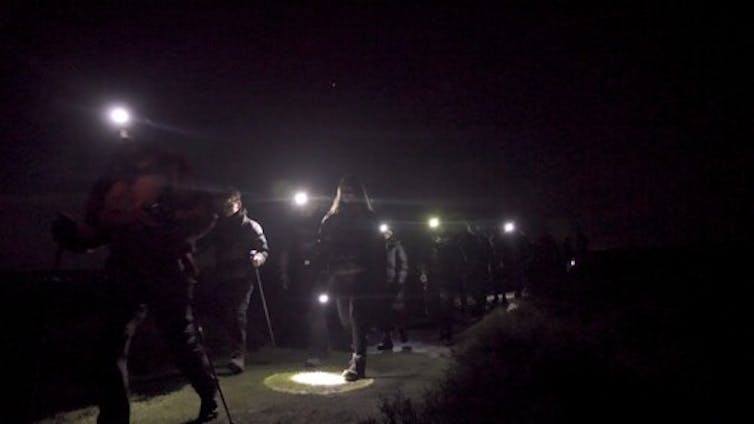
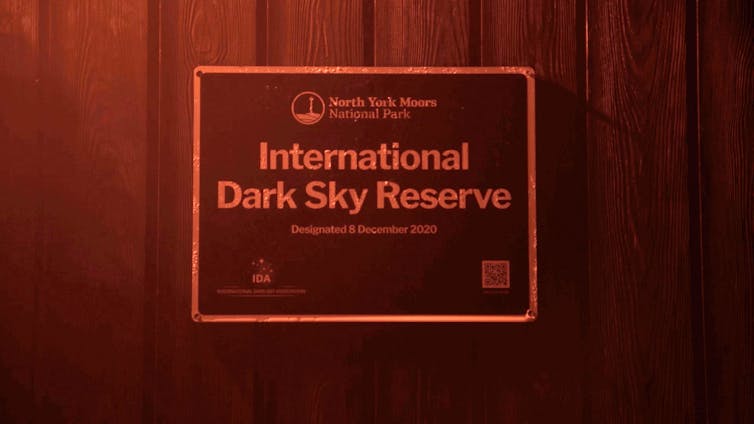
Researchers trying to find out about public attitudes to darkness attended events over three days in the North York Moors National Park. Here, in one of the UK’s seven dark sky reserves (where light pollution is limited), the researchers explored how immersive and fun experiences, such as guided night walks and stargazing and silent discos, reshaped public perceptions of natural darkness and sparked ideas of what they might change in their lives.

Working with a professional film-maker, the research team recorded how people responded to taking part in events in darkness. Participants in the research included five tourism businesses, two representatives from the park and 94 visitors.

People in the dark walking with head torches during a dark sky event.
People walking with head torches in a dark sky event in North Yorkshire.
Andy Burns.

Darkness disappears

Light pollution is increasing globally by approximately 10% per year (estimated by measuring how many stars can be seen in the sky at night), diminishing night skies and disrupting ecosystems.

But increasing awareness of light pollution has led to an increase in national parks hosting events to explore this issue, according to my recent study.

A sign saying international dark sky reserve.

Andy Burns., CC BY-SA

The study’s findings indicated that participants in the North York Moors Dark Sky Festival events not only started to feel more comfortable in natural darkness but also talked about changing their own lifestyle, including using low-impact lighting in their homes, asking neighbours to switch off lights in their gardens at night, and monitoring neighbourhood light levels.

The research team used filming and walking with visitors to capture not just what people said, but what they did in darkness. During guided walks, participants experimented with moving without head‑torches, cultivating night vision, and tuning into sound, smell and learning how to find their way around without artificial light.

Walking in silence helped visitors build a deeper connection with the nocturnal environment. One visitor said that being in the dark just for that moment of peace, and just to listen and tune in to the environment was a privilege and something to conserve.

One said: “I remember as a child I’d see similar stuff from a city [and that] sort of thing, and now we’re doing whatever we can do to save things like this.”

Visitors reported leaving with new skills, greater awareness and commitment, such as putting their lights at home on timers, and working on bat protection projects. These actions demonstrate that this kind of experience in nocturnal environments can change behaviour far beyond festivals.

Dark Sky activists, such as those in the North York Moors National Park, have learned that the public connect with the issues around light pollution and become more engaged if the activities are fun.

Shared experiences help people understand complex messages about climate, biodiversity, and responsible lighting, and help people feel more confident about walking in the dark. Several participants commented that walking without light was good and wasn’t as bad as they thought. Another said: “I find walking at night with a full moon is really quite a magical experience.”

By the end of the walk, some visitors (when on relatively easy ground) were happy to switch head torches off and enjoy feeling immersed within the nocturnal landscape.

Dark‑sky festivals show how joy and fun can build public awareness and an understanding of why darkness matters.

However, limited public transport to rural night events as well as safety concerns about walking in darkness, and the cost of festivals all restrict participation.

Why light is a problem

Research shows that artificial light at night disrupts circadian rhythms, impairs some species ability to find their way around and is a cause of declining populations of insects, bats and other nocturnal fauna.

There is also evidence that outdoor lighting generates needless emissions and ecological harm that is intensifying at an alarming rate.

North Yorks dark skies discussed.

To rethink this shift, the study argues that darkness could be considered a shared environmental “good”, requiring collective care to prevent overuse, damage and pollution.

Small changes in lighting shielding (which controls the spread of light), warmer coloured lights, and half lighting (switching street lighting off at midnight) can be significant and less damaging to animal life.

The national park’s next major step has been to establish a Northern England Dark-Sky Alliance to halt the growth of light pollution outside the park boundaries, particularly along the A1 road in northern England, which would help restore natural darkness for nocturnal migratory species, such as birds like Nightjars.

If we can make living with more darkness in our streets, and in our leisure time, feel more normal and more comfortable, then nighttime becomes not something that needs to be fixed, but a shared commons to be restored.

Jenny Hall is a speaker at an upcoming discussion on Cities Under Stars: Tackling Light Pollution in Cities, in conjunction with The Conversation, as part of this year’s Dark Skies Festival. Find out more, and come along.

The Conversation

Jenny Hall does not work for, consult, own shares in or receive funding from any company or organisation that would benefit from this article, and has disclosed no relevant affiliations beyond their academic appointment.

ref. Why walking in a national park in the dark prompts people to turn off lights at home – https://theconversation.com/why-walking-in-a-national-park-in-the-dark-prompts-people-to-turn-off-lights-at-home-272321

Melania: how the role of US first lady has changed over the years

Source: The Conversation – UK – By Sarah Trott, Senior Lecturer in American Studies and History, York St John University

The first lady of the US, a title typically held by the wife of the president, has never been a fixed cultural figure. Instead, she has functioned as a screen on to which the nation projects its ideals, anxieties and evolving ideas about womanhood and power.

With the release of Amazon’s new Melania documentary, which details Melania Trump in the 20 days before her husband’s second presidential inauguration in January 2025, that long tradition of reinterpretation is once again visible. It reminds us that the first lady is as much a cultural symbol as a political presence.

The earliest first ladies largely framed themselves as extensions of domestic virtue. Martha Washington, who became the nation’s inaugural first lady in 1789, set the tone as what some people have called a hostess-in-chief. She established her role as one of duty and moral stability, not ambition, helping prove the US could have national leadership without monarchy.

The Washington family.
George Washington (far left) and Martha Washington (far right).
Everett Collection / Shutterstock

Throughout the 19th century, first Ladies like Dolley Madison (wife of James Madison) expanded the role subtly. They used social gatherings and personal charm to shape public opinion and support presidential authority. Madison used social spaces like drawing rooms as informal diplomatic zones, making it socially acceptable – and even expected – for political rivals to mingle politely.

These first ladies achieved this while still being publicly understood as guardians of home and civility. Cultural representations – from portraits to newspaper sketches – emphasised grace, femininity and restraint. This reinforced the idea that women’s power should remain indirect.

Embracing advocacy

In the 20th century, Eleanor Roosevelt marked a decisive shift by embracing advocacy. She became an active moral voice during the New Deal era, a period that saw President Franklin D. Roosevelt enact various programmes and reforms to combat the great depression. Eleanor Roosevelt spoke openly about civil and women’s rights, labour and poverty.

Culturally, she was portrayed not as a decorative spouse but as a reformer and the conscience of the nation. This redefinition opened space for later US first ladies to navigate their public roles more openly.

Jackie Kennedy, for instance, professionalised the role of first lady. Kennedy, who spoke multiple languages and adapted her style to different audiences, used her first ladyship as a legitimate political tool of cultural diplomacy. Foreign leaders and the press were disarmed by her charm and elegance, with President John F. Kennedy jokingly introducing himself as “the man who accompanied Jacqueline Kennedy to Paris” on an official visit to France in 1961.

She also led a project to restore the White House, turning it into a symbol of American civilisation and not just politics. These efforts led to a televised tour in 1962, in which Kennedy invited Americans into the White House and showcased her work in restoring its history. It also humanised Kennedy and made her the first in the role to truly master television.

By the late 20th century, the role of first lady became a site of ideological debate. Hillary Clinton openly engaged in policy work, especially healthcare reform. She led ultimately unsuccessful efforts to pass the Health Security Act in 1993, which aimed to restructure the American healthcare system to ensure universal coverage.

Cultural responses to Clinton were polarised. She was celebrated as a feminist trailblazer by some and criticised for overstepping an unelected role by others. Satire, late-night television and news commentary increasingly treated the first lady as a political figure subject to scrutiny, not merely a symbolic companion to the president.

Like Clinton, Michelle Obama was a visible policy advocate. She used media and popular culture strategically, promoting causes such as support for military families, healthy eating or higher education through social media challenges and television appearances. Obama also spoke candidly about race and identity, framing her position as an active platform for social change and to inspire future first ladies globally.

She looked to position young people – especially girls – as agents of change through her Reach Higher and Let Girls Learn education initiatives. And Obama’s 2020 documentary, Becoming, offered the American public an expanded insight into what a former first lady’s political influence can look like after the White House.

Michelle Obama introduces 2016 Democratic presidential candidate Hillary Clinton at a campaign event.
Michelle Obama introduces 2016 Democratic presidential candidate Hillary Clinton at a campaign event in North Carolina.
Joseph Sohm / Shutterstock

While holding no formal authority, the US first lady occupies one of the most visible platforms in American public life. This makes the role especially revealing of what Americans expect from women and leadership. First ladies have historically been expected to embody the nation’s moral tone, demonstrate unity above partisanship and act as ceremonial “mother” to the nation.

However, since initially becoming first lady in 2016, Melania Trump has largely maintained distance both from the role and traditional advocacy. Her public image has instead leaned heavily on visual symbolism such as fashion, posture and reserve. She has also been widely seen as partisan. In 2018, for example, she wore a jacket emblazoned with “I really don’t care, do you?” during a trip to a migrant child detention centre on the US-Mexico border.

The behind-the-scenes Amazon documentary, which coincides with two West End plays about former first lady Mary Todd Lincoln, comes at a moment of active cultural engagement with how female figures in political spheres are perceived and narrated. It offers the current first lady a chance to shape her own public narrative rather than being defined by the press.

Melania Trump’s editorial control of the documentary suggests she wants the public to see her as a distinct entity from the president, with her own agenda and vision. In the documentary itself, she also hints at having ambitions that extend beyond the traditional ceremonial aspects of the first ladyship.

From references to reinventing the office of first lady to thinking about how lawmakers could do their jobs better, it appears Trump is aiming to cultivate a narrative in which she is seen both as independent and influential enough to shape political culture. Whether she evolves the first lady role in any meaningful way will become clear in the years ahead.

The Conversation

Sarah Trott does not work for, consult, own shares in or receive funding from any company or organisation that would benefit from this article, and has disclosed no relevant affiliations beyond their academic appointment.

ref. Melania: how the role of US first lady has changed over the years – https://theconversation.com/melania-how-the-role-of-us-first-lady-has-changed-over-the-years-274662