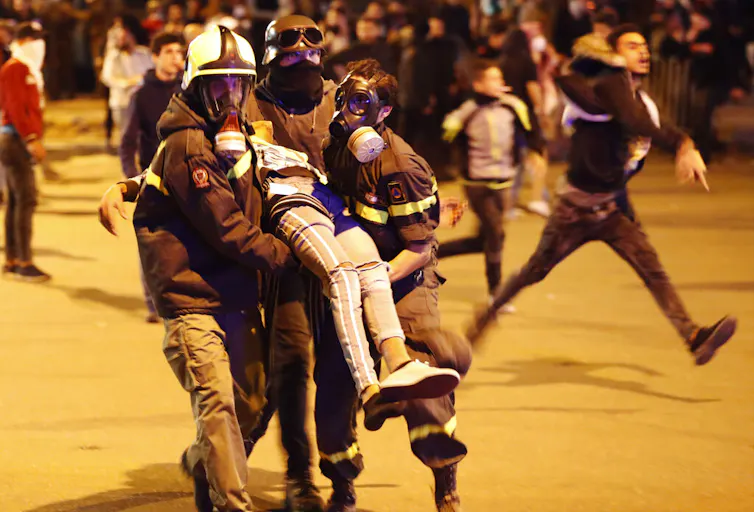
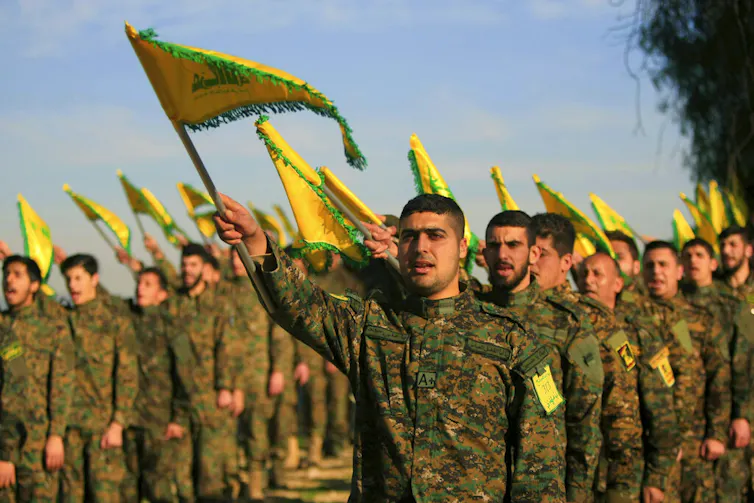
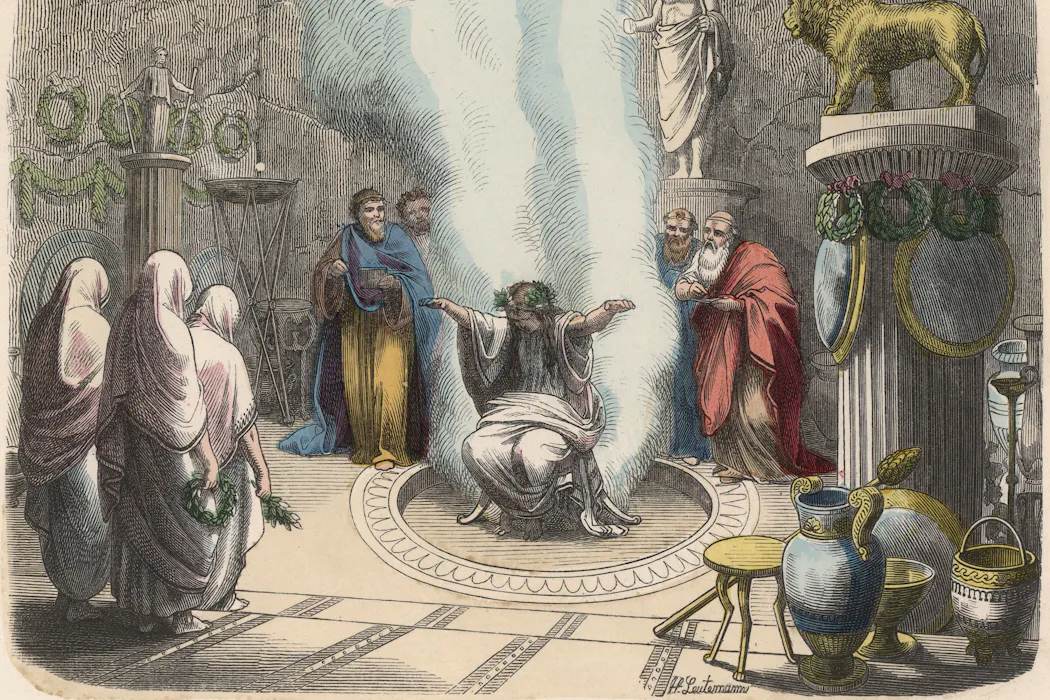
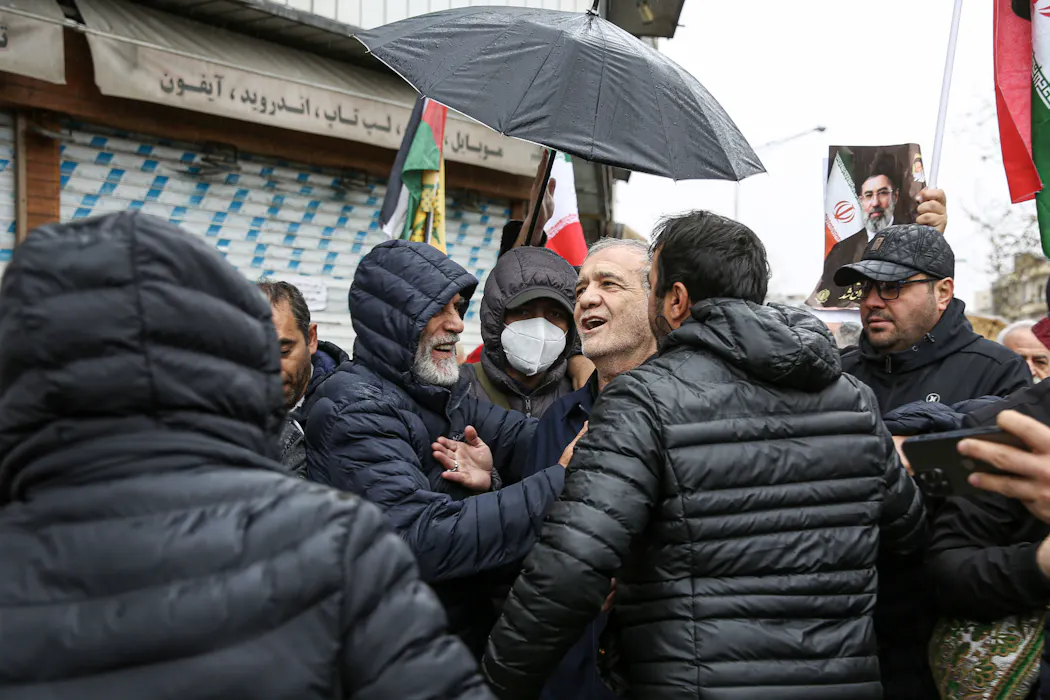
Israel wants to destroy Iran’s nuclear program. But should it have nuclear weapons itself?

Source: The Conversation – Global Perspectives – By Marianne Hanson, Associate Professor of International Relations, The University of Queensland

Israel’s avowed goal in the Middle East war is to prevent Iran from acquiring nuclear weapons. Yet, the double standard associated with this is hardly sustainable in the long run.

The worst-kept secret in the world of nuclear politics is that Israel possesses a formidable arsenal of nuclear weapons. It began developing these in the 1950s and reached a fully operational capability by the late 1960s.

Although Israel refuses to confirm or deny this fact, arms control organisations have assessed that the country has some 80–90 nuclear weapons.

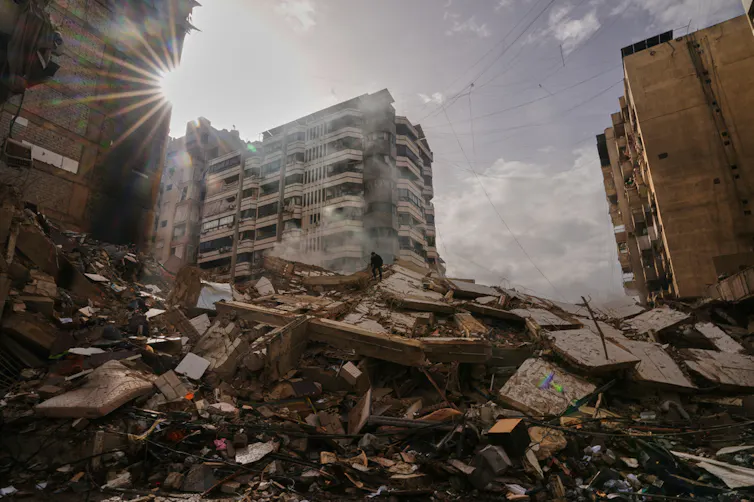
In recent days, Iran targeted Israel’s nuclear facility in the southern town of Dimona, injuring more than 100 people. The head of the International Atomic Energy Agency (IAEA) called for restraint to avoid a “nuclear accident”.

A program shrouded in secrecy

There is much evidence to support the existence of Israel’s arsenal.

In 1963, then-Deputy Defence Minister Shimon Peres famously stated Israel would not be the first to “introduce” nuclear weapons to the Middle East. What this actually meant was spelled out a few years later by the Israeli ambassador to the US. For a weapon to be “introduced”, he said, it needed to be tested and publicly declared. Merely possessing them did not constitute introducing them.

Several whistleblower accounts, intelligence reports and satellite imagery confirm the extent of the Israeli program and its capabilities.

More recently, Amichai Eliyahu, a far-right minister in Prime Minister Benjamin Netanyahu’s government, alluded to using nuclear weapons in Gaza – a tacit acknowledgement of Israel’s capabilities. He was later reprimanded by Netanyahu.

And in 2024, Avigdor Lieberman, a former defence and foreign minister, threatened to “use all the means at our disposal” to prevent an Iranian nuclear weapon. He added: “It should be clear at this stage it is not possible to prevent nuclear weapons from Iran by conventional means.”

It is important to remember that Israel not only developed its nuclear weapons in secret – employing subterfuge, misleading claims, and even the suspected theft of bomb-grade nuclear material from the United States – it has also rejected international inspections of its facilities and refused to join the nuclear Non-Proliferation Treaty (NPT). This treaty has been signed by almost every state in the world.

Concerns over Iran’s program

Iran, meanwhile, has never had a nuclear weapon, though its program has been the source of international concern for more than a decade.

In 2015, Iran signed the Joint Comprehensive Plan of Action (also known as the Iran nuclear deal) with the US, Russia, China, France, the United Kingdom and Germany, which imposed restrictions on its nuclear program in return for sanctions relief. This included inspections by IAEA monitors.

However, Trump scuppered the plan in 2018. Since then, Iran has enriched uranium to levels well above those needed for its energy program. And last year, the IAEA said Iran was non-compliant with its nuclear nonproliferation obligations for failing to provide full answers about its program.

But since the current war began, US and international officials have confirmed that Iran was not close to developing a nuclear weapon and did not pose an imminent nuclear threat to the US or Israel.

In short, there is no truth to the claim, made for almost 40 years by Israel, that Iran is “weeks away” from acquiring the bomb. The IAEA made clear two years ago that a nuclear weapon requires “many other things independently from the production of the fissile material”.

Getting close to nuclear threshold status, but stopping short of developing an actual bomb, likely provides a fall-back position for Iran. If Iran were to feel pushed or threatened, it could, in time, accelerate its energy program towards a weapons program. Or it could use this enriched uranium as leverage in negotiations with the US.

Nuclear powers need to show restraint

This brings us back to a major question: can double standards about who can and cannot develop a nuclear weapon be sustained indefinitely?

Israel’s nuclear arsenal has been tacitly accepted by the West, implying there are “right hands” and “wrong hands” for nuclear weapons. But this is a risky and ultimately unsustainable position.

As Australia’s Canberra Commission noted in 1996, as long as any one state has nuclear weapons, other states will want them, too.

This is precisely why many states voted in 2017 to adopt the UN Treaty on the Prohibition of Nuclear Weapons. The treaty’s purpose is to make the possession, threat and use of nuclear weapons illegitimate for all states, not just for some, on the basis of international humanitarian law.

Signed by 99 states so far, the treaty recognises that nuclear weapons promise massive destruction to civilians and combatants alike, and that even a “small” nuclear war will cause catastrophic damage.

At the end of the day, a consistent approach to nuclear weapons is more likely to prevent nuclear proliferation (by Iran or other states) than the current mess, where some states are tacitly permitted to have these weapons (and wage war on others), while other countries are not.

It is possible we are at a tipping point when it comes to nuclear proliferation, with some countries suspected of wanting to develop nuclear weapon capabilities. This includes US allies South Korea and Japan.

Are the nuclear weapons states ultimately willing to accept the UN Treaty on the Prohibition of Nuclear Weapons and disarm in the interest of global peace and security? If they don’t, then the current trajectory of keeping one’s own nuclear weapons and waging war against states that don’t have them will only weaken an already crumbling rules-based international order.

The Conversation

Marianne Hanson has previously received funding from the Norwegian Ministry of Foreign Affairs, the UK Foreign Office and Australia’s Department of Foreign Affairs. She is currently co-chair of the International Campaign to Abolish Nuclear Weapons (ICAN) Australia.

ref. Israel wants to destroy Iran’s nuclear program. But should it have nuclear weapons itself? – https://theconversation.com/israel-wants-to-destroy-irans-nuclear-program-but-should-it-have-nuclear-weapons-itself-278801

The latest world climate report is grim, but it’s not the end of the story

Source: The Conversation – Global Perspectives – By Andrew King, ARC Future Fellow and Associate Professor in Climate Science, ARC Centre of Excellence for 21st Century Weather, The University of Melbourne

It’s no secret our planet is heating up.

And here’s the evidence: we’ve just experienced the 11 hottest years on record, with 2025 being the second or third warmest in global history.

The annual State of the Climate report, published today by the World Meteorological Organization, suggests we’re still too reliant on fossil fuels. And that’s pushing us further from our goal to decarbonise.

So what is happening to our climate? And how should we respond?

The climate picture

Unfortunately, the most recent climate data makes for grim reading.

Let’s look back at 2025, through the lens of four climate change indicators.

Carbon dioxide

We now have a record amount of carbon dioxide in the atmosphere, about 50% higher than pre-industrial levels. And we’re still emitting large amounts of carbon dioxide through our use of fossil fuels. In 2025, global emissions reached record high levels. The carbon dioxide we emit can stay in the atmosphere for a long time. So each year we keep emitting large amounts of carbon dioxide, the more concentrated it will be in our atmosphere.

Temperature

In 2025, the world experienced its second or third warmest year on record, depending on which dataset you use. The average temperature was about 1.43°C above the pre-industrial average.

This is particularly unusual given we observed slight La Niña conditions in the Pacific region. La Niña is a type of climate pattern characterised by temperature changes in the Pacific Ocean. It typically creates milder, wetter conditions in Australia and has a cooling effect on the global average temperature. But even with La Niña conditions, the planet stayed exceptionally hot.

And each of the last 11 years were hotter than any of the previous years in the global temperature series. This is true across all the different datasets used in the report. However, this does not mean a new record was set each year.

Oceans and ice

In 2025, the heat held within the world’s oceans reached a record high. And as our oceans continue to warm, sea levels will also rise. Hotter oceans also speed up the process of acidification, where oceans absorb an increased amount of carbon dioxide with potentially devastating consequences for some marine animals.

The amount of Arctic and Antarctic ice is also well below average. This report shows sea ice extent, a measure of how much ocean is covered by at least some sea ice, is at or close to record low levels in the Arctic. Meanwhile, the amount of ice stored in glaciers has also significantly decreased.

Extreme weather

Research shows many of the most devastating extreme weather events of 2025 were exacerbated by human-driven climate change. The heatwaves in Central Asia, wildfires in East Asia and Hurricane Melissa in the Carribean are just three examples. Through attribution analysis, which is how scientists determine the causes of an extreme weather or climate event, this report highlights how our greenhouse gas emissions are making severe weather events more common and intense.

How does Australia stack up?

Compared to most other countries, Australia has a disproportionate impact on the global climate.

This is largely because our per capita carbon dioxide emissions are about three times the global average. That means on average, each of us emits more carbon dioxide than people in all European countries and the US.

Emissions matter because they exacerbate the greenhouse effect. That is the process by which greenhouse gases, such as carbon dioxide and methane, trap heat near Earth’s surface. So by emitting more greenhouse gases, we contribute to global warming. And research suggests Earth is warming twice as fast today, compared to previous decades.

However, Australia is also experiencing first-hand the adverse effects of human-induced climate change.

In 2025, we lived through our fourth-warmest year on record. The annual surface temperatures of the seas around Australia reached historic highs, beating the record temperatures set in 2024. And last March was the hottest March we’ve seen across the continent.

Here in Australia, we are also battling longer and hotter heatwaves and bushfire seasons. And scientists warn these extreme weather events will only become more common.

The Bureau of Meteorology’s annual summary highlights how Australia’s climate is changing.

So what can we do?

The 2025 State of the Climate Report shows how much, and how quickly, we are changing our climate. And it is worryingly similar to previous reports, highlighting the need for urgent action.

The priority should be decreasing our emissions. This would slow down global warming, which will only continue if we keep the status quo. Some countries are already decarbonising rapidly, in part through transitioning to renewable electricity supplies. Others, including Australia, need to move much faster to reduce emissions.

Crucially, we must also meet our net zero targets. In Australia, as in many other countries, we are aiming to reach net zero by 2050. The sooner we reach net zero, the more likely we are to avoid harmful climate change impacts in future. To achieve net zero, we need to significantly reduce our emissions while also increasing how much carbon we remove from the atmosphere.

Even if we meet our net zero targets, climate change will not magically disappear. However, by turning away from fossil fuels and cutting our greenhouse gas emissions now, we may spare future generations from its worst effects. That’s the least we can do.

The Conversation

Andrew King receives funding from the Australian Research Council (Centre of Excellence for the Weather of the 21st Century and a Future Fellowship) and the Australian government National Environmental Science Program.

ref. The latest world climate report is grim, but it’s not the end of the story – https://theconversation.com/the-latest-world-climate-report-is-grim-but-its-not-the-end-of-the-story-278886

Spain-US rift: Pedro Sánchez’ defiance of Trump is dictated by domestic politics – but it’s also a litmus test for Europe

Source: The Conversation – Global Perspectives – By Waya Quiviger, Professor of Practice of Gobal Governance and Development, IE University

A protester’s sign reading ‘For peace and justice. No to war’ in Spanish, at a demonstration in Logroño on March 12, 2026. Www.mariomartija.es/Shutterstock

The war in Iran has yet again exposed the tensions between Spain’s Pedro Sánchez and Donald Trump. The two leaders have clashed repeatedly over the last year, including over Spain’s ongoing opposition to Israel’s conduct in Gaza, its refusal to raise Nato spending above 2% of GDP, and now its refusal to support the US war in Iran.

In late February, Spain barred the US from using its joint military bases in Rota and Morón for operations linked to the Iran war. As a result, an incensed Trump stated “We’re going to cut off all trade with Spain. We don’t want anything to do with Spain.”


Leer más:
Could the US cut off trade with Spain? Here’s what international law says


Sánchez has since doubled down on his opposition in a nationally televised address, where he emphatically stated the Spanish government’s position: “No a la guerra”, no to war. On social media he also asserted: “NO to violations of international law” and “NO to the illusion that we can solve the world’s problems with bombs.”

Such pointed defiance of the Trump administration could carry political risks for Sánchez. Indeed, reactions to the war from other European states have been a lot more muted. Why, then, has Sánchez adopted such an unusually confrontational stance?

The clash is being presented as a question of geopolitics or international law, but it is better understood as domestic politics shaping foreign policy. Spain’s historical anti-war political culture, the dynamics of Sánchez’s left-leaning governing coalition, and electoral incentives at home all help account for Madrid’s unusually firm position.

The shadow of Iraq

In his recent address, Sánchez made a specific reference to the 2003 war in Iraq: “Twenty-three years ago, another US Administration dragged us into a war in the Middle East,” he said. “A war which, in theory, was said at the time to be waged to eliminate Saddam Hussein’s weapons of mass destruction, to bring democracy, and to guarantee global security but… it unleashed the greatest wave of insecurity that our continent had suffered since the fall of the Berlin Wall.”

In 2003, Spanish Prime Minister José María Aznar joined the US-led coalition to topple Saddam Hussein. The decision triggered massive protests across the country and partly led to Aznar’s defeat in the 2004 elections. His opponent, the Socialist Party’s José Luis Rodríguez Zapatero, campaigned on a promise to withdraw troops from Iraq, which he fulfilled immediately after taking office.

The Iraq war fundamentally shaped Spanish public attitudes toward military intervention in the Middle East, and its legacy explains Sánchez’s instinct to distance Spain from the Iran war. His stance is not only ideological – it reflects the memory of how politically damaging it can be for a Spanish government to align itself with US interventions.

Coalition politics and early electoral signals

Sánchez’ position on the war in Iran can also be analysed in the light of current political developments at home. Sánchez governs with support from left-wing parties strongly opposed to US military intervention. Backing Washington, or even facilitating the war through US bases, could risk destabilising that coalition. But the political calculation may go even further.

Sánchez has earned a reputation for repeatedly surviving political crises. Despite declining poll numbers and ongoing scandals within his party and inner circle, he appears to be betting that Trump’s deep unpopularity in Spain will ultimately work to his advantage, particularly among his left-leaning base.

Recent electoral results suggest the strategy may be resonating with voters. In much anticipated regional elections in Castilla y León held on Sunday, Sánchez’ Socialist Party (PSOE) increased its representation, gaining two additional seats despite polls suggesting the party might lose significant ground.

While one election cannot determine national trends, the result offers an early indication that a firm anti-war stance may not carry the domestic political costs critics predicted. If anything, it may have reinforced Sánchez’s appeal across party lines among voters sceptical of military escalation, critical of Donald Trump, and supportive of a more independent European foreign policy.

If Sánchez is proven right, it would also vindicate the Spanish government’s stance on Nato. In June 2025, Spain refused to raise defence spending toward Trump’s proposed 5% Nato target, prompting harsh criticism from the US president. The dispute reflects a broader political reality: higher defence spending is unpopular among the Spanish electorate.

Seen in this context, the Iran war confrontation is part of a longer pattern in which domestic political considerations shape Spain’s position within the transatlantic alliance.


Leer más:
NATO has deep divisions – but why is Spain its most openly critical member?


Domestic pressures across Europe

Spain’s stance may appear unusually confrontational, but Europe’s response to the Iran war has been far from unified. Much of the variation reflects different domestic political pressures facing European leaders.

In Germany, Chancellor Friedrich Merz initially avoided direct criticism of the US strikes and has generally emphasised transatlantic unity. Nevertheless, he has warned against a prolonged conflict and stressed that Germany “is not a party to this war” and does not want to become one, highlighting concerns about economic disruption and regional instability.

The UK has taken a similarly careful stance. Prime Minister Keir Starmer insisted on clarity about US objectives and legal justification before committing military support, emphasising diplomacy and maritime security rather than direct involvement in the conflict.

Italy’s Giorgia Meloni has raised concerns about the legality of the war, but avoided outright condemnation of Washington. Her government has emphasised respect for existing agreements governing US military bases rather than blocking their use outright, reflecting both Italy’s strong security ties with the United States and Meloni’s own political alignment with transatlantic conservatives.

The overall picture is of a fragmented European response. Across the continent, governments are balancing their own domestic political constraints against broader international strategic calculations.

A litmus test for Europe

Spain’s response to the Iran war may offer the clearest example yet of how domestic politics is shaping Europe’s reaction to the conflict. Time will tell whether Sánchez’s stance proves politically sustainable at home, and whether it makes Spain the champion of a more assertive European approach toward Washington or just an outlier.

If the strategy proves successful, it could encourage other European leaders to push back against Washington. If it backfires, however, Europe’s cautious response will likely become more entrenched.

Either way, the episode illustrates a broader reality of international relations. Foreign policy decisions may be presented as matters of international law or principle, but in democratic systems they are often shaped first and foremost by the pressures of politics at home.


A weekly e-mail in English featuring expertise from scholars and researchers. It provides an introduction to the diversity of research coming out of the continent and considers some of the key issues facing European countries. Get the newsletter!


The Conversation

Waya Quiviger no recibe salario, ni ejerce labores de consultoría, ni posee acciones, ni recibe financiación de ninguna compañía u organización que pueda obtener beneficio de este artículo, y ha declarado carecer de vínculos relevantes más allá del cargo académico citado.

ref. Spain-US rift: Pedro Sánchez’ defiance of Trump is dictated by domestic politics – but it’s also a litmus test for Europe – https://theconversation.com/spain-us-rift-pedro-sanchez-defiance-of-trump-is-dictated-by-domestic-politics-but-its-also-a-litmus-test-for-europe-278557

Trump’s ‘Venezuela solution’ to Cuba would see the island nation returned to a client state

Source: The Conversation – Global Perspectives – By Joseph J. Gonzalez, Associate Professor of Global Studies, Appalachian State University

The U.S. and Cuban governments have been at odds since the conclusion of the Cuban Revolution 67 years ago. Yet despite pressure, embargoes and various CIA plots, the communist government in Havana has resisted the wishes of its very powerful neighbor separated by just 90 miles (145 kilometers) of water.

From my perspective as an expert on Havana-Washington ties, however, this moment seems different.

For the first time since 1959, an American president, Donald Trump, appears on the verge of doing what so many of his predecessors have longed to do: depose a Cuban president and compel the Cuban government to align itself with American economic and strategic interests.

If Trump succeeds – either through military might or negotiation – then Cuba looks set to become something less than a sovereign nation and more akin to an American client state.

A partnership of unequals?

At first glance, the possibility of such a change looks epic, even monumental: an end to the Cuban Revolution as we have known it.

But deep in the annals of U.S.-Cuban history, there are echoes of Trump’s demands.

From 1898 to 1959, the American government essentially ran Cuba as a colony within its empire.

Americans repeatedly decided who would occupy the presidential palace, while Cuban politicians protected U.S. investments and supported U.S. supremacy in the Caribbean. American gangsters ran the hotels and the gambling.

That relationship ended with the revolution and Fidel Castro’s assumption of power. But if Trump has his way, the future of the U.S. and Cuba will look very much like it did in the pre-Castro era: a partnership of unequals.

Heightened tensions

During his first term, Trump turned away from President Barack Obama’s “Cuban Thaw,” which had established diplomatic relations, eased travel restrictions and raised hopes of an end to the decades-old U.S. embargo.

In place of engagement with the Cuban government, Trump strengthened the embargo, all but closed the U.S. Embassy in Havana and further restricted travel by American citizens to the island.

Trump also returned Cuba to the State Department’s list of nations that support terrorism, where it resides today.

Now, one year into his second term, Trump is using coercion backed with a tacit military threat to increase pressure on the Cuban government.

On Jan. 3, 2026, U.S. forces, seized Venezuelan President Nicolás Maduro and his wife, bringing them to New York to stand trial.

During the raid, U.S. forces killed between 75 and 100 Venezuelans and a coterie of Cubans providing security to Maduro.

Venezuela was Cuba’s closest ally, providing the island with oil at vastly reduced prices in exchange for doctors and advisers for Venezuela’s security and intelligence services.

Following Maduro’s arrest, Trump made it clear that the U.S. would no longer permit any country to supply Cuba with oil.

Without oil, Trump predicted that the Cuban government would soon collapse and suggested that Marco Rubio, his Cuban American Secretary of State, could become president of Cuba.

Secret negotiations

Cuba was in severe distress long before Maduro’s arrest.

In the years since the COVID-19 pandemic, the government has found it almost impossible to maintain adequate electricity, water, public health health what? care? and public transport.

Then came the Trump administration’s oil embargo, which may push Cuba into the worst economic crisis in its history, prompting longer, deeper blackouts and further reductions in public services.

Hunger is now a widespread concern, garbage is piling up and mosquito-borne illnesses are skyrocketing. Dissent is also becoming more public – and more violent.

A man stands in a street with only car headlights lighting the scene.
Blackouts have become common in Cuba.
Yamil Lage/AFP via Getty Images

Publicly, the communist government responded defiantly to the Trump administration’s aggressive actions, pledging to resist American pressure just as it had for the better part of 60 years.

Privately, however, the Cuban government agreed to talks with the Trump administration, hoping to find a way to ease American pressure.

The White House reportedly no longer considers the collapse of the Cuban government desirable, as it would precipitate a migration crisis that threatens the stability of the Caribbean, including to a South Florida that is home to the world’s largest Cuban diaspora community.

The ‘Venezuelan Solution’

Cuba’s president, Miguel Díaz-Canel, has publicly acknowledged talks with the U.S. But the particulars remain obscure.

The U.S. government reportedly wants Díaz-Canel to leave the country and permit American investment in Cuba, particularly from Cuban Americans, which has long been prohibited.

The Cuban government has already reportedly acceded to this latter demand.

The Trump administration also wants more political prisoners released and a purge of officials who were close to Fidel and Raúl Castro, his successor as president, and remained powerful after the Cuban revolutionary leader’s death in 2016. According to Amnesty International, Cuba has at least 1,000 prisoners of conscience.

In exchange, the White House would be willing to permit members of the Castro family to remain in Cuba and allow for the importation of oil. The rest of the Cuban government would also remain intact.

Cubans I know are calling this deal the “Venezuela Solution.” Much like Maduro’s successors, Cuba’s leaders would remain rulers of Cuba – provided they accept diminished political sovereignty and respect U.S. policy priorities.

Back to the future

Such a deal, if it happens, would return Cuba to the status of an American client state, the status it held long before Castro seized power and allied himself with the Soviet Union.

In 1898, the U.S. intervened in the Cuban War of Independence, the last in a series of wars fought by Cubans against their onetime Spanish colonizers.

The United States kicked out the Spanish, occupied Cuba and proclaimed its desire to turn Cuba into an independent, sovereign nation-state.

But that never happened.

Distrusting the Cubans’ ability to govern themselves, the U.S. retained the legal right to intervene in Cuban politics.

Between 1898 and 1959, the U.S. government, through its ambassador in Havana, determined who would be president of Cuba whenever a dispute arose.

Cuban politicians, eager to preserve their positions, guarded American property, despite Cuban resentments, and supported U.S. foreign policy throughout Latin America and the world.

On the eve of the revolution, Americans owned more than US$800 million in property in Cuba — the equivalent of at least $9 billion today.

Americans dominated not only the sugar industry but also public utilities, mining and tourism, which American organized crime came to control.

What’s next?

For more than 60 years, pre-revolutionary Cuba endured independence without sovereignty as an American client state.

Could such a relationship reemerge? For now, the situation between the U.S. and Cuba remains fluid, and the terms of discussions are shrouded in secrecy.

Trump, publicly, promotes a “friendly takeover of Cuba,” insisting that he could do with Cuba “anything I want.”

But one thing remains certain. While Trump remains in the White House and Rubio heads the State Department, U.S. maximum pressure on Cuba will not cease.

The Trump administration is committed to ending the Cuban government’s resistance to American power and American investment, regardless of the direct humanitarian costs in the form of the oil embargo and other penalties.

Any deal with Trump will be a bitter pill for Cuba’s political elite to swallow.

But absent an oil-rich ally, like Russia or Venezuela, and faced with an implacable enemy, Cuban officials may have no choice but to bring Cuba back into the orbit of American power, at least for now.

The Conversation

Joseph J. Gonzalez does not work for, consult, own shares in or receive funding from any company or organization that would benefit from this article, and has disclosed no relevant affiliations beyond their academic appointment.

ref. Trump’s ‘Venezuela solution’ to Cuba would see the island nation returned to a client state – https://theconversation.com/trumps-venezuela-solution-to-cuba-would-see-the-island-nation-returned-to-a-client-state-278710

Early wins for the social media ban, new survey claims. But the full picture is far more complicated

Source: The Conversation – Global Perspectives – By Susan M. Sawyer, Professor of Adolescent Health The University of Melbourne; Director, Royal Children’s Hospital Centre for Adolescent Health; and Murdoch Children’s Research Institute, The University of Melbourne

Australia’s world-first national legislation to restrict access to social media accounts for children under 16 years old has been in force for about three months. New data from a survey of 1,070 Australian adults provides tantalising evidence of some positive effects.

The YouGov survey found many parents had noticed several positive behavioural shifts in their children aged 16 and under since the law took effect on December 10 2025. This, however, wasn’t universal, with some parents also reporting negative changes in their children’s behaviour.

This data does offer some insights into the impact of Australia’s Online Safety Amendment (Social Media Minimum Age) Act. But it also has some major limitations.

So what exactly do the results of the survey show? And how should they be interpreted?

A first step

Before we can assess any effect of the legislation in preventing online harms we need to know whether the age-assurance processes are working.

Initial figures gathered by Australia’s eSafety Commission indicated social media platforms had removed 4.7 million accounts of children under 16 last December.

This figure reportedly includes a number of inactive and duplicate accounts. As a result, it may not be an accurate representation of the actual number of young people affected.

Young people are also reportedly circumventing age verification restrictions. And a report by Crikey, based on new data by parental control company Qustodio, showed social media usage among under-16s had dropped only marginally in the first three months of the ban.

Parents see some positive impacts

The YouGov survey took place online on January 12–14 this year – a little over a month after social media age restrictions took effect.

Among parents of children under 16 years old, 61% observed between two and four positive effects. Some 43% noticed more in-person social interactions, while 38% said their children were more present and engaged during interactions and 38% reported improved parent-child relationships.

But these parents also reported negative impacts. Some 27% noted a shift to alternative or less regulated platforms. And 25% observed reduced social connection, creativity or peer support online.

Two thirds of adults in this survey believed greater parental involvement could make the ban more effective. And 56% agreed stricter enforcement and age verification would improve its effectiveness.

This suggests many parents understand the complex challenges around implementation of effective age-assurance processes.

Limitations of the survey

Disappointingly, the proportion of parents in the YouGov sample is not reported, nor is the exact age of their children.

Given the survey took place in the middle of the summer holidays, it is hard to know what contribution this may have had, as social media use generally declines then.

We also do not know whether the reported behavioural changes were observed among young people who had been “kicked off” their social media accounts.

Crucially, the YouGov survey is also missing the voices of young people.

Ongoing work

We are involved in an ongoing study that aims to evaluate the impact of social media age restrictions. This study directly measures how much time young people actually spend on different social media apps using passive sensing technology, in addition to more common self-reported questionnaires.

Our baseline data (collected before the new rules came into effect) from 171 young people counters the prevailing narrative that “all teens are against the social media restrictions”.

In fact, 40% of 13–16-year-olds were either supportive of or indifferent to the legislation, suggesting a more nuanced examination is warranted.

Young people also showed insights into their own experiences of using social media. Watching short videos was the most frequently reported activity. But only 16% thought it was a good use of their time.

Australia’s eSafety Commissioner Julie Inman Grant has also committed to a comprehensive evaluation of the Social Media Minimum Age Act.

A collaboration between the eSafety Commission, Stanford University’s Social Media Lab (the lead academic partner), and an 11-member academic advisory group, this evaluation aims to assess how the minimum age requirement is being implemented and examine both intended and unintended impacts.

A major element of the eSafety evaluation is its longitudinal design over at least the next two years, with perspectives from over 4,000 young people aged 10–16 years and their parent or carer. The participants include enough young people from certain groups, such as those living in the country, or who are neurodiverse, to take a closer look at whether restricting access to social media has a disproportionate impact on them.

The eSafety evaluation will also directly track how much time young people spend on different apps and when they do so.

Measuring success in years, not months

The next few months will no doubt be the toughest for the eSafety Commissioner as she works with each of the technology platforms to ensure they are taking the “reasonable steps” required by the law.

There will be much global interest in the public compliance report that the eSafety Commission will soon release, which will detail these steps.

Technology companies face fines of up to A$49.5 million for failing to comply with the law. For many, the financial cost may be less of a concern than avoiding damage to their reputation, as evident in recent court cases in the United States where Snapchat and TikTok settled out of court.

Rather than anticipating immediate benefits in young people who have already enjoyed access to social media, we may see stronger effects in the next generation of children, whose parents are yet to provide permission for them to access social media accounts.

In this regard, the true benefit of Australia’s legislation may be whether it changes social norms among parents about the “right” age for children to have a phone and around what role social media should play in young people’s lives.

Such changes will be measured in years, not months.

The Conversation

Susan M. Sawyer has received funding from NHMRC, other government and philanthropic grants to undertake research on mental health and social media. She is a member of the eSafety Commission’s Academic Advisory Committee that is overseeing the evaluation of the Online Safety Amendment Act.

Sylvia C. Lin does not work for, consult, own shares in or receive funding from any company or organisation that would benefit from this article, and has disclosed no relevant affiliations beyond their academic appointment.

ref. Early wins for the social media ban, new survey claims. But the full picture is far more complicated – https://theconversation.com/early-wins-for-the-social-media-ban-new-survey-claims-but-the-full-picture-is-far-more-complicated-278768

Morgan le Fay was King Arthur’s sister – but also a healer, mathematician and murderer

Source: The Conversation – Global Perspectives – By Nicole Kimball, Casual Academic, School of Humanities, Creative Industries and Social Sciences, University of Newcastle

Morgan le Fay is one of the most infamous characters of Arthurian mythology. A powerful sorceress and, in later stories, King Arthur’s half-sister, Morgan was a healer, a mathematician, murderer, adulteress and queen.

In later versions of the legends, Morgan is shown most often as the lover or enemy – and sometimes both – of many of Arthur’s closest allies, including Sir Lancelot and the powerful wizard Merlin.

Her surname, le Fay, is thought to be a combination of the French and Gaelic words for fairy, and refers to her fantastical powers.

Modern versions of Arthur’s story, such as the BBC program Merlin (2008–12) or the Irish/Canadian series Camelot (2011), continue this trend. They pair Morgan with Mordred, the knight who kills Arthur, pitting the two of them against the king and his knights in epic battles of good and evil.

Off screen, however, Morgan’s story starts completely differently.

A healer and mathematician

We first see her in approximately 1150 as part of an epic poem called Vita Merlini (Life of Merlin), by Welsh cleric Geoffrey of Monmouth.

She appears when Merlin brings the mortally wounded Arthur to Avalon (an island of magic) in the hope Morgan can heal him.

Curiously, this journey to Avalon is the only part of Morgan’s story consistent to nearly every version of Morgan that we see in later texts.

Unlike later versions, Morgan’s earliest form in the Vita Merlini is entirely positive.

The queen of Avalon, she rules alongside her eight sisters, of whom she is the most beautiful.

As a healer, she is an expert in herbology. She is also a shape-shifter, allowing her to visit cities famous for being centres of learning in medieval Europe.

Geoffrey also tells us Morgan teaches mathematics to her sisters. In 12th-century terms, this means she was probably trained in maths, finance and astronomy. While nearly every noblewoman of this time would have known enough maths to run her castle, Morgan’s education is definitely outside the norm.

A painting of Morgan le Fay by Frederick Sandys, 1863-1864 depicts her enchanting a cloak.
Morgan-le-Fay, by Frederick Sandys/Wikimedia

The powers Geoffrey of Monmouth gave her reflected the early forms of natural philosophy, the earliest form of the scientific process. Natural philosophy was about seeking to understand nature and the world around you through reasoning, rather than religion.

Morgan’s powers fall under two key branches of natural philosophy: the science of medicine, and the science of necromancy according to physics.

The science of medicine is pretty much as it sounds. The science of necromancy according to physics, however, was not about bringing people back from the dead – it was the study of what was and was not possible.

In a period before biology and physics, many of the simplest processes – such as the creation of frogs from frog spawn – were considered occult.

The ability to manipulate these processes was considered the educated (and thus proper) practice of magic.

This early version of Morgan, although not herself a real person, was partly based on a very powerful medieval woman who was actually real – the Empress Mathilda, daughter of King Henry I.

Geoffrey was a supporter of the empress and this likely influenced his decision to depict Morgan as positive and chaste.

A personality change

As Arthurian legends were adapted by the French chivalric romances (a 12th–15th century literary genre), Morgan began to change.

She is still a fantastic healer, but is no longer queen of Avalon.

Instead, she has become Arthur’s half-sister (same mother, different fathers).

In the slightly later texts, she becomes vindictive, jealous and cruel, and begins to use her magic selfishly. Instead of healing, she becomes a master of illusion and enchantment, often using her magic to trap Arthur’s knights (particularly Lancelot).

In one example, from a text called the Lancelot-Grail cycle, Morgan is rejected by a knight who loves another woman.

Furious, Morgan creates the Valley of No Return (or the Valley of False Lovers). No man who has been unfaithful to his lover, even just in thinking, can leave the valley. The spell lasts for decades, until it’s broken by Lancelot and the men are freed.

We also see sleeping enchantments in texts from this time, which Morgan uses to kidnap Lancelot.

In later texts, things get much darker. Morgan enchants a mantle, a type of cloak, so it will burn its wearer to death. She sends it to Arthur as a gift.

He is stopped from putting it on by the Lady of the Lake, who suggests the messenger puts it on instead. Morgan’s assassination attempt is foiled.

This shift in Morgan’s character happened, among other reasons, because of increasingly complicated beliefs about what it meant to be a witch in medieval Europe.

Powerful, independent and vindictive

Finally, the nature of chivalric romance also had some influence.

This type of storytelling operated by strict rules in which a knight and his lover faced various obstacles in their attempt to be together.

Morgan, as a very independent figure even when she is married, helps fill the role of the obstacle for the knight – the bad guy.

Even so, Morgan le Fay is a much-loved character of the Arthurian legends.

Powerful, independent and vindictive, Morgan set the standard for witchy women.

Her influence appears today in everything from fairy tales to comic books – think of the wicked fairy from Sleeping Beauty, the White Witch from The Chronicles of Narnia and as herself in both DC and Marvel comics – making her possibly the most famous medieval witch we have.

The Conversation

Nicole Kimball is the Secondary Schools Liaison for the Australasian Classical Society.

ref. Morgan le Fay was King Arthur’s sister – but also a healer, mathematician and murderer – https://theconversation.com/morgan-le-fay-was-king-arthurs-sister-but-also-a-healer-mathematician-and-murderer-275927

Pakistan-Afghanistan conflict is rooted in local border dispute – but the risks extend across the region

Source: The Conversation – Global Perspectives – By Rabia Akhtar, Associate of Managing the Atom, Belfer Center, Harvard Kennedy School; University of Lahore

A Taliban fighter inspects the site of a Pakistani strike in Kabul on March 17, 2026. Wakil Kohsar/AFP via Getty Images

A weekslong war between Pakistan and Afghanistan was paused on March 18, 2026, to mark the Muslim holiday of Eid al-Fitr. But that does not mean the conflict is over.

Neither side showed any indication that the planned five-day cessation of operations would be anything other than temporary, and they warned that any violation would be met with reciprocal strikes.

Already the conflict has seen hundreds killed, with a blast at a drug rehabilitation center in Kabul on March 16, 2026, killing more than 400 people, according to Afghanistan’s Taliban government.

The conflict has been largely kept off the front pages by the war in Iran. But as an expert on Pakistan’s foreign policy and security, I believe the fighting has the potential to further destabilize the region.

Why are Pakistan and Afghanistan fighting now?

The current conflict between Pakistan and Afghanistan is not a sudden rupture of relations between the two countries, which share a 1,640-mile (2,640 km) border called the Durand Line.

Rather, the flare-up is a result of an intensification of long-simmering, historical security concerns along the Durand Line. The immediate trigger lies in Pakistan’s growing concern over cross-border militant activity, particularly from groups such as the Tehreek-e-Taliban Pakistan, which Islamabad believes operate from sanctuaries inside Afghanistan.

After the Taliban’s return to power in Kabul in 2021, Pakistan had anticipated a more cooperative security environment, based on earlier experiences in the 1990s.

However, that did not materialize. Instead, there was a perceptible rise in militant attacks within Pakistan, accompanied by Kabul’s reluctance or inability to decisively act against Tehreek-e-Taliban Pakistan.

Complicating this landscape further is the evolving character of the threat environment for Pakistan. In 2025, Pakistan was involved in a short war with historical rival India – the most intense fighting between the two countries for nearly 30 years.

The use of suspected Indian-made drones by the Afghan Taliban in recent attacks inside Pakistani territory adds an additional regional element to the fighting – Islamabad will be wary of any Indian interference in Afghanistan.

In response, Pakistan has reportedly undertaken countermeasures, including airstrikes targeting drone infrastructure linked to militant networks inside Afghanistan.

All this points to a widening battlespace, where new technologies make it easier to escalate in indirect and deniable ways.

This is not merely a bilateral border crisis but a layered security contest shaped by cross-border militancy, emerging technologies and competing threat narratives.

The convergence of Pakistan’s growing willingness to respond with physical force, the Afghan Taliban’s assertion of sovereignty and the absence of a mutually agreed framework for border management continues to drive episodic escalation rooted in structural mistrust.

What is the broader history of Pakistan-Afghanistan relations?

Historically, Pakistan-Afghanistan relations have often oscillated between uneasy cooperation and strategic suspicion toward each other – all shaped by unresolved territorial, ideological and geopolitical dynamics.

At the heart of it lies a dispute over the Durand Line, which Afghanistan has never formally recognized as an international border. This has resulted in a sustained and persistent tension in their bilateral relations since Pakistan’s independence in 1947.

During the Cold War, these tensions were overlaid by competing alignments. Pakistan was embedded in the U.S.-led security framework, while Afghanistan maintained closer ties with the Soviet Union at various points.

However, the Soviet invasion of Afghanistan in 1979 marked a critical turning point. Pakistan became a front-line state supporting the Afghan jihad against invading Soviet forces.

This entrenched cross-border militant networks and blurred the boundary between state policy and nonstate actors, resulting in dynamics that continue to shape the region.

The post-2001 period was marked by fraught relationships between Pakistan and successive U.S.-backed Afghan governments, particularly over allegations of Pakistan’s alleged proxy support for Islamist groups in Afghanistan.

Many thought the Afghan Taliban’s return to power in 2021 would resolve this tension. But instead, it reconfigured it.

While ideological affinities continue to exist between the two nations, they have not translated into any sort of strategic alignment – especially on questions of militancy and border control.

People stand on a vehicle.
Taliban fighters at a checkpoint near Torkham border crossing between Pakistan and Afghanistan.
Sami Jan/picture alliance via Getty Images

What are the implications of the conflict for the region?

The implications of Pakistan-Afghanistan tensions are significant and extend well beyond bilateral frictions. They intersect with broader questions of regional stability, militancy and great power competition.

I believe there are four direct implications:

  • First, the persistence of ungoverned or contested spaces along the Pakistan-Afghan border risks creating an enabling environment for transnational militant groups. This has real implications not only for Pakistan’s internal security but also for regional actors concerned about spillover effects.

  • Second, instability along the Pakistan-Afghanistan border complicates regional connectivity and economic integration initiatives, including projects linked to broader Central and South Asia. A volatile western frontier constrains Pakistan’s ability to act as a regional stabilizer and a safe conduit for regional trade and energy corridors.

  • Third, for outside interested parties like the U.S., the situation underscores the limits of disengagement from Afghanistan. While Washington’s military withdrawal marked the end of direct involvement, the persistence of militancy and the risk of regional destabilization ensure that Afghanistan remains strategically relevant not only for the U.S. but for other major powers as well.

  • Finally, I see these tensions as highlighting a broader pattern: The post-2021 Afghanistan remains internally consolidated but externally contested. Its relationships with neighbors, particularly Pakistan, will be central in determining whether the region moves toward managed stability or recurring cycles of escalation.

The Conversation

Rabia Akhtar does not work for, consult, own shares in or receive funding from any company or organization that would benefit from this article, and has disclosed no relevant affiliations beyond their academic appointment.

ref. Pakistan-Afghanistan conflict is rooted in local border dispute – but the risks extend across the region – https://theconversation.com/pakistan-afghanistan-conflict-is-rooted-in-local-border-dispute-but-the-risks-extend-across-the-region-278740

Targeting of energy facilities turned Iran war into worst-case scenario for Gulf states

Source: The Conversation – Global Perspectives – By Kristian Coates Ulrichsen, Fellow for the Middle East at the Baker Institute, Rice University

A view of the liquefied natural gas production at the Ras Laffan facility in Qatar. Stringer/picture alliance via Getty Images

The U.S.-Israeli military campaign against Iran took a dangerous turn on March 18, 2026, with tit-for-tat strikes on critical energy infrastructure that amount to the most serious regional escalation since the conflict began.

First, an Israeli drone strike targeted facilities at Iran’s Asaluyeh complex, damaging four plants that treat gas from the offshore South Pars field, which straddles the maritime boundary between Iran and Qatar.

Tehran vowed to retaliate by hitting five key energy targets in Saudi Arabia, Qatar and the United Arab Emirates. Hours later, Iranian missiles caused “extensive damage” to Ras Laffan, the heart of Qatar’s energy sector. Qatar’s state-owned petroleum company said additional attacks on March 19 had targeted liquefied natural gas facilities.

Separate suspected Iranian aerial attacks also caused damage to oil refineries in Kuwait and Saudi Arabia and led to the closure of gas facilities in the United Arab Emirates.

Much attention has been focused on the seemingly unanticipated consequences of the U.S.-Israeli strikes on Iran and the de facto closure of the Strait of Hormuz to international shipping. But as a scholar of the Gulf, I believe that the targeting of energy facilities is close to a worst-case outcome for regional states. Export revenues from oil and, in Qatar’s case, natural gas have transformed the Gulf states into regional powers with global reach over the past three decades, and that is now at risk.

An energy facility on the coast is shown from the distance.
Natural gas refineries at the South Pars gas field on the northern coast of the Persian Gulf, in Asaluyeh, Iran.
AP Photo / Vahid Salemi, File

Energy becomes a battlefield

The offshore gas field that lies on both sides of the maritime boundary between Qatar and Iran is the world’s largest reserve of so-called nonassociated gas. This means that the gas is not connected to the production of crude oil and is unaffected by decisions to raise or lower output according to, for example, OPEC quotas.

The field, known as the North Field on the Qatari side and South Pars on the Iranian side, was discovered in 1971. Development of its massive resources began in earnest in the 1980s. Largely because of the field, Iran and Qatar have the second- and third-largest proven gas reserves in the world, respectively.

While Israel attacked gas facilities in southern Iran on the second day of the 12-day war in June 2025, oil and gas infrastructure was largely spared during that earlier conflict. The opening two weeks of the current fighting, however, have seen a significant loosening of the restraints on targeting critical infrastructure.

On March 8, Israel struck oil storage facilities in Tehran, starting large fires and blanketing the capital in plumes of smoke and toxic, so-called black rain. For their part, Iranian officials signaled that energy facilities were on the table as swarms of its drones targeted the Shaybah oil field in Saudi Arabia, the Shah gas field southwest of Abu Dhabi and oil facilities in Fujairah.

One of the seven emirates of the United Arab Emirates along with Abu Dhabi, Fujairah is strategically located on the Gulf of Oman, outside the Strait of Hormuz, with direct access to the Indian Ocean. For this reason, it has grown into an important oil-loading and ship fuel-supplying hub and is the terminus for the Abu Dhabi crude oil pipeline.

Opened in 2012, that pipeline has a capacity of 1.5 million barrels per day, covering more than half of the UAE’s oil exports. Its repeated targeting during the war signifies Iranian intent to disrupt one of the two pipelines that bypass Hormuz. Thus far, the other pipeline, the East-West pipeline from the eastern Saudi oil fields to the Red Sea port of Yanbu, has not been targeted.

But that could quickly change, as early on March 19 Saudi authorities reported that a drone had struck a refinery at Yanbu, while a ballistic missile that targeted the port had been intercepted.

An explosion hits a commercial ship.
A July 1, 2025, photo provided by the Houthis in Yemen shows the targeting of a commercial vessel in the Red Sea.
Houthi Media Center/Getty Images

Cascading risks of further energy attacks

On at least four occasions over the past decade, most recently in 2022, Houthi forces in Yemen – who are allied with Iran– struck targets around the East-West pipeline.

And in 2024 and 2025, in defiance of U.S. and Israeli policy in the region, the Houthis led a campaign against shipping in the Red Sea.

So far, the Houthis have refrained from joining the latest war, but they have threatened to do so. Any such actions would cause enormous additional disruption to oil markets.

However, the attack on Ras Laffan in Qatar and the wider threats to other energy infrastructure in the Gulf have the potential on their own to be catastrophic for a number of reasons.

Developed in the 1990s, the industrial city of Ras Laffan is the most critical cog in Qatar’s economic and energy landscape and the epicenter of the largest facility for the production and export of LNG in the world. Fourteen giant LNG “trains” process the gas from the North Field, which is then transported by vessels from the accompanying port to destinations worldwide.

Ras Laffan also houses gas-to-liquids facilities – these convert natural gas into liquid petroleum products – along with a refinery and water and power plants that produce desalinated water and generate electricity. Ras Laffan is quite simply the engine that has powered Qatar’s meteoric growth and rise as a global power broker.

Early reports suggest that the world’s largest gas-to-liquids plant, Pearl GTL, which is operated by Shell, was damaged during the first attack on Ras Laffan, and that the second attack damaged 17% of Qatar’s LNG capacity, with repairs projected to take three to five years. A three-phased expansion to the LNG facilities, which would add a further six LNG trains by 2027, is also likely to be delayed.

The burning Gulf state dilemma

What is clear is that Iranian officials view the Israeli — or American — targeting of facilities in their territorial waters in the South Pars field as sufficient to justify hitting facilities on the Qatari side. That’s even though Qatar forcefully condemned the Israeli strike on Asaluyeh as a dangerous escalation, for reasons that have become all too real.

There lies the nub of the dilemma for Qatar and the five other Gulf states facing the brunt of the backlash from a war they tried to avert through diplomacy.

On my visits to the region in fall 2025, it became clear that many officials in the Gulf viewed the ceasefire that ended the 12-day war as, at best, a temporary cessation of hostilities and feared that the next round of fighting would be far more damaging, for Iran and for the region.

This has now come to pass. An embattled government in Tehran that sees itself in an existential fight for survival has spread the cost of war as far and as wide as it can.

Smoke rises from a damaged warehouse.
Firefighters work as smoke rises outside a damaged warehouse in an industrial area in Al Rayyan, Qatar, following an Iranian strike on March 1, 2026.
AP Photo

Officials statements from Gulf capitals that have consistently – and correctly – emphasized their direct noninvolvement in the U.S.-Israeli military campaign have fallen on deaf ears in Tehran.

An incident on March 2 that saw Qatar down two Iranian Soviet-era fighters was a defensive measure. The jets had entered Qatari airspace with the apparent intent to strike Al Udeid, the air base that houses the forward headquarters of U.S. Central Command.

However, the scope of Iran’s attacks has gone far beyond military facilities used by U.S. forces and have hit the sectors – travel, tourism and sporting events – that put the region so firmly on the global map.

Nowhere is this more the case than the energy sector that has underwritten and made possible the transformation of the Gulf states over the past half-century, and whose health remains vital to the global economy and supply chains in oil, gas and many derivative products.

If that sector remains firmly in the crosshairs, there’s no telling how intense the regional and global consequences of the ongoing war in Iran may prove to be.

The Conversation

Kristian Coates Ulrichsen does not work for, consult, own shares in or receive funding from any company or organization that would benefit from this article, and has disclosed no relevant affiliations beyond their academic appointment.

ref. Targeting of energy facilities turned Iran war into worst-case scenario for Gulf states – https://theconversation.com/targeting-of-energy-facilities-turned-iran-war-into-worst-case-scenario-for-gulf-states-278730

Project Hail Mary is packed with hard science. An astrophysicist breaks it down

Source: The Conversation – Global Perspectives – By Sara Webb, Course Director, Centre for Astrophysics and Supercomputing, Swinburne University of Technology

Jonathan Olley/Amazon Content Services

As an astrophysicist, my world revolves around the wonders of space and the mysteries of the universe. This means I can be a tough critic of science fiction books and films that explore these topics.

But when I walked out of a recent preview screening of the film adaptation of Andy Weir’s 2021 science fiction novel Project Hail Mary, I had tears of joy in my eyes. The filmmakers had done justice not just to the original story, but also to the science at the heart of it.

The story revolves around Ryland Grace, played by Ryan Gosling, who awakes from a coma with no memory and no idea why he’s on a space ship 11.9 light years away from Earth. As his memories slowly start to return, the truth becomes clear. The Sun is dying, and he is our only saving grace.

So here are the science facts – as well as the science fiction – of the film, which is in cinemas in Australia and New Zealand from today.

A dying sun

In Project Hail Mary the Sun is dying due to an alien organism that has spread around our part of the Milky Way.

Firstly, could an organism spread from one solar system to another? According to some scientists, yes. It’s a theory called panspermia.

We have no hard evidence to prove it right now. But the theory isn’t completely wild. We know material from solar systems can be transported great distances – we ourselves have witnessed as least three interstellar visitors enter and fly through our Solar System.

If life forms could survive the harshness of space and live on such rocky bodies, it’s possible this is how life could spread. But that life would likely be basic organisms.

As for the organism at the centre of this movie, astrophage, its mechanics and behaviour sit rightly in the wonderful world of science fiction.

The size of space

The idea of humans travelling between stars feels like an almost impossible challenge.

In our galaxy alone there are more than 400 billion stars, but only roughly 100 of them are within 20 light years of Earth.

Project Hail Mary focuses it’s attention on one of those systems, known as Tau Ceti, sitting 11.9 light years away.

If we were to travel to this star with the fastest spacecraft humans have ever flown in, the Apollo 10 module, travelling at more than 39,900 kilometres per hour, it would take us 320,000 years. In a story where the Sun is dying now, there is no time for that. So how does Project Hail Mary overcome this problem?

Enter special relativity.

Special relativity is one of the most paradigm-shifting theories of modern history. Developed by Albert Einstein in 1905, it equated mass and energy as one and the same. It best known by the famous E = mc2 formula.

What Einstein was able to work our mathematically, and we’ve later proved observationally, is that the closer to the speed of light something travels, the slower the time it experiences in its reference frame.

It’s called a Lorentz transformation – and it allows us to determine the time experienced in a reference frame different to our own, say travelling close to the speed of light.

The movie doesn’t give a full physics lesson on this, but rather uses visual cues, including correct mathematics worked out by Grace on a whiteboard to demonstrate this time change.

What Grace determines is that he’s only been in a coma for four years due to the effects of time dilation on a ship travelling that fast. Which is scientifically spot on.

We have to talk about the aliens

While on the mission to save our world, Grace meets another being trying to do the same – Rocky.

We (us astronomers at least) do believe aliens exist somewhere in the universe. This belief isn’t based on crop circles or UFOs; it’s based on statistical chances.

In the Milky Way alone we estimate there are at least 100 billion planets. If life was able to form, evolve and thrive on Earth, there are many reasons why astronomers believe that could be true in other systems.

A lot of our confidence relates to the essential building blocks of life as we know it. All life on Earth is carbon based. But if we break down our existence even more, we find one thing: amino acids. These organic compounds are the foundation of our DNA.

What’s most exciting is that we’ve identified these in space. Samples from asteroids and fallen meteorites have confirmed many of the amino acids needed for life on Earth also exist on other objects in our Solar System.

Alien earths beyond our own

The film allows audiences to see what other planets might look like.

When Andy Weir originally wrote this novel, it was scientific consensus that alien worlds likely existed around Tau Ceti and the home planet of our new friend Rocky, 40 Eridani A.

But in recent years science has progressed and new data suggests both of these systems appear to have had false detections of planets.

So at least for now, Rocky’s home doesn’t exist – but thousands of others do. As of March 2026 astronomers have confirmed 6,100 exoplanets. These are worlds that exist beyond our own solar system, around distant stars, and can be either rocky or gaseous.

One place Grace and Rocky need to explore on their adventure to save the stars is a theoretical planet orbiting Tau Ceti. Here we see stunning hues of green and red, and distinctive swirls of gases mixing in the atmosphere.

It’s reminiscent of the gas giant of our own Solar System, Jupiter.

Project Hail Mary is more than just an epic adventure film with beautiful visuals. It’s a story that reminds us how important our world is – and how vital science is to our continued existence on it.

The Conversation

Sara Webb does not work for, consult, own shares in or receive funding from any company or organisation that would benefit from this article, and has disclosed no relevant affiliations beyond their academic appointment.

ref. Project Hail Mary is packed with hard science. An astrophysicist breaks it down – https://theconversation.com/project-hail-mary-is-packed-with-hard-science-an-astrophysicist-breaks-it-down-278428

What is Nowruz, the Iranian new year?

Source: The Conversation – Global Perspectives – By Darius Sepehri, Doctoral Candidate, Comparative Literature, Religion and History of Philosophy, University of Sydney

Nowruz (meaning “new day” in the Persian language) is the Iranian, or Persian, festival celebrating the coming of spring – and the regeneration it brings. It is the first day of the year in the Iranian solar calendar (which began in 1079), marking the exact moment of the spring equinox. The date varies, between March 19 and 21 – this year, it’s March 21.

Within Iran, this year’s Nowruz will be especially emotionally charged, as its cities are under bombardment by Israel and the United States, leaving nearly 1,500 dead since February 28. By celebrating, Iranians will be reaffirming their unique identity and deep-rootedness in their homeland.

The geographical scope of Nowruz. Countries in blue recognise it as a public holiday – Wikimedia Commons.
CC BY

Rooted in the Middle East and Central Asia, Nowruz is celebrated in countries that were once part of Iranian empires: including Turkey, Iran, Iraq, Afghanistan, India, Pakistan and the Caucasus region, particularly Azerbaijan.

Iranian culture was absorbed and integrated into local cultures during the pre-modern period – and it often remained as these territories were gradually lost. This wider sphere of Iranian influence is called Iranzamin or “Greater Iran”.

When Nowruz was first established, during the early period of the pre-Islamic Sassanian dynasty (224–651 CE), it was celebrated throughout the Persian Empire.

In Iran, the span of Nowruz is two weeks, with a four-day national holiday. Happily for students, schools are closed. In some other countries that celebrate the festival, government and retail sectors are closed, and public ceremonies and gatherings are common.

Today, it is part of UNESCO’s list of intangible cultural heritage.

Origins, rituals and symbols

The origins of Nowruz are tied to the practices of Zoroastrianism, the religion of the ancient Persian world – and one of the world’s oldest living ones. It is based on the teachings of the prophet Zoroaster, believed to have lived around the 6th century BCE.

In the lead-up to the festival, people embark on vigorous spring cleaning (khaneh tekaani – literally, “shaking of the house”), participating symbolically in clearing, or sweeping away, the old – and any lingering negativity.

Kazakh woman in a traditional outfit during the Nowruz holiday.
Wikimedia Commons, CC BY

New clothes are often bought, and decorative dresses are prepared for the Nowruz festivities to come.

The last Wednesday of the year before Nowruz is Chaharshanbeh Soori, literally “Scarlet Wednesday”. Fire is a sacred element within Zoroastrianism. Chaharshanbeh Soori is an improvised ritual centred on purification by proximity to it. Small fires are lit in public places, fireworks are let off and decorative lights adorn the streets.

Special foods are prepared: rich soups, pastries and servings of dried nuts and fruits. Sometimes, young children go through the streets banging on pots and pans to drive out the “unlucky” Wednesday.

At the centre of Nowruz rituals is a decorative setting (sofreh), artfully arrayed on household tables – which are placed with the haft seen: seven items beginning with the letter s, or “seen” in Persian.

A typical ‘Haft Seen’ decorative setting in Iran – Wikimedia Commons.
CC BY

The seven items most often placed are: seeb (apple), sabzeh (shoots from wheat or lentils), serkeh (vinegar), samanou (a pudding made with wheat), senjed (a berry), sekkeh (a coin), and seer (garlic). Each item symbolises some aspect of living systems: birth, growth, health, beauty and wisdom.

The sabzeh grass, representing new growth, is grown in a flat dish, then placed outdoors on the 13th day of the New Year.

‘Sabzeh’ or lentil growths symbolising life – Wikimedia Commons.
CC BY

The central books of Irano–Islamic culture also feature. Readings are made from the Qur’an, and the collected poems (or The Divan) of beloved 14th-century Persian poet Hafez.

The first few days of the Nowruz festival are spent visiting family and friends. Presents are exchanged, with older family members giving small gifts of cash to younger ones. In Central Asia, athletic competitions may take place, such as traditional equestrian games in Kyrgyzstan. Public gatherings in town squares featuring treats and festive foods are common in Tajikistan and Uzbekistan.

Sizdah Bedar, also known as Nature Day, brings the Nowruz period to an end, 13 days after the equinox. People gather outdoors in a park or green space for a picnic lunch, to bring good luck for the year.

Politics, revolution and nationalism

Iranian monarchies used Nowruz to reinforce prestige for centuries: from the Safavid dynasty (1501–1736), which birthed the modern Iranian state, through the Qajar dynasty (1789–1925) and the Pahlavi dynasty – which ruled from 1925 and was ousted in the 1979 Islamic Revolution.

The Shia Muslim clergy have long been a powerful faction within Iran. The Iranian monarchy embraced Nowruz and its non-Islamic roots to counterbalance the clergy’s power.

After the revolution, some Iranian authorities attempted to downplay Nowruz due to its non-Islamic character. But unsurprisingly, given the deep-rootedness of the festival, they failed. Today, Nowruz co-exists with Islamic festivals, highlighting the synthetic and dual nature of Iran’s culture.

The Soviet Union went much further than Iran: it outright banned the festival in Central Asian nations with Nowruz traditions. These traditions weren’t officially revived until post-Soviet independence in 1991.

Nowruz was a minor part of the Ottoman world, but it began to be revived at the end of World War I by the Turkish state, as part of Turkish political nationalism. At the same time, Kurds within Turkey embraced Nowruz more publicly, to promote the cause of Kurdish identity.

Nowruz in Iran in 2026

For many years, the US president has traditionally given a Nowruz message. But Donald Trump’s war against Iran and constant use of ultra-violent rhetoric against Iranians would sour any message he might give during this year’s Nowruz.

Similarly, this week Israeli Prime Minister Benjamin Netanyahu mentioned Nowruz while praising the destruction Israeli forces were carrying out in Iran. “Our aircraft are hitting the terror operatives on the grounds, in the crossroads, in the city squares,” he stated. “This is meant to enable the brave people of Iran to celebrate the Festival of Fire.” He ended with the threat: “We’re watching from above.”

This is all happening in the wake of attacks on Iran’s schools and hospitals, bombings of oil depots in Tehran releasing toxic elements into the atmosphere, and damage to dozens of Iran’s cultural heritage sites.

A ‘Haft Seen’ Table in Iran – Wikimedia Commons.
CC BY

This year, Iranians’ Nowruz celebrations will signal their intent to stay together in the face of threats demanding, in Trump’s words, “unconditional surrender”.

The Nowruz focus on regrowth and regeneration will allow celebrants to look to something beyond destruction. To wish for new birth, health and flourishing of life.

Nowruz Khosh Amad”: Welcome Nowruz, Nowruz has come joyously.

The Conversation

Darius Sepehri does not work for, consult, own shares in or receive funding from any company or organisation that would benefit from this article, and has disclosed no relevant affiliations beyond their academic appointment.

ref. What is Nowruz, the Iranian new year? – https://theconversation.com/what-is-nowruz-the-iranian-new-year-278779