Pentecostal churches are a place of everyday care, not just bizarre spectacle: southern African study

Source: The Conversation – Africa – By Admire Thonje, Postdoctoral Research Fellow, University of Johannesburg

A growing brand of new Pentecostal churches in southern Africa is known to emphasise the prosperity gospel, deliverance, miracles and healing.

Miracles, including people apparently rising from the dead, are just one of the contentious issues swirling around these churches. Pastors have been the subject of sensational media headlines for spraying congregants with insecticide or making them eat grass, selfies taken in heaven, or claims of fraud and rape.

In response to these kinds of abuses, the South African government even established an independent cultural commission which created a special committee “to deal with issues in the religious sector”.


Read more:
Christianity is changing in South Africa as pentecostal and indigenous churches grow – what’s behind the trend


The concerns of government regulators are easy to understand, given Pentecostalism’s status as a rapidly growing arm of Christianity all around the world, including South Africa and other parts of the African continent.

But such spectacular events are less important in my research than finding out how most of these churches really work in everyday life. The complex reality of lived experience is far harder to regulate than the spectacular event.

Since 2019, my ongoing research has focused on a Zimbabwe-founded church whose growth followed migrants to South Africa, starting off in inner-city Johannesburg.

One of my key interests is to understand how church members navigate everyday Pentecostalism. To explore this, I use the social science idea of affect and emotion, which can be found in both regular church performance and during moments of spectacle.

I define affect as the raw physical buzz or charge felt during powerful church moments – before you even know what to call it. Emotion is when that feeling gets a name, like joy or sorrow, shaped by what culture and community have taught one to feel in those moments.

It is clear from my fieldwork that miracles and bizarre acts are not in the regular repertoires of the churches I studied. Instead, religious lives form around care, around forging friendships, relations, emotional support systems and events which bring members together, even as daily tensions arise within the church. Much religious activity happens in ordinary, everyday conduct that consists of simple activities, performances, rites and rituals.

These kind of environments are what scholars have called “affective economies”, where emotions like hope and security help a community to manage a precarious world.

This gives us a deeper understanding of the reasons behind the rise of new Pentecostalism, often missed when media or governments focus on the spectacle alone.

Everyday Pentecostalism

On almost any given Sunday in the churches I study, one sees grimaces on people’s faces; swaying of bodies during song; mumbling of words along with great physical gestures with hands and arms; tears flowing down faces. This is not because the members are sorrowful or in pain. Rather, it is the normal course of performing religion within Pentecostal settings.

After church on Sundays, prayer meetings on Tuesdays, in home groups on Wednesdays, prayer meetings on Fridays and at social events or preaching on the streets on Saturdays, members catch up on one another’s lives.


Read more:
Kenya’s wailing warriors: how women in Pentecostal churches claim their power


Prayer and teaching are part of the social mix. I have attended church soccer matches that start in prayer, are followed by a braai (barbecue) and end with biblical teachings.

Everyday churching is characterised by joy, compassion, sincerity, collegiality and care. This is particularly evident in the church groups that many join. As one member told me:

I’m in the music team so I go to practice every Saturday. That is when I socialise with church people. There are church people who become like friends as well as like very close friends … we visit each other, hang out, share life experiences, and so forth.

It is these feelings of connection that enable members to persist with their faiths. Such connections amount to what is called “affective solidarity” – a bond, or alliance that’s built on shared emotions. Congregants experience it differently, but it is how care is established in the church and even spread outside the church.

It also affects love. It’s not uncommon for church members, who spend so much time together, to fall in love and get married. In my study I explore how, within affective solidarity, love and marriage is negotiated in the church. It is one of the areas of church life that can also create discord.

Tensions

Relations in the church can, of course, be exploited by church leaders, who have more spiritual authority than ordinary members. Spiritual authority allows religious leaders to lay claim over abilities that unlock a better life – like access to economic and social capital. These are signs of upward mobility and, perhaps more importantly, divine blessing.

To tap into these networks, members will need to show respect, loyalty and submission to a pastor’s authority. Loyal members seek guidance from pastors on life decisions like whether to relocate for work or whether a potential partner is suitable to marry.


Read more:
God and Nollywood: how Pentecostal churches have shaped Nigerian film


But relations among ordinary members are less scripted. Disagreements are common. Some are affronted when leaders advise against their choice for marriage. Others are uneasy about finding love in a church where undesired suitors are the only ones available, yet pastors strongly encourage courtship and marriage within the church.

When bad conduct happens, like actual or rumoured financial wrongdoing by church leaders, some members leave while others will disagree and stay in the church and continue paying money to it. Tensions arise and wane in the ordinary course of churching.

It is in the ordinary where simple ideas and rationalisations like loyalty and submission become normalised. Unfortunately, it is also where opportunities for abuse exist, as many church leaders are aware.


Read more:
Prophets and profits: the art of the sell in Shepherd Bushiri’s YouTube sermons


These, I found, are the issues that characterise the Pentecostal churches I have studied. The big spectacle and the dubious miracle are few and far between.

Regulation

Real accountability for new Pentecostalism’s abuses requires understanding how these churches actually work. It also involves churches taking heed of the everyday dynamics which open opportunities for exploitation.

Until regulators and churches engage in dialogue, regulations will miss their mark, and churches will resist oversight that seems disconnected from their reality.

The Conversation

Admire Thonje received graduate research funding from the VW Foundation’s Humanities for Africa program. He is currently a GES funded postdoctoral fellow at the University of Johannesburg.

ref. Pentecostal churches are a place of everyday care, not just bizarre spectacle: southern African study – https://theconversation.com/pentecostal-churches-are-a-place-of-everyday-care-not-just-bizarre-spectacle-southern-african-study-278564

Zimbabwe’s push to extend the president’s rule could deepen elite divisions and weaken democracy

Source: The Conversation – Africa (2) – By David B. Moore, Research Associate, Dept of Anthropology & Development Studies and Fellow, Clare Hall, University of Cambridge, University of Johannesburg

Zimbabwe’s ruling party, Zanu-PF, wants to amend the constitution through a bill in parliament. It won’t be that simple, however. Under the constitution, voters must approve such changes through a referendum.

The new bill’s most significant proposals include extending presidential and parliamentary terms by two years. This would allow Zimbabwe’s 83-year-old president, Emmerson Mnangagwa, to remain in power until 2030, ending the hopes of vice-president Constantino Chiwenga reaching the presidency in 2028. Chiwenga, as the head of the armed forces, was the main organiser of the 2017 coup that brought the exiled Mnangagwa to power.

The proposals could also pave the way for further changes that help Zanu-PF realise its long-cherished dream of permanent rule. The amendment proposes ending direct presidential elections. Instead, the president would be chosen by members of parliament. Given that Zanu-PF can, and has, co-opted enough MPs to dominate parliament, this would consolidate executive power within the ruling party.

Other proposed changes include expanding the senate to 90 members and returning the electoral commission to a largely discredited registrar-general who has been accused of bias. The bill also creates a Delimitation Commission that would allow the ruling party to shift constituency boundaries.

I have researched and written on Zimbabwe’s political history and political economy since the early 1980s. In my view, these changes risk weakening already fragile democratic protections in Zimbabwe.

Extending term limits entrenches incumbency. Long-serving president Robert Mugabe established de-facto one-party rule – always contested, but maintained consistently by carefully calibrated doses of coercion, cheating and crafted consensus – in 1987 as he became executive president. This followed the genocidal Gukurahundi massacre of the 1980s when thousands of people were killed as Zimbabwe’s main opposition party was crushed.

The military forced Mugabe to resign in 2017 under “Operation Restore Legacy”. Mugabe was at the time 93. The coup was later legitimised by being given the “military-assisted transition” label.

Zanu-PF veteran Mnangagwa, who had been Mugabe’s recently fired deputy, and since 1978 his key security advisor, took on his mantle. This transition was violently consummated with a contested election in 2018 and vicious quelling of the January 2019 “stay-away” protests calling on the state to improve citizen livelihoods.

These latest proposed amendments – dubbed Agenda 2030 – point to a system where political competition is narrowed and power is more tightly controlled by the ruling party and its leaders.

What it means for Zimbabwe

Removing direct presidential elections reduces voter choice. The weakening of independent institutions – including electoral and judicial bodies – further reduces accountability.

The constitutional amendment proposes that the presidential vote take place in parliament by party-based MPs, who would likely elect one of their own.

However, the generally unpopular ruling party fears going through the necessary referendum to pass such changes. Additionally, 90 days of public consultation on constitutional amendments are needed. The Zanu-PF state has already compressed these to four days at about 65 locations, allowing about an hour each for discussion.

The first meetings were stacked with busloads of Zanu-PF supporters. And as happens during the party’s rallies, there were gifts of bikes and food as the carrots, and intimidation and threats as the sticks. Besides this mix, session chairs ignored opposition efforts to voice their opinions.

By the end of the second day of these meetings, the coalition of the three “defend the constitution” movements opposing Zanu-PF’s proposals boycotted the hearings.


Read more:
Zimbabwe’s president was security minister when genocidal rape was state policy in 1983-4. Now he seeks another term


No matter: Zanu-PF will either choose to push a referendum forward (with low participation) or pursue more repressive and/or judicially engineered means to secure the amendments.

What it means for Zanu-PF

The proposed constitutional amendments also have major implications within Zanu-PF itself, particularly for Chiwenga. They would effectively end his chances of becoming president in 2028.

In 2008, highly contested presidential election results forced Mugabe and opposition leader Morgan Tsvangirai to a run-off. As is widely acknowledged, Mnangagwa and Chiwenga – then leading Zimbabwe’s Joint Operations Command – agreed to let Mugabe stay on. They would strike at a more opportune time: Mnangagwa would then lead first, and Chiwenga would take power in the next term.

The severe violence during the run-off led to a transitional inclusive government. This eventually led to the development of the 2013 constitution, which introduced a two-term limit for the presidency.


Read more:
Zimbabwe elections 2023: a textbook case of how the ruling party has clung to power for 43 years


At a Zanu-PF congress soon after the 2018 election, Mnangagwa announced he’d vie again in 2023.

Now, the proposed extension to 2030 effectively blocks Chiwenga’s path to the presidency. At the very least, those two years would allow Mnangagwa to consolidate his – and his family’s – power. Zanu-PF’s ever present factional tensions will be exacerbated.

As my book Mugabe’s Legacy: Coups, Conspiracies, and the Conceits of Power in Zimbabwe argues, Zanu-PF’s past and present – before, during and after the liberation war – are replete with factional fighting as those near its top seek to entrench one-party rule with its control over the country’s wealth.

What it means for opposition politics

Zimbabwe’s opposition remains fragmented and weakened. The once-powerful Movement for Democratic Change splintered and its closest successor succumbed to Zanu-PF, partly induced by its leader’s megalomania.

After the boycott of the hearings, how will the proposed constitutional amendments be stopped? Resistance to the proposals had created an opportunity for greater opposition unity.


Read more:
Zimbabwe’s rulers won’t tolerate opposing voices – but its writers refuse to be silenced


Events such as the October 2025 firebombing of a civil society meeting meant to discuss the amendments foretold the current intimidation.

Will the changes sail through?

Success on the constitutional amendments is not guaranteed. Internal factional tensions, particularly around succession, could complicate the process. Chiwenga is far from the only challenger in Mnangagwa’s sight.

If (when?) the shambolic – yet brutal – ruling party manages to move to a post-Agenda 2030 phase, it may well crash under the weight of its own contradictions. And with it all of Zimbabwe goes.

The Conversation

David B. Moore does not work for, consult, own shares in or receive funding from any company or organisation that would benefit from this article, and has disclosed no relevant affiliations beyond their academic appointment.

ref. Zimbabwe’s push to extend the president’s rule could deepen elite divisions and weaken democracy – https://theconversation.com/zimbabwes-push-to-extend-the-presidents-rule-could-deepen-elite-divisions-and-weaken-democracy-279792

Iran war: what African countries can do to get through the crisis and emerge in a better place

Source: The Conversation – Africa – By Danny Bradlow, Professor/Senior Research Fellow, Centre for Advancement of Scholarship, University of Pretoria

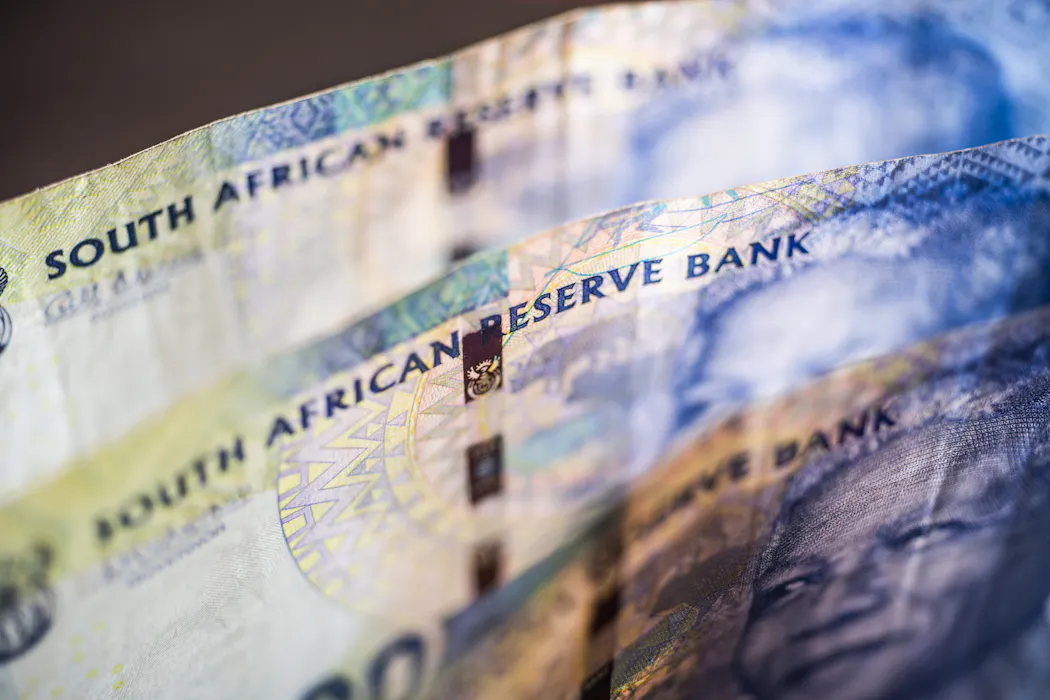
The South African rand is one of many currencies in Africa to have lost value against the dollar in the wake of the US/Israeli war against Iran. Waldo Swiegers/Bloomberg via Gettyimages

By Easter 2026 it was still not clear when – or how – the war initiated by Israel and the US against Iran would end. But what was already clear was that it would harm Africa in a number of ways.

Firstly, it would adversely affect the global supply and prices of oil and gas, fertilisers and food. Secondly, local currencies would be affected. More than a month after the war had started a number of African currencies had begun to lose value against the US dollar.

Thirdly, interest rates stopped falling and further rate increases were highly likely. Fourth, there will be a decline in access to affordable foreign financing.

How should Africa respond?

African countries cannot avoid being harmed by the current Gulf war. Nevertheless, based on my work in international economic law and global economic governance, I think there are two lessons that, if followed, can help the continent emerge from the crisis in a better place.

First, governments and societies need to be pragmatic. Their first priority must be to do whatever they can to mitigate the impact of the war, particularly on their most vulnerable citizens. This will require governments to make trade-offs.

They will have to reallocate budgets to at least maintain the level of imports necessary to meet the society’s basic needs. They will need to convince their creditors to help finance their necessary imports. They will also need to persuade them to be flexible enough that they leave governments with at least some policy space.

Second, states and societies need to identify opportunities within the crisis for actions that over the medium term can help them meet their financing, economic, environmental and social challenges. This requires collaboration between the state and its non-state stakeholders. Business, labour, religious groups, civil society organisations and international organisations all have something to contribute.


Read more:
Oil price surge is hurting African economies: scholars in Ethiopia, Kenya, Nigeria, Senegal and South Africa take stock


Action in the short run

The focus of Africa’s efforts in the short term must be on minimising the negative effects of the war and on managing the state’s external debts in the most sustainable and effective way.

This is easy to state, but hard to implement. This is particularly the case in the current international environment, in which it is not realistic to expect donor countries and other international sources of finance to be particularly generous.

African countries will need to convince their creditors to acknowledge that this crisis is beyond Africa’s control and that they should not compound the pain that’s being experienced. This will require, at a minimum, that the creditors agree to suspend debt payments for the next year.

Creditors have already accepted the principle that debt payments can be suspended when debt challenges arise from sources beyond the debtor’s control. Many of them have accepted clauses requiring such action under specific conditions in their most recent debt contracts. They also did this during COVID.

Second, African countries, which are already heavily indebted, should challenge their multilateral creditors to accept the consequences of being among the biggest creditors for the continent. This includes the World Bank, the International Monetary Fund and the African Development Bank. By custom these institutions are treated as preferred creditors. This means that they get paid before all other creditors. Instead of participating in any debt restructurings, they also make new loans to the debtor in crisis. This shifts the debt restructuring burden onto the debtor’s other creditors. It also increases the total amount owed to the multilaterals.

This cannot continue. These institutions need to be more creative in providing Africa to financing. This should include:

Third, governments should work with the Alliance of African Multilateral Financial Institutions to use these institutions more effectively to finance African development. For example:

  • They should require the institutions to only undertake transactions that are consistent with their development mandates. This means no more opaque transactions like the recent one that the African Finance Corporation concluded with Senegal.

  • African governments should take the necessary action to activate the African Financial Stability Mechanism that they agreed to establish last year. This would create a useful financial safety net for the continent.

Fourth, African governments must build on the efforts they began last year to become a more effective advocate for African development financing interests at the international level. Among these efforts was the initiative by African ministers of finance to develop common African positions on sovereign debt restructurings. Another was South Africa’s launch of the African Expert Panel that proposed a number of initiatives on African debt and development financing.

In the medium term

African countries should advocate for the IMF to review its governance arrangements so that it becomes more accountable and responsive to developing countries, including African states and societies.

They should also advocate for the IMF to more use its existing resources, including its gold reserves, more creatively to support Africa.

Second, Africa should call for a debate on the preferred creditor status of multilateral financial institutions. This has become particularly relevant because the members of the Alliance of African Multilateral Financial Institutions are claiming that, like all other multilateral financial institutions, they are entitled to this status.

It is not clear that there are good arguments for excluding these institutions from preferred creditor status while protecting the position of the legacy institutions. This suggests that there is a need for some general principles that help determine which institutions should be treated as preferred creditors. These should be acceptable to all multilateral financial institutions and other market participants.

Third, African societies must make every effort to demonstrate that they are taking control of their own development. They should demand that their governments and all other actors in African development finance behave responsibly in regard to the financial, economic, environmental and social aspects of these transactions.

Another medium term objective should be to limit the illicit financial flows that are so often associated with international trade and investment. This goal would be advanced by the successful conclusion of the current efforts to agree on a UN Framework Convention on International Tax Cooperation.

The Conversation

Danny Bradlow is s Senior Non-Resident Fellow, Global Development Policy Center, Boston University and a Senior Fellow, South African Institute of International Affairs

ref. Iran war: what African countries can do to get through the crisis and emerge in a better place – https://theconversation.com/iran-war-what-african-countries-can-do-to-get-through-the-crisis-and-emerge-in-a-better-place-279689

Bobi Wine’s decision to flee Uganda points to a shrinking landscape for opposition politics

Source: The Conversation – Africa (2) – By Kristof Titeca, Professor in International Development, University of Antwerp

Bobi Wine’s escape from Uganda is not just a striking episode in itself, it also offers insight into the current state of the opposition – particularly his National Unity Platform party – and into the divergences within the Yoweri Museveni regime.

The Ugandan opposition leader had been in hiding for almost two months after the January 2026 presidential election, which Museveni won by 72%. Wine came second with 25% of the vote. Museveni, 81, has been in power since 1986.

Wine, born Robert Kyagulanyi, entered formal politics in 2017 when he won a parliamentary by-election.

He soon emerged as one of the leaders of the People Power movement, a loose, generationally charged mobilisation built around the slogan “People Power, Our Power”. It took shape in the aftermath of protests against the removal of presidential age limits in 2018. At the time, the opposition appeared largely exhausted and unlikely to unseat the regime. Bobi Wine and People Power therefore brought a new energy to Uganda’s opposition.

People Power later formalised into the National Unity Platform party, which Wine used to vie for the presidency in 2021. He secured about 35% of the presidential vote against Museveni’s 59%. National Unity Platform became the largest opposition force in parliament with 57 seats.

These results also highlighted the constraints of electoral politics in the face of extensive repression.

This is a pattern that would again become apparent in the 2026 elections.

As several human rights organisations noted, the 2026 elections took place in an environment marked by widespread repression and intimidation.

After the vote, Wine went into hiding. He posted photos and videos seemingly from Kampala, triggering roadblocks and searches across the capital city. On 18 March 2026, he resurfaced in the United States.

I have researched Ugandan politics for over 20 years, and recently published an article analysing the structural challenges Wine’s political party faces in Uganda’s authoritarian context.

Drawing on this work, my reading is that Wine’s escape reveals controlled tensions within Museveni’s regime, where different factions appear to disagree on how to handle the opposition – without signalling a full split. At the same time, it exposes a deeper dilemma for Wine and his party: how to balance international advocacy with maintaining grassroots legitimacy at home.

This moment matters because it highlights the structural constraints facing opposition politics in Uganda, and raises questions about whether meaningful political change can occur within the current system.

Frictions within the regime

The contrasting approaches within the Museveni regime are illustrated by events that followed the 2026 election. In the weeks following the vote, defence force chief Muhoozi Kainerugaba (Museveni’s son) issued a series of unusually explicit statements about Wine.

In a now-deleted tweet, he claimed that 22 members of the National Unity Platform – whom he labelled “terrorists” – had been killed. He added that he was praying that the next death would be Wine’s.

On 26 January, the defence chief escalated this rhetoric, stating that he wanted Wine “dead or alive”. These statements built on earlier threats, including about beheading Wine.

Taken together, they amount to sustained violent threats directed at the main opposition leader.


Read more:
Uganda’s autocratic political system is failing its people – and threatens the region


Set against this, however, is the fact that Wine was able to evade capture for nearly two months and ultimately leave the country.

It emerged that he did so with assistance from high-level state and security officials.

The same sources and regime insiders reported that intelligence services had informed Museveni about Wine’s whereabouts. The president chose not to act upon this information.

Taken together, these events suggest differences within the regime between factions in the security services, or more broadly between Muhoozi and other centres of power. Potentially even within the first family itself.

But these differences should not be overstated.

The episode does not indicate an open or consolidated split. Criticism of Muhoozi within the regime remains tightly constrained.

What this suggests is a regime where disagreements are contained within narrow limits. Wine’s escape, therefore, points less to a rupture than to an ongoing negotiation over power and strategy within the ruling elite.

And this is becoming increasingly important in light of the anticipated transition beyond Museveni.

Tensions within Wine’s party

Wine’s political strength has always come from where he came from.

He was rooted in the ghetto, and more broadly among urban youth who had long been mobilised by opposition politics but rarely felt represented by it.

Earlier figures like Kizza Besigye could appeal to this group, but Wine embodied it. He spoke the same language and made politics feel accessible to people often treated as outsiders.

That sense of authenticity was central to the early momentum of People Power. It also mattered that Wine broke with a long-standing pattern in Ugandan politics: he did not come from the western region, the core of the ruling elite.

But this “outsider” appeal has become harder to sustain over time. As People Power turned into a political party, and as Wine himself became more embedded in formal politics and international networks, parts of that original base began to feel that something had shifted.

What once felt like a movement of “one of us” increasingly risks being seen as something closer to the political establishment it set out to challenge.

As my research shows, this is not unusual. It is a core dilemma when protest movements turn into parties, especially under repression.

The social media backlash to Wine’s appearance in the United States needs to be read through that lens.

It not only echoes criticism from Museveni that Wine is an “agent of foreign interests”, but also from within the opposition where some radical voices argue that he should have stayed and faced the regime, even if that meant prison. Besigye, for instance, is facing treason charges after he was abducted and extradited from Kenya in 2024.

This criticism echoes a longstanding divide within opposition politics in Uganda: should opposition leaders embody defiance on the ground, or navigate politics through institutional spaces?


Read more:
The making and breaking of Uganda: an interview with scholar Mahmood Mamdani


Being in the US reinforces a growing perception that Wine is becoming more distant from the people who carried the risks on the ground.

If the party cannot connect its international advocacy and diaspora support back to the everyday struggles of its supporters in Uganda, this episode will likely deepen the feeling that the party has become more of the same.

What role remains for Wine?

There is an uncomfortable reality here. Wine serves a function for the regime. His presence helps maintain the appearance of political competition, particularly within the international community.

Wine now faces a choice. Engaging in electoral politics risks reinforcing the system he seeks to challenge. Stepping outside it risks isolation, repression or loss of political relevance.

How he navigates this tension will shape not only his political trajectory, but also that of his party.

The Conversation

Kristof Titeca does not work for, consult, own shares in or receive funding from any company or organisation that would benefit from this article, and has disclosed no relevant affiliations beyond their academic appointment.

ref. Bobi Wine’s decision to flee Uganda points to a shrinking landscape for opposition politics – https://theconversation.com/bobi-wines-decision-to-flee-uganda-points-to-a-shrinking-landscape-for-opposition-politics-279475

Brutal Mau Mau camps in Kenya were an extension of Britain’s colonial prison system – historian traces their roots

Source: The Conversation – Africa (2) – By Ian Caistor-Parker, PhD student, University of Warwick

During the Mau Mau uprising between 1952 and 1960, the British colonial government confined an estimated 150,000 Kenyans in a sprawling network of “emergency” detention camps.

None of those held in the camps had been found guilty in a court of law. Instead, they were detained on suspicion of supporting the uprising.

British control over Kenya was effectively declared in 1895. A distinctive feature of colonial rule was the decision to encourage white settlement. These settlers were granted vast tracts of Kenya’s most fertile land and pushed policy in an increasingly harsh and unequal direction.

By the early 1950s, many African Kenyans were facing severe land shortages in the countryside and desperate living conditions in urban areas.

In 1952, this situation erupted into the Mau Mau uprising, a broadly anti-colonial rebellion.

The British government responded with overwhelming force. It declared a state of emergency and suppressed the uprising militarily.

Revelations about the extreme violence employed in some emergency detention camps made the continuation of British rule untenable. Particularly key was the Hola massacre of 1959. Guards beat 11 detainees to death and the colonial government attempted to cover up the crime.

Outrage at these events shattered Britain’s grip on the colony, and Kenya achieved independence in 1963 under the leadership of Jomo Kenyatta.

A great deal is known about these detention camps. They were sites of neglect and brutal violence. Detainees were forced to go through a so-called rehabilitation system designed to make them renounce their support for Mau Mau.

In practice, they were subjected to brutal compulsory labour, were at risk of assault and lived in unhygienic conditions. Some of those who refused to cooperate ultimately faced systematic, state-sanctioned torture.

I am a historian researching punishment in Kenya, and I have been investigating the deeper history of detention camps. My research shows that this emergency detention system was shaped by an earlier network of “ordinary” detention camps. These were established in 1926 and processed more than 400,000 people before the uprising.

These camps, intended as a milder alternative to prison, evolved into a poorly regulated system characterised by exploitation, overcrowding and weak accountability.

These findings challenge the idea that the detention system of the 1950s was exceptional. Instead, it was rooted in long-standing colonial practices, shaped by economic incentives, administrative gaps and coercive labour systems.

Understanding this deeper history matters because it changes how we view the Mau Mau emergency. It proves that the brutal 1950s detention system didn’t just emerge from nowhere – it was built on a foundation of state violence and disorder that had been normalised for decades.

The roots

Influenced by a draconian-minded European settler minority, the Kenyan colonial government adopted a harsh approach to punishing the local population. Judges frequently imprisoned Africans for “technical” offences lacking criminal intent. These included failing to pay tax and minor violations of coercive labour laws.

By the 1920s, Kenya’s prisons were overcrowded and “technical” offenders inevitably mixed with hardened criminals.

In response, the colonial government introduced detention in 1926 as a supposedly milder alternative for technical offenders who had simply broken administrative rules. In theory, prisons were to be reserved for those who had committed crimes involving moral violation. In practice, however, these distinctions didn’t (or couldn’t) hold.

To visibly separate detention from imprisonment, the colonial government gave day-to-day control of detention camps to district commissioners (the powerful heads of local governments), not the prison department.

However, this separation was incomplete. Detainees were legally classified as prisoners (though they were not informed of this). The prison department retained ultimate authority over the camps.

This overlapping authority produced a gap in accountability, which ultimately proved disastrous.

In 1930, seeking to divert more people from formal prisons, government officials removed almost all sentencing restrictions on detention. Subsequently, the only limitations were that sentences had to be under six months and that those with more than one prior prison conviction were ineligible.

Numbers surged immediately, with more convicted offenders sent to detention than formal prisons almost every year until 1952.

Judges increasingly used detention for serious offences, including manslaughter. A limited criminal records system meant that individuals with prior convictions – sometimes as many as 16 – ended up in detention.

Conversely, the amendment did not stop harsh magistrates from continuing to send significant numbers of minor offenders to prisons.

This blurring of populations, combined with a lack of structural and legal separation, meant detention camps mutated into a parallel prison system, serving a different colonial master, district commissioners, but lacking fundamental distinction.

Detention camp living conditions were atrocious. Most district commissioners delegated almost all duties to Kenyan African “overseers”. Overseers were under-trained. Yet they were expected to be on duty constantly and often had to guard more than 60 detainees, making meaningful supervision impossible.

Camps were generally collections of temporary wattle-and-daub huts. Over time, these decayed but were not replaced, resulting in squalid conditions.

Furthermore, overcrowding was endemic. Food rations were poor and basic facilities were often absent. Sickness rates were significant. Detainees responded by escaping at a rate of more than one a day.

Failed reform

In 1937, a high-level committee condemned the system as dangerous and inefficient. Calls for reform from London also grew.

But nothing changed.

Why?

The primary reason was economic. Detainees were a vital reservoir of free labour for cash-strapped district commissioners. When camps were introduced, local governments’ labour budgets were cut. This made detainee labour crucial for maintaining government stations.

In the late 1930s, penal officials sought to reintroduce stricter eligibility criteria for detention. However, they abandoned this idea as it would add to overcrowding in the prison system.

Trapped by bureaucratic gridlock, underfunding and economic dependency, Kenya’s detention system limped into the 1952 emergency – unreformed.

Ultimately, “ordinary” detention camps persisted until the 1980s, far outliving their emergency counterparts.

The consequences

This history exposes stark continuities between the pre-emergency and Mau Mau penal systems. Furthermore, as they were under the control of district officials and lacked standard prison regulations, existing detention camps could, and did, easily become dumping grounds for Mau Mau suspects in the early months of the emergency. Ordinary detention was both a model and enabling mechanism for emergency detention.

The Conversation

Ian Caistor-Parker receives funding from the UK Economic & Social Research Council

ref. Brutal Mau Mau camps in Kenya were an extension of Britain’s colonial prison system – historian traces their roots – https://theconversation.com/brutal-mau-mau-camps-in-kenya-were-an-extension-of-britains-colonial-prison-system-historian-traces-their-roots-277856

Kenya’s new infrastructure fund is long overdue – but design flaws could limit its impact

Source: The Conversation – Africa – By Odongo Kodongo, Associate professor, Finance, University of the Witwatersrand

Kenya is laying the ground for an infrastructure fund which will raise money for new projects – such as roads, energy and ports – through public-private partnerships, privatisation proceeds, and institutional capital. We asked Odongo Kodongo, a project finance expert, to unpack the potential risks and rewards of this strategy – and where it falls short.

Why now?

Kenya is weighed down by public debt that has built up rapidly over the last few years. The country’s public debt stood at about 12.30 trillion Kenya shillings (US$94.6 billion) as of December 2025, having risen from about 9.15 trillion shillings (US$70.3 billion) in December 2022. That is, public debt grew by over 34% in only three years.

Public debt as a percentage of GDP in 2022 was 67.9%. Thanks to an appreciating local currency, the debt to GDP ratio remained almost unchanged at 67.5% in 2025. For emerging and developing economies, a debt limit of no more than 64% of the country’s production (gross domestic product or GDP) is recommended.

In the financial year 2024/25, 71.2% of all government revenue went towards the servicing of debt. This left very little resources for other government activities including social programmes and capital projects such as infrastructure investments.

Kenya faces a massive infrastructure gap. Estimates show that the country needs to invest over US$12 billion annually in infrastructure until 2040 to meet its development goals. It doesn’t have this, resulting in an infrastructure financing gap of roughly US$2.1 billion annually.

However, due to the country’s excessive public debt, Kenyans must consider avenues other than tax revenues and public debt to pay for infrastructure. In this regard, the new fund is long overdue.

How will the fund work?

The National Infrastructure Fund Act establishes the fund as a corporate entity run by a board of directors. The board includes state officers and independent directors, recruited in accordance with the legislation governing state owned enterprises.

The treasury secretary is expected to formulate the act’s supporting regulations and guidelines. These include the fund’s investment policy, government support mechanisms, and standards and procedures.

However, the fund’s proposed legislation appears to indicate that its major responsibilities will include:

  • identifying and setting priorities for public infrastructure investments

  • conducting feasibility studies and developing bankable proposals

  • identifying an optimal mix of financing options for infrastructure projects

  • negotiating and closing financing deals with infrastructure financiers

  • overseeing implemented projects to manage risks and minimise time and cost overruns

  • audit to ensure past experiences inform project planning.

What are the potential risks and rewards?

The potential benefits of an infrastructure fund include greater infrastructure endowment, its potential cascading effects on development, and reduced reliance on the public purse.

But the success of such a fund hinges on many things. First, the fund’s design as a state owned enterprise creates the expectation that it will have autonomy to make its decisions without political interference and executive meddling.

However, some provisions of the act cast doubt that this will be possible. For example, the power to appoint independent directors is vested in the treasury cabinet secretary. This is a red flag. Given that the same cabinet secretary is a member of that board, independent board members may feel under pressure to agree with their appointing authority, making them effectively nonindependent.

Second, the fund must incentivise superior performance. Part III of the act recognises this need. The treasury cabinet secretary can set the board’s performance targets and evaluate its performance. But the cabinet secretary is a member of the same board and cannot be a fair referee.

Third, the act identifies the fund’s audited financial statements as a basis for performance evaluation. While this conventional approach appears sound, the structure of a more appropriate incentive system should focus on the objectives for which the fund is being set up. That is, performance should be based on:

  • the quantity of financial resources mobilised, especially from private sources

  • the amount of mobilised resources actually invested in infrastructure projects

  • efficiency in the management of projects

  • existence of feedback loops at various points between project origination and termination to support monitoring and corrective actions when necessary

  • capacity development and skills transfer.

The last point is important, given that human capital constraints have limited the region’s capacity to generate a pipeline of bankable projects, rendering its infrastructure sectors unattractive to private sector capital.

The fourth major weakness is the significance attached to financing derived from the disposal of government assets. Given that these assets are in short supply, monies from such sales must not be regarded as a primary source of financing.

Indeed, while the motivation for setting up the fund is to diversify funding sources and increase fiscal headroom, the act does not say much about private sector involvement.

In contrast, a similar fund created in South Africa in 2020 is specifically mandated to employ blended finance instruments. This involves using concessional finance (such as borrowing from development banks) to make an investment less risky to encourage private sector participation.

Finally, there is an ominous clause in the act that empowers the treasury secretary to issue government support in the form of letters of credit, guarantees and firm commitments to support projects. Because some of these mechanisms constitute public debt, this clause contradicts another clause that motivates the fund’s establishment on the grounds of “reduction in the reliance on public debt”.

What’s missing from the strategy, what needs fixing?

First, the implementation guidelines to be developed by the cabinet secretary should clearly spell out the fund’s goals. These include:

  • specific capital mobilisation targets: what is the volume of financial resources expected to be mobilised?

  • infrastructure investment targets: what are the immediate, medium and longer term infrastructure investment goals? These would be consistent with the country’s development plans, which often have specific timelines, such as year 2030.

Second, the underpinning law links performance measurement to the fund’s ability to “make a return commensurate with its level of investment”. This “economic/financial” view of performance ignores the social return potential of infrastructure investments.

For example, investing in hospitals and schools creates a healthier and higher quality manpower with greater longevity (social returns) and receptiveness to new knowledge. This increases labour productivity (economic returns).

Third, one of the more important beneficial spillovers of the fund’s operations is likely to be the development of the country’s capital markets. The fund could access capital from financial institutions such as pension and wealth funds, and diaspora resources, through innovative design of financial instruments.

The increased diversity of financial instruments and larger pool of capital could deepen the country’s capital markets. Thus, the act ought to have included capital markets development as one of the fund’s objectives.

At the operational level, several things need fixing. For example, the government must provide “seed” capital to support the fund’s initial activities. The amount of the seed capital, the justification for it, and its source(s) must be anchored in law.

Further, given the highlighted flaws of the cabinet secretary’s dual roles as a member of the board and its oversight agent, the cabinet secretary should be made an ex-officio member by law.

Finally, all proceeds, if any, from the sale of public assets in future should be ring-fenced to the fund. This, too, should be anchored in law.

The Conversation

Odongo Kodongo does not work for, consult, own shares in or receive funding from any company or organisation that would benefit from this article, and has disclosed no relevant affiliations beyond their academic appointment.

ref. Kenya’s new infrastructure fund is long overdue – but design flaws could limit its impact – https://theconversation.com/kenyas-new-infrastructure-fund-is-long-overdue-but-design-flaws-could-limit-its-impact-279254

South Africa’s MeerKAT telescope is mapping previously invisible spaces between galaxies – and it’s found 60 new cosmic structures

Source: The Conversation – Africa (2) – By Konstantinos Kolokythas, Postdoctoral research fellow, Rhodes University

Diffuse radio emissions captured by the MeerKAT telescope spanning millions of light-years. Visualisation by Konstantinos Kolokythas, CC BY

Astronomers are uncovering previously hidden structures within some of the universe’s largest objects, known as galaxy clusters. Using the powerful MeerKAT radio telescope in South Africa, researchers have mapped faint, diffuse radio emissions, an imprint that reveals energy processes taking place in the vast spaces between galaxies when galaxy clusters collide or merge.

Konstantinos Kolokythas, a radio astronomer and postdoctoral research fellow at Rhodes University and the South African Radio Astronomy Observatory (SARAO), has led research into what these radio emissions reveal about our cosmic history. His findings provide a glimpse of what powerful instruments like MeerKAT and the upcoming Square Kilometre Array (SKA) will discover as they explore the “invisible” radio universe.

What has MeerKAT found, thanks to its sensitivity?

Think of a galaxy cluster not as a collection of thousands of galaxies, but as a bustling city. While telescopes usually see the “bright lights” of individual galaxies, MeerKAT has enabled us to detect the faint “smog” or “mist” filling the streets between them. Our search has been for this extremely faint “diffuse radio emission”. It is spread over millions of light-years, like a thin, glowing fog.

In the vast spaces between galaxies lies the Intracluster Medium – an incredibly hot, thin gas that fills the cluster. While the gas itself is usually seen by X-ray telescopes, it also contains magnetic fields and electrons travelling at nearly the speed of light.

When galaxy clusters merge, it is like a cosmic dance: the electrons encountering a magnetic field are compelled to spiral along the magnetic field lines, emitting energy as radio waves. This is the radio emission we see at 1.28 GHz with MeerKAT. It reveals the places of shock accelerations (the aftermath of cosmic collisions).

Our research within the MeerKAT Galaxy Cluster Legacy Survey (MGCLS), a programme led by the South African Radio Astronomy Observatory, used this capability to map 115 of these “cosmic cities”. We identified 103 diffuse sources, including 60 structures that were completely invisible to previous generations of telescopes. The legacy survey also produced its own overview.

We have essentially moved from having a blurry map of the neighbourhood to a high-definition atlas, revealing that the “empty” space between galaxies is actually teeming with energy. By combining this radio data with X-ray and optical observations, we can calculate the “energy budget” – essentially a full accounting of all the power, heat and magnetic energy moving through these massive structures.

How does this clarify or add to what was known before?

Before this work, we mainly observed only the brightest, most violent merger events. With our new catalogue, we can see the broader picture of cosmic evolution, detecting the faintest structures arising from galaxy cluster collisions. By identifying these features in over half (54%) of the surveyed clusters, we can study how energy is processed on a cosmic scale.

These radio signatures are the “scars” left by cluster mergers – colossal, slow-motion collisions where gravity draws two massive collections of galaxies together. This process generates turbulence and shockwaves that “kick” particles to extreme speeds.

Our findings demonstrate that these high-energy events
are a fundamental part of a cluster’s life cycle and the universe’s evolution. Clusters that appear “quiet” or “relaxed” in X-ray light often conceal a history of radio activity. We are mapping the
secret structures of magnetic fields over billions of years. In radio astronomy, the universe is never truly silent.

What direction does this point to for future research?

This catalogue serves as a high-resolution “baseline” for the coming decade. With MeerKAT, we have pushed the limits further, allowing us to observe more “ultra-steep spectrum” sources – faint emissions from the oldest, most “tired” particles in the universe. These are vital for understanding the long-term lifecycle of cosmic energy.

Looking forward, this research paves the way for the Square Kilometre Array (SKA) observatory, the world’s largest and
most sensitive radio telescope, which is expected to be fully operational by 2030. If MeerKAT can detect 60 new structures in a small patch of the sky, the SKA will likely find thousands.

Why does this matter?

Because these structures forming in clusters are the largest “natural laboratories” in the universe. By studying them, we aren’t just looking at pretty pictures; we are learning how gravity, magnetism and matter behave on a scale that is otherwise impossible to recreate and the human mind can barely conceive.


Read more:
Astronomers used machine learning to mine data from South Africa’s MeerKAT telescope: what they found


This research proves that South Africa is at the forefront of this discovery, using homegrown technology to answer the deepest questions about the fabric of our universe, where our universe came from and how it evolves.

The Conversation

Dr Konstantinos Kolokythas receives funding from the South African Radio Astronomy Observatory (SARAO) and the National Research Foundation (grant UID: 97930), an agency of the Department of Science
and Innovation. He works for Rhodes University / SARAO. He is also affiliated with the Istituto di Radioastronomia (INAF) in Bologna, Italy.

ref. South Africa’s MeerKAT telescope is mapping previously invisible spaces between galaxies – and it’s found 60 new cosmic structures – https://theconversation.com/south-africas-meerkat-telescope-is-mapping-previously-invisible-spaces-between-galaxies-and-its-found-60-new-cosmic-structures-279002

Africa’s electric motorbike future can be built locally and powered by solar – our 6,000km ride shows what’s possible

Source: The Conversation – Africa – By MJ (Thinus) Booysen, Professor in Engineering, Stellenbosch University

The electric bike on the road in Kenya. Photo: Lewis Seymour, CC BY

Across much of Africa, motorcycles are not leisure vehicles. They are workhorses. They carry commuters, schoolchildren, goods, medicines and deliveries. For millions of people, they provide the most affordable and accessible form of transport, while also creating livelihoods for riders and small businesses.

In many places, they fill the gap left by limited public transport. Kenya alone has about 1.5 million riders.

Of the 27 million motorbikes in sub-Saharan Africa, only about 0.1% are electric, running on clean and low-cost energy.

As part of a team of electrical and industrial engineers at Stellenbosch University, I work (and go on adventures!) to see if that share can be increased.

When our team rode a locally manufactured electric motorbike from Kenya to South Africa in 2024, charging it with only solar power and battery storage along the way, we were not only testing a vehicle. We were testing whether Africa could build and power its own electric mobility future.

Route of test journey.
CC BY

The journey covered roughly 6,000km via cities, rural roads and border posts, showing that electric two-wheelers are not a distant dream for sub-Saharan Africa. They are already practical, and they point to a much bigger opportunity.

Feasible transition

Electric motorcycles with battery swapping fit the realities of mobility demand in African countries: relatively short daily trips, constant use, tight operating margins and the need for low-cost transport. It’s already been estimated that electrifying this segment will reduce total cost of ownership for riders by 35%-40%, improve urban air quality, cut greenhouse gas emissions and lower dependence on imported fuel.

Our own research suggests this transition is both technically and economically feasible.

Together, these findings suggest that electric micromobility in Africa is not only technically viable, but can be paired with local solar systems in ways that improve affordability, resilience and access.

An industrial opportunity

Africa should not simply become a market for electric vehicles designed and manufactured elsewhere. It should become a place where they are built, adapted and improved for African conditions. The continent’s mobility needs are specific. Vehicles must cope with rough roads, heavier loads, long operating hours and uneven access to charging. A motorcycle designed for Europe or Asia is not always right for a boda-boda rider in Kenya or a delivery rider in South Africa.

In one study, we developed and validated a physics-based model twin of an electric motorcycle under African operating conditions, showing that energy use can be predicted with good accuracy from real trips, terrain and payload. This digital twin can be used in virtual assessments of electric fleet deployments.

Local production would also create local jobs. It can create opportunities in assembly, fabrication, battery integration, electronics, software, data analytics, servicing and charging infrastructure. It would give young engineers, technicians and entrepreneurs a foothold in an industry that is already growing quickly.

But that growth will not happen on its own. It needs policy support. Ethiopia banned imports of internal combustion engine vehicles in 2024. This rapidly accelerated EV adoption and altered the economics of vehicle imports. South Africa’s belated 150% tax incentive for local electric vehicle production is a step in the right direction.

Tapping into local resources

Sub-Saharan Africa has some of the best solar resources in the world. At the same time, many communities still face unreliable grid electricity or no access at all. That may sound like a barrier to electrified transport, but it is also an opportunity.

Solar panels.
Lewis Seymour, CC BY

Compared with large cars or buses, small vehicle batteries are far easier to charge from decentralised solar systems. Solar-powered charging points, battery swap stations, mini-grids and storage systems can all support electric motorcycles where conventional infrastructure is weak.

Charging has already been demonstrated on solar-hybrid mini-grids, particularly for rural electric two-wheelers, with documented cases in Nigeria and operator-led deployments in Sierra Leone.

Our research has found that decentralised solar can help power this transition: a school-centred solar trading model serving households and electric motorbikes achieved payback periods of under five years in favourable cases and improved supply reliability for external users by about 60%.

This matters especially in rural and peri-urban areas, where mobility poverty is often most severe. A locally manufactured electric motorcycle charged with solar power is more than a cleaner vehicle. It is a tool for inclusion. It can improve access to jobs, education, healthcare and markets while reducing exposure to fuel price shocks.

That is why this transition should not be framed only as a climate issue. It is a development issue.

Policy needs

African governments must make it easier to produce and sell electric vehicles locally. At present, many local manufacturers face the strange situation where importing a finished vehicle is cheaper and simpler than building one domestically. High duties on components, inconsistent regulations, costly certification, weak access to finance and uncertain policy signals all work against local industry.


Read more:
Ghana’s new vehicle tax aims to tackle pollution – expert unpacks how it’ll work and suggests reforms


If governments are serious about industrial development, electric micromobility is a practical place to start. Support could include lower tariffs on components for local assembly, tax incentives for domestic manufacturing, development finance, clear technical standards and public procurement policies that create dependable demand. The aim should not be permanent protection, but smart support that helps African firms scale and compete.

Man riding a motorcycle
Riding the ebike.
Lewis Seymour, CC BY

Governments must support cross-border collaboration. Africa’s challenges are shared, but our responses are often fragmented. Countries create separate standards, separate pilot projects and separate industrial plans, even when their transport needs and energy constraints are remarkably similar. This duplication makes progress slower and more expensive.


Read more:
What’s stopping sunny South Africa’s solar industry? Court case sheds light on the wider problem


Many African borders were imposed in colonial times. They do not reflect the deeper connections between economies, people or problems. Fuel insecurity, unemployment, poor public transport, congestion and unreliable electricity are not isolated national problems. They are regional realities. The response should therefore also be regional.

That means harmonised standards, easier trade in locally made vehicles and components, shared research platforms and coordinated industrial policy. A larger, more integrated African market would help manufacturers scale up, reduce costs and justify investment in skills and supply chains. It would also allow innovations developed in one country to spread more quickly across the continent.

Electric mobility policy must be linked to energy policy, especially solar energy.

From talk to action

Our journey from Nairobi to Stellenbosch, now told in our seven-episode documentary series, Recharging Hope, was not a publicity stunt. It was a practical demonstration that locally made electric motorbikes, powered by solar energy, can work across African roads and real African conditions. The question is no longer whether this future is possible. It is whether policy and investment will help Africa build it for itself.

With the right policies, partnerships and investment, electric micromobility can help the region move people more affordably, build local industry more confidently and use the power of the African sun more fully.

Africa’s mobility future should be built in Africa and powered by its own abundant renewable energy.

The Conversation

MJ (Thinus) Booysen receives funding from the Western Cape Government Motorised Transport (GMT) and South Africa’s Transport Education Training Authority (TETA).

ref. Africa’s electric motorbike future can be built locally and powered by solar – our 6,000km ride shows what’s possible – https://theconversation.com/africas-electric-motorbike-future-can-be-built-locally-and-powered-by-solar-our-6-000km-ride-shows-whats-possible-279008

Violent conflicts are reshaping what Nigerian farmers grow: what this means for food security

Source: The Conversation – Africa (2) – By Abeeb Babatunde Omotoso, Senior Lecturer at Oyo State College of Agriculture and Technology, Igboora, Nigeria and Senior Research Associate at North West University, North-West University

Agriculture is the backbone of Africa’s economy. It provides livelihoods for over 70% of the rural population and contributes to national food security and economic development.

For most rural households, farming is not just a source of income and sustenance. It also provides cultural identity and social stability. Over the past two decades, however, rural Africa has witnessed increasing levels of violent conflicts that undermine agricultural productivity, investment and long-term development.

Farmers facing insecurity often abandon productive crops, reduce land use and invest less in their farms. There are serious consequences for food security.

Conflict destroys lives and property. It also changes the decisions farmers make about investing in their land.

We are agricultural and applied economists with expertise in rural development,sustainable food system and climate-smart agriculture. We’ve studied the impact of conflict on food systems in the global south.

One of our studies examined how violent conflict influenced agricultural investment decisions among rural households in Nigeria. We combined nationally representative household data with detailed conflict records, to track how exposure to violence affects farming.

The findings showed that violent conflict altered agricultural investment decisions. It made farmers less likely to cultivate major crops.

The cultivation of yam, sweet potato, groundnut, cowpea, maize and cassava declined as conflict incidents increased. Sweet potato was the most affected, perhaps because it needs a lot of labour and a longer time to grow.

When conflict disrupts farming through abandoned fields, lost livestock, or altered investment decisions, it undermines food availability and long-term agricultural development.

Understanding these impacts is useful when designing ways to help farmers and sustain food systems in conflict-affected areas.

The reality

Our study used panel data from Nigeria’s Living Standards Measurement Study covering the periods 2012/2013, 2015/2016 and 2018/2019.

The national study provides detailed household-level information. This covers demographic characteristics, agricultural production, crop choice, land allocation, input use, production costs and market participation.

We combined the household coordinates with geocoded conflict data from the Armed Conflict Location and Event Data Project (ACLED) to measure exposure to violent conflict. The ACLED database provides detailed information on battles, violence against civilians, remote violence, protests and riots.

Our study focused on three indicators of violent conflict exposure:

  • total number of conflict incidents

  • number of violent incidents affecting civilians (including Boko Haram-related violence)

  • number of battles, including protests, riots and farmer–herder clashes.

To capture local exposure to violence, we measured conflict incidents within a radius of 10km of each surveyed household in a given year.

By linking spatial conflict data with household-level agricultural information across multiple survey waves, the study analysed how exposure to violent conflict influenced farmers’ production decisions, land allocation and agricultural outcomes over time.

The findings

The results indicate that insecurity discourages farmers from engaging in production activities that involve greater risk or long-term investment. Conflict exposure also affects land allocation decisions.

The analysis showed a reduction in the total cultivated land area and a decline in the share of land allocated to key staple crops.

This pattern suggests that farmers respond to insecurity by scaling down farming activities, avoiding distant plots, and concentrating on smaller or safer areas of land. Reducing the land cultivated may result in less food produced.

We found that conflict led to less spending on agricultural production. Farmers invested less in inputs such as fertilizer, pesticides and hired labour.

The effects varied across management types. Plots managed by men showed relatively stable investment levels. Production costs increased on plots managed by men and women. This could be due to reliance on external labour during periods of insecurity.

The findings demonstrate that violent conflict affects crop choices, reduces land use and discourages agricultural investment.

Disruptions also increase the cost of agricultural production and marketing, making farming less profitable. Government efforts to support agriculture, such as input subsidies and rural development programmes, don’t work so well in conflict zones.

The adverse effects are more severe for households in highly conflict-prone areas. Disputes have long-term economic impacts.

Recommendation and policy implications

The findings highlight the need for conflict-sensitive agricultural policies and targeted rural development interventions.

First, strong rural security and community conflict resolution mechanisms are essential. Government and local authorities should monitor security in major agricultural zones and help communities to build peace.

Policies should encourage farmers to plant climate-smart and low-risk crops that need fewer inputs and have shorter production cycles. This would make agricultural systems more resilient to conflict.

Extension services should advise farmers on which crops to plant, improved seed varieties, and farming strategies suitable for insecure environments.

Policymakers should invest in rural infrastructure and early-warning systems, including market access, transport networks and conflict monitoring systems.

The Conversation

The authors do not work for, consult, own shares in or receive funding from any company or organisation that would benefit from this article, and have disclosed no relevant affiliations beyond their academic appointment.

ref. Violent conflicts are reshaping what Nigerian farmers grow: what this means for food security – https://theconversation.com/violent-conflicts-are-reshaping-what-nigerian-farmers-grow-what-this-means-for-food-security-278719

Economic policy in South Africa neglects informal traders: 5 focus areas to support the sector 

Source: The Conversation – Africa – By David Campbell Francis, Senior Researcher, Southern Centre for Inequality Studies, University of the Witwatersrand

The informal economy is responsible for a large share of economic output across the continent. Yet economic policy is almost always designed for the formal economy and overlooks the informal economy.

We are labour-market economists interested in the informal economy and informal work. We have spent the last two years investigating the concept of an economic policy for informal workers. We spent several months interviewing informal traders, traders’ associations and key stakeholders. Our aim was to better understand their challenges, and to inform the development of an economic policy for informal trading.

Drawing on our research partnership with Women in Informal Employment Globalising and Organising, we argue that rethinking economic policy from the perspective of the informal economy is essential.

We begin from the premise that economic policy must actively support the everyday economy. Recognising informal traders as economic agents, and investing in systems that support them, allows local economies to become more resilient, inclusive and sustainable. Traders need a supportive ecosystem so they can move beyond survival, and contribute to local growth and development.

Our findings highlight five areas that should support a policy ecosystem: macroeconomic stability; efficient administration; regulation of competition; participation in policy and governance; and inclusive infrastructure.

On the ground

Our research focused on informal traders in Gauteng, South Africa’s economic hub. The sector provides vital income for marginalised communities and brings essential goods and services closer to where people live. Yet traders remain on the periphery of policy attention. Urban management often treats them as a problem to control rather than as economic actors to engage.


Read more:
Johannesburg has failed its informal traders: policies are in place, but action is needed


Most informal traders are own-account workers, operating on survivalist incomes that often fall below the poverty line. They face unpredictable markets, limited access to infrastructure, and constant regulatory uncertainty. This makes it difficult to grow their businesses or improve earnings.

These difficulties reflect the fact that informal traders operate in environments that have multiple layers. These include:

  • local factors: municipal regulations, permits, policing, infrastructure, competition, community networks

  • broader national forces: macroeconomic trends, regulatory frameworks, structural inequalities, formal-sector dominance.


Read more:
Johannesburg’s produce market has supplied the informal sector for decades: a refresh is due


Understanding these interlocking layers is essential when creating policies that support sustainable livelihoods and growth.

Five policy pillars

(1) Macroeconomic stability

This needs to be the first pillar of the economic policy. The informal sector is highly sensitive to macroeconomic conditions for a number of reasons.

Firstly, informal traders earn low and unstable incomes. This means that rising living costs quickly erode their ability to sustain livelihoods. This is particularly true when it comes to food, transport and energy prices.

Secondly, the sector is vulnerable to poor growth and unemployment. The informal economy functions as a safety net during economic downturns by absorbing workers displaced from the formal sector. This was well illustrated during the COVID pandemic. But there’s a downside. A flood of new entrants into a constrained sector leads to overcrowding. In turn this:

  • leads to intensified competition for limited trading spaces

  • disrupts existing organisational systems

  • weakens trader networks

  • reduces earnings.

Macroeconomic instability, therefore, expands informality. It also threatens informal livelihoods.

Revisiting macroeconomic policy should also include a tax policy that doesn’t prejudice informal workers.

(2) Efficient administration

Administrative inefficiencies and exclusionary practices create barriers for informal traders. For example, delays in issuing permits and other documentation leave traders vulnerable to harassment, bribery and eviction.

Inconsistent enforcement of bylaws creates an uneven playing field. Compliant traders are disadvantaged while irregular practices persist.

These burdens are not solely the result of local government shortcomings. They also reflect national-level failures such as delays in processing asylum-seeker applications. This disadvantages traders who rely on formal documentation to operate legally.

Together, these administrative challenges have a number of knock-on effects. They:

  • intensify competition over limited spaces

  • erode trust in authorities

  • constrain the stability and growth of the informal sector.

(3) Regulation of competition

The South African informal sector faces competition on multiple fronts.

Traders compete among themselves for a limited number of customers and trading spaces. They also face intense competition from the formal sector. Examples include supermarkets, retail chains and shopping malls. Informal traders are pushed into less profitable or precarious locations.

It’s often assumed that there’s perfect competition in the sector – that market players can trade freely.

But they do face structural disadvantages such as regulatory barriers, formal-sector dominance and uneven access to prime trading spaces.

Formal-sector expansion is framed as economic “development”. But it frequently displaces long-standing informal systems.

Intense and unfair competition in the informal sector has another consequence: it forces traders to compete primarily on price rather than quality or service. This is because they can’t match the economies of scale, marketing power, or infrastructure advantages of formal retailers and better-resourced informal traders.

(4) Participation in policy and governance

An economic policy for informal traders needs to emerge from their involvement in policy and governance discussions.

Informal traders are often excluded from the planning and decision-making processes around things that affect them. This includes bylaw enforcement, market design and permit systems.

The result is policies that fail to reflect the realities of informal trade. In turn this:

  • creates unnecessary obstacles

  • increases uncertainty

  • limits traders’ ability to plan, invest and grow.

(5) Inclusive infrastructure

Many traders operate in spaces without electricity, water, sanitation or safe storage facilities. Poor infrastructure limits the types of goods traders can sell and increases operational. It also exposes both traders and customers to health and safety risks.

Too often, cities treat infrastructure provision for informal traders as optional. Or it’s not designed with the needs of informal traders in mind.

This neglect produces unsafe and precarious work environments, undermining both livelihoods and local economic activity.

Infrastructure that is designed to meet traders’ needs will translate investment into higher productivity, improved earnings, safer working conditions and more vibrant local markets. This will benefit both traders and the communities they serve.

The Conversation

David Francis received funding from Women in Informal Employment Globalising and Organising (WIEGO) to support the research that informed this article.

Siphelele Ngidi received funding from Women in Informal Employment Globalising and Organising (WIEGO) to support the research that informed this article.

ref. Economic policy in South Africa neglects informal traders: 5 focus areas to support the sector  – https://theconversation.com/economic-policy-in-south-africa-neglects-informal-traders-5-focus-areas-to-support-the-sector-278323