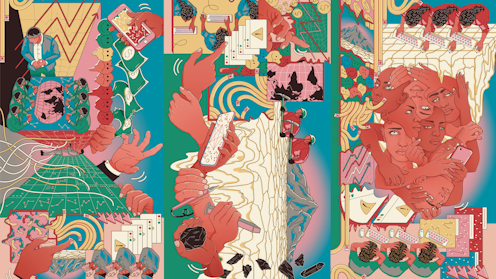
TikTok users in Ghana and Zimbabwe enjoy making fun of government – why it can have a downside

Source: The Conversation – Africa – By Jacob Nyarko, Lecturer of Communication Studies, University of Cape Coast

Browse the internet or turn on the global news and chances are the coverage of Africa you find is about war, coups, displaced populations and disease.

Generally, the west and its media are blamed for this negative, Afropessimistic portrayal of the continent.

Africans have taken strategic steps to repair this negative narrative. An example is the Africa Rising campaign. It was launched in 2000 by a coalition of African activists and organisations. Its objective was to highlight the role of Africa in global development and encourage Africans at home and the diaspora to contribute positively. Social media platforms played a large role in content distribution and messaging. The success of this campaign is still the subject of debate.


Read more:
Western media outlets are trying to fix their racist, stereotypical coverage of Africa. Is it time African media did the same?


As communication scholars, we were intrigued by the visual appeal of the social media platform TikTok. With our area of expertise being Ghana and Zimbabwe respectively, we were interested in how citizens of these countries were using the popular TikTok app to report on themselves.

Our study explored the self-critical content that many Africans share on TikTok. We found that TikTok posts and comments by Ghanaian and Zimbabwean creators generated entertaining information. We call this “fun journalism”. TikTokers use it to comment on important issues, but the way they do it could also harm the reputation of the two countries and influence decisions in unintended ways.

Fun journalism and reputation

As a creative and innovative platform, TikTok has enabled users to produce multimedia materials and share them across the globe for fun and entertainment. According to the Digital 2025: Ghana report by Datareportal, 81% of Ghanaians aged 16 and over use the internet to access TikTok monthly. That makes it the second most popular platform after WhatsApp (93%). Zimbabwe has 2.05 million TikTok users aged 18 and above, according to tech data aggregator Datareportal.

Studies show that users tend to “play” with social media, even when they use it for serious things. Our study showed that the fun videos uploaded by TikTokers from Ghana and Zimbabwe covered serious issues like security, education, sanitation, corruption, entertainment, religion and sports.


Read more:
Nigerian TikTok star Charity Ekezie uses hilarious skits to dispel ignorance about Africa


For example, one Ghanaian TikTok video compares how a Ghanaian and a European would react if they picked up money that someone had lost. The video suggests an African would keep the money, while a European would try to locate the original owner.

In many instances, users ridiculed their countries and fellow citizens. They compared African conditions to the global north in ways that degraded local endeavours. For example, in one TikTok video, a user imitated Zimbabwean president Emmerson Mnangagwa having difficulties explaining the number of zeroes in a million. This gave the impression that he was semi-literate and out of his depth.

We found that, generally, the entertaining discourses on TikTok were laden with insults and critiques of government. Though some of the content raised legitimate concerns, it seldom offered solutions to the identified challenges. This suggested that TikTok content that jokingly covered significant national development issues eroded reputational gains made by the two countries by framing them negatively. We cite several examples in the study.

Comparing this phenomenon to other countries, a study on Chinese uploads onto TikTok showed the following results: 41% positive, 53% neutral and 6% negative.

Self-ridiculing factors and misinformation

TikTokers ridiculed the reputation of Ghana and Zimbabwe in three ways:

  • Exaggerated production of video content. This includes emotional background sounds, tone of voice, slang, animation, unfavourable shooting locations and poor video quality

  • comparing African countries to foreign conditions

  • generating unfavourable comments.

“Fake news” has become an integral part of social media, raising doubts about the credibility of information generally. We argue that such content should no longer be seen as harmless humour.

link text

Implications and measures

As the press freedom rankings of both countries fall, TikTok can be a safe, open space for citizens to raise important public concerns.

The platform makes space for a diversity of opinions from the youthful populations found in the two countries. This is important for communication and building consensus in development.

We argue that TikTokers should be encouraged to offer constructive criticisms of their countries and propose solutions instead of insults.

Policy makers should tap into the vast repository of “fun” information published on TikTok for development. The opinions expressed by citizens online are a helpful reflection of societal needs. This can be taken into consideration when formulating policies.


Read more:
How memes in the DRC allow people to laugh at those in power – and themselves


Mainstream professional media could adopt the fun journalism model to tell serious stories in ways that boost development and reputation. The platform’s wide usage will make information accessible to a large audience.

Media regulatory bodies, nongovernmental organisations and civil society groups are encouraged to educate netizens to publish critical and progressive stories about their countries. This can help combat misinformation and disinformation on social media, particularly TikTok.

Finally, governments should take steps to positively project their respective countries to the world. They could run educational programmes to inculcate a sense of patriotism and identity to rekindle the initiatives that Africa Rising advocated.

The Conversation

Jacob Nyarko receives funding from the University of Cape Coast, Ghana for this work.

Oswelled Ureke does not work for, consult, own shares in or receive funding from any company or organisation that would benefit from this article, and has disclosed no relevant affiliations beyond their academic appointment.

ref. TikTok users in Ghana and Zimbabwe enjoy making fun of government – why it can have a downside – https://theconversation.com/tiktok-users-in-ghana-and-zimbabwe-enjoy-making-fun-of-government-why-it-can-have-a-downside-259734

Devil worship, muti and murder: what’s behind the growth of occult gangs in South Africa?

Source: The Conversation – Africa – By Ashwill Ramon Phillips, Lecturer and Postgraduate Supervisor, Department of Criminology, University of the Free State

Gang-related crime in South Africa is widespread, but is under-reported outside hotspots such as the Cape Flats in Cape Town or Westbury in Johannesburg. In these areas gangs are deeply rooted and contribute to ongoing violence, drug trafficking and territorial conflict.

But gangs have continued to evolve and gang violence has consistently increased throughout South Africa, particularly in the Gauteng and Free State provinces. In the Free State in the east-central part of the country, devil-worshipping and witchcraft-related gang practices have been reported.

Gang-related violence is fuelled by poverty, social exclusion, unemployment and the need for protection from rival gangs.


Read more:
Here’s how some of Cape Town’s gangsters got out – and stayed out


In my doctoral study in criminology, I explored the phenomenon of occult-inspired gangs in the Free State. I interviewed 23 active gang members, 16 offenders who weren’t affiliated to gangs, and 18 service providers like social workers and correctional officials working with these groups.

In a more recent study I developed a typology of occult gangs: a framework that captures their structure, symbolism, hierarchy and spiritual practices.

This matters because in order to prevent gang-related crime it is essential to understand how they operate.

The rise of Free State occult gangs

In 1997, a South African Police Service investigation uncovered a so-called devil worshipping group or “evil church” that had migrated from parts of northern Africa and established itself in Maseru, Lesotho (South Africa’s neighbour). This group reportedly blended occult practices with traditional African witchcraft. This led local communities to label it as a devil-worshipping gang.

Since 2011, groups like this have expanded across the Free State. There are now about 40 such gangs active in the province, as reported by the police and confirmed in my research. Some of the better known gangs are the Triple 6 (666), Born-To-Kill (BTK), Natural Born Killers (NBK), International Junior Portuguese (IJP), and Maroma (Romans/Romas).

More typical street gangs are mostly known for expanding their territory through profit from the drug trade and extortion. But these Free State gangs incorporate spirituality and esoterism (special hidden knowledge) to assert dominance, foster cohesion and generate fear within communities.

They engage in serious crimes including murder, organ trafficking and rape. They are particularly known for acts such as ritual stabbings, cannibalism, and alleged communication with demonic forces.

The communities in which these groups operate, and gang members themselves, refer to them as “devil worshipping gangs”. This is because of the explicit link between certain gang-related practices and satanism, or the worship of the devil as depicted in the Christian bible.

Some groups merge beliefs and rituals related to Satan and anti-Christianity with witchcraft. Or they use symbols commonly associated with satanism such as “666” and inverted crosses. But labelling all such groups as “devil worshipping gangs” is misleading. The term “occult gangs” better captures the range of practices involved.

While both devil worshipping and witchcraft-related practices can play a role in criminal gang activity, they differ in origin and form. Devil worshipping draws from western occult traditions, using symbols and rituals to strengthen gang identity. Witchcraft-based practices typically involve the malicious use of muti (traditional African medicine) and muti murders (murders for body parts to use in muti). As one participant told me:

Yes, there are gangs that believe in muti. There are also gangs that believe in the devil. IJP and Roma believe in muti, while BTK and Triple 6 believe in getting power from the devil. They say they speak to Lucifer to give them powers.

So, infamous gangs in the Free State are not only dreaded for their brutality but also for their reported links to ritual murder, blood oaths, the use of muti and the consumption of human organs and blood. According to my research these activities have progressed from being viewed as urban legends and community myths to becoming lived realities.

Inside the gangs

My gang typology study sample consisted of 39 male offenders, aged 14 to 38. Participants were either serving sentences or awaiting trial for serious offences such as murder, rape and armed robbery.

The gang members spoke openly about seeking power through supernatural means. Some believed that consuming blood and participating in occult rituals could make them invisible to police and invincible against their enemies. As one told me:

The minute you drink blood you are invoking spirits to become part of you, demons to become part of you, and give you the powers that you need to do what you have to do…

Ritual stabbings, inverted crosses, and the “mark of the beast” (“666”) were part of their gang symbolism – seen in gang graffiti and tattoos and furthered by involvement in spiritual gatherings and the use of muti.

These elements form part of a shared gang ideology that offers meaning, identity and purpose to marginalised young people. I found that the gang members in my studies often lacked family support, social support or significant formal education.

To prevent young people from joining gangs, it is crucial to understand what pulls them in. Several participants described joining gangs not only for wealth, protection or status, but for a sense of spiritual power. Especially in communities where traditional religion, ancestral beliefs and Christian teachings coexist and sometimes collide.

My typology of occult gangs has the potential to inform targeted prevention programmes, rehabilitation efforts and policing strategies that take the spiritual realities of gang members seriously.

A new approach to fighting crime is needed

The rise of occult gangs has now progressed beyond the Free State. Similar trends are observed in the Eastern Cape, Northern Cape, Gauteng and Western Cape provinces.

The intersection of faith, fear and violence in these gangs challenges mainstream approaches to crime prevention. Traditional anti-gang strategies assume that gangs are driven mainly by socioeconomic factors or rational incentives. They fail to account for spiritual motivations and metaphysical beliefs.

The presence of ritual elements complicates investigations and amplifies fear. It makes gangs seem more powerful than they are.

At the same time, public institutions such as the police and social workers often lack the frameworks and cultural sensitivity to address the spiritual dimensions of the offences perpetrated by these groups.

The struggle with the occult gangs in South Africa mirrors similar challenges in other countries, like Nigeria, the DRC and Haiti, where spiritual symbolism and ritualised violence are central to gang identity.

Effective interventions must include culturally grounded strategies to help members disengage from gangs, involving traditional leaders, healers, faith-based actors and mental health professionals.


Read more:
Rituals, rites and rumours: how women claim power in Zimbabwe’s informal gold mines


By addressing the spiritual, social, and psychological dimensions of gang involvement, more sustainable pathways out of these groups can be created.

Gang violence in South Africa is evolving, and so must the response. It shouldn’t just punish young offenders, but offer them a genuine alternative.

The Conversation

Ashwill Ramon Phillips does not work for, consult, own shares in or receive funding from any company or organisation that would benefit from this article, and has disclosed no relevant affiliations beyond their academic appointment.

ref. Devil worship, muti and murder: what’s behind the growth of occult gangs in South Africa? – https://theconversation.com/devil-worship-muti-and-murder-whats-behind-the-growth-of-occult-gangs-in-south-africa-260141

Sacred sites in South Africa can protect natural heritage and culture: here’s how

Source: The Conversation – Africa – By Ndidzulafhi Innocent Sinthumule, Associate Professor, University of Johannesburg

Lake Fundudzi By Iris Auda – Own work, CC BY-SA 4.0, CC BY

Nature isn’t confined to officially protected areas. A lot can be done to conserve biodiversity in other places too. The United Nations Convention on Biological Diversity agreed in 2018 on the idea of “other effective area-based conservation measures” (OECMs). These are geographically defined areas which can be managed in ways that protect biodiversity, ecosystem functions and “where applicable, cultural, spiritual, socio-economic, and other locally relevant values.” Geographer Ndidzulafhi Innocent Sinthumule has explored the potential for sacred natural sites in South Africa to contribute to nature conservation.

Why does South Africa need to protect more land?

In South Africa, although protected areas play a vital role in biodiversity conservation, they are not sufficient. A lot of biodiversity occurs outside formal protected areas. Protected areas make up only 9.2% (or 11,280,684 hectares) of the country’s total land area. The National Protected Area Expansion Strategy, which was last updated in 2016, aims to increase the percentage of protected areas in the country to 16%.

My view is that the target can only be achieved by recognising other areas that have high conservation value, such as sacred natural sites. These are places with special spiritual and cultural value.

Recognising sacred natural sites as “other effective area-based conservation measures” entails officially declaring them as protected areas.

There are also other sites with conservation potential. These could be on public, private or community land. This means they are governed by a variety of rights holders. Apart from sacred natural sites, other examples include military land and waters, and locally managed marine areas.

Whatever their other, primary purpose, they can also deliver conservation of biodiversity.

Where are South Africa’s sacred natural sites?

There are areas in South Africa known as sacred sites because of their cultural, spiritual, or historical value, often linked to ancestral beings, religion and traditional beliefs.

They are often places of reverence, where rituals, ceremonies, burials, or pilgrimage are conducted, and where the custodians of the areas feel a deep connection to something larger than themselves.


Read more:
Sacred rivers: Christianity in southern Africa has a deep history of water and ritual


Examples of sacred natural sites include these in Limpopo province, in the north of the country:

In the province of KwaZulu-Natal, there are Mazizini and Mabasa forests, regarded as sacred by local communities.

In the Free State province, the local Basotho people regard certain caves as sacred and ancestral sites:

How do the sites fit in with protecting diversity?

The study aimed to assess opinions and perceptions about the opportunities and challenges of sacred natural sites in contributing to global conservation goals.

I interviewed academics involved in research on Indigenous knowledge, people involved in discussions about conservation, and custodians of sacred natural sites – 39 people in all.

Study participants identified a number of opportunities. They said:

  • Sacred natural sites frequently harbour high levels of biodiversity, including rare and endemic species, because they have been protected for a long time through cultural practices. Giving them more legal protection and funding, and integrating them into national conservation strategies, would protect hotspots of biological diversity.

  • Integrating traditional ecological knowledge and practices into mainstream conservation efforts would promote more inclusive and culturally sensitive approaches to environmental management.

  • It would expand the total land area under conservation.

  • It might create conservation corridors that would facilitate movement of animals and ecological processes between isolated habitat patches.

  • Sacred natural sites could serve as carbon sinks or storehouses of carbon emissions. Sacred forests have old, tall trees and well developed canopy – the layer of foliage that forms the crown of a forest.

  • They can serve as tourist destinations where visitors will learn about biodiversity and about religious and cultural practices.


Read more:
‘Sacred forests’ in West Africa capture carbon and keep soil healthy


The study participants also identified challenges.

  • A big one was access rights and harmonising cultural and formal conservation practices. Access to sacred natural sites and the use of resources by the public is usually not permitted.

  • There was a fear that external intervention by government, nongovernmental organisations and conservationists might sideline local people and lead to the loss of their sacred sites.

  • External interventions might promote scientific knowledge at the expense of the traditional ecological knowledge that has protected sacred natural sites for millennia.

  • Respondents were concerned about elites capturing all the benefits and not sharing them equitably.

  • A methodological challenge might be how to study conservation effectiveness while respecting cultural sensitivities.

How would a sacred natural site be officially recognised?

At the moment, sacred natural sites are not designated or recognised as an “other conservation measure”. Currently, there are no standard procedures, criteria, or guidelines available for declaring them as such in South Africa. These would have to be determined by the national Department of Forestry, Fisheries and the Environment.

The process should begin with identifying all sacred natural sites to understand where they are and what contribution they could make towards biodiversity conservation. The department should do this in consultation with local communities and traditional leaders who understand the local environment. It should be in line with the international principle of Free, Prior, and Informed Consent. This acknowledges the right of Indigenous peoples to give or withhold their consent for any action that would affect their lands.


Read more:
South African communities vs Shell: high court victories show that cultural beliefs and practices count in climate cases


This will set up sacred natural sites as a conservation model that contributes to both biodiversity protection and cultural heritage preservation. The involvement of communities will ensure that sacred natural sites are a sustainable solution.

All the respondents in my study said that designating a site as an “other conservation measure” should give control or legal protection, ownership and stewardship roles to local communities who have protected the area for ages.

The Conversation

Ndidzulafhi Innocent Sinthumule does not work for, consult, own shares in or receive funding from any company or organisation that would benefit from this article, and has disclosed no relevant affiliations beyond their academic appointment.

ref. Sacred sites in South Africa can protect natural heritage and culture: here’s how – https://theconversation.com/sacred-sites-in-south-africa-can-protect-natural-heritage-and-culture-heres-how-260207

Tax season in South Africa: the system is designed to tackle inequality – how it falls short

Source: The Conversation – Africa – By Nadine Riedel, Director of the Institute for Public and Regional Economics, University of Münster

South Africa’s personal income tax system is in the spotlight as the country’s tax filing season gets under way. Personal income tax is an important way of redistributing income from higher-earning to less-well-off individuals.

But how effectively does it do this and what can get in the way?

At the heart of any redistributive tax system is its structure: which incomes are taxed or exempted, which expenses are tax deductible, how the tax rate schedule is designed, and which tax credits are granted, including how much they reduce the tax owed. The schedule translates taxable income into the taxpayers’ tax liability by defining tax rates by tax brackets. The top tax rate is 45%.

In a recent study we explore how features such as tax rates, deductions, credits, and bracket adjustments shape the redistributive capacity of South Africa’s personal income tax system. For this research, we analyse all the income tax returns of South African taxpayers provided by South Africa’s Revenue Service for the tax years 2015 and 2018. (All records were made anonymous.)

The country´s personal income tax operates under a progressive tax scheme: People pay higher rates of tax as their income rises. Those with lower incomes may owe no income tax at all, while top earners can face marginal rates as high as 45%.

Based on our analysis, this progressive rate schedule is the most effective mechanism for redistributing income from higher- to lower-income earners. By contrast, “tax expenditures” – that is, expenses, which taxpayers can deduct from what they owe in tax – lower the redistributive impact of the personal income tax system.

Put differently: Allowing taxpayers to claim tax deductions and tax credits reduces the extent to which personal income taxation effectively lowers gaps between the after-tax income of high- and low-income earners.

A number of recent tax policy reforms further dampened the redistributive capacity of the system. The spotlight is on potential policy reforms that may counter this.

Weaknesses

Our research shows that the benefits from tax expenditures in the country’s personal income tax system lower its ability to narrow income gaps. South African taxpayers can deduct various expenses from the personal income tax base and their tax liability respectively, including expenses for donations, home offices, certain insurance contributions and public offices.

Many of these benefits are claimed by a relatively small number of taxpayers (often below 1% of the taxpayer population or under 100,000 taxpayers) and are concentrated among top earners. And average deduction amounts can be high.

Even more widely used deductions and credits, such as those for pensions and medical schemes, are disproportionately claimed by higher-income individuals.

We also found that recent reforms have weakened the redistributive capacity of the personal income tax system.

Over the years, adjustments have been made, some intended to improve equity, others driven by the need to bolster revenues. A closer look at three key reforms offers some insight into the impact they have had on the distributive goal of the country’s tax system.

In 2016, pension-related deductions were redesigned to be more generous and to harmonise the treatment of different pension funds. The goal of the reform was to create a fairer and more coherent pension deduction system. While the number of taxpayers claiming pension deductions increased after the reform, our research found that that the policy change still disproportionately benefited higher-income earners. This is because they are more likely to make pension contributions – and do so in larger amounts.

As a result, the policy reduced the overall redistributive impact of the personal income tax system. In other words, it lowered the extent to which personal income taxation reduces income gaps between higher and lower income taxpayers.

The following year, the government introduced a new top tax bracket which raised the marginal tax rate on incomes above R1.5 million (today roughly R1.8 million or US$100,700) from 41% to 45%. That is, if you earn more than R1.5 million, you pay 45% of this income in tax.

The stated aim of the reform was to strengthen the progressivity of the personal income tax system. But our analysis suggests that the real-world impact was limited. This is because the pre-tax incomes of high earners grew more slowly than those of lower-income individuals after the reform. This may reflect that high income earners responded to the reform by lowering their taxable income. They could do so by tax avoidance – high income earners may, for example, shift income to the (potentially lower-taxed) future by compensation through stock options or higher retirement contributions. Or it could be through real adjustments, like earlier retirement entry or less job effort (and, in consequence, lower earnings).

Between 2015 and 2018, inflation pushed wages and prices upward, but tax thresholds did not keep pace. This led to many taxpayers being shifted into higher tax brackets despite no real change in their purchasing power (referred to as bracket creep). This raised effective tax rates, but also had a regressive side-effect: lower- and middle-income earners were disproportionately affected, weakening the personal income tax system’s ability to reduce income inequality.

For example, because of bracket creep, a significant fraction of low-income taxpayers – around 3% – became liable for tax. Without bracket creep they would have stayed below the tax exemption threshold.

Reforms to the tax system

South Africa’s progressive personal income tax structure has played an important redistributive role. Nevertheless, its effectiveness has been weakened by tax expenditures, bracket creep, and uneven reform outcomes.

Targeted policy adjustments can strengthen its redistributive capacity.

Deductions and tax credits: Most of these are regressive, with benefits concentrated among higher-income earners. Phasing out some could strengthen redistribution. But not without trade-offs. After all, deductions and credits also recognise unavoidable expenses, such as work-related or medical costs, and encourage behaviour like charitable giving or retirement saving.

Yet their appropriateness remains widely debated and their use differs across countries.

Beyond fairness, tax expenditures come with other downsides, too. For example, they can complicate tax enforcement and open the door to misreporting, particularly where qualifying expenses are hard to verify.

Policymakers might also consider shifting from deductions to tax credits.
While deductions reduce the taxable income of an individual, tax credits directly reduce the tax owed. Individuals in higher tax brackets gain a relatively higher advantage from deductions, as their tax rate is higher. Contrarily, one rand of tax credit provides the same relief to all taxpayers with a positive tax liability.

Making credits refundable, though potentially costly, could further boost their redistributive effect.

Standardised deductions could help as well, by allowing fixed rand amounts for certain expenses without requiring proof of payment, and offering relief to lower-income taxpayers who often forgo claims due to lack of resources or knowledge.

Finally, addressing bracket creep by automatically indexing tax brackets to inflation could preserve the progressivity of the personal income tax system over time, shielding lower- and middle-income taxpayers from a quiet rise in tax burdens.

The Conversation

Prof. Dr. Nadine Riedel receives funding from UNU WIDER.

This research is part of the so-called SATIED program. In the context of the program, I act as an academic work stream lead and receive compensation through UNU WIDER (which is the University of the UN) for this role.

Ida Zinke does not work for, consult, own shares in or receive funding from any company or organisation that would benefit from this article, and has disclosed no relevant affiliations beyond their academic appointment.

ref. Tax season in South Africa: the system is designed to tackle inequality – how it falls short – https://theconversation.com/tax-season-in-south-africa-the-system-is-designed-to-tackle-inequality-how-it-falls-short-260351

Alcohol and colonialism: the curious story of the Bulawayo beer gardens

Source: The Conversation – Africa – By Maurice Hutton, Research Associate, School of Environment, Education and Development, University of Manchester

Kontuthu Ziyathunqa – Smoke Rising – was what they used to call Bulawayo when the city was the industrial powerhouse of Zimbabwe. Now, many of its factories lie dormant or derelict. The daily torrent of workers flowing eastward at dawn, and back out to the high-density western suburbs at dusk, has diminished to a trickle.

But there is an intriguing industrial-era institution that lives on in most of the older western suburbs (formerly called townships). It is the municipal beer hall or beer garden, built in the colonial days for the racially segregated African worker communities. There are dozens of these halls and garden complexes, still serving customers and emitting muffled sounds of merriment to this day.


Read more:
Mbare Art Space: a colonial beer hall in Zimbabwe has become a vibrant arts centre


Like other urban areas in Rhodesia (colonial Zimbabwe), Bulawayo was informally segregated from its inception, and more formally segregated after the second world war. Under British rule (1893-1965) and then independent white minority rule (1965-1980), municipal drinking amenities were built in the townships to maintain control of African drinking and sociality. At the same time, they raised much-needed revenue for township welfare and recreational services.


Read more:
Zimbabwe’s economy crashed – so how do citizens still cling to myths of urban and economic success?


I researched the history of these beer halls and gardens as part of my PhD project on the development of the segregated African townships in late colonial Bulawayo. As my historical account shows, they played a key role in the contested township development process.

From beer halls to beer gardens

Bulawayo’s oldest and most famous beer hall, MaKhumalo, also known as Big Bhawa, was built more than a century ago. It still stands at the heart of the historic Makokoba neighbourhood. It’s enormous, but austere, and in the early days it was oppressively managed. Drinkers would describe feeling like prisoners there.

The more picturesque beer gardens began to emerge in the 1950s, reflecting the developmental idealism of Hugh Ashton. The Lesotho-born anthropologist was educated at the Universities of Oxford, London and Cape Town, and took up the new directorship of African administration in Bulawayo in 1949.

He was tuned into new anthropological ideas about social change, as well as developmental ideas spreading through postwar colonial administrations – about “stabilising” and “detribalising” African workers to create a more passive and productive urban working class. He saw a reformed municipal beer system as a key tool for achieving these goals.

Ashton wanted to make the beer system more legitimate and the venues more community-building. He proposed constructing beer garden complexes with trees, rocks, games facilities, food stalls and events like “traditional dancing”. So the atmosphere would be convivial and respectable, but also controllable, enticing all classes and boosting profits to fund better social services. As we shall see, this strategy was full of contradictions…

Industrial beer brewing

MaKhumalo, MaMkhwananzi, MaNdlovu, MaSilela. These beer garden names, emblazoned on the beer dispensaries that stick up above the ramparts of each garden complex, referenced the role that women traditionally played in beer brewing in southern Africa. This helped authenticate the council’s “home brew”.

But the reality was that the beer was now produced in a massive industrial brewery managed by a Polish man. It was piped down from steel tanks at the tops of the dispensary buildings into the plastic mugs of thirsty punters at small bar windows below. (It was also sold in plastic calabashes and cardboard cartons.)

And the beer garden bureaucracy, which offered a rare opportunity for African men to attain higher-grade public sector jobs, became increasingly complex and strictly audited.

As the townships rapidly expanded, with beer gardens dotted about them, sales of the council’s “traditional” beer – the quality of which Ashton and his staff obsessed over – went up and up.

Extensive beer advertising in the council’s free magazine mixed symbols of tradition (beer as food) with symbols of modern middle-classness.

Beer monopoly system

The system’s success relied on the Bulawayo council having a monopoly on the sale of so-called “native beer”. This traditional brew is typically made by malting, mashing, boiling and then fermenting sorghum, millet or maize grains. Racialised Rhodesian liquor laws restricted African access to “European” beers, wines and spirits.

So, the beer hall or garden was the only public venue where Africans could legally drink (apart from a tiny elite, for whom a few exclusive “cocktail lounges” were built). The council cracked down harshly on “liquor offences” like home brewing.

This beer monopoly system was quite prevalent in southern and eastern Africa, though rarely at the scale to which it grew in Bulawayo. Nearly everywhere, the system caused resentment among African townspeople, and so it became politically charged.

In several colonies, beer halls became sites of protest, or were boycotted (most famously in South Africa). And they usually faced stiff competition from illicit drinking dens known as shebeens.

In Bulawayo, the more the city council “improved” its beer system after the Second World War, the more contradictory the system became. It actively encouraged mass consumption of “traditional” beer, so that funds could be raised for “modern” health, housing and welfare services in the townships. Ashton himself was painfully aware of the contradictions.

In his guest introduction to a 1974 ethnographic monograph on Bulawayo’s beer gardens, he wrote:

The ambivalence of my position is obvious. How can one maintain a healthy community and a healthy profit at one and the same time? I can almost hear the critical reader questioning my morality and even my sanity. And why not? I have often done so myself.

Many citizen groups – both African and European – questioned the system too. They called it illogical, if not immoral; even some government ministers said it had gone too far. And when some beer gardens were constructed close to European residential areas, to cater for African domestic workers, many Europeans reacted with fear and fury.

As Zimbabweans’ struggle for independence took off in the 1960s, African residents increasingly associated the beer halls and gardens with state neglect, repression, or pacification. They periodically boycotted or vandalised them. Nevertheless, with few alternative options, attendance rates remained high: MaKhumalo recorded 50,000 visitors on one Sunday in 1970.

After independence

After Zimbabwe gained independence in 1980, the township beer gardens remained in municipal hands. They continued to be popular, even though racial desegregation had finally given township residents access to other social spaces across the city.

The colonial-era municipal beers continued to be produced, with Ngwebu (“The Royal Brew”) becoming a patriotic beverage for the Ndebele – the city’s majority ethnic group.

But with the deindustrialisation of Bulawayo since the late 1990s, tens of thousands of blue collar workers have moved to greener pastures, mostly South Africa. The old drinking rhythm of the city’s workforce has changed, and for the young, the beer gardens hold little allure. Increasingly, they have been leased out to private individuals to run.


Read more:
Beer, politics and identity – the chequered history behind Namibian brewing success


Nevertheless, there is always a daily trickle of regulars to the beer gardens, where mugs and calabashes are passed around among friends or burial society members. Some punters play darts or pool. And there are always some who sit alone, ruminating – perhaps in the company of ghosts from the past.

The beer gardens of Bulawayo embody the moral and practical contradictions of late colonial development – and the ways in which such systems and infrastructures may live on, but change meaning, in the post-colony.

The Conversation

Maurice Hutton received funding from the Economic and Social Research Council (ESRC) and the University of Edinburgh’s College of Humanities and Social Sciences to conduct the research on which this article is based.

ref. Alcohol and colonialism: the curious story of the Bulawayo beer gardens – https://theconversation.com/alcohol-and-colonialism-the-curious-story-of-the-bulawayo-beer-gardens-256511

Samora Machel’s vision for Mozambique didn’t survive: what has taken its place?

Source: The Conversation – Africa (2) – By Luca Bussotti, Professor at the PhD Course in Peace, Democracy, Social Movements and Human Development, Universidade Técnica de Moçambique (UDM)

Samora Moisés Machel, the first president of independent Mozambique, was born in 1933 in Gaza province, in the south of the country. He died in an unexplained plane crash on 19 October 1986, in Mbuzini, South Africa.

Authoritarian and popular, humble and arrogant, visionary and tactical. All these words have been used to describe Machel. Despite these contradictions, there was one quality that everyone recognised in him: his charisma. At the time this gift wasn’t lacking in many political leaders of emerging countries, especially those of Marxist-Leninist inspiration. Cuba’s revolutionary leader Fidel Castro above all.

Their common faith went beyond any personal or family interest. It was a faith for the progress of humanity, for the liberation of oppressed peoples from the colonial yoke, from the chains of capitalism and from traditional values and practices considered regressive.

Machel’s enlightenment programme was as fascinating as it was difficult to achieve in Mozambique in the mid-1970s. Small farmers, with all their “traditional” beliefs, made up the majority of the population. It was a political battle for social justice as well as a cultural crusade.

Machel’s speech on 25 June 1975, at the Machava Stadium in Maputo, proclaiming Mozambique’s independence from Portugal, highlighted the contradictions. The new head of state addressed the “workers”, who represented a small minority of the Mozambican people. At the same time, he called for freedom from colonial-capitalist oppression and the effective, total independence of the new country, already identifying its possible enemies: the unproductive and exploitative bourgeoisie.

The task of nation-building

Machel’s charisma recalled that of the proto-nationalist hero Gungunhana, who had tried to resist the Portuguese occupation at the end of the 19th century. Machel’s grandfather, Maguivelani, was related to the “terrible” Gungunhana, the last emperor of Gaza, who was defeated in 1895 by Mouzinho de Albuquerque after years of struggle. He was deported to Portugal, where he died in 1906.

Paradoxically, the anti-traditionalist Machel was the descendant of a great traditional chief. This heritage played a role in shaping his personality and political action.

Machel’s main task was to build a nation that only existed because of political unification under the Portuguese. The initial choices, embedded in the Cold War atmosphere, forced the nationalist Machel to opt for a rapprochement with the Soviet Union. Mozambique formally adopted a Marxist-Leninist doctrine at its Third Congress in 1977.

That approach meant political intolerance and the repression of “dissidents”, as well as the marginalisation of certain ethnic groups, above all the Amakhuwa people, who did not sympathise with Machel’s party, Frelimo.

The forces opposed to the Marxist-Leninist solution expected democratic elections to be held after the proclamation of independence from Portugal. But this opportunity never came. Portugal handed over power to Frelimo (Lusaka Accords, 1974), ignoring the existence of other political groups.

The treatment of leaders who opposed Frelimo’s vision was harsh. On their return from abroad, many were imprisoned in concentration camps in the north of the country.

They included the resistance leader Joana Simeão, along with others such as Uria Simango, former vice-president of Frelimo, his wife, Celina Simango, and Lázaro Kavandame, the former Makonde leader who left Frelimo because he didn’t agree with its political line.

They were put on arbitrary trial and executed. The dates and the method of execution are still officially unknown, despite the former president Joaquim Chissano’s public apology, in 2014, for these deaths.

About a year after independence, an armed opposition, Renamo, was formed. It was financed first by Ian Smith’s Southern Rhodesian government, and then by the South African apartheid regime.

Renamo, contrary to Machel’s expectations, had a solid popular base in central and northern Mozambique, especially among peasant populations who had expressed opposition to the policies of collectivisation and cooperation imposed by the Marxist-Leninist government.

And it was war which led Machel to a controversial agreement with the South African apartheid enemy. The Nkomati Accords, signed in 1984, provided for the end of Mozambique’s logistical support to the exiled African National Congress in Mozambique and South Africa’s military and financial support to Renamo.

This agreement did not bring peace. On the contrary, the war intensified, as the South African regime continued to finance Renamo.

Machel died in 1986, with the war still raging, unable to see the end of a conflict that had devastated Mozambique and which defeated the socialist principles.

The General Peace Accords between the Mozambican government, represented by the president, Chissano, and Renamo, represented by its leader, Afonso Dhlakama, were only signed in Rome in 1992.

End of an era

Machel took the first, important steps towards a rapprochement with the west, as demonstrated by his visit to Ronald Reagan in Washington in September 1985.

It can be said that with his death the First Mozambican Republic ended, with all its positive and negative elements. The dream of building a fair Mozambique with an equitable distribution of national wealth came to an end.

Machel had worked hard to ensure that health, education, transport, water and energy were distributed equally among Mozambicans. A poor but fair welfare state was born. But it was quickly dismantled in the years following his death. The Mozambican state had very few resources to devote to the welfare state. The rest was done by the rapid abandonment of an ideology, the socialist ideology, which by then the Frelimo elite no longer believed in.

In addition, international financial institutions entered the country, with the notorious structural adjustment policies, as early as 1987.

Corruption, which Machel sought to combat with various measures, and which he addressed at many of his rallies, spread across the country and all its institutions. The Frelimo political elite soon became the richest slice of the nation.

Several observers began to speak of a kleptocracy. The country suffered from continuous corruption scandals. One of the biggest became known as “hidden debt,” in which the political elite, including one of ex-president Armando Guebuza’s sons and former intelligence chief, Gregório Leão, were convicted of a scheme that cost the public treasury more than US$2 billion.

However, the main defeat was the fall of an inapplicable socialism.

The adoption of a capitalist, liberal and democratic model, at least formally, put an end to the arbitrary violations of human rights as in the age of the socialist state, such as “Operation Production” of 1983. The programme aimed to move “unproductive” people living in cities to the countryside to promote agricultural production.

In reality, it turned into arbitrary detentions and displacement of entire families, increasing the systematic violation of human rights by the state.

At the same time, the end of socialism meant democratic openness. Since the 1990 constitution, Mozambique has had as its fundamental principles respect for civil and political freedoms based on the 1948 Declaration of Human Rights. Still, socio-economic rights have been denied as a result of the dismantling of the welfare state.

How he’s remembered

Today, many people miss Machel’s rule. Those who were close to him, such as José Óscar Monteiro, the former interior minister, recall him as an ethical statesman, intolerant of corruption and abuses against “his” people. So do some of the international media.

Others, since the 1980s, such as Amnesty International, have denounced the serious violations of the most basic human rights by the Mozambican government and its leader.

What remains of Machel today is above all his ethical teaching. He died poor, committed to the cause of his nation, leaving his heirs moral prestige.

It is curious that his figure is associated, even in musical compositions by contemporary rappers from Mozambique, with his historical enemy, Dhlakama, who died in 2018.

This popular tribute is proof of the distance between the country’s current ruling class and a “people” who are looking to the charismatic figure of Venâncio Mondlane, the so-called “people’s president”. But that’s another story that won’t fit here.

The Conversation

Luca Bussotti does not work for, consult, own shares in or receive funding from any company or organisation that would benefit from this article, and has disclosed no relevant affiliations beyond their academic appointment.

ref. Samora Machel’s vision for Mozambique didn’t survive: what has taken its place? – https://theconversation.com/samora-machels-vision-for-mozambique-didnt-survive-what-has-taken-its-place-260110

West Africa terror: why attacks on military bases are rising – and four ways to respond

Source: The Conversation – Africa (2) – By Olayinka Ajala, Associate professor in Politics and International Relations, Leeds Beckett University

More than 40 Malian soldiers were killed and one of the country’s military bases was taken over in early June 2025 in a major attack by an al-Qaeda linked group, Jama’a Nusrat ul-Islam wa al-Muslimin (JNIM), on the town of Boulikessi.

The same group launched an attack on the historic city of Timbuktu. The Malian army claimed it repelled the Timbuktu attack and killed 14 terrorists.

Terrorist groups have attacked Boulikessi in large numbers before. In October 2019, 25 Malian soldiers were killed. The target was a G5 Sahel force military camp.

Timbuktu has been in the sights of terrorist groups since 2012. JNIM laid siege to the city for several months in 2023. Timbuktu has a major airport and a key military base.

In neighbouring Burkina Faso, there have been running battles in recent months between the military and terrorist groups. About 40% of the country is under the control of groups linked to al-Qaeda and Islamic State. Military bases in the country have also been targeted.

Mali and Burkina Faso are under military rule. Insecurity, especially increasing terrorist attacks, were key reasons the military juntas gave for seizing power in both countries.

I have been researching terrorism and the formation of insurgent groups in west Africa and the Sahel for over a decade. What I am observing is that the terrorist groups are becoming more daring and constantly changing tactics, with increased attacks on military camps across the region.

Military camps are attacked to lower the morale of the soldiers and steal ammunition. It also sends a message to locals that military forces are incapable of protecting civilians.

I believe there are four main reasons for an increase in large scale attacks on military bases in the region:

  • the loss of the US drone base in Niger, which has made surveillance difficult

  • an increase in human rights abuses carried out in the name of counter terrorism

  • a lack of a coordinated approach to counter terrorism

  • constant changes of tactics by the terrorists.

Identifying and addressing these issues are important to counter the trend.

Why are the attacks increasing?

First is the loss of the US drone base in Agadez, Republic of Niger, in 2024 after the military seized power in the country.

I was initially sceptical when the drone base was commissioned in 2019. But it has in fact acted as a deterrent to terrorist groups.

Terrorist organisations operating in the Sahel knew they were being watched by drones operating from the base. They were aware surveillance information was shared with member states. The loss of the base has reduced reconnaissance and surveillance activities in the region.

Second, an increase in human rights abuse in the fight against terrorism in the region is dividing communities and increasing recruitment into terrorist groups. A report by Human Rights Watch in May 2025 accused the Burkina Faso military and allied militias of killing more than 130 civilians during counter-terrorism operations.

The report argued that members of the Fulani ethnic group were targeted in the operations because they were perceived to have relationships with terrorist groups. Terrorist groups are known to use such incidents to win the hearts and minds of local populations.

Third, the lack of a coordinated approach to counter terrorism in the region is reversing the gains made in the last decade. Major developments have included the dissolving of the G5 Sahel. This grouping was created in 2014 to enhance security coordination between members. The members were Mauritania, Burkina Faso, Mali, Chad and Niger. The organisation launched joint counter-terrorism missions across member states but was dissolved in December 2023 after Niger and Burkina Faso withdrew.

The weakening of the Multinational Joint Task Force due to the military coup in Niger and the countries’ strategic repositioning is undermining counter-terrorism initiatives. Task force members were Cameroon, Chad, Niger, Nigeria and Benin.

The mandate of the task force is to combat Boko Haram and other terrorist groups operating around the Lake Chad basin. After its establishment in 2015 the task force achieved significant progress. In January 2025, Niger suspended its membership, putting the fight against terrorism in the region in jeopardy.

Fourth, terrorist groups in the region are becoming more sophisticated in their approach. In April 2025, JNIM terrorists were suspected of launching a suicide drone attack on Togolese military positions.

For its part, the military in the Sahelian countries are struggling to adapt to the terrorists’ new tactics. In the last few years, there has been a proliferation of drones in Africa by states and non-state actors.

Halting the trend

To combat the increasing attacks by terrorist groups, especially large-scale attacks on military positions, four immediate steps are necessary.

First, nation states need to invest in surveillance capabilities. The loss of the drone base in Niger means Sahelian states must urgently find new ways of gathering and sharing intelligence. The topography of the region, which is mainly flat, with scattered vegetation, is an advantage as reconnaissance drones can easily detect suspicious movements, terrorist camps and travel routes.

There is also a need to regulate the use of drones in the region to prevent use by non-state actors.

In addition, countries fighting terrorism must find a way to improve the relationship between the military (and allied militias) and people affected by terrorism. My latest publication on the issue shows that vigilante groups engaged by the military forces are sometimes complicit in human rights abuse.

Training on human rights is essential for military forces and allied militias.

Terrorism funding avenues must be identified and blocked. Large scale terrorist attacks involve planning, training and resources. Funding from illegal mining, trafficking and kidnapping must be identified and eradicated. This will also include intelligence sharing between nation states.

Finally, the Sahelian countries must find a mechanism to work with the Economic Community of West African States.

As the numbers and intensity of terrorist activities are increasing across the Sahel, immediate action is necessary to combat this trend.

The Conversation

Olayinka Ajala does not work for, consult, own shares in or receive funding from any company or organisation that would benefit from this article, and has disclosed no relevant affiliations beyond their academic appointment.

ref. West Africa terror: why attacks on military bases are rising – and four ways to respond – https://theconversation.com/west-africa-terror-why-attacks-on-military-bases-are-rising-and-four-ways-to-respond-258622

Cape Town’s sewage treatment isn’t coping: scientists are worried about what the city is telling the public

Source: The Conversation – Africa – By Lesley Green, Professor of Earth Politics and Director: Environmental Humanities South, University of Cape Town

Urban water bodies – rivers, lakes and oceans – are in trouble globally. Large sewage volumes damage the open environment, and new chemicals and pharmaceutical compounds don’t break down on their own. When they are released into the open environment, they build up in living tissues all along the food chain, bringing with them multiple health risks.

The city of Cape Town, South Africa, is no exception. It has 300km of coastline along two bays and a peninsula, as well as multiple rivers and wetlands. The city discharges more than 40 megalitres of raw sewage directly into the Atlantic Ocean every day. In addition, large volumes of poorly treated sewage and runoff from shack settlements enter rivers and from there into both the Atlantic and the Indian Oceans.

Over almost a decade, our multi-disciplinary team, and others, have studied contamination risks in Cape Town’s oceans, rivers, aquifers and lakes. Our goal has been to bring evidence of contaminants to the attention of officials responsible for a clean environment.

Monitoring sewage levels in the city’s water bodies is essential because of the health risks posed by contaminated water to all citizens – farmers, surfers, and everybody eating fish and vegetables. Monitoring needs to be done scientifically and in a way that produces data that is trustworthy and not driven by vested interests. This is a challenge in cities where scientific findings are expected to support marketing of tourism or excellence of the political administration.

Our research findings have been published in multiple peer-reviewed journals. We have also communicated with the public through articles in the media, a website and a documentary.

Cape Town’s official municipal responses to independent studies and reports, however, have been hostile. Our work has been unjustifiably denounced by top city officials and politicians. We have been subject to attacks by fake social media avatars. Laboratory studies have even received a demand for an apology from the political party in charge of the city.

These extraordinary responses – and many others – reflect the extent to which independent scientific inquiry has been under attack.

We set about tracking the different kinds of denial and attacks on independent contaminant science in Cape Town over 11 years. Our recently published study describes 18 different types of science communication that have minimised or denied the problem of contamination. It builds on similar studies elsewhere.

Our findings show the extent to which contaminant science in Cape Town is at risk of producing not public knowledge but public ignorance, reflecting similar patterns internationally where science communication sometimes obfuscates more than it informs. To address this risk, we argue that institutionalised conflicts of interest should be removed. There should also be changes to how city-funded testing is done and when data is released to citizens. After all, it is citizens’ rates and taxes that have paid for that testing, and the South African constitution guarantees the right to information.

We also propose that the city’s political leaders take the courageous step of accepting that the current water treatment infrastructure is unworkable for a city of over 5 million people. Accepting this would open the door to an overhaul of the city’s approach to wastewater treatment.

The way forward

We divided our study of contaminant communication events into four sub-categories:

  • non-disclosure of data

  • misinformation that gives a partial or misleading account of a scientific finding

  • using city-funded science to bolster political authority

  • relying on point data collected fortnightly to prove “the truth” of bodies of water as if it never moves or changes, when in reality, water bodies move every second of every day.

We found evidence of multiple instances of miscommunication. On the basis of these, we make specific recommendations.

First: municipalities should address conflicts of interest that are built into their organisational structure. These arise when the people responsible for ensuring that water bodies are healthy are simultaneously contracting consultants to conduct research on water contaminants. This is particularly important because over the last two decades large consultancies have established themselves as providers of scientific certification. But they are profit-making ventures, which calls into question the independence of their findings.

Second: the issue of data release needs to be addressed. Two particular problems stand out:

  • Real-time information. Water quality results for beaches are usually released a week or more after samples have been taken. But because water moves all the time every day, people living in the city need real-time information. Best-practice water contamination measures use water current models to predict where contaminated water will be, given each day’s different winds and temperatures.

  • Poor and incomplete data. When ocean contaminant data is released as a 12-month rolling average, all the very high values are smoothed out. The end result is a figure that does not communicate the reality of risks under different conditions.

Third: Politicians should be accountable for their public statements on science. Independent and authoritative scientific bodies, such as the Academy of Science of South Africa, should be empowered to audit municipal science communications.

Fourth: Reputational harm to the science community must stop. Government officials claiming that they alone know a scientific truth and denouncing independent scientists with other data closes down the culture of scientific inquiry. And it silences others.

Fifth: The integrity of scientific findings needs to be protected. Many cities, including Cape Town, rely on corporate brand management and political reputation management. Nevertheless, cities, by their very nature, have to deal with sewage, wastes and runoff. Public science communication that is based on marketing strategies prioritises advancing a brand (whether of a political party or a tourist destination). The risk is that city-funded science is turned into advertising and is presented as unquestionable.

Finally, Cape Town needs political leaders who are courageous enough to confront two evident realities. Current science communications in the city are not serving the public well, and wastewater treatment systems that use rivers and oceans as open sewers are a solution designed a century ago. Both urgently need to be reconfigured.

Next steps

As a team of independent contaminant researchers we have worked alongside communities where health, ecology, livestock and recreation have been profoundly harmed by ongoing contamination. We have documented these effects, only to hear the evidence denied by officials.

We recognise and value the beginnings of some new steps to data transparency in Cape Town’s mayoral office, like rescinding the 2021 by-law that banned independent scientific testing of open water bodies, almost all of which are classified as nature reserves.

We would welcome a dialogue on building strong and credible public science communications.

This study is dedicated to the memory of Mpharu Hloyi, head of Scientific Services in the City of Cape Town, in acknowledgement of her dedication to the health of urban bodies of water. Her untimely passing was a loss for all.

This article also drew on Masters theses written by Melissa Zackon and Amy Beukes.

The Conversation

Lesley Green has received funding from the Science for Africa Foundation; the Seed Box MISTRA Formas Environmental Humanities Collaboratory; and the Science For Africa Foundation’s DELTAS Africa II program (Del:22-010).

Cecilia Yejide Ojemaye receives funding from the University of Cape Town Carnegie DEAL Sustainable Development Goals Research Fellowship and the National Research Foundation for the SanOcean grant from the South Africa‐Norway Cooperation on Ocean Research (UID 118754).

Leslie Petrik received funding from National Research Foundation for the SanOcean grant from the South Africa‐Norway Cooperation on Ocean Research (UID 118754) for this study.

Nikiwe Solomon received funding at different stages for PhD research from the Water Research Commission (WRC) and National Institute for Humanities and Social Sciences (NIHSS), in collaboration with the South African Humanities Deans Association (SAHUDA). Opinions expressed and conclusions arrived at are those of the author and are not necessarily to be attributed to the WRC, NIHSS and SAHUDA.

Jo Barnes and Vanessa Farr do not work for, consult, own shares in or receive funding from any company or organisation that would benefit from this article, and have disclosed no relevant affiliations beyond their academic appointment.

ref. Cape Town’s sewage treatment isn’t coping: scientists are worried about what the city is telling the public – https://theconversation.com/cape-towns-sewage-treatment-isnt-coping-scientists-are-worried-about-what-the-city-is-telling-the-public-260317

Child labour numbers rise in homes where adults are jobless – South African study

Source: The Conversation – Africa – By Derek Yu, Professor, Economics, University of the Western Cape

Child labour is a big concern across the world. It is particularly acute in countries in the global south, where it is estimated that about 160 million children are engaged in child labour, about 87 million of them in sub-Saharan Africa.

A range of countries have sought to outlaw child labour because it denies children their childhood as well as physical and mental development.

In South Africa data on the work activities of children aged between 7 and 17 years are collected in the Survey of Activities of Young People, conducted by Statistics South Africa. Despite the survey having taken place four times (1999, 2010, 2015 and 2019), the dataset has been seriously under-used. There has hardly been any comprehensive research done on the state of South Africa’s child labour and child work activities.

In a recently published study we looked at child labour activities in the country. We compared the 2010, 2015 and 2019 Survey of Activities of Young People.

We first looked at personal and geographical characteristics of children, such as their gender, ethnic group and province of residence. We went on to look at their work activities, as well as the relationship (if any) between adults’ employment status and the probability of children from the same households having to work.

The reason we chose to look at the relationship between child labour and work activities of adults is that South Africa has an extremely high level of unemployment. At the end of 2024 the unemployment rate was 31.8%.

The Basic Conditions of Employment Act, which was passed in 1997, bans the employment of children until the last school day of the year when they turn 15 years old. Nonetheless, as some adult household members struggle to find work successfully, it is possible that child members of households are exploited to help the households survive financially.

Two striking and alarming findings stand out from the study.

First, the fewer adults were employed in a household, the more likely it was that children in the household were working. Secondly, the presence of child labour in the household had a discouraging impact on the adult members’ job-seeking action.

The first key finding implies that if adults were employed, children might not be working. The second implies that jobless adult members most likely relied on the (illegal) income earned by the child labour, discouraging the adults from seeking work actively.

The number of children working in South Africa has dropped from 778,000 in 2010 to 577,000 in 2019. This downward trend implies the success of South African legislation in prohibiting child labour over the years. But, we conclude, laws and regulations are not enough. In South Africa, the enforcement as well as the public awareness and understanding of the child labour related legislation must be improved to safeguard children.

Thus, a coordinated programme of action by the government is important to bring all stakeholders into the fight against child labour and unemployment of the working-age population.

About the survey

The Survey of Activities of Young People was first introduced in 1999 by Statistics South Africa, two years after the 1997 legislation that banned child labour. However, since the 1999 survey was not linked to the Labour Force Survey and the 1999 survey questions were asked very differently from the 2010, 2015 and 2019 waves, we decided to exclude the 1999 survey wave from the analysis. Hence, we focus on examining the 2010, 2015 and 2019 results, notably because these three waves of data about young people are linked to the Labour Force Survey data taking place in the same year.

This makes it possible to investigate the relationship between the employment status of child and adult household members.

The 2019 survey findings show that, if a household had no employed adult members, the probability of the child from the same household ending up as child labour was 6.5%.

If the household had one employed adult member, child labour probability dropped to 4.7%. Lastly, if the household had at least two employed adult members, child labour likelihood decreased further to 2.7%.

Using the same 2019 data, we found that if a household had no child involved in labour, the probability of an adult member from the same household seeking work in the labour market was 60%. Adult members’ labour force participation rate from households where at least once child worked as child labour was much lower at 44%.

Looking at other child labour statistics, we found that the majority (90%) of working children were Africans; above 60% were in the illegal age cohort of 7-14 years; and most were living in the rural areas of KwaZulu-Natal, Gauteng and Eastern Cape.

In addition, 98% of them were still attending school while working as child labour.

Lastly, most child labour worked 1-5 hours per week in elementary occupations in the wholesale and retail industry. The top three reasons for children working were “to obtain pocket money”, “to assist family with money” and “duty to help family”.

The road ahead

Some children spent many hours on household chores (which is not classified as child labour, strictly speaking). Parents, employers and the community must be educated about the dangers of long hours on domestic chores and even child labour.

The government should consolidate its infrastructure development programmes, especially the delivery of electricity, water and sanitation in areas where children spend time on domestic chores. These actions will shorten the duration of child household chores and allow children more time for school activities. The surveys used for the study did not include questions about specific activities children were involved in. They only asked if the child was involved in chores such as cleaning, cooking and looking after elderly members.

It is also worthwhile if questions relating to child labour are included in the child questionnaire of the National Income Dynamics Study (the only national panel data survey in South Africa) to more thoroughly investigate whether child labour is a short-term or long-term phenomenon, and whether there is any relationship between poverty (and receipt of social grants) and child labour incidence.

Lastly, it has been six years since the Survey of Activities of Young People was last conducted. It is time for Statistics South Africa to collect the latest data on the state of child labour in the country.

This article is based on a journal article which the writers co-authored with Clinton Herwel (Economics Masters student at the University of the Western Cape).

The Conversation

The authors do not work for, consult, own shares in or receive funding from any company or organisation that would benefit from this article, and have disclosed no relevant affiliations beyond their academic appointment.

ref. Child labour numbers rise in homes where adults are jobless – South African study – https://theconversation.com/child-labour-numbers-rise-in-homes-where-adults-are-jobless-south-african-study-259398

Coups in west Africa have five things in common: knowing what they are is key to defending democracy

Source: The Conversation – Africa (2) – By Salah Ben Hammou, Postdoctoral Research Associate, Rice University

August 2025 makes it five years since Malian soldiers ousted President Ibrahim Boubacar Keïta in a coup d’état. While the event reshaped Mali’s domestic politics, it also marked the beginning of a broader wave of military takeovers that swept parts of Africa between 2020 and 2023.

Soldiers have toppled governments in Niger, Burkina Faso (twice), Sudan, Chad, Guinea and Gabon.

The return of military coups shocked many observers. Once thought to be relics of the cold war, an “extinct” form of regime change, coups appeared to be making a comeback.

No new coups have taken place since Gabon’s in 2023, but the ripple effects are far from over. Gabon’s coup leader, Gen. Brice Oligui Nguema, formally assumed the presidency in May 2025. In doing so he broke promises that the military would step aside from politics. In Mali, the ruling junta dissolved all political parties to tighten its grip on power.

Across the affected countries, military rulers remain entrenched. Sudan, for its part, has descended into a devastating civil war following its coup in 2021.

Analysts often cite weak institutions, rising insecurity, and popular frustration with civilian governments to explain coups. While these factors play a role, they don’t capture the patterns we have observed.

I have studied and written on military coups for nearly a decade, especially this coup wave.

After a close analysis of the coup cascade, I conclude that the international community must move beyond the view of coups as isolated events.

Patterns suggest that the Sahelian coups are not isolated. Coup leaders are not only seizing power, they are learning from one another how to entrench authority, sidestep international pressure and craft narratives that legitimise their rule.

To help preserve democratic rule, the international community must confront five lessons revealed by the recent military takeovers.

Key lessons

Contagion: Just a month after Guinea’s military ousted President Alpha Condé, Sudan’s army disrupted its democratic transition. Three months later, Burkina Faso’s officers toppled President Roch Marc Christian Kaboré amid rising insecurity.

Each case had unique triggers, but the timing suggests more than coincidence.

Potential coup leaders watch closely, not just to see if a coup succeeds but what kinds of challenges arise as the event unfolds. When coups fail and plotters face harsh consequences, others are less likely to follow.

Whether coups spread depends on the perceived risks as much as on opportunity. But when coups succeed – especially if new leaders quickly take control and avoid immediate instability – they send a signal that can encourage others to act.

Civilian support matters: Civilian support for coups is real and observed.

Since the start of Africa’s recent coup wave, many commentators have highlighted the cheering crowds that often welcome soldiers, celebrating the fall of unpopular regimes. Civilian support is a common and often underestimated aspect of coup politics. It signals to potential coup plotters that military rule can win legitimacy and public backing.

This popular support also helps coup leaders strengthen their grip on power, shielding their regimes from both domestic opposition and international pressure. For example, following Niger’s 2023 coup, the putschists faced international condemnation and the threat of military intervention. In response, thousands of supporters gathered in the capital, Niamey, to rally around the coup leaders.

In Mali, protesters flooded the streets in 2020 to welcome the military’s ousting of President Ibrahim Boubacar Keïta. In Guinea, crowds rallied behind the junta after Alpha Condé was removed in 2021. And in Burkina Faso, both 2022 coups were met with widespread approval.

International responses: The international community’s response sends equally powerful signals. When those responses are weak, delayed, or inconsistent – such as the absence of meaningful sanctions, token aid suspensions, or symbolic suspensions from regional bodies – they can send the message that the illegal seizure of power carries few legitimate consequences.

International responses to recent coups have been mixed. Some, like Niger’s, triggered strong initial reactions, including sanctions and threats of military intervention.

But in Chad, Mahamat Déby’s 2021 takeover was effectively legitimised by key international actors, which portrayed it as a necessary step for stability following the battlefield death of his father, President Idriss Déby, at the hands of rebel forces.

In Guinea and Gabon, regional suspensions were largely symbolic, with little pressure to restore civilian rule. In Mali and Burkina Faso, transitional timelines have been extended repeatedly without much pushback.

The inconsistency signals to coup leaders that seizing power may provoke outrage, but rarely lasting consequences.

Coup leaders learn from one another: Contagion isn’t limited to the moment of takeover. Coup leaders also draw lessons from how others entrench themselves afterwards. They watch to see which tactics succeed in defusing opposition and extending their grip on power.

Entrenched military rule has become the norm across recent coup countries. On average, military rulers have remained in power for nearly 1,000 days since the start of the current wave. Before this wave, military leaders had retained power on average for 22 days since the year 2000.

In Chad, Mahamat Déby secured his grip through a contested 2024 election. Gabon’s Nguema followed in 2025, winning nearly 90% of the vote after constitutional changes cleared the path. In both cases, elections were used to re-brand military regimes as democratic, even as the role of the armed forces remains unchanged.

Connecting the dots

Coup governments across Mali, Burkina Faso and Niger have shifted away from western alliances and towards Russia, deepening military and economic ties. All three exited the Economic Community of West African States and formed the Alliance of Sahel States, denouncing regional pressure.

Aligning with Russia offers these regimes external support and a veneer of sovereignty, while legitimising authoritarianism as independence.

The final lesson is clear: when coups are treated as isolated rather than interconnected, it’s likely that more will follow. Would-be plotters are watching how citizens react, how the world responds, and how other coup leaders consolidate power.

When the message they receive is that coups are tolerable, survivable and even rewarded, the deterrent effect weakens.

Poema Sumrow, a Baker Institute researcher, contributed to this article

The Conversation

Salah Ben Hammou does not work for, consult, own shares in or receive funding from any company or organisation that would benefit from this article, and has disclosed no relevant affiliations beyond their academic appointment.

ref. Coups in west Africa have five things in common: knowing what they are is key to defending democracy – https://theconversation.com/coups-in-west-africa-have-five-things-in-common-knowing-what-they-are-is-key-to-defending-democracy-258890