Migrants in South Africa’s economic powerhouse often go hungry: the drivers and what can be done about it

Source: The Conversation – USA – By Adrino Mazenda, Senior Researcher, Associate Professor Economic Management Sciences, University of Pretoria

About 281 million people globally have migrated from their country of origin to another country. This movement can be temporary or permanent and can occur for various reasons, including economic opportunities, family reunification and education. Then there are also millions who are escaping conflict and seeking refuge in another country.

Countries at different stages of development also experience large volumes of internal migration. Migration within a country can be temporary or permanent too, and reflect economic reasons or insecurity.

Both types of migrants sometimes experience food insecurity: the physical and financial inability to access nutritious, safe and sufficient food to fulfil a person’s dietary requirements.

There are an estimated 2.89 million documented foreign migrants in South Africa, accounting for about 5% of the country’s population. Most immigrants in South Africa come from the Southern African Development Community countries. South Africa also experiences a high annual internal migration rate. About 850,0000 people temporarily and permanently relocate from rural to urban areas.

Gauteng, the province which contributes more than a third of South Africa’s economic output, attracts a disproportionate share of internal and international migration.

As social scientists who have been studying migration and food security, we conducted research to explore the food security status of migrant households (international and internal) and native Gauteng households, and to understand their differences, if any.

The study used data from the 2020/21 Quality of Life survey. This is one of the largest social surveys in South Africa, and respondents include both internal and international migrants. It is conducted every two years by the Gauteng City Region Observatory. Quantitative research methods and statistical analysis were then applied to identify patterns and relationships between food insecurity and migration variables.

Food insecurity remains a pressing concern in South Africa’s major cities, particularly among migrant populations. Not all migrants experience food insecurity the same way, however. Internal and international migrants differ not only from native Gauteng residents but also from one another. There are different factors influencing their vulnerability.

The differences

One differentiating factor between the internal and foreign migrants is government social support services. They seem to play a key role in determining the well-being of internal migrants. International migrants don’t qualify for such services. But they sometimes fared better than internal migrants or natives, likely due to age, education, or resourcefulness (social support networks).

Internal migrants experienced their own set of challenges. For example, poor health service provision and lack of medical aid were strong predictors of food insecurity. This suggests that addressing food access requires improvements in health services, insurance, and broader social infrastructure.

Improved access to healthcare reduces the financial burden on households dealing with medical expenses, so they can spend more on food. Access to maternal and child health services enhances nutritional knowledge and practices. That in turn improves the way households use food. Health insurance and unemployment insurance protect households from income shocks that could otherwise lead to food insecurity.

A stronger social infrastructure improves food access by enhancing education, healthcare, and social protection systems. Education boosts income and nutritional knowledge. Preventive healthcare reduces illness and medical expenses, freeing up resources for food. Social protection measures help households withstand financial shocks, ensuring consistent access to food.

Of course all this support has a cost that needs to be funded from the public purse, but its benefits may well outweigh the cost.

Gender disparities

Immigrants contribute significantly to South Africa’s economy. Migration enhances labour market flexibility, promotes economic dynamism, and supports livelihoods in both urban and rural areas, making it essential for inclusive economic growth.
Internal migrants provide labour in sectors such as mining, construction and services, while also supporting rural households through remittances. They help stimulate urban informal economies.

International migrants bring valuable skills and resilience to various sectors, including agriculture, healthcare, manufacturing and construction. They contribute local income taxes. Some operate small and large formal businesses, which adds to job creation.

However, employment data reveals a pronounced gender disparity among international migrants and internal migrants.

In all population groups (native residents, internal migrants and international migrants), men are more likely to be employed than women. Among international migrants, over 1 million men were employed compared to 400,000 women. More women (281,553) than men (88,598) were classified as economically inactive – not available for work.

The primary reason for internal migration among both men and women was the search for paid employment. For men, the second most common reason was job transfers or accepting new employment.

In contrast, female migrants cited moving to live with or be closer to a spouse, family, or friends, often due to marriage, as their main motivation.

Way forward

Our study highlights the determinants of food insecurity among migrant populations. It also challenges harmful stereotypes and invites more inclusive thinking about social support and job creation.

The study’s findings can help inform the public about who needs more support and why. It shows that food aid and government support systems aren’t working as intended.

The main conclusions we reached from the study were that:

  • Rural health infrastructure is in dire need of public support.

  • Increased inequities in healthcare access are unjustified.

  • The medical and health bills of foreign citizens can be shared between home and host countries to reduce the strain on the host’s infrastructure through a combination of policy reforms, bilateral agreements and global cooperation mechanisms. Key to this is an inter-government billing system where host countries track migrants’ healthcare use and send bills to their home country governments or insurers.

  • It is desirable for migrants to hold valid health insurance as a condition of entry or residency.

  • Policies to promote agriculture and rural areas, particularly developing new rural housing schemes, appear to be a promising way to abate food insecurity.

  • Revitalising special economic zones, the designated areas offering incentives to attract investment, boost trade and create jobs, can help limit the concentration of migrants in Gauteng.

The Conversation

The authors do not work for, consult, own shares in or receive funding from any company or organisation that would benefit from this article, and have disclosed no relevant affiliations beyond their academic appointment.

ref. Migrants in South Africa’s economic powerhouse often go hungry: the drivers and what can be done about it – https://theconversation.com/migrants-in-south-africas-economic-powerhouse-often-go-hungry-the-drivers-and-what-can-be-done-about-it-256907

Africa’s development banks are being undermined: the continent will pay the price

Source: The Conversation – USA – By Danny Bradlow, Professor/Senior Research Fellow, Centre for Advancement of Scholarship, University of Pretoria

Ghana and Zambia’s official creditors are pressing them to default on loans to two African multilateral financial institutions: the African Export-Import Bank (Afreximbank) and the Trade and Development Bank (TDB).

These creditors, in effect, are demanding that the two countries prioritise repayments to themselves over payments to these two banks.

As academics who have worked on the challenges of financing sustainable development in Africa, we believe this action is short-sighted.

The action by Ghana and Zambia’s official creditors has two significant implications.

First, they are demanding that the two countries treat Afreximbank and the Trade and Development Bank as commercial creditors. This would undermine the banks’ credit ratings and increase their borrowing costs. It would also reduce their capacity to finance sustainable development in Africa.

Second, pressing Ghana and Zambia to default, rather than supporting pragmatic restructuring aligned with their strong growth prospects, exacerbates Ghana and Zambia’s financial vulnerability. Either they would have to use scarce resources to pay these debts or default on their obligations, in which case, the banks might well sue them.

Quotes from Ghana and Zambia’s ministries of finance suggest the decision to default is their own. However, they faced intense pressure from their official creditors to treat the two African multilateral financial institutions differently from all their other multilateral creditors.

Why does this differential treatment matter?

Preferred creditor status

Multilateral financial institutions, including the World Bank and African Development Bank, have a preferred creditor status. This is in recognition of the special role they play. They are expected to provide relatively low-cost funding for public investment, economic stability and long-term sustainable development in low- and middle-income countries.

Their preferred creditor status ensures that, when countries experience debt distress, their development mandate is prioritised over the concerns of commercial creditors. Commercial creditors normally only fund commercially viable transactions. They charge high interest rates to compensate for the risk of default on these transactions.

Both Afreximbank and Trade and Development Bank were created to fill a gap in Africa’s access to critical development finance. They provide financing for projects and transactions that commercial institutions and other multilateral financial institutions cannot – or will not – provide, because of capital limits, regulations or perceptions of risk.

For example, Afreximbank’s charter notes that

the decline in African exports has impacted adversely on the economies of African states and hindered their ability to achieve a self-reliant development.

It further recognises that stimulating economic development

can best be achieved through the creation of a trade financing international institution whose principal purpose is to provide and mobilise the requisite financial resources.

Historically, it has enjoyed preferred creditor status to support its role in meeting this purpose.

Why preferred creditor status is being challenged

The two countries’ official creditor committees, the rating agency Fitch and other commentators are challenging the preferred creditor status of the two African institutions. They argue that the two banks are different from multilateral financial institutions like the World Bank and the African Development Bank that only have states as shareholders. They suggest that the private shareholders in the two African banks should not benefit from preferred creditor status. Instead, they should receive the same status as commercial creditors.


Read more:
Ghana and Zambia have snubbed Africa’s leading development bank: why they should change course


This view ignores the reason that Afreximbank’s and the Trade and Development Bank’s member states authorised them to have private shareholders. It was a deliberate, pragmatic measure designed to fill a gap in Africa’s access to affordable development finance.

The idea was to create new multilateral institutions that could raise capital flexibly and quickly on terms that the individual African states could not match on their own. Several other regional development banks have this hybrid model, including CAF, a highly rated development bank in Latin America.

It is perverse that this creative and pragmatic approach to filling a gap in the global financial system is now being used against the two African banks.

The consequences

The cost of capital for the two African financial institutions will increase if they are treated like commercial creditors. This will reduce their capacity to lend and their financing will become more expensive. It will also deepen inequality in the global financial system. Lastly, it will increase the risk of future African sovereign debt defaults.

In other words, downgrading their status risks undermining the very stability that official creditors claim to safeguard. It will also create another obstacle to Africa’s efforts to access stable, predictable and affordable flows of development finance.

The eventual outcome of the official creditors’ action will ultimately depend on negotiations between Ghana and Zambia and their creditors. This will include the two African institutions. It will also be influenced by how these different groups of creditors behave in other African sovereign debt restructurings.

However, the international community can seek to influence the outcome by taking actions in appropriate international settings.

Global leaders are searching for ways to scale up and strengthen the capacity of regional and subregional development banks like Afreximbank and the Trade and Development Bank. This requires respecting their preferred creditor status and increasing their access to affordable capital.

This is precisely the opposite of what is unfolding.

There is still time for the creditor governments to change course by demonstrating their support for African multilateral financial institutions.

The Conversation

Danny Bradlow, in addition to his position at University of Pretoria, is Senior G20 Advisor to the South African Institute of International Affairs and co-chair of the T20 sask force on sustainable financing.

Lisa Sachs does not work for, consult, own shares in or receive funding from any company or organisation that would benefit from this article, and has disclosed no relevant affiliations beyond their academic appointment.

ref. Africa’s development banks are being undermined: the continent will pay the price – https://theconversation.com/africas-development-banks-are-being-undermined-the-continent-will-pay-the-price-259404

Which African countries are flourishing? Scientists have a new way of measuring well-being

Source: The Conversation – USA – By Victor Counted, Associate Professor of Psychology, Regent University

What does it mean to live a good life? Psychologists and social scientists have been focusing on a new idea called flourishing – a sense of well-being that goes beyond just happiness or success. It’s about your whole life being good, including how you interact with other people and your community. So then, how do Africans fare when it comes to flourishing?

Victor Counted is a psychological scientist whose research across 40 African countries offers a data-rich rethinking of flourishing on the continent. His findings challenge the dominant narrative that Africa is “lagging behind” in development by showing a more nuanced picture of what it means to live a good life. We asked him more.


What is flourishing?

Flourishing is more than economic growth or individual happiness. It’s a multidimensional state of being that reflects how people feel about their lives and how well their lives are actually going. So it also measures people’s values within their community.

The idea of well-being often carries a Eurocentric emphasis on the individual – personal satisfaction, autonomy, achievement. Flourishing accounts for how whole a person is in relation to their environment.

It includes the social, spiritual and ecological contexts in which one lives. So, it’s not just about how one feels, but how one lives – fully, meaningfully and in a satisfying relationship with the world around us.

What’s the Global Flourishing Study?

The Global Flourishing Study tries to measure global patterns of human flourishing. It’s an ongoing five-year longitudinal study in over 200,000 participants across 22 countries.

I was one of the team of global scholars brought together to examine the trends on what it means to live well across cultures and life circumstances.


Read more:
What makes people flourish? A new survey of more than 200,000 people across 22 countries looks for global patterns and local differences


The study identifies six key dimensions of flourishing:

  • Happiness and life satisfaction
  • Mental and physical health
  • Meaning and purpose
  • Character and virtue
  • Close social relationships
  • Financial and material stability

Participants rate how they’re doing in each of these areas on a scale from 0 to 10. Further questions capture experiences related to trust, loneliness, hope, resilience, and other related well-being variables.


CC BY-ND

Of the 22 nations, five were African: Nigeria, Kenya, South Africa, Tanzania and Egypt.

While these countries didn’t top the global rankings (Indonesia and Mexico did), Nigeria, Kenya and Egypt all reported relatively high flourishing scores, especially when well-being was considered apart from financial status.


Nigeria, for example, ranked 5th globally in flourishing scores that excluded financial indicators – ahead of many wealthier nations. Nigerians indicated strengths in social relationships, character and virtues (like forgiveness or helping others). But potential areas of growth included financial well-being, housing, ethnic discrimination and education.

Overall, this suggests that while material resources matter, they’re not the only thing that determines well-being. Kenya ranked 7th, Egypt 10th, Tanzania 11th and South Africa 13th. Each showed unique strengths in areas like meaning, social connection or mental health.

You did a separate study on flourishing in Africa. What did you find?

In a 2024 study we analysed data from the Gallup World Poll (2020–2022) to explore 38 indicators of well-being across 40 African countries.

This study offered a more detailed and culture-sensitive picture of how Africans experience and prioritise flourishing. The dimensions explored were derived from both local and universal sources, allowing for regionally relevant insights.

We found that African populations often score high in meaning, character and social relationships – despite economic hardship. This offers an important corrective to western assumptions about well-being.

Some of our key findings were:

● There is significant diversity between and within African countries. Mauritius consistently ranked highest in life evaluations (overall satisfaction with their lives), while countries like Sierra Leone and Zimbabwe scored lowest.

● East African countries such as Rwanda and Ethiopia showed strong performance in social well-being indicators (like feeling respected or learning new things daily) even when economic indicators were low.

● Countries in West Africa, such as Senegal and Ghana, scored high in emotional well-being, with many people reporting positive daily emotions like enjoyment and laughter.

● Southern African nations, despite challenges like income inequality, displayed resilience through strong community ties and cultural practices rooted in the philosophy of ubuntu.

The results reinforced that flourishing in Africa cannot only be reduced to gross domestic product (GDP) per capita (a measure of the average economic output per person in a country) – nor to western norms of success.

What can African countries focus on to flourish?

In my view, the path to greater flourishing lies in embracing local knowledge and investing in culturally relevant development priorities. Instead of following western pathways – centred on individual advancement – Africa can model alternative flourishing pathways that reflect what matters most to African people.

1. Prioritise local knowledge systems

African ideas about a connected society – like ubuntu (southern Africa), ujamaa (east Africa), teranga or wazobia (west Africa), and al-musawat wal tarahum (north Africa) teach people to care for each other and live in peace. These values help people live meaningful lives and can inform leadership and legislation.

2. Redefine development metrics

Western development models focus on individual achievement, economic output and material consumption. GDP per capita fails to capture the everyday realities and aspirations of African communities. We should also measure things like how happy people are, how hopeful they feel about the future, how strong and resilient their communities are, and how clean, safe and dignifying their living environments are.

This is not a new idea – for years development scholars have called for a shift away from narrow economic indicators toward a focus on human dignity, agency, and the real opportunities people have to pursue the lives they value. What’s new is the growing availability of data and the momentum to take these alternative metrics seriously in shaping national policies and priorities.

3. Invest in education for character development

Quality education is essential to unlocking the continent’s potential to flourish. But Africa needs more than just academic skills and workforce readiness – it needs a strategy for intentional development of values and habits that shape how a person thinks, feels, and acts with integrity.

Part of the problem lies in how the humanities – fields like history, literature, philosophy, and religious studies – are often undervalued or underfunded in education systems. But it is precisely these disciplines that nurture moral imagination, critical reflection, and civic responsibility. We need educational models that form not just workers, but whole persons – people who can think ethically, act responsibly, and lead with character in their communities.


Read more:
What makes a person seem wise? Global study finds that cultures do differ – but not as much as you’d think


What does Africa offer the world in terms of flourishing?

Africa is not waiting to be saved. Across the continent, people are building communities of care, cultivating joy amid hardship, and passing on values of unity, faith, and compassion. This is what development looks like when rooted in human dignity.

Africa flourishing goals offer an alternative vision for development – one that starts with what Africa already has, not what it lacks. These are locally emic aspirations for well-being. They are shaped by Africa’s indigenous knowledge systems, cultural values, and religious/spiritual traditions. Pursuing these goals means prioritising wholeness over wealth, community over consumption, and resilience over rescue.

The continent has so much to offer the world: wisdom, strong community values, and ways of staying resilient and living fully even in hard times. But many of these local insights are missing in the global science of well-being.

The Conversation

Victor Counted consults for Africa Flourishing Initiative

ref. Which African countries are flourishing? Scientists have a new way of measuring well-being – https://theconversation.com/which-african-countries-are-flourishing-scientists-have-a-new-way-of-measuring-well-being-257458

Netflix gives African film a platform – but the cultural price is high

Source: The Conversation – USA – By Wunpini Fatimata Mohammed, Assistant Professor of Communication, Cornell University

Netflix began its Africa operations in South Africa in 2016. When the US streaming giant announced it was setting up shop in Nigeria in 2020, many west African film-makers, writers, artists and media audiences were jubilant.

Finally, west Africa’s creativity and brilliance would be formally recognised on the world stage. Netflix Naija’s purpose was to produce local content for Netflix just like Netflix South Africa and later Netflix Kenya.


Read more:
Netflix Naija: creative freedom in Nigeria’s emerging digital space?


Some film-makers have been wary of US cultural imperialism happening through the market dominance of Netflix and other US streamers. Others have rushed to the streamer to sign deals that will gain their films and TV shows a global audience.

Netflix’s interest in African stories comes with a colonial power dynamic that research and scholarship has not fully explored. As a scholar of media and communication, I recently examined the effect US streamers are having on the stories being told in films in Nigeria and Ghana.

In my study, I argue that despite the growing global interest in African pop culture, African creative workers need to be careful about interest from global conglomerates. We can’t talk about African cinemas going global without paying attention to how Hollywood’s colonial relationship with Africa has shaped and influenced what African filmmakers believe will sell globally.


Read more:
Black Panther, Wakanda Forever and the problem with Hollywood – an African perspective


What price is being paid to appeal to global audiences? Film-makers might focus so much on the western gaze that they lose focus on telling African stories authentically and respectfully.

In my study, I analyse various films including the Ghanaian film Azali and the Nigerian movie Lionheart to argue that that’s exactly what’s happening.

Dancing to the tune of the west

Despite the existence of thriving African film and TV industries before the advent of streaming technologies, we are seeing a replication of what I call the everydayness of colonialism in the area of media representations of the continent.

Here, African filmmakers and producers find themselves jumping through hoops to tell stories that are “fit” to be streamed to Netflix’s millions of American, European and global subscribers. Global cosmopolitan audiences are prioritised over African audiences.


Read more:
Woman King is set in Benin but filmed in South Africa – in the process it erases real people’s struggles


African audiences at home and in the diaspora are the reason we have vibrant film industries such as Nollywood to begin with.

This displacement of African audiences happens both in representation and in access.

Most African movie audiences do not have access to Netflix and other streaming platforms due to the digital divide and the cost of subscribing. So the target audience shifts to the elite, both African and global, who can afford to stream.

Azali and Lionheart

Ghana and Nigeria’s film industries were developed by artists who wanted to reflect their societies to their communities. I found that with Netflix’s arrival, there is a danger of disrupting and undoing this important work.

The intervention of US streamers has led to the development of glossier versions of Africa. They are universal enough to be consumed by anyone, anywhere in the world, even if it means sacrificing the integrity of stories to achieve this global appeal.

In Azali, for example, I found that the film sacrificed authentic language and geographical accuracy to tell a story for a western audience.

Azali explores the themes of child marriage, child-trafficking and rural-urban migration in Ghana. Here, a film about the Dagbamba was set in the town of Zebilla, where Dagbanli is not the dominant language. The film cast non-Dagbanli speakers in major roles to speak a language they neither understood nor had any proficiency in. If Dagbamba had been centred as the primary audience of the movie, this cultural indignity might not have happened.

Lionheart, though star-studded, departed from traditional Nollywood narrative conventions. The film tells the story of a wealthy Nigerian family and the quest of a young woman to take control of the family business. The movie had high production values and told a story that would be considered universally relatable. However, it was disqualified in its bid for an Oscar nomination in the Best International Feature Film category because of its majority English dialogue. Despite appealing to Netflix in the area of production quality and storyline, African film-makers were still punished by the Academy.

Nigeria and Ghana’s film industries have traditionally told a wide variety of African stories. Netflix’s arrival is reducing African stories to narratives about the elite and for the global cosmopolitan elite.

Stories about the majority of Africans are being erased. Africa becomes a backdrop to tell stories about the elite class.

In my study, I argue that narrative construction is an important part of identity and that when external factors begin to determine how African stories are told, it distorts the image of Africa for Africans and raises questions of cultural sovereignty.

Moving forward

It is refreshing to see African cultures appreciated on a global scale. But this shouldn’t erase narratives about the African masses and working communities.

There are film-makers that are resisting the Netflix canon. Nigerian actress and producer Funke Akindele shows that this is possible in A Tribe Called Judah. Her film set a new box office record in Nigeria by avoiding direct to Netflix/streamer distribution and staying true to African audiences. The film tells the story of how a single mother and her five sons navigate poverty in Lagos. It was later licensed to stream on Amazon Prime Video after it made history at the box office in Nigeria.

Other film-makers like Omoni Oboli, whose approach centres the Nigerian masses, has turned to YouTube. She tells Nigerian stories while resisting the exploitation that can often come with signing a Netflix deal.


Read more:
The unique strategy Netflix deployed to reach 90 million worldwide subscribers


These projects offer an alternative. As Netflix expands, African creative workers and cultural policymakers must protect the narrative integrity of African stories and resist the economic exploitation of African film-makers. Productions can capture the nuances of African stories while representing African languages and cultures with respect and dignity – without selling out to western values.

The Conversation

Wunpini Fatimata Mohammed does not work for, consult, own shares in or receive funding from any company or organisation that would benefit from this article, and has disclosed no relevant affiliations beyond their academic appointment.

ref. Netflix gives African film a platform – but the cultural price is high – https://theconversation.com/netflix-gives-african-film-a-platform-but-the-cultural-price-is-high-259252

Detty December started as a Nigerian cultural moment. Now it’s spreading across the continent – and minting money

Source: The Conversation – USA – By Nnamdi O. Madichie, Professor of Marketing & Entrepreneurship, Unizik Business School, Nnamdi Azikiwe University

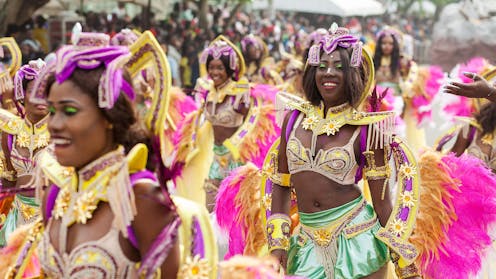
Festivals like Carnival Calabar in Nigeria abound throughout the year-end parties across west Africa and beyond. Akintomiwaao/Wikimedia Commons, CC BY-SA

Every December in Nigeria and Ghana a giant party takes place, unfolding in a whirlwind of concerts, festivals, weddings, art shows, dress-ups, meet-ups and travel. Locals and diaspora west Africans returning from overseas come together to create Detty December, a festive event stretching from mid-December to the new year.

Detty is a playful term for “dirty” in the regional Pidgin language and “Detty December” is a term commonly believed to have been coined by Afropop star Mr Eazi in 2016. It means letting loose and indulging in some fun and revelry.

Major events headlined by local and international music stars punctuate Detty December. In Nigeria events range from Flytime Fest in Lagos to Carnival Calabar, which showcases cultural heritage. In Ghana, festivals like AfroFuture and Afro Nation attract global celebrities and influencers as well as returning citizens.

But this isn’t just a holiday fling. Propelled by youthful energy and cultural innovation, it’s an economic phenomenon. And it represents a shift in Africa’s urban landscape and its relationship with the rest of the world.

Detty December now stands as a pillar of Africa’s creative economy, which has built on the global popularity of music from the continent, from Afrobeats to amapiano.

As marketing and entrepreneurship lecturers with an eye on the creative industries, we’ve researched Detty December and believe it’s a cultural tourism phenomenon with the potential to spread across the continent. In fact, it’s already begun to do so.

Nigeria: the economic power of Detty December

Despite infrastructure challenges, places like Lagos are new cultural epicentres. During Detty December the city becomes a carnival of reunions and celebrations. “I Just Got Backs” (IJGBs) return, music spills from every bar and events pop up daily.

Once simply a cultural moment, Detty December has rapidly become a powerful economic engine. It makes a big impact on hospitality, entertainment, tourism and local businesses.

In Lagos alone, the 2024 festivities generated an estimated US$71.6 million in state revenue. Hotels contributed US$44 million and short-term rentals added US$30 million.

Nationally, the impact is even more staggering. Detty December injected over US$220 million into Nigeria’s economy in 2023.

A major driver of this growth is tourism. An estimated 1.2 million visitors flocked to Lagos in December 2024. Nearly 90% of these were diaspora Nigerians.

Afrobeats star Wizkid’s Made in Lagos concert alone pulled in nearly US$650,000 in ticket sales. New song releases on Fridays have become features of the season.

Beyond direct spending, Detty December creates temporary and permanent jobs and bolsters small businesses.

Ghana: December in GH

The government of neighbouring Ghana has recognised this potential, strategically branding its festive season December in GH. This initiative leverages cultural tourism for substantial economic gain. The country even takes measures like visa-on-arrival in December to encourage visitors.

This builds on cultural tourism successes like the 2019 Year of Return campaign. In 2023, December in GH reportedly attracted about 115,000 participants.

Even in a challenging economic climate, Detty December continues to thrive. This indicates a desire for cultural connection and a much-needed escape, especially among the continent’s youth and its global diaspora communities.

South Africa: Ke Dezemba

From Flytime in Lagos and AfroNation in Accra to Alte Sounds in Kigali and the vibrant December nightlife in Mombasa or Johannesburg’s rooftop party events, African cities have become seasonal epicentres for cultural consumption.

“Ke Dezemba” is a term used in South Africa to describe the festive season. It’s a vibrant and celebratory term that’s often associated with summer holidays, braaiing (barbecuing) and social gatherings. It could become the branding of the country’s own Detty December.

South Africa’s global profile has been raised during its 2025 presidency of the G20. Adopting its own version of Detty December could continue to amplify Brand South Africa. It could show off the country’s vibrancy, creativity, hospitality and potential for investment.

Aligning cultural celebration with global visibility could reframe a season of revelry into a strategic cultural and economic asset. For South Africa, this could inject capital into the tourism sector, boosting hospitality, transport and ancillary services.


Read more:
Culture can build a better world: four key issues on Africa’s G20 agenda


Beyond direct tourism, the spotlight on South African art and culture during this period could make a lasting impact on the creative economy, fostering growth and job creation.

Physical celebration could be digitally amplified to make a lasting impression.

A notable example is Spotify’s unveiling of its Detty December hub. The music streaming service intends celebrating the festive season across west Africa and South Africa with playlists of party tracks.

Spotify’s Phiona Okumu explains:

Detty December is a special time for our users in west Africa, and Ke Dezemba symbolises South Africa’s spirit of celebration.

How to make it work

The lessons from west African cities suggest that cultural economies thrive with:

  • flexible governance

  • inclusive participation

  • engaged diasporas

  • innovative business models.

For Nigeria’s Detty December model to be sustainable it would require strategic policy support, urban planning integration and investment in creative infrastructure.

Five young African women in bright clothing pose for a photograph in a decorated area with colourful prints, a man standing off to the side in the distance.
A group of diasporans in Ghana at the AfroFuture festival.
Fquasie/Wikimedia Commons, CC BY-SA

Funding models such as memberships and sponsorships are crucial for the longevity of music festivals. Policy support and infrastructure investment are necessary to unlock the full potential of the creative sector.

Cultural tourism, powerfully embodied by Detty December, is emerging as a viable economic strategy for African cities. This signals a broader recognition of culture’s economic power. It offers a compelling canvas for economic development and nation branding.

The Conversation

The authors do not work for, consult, own shares in or receive funding from any company or organisation that would benefit from this article, and have disclosed no relevant affiliations beyond their academic appointment.

ref. Detty December started as a Nigerian cultural moment. Now it’s spreading across the continent – and minting money – https://theconversation.com/detty-december-started-as-a-nigerian-cultural-moment-now-its-spreading-across-the-continent-and-minting-money-258949

5 indie art spaces in African cities worth knowing more about

Source: The Conversation – USA – By Kim Gurney, Senior Researcher, Centre for Humanities Research — Platform: SA-UK Bilateral Digital Humanities Chair in Culture & Technics, University of the Western Cape

Independent art spaces are collectives of artists (and others) who club together to set up a communal space – often in former industrial sites and more affordable parts of the city – to further their practice. These spaces are DIY art institutions, if you like, that operate largely under the radar. In art world lingo, “offspaces”.

Designed for purpose over profit, they encourage experimental work and creative risk-taking. They also favour art in public space, which provides an intriguing lens on the city.

My Africa-wide research took me to five such spaces, each at least 10 years old, so that I could learn their secret sauce of sustainability. I found it’s largely about shapeshifting, a capacity for constant reinvention. The key ingredient is artistic thinking, made up of five key principles highlighted in the examples below.


Read more:
Koyo Kouoh – tribute to a curator who fiercely promoted African art


Offspaces are found everywhere but have notably grown across Africa over the past couple of decades, along with fast-changing cities and a resurgent art scene. One big picture point is crucial, and that’s about urbanisation. Globally, more and more people are moving to cities and most of them are young – by 2050, one in three young people in the world will be of African origin and the continent will be largely urban.

There can be a lack of imagination about what all this means and that’s where artists come in. They offer new ideas to help build the world we want to live in, rather than reinforce the one we already have.

Offspaces in Africa have to navigate prevailing uncertainty, which is a daily reality for most people living in cities. In response, artists band together to build their own pseudo institutions, bit by bit. These self-made pathways offer useful navigational tactics for others – or “panya routes”, as Kenyans call the trails that motorbike taxis invent.

The spaces I visited were all moving away from reliance on foreign donor funding (given little or no state support) towards a hybrid model that blends with local philanthropy, collaborative economies and self-generated income schemes. They also want to own their own land and hold assets so that they can think about the future.

1. The GoDown Arts Centre – Nairobi, Kenya

An urban structure with a circular building in front of it. This has been spray painted with the word
Murals at the former GoDown (2010), currently being rebuilt.
Katy Fentress/Flickr, CC BY-NC-SA

The GoDown Arts Centre was established in 2003. Previously a large compound of repurposed warehouses (“godowns”) in Nairobi’s industrial area, right now it’s a construction site as it morphs into an iconic cultural hub. GoDown 2.0 is a multipurpose vision that works at different scales, like a fractal. There will be a large, welcoming facade leading into a semi-public section for music and dance, with artist studios at the heart. Plus galleries, library, museum, auditorium, offices, hotel, a restaurant, conference facilities and parking.


Read more:
Kenyan artists reflect Gen Z hopes and frustrations in new exhibition


Its rebuild is a great example of how artists create public space: in phases. It follows a radical “design-with-people” approach, starting with years of input from all directions to reconsider the building and its relationship to the city.

This ground-up ethos of horizontality, the first key principle, also shapes its signature event, an annual public arts festival called Nai Ni Who? (Who is Nairobi?). Local residents are the curators, and the everyday city is the artwork. Participants are taken around neighbourhoods on foot to experience the good, the bad, and the possibilities. These grounded insights also inform ongoing engagements GoDown has with policymakers about the shape of a future Nairobi.

2. ANO Institute – Accra, Ghana

ANO, established in 2002, repurposed a former workshop for car repairs into a gallery, after starting life in a public park. On the other side of the road, opposite the gallery, stood its office, residency space and growing library.

Most intriguingly, a striking rectilinear structure was positioned alongside. This Mobile Museum mimics the trading kiosks that line every street. Many are also shapeshifters: kindergarten by day, church by night, for example.

ANO’s empty museum, collapsible and see-through, went on a countrywide adventure in 2018 and 2019, asking people to imagine its contents, and later revisited with the results. It signalled a larger and ongoing effort, Future Museum, to find a more relevant exhibition form that’s alive to the fluid way culture is threaded here into everyday life.

ANO demonstrates the second principle of performativity – that is, not only saying things with art but doing things too. More recently, it rebuilt on a new site in central Accra, designed by 87-year-old Ophelia Akiwumi, entirely from raffia palm in a focus on indigenous knowledge systems.

3. Townhouse Gallery – Cairo, Egypt

I visited Townhouse just after it reclaimed its inner-city premises following a partial physical collapse. But this turned out to be a false restart. It closed for good not long after, citing a complex brew of factors that ended 21 years of various battles and resurrections. That it survived so long – from 1998 until 2019 – is remarkable for an offspace.

Part of the reason was its solidarity networks, including with neighbourhood communities – mostly mechanic shops and other artisanal trades who even helped Townhouse rebuild. In its heyday, Townhouse comprised an art gallery, library, theatre and performance venue, and notably hatched other spaces.

The latest rose like a phoenix from its ashes – Access Art Space, which reanimates the same physical space with visual art exhibitions. The legacy of Townhouse is the third principle of elasticity – responding nimbly to constant flux but also being able to refuse impossible conditions with “the right no” (a necessary response in certain situations).

4. ZOMA Museum – Addis Ababa, Ethiopia

ZOMA Museum has also lived many lives. Starting small, its roots were in a three-day public arts festival called Giziawi #1 (Temporary). It comprised performances and exhibitions across the city but focused on Meskel Square, a key public space.

Zoma Contemporary Art Centre grew out of that in 2002, followed in 2019 by Zoma Museum when its co-founders bought a plot of polluted land. Its rehabilitation into an ecological haven has become a case study in sustainable architecture.

Zoma is built by local artisans from mud and straw using indigenous technologies going back centuries. Yet its elegant buildings look futuristic. Zoma is all about the fourth principle of convergence – the past, present and future all happening at once. It’s also about doing multiple things, like running Zoma School, an inherited kindergarten. The land is part of the curriculum.

Just a year after it opened, Zoma spawned yet another life, an offshoot in a newly opened park blending nature with culture and recreation.

5. Nafasi Art Space – Dar es Salaam, Tanzania

Nafasi is Swahili for opportunity or chance, which fittingly describes the workings of Nafasi Art Space, established in 2008 – that is, second chance. This fifth and final principle of artistic thinking means giving materials, people and situations another go.

A good example of this is Nafasi’s new art school, built using repurposed shipping containers, like the rest of its premises – artist studios, a spacious gallery and performance arena. In the 2022 academy cohort, a general practice lawyer and an accountant were learning alongside artists, with a biologist at the helm.

Nafasi Art Academy cites the city’s biggest local market, Kariakoo, as design reference, particularly its distinctive elevated canopy and swirling stairwell. The curriculum also takes local context as a starting point, structured in themes to answer community-led questions. Its key function, like all the other offspaces, is storytelling. And the story it tells best is about institution-building as art.

The Conversation

The research behind this article was supported by the South African Research Chair in Urban Policy at UCT’s African Centre for Cities, where the author was previously affiliated.

ref. 5 indie art spaces in African cities worth knowing more about – https://theconversation.com/5-indie-art-spaces-in-african-cities-worth-knowing-more-about-258009

Kwame Akoto-Bamfo: the Ghanaian artist using work about slavery to find justice and healing

Source: The Conversation – USA – By Rachel Ama Asaa Engmann, Associate Professor and Director of Christiansborg Archaeological Heritage Project, Associate Graduate Faculty, Rutgers University

Thousands of sculpted heads – captive African men, women, and children – meticulously created by the artist Kwame Akoto-Bamfo, emerge from the soil at the Nkyinkyim Museum, as a sacred gathering of ancestors. Together, they form a powerful monument to the horror, violence, and resistance to enslavement, as well as the ongoing work of remembrance and healing.

Kwame Akoto-Bamfo is a Ghanaian multidisciplinary artist who engages with the histories and legacies of the transatlantic slave trade and colonialism at home and, increasingly, internationally, on both sides of the Atlantic.

As an archaeologist who works in the field of critical heritage studies, Akoto-Bamfo’s work is important for its powerful engagement with memory, material culture and restorative justice. I feature it in a chapter of a new book that I co-edited called Architectures of Slavery: Ruins and Reconstructions.

Who is Kwame Akoto-Bamfo?

Akoto-Bamfo studied at the Kwame Nkrumah University of Science and Technology in Kumasi. He obtained his bachelor’s and master of fine arts degrees, both in sculpture. After graduating, the artist worked as a school teacher and a university lecturer.

In 2015, Akoto-Bamfo rose to international fame through a series of large-scale installations. He called it ‘Nkyinkyim’ (“twisting” in the Ghanaian Twi language, as in the proverb, “Life’s journey is twisted”).


Read more:
Book review: how Africa was central to the making of the modern world


Four years later, he established the ‘Nkyinkyim Museum’, a non-profit organisation known as the ‘Ancestor Project’. This open-air museum is located in Nuhalenya-Ada, a two-hour drive from Accra. It has become a space for people of African descent to engage in restorative healing through art and education.

Nkyinkyim Museum

At the site’s entrance, three twenty-five-foot monuments are displayed. They are made of stone, concrete and wood. The first is inspired by North and Eastern Africa, and the second by Sudano-Sahelian architecture. The third is inspired by the Forest regions in Central and West Africa.

The collection includes multiple installations in collaboration with the local community. They illustrate “the diversity in our narratives surrounding history, philosophy, and religious beliefs”. The artist himself, demonstrates a mastery of multimedia art forms, working in cement, terracotta, brass, copper, and wood, noting “one can reach different heights with different technologies.”

Today, the museum features a sacred healing space with a compelling display of thousands of unique concrete life size heads and 7,000 terracotta miniature sculpted heads. They include captive Africans abducted, sold and forcibly trafficked during the transatlantic slave trade.

His sculptures capture captives’ shock, horror, anger, distress and fear—emotions. This is communicated through their facial expressions in an installation that is disturbingly evocative and profoundly haunting. It is inspired by ‘nsodie’, an Akan funerary sculpture tradition, that dates back to approximately the twelfth century. Akoto-Bamfo explains during our conversations relating to the research for book:

I wanted to draw upon Akan belief in commemoration and remembrance after death in order to honour the young, old, men and women, who originated from various ethnic groups and who died in the Atlantic Ocean during the Middle Passage and did not get that chance.

Each year, the annual ‘Ancestor Veneration’ ceremony takes place under the guidance of chiefs, priests, and priestess from various ethnic groups.

Visitors are invited to participate in certain Akan rites and ceremonies – free from photography and selfies that undermine or commercialise sacred funerary art practices. Says Akoto-Bamfo:

I am Akan, so initially I began with Akan traditional rites, but now our ceremonies welcome other African ethnic groups including the Ga-Dangme, Ewe, and Yoruba, from Ghana and Nigeria, as well as African descendant people in the African diaspora.

In contrast, the ‘Freedom Parade Festival’ allows participants to creatively express and contribute to an evolving heritage tradition, without the specified observances. For example, painted bodily adornment applied directly onto the skin, yet without the necessary spiritual rites.

A protest monument

Akoto-Bamfo’s sculptures have also gained recognition beyond Ghana’s borders. For instance, the permanent installation at the Legacy Museum and National Museum for Peace and Justice in Montgomery, Alabama in the US.

More recently, in 2021, his Blank Slate Project Monument toured throughout the United States. This included stops at Times Square in New York and the King Center in Atlanta. It depicts an enslaved ancestor, bent forward with his hands behind his back, head turned sideways, face on the ground, with a booted foot on his head.

Akoto-Bamfo describes this work as “a noisy one — a protest piece that speaks against racist Civil War monuments.” The work was completed prior to the police killing of George Floyd that led to widespread protests in the US in 2020. It was first unveiled in a private viewing in Ghana, prior to its shipment to the United States.

He says:

We had a lot of discussions among those involved in the project: some feared it might incite violence, others said that it was a prediction.

The work is interactive. It holds a removable placard that invites viewers to inscribe their reactions to the statue, which are then exhibited. Akoto-Bamfo emphasises:

I wanted ordinary people, both individuals and communities, to relate, and to contribute to, not only towards my artwork but also to the wider ongoing discussions. As an artist, I believe that I do not have the sole right to speak. I wanted ordinary Americans to add their voices because I am already contributing.

In Europe too, his work is featured at the 169 Museum in Germany.

In Ghana, Akoto-Bamfo’s work was initially seen as too controversial. The artist shares:

At first, I had to be extremely resilient because my work was concerned with the slave trade, slavery, colonialism, racism, and human rights. I embraced uncomfortable dialogue. Yet these were difficult topics for galleries and the art world at that time in Ghana.

He adds:

Today, however, some even view me as a spiritual leader… but I have always had an innate antipathy towards injustice. My work is not only about the past but what is unfolding now.

Akoto-Bamfo offers a closing reflection on why this kind of memory work matters:

I just want to use the little knowledge that I have to contribute towards the work of restorative and transformative justice.

The Conversation

Rachel Ama Asaa Engmann does not work for, consult, own shares in or receive funding from any company or organisation that would benefit from this article, and has disclosed no relevant affiliations beyond their academic appointment.

ref. Kwame Akoto-Bamfo: the Ghanaian artist using work about slavery to find justice and healing – https://theconversation.com/kwame-akoto-bamfo-the-ghanaian-artist-using-work-about-slavery-to-find-justice-and-healing-259184

AI-driven motion capture is transforming sports and exercise science

Source: – By Habib Noorbhai, Professor (Health & Sports Science), University of Johannesburg

In sport, the margin between success and failure is often measured in milliseconds. It could be a cricketer adjusting their foot positioning, a runner refining their sprint start or a footballer perfecting their passing.

This is where motion capture comes in – among the many approaches being used for athletic performance and movement analysis.

Conventional motion capture tracks a person’s movements by using sensors or reflective markers linked to cameras. This provides data that helps sport scientists analyse how to improve an athlete’s performance, personalise their training programme and prevent possible injury.

But for decades, motion capture in sport has been done using cumbersome suits and complex camera systems. These technologies offer high precision, but have remained out of reach for many because of their cost, technical demands and rigid laboratory constraints.

As sport evolves, so too must the technology that analyses it. The way we measure human movement is experiencing a major transformation. Markerless motion capture (enabled by artificial intelligence, computer vision, depth sensors and multiple-camera systems) is set to revolutionise sports performance analysis.

As a health and sports scientist with a focus on data, innovation and technology, I co-authored a study on markerless motion capture in sports and exercise. We reviewed and compared various motion capture options so that users can choose what system is best for their needs and budgets.

This matters because markerless motion capture provides a practical alternative that’s accessible, scalable and adaptable to real-world settings. It’s a shift that promises to transform how athletes train, how they move, how injuries are assessed and how coaches refine performance.

The problem with traditional motion capture

Marker-based motion capture has long been considered the gold standard for analysing movement. Various systems use optoelectronic (devices that emit or detect light) tracking. They’ve provided researchers and coaches with precise three-dimensional (3D) data on joint angles, movement efficiency and biomechanical load. But these systems come with challenges.

Firstly, the need for reflective markers placed on the body introduces variability. Even slight misplacements can compromise data accuracy.

Secondly, these systems are largely confined to laboratory environments. While they work well for controlled studies, they can’t always capture the dynamics of real-world sports performance.

Thirdly, the cost of such setups, often reaching tens of thousands of dollars, limits their use to elite teams and well-funded research labs. This financial barrier places the technology out of reach for grassroots sport, where talent development is crucial.

The rise of markerless motion capture

Markerless motion capture, driven by deep learning and computer vision, allows movement to be tracked directly from video footage, without requiring physical markers. Models such as OpenPose, TensorFlow Pose Estimate and MeTRAbs can now identify and analyse human joint positions in 3D, all from a single video feed.

This approach has profound implications. It means that coaches can capture real-time movement data from training sessions without interrupting the natural flow of play. Athletes can analyse their technique with nothing more than a smartphone camera. It opens the door for motion capture to move beyond the lab and onto the field, the court or the gym floor.

Where markerless motion capture works best

The ability to track movement in real-world environments makes markerless motion capture particularly valuable in high-speed and dynamic sports.

In football, tracking player movement during passing drills can inform tactical decisions. In sprinting, coaches can analyse stride length and ground contact time without disrupting training sessions. In baseball and cricket, batting mechanics can be assessed without requiring players to wear cumbersome tracking suits or markers.

Beyond performance analysis, the implications for injury management and rehabilitation are just as compelling.

By integrating markerless motion capture into injury rehabilitation programmes, physiotherapists can monitor movement deficiencies in real time. A player recovering from an anterior cruciate ligament injury, for example, can have their gait and knee valgus angles monitored remotely. This reduces the need for repeated clinic visits.

Barriers

Despite its potential, markerless motion capture is not without its challenges. While deep learning models are improving, they still struggle with occlusion: where body parts become temporarily hidden from view. Variations in lighting, camera angles and player body types can affect tracking accuracy too.

To improve robustness across diverse sports settings, these issues need ongoing refinement in pose estimation algorithms. (These are computer vision techniques used to locate and track key points of the body on a person in a video.)


Read more:
Supershoes have transformed competitive distance running, but they remain controversial


Another key limitation is validation. Traditional motion capture systems have been extensively tested for accuracy, but markerless models are still undergoing further validation in sport-specific contexts.

Ensuring consistency and reliability will be crucial in convincing elite teams to transition away from marker-based setups.

A future without markers?

The question remains: will markerless motion capture completely disrupt and replace traditional systems? The reality is likely to be more nuanced.

While marker-based motion capture will retain its place in highly controlled research settings, markerless alternatives will dominate practical, field-based applications. The accessibility, ease of use and real-time capabilities of markerless systems make them a game-changer.


Read more:
VAR and peace? Why tech-assisted refereeing won’t do away with disputed decisions at the World Cup


As AI models become more sophisticated and sensor technology advances, the precision of markerless systems will continue to improve. The future of motion capture lies not in replacing one method with another, but in integrating multiple approaches to create a seamless, scalable and accurate framework for movement analysis.

It’s no longer a question of whether markerless motion capture will take over, but when. And as the technology matures, the benefits for coaches, athletes and scientists alike will only continue to grow. It’s set to play an integral role in shaping the next generation of athletic performance and movement analysis.

The Conversation

Habib Noorbhai does not work for, consult, own shares in or receive funding from any company or organisation that would benefit from this article, and has disclosed no relevant affiliations beyond their academic appointment.

ref. AI-driven motion capture is transforming sports and exercise science – https://theconversation.com/ai-driven-motion-capture-is-transforming-sports-and-exercise-science-254646

Why Meta is in trouble in Nigeria and what this means for Facebook, Instagram and WhatsApp users

Source: – By Tolu Olarewaju, Economist and Lecturer in Management, Keele University

Meta, the parent company of Facebook, Instagram and WhatsApp, was recently hit with three fines totalling more than US$290 million in Nigeria. The fines were imposed by Nigeria’s Federal Competition and Consumer Protection Commission, Nigerian Data Protection Commission and the Advertising Regulatory Council of Nigeria. Meta was accused of invasive practices against data subjects and consumers in Nigeria. The company denied the allegations and has challenged the fines in court.

Entrepreneurship and international business researcher Tolu Olarewaju and professor of entrepreneurship Jagannadha Pawan Tamvada explain the implications of the fines.

What are the violations for which Meta got fined?

The trouble began on 4 January 2021 when WhatsApp updated its privacy policy to introduce mandatory data-sharing with Facebook (now Meta) and its subsidiaries. The main change allowed WhatsApp to share user business interaction data with Facebook for marketing and advertising purposes.

The updated policy did not include an opt-out provision. It was a “take it or leave it” policy. In other words, if users did not consent to the updated terms, they would no longer be able to use WhatsApp. This triggered a Federal Competition and Consumer Protection Commission investigation into Meta, conducted jointly with the Nigeria Data Protection Commission. The probe was conducted from May 2021 to December 2023.

Meta has allegedly not complied with the Nigeria Data Protection Commission, and failed to appoint a Data Protection Compliance Organisation. That’s an entity licensed to assist data controllers and processors in achieving compliance with Nigeria’s data protection regulations. And it has not submitted its mandatory Nigeria Data Protection Regulation reports for two consecutive years.

Nigeria is the most populous country on the continent, with about 236 million people. It has about 107 million active internet users. The most used social media platforms at the end of 2024 were WhatsApp, Facebook, TikTok, Instagram and Telegram.

Meta owns WhatsApp, Facebook and Instagram and has threatened to pull Facebook and Instagram services from the country.

The Federal Competition and Consumer Protection Commission has said quitting Nigeria won’t absolve Meta of its liability.

Facebook has about 51.2 million users in Nigeria, while Instagram has about 12.6 million.

What have regulators found against Meta?

The investigation uncovered several violations. These included:

Unauthorised data sharing: Meta was found to have shared Nigerian users’ personal data without their consent. This included cross-border transfers and storage, violating the Nigeria Data Protection Commission and the Federal Competition and Consumer Protection Act.

Discriminatory practices: Meta allegedly treated Nigerian users differently from those in other jurisdictions with similar regulations. Meta currently offers stronger privacy protections in the European Union due to the General Data Protection Regulation. Nigerian regulators have highlighted this double standard.

Denial of data self-determination: The company was accused of denying Nigerian users the right to control how their data is used, compelling them to accept exploitative privacy policies.

Abuse of market dominance: The Federal Competition and Consumer Protection Commission said the company abused its dominant market position to enforce unfair privacy policies.

(Tying and bundling): Meta was found to have engaged in tying and bundling practices, which are considered anti-competitive. Tying occurs when a company requires customers to buy a secondary product or service as a condition of buying a primary product or service. For example, if Meta required users to accept Facebook’s terms and automatically enrol in WhatsApp or Instagram services (or allow data sharing across them) to use Facebook, then that could be considered tying. This is because it can limit consumer choice, stifle competition, and force people to accept products or terms they don’t want.

Bundling occurs when a company sells multiple products or services together as a package, or makes it difficult to buy them separately. For example, Meta might bundle multiple services like Facebook, Instagram and Messenger in such a way that users must accept a single privacy policy that covers all, even if they only use one service. This can shut out smaller competitors and prevent users from choosing alternatives.

After remediation efforts failed, the Federal Competition and Consumer Protection Commission issued its final order in July 2024. It imposed a US$220 million fine along with penalties from other agencies, bringing the total to US$290 million.

In addition to the fine, the commission has ordered Meta to comply with Nigerian laws and cease practices it described as the “exploitation” of Nigerian consumers.

After completing its inquiry, the agency shared its findings with Meta. The company proposed a “remedy package”. But the commission rejected this as inadequate.

What made Meta vulnerable to such fines?

Meta has failed to localise its data practices. It appears dismissive of Nigerian sovereignty and regulatory authority. For example, Meta has been transferring Nigerian users’ data overseas without protecting them as required by Nigeria.

Meta’s estimated annual revenue in Nigeria is between US$200 million and US$300 million. However, many Nigerians in the diaspora use Facebook and Instagram to communicate with people inside the country. Revenue from those users is likely to raise the figure considerably.

The company has faced similar sanctions for data violations worldwide, including a US$1.4 billion fine in Texas and a US$1.3 billion fine in Europe.

It has also been penalised in India, South Korea and Australia.

What are the implications of the fines?

Meta now faces heightened scrutiny from Nigerian regulators. It will have to adhere more strictly to local data protection and consumer rights laws. This includes appointing a Data Protection Compliance Organisation and submitting mandatory audit reports as stipulated by the Nigerian Data Protection Regulation.

The three fines and regulatory measures may also compel Meta to reassess its operations in Nigeria. It might adjust its services to align with local laws.

Meta has also been ordered, by the courts, to reimburse the Federal Competition and Consumer Protection Commission US$35,000 for the cost of the investigation. And it has been told to take the following measures:

  • reinstate the rights of Nigerian users to determine the control and use of their data without losing functionality or deleting the application

  • set its privacy policy to comply with data protection laws in Nigeria

  • stop sharing WhatsApp users’ information with other Facebook companies and third parties until users have actively consented

  • revert to the data sharing practices adopted in 2016, including establishing an opt-in screen

  • terminate the tying and transfer of data without consent

  • add a visible link on its platforms for Nigerian users, leading to educational content about the risks of manipulative and unfair data practices. These videos will be developed in collaboration with approved NGOs and academic institutions.

Other social media entities operating in Nigeria will be watching closely to see what’s required.

How dependent is Nigeria on these social media platforms?

Many Nigerian businesses and entrepreneurs use Facebook and Instagram for marketing, customer engagement and sales. The platforms offer cost-effective advertising and direct communication channels with customers.

These platforms also provide valuable analytics on customer behaviour, content performance and demographics. Businesses use these services to refine their marketing strategies and make data-driven decisions.

Content creators in Nigeria use Facebook and Instagram to build audiences, monetise content and collaborate with brands. The African creator industry, valued at £2.4 billion in 2024, is expected to grow significantly.

Afrobeats has also gained popularity across Nigeria and globally with the assistance of these platforms.

Nigeria’s ecosystem of homegrown and African social media platforms is growing, offering local alternatives to global giants like Facebook and Instagram. While none match their scale, platforms like Crowwe, ChatAfrik and Nairaland are making strides in content sharing, chat, forums and business promotion.

The information and communications technology sector contributed about 20% to Nigeria’s real gross domestic product in the second quarter of 2024. The rapid expansion of the digital technology industry in recent years highlights its strong potential to stimulate economic growth.

Nigeria’s digital economy has also seen significant growth due to increased internet access and mobile usage.

The Conversation

The authors do not work for, consult, own shares in or receive funding from any company or organisation that would benefit from this article, and have disclosed no relevant affiliations beyond their academic appointment.

ref. Why Meta is in trouble in Nigeria and what this means for Facebook, Instagram and WhatsApp users – https://theconversation.com/why-meta-is-in-trouble-in-nigeria-and-what-this-means-for-facebook-instagram-and-whatsapp-users-257048

Airbnb scams: new book explores thriving criminal activity on big tech platforms

Source: – By Julie Reid, Professor, University of South Africa

Big tech sharing economy platforms like Airbnb and Uber are marketed as trustworthy, but a new book by a South African media scholar argues that they are highly vulnerable to scammers who spread delusive speech (a form of disinformation, designed to deceive by criminal intent).

Julie Reid draws from first-hand accounts and over 600 cases from around the world of victims lured into scams or physical danger by fake Airbnb reviews and listings, providing a detailed case study. We asked her five questions about her book.


How do the scams work?

Airbnb is the world’s largest accommodation-sharing platform. It connects property owners who want to rent out their homes with travellers looking for alternatives to traditional hotels. The company recently expanded its offering and now facilitates the booking of other services like personal trainers or caterers along with accommodation rentals.

Airbnb scams happen in several ways. The most obvious is the phantom listing scam. The scammer constructs a fake but attractive listing on Airbnb and accepts payments from unsuspecting guests. It’s only when guests arrive at the address that they discover the property doesn’t exist. Scammers have also learnt to navigate around Airbnb’s review system. Fake positive reviews are produced by scam host networks, making them appear to be authentic.

Bait and switch scams are also common. Here the scam “host” contacts the guest on check-in day claiming the reserved property is suddenly unavailable. They offer alternative accommodation, which the guest later discovers is not as good as the original property they’ve paid for (which is often fictional). The guest pays for a premium rental but is forced to stay in a property that might be unsafe, unclean, or missing amenities.

Scam hosts use misleading, plagiarised, or AI-generated property images and fake descriptions along with fake personal profiles and aliases.

Delusive tactics also redirect guests away from the secure Airbnb payment portal to alternative payment methods. The scammer disappears with the money.

But the danger isn’t limited to financial crimes. The platform’s business model is premised on staying in a stranger’s private property, which can put guests’ personal safety at risk.

Criminal hosts can lure targets into dangerous environments. Once checked in, guests are isolated from public view, housed in a property to which the host has access.

I’ve assessed multiple cases where Airbnb guests were assaulted, robbed with no signs of forced entry, raped, murdered, made victims of sexploitation, extortion or human trafficking, or held hostage.

How does the disinformation work?

I consider delusive speech a subset of disinformation because it presents intentionally misleading content at scale. But it differs from disinformation in its intentions. It isn’t done to promote a particular cause or gain ideological, military, or political advantage. Delusive speech is motivated purely by criminal intent or nefarious financial gain.


Read more:
The sharing economy can expose you to liability risks – here’s how to protect yourself


Delusive speech works by hiding in plain sight on platforms we think we can trust, like Airbnb, Booking.com, Uber and others. Often, it’s indistinguishable from honest and genuine content. When users browse Airbnb listings for holiday accommodation, they’re presented with numerous options. A fake property listing looks, sounds and feels exactly the same as a genuine one.

This happens on a platform that has built its brand narrative around the concept of trust. Scammers exploit these digital contexts of pre-established trust. When users log on to popular e-commerce or sharing economy platforms, they’re already primed to pay for something. It becomes relatively easy for scammers to delude targets into parting with their money.

What can Airbnb do about it?

Airbnb already has several trust and safety mechanisms in place. They include rapid response teams, an expert Trust and Safety Advisory Coalition and travel insurance for guests. The company claims to be trying to stop fake listings with machine learning technology.

Sadly, none of these mechanisms work perfectly. While Airbnb promises to verify properties and host identities, my analysis exposes flaws in these systems. Scammers easily bypass verification tiers through aliases, forged documents and AI-generated material. Airbnb has admitted it needs to address the failures of its verification processes.


Read more:
How to stay safe in cyberspace: 5 essential reads


My analysis uncovered how scammed guests are routinely denied the opportunity to post reviews of problematic rentals. Opaque terms of service and content policies allow Airbnb customer service agents and executives to justify censoring negative but honest guest reviews.

This means dangerous and fraudulent activity goes publicly unreported and unreviewed, leaving future guests vulnerable. I argue that Airbnb’s review curation mechanisms should be revamped according to internationally recognised human rights frameworks that protect freedom of speech. This would allow for more honest accounts of guest experiences and create a safer online environment.

Perhaps the most common complaint I encountered was that Airbnb doesn’t remove offending listings from its platform, even after a scammed guest provides evidence that the listing was posted by a fraudster. Airbnb must develop an urgent protocol for swiftly removing offending listings when discovered, to protect future guests from falling victim to the same scam trap.

What can users do to protect themselves?

Travellers can protect themselves by being extra cautious. Ask around. Seek recommendations from people you know and trust, and who can verify that the property you are booking actually exists and that the host is trustworthy.

If that isn’t an option, consider an established hotel instead, but book directly with the hotel and not via third party sites like Booking.com where listings can easily be faked. Check on Google Street View to make sure the property is where it claims to be.

Either way, have a Plan B in case things go wrong. Prepare ahead of your trip by deciding what you will do if you find yourself in an unsafe situation. And always, always, buy travel insurance.

Is it part of a bigger problem?

I assessed several digitally initiated scam categories in this book. While my main case study focused on Airbnb, the problem of delusive speech online isn’t unique to this platform. Delusive speech is now carried by all major tech platforms integral to everyday life.


Read more:
How Airbnb is reshaping our cities


In the book, I also highlight how scammers operate in every corner of the internet, including dating apps like Grindr, Tinder and Hinge; ride-sharing services like Uber, Lyft and Bolt; travel sites like Booking.com and Hotels.com; and social media platforms like Facebook, Instagram and YouTube, among others.

I hope that these examples will boost awareness of the risks of using these apps and sites.

The Conversation

Julie Reid does not work for, consult, own shares in or receive funding from any company or organisation that would benefit from this article, and has disclosed no relevant affiliations beyond their academic appointment.

ref. Airbnb scams: new book explores thriving criminal activity on big tech platforms – https://theconversation.com/airbnb-scams-new-book-explores-thriving-criminal-activity-on-big-tech-platforms-256806