Madagascar : les clés d’une véritable refondation démocratique

Source: The Conversation – in French – By Juvence Ramasy, Maître de Conférences en sciences politiques et juridiques, University of Toamasina

Madagascar a été secoué par une crise majeure avec les manifestations de rue qui ont débuté le 25 septembre. La révolte de la génération Z, née de la colère contre les coupures d’eau et d’électricité, a conduit le 13 octobre à la chute du président Andry Rajoelina, renversé par le Corps d’armée des personnels et des services administratifs et techniques (Capsat). Suspendue de l’Union africaine, l’île aborde une transition incertaine.

Dans cet entretien, le politologue Juvence Ramasy – qui a étudié la formation de l’Etat malgache, l’armée et la trajectoire démocratique du pays – décrypte les racines sociales du mouvement, les risques qui pèsent sur cette transition et le rôle majeur de l’armée dans la vie politique malgache.

Quels sont les principaux risques auxquels Madagascar fait face après le départ d’Andry Rajoelina ?

Le nouveau régime devrait faire en sorte que sa suspension par l’Union africaine, suite au changement inconstitutionnel de régime conformément à la Charte de Lomé, n’entraîne pas un arrêt des financements internationaux. Ces financements proviennent de bailleurs multilatéraux et bilatéraux.

En 2023, Madagascar a reçu 1,25 milliard de dollars d’aide publique, d’après l’OCDE, dont un demi-milliard de la Banque mondiale, 172 millions des États-Unis, 126 millions de l’Union européenne, 100 millions du Japon, 81 millions de la France et 22 millions de la Banque africaine de développement.

Cette aide ne représente que 3,5 % du PIB, mais reste vitale, bien qu’elle soit assez faible en comparaison avec d’autres pays en développement. Par ailleurs, la faible part des appuis budgétaires de 1,2 % du PIB en 2025 reflète la méfiance des bailleurs.

L’aide extérieure soutient aussi les importations de riz, aliment de base de la population, et de carburant, essentiels pour maintenir des prix accessibles et pour offrir de l’électricité. Si ces importations venaient à diminuer, des tensions sociales pourraient surgir. D’ailleurs, le FMI venait de décaisser 107 millions de dollars. Un financement destiné à soutenir les réformes de la compagnie nationale d’électricité et d’eau, Jirama.

Toutefois, la présence diplomatique à l’investiture du 17 octobre marque un début de reconnaissance renforcé par les rencontres entre les représentations diplomatiques et les nouvelles autorités.

Face à un possible arrêt de l’aide internationale, les nouvelles autorités pourraient se tourner vers des solutions alternatives. Elles pourraient solliciter des bailleurs non traditionnels pour obtenir des financements parallèles. Une autre option risquée serait de recourir à l’économie illicite, suivant l’exemple de la transition de 2009-2013.


Read more:
Madagascar : quand les coupures d’électricité déclenchent une crise sécuritaire amplifiée par les réseaux sociaux


Quels facteurs ont sous-tendu les manifestations de la GenZ?

La Gen Z, composée principalement des jeunes urbains, est descendue dans la rue pour plusieurs raisons. Elle a exigé le respect de la liberté d’expression, l’accès à l’eau et à l’électricité en raison de délestages fréquents. D’après la Banque mondiale, avec seulement 30 % de taux d’électrification, 7 Malgaches sur 10 n’ont pas accès à l’électricité, et 54,4 % de la population a accès à l’eau avec seulement 12,3 % qui a accès à l’assainissement. Cette situation place Madagascar parmi les 76 pays les plus mal classés en la matière.

Elle s’est également levée contre la corruption systémique. Tous les régimes précédents ont érigé la corruption en mode de gouvernance. Madagascar se situe à la 140ème place sur 180 pays, au même rang que l’Irak, le Cameroun, le Mexique. Malgré les discours officiels, la lutte anti-corruption se heurte à des moyens insuffisants, à l’impunité des puissants et à une justice souvent instrumentalisée, une restriction de l’espace civique, une capture et une privatisation de l’État. Le régime de Rajoelina a été éclaboussé par plusieurs affaires de corruption impliquant des membres du gouvernement, sans que des poursuites ne soient engagées.


Read more:
Madagascar : quand les coupures d’électricité déclenchent une crise sécuritaire amplifiée par les réseaux sociaux


L’île a une longue histoire de crises politiques. En quoi la situation actuelle est-elle différente ?

En effet, depuis la première crise postcoloniale en 1972, la rue est devenue l’arbitre des luttes politiques. Son contrôle reste un enjeu politique central et s’inscrit dans une logique de production de pouvoir par le bas.

La Gen Z a démontré que la « rue-cratie » continue de peser sur les manières de faire et défaire les équilibres politiques. Ce mouvement a permis une mobilisation coordonnée à l’échelle nationale au sein des principaux centres urbains (Antananarivo, Antsiranana, Mahajanga, Toamasina, Toaliary), contrairement au précédentes crises grâce notamment à une utilisation habile des réseaux sociaux (Facebook, Discord, WhatsApp, Tik Tok).

Autre différence, ce sont les jeunes qui ont été les meneurs de ce mouvement au sein d’une société hiérarchisée où prédomine l’idéologie lignagère de l’aînesse. Les Z ou Zandry, cadet en malgache, se sont saisis de la parole pour porter à voix haute les maux de la société malgache.

Quel rôle l’armée a-t-elle joué dans la vie politique malgache jusqu’à présent ?

Les militaires malgaches correspondent à la figure du prétorien, c’est-à-dire qu’ils exercent un pouvoir politique indépendant de l’utilisation – ou la menace d’utilisation – de la force. Cette entrée dans le monde politique, déjà perceptible dans le Royaume de Madagascar, s’est manifestée au sein de l’État postcolonial en 1972, marquant le début de la prétorianisation de la vie politique.

Depuis lors, elle exerce le pouvoir de manière officielle ou officieuse participant à la régulation de l’ordre politique aussi bien dans les luttes de conquête, de monopole et de conservation du pouvoir. Son soutien est donc recherché par la société civile et politique en temps de crise. D’ailleurs, selon une enquête d’Afrobaromètre de fin 2024, 6 Malgaches sur 10 (60 %) considèrent qu’il est « légitime que les forces armées prennent le contrôle du gouvernement lorsque les dirigeants élus abusent du pouvoir à leurs propres fins ».

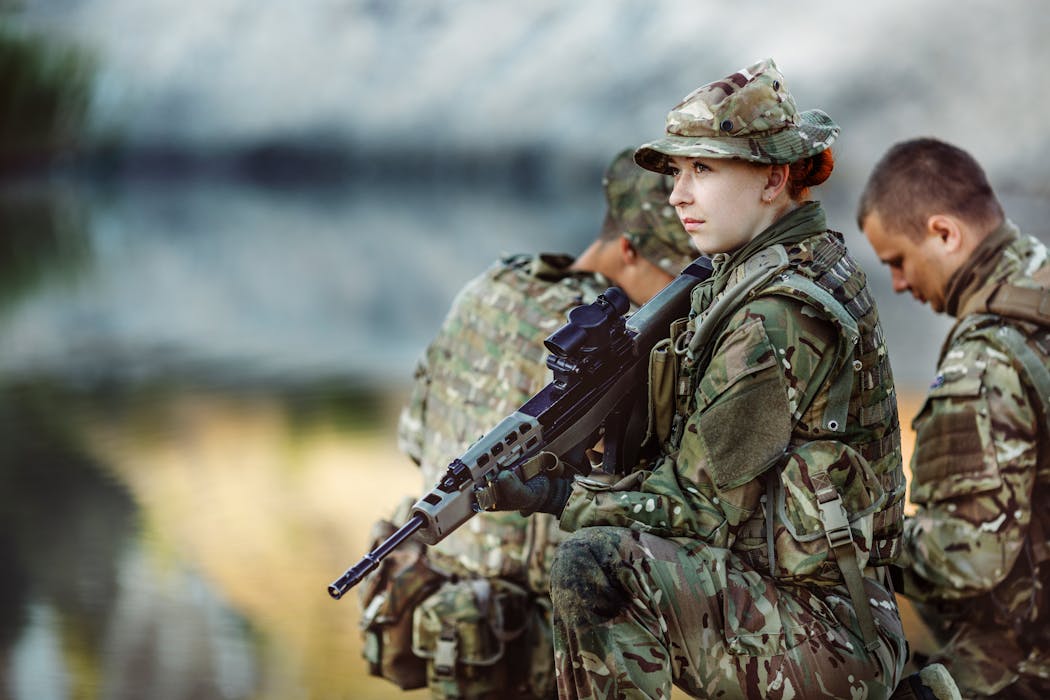
La prise de pouvoir par le Capsat, le 14 octobre, s’apparente à un « bon » coup d’État ayant reçu le soutien de l’autorité constitutionnelle et celui de la population. Ce “coup correctif” se donne comme mission de rectifier la trajectoire de l’État en vue de rétablir un ordre plus démocratique après sa refondation.

N’y a-t-il pas un risque que les militaires décident de conserver le pouvoir ?

La nomination d’un Premier ministre civil et d’un gouvernement majoritairement civil s’inscrit dans une tradition remontant à 1972, permettant de rassurer une partie de la société civile et politique et les partenaires internationaux. Or, cela est contesté par la Gen Z et une partie de la société en raison des liens présumés avec les anciennes élites dirigeantes.

Par ailleurs, l’accès au rang de chef d’État des quatre colonels composant le Conseil présidentiel de la refondation pourrait fragiliser le passage au pouvoir civil et ouvrir la voie à une restauration prétorienne. Gageons que les prochaines assises militaires veilleront à une meilleure délimitation des frontières entre le politique et le militaire.

Quelles mesures seraient nécessaires pour répondre aux revendications qui ont poussé les citoyens à descendre dans la rue ?

La refondation, à travers les assises sectorielles, devrait s’atteler à mettre un terme à la bonne gouvernance “autoritaire” où le capitalisme de connivence se combine à un autoritarisme concurrentiel avec des élections non libres. Elle devra en outre :

  • restaurer la confiance envers les institutions et surtout la politique ;

  • assurer une meilleure inclusion des citoyens, avec une emphase sur les ruraux ; la définition d’un nouveau contrat social ;

  • établir une Constitution non partisane ;

  • fournir des services publics de qualité (l’adoption du budget national au cours de la session parlementaire actuelle et les aides bailleurs donneront une indication) ;

  • reconquérir la confiance des bailleurs en vue d’obtenir une aide budgétaire plus importante.

En définitive, la refondation devra garantir de manière effective la liberté et l’égalité des citoyens grâce au fonctionnement légitime et correct de ses institutions et mécanismes. Cela suppose une réinvention de l’État passant d’une réalité symbolique à un État “juste” et proche de la population reposant sur des valeurs partagées par la majorité des Malgaches en tant que socle du vivre-ensemble.

The Conversation

Juvence Ramasy does not work for, consult, own shares in or receive funding from any company or organisation that would benefit from this article, and has disclosed no relevant affiliations beyond their academic appointment.

ref. Madagascar : les clés d’une véritable refondation démocratique – https://theconversation.com/madagascar-les-cles-dune-veritable-refondation-democratique-267898

Katingan Dayak bronze bells: Traces of migration or local creative expression?

Source: The Conversation – Indonesia – By Muhammad Rayhan Sudrajat, Ethnomusicologist & Lecturer, Universitas Katolik Parahyangan

The scent of tabalien wood (Eusideroxylon zwageri) and the laughter of children playing in the yard greeted me as I stepped into a wooden house in Tumbang Panggu, a remote village in Indonesia’s Central Kalimantan province.

The house owner, Pak Awim (Pak is an Indonesian honorific similar to “Mr”, used respectfully for older men), is a local villager. He is one of my informants during my 2019 study on the traditional musical instruments of the Dayak Katingan Awa people.

After offering me a seat, Pak Awim carefully pulled a small wooden box from the corner of the room. It looked simple enough, but the way he opened it — with deliberate care as if he adored it — suggested something fragile and deeply treasured lay inside.

He then lifted a dark, curved piece of metal. Its smooth bend resembles the body of a shrimp. “Neng neok takung undang, a musical instrument shaped like a shrimp’s tail,” he said softly, naming an instrument most villagers no longer recognised.

Pak Awim picked up a small wooden stick and gently tapped the side of the metal, closing its opening with his palm. The tone that followed was distinct, yet strangely familiar.

In Java, a similar instrument is known as kemanak: a pair of banana-shaped bronze bells commonly played in gamelan ensembles.

How kemanak is played in the royal gamelan of the Kraton Ngayogyakarta Hadiningrat.

Unlike kemanak, though, the instrument used by the Dayak Katingan Awa people is not played in pairs but as a single piece. It is also performed using a different technique.

Its role is specific: it serves as a complement to the gong gandang ahung ensemble in the tiwah ritual, a Hindu-Kaharingan funeral ceremony.


Baca juga:
Tradisi Gandang Ahung suku Dayak: Tak hanya musik tapi juga cara hidup


This difference shows that the history of sound is never singular, nor confined to one place. It can emerge from evolving cultural encounters or from the creativity of local communities who, by coincidence, arrive at similar forms.

A Javanese origin?

The similarity raises a questios: did neng neok takung undang originate from Javanese kemanak?

Kemanak itself is often associated with a similar instrument in Africa. In the early 20th century, Dutch ethnomusicologist Jaap Kunst proposed that unique instruments like kemanak spread from Java to the continent through maritime migration, linking it to the split bells used by the Pangwe or Fang peoples in Central Africa. He also points to rock paintings in Brandberg, Namibia, that depicts figures carrying instruments resembling the Javanese kemanak.

A human figure believed to be holding a split-bell-shaped instrument (similar to a ‘kemanak’).
From Henri Breuil’s book ‘The White Lady of Brandberg, South-West Africa: Her Companions and Her Guards’.

However, judging the similarity of instruments by shape alone is not sufficient. Linguistic, archaeological, genetic, and trade-historical evidence would all be needed before concluding that a cultural migration of this scale took place.

Colonial history has further muddied the origins of this instrument. Many monumental African works — such as the architecture of Great Zimbabwe or ceremonial masks — were once attributed to foreign civilizations, reflecting the colonial belief that Africans were “incapable” of creating high cultural forms.

This kind of colonial narrative also crept into the world of music: when an instrument appeared “complex,” it was often assumed to have originated “elsewhere.”

So, did the kemanak from the Indonesian archipelago really spread all the way to Africa, or do the instruments on these two continents merely resemble each other by coincidence?

British researcher Roger Blench found that the “African kemanak” was actually a different instrument, known as pellet bells or slit-bells, each with its own local function.

Moreover, slit-bells are deeply rooted in many African cultures. From Ghana to the Congo, they serve different ritual, social, and musical functions.

What connects all of these instruments, from neng neok takung undang to African split bells, is not migration but a shared resonance — the human desire to summon spirit, time, and togetherness through the lingering sound of metal.

Traces of local distinction

The neng neok takung undang of the Katingan Awa people bears its own identity, distinct from both the Javanese kemanak and the African bell.

This instrument consists of a single piece rather than a pair, and is played in a distinctive way: by striking it and then covering its opening to modify the resonance. Its timbre is bright and penetrating, sharply contrasting with the deep tones of the large ahung gongs.

Within the gandang ahung ensemble, its presence is optional — sometimes included, sometimes not — often played alongside the flat tarai gong. Yet as it becomes increasingly rare, the neng neok takung undang is no longer used in gandang ahung performances.

In other words, the neng neok takung undang is not just a copy of the Javanese kemanak, let alone evidence of cultural migration across oceans. It arose from the sonic logic, ritual practice, and musical ecology of the Dayak Katingan Awa people themselves.

To regard it merely as an offshoot of the Javanese gamelan kemanak would be to overlook the creative ingenuity of the local community.

Wider collaboration needed

The resemblance between the neng neok takung undang and the kemanak has long intrigued researchers. How did communities in the Indonesian archipelago and Africa come to share such similarities — in history, form, structure, function, materials, playing technique, and even sound classification?

Rather than asking who borrowed from whom, the idea of an “African gamelan” invites deeper collaboration between scholars of Africa and Southeast Asia.

Just as the Sound of Borobudur interprets temple reliefs as sonic archives, the concept of an “African gamelan” could serve as a platform for comparing instruments, recordings, and stories — allowing us to rewrite the history of world music from a new perspective.

To test such assumptions, researchers could establish fairer ways of documenting instruments, languages, and histories — while local communities contribute photos, recordings, and stories to a shared archive.

This way, the idea of an “African gamelan” would move beyond claims of origin or authenticity, fostering a cross-continental dialogue based on mutual respect.

Through collaboration and shared documentation, we can begin to see that sound does not belong to any single nation; it is the product of humanity’s long encounter with nature, metal, and the meanings we give to what we hear.

The Conversation

Muhammad Rayhan Sudrajat tidak bekerja, menjadi konsultan, memiliki saham, atau menerima dana dari perusahaan atau organisasi mana pun yang akan mengambil untung dari artikel ini, dan telah mengungkapkan bahwa ia tidak memiliki afiliasi selain yang telah disebut di atas.

ref. Katingan Dayak bronze bells: Traces of migration or local creative expression? – https://theconversation.com/katingan-dayak-bronze-bells-traces-of-migration-or-local-creative-expression-268292

Geopolitics, backsliding and progress: here’s what to expect at this year’s COP30 global climate talks

Source: The Conversation – Global Perspectives – By Jacqueline Peel, Professor of Law, The University of Melbourne

The Amazonian city of Belém, Brazil Ricardo Lima/Getty

Along with delegates from all over the world, I’ll be heading to the United Nations COP30 climate summit in the Brazilian Amazon city of Belém. Like many others, I’m unsure what to expect.

This year, the summit faces perhaps the greatest headwinds of any in recent history. In the United States, the Trump administration has slashed climate science, cancelled renewable projects, expanded fossil fuel extraction and left the Paris Agreement (again). Trump’s efforts to hamstring climate action have made for extreme geopolitical turbulence, overshadowing the world’s main forum for coordinating climate action – even as the problem worsens.

Last year, average global warming climbed above 1.5°C for the first time. Costly climate-fuelled disasters are multiplying, with severe heatwaves, fires and flooding affecting most continents this year.

Climate talks are never easy. Every nation wants input and many interests clash. Petrostates and big fossil fuel exporters want to keep extraction going, while Pacific states despairingly watch the seas rise. But in the absence of a global government to direct climate policy, these imperfect talks remain the best option for coordinating commitment to meaningful action.

Here’s what to keep an eye on this year.

A smaller-than-usual COP?

A persistent criticism of the annual climate summits is that they have become too big and unwieldy – more a trade show and playground for fossil fuel lobbyists than an effective forum for multilateral diplomacy and action on climate change. One solution is to deliberately make these talks smaller.

The Belém conference may end up having a smaller number of delegates, though not by design so much as logistical headaches.

Brazilian President Luiz Inácio Lula da Silva backed the decision to invite the world to the Amazon to display how vital the massive rainforest is as a carbon sink. But Belém’s remote location on the northeast coast, limited infrastructure and shortage of hotels have seen prices soar, putting the conference out of reach for smaller nations, including some of the most vulnerable. These constraints could undermine the inclusive “Mutirão” (collective effort on climate change) sought by organisers.

person dressed as a folklore figure at the Brazil climate talks with large ship in background.
Many delegates will sleep on ships at the Belem climate talks. Pictured is Curupira, a figure from Brazilian folklore and the COP30 mascot.
Gabriel Della Giustina/COP30, CC BY-NC-ND

Show me the money

Climate finance is a perennial issue at COP meetings. These funding pledges by rich countries are intended to help poorer countries reduce emissions, adapt to climate change or recover from climate disasters. Poorer countries have long called for more funding, given rich countries have done vastly more damage to the climate.

At COP29 in Baku, Azerbaijan last year, a new climate finance goal was set for US$300 billion (~A$460 billion) to be raised annually by developed countries by 2035, with the goal of reaching $US1.3 trillion (~A$2 trillion) in funding from both government and private sources over the same period.

To deliver the second goal, negotiators laid out a “Baku to Belém” roadmap. The details are due to be finalised at COP30. But with the US walking away from climate action and the European Union wavering, many eyes will be on China and whether it will step into the climate leadership vacuum left by developed countries. The EU has only just reached agreement on a 2040 emissions reduction target and an “indicative” cut for 2035.

Climate finance will be the priority for many countries, as worsening disasters such as Hurricane Melissa in Jamaica and Typhoon Kalmaegi in the Philippines once again demonstrate the enormous human and financial cost of climate change.

The latest UN assessment indicates the need for this funding is outpacing flows by 12–14 times. In Belém, poorer countries will be hoping to land agreement on greater finance and support for adaptation. Work on a global set of indicators to track progress on adaptation – including finance – will be key.

Brazilian organisers hope to rally countries around another flagship funding initiative set to launch at COP30. The Tropical Forests Forever Facility would compensate countries for preserving tropical forests, with 20% of funds directed to Indigenous peoples and local communities who protect tropical forest on their lands. If it gets up, this fund could offer a breakthrough in tackling deforestation by flipping the economics in favour of conservation and protecting a huge store of carbon.

2035 climate pledges

Belém was supposed to be a celebration of ambitious new emissions pledges which would keep alive the Paris Agreement goal of holding warming to 1.5°C. Nations were originally due to submit their 2035 pledges (formally known as Nationally Determined Contributions) by February, with an extension given to September after 95 per cent of countries missed the deadline.

When pledges finally arrived in September, they were broadly underwhelming. Only half the world’s emissions were covered by a 2035 pledge, meaning the remaining emissions gap could be very significant. Australia is pledging cuts of 62–70% from 2005 emissions levels.

That’s not to say there’s no progress. A new UN report suggests countries are bending the curve downward on emissions but at a far slower pace than is needed.

How negotiators handle this emissions gap will be a litmus test for whether countries are taking their Paris Agreement obligations seriously.

Rise of the courts

Even as some countries back away from climate action, courts are increasingly stepping into the breach. This year, the International Court of Justice issued a rousing Advisory Opinion on states’ climate obligations under international law, including that national targets have to make an adequate contribution to meeting the Paris Agreement’s temperature goal. The court warned failing to take “appropriate action” to safeguard the climate system from fossil fuel emissions – including from projects carried out by private corporations – may be “an internationally wrongful act”. That is, they could attract international liability.

It will be interesting to see how this ruling affects negotiating positions at COP30 over the fossil fuel phase-out. At COP28 in 2023, nations promised to begin “transitioning away from fossil fuels in energy systems”. If countries fail to progress the phase-out, accountability could instead be delivered via the courts. A new judgement in France found the net zero targets of oil and gas majors amount to greenwashing, while lawsuits aimed at making big carbon polluters liable for climate damage caused by their emissions are in the pipeline.

An Australia/Pacific COP?

A big question to be resolved is whether Australia’s long-running bid to host next year’s COP in Adelaide will get up. The bid to jointly host COP31 with Pacific nations has strong international support, but the rival bidder, Turkey, has not withdrawn.

If consensus is not reached at COP30, the host city would default back to Bonn in Germany, where the UN climate secretariat is based.

Outcome unknown

As climate change worsens, these sprawling, intense meetings may not seem like a solution. But despite headwinds and backsliding, they are essential. The world has made progress on climate change since 2015, due in large part to the Paris Agreement. What’s needed now on its tenth anniversary is a reinfusion of vigour to get the job done.

The Conversation

Jacqueline Peel receives funding from the Australian Research Council under a 2024 Kathleen Fitzpatrick Australian Laureate Fellowship.

ref. Geopolitics, backsliding and progress: here’s what to expect at this year’s COP30 global climate talks – https://theconversation.com/geopolitics-backsliding-and-progress-heres-what-to-expect-at-this-years-cop30-global-climate-talks-268662

The Roman empire built 300,000 kilometres of roads: new study

Source: The Conversation – Global Perspectives – By Ray Laurence, Professor of Ancient History, Macquarie University

Rosario Lepore / Wikimedia, CC BY

At its height, the Roman empire covered some 5 million square kilometres and was home to around 60 million people. This vast territory and huge population were held together via a network of long-distance roads connecting places hundreds and even thousands of kilometres apart.

Compared with a modern road, a Roman road was in many ways over-engineered. Layers of material often extended a metre or two into the ground beneath the surface, and in Italy roads were paved with volcanic rock or limestone.

Roads were also furnished with milestones bearing distance measurements. These would help calculate how long a journey might take or the time for a letter to reach a person elsewhere.

Thanks to these long-lasting archaeological remnants, as well as written records, we can build a picture of what the road network looked like thousands of years ago.

A new, comprehensive map and digital dataset published by a team of researchers led by Tom Brughmans at Aarhus University in Denmark shows almost 300,000 kilometres of roads spanning an area of close to 4 million square kilometres.

A map of Europe and north Africa showing a huge network of roads.
The Roman road network circa 150 AD.
Itiner-e, CC BY

The road network

The Itiner-e dataset was pieced together from archaeological and historical records, topographic maps, and satellite imagery.

It represents a substantial 59% increase over the previous mapping of 188,555 kilometres of Roman roads. This is a very significant expansion of our mapped knowledge of ancient infrastructure.

A paved road stretching into the distance.
The Via Appia is one of the oldest and most important Roman roads.
LivioAndronico2013 / Wikimedia, CC BY

About one-third of the 14,769 defined road sections in the dataset are classified as long-distance main roads (such as the famous Via Appia that links Rome to southern Italy). The other two-thirds are secondary roads, mostly with no known name.

The researchers have been transparent about the reliability of their data. Only 2.7% of the mapped roads have precisely known locations, while 89.8% are less precisely known and 7.4% represent hypothesised routes based on available evidence.

More realistic roads – but detail still lacking

Itiner-e has improved on past efforts with improved coverage of roads in the Iberian Peninsula, Greece and North Africa, as well as a crucial methodological refinement in how routes are mapped.

Rather than imposing idealised straight lines, the researchers adapted previously proposed routes to fit geographical realities. This means mountain roads can follow winding, practical paths, for example.

A topographical view of a town and hills showing a road winding through them.
Itiner-e includes more realistic terrain-hugging road shapes than some earlier maps.
Itiner-e, CC BY

Although there is a considerable increase in the data for Roman roads in this mapping, it does not include all the available data for the existence of Roman roads. Looking at the hinterland of Rome, for example, I found great attention to the major roads and secondary roads but no attempt to map the smaller local networks of roads that have come to light in field surveys over the past century.

Itiner-e has great strength as a map of the big picture, but it also points to a need to create localised maps with greater detail. These could use our knowledge of the transport infrastructure of specific cities.

There is much published archaeological evidence that is yet to be incorporated into a digital platform and map to make it available to a wider academic constituency.

Travel time in the Roman empire

A crumbling stone pillar in a desert landscape
Fragment of a Roman milestone erected along the road Via Nova in Jordan.
Adam Pažout / Itiner-e, CC BY

Itiner-e’s map also incorporates key elements from Stanford University’s Orbis interface, which calculates the time it would have taken to travel from point A to B in the ancient world.

The basis for travel by road is assumed to have been humans walking (4km per hour), ox carts (2km per hour), pack animals (4.5km per hour) and horse courier (6km per hour).

This is fine, but it leaves out mule-drawn carriages, which were the major form of passenger travel. Mules have greater strength and endurance than horses, and became the preferred motive power in the Roman empire.

What next?

Itiner-e provides a new means to investigate Roman transportation. We can relate the map to the presence of known cities, and begin to understand the nature of the transport network in supporting the lives of the people who lived in them.

This opens new avenues of inquiry as well. With the network of roads defined, we might be able to estimate the number of animals such as mules, donkeys, oxen and horses required to support a system of communication.

For example, how many journeys were required to communicate the death of an emperor (often not in Rome but in one of the provinces) to all parts of the empire?

Some inscriptions refer to specifically dated renewal of sections of the network of roads, due to the collapse of bridges and so on. It may be possible to investigate the effect of such a collapse of a section of the road network using Itiner-e.

These and many other questions remain to be answered.

The Conversation

Ray Laurence does not work for, consult, own shares in or receive funding from any company or organisation that would benefit from this article, and has disclosed no relevant affiliations beyond their academic appointment.

ref. The Roman empire built 300,000 kilometres of roads: new study – https://theconversation.com/the-roman-empire-built-300-000-kilometres-of-roads-new-study-269186

Can the world prevent a genocide in Sudan?

Source: The Conversation – Global Perspectives – By Philipp Kastner, Senior Lecturer in International Law, The University of Western Australia

Two years ago, a power struggle erupted between two factions of Sudan’s military. Today, this conflict is spiralling out of control, with thousands being killed in what a United Nations report has called “slaughterhouses”.

Last week, the Rapid Support Forces (RSF), the paramilitary group battling Sudan’s army, captured the city of El Fasher, the last hold-out in the western Darfur region held by the military.

Soon after, reports of ethnically motivated massacres emerged. The World Health Organization said 460 people were killed in just one incident at the city’s hospital. Witnesses described widespread executions and sexual violence targeting certain ethnic groups.

A UN fact-finding mission found already last year that both sides in the conflict have committed war crimes and crimes against humanity.

Rights groups and analysts are now sounding the alarm about a possible genocide taking place. Some say the killings are reminiscent of the start of the Rwanda genocide in 1994, which killed a staggering 800,000 people.

The atrocities are also following the same troubling pattern as in Darfur 20 years ago, which killed an estimated 300,000 people.

Back then, celebrity activists such as George Clooney helped put Darfur on the map. It became a major foreign policy issue in the United States, Europe, Africa and elsewhere. The genocide in Rwanda was still relatively fresh in people’s minds. The slogan “never again” was still taken somewhat seriously.

The global attention eventually led the International Criminal Court to indict Sudanese President Omar al-Bashir for allegedly directing the campaign of mass killings in Darfur, the first sitting head of state to be indicted.

Sudan is now home to the worst humanitarian crisis in the world. Hundreds of thousands have been killed since 2023, 12 million people have been displaced and 21 million people face what the UN calls “high levels of acute food insecurity”.

Yet, compared to the early 2000s, the international community has been largely silent.

Why global attention matters

It would be tempting to say the wars and suffering in Gaza and Ukraine have overshadowed Sudan in the minds of global leaders and concerned citizens alike. But this does not mean the world can’t do anything.

Global awareness did not solve anything by itself in Darfur 20 years ago, but it was a first step. It led to the eventual deployment of a peacekeeping mission by the United Nations and the African Union.

The mission was too small and limited, but it showed that international peacekeepers can still have a positive impact in the 21st century. They can monitor ceasefires, implement disarmament programs, protect civilians and prevent further escalations of violence.

More attention – and pressure – also needs to be placed on the external actors supporting both sides in the current conflict. These countries are pursuing their own strategic interests in Sudan and consider the power struggle a chance to increase their influence in the region and exert control over Sudan’s natural resources.

The Sudanese Armed Forces (SAF) are backed by Egypt, Turkey, Iran and Russia. The United Arab Emirates, meanwhile, has been accused of funding and providing weapons to the Rapid Support Forces in clear violation of an arms embargo.

While these countries deny arming both sides, rights groups say a flood of weapons has nonetheless entered the country. The United Arab Emirates, in particular, is accused of covertly supplying drones, howitzers, heavy machine guns and mortars to RSF fighters in Darfur.

The United Arab Emirates has only just started to distance itself from the RSF following the recent atrocities in El Fasher.

What’s needed to bring peace

A ceasefire must urgently be agreed to, so humanitarian corridors can be opened to allow aid organisations to do their work.

All outside military support to the warring parties must end immediately. The current arms embargo is too limited and has been poorly implemented – it needs to be strengthened.

And more sanctions should be imposed, especially on the perpetrators reportedly responsible for international crimes. In January, the Biden administration levied sanctions on the RSF commander and several UAE-based companies supporting him – these must now be expanded.

This would make it more difficult for Sudan’s lucrative gold trade to continue to be used by both sides to sustain the war.

For the peace to hold in the long term, both sides must also agree on a mechanism to disarm or integrate the RSF fighters into the regular forces.

Establishing some form of justice and reconciliation process can also contribute to preventing further violence. This sends a clear signal that committing crimes will not be rewarded. It can also help communities heal and give peace a better chance.

Nothing of this sort has really happened in Darfur over the past couple decades. Instead, political actors continued to exploit and aggravate ethnic tensions. The RSF, in particular, has recruited fighters from the infamous Janjaweed militias responsible for the Darfur atrocities in the early 2000s.

A further complication is the increasing fragmentation of the situation, as the Sudanese Armed Forces and RSF are not perfectly integrated armies. They do not have centralised control over their various coalitions of fighters.

This means that while getting the leaders to agree on a ceasefire is important, it may not be sufficient.

As a result, peace initiatives must include local agreements with individual rebel leaders and smaller factions of fighters, which can greatly increase the security of the population in particular areas.

To be clear, lasting peace does not come from some miracle peacemaker. In fact, nothing tangible came out of previous attempts at peace talks aimed at ending the conflict this year.

But this is where other actors can play an important role. The United Arab Emirates, for example, may now feel pressured to exert a more positive influence on the RSF and urge it to come to the negotiating table. The same applies to Egypt and the Sudanese Armed Forces.

And a more comprehensive plan then needs to be worked out, ideally through an international organisation like the United Nations or the African Union, with the goal of empowering the people of Sudan to make their own political decisions.

Sudan is a stark reminder that making lasting peace takes huge efforts. The devastating situation in the country demands the world keep trying.

The Conversation

Philipp Kastner does not work for, consult, own shares in or receive funding from any company or organisation that would benefit from this article, and has disclosed no relevant affiliations beyond their academic appointment.

ref. Can the world prevent a genocide in Sudan? – https://theconversation.com/can-the-world-prevent-a-genocide-in-sudan-269088

Federal budget: Mr. Prime Minister, child care is infrastructure too

Source: The Conversation – Canada – By Gordon Cleveland, Associate Professor Emeritus, Economics, University of Toronto

Why is Prime Minister Mark Carney’s budget pressing the pause button on early learning and child care?

Carney believes he is “protecting” the $10-a-day child-care program — but with its substantial shortages and unsatisfied families, staying still means going backwards.

The budget says Carney will continue the child-care funding that was already committed before he became prime minister — around $8 billion per year that extends federal transfers to provinces and territories for five years, mostly for operating funding, but about $150 million per year for the next couple of years for capital. It also notes more than 900,000 children benefit from the $10-a-day program so far.

However, the Liberal electoral platform promised 100,000 new spaces by 2031 on top of the 250,000 already promised by 2026. It also promised good wages for early educators, expansion of child care in public infrastructure and linking child care with housing developments that receive federal funds. None of this gets so much as a mention in the budget.

The Liberal platform also said the $10-a-day child-care program “has become a core part of Canada’s social infrastructure. We cannot let it be taken away or weakened.” But that may be what is happening.

Access to high-quality care

The goal of the federal government’s early learning and child-care program was “to ensure that all families have access to high-quality, affordable and inclusive early learning and child care no matter where they live.”

Canada is still a long way from that goal. True, there are more than 900,000 children currently in licensed child care at drastically reduced fees compared to 2021, and that is a big accomplishment.

But according to my analysis of Statistics Canada data from the 2023 Canadian Survey on Early Learning and Child Care, when looking at the number of children on waiting lists for child care outside Québec, Canada needs about 278,000 more child-care spaces.

To take a different metric, if looking instead at the goal of providing spaces for 59 per cent of all children aged zero to five (written into a number of the federal-provincial child-care agreements), Canada would need about 384,000 more child-care spaces. Whichever way you look at it, Canada needs to invest a lot more in building child care to meet its goals.


Read more:
Staffing shortages risk Ontario’s $10-a-day child care


Prior to the budget, larger provinces were already complaining that existing federal funding levels are too low to support existing spaces, let alone additional expansion or higher wages.

Canada’s Auditor General has also found that fewer than half of the spaces promised over the first five years have been created.

Quality of expansion matters

This is a time of pivotal decisions for Canada in building its early learning and child-care system — and we should heed policy and outcome lessons from Québec.

The Parti Québecois launched Québec’s child-care program in 1997 and rapidly built up non-profit and family child-care capacity to provide $5-a-day child care to Québecers. But when Liberal Jean Charest became premier, there were only spaces for about 50 per cent of children and waiting lists were long.

Charest invited in the private sector by providing parents with a tax credit to fund their child-care spending. That allowed for-profit operators to enter the market and charge whatever fee the market would bear.


Read more:
Ottawa’s $10-a-day child care promise should heed Québec’s insights about balancing low fees with high quality


Child-care capacity grew quickly, because parents were desperate for a space. But as Québec’s Auditor General found, the quality and staffing of these new centres were very poor.

Relying on for-profit expansion

Profit-making and good quality child care don’t really go together; the federal program takes this into account. So far, the federal government has insisted that the expansion of child care should take place predominantly in the non-profit, public and family child-care sectors.

But it hasn’t provided enough capital support for non-profits, so some provinces want to emulate Charest and rely mostly on for-profit expansion.

According to the 2021 federal budget, $10-a-day early learning and child care is “a plan to drive economic growth, secure women’s place in the workforce, and give every Canadian child the same head start.” These objectives would seem to align quite well with Carney’s budget priorities.

Employment rates affected

Take mothers’ employment for instance. In Québec, more than 85 per cent of mothers with children are employed. In Canada as a whole, that number is 79.2 per cent.

If Canada moved up to Québec’s employment rate, there would be more than 220,000 additional women in the workforce, more money in families’ pockets and more tax money in federal and provincial coffers.


Read more:
Investment in child care yields countless social and economic returns


This is the same point Stephen Poloz, then the governor of the Bank of Canada, made back in 2018, arguing that if the rest of Canada mimicked Québec’s child-care system, it could raise Canada’s potential output by tens of billions of dollars per year.

Unlock loan program

What do I think Carney should do? If there isn’t enough funding for new agreements to be signed with provinces and territories, reduce the priority placed on continuing to lower fees for everyone.

The top priority right now should be improving access for those who are not yet served. Make capital money available for expanding non-profits.

Child-care expansion should be as high a priority for public capital investment as housing and other infrastructure. Unlock the $1 billion loan program promised in last year’s federal budget through Canada Mortgage and Housing Corporation for non-profit child care.


Read more:
Canada-wide child care: It’s now less expensive, but finding it is more difficult


Manage waiting lists to make access more fair. Make sure low- and middle-income families gain access by ensuring them room on the waiting lists and making sure child-care subsidy systems are not cancelled. Encourage non-profit and public expansion on public lands. Encourage provinces and territories to at least match total federal dollars.

The prime minister should be inspired by the new mayor of New York City — universal child care is both popular and economically positive.

He needs to find some federal dollars for continued investment in early learning and child care.

The Conversation

Gordon Cleveland receives funding from SSHRC Partnership Grant “What is the Best Policy Mix for
Diverse Canadian Families with Young Children? Reimagining Childcare, Parental Leave, and Workplace Policies” Principal Researcher Andrea Doucet, Brock University.

Gordon Cleveland is a member of the National Advisory Council on Early Learning and Child Care, advisory body to Minister Patty Hajdu, Minister of Jobs and Families. This article does not reflect the opinions of the National Advisory Council.

ref. Federal budget: Mr. Prime Minister, child care is infrastructure too – https://theconversation.com/federal-budget-mr-prime-minister-child-care-is-infrastructure-too-269177

Why have relations between civil servants and ministers turned so sour – and can they be repaired?

Source: The Conversation – UK – By Patrick Diamond, Professor of Public Policy, Queen Mary University of London

Flickr/Number 10, CC BY-NC-ND

There is increasingly bad blood between ministers and civil servants in the UK government. The trend has been apparent for at least a decade, with the mood between officials and ministers darkening during the Conservative administrations of Theresa May and Boris Johnson, fuelled by conflict over Brexit.

It was anticipated that the arrival of Keir Starmer’s government would mark a renaissance in civil service-ministerial relations. To symbolise a new era, Starmer instructed ministers to write welcome notes to their civil servants.

Yet, so far, there has been little visible improvement in the relationship, as ministers have become increasingly frustrated. The prime minister denounced the British state as slow-moving, “flabby” and ineffectual.

Rumours are circulating in Whitehall that Starmer and his allies regret appointing Chris Wormald, a civil service traditionalist, as the new cabinet secretary. In July, the Guardian reported the prime minister had “buyer’s remorse” in the light of Wormald’s apparent inability to get the ship of state moving in the right direction.

But it’s not one-way traffic. Civil servants have become increasingly vocal in their criticism of politicians. Moazzam Malik, a former director-general in the Foreign Office, reflected that “our system of government is built on the principle that civil servants provide impartial, evidence-based advice and ministers make decisions. But when ministers behave badly, it is usually because they don’t like what they are being told – and decide to take it out on the messenger.”

An obvious factor in the growth of this animosity and ill-feeling between ministers and civil servants is the prevailing belief that the British state is failing and that, in the current climate, “nothing works”.

All recent governments have struggled with delivery. Politicians castigate bureaucrats for being slow-moving and incompetent. Civil servants respond by insisting there is insufficient clarity from ministers who are prone to favour disruptive public sector reorganisations rather than focusing on the hard slog of continuous improvement. And when blunders happen, the two sides are liable to blame each other.

Another element is confusion within the civil service about what it exists to achieve. Is the role of officials to advise and support ministers, or oversee practical implementation at the front line? Different ministers patently want different things from their officials, while too few politicians arrive in office with a clear understanding of how to get the best out of civil servants.

At the same time, there is a belief that officials are rarely held accountable, while senior leaders can too easily evade responsibility for high-profile failures. Not surprisingly, the modern civil service has suffered an identity crisis.

On top of this, politicians of all parties are less likely to respect prevailing institutional norms. Historically, civil servants and ministers in Britain formed a strong bond based on a mutually beneficial partnership, depicted by academics as a “public service bargain”. This idea was elaborated in the 1970s by social scientist Bernard Schaffer to analyse the characteristics of civil service bureaucracy.

That bargain, encapsulated in the 19th century Northcote-Trevelyan report, meant that officials “exchanged overt partisanship, some political rights and a public political profile in return for permanent careers, honours and a six-hour working day”. Ministers had to accept merit-based appointment in return for the loyalty, obedience and dedication of civil servants.

The Whitehall model was predicated on a “governing marriage” between ministers and bureaucrats reflecting the ethos of “club government”. Both sides knew one other through educational and social ties based on class background and there was implicit ideological consensus. This was articulated in the post-war era through support for liberal civil service Keynesianism. Above all, there was the prevailing belief in the “Rolls-Royce” Whitehall machinery as the most effective in the world.

End of the bargain

The shift to a “them and us” model began in earnest during the 1980s as the consensus shattered and politicians became more critical of civil servants. Increasingly, ministers sought to create an entourage of advisers and consultants, marginalising career officials.

The monopoly over policy advice was eroded, as thinktanks and non-governmental organisations were encouraged to enter the policy-making arena. Civil servants were incentivised to become managers overseeing delivery rather than policy advisers – a trend reinforced by subsequent governments.

The cumulative effect was to create distance between ministers and officials. Yet such developments were scarcely unique to Britain. A recent survey revealed that across the world, bureaucracies are struggling to provide impartial advice to ministers.

This was the consequence of “political interference, where there are increasing instances of political agendas overshadowing expert advice worldwide”. Alongside that is the growth of “misinformation, where the rapid spread of incorrect or partial information in the digital age is undermining the credibility of factual, unbiased advice”.

The problem is that in this environment, Britain is in danger of losing one of its most trusted institutions: an impartial, capable civil service. For all its faults, this service acts as a bulwark against the overweening power of the executive, while supporting ministers to achieve their goals.

Rather than castigating officials behind closed doors, the new administration should produce a reform agenda that will improve civil service performance, acting as a catalyst for wider public sector transformation.

The Conversation

Patrick Diamond receives funding from the UKRI/ESRC Productivity Institute.

He is a member of the Labour Party.

ref. Why have relations between civil servants and ministers turned so sour – and can they be repaired? – https://theconversation.com/why-have-relations-between-civil-servants-and-ministers-turned-so-sour-and-can-they-be-repaired-269025

A queer uprising 60 years before Stonewall: the 1905 Les Douaires riot

Source: The Conversation – UK – By Elias Michaut, PhD Researcher in Archaeology & Heritage, UCL

Les Douaires today. Elias Michaut, CC BY

The 1969 Stonewall riot, a pivotal episode of LGBTQ+ resistance to a police raid, was a turning point in the western gay rights movement. Today, Pride events are held each year at the end of June in memory of this uprising. Yet, Stonewall was not the first queer rebellion.

My recent research, published in the Journal of Homosexuality, uncovered a queer uprising which took place in 1905, more than 60 years before Stonewall, at a youth detention site in France.

In 19th-century France, an underground queer scene was developing around bars and brothels in Paris. Same-sex relationships were also common in single-gender institutions, like in the military or in prisons, although frowned upon. The late 19th century saw rising anxieties surrounding queer sexualities, which were increasingly being labelled as medical disorders.

Same-sex relationships had become commonplace in some French youth penal colonies. These were institutions where working-class youths aged between eight and 21 years old were incarcerated, for several months to several years, often after an arrest for vagrancy or theft. There they were forced to perform agricultural and industrial labour under very harsh conditions.

Les Douaires was a youth penal colony for detained boys in Normandy (northern France). In the 1900s, a growing number of boys aged over 16 were sent to Les Douaires. Rumours spread of frequent sexual interactions between detained boys, supposedly happening in the courtyards of the penal colony.

A man in a warden's outfit.
One of the Douaires wardens, photographed in 1890.
Enfants en Justice

The penal administration reacted by instituting a compulsory afternoon nap. This was an explicit attempt to cut down time spent in the courtyards and therefore reduce the frequency of same-sex relationships.

This measure was clearly not to the liking of the detained population. On July 31 1905, 200 detained boys refused to take the nap and instead gathered in the courtyard.

Several hours of open riot ensued, during which the boys smashed over 200 windows, attacked staff members, forcing them to retreat, and ripped some of the fences surrounding the courtyards. They also tried to escape together, but a staff member managed to close the main gates of the penal colony just as the riot was breaking out.

The staff who had retreated telegraphed the police and the army for backup, and the riot calmed down within a few hours. A small military outpost of ten soldiers was established nearby, and additional warders were sent from Paris. In the following days, 26 detained boys identified as leaders of the insurrection were transferred to another penal colony.

The 1905 riot was not the first episode of collective resistance to erupt at Les Douaires. In June 1880, the boys had rebelled after a warder had hit a child. Staff brutality was omnipresent, and in the 1870s the penal colony’s director had been reprimanded for routinely whipping the inmates. The harsh living conditions led to recurrent outbreaks of diseases, and the boys at Les Douaires were several times more likely to die than free young people outside.

In the months preceding the July 1905 riot, socialist ideas had started spreading among the older boys at Les Douaires. A letter from the penal colony’s director written a few days after the uprising points to the growing political climate and the refusal of the nap, instituted to limit homosexual relationships, as causes of the riot.

Five teenage boys in uniforms that include berets.
Some of the teenage inmates of Douaires.
Enfants en Justice

It must be noted that while the detained youth engaged in same-sex behaviour that we might now describe as queer, there is no reason to believe this translated into any sense of queer identity. Not least because contemporary western notions of sexual identity are a relatively recent development. Nonetheless, the July 1905 mutiny at Les Douaires remains a significant event in LGBTQ+ history, as one of the earliest documented episodes of overt collective resistance to anti-queer repression.

Although the late 19th and early 20th centuries were marked by increasing police raids on LGBTQ+ venues and the emergence of early campaigning groups, there is little evidence for similar moments of mass collective resistance to homophobic policies and repression.

From the 1905 Les Douaires riot to the 1969 Stonewall riot, queer uprisings most often took place in reaction to police repression or, as in this case, within the walls of a prison. In a now-famous speech on the fourth anniversary of the Stonewall riots in 1973, transgender activist Sylvia Rivera reminded the crowd of their “gay brothers and gay sisters in jail”.

In countries like the UK, the US, or France, LGBTQ+ people in prison, especially those who are not white, are still at higher risk of sexual assault and violence and have high rates of suicides.

The 1905 Les Douaires riot stands as an early chapter in this unfinished history of resistance to anti-queer and state violence.


Looking for something good? Cut through the noise with a carefully curated selection of the latest releases, live events and exhibitions, straight to your inbox every fortnight, on Fridays. Sign up here.


The Conversation

Elias Michaut received doctoral funding for this research from the London Arts and Humanities Partnership (LAHP).

ref. A queer uprising 60 years before Stonewall: the 1905 Les Douaires riot – https://theconversation.com/a-queer-uprising-60-years-before-stonewall-the-1905-les-douaires-riot-266856

What’s gone wrong between Nasa and Elon Musk’s SpaceX?

Source: The Conversation – UK – By Kevin Olsen, UKSA Mars Science Fellow, Department of Physics, University of Oxford

Elon Musk’s company SpaceX and Jeff Bezos’ company Blue Origin have submitted simplified plans to Nasa designed to return US astronauts to the Moon’s surface.

These plans focus on Nasa’s Artemis III mission, which will see the first US astronauts walk on the Moon since Apollo 17 in 1972.

SpaceX was awarded the contract to build the lunar landing vehicle for Artemis III in April 2021, using a version of their Starship spacecraft. On October 20, 2025, Nasa’s acting administrator, Sean Duffy, said he was reopening the contract to competitors, such as Blue Origin, citing delays with Starship. So what has gone wrong?

At the heart of the issues are Starship’s size and ambition. The massive spacecraft will tower over the moonscape at 50m (165ft) tall and aim to bring 100,000kg of payload to the lunar surface.

Space vehicles designed to carry humans undergo a process of certification to become “human-rated” – safe to put crew and passengers on board. Most undergo numerous tests of their component parts, followed by a few tests of the full vehicle.

However, Starship’s test flight programme is now the longest in space launch history. The Starship upper stage is the part that will carry astronauts. It underwent seven small launches up to 12.5km in altitude between 2020 and 2021. Only the last of these flights, SN15, survived touchdown.

There have now been 11 test flights to orbit of the full Starship system, where the upper stage is paired with a Super Heavy rocket booster. Most have ended poorly for the upper stage, with the last two surviving re-entry before tipping over after landing on the ocean and exploding.

It is hard to forget the first time the pair of the SpaceX Falcon Heavy rocket’s boosters returned to the launch pad and landed successfully, or the first time the Starship Super Heavy booster was caught by the arms (or “chopsticks”) on its launch tower. But it is also hard to forget the live video of Starships losing material during re-entry, the fiery remains of their break up streaking across the sky during Starship’s test flights 7 and 8, or the upper stage that exploded in a fireball on the pad in June 2025.

The development of Starship vehicles is unique and SpaceX aims for frequent launches with as much progress as possible in between them. It is accepted that these losses will lead to improved technology and safety down the line. However, the line is short.

Nasa’s acting chief Sean Duffy has expressed concerns about Starship’s progress towards the Artemis III mission, which is scheduled for 2027. A few days after Duffy’s comments, SpaceX posted an entry about the Moon programme on its blog. In it, the company said: “Starship continues to simultaneously be the fastest path to returning humans to the surface of the Moon and a core enabler of the Artemis programme’s goal to establish a permanent, sustainable presence on the lunar surface. SpaceX shares the goal of returning to the Moon as expeditiously as possible.”

SpaceX also said that it had completed 49 milestones aimed at landing astronauts on the Moon and that “the vast majority” of contractual milestones had been achieved “on time or ahead of schedule”.

Starship’s advertised payload to orbit of 100,000kg sounds impressive. But on its most recent test flight, Starship carried a dummy payload of just 16,000kg – less than the 22,000kg maximum payload for SpaceX’s workhorse rocket, the Falcon 9, and Starship promises ten times that. Engineers have a long way to go before the system can carry the equipment needed for a Moon mission, let alone astronauts. The bottom line is that the payload-to-orbit promise has not yet been demonstrated.

Starship

SpaceX, CC BY-NC

Design philosophy is a major reason we have arrived here. SpaceX isn’t designing and building a lunar landing vehicle. They are building a do-anything super-heavy-lift launcher capable of sending payloads to Earth orbit, to the Moon, or even to Mars, and landing on any one of those bodies.

The success of past and current space missions comes from focus. Spacecraft are designed to solve a number of very specific problems, overcoming their missions constraints. A recent experience at the European Space Agency’s (Esa) Concurrent Design Facility (CDF) showed how this works in practice. This is where scientists and engineers collaborate to find trade offs for mass, power, propulsion and budget until a spacecraft design is finalised. Spaceflight succeeds through clever fixes to specific problems, not grand gestures.

Because Starship needs to refuel in Earth orbit before travelling to the Moon, a single lunar mission will require a dozen launches or more. The additional flights will launch versions of Starship intended solely to refuel another vehicle. If Starship works, it will be fantastic, but aiming for size instead of application is why it is not ready for Artemis III.

Nasa’s trajectory

Another aspect to this is the leadership and direction of the US government, which guides Nasa. The current American Moon programme was started under the George W. Bush administration over 20 years ago and has been undergoing drastic reconfigurations every few years.

With a major US election every two years (presidential and congressional), Nasa’s direction hasn’t been stable enough to manage long-term, large-scale planning. Esa, conversely, sets objectives on a ten-year scale, and moves towards them steadily. It is hard to see problems easing with the US Artemis lunar programme, especially under a president who has requested the agency’s budget be dramatically slashed.

The budget proposal would terminate US participation in many international space missions, such as EnVision, Lisa and NewAthena. Additional funding would be needed from other nations to make up the shortfall; otherwise the programmes could end. The loss of US participation in these projects will, in turn, affect how other countries are involved in Artemis.

Artemis relies strongly on international support for a number of elements, such as the Orion service module that carries astronauts to the Moon and segments of the Lunar Gateway space station, where astronauts would board their SpaceX or Blue Origin lunar landing vehicles.

Whichever company ends up carrying astronauts to the Moon on Artemis III, and whatever their “simplified plans” look like, there will be exciting things to see in the next year or two. These include the Artemis II mission (which will send four astronauts on a lunar flyby), the first launches of Blue Origin’s New Glenn heavy lift rocket, and commercial payloads launched to the Moon by both SpaceX and Blue Origin.

The Conversation

Kevin Olsen does not work for, consult, own shares in or receive funding from any company or organisation that would benefit from this article, and has disclosed no relevant affiliations beyond their academic appointment.

ref. What’s gone wrong between Nasa and Elon Musk’s SpaceX? – https://theconversation.com/whats-gone-wrong-between-nasa-and-elon-musks-spacex-268577

What the review of England’s national curriculum means for disadvantaged schools

Source: The Conversation – UK – By Stephen Gorard, Professor of Education and Public Policy, Durham University

Rawpixel.com/Shutterstock

A government-appointed review panel has just released its long-awaited report on England’s national curriculum. Its stated intention is to improve curriculum quality for all children, but particularly those “for whom the system is currently not working well,” such as children with special educational needs and those from disadvantaged backgrounds.

A new national curriculum will be published in 2027 and will come into force in September 2028. The review panel wanted this phased in, but the government says that it will happen in one go. The review’s recommendations for the curriculum include an oracy framework to join the reading and writing frameworks, to encourage children and young people to become confident, effective speakers.

It proposes a shake-up of literacy testing in year six. It suggests that primary tests could be revised to make them more accessible to children with special educational needs and disabilities. Schools are encouraged to make use of existing optional tests at the end of key stage one, for children aged seven.

The report also recommends greater representation of ethnic and other diversity in the subject matter of GCSEs, religious education to be better integrated in a national curriculum, and a substantial reduction in the length of GCSE examinations. In its response to the report, the government has committed to reducing GCSE exam time by two and a half to three hours on average – less than the “at least 10%” the review suggested.

Confusingly, the government has made a number of additional suggested changes to education and entitlement at around the same time as the publication of the review’s final report. The review suggests new diagnostic maths and reading tests for year eight. But these are presumably not in addition to the new year eight reading tests already proposed by the government.

Each proposal may have merit, and making primary tests more accessible for children with special educational needs might work. But overall there is little here that will directly help overcome disadvantage.

It is not clear that encouraging more schools to use key stage one tests, rather than abolishing them or making them mandatory, will help. Schools with more resources will be better able to make use of the tests. Nor is it clear that poor children are especially disadvantaged by religious education not being part of the national curriculum.

Triple science

The report proposes that all students should be entitled to study the three separate traditional sciences at GCSE – physics, chemistry and biology. This proposal has been accepted by the government. The argument here is that for those students wanting to continue in a scientific career, or enter university to study a science, access to the individual specialist subjects is crucial.

Schools in some disadvantaged areas have offered only GCSE qualifications in dual or combined science. This is a double qualification covering all three traditional sciences, but in two thirds of the time.

Pupils looking at laptop
The review proposes that all GCSE students should be able to study triple science.
Rawpixel.com/Shutterstock

In some respects, therefore, this reform should be welcomed. It offers parity for pupils of all backgrounds across schools. However, in other ways it is already out of date. Students pursuing science careers beyond school aren’t necessarily going to take a degree in physics, biology or chemistry. They may well study degrees in combined sciences, more specialist topics such as cybernetics, or subjects such as nursing science, forensic science or psychology.

The biggest barrier to success in the “hard” sciences may actually be the lack of specialist teachers. Currently it is estimated that over half of all physics lessons are not taught by specialists in those subjects. And, as with dual science, this is more likely to occur in disadvantaged, remote or otherwise hard-to-staff schools.

Even if all schools were to offer three sciences, perhaps by relocating new and existing specialist teachers more evenly between schools, there would still not be enough specialist teachers to teach everyone. What would happen instead is that only some students in each school would be able to study three separate sciences (with appropriate teachers). This could lead to social or other stratification within schools. The policy could only work as intended if recruitment of specialist teachers were rapidly improved.

In truth, changes that fall outside the national curriculum – such as recruiting better qualified teachers in remote areas, or increasing funding for areas with high proportions of long-term disadvantage – would be better bets to tackle disadvantage. If this new proposed curriculum is to have any chance, it must be met with a seismic shift in teacher funding and recruitment.

The Conversation

Stephen Gorard receives funding from DfE and ESRC. But none is relevant to this article.

ref. What the review of England’s national curriculum means for disadvantaged schools – https://theconversation.com/what-the-review-of-englands-national-curriculum-means-for-disadvantaged-schools-268960