
Ablation du clitoris dans l’Angleterre victorienne : comment un scandale médical sur le « consentement éclairé », au XIXᵉ siècle, a ouvert un débat toujours actuel

Source: The Conversation – in French – By Véronique Molinari, Professeur en civilisation britannique, Université Grenoble Alpes (UGA)
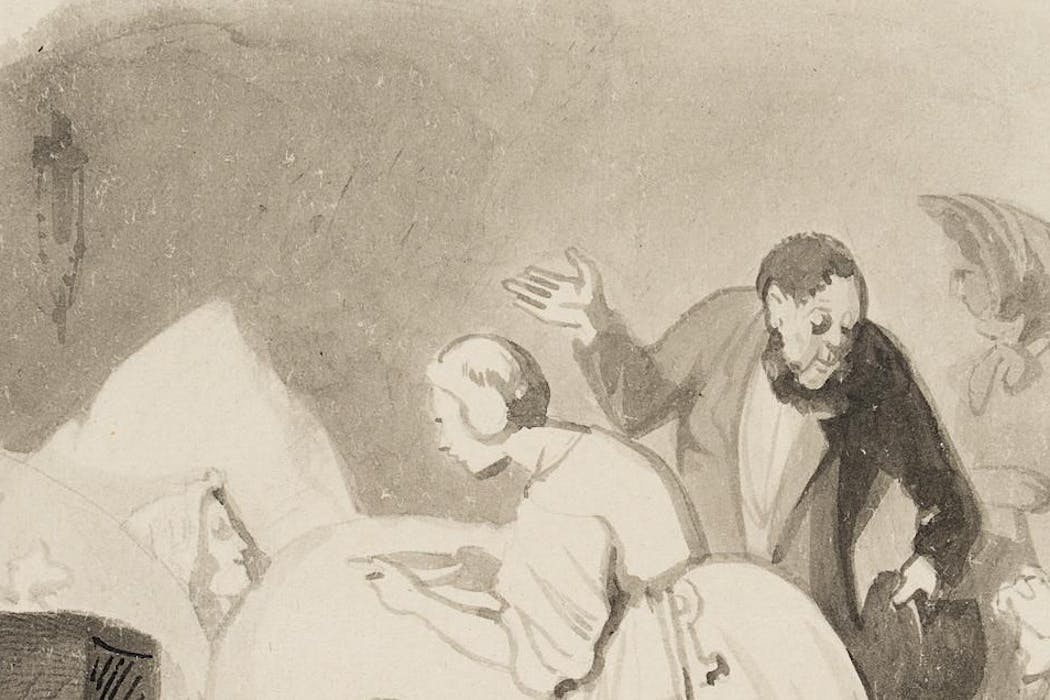
Détail d’un dessin de Julius Adam (Photo d’illustration).

En Angleterre, au XIXe siècle, le milieu médical fut secoué par un scandale lié à des excisions du clitoris pratiquées par un chirurgien de renom. L’absence de consentement éclairé des patientes fut au cœur des débats, une question qui reste d’actualité concernant la santé des femmes, et au-delà.


En 2008, l’Assemblée mondiale de la santé de l’Organisation mondiale de la santé (OMS) adoptait la résolution WHA61.16 sur l’élimination des mutilations génitales féminines (MGF), dans laquelle elle appelait à l’intervention concertée des gouvernements, des organismes internationaux et des organisations non gouvernementales.

Quand parle-t-on de mutilations génitales féminines ?

  • Selon l’Organisation mondiale de la santé (OMS), les mutilations génitales féminines (MGF) comprennent toutes les interventions qui impliquent l’ablation partielle ou totale des organes génitaux externes de la femme ou toute autre lésion des organes génitaux féminins, qui sont pratiquées pour des raisons non médicales.

État des lieux des mutilations génitales féminines dans le monde

L’OMS estimait à l’époque que 100 à 140 millions de femmes dans le monde avaient été victimes de telles mutilations, le plus souvent pratiquées entre la petite enfance et l’âge de 15 ans. En 2025, elles sont plus de 230 millions à avoir subi des mutilations génitales féminines dans 30 pays d’Afrique, du Moyen-Orient et d’Asie et 3 autres millions sont exposées à en subir chaque année. Cette augmentation ne serait pas attribuable à une plus grande fréquence de mutilations génitales féminines mais à l’augmentation de la population dans les pays concernés.

Quatre grandes catégories de mutilations génitales féminines, selon l’OMS :

  • Type 1 : ablation partielle ou totale du gland clitoridien (petite partie externe et visible du clitoris et partie sensible des organes génitaux féminins) et/ou du prépuce/capuchon clitoridien (repli de peau qui entoure le clitoris).
  • Type 2 : ablation partielle ou totale du gland clitoridien et des petites lèvres (replis internes de la vulve), avec ou sans excision des grandes lèvres (replis cutanés externes de la vulve).
  • Type 3 : « infibulation », ou rétrécissement de l’orifice vaginal par recouvrement, en sectionnant et en repositionnant les petites lèvres, ou les grandes lèvres, parfois par suture, avec ou sans ablation du prépuce/capuchon et gland clitoridiens.
  • Type 4 : toutes les autres interventions néfastes au niveau des organes génitaux féminins à des fins non médicales, consistant par exemple à piquer, à percer, à inciser, à racler ou à cautériser les organes génitaux.

Des cas d’excisions du clitoris au XIXᵉ siècle en Angleterre

La pratique de la « clitoridectomie », à savoir l’excision du clitoris – et parfois des lèvres –, généralement associée aujourd’hui à certaines régions du monde et communautés religieuses et culturelles a, pendant un temps, au cours du XIXᵉ siècle, également été prônée en Europe comme « remède » à la masturbation, à la nymphomanie, à l’hystérie et autres « troubles nerveux » supposés.

Elle est, en Angleterre, associée au nom d’Isaac Baker Brown, chirurgien et obstétricien de renom qui, en publiant un compendium de ses opérations, suscita, en 1866, un scandale majeur au sein de la toute jeune profession de gynécologues et obstétriciens.

Ce scandale, qui illustre l’une des tristes rencontres entre chirurgie et aliénisme ainsi que la peur suscitée par la sexualité féminine à l’époque victorienne, nous donne de façon plus inattendue, l’occasion d’identifier l’une des toutes premières mentions, au sein de la profession médicale britannique, de la notion de « consentement éclairé » (selon la définition de l’article 6 de la Déclaration universelle sur la bioéthique et les droits de l’homme.

Un scandale associé au nom d’Isaac Baker Brown

Portrait du chirurgien anglais Isaac Baker Brown
Isaac Baker Brown (1811–1873), chirurgien anglais (portrait publié dans le Medical Circular and General Advertiser, Volume 1, 1852, p. 261).

La clitoridectomie, il est important de le souligner au détriment du sensationnalisme, a été, en Grande-Bretagne, essentiellement l’histoire d’un seul homme, Isaac Baker Brown. Alors au sommet de sa carrière, le médecin postule que le remède aux maladies nerveuses de ses patientes consisterait tout simplement à retirer la cause de l’excitation, à savoir le clitoris.

Il se base sur les liens alors établis par certains médecins entre lésions du système nerveux central et excitation des nerfs périphériques (dont le « nerf pudendal ») et, pour ce faire, se réfère notamment aux conférences de Charles Brown Séquart, « Lectures on the Physiology and Pathology of the Central Nervous System », dispensées au Royal College of Surgeons of England.

Entre 1858 et 1866, Isaac Baker Brown pratique 47 clitoridectomies sur des femmes âgées de 21 à 55 ans, qu’il relate en détail dans On the Curability of Certain Forms of Insanity, Epilepsy, and Hysteria in Females. Toutefois, au lieu de renforcer sa notoriété, la publication de cet ouvrage enflamme les esprits et les plumes.

La revue médicale le Lancet ouvre les hostilités en juin 1866 : un confrère, Harry Gage Moore, y dénonce l’opération subie par l’une de ses patientes de 26 ans, sans aucun bénéfice et au prix d’intenses douleurs.

Rapidement, d’autres témoignages affluent :

« Certaines patientes auraient été opérées à leur insu ; d’autres, persuadées que l’intervention était bénigne. »

L’affaire prend une telle ampleur que Baker Brown accepte la création d’une commission d’enquête et promet de suspendre ses pratiques. Accusé, quelques mois plus tard, d’avoir manqué à sa parole, il se voit contraint de se présenter, en avril 1867, devant le Conseil de la toute jeune Société d’obstétrique de Londres (London Obstetrical Society), qui décidera, à 194 voix contre 38, son expulsion.

Éthique et « consentement éclairé »

Si l’on situe généralement l’apparition de l’expression « consentement éclairé » aux années 1950 (la décision Schloendorff v. Society of New York Hospital de 1914 ne concernait quant à elle que le « consentement simple »), c’est pourtant bien de cela dont il est question dans les débats autour de la clitoridectomie auxquels on assiste entre juin 1866 et avril 1867.

La lecture des courriers et procès-verbaux des différentes réunions révèle en effet une évolution très rapide du débat de la question de l’efficacité de l’opération, dénoncée par de nombreux confrères comme « une mutilation abominable et inutile » (Henry MacCormac M.D., “Askesis”, Medical Times and Gazette, 23 mars 1867, p. 317), à celle du lien de confiance entre médecin et patiente ou patient.

Si les patientes de Baker Brown, célibataires et mariées, se sont souvent présentées de leur propre chef à la London Surgical Home où Brown opère, il s’avère en effet que le médecin a parfois pratiqué l’excision lors d’interventions annexes, sans consentement préalable, et que même lorsque celui-ci avait été obtenu, de nombreuses femmes ignoraient la véritable portée de l’acte chirurgical.

Charles West relate ainsi le cas d’une de ses patientes, amputée de son clitoris par I. Baker Brown lors d’une opération pour une fissure anale (British Medical Journal, 15 décembre 1866 : 679).

Dès décembre 1866, The Lancet soutient l’affirmation de Charles West pour qui

« l’ablation du clitoris pratiquée à l’insu de la patiente et de ses proches sans explication complète de la nature de l’intervention… est extrêmement inappropriée et mérite la plus ferme réprobation »

(« The operation of excision of the clitoris », The Lancet, 22 décembre 1866 : 698).

Quelques mois plus tard, la revue va plus loin : même si l’opération pouvait s’avérer utile, est-il « éthiquement correct, interroge-t-elle, de mutiler une femme atteinte de troubles mentaux qui ne peut légalement consentir à une telle opération, même si cette dernière pouvait s’avérer utile » (« The Surgical Home », The Lancet, 2 février 1867 : 156).

La question éthique, liée à celle du consentement éclairé, apparaît par la suite au premier rang des accusations portées à l’encontre de Baker Brown lors du débat qui mène à l’exclusion de ce dernier de la profession, en avril 1867. Un éditorial paru quelques jours plus tard dans le Medical Times and Gazette et intitulé « Clitoridectomy and Medical Ethics » mérite également d’être mentionné dans la mesure où s’y trouve dénoncé le processus de diagnostic lui-même.

De jeunes femmes, expliquait l’article, pouvaient être profondément ignorantes de la nature et de la portée des questions posées lors de la consultation (« Ressentez-vous une irritation dans certains organes ? », « Est-ce très grave ? », « Cela vous pousse-t-il à les frotter ? ») ; elles pouvaient aussi être enclines à exagérer leurs sensations afin d’aller dans le sens du médecin et répondre positivement à toute question suggestive. Le consentement ne devait donc pas, éthiquement, être un « consentement routinier ».

L’éthique médicale exigeait à la fois le consentement et l’information préalable de la patiente (ses proches ne sont pas mentionnés cette fois-ci) quant à la nature et aux conséquences d’une opération. Celle-ci impliquait non seulement l’information, mais une véritable compréhension de la « portée réelle », de la « nature » et des conséquences « morales » de l’opération.

De tels prérequis correspondent indubitablement à ce que l’on définit aujourd’hui comme le « consentement éclairé » et semblent indiquer que celui-ci, contrairement à ce qui a pu être affirmé jusqu’à une date récente, fut conceptualisé en Grande-Bretagne avant le XXe siècle, anticipant de façon étonnante les principes modernes de bioéthique.

De l’Angleterre victorienne aux enjeux contemporains

L’affaire Baker Brown marque un tournant. Après 1867, la clitoridectomie dite « thérapeutique » disparaît du paysage médical britannique (elle perdurera toutefois bien au-delà aux États-Unis). Quand elle est évoquée dans les revues professionnelles de l’époque, c’est uniquement pour dénoncer une pratique « odieuse et non scientifique ».

Cet épisode illustre la complexité de la médecine victorienne. Oui, les représentations misogynes ont pesé lourd dans l’imposition de traitements douloureux aux femmes, mais il existe aussi, dès le XIXe siècle, une résistance interne, qui ne doit pas être occultée.

Ce scandale permet également de mesurer l’ancienneté du consentement médical, et du consentement éclairé en particulier, dont les modalités continuent d’être explorées dans le cas de troubles cognitifs, des compétences du malade à consentir ou barrières linguistiques ainsi que face à l’impact de l’utilisation croissante de l’IA dans le processus diagnostique et la décision thérapeutique ; la loi de bioéthique de 2021 introduit ainsi une information obligatoire en cas de recours à l’intelligence artificielle en santé.

The Conversation

Véronique Molinari a reçu des financements dans le cadre du projet IDEX ANR-15-IDEX-02 « Genre, santé mentale et médecine de l’intime au XIXe siècle : discours, pratiques, résistances et circulations transatlantiques » GESAME-19) Université Grenoble Alpes, 2023-24.

– ref. Ablation du clitoris dans l’Angleterre victorienne : comment un scandale médical sur le « consentement éclairé », au XIXᵉ siècle, a ouvert un débat toujours actuel – https://theconversation.com/ablation-du-clitoris-dans-langleterre-victorienne-comment-un-scandale-medical-sur-le-consentement-eclaire-au-xix-siecle-a-ouvert-un-debat-toujours-actuel-263839


The politics of milk: how a simple drink got caught up in power, culture and identity

Source: The Conversation – UK – By JC Niala, Head of Research, Teaching and Collections, History of Science Museum, University of Oxford

Milk is one of the most familiar things in the world – comforting, wholesome, ordinary. But beneath this common perception lies something far more complicated.

Examining the UK and Kenya, our project Milking It! explores the deep cultural, historical and emotional attachments to milk, and how these collide with the realities of industrialised production, environmental pressure and its colonial past.

We’ve spoken with dairy farmers caught between economic survival and public expectation, traced milk’s heritage through museum collections and archives, and listened to personal stories where milk evokes intimacy, memory and loss.

We’ve found that milk is never just milk. It’s saturated with meaning, emotion and contradiction. People can feel intensely about it: it stirs strong responses, its history is revealing, and it helps us rethink care, identity and sustainability.

Milk is a powerful subject for thinking about the politics of food; a near-universal food shared across cultures, landscapes and histories. It carries with it ideas about who belongs, who provides care, and what constitutes a good life.

In times of climate anxiety and shifting food politics, milk helps reveal how personal our relationship with food really is, and how these relationships are shaped by histories of power, production and belief.

As our research has progressed, we have found that milk is emotionally charged, politically loaded, and, at times, profoundly symbolic of how people understand themselves and the world they live in. Important to these politics is the tension between the idea of milk as home – part of our intimate everyday – and milk as global industry.

Dairy and its colonial past

Understanding global dairy means reckoning with its colonial past. From the late 19th century, European colonial administrations promoted dairy not just as a foodstuff, but as a marker of civilisation, symbolising perfect nutrition, purity and modernity.

Cattle breeds were imported, dairy farms established and milk consumption encouraged among settler and indigenous populations alike, often through coercive propaganda. These efforts laid the groundwork for globalised industrial food systems, where milk became both a commodity and a cultural ideal.

These histories still shape the modern dairy landscape. Smallholder farmers in both the UK and Kenya operate within systems that were designed to favour large-scale, export-oriented production. Despite their radically different contexts, both face strikingly similar pressures: the need to intensify, standardise and compete in volatile markets.

While global dairy is pushing farmers towards highly technical and mechanised systems, these are largely hidden from consumers. Milk advertising has played a crucial role in this, summoning a pastoral ideal. Black and white Daisy in her field of fresh green grass: clean air, contented cows, local milk. It arrives in our homes as reliable nourishment and familiar care.

Milk’s paradox

But here lies the paradox: in the minds of many, milk continues to symbolise home, rural heritage and connectedness, even as the conditions of its production become more alienated from those very values. But milk has also been co-opted into much larger political and economic projects.

From state-run free school milk schemes in both Kenya and the UK, to British Home Front campaigns promoting milk as a national duty during the second world war, this everyday drink has long played a role in shaping ideas of citizenship, health and belonging.

Today, farmers struggle to survive on the prices they’re paid. Processing and distribution are increasingly controlled by large conglomerates, with ever less of the final profit reaching those who care for the animals and land.

Maintaining the idea that milk is a necessary staple – part of our national and natural heritage – is unavoidably political. In contexts where having a cow in your backyard is common, a glass of milk is but a squeeze away. Having a two-litre carton of disposable fridge milk is, however, an entirely different thing; keeping milk available and cheap is hard work.

The gap between how milk is imagined and how it is made is widening. Once the milk leaves the cow, it moves through an industrial chain that involves rapid cooling, bulk transport, pasteurisation, homogenisation, packaging and refrigerated distribution. Our ordinary pint arrives in our fridges through a complex, but hidden, energy-intensive system.

While domestic production of milk in the UK has grown by 14% since 1975, there are significantly fewer cows. This is because the amount of milk you can get from a single cow has grown by 100%, from an average of 4,100 litres to 8,200 litres over her lifetime.

These cows are no Daisys. They are part of a global industrial system with high levels of intervention (antibiotics, artificial feed, keeping cows indoors) to ensure reliable year-round yield, at low cost.

By looking at milk as a cultural and political idea, as much as it is a natural product, we are beginning to understand and trace the logics that underpin global dairy today. That past helped entrench large-scale, standardised dairy systems, from the UK to Kenya. These competitive systems reward intensification and scale, over knowing where milk comes from.

However farmers who work with cows are party to an intimacy that we, as consumers, do not often see. Many are seeking systems of their own. Whether through processing milk on-site by making cheese, or using local networks to establish consumer trust, dairy producers are adapting old logics that meet modern needs.

In Milking It! we explore how everyday foods can hold much larger stories: about changing food systems, colonialism, identity, loss of tradition and survival. We’re continuing these conversations through our podcast Milk on the Move, and we invite others to join us in rethinking what milk is as a cultural force.


Looking for something good? Cut through the noise with a carefully curated selection of the latest releases, live events and exhibitions, straight to your inbox every fortnight, on Fridays. Sign up here.


The Conversation

JC Niala receives funding from the UKRI Arts and Humanities Research Council for this project.

Johanna Zetterström-Sharp receives funding from the UKRI Arts and Humanities Research Council for this project.

– ref. The politics of milk: how a simple drink got caught up in power, culture and identity – https://theconversation.com/the-politics-of-milk-how-a-simple-drink-got-caught-up-in-power-culture-and-identity-263476

La lógica, la probabilidad y la geometría sitúan al Barcelona como favorito frente al Real Madrid en El Clásico

Source: The Conversation – (in Spanish) – By Javier Belloso Ezcurra, Profesor Departamento Estadística, Informática y Matemáticas, Universidad Pública de Navarra

Fran García (Real Madrid) y Lamine Yamal (Barcelona) se disputan un balón durante la final de la Copa del Rey (26 de abril de 2025). Marta Fernandez Jimenez/Shutterstock

El clásico entre Real Madrid y FC Barcelona es mucho más que un partido, es un espectáculo deportivo que también permite aplicar herramientas matemáticas para comprender mejor lo que ocurre en el campo. En este artículo, exploraremos cómo la métrica de goles esperados (xG) combinada con los diagramas de Venn ofrecen una nueva perspectiva sobre el partido más seguido del fútbol español.

Los primeros representan una métrica moderna aplicada al fútbol y los segundos nos conectan con conceptos clásicos de la lógica y la teoría de conjuntos, que además reavivan nuestra memoria escolar.

La conjunción de ambos permite actualizar los conceptos desarrollados por el matemático John Venn, cuya obra sigue vigente más de un siglo después de su fallecimiento.

Goles en potencia

¿Qué es el xG y qué es un diagrama de venn?

El xG (eXpected Goals) es una estadística avanzada que se utiliza en fútbol para medir la “facilidad” de que un tiro termine en gol, considerando factores como la posición, la situación del portero y la presión defensiva.

Por su parte, los diagramas de Venn son representaciones gráficas que muestran relaciones entre conjuntos: intersecciones, uniones y complementariedades.

En fútbol tenemos tres posibles resultados que podemos representar en un diagrama de Venn con dos conjuntos y su intersección. Por tanto necesitamos tres áreas diferentes para la victoria local (Barcelona), victoria visitante (Real Madrid) y el empate.

Para ello utilizaremos los sucesos, B (Barcelona puntúa) y R (Real Madrid puntúa), que serán ciertos o falsos según el resultado del partido.

Para su representación en forma de diagrama necesitamos los conjuntos que los representen. Los sucesos B y R se convertirán en conjuntos con el mismo nombre. Esta es la secuencia y sus equivalencias generales:

Lenguaje natural → lógica proposicional → teoría de conjuntos:

B o R ⇒ B ∨ R ⇒ B ∪ R

B y R ⇒ B ∧ R ⇒ B ∩ R

No B ⇒ ¬B ⇒ Bc

Aplicación al clásico: conjuntos y probabilidades

Tomemos el último clásico disputado el 11 de mayo de 2025, que ganó el Barcelona (4-3). Estos son los disparos con mejores valores xG y sus autores, sombreados en verde los que acabaron en gol:

Más adelante ilustraremos este resultado utilizando las métricas de goles esperados en el momento anterior al disparo (xG).

Las ocasiones de cada equipo nos dan un valor de probabilidad para conseguir los goles que van desde 0 (fallar todas) hasta el número total de tiros (acertar todas). Los resultados posibles son todas las combinaciones entre los goles de uno y otro equipo, más los fallos totales. Esto nos da un total de 24 (Barcelona 23 tiros) multiplicado por 10 (Real Madrid 9 tiros), 240 posibles resultados que forman el espacio muestral del experimento. Estos 240 elementos se incluyen en nuestro diagrama de Venn en su parte correspondiente, según los conjuntos:

  • B (Barcelona, xG 4,27): resultados en que el Barcelona puntúa, 185 victorias + 10 empates.

  • R (Real Madrid, xG 2,74): resultados en que el Real Madrid puntúa, 45 victorias + 10 empates.

  • B ∩ R: Intersección de los anteriores que representa los empates, 10 debido a los nueve empates con goles y uno sin ellos.

Visualización: el diagrama de Venn

Aunque los diagramas de Venn clásicos no representan cuantitativamente las probabilidades, en nuestro enfoque visual adaptado, el área de cada círculo se ha ajustado proporcionalmente a la probabilidad del resultado (ganar, perder, empatar). Esto permite visualizar no solo las relaciones lógicas entre los sucesos, sino también su peso relativo en el contexto del partido. Este enfoque novedoso representa una aplicación directa de los diagramas de Venn en el deporte, y en el fútbol en particular, presentada por primera vez en este artículo. Además, plantea dos problemas matemáticos adicionales a resolver:

Problema 1: Con el dato del área (A) calcularemos los radios de cada conjunto.

A = πr2
r = √(A / π)

Problema 2: Con el dato del área de la interesección (A∩) calcularemos la distancia entre los centros (d).

Para conseguir que la intersección tenga su correspondiente área, tenemos que dibujar los centros de cada circunferencia a la distancia d, cuyo valor obtenemos al resolver esta ecuación con métodos numéricos.

En este caso hemos usado el método Newton-Rapshon. Se trata de una de las herramientas más poderosas en el ámbito de la matemática y la ingeniería para la resolución de ecuaciones no lineales. Este algoritmo numérico se basa en el concepto de derivadas para encontrar las raíces de funciones a través de un proceso iterativo. Originalmente desarrollado por Isaac Newton y Joseph Raphson en el siglo XVII, este método ha evolucionado y se ha adaptado a diversas aplicaciones modernas, desde la física hasta la economía.

El diagrama ayuda a visualizar que, aunque el marcador fue ajustado (4-3), el Barça tuvo más oportunidades de gol de calidad, lo que respalda su victoria desde una perspectiva estadística.

Esta representación nos ofrece los resultados que buscábamos y muestra los merecimientos de cada equipo de forma muy visual e intuitiva.

Probabilidades de resultado final con xG

  • Probabilidad de que el Barcelona gane: 64.83 %.

  • Probabilidad de empate: 13.34 %.

  • Probabilidad de que el Real Madrid gane: 21.83 %.

Conclusión

Los diagramas de Venn, tradicionalmente asociados a la enseñanza escolar de la lógica y la teoría de conjuntos, encuentran en este artículo una aplicación nueva en el análisis deportivo. Al combinarlos con métricas avanzadas como los goles esperados (xG), se abre una nueva vía para representar visualmente no solo las relaciones lógicas entre los posibles resultados de un partido, sino también su probabilidad relativa que los hace comparables.

Este enfoque permite ir más allá del marcador final y explorar el “merecimiento” de cada equipo desde una perspectiva también geométrica. En el clásico entre FC Barcelona y Real Madrid, el uso de diagramas de Venn adaptados al contexto futbolístico revela que, aunque el resultado fue ajustado (4–3), el Barcelona generó más oportunidades de calidad, lo que se traduce en una mayor área de su conjunto en el diagrama.

En definitiva, este trabajo no solo ofrece una nueva forma de entender los partidos de fútbol, sino que también demuestra cómo conceptos matemáticos aparentemente alejados del deporte pueden enriquecer su análisis. Es una invitación a mirar el fútbol con otros ojos: los de la lógica, la probabilidad y la geometría.

The Conversation

Javier Belloso Ezcurra no recibe salario, ni ejerce labores de consultoría, ni posee acciones, ni recibe financiación de ninguna compañía u organización que pueda obtener beneficio de este artículo, y ha declarado carecer de vínculos relevantes más allá del cargo académico citado.

– ref. La lógica, la probabilidad y la geometría sitúan al Barcelona como favorito frente al Real Madrid en El Clásico – https://theconversation.com/la-logica-la-probabilidad-y-la-geometria-situan-al-barcelona-como-favorito-frente-al-real-madrid-en-el-clasico-266813

A Supreme Court showdown looms for Trump’s tariffs. Will it limit presidential power?

Source: The Conversation – Global Perspectives – By David Smith, Associate Professor in American Politics and Foreign Policy, US Studies Centre, University of Sydney

On November 5 the US Supreme Court will begin hearing arguments about the legality of President Donald Trump’s tariffs. As important as the tariff issue is, the stakes are much higher than that.

Trump has been claiming vast powers, at the expense of other branches of government, on the grounds of various “emergencies”. He has used these claims to justify sending troops to US cities and deporting non-citizens without due process under a law dating from 1798.

Trump imposed sweeping global tariffs under the auspices of the International Emergency Economic Powers Act (IEEPA) of 1977. Most legal experts agree, and so far three lower courts have ruled, that this act gives him no such power.

This case now presents an important test of the Supreme Court’s willingness to impose limits on Trump’s emergency powers.

The powers Trump is claiming

The US Constitution gives Congress, not the president, the power to set tariffs. Since the 1930s, Congress has passed a series of laws granting presidents the authority to adjust existing tariffs and deploy them to protect industries that are crucial to US national security.

The tariffs Trump has imposed this year go beyond the powers any previous president has had.

Some of Trump’s tariffs on goods in specific sectors such as steel and aluminium are authorised under Section 232 of the Trade Expansion Act because of their importance to military industries.

But to justify blanket tariff rates on entire countries, regardless of the goods involved, Trump has turned to the International Economic Emergency Powers Act (IEEPA).

This allows the president to block economic transactions and freeze assets after declaring an emergency. These actions usually target hostile powers or individuals. An emergency is an “unusual and extraordinary threat” to the US, originating “in whole or substantial part outside the United States”.

Trump originally claimed tariffs against Canada, Mexico and China were necessary to force those countries stop the traffic in fentanyl, which causes more than 70,000 overdose deaths in the US every year. Yet less than 1% of the fentanyl that enters the US comes from Canada.

For the “liberation day” tariffs affecting every other country in the world, Trump declared the annual US trade deficit in goods constituted “an unusual and extraordinary threat to the national security and economy of the United States”.

This trade deficit has been running since 1976, and it widened during Trump’s first administration.

The court case

The Trump administration is being sued by a group of small businesses that have been hurt by the 2025 tariffs, and which claim Trump had no right to impose them. They are supported by a bipartisan group of legal scholars.

A small business owner suing Trump over tariffs explains his decision.

Two federal courts and the US Court of International Trade have so far ruled IEEPA does not give the president the power to set tariffs.

The IEEPA was an amendment to the 1917 Trading with the Enemy Act, which the then president Richard Nixon used to impose 10% import tariffs during a trade crisis in 1971. The Trump administration has argued that because those tariffs were upheld by courts, Trump’s are also valid.

But the IEEPA, passed in 1977 following post-Watergate reforms of emergency powers, was intended to limit executive power, not expand it.

In the words of a report from the House Committee on International Relations that underpinned the reforms, “emergencies are by their nature rare and brief, and are not to be equated with normal ongoing problems”.

What will the Supreme Court do?

The weakness of the administration’s legal arguments is reflected in Trump’s public statements about why the Supreme Court must uphold his tariffs. These statements increasingly read like blackmail notes. He has said striking down the tariffs would “literally destroy the United States of America”.

As well as bringing in billions of dollars in revenue, Trump claims five of the eight wars he has supposedly ended were thanks to tariff leverage, and “if they took away tariffs, then they’ve taken away our national security”.

Striking down tariffs could be economically disruptive. It would weaken US leverage in trade negotiations, and raise the possibility of large tariff refunds.

These threats may persuade conservative Supreme Court justices who already take an expansive view of executive power, and who have so far enabled Trump’s accumulation of it.

However, the one area where Supreme Court conservatives might be willing to limit Trump’s powers is where they interfere with economic orthodoxy.

In a ruling allowing Trump to fire commissioners of some small, independent agencies, the court also appeared to protect members of the US central bank, the Federal Reserve, because of its “distinct historical tradition”.

The Supreme Court has since temporarily blocked Trump’s attempt to fire one of the Federal Reserve governors, Lisa Cook. The judges may also decide that allowing a president to impose unlimited new taxes is a step too far.

Even if the Supreme Court does strike down the IEEPA tariffs, Trump is unlikely to abandon tariffs as a policy tool. They are a core part of his identity.

The administration has already vowed that if it loses in the Supreme Court, it will find other ways to impose tariffs under different laws that “have the same effect”.

The significance of the Supreme Court’s decision may not be about the tariffs themselves, but about whether it recognises any limit to presidential power.

The Conversation

David Smith does not work for, consult, own shares in or receive funding from any company or organisation that would benefit from this article, and has disclosed no relevant affiliations beyond their academic appointment.

– ref. A Supreme Court showdown looms for Trump’s tariffs. Will it limit presidential power? – https://theconversation.com/a-supreme-court-showdown-looms-for-trumps-tariffs-will-it-limit-presidential-power-267630

Will the ‘military sleep method’ really help me fall asleep in 2 minutes?

Source: The Conversation – Global Perspectives – By Dean J. Miller, Senior Lecturer, Appleton Institute, HealthWise Research Group, CQUniversity Australia

LightFieldStudios/Getty

Has a camouflaged athlete running on a dirt road ever shouted health advice through your phone? Sometimes these videos are motivational and get you off the couch to start exercising; sometimes they’re educational. But can their advice help us civilians?

Let’s look at what it means to follow the “military sleep method”. There are various versions circulating on social media, including claims it can help you drop off in two minutes.

It certainly sounds appealing.

I research sleep and the body clock. And in field work, I have been part of several high-performance environments, helping athletes and military personnel counter fatigue and jet lag, and to get better sleep.

Here’s why the military sleep method might work for soldiers. But could it also work for you?

Just 3 steps to sleep?

The military sleep method, as the name suggests, is meant to help military personnel prime their body for sleep, regardless of the environment.

The first mention of the method is credited to a sports performance book called Relax and Win.

Reports of the military sleep method can vary slightly depending on the source. But three key components remain consistent:

  1. progressive muscle relaxation: contracting and relaxing the muscles of the face, then the shoulders and arms, before moving down through the chest and legs

  2. controlled breathing: breathing is slowed and controlled, emphasising longer exhalations

  3. visualisation: imagining a calm environment, such as floating on calm water or lying in a quiet field.

Is this science or folklore?

As you may expect, the militaries of the world are not publishing their sleep techniques in open access journals. So there are no specific validations of the military sleep method in mainstream science.

So, let’s compare it to the recommended first-line treatment for insomnia, known as cognitive behaviour therapy for insomnia, or CBT-I.

This involves several key components:

  1. cognitive therapy: challenging unrealistic beliefs and worries about sleep

  2. stimulus control: strengthening the bed–sleep connection by avoiding non-sleep activities in bed and only lying down when sleepy

  3. sleep restriction: initially limiting time in bed to build sleep pressure

  4. sleep hygiene: maintaining healthy routines and environments, such as limiting caffeine and alcohol, keeping a consistent schedule, and making the bedroom a relaxing space, not associated with other activities

  5. relaxation techniques: using techniques such as mindfulness, progressive muscle relaxation, or breathing, to reduce arousal and help you fall asleep.

Sounds familiar?

Notice the similarities between the military sleep method and CBT-I? Some context is also similar. For instance, soldiers may be sleep deprived, and sleep restriction is part of CBT-I. They have also been trained to have strong control of their thoughts, and CBT-I uses cognitive therapy.

Differences between the two also relate to the high-performance military environment. For instance, defence personnel will have no control of their sleep hygiene.

In other words, think of the military sleep method as sharing aspects of CBT-I, but tailored to defence personnel and focusing on three things they can control.

Can you really fall asleep in 2 minutes?

Based on these similarities, it is entirely possible the steps outlined in the military sleep method can help most of us fall asleep faster. But do we really need to fall asleep in two minutes?

In an unfortunate hit to the ego, most of us are not high-performance personnel. It is unlikely we experience the psychological and physiological demands the military sleep method was intended for. So for civilians, falling asleep in two minutes is an unrealistic goal.

As a general guideline, consistently falling asleep within eight minutes is considered unusual, and consistently falling asleep within five minutes can be a sign of excessive daytime sleepiness.

For civilians working nine-to-five and maintaining a regular schedule, falling asleep within ten to 20 minutes is considered normal.

But if you are a shift-worker, new parent, or have a diagnosed sleep disorder, these numbers may not apply.

So, should I sleep like a soldier?

Soldiers are trained extensively on how their physiology functions in challenging environments. The aim of this training is to give them as much control over their bodies as possible, including how best to fall asleep.

The military sleep method is a catchy way to package healthy sleep techniques. In practice it’s a blend of tools already grounded in sleep science (relaxation, breathing and visualisation).

It won’t harm your sleep to try it, but shift the goalposts away from the two-minute target.

If you’re fixated on falling asleep within two minutes, and start worrying when you don’t, that very worry can make it harder to sleep.


If you’re having ongoing problems with your sleep, or suspect you may have a sleep disorder, see a medical professional, such as your GP, for advice and assessment. If needed, they’ll refer you to a sleep specialist.

The Conversation

Dean J. Miller does not work for, consult, own shares in or receive funding from any company or organisation that would benefit from this article, and has disclosed no relevant affiliations beyond their academic appointment.

– ref. Will the ‘military sleep method’ really help me fall asleep in 2 minutes? – https://theconversation.com/will-the-military-sleep-method-really-help-me-fall-asleep-in-2-minutes-265193

The uneasy history of horror films and disability

Source: The Conversation – Global Perspectives – By Gwyneth Peaty, Research Fellow, School of Media, Creative Arts and Social Inquiry, Curtin University

Historically, horror films have been popular during times of social upheaval, as they allow audiences to work through collective cultural anxieties by tapping into their greatest fears. And “fear” is often built around ideas of what is “abnormal” – that is, different from socially constructed norms.

Throughout horror film history, disability has often been used as a visual shorthand marking the boundary between normal and abnormal.

Disability has long featured problematically as a metaphor for horror, evil or monstrosity. But a new wave of filmmakers are using horror to reflect on the lived experiences of people with disability.

Obsessive avengers

In horror, people with physical or intellectual disability often feature as villains driven by an obsessive desire for revenge on a world that caused their pain. We see this trope repeated in a number of slasher films from the 1970s and ‘80s, including Halloween (1978), Friday the 13th (1980), A Nightmare on Elm Street (1984) and The Texas Chain Saw Massacre (1974).

Disability film scholar Martin Norden describes this horror archetype as the obsessive avenger:

an egomaniacal sort, almost always a male, who does not rest until he has his revenge on those he holds responsible for his disablement and/or violating his moral code in some other way.

This connection between disability and villainy is no accident. In preparing for his role as Leatherface in The Texas Chain Saw Massacre, actor Gunnar Hansen observed students with intellectual disability at a specialist school, and adopted their mannerisms.

An evolving landscape

Disabled people are speaking out online about how their lives are impacted by harmful stereotypes of disability in the media. And this push for advocacy and awareness has led to shifts in cultural attitudes and film content policies.

In 2018, the British Film Institute announced it would no longer fund films that represent people with facial differences as evil or villainous. This decision was in direct response to the #IAmNotYourVillain campaign run by UK charity Changing Faces.

Under increasing scrutiny, filmmakers have also been called out for using disability as a symbol of horror, evil, or monstrosity.

Warner Bros was forced to apologize in 2020 after Anne Hathaway’s character in The Witches was criticised for stigmatising limb differences. Viewers noticed the resemblance between her “claws” in the film and a real-life genetic condition called ectrodactyly. This led to the #NotAWitch hashtag trending on social media.

Actor Lupita Nyong’o has apologised for using spasmodic dysphonia, a real larynx disorder, as inspiration for her evil doppelganger’s voice in Jordan Peele’s 2019 film Us.

The National Spasmodic Dysphonia Association pointed out:

Spasmodic dysphonia is not a creepy voice; it’s not a scary voice. It’s a disability that people are living with and [they] shouldn’t be judged on.

Also in 2019, director Ari Aster was criticised for using the character of Ruben, a disabled child, for shock value in the horror hit Midsommar. As film critic Emma Madden argued in an article for The Guardian:

In keeping with Aster’s previous film Hereditary, in which physical and mental disability provides a metaphor for trauma and familial dysfunction, the disabled body once again becomes the monstrous body, used to convey a monstrous world.

From monster to hero

Many disabled people are huge fans of horror. The goal of critique is not to destroy monsters, or erase the horror genre, but to reduce its narrative dependence on ableism.

As horror fan Lotto Ramsay points out:

I want to feel horror. I don’t want to be the horror.

Today’s filmmakers are increasingly creating horror stories where the protagonist is disabled – perhaps in response to changing audience expectations and commentary. In doing so, they can interrogate the idea of “normal” in new ways. Some more recent horror films have even framed physical disability as an advantage, such as in Bird Box (2019) and A Quiet Place (2018).

In the slasher film Hush (2016), protagonist Maddie Young (Kate Siegel) is a deaf writer who uses American Sign Language to communicate. Stalked by a vicious killer she can’t hear, Maddie draws the audience into her desperate struggle for survival, encouraging them to identify with a disabled character in a horror context.

Of course, having a disabled protagonist does not guarantee the film will be free from ableism or negative stereotypes. The Advent Calendar (2021), a horror film with a wheelchair user at its centre, falls into old stereotypes by framing disability as something that needs “fixing”.

Just as we can look back on past horror as reflective of outdated attitudes towards race, gender and sexuality, so too does horror reflect the changing social construction of disability.

And this means future horror creators have a chance to tell stories which people with disability can enjoy – rather than feel targeted by.

The Conversation

Katie Ellis receives funding from the Australian Research Council.

Gwyneth Peaty does not work for, consult, own shares in or receive funding from any company or organisation that would benefit from this article, and has disclosed no relevant affiliations beyond their academic appointment.

– ref. The uneasy history of horror films and disability – https://theconversation.com/the-uneasy-history-of-horror-films-and-disability-263344

Lisztomania: why did women go gaga for 19th century pianist Franz Liszt?

Source: The Conversation – Global Perspectives – By Timothy McKenry, Professor of Music, Australian Catholic University

In 1844, Berlin was struck by a cultural fever critics labelled Lisztomania.

The German poet Heinrich Heine coined the term after witnessing the almost delirious reception that greeted Hungarian pianist and composer Franz Liszt in concert halls across Europe.

One widely circulated drawing from the 1840s crystallises the image. Women swoon or faint, others hurl flowers toward the stage. Men also appear to be struck by the pianist’s magnetic presence (or perhaps by the women’s reaction to it).

Men and women swoon as Liszt plays on stage.
This 1840s drawing captures Lisztomania in action.
Theodor Hosemann/Wikimedia

These caricatured depictions, when paired with antagonistic reviews from contemporary critics, may still shape our cultural memory of Liszt.

He is often depicted not simply as a musician but as the first modern celebrity to unleash mass hysteria.

What happened at Liszt’s concerts?

We know a great deal about Liszt’s hundreds of concerts during the 1830s and ‘40s, thanks to reviews, critiques, lithographs and Liszt’s own letters from the time.

His programs combined works by the great composers with his own inventive reworkings of pieces familiar to audiences. Virtuoso showpieces also demonstrated his command of the piano.

Beethoven’s Appassionata Sonata or Pathétique Sonata might appear alongside Bach’s Chromatic Fantasy and Fugue, performed in Liszt’s highly expressive style.

Schubert was represented through songs such as Erlkönig and Ave Maria, reworked for piano alone.

Liszt also turned to the most popular operatic works of his time. His Réminiscences de Norma (Bellini) and Réminiscences de Don Juan (Mozart) transformed familiar melodies into large-scale fantasies. These demanded both virtuosity and lyrical sensitivity.

In these works, Liszt created symphonic structures on the piano. He wove multiple themes into coherent musical dramas far more than simple medleys of well-known tunes.

Liszt often closed his concerts with the crowd-pleaser Grand Galop Chromatique. This encore demonstrated his showmanship and awareness of audience expectations.

As critic Paul Scudo wrote in 1850:

He is the sovereign master of his piano; he knows all its resources; he makes it speak, moan, cry, and roar under fingers of steel, which distil nervous fluid like Volta’s battery distils electrical fluid.

His audience’s response, it would seem, regularly spilled beyond the conventions of polite concert etiquette and social decorum.

Artist and showman

In a series of 1835 essays titled On the Situation of Artists, Liszt presents musicians such as himself as “tone artists”, condemned to be misunderstood. Nevertheless, they have a profound obligation to “reveal, exalt and deify all the tendencies of human consciousness”.

At the same time, a letter to the novelist George Sand reveals Liszt was acutely aware of the practicalities of concerts and the trappings of celebrity.

He jokes that Sand would be surprised to see his name in capital letters on a Paris concert bill. Liszt admits to the audacity of charging five francs for tickets instead of three, basks in glowing reviews, and notes the presence of aristocrats and high society in his audience.

He even describes his stage draped with flowers, and hints at the female attention following one performance, albeit directed toward his partner in a duet.

This letter shows an artist who is self-aware, sometimes amused, and sometimes ambivalent about the spectacle attached to his art.

Yes, Liszt engaged with his celebrity identity, but clearly also felt a measure of distance from it. He was aware the serious side of his art risked being overshadowed by the gossip-column version.

Much of the music criticism of the time functioned in exactly this way. It was little more than the work of gossip writers, many disgusted by the intensity of audience reactions to Liszt’s performances.

Gossip, poison pens, and the making of Lisztomania

Not everyone shared the enthusiasm of Liszt’s audiences. Some critics attacked both his playing and the adulation it provoked.

In 1842, a writer using the pseudonym Beta described the combined effect of Liszt’s performance and the public’s response, writing that:

the effect of his bizarre, substance-less, idea-less, sensually exciting, contrast-ridden, fragmented playing, and the diseased enthusiasm over it, is a depressing sign of the stupidity, the insensitivity, and the aesthetic emptiness of the public.

Similarly, poet Heinrich Heine suggested Liszt’s performance style was deliberately “stage managed” and designed to provoke audience mania:

For example, when he played a thunderstorm on the fortepiano, we saw the lightning bolts flicker over his face, his limbs shook as if in a gale, and his long tresses seemed to drip, as it were, from the downpour that was represented.

These and other accounts fed the mythology of Lisztomania, portraying women in his audience as irrational and hysterical.

The term mania carried a medicalised, pathologising tone, framing enthusiasm for Liszt as a form of cultural sickness.

Lithographs, caricatures, and anecdotal reports amplified these narratives, showing swooning figures, flowers hurled on stage, and crowds behaving in ways that exceeded polite social convention.

Yet these accounts are not entirely trustworthy; they were shaped by prejudice, moralising assumptions, and a desire to sensationalise.

Liszt’s concerts, therefore, existed at a fascinating intersection: extraordinary artistry and virtuosity, coupled with the theatre of audience reception, all filtered through a lens of gossip, exaggeration and gendered panic.

In this sense, the phenomenon of Lisztomania foreshadows the dynamics of modern celebrity. (It was also the subject of what one critic described as “the most embarrassing historical film ever made”.)

Just as performers like the Beatles, Beyoncé and Taylor Swift provoke intense public devotion while simultaneously facing slander and sensational reporting, Liszt’s fame was inseparable from both admiration and the poison pen of his critics.

The Conversation

Timothy McKenry does not work for, consult, own shares in or receive funding from any company or organisation that would benefit from this article, and has disclosed no relevant affiliations beyond their academic appointment.

– ref. Lisztomania: why did women go gaga for 19th century pianist Franz Liszt? – https://theconversation.com/lisztomania-why-did-women-go-gaga-for-19th-century-pianist-franz-liszt-264889

La paradoja del fútbol europeo: ahora hay más control financiero pero también más desigualdad entre equipos

Source: The Conversation – (in Spanish) – By Jorge Martín Magdalena, PhD in Economic and Business Sciences / Associate Lecturer in Universidad Pontificia Comillas-ICADE, Universidad Pontificia Comillas

Los jugadores del PSG celebran su victoria en la última final de la Champions League. katatonia82/Shutterstock

El fútbol europeo vive una paradoja: cuanto más intenta controlarse para ser sostenible, más desigual se vuelve.

Ya lo vimos en 2021, cuando el fichaje de Leo Messi por el Paris Saint-Germain generó una pregunta difícil de entender para muchos aficionados: ¿Por qué el Barça, limitado por las reglas económicas de LaLiga, no podía retenerlo, mientras el PSG, con pérdidas aún mayores, sí podía ficharlo?

Entonces, el problema no estaba solo en las cuentas sino en cómo se aplican las normas económicas. Aquella historia fue un ejemplo claro de las contradicciones del fair play financiero (FFP): un modelo con el que la UEFA buscaba frenar el despilfarro pero que ha terminado reforzando la ventaja de los clubes más poderosos.


Leer más:
¿Por qué el PSG sí ha podido quedarse con Messi y el Barça no?


Un control bien intencionado pero poco eficaz

La UEFA puso en marcha el FFP en 2011 para evitar que los clubes gastaran más de lo que ingresaban. La regla del punto de equilibrio (break-even) obligó a equilibrar ingresos y gastos, y la de sin deudas pendientes impedía la participación en competiciones europeas a quienes no cumplieran con sus pagos.

La intención era buena, pero los resultados fueron modestos. En un estudio reciente revisamos más de veinte investigaciones sobre el impacto del FFP en la economía de los clubes europeos. El resultado fue claro: el FFP mejoró la rentabilidad de los clubes, pero no su solvencia.

Es decir, algunos equipos consiguieron presentar beneficios en sus cuentas, pero sin reducir su endeudamiento ni asegurar una estabilidad a largo plazo. En muchos casos, los balances cuadraron gracias a la venta de jugadores o a ingresos extraordinarios, no porque los clubes gestionaran mejor su actividad.

Los pequeños se ajustan y los grandes resisten

El FFP no afectó a todos por igual. En un trabajo previo, publicado en 2023, comprobamos que los clubes pequeños mejoraron su situación y lograron aumentar su rentabilidad, y los medianos mejoraron sus niveles de endeudamiento.

Sin embargo, los grandes clubes apenas cambiaron su comportamiento. Su tamaño y su capacidad para generar ingresos a través de patrocinios internacionales o derechos televisivos les permitieron cumplir las reglas sin modificar su estrategia. El resultado fue paradójico: las normas pensadas para igualar acabaron consolidando la distancia entre unos y otros.

Para corregir esos desequilibrios, la UEFA aprobó en 2022 el Reglamento de Sostenibilidad Financiera (FSR), que comenzó a aplicarse en 2024. La principal novedad es el límite del 70 % de los ingresos para gastos de jugadores, incluidos salarios, fichajes y comisiones. Este nuevo sistema busca que los clubes gestionen sus recursos con más prudencia y que la competición sea más equilibrada.

¿Control o flexibilidad?

Comparamos los modelos de gestión de las dos ligas europeas más grandes: la española, con control previo y límite salarial, y la inglesa, más flexible y basado en revisar pérdidas a posteriori. Los resultados muestran que cuando se tienen normas más estrictas (como la española) los clubes logran aumentar la rentabilidad y reducir la deuda, sobre todo si son clubes pequeños o medianos.

Esto hace que se entienda mucho mejor el caso Messi–PSG. Como hemos visto, en España los clubes tienen un límite de gasto en jugadores sobre los ingresos. Sin embargo, en Inglaterra, Francia o en las competiciones de la UEFA, han podido comprar, incluso si incurrían en pérdidas, si su propietario tenía la capacidad financiera para asumir dichas pérdidas.


Leer más:
¿Por qué la compra del Newcastle por Arabia Saudí pone en peligro al fútbol europeo?


Esto explica por qué los llamados “clubes-Estado”, como el PSG o el Manchester City, pueden seguir invirtiendo grandes sumas sin incumplir formalmente las normas.
Mientras tanto, clubes con estructuras más tradicionales, como el Barça o el Athletic, tienen que ajustarse a límites mucho más estrictos.

El resultado es un sistema que aplica la disciplina de forma desigual: los equipos más modestos deben hacer equilibrios para cumplir mientras que los más poderosos apenas notan las restricciones.

Así, el fair play financiero ha acabado siendo más financiero que justo.


Leer más:
El F. C. Barcelona se debate entre la resurrección y la quiebra, a pesar de sus palancas económicas


¿Hacia un verdadero juego limpio?

En definitiva, el nuevo reglamento de la UEFA es un paso en la buena dirección, pero su eficacia dependerá de que se aplique con el mismo rigor a todos los clubes.
De poco servirá limitar el gasto al 70 % de los ingresos si algunos pueden inflar sus cifras de patrocinio o contar con ayudas encubiertas.

Un verdadero juego limpio financiero debería garantizar que los equipos compiten con los recursos que realmente generan. Solo así podrá evitarse que la desigualdad económica se traduzca en desigualdad deportiva.

Después de más de una década de investigación, la lección es clara: el fair play financiero ayudó a sanear las cuentas del fútbol europeo, pero no a equilibrarlo.
El nuevo modelo puede hacerlo mejor, siempre que la norma no sea distinta según el color de la camiseta.

The Conversation

Las personas firmantes no son asalariadas, ni consultoras, ni poseen acciones, ni reciben financiación de ninguna compañía u organización que pueda obtener beneficio de este artículo, y han declarado carecer de vínculos relevantes más allá del cargo académico citado anteriormente.

– ref. La paradoja del fútbol europeo: ahora hay más control financiero pero también más desigualdad entre equipos – https://theconversation.com/la-paradoja-del-futbol-europeo-ahora-hay-mas-control-financiero-pero-tambien-mas-desigualdad-entre-equipos-267523

Ya podemos personalizar la dosis de ejercicio físico midiendo el tiempo entre dos latidos

Source: The Conversation – (in Spanish) – By María Carrasco-Poyatos, Profesora Titular de Universidad, Universidad de Almería

Taras Grebinets/Shutterstock

¿Es el ejercicio físico un fármaco más? Si no lo es, al menos ha ganado fama últimamente dentro del mundo de la salud por sus múltiples beneficios. Más allá de mejorar el aspecto físico, ejercitarnos ayuda a reducir el dolor y mejora la calidad del sueño, el estado de ánimo y la calidad de vida.

Lo extraordinario es que sus beneficios se perciben incluso entrenando muy poco. Cualquier movimiento es mejor que el sedentarismo. Sin embargo, para que el ejercicio tenga un efecto significativo es necesario aplicar una dosis adecuada en tipo, intensidad, frecuencia y progresión. Sin olvidar que los programas deben ser individualizados.

La dificultad de ajustar la “dosis” de ejercicio a cada persona

Se sabe que un entrenamiento estandarizado provoca efectos diferentes en cada individuo. Es decir, si un grupo de personas se reúne para hacer el mismo entrenamiento, incluso teniendo características comunes, no todas obtendrán el mismo beneficio de la sesión. Esto, si estamos sanos, no tiene más importancia porque normalmente no genera efectos adversos. Pero cuando se trata de pacientes con enfermedades, hay que tenerlo muy en cuenta.

Además, todos hemos notado que cada día no es igual que el anterior, es decir, que no nos sentimos siempre de la misma manera. Nuestro estilo de vida, el manejo del estrés, la edad, el género o la ratio trabajo/descanso van a condicionar nuestro estado psicofisiológico diario, lo que hace más compleja si cabe la individualización del entrenamiento.

Igual que un médico ajusta la dosis del fármaco para que produzca el efecto deseado en el paciente, se debería adaptar la dosis del ejercicio físico a cada persona para conseguir la mejora fisiológica deseada. Pero ¿cómo sabemos cuál es la dosis exacta? O dicho de otro modo, ¿cómo se individualiza el entrenamiento?

Este fue el punto de partida de la nueva línea de investigación que iniciamos en la Facultad de Ciencias del Deporte de la Universidad de Almería, dentro del grupo de investigación HUM628, destinada a generar avances sobre la adaptación de la cantidad de ejercicio físico a cada persona, y en la que venimos trabajando desde 2018. Se trata del entrenamiento basado en la variabilidad de la frecuencia cardíaca (HRV, por sus siglas en inglés).

Un paso más cerca de la individualización

La HRV se define como el tiempo que transcurre entre dos latidos consecutivos. Refleja el estado del sistema nervioso autónomo, que se encarga de controlar las respuestas involuntarias del organismo para mantener un estado de equilibrio. Este sistema está por la rama simpática, que se activa en situaciones de estrés y alerta, y la parasimpática, responsable de la relajación y la recuperación. El equilibrio simpático/parasimpático es clave para que nuestro organismo siga funcionando correctamente y afronte de manera adecuada las cargas del entrenamiento.

Se ha comprobado que, en estado de reposo, valores altos de HRV coinciden con la activación del parasimpático, mientras que valores bajos se asocian a una predominancia del simpático. Con esta idea, el valor de HRV antes de entrenar nos indicará cómo de preparado está el organismo para realizar un estímulo de alta intensidad (HRV alto) o si, por el contrario, debemos elegir un entreno de baja intensidad ese día (HRV bajo).

Los estudios realizados hasta el momento han encontrado resultados satisfactorios en cuanto al ajuste de las cargas, puntualizando que, efectivamente, el estado de preparación fisiológica se ve reflejado en los valores de HRV, y que adaptar la intensidad del entrenamiento al estado fisiológico no repercute negativamente en la mejora del rendimiento.

Concretamente, en nuestros estudios en pacientes con patologías cardiovasculares vimos que el entrenamiento basado en HRV mejora la composición corporal, la capacidad funcional, la calidad de vida y las variables cardiorrespiratorias por encima de un plan estandarizado, con menor volumen de entrenamiento a alta intensidad. En resumen, usar el HRV genera más beneficios con menos minutos de entrenamiento a alta intensidad, optimizando la dosis de entrenamiento y aportando calidad.

En este sentido, tener en cuenta cómo varía la frecuencia cardíaca se convierte en un dato muy útil para ayudarnos a individualizar el entrenamiento de forma diaria. Además, hoy en día la HRV puede registrarse de forma sencilla e instantánea con instrumentos como pulsómetros con banda pectoral, pulsómetros con medición en la muñeca dispositivos que se sitúan en el pecho, anillos inteligentes o aplicaciones de dispositivos móviles, como HRV4Training o Welltory.

Consejos prácticos para personalizar el entrenamiento

Quien desee personalizar su entrenamiento por sí mismo puede seguir las siguientes recomendaciones:

  1. Medir su HRV para conocer su estado de recuperación y adaptar el entreno a sus necesidades.

  2. Escuchar su cuerpo, completando esta valoración con sus propias sensaciones.

  3. Entrenar sin prisa, centrándose en progresar adecuadamente.

  4. Consultar a un profesional, sobre todo si padece una enfermedad crónica.

  5. Priorizar la recuperación, recordando que es tan importante como el entrenamiento en sí. Conviene incluir días de descanso en la rutina, especialmente si el HRV se encuentra bajo.

The Conversation

Las personas firmantes no son asalariadas, ni consultoras, ni poseen acciones, ni reciben financiación de ninguna compañía u organización que pueda obtener beneficio de este artículo, y han declarado carecer de vínculos relevantes más allá del cargo académico citado anteriormente.

– ref. Ya podemos personalizar la dosis de ejercicio físico midiendo el tiempo entre dos latidos – https://theconversation.com/ya-podemos-personalizar-la-dosis-de-ejercicio-fisico-midiendo-el-tiempo-entre-dos-latidos-264404

El cierre de un vertedero amenaza la supervivencia de migrantes en República Dominicana

Source: The Conversation – (in Spanish) – By Raúl Zecca Castel, Investigador postdoctoral en Antropologia Cultural y Social, University of Milano-Bicocca

República Dominicana quiere eliminar los vertederos a cielo abierto para modernizar su sistema de residuos. Pero ¿qué pasaría entonces con las más de 12 000 personas, muchas de ellas migrantes haitianos sin papeles, que dependen de la basura para sobrevivir?

A las ocho de la mañana, el vertedero de San Pedro de Macorís, municipio situado en el este, despierta cubierto de humo. No hay cercas, ni árboles, ni sombra. Solo montañas de residuos humeantes que se mezclan con el calor del trópico. Decenas de personas caminan sobre la basura con sacos al hombro y botas de goma gastadas. Buscan latas, cobre, cartón, plástico, telas e incluso restos de comida. Buscan lo que nadie más quiere.

Entre ellos está Kiko, que trabaja allí desde niño. Tiene 30 años y conoce el lugar como si fuera su casa:

“Mi madre siempre iba al vertedero. Yo la suplicaba que me llevara con ella. La primera vez que fui debía tener ocho años. Para mí era como un juego, como un parque de diversiones… y, mientras tanto, el tiempo pasaba. Así me convertí también yo en buzo, sin querer serlo, pero lo soy, porque estoy con ellos y hago su vida”.

Hoy, como muchos otros, Kiko teme que ese mundo desaparezca. Un mundo invisible, pero vital, del que dependen más de 12 000 personas en toda la República Dominicana. Son los “buzos”, como se conoce localmente a quienes rebuscan entre los residuos para recuperar y vender materiales reciclables.

Muchos de ellos son haitianos sin documentos o hijos de haitianos nacidos en los bateyes, los antiguos asentamientos cañeros que hoy sobreviven como comunidades empobrecidas, resultado de una economía en decadencia, que ha cedido el paso al sector servicios y, sobre todo, al turismo.


Leer más:
Los haitianos que huyen del caos se enfrentan a la hostilidad de la vecina República Dominicana


Una ley necesaria, una amenaza inesperada

El turismo bate récords en la República Dominicana: más de 11 millones de visitantes en 2024, una cifra histórica que impulsa el consumo y, con él, la generación de residuos.

Pero ¿a dónde va toda esa basura?

Cada año se generan más de siete millones de toneladas de residuos sólidos en el país. Solo el 7 % se recicla. El resto acaba, en su mayoría, en vertederos a cielo abierto: hay 358 en todo el país, muchos de ellos sin control sanitario ni ambiental. No es casual que el país ocupe la 165. ª posición en el índice mundial de gestión de residuos.

Frente a este escenario, en 2020 el Congreso aprobó la Ley General de Gestión Integral y Coprocesamiento de Residuos Sólidos (Ley 225-20), cuyo objetivo es transformar por completo el sistema nacional de residuos. Entre sus medidas más ambiciosas destaca el cierre progresivo de al menos 30 vertederos a cielo abierto como parte de una transición hacia una economía más limpia y formalizada.

La medida, en principio, parece necesaria. Pero tiene un lado oscuro: no contempla mecanismos efectivos para integrar a los recicladores informales –los buzos– que viven y trabajan en estos espacios. Tampoco reconoce el peso social y económico que estas redes informales representan para miles de personas.

Sin medidas de inclusión claras, el cierre de los vertederos podría dejar a miles de personas fuera del sistema, sin ingresos, sin recursos y sin alternativas reales para sobrevivir.


Leer más:
Migraciones y fronteras en clave de justicia


Kiko, de 30 años, recoge y vende metales reciclables que las industrias locales transforman en nuevas materias primas, impulsando la economía circular.
Raúl Zecca Castel

Vivir al margen, pero con dignidad

La vida en el vertedero es dura. Kiko lo sabe:

“Trabajar aquí es muy riesgoso. Cuando metes las manos en un saco te puedes pinchar con una jeringa o cortar con un vidrio. Te viene náusea, vomitas. A veces no resistes por las moscas. He visto muchas cosas feas, realmente… Aquí hemos encontrado bebés recién nacidos, muertos, tirados entre la basura. También personas asesinadas, quemadas, abandonadas”.

Y aun así, Kiko prefiere estar allí. Porque, como confiesa, a pesar de todo, en ese lugar que otros evitan, él ha encontrado una forma de vivir –y de ser– que no cambiaría por nada.

“A mí me gusta trabajar en el vertedero. No te voy a decir que no, porque yo crecí allí, siento que pertenezco a ese lugar. A muchos les dará asco, pero yo nací y crecí ahí: nada me molesta. Prefiero mil veces trabajar aquí que cortar caña. Aquí en un día puedes ganar lo que allá ni en una semana. Y estás solo. Nadie te manda. Aquí no hay jefes. Nadie te dice qué hacer ni cuánto trabajar. Eres tú tu propio jefe.”

Más que un basurero, el vertedero es para muchos un espacio de libertad. Una autonomía precaria, sí, pero real. Porque ese lugar lleno de riesgos, desechos y silencio también les ofrece algo que fuera nunca tuvieron: libertad, respeto, sentido de pertenencia.

Lo confirma Altagracia, una mujer de 48 años que antes sembraba caña y hoy recolecta ropa usada para revenderla en los bateyes:

“Aquí hay respeto. En el vertedero somos todos iguales. Si tú te respetas, los demás también te respetan. Eso me gusta. Aquí me siento en familia”.

Altagracia, de 48 años, madre de cuatro hijos, trabaja en el vertedero recuperando ropa usada para venderla en los bateyes de la provincia, alcanzando así su independencia económica.
Raúl Zecca Castel

También Nairobi, de 24 años, encontró en el vertedero algo que nunca imaginó: el amor. Llegó allí después de abandonar la venta de comida en las plantaciones de caña, un trabajo que no daba para vivir, donde “la gente compraba a crédito y después no podía pagarme”. Ahora lleva tres años reciclando plástico y cartón.

Su pareja, que ya no puede trabajar tras sufrir una agresión, se encarga del niño mientras ella gana el sustento diario bajo el sol. Él lo cuenta con una sonrisa tranquila, como si aún no se lo creyera del todo:

“Discutíamos mucho nosotros, pero ya tú sabes, hablando y hablando, al final nos enamoramos. Son cosas que pasan… Y míranos ahora: vivimos juntos desde hace un año y tenemos un hijo.”

En el vertedero, entre residuos y abandono, también se construyen hogares, afectos y proyectos. Allí, miles de personas –invisibles para el sistema– encuentran nuevas formas de vivir, resistir, reinventarse. Pero esa frágil red de autonomía y dignidad descansa sobre cimientos inestables: la falta de papeles, la discriminación estructural y el riesgo constante de ser expulsados.

Nairobi, de 24 años, mantiene a su marido discapacitado y a su hijo de un año recolectando plástico y cartón, materiales menos pesados que el vidrio y menos peligrosos que los metales, pero también por eso menos rentables.
Raúl Zecca Castel


Leer más:
Los inmigrantes impulsan la economía de Estados Unidos desempeñando trabajos que no quiere nadie más


El precio de la informalidad

“Hay mucha gente como yo que no tiene documentos. Yo no pude ir a la escuela por la falta de documentos. Y sin documentos no puedes hacer nada”, explica Kiko. Su caso no es único.

Según el Movimiento Nacional de Recicladores de la República Dominicana, entre el 60 % y el 70 % de quienes trabajan en los vertederos no tienen regularización migratoria. Por eso, no pueden ser integrados como “prestadores de servicios” en el nuevo sistema de gestión de residuos propuesto por la Ley 225-20. Son trabajadores informales, pero también ciudadanos invisibles, excluidos de todo derecho.

A esto se suma un fenómeno aún más alarmante. En los últimos seis meses, más de 180 000 haitianos han sido repatriados por las autoridades dominicanas, en medio de una creciente ola de xenofobia y tensiones binacionales.

La Ley 225-20 busca modernizar el país, hacer más limpia la economía del reciclaje. Pero si no se abordan las barreras estructurales –la falta de documentos, la discriminación, el estatus migratorio– el cierre de los vertederos no será una victoria ambiental, sino una condena social para miles.

Nairobi gana el equivalente a cuatro euros al día. Como reconoce:

“No quiero que mi hijo tenga que trabajar aquí. Quiero que estudie y decida él que quiere hacer. Pero ahora… sin documentos no hay otra”.

Kiko canta, escribe canciones, sueña con escenarios:

“Tal vez llegue el día en que me vuelva famoso. Nadie sabe si seguiré aquí. Hoy sí, mañana quizás. Pero quién sabe lo que pueda pasar”.

Cerrar un vertedero sin abrir alternativas reales no es progreso. Es desechar también a quienes viven entre residuos, pero luchan –cada día– por su dignidad. Como Kiko. Como Nairobi.

The Conversation

Raúl Zecca Castel no recibe salario, ni ejerce labores de consultoría, ni posee acciones, ni recibe financiación de ninguna compañía u organización que pueda obtener beneficio de este artículo, y ha declarado carecer de vínculos relevantes más allá del cargo académico citado.

– ref. El cierre de un vertedero amenaza la supervivencia de migrantes en República Dominicana – https://theconversation.com/el-cierre-de-un-vertedero-amenaza-la-supervivencia-de-migrantes-en-republica-dominicana-265179