Emmanuel Macron’s presidency is in survival mode. How did France’s political paralysis get so bad?

Source: The Conversation – Global Perspectives – By Romain Fathi, Senior Lecturer, School of History, ANU / Chercheur Associé at the Centre d’Histoire de Sciences Po, Australian National University

Over the past year, French President Emmanuel Macron has emerged as one of the most influential leaders on the global stage.

His diplomatic activism has reshaped alliances, advanced European priorities and positioned France as a central player in addressing some of the world’s most pressing challenges.

In recent months alone, Macron has:

Domestically, however, his presidency is in crisis. His approval ratings have plummeted to as low as 15% as he has grappled with political paralysis, public discontent and a fragmented National Assembly.

The latest blow to Macron’s presidency occurred this week when his chosen prime minister was ousted by the assembly after serving just 270 days.

This domestic instability has raised questions about France’s – and Macron’s – political future. Some in France are calling for him to step aside before the end of his term in April 2027, triggering new elections.

Revolving door of prime ministers

Macron’s troubles began after his re-election in April 2022 against Marine Le Pen, a victory seen by many as a vote against the far right rather than an endorsement of his agenda.

Traditionally, a freshly elected president gains a strong parliamentary majority, but Macron’s coalition lost its majority in the June 2022 legislative elections.

The first prime minister of his second term, Élisabeth Borne, resigned after 19 months, amid a public and legislative backlash against Macron’s pension reforms. Her successor, Gabriel Attal, faced the same legislative deadlock and did not last six months.

In June 2024, Macron dissolved the National Assembly, hoping fresh elections would resolve the persistent political instability. It backfired. The elections produced an even more fragmented parliament, making governance nearly impossible.

It took Macron seven weeks to appoint a new prime minister, Michel Barnier, during which time France successfully hosted the 2024 Olympics under a caretaker government, a rare bright spot in the political chaos.

Barnier lasted just three months. His replacement, François Bayrou, resigned this week after a resounding no-confidence vote.

Macron has few good options

Macron wasted no time in appointing a successor this week, Sébastien Lecornu, whose key mission will be to pass the October budget.

The 39-year-old Lecornu is a Macron faithful and has been a member of every government since Macron become president in 2017. He has most recently served as a steady defence minister during the Russian war on Ukraine.

At this stage, however, the new government is not likely to last long, for the same reason the others have fallen: a politically fragmented National Assembly that has sought to oppose Macron at every opportunity. Key to Lecornu’s survival will be his ability to appoint well-known ministers from both the moderate left and moderate right, a difficult equation.

Macron has few options to address the bitter opposition he faces in the assembly. He could dissolve the body again, but this risks further empowering the far left and far right, who are pushing for new elections.

Or, he could buckle to the pressure to resign. However, there is no legal obligation for him to do so, and he remains committed to serving out his term.

Growing popular frustration

This decision risks making him even more unpopular in the short term.

Many citizens blame Macron for the current instability, dating back to his election in 2017. When he came into office, Macron revolutionised the French political landscape. The country had traditionally been ruled by either the moderate left (the Socialists) or the moderate right (the Republicans). But Macron delivered a majority at the centre, which had not been seen since 1974.

The issue, however, is that this weakened the moderate left and right. By siphoning supporters from both sides to build his coalition, he decimated the Socialists and Republicans. This in turn gave more power to the far left and far right to become a more vocal and destabilising opposition.

The public also widely views Macron’s decision to call snap elections last year as a reckless gamble that only deepened the country’s divisions.

And his pension reforms, economic policies and perceived favouritism towards the wealthy continue to fuel public anger.

In fact, Macron faces a new wave of nationwide protests on Wednesday called Bloquons Tout (Let’s Block Everything) over economic inequality, rising costs of living and his policies.

Where to from here?

Macron insists it’s his duty to uphold France’s institutions, even in turbulent times. He has signalled his intention to stay the course, using his constitutional powers to govern, despite the lack of a stable majority.

Yet, the French public is growing impatient. His optimism and resilience are being tested as never before.

The coming months will be crucial. If he can pass the budget and restore some stability, he may yet salvage his second term.

If not, France could face a prolonged period of political paralysis, with no clear resolution in sight, at least not until the next scheduled presidential election in April 2027.

Macron can’t run in 2027 – he is barred from serving for more than two consecutive terms. However, he may have ambitions to run again in 2032, despite how toxic his brand has become.

In the end, Macron’s legacy may hinge on how he navigates the current crisis. Paradoxically, although the French have lost confidence in his domestic political vision for France, the moderate majority still believes the potential alternatives (such as Le Pen) are far riskier, and Macron knows this.

The Conversation

Romain Fathi does not work for, consult, own shares in or receive funding from any company or organisation that would benefit from this article, and has disclosed no relevant affiliations beyond their academic appointment.

ref. Emmanuel Macron’s presidency is in survival mode. How did France’s political paralysis get so bad? – https://theconversation.com/emmanuel-macrons-presidency-is-in-survival-mode-how-did-frances-political-paralysis-get-so-bad-264870

Film festivals like TIFF set the tone for wider industry norms — here’s what we’re watching around AI

Source: The Conversation – Canada – By Lauren Knight, PhD Candidate, Faculty of Information, University of Toronto

This week, the Toronto International Film Festival (TIFF) is celebrating 50 years of films and programming.

Through its evolution, TIFF has become an industry staple for both artists and fans, and remains important as a “major launching pad for Hollywood.” It showcases a range of international and independent films to wider market success and connects filmmakers to distributors.

TIFF also plays an important international role by programming, launching and generating wider conversations — both at the festival and beyond via fan, industry, media and social media commentary — in response to emerging trends and technologies in the film industry.

By bringing together stakeholders and curating conversations, film festivals are also powerful cultural hubs that set the tone for the norms and practices of the industry. A major theme at the moment involves questions around AI.

Future of labour in film

In our work as researchers within the Creative Labour Critical Futures project at the University of Toronto, we are tracking and examining media responses to AI use across the film industry.

We’re also mapping emerging trends around policy, governance, worker organizing, creativity, discourses around venture-backed technology startups and acts of refusal when it comes to generative AI across the creative industries, in Canada and beyond.

Film festivals are trying different ways to address AI. One film festival founded and directed by American actor Justine Bateman promises no AI.

TIFF allows the use of AI-generated material in submissions but requires filmmakers to disclose how AI was used. The festival is providing a forum for AI-related conversations through a variety of panel discussions and events.

For example, on Sept. 8 at a “Visionaries” industry conference event, Andrea Scrosati of Fremantle, a major production and distribution company, spoke about Fremantle’s AI-focused Imaginae Studios.

He discussed unlocking new possibilities, noting that AI “tools will permit a new generation of talent to emerge, because they are taking away the barriers to entry.”

Yet the role of AI is a hot-button issue that all stakeholders — filmmakers, tech companies, distributors, creatives’ guilds and unions, policymakers and viewers — are struggling to negotiate.

This negotiation involves narrating and interpreting the meaning of AI in the film industry, which in turn establish new norms and practices.

The ‘ethical’ AI narrative

A key aspect of what’s being negotiated across culture industries is how the public, fans, media commentators and creative professionals understand responsible AI creation and how this intersects with legal issues around ownership, fairness issues around compensation and philosophical issues related to creativity and authenticity.

A notable participant at a TIFF industry event was the company Moonvalley, a Toronto-based AI research firm.

With the company Asteria Film Co., co-founded by American actor and writer Natasha Lyonne and entrepreneur Bryn Mooser, Moonvalley built a generative AI model called Marey, trained only, as the company notes, on “licensed, high-resolution footage.”

Asteria Film identifies itself as “an artist-led generative AI film and animation studio” which, alongside Moonvalley, “has built the first of its kind clean foundational AI model.” Some media reporting amplifies this discourse about it being “clean” and “ethical.”


Read more:
AI is bad for the environment, and the problem is bigger than energy consumption


Yet, there are questions around private companies, including Moonvalley, and public transparency and accountability in terms of how AI has been trained. A Vulture story that covered a visit to Asteria’s Los Angeles studio and interview with Mooser reports the company ultimately declined to provide details about where and how exactly the company paid for and acquired data for training, citing confidentiality.

Labour concerns

Amid conversations about the potential of AI, debates were amplified this year in labour disputes, union strikes and changes to major award regulations.

In July 2024, 2,500 voice-acting members of the SAG-AFTRA union began what would become a year-long strike against 10 video game companies, including Electronic Arts and Activision. The strike outlined 25 disputes, but the primary concern was the industry’s use of AI to “replicate” or “replace” human performers.

This debate began alongside the announcement of an AI Darth Vader non-playable character in Fortnite. Trained using the voice of James Earl Jones, with approval from Jones written into his estate, players could interact with Darth Vader during gameplay.

This integration has become controversial partly because the AI Darth Vader has been recorded swearing or using homophobic slurs in conversation with players.

SAG-AFTRA members reached an agreement on July 9, 2025, noting the addition of “consent and disclosure requirements for AI digital replica use” in union contracts.


Read more:
When does an actor stop, and AI begin? What The Brutalist and Emilia Pérez tell us about AI in Hollywood


Following debates about AI use in Oscar-nominated films, the Academy Awards has similarly amended qualification requirements to account for AI use and disclosure. The academy announced that “the use of generative AI will neither help, nor hinder, a film’s chances of nomination,” though it has stressed that voting members should consider the role of the human at the heart of the creative process.

As these controversies show, the role of AI in the film industry is far from decided. Instead, it is being continually negotiated by many stakeholders.

Festivals like TIFF not only provide a window into these debates, but also play an active role in shaping their direction.

The Conversation

Lauren Knight receives funding from Creative Labour and Critical Futures (CLCF) project.

Daphne Rena Idiz receives funding from the Creative Labour and Critical Futures (CLCF) project.

Rafael Grohmann receives funding from Creative Labour and Critical Futures (CLCF) project and SSHRC Connection Grant (Workers Governing Digital Technologies).

ref. Film festivals like TIFF set the tone for wider industry norms — here’s what we’re watching around AI – https://theconversation.com/film-festivals-like-tiff-set-the-tone-for-wider-industry-norms-heres-what-were-watching-around-ai-264225

When it comes to wars − from the Middle East to Ukraine − what we call them matters

Source: The Conversation – Global Perspectives – By Jeff Bachman, Associate Professor, Department of Peace, Human Rights & Cultural Relations, American University School of International Service

The ‘Vietnam War’ to some, the ‘American War’ to others. But why not the American-Vietnamese war? History/Universal Images Group via Getty Images

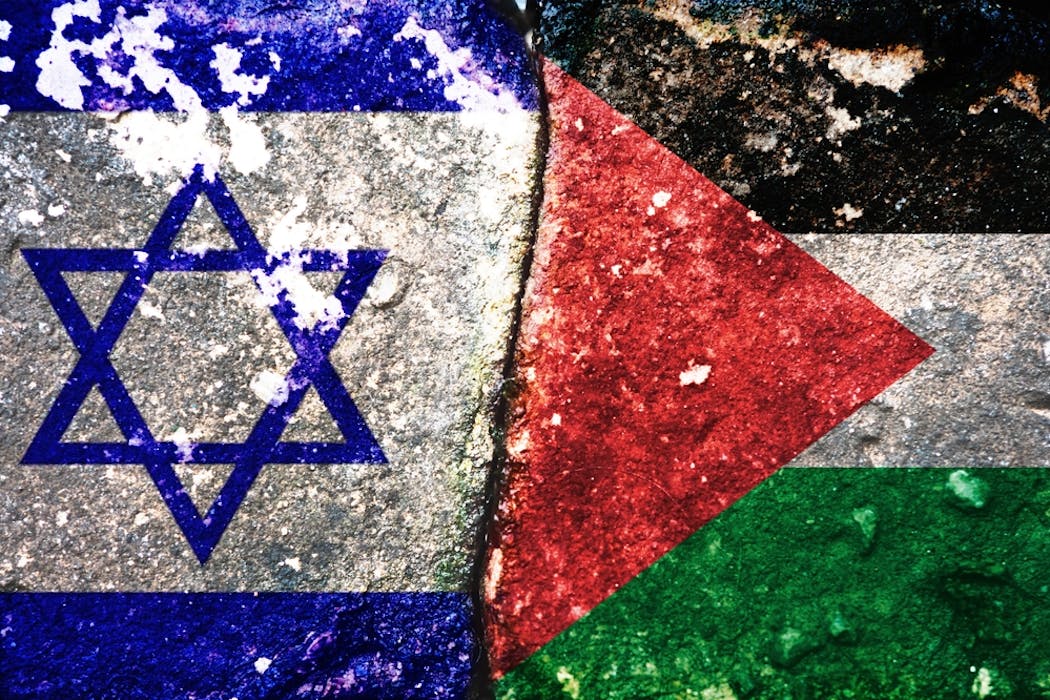
Is the conflict in Eastern Europe a “special military operation in Ukraine” or a “Russian invasion”? And when it comes to events in the Middle East, are we talking about the “Israeli-Palestinian conflict,” the “War on Gaza” or the “Israel-Hamas war”?

As scholars who study international security, we know that how people refer to a war matters. The name may, for example, signal the speaker’s perspective on who is responsible for the fighting and, therefore, to blame for the death and destruction that follows.

We explored this idea as part of a recent analysis of how scholars discussed the U.S. invasion of Iraq in 2003 compared with Russia’s invasion of Ukraine in 2022. The results of our research show that scholars used diametrically opposed language in describing and referring to the two wars. While the vast majority described the conflict between Iraq and the U.S. as the “Iraq war” – referencing just one of the participants – the most common ways of referring to the current conflict in Eastern Europe are variations of the “Russia-Ukraine War” – which includes both participants.

This sparked our interest into delving deeper into war-naming conventions. What we found is that the way wars are referred to in the U.S. – by politician, journalists and in public scholarship – tends to serve state interests and power rather than necessarily reflect the realities of conflicts.

War-naming conventions

There are a number of different ways in which wars are named, but they can be broadly grouped around place, participants or time.

In the first category, you have examples ranging from the “Vietnam War” to the “Falklands War.” Both examples, incidentally, highlight the fact that a war’s name may differ from place to place. The Vietnam War is the “American War” to the Vietnamese, and Argentinians talk of the “War of the Malvinas.”

In the second category are conflicts such as the “Spanish-American War,” the “Franco-Prussian War” and the “Sino-Japanese War” of 1894–1895. These are also subject to some variation, known in France and China as the “War of 1870” and the “Jiawu war,” respectively.

Wars are named after other conventions, too. They can be named after significant factors that make them stand out – examples include holidays in which the conflict took place in the case of the “Yom Kippur War” – or how long they last, such as the “Thirty Years’ War.”

At first look, naming wars after their location, participants, starting date or duration might appear to be an exercise in objective detachment. But examining why one naming convention is used over another can reveal a particular perspective or bias.

Historian Danny Keenan has demonstrated how decisions are made in naming wars that may imply culpability among the actors involved. He notes that what has come to be known as the “New Zealand Wars” was once referred to as “The Māori Wars.”

“It was generally acknowledged that Māori should not bear such responsibility” implied by the earlier name, writes Keenan.

The New Zealand/Māori Wars name change gets at a wider point that naming conflicts after one participant can be problematic, especially when there is a power imbalance.

Take the British naming of their colonial wars after the populations they were subjugating, such as the “Xhosa Wars” or the “Mahdist War.” Naming an interstate war based on the state in which the war is fought – while omitting the name of outside instigators – implies the culpability of that state.

A drawing shows a man in uniform on a horse spearing a man.
A depiction of fighting in the ‘Xhosa Wars.’
Hulton Archive/Getty Images

And more powerful actors, such as colonial powers, have historically been able to make their chosen name stick, obscuring their role in the violence.

When apparent objectivity belies bias

While naming wars after both participants seemingly avoids these biases, what becomes evident is that the order in which participants are listed matters. For example, the “Philippine-American War” – fought between 1899-1902 – may imply that the U.S. engaged in that conflict only in response to the actions of an antagonist, even though it was the U.S. that was seeking to deny the Philippines independence.

The results of our research into the U.S.’s and Russia’s respective invasions of Iraq and Ukraine demonstrate how different naming conventions are used politically.

“Iraq war,” we argue, suggests full culpability on Iraq for the war being fought on its territory, despite Iraq having not attacked the U.S. or its allies. It also entirely omits the U.S., even though it was the invading force.

Russia’s invasion of Ukraine, meanwhile, is referred to by public scholars and media in a variety of ways that emphasize Russia or President Vladimir Putin as an aggressive antagonist. Examples include Russia’s “murderous war on Ukraine”; “Vladimir Putin’s war on Ukraine”; and “Russian war against Ukraine.”

The New York Times and Foreign Policy Magazine include articles about the war under the topic heading “Russia-Ukraine War,” and The Washington Post and the magazine Foreign Affairs do so under “War in Ukraine.”

Although “War in Ukraine” employs the location naming convention, the other headlines and topic headings use the participants convention, leading with Russia as the antagonist. Noticeably absent is any reference to the “Ukraine War.”

What to call the Middle East conflict?

The naming of the current conflict in the Middle East presents its own issues.

The New York Times and Foreign Affairs, both of which we analyzed for our research, as well as other U.S.-based popular news media such as USA Today and Detroit Free Press, all headline their coverage of Gaza and Israel with the “Israel-Hamas War.”

Based on what research tells us regarding naming conventions, what might this tell us?

First, consider the placement of Israel first. This could identify Israel as the aggressor. However, the use of “Hamas” over “Gaza” is noteworthy. Hamas is recognized by the U.S. and most of the Western world as a terrorist organization. As such, placing Israel first actually can be understood as a legitimation of Israel’s violence.

Also, their is no mention of Palestine, Palestinians, Gaza or Gazans.

This is despite Israeli actions long superseding the targeting of Hamas. Israel’s plans now include the full occupation of, at least, large parts of Gaza and the potential displacement of Gaza’s people.

The move away from the use of “Palestinian” cannot, we argue, be assumed to be incidental. Since October 2023, mentions of the “Israeli-Palestinian” conflict have seemingly become rarer, despite the growing, and related, violence in the West Bank and Jerusalem.

Finally, the use of the term “war” in referring to the “Israeli-Hamas war” can itself be problematic as it indicates a certain level of symmetry.

In the current conflict in Gaza, that is not the case: Israel possesses a far superior and advanced military. And since the Hamas attack on Oct. 7, 2023, in which 1,200 Israelis were killed, those killed have nearly entirely been Palestinians – over 63,000 as of September 2025.

The difference in size and capability between Israel’s military and Hamas is such that using the term “war” is, we believe, misleading.

It may be more accurate to describe it as an “occupation” or “a noninternational armed conflict.” A growing number of international bodies are calling it a “genocide.”

Challenging war narratives

How media, scholars and politicians refer to specific wars says a lot about how they would like them to be perceived. It is not coincidence, we argue, that wars and violence perpetrated by the U.S. and its allies are typically named in ways that contribute to a beneficial narrative, while the opposite is true when those deemed U.S. enemies are involved.

Repetition of such names for war and violence can reinforce narratives that serve state interests – it makes sense, therefore, for state officials to propagate names that potentially misinform. When news media and experts do the same, however, it undermines society’s ability to substantially challenge dominant framings in times of war.

The Conversation

The authors do not work for, consult, own shares in or receive funding from any company or organization that would benefit from this article, and have disclosed no relevant affiliations beyond their academic appointment.

ref. When it comes to wars − from the Middle East to Ukraine − what we call them matters – https://theconversation.com/when-it-comes-to-wars-from-the-middle-east-to-ukraine-what-we-call-them-matters-263388

Israel’s attack in Doha underscores a stark reality for Gulf states looking for stability and growth: They remain hostage to events

Source: The Conversation – Global Perspectives – By David Mednicoff, Associate Professor of Middle Eastern Studies and Public Policy, UMass Amherst

Footage from an Israeli strike in Qatar on Sept. 9, 2025. Photo by Security Camera/Anadolu via Getty Images

The oil-rich states of Qatar, Saudi Arabia and the United Arab Emirates have a lot going for them: wealth, domestic stability and growing global influence. In recent months, these Gulf kingdoms also appear closer to something they have long sought: reliable U.S. support that has become stronger and more uncritical than ever, just as Iranian power in the region has significantly degraded.

In Donald Trump, the nonelected Gulf Arab monarchs have an ally in Washington who has largely shed previous American concerns for democracy and human rights. That the American president made his first scheduled international trip of his second term to Saudi Arabia, Qatar and the UAE only underscores their international clout.

Additionally, the popular overthrow of the Assad government in Syria and Israel’s war against Iran and its allies in Lebanon and Yemen have served to greatly weaken Tehran’s perceived threat to Gulf Arab interests.

Yet, as an expert on Middle Eastern politics, I believe Gulf Arab countries must still navigate a regional political tightrope. And as the Israeli targeting of senior Hamas leaders in Qatar on Sept. 9, 2025, shows, events by other Middle Eastern actors have a nasty habit of derailing Gulf leaders’ plans.

How these countries manage four particular uncertainties will have a significant effect on their hopes for stability and growth.

1. Managing a post-civil war Syria

In Syria, years of civil war that had exacerbated splits among ethnic and religious groups finally ended in December 2024. Since then, Arab Gulf countries, which once opposed the Iranian-allied government of Bashar Assad, have been pivotal in supporting new Syrian President Ahmed al-Sharaa. They successfully lobbied the U.S. to drop sanctions.

In addition to sharing mutual regional interests with Sharaa, the leaders of Gulf Arab states want a Syrian state that is free from internal war and can absorb the millions of refugees that fled the conflict to other countries in the Middle East.

Two men shake hands.
Saudi Crown Prince Mohammed bin Salman greets Syria’s interim President Ahmed al-Sharaa in February 2025.
Saudi Ministry of Media via AP

Gulf states can support postwar Syria diplomatically and financially. However, they can’t wish away the legacy of long war and sectarian strife. Israeli attacks on Syrian soil since Assad’s fall, as well as recent outbreaks of fighting in the Sweida region of southern Syria, underscore the ongoing fragility of the Syrian government and concerns over its ability to contain violence and migration outside of its borders.

2. The challenge of regional politics

Syria illustrates a broader policy challenge for Gulf states. As their wealth, military strength and influence have grown, these countries have become dominant in the Arab world.

As a result, Qatar, Saudi Arabia and the UAE have invested billions of dollars in efforts to influence governments and groups across the world. This includes the mostly authoritarian governments in the Middle East and North Africa, such as Egypt’s.

But here, Gulf states are torn politically. If democratic systems form elsewhere in the Arab world, this could encourage Gulf citizens to push for elected government at home. Yet overly coercive Arab governments outside of the Gulf can be prone to popular unrest and even civil war.

Propping up unpopular regional governments risks backfiring on Gulf Arab leaders in one of two ways.

First, it can entice Gulf states into protracted and damaging wars, such as was the case with Saudi Arabia and the UAE’s failed military intervention in Yemen against the Houthis. Second, it can drive a wedge between Gulf states, as is seen with the current conflict in Sudan, in which the Saudis and Emiratis are backing rival factions.

3. Watching which way Iran will turn

Always looming behind complicated Middle Eastern politics is Iran, the historically powerful, populous, non-Arab country whose governing Shiite Islam ideology has been the chief antagonist to the Sunni-led Gulf Arab states since the Iranian Revolution in 1979.

Opposing Gulf Arab and American strategic interests, Iran has for years intervened aggressively in Middle Eastern politics by funding and encouraging militant Shiite groups in Iraq, Lebanon, Yemen and elsewhere.

An assertive Iran has been especially a thorn in the side of Saudi Arabia, which strives to be the dominant Muslim majority power in the region. Dealing with Iran has required careful balancing from Qatar and the UAE, which are more directly exposed to Tehran geographically and have maintained relatively stronger relations.

Given this, Gulf countries may silently welcome the decrease in Iran’s military power in the wake of Israel’s recent war against Iran and its allies, such as Hezbollah in Lebanon, while also fearing further Iranian-Israeli conflict.

At the same time, a less powerful Iran runs two types of new potential dangers for Gulf states. Should Iran become more unstable, the resulting turmoil could be felt across the region.

In addition, should Iran’s military, policy and economic turmoil lead to a new political system, it could disturb Gulf countries. Neither a Muslim majority democratic government nor a more hard-line nationalist variant in Iran would sit well with nearby Gulf monarchs.

Conversely, concerns that the Israeli and U.S. bombing of Iran may actually lead to increased Iranian determination to pursue a nuclear program also worry Gulf leaders.

4. Living with Israel’s military assertiveness

Israel, the unquestioned military power and sole nuclear weapons state in the region, has long posed particularly deep political dilemmas to Gulf Arab states. The current challenge is how to balance the immense global unpopularity of the Israeli government’s war in Gaza – including among Gulf Arab citizens – with common strategic interests the Gulf states hold with Israel.

Gulf Arab leaders face domestic and regional pressure to show solidarity for Palestinians and their aspirations for statehood.

Yet Gulf rulers also share strategic goals with Israel. Along with opposition to Iranian influence, Gulf states maintain strong military links to the U.S, like Israel. They also appreciate the economic and other security value of Israel’s high-tech products, including software used for espionage and cybersecurity.

This helps explain the UAE’s 2019 decision to join the short list of Arab states with full diplomatic relations with Israel. Hamas attacked Israel in 2023 in part to stop Saudi Arabia from following suit – something that might have further sidelined Palestinians’ bargaining power.

Indeed, moves toward open Saudi diplomatic recognition of Israel were stopped by Hamas’ attack and the global backlash that followed Israel’s ongoing devastation of Gaza.

Four men stand in front of flags.
Saudi Crown Prince Mohammed bin Salman, right, welcomes President Donald Trump for the group photo with Gulf Cooperation Council leaders during the GCC Summit in Riyadh, Saudi Arabia, on May 14, 2025.
AP Photo/Alex Brandon

Gulf leaders may still believe that normalized ties with Israel would be good for the long-term economic prospects of the region. And Bahrain and the UAE – the two Gulf Arab states with diplomatic relations with Israel – have not backed away from their official relationship.

Yet expanding open relations with Israel further, and taking in other Gulf states, is unlikely without a real reversal in Israel’s policy toward Palestinians in both Gaza and the West Bank.

All this is more true in the immediate aftermath of Israel’s attack in Qatar – the first time Israel has launched a direct strike within a Gulf Arab state. That action, even if ostensibly directed at Hamas, is likely to exacerbate tensions not only with Qatar but place increasing stress on the calculus allied Gulf Arab countries make in their dealings with Israel.

Tricky way forward for Gulf Arab states

These challenges underscore an inescapable truth for Gulf leaders: They are hostage to events beyond their control.

Insulating them from that reality takes regional unity.

The Gulf Cooperation Council, nearly 45 years old, was established precisely for this purpose. While it remains the most successful regional organization in the Middle East, the GCC has not always prevented major rifts, such as in 2017 when a coalition of Arab states led by Saudi Arabia cut ties with and blockaded Qatar.

The conflict was resolved in 2021. Since then, the six members of the GCC have worked together more closely.

No doubt, rivalries and disagreements still exist. Yet Arab Gulf leaders have learned that cooperation is useful in the face of major challenges. This can be seen in the recent collaborative diplomatic approaches toward Syria and the U.S.

A second lesson comes from the broader Middle East. Key issues are often interdependent, particularly the status of Palestinians. Hamas’ attack on Israel, and the resulting destruction of much of Gaza, resurfaced the deep popularity across the region of addressing Palestinian needs and rights.

The monarchs of the Arab Gulf would like to maintain their unchallenged domestic political status while expanding their influence in the Middle East and beyond. However, even when Gulf leaders wish to be done with the region’s challenges, those challenges are not always done with them.

Isabella Ishanyan, a UMass Amherst undergraduate, provided research assistance for this article.

The Conversation

David Mednicoff held a research grant from the Qatar National Recent Fund from 2013-2016 which has no connection to anything discussed in this article.

ref. Israel’s attack in Doha underscores a stark reality for Gulf states looking for stability and growth: They remain hostage to events – https://theconversation.com/israels-attack-in-doha-underscores-a-stark-reality-for-gulf-states-looking-for-stability-and-growth-they-remain-hostage-to-events-261146

Middle East leaders condemn Israel’s attack on Qatar as Netanyahu ends all talk of Gaza ceasefire – expert Q&A

Source: The Conversation – Global Perspectives – By Scott Lucas, Professor of International Politics, Clinton Institute, University College Dublin

Israel launched an unprecedented airstrike on the Qatari capital of Doha on September 9, the first time it has directly attacked a Gulf state. The “precision strike”, as Israel has called it, targeted a building in which Hamas officials were reportedly discussing a peace proposal brokered by the US.

Al Jazeera has reported that it had been told by a Hamas official that none of its leadership weree killed in the strike.

The Qatari government said it “strongly condemns the cowardly Israeli attack”, which it described as “a blatant violation of international law”. Other Middle East states including Saudi Arabia condemned the Israeli strike, as did the secretary general of the United Nations, António Guterres, who said it was a “flagrant violation” of Qatari sovereignty.

It has also been reported that Israel’s prime minister, Benjamin Netanyahu, informed the White House of Israel’s intentions before carrying out the attack. An Israeli official told local media that the US president, Donald Trump, had given the strike the “green light” but this has not been confirmed.

A statement released by Netanyahu’s office appeared to suggest the strike was at least partly in retaliation for the killing of six Israeli civilians at a bus stop in Jerusalem, for which Hamas has claimed responsibility.

Scott Lucas, a Middle East expert at Dublin City University, spoke to Jonathan Este, The Conversation’s senior international affairs editor, shortly after the attack. He addressed several key questions.

What’s the thinking behind Israel’s strike on Qatar? Why now?

The Israeli government is going for the kill with Hamas. Having staked his political and legal future on the “absolute destruction” of the organisation, Netanyahu cannot agree to a settlement in which it retains any place in Gaza, let alone power.

So he and some of his ministers have not engaged in negotiations for a ceasefire since the start of March. At that point, they pulled out of any discussion of a phase two, resumed the military assault on Gaza, and cut off humanitarian aid. They have only turned it back on in dribs and drabs. Aid distribution has been sporadic and all too often deadly for the people who queue for food. And it’s not enough to prevent widespread famine in Gaza.

But the problem for Netanyahu and his allies is that others continued to push for a resolution – both inside Israel, where citizens are beginning to get sick of endless war, and among Israel’s international allies, who are sickened by the images emerging from the Strip and under pressure from their own populations.

On more than one occasion, Hamas agreed – or at least came close to agreeing – terms put to them by mediators. In August, the Palestinian organisation did so again. At that point, the Israel government had a choice: accept the settlement, get the hostages back and pull back on the plan for a long-term occupation of Gaza. Or try to push aside the settlement while blaming Hamas, then expand its military operations to take over Gaza City.

Netanyahu’s commanders, including the head of the Israel Defense Forces, Eyal Zamir, warned against the assault on Gaza City. Other advisers noted the risk of further international condemnation and the isolation of Israel.

But Netanyahu and hard-right ministers in his government have persisted, urging the prime minister to go for broke. Within minutes of the strike on Doha, finance minister Bezalel Smotrich was on social media praising the attack, writing: “Terrorists have no immunity and will never have immunity from Israel’s long arm anywhere in the world.”

So how to accomplish “absolute” victory? For Israeli hardliners, this means levelling parts of Gaza City while taking out Hamas’s leadership – both to break up the organisation and to ensure that there is no more talk of ceasefire, only capitulation.

What does this mean for the normalisation of relations between Israel and the Gulf States?

There is no normalisation. There probably was none before this attack. The Netanyahu government has decided on a course in Gaza that involves the mass killing of at least 65,000 people, most of them civilians, to displace up to 90% of the population of 2.2 million and to threaten all of them with starvation.

Not even the most cynical Arab government could risk the domestic backlash of continuing with “normalisation” in those circumstances.

So the Netanyahu government is not losing any possibilities with the brazen bombing in a sovereign Arab state. It is trying to set the terms for the future, perhaps a distant one: we’ll come back to normalisation from the position of imposing our will on Gaza, even if you might not have liked it.

Israel said the US president gave the attack the ‘green light’. Where does this leave Washington?

It leaves the Trump administration where it has always been: supporting Israeli actions that have led to the mass killing of people in Gaza. The US president was reportedly briefed on Israel’s intention to strike at Doha – a US ally – before the attack went ahead. Trump’s ally, the Republican speaker of the House of Representatives, Mike Johnson, is now talking about Israel having to contend with “enemies encamped around them and they’re trying to bring peace”.

Yes, Trump has pursued the chimera of a deal which would win him the Nobel peace prize. But when Israel effectively ended the deal at the start of March, the US president provided not only an excuse – Hamas was to blame – but also a rationale. Palestinians could be moved out of Gaza to allow Trump to create his “riviera of the Middle East” – a detailed prospectus for which was obtained and published last week by the Washington Post.

Each time the Netanyahu government has walked away from a peace proposal, Trump and his senior officials have provided them with cover. So, as the Israelis approach their long-term occupation, we are at the same point as we were in March – Trump officials talking about the removal of the civilians.

I doubt this attack will shake that position.

What does this tell us about negotiations over Gaza?

There are no negotiations over Gaza. There is a demand by the Netanyahu government for Hamas’s capitulation. If it does not capitulate, Hamas will be destroyed – no matter how many civilians pay the cost.

This is not just about the approach to Gaza. The Netanyahu government has now decided that its regional objectives will be pursued through “decapitation”.

It has not only tried to destroy the leadership of Hamas, with attacks in Gaza, Iran, Lebanon, Syria and now Qatar. It has killed most of the leadership of Lebanon’s Hezbollah. It laid waste to Iran’s political and military commanders in its 12-day war in June. On August 24, it assassinated Ahmed Ghaleb Nasser al-Rahawi, recognised by the Houthi people as their prime minister, and other senior Houthi officials in Yemen.

The deadly message of the Netanyahu government is clear: no one whom they consider an “enemy” is immune, wherever they are. Negotiations are peripheral, perhaps even irrelevant, to that commitment.

The Conversation

Scott Lucas does not work for, consult, own shares in or receive funding from any company or organisation that would benefit from this article, and has disclosed no relevant affiliations beyond their academic appointment.

ref. Middle East leaders condemn Israel’s attack on Qatar as Netanyahu ends all talk of Gaza ceasefire – expert Q&A – https://theconversation.com/middle-east-leaders-condemn-israels-attack-on-qatar-as-netanyahu-ends-all-talk-of-gaza-ceasefire-expert-qanda-264945

Why painting your home white could help you survive a heatwave

Source: The Conversation – UK – By Rosa Schiano-Phan, Reader in Architecture and Environmental Design, University of Westminster

At a seminar on building cooling strategies in the late 1990s, I vividly remember hearing that “in 30 years time, the climate of London will feel like Marseille’s today”. That warning stuck with me. Back then, it sounded both alarming – and oddly appealing.

Three decades on, it no longer feels theoretical. As a Londoner of Mediterranean origin, I’ve lived through the shift. When I co-wrote The Architecture of Natural Cooling, I drew not only on professional expertise but also on childhood memories of white walls, shady courtyards and shuttered windows. These ancient techniques – once suited to the Mediterranean – now hold lessons for modern Britain, where heatwaves are becoming the new normal.

One of the simplest and most effective ways to cool a building is to change its colour. White surfaces reflect sunlight rather than absorb it, and studies show that painting roofs white or adding some other type of reflective coating can reduce the internal temperatures by more than 1°C and sometimes more than 4°C. They can even lower the surrounding outdoor temperatures by up to 2°C.

That might not sound like much, but across a whole city it can make a real difference, helping to counter the urban heat island effect (where human-made surfaces absorb heat and mean a city is hotter than surrounding countryside) and keep homes more comfortable during the hottest hours of the day.

Seaside scene with white buildings
White roofs and thick walls in Tunisia.
BTWImages / shutterstock

The success of these strategies, however, comes with a caveat. The more low-energy “passive” strategies – shutters, white buildings, ventilation and so on – we adopt in combination the more likely they are to work effectively. A white roof, for example, is more effective if windows stay shut during the hottest hours, with shutters or external shades to keep the sun out.

If you close the windows, you will be better off with heavyweight walls and floors because the materials store coolness from the night air and release it through the day. That’s one reason Mediterranean homes often stay comfortable for longer even in extreme heat.

Night-time ventilation also plays a key role – at least if the air outside actually cools down after dark. In cities like London or Manchester with a strong urban heat island effect reflective roofs and avoiding the waste heat generated by air-conditioning units becomes even more crucial.

What about winter?

Some people may worry that a white roof might make their home colder in winter. But this is a very marginal problem, especially if the roof is well-insulated. How much you’ll need to heat your home is driven by the ability of your home’s outer shell to retain the heat that is already inside, rather than its ability to prevent heat coming from outside.

Rooftop view in winter
In winter, retaining heat is more important than absorbing sunlight.
Multishooter / shutterstock

In northern climates, winter sunlight is weak and often blocked by clouds. If, in a cold climate with sunny skies, you want to harness solar energy for warmth, it’s more effective to let sunlight in through double glazed windows than to rely on darker building materials.

A practical upgrade

Repainting your house white is not excessively expensive, at least compared to the big overall costs involved in heating and maintaining a home. Many homeowners, especially in suburban residential areas in the UK, already choose white finishes when refurbishing.

On flat or low-pitched roofs, reflective coatings can be applied at relatively low cost. For steeply pitched roofs, it is not possible to apply coats of paint as it would soon wear away and look terrible, requiring regular repainting. Tile roofs also need to “breathe” and let moisture out – paint could block this process, leading to damp problems. The best option is to replace dark shingles or slate tiles with more reflective clay tiles that reduce the roof’s surface temperature. This is a more time consuming and expensive option with costs, in the UK, starting from about £125 per square metre of roof.

The climate is changing and there’s no getting away from it. Yet sometimes the best solutions aren’t hi-tech or expensive. A coat of white paint, combined with a few other simple design strategies, could help keep Britain’s homes cooler, cheaper to run and better prepared for the climate changes and high energy prices expected in the decades ahead.


Don’t have time to read about climate change as much as you’d like?

Get a weekly roundup in your inbox instead. Every Wednesday, The Conversation’s environment editor writes Imagine, a short email that goes a little deeper into just one climate issue. Join the 45,000+ readers who’ve subscribed so far.

The Conversation

Rosa Schiano-Phan does not work for, consult, own shares in or receive funding from any company or organisation that would benefit from this article, and has disclosed no relevant affiliations beyond their academic appointment.

ref. Why painting your home white could help you survive a heatwave – https://theconversation.com/why-painting-your-home-white-could-help-you-survive-a-heatwave-264634

Political tensions and border anxiety pushed Canadians away from the U.S. this summer

Source: The Conversation – Canada – By Moira A. McDonald, Associate Professor, Director, School of Tourism and Hospitality Management, Royal Roads University

Global attitudes towards the United States as a tourism destination are plunging. Travel pressures, exchange rate shifts and increasing economic uncertainty have all damaged the reputation of the American travel sector.

Canadian travellers are increasingly turning to domestic destinations instead of heading south. In July, Canada recorded its seventh consecutive month of declining travel by Canadians to the U.S..

Political tensions appear to be playing a role in this shift.
U.S. President Donald Trump’s repeated remarks about wanting to annex Greenland and make Canada the “51st state” continue to strain relations between the U.S. and its allies.


Read more:
Allies or enemies? Trump’s threats against Canada and Greenland put NATO in a tough spot


For travellers, these tensions are one more deterrent for travelling to the U.S. About three-quarters of Canadians say Trump is “dangerous” and favourable views of the U.S. are at an all-time low.

Impact south of the border

This year, many Canadians reconsidered plans to visit the U.S. for business, leisure or school-related excursions, and some also boycotted American products.


Read more:
Canadian retailers are seeing a surge in domestic sales amid the ‘Buy Canadian’ movement


A spring 2025 prediction by Tourism Economics anticipated a 20 per cent drop in Canadian travellers to the U.S.. The U.S. Travel Association trade group warned that even a 10 per cent decrease would translate to two million fewer visits and US$2.1 billion in lost spending.

By the end of the summer, year-to-date Canadian visitation numbers to the U.S. had dropped about 25 per cent, confirming that U.S.-inbound travel continues to under-perform.

These choices also reflect anxiety over border-related issues. Measures such as selected detainment and asking Canadians to register with Homeland Security if they plan to stay in the U.S. for 30 days or more has raised concerns among those accustomed to a less intrusive cross-border experience, with some even describing the U.S. as a “hostile state.”


Read more:
Travelling to the U.S.? Here’s what you need to know about the risks and your rights


U.S. border cities feel the pinch

The consequences of declining travel are being felt most acutely in U.S. border cities that rely heavily on Canadian visitors. Canadians are no longer “flooding the streets of Seattle,” but instead are supporting their own tourism economy.

Cities such as Buffalo, N.Y., hoped to entice Canadians with welcoming billboards and special incentives over the summer. But according to Patrick Kaler, CEO of Visit Buffalo Niagara, it was clear their efforts were not working, and the customary wave of Canadian visitors never arrived.

The ripple effects extend well beyond traditional tourism destinations as well. One New York golf club reported losing US$400,000 in Canadian revenue, for instance.

It’s not just Canadian travellers, either. While Canada has seen an increasing number of European visitors, the U.S. recorded a 17 per cent decline in European arrivals this past spring, also likely due to the Trump administration’s policies and general actions.

Canadian tourism grows stronger

While U.S.-bound travel declines, domestic tourism in Canada is on the uptick. Tourism is the country’s second-largest service export, bringing $31 billion into the country last year, according to Destination Canada.

Unlike traditional exports, where goods are shipped out of the country, tourism brings the world’s travellers to Canada — and increasingly, keeps Canadians exploring at home.

Canadians took a total of 77.4 million trips within Canada in the first quarter of 2025. This shift has been a welcome trend to local tourism organizations and businesses that have been increasingly relying on the support of local travellers.

More Canadians are avoiding U.S. travel amid the ongoing trade war. (Global News)

But the increasing fear and uncertainty of American tariffs, policies and bilateral relationships are also causing unrest among Canadian tourism businesses.

The impact from Trump’s tariffs are felt particularly strongly by many Indigenous business owners who are now navigating inflationary pressures and workforce shortages.

Looking forward

The downturn in U.S.-bound travel could extend beyond the summer as travel trends continue to evolve. The statistics underscore the challenges that the U.S. tourism sector is facing and is likely to continue to face in to the future.

With World Tourism Day approaching on Sept. 27, travel and tourism professionals are encouraged to reflect on the industry’s development.

A central goal of World Tourism Day is to inspire “awareness among the international community of the importance of tourism and its social, cultural, political, and economic value.”

As tourism experts, we continue to promote Canadian generosity through professionals and travellers who keep kindness at the centre of their travel — an action that may be even more important than many realize.

Intentional travel and tourism can foster both peace and understanding. While the focus of World Tourism Day and the United Nations World Tourism Organization is to bring the world closer, this year Canadians worked to bring Canada itself closer together.

The Conversation

Moira A. McDonald is affiliated with Tourism and Travel Research Association Canada (TTRA).

Ann-Kathrin McLean is affiliated with Tourism and Travel Research Association Canada (TTRA).

ref. Political tensions and border anxiety pushed Canadians away from the U.S. this summer – https://theconversation.com/political-tensions-and-border-anxiety-pushed-canadians-away-from-the-u-s-this-summer-254780

Medir (y entender) la incertidumbre para tomar mejores decisiones

Source: The Conversation – (in Spanish) – By Anabel Forte Deltell, Doctora en Matemáticas y profesora en la Universidad de Valencia, Departamento de Estadística e Investigación Operativa, Universitat de València

Es irremediable, nos inquieta no saber. Es una sensación intrínseca al ser humano que suele poner el foco en el futuro –qué pasará mañana–. Pero la incertidumbre no vive solo en el calendario. También se instala en los porqués, en la comprensión de los procesos que desembocan en lo que sucede: ¿por qué mido 1,65 metros? ¿Qué nos lleva –o no– a desarrollar un cáncer? ¿Qué genes influyen en cierta enfermedad? No es solo preguntarse si, al lanzar una moneda, saldrá cara, sino qué mecanismos físicos y contextuales empujan ese resultado y en qué medida lo hacen.

No hay bola de cristal: la realidad es compleja, ruidosa y a veces caprichosa; y nuestro conocimiento resulta inevitablemente limitado. Lo que sí tenemos es un lenguaje para cuantificar esa falta de certeza y convertirla en algo con lo que podamos tomar decisiones: la probabilidad. Y contamos con una disciplina que ancla ese lenguaje a lo que observamos y medimos: la estadística.

La probabilidad de lo que nos preocupa

Quizás aterrizar la idea en un ejemplo nos ayude a entenderlo mejor. Pensemos en el cáncer de pulmón. La preocupación personal sobre la presencia de esta enfermedad se formula en términos binarios –“¿me tocará o no?”–, pero la respuesta a esta duda razonable la encontramos en la probabilidad. No es lo mismo que nos digan que la probabilidad de que desarrollemos esta dolencia es de un 3 %, de un 20 % o de un 80 %, ¿cierto? Ninguna cifra garantiza el desenlace final, pero cambiará las decisiones que tomemos respecto a la frecuencia con la que nos haremos revisiones, nuestros hábitos y nuestras prioridades.

La cuestión está entonces en cómo determinar esa probabilidad. Podemos centrarnos en la búsqueda de estimaciones construidas con datos de personas con condiciones parecidas de edad, exposición ambiental, hábitos, antecedentes, etc., sin perder de vista que se tratará de eso, de una estimación y, como tal, tendrá asociada, de nuevo, cierta incertidumbre. Así pues, un estudio serio no afirmará “su riesgo es de un 3 %” como si fuera una propiedad revelada, sino, “dadas sus características y los datos disponibles, el riesgo está muy probablemente entre un 1 % y un 5 %”. Además, ese “muy probablemente” también puede cuantificarse, tratando de poner rango y coherencia a lo que sabemos y a lo que no.

¿Y de qué depende la calidad de esa estimación? Pues básicamente de tres pilares. Primero, los datos: no se trata solo de cuántos, sino también de cuán bien representan a la población que nos importa. Segundo, el diseño: cómo se recogen esos datos, con qué controles, con qué cuidado para evitar sesgos. Tercero, el modelo: la simplificación matemática y las técnicas estadísticas que usamos para realizar la estimación y de cuya aplicabilidad dependerá obtener mejores o peores resultados con los mismos datos. Unos datos suficientes, obtenidos con un buen diseño y analizados con la técnica correcta nos llevarán siempre un paso más hacia el éxito.

A partir de aquí, asoma otra pregunta: qué variables están realmente implicadas en el riesgo. Volviendo al cáncer de pulmón, podemos valorar factores como tabaco, contaminación, ocupación, actividad física… Pero, ojo, porque ver que dos cosas se mueven juntas no basta para concluir que una causa la otra. Es posible que un gran estudio observacional encuentre que quienes hacen más deporte tienen menos cáncer de pulmón, pero quizá el vínculo real sea que quienes hacen más deporte no fuman.

Es lo que, en estadística, llamamos confusión. Para despejarla, necesitamos trabajar en ese segundo pilar del que hablábamos: diseños más específicos y exigentes nos permitirán elegir mejor qué variables incluir en el modelo o qué técnicas estadísticas serán más efectivas para dar una mejor respuesta con una mejor medida de la incertidumbre.

¿Cuánto me afecta?

Superada esa fase, la siguiente cuestión es la magnitud. No basta con saber si un factor influye, también necesitamos saber cuánto cambia el riesgo. Aquí conviene distinguir entre riesgo absoluto y relativo. Decir que “fumar duplica el riesgo” es hablar en términos relativos: si una persona no fumadora tiene 10 % de riesgo, duplicarlo lleva al 20 %. Suena igual de contundente cuando el riesgo pasa de 0,5 % a 1 %, pero el impacto práctico es distinto.

En este sentido, al hacer referencia al efecto de tal o cual hábito, puede que, en los medios de comunicación, hablen de riesgos relativos, de probabilidades o de ratio de probabilidades, pero lo verdaderamente importante es que esa jerga acabe convertida en números que quien lo lea pueda situar en su vida.

Y una última obviedad que nunca sobra: al ver escrito uno de estos valores, puede que se presente también un porcentaje. Es importante no confundirlo con una probabilidad y, en ese sentido, la probabilidad nunca supera el 100 %. Dar un valor es fácil. Interpretarlo y entender las reglas que lo rigen, ya no tanto.

Breve guía para entender la probabilidad

Volvamos al momento en que le informan de su probabilidad de sufrir cáncer de pulmón. Lo habitual es verla expresada en porcentajes (entre 0 % y 100 %). También puede expresarse en tanto por uno —3 % es 0,03; 20 % es 0,2— o como “x de cada N” donde, por ejemplo, uno de cada 1 000 equivaldría a 0,1 % (0,001) o tres de cada diez, a un 30 %.

El problema surge cuando, en un mismo texto, se mezclan formatos, ya que tendemos a fijarnos más en el total (N) que en la parte (x) y podemos creer que “uno de cada 1 000” supone un riesgo mayor que “uno de cada 100”, cuando en realidad estamos hablando de un 0,1 % frente a un 1 %.

Entendido el número, toca interpretarlo y, para ello, contamos con dos miradas diferentes. La mirada frecuentista entiende la probabilidad como la frecuencia con que veríamos un evento al repetir el proceso muchas veces. Funciona muy bien en contextos controlables y repetibles. Pero al hablar de la probabilidad de lluvia o de que una persona enferme –donde no podemos “repetir” el mismo día o la misma vida–, resulta más natural la mirada bayesiana, que trata la probabilidad como un grado de credibilidad coherente y actualizable con nueva evidencia mediante el teorema de Bayes.

Estas dos perspectivas también ayudan a entender la incertidumbre de las estimaciones. Los rangos de valores plausibles de los que hablábamos antes reciben el nombre de intervalos de confianza bajo el paradigma frecuentista o de intervalos de credibilidad bajo el bayesiano. En ambos casos, nos ayudan a medir la fiabilidad de la estimación. No es lo mismo un riesgo estimado entre 1 % y 5 % que entre 1 % y 10 %. Quizá ambas cifras nos dejen igual de tranquilos ante la enfermedad, pero el primer intervalo es más preciso y, por tanto, más informativo sobre lo que sabemos e indica, posiblemente, mejores datos o un mejor uso de estos.

En definitiva, la incertidumbre está presente en cualquier proceso cotidiano y no es posible eliminarla, pero sí medirla. Al hacerlo la volvemos visible y honesta. Probabilidad y estadística no prometen certezas, pero sí mejores preguntas y decisiones más conscientes. No se trata de controlar un bosque lleno de rincones oscuros sino de caminar por él con mejor criterio.


La versión original de este artículo ha sido publicada en la revista Telos, de Fundación Telefónica.


The Conversation

Anabel Forte Deltell colabora con Telos, la revista que edita Fundación Telefónica.

ref. Medir (y entender) la incertidumbre para tomar mejores decisiones – https://theconversation.com/medir-y-entender-la-incertidumbre-para-tomar-mejores-decisiones-264928

Ventajas de la realidad virtual para la clase de Educación Física

Source: The Conversation – (in Spanish) – By Salvador Pérez Muñoz, Profesor en el área de Educacion Física y Ciencias del Deporte, Universidad Pontificia de Salamanca

Práctica de voleibol con gafas de realidad virtual. sportoakimirka/Shutterstock

Actualmente, la tecnología ha cambiado muchos aspectos en nuestra vida, desde lo que hacemos cada día hasta cómo aprendemos en el colegio. Incluso la Educación Física está cambiando gracias a nuevas herramientas mezclan lo físico con lo digital.

Según nuestra reciente investigación, la realidad virtual, la realidad aumentada y la realidad mixta pueden ayudar a que los estudiantes se sientan más motivados. También pueden mejorar su forma de moverse y aprender. Además, pueden hacer que todos los alumnos participen, sin importar sus necesidades. Así, la clase se vuelve más inclusiva.

Realidad virtual, aumentada y mixta en educación física

Antes de explicar cómo aplicar estas tecnologías, definamos a qué nos referimos con cada una de ellas:

  • La realidad virtual crea un mundo totalmente digital e inmersivo donde la persona puede moverse e interactuar con lo que ve.

  • La realidad aumentada añade imágenes o sonidos digitales al mundo real. No cambia lo que hay alrededor, solo lo mejora. Así, las personas ven más detalles y sienten más interés.

  • La realidad mixta une lo mejor de las dos anteriores: mezcla objetos digitales con el entorno real. Todo ocurre al mismo tiempo y de forma interactiva.


Leer más:
Seis usos de la realidad aumentada en clase con potencial para transformar la enseñanza


Su uso en Educación Física no supone reemplazar el ejercicio con tecnologías, sino justo lo contrario. Dichas tecnologías sirven para hacer la actividad física más divertida y variada, ayudándonos a movernos más.

¿Cómo usarlas?

Existen programas que permiten correr, hacer yoga o corregir posturas. También ayudan a medir cómo lo estamos haciendo. Incluso es posible convertir el ejercicio en un juego.

Todo esto se hace mientras nos movemos, con la ayuda y la guía de un asistente virtual. La experiencia es activa, realista y muy atractiva.


Leer más:
Cómo dar más autonomía a los alumnos en clase de Educación Física


Por ejemplo, FitXR ofrece la posibilidad de entrenar sin salir de casa utilizando gafas de realidad virtual. Esta aplicación es una opción ideal para quienes no tienen tiempo de ir al gimnasio o no se sienten cómodos en ese entorno. Por su parte, Jumpr, FunFit y Starri utilizan la realidad aumentada para realizar ejercicio físico usando el móvil. Otra aplicación que utiliza la realidad mixta es Holofit, con la que ses realizan carreras o ejercicios en entornos virtuales superpuestos al espacio real.

Los beneficios para la Educación Física

  1. Mejora de habilidades para moverse. varios estudios muestran que usar estas herramientas ayuda a mejorar el movimiento. Por ejemplo, con la realidad aumentada, los estudiantes pueden ver en tiempo real si están colocando correctamente sus cuerpos y pueden corregir errores.

  2. Creación de lugares seguros para practicar deportes difíciles o peligrosos, como esquiar o escalar, gracias a la realidad virtual.

  3. Más motivación y ganas de participar. El elemento tecnológico puede hacer que el ejercicio sea más divertido, ya que introducen elementos lúdicos e interactivos. En este sentido, también se ha descubierto que algunos videojuegos que obligan a moverse aumentan el interés y el compromiso por practicar deportes.

  4. Ayuda para estudiantes con necesidades especiales. Estas tecnologías permiten que todos los alumnos puedan participar, incluso quienes tienen dificultades. Se pueden adaptar las actividades para que sean seguras y efectivas para cada persona. Varios trabajos] [muestran] que usar realidad virtual y aumentada mejora la motivación, la memoria y el control del cuerpo en estudiantes con diversidad funcional.

  5. Diseño de clases de manera más personalizada, adaptando la actividad para cada alumno, según su ritmo y nivel.

  6. Beneficios cognitivos. Este tipo de actividades mejora la atención y la memoria, favorece la interacción y estimula la creatividad. Además, crea un buen contexto para usar metodologías activas en las clases de Educación Física.


Leer más:
¿Qué aporta la realidad virtual a los alumnos con dislexia?


Desafíos y cuestiones a tener en cuenta

El uso de esta tecnología en la clase de Educación Física, o para hacer ejercicio en casa, no debe consistir solamente en ponerse unas gafas de realidad virtual y empezar a hacer ejercicio o dárselas a los estudiantes. Es imprescindible disponer de tecnologías específicas, algo que no está al alcance de todo el mundo, y entender lo suficiente para manejar el software. También se necesita un lugar amplio para usarlas bien y muchas de ellas cuentan con opciones de pago que limitan su potencial en la enseñanza de la Educación Física.

The Conversation

Las personas firmantes no son asalariadas, ni consultoras, ni poseen acciones, ni reciben financiación de ninguna compañía u organización que pueda obtener beneficio de este artículo, y han declarado carecer de vínculos relevantes más allá del cargo académico citado anteriormente.

ref. Ventajas de la realidad virtual para la clase de Educación Física – https://theconversation.com/ventajas-de-la-realidad-virtual-para-la-clase-de-educacion-fisica-257664

Más allá del glifosato: radiografía de los pesticidas presentes en los cultivos europeos

Source: The Conversation – (in Spanish) – By Manuel Conde Cid, Investigador postdoctoral en el área de Edafología y Química Agrícola, Universidade de Vigo, Universidade de Vigo

BG Media/Shutterstock

El incremento en la demanda de alimentos debido al crecimiento poblacional, junto con la reducción de tierras cultivables, ha hecho que el uso de pesticidas en agricultura sea esencial para garantizar la seguridad alimentaria. Estos productos desempeñan un papel clave tanto en el aumento del rendimiento agrícola como en la mejora de la calidad de los alimentos. Se estima que reducen en torno a un 30 % las pérdidas de cultivos provocadas por plagas y enfermedades.

Como consecuencia, su uso ha crecido de manera notable en las últimas décadas. A nivel global, el consumo agrícola de pesticidas pasó de 2,8 millones de toneladas en 2010 a 3,5 millones en 2022, lo que supone un incremento del 25 % en apenas 12 años.

El uso de pesticidas en Europa

Según la Organización de las Naciones Unidas para la Alimentación y la Agricultura (FAO), los pesticidas se definen como cualquier sustancia o mezcla de sustancias destinada a prevenir, destruir o controlar plagas. Generalmente, se clasifican según el tipo de organismo que controlan. Los principales grupos son: insecticidas, fungicidas, herbicidas, nematicidas, acaricidas, rodenticidas y bactericidas.

El consumo agrícola de pesticidas en la Unión Europea (UE) supone aproximadamente un 13 % del total mundial. Aunque de manera más moderada que lo observado a nivel global, el uso de estos compuestos en Europa también presenta una tendencia creciente, pasando de 402 229 toneladas en 2010 a 449 038 en 2022, lo que supone un incremento del 12 %.

Este aumento más moderado se debe principalmente a las regulaciones más estrictas en Europa. En este sentido, en 2023 la UE disponía de 444 pesticidas autorizados para el control de plagas, mientras que 954 estaban prohibidos o no aprobados y 43 se encontraban en proceso de evaluación.

Impacto en el medio ambiente y la salud

Aunque los pesticidas han contribuido significativamente a aumentar la producción agrícola, su mala utilización y abuso ha generado importantes preocupaciones ambientales y de salud pública.

Se estima que menos del 15 % de los pesticidas aplicados alcanzan la plaga objetivo, mientras que el resto se dispersa en el medio ambiente, contaminando suelos, aguas y aire. Generan así importantes riesgos para la salud ambiental, tales como toxicidad hacia organismos no objetivo, pérdida de biodiversidad y desarrollo de resistencias en plagas, entre otros.

Además, los residuos de pesticidas pueden incorporarse a la cadena alimentaria a través de la ingesta de cultivos y agua, aumentando el riesgo de enfermedades humanas, como trastornos neurodegenerativos, cardiovasculares, endocrinos, respiratorios, renales, reproductivos e incluso cáncer.


Leer más:
Pesticidas y párkinson: una conexión fuera de toda duda


Pesticidas en campos de trigo europeos

El trigo es uno de los cereales más importantes del mundo y constituye la principal fuente de alimento para casi la mitad de la población mundial. Por eso, en el marco del proyecto SoildiverAgro (liderado por David Fernández Calviño, de la Universidad de Vigo), investigadores de distintos países europeos hemos analizado la presencia de 614 pesticidas en 188 campos de trigo (93 convencionales y 95 ecológicos) distribuidos en ocho países con diferentes climas y tipos de suelos.

Nuestros resultados se han publicado recientemente bajo el régimen de libre acceso en la revista Journal of Hazardous Materials.

Mapa de Europa con puntos de colores que indican la situación de los campos de trigo estudiados
Ubicación de los campos de trigo estudiados y zonas pedoclimáticas (definidas según el clima y el suelo) en las que se encuentran.
Fernández Calviño et al., 2025, CC BY-SA

El 99 % de los campos de trigo bajo agricultura convencional presentó al menos un pesticida. En total, se detectaron 73 compuestos diferentes. Los más frecuentes fueron el óxido de fenbutatín (insecticida) y el AMPA (metabolito del glifosato), ambos presentes en el 44 % de las muestras, seguidos por el herbicida glifosato y el fungicida epoxiconazol, presentes en el 39 % de las muestras.

Otros residuos de pesticidas frecuentemente detectados fueron boscalid, tebuconazol, bixafeno, diflufenican y metabolitos del DDT, siendo detectados en más de un 20 % de las muestras.


Leer más:
Por qué no dejamos de usar el glifosato como herbicida pese a ser probablemente cancerígeno


Los resultados mostraron diferencias notables según la región de Europa. La zona continental (Alemania) registró la mayor presencia de residuos de pesticidas, tanto en cantidad (concentración promedio de 0,46 mg/kg), como en diversidad (promedio de 13,5 pesticidas diferentes por parcela). Le siguieron las zonas atlánticas de Dinamarca y Bélgica.

En el extremo opuesto, la región panónica (Hungría y Serbia) mostró los niveles más bajos (promedio de 0,02 mg/kg por parcela).

Químicos que persisten años después de su prohibición

Un hallazgo preocupante fue que en los campos ecológicos también se detectaron residuos de pesticidas. Concretamente 35 pesticidas diferentes, de los cuales solo uno (Spinosad) está autorizado en agricultura orgánica. Esto indica la persistencia durante años de dichos pesticidas una vez cambiado el sistema agrícola de convencional a orgánico, así como la transferencia de residuos de pesticidas entre diferentes campos agrícolas.

Además, 31 de los compuestos detectados estaban prohibidos en el momento de la realización del estudio. Esto confirma la alta persistencia de ciertos pesticidas, detectables incluso más de 40 años después de su prohibición.

También evaluamos el riesgo ecológico de los diferentes pesticidas detectados. Los pesticidas más preocupantes fueron los fungicidas epoxiconazol, boscalid y difenoconazol, y los insecticidas imidacloprid y clothianidin. Por el contrario, herbicidas como el glifosato y su metabolito AMPA, aunque omnipresentes, mostraron un riesgo ecológico relativamente bajo.

Un riesgo para los ecosistemas y las personas

Los resultados de nuestro trabajo demuestran que los residuos de pesticidas están presentes de forma generalizada en los campos agrícolas de Europa y del mundo. Para mejorar esta situación, es fundamental avanzar hacia un uso más sostenible de estos químicos.

En este sentido, la sustitución de compuestos altamente persistentes y tóxicos por alternativas menos dañinas, como bioinsecticidas, productos derivados de plantas y microorganismos benéficos, puede disminuir considerablemente la contaminación del suelo y del agua, así como el impacto sobre la biodiversidad.


Leer más:
Microorganismos “amigos” como alternativa a los pesticidas químicos


Otra vía complementaria es la promoción de prácticas agrícolas que mejoren la salud del suelo y la resistencia natural de los cultivos, como la rotación de cultivos, la labranza reducida, el uso de coberturas vegetales y la agricultura orgánica certificada. Estas medidas no solo ayudan a reducir la necesidad de pesticidas, sino que también facilitan la degradación y eliminación de los residuos existentes en el suelo, limitando su transferencia a otros ecosistemas y a la cadena alimentaria.

La combinación de regulación estricta y adopción de buenas prácticas agrícolas constituye, por tanto, un camino prometedor para minimizar los riesgos de los pesticidas mientras se mantiene la productividad agrícola.

The Conversation

Manuel Conde Cid recibe fondos de Xunta de Galicia (Axudas de apoio á etapa de formación posdoutoral).

ref. Más allá del glifosato: radiografía de los pesticidas presentes en los cultivos europeos – https://theconversation.com/mas-alla-del-glifosato-radiografia-de-los-pesticidas-presentes-en-los-cultivos-europeos-264288