Une pause au travail ? Oui, mais pas n’importe laquelle !

Source: The Conversation – France in French (2) – By Cyril Couffe, Chercheur associé à la Chaire "Talents de la transformation digitale", Grenoble École de Management (GEM)

Les questions d’attention et de concentration au travail sont primordiales, à la fois pour la performance et pour le bien-être des salariés. Plus les tâches à effectuer sont longues et complexes, plus nous « consommons » de l’attention. Au fur et à mesure, le risque de faire des erreurs augmente et on devient même plus long pour effectuer nos tâches, plus mollassons…

Comment combattre ces effets négatifs ? Beaucoup de recettes peuvent être utilisées pour y remédier, de la pause cigarette à la pause sociale (parler avec ses collègues) en passant par se lever et marcher. Mais toutes les pauses ne se valent pas pour régénérer nos ressources : avec les chercheurs de la Chaire « Talents de la transformation digitale » de Grenoble École de Management nous nous sommes penchés sur le sujet.

Quelles pauses adopter ?

Pour comprendre l’impact des pauses sur la régénération des sources attentionnelles, plusieurs études ont été mises en place et se poursuivront encore. L’un des objectifs principaux de ce travail qui se fera en plusieurs étapes, est de caractériser des pauses compatibles avec le travail, efficaces et simples d’utilisation.

L’une des pistes les plus prometteuses dans ce domaine concerne le « réseau par défaut », une découverte récente en neurosciences. On a en effet constaté que le cerveau semble travailler même quand on ne fait rien. Être dans la lune, divaguer mentalement pourrait ainsi amener une régénération des ressources et une meilleure intégration des informations. Nous avons donc voulu vérifier si ces moments d’errance mentale pouvaient améliorer la qualité des pauses au travail.

Au cours d’une première étude, des participants ont été confrontés à une tâche longue, pénible et coûteuse, inspirée des travaux de Niels Taatgen : une tâche de gestion de planning d’une durée moyenne de 45 minutes. Des compétences de planification et de réflexion étaient requises chez ces participants qui devaient délivrer une performance optimale. Le niveau de réussite était mesuré tout au long de la tâche.

Les participants étaient répartis en trois groupes : un groupe qui effectuait la tâche sans aucune pause, un groupe avec une mauvaise pause et un groupe avec la pause supposée optimale. La mauvaise pause impliquait de se concentrer intensément sur une autre tâche tandis que la bonne pause permettait des moments d’errance mentale.

Les données obtenues ont mis en avant deux effets intéressants. En premier lieu, le simple fait d’avoir eu deux fois 60 secondes de pause a provoqué une augmentation de près de 10 % de bonnes réponses par rapport aux autres groupes. Ensuite, la mauvaise pause, coûteuse elle aussi en ressources attentionnelles, n’a pas aidé à régénérer les ressources, comme si les participants n’en avaient même pas eu ! Cela suggère donc que les personnes qui prennent des pauses en consultant leur smartphone ou en lisant leurs mails ne prennent en réalité aucun moment de répit cognitif…

Evaluer notre ressenti

Une autre manière de caractériser les pauses pour évaluer le ressenti des participants fut de les questionner sur leur ressenti. Tous ont rempli le NASA TLX, un formulaire d’évaluation de la charge cognitive de la tâche de gestion de planning. Les résultats montrent que les bonnes pauses ont également amélioré leur ressenti en termes d’effort cognitif. Les participants se sont donc sentis soulagés !

Pour mettre en pratique concrètement ces résultats, il ne faut pas sous-estimer l’effet puissant de notre réseau par défaut. Lorsque l’esprit vagabonde, cela favorise les instants de créativité, les moments eurêka. Ainsi, il faut s’accorder davantage de moments « dans la lune » puisque cela nous soulage, améliore notre performance et accélère notre travail ! Plutôt que de tenter de travailler cinq heures d’affilée sans pause, retenez que vous pourriez être davantage efficace en travaillant avec des pauses et pourriez faire tout autant en quatre heures avec des courtes pauses où l’esprit vagabonde !


Les data visualisations ont été réalisées par Alexandre Léchenet.

The Conversation

Cyril Couffe travaille pour la chaire “Talents de la Transformations Digitale” au sein de Grenoble Ecole de Management, financée par Orange et e-nergys/Socomec. Il est également membre du comité scientifique de My Mental Energy Pro, qui propose des solutions digitales promouvant le bien-être et l’efficacité du cerveau au travail.

ref. Une pause au travail ? Oui, mais pas n’importe laquelle ! – https://theconversation.com/une-pause-au-travail-oui-mais-pas-nimporte-laquelle-82608
Baromètre de l’énergie : le Brexit affectera d’abord le Royaume-Uni

Source: The Conversation – France in French (2) – By Joachim Schleich, Professor of Energy Economics, Grenoble École de Management (GEM)

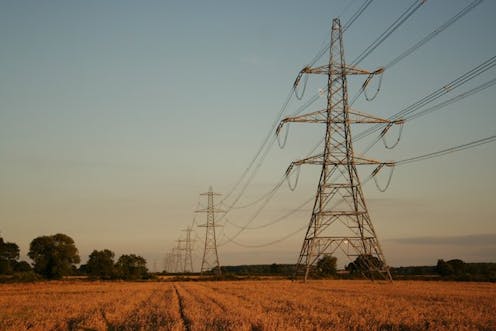
Ligne à haute tension en Grande-Bretagne. Richard Croft/wikimedia, CC BY-SA

Il y a environ un an, le 23 juin 2016, une petite majorité d’électeurs britanniques ont choisi de quitter l’UE. Alors que sa dimension énergétique a été peu présente dans les débats, le Brexit pourrait avoir des répercussions sur les marchés de l’énergie au Royaume-Uni et dans les autres États
membres de l’UE. Le baromètre de l’énergie de Grenoble École de Management (GEM) de juin 2017 a sondé les experts sur ces questions.

Le poids du Brexit sur l’énergie outre-Manche

Réponses d’un panel d’experts en énergie à la question : « Pensez-vous que la sortie du Royaume-Uni du marché unique européen de l’énergie affecterait plus négativement le Royaume-Uni ou l’Union européenne ? » Source : Baromètre de l’énergie GEM, été 2017.

Jusqu’à ce qu’il y ait plus de certitude sur les termes du Brexit, les six projets d’interconnexion planifiés reliant le Royaume-Uni
et le réseau continental risquent d’être retardés. À court terme, cela pourrait avoir une incidence sur la sécurité de l’approvisionnement au Royaume-Uni, ainsi que limiter les arbitrages et en conséquence maintenir des prix de l’électricité élevés au Royaume-Uni. À moyen terme, la sortie du Royaume-Uni devrait augmenter les coûts de coordination pour la construction et l’exploitation de ces interconnexions.

Vers un recul des investissements au Royaume-Uni

Réponses d’un panel d’experts en énergie à la question suivante : « Si le Royaume-Uni sort du marché unique européen de l’énergie, dans quelle mesure pensez-vous que cela conduira les entreprises françaises à modifier leurs activités au Royaume-Uni ? » Source : GEM.

Plus des trois quarts de notre panel s’attend à un désinvestissement partiel des entreprises françaises. La négociation des conditions du Brexit a déjà envoyé des signaux négatifs aux investisseurs étrangers. Les incertitudes réglementaires et de marché qui accompagnent le Brexit, ainsi que la perte de l’UE en tant que source de financement nuisent à la confiance des investisseurs. Les projets nucléaires et éoliens, qui sont particulièrement intensifs en capital, risquent d’être particulièrement exposés.

Peu d’effets prévus sur les prix de l’énergie en France

Réponse d’un panel d’experts en énergie à la question : « Quel serait l’impact de la sortie du Royaume-Uni du marché unique européen de l’énergie par rapport au scénario inverse (c’est-à-dire, le RU reste dans le marché unique européen de l’énergie) sur… » Source : GEM.

Environ les trois quarts des répondants pensent que la sortie du Royaume-Uni du marché unique de l’énergie n’aurait pas d’effet sur la sécurité de l’approvisionnement de gaz naturel ou d’électricité en France comparé à un scénario où le Royaume-Uni serait resté. De la même manière, environ les deux tiers des experts pensent que la sortie du Royaume-Uni n’aurait pas d’effet sur le prix du gaz
naturel ou de l’électricité en France.

Les pays européens devront réduire davantage leurs émissions de CO2

Réponse d’un panel d’experts en énergie à la question : « Comment pensez-vous que le Brexit affectera les objectifs des pays membres d’une part et de l’Europe d’autre part ? » [L’UE prévoit une réduction de 40 % des émissions de gaz à effet de serre pour l’année 2030 par rapport aux niveaux de 1990. NDLR] Source : GEM.

Une grande majorité de nos experts en énergie (près de 80 %) anticipent que l’objectif de l’UE pour 2030 demeurera inchangé. En conséquence, les autres États membres devront compenser le départ du Royaume-Uni en augmentant leur propre objectif.


Ces résultats sont basés sur une enquête qui a été menée en mai 2017 et comprenait 83 participants opérant dans l’industrie, la science, et l’administration publique en France.

The Conversation

Les auteurs ne travaillent pas, ne conseillent pas, ne possèdent pas de parts, ne reçoivent pas de fonds d’une organisation qui pourrait tirer profit de cet article, et n’ont déclaré aucune autre affiliation que leur organisme de recherche.

ref. Baromètre de l’énergie : le Brexit affectera d’abord le Royaume-Uni – https://theconversation.com/barometre-de-lenergie-le-brexit-affectera-dabord-le-royaume-uni-80501

From pop songs to baby names: How Simeulue Island’s ‘smong’ narrative evolves post-tsunami

Source: The Conversation – Indonesia – By Alfi Rahman, Lecturer at Faculty of Social and Political Sciences, Universitas Syiah Kuala, Director of Research Center for Social and Cultural Studies (PRISB) Universitas Syiah Kuala, and Researcher at Tsunami and Disaster Mitigation Research Center (TDMRC), Universitas Syiah Kuala

Simelulue men gather to perform ‘nandong,’ a traditional local song. (Jihad fii Sabilillah/Youtube), CC BY

20 years have passed since the Aceh tsunami, leaving deep scars on Indonesia, especially for those directly affected. Aceh was also recovering from a three-decade armed conflict between the Free Aceh Movement and the national government

Throughout December 2024, The Conversation Indonesia, in collaboration with academics, is publishing a special edition honouring the 20 years of efforts to rebuild Aceh. We hope this series of articles preserves our collective memory while inspiring reflection on the journey of recovery and peace in the land of ‘Serambi Makkah.’


Off the southern coast of Aceh lies Simeulue, a small island with a powerful story of survival. When the devastating Indian Ocean tsunami killed hundreds of thousands across the region in 2004, only five people died on Simeulue — some say just three.

This remarkable survival was credited to a local wisdom called smong — their term for tsunamis in the Simeulue language — that taught them to read nature’s warning signs and escape to safety.

Passed down through generations since a previous tsunami struck in 1907, smong describes the signs of an upcoming ghostly wave: a strong earthquake and the receding of seawater. This knowledge becomes a survival guide that directs them to move away from the coast immediately or head to higher ground.

Two decades after the 2004 disaster, our research shows that this life-saving knowledge is transforming, reflecting broader social shifts and information and communication technology development. It is no longer told only through nafi-nafi (oral storytelling) but adapting to new channels, from traditional songs to pop music and even into children’s names.

From tradition to transformation

Our study – spanning from 2016 to 2023 and involving interviews with 18 participants – captures how smong evolves over time. Smong, for instance, finds its way to nandong, Simeulue’s traditional songs that now incorporate lyrics about the life-saving local wisdom. A local artist said:

After the 2004 tsunami, we adapted the smong story into nandong. This became a new way to convey the ‘smong’ message, ensuring it remains relevant and easy to remember.

One popular nandong lyric goes:

Linon uwak-uwakmo (The earthquake rocks you like a cradle)

Elaik kedang-kedangmo (Thunder beats like a drum)

Kilek suluh-suluhmo (Lightning flashes like your lamp)

Smong dumek-dumekmo (The tsunami is your bathing water).

Video containing song or ‘nandong’ about ‘smong’

But even as Simeulue’s younger generation embraced modern influences, smong kept up. Local artists began creating pop songs in Devayan, one of the island’s local languages. The catchy tunes brought smong into classrooms, as a 23-year-old local testified:

I first heard a ‘smong’ song at school. The lyrics were simple but clear. They told me exactly what to do if a tsunami came.

A children’s tale telling a stort about ‘smong’

Smong as a symbol of resilience

Today, smong is more than a safety warning; it symbolises the island’s strength and identity. In some families, smong even lives on in names.

One grandmother named her grandson “Putra Smong” (smong’s son) as a tribute, saying

His name reminds us of the wisdom that saved our lives.

The challenge of preservation

Despite its transformation, preserving the smong narrative faces challenges that risk eroding this customary knowledge.

The biggest challenge is the shift in lifestyle and culture among Simeulue’s youth. Today’s younger generation is more familiar with digital technology than oral traditions. A mother said:

In the past, our elders would tell ‘smong’ stories every evening after Maghrib (dusk) prayers. Now, children are too busy with their gadgets.

Globalisation also brings external cultural influences, diverting the attention of Simeulue’s youth from the local heritage. Many young people grow up with limited knowledge of traditions like nafi-nafi.

Another major challenge is the declining use of local languages such as Devayan, Sigulai, and Lekon in daily conversations. Since smong originates from these languages, preserving it relies on their continued use.

Our observation concludes that the transmission of smong narratives remains sporadic. Its spread often depends on individual or small group initiatives and sometimes awaits external interventions.

Without concrete efforts, the smong narrative risks fading and being forgotten by future generations. A local activist stated:

I once proposed building a ‘smong’ monument to remind the younger generation, but the idea has yet to be realised.

Hope for continuity: Bridging tradition and modernity

The elders of Simeulue firmly believe that smong is a heritage that must be safeguarded. An 80-year-old community elder expressed his hope for future generations to keep smong alive.

As long as the ‘smong’ story exists, we will remain safe. But if this story is lost, we will lose our most precious wisdom and treasure.

To keep smong alive, educators and community leaders are looking to the future. Some propose integrating smong into school curriculum, ensuring every child knows its lessons. A teacher said.

‘Smong’ isn’t just a story. It’s a life-saving guide that must be passed on to every generation.

Technology can also be an important means of preserving the native understa. Digital videos, disaster simulations, and interactive storytelling could bring smong to a tech-savvy audience, making it relevant today.

As we hope these approaches will bridge the old tradition with modern needs, smong transformation highlights that it is not just a relic from the past. Its narrative must evolve to adapt to the times, ensuring its treasured knowledge remains alive amid social changes.

In the face of ongoing disaster threats, particularly in Indonesia’s Ring of Fire, smong offers a valuable lesson on how preserving local wisdom can form the foundation for disaster preparedness.

The Conversation

Alfi Rahman receives funding from the Ministry of Education, Culture, Research and Technology of Indonesia for this research (grant number 0168/E5/PG.02.00.PL/2023 and 094/E5/PG.02.00.PL/2024).

Muzayin Nazaruddin tidak bekerja, menjadi konsultan, memiliki saham, atau menerima dana dari perusahaan atau organisasi mana pun yang akan mengambil untung dari artikel ini, dan telah mengungkapkan bahwa ia tidak memiliki afiliasi selain yang telah disebut di atas.

ref. From pop songs to baby names: How Simeulue Island’s ‘smong’ narrative evolves post-tsunami – https://theconversation.com/from-pop-songs-to-baby-names-how-simeulue-islands-smong-narrative-evolves-post-tsunami-246153

Acehnese women: Crucial role in peacebuilding overlooked, discriminated by local regulations

Source: The Conversation – Indonesia – By Suraiya Kamaruzzaman, Dosen Fakultas Teknik / Kepala Pusat Riset Perubahan Iklim USK, Universitas Syiah Kuala

Bithography/Shutterstock

20 years have passed since the Aceh tsunami, leaving deep scars on Indonesia, especially for those directly affected. Aceh was also recovering from a three-decade armed conflict between the Free Aceh Movement and the national government

Throughout December 2024, The Conversation Indonesia, in collaboration with academics, is publishing a special edition honouring the 20 years of efforts to rebuild Aceh. We hope this series of articles preserves our collective memory while inspiring reflection on the journey of recovery and peace in the land of ‘Serambi Makkah.’


Acehnese women have long been integral to the history of their region, particularly after the 2004 tsunami, one of Indonesia’s deadliest natural disasters, and the Helsinki Peace Agreement, which ended years of conflict between the government and the Free Aceh Movement (GAM). Despite their crucial contributions to rebuilding and fostering peace, women in Aceh still face major challenges in ensuring that the peace achieved includes their needs and rights.

Their efforts often go unrecognised, and the policies that shape their lives fail to address their realities. In some cases, these policies actively discriminate against women.

Policies that marginalise women

As the conflict in Aceh escalated into firefights, lasting over a decade of 1989-2005, many women became primary breadwinners, ensuring their children’s education and providing emotional support to their families. Around 2,000 women actively participated in the fight, picking up arms as combatants.

In the years following the 2004 tsunami and the 2005 Helsinki Peace Agreement, some progress was made to include women in policy-making processes. However, the outcomes have been unremarkable. Policies implemented after the peace agreement rarely put women’s needs first or acknowledged their efforts.

For instance, Aceh’s 2009 Qanun–a regulation unique to Aceh–aims to promote women’s empowerment and protection, but its implementation remains weak. Women have little say in decision-making, and their representation in province, district, and city-level leadership posts remains minimal.

Here are some examples of how women in Aceh have been sidelined in decision-making, discriminated against in their daily lives and frequently harassed:

  • Absent in politics: In 2017, only one woman was elected deputy mayor among 23 district leaders. Similarly, just two out of 65 top provincial officials were women. These figures reflect a stark imbalance, especially when compared to the substantial roles women played during the conflict and its aftermath.

  • Clothing guideline: Regulations ostensibly implemented under Islamic law often restrict women’s freedoms. For example, West Aceh’s 2010 regulation requires women to wear skirts, prohibiting the use of trousers despite their roots in traditional Aceh’s attire. Women become subjects of public inspection, and violations ends with them not receiving public services that should be open for any citizens.

  • Discriminatory norms and limiting women’s freedom: In Lhokseumawe, a 2013 circular mandated women ride sidesaddle on motorcycles, even though such a position increases the risk of accidents. Similarly, a 2018 directive in Bireuen forbids women from being served in cafes after 9 PM without a male guardian and bans women from sitting with unrelated men.

  • Gender-based violence: Aceh also faces high rates of violence against women. Between 2019 and 2023, more than 5,000 cases of violence against women and children were reported. Shockingly, Aceh has the highest number of rape cases in Indonesia.

  • Insufficient support for victims: Despite the severity of the issue, support for survivors remains inadequate. From 2020 to 2024, only 0.12% of Aceh’s provincial budget was allocated to the Women’s Empowerment and Child Protection Agency. While this allocation has increased slightly over time, it is still lacking to address the needs of women, particularly those who suffered from violence and the conflict.

Young women as the agents of change

The younger generation, particularly Gen Z, offers hope for a brighter future. Acehnese young women are increasingly leveraging digital platforms to advocate for their rights and challenge societal norms. Their ability to connect with global networks gives them tools to amplify their voices and demand equality.

This new generation has the potential to drive meaningful change, but they face entrenched patriarchal norms that require dismantling. To achieve substantial peace and gender equality in Aceh, empowering young women as agents of change and supporting their initiatives to create a more inclusive society is essential.

To ensure that Aceh achieves lasting peace that benefits everyone, several steps are necessary:

  • Inclusive policy-making: Women must be included in all decision-making processes, especially those related to peacebuilding and post-conflict recovery.

  • Reforming discriminatory policies: Laws restricting women’s rights must be repealed to create a more equitable environment.

  • Comprehensive support for survivors: Addressing the needs of survivors of violence through legal, medical, and psychological support is crucial.

  • Strengthening Legal Protections: Laws like Aceh’s Qanun Jinayah (Islamic Criminal Law) should be revised better to protect women, particularly victims of sexual violence.

Acehnese women have demonstrated remarkable resilience and strength throughout the region’s history. By ensuring their voices are heard and their rights respected, Aceh can move closer to achieving true peace and equality for all its citizens.

The Conversation

Suraiya Kamaruzzaman tidak bekerja, menjadi konsultan, memiliki saham, atau menerima dana dari perusahaan atau organisasi mana pun yang akan mengambil untung dari artikel ini, dan telah mengungkapkan bahwa ia tidak memiliki afiliasi selain yang telah disebut di atas.

ref. Acehnese women: Crucial role in peacebuilding overlooked, discriminated by local regulations – https://theconversation.com/acehnese-women-crucial-role-in-peacebuilding-overlooked-discriminated-by-local-regulations-246240

Aceh Tsunami: Monuments help to remember disasters – and forget them

Source: The Conversation – Indonesia – By Muzayin Nazaruddin, Dosen Program Studi Ilmu Komunikasi, Universitas Islam Indonesia (UII) Yogyakarta

20 years have passed since the Aceh tsunami, leaving deep scars on Indonesia, especially for those directly affected. Aceh was also recovering from a three-decade armed conflict between the Free Aceh Movement and the national government

Throughout December 2024, The Conversation Indonesia, in collaboration with academics, is publishing a special edition honouring the 20 years of efforts to rebuild Aceh. We hope this series of articles preserves our collective memory while inspiring reflection on the journey of recovery and peace in the land of ‘Serambi Makkah.’


In the aftermath of the 2004 Indian Ocean Tsunami, the Acehnese interpreted the disaster in various ways.

Initially, the tsunami was interpreted as a punishment or warning from God. Over time, a collective interpretation of the disaster emerged: “The tsunami as a test from God”.

This later narrative was compelling enough to accelerate the post-tsunami recovery process. People in Aceh moved past the tsunami trauma by believing their deceased family members were martyrs who deserved a place in heaven, while those who survived were given the opportunity by Allah to live better lives.

The process of forming this narrative is called memory canonisation. It occurs when the government and ruling elites impose a specific interpretation or narrative of a disaster, including what to remember and how to remember it.

Memory canonisation is evident in the creation of disaster monuments and commemoration events, including in Aceh. Unfortunately, many survivors feel detached from the monuments because they do not evoke personal memories of the tsunami.

Memory canonisation through monuments

Constructing permanent memorials after a disaster is a common trend in a modern society. Many tsunami monuments exist in Aceh, and some have even become tourist destinations.

Tsunami monuments can be divided into two categories based on the construction.

First, monuments built from tsunami debris that are deliberately maintained, modified, or enhanced with certain elements. Examples include the stranded electric-generator ship (the PLTD Apung), the ship on the top of a house in Lampulo, and the tsunami debris at the Rahmatullah Mosque in Lampuuk.

Second, monuments intentionally designed and constructed as new buildings after the tsunami, such as the Aceh Tsunami Museum and the Tsunami Poles erected in over 50 locations across Banda Aceh and Aceh Besar.

The establishment of disaster memorials is always political. Disaster monuments represent how governments and elites promote specific interpretations as dominant. This is achieved through specific architectural designs or curated narratives in the monument.

However, the memory canonisation process is never final. Once established, each disaster monument becomes a place to form, strengthen, modify, alter, and revise the interpretation of the disaster.

How monuments affect Acehnese memory – or not

In a post-disaster situation, the affected community faces ‘push and pull’ between remembering and forgetting the disaster. They must let go of trauma to move forward while preserving disaster memories to honour victims and enhance future preparedness.

The memory of the disaster resides in the back of their mind, but not constantly remembered in everyday life. It will move to the surface as an active memory only when triggered by certain factors, such as a place, object, or event. This memory closely relates to how the survivors give meaning to the disaster.

In everyday life, survivors interact with disaster monuments in various contexts –for instance, as a source of income or a place for leisure. Thus, the meaning of a disaster monument can vary, even becoming completely unrelated to its creators’ narratives and original goals.

Preliminary findings from my ongoing research in Aceh show that among survivors, tsunami memories are often triggered by specific places associated with their experiences. These include the house where they found safety, the coastal area that swept them away, or the ruins of their homes. I refer to these as “the forgotten memories of the tsunami.”

Since many tsunami monuments were erected without involving local residents, they feel barely connected, let alone have a sense of ownership, towards the monuments. For survivors, the established monuments do not trigger their memories of the tsunami.

Disaster monument for disaster education

Today, 20 years after the tsunami, we can still meet survivors who offer valuable and insightful stories about starting over, rebuilding their homes and villages, and cultivating cultural awareness about tsunamis while embracing vulnerability.

However, once these survivors pass away, future generations will lose access to primary sources of learning about the tsunami. This includes new inhabitants who moved to Aceh after the tsunami and rent houses in coastal areas.

They will, therefore, depend on the tsunami memorials around them, though many have been neglected.

To address these risks, I recommend two measures.

First, we can document the “forgotten tsunami memories” creatively through formats like documentary videos, comics, photos, social media content, or other mediums that highlight stories offering insights into disaster risk reduction and education for younger generations.

Second, we must encourage sustainable and meaningful interactions between locals and tsunami monuments. Disaster memorials serve their purpose best — preserving the memory of the disaster and educating younger generations — when they remain relevant to residents’ daily activities.

Locals’ active participation is essential in Aceh, including school visits and involvement in preservation and curation efforts.

These measures aim to foster a sense of ownership among residents of the tsunami monuments in their neighbourhoods. They encourage voluntary maintenance of the monuments and make them integral to disaster risk reduction efforts.

The Conversation

Muzayin Nazaruddin tidak bekerja, menjadi konsultan, memiliki saham, atau menerima dana dari perusahaan atau organisasi mana pun yang akan mengambil untung dari artikel ini, dan telah mengungkapkan bahwa ia tidak memiliki afiliasi selain yang telah disebut di atas.

ref. Aceh Tsunami: Monuments help to remember disasters – and forget them – https://theconversation.com/aceh-tsunami-monuments-help-to-remember-disasters-and-forget-them-246251

Acehnese women sidelined from decision-making despite past tragedy and conflict

Source: The Conversation – Indonesia – By Norma Susanti RM, Peneliti di Tsunami and Disaster Mitigation Research Center (TDMRC) dan Pusat Riset Ilmu Sosial dan Budaya (PRISB) Universitas Syiah Kuala, Universitas Syiah Kuala

20 years have passed since the Aceh tsunami, leaving deep scars on Indonesia, especially for those directly affected. Aceh was also recovering from a three-decade armed conflict between the Free Aceh Movement and the national government

Throughout December 2024, The Conversation Indonesia, in collaboration with academics, is publishing a special edition honouring the 20 years of efforts to rebuild Aceh. We hope this series of articles preserves our collective memory while inspiring reflection on the journey of recovery and peace in the land of ‘Serambi Makkah.’


The devastating 2004 Indian Ocean Tsunami remains etched in the memories of many,especially in Aceh, where the disaster claimed hundreds of thousands of lives. Among the casualties, women were disproportionately affected by a four-to-one ratio.

Twenty years later, the struggle to guarantee women’s rights continues to face significant hurdles. Despite the historical records of women’s leadership in shaping the region and the impacts bore by women in the tragedy, their involvement in modern Aceh’s development remains minimal.

Disaster recovery: Shifting paradigms

Aceh has a remarkable history of female leadership, with figures such as Cut Nyak Dhien, Cut Nyak Meutia, Laksamana Keumalahayati, Pocut Baren, and Tengku Fakinah playing pivotal roles in defending the region against Dutch colonial forces.

Even further back in history, Aceh witnessed the reign of formidable female rulers such as Sultanah Tajul Alam Safiatuddin (1641–1675) and Nurul Alam Naqiatuddin (1675–1678), among others, who led the Aceh Darussalam Kingdom—an influential Islamic power in Southeast Asia.

Fast-forward to modern history, the prolonged armed conflict between the Free Aceh Movement (GAM) and the Indonesian Government (1976-2005) also highlighted the crucial role of women. When many men fled for safety, grassroots women stood firm, shouldering dual domestic and public responsibilities. They negotiated with military forces to ensure village safety, advocated for the release of detained family members, and secured food for their communities despite immense challenges.

This narrative — documented in personal accounts,research, and reports — reveals the depth of women’s contributions to their communities amidst adversity.

Unfortunately, the resilience of Acehnese women remains unacknowledged post-tsunami and conflict. Initiatives to involve women in development are concentrated in the capital, Banda Aceh, while their representation in politics is liminal.

A dedicated space for women: The MUSRENA initiative

In Banda Aceh, the government has taken significant steps to promote women’s participation in development planning. One notable initiative is the establishment of MUSRENA, a special women’s forum designed to gather and integrate women’s proposals into local development plans. Funded by regional budgets and village allocations, these forums provide a platform for women to articulate their needs and experiences.

The outcomes from MUSRENA dialogues are compiled in stages, from the village to the municipal level, ensuring they become part of the major decisions agreed upon in each level’s planning forum.

The MUSRENA initiative owes much to the leadership of Illiza Sa’aduddin Djamal, who served as Banda Aceh’s deputy mayor between 2007 and 2014. Under her guidance, the forum was institutionalised through regulations, ensuring its sustainability.

However, this innovative model has yet to be widely adopted by other regions. To maximises its output, MUSRENA needs capacity-building activities accessible to women from diverse backgrounds and serves as a strategy to increase the number of women leaders.

Women in politics: Gaps in representation

The representation of women in Aceh’s political and governance structures remains limited. Between 2014 and 2019, only 12 women served in Aceh’s 81-member legislative council, but this number further dropped to eight in the 2024 election — far below the minimum representation threshold of 30%. This underscores the persistent challenges faced by women in gaining political footholds.

The lack of representation is also evident in Aceh Provincial Government. Women occupy just only 5 out of 62 senior roles and 49 out of 283 mid-level roles, highlighting the stark disparity between men and women in leadership.

Independent commissions in Aceh, which should ideally foster inclusive leadership, have also failed to create a supportive environment for women leaders. The absence of women in key strategic positions reflects a broader trend across Aceh, extending down to the village (Gampong) level. Women’s participation remains minimal in village governance despite a 2008 Qanun — regional regulations specific to Aceh — that mandates equality in community leadership and cultural preservation.

Ensuring gender equality in development

Reconstruction after the tsunami demanded a transformative approach to disaster management. A 2007 Law promoting a shift from emergency-focused responses to a more integrated strategy of mitigation, response, and post-disaster recovery has been slow to materialised.

Emergency responses continue to overshadow other phases, and preparedness efforts remain limited and poorly integrated across sectors. Recovery programs often fail to adhere to the “build back better and safer” disaster risk reduction principles.

Gender-responsive disaster management is essential to prepare all segments of society, including women and vulnerable groups, for future crises. The limited role of women in Aceh’s post-tsunami recovery and development processes, especially in contrast with how deeply affected they are by the tragedy, highlights the need for more inclusive approaches.

This requires systemic planning, policy formulation, budget allocation, and implementation. Monitoring and evaluation must emphasise measurable outcomes, guided by frameworks like Regulation No. 13/2014 on Gender Mainstreaming in Disaster Management. Indicators of success should include women’s access to resources, active participation, control over decisions, and equitable benefits.

Women’s experiences and contributions should form the foundation of disaster mitigation strategies. Thus, it is crucial to empower women financially, ensure access to education, improve mental and reproductive health, and enhance political and managerial skills.

Aceh’s history and the lessons from the tsunami and conflict should serve as reminders of the importance of inclusive development. Two decades on, the region must fully embrace gender equality as a cornerstone of its progress. Women’s meaningful participation and leadership are not just a nod to history but a necessary path to a more resilient and equitable future.

The Conversation

Norma Susanti RM tidak bekerja, menjadi konsultan, memiliki saham, atau menerima dana dari perusahaan atau organisasi mana pun yang akan mengambil untung dari artikel ini, dan telah mengungkapkan bahwa ia tidak memiliki afiliasi selain yang telah disebut di atas.

ref. Acehnese women sidelined from decision-making despite past tragedy and conflict – https://theconversation.com/acehnese-women-sidelined-from-decision-making-despite-past-tragedy-and-conflict-245947

Indonesia’s BRICS agenda: 2 reasons Prabowo’s foreign policy contrasts with Jokowi’s

Source: The Conversation – Indonesia – By Aswin Ariyanto Azis, Head of department of Politics, Government, and International Relations of Universitas Brawijaya, Universitas Brawijaya

Ilustrasi-ilustrasi bendera negara anggota BRICS dan mitra. justit/Shutterstock

Indonesia’s decision to pursue membership in BRICS – an emerging economy bloc comprising Brazil, Russia, India, China, and South Africa – signals that President Prabowo Subianto is steering foreign policy in a direction contrasting with his predecessors.

During Joko “Jokowi” Widodo’s two-term administration, then-former Foreign Minister Retno Marsudi led efforts to integrate Indonesia’s economy with Western institutions by working to secure membership with the OECD.

Since BRICS is an alternative to Western-dominated organisations, many observers scrutinised and questioned Indonesia’s nonalignment commitment. However, Foreign Minister Sugiono argued that BRICS aligns with Indonesia’s ‘free and active’ foreign policy, allowing Indonesia to collaborate widely without aligning too closely with any single bloc.

For Sugiono, joining BRICS means paving the way to advance the new government’s goals of food security, energy independence, poverty alleviation, and human capital development. The bloc offers access to funding, technology, and trade opportunities to tackle key challenges in those sectors. BRICS, with its emphasis on fairness and cooperation, supports Indonesia’s vision for a more inclusive and sustainable future.

The shift from Retno’s OECD focus to Sugiono’s BRICS approach reflects at least two visions. First, Indonesia seeks to reassess its strategic position as the leading economy in Southeast Asia. Second, the country seeks to switch from its nonalignment stance to multi-alignment. The later will help navigate partnerships with both developed and emerging economies, balancing traditional alliances with new opportunities.

Joining BRICS can amplify Indonesia’s influence in its already strong ties with each of the member countries and unlock opportunities beyond one-on-one partnerships.

Fear of missing out

Indonesia’s pivot to BRICS reflects both its relationship with major powers, such as China and the US, and regional pressures.

Neighbouring countries Malaysia and Thailand have recently expressed interest in BRICS, creating a sense of competition within Southeast Asia. Both countries joining the bloc could erode Indonesia’s leadership and influence in the region, especially in affecting global affairs.

Through ASEAN, Indonesia has sought to act as a regional stabiliser and mediator amid rising polarisation between the West and China.

As its de facto leader, Indonesia has historically championed initiatives like the South China Sea Code of Conduct and Myanmar’s peace process. Its G20 presidency further underscored its role as a mediator between global powers.

This ‘fear of missing out’ has spurred Indonesia’s interest in BRICS.

Joining BRICS ahead of its regional peers ensures that Indonesia maintains its leadership position in ASEAN. For Prabowo’s administration, BRICS offers a platform to advance Indonesia’s interests in maritime security, economic growth, and global governance. It is a strategic move beyond an economic decision to amplify its voice on global issues and prevent fellow Southeast Asian countries from overtaking it in shaping the bloc’s agenda.

Bold (but not one) direction

Indonesia’s BRICS membership announcement highlights the new administration’s foreign policy ambitions, centred on two key shifts: adopting a multi-alignment strategy and strengthening its ‘good neighbour’ policy.

Prabowo envisions engaging with all nations, fostering friendly relations while opposing oppression. This approach resonates with Indonesia’s historical commitment to sovereignty and equality in international relations.

Indonesia has traditionally adhered to a nonalignment principle. This virtue has aided the country navigating major power blocs without binding itself to any single alliance. However, the current geopolitical climate – marked by intensifying tensions between global powers, regional conflicts, and intricate challenges – demands a more flexible and strategic approach.

By joining BRICS, Indonesia avoids taking sides and instead diversifies its partnerships to maximise benefits. This multi-aligned approach enables active participation in BRICS discussions on multilateral reform.

Prabowo’s ‘good neighbour policy’ further underscores the importance of maintaining positive relations with all countries. It empowers developing nations and advocates for a more equitable global order and economic system. This strategy also facilitates Indonesia’s resilience by fostering partnerships in food and energy security, poverty alleviation, and human capital development.

Such collaborations reduce reliance on Western financial systems and enhance Indonesia’s autonomy. Ultimately, these strategic directions position Indonesia as a sovereign and dynamic player capable of balancing global relationships while advancing its own priorities.

What about the OECD?

This move does not mean the OECD is off the table for Indonesia. Instead, Prabowo’s approach reflects a dual-track strategy that values both alliances for their respective benefits.

The OECD remains a long-term objective to enhance Indonesia’s economic governance and regulatory standards. It serves the goal of providing the country with stable relationships within the Western economic framework. Meanwhile, BRICS offers an immediate avenue for Indonesia to deepen ties with equivalent economies and actively shape policies that impact the Global South.

Sugiono’s statement in Kazan emphasised Indonesia’s commitment to engaging in other forums, including the G20 and OECD discussions. It highlighted the country’s flexibility in international alliances.

This dual-track strategy reinforces Indonesia’s role as a bridge between developed and developing nations, maximising the benefits of both alliances without sacrificing its autonomy.

What’s next for Indonesia?

Indonesia’s decision to join BRICS marks a significant evolution in its foreign policy. By participating in BRICS, Indonesia positions itself as a critical player in global discussions on economic reform and development, asserting its voice within a multi-polar world order.

Indonesia is charting a path that balances traditional alliances with emerging opportunities, reinforcing its role as a dynamic, independent player on the world stage.

The Conversation

Aswin Ariyanto Azis tidak bekerja, menjadi konsultan, memiliki saham, atau menerima dana dari perusahaan atau organisasi mana pun yang akan mengambil untung dari artikel ini, dan telah mengungkapkan bahwa ia tidak memiliki afiliasi selain yang telah disebut di atas.

ref. Indonesia’s BRICS agenda: 2 reasons Prabowo’s foreign policy contrasts with Jokowi’s – https://theconversation.com/indonesias-brics-agenda-2-reasons-prabowos-foreign-policy-contrasts-with-jokowis-242920

4 reasons to be concerned about Bill C-4’s threats to Canadian privacy and sovereignty

Source: The Conversation – Canada – By Sara Bannerman, Professor and Canada Research Chair in Communication Policy and Governance, McMaster University

In Canada, federal political parties are not governed by basic standards of federal privacy law. If passed, Bill C-4, also known as the Making Life More Affordable for Canadians Act, would also make provincial and territorial privacy laws inapplicable to federal political parties, with no adequate federal law in place.

Federal legislation in the form of the Privacy Act and the Personal Information Protection and Electronic Documents Act sets out privacy standards for government and business, based on the fair information principles that provide for the collection, use and disclosure of Canadians’ personal information.

At the moment, these laws don’t apply to political parties. Some provinces — especially British Columbia — have implemented laws that do. In May 2024, the B.C. Supreme Court upheld the provincial Information Commissioner’s ruling that B.C.’s privacy legislation applies to federal political parties. That decision is currently under appeal.

Bill C-4 would undermine those B.C. rights. It would make inapplicable to federal parties the standard privacy rights that apply in other business and government contexts— such as the right to consent to the collection, use and disclosure of personal information — and to access and correct personal information held by organizations.

Why should we be concerned about Bill C-4’s erasure of these privacy protections for Canadians? There are four reasons:

1. Threats to Canada’s sovereignty

In light of threats to Canadian sovereignty by United States President Donald Trump, the Canadian government and Canadian politicians must rethink their approach to digital sovereignty.

Until now, Canadian parties and governments have been content to use American platforms, data companies and datified campaign tactics. Bill C-4 would leave federal parties free to do more of the same. This is the opposite of what’s needed.

The politics that resulted in Trump being elected twice to the Oval Office was spurred in part by the datafied campaigning of Cambridge Analytica in 2016 and Elon Musk in 2024. These politics are driven by micro-targeted and arguably manipulative political campaigns.

Do Canadians want Canada to go in the same direction?


Read more:
How political party data collection may turn off voters


A building with two surveillance cameras.
Are political parties spying and experimenting on Canadians via personal data collection?
(Unsplash/Arthur Mazi), FAL

2. Threats to Canada’s future

Bill C-4 would undermine one of the mechanisms that makes Canada a society: collective political decisions.

Datified campaigning and the collection of personal information by political parties change the nature of democracy. Rather than appealing to political values or visions of what voters may want in the future or as a society — critically important at this historical and troubling moment in history — datified campaigning operates by experimenting on unwitting individual citizens who are alone on their phones and computers. It operates by testing their isolated opinions and unvarnished behaviours.

For example, a political campaign might do what’s known as A/B testing of ads, which explores whether ad A or ad B is more successful by issuing two different versions of an ad to determine which one gets more clicks, shares, petition signatures, donations or other measurable behaviour. With this knowledge, a campaign or party can manipulate the ads through multiple versions to get the desired behaviour and result. They also learn about ad audiences for future targeting.


Read more:
A/B testing: how offline businesses are learning from Google to improve profits


In other words, political parties engaging in this tactic aren’t engaging with Canadians — they’re experimenting on them to see what type of messages, or even what colour schemes or visuals, appeal most. This can be used to shape the campaign or just the determine the style of follow-up messaging to particular users.

University researchers, to name just one example, are bound by strict ethical protocols and approvals, including the principle that participants should consent to the collection of personal information, and to participation in experiments and studies. Political parties have no such standards, despite the high stakes — the very future of democracy and society.

Most citizens think of elections as being about deliberation and collectively deciding what kind of society they want to live in and what kind of future they want to have together as they decide how to cast their ballots.

But with datified campaigning, citizens may not be aware of the political significance of their online actions. Their data trail might cause them to be included, or excluded, from a party’s future campaigning and door-knocking, for example. The process isn’t deliberative, thoughtful or collective.

3. Secret personal data collection

Political parties collect highly personal data about Canadians without their knowledge or consent. Most Canadians are not aware of the extent of the collection by political parties and the range of data they collect, which can include political views, ethnicity, income, religion or online activities, social media IDs, observations of door-knockers and more.

If asked, most Canadians would not consent to the range of data collection by parties.

4. Data can be dangerous in the wrong hands

Some governments can and do use data to punish individuals politically and criminally, sometimes without the protection of the rule of law.

Breaches and misuses of data, cybersecurity experts say, are no longer a question of “if,” but “when.”

Worse, what would happen if the wall between political parties and politicians or government broke down and the personal information collected by parties became available to governments? What if the data were used for political purposes, such as for vetting people for political appointments or government benefits? What if it were used against civil servants?

What if it were to be used at the border, or passed to other governments? What if it were passed to and used by authoritarian governments to harass and punish citizens?

What if it was passed to tech companies and further to data brokers?

OpenMedia recently revealed that Canadians’ data is being passed to the many different data companies political parties use. That data is not necessarily housed in Canada or by Canadian companies.

If provincial law is undermined, there are few protections against any of these problems.

Strengthening democracy

Bill C-4 would erase the possibility of provincial and territorial privacy laws being applied to federal political parties, with virtually nothing remaining. Privacy protection promotes confidence and engagement with democratic processes — particularly online. Erasing privacy protections threatens this confidence and engagement.

The current approach of federal political parties in terms of datified campaigning and privacy law is entirely wrong for this political moment, dangerous to Canadians and dangerous to democracy. Reforms should instead ensure federal political parties must adhere to the same standards as businesses and all levels of government.

Data privacy is important everywhere, but particularly so for political parties, campaigns and democratic engagement. It is important at all times — particularly now.

The Conversation

Sara Bannerman receives funding from the Canada Research Chairs program, the Social Sciences and Humanities Research Council, and McMaster University. She has previously received funding from the Office of the Privacy Commissioner’s Contributions Program and the Digital Ecosystem Research Challenge.

ref. 4 reasons to be concerned about Bill C-4’s threats to Canadian privacy and sovereignty – https://theconversation.com/4-reasons-to-be-concerned-about-bill-c-4s-threats-to-canadian-privacy-and-sovereignty-259331

Appeals court ruling grants Donald Trump broad powers to deploy troops to American cities

Source: The Conversation – Canada – By Jack L. Rozdilsky, Associate Professor of Disaster and Emergency Management, York University, Canada

Residents of Los Angeles will need to get used to federally controlled National Guard troops operating on their streets. Due to a ruling from an appeals court on June 19, United States President Donald Trump now has broad authority to deploy military forces in American cities.

This is a troubling development. All presidents have held in their grasp extraordinary powers to deploy military troops domestically. But Trump stands apart with his apparent keen interest in manufacturing false emergencies to exploit extraordinary power.

An 1878 law called the Posse Comitatus Act restricts using the military for domestic law enforcement. The broader principle being challenged by Trump’s actions in L.A. is the norm of the military not being allowed to interfere in the affairs of civilian governance.

Injunctions and appeals

Five months into Trump’s presidency, L.A. has been targeted for aggressive immigration enforcement. In their pluralistic city where dozens of languages and nationalities peacefully co-exist, some Angelenos believe the city is experiencing an attack on its most essential social fabric.

On June 7, Trump acted under United States Code Title 10 provisions to take over command and control of California’s National Guard. Federalized military forces were deployed.

The objective was to counter what Trump argued was a form of rebellion against the authority of the government of the United States. In fact, these “rebellions” were largely peaceful protests in downtown L.A.

On June 9, the U.S. District Court for the Northern District of California granted an injunction restraining the president’s use of military force in L.A. The court order supported Gov. Gavin Newsom’s contention that Trump overstepped his authority.

On June 19, a decision from a panel of judges at the U.S. Court of Appeals for the Ninth Circuit overturned the injunction.

What this means at the moment is that Trump does not have to return control of the troops to Newsom. California has options to continue litigation by asking the Federal Appeals Court to rehear the matter, or perhaps directly asking the U.S. Supreme Court to intervene.

Moving toward authoritarianism

Trump’s June 7 memorandum facilitating his move to overrule Newsom’s authority and seize control of 2,000 National Guard troops was based on the president defining his own so-called emergency.

He claimed incidents of violence and disorder following aggressive immigration enforcement amounted to a form of rebellion against the U.S.

As Trump flexes his emergency power might, his second term has been called the 911 presidency. He has used extraordinary emergency powers at a pace well beyond his predecessors, pressing the limits to address his administration’s supposed sense of serious perils overtaking the nation.

Issues arise when the level of actual danger locally is not at all representative of what the president suggests is a full-scale national emergency. For example, demonstrations over immigration raids occupied only a tiny parcel of real estate in L.A.’s huge metropolitan area. A Los Angeles-based rebellion against the U.S. was not occurring.

As dissent over aggressive immigration enforcement actions grew, localized clashes with law enforcement did occur. Mutual aid surged into Los Angeles, where neighbouring California law enforcement agencies acted to assist one another. The law enforcement challenges never rose to the level of the governor of California requesting additional federal support.

Shortly after the federal government took over the California National Guard, Newsom said the move was purposefully inflammatory.

In addition to declaring dubious emergencies to amass power, stoking violence is a characteristic of authoritarian rulers. Creating fear, division and feelings of insecurity can lead to community crises. Trump did not need to wait for a crisis; it seems he simply invented one.

No guardrails

The expression “out of kilter” comes to mind as Trump inches closer to invoking the Insurrection Act of 1807. If so, the situation will look quite similar in practice to what is happening now in Los Angeles.

Five years ago, Trump flirted with invoking the Insurrection Act during Black Lives Matter unrest in Washington, D.C., in and around Lafayette Park.

As recent L.A. protests intensified, Trump stated: “We’re going to have troops everywhere.”

Currently, there are few guardrails in place to prevent a rogue president from misusing the military in domestic civilian affairs. Trump has been coy about whether he would tap into the greater powers available to him under the Insurrection Act.

Real emergencies presenting existential threats to America do persist. Nuclear proliferation, climate change and pandemics need serious leaders. But politically exploiting last-resort emergency laws designed to provide options to deal with genuine existential threats — not to weaponize them against protesters demonstrating against public policy — is absurd.

The Conversation

Jack L. Rozdilsky receives support for research communication and public scholarship from York University. He also has received research support from the Canadian Institutes of Health Research.

ref. Appeals court ruling grants Donald Trump broad powers to deploy troops to American cities – https://theconversation.com/appeals-court-ruling-grants-donald-trump-broad-powers-to-deploy-troops-to-american-cities-258894

AI is consuming more power than the grid can handle — nuclear might be the answer

Source: The Conversation – Canada – By Goran Calic, Associate Profesor of Strategy and Entrepreneurship Leadership Chair, McMaster University

New partnerships are forming between tech companies and power operators — ones that could reshape decades of misconceptions about nuclear energy.

Last year, Meta (Facebook’s parent company) put out a call for nuclear proposals, Google agreed to buy new nuclear reactors from Kairos Power, Amazon partnered with Energy Northwest and Dominion Energy to develop nuclear energy and Microsoft committed to a 20-year deal to restart Unit 1 of the Three Mile Island nuclear plant.

At the centre of these partnerships is artificial intelligence’s voracious appetite for electricity. One Google search uses about as much electricity as turning on a household light for 17 seconds. Asking a Generative AI model like ChatGPT a single question is equivalent to leaving that light on for 20 minutes.


Read more:
AI is bad for the environment, and the problem is bigger than energy consumption


Having GenAI generate an image can draw about 6,250 times more electricity, roughly the energy of fully charging a smartphone, or enough to keep the same light bulb on for 87 consecutive days.

The hundreds of millions of people now using AI have effectively added the equivalent of millions of new homes to the power grid. And demand is only growing. The challenge for tech companies is that few sources of electricity are well-suited to AI.

The grid wasn’t ready for AI

AI requires vast amounts of computational power running around the clock, often housed in energy-intensive data centres.

Renewable energy sources such as solar and wind provide intermittent energy, meaning they don’t guarantee the constant power supply these data centres require. These centres must be online 24/7, even when the sun isn’t shining and the wind isn’t blowing.

Fossil fuels can run continuously, but they carry their own risks. They have significant environmental impacts. Fuel prices can be unpredictable, as exemplified by the gas price spikes due to the war in Ukraine, and the long-term availability of fossil fuels is uncertain.

Major tech companies like Google, Amazon and Microsoft say they are committed to eliminating CO2 emissions, making fossil fuels a poor long-term fit for them.

This has pushed nuclear energy back into the conversation. Nuclear energy is a good fit because it provides electricity around the clock, maximizing the use of expensive data centres. It’s also clean, allowing tech companies to meet their low CO2 commitments. Lastly, nuclear energy has very low fuel costs, which allows tech companies to plan their costs far into the future.

However, nuclear energy has its own set of problems that have historically been hard to solve — problems that tech companies may now be uniquely positioned to overcome.

Is nuclear energy making a comeback?

Nuclear power has long been considered too costly and too slow to build. The estimated cost of a 1.1 gigawatt nuclear power facility is about US$7.77 billion, but can run higher. The recently completed Vogtle Units 3 and 4 in the state of Georgia, for example, cost US$36.8 billion combined.

Historically, nuclear energy projects have been hard to justify because of their high upfront costs. Like solar and wind power, nuclear energy has relatively low operating costs once a plant is up and running. The key difference is scale: unlike solar panels, which can be installed on individual rooftops, the kind of nuclear reactors tech companies require can’t be built small.

Yet this cost is now more palatable when compared to the expense of AI data centres, which are both more costly and entirely useless without electricity. The first phase of OpenAI and SoftBank’s Stargate AI project will cost US$100 billion and could be entirely powered by a single nuclear plant.

Nuclear power plants also take a long time to build. A 1.1 gigawatt reactor takes, on average, 7.5 years in the U.S. and 6.3 years globally. Projects with such long timelines require confidence in long-term electricity demand, something traditional utilities struggle to predict.

To solve the problem of long-range forecasting, tech companies are incentivizing power providers by guaranteeing they’ll purchase electricity far into the future.

These companies are also literally and financially moving closer to nuclear power, either by acquiring nuclear energy companies or locating their data centres next to nuclear power plants.

Destigmatizing nuclear energy

One of the biggest challenges facing nuclear energy is the perception that it’s dangerous and dirty. Per gigawatt-hour of electricity, nuclear produces only six tonnes of CO2. In comparison, coal produces 970, natural gas 720 and hydropower 24. Nuclear even has lower emissions than wind and solar, which produce 11 and 53 tonnes of CO2, respectively.

Nuclear energy is also among the safest energy sources. Per gigawatt-hour, it causes 820 times fewer deaths than coal, 43 times fewer than hydropower and roughly the same as wind and solar.

Still, nuclear energy remains stigmatized, largely because of persistent misconceptions and outdated beliefs about nuclear waste and disasters. For instance, while many public concerns remain about nuclear waste, existing storage solutions have been used safely for decades and are supported by a strong track record and scientific consensus.

Similarly, while the Fukushima disaster in Japan displaced thousands of people and was extremely costly (total costs of the disaster are expected at about US$188 billion), not a single person died of radiation exposure after the accident, a United Nations Scientific Committee of 80 international experts found.


Read more:
With nuclear power on the rise, reducing conspiracies and increasing public education is key


For decades, there was little effort to correct public perceptions about nuclear fears because it wasn’t seen as necessary or profitable. Coal, gas and renewables were sufficient to meet the demand required of them. But that’s now changing.

With AI’s energy needs soaring, Big Tech has classified nuclear energy as green and the World Bank has agreed to lift its longstanding ban on financing nuclear projects.

Big Tech’s billion-dollar bet on nuclear

The world has long lived with two nuclear dilemmas. The first is that, despite being one the safest and cleanest form of energy, nuclear was perceived as one the most dangerous and dirtiest.

The second is that upgrading the power grid requires large-scale investments, yet money had been funnelled into small, distributed sources like solar and wind, or dirty ones like coal and natural gas.

Now tech companies are making hundred-billion-dollar strategic bets that they can solve both nuclear dilemmas. They are betting that nuclear can offer the kind of steady, clean power their AI ambitions require.

This could be an unexpected positive consequence of AI: the revitalization of one of the safest and cleanest energy sources available to humankind.

Michael Tadrous, an undergraduate student and research assistant at the DeGroote School of Business at McMaster University, co-authored this article.

The Conversation

Goran Calic does not work for, consult, own shares in or receive funding from any company or organisation that would benefit from this article, and has disclosed no relevant affiliations beyond their academic appointment.

ref. AI is consuming more power than the grid can handle — nuclear might be the answer – https://theconversation.com/ai-is-consuming-more-power-than-the-grid-can-handle-nuclear-might-be-the-answer-258677