Sixth year of drought in Texas and Oklahoma leaves ranchers bracing for another harsh summer

Source: The Conversation – USA (2) – By Joel Lisonbee, Senior Associate Scientist, Cooperative Institute for Research in the Environmental Sciences, University of Colorado Boulder

Cattle auctions aren’t often all-night affairs. But in Texas Lake Country in June 2022, ranchers facing dwindling water supplies and dried out pastures amid a worsening drought sold off more than 4,000 animals in an auction that lasted nearly 24 hours – about 200 cows an hour.

It was the height of a drought that has gripped the Southern Plains for the past six years – a drought that is still holding on in much of the region in 2026.

The drought cost the agriculture industry across Kansas, Oklahoma and Texas an estimated US$23.6 billion in lost crops, higher feed costs and selling off cattle from 2020 through 2024 alone. As rangeland dried out, it also fueled devastating wildfires.

Historically, droughts of this magnitude happen in the Southern Plains about once a decade, but the severe droughts of this century have been lasting longer, leaving water supplies, native rangelands and farms with little time to recover before the next one hits.

Many cattle producers and rangelands were still recovering from a severe 2010-2015 drought when a flash drought hit western Texas in spring 2020, marking the beginning of the current multibillion-dollar, multiyear and multistate drought. Ample spring rainfall in 2025 and severe flooding in central Texas that year weren’t enough to end the drought, and a powerful winter storm in late January 2026 missed the driest parts of the region.

A map shows heavy precipitation across a large part of the country, but it mostly missed the areas facing the worse drought in the Southern Plains.
Precipitation from a severe winter storm in late January 2026, shown in blue and measured in inches, largely missed the areas with the worst drought conditions, indicated by red contour lines.
UC Merced, NDMC

In a recent study with colleagues at the Southern Regional Climate Center and the National Integrated Drought Information System, we assessed the causes and damage from the ongoing drought in the Southern Plains.

We found three key reasons for the enduring drought and its damage: rising temperatures and a La Niña climate pattern; water supply shortages; and lingering economic impacts from the previous drought.

Weather and climate helped drive the drought

The Southern Plains is known to be a hot spot for rapid drought development, and the ongoing drought that started in 2020 is no exception.

Documented “flash droughts” – defined as periods of rapid drought onset or intensification of existing droughts – occurred at least five times in the region from 2020 to 2025. As global temperatures rise and climates warm, research warns that the frequency and severity of flash drought events will increase.

Maps show how the current drought progressed and moved around the region. It was at its height in 2020-2023
The U.S. Drought Monitor’s monthly updates from January 2020 through January 2026 show how drought moved around in the Southern Plains over those years but never let go. Darker colors reflect the intensity of drought in each location.
Joel Lisonbee; compiled from U.S. Drought Monitor

For the southern part of the Southern Plains, winter precipitation is closely linked to the El Niño–Southern Oscillation, a climate pattern that affects weather around the world. Five of the past six years exhibited a La Niña pattern, which typically means the region sees winters that are warmer and drier than normal.

La Niña was likely the primary driver – although not the only driver – of the drought for Texas and southwest Oklahoma, and one of the reasons drought conditions have continued into 2026.

The Southern Plains have a long history with severe droughts. The Dust Bowl of the early 1930s may be the best-known example. But a history with drought doesn’t make it any easier to manage when crops and water supplies dry up.

Deeply rooted water shortages

The heat and dryness since 2020 have left many of the region’s rivers, reservoirs and even groundwater reserves well below average.

San Antonio’s reservoirs all reached record-low levels in 2024 and 2025, as did the Edwards Aquifer, which provides water for roughly 2.5 million people. They were still low as 2026 began. Surface water and groundwater resources across central and western Texas have been depleted to the point that even a few big storms can’t replenish them.

A few major rivers flow into the Southern Plains from other drought-affected regions. Consider the Rio Grande, which begins in Colorado and winds through New Mexico and along Texas’ southern border: Not only has the Lower Rio Grande valley in southern Texas missed out on needed precipitation this winter, so did the Rio Grande headwaters in southern Colorado.

Colorado is facing a snow drought in winter 2026, as is much of the western U.S. If it continues, there will be less snowmelt come summer to feed rivers, such as the Rio Grande, or fill reservoirs. In early February, the Elephant Butte, Amistad and Falcon reservoirs, along the Rio Grande, were only 11%, 34%, and 20% full, respectively.

Lingering economic impacts

Like water supplies, the economy doesn’t just recover when the rains return.

One of the reasons the current drought has been so costly is that parts of the region had not fully recovered from the 2010-2015 drought when the latest one began in 2020. With only a five-year break between droughts, the landscape behaved like someone with an already weakened immune system who caught a cold.

Severe droughts over time in the Southern Plains
The percentage of land in different levels of drought or wetness for each month based on the nine-month Standardized Precipitation Index leading up to the selected date. Reds indicate drier conditions; blues indicate wetter conditions.
National Integrated Drought Information System, NOAA Drought.gov

During the 2010-2015 drought, cattle producers in Texas sold off about 20% of the statewide herd as water became scarce and rangeland dried up. Rebuilding a herd after a drought is a slow process. Pasture recovery can take a year or more, and a newborn heifer will take two years to mature and produce her own first calf.

Cattle herds had still not returned to pre-2010 levels when the 2022 drought peak forced another mass sell-off. From 2020 through 2024, Texas’s herd size declined from 13.1 million to 12 million; Oklahoma’s declined from 5.3 million to 4.7 million; and Kansas’ declined from 6.5 million to 6.15 million.

Looking beyond livestock, a large percentage of the Southern Plains’ crops failed in 2022, the peak year of the drought. In Texas, 25% of the corn crop was planted but never harvested, and 45% of the soybean crop was similarly abandoned. A normal season would have yielded a $2.4 billion cotton crop in Texas, but 74% of that crop was abandoned, slashing its value to roughly $640 million.

Ending the Southern Plains drought

Is the end in sight? With La Niña fading in early 2026 and its opposite, El Niño, potentially on the horizon, there’s a chance for wetter conditions that could reduce the drought in the fall and winter months of 2026.

But the Southern Plains still have to get through spring and summer first. Ending a drought like this requires consistent precipitation over several months, and drought conditions are likely to get worse before they get better.

The Conversation

The authors do not work for, consult, own shares in or receive funding from any company or organization that would benefit from this article, and have disclosed no relevant affiliations beyond their academic appointment.

ref. Sixth year of drought in Texas and Oklahoma leaves ranchers bracing for another harsh summer – https://theconversation.com/sixth-year-of-drought-in-texas-and-oklahoma-leaves-ranchers-bracing-for-another-harsh-summer-275219

Why ‘The West Wing’ went from a bipartisan hit to a polarized streaming comfort watch over 2 decades, reflecting profound shifts in media and politics

Source: The Conversation – USA (2) – By Karrin Vasby Anderson, Professor of Communication Studies, Colorado State University

If you’re like the many viewers who have binge-watched the series multiple times, you know who all these cast members of ‘The West Wing’ are. James Sorensen/NBC/Newsmakers, Hulton Archive

When the early 2000s hit series “The West Wing” returned on Netflix in December 2025, it spurred conversation about how the idealistic political drama would play in Donald Trump’s second term.

The series features a Democratic presidential administration led by President Josiah “Jed” Bartlet, played by Martin Sheen, and his loyal White House staff negotiating political challenges with character, competence and a fair bit of humor.

It sparked cultural commentary long after it ceased its original run in 2005.

In 2016, The Guardian’s Brian Moylan asserted that the “The West Wing” was appealing because it portrayed “a world where the political system works. It reminds us of a time, not too long ago, when people in political office took their jobs very seriously and wanted to actually govern this country rather than settle scores and appeal to their respective bases.”

In 2025, Vanity Fair’s Savannah Walsh mused that “The West Wing” might be dismissed by younger audiences as a “form of science fiction” or lauded by the demographic currently watching “Jed Bartlet fancams scored to Taylor Swift’s ‘Father Figure’” on TikTok.

Audiences have been comfort-streaming the “The West Wing” since Trump’s first term. Interest in the series spiked after Trump’s election in 2016, and it served as an escape from the contentious 2020 campaign.

When the cast reunited at the 2024 Emmy awards, the Daily Beast’s Catherine L. Hensley remarked that the series’ “sense of optimism about how American government actually functions … rang hollow, almost like watching a show from another planet.”

Nonetheless, Collider’s Rachel LaBonte hailed its Netflix return in late 2025 as a “balm for these confusing times.”

“The West Wing’s” transition from broadcast television behemoth to “bittersweet comfort watch” in today’s streaming era reveals a lot about how much our media and political landscapes have changed in the past 25 years.

As professors of media studies and political communication, we study the fracturing of our media and political environments.

The shifting appeal of “The West Wing” during the past quarter century raises a sobering question: Is political competence and an idealized respect for democratic norms losing popularity in 2026? Or does the new political reality demand engagement with the seamier side of politics?

The ethic of political cooperation presented in “The West Wing” included putting a die-hard Republican lawyer on the president’s staff.

‘The West Wing’s’ optimistic big tent

“The West Wing” premiered on NBC in the fall of 1999, blending political intrigue with workplace drama in a formula audiences found irresistible. The show surged in viewership in its second and third seasons, as it imagined responses from a Democratic administration to the values and ideology of the newly installed Republican President George W. Bush.

But the series was undergirded by an ethic of political cooperation, reinforcing the idea that, according to Walsh, “we’re all a lot more aligned than we realize.” In 2020, Sheen observed in an interview that writer “Aaron Sorkin never trashed the opposition,” choosing instead to depict “people with differences of opinion trying to serve.”

In 2019, The New York Times observed that the “The West Wing” presented “opposition Republicans, for the most part, as equally honorable,” and noted that the show earned fan mail from viewers across the political spectrum.

At its height of popularity, episodes of “The West Wing” garnered 25 million viewers. Such numbers are reserved today only for live, mass culture events like Sunday night football.

Of course, “The West Wing” aired in a radically different television environment from today.

Despite competition from cable, that era’s free, over-the-airwaves broadcasters like NBC accounted for roughly half of all television viewing in the 2001-02 season. Currently, they account for only about 20%.

Gone are the days of television’s ability to create the “big tents” of diverse audiences. Instead, since “The West Wing’s” original airing, television gathers smaller segments of viewers based on political ideology and ultraspecific demographic markers.

Darker, more polarized media environment

A sandy haired woman in a black coatdress, looking serious, next to a poster for a series called 'The Diplomat.'
Allison Janney, ‘The West Wing’s’ earnest and scrupulous press secretary C.J. Cregg, now plays a duplicitous president in ‘The Diplomat.’
Jason Mendez/Stringer, Getty

The fracturing of the television audience parallels the schisms in America’s political culture, with viewers and voters increasingly sheltering in partisan echo chambers. Taylor Sheridan has replaced Sorkin as this decade’s showrunner, pumping out conservatively aligned hits such as “Yellowstone” and “Landman.”

Liberals, conversely, now see “West Wing” alumni recast in dystopian critiques of contemporary conservatism. Bradley Whitford morphed from President Bartlet’s political strategist to a calculating racist in Jordan Peele’s “Get Out,” and a commander in “The Handmaid’s Tale’s” misogynist army.

Allison Janney, who played “The West Wing’s” earnest and scrupulous press secretary, is now a duplicitous and potentially treasonous U.S. president in “The Diplomat,” whose creator in fact got her start on “The West Wing.”

Even Sheen has been demoted from serving as America’s favorite fictional president to playing J. Edgar Hoover in the film “Judas and the Black Messiah,” whom Sheen described as “a wretched man” and “one of the worst villains imaginable.”

Television as equipment for living

Philosopher Kenneth Burke argued that stories function as “equipment for living.” Novels, films, songs, video games and television series are important because they not only reveal our cultural predilections, they shape them, providing us with strategies for navigating the world around us.

Films and series like “Get Out,” “The Handmaid’s Tale,” “The Diplomat” and “Judas and the Black Messiah” urge audiences to confront the racism and sexism ever-present in media and politics. That includes, as some scholars and viewers have noted, the often casual misogyny and second-string roles for some women and Black men in “The West Wing.”

As U.S. citizens protest authoritarianism in the streets from Portland, Oregon, to Portland, Maine, a comfort binge of a series in which the White House press secretary, as Vanity Fair said, “dorkily performs ‘The Jackal’ and doesn’t dream of restricting West Wing access – even on the administration’s worst press days” is appealing.

But indulging an appetite for what one critic has called “junk-food nostalgia for a time that maybe never even existed” may leave audience members less equipped to build the healthy democracy for which the characters on “The West Wing” always strived. Or it may invigorate them.

The Conversation

The authors do not work for, consult, own shares in or receive funding from any company or organization that would benefit from this article, and have disclosed no relevant affiliations beyond their academic appointment.

ref. Why ‘The West Wing’ went from a bipartisan hit to a polarized streaming comfort watch over 2 decades, reflecting profound shifts in media and politics – https://theconversation.com/why-the-west-wing-went-from-a-bipartisan-hit-to-a-polarized-streaming-comfort-watch-over-2-decades-reflecting-profound-shifts-in-media-and-politics-274173

Philadelphia was once a sweet spot for chocolatiers and other candymakers who made iconic treats for Valentine’s Day and other holidays

Source: The Conversation – USA (2) – By Jared Bahir Browsh, Assistant Teaching Professor of Critical Sports Studies, University of Colorado Boulder

S.F. Whitman & Sons introduced the Whitman’s Sampler, an assortment of its popular chocolates, in 1912. HUM Images/Universal Images Group via Getty Images

Many of America’s iconic holiday candies have Philadelphia or Pennsylvania roots – like Peeps on Easter, Reese’s peanut butter cups on Halloween, and a good, old-fashioned Whitman’s Sampler box of chocolates on Valentine’s Day.

As a Philadelphian and a cultural historian who teaches students about the history of American corporations, the role of the city in the nation’s food history often comes up in my class.

Philadelphia was one of the largest port cities in the U.S. through the early 20th century. Sugar and other candy ingredients were readily available from Delaware River docks. Improvements to sugar refining made the product significantly cheaper during the first half of the 19th century, while the Second Industrial Revolution, in the late 1800s and early 1900s, expanded transportation and trade.

This led to a dramatic increase in candymakers and confectioners in Philadelphia. Many, like Whitman’s Chocolates, one of the oldest still in existence, were concentrated in the Old City neighborhood.

Old City was also home to the oldest candy distributor in the country. Casani Candy Company was founded in 1865. While the company now operates across the Delaware River in Pennsauken, New Jersey, it continues to distribute hundreds of products, including Asher’s candy, which was founded in Philadelphia in 1892.

A box of chocolates

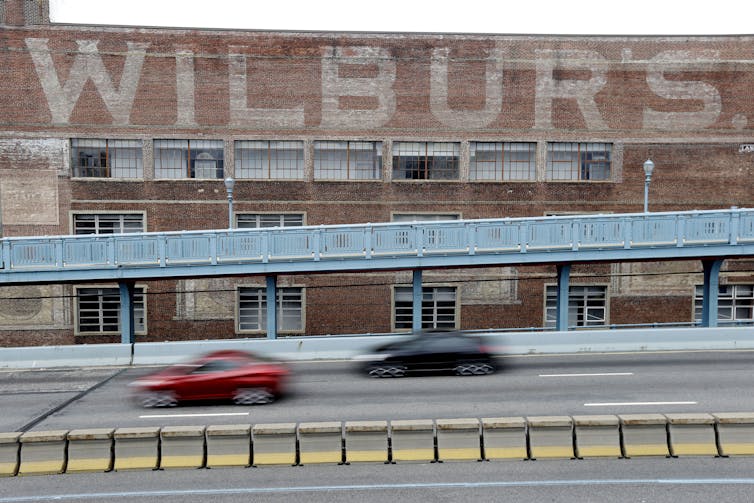
The company that would become Wilbur’s Chocolate was founded in 1865 by Henry Oscar Wilbur and Samuel Croft. After several moves, and a split between the founders in 1884, Wilbur opened a new facility in 1887 at the corner of Third and New streets, where the Chocolate Works condominiums are located today.

There, they began production of their famous Buds, made by pouring hot liquefied chocolate into molds that resembled flower buds.

Phillip Wunderle, maker of gumdrops and other candies, set up shop in North Liberties, just north of Old City, in 1871. An employee of Wunderle Candy Company named George Renninger is often credited with the invention of candy corn, the iconic Halloween staple. However, it would be a decade before this sugary treat, also called “chicken feed,” became popular.

Wunderle also employed a salesman who would go on to become a candy legend: Milton Hershey.

In 1900, Hershey revolutionized the chocolate industry by introducing the Hershey Bar, the first mass-produced milk chocolate in the United States. Seven years later, the Hershey Company introduced a bite-sized, teardrop-shaped chocolate similar to Wilbur’s buds. Legend has it that the name, Hershey’s Kisses, originated from the sound of the machine that manufactured the candies, but there were several other candies with the name that predate Hershey’s.

As Hershey grew more successful, Whitman’s looked for a way to maintain its market share. Whitman’s advertised heavily after the Civil War, and by the end of the 19th century, promoted its products with suggestive ads that linked chocolate with romance.

In 1912, Whitman’s introduced its Sampler box. It became a Valentine’s Day staple, especially after it became available in a heart-shaped box – a marketing stunt that English chocolate brand Cadbury reportedly started in 1868.

Three plastic tubs full of individually wrapped bubble gum
Buckets of Dubble Bubble along the bench in the Cincinnati Reds dugout before a baseball game against the Oakland Athletics.
Jason Mowry/Getty Images

Chewing gum and movie snacks

The candy market in Philly – and nearby Hershey, Pennsylvania – continued to grow during the Roaring ‘20s.

A former dairy manager at Hershey named H.B. Reese built his own candy factory in Hershey in 1926, and two years later, he introduced his famous Peanut Butter Cups. Reese’s merged with Hershey’s in 1963 and later introduced their popular candy in different holiday shapes, like Easter eggs, Christmas trees and Valentine’s Day hearts.

Another company now owned by Hershey is York Peppermint Pattie, a chocolate-covered soft mint candy introduced in 1940 in a town 40 miles south of Hershey.

Back in Philadelphia, Frank H. Fleer, an inventor of Chiclets, the peppermint- flavored candy-coated gum, founded his confectionery company in 1885 in the Fairmount neighborhood. Fleer sold the invention to the Trenton, New Jersey-based American Chicle Company in 1914. In 1923, Fleer Corporation first included sports cards with its candy, and in 1928, company accountant Walter Diemer helped perfect the formula for Dubble Bubble, the first bubble gum.

Boxes and tubs of a chocolate candy stacked on a shelf
Goldenberg’s Peanut Chews were originally produced for troops to snack on during World War I.
AP Photo/Matt Rourke)

Meanwhile, Goldenberg Candy Company, which was founded in Philadelphia in 1890, introduced their Peanut Chews in 1917 as an energy source for troops during World War I. Goldenberg’s Peanut Chews are now owned by Just Born, which makes the popular Easter candy Peeps and has its headquarters in Bethlehem, Pennsylvania. However, Peanut Chews are produced out of a facility in the Holmesburg section of Northeast Philadelphia.

Further establishing southeast Pennsylvania as the chocolate capital of America was the emergence of Philadelphia-based Blumenthal Brothers Chocolate Company in 1909. Beginning in the mid-1920s, it began producing candy for movie concessions after being approached by Philadelphia concessions entrepreneur Jacob Beresin when some theaters placed a ban on popcorn in the 1920s, which was considered too messy. Blumenthal’s Goobers, Raisinets and Sno-Caps are still popular movie snacks, and a sweet complement to date night.

The post-World War II era brought a number of business and market changes that led many of these candy companies to move out of Philadelphia.

Yet vestiges of Philadelphia’s candy dominance can still be found around the city. For unique handmade candy this Valentine’s Day, Philly residents can visit Shane’s Confectionery, which is arguably the oldest, continuously operated candy shop in America. (There’s some debate to that claim because the space has been a candy shop since 1863, but Shane’s didn’t open until 1910.) And stop back in March to pick up some “Irish Potatoes” – coconut cream rolled in cinnamon – for St. Patrick’s Day.

Cars on highway pass a large brick building with faded paint that reads 'Wilbur's'
A faded sign on the side of the former Wilbur Chocolate Co. complex in the Old City neighborhood of Philadelphia on May 7, 2013.
AP Photo/Matt Rourke

Read more of our stories about Philadelphia and Pennsylvania, or sign up for our Philadelphia newsletter on Substack.

The Conversation

Jared Bahir Browsh does not work for, consult, own shares in or receive funding from any company or organization that would benefit from this article, and has disclosed no relevant affiliations beyond their academic appointment.

ref. Philadelphia was once a sweet spot for chocolatiers and other candymakers who made iconic treats for Valentine’s Day and other holidays – https://theconversation.com/philadelphia-was-once-a-sweet-spot-for-chocolatiers-and-other-candymakers-who-made-iconic-treats-for-valentines-day-and-other-holidays-274714

Americans are asking too much of their dogs

Source: The Conversation – USA (3) – By Margret Grebowicz, Distinguished Professor of the Humanities, Missouri University of Science and Technology

Some people appreciate relationships with pets to combat loneliness – but others simply prefer dogs’ company. Catherine Falls Commercial/Moment via Getty Images

Americans love dogs.

Nearly half of U.S. households have one, and practically all owners see pets as part of the family – 51% say pets belong “as much as a human member.” The pet industry keeps generating more and more jobs, from vets to trainers, to influencers. Schools cannot keep up with the demand for veterinarians.

It all seems part of what Mark Cushing, a lawyer and lobbyist for veterinary issues, calls “the pet revolution”: the more and more privileged place that pets occupy in American society. In his 2020 book “Pet Nation,” he argues that the internet has caused people to become more lonely, and this has made them focus more intensely on their pets – filling in for human relationships.

I would argue that something different is happening, however, particularly since the COVID-19 lockdown: Loving dogs has become an expression not of loneliness but of how unhappy many Americans are with society and other people.

In my own book, “Rescue Me,” I explore how today’s dog culture is more a symptom of our suffering as a society than a cure for it. Dogs aren’t just being used as a substitute for people. As a philosopher who studies the relationships between animals, humans and the environment, I believe Americans are turning to dogs to alleviate the erosion of social life itself. For some owners, dogs simply offer more satisfying relationships than other people do.

And I am no different. I live with three dogs, and my love for them has driven me to research the culture of dog ownership in an effort to understand myself and other humans better. By nature, dogs are masters of social life who can communicate beyond the boundaries of their species. But I believe many Americans are expecting their pets to address problems that they cannot fix.

Dogs over people

During the pandemic, people often struggled with the monotony of spending too much time cooped up with other humans – children, romantic partners, roommates. Meanwhile, relationships with their dogs seemed to flourish.

Rescuing shelter animals grew in popularity, and on social media people celebrated being at home with their pets. Dog content on Instagram and Pinterest now commonly includes hashtags like #DogsAreBetterThanPeople and #IPreferDogsToPeople.

“The more I learn about people, the more I like my dog” appears on merchandise all over e-commerce sites such as Etsy, Amazon and Redbubble.

One 2025 study found that dog owners tend to rate their pets more highly than their human loved ones in several areas, such as companionship and support. They also experienced fewer negative interactions with their dogs than with the closest people in their lives, including children, romantic partners and relatives.

The late primatologist Jane Goodall celebrated her 90th birthday with 90 dogs. She stated in an interview with Stephen Colbert that she preferred dogs to chimps, because chimps were too much like people.

Jane Goodall said she appreciates dogs for their “unconditional love.”

Fraying fabric

This passion for dogs seems to be growing as America’s social fabric unravels – which began long before the pandemic.

In 1972, 46% of Americans said “most people can be trusted.” By 2018, that percentage dropped to 34%. Americans report seeing their friends less than they used to, a phenomenon called the “friendship recession,” and avoid having conversations with strangers because they expect the conversation to go badly. People are spending more time at home.

Today, millennials make up the largest percentage of pet owners. Some cultural commentators argue dogs are especially important for this generation because other traditional markers of stability and adulthood – a mortgage, a child – feel out of reach or simply undesirable. According to the Harris Poll, a marketing research firm, 43% of Americans would prefer a pet to a child.

Amid those pressures, many people turn to the comfort of a pet – but the expectations for what dogs can bring to our lives are becoming increasingly unreasonable.

For some people, dogs are a way to feel loved, to relieve pressures to have kids, to fight the drudgery of their job, to reduce the stress of the rat race and to connect with the outdoors. Some expect pet ownership to improve their physical and mental health.

A woman with short brunette hair sits on the floor in front of a sliding door and balcony, as a black dog sits beside her and looks at her.
Even years after the pandemic lockdown, many people are spending more time at home – often with pets.
curtoicurto/iStock via Getty Images Plus

And it works, to a degree. Studies have found dog people to be “warmer” and happier than cat people. Interacting with pets can improve your health and may even offer some protection against cognitive decline. Dog-training programs in prisons appear to reduce recidivism rates.

Unreasonable expectations

But expecting that dogs will fill the social and emotional gaps in our lives is actually an obstacle to dogs’ flourishing, and human flourishing as well.

In philosophical terms, we could call this an extractive relationship: Humans are using dogs for their emotional labor, extracting things from them that they cannot get elsewhere or simply no longer wish to. Just like natural resource extraction, extractive relationships eventually become unsustainable.

The late cultural theorist Lauren Berlant argued that the present stage of capitalism creates a dynamic called “slow death,” a cycle in which “life building and the attrition of life are indistinguishable.” Keeping up is so exhausting that, in order to maintain that life, we need to do things that result in our slow degradation: Work becomes drudgery under unsustainable workloads, and the experience of dating suffers under the unhealthy pressure to have a partner.

Similarly, today’s dog culture is leading to unhealthy and unsustainable dynamics. Veterinarians are concerned that the rise of the “fur baby” lifestyle, in which people treat pets like human children, can harm animals, as owners seek unnecessary veterinary care, tests and medications. Pets staying at home alone while owners work suffer from boredom, which can cause chronic psychological distress and health problems. And as the number of pets goes up, many people wind up giving up their animal, overcrowding shelters.

So what should be done? Some philosophers and activists advocate for pet abolition, arguing that treating any animals as property is ethically indefensible.

This is a hard case to make – especially with dog lovers. Dogs were the first animal that humans domesticated. They have evolved beside us for as long as 40,000 years, and are a central piece of the human story. Some scientists argue that dogs made us human, not the other way around.

Perhaps we can reconfigure aspects of home, family and society to be better for dogs and humans alike – more accessible health care and higher-quality food, for example. A world more focused on human thriving would be more focused on pets’ thriving, too. But that would make for a very different America than this one.

The Conversation

Margret Grebowicz does not work for, consult, own shares in or receive funding from any company or organization that would benefit from this article, and has disclosed no relevant affiliations beyond their academic appointment.

ref. Americans are asking too much of their dogs – https://theconversation.com/americans-are-asking-too-much-of-their-dogs-256768

Fifteen years after Egypt’s uprising, how faith and politics reshaped a generation

Source: The Conversation – USA (3) – By Nareman Amin, Assistant Professor of Contemporary Islam, Michigan State University

The crowd in Tahrir Square in Cairo just before a speech by Egyptian President Hosni Mubarak on Feb. 10, 2011. Photo by Chris Hondros/Getty News Images

Fifteen years ago, Egyptians from all walks of life took to the street to demand “bread, freedom, social justice.” They were protesting the oppressive 30-year rule of Hosni Mubarak.

Egypt had been under martial law for 31 years. This meant that political opposition was silenced, and opponents were often imprisoned and tortured. Police brutality was the norm.

Egypt’s economy was also weak and relied heavily on foreign aid and loans from the World Bank and International Monetary Fund. Even though the country’s per capita gross domestic product was growing, almost 25% of the population was living in poverty by 2011.

Neighboring Tunisia had toppled its dictator, Zine El Abidine Ben Ali, on Jan. 14, 2011, after 28 days of protest. The Tunisian revolution’s success led to a wave of uprisings against corruption, injustice and economic inequality across the region, including the January 2011 revolution in Egypt.

For many who joined the movement in Egypt, there was a newfound sense of unity, equality and nationalism. Egyptians young and old, Muslim and Christian, rich and poor, man and woman, stood arm-in-arm for 18 days, until Mubarak resigned on Feb. 11, 2011.

Mubarak’s resignation signaled to many Egyptians the power of common will and determination.

Slowly, however, political divisions set in. While there were exciting voting opportunities that seemed free and fair for the first time in modern Egyptian history, there were many disappointments in this nascent and short-lived democratic experiment.

In my recently published book, “Is God for Revolution? Affect, Youth and Islam,” I investigate these political changes, but through the lens of religion.

Islam in Egypt

Egypt is a Muslim-majority country. Islam can be felt, seen and heard in every corner of the nation: The melodic call to prayer rings out five times a day to remind Muslims to stop what they are doing and turn their attention to God in worship.

People sit on a red carpet in a large hall, facing a recessed niche in the wall at the front of the room.
People praying at the Al-Azhar Mosque in Cairo.
Emad Aljumah/Moment via Getty Images

Minarets of mosques and domes of churches dot the sepia-toned Egyptian sky. The Quran plays in shops, taxi cabs and on radios and television in local cafes. Most women wear veils as part of a religious obligation; men grow long beards, which they believe to be a prophetic tradition.

Scholars of Islam like Saba Mahmood, Charles Hirschkind, Aaron Rock-Singer and others have noted a resurgence in these physical aspects of Islamic piety since the 1970s. Some of these scholars attribute it to Islamic groups like the Muslim Brotherhood, established by Hasan al-Banna in 1928 as a response to the cultural and political incursions of the British occupation.

Salafis are another group who urged people to be good Muslims by believing in Allah – the Arabic word for God – and looking and acting the part as well. The Salafis believe they follow the Islam of the “pious predecessors,” or salaf – that is, the generations during and immediately following the life of the Prophet Muhammad.

The Muslim Brotherhood and Salafis offered social services for the poor and preached their versions of Islam widely.

The research

I lived in Egypt between 2007 and 2012 and visited every summer until 2018, when I formally began conducting interviews for this book.

In 2018 and 2019, I spoke with 61 middle- and upper-middle class Muslim Egyptians who were in their early- to mid-20s when the Egyptian uprising began in 2011. Most interviewees were from big cities like Cairo and Alexandria, but some also grew up in smaller villages and towns across Egypt.

For them, the revolution and the social and political freedoms it came with offered them a space to question everything in their lives, including how they relate to the Islamic teachings they grew up with and heard from Muslim parents and preachers.

For example, many of the interviewees came to believe that there are many paths to gaining God’s favor. Some turned to Sufism, or mystical Islam, for answers. Others left Islam altogether.

My interviewees all grew up with the sights and sounds of Islam surrounding them. Their parents and schools also taught them an Islam that highlighted both belief in God and physical practices like the veil, beards and prayer. For many of the people I spoke to, these rituals and visible markers of Islam were no longer as important as they had been raised to believe.

Heidi, a human rights activist, explained that the revolution was an eye-opener, especially for women. She explained that, after the revolution, she took off the veil and now places more importance on the ethical and spiritual rather than the ritualistic aspects of Islam.

“The revolution broke the fear barrier we had of thinking for ourselves … including about religion,” she said.

Similarly, Hasan, a tech entrepreneur, who once used to be conservative in his understanding of what makes one a good Muslim, told me that after the uprising, he came to believe that “religion is not one single path, and that no one action can take you to heaven.” He became more accepting of the different ways people relate to Islam.

Some of my interviewees turned to Eastern practices like yoga and meditation, sometimes even mixing them with Sufism or Islamic mysticism. I spoke to Sonia, an Egyptian American Muslim woman who received training in various wellness methods like pranic healing, breath work and meditation, and I attended her sessions online during the COVID-19 pandemic.

In post-revolution Egypt, she held sessions in yoga studios in which she guided practitioners through traditional breath work and meditation. She asked practitioners to chant the names of Allah in Arabic: al-Nur (the Light) and al-Rahman (the Merciful), in sync with their rhythmic, conscious breathing.

In these spaces, one would find energy crystals, and incense wafting in and out of the room. Attendees, both Muslim and non-Muslim, would sit in a semicircle around Sonia, trying to reach something transcendent, spiritual, maybe even universal.

Not all my interviewees approved of this spiritual practice. Basim, an entrepreneur, felt that practices like Sonia’s were not Islamic; they were a mishmash of Eastern practices that pull on the Islamic tradition selectively for marketing purposes.

Sonia, however, felt that people should not be judged for how they choose to build a connection with God or something transcendent.

Other interviewees left Islam altogether. Six of the people I spoke to had become atheist or agnostic. There were atheists in Egypt before 2011, but shortly after the uprising, more people became vocal about their lack of belief. The media widely reported on what it framed as a worrying trend in society.

Why did this happen?

The revolution opened a space for people who may never have come together to join one another in protest. Once Mubarak fell, people found unprecedented freedom of speech, freedom of assembly and freedom to take part in politics.

Among those who openly joined the political scene after Mubarak’s removal were the Muslim Brotherhood and political arms of the Salafis, who made considerable political gains in 2011 and 2012.

In June 2012, Muhammad Mursi of the Muslim Brotherhood became the first democratically elected president of Egypt. But just a year into his administration, Mursi was deposed by the military. People who staged demonstrations and sit-ins to protest his deposition were violently removed from public squares and killed.

Religion in post-revolution politics

How religion was used in the political processes led almost all my interviewees to rethink matters of faith, practice and religious authority.

Data from the Arab Barometer, which conducts public opinion surveys in the Middle East, shows similar trends over the past decade. In 2011, when respondents were asked if Egypt would be better off if religious people held public office, 53% disagreed. By 2022, the figure had risen to 80%. Views on religious practice also indicated a change.

Young boys cheer and shout, their faces lit with excitement.
Many Egyptian youth are changing how they express their religion.
Sayed Hassan/Getty Images Sport

At the very beginning of the 2011 movement, for example, many of the Islamic scholars my interviewees followed argued that revolting against a ruler, no matter how unjust, is a sin and forbidden in the Islamic tradition. Later, when Islamists like the Muslim Brotherhood came to power, most of my interviewees were shocked that many of these Islamist politicians played the political game, which meant lying and reneging on promises made.

When Mursi became president, his supporters compared his rule with that of the prophet. Others used offensive language to describe political opponents who did not share their political vision.

My interviewees believed that these behaviors were antithetical to the ethical and moral codes of the Islamic tradition that these Islamists and their supporters preached for years prior to the uprising and their political ascent.

Things came to a head when Mursi was deposed through a violent coup. The country was divided between those who praised the military for restoring order and stability in Egypt and those who decried the move as a massacre that ushered in the end of the democratic experiment.

All my interviewees were horrified by the massacre, leading a few to question why a just God would allow hundreds of innocent people to be killed in such a way. Worse yet was that some of the religious scholars who forbade people from protesting against Mubarak in 2011 urged people to protest against Mursi in 2013, with a few even condoning the massacre or at least staying silent in the face of renewed oppression.

The Egyptians I interviewed witnessed all these events and reacted emotionally to them. And because religion was at the center of these political processes in ways that almost all my interviewees viewed as hypocritical and opportunistic, my interviewees wanted to break away from the version of Islam that the Islamists and their supporters represented.

Fifteen years on, though the political and economic aims of the 2011 movement have not been realized, the social afterlives of a revolution live on.

The Conversation

Nareman Amin does not work for, consult, own shares in or receive funding from any company or organization that would benefit from this article, and has disclosed no relevant affiliations beyond their academic appointment.

ref. Fifteen years after Egypt’s uprising, how faith and politics reshaped a generation – https://theconversation.com/fifteen-years-after-egypts-uprising-how-faith-and-politics-reshaped-a-generation-274430

US-Iran talks are not a countdown to conflict

Source: The Conversation – UK – By Bamo Nouri, Honorary Research Fellow, Department of International Politics, City St George’s, University of London

When Iranian and US officials met for talks in the Omani capital of Muscat on February 6, many journalists and analysts were speculating as to whether diplomacy will fail and whether war will inevitably follow. But that framing misses the deeper reality of this moment. The more important question is why both sides have returned to the negotiating table at all, despite years of hostility, sanctions, proxy conflict and open threats.

The anxiety that has surrounded the talks is understandable. Washington warned its citizens to leave Iran hours before the talks took place, fuelling speculation about military strikes. US officials outlined sweeping demands that go far beyond wanting to curb Iran’s ambition to possess nuclear weapons. And recent history offers no shortage of examples where negotiations have collapsed into violence.

But treating the talks as a countdown to conflict misunderstands diplomacy and the balance of power in the Middle East today. Negotiations are not a single test of resolve, nor a one-off gamble on peace. The talks in Oman were not a final reckoning but an opening move. They reflect a shared recognition in Washington and Tehran that 15 years of coercion, pressure and force have failed to produce decisive outcomes, and that escalation now would be vastly more dangerous than before.

As diplomacy scholar Geoffrey Berridge has long argued, the first stage of any serious diplomatic process is the establishment of common ground on key points. Only once this groundwork is laid can substantive negotiations begin. The talks in Oman should thus be understood as an opening phase rather than a decisive round.

The purpose was to clarify positions, communicate red lines and test whether a workable diplomatic pathway exists. Iranian officials described the atmosphere as constructive, noting that the two sides communicated their concerns and views through their host, Oman’s foreign minister Badr Albusaidi. This is precisely how diplomacy begins, not how it ends, and Iranian and US officials have both subsequently called for talks to continue.

For Tehran, engaging a US delegation in talks is significant. Iran has consistently sought recognition as a legitimate regional player rather than a state to be coerced or isolated. The willingness of Iran’s foreign minister, Abbas Araghchi, to attend the talks personally signals how seriously Iran views this moment and how invested it is in a diplomatic outcome that confers mutual respect.

For Washington, the incentives are equally clear. Over the past 15 years, the US has applied nearly every available tool of pressure against Iran. These have included sanctions, cyber operations, targeted strikes, the killing of senior Iranian figures, the degradation of Iran-aligned groups across the region and direct support for Israel during its brief 2025 war with Iran. Yet none of this has delivered regime change, capitulation or lasting regional stability.

Sanctions have devastated the Iranian economy and Tehran’s regional network has been weakened. Hezbollah has faced mounting pressure and economic strain in Lebanon, Hamas has been severely battered in Gaza and Houthi forces in Yemen have been constrained by international military patrols. Even so, Iran’s core political system remains intact.

Domestic unrest has also failed to produce collapse. Recent protests, met with intense and often violent repression, did not topple a regime that has been deliberately built to survive external pressure since 1979. This highlights a central paradox: Iran may be weaker than at any point in recent decades, but it is not as fragile as many external observers assume.

Washington’s negotiating position

Statements from US officials insisting that talks should encompass Iran’s ballistic missile programme, its regional alliances and its domestic governance represent the high end of any negotiating position.

This is not unusual. In diplomacy, opening demands are often maximalist by design. They are intended to create leverage rather than define an achievable endpoint, something the US president, Donald Trump, is known for. The risk lies in treating these demands as simultaneously attainable.

From Tehran’s perspective, these issues are not equivalent. Iran has consistently signalled that nuclear weapons are the only area it is prepared to engage meaningfully over. This is because its nuclear programme has already been internationalised through treaties, inspections and prior agreements.

Iran’s leadership has also repeatedly pointed to Supreme Leader Ayatollah Ali Khamenei’s religious decree declaring the production and use of nuclear weapons forbidden under Islamic law. Western policymakers are sceptical of the decree’s legal enforceability. But it nonetheless provides Tehran with an ideological framework that allows nuclear restraint to be framed domestically as principled rather than imposed from outside.

In contrast, Iran views the existence of its ballistic missile arsenal as non-negotiable. In a region where Iran faces nuclear-armed adversaries and an overwhelming conventional military imbalance, missile capabilities are central to its deterrence strategy. Likewise, Iran’s regional alliances are not simply tools of influence. They are an extension of this defensive posture that has been shaped by decades of war, sanctions and isolation.

Domestic governance is even more sensitive. No Iranian negotiating team could accept external constraints on how the Islamic Republic governs itself without calling into question the legitimacy of the system they represent. Attempts to fuse diplomacy with demands for internal political reform are therefore perceived not as bargaining positions, but as existential threats.

Bundling nuclear limits, regional retrenchment and internal transformation into a single negotiating framework thus risks overreach. Progress is far more likely through sequencing: addressing the nuclear issue first, building confidence through verification and reciprocity, and only then exploring narrower forms of deescalation elsewhere. Understanding this helps explain why talks can proceed despite sharp rhetoric and military signalling.

Mutual risk, mutual opportunity

Araghchi’s description of the talks in Muscat as a “good beginning” where both sides were able to convey their interests and concerns, as well as his subsequent expression of hope for further negotiations, suggests that diplomacy remains preferable for Iran. The same probably applies for the US.

Military intervention has rarely produced stable outcomes in recent Middle Eastern and North African history. The removal of Saddam Hussein in Iraq, Muammar Gaddafi in Libya and the collapse of state authority in Syria did not bring immediate peace or genuine democracy. They produced power vacuums, proxy wars, mass displacement and chronic instability.

Iran is larger, more institutionalised and more deeply embedded in regional dynamics than any of those cases. A conflict involving the Islamic Republic would be longer, more destructive and far harder to contain.

The real danger is not that diplomacy between Iran and the US will fail, but that it will be dismissed too quickly. Negotiations are incremental, often frustrating and rarely linear. But in this case, they may reflect the only viable strategy available to both sides.

Iran avoids an unwinnable war. The US avoids another Middle Eastern quagmire. And the region gains a fragile but vital opportunity to move away from permanent crisis. In that sense, the talks themselves may already represent the most meaningful progress possible.

The Conversation

Bamo Nouri does not work for, consult, own shares in or receive funding from any company or organisation that would benefit from this article, and has disclosed no relevant affiliations beyond their academic appointment.

ref. US-Iran talks are not a countdown to conflict – https://theconversation.com/us-iran-talks-are-not-a-countdown-to-conflict-275349

More young adults are developing osteoarthritis – here’s how we can spot those at risk before the damage is done

Source: The Conversation – UK – By Atiqah Aziz, Senior Research Officer at the Tissue Engineering Unit (TEG), National Orthopaedic Centre of Excellence for Research & Learning (NOCERAL), Department of Orthopaedic Surgery, Faculty of Medicine, University of Malaya

New Africa/Shutterstock

Research suggests young, active people are increasingly being diagnosed with osteoarthritis at much earlier ages than many expect. I have seen its effects first-hand among my own friends. One, a keen marathon runner, developed stage 2 osteoarthritis in her mid-30s. Several well-known public figures, including Robbie Williams, Tiger Woods and Andy Murray, have also spoken openly about experiencing the condition relatively young.

Osteoarthritis is often dismissed as an inevitable consequence of ageing, but it can erode quality of life at any age. It can turn everyday activities such as walking, climbing stairs or exercising into painful challenges. More than 600 million people worldwide live with osteoarthritis, and its risk factors are varied. They include obesity, ageing, metabolic disorders, chronic inflammation, previous joint injury and repetitive mechanical stress.

For younger people, osteoarthritis can be particularly devastating. Pain and stiffness can limit physical activity during years when work, caregiving and family life are often most demanding. It can affect mental health, restrict career choices and reduce the ability to stay active, which in turn increases the risk of other long-term health conditions. Unlike older adults, younger patients may also face decades of managing symptoms and repeated treatments.

Osteoarthritis develops when the smooth cartilage that cushions joints gradually breaks down. Cartilage normally acts as a shock absorber, allowing bones to move smoothly over one another. As it wears away, joints lose this protection. Bone surfaces begin to rub together, leading to pain, stiffness and the grinding or crunching noises many people jokingly refer to until the discomfort becomes impossible to ignore.

The condition does not appear overnight. Osteoarthritis usually takes years, and often decades, to develop. Early symptoms are often subtle and easy to dismiss: mild knee pain after activity, stiffness that eases with movement, or discomfort that comes and goes. Many people delay seeking medical advice until pain becomes persistent and joint damage is already advanced.

At present, treatment focuses on managing symptoms rather than reversing the disease. This includes exercise therapy, pain relief and therapeutic injections.


Read more:
Joint pain or osteoarthritis? Why exercise should be your first line of treatment


These injections may include platelet-rich plasma, which is made from a concentrated portion of a patient’s own blood and contains growth factors thought to support tissue repair. Others use platelet-derived vesicles, tiny particles released by platelets that carry biological signals involved in inflammation and healing.

However, most evidence for vesicle-based approaches currently comes from animal studies, including rat models, and they are not yet used routinely in human clinical practice. Hyaluronic acid may also be injected. This is a gel-like substance naturally found in joint fluid that helps lubricate and cushion the joint.

These treatments aim to reduce pain or improve joint movement rather than repair damaged cartilage. For some people, they provide temporary relief. Ultimately, however, when joint damage becomes severe, total joint replacement may be the only remaining option.


Read more:
Do you have knee pain from osteoarthritis? You might not need surgery. Here’s what to try instead


But what if osteoarthritis could be detected much earlier, before pain and irreversible damage set in?

Early prevention and early intervention have the potential to reduce pain, preserve mobility and significantly lower healthcare costs. The challenge has always been identifying osteoarthritis early enough to act.

Early diagnosis

This is where emerging diagnostic technologies may eventually offer a breakthrough. Every chemical compound in the body has a unique molecular structure, and when analysed it produces a distinctive pattern known as a “spectral fingerprint”.

This fingerprint reflects the chemical composition of a sample, such as blood serum. In people with osteoarthritis, researchers have observed subtle changes in inflammation, metabolism and tissue turnover that may alter this chemical profile.

One way of studying these fingerprints is through a technique called attenuated total reflection Fourier-transform infrared spectroscopy. Despite the intimidating name, the principle is straightforward.

A small blood sample is exposed to infrared light, and the way that light is absorbed provides information about the types of molecules present. Changes in proteins, lipids and other biomolecules can leave measurable signatures, which researchers are investigating as potential indicators of osteoarthritis.

These approaches are still largely used in research settings and are not yet part of routine clinical care. Even at this early stage, this research is important because it may eventually allow osteoarthritis risk to be identified earlier, when lifestyle changes and targeted interventions are more likely to protect joint health.

By combining this approach with computational analysis, researchers can identify complex chemical patterns associated with disease. In practice, this means comparing blood samples from people with and without osteoarthritis and detecting differences that are invisible to the naked eye. Similar approaches can also be used with other laboratory techniques, including spectroscopy-based methods and molecular biology tools, to identify biomarkers linked to early joint disease.

This kind of early detection could transform how osteoarthritis is managed. Identifying risk before symptoms become severe would allow people to take action earlier, through targeted exercise, weight management, injury prevention and tailored treatment strategies.

Osteoarthritis does not have to mean decades of pain and limitation. By shifting the focus from late-stage treatment to early detection and prevention, it may be possible to change the trajectory of the disease and improve quality of life for millions of people worldwide.

The Conversation

Dr Atiqah Aziz work in Universiti Malaya, Malaysia. She is affiliated with Tissue engineering Group,TEG,National Orthopaedic Centre of Excellence for Research & Learning (NOCERAL),Department of Orthopaedic Surgery
Faculty of Medicine,Universiti Malaya, 50603 Kuala Lumpur, Malaysia.

ref. More young adults are developing osteoarthritis – here’s how we can spot those at risk before the damage is done – https://theconversation.com/more-young-adults-are-developing-osteoarthritis-heres-how-we-can-spot-those-at-risk-before-the-damage-is-done-274451

Why Emerald Fennell was so well placed to adapt Wuthering Heights – period drama expert explains

Source: The Conversation – UK – By Shelley Galpin, Lecturer in Culture, Media and Creative Industries, King’s College London

From Kate Bush’s otherworldly pop anthem to Laurence Olivier and Merle Oberon embracing on the wild Yorkshire moors, Wuthering Heights is one of the most adapted works of literature in the western world.

One of the most critically acclaimed adaptations to date was Andrea Arnold’s art house take on Emily Brontë’s only novel, released in 2011. Arnold’s film, following her roots in neo-realist filmmaking, adopted a low-key approach to characterisation.

She used improvisational dialogue and placed emphasis on the characters’ relationships with the natural world. The result was a beautifully evocative depiction of the Yorkshire landscape, but a rather understated telling of the novel’s central love story between the foundling Heathcliff and proud, passionate Cathy.

Following in these well-trodden footsteps is filmmaker Emerald Fennell. Her new adaptation, Wuthering Heights, is in cinemas on Valentine’s Day. Just like Arnold, Fennell’s adaptation is her third full length feature. And just like Arnold, Fennell comes to the project having already established herself as a filmmaker with a singular vision. She’s unafraid to confront audiences with challenging characters and a unique visual style.

Emerald Fennell talks about her unique take on Wuthering Heights.

Though critically lauded, Arnold’s adaptation faltered at the box office. Based on the reception of Fennell’s past films, however, there is every reason to anticipate that her interpretation of Brontë’s novel will be more crowd-pleasing.

Despite being described in the new film’s trailer as “the greatest love story of all time”, Wuthering Heights is arguably a tough sell. Cathy and Heathcliff might be iconic characters, but they are also rather unlikeable. They repeatedly seek to harm each other and any innocent bystander who gets in their way. The novel is morally ambiguous. It communicates not only humanity’s capacity for love and passion, but also its appetite for destruction.


Read more:
Emily Brontë’s Wuthering Heights is a dark parable about coercive control


Luckily, if any filmmaker has demonstrated their ability to sit comfortably with the darker sides of human nature, it is Fennell. Promising Young Woman (2020, a pastel-toned revenge mission) and Saltburn (2023, a systemic annihilation of the privileged upper class), both successfully portrayed protagonists who do the unthinkable while also, just about, keeping the audience onside.

Fennell’s theatre of obsession

Both Fennell’s previous films centre around obsession. Cassie (Carey Mulligan), once the “promising young woman” of the title, has allowed her life to become dominated by her determination to avenge the death of her childhood best friend. Fennell followed this audacious debut with Saltburn. The film achieved notoriety for its “did he really just do that?” depiction of Oliver Quick (Barry Keoghan) and his silently obsessive pursuit of friend Felix (Jacob Elordi).

The trailer for ‘Wuthering Heights’.

This pattern looks set to continue with Wuthering Heights. It’s a story with obsession at its heart, in the deep-rooted bond between Cathy (Margot Robbie) and Heathcliff (Elordi). The promotional material has leaned into this. The trailer features Heathcliff’s desperate plea to the dead Cathy to “be with me always, take any form, drive me mad! Only do not leave me in this abyss where I cannot find you!”

While previous adaptations of the novel often emphasise the wildness of the landscapes, Fennell’s film has a heightened theatricality. The costumes, impressive set design and lighting all suggest an expressionistic take on the story which privileges the uncontrollable emotions of the characters, rather than the naturalistic approach of other filmmakers.

This theatrical visual style also allows Fennell to follow the trend for recent period dramas to present a colourful and rather fantastical vision of the past (hello Bridgerton). Albeit with her own darker twist.

Following on from Saltburn, which was set in the titular stately home, Fennell’s Wuthering Heights is also rooted in the British class system, once again following the fate of a seemingly underprivileged hero (Heathcliff) and his complex relationship with his social superior (the ambitious Cathy).

As with Saltburn, the plot of Wuthering Heights reveals the shifting sands on which apparent class differences are built. The more privileged characters gradually succumb to misfortune as the socially inferior hero succeeds to a position of power through a combination of cunning, skill and luck.

The varied aesthetic of the pre-release material for Wuthering Heights also hints at this undercutting of the myth of the civilised society, with Elordi’s Heathcliff shifting from dishevelled labourer to respectable gentleman. Just as with Oliver Quick’s eventual ownership of Saltburn, this process hints at the fallacy of civilisation. Obsessive, destructive behaviour is not quite forgotten despite the façade of social privilege.

So, will Fennell’s Wuthering Heights find its audience? All the signs are there. The reception of her previous work has shown that there is an appetite for boundary-pushing, morally ambiguous characters, and her uncompromising ability to plumb the darkest corners of human nature makes her an ideal auteur to tackle this material.

Couple that with the recent trend for more fantastical representations of the British past, and now feels like the perfect moment for Fennell to move into literary adaptation. Prepare to get obsessed.


Looking for something good? Cut through the noise with a carefully curated selection of the latest releases, live events and exhibitions, straight to your inbox every fortnight, on Fridays. Sign up here.


The Conversation

Shelley Galpin does not work for, consult, own shares in or receive funding from any company or organisation that would benefit from this article, and has disclosed no relevant affiliations beyond their academic appointment.

ref. Why Emerald Fennell was so well placed to adapt Wuthering Heights – period drama expert explains – https://theconversation.com/why-emerald-fennell-was-so-well-placed-to-adapt-wuthering-heights-period-drama-expert-explains-275156

Drastic seaweed growth threatens marine life and fishing – but also offers opportunities

Source: The Conversation – UK – By Yanna Alexia Fidai, Earth Observation and Remote Sensing Scientist, Plymouth Marine Laboratory

Sargassum seaweed on a beach in Barbados. Yanna Fidai, CC BY-NC-ND

Large blooms of seaweed are increasingly being reported along coastlines globally, from Europe and Asia to the tropics and beyond.

Both native and invasive (non-native) seaweeds are appearing in quantities that are hard to ignore and at unusual or surprising times of year.

As an earth observation and remote-sensing scientist, I track these blooms from space using high-resolution satellite imagery. My research shows that seaweed blooms are getting bigger.

My team’s 2025 study reveals a significant rise in sargassum blooms in the north-eastern tropical Atlantic, with a staggering 2.6 million tonnes washing up in September 2020. This is the first long-term analysis of trends in seaweed blooms from 2011 to 2022 in this region.

These unpredictable tides of seaweed have serious consequences for West African coastal communities and marine ecosystems. Our research shows that warming sea surface temperatures link closely with peaks in seaweed growth. Essentially, warmer temperatures can promote seaweed growth and lead to bloom surges.

Seaweed blooms are not a new phenomenon. But over the past 15–20 years, their scale and persistence have increased noticeably.

Of particular concern are free-floating seaweeds: species that float at the ocean surface, either because they detach from the seabed or because they spend their entire lives drifting. Unlike seaweeds that are anchored to the seafloor, floating seaweed can travel long distances to new territories and accumulate in large mats or wash ashore in huge quantities.

One example I have spent much of my career studying is sargassum. Like something from a sci-fi movie, I’ve seen swathes of sargassum seaweed spreading across the tropical Atlantic, with mats reaching depths of 7 m and spanning hundreds of square miles.

Sargassum fluitans collected on a beach in Mexico. The air-filled grape-like sacs help this seaweed to float on the surface of the ocean.
Yanna Fidai, CC BY-NC-ND

While most sargassum species are anchored to the seafloor, two species – Sargassum natans and Sargassum fluitans – are entirely free floating. They float freely at the surface of the ocean, kept buoyant by small air-filled grape-like sacs called pneumatocysts, which lift them up towards the surface for photosynthesis.

Our study shows that, since 2011, huge blooms of sargassum seaweed have appeared across the tropical Atlantic, piling up on coasts in the Caribbean, Gulf of Mexico and increasingly West Africa. This drifting seaweed makes fishing difficult and causes mayhem for coastal communities.


Read more:
How seaweed is a powerful, yet surprising, climate solution


Seaweed plays an essential role in marine ecosystems, but excessive growth can disrupt them. Large floating mats block sunlight, limiting the growth of seagrasses and corals below. They also alter oxygen conditions in the water, and when seaweed decomposes, particularly in sheltered bays or on beaches, it can create low-oxygen environments that are harmful to marine life.

Some of the most striking consequences are seen on wildlife. In tropical regions, sargassum has accumulated on turtle nesting beaches, with recent studies suggesting that up to a quarter of nesting habitat can be affected. Hatchlings struggle to move through both sand and dense seaweed before eventually reaching the sea, exhausted. This reduces their chances of survival.

traditional wooden boat at sea, seaweed in foreground
Seaweed blooms make it more difficult for fishers in Ghana.
Yannai Fidai, CC BY-NC-ND

Across Europe

Sargassum as an invasive species has actually found its way to UK waters, but sargassum blooms are not nearly as vast as in the tropical Atlantic. Blooms of other types of seaweed are becoming more noticeable in the UK and Europe. For example, ulva, a green seaweed known as sea lettuce regularly forms dense mats on the surface of the sea in places like Poole harbour, Dorset.

In small amounts, ulva is a native and largely harmless part of UK coastal ecosystems. But when it blooms excessively, it can start to cause problems. Thick mats at the surface reduce the amount of sunlight reaching seagrasses and other organisms below, while decomposition can reduce oxygen levels in the water, creating stressful conditions for fish and invertebrates and death of plants and animals as a result.

Across Europe, invasive seaweeds are becoming a growing concern. In the Mediterranean, species such as Rugulopteryx okamurae (originally from the northwest Pacific) have spread rapidly, likely introduced through shipping routes. These seaweeds can attach to the seabed, but then detach, float for long distances, and then reattach elsewhere, allowing them to spread efficiently along coastlines. In parts of Spain and Portugal, large accumulations are now washing up on beaches, with negative effects similar to those seen with sargassum in the tropics.

Even when blooms are smaller or more localised, their effects can still be disruptive. Seaweed accumulation can interfere with recreation, small-scale fishing and coastal tourism – all important parts of the UK’s coastal economy.

Why is seaweed blooming?

Seaweed growth is driven by a combination of triggers and favourable conditions, so there isn’t a single cause.

In the case of sargassum in the tropical Atlantic, one important trigger appears to have been an anomaly in the large scale atmosphere-ocean pattern known as the North Atlantic Oscillation in 2009. This change in atmospheric pressure at sea helped redistribute seaweed from the Sargasso Sea. Once established in new regions, further seaweed growth was fuelled by access to nutrients.

Seaweed growth is limited by the availability of nutrients such as nitrogen and phosphorus. As long as those nutrients are available for them, they will grow. Nutrient-rich runoff from agriculture, rivers such as the Amazon and Congo, and sediment inputs all deliver these nutrients into the ocean – so human-caused pollution also plays a part.

Together, warming waters, nutrient enrichment and changing ocean circulation can create ideal conditions for blooms to persist and expand.

Seaweed blooms, while sometimes problematic, are fundamental to ocean ecosystems. They act as habitats to small fish and crustaceans. They absorb carbon dioxide through photosynthesis and transport it to deeper waters. They are also a valuable resource. They are used to make fertiliser and building materials, pharmaceuticals and potentially biofuels.

With effective monitoring, more accurate forecasting and better management, communities can live alongside seaweed blooms, harnessing their benefits while minimising environmental and economic consequences.


Don’t have time to read about climate change as much as you’d like?

Get a weekly roundup in your inbox instead. Every Wednesday, The Conversation’s environment editor writes Imagine, a short email that goes a little deeper into just one climate issue. Join the 47,000+ readers who’ve subscribed so far.


The Conversation

My previous research on sargassum has been supported by the Economic and Social Research Council GCRF (Grant number: ES/T002964/1), and the UK Natural Environment Research Council (grant number NE/W004798/1), a scholarship from Southampton Marine and Maritime Institute, University of Southampton, and the School of Geography and Environmental Sciences, University of Southampton.

ref. Drastic seaweed growth threatens marine life and fishing – but also offers opportunities – https://theconversation.com/drastic-seaweed-growth-threatens-marine-life-and-fishing-but-also-offers-opportunities-274661

Japan’s rock star leader now has the political backing to push a bold agenda. Will she deliver?

Source: The Conversation – Global Perspectives – By Adam Simpson, Senior Lecturer in International Studies in the School of Society and Culture, Adelaide University

Japanese Prime Minister Sanae Takaichi has delivered her Liberal Democratic Party (LDP) a landslide victory in the parliamentary elections she called shortly after taking office.

Now that she has consolidated her power in Japan’s legislature (called the Diet), the big question is what she will do with it.

Since her ascent to the prime ministership in a parliamentary vote in October, the ultra conservative Takaichi has upended the normally staid Japanese political system.

She has connected with younger voters like no other Japanese leader in recent history with her savvy social media presence, iconic fashion sense and diplomatic flair. (In a literal rock-star moment, she showed off her drumming skills in a jam session with South Korea’s leader.)

Japanese Prime Minister Takaichi Sanae and South Korean President Lee Jae Myung on the drums together.

Takaichi has cannily taken advantage of the honeymoon phase of her leadership by calling a snap election to gain more power in the Diet before there’s a dip in her popularity.

However, voters will now expect to see a return on their investment, and Takaichi faces the much more daunting task of delivering on her promises. Improving living standards in a country with a rapidly shrinking workforce and ageing population without mass immigration will test her political skills much more than winning an election.

An unlikely election victory

Although Takaichi’s LDP has been in government for most of Japan’s post-war history, it has recently experienced a string of poor election results.

In 2024, it lost the lower house majority it held with its then-coalition partner, Komeito, after a series of corruption scandals. Then, last year, the coalition lost its majority in the upper house, leaving the government hanging by a thread.

The party began its remarkable turnaround following then-Prime Minister Shigeru Ishiba’s resignation in September in the wake of those electoral setbacks.

Many pre-election polls predicted a sizeable victory for the LDP and its new coalition partner, Nippon Ishin (the Japan Innovation Party). Takaichi also received a boost with an endorsement from US President Donald Trump. Although the Japanese public views Trump unfavourably, they also know the US is their ultimate security guarantor against China, in addition to Japan’s largest export destination.

Nevertheless, there were some doubts about whether Takaichi’s popularity, particularly among younger voters, would translate into votes.

In the end, her electoral gold dust rubbed off on the rest of her party. Despite freezing temperatures and record snow in places, the LDP has been comfortably returned to office with a vastly increased majority in the lower house. The coalition now has a two-thirds super-majority, which means she can override the upper house to push through her legislative agenda.

A more assertive posture on China?

Since becoming prime minister, the hawkish Takaichi has taken an assertive position towards China.

In November, she angered Beijing by saying Japan could intervene militarily to help protect Taiwan in the face of a potential Chinese invasion. This resulted in vicious Chinese attacks on Takaichi that continued into the new year.

While the Japanese public is divided over whether to come to Taiwan’s aid in any conflict with China, there is now strong support for Takaichi’s pledge to increase the defence budget to 2% of GDP by this March, two years ahead of schedule.

In December, the Cabinet approved a 9.4% increase in defence spending to achieve this objective, focusing on domestic production and advanced capabilities (cyber, space, long-range strikes).

In response to rising threats from China, North Korea and Russia, Takaichi’s government also plans to revise Japan’s core security and defence strategies this year.

Economic woes front and centre

As much as defence matters, Takaichi will ultimately be judged by the public when it comes to economic policy.

The public is increasingly concerned about rising inflation and stagnant wages leading to falling living standards.

A vivid illustration of this: the price of rice has doubled since 2024, hitting a new high last month. Public anger over rising rice prices even brought down the farm minister last year.

Inflation has been above the Bank of Japan’s 2% target for 45 straight months. And though nominal wages have recently picked up, real incomes have been decreasing for the last four years.

Takaichi has made tackling the cost of living a priority. She has vowed to suspend Japan’s 8% food tax for two years. And last year, her government announced a massive US$135 billion (A$192 billion) stimulus package, including subsidies for electricity and gas bills.

However, these policies will increase the government’s budget deficit, adding to the country’s already sky-high public debt levels.

And last month, Japanese government bond prices collapsed after Takaichi called the election, with the markets predicting a LDP win would result in looser fiscal policy and higher government debt.

The Bank of Japan is unlikely to intervene to support the bond market in any future crisis, which will leave the government with higher borrowing costs, further increasing public debt.

Japan also faces enormous challenges related to its shrinking population and workforce.

It is too early to know whether Takaichi has the answers to these challenges. But she now has the power, authority and freedom to boldly pursue her policy agenda. Now she will need to deliver the kind of change the electorate expects.

The Conversation

Adam Simpson does not work for, consult, own shares in or receive funding from any company or organisation that would benefit from this article, and has disclosed no relevant affiliations beyond their academic appointment.

ref. Japan’s rock star leader now has the political backing to push a bold agenda. Will she deliver? – https://theconversation.com/japans-rock-star-leader-now-has-the-political-backing-to-push-a-bold-agenda-will-she-deliver-274015