One-way attack drones: Low-cost, high-tech weapons ‘democratize’ precision warfare

Source: The Conversation – USA – By Michael C. Horowitz, Professor of Political Science, University of Pennsylvania

Iran’s Shahed drone is essentially a poor man’s cruise missile. AP Photo/Efrem Lukatsky

Wars in Ukraine and the Middle East have propelled drones into the headlines. The word “drone” now stretches to cover everything from hobbyist camera rigs available on Amazon to the Predator and Reaper systems the United States has relied on to fight terrorist organizations over the past 20 years.

A common ancestor in the animal kingdom can give rise, under sufficient environmental pressure, to distinct species that demand their own classification. Drones have undergone their own rapid speciation: the one-way attack drone, the medium-altitude, long-endurance and high-altitude, long-endurance drones, the collaborative combat aircraft drone – these share a lineage and a label, but in terms of cost, range and use, increasingly little else.

Nowhere is this variation more consequential than in the category of one-way attack drones: systems designed not to return home like an airplane, but to fly directly into a target and destroy it, like a bullet or a missile. Russia and Ukraine have fired millions of these at each other since 2022, and Iran has launched thousands at United States military bases and embassies, Israel and other countries in the Middle East in 2026.

The world is now in an era we call “precise mass.” In the past, military power was often determined by size – the number of knights, soldiers, guns or tanks, depending on the era, that an army had. Since the Cold War, advanced militaries have emphasized precise munitions, such as cruise missiles, gaining advantage with fewer but more accurately targeted weapons. Inexpensive but technologically sophisticated drones bring mass and precision together.

Commercial manufacturing, precision guidance and advances in artificial intelligence and autonomy have democratized the ability of militaries and militant groups to accurately strike their adversaries. This includes first-person-view, or FPV, drones – a type of one-way attack drone with interfaces like video games – that groups aligned with Iran are already using to target American forces in the Middle East.

One-way attack drones

One-way attack drones have featured most prominently in the war between Russia and Ukraine, and in the Middle East today. The first category of one-way attack drones is longer range and can travel hundreds or even thousands of miles to strike targets deep in an adversary’s territory. They are like extremely cheap cruise missiles – Iran’s Shahed-136 one-way attack drone, for instance, has a reported range of up to 1,250 miles (2,000 km) and costs between US$20,000 and $50,000 each. In comparison, America’s Tomahawk cruise missile costs $2 million each.

Russia acquired the Shahed technology almost immediately after Iran debuted it in 2022, creating its own version, the Geran-2, and has since used these drones to pummel Ukrainian cities and energy infrastructure. Most recently, the U.S. military has followed Russia’s lead and reverse-engineered its own version, the LUCAS, which debuted in the earliest days of Operation Epic Fury, the U.S. military operation against Iran that started on Feb. 28, 2026.

Since late February 2026, Tehran has fired thousands of one-way attack drones at targets across the Middle East. Iran’s one-way attack drones have hit buildings in Bahrain, Kuwait and the United Arab Emirates, and damaged the United States Embassy in Saudi Arabia. The UAE alone was targeted by nearly 700 Iranian drones in the war’s early days. Iran’s one-way attack drones have killed U.S. service members and destroyed critical American radar systems.

Because long-range, one-way attack drones are so slow, they are easier to shoot down than, say, a Tomahawk missile, but attackers can fire so many of them that they can overwhelm air defense systems.

The second category of one-way attack drones operates more like traditional artillery – typically from short distances, up to about 100 miles (160 km). Ukraine’s battlefield has showcased these systems extensively, where they generate 60%-70% of the casualties on the front lines.

a man in military clothing and wearing goggles holds a device in his hands as a quadcopter hovers in front of him
First-person-view drones are small, cheap and controlled much like a video game.
AP Photo/Andrii Marienko

FPV drones

One of the most common types of short-range, one-way attack drones is the FPV drone, sometimes built for a few hundred dollars each from commercial parts purchased online. In Ukraine, operators wearing video goggles fly FPV drones directly into Russian vehicles, fortifications and troops, and they feature guidance interfaces for remote operators that are not dissimilar to those of first-person video games.

FPV drones are not magic. Operating them requires a continuous data link between the operator and the drone, making them vulnerable to electronic jamming that can disrupt radio signals. To address this vulnerability, many Ukrainian FPV drones now use physical communication lines in the form of fiber-optic cables to avoid jamming, but the cables can be cut, and that limits the range of these systems. FPV drones with fiber-optic cables have ranges of about 12 miles (20 km). Effectively using FPV drones also requires skilled operators.

America and Israel’s war with Iran hit the pause button on April 7, but if it starts again and the U.S. deploys ground forces, they would likely face the kind of short-range, one-way attack drone barrages that have come to terrorize both Russian and Ukrainian forces alike.

The threat has proved so hard to stop that Ukraine has resorted to low-tech solutions: Hundreds of kilometers of roads are now covered with nets, donated by European fishermen and farmers. The nets stop FPV drones by tangling their propellers. Nets cover tanks and hospital courtyards and line supply routes and city streets. Ukraine’s government plans to install about 2,500 miles (4,000 km) of them on key roads by the end of 2026.

a road lined with poles on both sides supporting netting over the road
Many roads near the front lines in Ukraine now sport netting to protect against attack drones.
AP Photo/Efrem Lukatsky

Iranian forces could similarly deploy one-way attack drones against American convoys, personnel or parked aircraft in ways that are difficult to defend against. Additionally, just as American adversaries such as ISIS and al-Qaida used video footage of attacks to try to scare the American public, Iran is likely to use FPV strike footage – the operator’s-eye view of the attack, easily edited and uploaded – to try to shape American attitudes.

In March 2026, an Iran-backed militia used FPV drones to strike a parked U.S. Army medevac Black Hawk helicopter and destroy an air defense radar at the Victory Base Complex near Baghdad. The attackers then released footage from the drone’s perspective as propaganda, blurring out the red crosses identifying the Black Hawk as a medevac aircraft.

The new reality

Short-range, one-way attack drones have redefined the front lines; long-range ones have changed what it means to wage war at strategic distances. Iran’s battlefield record – thousands of drones launched, air defenses nearing exhaustion across multiple targeted countries, American troops killed – demonstrates what a mid-tier military can achieve with precise mass.

Any military that fails to invest in these capabilities – and in the ability to defend against them – places itself at risk, including the U.S. military.

The Conversation

Michael C. Horowitz is a senior fellow with the Council on Foreign Relations. From 2022 to 2024 he was Deputy Assistant Secretary of Defense and Director of the Emerging Capabilities Policy Office at the United States Department of Defense.
The views, thoughts, and opinions expressed in an article are solely those of the author and do not represent the official policy, position, or endorsement of any U.S. government department, agency, or branch of service

Lauren Kahn does not work for, consult, own shares in or receive funding from any company or organization that would benefit from this article, and has disclosed no relevant affiliations beyond their academic appointment.

ref. One-way attack drones: Low-cost, high-tech weapons ‘democratize’ precision warfare – https://theconversation.com/one-way-attack-drones-low-cost-high-tech-weapons-democratize-precision-warfare-280364
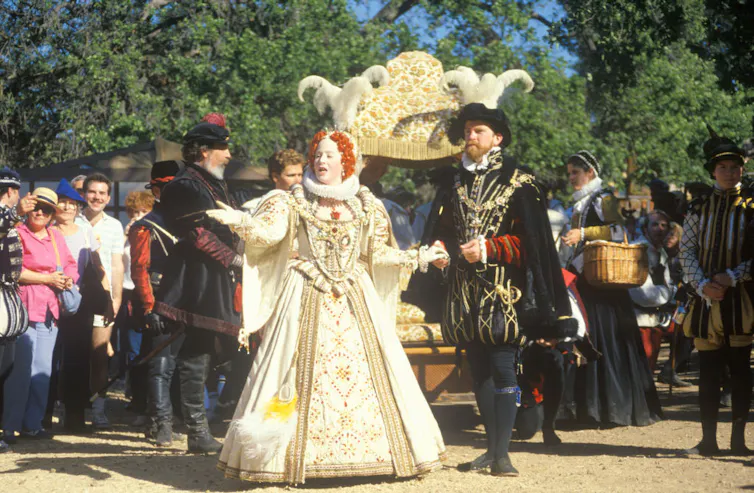
As renaissance fairs become big business, can they retain their counterculture roots?

Source: The Conversation – USA (2) – By Katrina Stack, Ph.D. Candidate in Human Geography, University of Tennessee

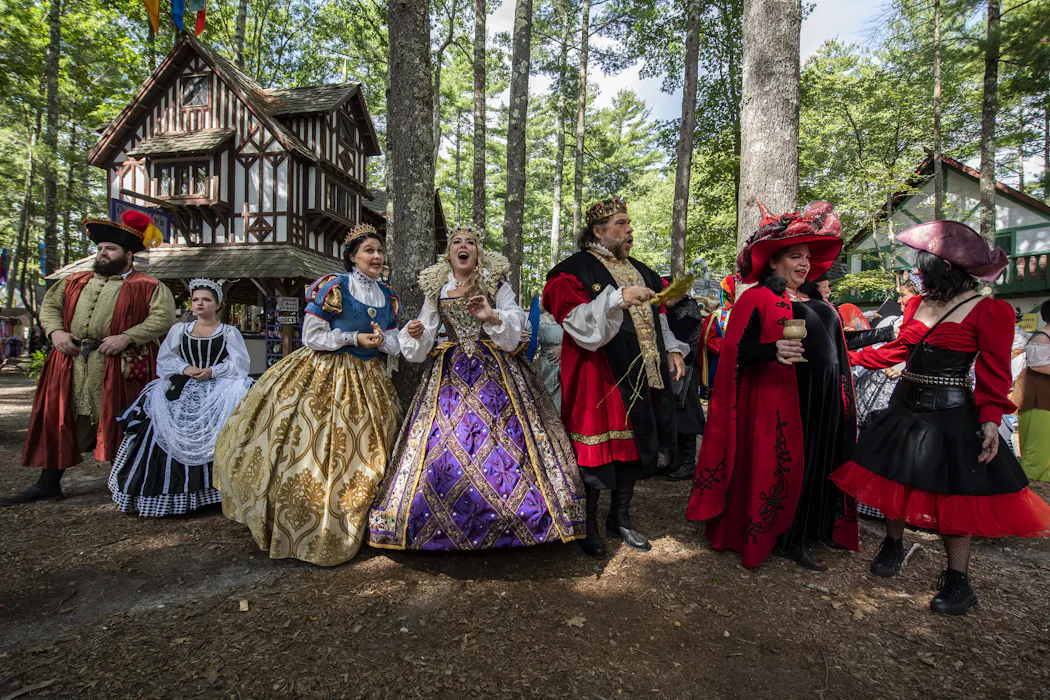
King Richard’s Faire in Carver, Mass., was inaugurated in 1982 and is the longest-running renaissance fair in New England. Joseph Prezioso/Anadolu Agency via Getty Images

Within moments of entering the Newport Renaissance Faire, you are ushered to a group of fairies. They pass you a scroll and say, “You must seek out the Bone Man for the first hurdle in your quest.” As you navigate the fair, you find many men dressed in bones, both vendors and fellow attendees. When you find the correct Bone Man – an actor wearing what appears to be a mask made of human skull along with a crown constructed from deer antlers – he stamps your scroll. He then sends you to your next target: the Drunk Viking.

Following the directions of actors in the fair, you meet a variety of performers from many historical eras and fantastic realms, and stumble upon both merchants and merrymakers in your journey. It’s all part of the immersive experience that connects you with the other guests and staff, though many of the costumed staff members, speaking in faux Middle English, are also trying to sell you something.

Renaissance fairs were originally conceived as a creative refuge for artists sidelined by political repression during the Red Scare. Now, they sit at an uneasy crossroads between countercultural expression and commercial spectacle. Having grown into a nationwide industry with tiered tickets, branded merchandise and multimillion dollar valuations, the fairs can easily be seen as an offshoot of a corporate theme park.

As cultural geographers, we wanted to learn more about whether the spirit of the fairs has been changing. So for our recent study, we visited the Tennessee Renaissance Festival, Newport Renaissance Faire, Tennessee Medieval Faire and Tennessee Pirate Fest.

Once upon a time … not so long ago

Although renaissance fairs and festivals recreate the atmosphere of centuries past, the first formally recognized fair took place in May 1963 in Irwindale, California. A public school English and history teacher named Phyllis Patterson was the brains behind the event, which she dubbed the Renaissance Pleasure Faire.

For Patterson, the fair was a chance to celebrate the era’s countercultural values like free expression, experimentation with identity and creative play. It also served as a source of employment for those who had been pushed out of their careers in the film and entertainment industries after being blacklisted or graylisted as suspected communists.

Actors dressed as European royalty from centuries ago perform in front of a crowd of smiling onlookers.
The Renaissance Pleasure Faire in Irwindale, Calif. – pictured here in 1985 – has its origins in the Red Scare.
Joe Sohm/Visions of America/Universal Images Group via Getty Images

Patterson herself had refused to sign a Cold War–era loyalty oath required to work in California public schools. At the Renaissance Pleasure Faire, actors, educators and set designers could continue their craft, whether that meant designing costumes, creating characters, performing or writing.

From creative refuge to thriving business

Since those first events in Southern California, renaissance fairs have spread across the U.S., with some constructing permanent structures even though they’re only open seasonally, in the spring or fall. Built to resemble small villages, fair operators create towns-within-towns, fantasy lands where visitors can briefly step away from their routines and obligations.

Their popularity continues to grow, and what began partly as a creative refuge has grown into a thriving entertainment business.

The East Tennessee Renaissance Faire recently announced that it would be relocating after deciding that its original venue in Newport could no longer accommodate the swelling crowds: Within three years, the fair had grown from 600 to 6,000 attendees, spurring a move to a larger site in neighboring Sevierville. New fairs are sprouting up as well: The Chattanooga Renaissance Faire will host its inaugural season in spring 2026.

There are almost always entry fees – US$38 at the Tennessee Renaissance Festival and $53 at the Renaissance Pleasure Faire, for example – and many offer season passes.

Attendees often arrive in costume, but strict rules about adhering to a specific time period or setting rarely apply.

Some visitors dress as Tolkien-style elves, while others show up as Tudor nobles. Viking-clad participants walk alongside fairies and swashbuckling pirates. Some fairs have also developed their own themed weekends – with names like “Viking Victory,” “Fantasy and Folklore,” “Pirate Plunder” and “Celtic Celebration” – that weave history and fiction with few constraints. And those committed to their role will often address each other in playful faux-medieval speech, with greetings like “my lady” or “my lord.”

Vendors, often dressed in costume themselves, sell everything from cloaks, swords and crowns to contemporary jewelry and shampoos. Booths sell era-adjacent fare like Scotch eggs, ciders, mead and turkey legs, while modern cocktails like “The Shipwreck” and “The Blueberry Faerie” can also be had, with visitors paying the equivalent of stadium and arena concession prices.

Renaissance fairs have even spread to countries like Germany and France, reconnecting with their roots. The expansion into new venues – along with the development of offshoots such as pirate- and steampunk-themed festivals – point to profit margins that would have been unthinkable in the early days of the Renaissance Pleasure Faire.

But as with many ventures, the prospect of cashing in comes with complications.

The 2024 HBO Max series “Ren Faire” introduced viewers to the eccentrics and costume-clad vendors involved in the nation’s largest fair, the Texas Renaissance Festival in Todd Mission. The fight over its future involved lawsuits and, eventually, the court-ordered $60 million sale of the event’s property and assets.

King Richard’s Faire, which takes place in Carver, Massachusetts, and is the largest fair in New England, reportedly generates massive daily revenue while allegedly relying on widespread worker misclassification, leaving many performers earning below minimum wage without benefits. Even volunteer “villagers” work only for free admission, and both workers and attendees receive no compensation or refunds when the fair closes due to rain.

Seeking out a space of whimsy

Despite the creeping influence of profit motives, we concluded that renaissance fairs have always been – and continue to be – mostly about community.

Dressing as a fantastical version of yourself or your favorite character bonds you to others dressed up at the festival. Unlike popular Civil War or World War II reenactments where historical accuracy is paramount, renaissance fairs instead invite people to take part in shared, often mythologized ideas about history through performance, costume and play.

For example, each weekend, the Tennessee Renaissance Festival organizes jousts. Competitors and their horses meet at a permanent jousting pitch located at the back of the property. Each knight represents a noble house, and each section of the bleachers is assigned a knight to root for. Announcers explain the rules of each event, while also leading the crowds in chants and cheers. While the knights might fight under titles tied to historical lineages, they represent a jumble of eras and place. They also reject antiquated social norms by including women and ethnic groups who never would have been seen together on a jousting pitch.

A man rides a horse while holding a jousting lance in front of bleachers full of spectators.
A jouster performs at the Texas Renaissance Festival in Todd Mission, Texas, in October 2023.
Chen Chen/Xinhua via Getty Images

Here, fidelity to the facts is an afterthought; it actually might ruin the fun.

Beyond the jousting pitch, you can find the queen dictating a game of human chess. A rotating cast of performers play music, tell jokes, juggle and blow fire. Elsewhere, you might stumble across pixies teaching children how to make fairy homes or relax in a mermaid’s magical grotto.

There’s also a comforting simplicity in the narratives of this make-believe world. Ladies are almost always gentle and beautiful, while the men are brave and noble. All the villains are easy to spot – they’re always defeated.

In a real world characterized by political upheaval, information overload, invisible surveillance and shadowy villains, perhaps the fair, with its simple prism of good and evil, becomes a space of comfort – a curated cultural experiment that’s also an improvised escape.

In other words, renaissance fairs wield a quiet power: They forge communities that deliberately blur fantasy, history and everyday life with a wink. Vendors, performers and attendees alike can be Tudors, Vikings, hobbits, elves or mermaids for a day. Few actually believe in elves, or imagine their mock-Elizabethan speech is anything more than cheerful, mangled guesswork.

And that’s the point. There’s joy in pretending – just as there’s a universal pleasure in the weird, the whimsical and the absurd.

The Conversation

The authors do not work for, consult, own shares in or receive funding from any company or organization that would benefit from this article, and have disclosed no relevant affiliations beyond their academic appointment.

ref. As renaissance fairs become big business, can they retain their counterculture roots? – https://theconversation.com/as-renaissance-fairs-become-big-business-can-they-retain-their-counterculture-roots-273757

Health information delivered as a video game can bridge the communication gap between patients and providers

Source: The Conversation – USA (2) – By Elena Bertozzi, Professor of Game Design & Development, Quinnipiac University

Video games that convey health information could be a good use of time in doctors’ waiting rooms. kali9/E+ via Getty Images

Imagine you and your partner are sitting in the waiting room of your doctor’s office, waiting for your appointment to get birth control – and instead of calculating how many other people will be called before you, or perusing old magazines, a nurse hands you a digital tablet and encourages you to play a game.

You power it on, and you find yourselves drawn into a story: Can you help Laila and Caleb figure out which contraceptive method will work best for them, given their lifestyles and Laila’s physiology? Their situation, you realize, is a bit similar to your own. Would helping them choose a form of contraception help you and your partner make an informed decision for yourselves?

As a designer and developer of games that promote positive health behavior change, I work with physicians, public health experts, artists and programmers to create games just like these. I focus on topics like vaccine hesitancy, sexuality and reproductive health – sensitive issues that people may have a hard time discussing openly.

Laila and Caleb are characters in a game that my team and I are developing called What’s My Method? We are testing whether playing it helps people choose a birth control method and makes it easier to have a fruitful discussion with their health care provider. And we are finding that this and other games for health-related education are a powerful but underused way of not just conveying information, but also providing people with an arena to learn from the outcomes of their choices.

A still from a video game showing illustrations of a man and a woman with thought bubbles above their heads thinking through whether a vaginal ring could work for them as birth control.
Laila and Caleb are characters in What’s My Method? – a digital game designed to teach people about different contraceptive methods.
Elena Bertozzi/SolitonZ Games, CC BY

The power of play

When I tell people I make health-related video games for a living, they’re often surprised that this is a viable career choice. Many adults still see video games as trivial at best – and destructive at worst. For example, games that involve guns and shootings are widely blamed for gun violence in real life, even though there’s no causal evidence supporting the connection.

Play is how intelligent and curious beings make sense of the constantly changing world and ensure they keep learning. It is an early factor in children’s cognitive development. Peek-a-boo, for example, helps babies learn about object permanence – meaning that even if a person disappears for a short time, they aren’t gone forever. Digital play can support many types of learning. Games like Minecraft teach resource management, planning and spatial reasoning, among other skills.

The game industry is also an increasingly large part of the world economy. Given the size and reach of the international video game market – US$300 billion in 2025 – games are often the way technological innovations are introduced to a mass audience.

Take motion capture technology, which enables a device to track a person’s movement. Microsoft introduced it to the general public in 2010 through its Kinect console, in which two players can box or play tennis virtually by actually performing the movements with their bodies.

Augmented reality – the ability to use a smartphone to see a virtual world overlaid on the “real” world – entered the mainstream in 2016 when people began playing and watching others play Pokemon Go. Games are also how many people first experience virtual reality – a full immersion in an entirely virtual world – by wearing headsets like Oculus (now called Meta Quest) and Apple Vision Pro.

Gaming also has a powerful social dimension. Massively multiplayer online games like Animal Crossing, Fortnite and World of Warcraft provide a means for socialization and togetherness for billions of people worldwide. This became especially powerful during the COVID-19 pandemic when people were social-distancing – people’s use of such games soared during lockdowns, and they helped players maintain social connections.

In my own experience as the director of a university program in game design and development, I find that students who grew up playing complex digital games are better prepared to engage with technology and navigate an increasingly digital world.

Reading informational leaflets describing a health condition may not be the best way for patients to take charge of their health.

Gaming for health

Early in my game design career, I realized that games don’t just provide compelling entertainment, but they can also equip players with the knowledge and the agency to solve hard problems in real life.

That’s especially valuable in health. Information for patients is usually conveyed through pamphlets or links to websites that often provide too much information in formats patients find difficult to decipher. These formats don’t effectively address gaps in health literacy. Games, on the other hand, provide targeted information in a specific context that players don’t just understand, but also, in some ways, inhabit. Such games allow players to try out different behaviors through avatars to see how they turn out. Conveying information through relatable avatars also triggers empathy, which further cements learning.

Since 2010, my team has been testing how to deploy digital games in the U.S., India, Barbados and Ghana to communicate complex health-related information through animated graphics, audio and interactive experiences.

In 2012, we worked with doctors at a hospital on Long Island, New York, to encourage families of critically ill children to get a flu vaccination. We found that family members who played a game we jointly developed called Flu Busters! were 40% more likely to get a flu vaccination than those who didn’t.

In the game, players help an avatar navigate a school filled with children sneezing and blowing their noses in order to enjoy social interactions such as sharing a cookie without getting sick. Rather than telling people how they should behave, the game allows players to experience how difficult it is to avoid being exposed to the flu virus in everyday life and how the vaccine can help children stay healthy, equipping players to make informed decisions about their own health.

In our first international project, we collaborated with public health physicians in India on a game we developed to gather data about how teenagers there make decisions about family planning. In addition to determining that a game was a very effective tool for anonymized data collection, we found that giving young people access to information about reproductive anatomy gave them the vocabulary and tools to understand and discuss their future reproductive choices..

Two girls in a school uniform sit on the floor playing a game on a digital tablet.
Girls at a school in Karnataka, India, test a game about family planning.
Elena Bertozzi/SolitonZ Games, CC BY

Responding to rising vaccine hesitancy during the COVID-19 epidemic, my team developed Activate My Shield! The game demonstrates how vaccines protect against different diseases using the metaphor of armor that only works against specific types of attacks. To address misinformation that was widespread at the time – that COVID-19 vaccines contained injectable microchips – the game asks players to try putting a microchip in a vaccine needle and administering it to a person. Experiencing how impossible it is to do this helps players understand that it’s not a legitimate concern.

Reaching digital natives

Our games are available to all for free, but in order to be able to widely distribute them on the app stores, my team and I founded SolitonZ Games.

Several other research groups are developing similar games. They address an enormous range of health issues – for example, encouraging people with HIV to adhere to their treatment, helping teens avoid vaping and teaching children with asthma to manage their disease. A video game called EndeavorRx was authorized by the Food and Drug Administration in 2020 as a prescription-based therapy to improve attention in children who have attention-deficit/hyperactivity disorder.

Overall, our research and that of other groups show that digital games can be easily integrated into health care, and that play is an effective way of delivering health information. Simply put, people find the games fun and engaging.

Even as these efforts gain ground, however, health campaigns and patient education efforts have been slow to embrace game-based patient education. That’s perhaps partly because decision-makers such as hospital and clinic administrators are often unfamiliar with gaming and may be slow to buy into the idea of delivering health education through play-based technology. Plus, it’s difficult to make changes in busy environments with a lot of moving parts, like health care.

But I’m optimistic that by working together with public health experts and health care providers, game designers like me can help fit gaming into the industry and culture of health care. After all, it makes sense to try to reach digital natives on the technologies they are already holding in their hands.

The Conversation

Elena Bertozzi is co-Founder of SolitonZ Games which produced two of the games mentioned. She has been funded by the Gates Foundation and Connecticut Innovations.

ref. Health information delivered as a video game can bridge the communication gap between patients and providers – https://theconversation.com/health-information-delivered-as-a-video-game-can-bridge-the-communication-gap-between-patients-and-providers-280222

Motown girl group Martha and the Vandellas not only recorded an anthem for the civil rights era – they fought for fair pay and proudly called themselves divas

Source: The Conversation – USA (2) – By Austin McCoy, Assistant Professor of History, West Virginia University

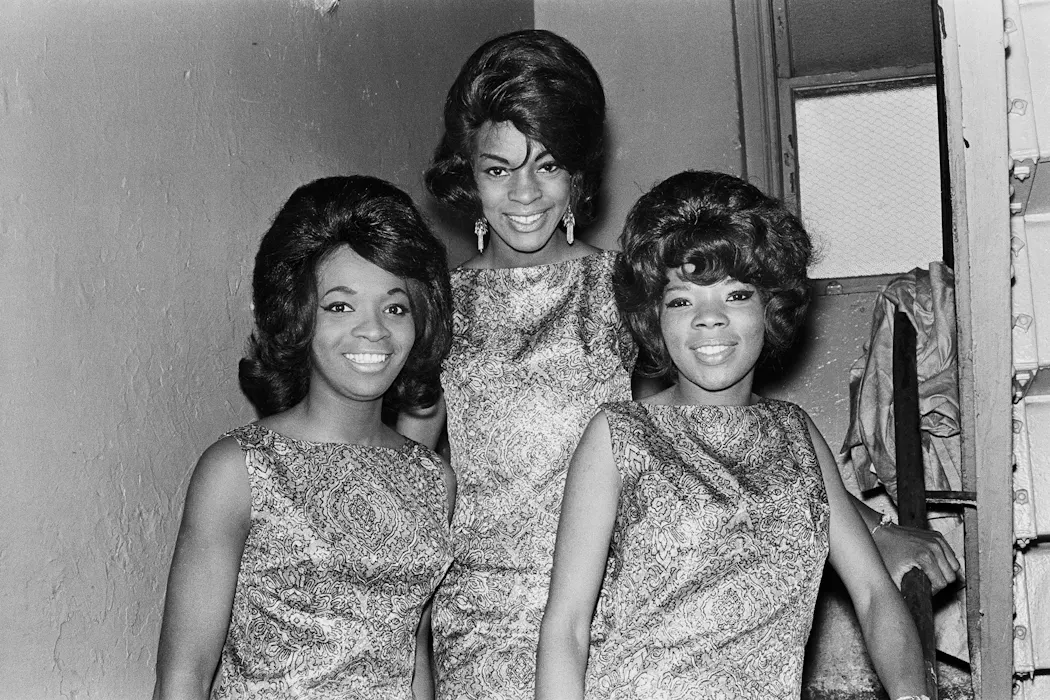
Motown’s Martha and the Vandellas inspired future generations of girl groups in pop music, including En Vogue, SWV and Destiny’s Child. Michael Ochs Archives/Getty Images

The CBS television show “It’s What’s Happening Baby” aired a music video featuring Martha and the Vandellas performing their hit song “Nowhere to Run” to kick off its national broadcast dedicated to Detroit on June 28, 1965.

In the video, the Detroit-based trio sang about how they could not escape missing an ex-lover after a breakup while sitting in a white Mustang moving slowly down the assembly line in the Ford Motor Co.’s River Rouge plant.

In 1965, CBS aired Martha and the Vandellas’ music video for their song “Nowhere to Run” set inside a Ford assembly plant.

As a cultural and labor historian, I see the “Nowhere to Run” video as an iconic testament to Detroit’s reputation as the “Motor City” and the role of the autoworker in the American imagination.

Motown founder and CEO Berry Gordy, Jr. worked on the Ford assembly line and used it as inspiration for Hitsville U.S.A., the famed headquarters and music recording studio that served as a space to train performers and perfect the “Motown sound” for the masses.

Martha and the Vandellas were part of Motown’s illustrious roster of artists in the 1960s. Initially comprised of Martha Reeves, Rosalind Ashford and Annette Beard, and with members changing over the next three decades, they helped establish the Black “girl group.” They presented themselves as working class in videos like “Nowhere to Run.”

Their classic anthem “Dancing in the Street” reflected the revolutionary mood of civil rights protesters, especially Black Americans in the 1960s. As lead singer, Reeves also emerged as a pioneering R&B “diva,” helping pave the way for Black female solo vocalists like Whitney Houston, Janet Jackson, Mary J. Blige and Beyoncé.

A patient path to stardom

Martha Reeves was born in Eufaula, Alabama, on July 18, 1941. Soon after, her family moved to Detroit’s east side. Music occupied a central place in her life from childhood.

Reeves writes in her 1994 memoir, “Dancing in the Street: Confessions of a Motown Diva,” about her father serenading her mother with his guitar while she was pregnant with Martha. Her mother, Ruby, also sang. Reeves’ parents passed their love for music to her, and she sang in her church choir and aspired to a life of performance.

“At that young age I was already hooked on pleasing the crowd with my singing,” Reeves wrote.

Reeves graduated from Northeastern High School. As a teenager, she used fake IDs to get into night clubs to watch singers perform, and she sang in open mics and talent shows. She scored her first break after earning a three-night performance at the 20 Grand, a popular Detroit night club located on 14th Street and Warren Avenue.

It was after one of those performances when she met William Stevenson, Motown Records’ executive for discovering new talent. Stevenson invited Reeves to the label’s headquarters.

Reeves came to the studio, but she didn’t audition for reasons that aren’t entirely clear today. Instead, Stevenson told her she could answer the phones. That’s how she got a job in the A&R Department and began working with other Motown artists.

A solidly build residence has a sign reading 'Hitsville USA' across the facade.
Motown’s lauded recording studio and headquarters located at 2648 W. Grand Blvd. in Detroit.
Leni Sinclair/Getty Images

In 1957, Reeves joined her first group, the Del-Phis. Formed by Edward “Pops” Larkins, the Del-Phis also included leader Gloria Jean Williamson, Rosalind Ashford and Annette Beard.

Reeves soon caught another break. In September 1962, Stevenson called for her to fill in for Mary Wells in a Marvin Gaye studio session. Reeves enlisted the other Del-Phis, and they performed so well that they became the supporting vocal group for Gaye.

After the Del-Phis toured with Gaye and recorded “I’ll Have to Let Him Go,” Gordy offered Reeves, Beard and Ashford a recording contract. The group also took on a new name, Martha and the Vandellas.

Martha and the Vandellas enjoyed commercial success soon after, with songs like “Come and Get These Memories,” “Quicksand” and “Heatwave.”

An anthem for revolution set to a groove

Dancing in the Street,” written by Gaye, Stevenson and Ivy Jo Hunter, was released in the summer of 1964 and became a signature hit for Martha and the Vandellas.

Reeves wrote in her autobiography that she did not like “Dancing in the Street.”

However, she made it her own, and Reeves later acknowledged that the song embodied the spirit of civil rights protests.

“It became the anthem of the decade,” Reeves wrote.

She was right.

At the time of the song’s release, the Civil Rights Movement was in full swing. Black Americans in Harlem took to the streets to protest the killing of 15-year-old James Powell by an off-duty New York Police Department officer.

The 1960s set off a string of “long, hot summers” as racial tensions intensified. Black folks in the Watts neighborhood in Los Angeles in 1965 protested in the streets in response to police violence.

More than 100 protests were organized in response to Martin Luther King Jr.’s assassination in 1968, from Chicago to Washington and Baltimore.

People marching in a civil rights protest
‘Dancing in the Street’ rose to pop culture prominence during the Civil Rights Movement.
Bettman/Getty Images

Detroit erupted a year earlier, in July 1967, after Detroit police officers raided a “blind pig,” or an unlicensed bar, on 12th Street.

The iconic opening lines of “Dancing in the Street” announced a new attitude among Black folks: “Calling out around the world/ Are you ready for a brand new beat?”

The high-octane, optimistic song is laced with slogans interpreted as invitations to take action. Martha and the Vandellas’ declaration that “Summer is here and the time is right for dancing in the street” reflected Black Americans’ willingness to not only march, but to take measures in their own hands and fight for equality and justice.

Battle for fair pay and recognition

The late 1960s and early 1970s were a time of transition for Reeves and the Vandellas. The Supremes were on the rise and threatened to displace them as the most prominent girl group on the Motown label. Reeves also experienced creative differences with Motown executives and struggled with drug addiction. Then, in 1972, Gordy moved Motown to Los Angeles so he could try his hand at filmmaking.

Martha and the Vandellas broke up later that year after the release of their album, “Black Magic.” However, Reeves continued as a solo artist, releasing five albums, including her self-titled debut “Martha Reeves” in 1974, “The Rest of My Life” in 1976 and “We Meet Again” in 1978, among others.

Martha Reeves and the Vandellas, along with many Motown artists, experienced a resurgence in popularity during the 1980s. Motown Records’ 25th anniversary show in Pasadena, California, in 1983 launched them back into the mainstream. The group reunited and started performing again in 1989.

Also, Reeves and the group sought to resolve their old conflicts with Motown Records. Reeves and various members of the Vandellas sued Gordy and Motown in 1989 for unpaid royalties. Motown Records settled the suit in 1991 for an undisclosed amount.

Four years later, the B-52s inducted Reeves and the Vandellas into the Rock and Roll Hall of Fame.

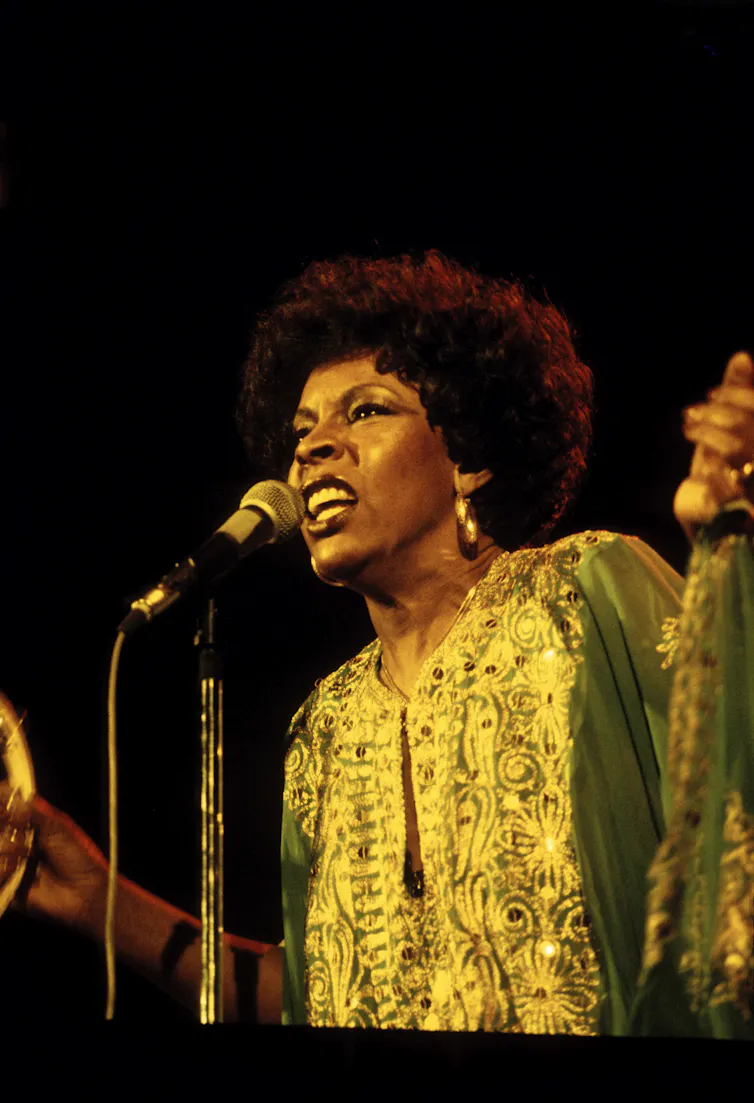
Woman singing into microphone.
Martha Reeves released five albums as a solo artist.
David Redfern/Redferns

The diva archetype

Martha and the Vandellas played a vital role in laying the foundation for future all-Black female groups like En Vogue, TLC, SWV and Destiny’s Child.

They helped set the standard for turning songs about the trappings of love and heartbreak into anthems. Reeves embraced being an “R&B Diva” long before music critics applied the persona to singers like Mary J. Blige and Beyoncé. Reeves was not just a larger-than-life vocal presence; she showed future generations of Black female vocalists that, to be a diva, one must have control of one’s own career.

“We became the Vandellas and with me being the only lead singer, my name was put out there because I did all the work,” Reeves said in a 2020 interview. “I did all the singing … I managed to just come up with my own destiny, with my own future in show business.”

The Conversation

Austin McCoy does not work for, consult, own shares in or receive funding from any company or organization that would benefit from this article, and has disclosed no relevant affiliations beyond their academic appointment.

ref. Motown girl group Martha and the Vandellas not only recorded an anthem for the civil rights era – they fought for fair pay and proudly called themselves divas – https://theconversation.com/motown-girl-group-martha-and-the-vandellas-not-only-recorded-an-anthem-for-the-civil-rights-era-they-fought-for-fair-pay-and-proudly-called-themselves-divas-278383

The Lewis dynasty makes a third bid to shape democratic socialism in Canada

Source: The Conversation – Canada – By Roberta Lexier, Associate Professor, Departments of General Education and Humanities, Mount Royal University

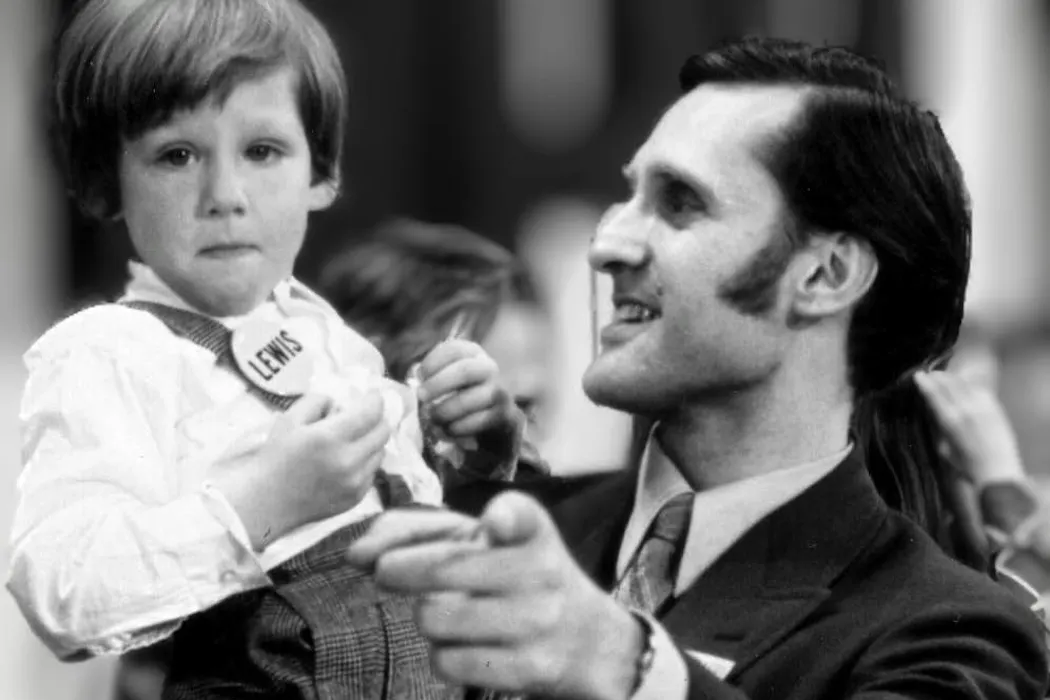
Avi Lewis and his father, Stephen Lewis, when the new NDP leader was a child.
(Avi Lewis/Facebook)

Democratic socialism, David Lewis reportedly told his son, Stephen, may not triumph in his lifetime, but perhaps for his children. “Recently,” said grandson Avi Lewis, “my Dad told me the same thing: not in my lifetime, maybe in yours.”

But the newly elected leader of the federal New Democratic Party added in his victory speech that he refuses to tell his own child the same thing: “We can’t wait another generation. We’ve got to start winning now.”

Stephen Lewis died just two days after his son’s historic, first-ballot win. Lewis joked that his father’s timing provided him with one news cycle before the inevitable flood of tributes for his father shifted the spotlight from a campaign that promoted a wealth tax, public investments in the economy and a Green New Deal.

I’m an expert on the left in Canada, currently writing a book on the Lewis family.

Almost exactly 55 years prior to Avi Lewis’s recent win — on April 24, 1971 — David Lewis, Lewis’s grandfather, assumed the same position in the party he had forged, a decade prior, as an alliance between the Canadian Labour Congress (CLC) and the struggling Cooperative Commonwealth Federation (CCF). He required four ballots to defeat the Waffle candidate, James Laxer.

Stephen Lewis ultimately claimed full responsibility for the 1972 expulsion of the insurgent Waffle group. His father, Stephen Lewis insisted, “was anti-Waffle, but he would never have agreed to expulsion. In fact, he called me and begged me not to do it. It was one of our infrequent tussles.”


Read more:
The NDP turns 60: It’s never truly been the political arm of organized labour


David Lewis

The eldest Lewis, a Bundist Jewish immigrant from Eastern Europe and a Rhodes Scholar, was a controversial figure: he feared and intimidated those unable to match his intellect and persuasiveness; he was viewed with suspicion by groups seeking to radicalize the electoral left; and he was respected by both peers and opponents for his lifelong dedication to the fight for justice and equality.

From the 1930s to the 1950s, Lewis criss-crossed the country, almost single-handedly building the CCF, and his 1943 best-seller, Make This Your Canada, co-written with poet and intellectual, Frank R. Scott, popularized the socialist platform and contributed to electoral success in Ontario and Saskatchewan

Liberals and Conservatives countered growing CCF support by accepting government intervention in the economy and an expanded social safety net. Later, the 1972 Corporate Welfare Bums campaign earned the NDP their highest seat total to date and gave the party the balance of power in a minority government.


Read more:
Corporate welfare bums: It’s payback time


Stephen Lewis

Stephen Lewis, too, was committed to electoral politics. In 1963, at just 25, he was elected to the Ontario legislature. In 1970, he was chosen leader of the Ontario NDP which, in 1975, became the Official Opposition and forced rent control, mental health supports and occupational health and safety regulations.

But Stephen Lewis reportedly found Canadian politics boring, parochial and frustrating due to its technocratic pettiness; he wanted to focus on broader issues. The NDP, hamstrung by a de-radicalized labour movement and, ironically, the success of their co-opted programs, could not contain his ambitions.

He happily accepted an appointment as ambassador to the United Nations where he aided the struggle against South African apartheid and, as special envoy, raised awareness about the HIV/AIDS epidemic ravaging Africa, though he later said “the death gets to you.”

Others in the Lewis family

Avi Lewis’s campaign for the federal leadership marks the long-anticipated return of the family to electoral politics, though the journalist, documentary filmmaker and activist promotes policies more closely aligned with the socialist CCF than the moderate, centre-left NDP.

But it’s not only these high-profile members of the family who contribute to the Lewis legacy.

Stephen Lewis’s wife for more than 60 years, Lewis’s mother, is path-breaking feminist journalist Michele Landsberg.

His brother, Michael Lewis, organized dozens of successful election campaigns across the country and transformed political action efforts within the labour movement. His sister, Janet Solberg, held almost every possible position within the NDP, including president of the Ontario wing, and participated in nearly every election in her lifetime.

Stephen Lewis’s eldest daughter, Ilana, ran the Stephen Lewis Foundation for nearly 20 years, and his youngest, Jenny, was the casting director for the smash hit Heated Rivalry. Often overlooked, Stephen Lewis wrote in a 2024 email to me: “She is far and away the most politically astute of our three kids.”

Avi Lewis is married to author and activist Naomi Klein.

As I researched my book, Stephen Lewis told me his was “a family that took positions … believed in them, fought them through. They were tenacious, they were indefatigable, they were uncompromising.”

Avi Lewis agreed. He told me in a recent interview: “The job … was to fight. Win occasionally, lose a lot and never stop fighting.”

The Conversation

Roberta Lexier receives funding from SSHRC. She is affiliated with the New Democratic Party.

ref. The Lewis dynasty makes a third bid to shape democratic socialism in Canada – https://theconversation.com/the-lewis-dynasty-makes-a-third-bid-to-shape-democratic-socialism-in-canada-280197

‘I’m not a politician’: why the clash with Pope Leo could prove dangerous for Donald Trump

Source: The Conversation – UK – By Massimo D’Angelo, Research Associate in the Institute for Diplomacy and International Affairs, Loughborough University

“I am not a politician; I speak of the Gospel.” Pope Leo XIV’s recent remarks, made during his apostolic journey to Africa, immediately suggest that his clash with Donald Trump operates on a different level to the US president’s usual political spats.

This is not the classic kind of confrontation that Trump has often had with foreign heads of state and government in the past, such as in recent months with the UK prime minister, Keir Starmer, whose refusal to fully back the US and Israel in their war against Iran attracted Trump’s ire. Rather, it is a clash rooted in fundamentally different moral and political visions: between a president who treats power in transactional terms and a pope who frames war, migration and human dignity as matters of moral principle.

When Cardinal Robert Prevost was named as Pope Leo in May 2025, Trump and his administration initially appeared to welcome the new pontiff warmly. In fact, in a post to his Truth Social platform the US president appeared to take credit for his election as pope, writing that Prevost “was only put there by the Church because he was an American, and they thought that would be the best way to deal with President Donald J. Trump”.

But the war in the Middle East launched by the US and Israel has made the differences between their positions clearer – further heightening tensions between them. On Palm Sunday, the week before Easter, it became clear that Leo had decided to take a firm line against the war in Iran, saying that Jesus “does not listen to the prayers of those who wage war, but rejects them, saying: ‘Even though you make many prayers, I will not listen: your hands are full of blood’”.

His Easter message was equally clear: “Let those who have weapons lay them down! Let those who have the power to unleash wars choose peace! Not a peace imposed by force, but through dialogue! Not with the desire to dominate others, but to encounter them.”

Day’s later the pope denounced the US president’s apparent threat to destroy the whole of the Iranian civilisation as “truly unacceptable” in comments which roundly criticised the war and called for a “return to dialogue, negotiations”.

Trump responded in harsh terms, describing the pope in a Truth Social post as “weak on crime” and “terrible for foreign policy”. He went on to say that he did not want a pope “who thinks it is OK for Iran to have nuclear weapons”, adding that “Leo should use common sense, stop doing the bidding of the radical left, and focus on being a great pope rather than a politician”.

Returning to Washington from Florida, Trump also told reporters: “I don’t think he’s doing a good job. I’m not a fan of Pope Leo.” The pope replied on Monday by saying that he was not afraid of the Trump administration and would continue to speak out against war.

Trump did not stop there. He went so far as to publish an image portraying himself as Jesus Christ, a move that appeared to go too far even for many of his conservative supporters. The reaction was strong enough to force him to delete the post and backtrack.

This could hurt the US president

Trump has clashed with the Vatican before, but this confrontation unfolds in a very different setting. Pope Francis, the first Argentine pope and the first pontiff from the global south, was often openly critical of Trump, particularly on migration. In 2016, he famously suggested that a leader who thinks only of building walls rather than bridges is “not Christian”, crystallising the tension between them.

Pope Leo XiV calls for an end to war, March 29 2026.

The key difference was that Francis was also a divisive figure within sections of the American Catholic Church. He was frequently targeted by conservative Catholic commentators and church networks in the US, and in 2019 he remarked that “it’s an honour that the Americans attack me”.

Leo, by contrast, is the first US pope – and that changes the political equation. His voice is likely to carry different authority among Catholic voters, who are an important part of Trump’s electoral base.

In the last presidential election, 55% of Catholic voters supported Trump, including 62% of white Catholics. Senior Catholics also occupy prominent positions in his administration, including Vance and Trump’s secretary of state Marco Rubio.

That is why Leo’s criticism may prove more politically consequential. It does not come from an external moral voice alone, as was often the case with Francis, but from an American pontiff speaking into a church and an electorate that Trump cannot afford to ignore.

Early reactions suggest that many Catholic voices in the US have rallied behind Leo, making this not only a diplomatic clash, but a potentially significant domestic one too. (This could also really hurt J.D. Vance. As the likely contender to succeed Trump on the Repulican ticket, he is deeply invested in his Catholic faith and is about to publish a book devoted to his conversion.)

From an international perspective, the break with the pope has also had visible repercussions. Giorgia Meloni, the Italian prime minister, long regarded as Trump’s closest ally in Europe, went publicly in defence of Pope Leo, the bishop of Rome, drawing criticism from Trump himself, who defined the Italian prime minister’s behaviour as “unacceptable”.

To conclude, this is not a political confrontation like the many others the world has become used to with this US president. The stakes are higher at home and on the world stage. At home, it risks alienating many Catholic voters whose support will matter not only in the midterm elections but also in the next presidential race. Internationally, it may complicate Trump’s relationship with European conservative parties, many of which have long sought close association with the Vatican.

The pope, as the leader of a vast global community, cannot be treated as though he were just another political opponent.

The Conversation

Massimo D’Angelo does not work for, consult, own shares in or receive funding from any company or organisation that would benefit from this article, and has disclosed no relevant affiliations beyond their academic appointment.

ref. ‘I’m not a politician’: why the clash with Pope Leo could prove dangerous for Donald Trump – https://theconversation.com/im-not-a-politician-why-the-clash-with-pope-leo-could-prove-dangerous-for-donald-trump-280742

Is mouthwash bad for the heart? Here’s what the research actually says

Source: The Conversation – UK – By Joanna L’Heureux, Postdoctoral Researcher, Public Health and Sport Sciences, University of Exeter

Don’t give up your mouthwash just yet. years44/ Shutterstock

Social media videos are claiming that mouthwash can raise risk of blood pressure – and potentially damage heart health.

According to some of these videos, this is caused by mouthwash wiping out “good” oral bacteria that are important for the cardiovascular system. While it’s a striking message, don’t throw your mouthwash away just yet. The reality is far more complex.

Our mouths contain a wide variety of bacteria. Together, these bacteria form a balanced and diverse microbiome which helps prevent the overgrowth of other bacteria linked to disease, supports normal metabolic functions and contributes to both good oral and overall health.

One of the important roles these oral bacteria have is converting the nitrate in our food (typically from sources such as leafy greens) into nitrite. When we swallow nitrite, the body turns it into nitric oxide. This happens via the nitrate-nitrite-nitric oxide pathway, also called the enterosalivary pathway. It’s one example of how bacteria contribute to keeping the body healthy.

Nitric oxide plays an essential part in regulating blood pressure and supporting brain function and muscle function.

But according to some online influencers, the reason mouthwash harms heart health is because it affects the “healthy” bacteria – the ones that produce nitric oxide.

Mouthwash and heart health link

Several small studies have actually found that giving people mouthwash can change the balance of bacteria in the mouth. This may reduce the bacteria’s ability to turn nitrate from vegetables into nitrite, which the body needs to make nitric oxide.

One study of 19 healthy volunteers found that the adults who used chlorhexidine mouthwash for seven days saw a small increase in blood pressure and reduced levels of nitrite.

An intervention study also reported that rinsing with 0.12% chlorhexidine gluconate mouthwash twice daily for one week significantly increased blood pressure in 27 healthy adults.

In another trial of 15 adults who already had high blood pressure, three days of chlorhexidine use further increased blood pressure.

The key detail that may be missed out of some of these online social media videos is the type of mouthwash used in these studies.

Many of the studies which have found a link between mouthwash use and blood pressure gave participants chlorhexidine. This is a strong, over-the-counter antiseptic mouthwash only recommended for short-term use in people with gum disease or after dental procedures where its antimicrobial effects are beneficial.

A woman smiles with her teeth. A magnifying glass is held in front of her teeth, depicting the many small microbes and bacteria that may be living inside her mouth..
Mouthwash might disrupt important oral microbes.
sruilk/ Shutterstock

Chlorhexidine disrupts oral bacteria to help with infection control – including the bacteria that convert nitrate into nitrite. This makes it an ideal mouthwash to use for researchers wanting to study the nitrate-nitrite-nitric oxide pathway. However, it also means the findings may not reflect what happens with milder, everyday mouthwashes.

A trial with 12 healthy adults investigated the effect of three different mouthwashes (and gargling water, which acted as a control) on oral bacteria.

After drinking a nitrate-rich juice, researchers measured how much nitrate was converted to nitrite by oral bacteria. Water and the mild mouthwash (which didn’t contain harsh ingredients such as chlorhexidine) caused a typical response, where nitrate was converted into nitrite.

But the cetylpyridinium chloride mouthwash (which also has strong, anti-bacterial effects) partially blocked the conversion of nitrate to nitrite. The strongest chlorhexidine mouthwash almost completely stopped this process. This is consistent with their stronger antibacterial effects. The stronger types of mouthwash were also linked to higher systolic blood pressure.

Alcohol (ethanol) is another common ingredient in many mouthwashes, although formulations usually also include other active ingredients – such as essential oils. This makes it difficult to isolate the specific effects of alcohol.

As an antimicrobial, alcohol may influence the oral microbiome. Some studies have even suggested a possible association between mouthwashes containing alcohol and increased oral cancer risk. However, there are currently no studies that have specifically examined the effects of ethanol-only mouth rinses on the oral microbiome or cardiovascular health.

Overall, the body of evidence suggests that a mild, over-the-counter mouthwash, like the kind most people buy at stores, may be less likely to significantly interfere with nitrate-to-nitrite conversion or affect blood pressure.

In a long-term study of 354 adults, better routine oral hygiene, such as brushing and flossing, was linked to a lower risk of cardiovascular death over nearly 19 years. Regular mouthwash use did not appear to have any influence on heart health outcomes. This was true for milder mouthwashes containing flouride and alcohol, as well as stronger, anti-bacterial mouthwashes such as chlorhexidine and cetylpyridinium chloride.

The type of mouthwash matters

Together, these studies suggest that some types of mouthwash (such as chlorhexidine) disrupt beneficial oral bacteria and the nitrate-nitrite-nitric oxide pathway when used long term. But more research needs to be done to truly understand the long-term effects of other types of mouthwash on cardiovascular health – including mild everyday mouthwash brands and those containing alcohol.

Mouthwash comes in different types for different purposes, so it’s important to check the active ingredient on the back of the packaging. Alcohol-free and milder mouthwashes appear to have less effect on the heart-healthy bacteria than stronger types.

However, be aware to check the ingredients as even alcohol-free options can contain antibacterial agents such as cetylpyridinium chloride. As such, it’s best to choose one that fits your needs and use it in moderation. Strong mouthwashes containing chlorhexidine are best reserved for helping gum disease or oral infections.

It’s also worth noting that oral health and untreated infections can also contribute to heart disease more broadly. For example, a systematic review of 82 studies concluded that chronic oral disease and tooth loss was associated with risk of heart problems. This is why maintaining a healthy balance of mouth bacteria matters beyond your teeth.

Take care of your oral and overall health by keeping up with brushing, flossing, visiting your dentist and choosing a mouthwash that works for you.

The Conversation

Joanna L’Heureux does not work for, consult, own shares in or receive funding from any company or organisation that would benefit from this article, and has disclosed no relevant affiliations beyond their academic appointment.

ref. Is mouthwash bad for the heart? Here’s what the research actually says – https://theconversation.com/is-mouthwash-bad-for-the-heart-heres-what-the-research-actually-says-277299

Departures: this stylish gay love story deftly balances darkness and whimsy

Source: The Conversation – UK – By Benedict Morrison, Senior lecturer in Film, Television, Literature, and Queer Studies, University of Exeter

In her 1998 essay What’s a Good Gay Film?, film critic B. Ruby Rich considered what queer audiences were looking for.

She wrote that queer cinema-goers were seeking “films of validation and a culture of affirmation: work that can reinforce identity, visualise respectability, combat injustice and bolster social status”. They were tired, she argued, of stereotypes of queer suffering and trauma. Instead, they required “nothing downbeat or too revelatory; and happy endings, of course”.

But if a straightforward happy ending is what you are after, Departures is not the film for you. This miraculously self-financed and stylish debut feature is not purely affirmative. At times, the screen shimmers with sadness. And yet, wryly and playfully, the film also resists becoming gloomy. Tonally sophisticated, it combines the bleak with the whimsical, ultimately sidestepping the crude dichotomy of happy or unhappy endings altogether.

The film opens with a love-scarred Benji (played by the film’s writer and co-director Lloyd Eyre-Morgan) recalling a recent relationship. In flashback, he remembers meeting handsome Jake (David Tag) in the airport as they both wait for a flight to Amsterdam. Jake bewilders Benji: his flirtation is suggestive but always deniable, never quite declaring itself. Charismatic and assertive, Jake engineers it so that they sit together on the flight, telling the air steward that he is Benji’s carer – a description which quickly becomes grimly ironic.

The trailer for Departures.

Later, Jake rejects the suggestion that he is gay but demands that Benji give him a blowjob regardless. Monthly trips to Amsterdam follow and the two men develop a form of intimacy, but one which affords the softer, more pliable Benji little power.

In such a brief synopsis, the scenario risks sounding cliched. Familiar narrative devices pile up: the physically asymmetrical gay relationship in which the self-consciousness of one man makes them susceptible to the coercive manipulations of the more assured partner in a whirlwind of sex and drugs and emotional control. A comparable dynamic played out in another recent queer film, Pillion.

Benji, longing for this to be more than a once-monthly dose of overseas sex, withstands put-downs and disappointments. His quiet, emotional expressions of desire (played movingly by Eyre-Morgan) contrast with Jake’s struggle to accept his attraction to men. Tag is excellent and his portrayal of Jake is sometimes harsh and defensive, but also shows vulnerability, which prevents him from becoming a one-dimensional monster. Because of these tensions, the relationship’s unhappy ending feels like a dead cert.

Lessons from Heartstopper

Departures takes familiar cliches and gives them new life, turning them into something unexpectedly revealing. Its understated story recalls many films about gay suffering – from A Single Man to All of Us Strangers – but it refuses to stay within that familiar emotional frame.

Instead, the film disrupts expectations through bold, stylised touches that feel borrowed, perhaps improbably, from the Heartstopper playbook. The result is a work that plays with recognisable influences while twisting them into something more strange, lively and original.

Heartstopper, the popular Netflix queer teen drama, deliberately avoids the more difficult or painful stories often told about queer life. Instead, it offers the kind of wish-fulfilling, happy endings that Rich suggested many queer viewers have long desired. Every glance, touch and kiss between its characters is punctuated with playful on-screen doodles — bursts of electricity, fluttering butterflies and swirling text that insist we are watching Love with a capital L.

Departures borrows these same twee, saccharine stylistic gestures, but uses them in a very different context. Applied to a darker, sometimes even sordid story about control and sadness, they take on a mischievous, unsettling edge.


Read more:
Heartstopper: how this joyous teen show contrasts with my bitter memories of school life under homophobic law Section 28


As Benji’s voiceover details his suffering, scratchy lettering and illustrations dance around the screen. When he first sees Jake and his weary voiceover acknowledges the pain to come, doodled hearts burst around the handsome stranger to the music of Gershwin’s Rhapsody in Blue. As Benji submissively performs oral sex for Jake, the Hallelujah Chorus plays and animated fireworks fill the screen. And as Jake prepares to get into a fight with Benji’s friends, the needle of a Toxic Masculinity Meter shoots up to maximum. Here is a version of Heartstopper for an audience which knows that happy endings are often only the stuff of comic books.

In Departures, the collision of the sombre, unsettling narrative with the comic stylings of those twitching onscreen graphics suggests a more complex emotional situation in which neither cynicism nor romanticism is left unchecked. Instead, they synthesise in a complex portrait of Benji, who can neither maintain nor give up his romantic belief that Jake might love him.

Colliding styles

One of the film’s most striking ways of expressing this tension comes in a series of non-narrative sequences. Here, the characters dance – or perhaps merely convulse – under harsh strobe lights, their bodies flickering in and out of view, shifting into new poses and even seeming to become different selves between flashes.

It’s a simple but powerful device, inspired by the club scenes the men encounter on their trips to Amsterdam. Yet it opens up something more unsettling: brief glimpses of gay men caught between pleasure and pain, ecstasy and distress, moving to the uncertain rhythm of a contemporary queer world where nothing quite feels stable or fixed.

In the 1990s, Rich rejected the idea of easy affirmation, describing herself instead as an “old-time outlaw girl” who craved films “that push the edge, upset convention, defy expectation, speak the unspeakable, grab me by the throat and surprise me with something I’ve never seen before”.

Departures may work with familiar characters and a recognisable story, but its force lies in how it collides styles and tones in unexpected ways. It’s the kind of film that, in Rich’s terms, grabs you by the throat. What stays with me most is its sardonic yet romantic energy and the strangely undefeated presence of Benji at its centre.

This film deserves to find an audience who want more than easy viewing. It deserves viewers who will dance along to its tonal shifts and cherish the funny, sad, ironic almost-happy ending it serves up in its closing credits.

The Conversation

Benedict Morrison does not work for, consult, own shares in or receive funding from any company or organisation that would benefit from this article, and has disclosed no relevant affiliations beyond their academic appointment.

ref. Departures: this stylish gay love story deftly balances darkness and whimsy – https://theconversation.com/departures-this-stylish-gay-love-story-deftly-balances-darkness-and-whimsy-280497

​Who is Hungary’s Péter Magyar and how he overturned Viktor Orbán’s illiberal democracy

Source: The Conversation – UK – By Gemma Ware, Host, The Conversation Weekly Podcast, The Conversation

 The day after Péter Magyar ousted Victor Orbán as prime minister of Hungary, he gave a combative press conference. He spoke in Hungarian, but was talking to the world – and particularly to Europe.

“We will do everything to restore the rule of law, plural democracy, and the system of checks and balances,” Magyar said, calling his election a historic moment for Hungary.

During 16 years in power, Orbán and his Fidesz party managed to take control of many of Hungary’s levers of power, from the judiciary to state-owned media, and weakened the institutions that could keep them accountable. Orbán liked to call it an illiberal democracy.

Magyar also urged the Hungarian president to move swiftly to install him as prime minister, before any more damage could be done by Orbán’s loyalists. “We know that people have been destroying documents, just like in the old communist age, that shredders are working full time,” he said.

In this episode of The Conversation Weekly podcast, Zsolt Enyedi, professor of political science at the Central European University and an expert in Hungarian politics, explains how Magyar, a former member of Fidesz, manage to beat Orbán, his former boss.

Magyar’s moment

Enyedi describes Magyar as a centre-right figure with some nationalistic attributes, who is a bit eurosceptic with “some reservations against progressive way of speaking”. However, Enyedi says Magyar changed since first entering politics in 2024, when he gave an explosive interview criticising Orbán’s regime.

Back then he was “clearly someone who reproduced many of the ideological panels of this Orbánist regime, but he was very critical of the corruption that exists in the regime”. He was likened to a clean, young version of Orbán himself.

Since then, Magyar has spent two years travelling around Hungary speaking to people across the country on the campaign trail. “He started to understand better the enormous harm done by the Fidesz regime, and he also became more pro-European in his rhetoric, embracing the democratisation agenda,” says Enyedi.

Magyar is now able to “provide the lowest common denominator for all pro-democratic forces,” says Enyedi. “In that sense, he’s more than simply representative of one political ideological current.”

As European leaders breathe a sign of relief at Magyar’s victory, Enyedi says although Europe has not gained an “enthusiastic partner”, he will be a much more constructive one. “Partly out of conviction, partly because he needs EU money and he needs that money soon. So he cannot play games. He has to make a deal with the EU leadership.”

Listen to the interview with Zsolt Enyedi on The Conversation Weekly podcast. This episode was written and produced by Gemma Ware, Mend Mariwany and Katie Flood. Mixing by Eleanor Brezzi and theme music by Neeta Sarl.

Newsclips in this episode from CNN, CRM News, euronews and Partizán.

Listen to The Conversation Weekly via any of the apps listed above, download it directly via our RSS feed or find out how else to listen here. A transcript of this episode is available via the Apple Podcasts or Spotify apps.

The Conversation

Zsolt Enyedi has received EU Horizon funding.

ref. ​Who is Hungary’s Péter Magyar and how he overturned Viktor Orbán’s illiberal democracy – https://theconversation.com/who-is-hungarys-peter-magyar-and-how-he-overturned-viktor-orbans-illiberal-democracy-280651

Orbán’s downfall is a positive for EU-Hungary relations – but the reset will not be smooth

Source: The Conversation – UK – By Michael Toomey, Lecturer in Politics and International Relations, University of Glasgow

Hungary’s Tisza party won parliamentary elections on April 12, bringing an end to the 16-year tenure of Viktor Orbán as prime minister. The result is a seismic one for Hungarian domestic politics. But it is also a major development in the trajectory of Hungary’s relations with the EU.

Throughout Orbán’s term, but particularly since the full-scale Russian invasion of Ukraine in 2022, he was consistently a thorn in the side of the EU. He flouted European norms, values and legislation as he went about building what he called an “illiberal state”.

One example was his 2011 decision to lower the mandatory retirement age for Hungarian judges and prosecutors from 70 to 62. This forced a large proportion of the country’s judiciary into retirement, allowing Orbán to replace them with party loyalists. The European Court of Justice ruled against the change in 2013, but many of Orbán’s appointees remained in their positions.

Orbán’s continued defiance of EU policies eventually resulted in the suspension of his Fidesz party from the powerful European People’s Party grouping in the European parliament. Its membership of the alliance was terminated two years later. The European Commission’s 2022 decision to withhold €30 billion (£26.1 billion) in funds from Hungary caused relations to plummet further.

And Orbán subsequently sought to leverage the EU’s need for solidarity and unanimity to support Ukraine and sanction Russia. Hungarian obstinance and disruption became so frequent that the country has been described by some political figures in Europe as not being aligned with European or Ukrainian interests when it comes to Russia.

In a thinly veiled reference to Orbán during a 2024 parliamentary speech, the president of the European Commission, Ursula von der Leyen, said: “There are still some who blame this war not on the invader but on the invaded. Not on Putin’s lust for power but on Ukraine’s thirst for freedom. So I want to ask them: would they ever blame the Hungarians for the Soviet invasion of 1956?”

A true low point in EU-Hungary relations was reached in early April 2026 when leaked audio recordings showed Orbán and his foreign minister, Peter Szijjarto, actively coordinating with the Russian government. The recordings show that Szijjártó had used breaks in closed EU ministerial sessions two years earlier to call his Russian counterpart, Sergei Lavrov, and brief him on the state of internal discussions.

Szijjártó is also accused of sharing confidential documents with Lavrov relating to minority language requirements in Ukraine’s EU accession negotiations. The French foreign minister, Jean-Noël Barrot, has described this as a “betrayal”. Had Orbán managed to prevail in the recent elections, the relationship between the EU and Hungary is likely to have reached a breaking point.

Rupture or continuity?

As it is, EU officials will be breathing a sigh of relief. The incoming prime minister, Péter Magyar, has a huge incentive to restore Hungary’s relations with the EU – if for no other reason than to secure the release of roughly €17 billion in allocated EU funds that are still suspended. Warmer relations would also help Hungary access a possible further €17 billion in discounted defence loans.

Given the global economic ramifications of the war in Iran and the costs Magyar will incur as he reforms and dismantles Orbán’s oligarchic economic system, his government will rely on these funds to ease some of the budgetary pressures they will face.

However, unfreezing these funds is not a foregone conclusion. Von der Leyen has already announced that reforms will need to be made in order to achieve this and has presented Hungary’s incoming government with 27 conditions that will need to be satisfied.

Some of these reforms will be relatively easy for Magyar to achieve. For instance, tackling corruption was an explicit part of Tisza’s election manifesto. However, other EU funds that were suspended due to infringements on LGBTQ+ rights or asylum procedures will be more politically costly to access.

Hungarians remain deeply conservative and more eurosceptic than the average European. According to a 2025 survey conducted on behalf of the European Commission, only 55% of Hungarians consider the country’s EU membership to be “a good thing”. This is lower than the EU average of 62%. Reforms that are seen to be at odds with Hungarian values may thus provoke domestic resistance.

Perhaps of most global interest will be how Magyar approaches the war in Ukraine. He has indicated an interest in rapprochement with Ukraine as part of his broader goal of realigning Hungary with the EU and Nato. Most notably, he has stated that Orbán should lift his veto on the provision of a €90 billion EU loan to Ukraine.

However, there may also be more continuity with the Orbán regime than those in Brussels might like. Magyar has stated that he intends to continue importing Russian energy until at least 2035 and that he will need to put any future possibility of Ukrainian EU membership to a referendum.

In a country where opinion polls show 50% of voters – and 36% of Tisza voters – see Ukraine as a threat, such a referendum would be highly likely to upend the entire process of Ukraine’s EU accession.

Orbán’s downfall is undoubtedly a positive for EU-Hungary relations. However, while Magyar himself has asserted his determination to restore a friendly relationship, this reset will face multiple sizeable tests over the coming months and years.

The Conversation

Michael Toomey does not work for, consult, own shares in or receive funding from any company or organisation that would benefit from this article, and has disclosed no relevant affiliations beyond their academic appointment.

ref. Orbán’s downfall is a positive for EU-Hungary relations – but the reset will not be smooth – https://theconversation.com/orbans-downfall-is-a-positive-for-eu-hungary-relations-but-the-reset-will-not-be-smooth-280681