What is the 25th Amendment and could it be used to remove Trump from office?

Source: The Conversation – Global Perspectives – By John Hart, Emeritus Faculty, US government and politics specialist, Australian National University

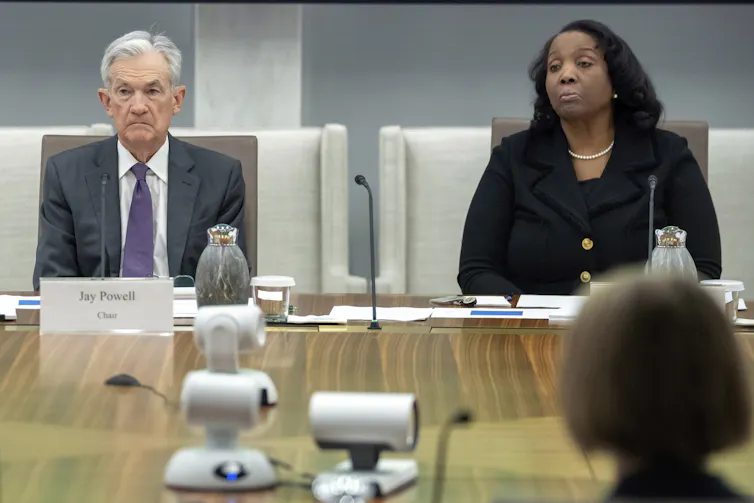
US President Donald Trump’s recent intemperate exchanges with the pope, his depiction of himself as a Christ-like figure and his threat to wipe out the civilisation of Iran have raised questions about his mental capacity to carry out his job.

This week, former CIA Director John Brennan joined calls for the 25th Amendment of the US Constitution to be invoked to remove Trump from the presidency, which he said was “written with Donald Trump in mind”.

So what is the 25th Amendment and how would it work?

What does the amendment say?

The amendment is designed to clarify some constitutional ambiguities in the event the president is unable to continue in the role. The first three sections of the amendment are straightforward and uncontroversial.

Section 1 simply states that if a vice president succeeds on the death or resignation of the president, they become president (that is, not merely acting president).

Section 2 provides the mechanism for filling a vacancy in the vice presidency.

Section 3 provides for the president to temporarily hand over the powers and duties of office to the vice president during a period of incapacity (for example, such as undergoing anaesthetic).

Section 4 is a much more complex and potentially difficult arrangement to relieve a president of the duties and responsibilities of office temporarily. The 25th Amendment tackles the problem of presidents who are unfit to continue in office, but don’t recognise their disability.

It is this section of the amendment that is currently making news because of the reaction to Trump’s recent social media posts and behaviour, and the efforts of some leading figures in Washington to invoke the 25th Amendment provision to remove Trump from the presidency.

The disability clause

Section 4 of the amendment works like this. The vice president and a majority of departmental heads declare to the speaker of the House of Representatives and the president pro tem of the Senate – the Senate’s second-highest ranking official – that the president is “unable to discharge the powers and duties of his office”. If approved, the vice president becomes acting president until such time as the president submits “a written declaration to the contrary.”

After that declaration is made, the president resumes the powers and duties of office unless the vice president and a majority of the heads of the executive departments challenge the president’s response within four days.

If that happens, Congress has 21 days to debate and decide the issue by a two-thirds vote of both houses.

It should be noted the amendment refers to “a majority of the principal officers of the executive departments” and not the Cabinet, as is often mentioned when the disability clause is reported in the media. Trump’s Cabinet consists of 21 members, only 15 of whom are principal officers of executive departments.

So, if the disability provision were to be implemented, the vice president would need eight of the department heads to join him.

The process also depends on the willingness of just one person – the vice president – to implement it, because the procedure doesn’t work with only a majority of the departmental heads.

Finally, even if the amendment was implemented, it wouldn’t actually remove Trump from the presidency. He would remain president, albeit relieved of the powers and duties of office for a temporary period. And JD Vance would only have the title of acting president.

How would it work in Trump’s case?

Even assuming the very unlikely possibility that Vance and eight of the 15 department heads would be willing to implement it, there would be a lot of uncertainty about how the 25th Amendment would work against Trump.

The major weakness of the amendment in Trump’s case would be the provision that allows the president to override the determination of the vice president and the majority of department heads by simply informing Congress that “no inability exists”.

No medical evidence is required, and the amendment doesn’t define “inability”.

Whatever his mental state may be, Trump is not physically disabled, so there would appear to be no physical impediment to him signing a piece of paper declaring that “no inability exists.”

The amendment doesn’t even require Congress to review the president’s “no inability exists” letter. Trump would be restored to the presidency the moment he transmitted the document.

For the process to be taken further, the vice president would have to move against Trump a second time, both houses of Congress would have to debate Trump’s mental state, and super-majorities in both chambers would be necessary to relieve Trump of his duties again. It would risk the 25th Amendment turning into a constitutional crisis.

All of this means any claim the 25th Amendment was “written with Donald Trump in mind” must be questioned. It may be appropriate for a president who is suffering major physical disabilities, such as Woodrow Wilson following his stroke in 1919, or James Garfield’s slow lingering death in 1881. But it is less well equipped to deal with a president who may or may not be mentally incapacitated but is physically able to fight back.

The 25th Amendment is about dealing with the temporary disability of a president not a method of impeaching the president by other means. Impeachment remains the only constitutional way of holding a president to account.

The Conversation

John Hart does not work for, consult, own shares in or receive funding from any company or organisation that would benefit from this article, and has disclosed no relevant affiliations beyond their academic appointment.

ref. What is the 25th Amendment and could it be used to remove Trump from office? – https://theconversation.com/what-is-the-25th-amendment-and-could-it-be-used-to-remove-trump-from-office-280732

Nicole Kidman is training to be a ‘death doula’. What is a death doula?

Source: The Conversation – Global Perspectives – By Symon Braun Freck, PhD Candidate, School of Engineering, DeathTech Research Team, The University of Melbourne

This week, Nicole Kidman revealed she is training to become a death doula. She told an audience at the University of San Francisco it “may sound a little weird”, but she was inspired after her mother died in 2024.

Observing how her family wasn’t able to provide the support they hoped they could, Kidman wished there were “people in the world that were there to sit impartially and just provide solace and care”. This is how she came to explore the field of death doulaship.

The concept of a doula is often familiar: you might have heard of a birth doula, who supports a family through pregnancy. A death doula works in a similar capacity, as a community partner offering support to the dying.

There is no singular definition for doulas, but those within the field often describe their work as “holding space” for their client. They act as a neutral third-party, working between the family, end-of-life care professionals and funeral professionals.

Though there are training programs that offer certifications for death doulas, their work varies widely depending on the preferences of the doula and the type of assistance sought by the client.

You may have even acted as a death doula within your own community, aiding the dying or their loved ones without the official title.

A new model for dying

Dying, death and funerals were once a sacred communal process taken care of by family in the comfort of their home. As death became institutionalised, medicalised and professionalised over the late 19th and early 20th centuries, loved ones were pushed to the wayside as they did not have the proper training to care for the dead in the eyes of the industry.

By the mid 1900s, the family parlor was no longer the central meeting spot to lament over mortality, and the funeral industry as we understand it today was in full swing.

This shift slowly gave way to a host of paraprofessionals. Death doulas and death midwives, an ancient practice, reemerged in the early 2000s.

Stemming from the Greek term δούλα, meaning female servant, doulas serve as community helpers in liminal periods, most commonly birth and death. They seek to fill the gaps medical and funeral personnel are unable to attend.

Clasping hands.
Death doulas seek to fill the gaps medical and funeral personnel are unable to attend.
National Cancer Institute/Unsplash

Not everyone who acts in this role calls themselves a “death doula”. They are also known as soul guides, compassionate companions and vigilers, among other titles.

I volunteered, researched and worked in thanatology – the study of death and dying – for over a decade before completing my death doula training. The hands-on experience I gained working with death before my training program was crucial in shaping my ability to communicate about mortality.

Most people want to talk about death, but they’re faced with the conversation too late. In their most vulnerable hour, the dying and their loved ones are expected to make impossible decisions with little guidance. That’s where death doulas come in.

Easing the burden

Kidman said “as my mother was passing, she was lonely, and there was only so much the family could provide”.

While many family members are elected as surrogate decision-makers throughout the end-of-life process, it is common they feel highly uncertain about the choices they’re making.

The assistance and support of third-party advocates, like death doulas, helps ease the burden on family members and offers a neutral perspective during a vulnerable period.

I came into this work because I experienced deaths at a young age, and I understood my capacity to deal with death. Similarly to Kidman, many doulas I have interviewed came to the work after a loss of their own, with a newfound desire to share what they learned through their experience to help others in an inevitable time of need.

Death doulas can specialise their work, electing to work with pets, stillbirths, children, cognitive decline and many other types of loss.

Some doulas may enter work with a client years before a death, working on more administrative tasks like advanced care planning. Others may join right before a death occurs, focusing on sitting bedside. A third doula may specialise their work around funeral planning, coming in to help facilitate an at-home funeral.

No two doula practices are identical, just like no two deaths are identical.

If you are wondering if you should join a death doula training program, my response would be that increasing your death literacy is always beneficial, but there are many ways to get a death education.

Before diving in, explore what is drawing you to the profession and if you want to do this work for others or if you are seeking the knowledge for yourself. Both are wonderful motivations, but they could lead to different outcomes in the type of program you choose to attend or the kind of death education you seek.

We’re all going to die, and it’s never too soon to start talking about it.

The Conversation

Symon Braun Freck receives funding from the University of Melbourne as part of her research. Symon also runs a consulting firm (SBF Creative), a death-tech company (AI Death Doula), and a personal blog, all focused on thanatology. She received her death doula training from the University of Vermont. Symon is a Certified Thanatologist through ADEC and affiliated with NEDA, The Open to Hope Foundation, and Death with Dignity.

ref. Nicole Kidman is training to be a ‘death doula’. What is a death doula? – https://theconversation.com/nicole-kidman-is-training-to-be-a-death-doula-what-is-a-death-doula-280725

Iran has a powerful new tool in the Strait of Hormuz that it can leverage long after the war

Source: The Conversation – Global Perspectives – By Ali Mamouri, Research Fellow, Middle East Studies, Deakin University

The Trump administration claims its blockade of the Strait of Hormuz is working, with nine ships complying with orders to turn around.

One of those was a Chinese-owned tanker called the Rich Starry that turned around in the Gulf of Oman on Wednesday to head back through the strait.

Iran, meanwhile, maintains it still has control over the strait and it will determine which ships transit through the crucial waterway. It also said if its ports are threatened, “no port in the Persian Gulf and the Sea of Oman will remain safe”.

No matter how the blockade plays out, Iran will be in a far better position in the long term when it comes to maintaining control over the strait – not the US.

Iran’s powerful new tool

For decades, Iran had threatened to use the Strait of Hormuz as leverage against its adversaries. It avoided doing so, however, until the current war against the United States and Israel, which it sees as existential.

Ironically, while the US and Israel aimed to weaken Iran’s nuclear and missile capabilities, the conflict has given Tehran a powerful new tool – control of the strait.

Tehran is now likely to make this control a core part of its long-term strategic thinking. In fact, Iran’s negotiators in the recent peace talks with the US had added Iranian sovereignty over the strait to their list of demands.

This leverage serves at least three key purposes.

First, it provides significant revenue potential from the tolls and transit fees it is already charging ships going through the strait.

By imposing minimal transit-related costs — estimated at around US$1 per barrel or up to US$2 million (A$2.8 million) per tanker — Iran could reportedly generate some US$600 million (A$836 million) per month from oil and another US$800 million (A$1.1 billion) per month from gas shipments.

Economists say at least 80% of the tolls would be paid by the Persian Gulf states – or as much as US$14 billion (A$20 billion) a year on oil alone.

Second, the strait functions as a security guarantee. By demonstrating its ability to disrupt a critical global energy artery, Iran has raised the cost of any future military action against it. This creates deterrence through economic risk rather than purely military means.

Third, it gives Iran geopolitical leverage, particularly with countries in the Global South. Control over the strait allows Iran to bargain with energy-dependent states, encouraging them to circumvent US sanctions on the regime and deepen economic engagement in exchange for concessions accessing the strait.

The US is now trying to neutralise Iran’s leverage over the strait. Yet, this “siege of a siege” faces clear structural limitations.

For one, Iran’s control over the strait is much easier to maintain than a US blockade in international waters. Even with allied support (which has yet to materialise), the US would struggle to restrict access to the strait for an extended period. Such an effort would be highly costly for the US military and would have significant consequences for the global economy.

In this sense, Hormuz risks becoming America’s Suez moment — a strategic chokepoint that reveals the limits of power rather than its reach.

How will China react?

But could China, which buys more than 80% of Iran’s oil, play a role in pressuring Iran to relax its control over the strait?

It has not done yet, and is unlikely to do. So far, China is blaming the US and rejecting its blockade.

In fact, China’s Foreign Ministry spokesperson Guo Jiakun used forceful language this week, calling the blockade “dangerous and irresponsible”.

Although one Chinese tanker has been turned around, others have transited through the new “tollbooth” system in recent days. This is an indication of China’s need and willingness to abide by Iran’s new rules – at least for the moment.

While China is exposed to the US blockade – about 40% of its oil imports come through the waterway – it has prepared for this moment.

It has diversified its oil imports to avoid being too reliant on any one supplier. And China is believed to have enough petroleum reserves to replace imports via the strait for up to seven months.

Still, it remains to be seen if China would support a toll system in the long term. Despite Beijing’s silence so far, some experts believe it would oppose this. China has repeatedly stressed the need to return to “normal passage” through the strait as soon as possible.

China’s expanding role in the region

China also stands to benefit from the political shifts that could come after the war.

The war has pushed the Gulf states toward a shared realisation that alignment with the US and partnership with Israel do not necessarily guarantee their security.

As a result, they may seek to diversify their relationships. This is reflected in the crown prince of Abu Dhabi’s visit to Beijing this week.

Trade between the Gulf states and China has grown significantly, with total exchanges reaching approximately US$257 billion (A$358 billion) in 2024, narrowly surpassing the Gulf’s combined trade with major Western economies.

China is also expanding its diplomatic footprint in the region, helping to mediate the agreement between Saudi Arabia and Iran in 2023 to normalise relations and playing an indirect role in the recent Pakistan talks between Iran and the US to end the war. It clearly sees a bigger role in the region in the future.

Looking ahead, Iran may seek to leverage this moment to pursue a more regionally based security framework with the Gulf states, potentially with China acting as a guarantor or facilitator. Such a development would mark a significant departure from the longstanding US role as the primary security provider in the region.

The Conversation

Ali Mamouri does not work for, consult, own shares in or receive funding from any company or organisation that would benefit from this article, and has disclosed no relevant affiliations beyond their academic appointment.

ref. Iran has a powerful new tool in the Strait of Hormuz that it can leverage long after the war – https://theconversation.com/iran-has-a-powerful-new-tool-in-the-strait-of-hormuz-that-it-can-leverage-long-after-the-war-280442

Can we consider ‘play’ to be a religion? Bluey certainly thinks so

Source: The Conversation – Global Perspectives – By Sarah Lawson, Academic Registrar at St Barnabas College in the University of Divinity, PhD Candidate in Ancient Linguistics, Faculty of Arts and Education, CSU, Charles Sturt University

Ludo Studio

Most of us are used to thinking of “religion” in terms of a belief in God or gods. Perhaps the big hitters of world belief systems come to mind – Judaism, Christianity, Islam, Hinduism, Sikhism, Buddhism or, in Australia, the Dreamtime.

But philosophers of religion and human belief systems tend to make it a bit more complicated for us. They like to expand what we think of as religious belief.

One philosopher, William James, defined religion as “the belief that there is an unseen order, and that our supreme good lies in harmoniously adjusting ourselves [to it]”.

When we think of religion this way, we can conceive of a lot more “unseen orders” or religions in the world than just the big, organised religions and belief in supernatural phenomena.

For example, most of us believe in the unseen order of “queuing” and believe that our greater good comes from harmoniously adjusting ourselves to its rules. These might include “first come, first serve,” “no cuts,” “join at the end,” “leaving the queue forfeits your place” and more.

Other unseen orders we interact with daily might include “manners”, “tall-poppy-ism,” or even “civil law”. James helps us understand how these beliefs function cognitively and emotionally, and how they affect our behaviour just like a traditional religion.

In Bluey, one of the most interesting religions is “Play”.

Play, religion and Bluey

Play functions as a unifying unseen order all the characters align themselves to throughout the show.

The cast whole-heartedly believe in this unseen order of Play, with rules which ought to be harmoniously followed in order to reach the supreme good. This unifying belief centres the characters on the good of bonding, love and fun.

The pursuit of these ideals is rewarded both within the show by the characters and metatextually as the “gods” of the show (Joe Brumm and the other writers) bend the world towards them.

So, what are the central beliefs of the religion of Play in Bluey? My research found four key rules which the characters consistently adjust themselves to.

1. Don’t interrupt or stop. No one in the show ever willingly interrupts or stops mid-game, best illustrated by the episode Stumpfest.

2. Follow the agreed rules. Rules and “playing properly” are very important to the characters, most aptly illustrated by the episodes Shadowlands and Library.

3. Be enthusiastic. There are no half-measures or dissent allowed, illustrated by Octopus and Whale Watching.

4. Games should have happy endings, because the real world often doesn’t. This is the theme of the 2024 special The Sign.

‘Contextualising’ religions

The religion of Play is not without difficulties. The show spends a surprising amount of time questioning and exploring these rules, especially when they harm or hinder rather than help the characters seek good.

This is parallel to the process of “contextualising” real-life organised religions. Contextualising is when the practices or beliefs of religions are explored and changed over time to better suit the time and place the religion finds itself in and allow more people to comfortably and positively engage with the greater good of the religion.

For example, many houses of worship have adjusted standing and kneeling practices for prayer to accommodate folks with physical disabilities and an ageing population. Likewise, many religious services that were once performed in ceremonial languages (like Latin, Sanskrit or Classical Arabic) are now done in the contemporary language of the community.

Bluey can offer us some lessons in contextualising our own religions, beliefs or non-religion.

In the episode Shop we see worrying too much about how the unseen order works (the rules of a game) can stop you from engaging in the unseen order (having fun). Engaging is far more important than rules.

Episodes Charades and Helicopter teach inclusion and flexibility in play. Modifying the rules is acceptable so that more people can join in.

In Copycat we see the benefit of stories and playing out games with sad or unexpected endings. Different practices can illuminate more depth or diversity.

In Driving, Chilli interrupts to understand the game better, and can then better align her enthusiasm to the game. Some rules are less important than others – breaking a minor rule might be necessary to follow a more important rule.

And in Pass the Parcel, a parent changes the practice of the game, back to how he played as a child with only one prize rather than a prize in every layer. This change to the unseen order is at first taken with great difficulty by the children and parents alike, but in the end is appreciated: the reward is greater than the growing pains.

Adjustment and contextualisation can be hard, but also rewarding.

What we can learn about practicing religion

The rules of the belief system are only a means to an end. The rules are a way of aligning oneself with the unseen order for the greater good. The rules are not the greater good in and of themselves.

Bluey teaches us three important lessons about practicing religion through its depiction of the religion of play:

  • participation in the unseen order is more important than the specific rules

  • extreme and rigid adherence to the rules can be harmful to those around us and ourselves

  • there is more than one way to practice an unseen order without giving up the supreme good that we all seek.

There is more than one way to play a game, just as there is more than one way to practice a religion.

The Conversation

Sarah Lawson does not work for, consult, own shares in or receive funding from any company or organisation that would benefit from this article, and has disclosed no relevant affiliations beyond their academic appointment.

ref. Can we consider ‘play’ to be a religion? Bluey certainly thinks so – https://theconversation.com/can-we-consider-play-to-be-a-religion-bluey-certainly-thinks-so-274977

How do teens really use AI companions? With more creativity than you might think

Source: The Conversation – Global Perspectives – By Annabel Blake, PhD Candidate, Human-Computer Interaction, University of Sydney

RDNE/Pexels

In 2022, the founders of chatbot startup Character.AI launched a platform where anyone could create interactive characters powered by artificial intelligence (AI).

The app exploded, quickly growing to more than 20 million users who created more than 10 million chatbot characters.

Many of the users creating those characters were young people – until they weren’t. In November 2025, under mounting public and legal pressure surrounding youth suicides linked to its use, Character.AI banned users under 18. The decision was made after a number of attempts to improve youth safety, including parental controls and stricter content filters.

The ban is an attempt to keep teens safe from potential harm. But the more creative, playful and emotionally expressive AI experiments they were doing have also been silenced.

Our new research, published in the proceedings of the Association for Computing Machinery CHI Conference 2026, captures and preserves the new ways youth are experimenting with AI, so that we can build towards something better.

What do teens actually use AI chatbots for?

In 2026, three in ten US teenagers use AI daily. The idea of using AI for companionship has dominated media headlines and app stores, with hundreds of apps on offer.

Media coverage of AI companions taps into two primary fears. One is that young people will replace human friendships with AI. The other is that engaging with sycophantic chatbots instead of real people will result in teens losing their social skills.

These concerns are important. But companionship accounts for a surprisingly small share of why young people actually use AI. A recent Pew Research Center survey found the top uses by teens are seeking information (57%), doing homework (54%) and “for fun” (47%). Only a small percentage (12%) used AI for emotional support or advice. Romance and loneliness alleviation frequently rank among the lowest motivations for teen AI use: 4–6% and 8–11%, respectively.

When the public narrative almost exclusively frames AI chatbots as companions, it risks overlooking the bulk of how teenagers spend their time with AI.

Our team set out to understand what young people choose to do with AI when they’re free to use it outside of school contexts – seeking fun, messing around, and creating characters of their own design.

AI as entertainment

Before the ban, Character.AI was a popular “AI entertainment” destination for young people. It still has a viral TikTok channel, and has characters from popular youth media, from Peppa Pig to Call of Duty.

Our team spent more than eight months, between July 2024 and March 2025, immersed in Character.AI’s official community on online chat platform Discord, with more than 500,000 members. We systematically analysed 2,236 posts by young people aged 13–17. Of those users the majority, 68.2%, identified as female or non-binary; and 59% had created their own AI characters.

Through an analysis of youth discussion on the platform, we identified three core intents behind engagement with Character.AI: restoration, exploration and transformation.

Restoration

my favourite period comfort bot is Percy Jackson

Young people used characters for emotional comfort, venting, escapism and mood management. Rather than mirroring a formal clinical practice, we observed youth discussing “comfort bots” where young people engaged in soft, tender and gentle roleplay with familiar characters.

Beloved book characters would comfort people on their period, or characters from popular comics would give someone a pep talk for an upcoming math test.

Exploration

Character.AI has helped me find that creative spark within myself

Young people explored boundaries, engaged in creative world-building, and extended their fandoms. One teen wrote a three-book-long saga through character interactions. Another created a troupe of travelling theatre characters inspired by their love of theatre. They reported this use transferred skills into the real world, boosting creativity and improving their writing.

Transformation

I have characters who struggle with mental health issues and I tend to project on my personas during RP [roleplay]

Young people used AI to try on different identities, process real-life relationships, and re-author difficult real-life scenarios. Some people created “clones” of themselves, with superpowers or self-affirming versions of themselves.

Inspired by reality, they discussed creating characters that reflected real-world challenging relationships, such as “toxic friends”, “annoying sister”, or “foster care agent”.

Characters created with purpose

We also mapped seven distinct character archetypes young people were creating and discussing:

  • Soother – emotionally supportive figures
  • Narrator – a cast of characters for roleplays
  • Trickster – jesting, testing and transgressive chats
  • Icon – remixed celebrities or fandom figures
  • Dark Soul – angsty, emotionally complex characters
  • Proxy – modelled after real people in their lives, and
  • Mirror – clones of the self.

These archetypes are a central finding of our research. Instead of sycophantic or romantic chatbot engagement, young people are purposefully creating characters that are angsty, transgressive, playful, creative and reflective.

This shows we need to stop treating “companion AI” as if it’s one homogeneous thing. Treating AI chatbots as a single category is like treating all screen time as the same experience, whether a child is watching Bluey with family or doomscrolling short-form content at night, alone on their phone when they should be sleeping.

Towards better chatbots

The American Academy of Paediatrics recently shifted screen-time guidelines from set time limits to a framework that accounts for the individual child, their use, family relationships and their environment.

The same logic should apply to AI chatbots. This means moving beyond asking adults about their child’s use of AI, testing AI products with fake accounts that assume certain use cases, and banning access before listening to young people – their experiences, their experiments and their ideas for the future.

Banning is a reaction to bad design, but it doesn’t lead to better, safer AI products for teens.

The answer is not to permanently keep young people away from AI. Rather, it’s to build AI that deserves their trust, fosters their creativity and keeps them grounded in the physical world with families, friendships and communities.

The Conversation

Annabel Blake is a Design Researcher at Canva with a focus on AI, and conducted this research independently as part of their PhD.

Eduardo Velloso has recently received funding from Google. He has previously received research funding from Meta, Microsoft, and Snap.

Marcus Carter is a recipient of an Australian Research Council Future Fellowship (#220100076) on ‘The Monetisation of Children in the Digital Games Industry’. He has previously received funding from Meta, TikTok and Snapchat, and has consulted for Telstra. He is a previous president and board member of the Digital Games Research Association of Australia.

ref. How do teens really use AI companions? With more creativity than you might think – https://theconversation.com/how-do-teens-really-use-ai-companions-with-more-creativity-than-you-might-think-278532

Will oil prices ever truly go back to ‘normal’?

Source: The Conversation – Global Perspectives – By Flavio Macau, Associate Dean – School of Business and Law, Edith Cowan University

The fallout from war between the United States, Israel and Iran has dominated global oil markets. And not just because the Strait of Hormuz, which normally carries about 20% of global oil and gas, remains effectively closed to shipping traffic.

Deep uncertainty about how long the disruption will continue has added a persistent “risk premium” – an extra cost built into oil prices to account for the risk of disrupted supply.

Rising insurance costs, reduced ship traffic and longer transit routes avoiding the Middle East have all added further friction to global oil supply chains.

An optimist might say this will all be sorted out quickly and soon enough we will be back to “normal”. And oil prices have retreated back below US$100 per barrel this week, on renewed hopes of a peace deal.

But they’re still elevated. Before war broke out in the Middle East, benchmark oil prices had hovered in the range of US$70–80 a barrel since 2023. That’s near where they’ve sat, on average, in “normal” times for much of the past two decades.

But what if there is no way back to “normal”? What if the fundamental challenge now isn’t the short-term disruption in supply, but the realisation that the days of cheap oil may have come to an end?

Oil’s invisible reach

Higher oil prices have a ripple effect that typically starts at the fuel pump. Petrol, diesel and jet fuel are top of mind. Driving to work, moving goods and travelling all become more expensive.

Many fertilisers, too, are petrochemical products. That means farming around the world is exposed to a shock.

But the list of goods that rely on oil and gas goes far beyond fuel and fertiliser. According to the US Department of Energy, petrochemicals (derived from oil and gas) are involved in the manufacturing of more than 6,000 everyday products.

Assorted pharmaceutical pills
Petrochemicals are used in the manufacturing of many pharmaceutical products.
Polina Tankilevitch/Pexels

In many cases, this is because petrochemicals are a key input in the production of plastic. But other products on the list may be surprising, such as aspirin, dishwashing liquid, toothpaste and dyes.

Building materials used in construction warrant a special mention. Asphalt, insulation, paint, pipes, membranes, fittings and other composite materials are mostly oil byproducts. Manufacturing bricks and many ceramic products is also gas-intensive.

Add transporting it all to the construction site, and the oil crisis becomes another headwind to housing affordability.

Is this the end of cheap oil?

In 1999, an article in The Economist quoted Don Huberts, who was then head of Shell Hydrogen at oil company Royal Dutch/Shell:

The stone age did not end because the world ran out of stones, and the oil age will not end because we run out of oil.

True enough, but what about cheap oil? Can that come to an end?

The world has faced many oil shocks before, some for geopolitical reasons, others due to concerns demand would outstrip supply.

But almost every time analysts predicted the world was about to run out of oil, price hikes were met with new discoveries, technological improvements and oil substitution.

Companies such as Chevron have pioneered new techniques, such as deepwater drilling.

Extracting oil from shale through fracking unlocked new supplies, especially in the US. This helped the US become the world’s largest producer of crude oil in the late 2010s.

This time, however, production facilities across the Middle East have suffered major damage, which may take years to repair. The central question is no longer whether oil exists in the ground, but whether it can be supplied cheaply, reliably and at scale again.

Just in time vs just in case

Until 2020, global economies largely operated in “just-in-time” mode. You only take what you need, when you need it, assuming it will always be there for you. This system works efficiently – and is cheap – until something goes wrong.

Lessons from the pandemic brought back the idea of “just in case”, particularly as the war in Ukraine caused further disruption.

“Just in case” means that you keep more than you need, so if someone closes the tap, you can keep all else running. However, this creates new costs.

To keep more oil and gas than you need, you don’t just have to pay for the extra stock. Countries also have to build new storage and infrastructure, and pay more in insurance.

You refine your management to make sure it all works properly, so that the extra cost added is part of a larger contingency plan. But someone must foot this bill.

How the world will have to adapt

The end of cheap oil does not mean the end of oil use. It means higher costs embedded throughout daily life.

Pressure on governments to subsidise fuel, expand stockpiles and intervene in markets can mean larger budget deficits. Households will have less money left for non-essentials as the cost of living bites even harder.

We will adapt, as we are already beginning to see in the current crisis. There are signs people around the world are travelling less, using more public transport and electrifying cars and homes.

Industries may invest more in efficiency and green energy not out of environmental idealism, but cost necessity.

But there may still be a rocky road ahead, and we may never get back to “normal”. Adaptation does not end oil dependence; it reshapes it. The challenge is managing a world in which oil remains essential, but is no longer cheap, stable or politically neutral.

The Conversation

Flavio Macau does not work for, consult, own shares in or receive funding from any company or organisation that would benefit from this article, and has disclosed no relevant affiliations beyond their academic appointment.

ref. Will oil prices ever truly go back to ‘normal’? – https://theconversation.com/will-oil-prices-ever-truly-go-back-to-normal-280572

How Trump’s repeated efforts to fire Federal Reserve Chair Powell harm the economy – and make battling inflation harder

Source: The Conversation – USA (2) – By Ana Carolina Garriga, Professor or Political Science, Department of Government, University of Essex

President Donald Trump has repeatedly threatened to fire Fed Chair Jerome Powell. AP Photo/Julia Demaree Nikhinson

President Donald Trump has again threatened to oust Federal Reserve Chair Jerome Powell, putting at risk a keystone of good economic policy and inflation management: central bank independence.

The president said on April 15, 2026, that he would fire Powell if the Fed chair stayed on in that role after his term officially ends on May 15. Powell has said he intends to remain at the helm after that if his replacement has not yet been confirmed by the Senate. Legally, Powell is allowed to do this.

Trump has promised to fire Powell a number of times, and his Department of Justice has launched a criminal investigation into renovations at the Fed building. Trump has also tried to oust another Fed governor, Lisa Cook, over allegations of mortgage fraud. In an unprecedented video response to the investigation, Powell called it and other actions “pretexts” for Trump’s ultimate goal of getting the Fed to lower interest rates.

While Trump’s actions are seen as particularly aggressive, as political economists, we are not surprised to see politicians try to exert influence on central banks. For one thing, central banks remain part of the government bureaucracy, and independence granted to them can always be reversed – either by changing laws or backtracking on established practices.

An economic power struggle

At the heart of threats to Powell and Cook – and other moves to undermine the Fed by the Trump administration – is a power struggle.

Central banks, which are public institutions that manage a country’s currency and its monetary policy, have an extraordinary amount of power. By controlling the flow of money and credit in a country, they can affect economic growth, inflation, employment and financial stability.

These are powers that many politicians would like to control or at least manipulate. That’s because monetary policy can provide governments with economic boosts at key times, such as around elections or during periods of falling popularity.

The problem is that short-lived, politically motivated moves may be detrimental to the long-term economic well-being of a nation. They may, in other words, saddle the economy with problems further down the line.

That is why central banks across the globe tend to receive significant leeway to set interest rates independently and free from the electoral wishes of politicians.

In fact, monetary policymaking that is data-driven and technocratic, rather than politically motivated, has been seen as the gold standard of governance of national finances since the early 1990s and has largely achieved its main purpose of keeping inflation relatively low and stable.

But despite independence being seen to work, central banks over the past decade have come under increased pressure from politicians.

Trump is one recent example. In his first term as president, he criticized his own choice to head the Federal Reserve and demanded lower interest rates.

Attacks on the Fed have accelerated in Trump’s second administration. In April 2025, Trump lashed out at Powell in an online post, accusing him of being “TOO LATE AND WRONG” on interest rate cuts, while suggesting that the central banker’s “termination cannot come fast enough!” And in August, Trump took the unprecedented step of firing Cook, which a court later blocked. The Supreme Court is expected to issue a ruling in the case this year.

Moreover, the reason politicians may want to interfere in monetary policy is that low interest rates remain a potent, quick method to boost an economy. And while politicians know that there are costs to besieging an independent central bank – financial markets may react negatively, or inflation may flare up – short-term control of a powerful policy tool can prove irresistible.

a white man and a Black woman sit at chairs at a table
Fed Governors Jerome Powell and Lisa Cook have both been on the receiving end of Trump’s attacks.
AP Photo/Mark Schiefelbein

Legislating independence

If monetary policy is such a coveted policy tool, how have central banks held off politicians and stayed independent? And is this independence being eroded?

Broadly, central banks are protected by laws that offer long tenures to their leadership, allow them to focus policy primarily on inflation, and severely limit lending to the government.

Of course, such legislation cannot anticipate all future contingencies, which may open the door for political interference or for practices that break the law. And sometimes, central bankers are unceremoniously fired.

However, laws do keep politicians in line. For example, even in authoritarian countries, laws protecting central banks from political interference have helped reduce inflation and restricted central bank lending to the government.

In our own research, we have detailed the ways that laws have insulated central banks from the rest of the government, but also the recent trend of eroding this legal independence.

Politicizing appointees

Around the world, appointments to central bank leadership are political – elected politicians select candidates based on career credentials, political affiliation and, importantly, their dislike or tolerance of inflation.

But lawmakers in different countries exercise different degrees of political control.

A 2025 study shows that the large majority of central bank leaders – about 70% – are appointed by the head of government alone or with the intervention of other members of the executive branch. This ensures that the preferences of the central bank are closer to the government’s, which can boost the central bank’s legitimacy in democratic countries, but at the risk of permeability to political influence.

Alternatively, appointments can involve the legislative power or even the central bank’s own board. In the U.S., while the president nominates members of the Federal Reserve Board, the Senate can and has rejected unconventional or incompetent candidates.

Moreover, even if appointments are political, many central bankers stay in office long after the people who appointed them have been voted out. At the end of 2023, the most common length of the governors’ appointment was five years, and in 41 countries, the legal mandate was six years or longer.

And the Fed chair position has traditionally been protected by law, as Powell himself acknowledged in November 2024: “We’re not removable except for cause. We serve very long terms, seemingly endless terms. So we’re protected into law. Congress could change that law, but I don’t think there’s any danger of that.”

In the 2000s, several countries shortened the tenure of their central banks’ governors to four or five years. Sometimes, this was part of broader restrictions in central bank independence, as was the case in Iceland in 2001, Ghana in 2002 and Romania in 2004.

fruits on sale at a market
One of a central bank’s most important duties is to keep consumer prices in check, which becomes harder when its independence is questioned.
AP Photo/Matt Rourke

The low inflation objective

As of 2023, all but six central banks globally had low inflation as their main goal. Yet many central banks are required by law to try to achieve additional and sometimes conflicting goals, such as financial stability, full employment or support for the government’s policies.

This is the case for 38 central banks that either have the explicit dual mandate of price stability and employment or more complex goals. In Argentina, for example, the central bank’s mandate is to provide “employment and economic development with social equity.”

Conflicting objectives can open central banks to politicization. In the U.S., the Federal Reserve has a dual mandate of stable prices and maximum sustainable employment. These goals are often complementary, and economists have argued that low inflation is a prerequisite for sustainable high levels of employment.

But in times of overlapping high inflation and high unemployment, such as in the late 1970s or when the COVID-19 crisis was winding down in 2022, the Fed’s dual mandate has become active territory for political wrangling.

Since 2000, at least 23 countries have expanded the focus of their central banks beyond just inflation.

Limits on government lending

The first central banks were created to help secure finance for governments fighting wars. But today, limiting lending to governments is at the core of protecting price stability from unsustainable fiscal spending.

History is dotted with the consequences of not doing so. In the 1960s and 1970s, for example, central banks in Latin America printed money to support their governments’ spending goals. But it resulted in massive inflation while not securing growth or political stability.

Today, limits on lending are strongly associated with lower inflation in the developing world. And central banks with high levels of independence can reject a government’s financing requests or dictate the terms of loans.

Yet over the past two decades, almost 40 countries have made their central banks less able to limit central government funding. In the more extreme examples – such as in Belarus, Ecuador or even New Zealand – they have turned the central bank into a potential financier for the government.

Scapegoating central bankers

In recent years, governments have tried to influence central banks by pushing for lower interest rates, making statements criticizing bank policy or calling for meetings with central bank leadership.

At the same time, politicians have blamed the same central bankers for a number of perceived failings: not anticipating economic shocks such as the 2007-09 financial crisis; exceeding their authority with quantitative easing; or creating massive inequality or instability while trying to save the financial sector.

And since mid-2021, major central banks have struggled to keep inflation low, raising questions from populist and antidemocratic politicians about the merits of an arm’s-length relationship.

But chipping away at central bank independence, particularly in the name of lowering interest rates to boost the economy, as Trump appears to be doing by threatening to fire the Fed chair and his attempted removal of a member of the bank’s Board of Governors, is a historically sure way to high inflation.

This is an updated version of an article that was originally published on June 14, 2024.

The Conversation

The authors do not work for, consult, own shares in or receive funding from any company or organization that would benefit from this article, and have disclosed no relevant affiliations beyond their academic appointment.

ref. How Trump’s repeated efforts to fire Federal Reserve Chair Powell harm the economy – and make battling inflation harder – https://theconversation.com/how-trumps-repeated-efforts-to-fire-federal-reserve-chair-powell-harm-the-economy-and-make-battling-inflation-harder-280766

Was Trump’s so-called ‘Jesus’ image blasphemy? A religious expert explains

Source: The Conversation – Global Perspectives – By Philip C. Almond, Emeritus Professor in the History of Religious Thought, The University of Queensland

This week, Donald Trump posted an AI image of himself dressed in white robes, placing a glowing hand over an ill or deceased man in a hospital bed, as if to heal or resurrect him. The image, posted on Truth Social, was widely taken as him presenting himself as a Messianic Jesus figure.

Sometime the next morning, he deleted the post. “I thought it was me as a doctor,” he explained to reporters, according to Time magazine. Jesus? “Only the fake news could come up with that one.”

But the post was widely interpreted as blasphemous – including by conservative Catholic group CatholicVote.org.

“I don’t know if the President thought he was being funny or if he is under the influence of some substance or what possible explanation he could have for this OUTRAGEOUS blasphemy,” declared Megan Basham, a prominent conservative Protestant Christian writer, on X. “But he needs to take this down immediately and ask for forgiveness from the American people and then from God.”

“I was very grateful to see how many conservative Christians immediately denounced the blasphemous Jesus/Trump image,” said pastor Doug Wilson, who recently led a prayer service at the Pentagon and founded the network of churches War Secretary Pete Hegseth belongs to.

What is blasphemy?

Within the Christian tradition, blasphemy has historically been an unstable, shifting idea. But, simply put, it means speech, thought or action that shows contempt for – or mockery of – God and sacred matters.

Judaism and Christianity’s concept of blasphemy came from the injunction in the Old Testament not to revile God. Within the Old Testament, it was treated as a crime, punishable by death: “One who blasphemes the name of the Lord shall be put to death; the whole congregation shall stone the blasphemer.”

The New Testament expanded the concept to include the rejection of Jesus. Eventually, cursing, reproaching, challenging, mocking, rejecting or denying Jesus became blasphemous.

More particularly, posing as Jesus or asserting powers that belong only to him was considered blasphemous in medieval times. The “Christs” that emerged were treated harshly, as dangerous heretics. This is where Trump’s presentation of himself as Jesus would undoubtedly be considered blasphemous.

Broadly, anything said or done that offended believers could be construed as blasphemous. Catholics at the time of the Reformation in the 16th century tended to brand those who offended them as heretics.

Protestants generally preferred the term blasphemy for anything they disliked or disagreed with. For example, 16th century theologian Martin Luther – a seminal figure in the Protestant Reformation – condemned as blasphemous not only Catholics, but also Jews and Muslims.

Blasphemy as sin or crime

a man who looks like Jesus with a 'B' on his forehead
James Nayler.
Britannica

From the 17th century onwards, blasphemy became not so much an offence against God as one against society. Within the unstable societies of early modern Europe, blasphemy was viewed as socially and politically subversive and prosecuted as such. The Quaker James Naylor was imprisoned in 1656 for reenacting Jesus’s entry into Jerusalem on Palm Sunday.

Early in the 17th century, blasphemy crossed to the United States. Virginia’s first law code specified death for blaspheming the divine Trinity.

Despite the first amendment to the US constitution, protecting free speech, blasphemy laws were regularly enacted. The US Supreme Court didn’t rule that laws against blasphemy infringed the right to free speech until after World War II. Several states still have blasphemy on their books.

England’s Blasphemy Act of 1697, which criminalised the denial of the Holy Trinity, the truth of Christianity, or the divine authority of the Bible, carried over into the colonies of Australia and New Zealand.

Blasphemy is no longer an offence under Australian federal law, though laws governing it vary across the states: it’s still in the criminal code of many of them. New Zealand’s criminal code deals with “blasphemous libel” as part of “crimes against religion, morality and public welfare”.

Is there blasphemy in Islam?

Within Islam, there is no exact equivalent to “blasphemy”. But the idea of the “word of infidelity” is analogous to it. In practice, it amounts to mockery of God, the prophet, or the Islamic tradition generally.

So, when Trump mockingly declared “Praise be to Allah” in a recent post, he was guilty of blasphemy in Muslim eyes. Conservative commentator Dinesh D’Souza compared it to the Old Testament account of the prophet Elijah, who mocked the prophets of Baal in 1 Kings 18.

The Islamic advocacy group Council on American-Islamic Relations called it “disturbing” and “offensive to Muslims”.

Laws against blasphemy are actively enforced in many modern Islamic states.

Does blasphemy matter?

It is not blasphemous to speak or publish opinions that are hostile to Christianity, Judaism or Islam – or for that matter, any religion. What matters is not so much the substance of criticism as the manner in which it is made.

We should only worry when criticism becomes a form of “religious hate speech”. The question we should ask is about intent. In a secular society, where we do identify ill intent, we may wish to think about “blasphemy” as a matter of public morality, not theology.

So, what about Donald Trump’s post? Does it matter?

If we consider “blasphemy” to include the mocking of religion, there is little doubt that Trump’s mockery of Islam is blasphemous. If we believe his deleted Truth Social post was intended to suggest he is Jesus – or in some sense divine – then Christians are entitled to consider him blasphemous.

That said, from a secular perspective, it is more self-indulgent foolishness than hate speech – but nonetheless, extremely inappropriate for a US president.

The Conversation

Philip C. Almond does not work for, consult, own shares in or receive funding from any company or organisation that would benefit from this article, and has disclosed no relevant affiliations beyond their academic appointment.

ref. Was Trump’s so-called ‘Jesus’ image blasphemy? A religious expert explains – https://theconversation.com/was-trumps-so-called-jesus-image-blasphemy-a-religious-expert-explains-280603

The beloved emperor penguin and Antarctic fur seal are now officially endangered. Here’s what can be done

Source: The Conversation – Global Perspectives – By Mary-Anne Lea, Professor in Marine/Polar Predator Ecology, University of Tasmania

The Conversation, CC BY-ND

In 1902, British explorer Robert Falcon Scott spotted a large group of large black and white birds at Ross Island, Antarctica. This was among the many milestones of Scott’s famous Discovery expedition: the first breeding colony of emperor penguins.

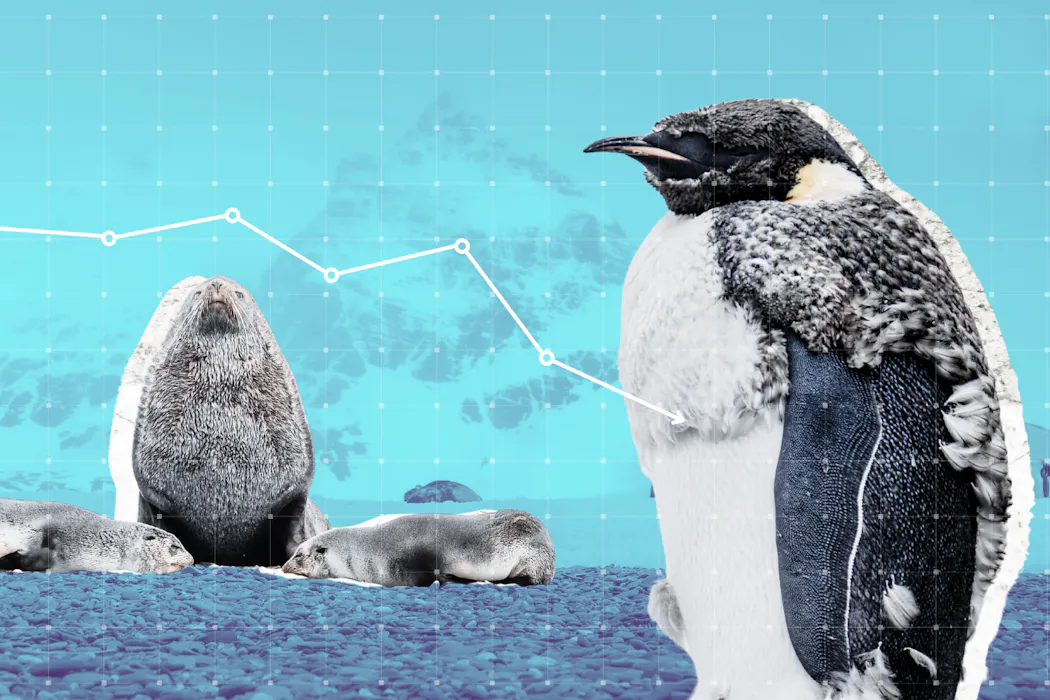
Now, only 124 years since this penguin colony was discovered, emperor penguins have officially been listed as endangered, along with the Antarctic fur seal. As the world warms, Antarctic krill are shifting southwards and sea ice is shrinking at record levels. And these unprecedented changes are having a domino effect on these species.

These are the first penguin and pinniped – marine mammals that have front and rear flippers – to be given this conservation status in the Southern Ocean. Their perilous situation is a critical turning point, and shows how rapidly the Antarctic environment is changing.

At the same time, the spread of highly contagious avian influenza, or bird flu, adds a new and immediate threat to Southern Ocean wildlife, compounding the pressures of climate change on stressed species.

Antarctic fur seal with pups at Sailsbury Plain on South Georgia, with snow-covered hills in the background.
Antarctic fur seal with pups at Sailsbury Plain on South Georgia. The number of fur seals has dropped by over 50% since 1999.
Posnov/Getty

Dramatic declines linked to climate change

The first emperor penguin breeding colony was discovered at Cape Crozier, on Ross Island, during Robert Falcon Scott’s Discovery expedition in 1902. A decade later, Scott’s Terra Nova expedition returned, in part to collect emperor penguin eggs. It was an ill-fated expedition, immortalised in Apsley Cherry-Garrard’s famous book, The Worst Journey in the World.

In the 1960s, Scott’s son, Sir Peter Scott, one of the founders of modern conservation, helped establish the International Union for the Conservation of Nature’s Red List. Just 124 years after those early discoveries at Cape Crozier, that same framework has now been used to classify emperor penguins as endangered. The swift arc from discovery to extinction risk is a striking reminder of how quickly the species’ fortunes have changed.

Over nine years, between 2009 and 2018, emperor penguin numbers fell by 10%. Their numbers are expected to halve by 2073.

A group of southern elephant seals at rest.
Southern elephant seals are now officially listed as vulnerable.
Mary-Anne Lea, CC BY-ND

The decline is more pronounced for Antarctic fur seals. Hunted to the brink of extinction in the early 1880s, by 1999 their numbers had rebounded to an estimated 2.1 million mature seals. But since then, the global population has decreased by more than 50%, to about 944,000 mature individuals.

In just a decade, they have been reclassified on the IUCN’s Red List, going from of “least concern” – those species that are widespread and at low risk of extinction – to “endangered”. The IUCN’s red list is the comprehensive information source on the extinction risk status of species. This shows the remarkable speed at which these seals are declining.

Climate change and bird flu

Both of these dramatic declines are linked to climate change. Warming ocean temperatures and a reduction in sea ice affect the availability of the Antarctic fur seal’s key prey, Antarctic krill. Krill are shifting southwards and moving deeper, potentially making them less accessible to some predators. Competition with a growing population of whales has also increased.

Emperor penguins, by contrast, are completely dependent on sea ice. They use it as a stable platform for courtship, incubating their eggs and rearing chicks. But as sea ice declines and becomes less reliable, their breeding success is increasingly threatened. If the ice breaks up before chicks are fully developed, many are unable to survive.

At the same time, the spread of highly contagious bird flu adds a new and immediate threat to Southern Ocean wildlife. High mortality associated with avian influenza has also caused the uplisting of the southern elephant seal to “vulnerable” this week.

Some elephant seal populations have experienced more than 90% of pups dying, alongside sharp declines in breeding adults. These represent tens of thousands of animals lost, with many Antarctic fur seals also dying as a result of bird flu outbreaks.

emperor penguin chicks at Cape Crozier.
Emperor penguin chicks at Cape Crozier.
Mary-Anne Lea, CC BY-ND

We need to know more

Emperor penguins, Antarctic fur seals and southern elephant seals are three of the more widely researched Southern Ocean predators. But there is still a lot we don’t know, because of the remote location and the difficulty of sustaining research over time. And there are many species we know far less about. Antarctic ice seals, including Weddell seals, crabeater seals, leopard seals, and Ross seals, have “unknown” population trends on the IUCN red list, meaning there is not enough data to know if numbers are declining.

These recent listings make clear the urgent and ongoing need for improved, real-time monitoring. We need to know much more about wildlife health and population trends, the Antarctic environment and sea ice quality.

Human-driven threats facing Antarctic wildlife are many, and cumulative. To respond, we need to better protect Antarctic habitat and the species that live there. We need to reduce the interaction of marine species with industrial fishing. And we must improve how we assess current and suspected threats in Antarctica, when there is growing evidence of impacts.

Defining these animals as endangered is a stark reminder of how quickly Antarctica is changing before our eyes. Without a rapid reduction in greenhouse gas emissions and sustained conservation action, these species may be lost forever.

The Conversation

Mary-Anne Lea receives funding from the Australian Research Council, the Australian government, Rolex, the National Geographic Society and others. She is affiliated with the University of Tasmania, the Scientific Committee on Antarctic Research (SCAR) Expert Group on Birds and Marine Mammals, the SCAR Standing Committee on the Antarctic Treaty System (as a delegate to CCAMLR) and is a co-founder and board director of Homeward Bound Projects.

Jane Younger receives funding from the Australian Research Council, National Geographic Society, Rolex, WIRES, the Marine Megafauna Research Fund, and Lindblad-National Geographic. She is affiliated with the University of Tasmania and Senior Editor of Ecology & Evolution.

Noemie Friscourt receives funding from the Australian Research Council, the Australian government and the Antarctic Science Foundation. She is affiliated with the University of Tasmania.

ref. The beloved emperor penguin and Antarctic fur seal are now officially endangered. Here’s what can be done – https://theconversation.com/the-beloved-emperor-penguin-and-antarctic-fur-seal-are-now-officially-endangered-heres-what-can-be-done-280362

Iran’s military forces combine state-of-the-art drones and hackers with out-of-date conventional weapons

Source: The Conversation – USA – By Paul J. Springer, Professor of Comparative Military Studies, Air University

Revolutionary Guard personnel stand under an Iranian-made unmanned aerial vehicle, the Shahed-136, while participating in a military rally in Tehran, Iran, on Jan. 10, 2025. Morteza Nikoubazl/NurPhoto via Getty Images

Six weeks of U.S. and Israeli bombardment have served to degrade Iran’s nuclear facilities and cripple parts of its military.

But the Islamic Republic’s offensive capabilities have been built up over nearly 50 years, during which Iran has been either at war or under the threat of conflict.

As an expert in military history and theory, I believe that to understand what may come next in Operation Epic Fury, it’s valuable to grasp the development of Iran’s modern military structure, capabilities and international activities.

Iranian military technology

Prior to the establishment of the Islamic Republic of Iran in 1979, Iran’s military was largely supplied by Western powers, particularly the United States.

It entered the Iran-Iraq war in 1980 with a substantial amount of then-modern equipment. That included nearly 80 F-14 fighter aircraft, over 200 F-4 and F-5 aircraft and thousands of tanks.

But Iran’s military was exhausted when the war ended in 1988. And the government had by then become a world pariah, making resupply all but impossible.

Although Iran imported some military equipment from the Soviet Union and China in 1990, its economy could not support substantial military spending.

Ironically, the arms embargoes that Iran faced during and after its war with Iraq made the regime self-reliant on its weapons stockpiles. And that triggered the development of a substantial domestic arms industry.

Most modern Iranian military equipment consists of reverse-engineered American and Soviet equipment, much of it obsolete. Since 1990, however, Iranian missile technology has substantially improved. That’s due to domestic production and importing expertise from other marginalized states, such as North Korea.

Smoke rises from a warehouse in an open field.
Smoke rises from an oil warehouse on the outskirts of Erbil, the capital of Iraq’s Kurdistan region, following a suspected drone strike on April 1, 2026.
Gailan Haji/Middle East Images/AFP via Getty Images

Starting in the 1990s, Iran also innovated a series of one-way attack drones, a relatively inexpensive way to attack distant targets.

The modern Iranian military

The Iranian military is split into the regular military, or “Artesh,” and the Islamic Revolutionary Guard Corps. The Artesh plays a domestic defense role akin to a militia, while the Revolutionary Guard serves as the more professional military force.

The Revolutionary Guard projects regional power. During the 2003 U.S.-Iraq war, for instance, it provided improvised explosive devices to insurgents targeting American forces.

The Revolutionary Guard tends to receive the bulk of Iranian military resources, including the best personnel and equipment. Quds Force, the unconventional warfare wing of the Revolutionary Guard, has long played a role in exporting the revolutionary beliefs of the Iranian rulers. The Quds Force provides arms and guidance to proxies throughout the Middle East, primarily by fomenting insurrections against Arab Sunni governments.

Iran has long been the patron of Hezbollah, based in Lebanon, whose primary goal is the eradication of Israel. More recently, Iran has also engaged in substantial support of Hamas in Gaza, despite the fact that Hamas is a Sunni organization, while the rulers of Iran are members of the Shiite branch of Islam.

Iran has constantly sought means of exerting military influence beyond its borders, without risking external attack. It has embraced the use of cyber warfare, a method of attack with a relatively low cost for participation and a potentially outsized influence on the world stage.

Iranian hackers have attacked Western military and government networks, including a hack of FBI Director Kash Patel’s personal emails. Iranian-backed hackers have also launched attacks on infrastructure and cultural institutions, including U.S. wastewater treatment plants and electrical grids.

Missile traces are seen in the sky.
Missile traces are seen over Damascus, Syria, during Iran’s missile attacks against Israel on June 14, 2025.
Hummam Sheikh Ali/Xinhua via Getty Images

Iran’s pursuit of atomic weaponry

Iran’s government has relentlessly pursued nuclear weapons since at least the 1980s.

The Iranian government has always maintained that its nuclear program is to provide power for the developing nation, rather than weaponry. But definitive evidence of uranium enrichment far beyond the requirements of power generation have caused Western states to demand an end to the Iranian nuclear program.

In 2010, cybersecurity researcher Sergey Ulasen discovered an incredibly complex malware program, dubbed Stuxnet, that was created to undermine the Iranian nuclear program by disrupting the function of enrichment centrifuges. No nation has ever taken responsibility for the attack, which set back Iranian uranium enrichment efforts by years.

In 2015, after negotiations with the five permanent members of the U.N. Security Council and Germany, Iran agreed to halt its uranium enrichment program in exchange for relief from economic sanctions and the release of frozen Iranian assets. The negotiations resulted in the Joint Comprehensive Plan of Action, or JCPOA.

Although the Trump administration withdrew the U.S. from the JCPOA in 2018, the agreement continued to function, and Iran seemed poised to reenter the global economy.

A machine produces a yellow substance.
Machines use yellow cakes to produce uranium hexafluoride at the uranium conversion facilities in Isfahan, Iran, on Feb. 3, 2007.
Behrouz Mehri/AFP via Getty Images

However, in 2020 the Iranians restarted their nuclear program. They also ramped up production of ballistic missiles and one-way attack drones.

In June 2025, the United States and Israel launched a massive aerial attack on Iranian nuclear facilities, an effort that Trump characterized as having destroyed Iran’s nuclear facilities.

Iran responded by launching a wave of ballistic missiles and drones toward Israel, most of which were intercepted before entering Israeli airspace.

The missile and interceptor war

Prior to Operation Epic Fury, analysts estimated that Iran possessed 3,000 ballistic missiles and tens of thousands of one-way attack drones. They also concluded that Iran had a substantial production capacity to increase its stockpiles.

In the first six weeks of the current conflict, Iran expended at least 650 missiles in attacks on Israel and hundreds more against other targets in the region.

The U.S. has placed a heavy emphasis on attacking missile production and storage facilities. But it’s difficult to ascertain how many missiles and drones the Iranian military might still possess.

Iranian production and transportation has almost certainly sustained substantial losses in capacity. And U.S. and Israeli aircraft prowl the skies over Iran seeking signs of mobile launchers or attempts to transport missiles to firing locations.

The rate of Iranian missile fire has substantially declined since the first days of the conflict, but it has never dropped to zero. That has led some analysts to suspect that Iran maintains a significant cache of long-range weaponry in reserve, while U.S. Secretary of Defense Pete Hegseth argues that it has lost the capacity to launch major barrages.

The Conversation

Paul J. Springer is a Senior Fellow of the Foreign Policy Research Institute. His comments represent his own opinion and do not reflect the official policy of the United States Government, the U.S. Department of Defense, or the U.S. Air Force.

ref. Iran’s military forces combine state-of-the-art drones and hackers with out-of-date conventional weapons – https://theconversation.com/irans-military-forces-combine-state-of-the-art-drones-and-hackers-with-out-of-date-conventional-weapons-280547