Electric vehicles pass tipping point, breaking the link with oil prices

Source: The Conversation – UK – By Viet Nguyen-Tien, Research Economist, London School of Economics and Political Science

When the Strait of Hormuz first closed in March and oil hit US$120 a barrel, a very old question came back: is this finally the moment electric vehicles take off for good – or just another false start?

EVs have been here before. They surged after the 1973 oil embargo, collapsed when oil fell, and surged again. Each wave died when the external pressure eased.

We think this time is different. In a new discussion paper, we argue that the economic case for electric vehicles is now improving on its own terms. This is because of what has happened to batteries, not because of the oil price. The same evidence, though, shows the transition creates new problems as serious as the ones it solves.

Why this time is different

Battery costs have fallen 93% since 2010. That is the number that changes everything. A pack that cost more than US$1,000 per kilowatt-hour in 2010 cost US$108 by late 2025, driven down by a decade of learning, investment and policy support.

Research on the global battery industry finds that every time cumulative production doubles, costs fall by around 9%. More buyers, more production, lower costs, more buyers.

Unlike the 1970s, this loop does not need an oil crisis to keep spinning. Electric cars have crossed lifetime cost parity with petrol vehicles across much of Europe; in the used-car market they now have the lowest total cost of ownership. Newer models even match petrol cars in estimated lifespan – something early EVs could not claim.

Global sales surpassed 17 million in 2024, one of the fastest technology diffusion processes in the history of transport. Norway is near-fully electrified. And Ethiopia reached around 60% EV sales share in 2024, powered by cheap hydroelectricity – some way ahead of the US, for instance, which sits at around 8%.

An economic platform, not just a better engine

The deeper reason this wave will not fade is not technical – it is economic. An EV is a platform. Its value grows as the network around it grows, just as smartphones became indispensable not because of the hardware but because of everything connected to it.

Every charger built makes the next EV more attractive. Every software update raises the value of every car already on the road. Every recycled battery feeds back into the supply chain that makes the next one cheaper. It’s part of the reason some other technologies like hydrogen fuel cell vehicles have struggled to get off the ground in numbers – the tech exists, but all the other elements aren’t quite there.

One study of 8,000 drivers in Shanghai found that range anxiety – the fear of running out of charge – has a real economic cost due to unnecessarily avoided trips. But that cost is falling sharply, not because batteries improved, but because charging networks expanded.

Making real-time charger availability visible could add 6–8 percentage points to market share by 2030. And because EV charging is far more flexible than other household electricity demand, drivers can shift away from peak hours remarkably easily when the price is right – turning the car into a grid asset, able to store and release electricity when needed. These are economic network effects, not engineering features.

Swapping one dependency for another

Ending oil dependence does not end geopolitical exposure. It relocates it.

In late 2025, China introduced rules requiring government approval for exports containing more than 0.1% rare earths. The leverage that once came from control of oil flows now comes from control of processing capacity and component supply chains.

The minerals at stake – lithium, cobalt, nickel, graphite and neodymium to name but a handful – carry their own geopolitical risks and, as we have written elsewhere, serious human costs in the communities that mine them. This creates a predictable cycle of social contestation that threatens to stall the transition unless the industry commits to responsible, sustainable innovation.

The metal cobalt traditionally helped EVs travel further on the same charge. And when prices spiked, so did research into making batteries with less or even no cobalt. Today, more than half of all EV batteries sold globally are cobalt free.

Four decades of patent data show the same pattern: higher mineral prices consistently redirect research and development toward mineral-saving technologies.

Recovering lithium and cobalt from used batteries is becoming economically viable too, shifting part of the supply chain away from geopolitically exposed extraction sites. In addition, Norway and other countries are looking to exploit new critical mineral resources to diversify supplies.

The transition is real – but not risk-free

The Hormuz crisis is a reminder of what concentrated energy dependence costs. The EV transition does not need it. The learning curve keeps falling, the platform keeps compounding, the economics keep improving. That is what makes this wave different.

What it does not do is eliminate geopolitical risk. Unlike oil, where leverage comes from energy flows, EV supply chains concentrate power at materials, processing capacity, and technological bottlenecks – supply chains that are highly concentrated and carry their own serious risks. Fuel dependence becomes mineral dependence. That dependence is highly concentrated.

Traditional carmaking regions are already absorbing concentrated job losses, and history shows such disruptions leave persistent scars even if the long-term aggregate effects are positive. Yet electric vehicle assembly is proving more labour-intensive in western countries than expected – requiring more workers on the shopfloor, not fewer, at least in the ramp-up phase. Contrast this with China, where massive automation has led to the creation of “dark factories” where there are so few humans, internal lighting isn’t required.

The same regions facing losses could benefit. But the gains and losses do not fall on the same people. That is where the work remains.

The Conversation

Viet Nguyen-Tien receives funding from the ESRC through the Centre for Economic Performance (ES/T014431/1) and the Programme on Innovation and Diffusion (ES/V009478/1), and previously from the Faraday Institution through the ReLiB Project (grant numbers FIRG005 and FIRG006).

Gavin D. J. Harper receives funding from the Faraday Institution (award numbers FIRG027, FIRG057 & FIRG085) ReLiB project website: https://relib.org.uk/

Robert Elliott does not work for, consult, own shares in or receive funding from any company or organisation that would benefit from this article, and has disclosed no relevant affiliations beyond their academic appointment.

ref. Electric vehicles pass tipping point, breaking the link with oil prices – https://theconversation.com/electric-vehicles-pass-tipping-point-breaking-the-link-with-oil-prices-280655

Limited scrutiny of party claims in early Welsh election coverage – new analysis

Source: The Conversation – UK – By Stephen Cushion, Professor, Cardiff School of Journalism, Media and Culture, Cardiff University

With the Senedd (Welsh parliament) election campaign now under way, voters in Wales are beginning to see more political coverage across television, online and social media. Broadcasters have reported on manifesto launches and party messaging.

But how far is this coverage helping voters understand what the parties are actually proposing? And how much of it is being properly scrutinised?

After the first official week of the campaign, our new analysis suggests that while broadcasters are reporting party activity, they are offering limited scrutiny of the pledges and promises being made. That matters because news media play a central role in holding politicians to account and helping voters judge the credibility of competing claims.

We analysed all election news items across major broadcasters’ TV, online and social media output between April 8 and 14. This included Welsh coverage from the BBC and ITV, alongside their UK-wide output, as well as Channel 4 and Sky News.

Broadcasters have also produced special election programming in English and Welsh, from the public asking politicians questions in live TV debates, to exploring issues in depth through podcasts, or party leaders being interrogated at length.

Our focus, however, was on day-to-day news reporting, including UK-wide media, which most people rely on in Wales to understand what is happening in the world.

Covering policies not scrutinising them

Of the 60 news items examined across TV, online and social media posts so far, just over three-quarters covered party policy or claims. Of these policy items, nearly half featured no scrutiny. A quarter featured substantial scrutiny. And a further third featured brief scrutiny.

Broadcasters are committed to holding parties to account. As the BBC stated at the start of the elections across the UK: “It is an important part of our role during elections to check and challenge where the parties are making claims that don’t stand up to scrutiny.”

The BBC’s fact-checking service, Verify, could play a greater role in testing party claims, but it has yet to feature prominently in coverage of the Senedd campaign. Channel 4, by contrast, has stood out for going beyond reporting campaign activity to interrogate the credibility of what parties are saying.

More commonly, news items present parties arguing with one another, without independent assessment of their competing claims. In some cases, broadcasters simply set out multiple positions side by side, leaving viewers to make sense of them without any journalistic scrutiny.

This might be explained by rules on impartiality. These require broadcasters to reflect up to six parties vying for power at the Senedd and perhaps limit space for further questioning. But in covering so many parties within a single news item, the breadth of perspectives can undermine the depth of analysis.

Informing voters or amplifying noise?

Broadcasters have also sought to engage voters through vox pops, which are brief interviews with members of the public. So far, members of the public (25) have appeared two and a half times more often than politicians (10) in election coverage.

Vox pops can provide more colour and human-interest than just listening to party politicians. They can also offer revealing insights into people’s real life concerns and anxieties. But the focus of people’s opinions have largely centred on the campaign, the personalities involved, or about apathy and cynicism towards the Senedd and politics more generally.

At times, vox pops have also reinforced a “horse race” narrative, asking people how they intend to vote rather than what they think about specific issues. While this may appear engaging, it offers limited insight and risks misrepresenting wider public opinion.

As Welsh politics expert, Laura McAllister, argued: “At best, [vox pops are] pointlessly reductionist and a waste of limited political air time; at worst… misleading and potentially distorting”.


Read more:
Voters in Wales face Senedd election amid confusion over who holds power over what


Although such interviews with the public often suggest disengagement, they should not be taken as representative. With the possibility of political change, turnout in this election could in fact be higher than at any point since devolution began 27 years ago.

Rather than emphasising perceived disengagement, news coverage could do more to focus on the issues facing the next Welsh government and to scrutinise party policy positions. This would help improve public understanding of what is at stake.

Our pre-election survey of people in Wales found widespread confusion about the responsibilities of the Welsh and Westminster governments, alongside low awareness of party leaders. Recent focus groups conducted in south Wales by More in Common, a thinktank focused on public opinion and social divisions, found that many voters lacked detailed knowledge of party policies. They often expressed only a general sense that Wales needs political change.

Our own focus groups, conducted in February with people in Wales, showed a clear appetite for more policy-focused reporting over campaign coverage.

The lack of policy scrutiny in the first week of the campaign is perhaps understandable. After all, manifestos have just been published leaving journalists limited time to analyse them. But as clearer campaign narratives emerge and more political promises are made, journalists will have time to question parties and, where necessary, challenge any false, misleading or dubious claims.

With several weeks left of the campaign, broadcasters still have plenty of opportunities to hold parties to account and help people make an informed decision at the ballot box.

The Conversation

Stephen Cushion has received funding from the BBC Trust, Ofcom, AHRC, BA, ESRC and Welsh Government.

Keighley Perkins receives funding from the AHRC for research into broadcasters’ impartiality.

Maxwell Modell receives funding from the AHRC for research into broadcasters’ impartiality.

ref. Limited scrutiny of party claims in early Welsh election coverage – new analysis – https://theconversation.com/limited-scrutiny-of-party-claims-in-early-welsh-election-coverage-new-analysis-280650

The V&A catalogue row shows China’s censorship now travels through cultural supply chains

Source: The Conversation – UK – By Ge Chen, Associate Professor in Global Media & Information Law, Durham University

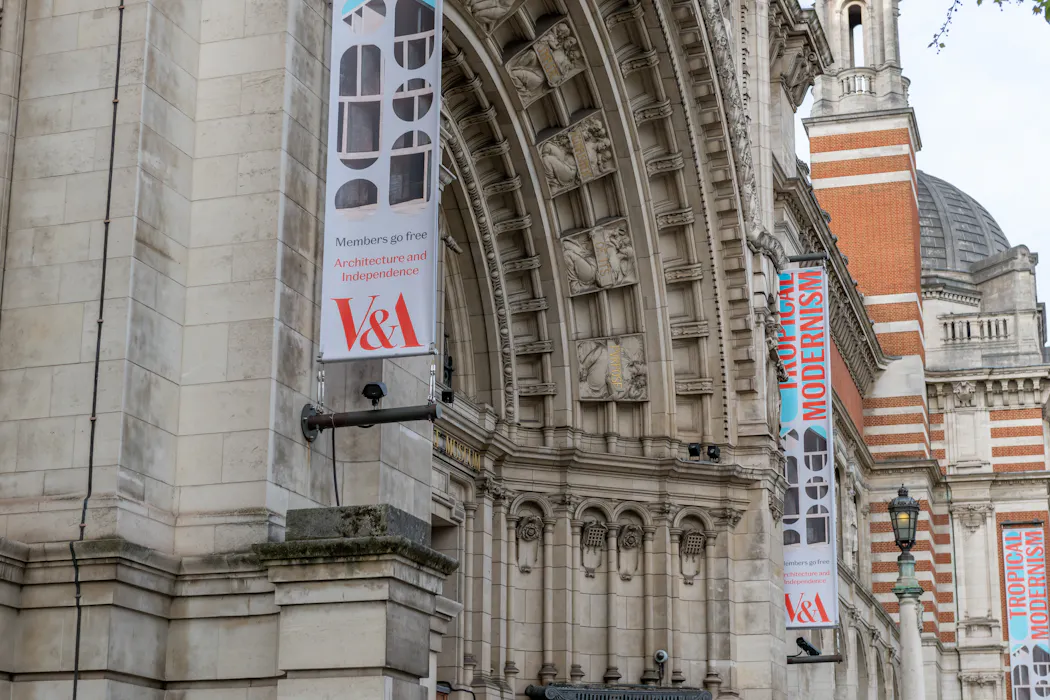
The V&A in Kensington. Yau Ming Low/Shutterstock

When people think about censorship, they often imagine an obvious ban: a book prohibited, an exhibition closed, or a speaker silenced.

But the recent revelation that London’s Victoria and Albert Museum changed exhibition catalogues at the request of its Chinese printer points to something subtler. It suggests that Chinese censorship is increasingly capable of shaping cultural production beyond China’s borders through reliance on foreign companies.

The V&A agreed to remove or replace images from at least two exhibition catalogues after objections from its Chinese printer. This included a historical map in a new exhibition, The Music Is Black, and an image of Lenin in a publication linked to the 2021 exhibition Fabergé: Romance to Revolution.

A V&A spokesperson told The Conversation: “We carefully consider, on a case-by-case basis, where we print all of our books. We sometimes print in China but maintain close editorial oversight. We were comfortable making these minor edits, as they did not affect the narrative, and would obviously pull production if we felt any requested change was problematic.”

The museum may see the changes as minor, but their significance lies less in the scale of the edits than in the mechanism through which they occurred.

Nothing in British law required these changes. No UK official ordered them. Yet the content of a British museum publication was altered because parts of its production process took place within a system governed by Chinese state censorship rules. That is why this matters. It reveals a form of externalised censorship that does not need to arrive as a direct prohibition. It can operate instead through contracts, deadlines, cost pressures and infrastructural dependence.


This article is part of our State of the Arts series. These articles tackle the challenges of the arts and heritage industry – and celebrate the wins, too.


This controversy tells a wider story about the heritage sector. Museums, galleries, libraries and publishers are all under pressure to control costs. If Chinese printers can produce catalogues at roughly half the price of British or European firms, the economic logic is obvious. Once an institution becomes reliant on a supply chain situated within an authoritarian censorship system, the practical conditions of cultural expression begin to change, even if the legal environment at home remains formally free.

In countries such as the UK, free speech is often understood in legal terms: are people formally allowed to publish, speak or exhibit? But the V&A case is a reminder that formal freedom is not the same as institutional resilience. A society may remain free on the surface while its institutions become increasingly susceptible to outside pressure.

Why the censorship matters

Museums matter especially because they are not ordinary commercial actors. They are memory institutions. They help shape public understanding of history, culture and identity. Their catalogues are not mere retail products but part of how knowledge is framed, archived and circulated. A “minor” change to an image in this context is therefore not politically neutral.

The deeper issue is that this is not only about suppressing taboo topics such as Tibet, Taiwan or Tiananmen. It is also about controlling the positive narrative.

Chinese information governance has long worked through both prohibition and projection. The 2020 Provisions on the Governance of the Online Information Content Ecosystem, issued by China’s internet regulator, encourage the production and dissemination of material that helps increase “the international influence of Chinese culture” and presents to the world a “true, three-dimensional and comprehensive China”. This forms part of a broader Party-state project, repeatedly articulated by Xi Jinping, of “telling China’s story well”.

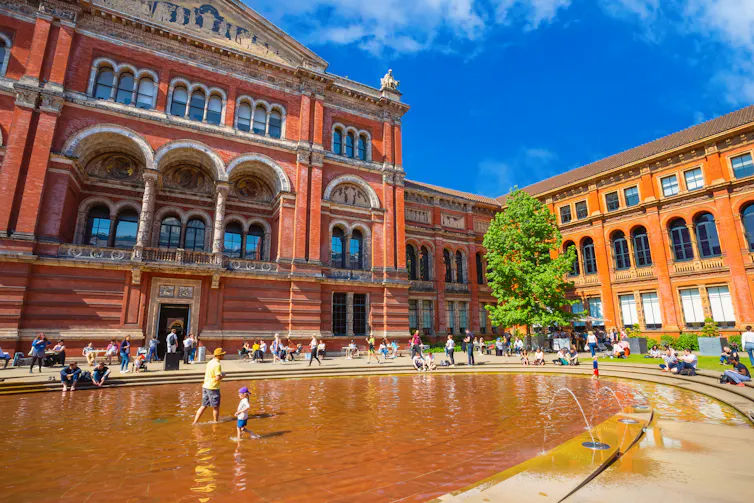
The V&A museum
The V&A is one of London’s most popular museums.
cowardlion/Shutterstock

That phrase may sound benign. But in practice it is tied to a political and legal project in which China is not merely defended from criticism, but represented abroad under conditions increasingly shaped by party-state priorities. Seen in that light, the V&A controversy is not just a matter of avoiding sensitive content. It sits within a broader effort to structure the terms under which China may be portrayed at all.

Recent developments in the digital sphere show the same broader pattern in a more aggressive form. In February 2026, OpenAI reported that it had disrupted an operation linked to a Chinese law-enforcement official who allegedly used ChatGPT to document efforts aimed at intimidating dissidents abroad. This included fake official communications and forged documents. That is different from the V&A catalogue dispute. But both illustrate a new stage of transnational control in which the Chinese party state and its affiliated actors can use a range of mechanisms at once: political security logic, economic leverage, platform manipulation, bureaucratic pressure and technological tools.

These cases should not be collapsed into one another. A museum changing an image under pressure from a company in China is not the same as a dissident being targeted through deceptive digital operations. But they belong to the same ecology. One is the hard edge of transnational repression. The other is its quieter institutional face. Together, they show that the challenge is no longer confined to dramatic diplomatic incidents or overt bans.

That has implications far beyond museums. Universities, publishers and now cultural organisations in the UK increasingly operate in environments where external authoritarian influence may be felt not through formal legal obligation, but through partnership structures, procurement decisions, market access, technological dependency and reputational caution.

Liberal institutions are often poorly equipped to recognise these pressures because they expect censorship to appear as a clear legal command. Increasingly, it appears instead as a request to make one small change, to avoid delay, to save money, to keep things moving.

The lesson of the V&A controversy, then, is not simply that one museum made a questionable decision. It is that Britain needs a more serious conversation about cultural sovereignty under conditions of asymmetric interdependence.

If institutions rely on companies governed elsewhere by censorship, then freedom of expression at home becomes more fragile. The real question is not whether British museums are free in theory. It is whether they are independent enough in practice to prevent authoritarian preferences from quietly entering the production of public culture.

The Conversation

Ge Chen is Associate Professor in Global Media & Information Law at Durham Law School and Affiliated Fellow of the Information Society Project at Yale Law School.

ref. The V&A catalogue row shows China’s censorship now travels through cultural supply chains – https://theconversation.com/the-vanda-catalogue-row-shows-chinas-censorship-now-travels-through-cultural-supply-chains-280788

Christianity in the UK is flourishing in immigrant communities – but a US-style Christian nationalism is lurking elsewhere

Source: The Conversation – UK – By Mathew Guest, Professor in the Sociology of Religion, Durham University

Polling company YouGov has thrown into question claims of a recent upsurge in church attendance among young adults. This has not surprised some experts, who cite evidence for the more conventional story of steep religious decline. If Christianity was once central to British society, that claim remains difficult to sustain in the 21st century.

Church membership and attendance have both fallen sharply in recent decades. In England, 11.7% of the population attended church on a typical Sunday in 1979. By 2005, that figure had dropped to 6.3%. The number of people identifying as Christian remained much higher for longer, still above 70% in England and Wales in 2001.


Read more:
There may not be a Christian revival, but Britain’s traditional churches aren’t doomed


Perhaps this was because Christianity continued to function as a marker of national identity or moral inheritance, rather than active belief or practice. Research has shown how, especially for older generations, Christianity retained associations of moral propriety, ethnic identity and national belonging. For some, to be British was to be Christian.

But that tendency too has fallen fast. According to the 2021 census, the proportion identifying as Christian had dropped to 46.2%.

The reasons for this decline are varied and complex. Traditional religious beliefs face widespread scepticism. Cultural pluralism has weakened the assumption that Christianity provides the country’s shared moral framework. Churches have not escaped the collapse in confidence that has affected institutions more broadly, while abuse and corruption scandals have accelerated public cynicism and disillusionment.

But that is not the whole picture. The newly appointed Archbishop of Canterbury faces an uphill struggle to restore confidence in a struggling Church of England. But Christianity still retains the power, in some settings, to build community and inspire commitment.

Changing church communities

In Britain today, the most active, vibrant and socially engaged forms of Christianity are often found among ethnic minority and migrant communities.

Black Pentecostal churches seem to resist wider patterns of decline. Some have very large congregations, significant financial resources and real influence in urban centres such as Birmingham and parts of London.

Many were founded in the 1960s and 70s by Afro-Caribbean migrants who encountered the same racial prejudice in British churches that they faced elsewhere in society. Others owe their origins to Pentecostal networks in West Africa. Reporting over 12,000 weekly attendants at its “Prayer City” in Kent, Kingsway International Christian Centre claims to be “the largest growing church in western Europe.”

From the perspective of a moribund Church of England, these black majority churches represent a Christian vitality that many Anglican congregations struggle to sustain.

Research has also identified lively churches attracting Christians of Asian heritage, especially international students at British universities. Others have pointed to the revitalising effect of Eastern European migration on Roman Catholic parishes.

View from behind of diverse group of churchgoers, with a large, illuminated cross on the wall
In Britain today, the most active, vibrant and socially engaged forms of Christianity are often found among ethnic minority and migrant communities.
Puttipong Klinklai/Shutterstock

This may be one reason the political right has taken such a keen interest in Christianity in recent years. Nigel Farage has linked British identity to “Judeo-Christian principles”. Speaking in the House of Commons, former Conservative, now Reform MP Danny Kruger called for a recovery of a “Christian politics”. He contrasts this with “wokeism”: a “dangerous ideology of power” which should be “banished from public life”. Reform-adjacent campaigners, meanwhile, have made no secret of their hostility to Islam.

Some are reclaiming Christianity as part of a symbolic defence of British nationalism. At the Unite the Kingdom rally in London in September 2025, campaigners carried wooden crosses and chanted “Christ is King”. Far-right activist Tommy Robinson has leaned more heavily into Christian nationalist rhetoric, as has Restore Britain founder Rupert Lowe.

If Christianity can offer belonging and solidarity to black migrants navigating a hostile environment, it has also become, in a very different register, a badge of white ethno-nationalism.

Christian nationalism in Britain

The fusion of Christianity and far-right nationalism has a long history in the US. What is unusual is its growing visibility in the UK, which never really had its equivalent of the US Christian right. There are signs that a US-style conservative Christianity may be gaining ground in the UK.

The UK’s Christian Legal Centre resembles US organisations defending the right to affirm Christian values in the workplace. Defendants have included a homelessness officer dismissed from a job at a local council after telling a woman with an incurable illness to “put her faith in God”, and a magistrate fired for objecting to an adoption application from a same-sex couple. Both lost their cases.

Funding from the American Christian right has reportedly fuelled European campaigns promoting conservative perspectives on LGBT issues and the status of women.

This convergence of evangelical conservatism constitutes only a small minority of practising Christians in the UK. If Christian nationalism is becoming more visible, it is not because this minority is necessarily growing in size and power, but because political activists have found that Christian language resonates with their message. And they have become increasingly willing to borrow from the rhetoric of their American political allies.

This is reflected in the increasing affinity between British rightwing politics and the “Make America great again” (Maga) movement. It also points to growing momentum behind a more aggressive use of Christianity in British political life: not as a faith of worship or service, but as a nationalist weapon aimed at defending a particular form of British culture.

While it is currently not possible to gauge the size of a UK strand of “Christian nationalism”, its political, rather than religious, focus means its supporters are not limited to practising Christians. As with its US equivalent, they are more preoccupied with questions of national identity and cultural legitimacy – who belongs and who does not – than with questions of religious truth or practice.

This Christian nationalism foregrounds a common set of enemies: globalism, liberal morality, immigration and Islam. All are presented as inimical to the values of ordinary British citizens, echoing the Christian nationalism of Donald Trump’s America.

Some British Christian leaders have already pushed back against this message, emphasising Christian values of hospitality and compassion and seeking distance from Reform UK. But when they represent churches whose moral and political authority has largely ebbed away, this may not be enough to prevent a US-style Christian nationalism from gaining traction in the UK.

The Conversation

Mathew Guest does not work for, consult, own shares in or receive funding from any company or organisation that would benefit from this article, and has disclosed no relevant affiliations beyond their academic appointment.

ref. Christianity in the UK is flourishing in immigrant communities – but a US-style Christian nationalism is lurking elsewhere – https://theconversation.com/christianity-in-the-uk-is-flourishing-in-immigrant-communities-but-a-us-style-christian-nationalism-is-lurking-elsewhere-279800

How Iran cryptocurrency demands explain a key role of money throughout history

Source: The Conversation – UK – By Mikael Fauvelle, Associate Professor and Researcher, Department of Archaeology and Ancient History, Lund University

When Iran began demanding payment in exchange for safe transit through the Strait of Hormuz, it offered the option to pay in cryptocurrency. Likewise, the shadowy network of tankers that have smuggled Russian oil to world markets since the full-scale invasion of Ukraine in 2022 have often been paid this way.

Illicit actors the world over have increasingly turned to cryptocurrency as a way to conduct business while avoiding the risk of US sanctions. In so doing, countries like Russia and Iran are drawing on a characteristic of money that has been around since at least the bronze age: its ability to facilitate trade between strangers and across political boundaries.

In my book Shell Money (2024), which investigates some of the world’s earliest forms of money, I show how similar dynamics have been at play throughout history.

A ship sits in the waters off the Strait of Hormuz.
Cryptocurrency has been Iran’s preferred payment method for safe transit through the Strait of Hormuz.
Somkanae Sawatdinak/Shutterstock

Modern currencies like the US dollar and euro are backed by confidence in the financial institutions of nation states – in a similar way to the first metal coins of antiquity, which were issued by Greek city states in order to collect taxes and pay soldiers.

In prehistory, however, there are many examples of monetary systems that developed without state support, such as bronze ingots.

The bronze age (roughly 3300BC to 1200BC) was a time of long-distance voyaging and interregional connectivity. Against this backdrop, having a shared medium of exchange was critical for maintaining trade connections.

Bronze tools were made from copper and tin, which were only available in a few locations in the ancient world. In northern Europe, copper came from sources such as Wales, the Alps, Austria, Sardinia and Iberia, while tin largely came from Cornwall and Devon. This meant that all the copper used in Scandinavia, for example, had to be acquired through long-distance trade.

Much of this trade was dominated by bronze ingots – rings, bars or axe-heads – that were highly standardised in weight and form across regions. This meant that each ingot was interchangeable – a critical characteristic of money. Bronze objects were also broken down into sizes consistent with market-based trade.

The bronze age need for money

Travel during the bronze age would not have been easy. Long-distance journeys would have been dangerous and could take months to complete.

A travelling merchant would have no way to know if the traders they dealt with on one journey would still be around on the return trip. The reciprocity you could depend on in your home community would no longer hold – exchanges needed to be transactional.

Against this backdrop, bronze became standardised into a medium of exchange. By carrying bronze ingots, a traveller could conduct business across the world, confident that wherever they went their money would be accepted.

In other parts of the ancient world, shells and shell beads were accepted as money. The Chinese symbol (bèi) originated as a pictograph of the cowrie shell and is now used in hundreds of finance-related Chinese characters, including those for buy, sell, wealth and profit. Cowrie shells were traded to China from the Indian Ocean and used as money during the Zhou dynasty.

In North America, small shell beads were used as money and circulated throughout the interior of the continent, thousands of miles from the oceans where they were collected and produced. These examples show that trade money was not restricted to metals but could develop from anything that was desirable and scarce.

The US dollar diminished

The dominance of government-issued “fiat currencies” (meaning they are not backed by physical commodities such as gold) depends on the trust, liquidity and institutional backing they provide.

International trade is currently dominated by the US dollar. However, as we move into an increasingly multipolar world – with competing centres of gravity in North America, Europe and China – we can expect to see the dollar’s role diminish.

Indeed, there is some evidence that this has already happened. The dollar’s role as the world’s reserve currency (meaning it is held in large quantities by other governments and central banks to stabilise their economies) has declined from around 70% in the late 1990s to less than 60% today. This trend is likely to continue amid signs of increased US isolationism, strains in North Atlantic cooperation, and the rising economic position of China.

Political fragmentation, however, hardly means the end for international trade. History is rife with periods, from the bronze age on, when political fragmentation coexisted with bustling trade economies. And for those seeking to avoid state control in future, this may mean a growing shift in the type of money that is used.

Video: Bloomberg Television.

New forms of money

There are many differences between cryptocurrency in the modern world and the commodity money of prehistory. Cryptocurrency is still rarely used or accepted in daily transactions, is highly volatile and, as with modern fiat currencies, does not have “use value” in the same way as bronze ingots or even shell beads.

Nonetheless, both are forms of “bottom-up” (non-state controlled) money that exist outside of the oversight of any single government or large financial actor.

This lack of state control is exactly what drives sanctioned states such as Iran and Russia to request payments in crypto. As US financial leverage weakens, crypto payments become harder to block and sanction, potentially reshaping how future conflicts are financed.

Cryptocurrency may be well positioned for this environment, continuing to provide one of money’s oldest functions: the ability to conduct business with strangers.

This article references a book included for editorial reasons with a link to bookshop.org. If you click on this link and go on to buy something from bookshop.org, The Conversation UK may earn a commission.

The Conversation

Mikael Fauvelle receives funding from the Bank of Sweden Tercentenary Foundation and the Marcus and Amalia Wallenberg Foundation. He is the author of Shell Money: A Comparative Study (Cambridge University Press).

ref. How Iran cryptocurrency demands explain a key role of money throughout history – https://theconversation.com/how-iran-cryptocurrency-demands-explain-a-key-role-of-money-throughout-history-280768

Loneliness can affect your memory – but that doesn’t mean it leads to dementia

Source: The Conversation – UK – By Ivana Babicova, Senior Lecturer, Psychology, Birmingham City University

Jelena Stanojkovic/Shutterstock.com

Loneliness is something most of us will experience at some point. It is a normal emotion, not a character flaw. But it is also something that can quietly affect how we think and remember, and researchers have long debated whether it might even raise the risk of dementia.

A new study, published in Aging and Mental Health, suggests the picture is more complicated than either side of that debate has allowed for.

First, it is worth being clear about what dementia actually is. It is not a single diagnosis but an umbrella term covering a range of conditions – the most familiar being Alzheimer’s disease – that cause memory loss, confusion, difficulties with language and a gradual loss of independence.

Cognitive decline, meaning a general slowing or weakening of mental function, is not the same thing. The two terms are often used interchangeably, but they should not be: you can experience cognitive decline without ever developing dementia.

We do not fully understand what causes Alzheimer’s. We know that a healthy lifestyle lowers the risk, but it is no guarantee. Plenty of people who have done everything right still develop it. The disease is shaped by genetics, ageing and biological factors we are still working to understand.

The new study followed just over 10,000 adults aged between 65 and 94 over six years. All were in good health at the outset, fully independent and free of dementia. Researchers tracked their memory over that period and asked whether loneliness played a role in how it changed.

The answer was nuanced. Loneliness did appear to contribute to memory difficulties – but there was no evidence that it led to dementia itself. That is an important distinction. Memory problems and dementia are not the same thing, and conflating them causes unnecessary alarm. This distinction is crucial, and while the researchers did not conflate the two, this nuance is often lost in interpretation.

Not the whole story

It is also worth noting that loneliness rarely travels alone. Many participants in the study also had diabetes, high blood pressure, depression or low levels of physical activity – all of which affect the brain independently. Diabetes, for instance, can interfere with how the brain processes glucose, the fuel it runs on, which in turn affects memory. Depression has a similar effect. Unpicking loneliness from these other factors is genuinely difficult, and the study does not fully resolve that problem.

One finding that stood out was the high rate of loneliness reported in southern Europe – a region often assumed to have strong social networks. It is a reminder that loneliness is subjective. Feeling lonely is not simply about how many people surround you – it is about how connected you feel to them.

Group of people chatting.
You can still be lonely in a group.
Adamov_d/Shutterstock.com

There is also a methodological limitation worth noting. The study treated loneliness as a fixed state, when in reality it shifts – sometimes day to day – across the whole of a life. A single snapshot cannot capture that.

The broader research on loneliness and cognitive decline remains genuinely mixed, and this study does not settle it. What it does suggest, usefully, is that health services might benefit from screening for loneliness alongside routine cognitive testing: treating social connection as part of preventative medicine rather than a soft concern left to one side.

And there is reason for optimism. The brain is resilient. Research suggests that memory difficulties linked to loneliness can improve once that loneliness lifts and that staying socially active may boost cognitive performance more broadly. Loneliness, on its own, is unlikely to be the deciding factor in whether someone develops dementia.

The Conversation

Ivana Babicova does not work for, consult, own shares in or receive funding from any company or organisation that would benefit from this article, and has disclosed no relevant affiliations beyond their academic appointment.

ref. Loneliness can affect your memory – but that doesn’t mean it leads to dementia – https://theconversation.com/loneliness-can-affect-your-memory-but-that-doesnt-mean-it-leads-to-dementia-280533

Osteopenia: loss of bone mineral density affects millions of people – here’s what you need to know

Source: The Conversation – UK – By Hasmik Jasmine Samvelyan, Senior Lecturer in Biomedical Science, Anglia Ruskin University

A human tibia under the microscope: many people do not even realise they have osteopenia. eranicle/ Shutterstock

Around 40% of adults worldwide are affected by osteopenia: a loss of bone mineral density. This condition is extremely common particularly in postmenopausal women and elderly adults. It’s estimated that more than 500,000 fractures occur annually in the UK due to low bone density.

Osteopenia itself does not usually cause symptoms and it develops silently over time. Many people may not even be aware that they the condition until they have experienced a fracture or had a bone density test, typically recommended because of risk factors such as age and menopause. This makes osteopenia a significant but often under-recognised public health issue.

Bone is a dynamic tissue that undergoes continuous renewal through a process called bone remodelling. During this process, old bone is broken down (resorption) and new bone is formed (formation).

During early adulthood this process is balanced, so bone resorption equals bone formation. Bone mass usually peaks around a person’s mid-20s to early-30s. After this peak bone loss gradually exceeds bone formation. Over time this leads to reduced bone density.

Ageing is the main risk factor for bone loss. But several additional factors can accelerate the process.

For instance, hormonal changes, especially the decline in oestrogen after the menopause, can significantly increase bone breakdown. This is because oestrogen helps protect bones by slowing the natural process of bone breakdown. Around one in two women over 50 will experience a fragility fracture.

Lifestyle also plays an important role. Smoking, excessive alcohol consumption and physical inactivity can contribute to reduced bone strength over time. Diet is equally important. Insufficient calcium intake and low vitamin D can limit the body’s ability to build and maintain strong bones.

Certain medications, particularly long-term steroid use, as well as health conditions that affect hormone levels or nutrient absorption (such as Crohn’s or coeliac disease), can further increase the risk.

Managing osteopenia

Detecting osteopenia early is crucial. This allows you and clinicians to take steps that can reduce the risk of fractures and prevent osteopenia progressing to osteoporosis, where bone loss is more advanced and the risk of fractures is significantly higher.

An older woman listens to her doctor, while the female doctor explains the bone scan she has just has by pointing at the graphic on the computer screen.
It is crucial osteopenia is detected early.
Image Point Fr/ Shutterstock

Bone mineral density is commonly measured using a dual-energy X-ray absorptiometry (DXA) scan. This is a type of low-dose X-ray scan used to assess bone strength. Results are usually given as a T-score, which compares a patient’s bone density to that of a healthy young adult. A T-score between –1.0 and –2.5 indicates osteopenia, while a T-score below –2.5 meets the diagnostic threshold for osteoporosis.

Management of osteopenia typically focuses on slowing down or preventing further bone loss and reducing the risk of fractures. This involves making lifestyle changes (such as avoiding smoking, limiting alcohol intake or maintaining healthy body weight), nutritional support and, in some cases, prescription treatment.

Weight-bearing exercises, such as walking, dancing or jogging stimulate bone formation by placing strain on the skeleton. Resistance training can further strengthen bones and muscles.

Research shows that regular physical activity is associated with improved bone mineral density and may reduce the risk of osteoporosis. Exercise, such as Tai Chi, also improves balance and muscle strength, reducing the risk of falls that could lead to fractures.

Sufficient calcium intake supports bone structure too, while vitamin D helps the body absorb calcium efficiently. Foods such as dairy products, leafy green vegetables and fortified products are common dietary sources. Supplements may also be recommended where dietary intake is insufficient. In the UK, vitamin D deficiency is relatively common, so supplementation is often advised.

Not everyone with osteopenia requires drug treatment. Instead, clinicians often use a fracture risk assessment tool to evaluate ten-year probability of a fracture based on age, bone mineral density, steroid use and other risk factors.

If fracture risk is high or if a person has already experienced a fragility fracture, medications may be recommended. These can include antiresorptive drugs which slow bone breakdown and help maintain bone density. Such treatments are more commonly used in osteoporosis but may also benefit high-risk patients with osteopenia.

Osteopenia should not be viewed merely as a mild or early form of osteoporosis but rather as a warning sign and point of intervention. Progression from osteopenia to osteoporosis is not inevitable.

Evidence suggests that early detection and targeted lifestyle changes can maintain bone health, significantly slow bone loss and reduce risk of developing osteoporosis later in life. In some cases, bone density may even improve with appropriate treatment and lifestyle adjustments.

But prevention requires a long-term perspective. Bone health reflects the cumulative influences of our health and lifestyle across the lifespan including our diets, physical activity levels and hormonal changes we have gone through. Maintaining healthy habits over time remains the most effective strategy for protecting bone strength.

The Conversation

Hasmik Jasmine Samvelyan does not work for, consult, own shares in or receive funding from any company or organisation that would benefit from this article, and has disclosed no relevant affiliations beyond their academic appointment.

ref. Osteopenia: loss of bone mineral density affects millions of people – here’s what you need to know – https://theconversation.com/osteopenia-loss-of-bone-mineral-density-affects-millions-of-people-heres-what-you-need-to-know-278463

Congo-Brazzaville election: boycotts, blackouts and growing dissent but Denis Sassou Nguesso held on to power

Source: The Conversation – Africa (2) – By Ngodi Etanislas, enseignant-chercheur, Université Marien Ngouabi

The 2026 presidential election in Congo-Brazzaville (the Republic of the Congo) returned Denis Sassou Nguesso for a fifth consecutive term, with a definitive 94.90% of the vote.

We asked Ngodi Etanislas, a political scientist who focuses on the central African country, to sum up what happened and why it matters, now that the dust has settled.


What political factors shaped the result?

Denis Sassou Nguesso’s huge victory is not the result of an open electoral race. It is, rather, the culmination of a political system built on decades of power consolidation since the end of the 1997 civil war. It was a “Soviet-style” outcome (overwhelming and predetermined) that can be explained by a few key political factors.

First, there is the political longevity of Nguesso, in power since 1979 (with an interruption from 1992 to 1997). This four-decade dominance gives him total control over the country’s political, institutional, and security apparatus. It makes political change not only difficult but structurally unlikely.

Furthermore, the rigged electoral process – especially through control of the state apparatus and election management bodies – contributed to this victory.

Electoral campaigning was also deeply unequal. Nguesso’s campaign looked like a “national tour”. It was built on a show of strength designed to project the image of a leader close to the people.

Did a divided opposition influence the result?

The fragmentation of the political opposition was arguably the most decisive factor behind the landslide. The opposition entered the election divided. They could not agree on a single candidate, which significantly reduced the chances of a democratic transition.

The election was marked by the absence of certain figures in Congolese politics. Some remain imprisoned (Jean-Marie Michel Mokoko and André Okombi Salissa). Others chose to boycott the poll, believing the conditions for a free and transparent election were not met. This stripped the contest of any real stakes. It helped secure a first-round victory for Nguesso. In 2016, he won 60.4% of the vote against a strong opposition.


Read more:
Africa’s ageing leaders: succession race in Cameroon, Congo and Equatorial Guinea could destabilise the region


For many observers, the six candidates in the race were largely unknown or lacked any real political base. Some appeared to be using the election to gain some visibility, or better yet, political legitimacy ahead of future contests. They were no match for Nguesso. They lacked the financial resources to campaign nationwide and build local support to defend their platforms.

Finally, the digital blackout – including a countrywide shutdown of phone networks and internet on election day – added another layer of opacity of the process. It created an unprecedented information blackout.

This reduced the opposition’s ability to organise collectively and deploy its delegates. It also aimed to limit the spread, on social media, of rumours about ballot stuffing, vote buying, and other politically sensitive content. The president was clearly worried about low turnout figures leaking out.

What was the mood among voters?

Voting was marked by deep disaffection, fuelled by the opposition’s boycott and a sense among many young people that voting was pointless. It also took place in a climate of fear perpetuated by the repressive environment. This included operations carried out early in the year by the General Directorate of Presidential Security, as well as intimidation and crackdowns targeting activists and political opponents.

The issue of voter turnout lies at the heart of the controversy surrounding this election.


Read more:
Corrupt, brutal and unprofessional? Africa-wide survey of police finds diverging patterns


Two scenarios can be considered.

The first is turnout orchestrated by the government through political and patronage networks. The goal is to boost participation in order to legitimise the electoral process and bolster the credibility of the results.

The second scenario involves a boycott of the election encouraged by the opposition, aimed at achieving low turnout, which could spark challenges over the election’s legitimacy.

Reports highlight a clear gap between official figures and field observations, suggesting a more complex picture of voter turnout than is apparent. The official turnout rate reportedly jumped by nearly 17% – from about 67.57% in 2016, when there were more opposition figures, to 84.65% in 2026, despite a widespread boycott. Yet polling stations across 6,620 booths in 4,011 centres appeared largely empty.

What challenges lie ahead?

To escape political and social stagnation, several democratic reforms are urgent:

  • Restoring electoral credibility and the independence of institutions is one of the most sensitive issues. The election exposed serious shortcomings in electoral governance – lack of transparency, inclusiveness and fairness.

  • The reliability of voter rolls, the impartiality of the Independent National Electoral Commission and unequal access to the media pose ongoing problems. All this happened without effective independent oversight. Without sweeping reforms of the electoral system, abstention and disengagement will continue to grow, particularly among young people.

  • Building a pluralistic political space and a viable opposition is essential for reshaping the Congolese political landscape. Releasing political prisoners and guaranteeing an effective right to opposition would be essential prerequisites for any national reconciliation.

  • Protecting fundamental freedoms and civic space. Human rights violations have been on the rise and there is no political dialogue between the government, the opposition, and civil society.

  • Succession and transition. The questions of what comes after Nguessou, whether power remains within the presidential majority, or ensuring continuity for a new term in 2031. This may include scenarios of dynastic succession within the presidential family.

  • Turning oil wealth into human development. Nearly half the population lives below the poverty line. The challenge is to convert oil revenues into public services (health, education) and opportunities for young people.

  • Reconnecting citizen participation, particularly young people, to politics. Young Congolese and civil society need to be brought back into the political process. Citizen participation remains crucial to the legitimacy of the electoral process.

What implications could the election have on political stability?

Stability rests on fragile foundations. A large part of the population sees the government as lacking legitimacy. Distrust in the electoral system runs deep.

Youth frustration is a particularly worrying indicator.
A 2024 survey indicates that young people have little confidence in the political system. Many feel that voting is pointless. Chronic unemployment and lack of economic prospects deepen their frustrations.


Read more:
Weaning African leaders off addiction to power is an ongoing struggle


The internal struggle within the ruling party over who comes after Sassou Nguessou could become the main source of instability. The risk grows if no clear widely accepted successor emerges. Internal divisions seen during the party’s congress in 2025 show how central succession is. They also show ongoing shifts in power and elite positioning.

The March 2026 presidential election did not resolve any key issues.

The Conversation

Ngodi Etanislas does not work for, consult, own shares in or receive funding from any company or organisation that would benefit from this article, and has disclosed no relevant affiliations beyond their academic appointment.

ref. Congo-Brazzaville election: boycotts, blackouts and growing dissent but Denis Sassou Nguesso held on to power – https://theconversation.com/congo-brazzaville-election-boycotts-blackouts-and-growing-dissent-but-denis-sassou-nguesso-held-on-to-power-279539

What ‘warfare versus welfare’ gets wrong about real-life economics

Source: The Conversation – UK – By Alan Shipman, Senior Lecturer in Economics, The Open University

Lord Robertson’s claim that the UK cannot defend itself with an “ever-expanding” welfare budget has resonated loudly, given his previous positions as a Nato secretary-general and UK defence secretary. Following up on the UK’s 2025 strategic defence review, which he led, Robertson warned that low investment is leaving UK security “in peril”.

The comments have instant appeal in one sense. Defence is indeed awarded a far smaller share of the pie than social protection: 6.5% of total managed expenditure for 2026/27 against 28%, according to estimates.

The UK’s budget deficit is adding to already high public debt, and the IMF has forecast that Britain will be hit harder than other countries by the economic effects of the Iran hostilities. The government is already seeking savings from other departments as it tries to raise defence spending to 2.5% of GDP by 2027.

But the idea of a simple trade-off, with more weapons requiring less welfare, confuses two very different types of public spending.

Defence is part of “final” public expenditure, funding armed forces’ pay and the weapons and equipment they work with. This takes up money that can’t be assigned elsewhere in the budget, and consumes a share of national output when the government spends it.

In contrast, the welfare budget consists mainly of “transfer payments” that shift income between households. Some transfers are made according to assessed need, others also depend on past national insurance contributions. All represent a redistribution of income without any exchange of goods or services, leaving recipients to decide what to do with the money. This allows prices to steer spending away from scarce resources, while some is used to repay debts or clawed back in tax.

Demands on the public purse

As the government’s overall budget is in deficit (to the tune of around 4.5% of national income in 2025/26), it is true that welfare payments compete with other demands on the public purse. But the boost to recipients’ income is still largely offset by taxes collected from better-off households.

In principle, a country could raise its welfare budget to 100% of its GDP, by collecting all the money generated by production as tax and then paying it out to households. It would compromise efficiency, as happened in Europe’s “state socialist” countries before 1989. But such an economy could still function.

In contrast, raising the defence budget even to 3% of GDP – the UK’s target for the next parliament – will cause political and economic strain. This is due to the trade-off against other final expenditures, including healthcare, education and policing – all equally vital for national survival and security.

The UK and other countries with large welfare systems have reformed them with the aim of adding at least as much to output as to demand. Transfer payments are increasingly designed to keep people economically active, moving into new and more productive work. This matching of extra income to extra production keeps the inflation risk low, even if the government is “printing money” to fund some of its transfer payments.

Extra defence spending carries greater inflation risks. Paying for more weapons and military training generates new income and demand for consumer products. At the same time it can divert workers and materials away from civilian production, into military hardware that is intended never to be used.

replica of the historic security gate at Manhattan Project National Historical Park.
The Manhattan Project hastened progress in other areas – including civilian nuclear power.
EWY Media/Shutterstock

Stronger defence could boost production as much as consumption if, as many advocates claim, it stimulates investment and innovations that other industries can adopt. The Manhattan Project remains a standout example of “mission-oriented” military spending that sped the arrival of new technologies and methods of organisation.

Studies confirm a pick-up in innovation and growth after major increases in military spending. But these tend to focus on the US and trace the improvement to increased research and development (R&D). Growth might be stimulated equally well, making more weapons and more welfare an affordable option, if greater sums went into R&D without a link to war preparations.

Of course, defence can be counted as an even more productive investment if, through effective deterrence, it prevents costly wars that would devastate civil production.

But again, there is an important difference between investing in military hardware and in social protection. The welfare bill is hard to forecast, as it varies with the state of the economy and trends in income and employment. But when transfer payments enable people to recover their health or acquire new skills and return to work – or when they keep pensioners out of poverty – the government gets a rapid return on its investment and reduces longer-term costs.

Investment in more soldiers and equipment may be easier to control in the short term. But it commits the government to maintenance and upgrades over the long term, without which the fighting capacity can soon become non-operational. The UK has a history of cost overshoots and delays keeping tanks and ships out of service. That’s why a Treasury set on cost-effectiveness will always choose butter over guns.

The Conversation

Alan Shipman has previously received funding from the British Academy/Leverhulme Trust and the Harry Ransom Center, University of Texas at Austin.

ref. What ‘warfare versus welfare’ gets wrong about real-life economics – https://theconversation.com/what-warfare-versus-welfare-gets-wrong-about-real-life-economics-280747

Bird and tortoise fossil tracks on South Africa’s coast – latest findings are world firsts

Source: The Conversation – Africa (2) – By Charles Helm, Research Associate, African Centre for Coastal Palaeoscience, Nelson Mandela University

The south coast of South Africa’s Western Cape province is a rich source of fossil tracks and traces – clues suggesting what this environment may have been like many thousands of years ago.

We’re a research group from the African Centre for Coastal Palaeoscience who have been finding and documenting these tracks since 2007. So far we have identified more than 400 tracksites left by vertebrates, including pangolins, giraffe, snakes, rock hyraxes, crocodiles and elephants. They include a variety of marks, from footprints to butt-drag impressions and even traces of sound vibrations. Some of these animals have never been found in the vicinity through the body fossil record, only from their tracks.

Most have been dated to the Pleistocene era, between 130,000 and 90,000 years in age, using a technique that measures how long ago grains of sand were exposed to light. Some of the fossil tracks and traces are the first of their kind ever found anywhere.

Our research has recently yielded two more world firsts in the fossil record:

  • the only known giant tortoise tracks, and tramline tortoise trackways

  • the only known tracks of a bird called the hamerkop (“hammerhead”).

Hamerkop, with webbed feet.
By Bernard Dupont, Wikimedia, CC BY

These sites are in danger of being destroyed in rockfalls, but our work ensures that the traces they preserve are not lost and we can continue to build a picture of the environment back when this area – now a coastline – was a giant plain full of creatures, like today’s Serengeti.

First known fossil tracks of the hamerkop bird

The bird trackway we’ve recently found was definitely made by a hamerkop (family Scopidae). These are the first fossil tracks of this bird found anywhere in the world.

The foot of a hamerkop track is roughly similar to that of a heron or egret, except that it has substantial webbing between the toes. Members of the heron family (Ardeidae) have three forward-pointing toes, and one backward-pointing toe that is slightly offset to the side. No or minimal webbing is evident. A well-preserved hamerkop track, however, will show a similar orientation of digits, but will also have webbing.

That is exactly what we found at a tracksite on the ceiling of an overhang on a remote stretch of coastline.

We don’t know why hamerkops have webbing. Perhaps more ancient members of the lineage needed it to aid in swimming.

A couple of bones of a Pliocene hamerkop, probably about 4-5 million years old, have been identified at the South African west coast fossil site of Langebaanweg, and have been assigned to the species Scopus xenopus.

While we cannot determine if the tracks we have identified were made by the extant hamerkop (Scopus umbretta) or the extinct Scopus xenopus, a hamerkop origin is clear.

It is unusual to be able to identify a trackmaker to genus level based on just a few tracks, but a hamerkop provides a welcome exception to the rule.

The hamerkop track adds to 48 other fossil bird tracksites identified on the Cape coastline, including tracks of ostriches, storks, cranes, egrets, flamingos, guineafowl, spurfowl, oystercatchers and other shorebirds, terns, doves, and possibly cormorants, ducks and pelicans.

Bird body fossils are not common in southern Africa from this time period (from 194,000 to 57,000 years ago), but of those that have been found, most were in this coastal area.

A recurring theme in our work has been the identification of larger-than-expected bird tracks, hinting at the possibility either of extinct species or larger Pleistocene versions of extant trackmakers.


Read more:
Fossil tracks reveal which birds once roamed South Africa’s Cape south coast


Tramlines and giant tortoise tracks

Our team found the world’s first fossilised giant tortoise trackway in 2022 on a rugged, remote stretch of the same coast. From the size of the tracks and trackway, we estimated that its maker was 106cm long, making it 50% longer than the largest tortoise that currently inhabits South Africa, the leopard tortoise (Stigmochelys pardalis).

Tragically, within a couple of months of being found, the loose rock slab bearing the trackway of the giant tortoise had slumped down the sandy slope and disappeared into the ocean.

So we were excited to find a second set of giant tortoise tracks.

In the Walker Bay Nature Reserve we found typical “toe-tip traces” of a tortoise, and were able to estimate that the trackmaker was 98cm in length. This is, therefore, the second set of trace-fossil evidence of giant tortoises found in the world.

But first, we found three tortoise trackways showing the typical tramline pattern of smaller versions of these reptiles, with a wide “straddle” and closely spaced tracks in each line of the tramline. These fossilised tramline trackways are the first of their kind to be found in the world, and fill a notable gap in the fossil record.

One is located in the De Hoop Nature Reserve, and was probably made by a leopard tortoise. It is only rarely exposed, usually being covered by a thick layer of beach sand.

The other two are located in the Walker Bay Nature Reserve, and were probably made by the angulate tortoise, Chersina angulata.

Significance of these finds

There aren’t any body fossils of giant tortoises in southern Africa from the Pleistocene, but here we have track fossils.

Why the mismatch?

The answer may lie in the fact that the Pleistocene body fossils (of various animals) that have been uncovered in the region are mainly from caves our human ancestors inhabited. If our ancestors ate giant tortoises, it might have made more sense to butcher, cook and eat them on the spot, rather than carry a creature weighing 100kg all the way back to “home base”, which might have been as much as 10km away.

This is therefore an example of the trace fossil record delivering unanticipated findings and evidence that could not have been suspected from the traditional body fossil record.


Read more:
Fossil treasure chest: how to preserve the geoheritage of South Africa’s Cape coast


The hamerkop site is now threatened. An enormous rockfall from the cliffs above has obliterated a couple of tracksites just a few metres to the east, rendering the entire band of cliffs unstable and dangerous.

Our photogrammetry work (making three-dimensional models from two-dimensional images) at all the sites, however, will digitally preserve the tracks and trackways. It will also allow for the production of exact replicas which can be exhibited.

Given that these are the only known fossilised hamerkop tracks and the only remaining fossil tracks of a giant tortoise and of tramline tortoise trackways, it is reassuring to know that they will not be lost forever.

The Conversation

Charles Helm does not work for, consult, own shares in or receive funding from any company or organisation that would benefit from this article, and has disclosed no relevant affiliations beyond their academic appointment.

ref. Bird and tortoise fossil tracks on South Africa’s coast – latest findings are world firsts – https://theconversation.com/bird-and-tortoise-fossil-tracks-on-south-africas-coast-latest-findings-are-world-firsts-278123