How bird poo fuelled the rise of Peru’s powerful Chincha Kingdom

Source: The Conversation – Global Perspectives – By Jo Osborn, Assistant Professor of Anthropology, Texas A&M University

Islands off the coast of Peru are home to millions of seabirds. Their droppings were an important fertiliser for Indigenous people in the Andes. Jo Osborn

In 1532, in the city of Cajamarca, Peru, Spanish conquistador Francisco Pizarro and a group of Europeans took the Inca ruler Atahualpa hostage, setting the stage for the fall of the Inca Empire.

Before this fateful attack, Pizarro’s brother, Pedro Pizarro, made a curious observation: other than the Inca himself, the Lord of Chincha was the only person at Cajamarca carried on a litter, a carrying platform.

Why did the Lord of Chincha occupy such a high position in Inca society? In our new study published in PLOS One, we find evidence for a surprising potential source of power and influence: bird poo.

A potent and precious resource

Chincha, in southern Peru, is one of several river valleys along the desert coast fed by Andean highland waters, which have long been key to irrigation agriculture. About 25 kilometres out to sea are the Chincha Islands, with the largest guano deposits in the Pacific.

Seabird guano, or excrement, is a highly potent organic fertiliser. Compared to terrestrial manures such as cow dung, guano contains vastly more nitrogen and phosphorus, which are essential for plant growth.

On the Peruvian coast, the Humboldt/Peru ocean current creates rich fisheries. These fisheries support massive seabird colonies that roost on the rocky offshore islands.

Rocky island covered in white bird droppings.
Seabirds use coastal islands to build their nests, and find food nearby in the rich fisheries of the Peruvian current.
Jo Osborn

Thanks to the dry, nearly rainless climate, the seabird guano doesn’t wash away, but continues to pile up until many meters tall. This unique environmental combination makes Peruvian guano particularly prized.

Our research combines iconography, historic written accounts, and the stable isotope analysis of archaeological maize (Zea mays) to show Indigenous communities in the Chincha Valley used seabird guano at least 800 years ago to fertilise crops and boost agricultural production.

We suggest guano likely shaped the rise of the Chincha Kingdom and its eventual relationship with the Inca Empire.

Lords of the desert coast

The Chincha Kingdom (1000–1400 CE) was a large-scale society comprising an estimated 100,000 people. It was organised into specialist communities such as fisherfolk, farmers and merchants. This society controlled the Chincha Valley until it was brought into the Inca Empire in the 15th century.

Given the proximity of historically important guano deposits on the Chincha Islands, Peruvian historian Marco Curatola proposed in 1997 that seabird guano was an important source of Chincha’s wealth. We tested this hypothesis and found strong support.

A biochemical test

Biochemical analysis is a reliable way to identify the use of fertilisers in the past. One experimental 2012 study showed plants fertilised with dung from camelids (alpacas and llamas) and seabirds show higher nitrogen isotope values than unfertilised crops.

Maize cobs on a grey background
Archaeological maize cobs were collected from sites in the Chincha Valley for isotopic analysis.
C. O’Shea

We analysed 35 maize samples recovered from graves in the Chincha Valley, documented as part of an earlier study on burial practices.

Most of the samples produced higher nitrogen isotope values than expected for unfertilised maize, suggesting some form of fertilisation occurred. About half of the samples had extremely high values. These results are so far only consistent with the use of seabird guano.

This chemical analysis confirms the use of guano on pre-Hispanic crops.

Imagery and written sources

Guano – and the birds that produce it – also held broader significance to the Chincha people.

Our analysis of archaeological artefacts suggests the Chincha people had a profound understanding of the connection between the land, sea and sky. Their use of guano and their relationship with the islands was not just a practical choice; it was deeply embedded in their worldview.

Carved wooden paddle decorated with red, green, and yellow paint, featuring a line of small figures at the top and animal carvings down the center.
This decorated wooden object from Chincha, which has been interpreted as either a ceremonial paddle or digging stick, depicts seabirds and fish alongside human figures and geometric designs.
The Met Museum, 1979.206.1025.

This reverence is reflected in Chincha material culture. Across their textiles, ceramics, architectural friezes and metal objects, we see repeated images of seabirds, fish, waves, and sprouting maize.

These images demonstrate the Chincha understood the entire ecological cycle: seabirds ate fish from the ocean and produced guano, guano fed the maize, and the maize fed the people.

This relationship may even be reflected today through local Peruvian place names. Pisco is derived from a Quechua word for bird, and Lunahuaná might translate to “people of the guano”.

Poo power

As an effective and highly valuable fertiliser, guano also enabled Chincha communities to increase crop yields and expand trade networks, contributing to the economic expansion of the Chincha Kingdom.

We suggest fisherfolk sailed to the Chincha Islands to acquire guano and then provided it to farmers, as well as to seafaring merchants to trade along the coast and into the highlands.

Chincha’s agricultural productivity and growing mercantile influence would have enhanced its strategic importance for the Inca Empire. Around 1400 CE, the Inca incorporated the Chincha after a “peaceful” capitulation, creating one of the few calculated alliances of its kind.

Although the “deal” made between Chincha and Inca remains debated, we suggest seabird guano played a role in these negotiations, as the Inca state was interested in maize but lacked access to marine fertilisers. This may be why the Lord of Chincha was held in such high esteem that he was carried aloft on a litter, as Pedro Pizarro noted.

The Inca came to value this fertiliser so much they imposed access restrictions on the guano islands during the breeding season and forbade the killing of guano birds, on or off the islands, under penalty of death.

Our study expands the known geographic extent of guano fertilisation in the pre-Inca world and strongly supports scholarship that predicted its role in the rise of the Chincha Kingdom. However, there is still much to learn about how widespread it was, and when this practice began.

The Conversation

The authors do not work for, consult, own shares in or receive funding from any company or organisation that would benefit from this article, and have disclosed no relevant affiliations beyond their academic appointment.

ref. How bird poo fuelled the rise of Peru’s powerful Chincha Kingdom – https://theconversation.com/how-bird-poo-fuelled-the-rise-of-perus-powerful-chincha-kingdom-275316
Italy hosted the Winter Olympics 70 years ago. What was it like, and what’s changed?

Source: The Conversation – Global Perspectives – By Richard Baka, Honorary Professor, School of Kinesiology, Western University, London, Canada; Adjunct Fellow, Olympic Scholar and Co-Director of the Olympic and Paralympic Research Centre, Institute for Health and Sport, Victoria University

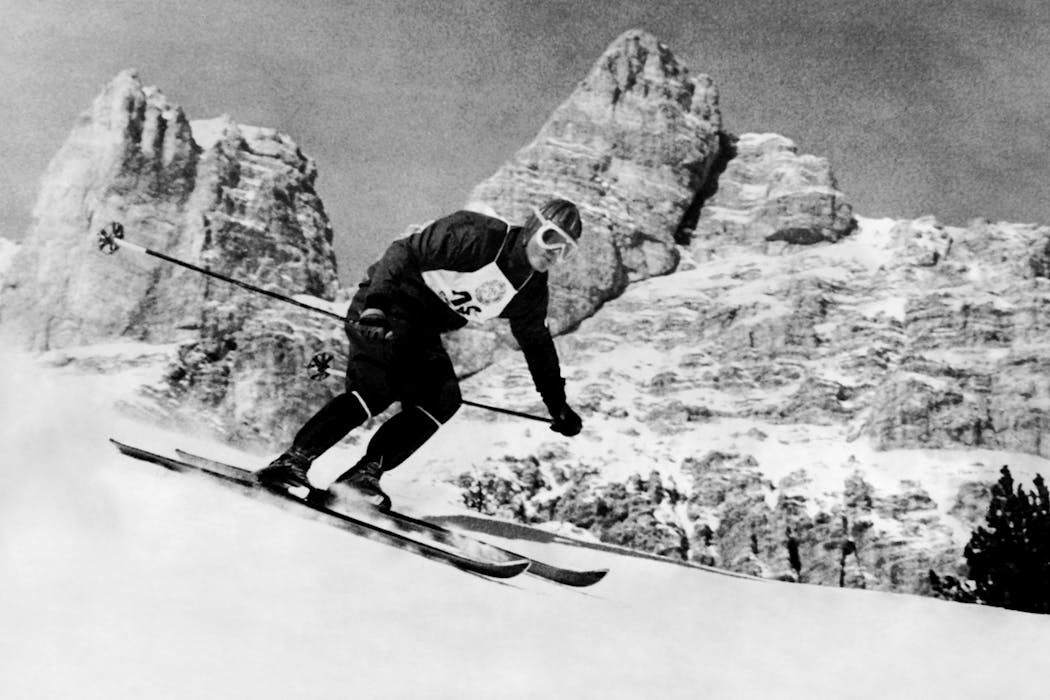
Italian skier Bruno Burrini at the 1956 Winter Olympic Games in Milano Cortina. Getty Images

The 2026 Milan Cortina Winter Olympics are Italy’s fourth as Olympic host and come 70 years after the region first welcomed the world’s best winter athletes.

It is Italy’s third Winter Olympics, second only to the United States (four), reinforcing the nation’s long-standing influence within the Olympic movement.

So, what’s changed since 1956?

Looking back: Cortina d’Ampezzo 1956

The 1956 winter games were originally scheduled for 1944 but were postponed due to the second world war, eventually taking place in Cortina d’Ampezzo.

It was groundbreaking in several ways.

The games ran for 11 days, far shorter than this year’s 17-day program.

Italian skier Giuliana Chenal-Minuzzo became the first woman to recite the Olympic Oath at an opening ceremony.

For the first time, the Winter Olympics were broadcast live on television, albeit in black and white, to nine European nations.

In 1956, winter and summer games were held in the same year, (Melbourne hosted the Summer Olympics that year).

This changed in 1994, when the International Olympic Committee (IOC) moved them to alternating even-numbered years, significantly boosting the profile, commercial appeal and growth of the Winter Olympics.

From centralised to decentralised hosting

Cortina 1956 featured a highly centralised model, with eight venues clustered within the Dolomites mountain range.

In contrast, Milan Cortina in 2026 reflects the IOC’s modern strategy of decentralisation and sustainability.

The spread-out nature of the 2026 event features:

  • four main geographical clusters (Milan, Cortina d’Ampezzo, Valtellina and Val di Fiemme) plus Verona (opening and closing ceremonies)
  • 15 competition venues
  • two host cities – the first time in Olympic history, separated by 413 kilometres
  • six Olympic villages
  • four opening ceremony locations.

With Milan as a major metropolitan hub, the 2026 games are far more urban than their alpine predecessor.

Growth of the winter games

The expansion from 70 years ago is striking:

New, youth-friendly and broadcast-driven sports such as short-track speed skating, snowboarding and freestyle skiing have transformed the program.

The only new sport in 2026 will be ski mountaineering.

Near-gender parity will be achieved through expanded women’s events and mixed-gender competitions.

Leading nations on the medal table

In 1956, the dominant nations were mainly European – the Soviet Union, Austria, Norway, Finland, Sweden and Switzerland as well as the US.

This year, the podium will likely be owned by Norway, the US, Germany, Italy, China and Canada – the latter two making huge improvements in recent times.

Even Australia, a summer games powerhouse, which never made the podium until 1994, has improved dramatically and is expected to have its best result of around six medals, placing it in the top 15.

The Russians will be noticeably absent, forced out by the IOC due to the Ukrainian invasion. They will be allowed to have neutral athletes who can win medals but as a nation they are on the outer.

Paralympics, professionalism and equity

The 2026 Winter Paralympics will follow immediately after the Olympics – something that did not exist in 1956.

The Winter Paralympics first appeared in 1976 and only began sharing host cities with the Olympics in 1992.

Other major shifts since 1956 include:

  • expanded women’s participation, including ice hockey (introduced in 1998)
  • the end of strict amateur-only participation (phased out after 1986)
  • increased financial rewards for medal winners
  • the return of professional National Hockey League male players for the first time since 2014 – a major boost for fans and broadcasters.

Media, technology and the fan experience

Media coverage has exploded since 1956 with the ability to follow every sport, every event on television and radio, digital platforms, newspaper and print media, blogs, podcasts and social media.

Technological changes over the past seven decades have been dramatic. This includes:

  • extensive new types of media coverage
  • use of artificial intelligence
  • equipment design
  • athlete apparel innovation
  • snow-making capabilities
  • venue design and preparation
  • transportation improvements
  • monitoring of athlete performance and training methods.

Fan experience will be greatly enhanced and transformed through:

Costs, sustainability and climate challenges

The 1956 games operated on a modest budget of around US$250,000 (A$350,000).

The 2026 event is projected to cost around US$5.9 billion (A$8.3 billion) for operating and infrastructure expenses.

Cost escalation is driven by inflation, transport and accommodation, security requirements, venue construction and technology.

Balancing this are vastly increased revenues from broadcast rights, sponsorship and ticketing.

Most Olympic hosts end up losing money. The list is long, with Montreal (1976), Nagano (1998), Athens (2004), Sochi (2014), Rio (2016), Tokyo (2020/21) and others all going well over budget.

Sustainability and legacy – barely considered in 1956 – are now central.

The IOC strongly discourages “white elephant” venues, prioritising temporary facilities, venue reuse and carbon reduction.

Climate change remains a long-term concern. While snow was imported for some events in 1956, global warming now threatens the future pool of viable hosts.

Geopolitics, governance and security

The election of Kirsty Coventry as the first woman president of the IOC underscores the organisation’s broader push toward gender equity in leadership.

Under her guidance, the IOC is looking to implement firmer policies on transgender participation.

No major boycotts by nations are expected despite tension caused by the expulsion of Russia and Belarus.

Several international sport federations – supported by some European nations – have even restricted these two banned national Olympic teams from participating as individual neutral athletes.

For the 2026 games, doping controls are stricter than ever, led by the IOC and the World Anti-Doping Agency.

Security planning is at an all-time high. It now includes cyber-threats as well as physical risks.

Watch this space

Seventy years after Cortina d’Ampezzo hosted a modest, alpine-focused winter games, Milan Cortina 2026 represents a vastly expanded, technologically sophisticated and globally connected Olympic festival.

Despite challenges – climate, cost and geopolitics – all indicators suggest the games will deliver a compelling, inclusive and memorable celebration of winter sport.

The Conversation

Richard Baka does not work for, consult, own shares in or receive funding from any company or organisation that would benefit from this article, and has disclosed no relevant affiliations beyond their academic appointment.

ref. Italy hosted the Winter Olympics 70 years ago. What was it like, and what’s changed? – https://theconversation.com/italy-hosted-the-winter-olympics-70-years-ago-what-was-it-like-and-whats-changed-271838

History with a human face and voice: how museum theatre gets kids to care about the past

Source: The Conversation – Africa – By Stephanie Jenkins, Post-doctoral researcher, University of Pretoria

The facts of history are important, but try telling that to a classroom full of bored youngsters. One way to liven up the subject is to show that real people lived through historical events. Drama academic Stephanie Jenkins argues that learning becomes fun when learners care about what they are asked to remember. And one way to encourage caring is to perform the stories of the past, using museums as theatre spaces. Here she explains the idea, using an example from her work in South Africa – where the past is painful but shapes current social issues and future citizens.

What is museum theatre and how does it bring history to life?

Museum theatre is a form of performance that uses acting and other theatrical techniques within a museum, gallery or historical space (such as a historical building) to bring the exhibitions “to life”.

Performers act out historical people and narratives that have been researched. It’s a way for people to encounter the past through experience rather than just facts.

Bringing the past into the museum space through performance offers an opportunity to gain attention and foster potential for further engagement with the historical topic.

How have you used museum theatre to teach South African history?

One example was a play I developed called Beer Halls, Pass Laws and Just Cause, which was performed at the KwaMuhle Museum in Durban, South Africa, during March 2020. It was connected to the Grade 11 history syllabus with the aim of connecting what was learnt in class to the historical site of the museum.

The building this museum is housed in used to be the Native Administration Department. Under the apartheid system of racial segregation, black people had to carry a passbook (also referred to as a dompas) which gave them permission to be present in certain areas of a city for work. They had to apply for it and get it approved at this building, which would often mean waiting in long lines in the Durban heat.

The performance dramatised some of those people’s experiences, in the place where they’d had them. The actor guides spoke the recorded words of actual historical people, many of whom had stood in the spaces where the audience was standing. Their words had been recorded in various texts, newspaper articles and interviews conducted by officials at the museum in the early 1990s. (The pass system was abolished in 1986.)


Read more:
Alcohol and colonialism: the curious story of the Bulawayo beer gardens


Part of the experience for learners was to interact with objects, using all their senses, to spark creative thought processes and dialogue.

For example, they had to hold a replica passbook during the performance. Some reported that it felt “demeaning”, “stressful”, “oppressive”, or “scary”. The passbook “prop” helped them to experience how surveillance and fear can be used to control people.

In museum theatre like this, learners interact with the characters and learn about the past by observing, and often participating in, the performed action. By encouraging the learners to be part of the action, and surrounded by the exhibitions to which the performance is speaking, the learners are encouraged to be more active in their learning.


Read more:
Fun with fossils: South African kids learn a whole lot more about human evolution from museum workshops


The use of actors provides the opportunity for the learners to personally connect to the history and to care about the characters. Historical people are given a “face”, a three-dimensional body and a voice, making history look human and less removed from the present. Empathy, putting yourself in someone else’s shoes, is an important skill to learn. And it connects what is taught with the learner’s own life, making it relevant and easier to remember.

What did you learn from this performance?

The performance was used to challenge both notions around what learning about history is like (in terms of classroom and book learning) and what a run-of-the-mill museum visit is “supposed” to evoke. The performance attempted to encourage learners to be part of the historical experience rather than just “absorb facts”.

From the feedback collected from the learners, it is clear that using performance to re-enact narratives from the past works well in gaining their attention and personal connection to the histories, and to the actual site as well. Many did not know much about this place (in their city) before the performance.

One learner noted that reading about history should feel personal but noted that “this (the performance) felt more personal … I didn’t expect it to”.

Why does it matter?

Performance in museums can be one way that an interest in history, and in turn wider societal issues, is cultivated from a young age.


Read more:
History teaching in South Africa could be vastly improved – if language skills were added to the mix


While the present is vital to our wellbeing, ignoring the past creates citizens who do not have a proper grasp of various historical contexts, which is necessary to better understand where and who we are now. We cannot attempt to change current social issues if we do not understand how the past has influenced these problems.

The Conversation

Stephanie Jenkins does not work for, consult, own shares in or receive funding from any company or organisation that would benefit from this article, and has disclosed no relevant affiliations beyond their academic appointment.

ref. History with a human face and voice: how museum theatre gets kids to care about the past – https://theconversation.com/history-with-a-human-face-and-voice-how-museum-theatre-gets-kids-to-care-about-the-past-274664

Cuba is facing an economic and social catastrophe, and not entirely because of Donald Trump

Source: The Conversation – Canada – By Robert Huish, Associate Professor in International Development Studies, Dalhousie University

If you’re planning on a winter break to Cuba, get ready for an adventure rather than a vacation. If you’re wondering if United States President Donald Trump’s oil embargo will shatter Cuba’s Communist government, dig in for a drawn-out slog. And if you’re Cuban, brace for a nightmare.

Cuba is on the brink of one of the worst social and economic catastrophes since the 1959 revolution. Energy sources are sparse. The electrical grid is in tatters.

Inflation is over 15 per cent, with the peso tumbling in value. Tropical diseases like dengue, chikunguny and Oropuche virus are surging, largely because the municipal waste system in Havana ground to a halt in 2025.

As many as two million Cubans have left the country since 2021. Infant mortality spiked from five per 1,000 live births in 2021 to 14 per 1,000 in late 2025.

And now, revenue streams from tourism, international medical co-operation and pharmaceutical production are all but dried up. Some 5,000 Cubans volunteered as mercenaries to fight alongside Russia against Ukraine since 2022. Cuba is hurting.

The U.S. versus Cuba

Cuba’s current pain may not be enough to topple its Communist government, despite the desires of many Cuban exiles. Nor is the current crisis all Trump’s work. Cuba is a victim of the breakdown of the old international rules-based order.


Read more:
Venezuela attack, Greenland threats and Gaza assault mark the collapse of international legal order


The U.S. has long targeted Cuba through various economic weapons dating from the early 1960s. One of the most vicious was the Helms-Burton Act that not only prohibited U.S. companies from doing business with Cuba, but also punished companies in other countries for dealing with both Cuba and the U.S.

In his second term, U.S. President Barack Obama eased travel restrictions for Americans visiting Cuba along with some trade policies, but this was short-lived. Trump restored these measures in his first administration.

Cuban doctors

For decades, Cuba relied on an elaborate network of international solidarity and co-operation with rich and poor countries alike. More than 100,000 Cuban doctors served abroad, often providing medical care in rural and remote locations.

While Cuban doctors working abroad received a salary bump, the government received handsome cash deposits and preferred trade agreements for select products. Venezuela received tens of thousands of Cuban doctors and, later, security personnel in exchange for heavy petroleum.


Read more:
Big Pharma vs. Little Cuba: Why Cubans trust vaccines and how they’re helping vaccinate the world


Cuban doctors served in 103 countries, and as of 2021, they were active in 69 nations. Agreements were also made for other personnel to work abroad, including athletic coaches, teachers and engineers.

The U.S. targeted Cuba’s international solidarity work in 2006 by creating the Cuban Medical Professional Parole program, which essentially regarded Cuban workers as “trafficked.”

The State Department approved an annual US$10 million budget until 2017 to locate and recruit Cuban and Cuban-trained doctors working in poor areas of Latin America and Africa. Diplomats offered them expedited immigration to the U.S. But upon arrival, many had their medical credentials ignored and wound up unemployed or underemployed.

Global support

Against one of the longest economic blockades in history, Cuba has nonetheless positioned itself as an active global player. It’s a diplomatic heavyweight with 139 active embassies and consulates worldwide and well over 100 foreign embassies in Havana.

The United Nations General Assembly routinely denounces the American embargo on Cuba. In 2025, amid shifting political alliances, the assembly voted 165-7 in favour of demanding an end to the embargo.

Many international partnerships have kept Cuba going through hard times in the past. Canada, Italy and Mexico, in particular, have kept business with Cuba going despite the U.S. embargo. In the 1990s, tourism expanded, notably from these countries, helping to stimulate the Cuban economy.

Canadian mining company Sherritt invested heavily in Cuba to extract nickel. When COVID-19 overwhelmed health systems worldwide in 2020, Cuba was the first to volunteer medical services to 19 countries, including affluent states like Italy and Qatar. They even took in a quarantined British cruise ship to offer care.


Read more:
The scene from Cuba: How it’s getting so much right on COVID-19


But in 2026, countries are sending in aircraft to evacuate their vacationing nationals, and companies like Sherritt are grinding to a halt, not because of the U.S. embargo, but because so many professionally trained Cubans have emigrated.

Unlike the 1960s and the 1990s, no brave partners are coming forward to do business with Cuba, which only shows how weak international solidarity is today.

Here are three possible outcomes for Cuba in the coming months in descending order of likelihood:

1. Deals behind the scenes

A backroom deal could be struck between Trump’s White House and Miguel Díaz-Canal’s government in Cuba in much the same way that the Obama administration struck deals with Raúl Castro’s government, working through the Vatican and Canadian diplomats. For example, the Trump administration could permit fuel to be purchased in cash from the U.S., or more tourist real estate may be opened to foreign ownership.

If any deal is in the works, the sticking point will be elections. Unlike Venezuela, with a legitimate opposition in the wings, Cuba has none. Political opponents to the revolution have long been jailed or exiled, and Cuba’s electoral system itself isn’t structured for a multi-party race. Toppling the current government would leave an enormous power vacuum.

2. Martial law

If the fuel embargo remains, Cuba could declare martial law and civil defence to prepare for foreign hostility and to better ration resources.

Díaz-Canal recently hinted at this in what he calls a “war of the people,” which may help explain why Canadian and Russian airlines are now hastily sending in rescue flights for tourists.

Martial law would mean ultra-tight rationing, political volatility and the government acquiring goods through murky channels, which, combined, pose a heightened security risk to the U.S. just 140 kilometres off its shores. Since Dwight D. Eisenhower, most American presidents quickly figured out it was better to have a stable and secure, even though ideologically opposed, neighbour than a politically unstable and vulnerable basketcase.

The situation will grow dire since the well-educated professional class has already left, along with many doctors and nurses. In past crises, the educated, youthful professional class was on hand; this time, they’re already gone.

3. The international community steps in

Third, the world could stand by its sentiment at the United Nations General Assembly and sends much-needed resources and trade to Cuba despite the U.S. bellicosity.

It could be a rallying point for the new era of international order, where bullied countries in the Americas and in Europe defy American pressure and bring lifelines to Cuba.


Read more:
Mark Carney’s Davos speech marks a major departure from Canada’s usual approach to the U.S.


International solidarity could reverse some of the harm and take the pressure off Cubans, including those so desperate they’d choose to fight as mercenaries with Russia.

As the world has seen before, when nations stand up to Trump, he usually backs down. Assistance need not come through foreign aid, but simply by keeping the channels open for business.

But if the international community ignores Cuba today, a humanitarian nightmare will unfold soon.

The Conversation

Robert Huish receives funding from the Social Sciences and Humanities Research Council of Canada

ref. Cuba is facing an economic and social catastrophe, and not entirely because of Donald Trump – https://theconversation.com/cuba-is-facing-an-economic-and-social-catastrophe-and-not-entirely-because-of-donald-trump-275410

Hesitation is costly in sports but essential to life – neuroscientists identified its brain circuitry

Source: The Conversation – USA – By Eric Yttri, Associate Professor of Biological Sciences, Carnegie Mellon University

A split-second pause can make the difference between gold and grief. Marco Bertorello/AFP via Getty Images

At the Winter Olympics, skiers, bobsledders, speedskaters and many other athletes all have to master one critical moment: when to start. That split second is paramount during competition because when everyone is strong and skilled, a moment of hesitation can separate gold from silver. A competitor who hesitates too much will be left behind – but moving too early will get them disqualified.

Though the circumstances are less intense, this paradox of hesitation applies to daily life. Waiting for the right moment to cross the street, or pausing before deciding whether to answer a call from a number you don’t recognize, are daily examples of hesitation. Importantly, some psychiatric conditions such as obsessive-compulsive disorder are characterized by impulsivity, or a lack of hesitation, while excessive hesitation is a crippling consequence of several anxiety disorders.

As a neuroscientist, I have been working to uncover how the brain decides when to act and when to wait. Recent research from my team and me helps explain why this split-second pause happens, offering insight not only into elite athletic performance, but also how people make everyday decisions when the potential outcome isn’t clear.

We found that the key to hesitation is a response to uncertainty. This could be where a dropped hockey puck will land, when a race starts, or placing your order at a new restaurant.

Five rows of Olympic skiiers racing down a hill
Every millisecond counts when the competition is fierce.
Tom Weller/Getty Images

Hesitation and the brain

To understand how the brain controls hesitation, my colleagues and I designed a simple decision-making task in mice.

The task required the mouse’s brain to interpret signals that were predictably good, predictably bad or – most importantly – uncertain, meaning somewhere in between. Different auditory tones indicated whether a drop of sugar water would soon be delivered, not delivered, or had a 50/50 chance of delivery.

How the mice behaved would not affect the outcome. Nevertheless, mice would still wait longer before licking to see whether a reward had been given in the uncertain scenario. Just like in people, unpredictable situations led to delays in response. This hesitation was not the result of vacillating between options in indecision, but an active and regulated brain process to pause before acting due to environmental uncertainty.

When we examined neural activity associated with the onset of licking, we identified a specific group of neurons that became active only when outcomes were unclear. Those neurons effectively controlled whether the brain should commit to an action or pause to gather more information. The degree to which these neurons were active could predict whether mice would hesitate before making a decision.

To confirm that these neurons played a role in controlling hesitation, we used a technique called optogenetics to briefly turn these brain cells on or off. When we activated the neurons, mice hesitated more. When we silenced them, that hesitation faded and their responses were quicker by several hundred milliseconds, in line with their reactions to predictable situations.

Researchers can use optogenetics to turn brain cells on or off.

Daily life, disease and downhill racing

Our findings suggest that, rather than a weakness to overcome, hesitation appears to be a fundamental brain feature that helps people and animals navigate an uncertain world and avoid costly mistakes.

Our study also provides insights into the balance of action and inaction in health and disease. The hesitation neurons are located in the basal ganglia, the same part of the brain affected in Parkinson’s disease, OCD and addiction. While researchers must still determine how much overlap or interaction there is between the cells involved in hesitation and those affected in psychiatric disorders, their overlap in circuitry points to possible targets for treatment.

Our next step is to understand how cells controlling hesitation interact with drugs treating ADHD and OCD, conditions where patients can respond impulsively during volatile or uncertain situations.

We also aim to identify which brain areas provide these cells with information about uncertainty – the environmental signal so critical to hesitation. While researchers have found that several parts of an area of the brain called the prefrontal cortex encode uncertainty, it’s unclear how the brain actually makes use of this information, where the rubber meets the road.

Hesitation is not a flaw – it’s a critical feature for navigating an unpredictable world. Whether you’re a figure skater waiting for the perfect moment to launch your jump or just going about your day, the circuitry behind hesitation plays an important role in figuring out the timing to get the action right.

The Conversation

Eric Yttri receives funding from the National Institute of Health and the Binational Science Foundation.

ref. Hesitation is costly in sports but essential to life – neuroscientists identified its brain circuitry – https://theconversation.com/hesitation-is-costly-in-sports-but-essential-to-life-neuroscientists-identified-its-brain-circuitry-274680

Nearly every state in the US has dyslexia laws – but our research shows limited change for struggling readers

Source: The Conversation – USA (2) – By Eric Hengyu Hu, Research Scientist of Educational Policy, University at Albany, State University of New York

Between 5% and 15% of children have symptoms of dyslexia, but schools are often slow at identifying and responding to it with targeted education. mrs/Stock Photos/Getty Images

Families with children who have dyslexia have long pushed lawmakers to respond to a pressing concern: Too many young students struggle for years to learn to read, before schools recognize the problem.

In response, nearly every state in the U.S. passed some sort of dyslexia laws over the past decade. Most of these laws encourage or require schools to screen young children for reading difficulties, train teachers in evidence-based reading instruction and provide targeted support to students who show early signs of dyslexia.

Families of children with dyslexia, educators and dyslexia advocacy groups widely praised these laws. If schools could identify dyslexia early and respond with evidence-based instruction, reading outcomes would likely improve and fewer children would fall behind.

But what actually happened after these laws passed?

My colleagues and I examined nearly two decades of national student data to answer this question. The results tell a complicated story.

A young girl with dark hair sits with her hands on her head and looks at an open book on a desk.
State laws on dyslexia are less effective without the resources and strategies to implement the laws.
aldomurillo/Stock Photos/Getty Images

An undetected problem

Dyslexia is a brain-based learning difference that makes reading words slow and effortful, even when children have typical intelligence and education.

About 5% to 15% of U.S. children experience persistent reading difficulties consistent with dyslexia. Without early support, these difficulties can have long-term academic and emotional consequences.

Before the 2000s, dyslexia was rarely mentioned explicitly in education policy. Students with dyslexia were typically grouped under a broad learning disability category, often without focused instruction or support.

Parent advocacy groups and dyslexia advocacy organizations began pushing lawmakers in the early 2010s to recognize dyslexia in state education policy. They also lobbied for states to require early screening for reading difficulties and to teach reading with rigorous methods backed by scientific research.

Their advocacy coincided with a growing scientific consensus: Early, explicit instruction in phonics and language structure helps struggling readers, including students with dyslexia.

Research and advocacy also highlighted that many children with reading difficulties were not identified until later in elementary school, after years of academic struggle, when gaps in reading skills are harder to correct.

States respond with dyslexia laws

A few states, like Texas and Arkansas, first passed dyslexia laws in the early 2010s. One central goal was to help schools identify dyslexia in students earlier, rather than waiting until these students experience repeated academic failure.

By the late 2010s, most states had adopted some form of dyslexia legislation.

As of 2025, all states except Hawaii have enacted dyslexia legislation.

While the laws shared similar goals of promoting early screening for reading difficulties, improving reading instruction and expanding support for struggling readers, they varied widely in strength, funding and expectations for schools.

My colleagues and I wanted to examine whether the wave of state dyslexia laws that began in the early 2010s was associated with changes in students’ reading outcomes.

Mixed results

We analyzed fourth grade reading assessments from the National Assessment of Educational Progress, often called the nation’s report card, from 2003 to 2022.

We focused on how often students were identified with reading-related learning disabilities and how well those students performed in reading. We compared trends before and after dyslexia laws were enacted across 47 states.

Two findings stood out:

• First, more than half of the states with these new laws showed no significant shift in identifying learning disabilities related to reading. Some states identified more students, some fewer, but there was no consistent national pattern.

• Second, reading achievement among students identified with learning disabilities often declined, rather than improved, after these laws passed in many states, including Alaska, Maine, Massachusetts, New York, Ohio and West Virginia.

Only four states – Arizona, Mississippi, Nevada and Oklahoma – showed significant gains in reading scores on state assessments, with average increases ranging from 3 points in Oklahoma’s case to 10 points in Arizona’s example. Many other states experienced flat trends or declines over the same period.

Passing a law doesn’t equal classroom change

Our findings suggest that dyslexia laws often raised awareness about dyslexia and early reading difficulties without fully changing classroom practices.

Many states, such as Connecticut, Maine, Massachusetts and North Carolina, required early screening for dyslexia – but did not ensure schools had trained staff, for example, on how to conduct this screening.

Even with enough teachers to screen for dyslexia, screening alone does not help students unless it is followed by high-quality instruction and sustained support.

Funding has been another major challenge. Most dyslexia laws were passed without dedicated funding for teacher training or instructional materials, leaving districts to absorb the costs. As a result, implementation has been uneven, with well-funded districts moving faster than others.

Teacher preparation also matters. Teaching reading effectively, especially for students with dyslexia, requires specialized knowledge that many teachers were never taught in their training programs. Without strong professional development and ongoing coaching, new mandates can be difficult to carry out.

Taken together, these factors help explain why dyslexia laws alone have not produced widespread gains.

What distinguishes states that improved

Despite the mixed national picture, students in some states, including Arizona and Mississippi, did better on reading outcomes after their schools adopted dyslexia-related policies. These states shared several features.

First, when young children in these states were flagged as at risk for reading difficulties, schools were expected to provide additional reading instruction – rather than treating screening as an end in itself.

Second, schools in these states invested in practical teacher training, focused on how to teach foundational reading skills – such as phonics and word decoding – that are especially important for students with dyslexia.

Third, these states aligned their dyslexia laws with broader literacy reforms – like using evidence-based reading curricula and providing coaching to teachers – rather than treating dyslexia policy as a stand-alone mandate.

Mississippi is often cited as an example of a state that successfully paired dyslexia policy with a broader overhaul of reading instruction, resulting in a boost in reading achievement scores from 2013 to 2019. This overhaul included more structured reading instruction, teacher training and literacy coaches in schools.

Other states, including Louisiana and Alabama, adopted similar approaches and also saw reading gains for kids with learning disabilities – including dyslexia – after they enacted their dyslexia laws.

The takeaway

Dyslexia laws recognize that struggling young readers deserve early, evidence-based support rather than years of delay. That alone is meaningful progress.

But two decades of national data suggests that legislation by itself is not enough.

If states want dyslexia laws to fulfill their promise, the next step is clear: Move beyond mandates and focus on how schools are supported to carry them out. For children struggling to learn to read, the difference between policy and practice can shape their entire educational future.

The Conversation

Eric Hengyu Hu does not work for, consult, own shares in or receive funding from any company or organization that would benefit from this article, and has disclosed no relevant affiliations beyond their academic appointment.

ref. Nearly every state in the US has dyslexia laws – but our research shows limited change for struggling readers – https://theconversation.com/nearly-every-state-in-the-us-has-dyslexia-laws-but-our-research-shows-limited-change-for-struggling-readers-275202

Polymers from earth can make cement more climate-friendly

Source: The Conversation – USA (2) – By Alcina Johnson Sudagar, Research Scientist in Chemistry, Washington University in St. Louis

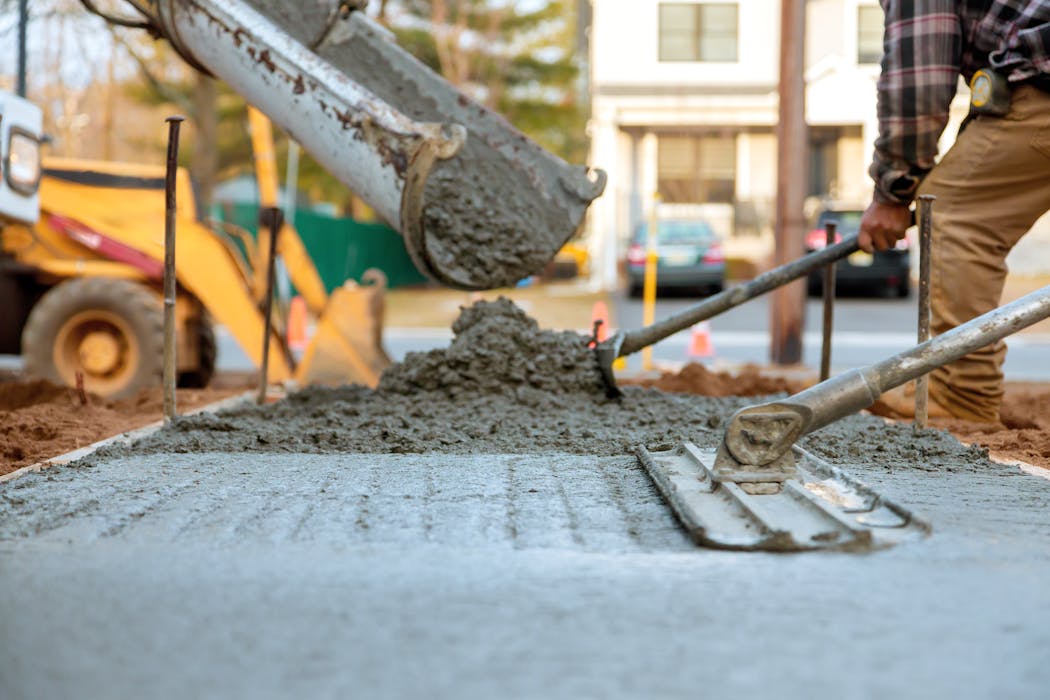
Portland cement, widely used for concrete, is responsible for about 8% of global greenhouse gas emissions. Photovs/iStock/Getty Images Plus

Concrete is all around you – in the foundation of your home, the bridges you drive over, the sidewalks and buildings of cities. It is often described as the second-most used material by volume on Earth after water.

But the way concrete is made today also makes it a major contributor to climate change.

Portland cement, the key component of concrete, is responsible for about 8% of global greenhouse gas emissions. That’s because it’s made by heating limestone to high temperatures, a process that burns a large amount of fossil fuels for energy and releases carbon dioxide from the limestone in the process.

The good news is that there are alternatives, and they are gaining attention.

Portland cement: A greenhouse gas problem

Cementlike substances have been used in construction for thousands of years. Architects have found evidence of their use in the pyramids of Egypt and the buildings and aqueducts of the Roman Empire.

The Portland cement commonly used in construction today was patented in 1824 by Joseph Aspdin, a British bricklayer.

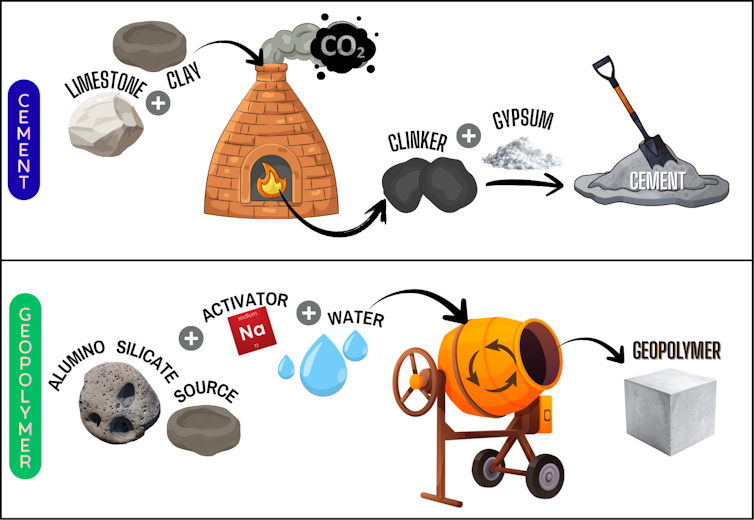
Modern cement preparation starts with crushing the excavated raw materials limestone and clay and then heating them in a kiln at around 2,650 degrees Fahrenheit (about 1,450 degrees Celsius) to form clinker, a hard, rocklike residue. The clinker is then cooled and ground with gypsum into a fine powder, which is called cement.

About 40% of the carbon dioxide emissions from cement production come from burning fossil fuels to generate the high heat needed to run the kiln. The rest come as the heat converts limestone (calcium carbonate) to lime (calcium oxide), releasing carbon dioxide.

In all, between half a ton and 1 ton of greenhouse gas is released per ton of Portland cement. Cement is a binding agent that, mixed with water, holds aggregate together to create concrete. It makes up about 10% to 15% of the concrete mix by weight.

Alternative technologies can lower emissions

As populations, cities and the need for new infrastructure expand, the use of cement is growing, making it important to find alternatives with lower environmental costs.

Concrete has seen the fastest growth among commonly used construction materials with rising population between 1950 and 2023
As population has increased, annual global Portland cement production has risen with it.
Hao Chen, et al., 2025, CC BY-NC-ND

Some techniques for reducing carbon dioxide emissions include substituting some of the clinker – the hard residue typically made from limestone – with supplementary materials such as clay, or fly ash and slag from industries. Other methods reduce the amount of cement by mixing in waste sawdust or recycled materials like plastics.

The long-term solution for reducing cement’s emissions, however, is to replace traditional cement completely with alternatives. One option is geopolymers made from earthen clay and industrial wastes.

Geopolymers: A more climate-friendly solution

Geopolymers can be made by mixing claylike materials that are rich in aluminum and silicon minerals with a chemical activator through a process called geopolymerization. The activator transforms the silicon and aluminum into a structure that will look like cement. All of this can happen at room temperature.

The major difference between cement and geopolymer is that cement is mainly made of calcium, whereas geopolymers are made of silicon and aluminum with some possible calcium in their structure.

Geopolymers offer advantages with lower number of steps, lower CO2 emission and lower water requirement over Portland cement
How the production of Portland cement and geopolymers compare.
Alcina Johnson Sudagar, CC BY-NC

These geopolymers have been found to possess high strength and durability, including resilience in freeze-thaw cycles and resistance to heat and fire, which are important requirements in construction. Studies have found that some geopolymers can provide comparable if not better strength than traditional cement and, because they don’t require heat the way clinker does, they can be produced with significantly lower greenhouse gas emissions.

Geopolymers can also be produced from a variety of raw materials rich in aluminum and silicon, including earthen clays, fly ash, blast furnace slag, rice husk ash, iron ore wastes and recycled construction brick waste. Geopolymer technology can be adapted depending on the clay or industrial waste locally available in a region.

A brief history of cement and geopolymers. Geopolymer International.

An added advantage of geopolymers is that changes to the mixture can produce a range of features.

For example, I and my co-researchers at the University of Aveiro in Portugal added a small amount of cork industry waste – the leftovers from creating bottle corks – to clay-based geopolymer and found it could improve the strength of the material by up to twofold. The cork particles filled the spaces in the geopolymer structure, making it denser, which increased the strength.

Similarly, additives such as sisal fibers from the agave plant, recycled plastic and steel fibers can change geopolymer properties. The additives do not participate in the geopolymerization process but act as fillers in the structure.

The structure of geopolymers can also be designed to act as adsorbents, attracting toxic metals in wastewater and capturing and storing radioactive wastes. Specifically, incorporating materials like zeolite that are natural adsorbents in the geopolymer structure can make them useful for such applications as well.

Where geopolymers are used now

Geopolymers have been used in many types of construction, including roads, coatings, 3D printing, coastal environmental protection, the steel and chemical industries, sewer rehabilitation and building radiation shielding and rocket launchpad and bunker infrastructure.

One of the earliest examples of a modern geopolymer concrete project was the Brisbane West Wellcamp airport in Australia.

It was built in 2014 with 70,000 metric tons of geopolymer concrete, which was estimated to have reduced the project’s carbon dioxide emissions by as much as 80%.

The geopolymer market is currently estimated to be between US$7 billion and $10 billion, with the largest growth in the Asia-Pacific region.

Analysts have estimated that the market could grow at a rate of 10% to 20% per year and reach about $62 billion by 2033.

In several countries, greenhouse gas regulations and green-building certifications are expected to support the continued growth of geopolymers in the construction industry.

Expanding the use of cement alternatives

The advantage of using industrial wastes in geopolymers is a double-edged sword, however. The composition of industrial wastes varies, so it can be difficult to standardize the processing methods. The geopolymer components need to be mixed in particular ratios to achieve desired properties.

Producing the activator for the geopolymer, typically done in chemical facilities, can raise the cost and contribute to the carbon footprint. And the long-term data about these materials’ stability is only now being developed given their newness. Also, these geopolymers can take longer to set than cement, though the setting time can be sped up by using raw materials that react quickly.

Developing cheaper, naturally available activators like agricultural waste rice husk with sustainable supply chains could help lower the costs and environmental impact. Also, printing the recipe on the raw material packaging could help simplify the job of determining the mixing ratio so geopolymers can be more widely used with confidence.

Even though geopolymer technology has some drawbacks, these low-carbon alternatives have great potential for reducing emissions from the construction sector.

The Conversation

Alcina Johnson Sudagar has received funding from GeoBioTec.

ref. Polymers from earth can make cement more climate-friendly – https://theconversation.com/polymers-from-earth-can-make-cement-more-climate-friendly-270354

Addiction affects your brain as well as your body – that’s why detoxing is just the first stage of recovery

Source: The Conversation – USA (3) – By Emma Fenske, DO, Addiction Medicine Fellow and Internal Medicine Physician, Oregon Health & Science University

Addiction treatment after detoxification may include techniques such as counseling, group therapy and medication. seksan Mongkhonkhamsao via Getty Images

Addiction is one of the most common and consequential chronic medical conditions in the United States. Nationwide, more than 46 million people met the criteria for a substance abuse disorder as of 2021, the most recent data available.

Decades of evidence show that addiction is a chronic, relapsing disease of the brain. Nonetheless, there’s still widespread public misunderstanding of what constitutes “treatment” for addiction, not to mention heavy stigma associated with it.

Many patients, families and even health care systems view entering a detoxification or medically managed withdrawal unit as the primary step in recovery. Sometimes, this first step is considered all that is needed. As a physician and fellow in addiction medicine, I know firsthand that this common perception is wrong, and that it perpetuates misinformation about evidence-based treatment.

Centers that provide medically managed withdrawal are designed to stabilize patients in crisis, safely manage acute withdrawal and interrupt dangerous use patterns. However, the idea that “getting through detox” equates to recovery has taken hold over the past several years. This belief appears to be rooted in outdated models of addiction, public misunderstanding and media portrayals that frame addiction as solely a problem of physical dependence.

The goal of detoxification is to stop taking drugs or alcohol and allow them to leave the body. It does not treat the factors that contribute to substance use disorders.

Detox is a starting point, not a treatment plan

It is not uncommon for patients to show up for medically managed withdrawal, more commonly known as “detox,” without a post-discharge plan. “I haven’t thought that far,” “I just want to get through this,” or “I am getting treatment now, aren’t I?” are some of the responses I frequently hear.

However, this first step is only the start of recovery. Detoxification from alcohol or benzodiazapines – drugs commonly known as “benzos,” such as Xanax, Ativan or Valium – can be dangerous or even deadly if it’s not managed in a medical setting. While detox is often necessary to safely get someone through withdrawal, it only addresses short-term physical symptoms, not the underlying addiction – nor does it address the factors that drive people to use alcohol and drugs problematically.

Addiction has causes that are neurobiological, psychological and structural. Treating these drivers is as important as managing the initial withdrawal. Medically managed withdrawal does not restore neurochemical imbalances, provide long-term relapse prevention strategies or help patients manage ongoing life stressors or triggers as they arise.

In a 2023 study of adults with opioid use disorder, relapse rates six months after treatment were highest among individuals who received only short-term inpatient treatment, with 77% of these patients returning to use. Relapse rates were significantly lower among those who remained in inpatient care for a longer duration or who transitioned to outpatient treatment following short-term inpatient treatment.

When people were also treated with a long-acting form of an opioid-blocking medication called naltrexone, relapse rates dropped across all settings — to 59% after short-term inpatient care, 46% after long-term inpatient care and 38% for those treated as outpatients. These results highlight that brief detoxification without ongoing care is often not enough to support lasting recovery.

However, many centers that provide medically managed withdrawal face clinical, regulatory and financial constraints. As a result, they often have limited resources and can only admit patients for as few as three to five days. In these circumstances, the centers work mainly to stabilize acute withdrawal symptoms rather than to home in on underlying factors that may drive substance use and possible return to use.

Graphic showing that in 2023, 48.5 million people in the US reported that during the previous year, they had impairment caused by the recurrent use of alcohol or other drugs.
About 17% of people in the U.S. age 12 or older currently struggle with substance use disorders. This means that they reported impairment during the previous year, caused by the recurrent use of alcohol or other drugs, or both, including health problems, disability and failure to meet major responsibilities at work, school or home.
US Substance Abuse and Mental Health Services Administration

Why addiction doesn’t end after withdrawal

Addiction is a chronic, occasionally relapsing condition. It disrupts three interconnected systems in the brain:

– the reward pathway, in which dopamine, a neurotransmitter, works on pleasure centers of the brain;

– stress centers in the amygdala, the part of the brain that processes emotions such as fear, aggression and anxiety; and

– motivation and control systems in the prefrontal cortex, which manage higher-level executive functions like planning and problem-solving.

When individuals repeatedly use substances like alcohol or drugs, they may discover that things they once found rewarding or joyful no longer can compete on the same scale. This often leads to increased stress and impaired self-control. Their body reduces the number of dopamine receptors – sites in the brain that bind dopamine – as a result, causing previously motivating and joyous activities to seem bleak.

This was what had happened to a patient who told me: “After meth, everything was messed up and nothing brought me joy.” At first, using methamphetamine creates a “high,” or euphoria; over time, though, individuals use it simply to avoid being sick. The substance that once was euphoric becomes a proverbial ball and chain.

These neurobiological changes do not happen overnight, and neither does recovery. It is unrealistic to expect that a typical admission for medically managed withdrawal, which may only span three to five days, will heal patients’ damaged circuits.

Furthermore, some symptoms, such as anxiety, mood changes, trouble sleeping and overall discontentment with life, can persist for three to six months or more following the initial withdrawal period. Cravings, which are intense psychological urges, often arise without warning. When this happens, having recovery support systems in place, such as a sponsor, mental health professional or relapse prevention plan, can be crucial.

Addiction often is rooted in exacerbating factors like anxiety, depression, trauma, chronic stress and pain. For example, chronic pain from a past injury can often lead to misuse of prescription opioids, which later may evolve into using other substances like heroin or fentanyl.

Patients with substance use disorders have often relied on substances as their escape lever from these deeper problems, rather than developing healthier coping mechanisms. All they have known in times of suffering is their drug of choice.

It often requires months or years to develop new ways of thinking, emotional regulation, habits and trauma responses after leaving a history of substance use behind. Learning to live substance-free and unaltered can be a new and terrifying concept.

Treatment after detox

If medically managed withdrawal is just the first step, what should come next? Patients may confer with their doctors and choose to start medication-assisted therapy, which helps prevent cravings and withdrawal as they address deeper issues through mental health treatments such as cognitive behavioral therapy. Opioid use disorder is treated with medications like buprenorphine or methadone, while alcohol use disorder medications include naltrexone, acamprosate or disulfiram.

These medications are at least as effective as many standard treatments in medicine, and I believe they should be considered when appropriate. Medications for alcohol use disorder have proved to be effective at reducing risk of death and hospitalizations, but these medications are often underutilized.

Treating substance use disorders is like managing diabetes, high blood pressure or other chronic health conditions. Even after patients are out of imminent crisis, the work is ongoing.

The Conversation

Emma Fenske, DO does not work for, consult, own shares in or receive funding from any company or organization that would benefit from this article, and has disclosed no relevant affiliations beyond their academic appointment.

ref. Addiction affects your brain as well as your body – that’s why detoxing is just the first stage of recovery – https://theconversation.com/addiction-affects-your-brain-as-well-as-your-body-thats-why-detoxing-is-just-the-first-stage-of-recovery-270784

How the 9/11 terrorist attacks shaped ICE’s immigration strategy

Source: The Conversation – USA – By Pawan Dhingra, Professor of U.S. Immigration Studies, Amherst College

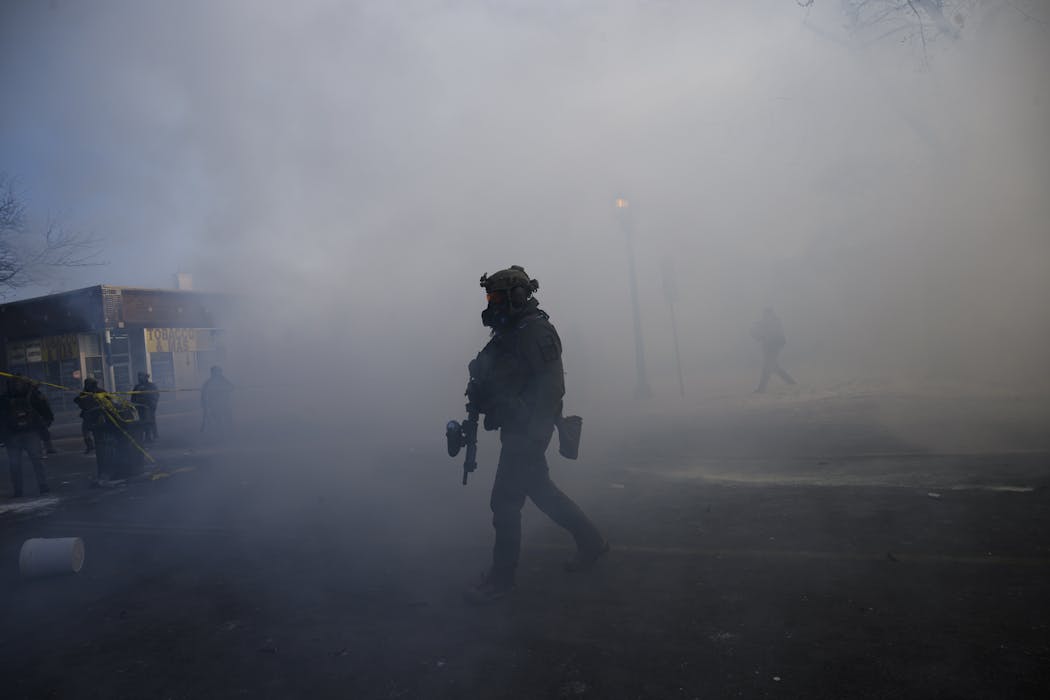
Tear gas fills the air in south Minneapolis on Jan. 24, 2026, after federal agents fatally shot Alex Pretti. Aaron Lavinsky/The Minnesota Star Tribune

Stephen Miller’s January 2026 announcement to Immigration and Customs Enforcement officers – telling them that they have “immunity to perform your duties” and that no “illegal alien, no leftist agitator or domestic insurrectionist” can stop them – may seem like an extreme statement outside the political mainstream.

And when ICE agents use facial recognition software to monitor immigrants and protesters, that might seem like an unacceptable invasion of people’s privacy.

While extreme, these cases are not too unexpected. Both Miller’s statements and ICE’s monitoring extend from the framework of immigration enforcement that grew from the Sept. 11, 2001, terrorist attacks.

Immigration enforcement was reorganized and reframed after 9/11, particularly through the creation of ICE and the Department of Homeland Security.

As a scholar of immigration in the U.S., I find that the growth of extreme immigration enforcement, both at the border and across the country, results from this change 25 years ago.

From criminality to terrorism

In November 2002, the Homeland Security Act created DHS. The founding of ICE followed a few months later. As the agency notes, it was part of “the single-largest government reorganization since the creation of the Department of Defense.” Immigration enforcement was folded into a national security priority whose primary purpose was to defend “homeland security.”

The notion of immigrants as potential criminals was widespread well before the creation DHS.

In 1996, for example, President Bill Clinton signed the Illegal Immigration Reform and Immigration Responsibility Act. That law expanded the number of offenses that could result in automatic deportation, including of legal residents. The act also limited judicial review of deportation cases, while the very title of the law framed people in the U.S. without legal status as lawbreaking criminals.

But after 9/11, the connection between immigration and law enforcement intensified and took on a new dimension: counterterrorism. Immigration was no longer treated as a civil issue in which immigrants were deported if found through a civil court to have violated the law.

Instead, immigrants were evaluated as possible threats to the country.

Demonstrators walk as they hold signs.
Demonstrators protest the National Security Entry-Exit Registration System program in Washington, D.C., on Dec. 12, 2016.
Samuel Corum/Anadolu Agency via Getty Images

Immigration trials, such as for overstaying visas, increasingly took place in closed hearings, with the government’s secret evidence not shared with the accused. Those arrested for crossing the border illegally were imprisoned and faced [criminal prosecutions]. Expedited deportations took place at the border and across the country, even for immigrants who had been in the U.S. for years.

Further federal government practices connected immigrants to terrorism. The National Security Entry-Exit Registration System or NSEERS, introduced in 2002, required immigrant men from 25 countries – almost entirely in the Middle East, South Asia and North Africa – to register with the federal government after already residing in the country. It was framed as an effort to defend homeland security, and hundreds of people who had overstayed their visas for less than a month were detained.

United Nations human rights experts later criticized NSEERS for racial and religious profiling. Of the approximately 80,000 people registered, not a single terrorism prosecution resulted. About 14,000 were placed in deportation proceedings for visa irregularities, none for terrorism-related activity.

DHS suspended NSEERS in 2011, and it was terminated in 2016.

Lessons learned from 9/11

If the purpose of NSEERS was to identify terrorists, it failed.

But it succeeded in treating immigrants as potential terrorists. That connection has intensified since.

Federal government investment in facial recognition technology grew substantially after 9/11 with bipartisan support. The goal was to identify possible terrorists in American airports and cities.

Men dressed in military gear and holding rifles are surrounded by tear gas at night.
Federal agents deploy tear gas in Minneapolis, Minn., on Jan. 14, 2026.
Madison Thorn/Anadolu via Getty Images

Today, facial recognition has become a common tactic used by ICE officers to identify not just immigrants for potential detention but also citizen observers.

Additionally, privately owned detention centers grew in response to the mass arrests of immigrants. Treatment of immigrants at these centers, according to human rights advocates, has included “abuse, solitary confinement, and medical neglect.” For years, ICE detention centers have been criticized for similar conditions.

Programs like NSEERS produced fear and led to what policymakers have called self-deportation, where immigrants voluntarily leave the U.S. Today, self-deportation has become a government-endorsed program.

Research also shows that heightened immigration enforcement after 9/11 led many immigrants, even those with legal status, to withdraw from public life, avoiding schools, hospitals and work. ICE today produces the same kinds of fear.

Going beyond technical reforms

The immigration enforcement response to 9/11 set the stage on which Miller’s language and the collection of everyday Americans’ data become viable.

Under this way of thinking, if the homeland is under threat, then those who challenge immigration enforcement are “domestic terrorists.” Investigations into ICE officers are muted, for the officers are protecting the homeland against existential danger. Severe tactics to detain immigrants and condemn protesters become not only permissible but also advisable, according to advocates.

Perhaps technical reforms, such as requiring ICE agents to use body cameras or requiring ICE agents to have judicial warrants before entering homes, may limit some abuses.

But these measures do not address the underlying premise since 9/11 that immigration has become primarily viewed as a national security threat.

The Conversation

Pawan Dhingra does not work for, consult, own shares in or receive funding from any company or organization that would benefit from this article, and has disclosed no relevant affiliations beyond their academic appointment.

ref. How the 9/11 terrorist attacks shaped ICE’s immigration strategy – https://theconversation.com/how-the-9-11-terrorist-attacks-shaped-ices-immigration-strategy-275313

Citizenship voting requirement in SAVE America Act has no basis in the Constitution – and ignores precedent that only states decide who gets to vote

Source: The Conversation – USA – By John J. Martin, Assistant Professor of Law, Quinnipiac University

The House has passed a new version of an election security bill, but it faces an uphill climb in the Senate. Getty Images/Apu Gomes

The Republican-led House of Representatives voted Feb. 11, 2026 to approve the Safeguard American Voter Eligibility Act – or SAVE America Act. The bill would require individuals to provide proof of citizenship when they register to vote and present photo identification when they do vote in federal elections.

This marks the third year in a row that the House has passed similar legislation. Passage in the Senate, which would require Democratic votes, continues to appear unlikely. But Republicans from President Donald Trump on down are clearly interested in finding ways to enhance election security – although critics contend the SAVE America Act would unfairly disenfranchise millions of citizens.

The SAVE America Act would require anyone registering to vote in federal elections to first “provide documentary proof of U.S. citizenship” in person, such as a passport or birth certificate. The new version goes further than its predecessor by requiring many individuals voting in federal elections to present photo identification at the polls indicating proof of U.S. citizenship.

Voting rights experts and advocacy organizations have detailed how the legislation could suppress voting. In part, they say it would particularly create barriers in low-income and minority communities. People in such communities often lack the forms of ID acceptable under the SAVE America Act for a variety of reasons, including socioeconomic factors.

As of now, at least 9% of voting-age American citizens – approximately 21 million people – do not even have driver’s licenses, let alone proof of citizenship. In spite of this, many legislators support the bill as a means of eliminating noncitizen voting in elections.

As a legal scholar who studies, among other things, foreign interference in elections, I find considerations about the potential effects of the SAVE America Act important, especially given how rare it is that a noncitizen actually votes in federal elections.

Yet, it is equally crucial to consider a more fundamental question: Is the SAVE America Act even constitutional?

How the SAVE America Act could change voting requirements

The SAVE America Act would forbid state election officials from registering an individual to vote in federal elections unless this person “provides documentary proof of United States citizenship.” Furthermore, it would forbid individuals from voting unless they bring such proof to the polls each time they vote, unless their state agrees to submit voter registration lists to the U.S. Department of Homeland Security on a quarterly basis.

Acceptable forms of proof for voter registration would include a REAL ID that demonstrates U.S. citizenship – most of which do not – as well as a U.S. passport or a U.S. military identification card.

Two people stand behind large white voting machines that say 'Mecklenburg County Board of Elections' on them.
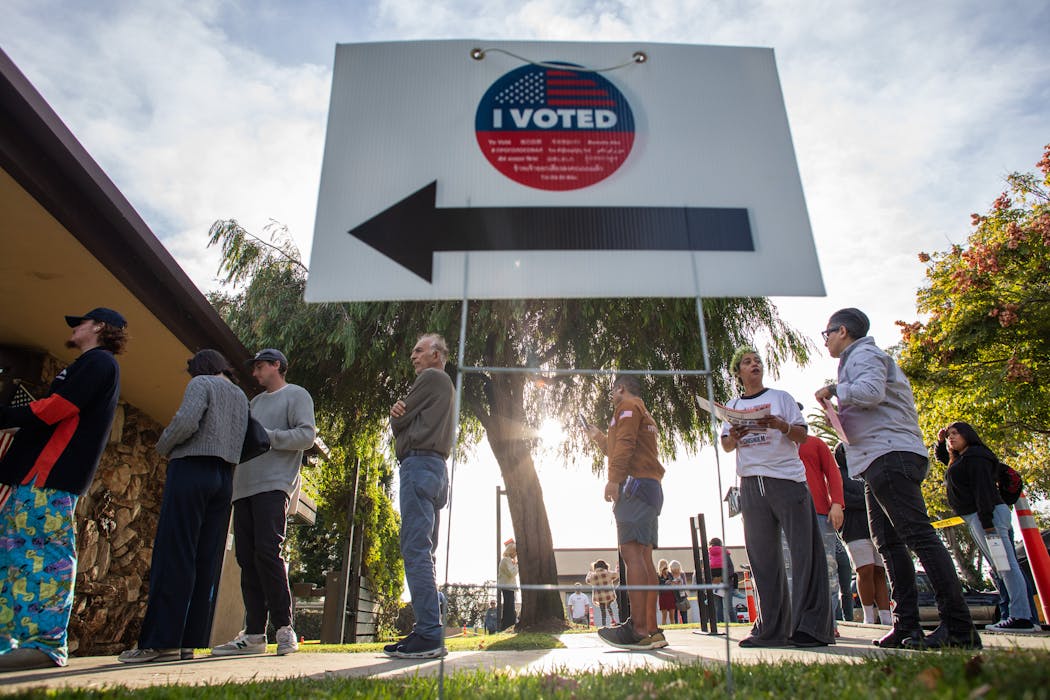
Voters cast their ballots in Charlotte, N.C., on Nov. 5, 2024.
Peter Zay/Anadolu via Getty Images

So – should the SAVE America Act become law – if a person turns 18 or moves between states and wishes to register to vote in federal elections in their new home, they would likely be turned away if they do not have any such documents readily available. At best, they could still fill out a registration form, but they would need to mail in acceptable proof of citizenship.

For married people with changed last names, among others, questions remain about whether birth certificates could even count as acceptable proof of citizenship for them.

The Constitution says little about voting rights

Despite the national conversation the SAVE America Act has sparked, it is unclear whether Congress even has the power to enact it. This is the key constitutional question.

The U.S. Constitution imposes no citizenship requirement when it comes to voting. The original text of the Constitution, in fact, said very little about the right to vote. It was not until legislators passed subsequent amendments, starting after the Civil War up through the 1970s, that the Constitution even explicitly prohibited voting laws that discriminate on account of race, sex or age.

Aside from these amendments, the Constitution is largely silent about who gets to vote.

Who, then, gets to decide whether someone is qualified to vote? No matter the election, the answer is always the same – the states.

Indeed, by constitutional design, the states are tasked with setting voter-eligibility requirements – a product of our federalist system. For state and local elections, the 10th Amendment grants states the power to regulate their internal elections as they see fit.

States also get to decide who may vote in federal elections, which include presidential and congressional elections.

When it comes to presidential elections, for instance, states have – as I have previously written – exclusive power under the Constitution’s electors clause to decide how to conduct presidential elections within their borders, including who gets to vote in them.

The states wield similar authority for congressional elections. Namely, according to Article 1 of the Constitution and the Constitution’s 17th Amendment, if someone can vote in their state’s legislative elections, they are entitled to vote in its congressional elections, too.

Conversely, the Constitution provides Congress zero authority to govern voter-eligibility requirements in federal elections. Indeed, in the U.S. Supreme Court’s 2013 ruling on the Arizona v. Inter Tribal Council case, the court asserted that nothing in the Constitution “lends itself to the view that voting qualifications in federal elections are to be set by Congress.”

Is the SAVE America Act constitutional?

The SAVE America Act presents a constitutional dilemma. By requiring individuals to show documentary proof of U.S. citizenship to vote, the SAVE America Act is implicitly saying that someone must be a U.S. citizen to vote in federal elections.

In other words, Congress would be instituting a qualification to vote, a power that the Constitution leaves exclusively to the states.

Indeed, while all states currently limit voting rights to citizens, legal noncitizen voting is not without precedent. As multiple scholars have noted, at least 19 states extended voting rights to free male “inhabitants,” including noncitizens, starting from our country’s founding up to and throughout the 19th century.

Today, over 20 municipalities across the country, as well as the District of Columbia, allow permanent noncitizen residents to vote in local elections.

Any state these days could similarly extend the right to vote in state and federal elections to permanent noncitizen residents. This is within their constitutional prerogative. And if this were to happen, there could be a conflict between that state’s voter-eligibility laws and the SAVE America Act.

Normally, when state and federal laws conflict, the Constitution’s supremacy clause mandates that federal law prevails.

Yet, in this instance, where Congress has no actual authority to implement voter qualifications, the SAVE America Act would seem to have no constitutional leg on which to stand.

Reconciling the SAVE America Act with the Constitution

So, why have 108 U.S. representatives sponsored a bill that likely exceeds Congress’ powers?

Politics, of course, plays some role here. Namely, noncitizen voting is a major concern among Republican politicians and voters. Every SAVE America Act co-sponsor is Republican, as were all but four of the 220 U.S. representatives who voted to pass the SAVE Act in April 2025.

When it comes to the constitutionality of the SAVE America Act, though, proponents simply assert that Congress is acting within its purview.

Specifically, many proponents have cited the Constitution’s elections clause, which gives Congress the power to regulate the “Times, Places and Manner” of congressional elections, as support for that assertion. Utah Sen. Mike Lee, for example, explicitly referenced the elections clause when defending the SAVE Act earlier in 2025.

But the elections clause only grants Congress authority to regulate election procedures, not voter qualifications. The Supreme Court explicitly stated this in the Inter Tribal Council ruling.

Congress can, for instance, require states to adopt a uniform federal voter registration form and even include a citizenship question on said form. What it cannot do, however, is implement a nonnegotiable mandate that effectively tells the states they can never allow any noncitizen to vote in a federal election.

For now, the SAVE America Act is simply legislation. Should the Senate pass it, Trump will almost assuredly sign it into law, given, among other factors, his recent call for Republicans to nationalize elections. If and when that happens, the courts would have to reckon with the SAVE America Act’s legitimacy within the country’s constitutional design.

This is an update of an article originally published on April 22, 2025.

The Conversation

John J. Martin does not work for, consult, own shares in or receive funding from any company or organization that would benefit from this article, and has disclosed no relevant affiliations beyond their academic appointment.

ref. Citizenship voting requirement in SAVE America Act has no basis in the Constitution – and ignores precedent that only states decide who gets to vote – https://theconversation.com/citizenship-voting-requirement-in-save-america-act-has-no-basis-in-the-constitution-and-ignores-precedent-that-only-states-decide-who-gets-to-vote-275658