Don’t fall in love this Valentine’s Day – read Wuthering Heights

Source: The Conversation – UK – By Andrew McInnes, Reader in Romanticisms, Edge Hill University

Wuthering Heights is back in the news and racing up the bestseller lists, thanks to a new film version by the provocative director Emerald Fennell, starring Margot Robbie and Jacob Elordi. The film is marketing Wuthering Heights as “the world’s greatest love story”.

However, if this encourages you to read the novel for the first time and you’re expecting a boy-meets-girl romance, you might be in for a shock. Wuthering Heights is less happy ever after and more girl is already dead at the start of the novel, boy is haunted by girl, and then another boy is told the whole story by the girl’s old housekeeper.

But as an expert in Romantic period literature, I would argue Wuthering Heights is actually a perfect read on Valentine’s Day because it celebrates the head-spinning, hair-raising, all-consuming experience of falling in love.

“Love isn’t all chocolate boxes and roses / It’s dirtier than that”, Emily Brontë never wrote but might have, had she been alive in the 1990s and a fan of Jarvis Cocker, the lanky lead singer of Pulp. Brontë shares with Cocker an appreciation of the darker side of romance. Both Cocker and Brontë answer the question, “What is this feeling called love?” by characterising the emotion as violent, destabilising and disorienting.

Some Brontë scholars and readers of the book have expressed some scepticism about the film’s marketing as a perfect date movie, with one commentator arguing that Halloween would be a better release date for a tale of brooding revenge, toxic relationships and even potential necrophilia.

On the one hand, yes, Wuthering Heights follows Heathcliff from a foundling in Liverpool of uncertain origins to a gentleman of just-as-uncertain means. He’s intent on the destruction of his childhood home and neighbouring Thrushcross Grange, which stole away his childhood sweetheart, Catherine Earnshaw.

At one point, he threatens his own son and Catherine’s daughter (both confusingly called Linton): “Had I been born where laws are less strict and tastes less dainty, I should treat myself to a slow vivisection of those two, as an evening’s amusement.” This is not a man who is joking.

On the other hand, Brontë’s novel explores what it means to feel inseparably connected to another person. It involves almost all the messiness of last year’s horror film, Together, in which a couple find themselves literally melting into one another, which was indeed released for Halloween.

Trying to explain how she feels to Nelly Dean, her old housekeeper, Catherine tells her: “My great miseries in the world have been Heathcliff’s miseries, and I have watched and felt each from the beginning; my great thought in living is himself. If all else perished, and he remained, I should still continue to be; and, if all else remained, and he were annihilated, the universe would turn a mighty stranger. I should not seem part of it.”

Emily Brontë is a great poet as well as a powerful novelist, and passages like this are poetry too. Wuthering Heights is essentially a love poem – a poem which takes love as something to be experienced rather than explained. Love is experienced in a way that threatens the boundaries between self and other, male and female, nature and culture, life and death, reason and madness, heaven and hell.

Catherine’s attempt to explain her relationship with Heathcliff to Nelly ends in inarticulacy, with Nelly declaring herself unable to “make any sense of your nonsense”.

Before she trails off, Catherine provides a key to the puzzle box of the novel when she says: “Nelly, I am Heathcliff – he’s always, always in my mind, not as a pleasure, any more than I am always a pleasure to myself but, as my own being.” For Catherine, her relationship with Heathcliff is one of necessary union, mental, physical and spiritual.

After her death in childbirth, Catherine continues to haunt Heathcliff, who seeks his own union with her corpse in ordering his own coffin to be laid next to hers and opened up so they can rot together – a scene Fennell riffed on in her last film Saltburn as a naked Oliver graphically “grieves” over Felix’s grave.

Heathcliff hopes their bodies will literally become one in death. Their love may not have ended in a legal and religious union, but neither could death part them. As Jarvis Cocker once sang: “This is hardcore!”

Looking for something good? Cut through the noise with a carefully curated selection of the latest releases, live events and exhibitions, straight to your inbox every fortnight, on Fridays. Sign up here.


The Conversation

Andrew McInnes received funding from AHRC for his Early Career Researcher Leadership Fellow project, “The Romantic Ridiculous”, which ran from 2020-2022.

ref. Don’t fall in love this Valentine’s Day – read Wuthering Heights – https://theconversation.com/dont-fall-in-love-this-valentines-day-read-wuthering-heights-275600

Four foods that can help improve your cholesterol and boost heart health

Source: The Conversation – UK – By Ioannis Zabetakis, Associate Professor, Food Chemistry, University of Limerick

Diet can play a key role in preventing heart disease. Marian Weyo/ Shutterstock

Cholesterol has long been seen as a key culprit in cardiovascular disease. While it’s true that cholesterol does play a role, not all cholesterol is bad for us.

There are two main types of cholesterol.

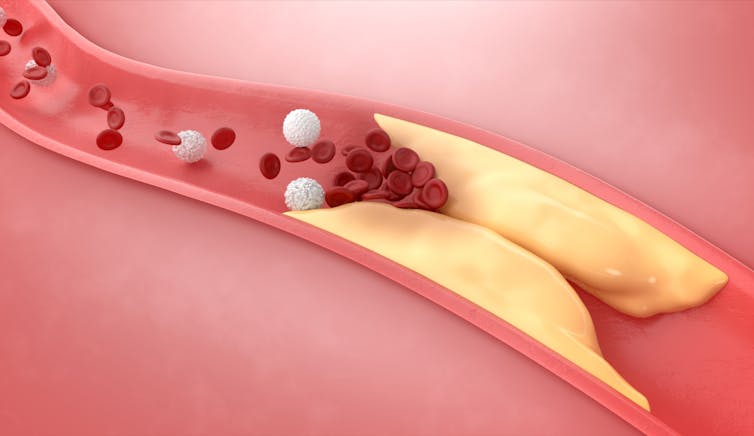
The first type is low-density lipoprotein or LDL cholesterol. This is often referred to as the “bad” cholesterol because it causes fat to collect in the arteries as plaques. This makes it harder for blood to pump throughout the body, leading to greater risk of a heart attack or stroke.

The second type is high-density lipoprotein (HDL) cholesterol — often referred to as “good” cholesterol.

HDL cholesterol has two key roles in the body. It removes excess bad cholesterol from the tissues and arteries and returns it to the liver so it can be removed from the body. HDL cholesterol also protects the artery walls so there’s less risk of a blockage forming.

Boosting HDL

The ratio of LDL to HDL in a person’s body is related to their cardiovascular disease risk. If you have a higher ratio of HDL to LDL, your cardiovascular disease risk will be lower. But if you have a lower ratio of HDL to LDL, you’ll have a higher risk of cardiovascular disease.

Fortunately, it’s possible to shift this ratio and increase HDL cholesterol levels. This can be achieved by exercising, quitting smoking and managing your weight, for example.

Certain foods can also improve HDL ratios.

The main way that diet helps boost HDL ratios is by reducing inflammation. Inflammation is a key problem in cardiovascular disease.

Inflammation makes it possible for blood platelets to stick together in our arteries at a much higher rate. This makes it difficult for the HDL cholesterol to do its job, which increases risk of blood clots forming and raises likelihood of heart disease.

A digital drawing depicting cholesterol plaques on the artery wall, blocking blood flow.
HDL helps prevent bad cholesterol from building up.
NPW-STUDIO/ Shutterstock

By eating anti-inflammatory foods, it makes it easier for HDL cholesterol to do its job of sweeping away excess LDL cholesterol. Here are four examples you can include in your diet:

1. Fruits and vegetables

Research shows that people who have diets high in fruits and vegetables have higher HDL cholesterol levels and a better total cholesterol ratio. They also have lower blood pressure and healthier blood sugar levels, all of which can be supportive to heart health.

Fruits and vegetables exert their positive effects by trapping free radicals.

Free radicals are highly reactive, unstable molecules that can cause damage to cells and trigger inflammation in the body. By preventing inflammation, this makes it possible for HDL cholesterol to continue doing its job of removing bad cholesterol and protecting the arteries.

2. Oily fish and olive oil

Oily fish (such as salmon, sardines and tuna) and olive oil are rich in a type of fat called “polar lipids”.

These lipids are able to reach the bloodstream more quickly compared to other types of fat, allowing them to reduce inflammation and prevent the aggregation of platelets more effectively.

Cell and animal studies have shown that a diet rich in the polar lipids from oily fish is effective in preventing blood clots from forming. This effect can help cholesterol ratios stay balanced, meaning cardiovascular disease risk is lower.

3. Fermented dairy

Fermented dairy products, such as yoghurt, kefir and cheese, can all have a positive effect on HDL levels.

During fermentation, the lipids are broken down into smaller compounds that have a greater anti-inflammatory effect than milk. They can also be metabolised faster by the body.

Fermented dairy products are also rich in polar lipids, which means that they can considerably reduce cardiovascular risk.

Research found that for every 20g of fermented dairy products people consumed each day, there was a modest reduction in cardiovascular disease risk.

4. Red wine

Finally, red wine is completely misunderstood. According to the latest research, moderate consumption of red wine (the equivalent of one to two small glasses per day) is linked with better HDL ratios.

Wine reduces inflammation when consumed in small quantities because it contains polar lipids. However, if wine intake is high, the negative, pro-inflammatory effect of alcohol outstrips the positive effect of the lipids.

This is why it’s important only to drink small amounts and in moderation – otherwise, alcohol can have many negative effects on the body. Indeed, the World Health Organization has said there is no safe level of alcohol consumption as the negatives, such as increased cancer risk even from light drinking, outweigh any positives.

Non-alcoholic wines also contain polar lipids. Research suggests that polar lipid extracts from non-alcoholic beverages have comparable benefits on preventing the formation of blood clots as their alcoholic counterparts.

Inflammation is a key factor in heart disease. By eating foods that reduce inflammation in the body, it’s possible to look after your heart health and lower cardiovascular disease by improving the ratio of HDL to LDL in the body.

The Conversation

Ioannis Zabetakis does not work for, consult, own shares in or receive funding from any company or organisation that would benefit from this article, and has disclosed no relevant affiliations beyond their academic appointment.

ref. Four foods that can help improve your cholesterol and boost heart health – https://theconversation.com/four-foods-that-can-help-improve-your-cholesterol-and-boost-heart-health-274583

Votes at 16: the UK government has a fight on its hands – but are politicians all missing the point?

Source: The Conversation – UK – By Andrew Mycock, Chief Policy Fellow, University of Leeds

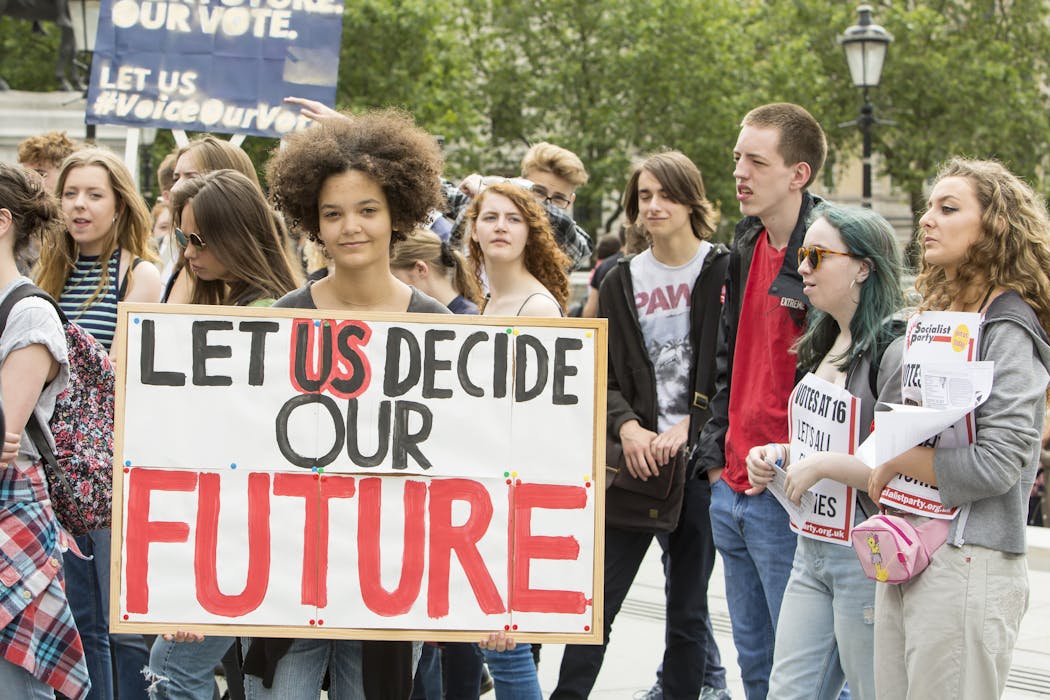
A 2016 protest in London calling for votes at 16. Ms Jane Campbell/Shutterstock

The UK government has unveiled plans to lower the voting age to 16 for general elections, heralding the delivery of a Labour pledge first made in 2010.

The intent of the UK government’s electoral reform is understandable. Faith in politicians and democracy is at an all time low. Keir Starmer’s election promise to restore trust in politics has been compromised by recent events. The introduction of the bill offers an opportunity to refresh Labour’s election promise and respond to public support for reforming the electoral system.

The three-decade campaign for the universal lowering of the voting age to 16 might not have a smooth passage through parliament, though. Labour’s support for the policy has proven lukewarm and sporadic, reflecting concerns over public opinion and also division on the policy itself.

The public has long been resolute in its opposition to such a change. And while young people have, historically, proven largely supportive of votes at 16, recent survey evidence suggests they are evenly divided. Many say they feel “unprepared” for the responsibility of voting.

Some within an already divided parliamentary Labour party will question why the government is focusing on electoral reform.

The strength of opposition to the bill in parliament will be key both in determining the nature of its passage and public acceptance of votes at 16. The Conservatives and Reform both formally oppose voting age reform. The Conservatives claim Labour is “hopelessly confused on whether 16 year olds are adults or not”. For them and many other opponents, the age of maturity, adulthood, and therefore enfranchisement still coalesce at 18.

But depicting 16 and 17-year-olds as too immature and lacking sufficient cognitive development runs the risk of politically alienating young people and fracturing the cohesion of the electorate. As votes at 16 advocates note, voting rights are not denied or taken away from those who have disabilities or deteriorating cognitive abilities (particularly in old age) which might limit their cognition, competency and comprehension.

The Conservatives also appear just as confused as they accuse Labour of being on this point. They empowered both the Scottish and Welsh governments to lower the voting age. And they allowed under-18s to choose three prime ministers in the past decade via party membership ballots.

There’s contradiction in Reform’s position too – and its actions from here will be interesting to watch. Recent polling indicates a growing number of young men support Reform above all other parties, and in more numbers than their older male counterparts. The party may have been opposed up until now, but a pragmatic U-turn may well be on the horizon. That in turn will likely defuse some of the political and public opposition to the bill.

Quantity over quality?

Ultimately, votes at 16 is likely to be passed into law due to Labour’s huge parliamentary majority. But how the government and supporters of the change decide to frame its success will be important. A focus on the numbers of young people signing on the electoral register and voting will tell us much about the quantity of participation but not its quality.

Evidence from Scotland indicates that the modest increases in voting of 16-to-17-year-olds when compared with 18-to-24-year-olds does not translate into more extensive political engagement. Lowering the age of enfranchisement has had no significant impact on the low numbers of young people who join political parties, trade unions, or who participate in their communities.

In Scotland, votes at 16 has had little impact on how party politics is conducted or how politicians engage and represent young people. Most young people do not believe politicians prioritise their needs. A growing number express disillusionment with democracy.

Lowering the voting age to 16 is, on its own, no panacea to the complex causes of youth political disengagement and is unlikely to strengthen the resilience of democracy in the UK. The government’s bill also sets out plans to improve youth democratic education and make electoral registration easier. Such measures will not create the drivers for young people to vote or participate in party politics.

Indeed, there is a collective failure of political parties of all hues to accept that they are in part responsible for the current youth democratic crisis. They need to look past a potentially divisive passage of votes at 16 in parliament and accept that now is the time to collectively improve the responsiveness of the current political system to younger voters and the public more widely.

The Conversation

Andrew Mycock has received funding from the Leverhulme Trust (2019-2021) in the past to support research into lowering the voting age.

ref. Votes at 16: the UK government has a fight on its hands – but are politicians all missing the point? – https://theconversation.com/votes-at-16-the-uk-government-has-a-fight-on-its-hands-but-are-politicians-all-missing-the-point-275476

Voting in supermarkets, bank cards as ID and £500,000 fines for breaking the rules – how British elections could be about to change

Source: The Conversation – UK – By Toby James, Professor of Politics and Public Policy, University of East Anglia


Shutterstock/ Zeynep Demir Aslim

Elections need periodic reform to ensure that they have integrity and fulfil their role in line with the times, and the British government has unveiled its proposals for doing just that.

Britain was widely regarded as one of the pioneers of such democratic electoral reforms. In the late 19th and early 20th century, reform acts extended the franchise to enable more people to vote. Anti-corruption and bribery rules prevented election candidates offering food and liquor for votes.

However, new threats have emerged to elections which means that further changes are needed to ensure that elections fully empower people. Threats can come from from overseas more easily these days – disinformation can spread online and algorithms can be manipulated to support candidates and parties. Money is more easily siphoned around the world into campaigns war chests.

What’s more, millions of people stayed at home at the 2024 general election – which recorded the lowest turnout in years. An estimated 7 million to 8 million people are not on the electoral register.

The weight of these challenges means that UK elections are therefore in urgent need of reform. The government’s representation of the people bill is the legislation that the government is proposing to improve the situation.

What will change?

The biggest proposed change is to allow around 1.7 million 16- and 17-year-olds to vote. This is historic. Governments come and go but changing who can vote in elections will be a lasting part of the political landscape – and something a future government will find difficult to repeal.

When it comes to new threats to electoral integrity, the government is making a change that will probably be welcomed by the public – the move towards automatic voter registration. Surveys show people support the idea idea and it will see many citizens added to the electoral roll without them having to do anything.

It’s a time saver but it also means people won’t end up being turned away on election day because they’ve not managed to register properly. Automatic and assisted forms of voter registration have been shown to increase the accuracy and completeness of the register. Like votes at 16, this will benefit young people most, as only 16% of 16-17s are registered.

Young people holding a sign reading 'it's our future' in front of the Houses of Parliament.
Young campaigners have won the right to vote.
Shutterstock/Ms Jane Campbell

The relatively new – and widely criticised – rules on voter ID are also being changed, arguably for the better. People will now be able to use their bank cards as ID rather than being expected to produce photo ID. A change of this kind should make voting much easier. The rules on photo ID have been shown to be discriminatory and a barrier to voting.

There will also be a pilot to try out voting at supermarkets and train stations rather than only at traditional polling stations.

There are also plans to strengthen the rules around political donations. The Electoral Commission will have greater powers to enforce rules and issue sanctions to those who break them. Powers are proposed to allow the commission to issue fines of up to £500,000 when people break the rules – a significant increase on the current £20,000 limit. There will also be tougher sentences for people convicted of intimidation during the electoral period.

What’s missing?

Despite the changes being proposed, the government has failed to address some key problems.

The rules on political finance, in particular, may not go far enough. Companies can currently make donations to political parties, provided that they operate in some way in the UK. The Electoral Commission has warned that foreign money could still be channelled through UK companies into political parties – unless loopholes are closed.

The government has also not taken steps to restore the independence of the Electoral Commission itself, a body which plays a key role in overseeing elections and referendums. It was stripped of its independence by Boris Johnson, in contrast to international best practice. But the bill promises no action on this.

And maybe foremost, Britain’s age-old first-past-the-post electoral system remains untouched. This may not be a surprise – few parties tinker with the rules that bring them to power. But the era of two-party politics that justified first-past-the-post has now gone and support for change is high.

The bill will shortly receive scrutiny within parliament, and detail will need to be fleshed out on how electoral officials implement the changes. These will provide opportunities to further strengthen the bill. But as it currently stands, its passing looks set to take its place as a historic moment for strengthening UK elections.

The Conversation

Toby James has previously received funding from the AHRC, ESRC, Joseph Rowntree Reform Trust, British Academy, Leverhulme Trust, Electoral Commission, Nuffield Foundation, the McDougall Trust, Unlock Democracy, International IDEA and the Canadian SSHRC.

ref. Voting in supermarkets, bank cards as ID and £500,000 fines for breaking the rules – how British elections could be about to change – https://theconversation.com/voting-in-supermarkets-bank-cards-as-id-and-500-000-fines-for-breaking-the-rules-how-british-elections-could-be-about-to-change-275885

How to stay positive when it never stops raining – a psychologist offers tips

Source: The Conversation – UK – By Luke Hodson, Assistant Professor, Department of Psychology, University of Warwick

Nicoleta Ionescu/Shutterstock

The short, dark days of winter are never easy to get through. But for many people in the UK and across Europe, this winter has felt particularly gloomy because of the seemingly endless rain.

If you live in some parts of south-west England or the Welsh borders, at the time of writing it has rained every single day this year. Aberdeen, meanwhile, has just seen its first half-hour of sunshine for three weeks – its longest sunless period since records began.

The psychological impact of these dark, damp days can be significant. Seasonal affective disorder (SAD) affects around three in every 100 people in the UK, is more common in women, and is associated with symptoms such as loss of energy, weight gain and a desire to sleep more. We often become more fatigued in the cold and dark, making some of us feel like we just want to hunker down and wait for spring.

Endless rain makes things even harder – not least by adding an extra obstacle to going outside. There is lots of evidence about the psychological benefits of spending time in natural light and green spaces.

But we still need to get on with life despite the weather. With that in mind, my field of positive psychology – the exploration of wellbeing, flourishing and optimal functioning – has a few suggestions that might help.

I don’t want to trivialise the distress that some people feel at this time of year – nor the wider concerns about what all this rain means for climate change. But there are small things you can do to reframe how you view these endlessly dank days. We can’t change the weather, but we can try to change how it makes us feel.

Find small reasons for hope

There is an array of research showing the positive effects of hope. It can boost physical, psychological and social wellbeing, improve our ability to cope with stress, and even enhance cognitive flexibility. One way of seeking to lift your mood could be to think of ways to make you feel hopeful – not despite but because of the rainy weather.

For example, think of something that is really nice to do after you’ve been out in the rain. A long, hot bath, for example, or drying out in front of a wood fire in the pub with friends. Or curling up on the sofa with a hot chocolate and your damp-but-devoted dog.

The next time you need to go outside in the rain, set up a scenario like this that gives you something to look forward to. A moment of hope can go some way to helping you view the rain in a different, less defeatist way.

Set goals, fulfil, reflect

Another way of reframing things more positively is to set and fulfil small goals – and then, importantly, take time to reflect on these achievements. A good example at this time of year could be a home improvement you’ve been putting off, or arranging to see a friend you’ve not seen for a long time.

My research with colleagues has demonstrated the efficacy of goal setting and reflection on both wellbeing and cognitive outcomes. We found the important thing is not what the goals are, but the process of reflecting on your actions and their positive impact.

The broaden-and-build theory of positive emotions suggests these reflections can help expand the way we think and behave. This in turn helps build our social, cognitive and emotional resources to better help us survive when times are tough – for instance, during a period of awful winter weather.

What we are aiming for here is to create a more intrinsic motivation for living life – in other words, being motivated by our own values, strengths and ideas. You can start today, by taking a few moments to pat yourself on your back after you’ve managed to get some important things done despite the awful weather.

Britain’s record-breaking levels of rain. Video: Sky News.

Be grateful to nature

Gratitude probably conjures a specific feeling or concept in your mind. While quite difficult to define, it is generally considered to be the recognition that you have benefited from the action of another person.

Feeling grateful has a consistent impact on our ability to handle small daily hassles, and ameliorate the effect they can have on our wellbeing. Gratitude practices can be very quick – small “count your blessings” activities such as listing three things you are grateful for each day. And for many people, they are really effective.

On a more philosophical level, we can be grateful for things or concepts too – for example, nature. Recent evidence has shown that grateful-to-nature reflections can be just as effective at boosting wellbeing as other reflections of gratitude – in part by increasing your feelings of connection to nature. Even in a downpour, there are still many beautiful things to appreciate in the natural world around us, wherever you live.

Poor weather can also evoke powerful feelings of nostalgia, such as fond or sentimental reflections on past experiences – like a rainy summer holiday where everyone was stuck inside playing board games together. These have been found to be comforting in the face of adverse weather. Nostalgic reflections can enhance your tolerance for environmental discomfort, such as enduring the cold.

The ideas I’m describing here are deliberately small and may even sound trivial. Yet the science of positive psychology shows small, everyday tweaks to a routine can be really effective in fighting off the gloom that many of us are currently feeling. But a little bit of sunshine would be welcome too.

The Conversation

Luke Hodson does not work for, consult, own shares in or receive funding from any company or organisation that would benefit from this article, and has disclosed no relevant affiliations beyond their academic appointment.

ref. How to stay positive when it never stops raining – a psychologist offers tips – https://theconversation.com/how-to-stay-positive-when-it-never-stops-raining-a-psychologist-offers-tips-275894

Is this love? Don’t be Heathcliff and Cathy – what you should watch, read and play this week

Source: The Conversation – UK – By Naomi Joseph, Arts + Culture Editor, The Conversation

Emerald Fennell’s Wuthering Heights is a loose (very loose) adaptation of Emily Brontë’s novel. The film is, as the director has attested, the intense, “unhinged”, gothic story she remembers reading as a 14-year-old. As such, it is full of imagined passages and heightened romance and violence. It’s truly Fennellian in its excess – if you’ve seen Saltburn, her story of class envy, you know what that means (bathtub scene, grave scene, so many other scenes).

This new film version is not alone in marketing the story of star-crossed lovers as “the greatest love story of all time”. However, if you’ve ever read the book you know that it’s not really the sort of love anyone should strive for. It’s cruel and abusive. Heathcliff is not some broody prince but a violent tyrant. Cathy is spoiled and manipulative. Everyone around them suffers in the pair’s maddened need for each other. If you’re looking for love, this is perhaps not one you would want to emulate.

So this Valentines day we bring you recommendations that counter some of the worst traits found in Wuthering Heights.

Do you remember Wuthering Heights as romantic? Let us know in the comments what struck you most of Emily Brontë’s books the first time you read it.

The first recommendation, if you find yourself in need of some Wuthering Heights this Valentine’s day, is the Andrea Arnold film from 2011. This is a beautiful adaptation that stays true to the darkness and uncontrollable wildness of Brontë’s novel. The child actors are particularly incandescent and little Cathy (Shannon Beer) describing her love for Heathcliff is a beautiful piece of acting.

Wuthering Heights by Andrea Arnold is available on Disney+


Read more:
Was Emily Brontё’s Heathcliff black?


Playfulness

The romance in Wuthering Heights is dark and stormy, unnervingly intense and completely serious. It sounds like there are comic moments in Fennell’s film (intentional or not) but adult Cathy and Heathcliff could do with being a bit more playful with each other. The 1st-century Roman poet, Ovid, believed that play was important to attracting and keeping a lover. In his manual The Art of Love, one of his top tips is to play boardgames, and, importantly, play to lose.

Roman board game researchers Tim Penn and Summer Courts explain how the Romans used play to flirt. They also reveal how such play brought them together – the two became close over the course of their research and ended up married!

The Art of Love by Ovid


Read more:
Fall in love Roman-style by playing board games


If you’d like to play a game to foster romance this Valentines then we recommend you try out one of these five short game poems. These are small video games that only take a few minutes to play and each captures a feeling, a thought, or a fleeting moment.


Read more:
These five short video games work like poems – and they’re ideal for Valentine’s Day


Swoonworthy romance and repentant grief

If you want more of a fantasy view of love from the past – love that is more pure-hearted and less toxic – then watch the latest season of Bridgerton. This is the sort of swoonworthy, slightly silly romance we can go for. This season we see an upstairs-downstairs romance blossom and questions over class, power and consent explored. There is as much sex here as Fennel has injected into her Wuthering Heights, but it comes accompanied with a lot less horror.

This season’s couple meet at a masked ball; Meg Kobza, an expert in Regency social life, writes about three true love stories that began at such soirees.

Bridgerton is on Netflix now


Read more:
Bridgerton: three true tales of love at first sight at Regency masquerade balls


The thing about Wuthering Heights is that most people, including Fennell it seems, focus on the brief period of romance between adult Heathcliff and Cathy. The rest of the book follows him as he is consumed by grief after she dies, waging a life-long campaign of violence on himself and all around him. If you’re looking for an alternative tale of a man driven to madness and revenge by grief, then we recommend seeing the new adaptation of Hamlet starring Riz Ahmed.

Set in an uber-wealthy south-Asian community in modern-day London, Hamlet is the heir to a vast property developer empire. Greed and dodgy business deals abound in this adaptation by Aneil Karia. There are some clever twists on the well-known tale that Shakespeare adaptation expert Elizabeth Schafer found fascinating. However, unlike Fennell’s Wuthering Heights, it doesn’t cleave too far from Shakespeare’s original.

Hamlet is in cinemas now


Looking for something good? Cut through the noise with a carefully curated selection of the latest releases, live events and exhibitions, straight to your inbox every fortnight, on Fridays. Sign up here.


Read more:
Riz Ahmed’s British south-Asian Hamlet is a moody tale of grief and shady family business


The Conversation

ref. Is this love? Don’t be Heathcliff and Cathy – what you should watch, read and play this week – https://theconversation.com/is-this-love-dont-be-heathcliff-and-cathy-what-you-should-watch-read-and-play-this-week-275855

The five most romantic paintings of all time – according to art historians

Source: The Conversation – UK – By Yashaswini Chandra, Lecturer in South Asian Art History, University of Edinburgh

Bank Holiday by William Strang (1912). Tate

For Valentine’s Day, we asked five of our academic experts to tell us about the most romantic artwork they’ve ever encountered. From first dates to sleeping lovers, these are the paintings that have touched their hearts.

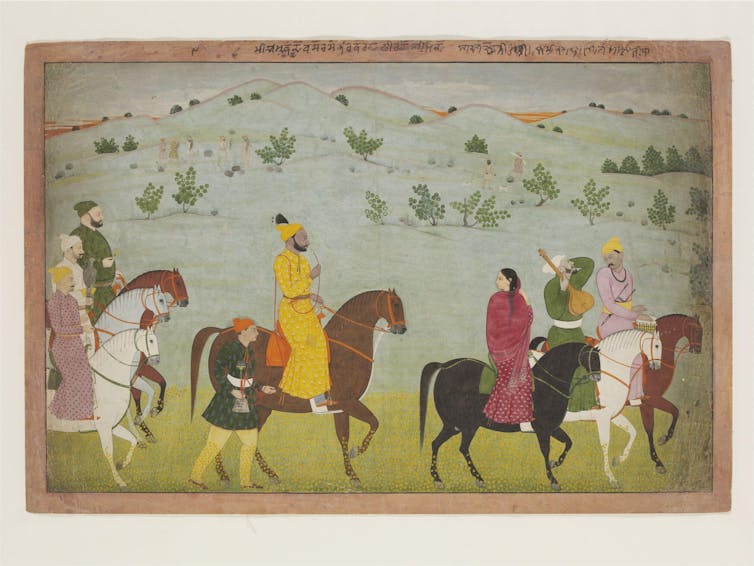
1. A Leisurely Ride by Nainsukh (circa 1740-1745)

At the heart of Nainsukh’s A Leisurely Ride, a court painting produced in the Pahari or Indian hill state of Jasrota in the mid-18th century, is an exchange of gaze which transfixes the moment.

Painting showing men and women riding horses in a rural location
A Leisurely Ride by Nainsukh (circa 1740-1745).
V&A South Kensington, CC BY-NC

In the painting, horses of varied hues stride across an Indian landscape. It comprises a mustard field against the backdrop of the smoky-blue rolling hills of Jasrota. The seven riders include a prince, Mian Mukund Dev. There’s a woman – a singer-dancer called Amal – and two musicians, who are at the front of the group and perform on the go. An escort of three nobles, one of whom holds a hunting bird, makes up the rear.

In the centre, the prince and his paramour exchange glances after she has turned around in the saddle to look at him as he follows her. He holds her gaze even as he coolly smokes a hookah, the base of which is carried by the bearer who walks alongside his horse – and time stands still in the hills.

Yashaswini Chandra is a lecturer in South Asian art history

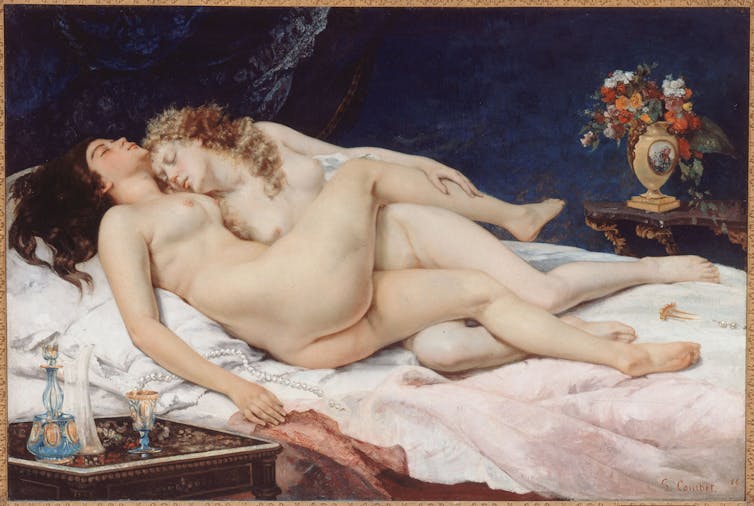
2. Le Sommeil by Gustave Courbet (1866)

I first saw Le Sommeil (The Sleepers) in the Petit Palais museum in Paris in 2011. I was at the end of a long relationship and the erotic tenderness of this painting really spoke to me.

Painting of two nude women sleeping in an embrace
Le Sommeil by Gustave Courbet (1866).
Petit Palais

The redhead was Joanna Hiffernan, an Irish artist, model and mistress of Courbet. The brunette was Constance Quéniaux, the mistress of the man who commissioned the painting, the Ottoman ambassador to France, Khalil Bey.

Despite Courbet’s reputation as a realist painter, it is not known if the two women depicted were lovers. But with its discarded clothes, broken pearl necklace and disordered bed, Le Sommeil has usually been read as a sexually charged challenge to 19th-century morality.

No wilting flowers to hint at the transgressive nature of queer love here! Yet, as the title suggests, this painting is not about the passion hinted at, but the gentle, comforting embrace of these two women in the intimacy of sleep.

Pippa Catterall is a professor of history and policy

3. Rinaldo and Armida by Nicolas Poussin (circa 1628)

The French painter Nicolas Poussin has a reputation for being a very high-minded and austere artist. Early on in his career, however, he painted many mythological and literary subjects in a sumptuous, colourful style inspired by 16th-century Venetian painting.

Painting of a sleeping soldier and a woman reaching for him, while her arm is grasped by a cherub
Rinaldo and Armida by Nicolas Poussin (circa 1630).
Dulwich Picture Gallery

One of these early paintings depicts a scene from a Renaissance epic, Jerusalem Delivered, by the Italian poet Torquato Tasso, first published in 1581. The wicked sorceress Armida plans to kill the noble warrior Rinaldo in his sleep, but, at the sight of his beauty, she falls instantly in love and drops her dagger.

The sudden rush of love that overwhelms Armida is brilliantly represented in the form of a winged putto or cupid who seizes her arm. The startled expression on her face and the tender way that her hand brushes Rinaldo’s are also eloquent of her unexpected feelings for him. It’s the vivid way that it conveys a sense of love as an irresistible force that makes this painting so romantic.

Emma Barker is a senior lecturer in art history

4. Medallion (YouWe) by Gluck (1937)

The English artist known as Gluck deliberately adopted a gender-neutral name, rejecting conventional labels and societal expectations of gender. Open about their relationships with women in England’s high society, Gluck’s life and work challenged social norms at a time when representations of lesbianism were heavily censored.

In 1936, Gluck fell passionately in love with the playwright Nesta Obermer and became utterly convinced of their shared future. Gluck went so far as to destroy letters, photographs and paintings associated with previous lovers. The couple exchanged rings, and to commemorate this symbolic union the artist painted Medallion (1937), a double portrait in which the figures appear almost fused as one.

Gluck occupies the foreground, identifiable by their distinctive cropped hair, while Nesta rests just behind, cheek to cheek. Their gaze is cast into the distance, emphasising private introspection. Measuring just over 30x35cm, the work’s scale and its conjoined subtitle, YouWe, reinforce its intimacy. Conceived as a private object and kept in Gluck’s studio rather than publicly exhibited, Medallion endures as a tender and iconic expression of love and queer desire.

Daniel Fountain is a senior lecturer in art history and visual culture

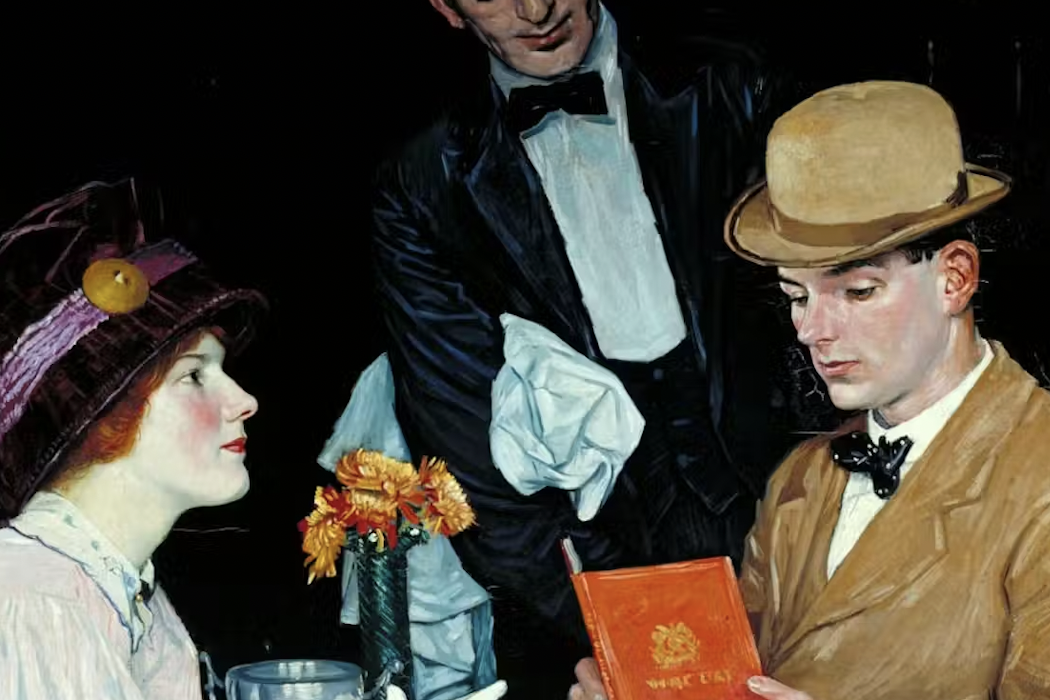
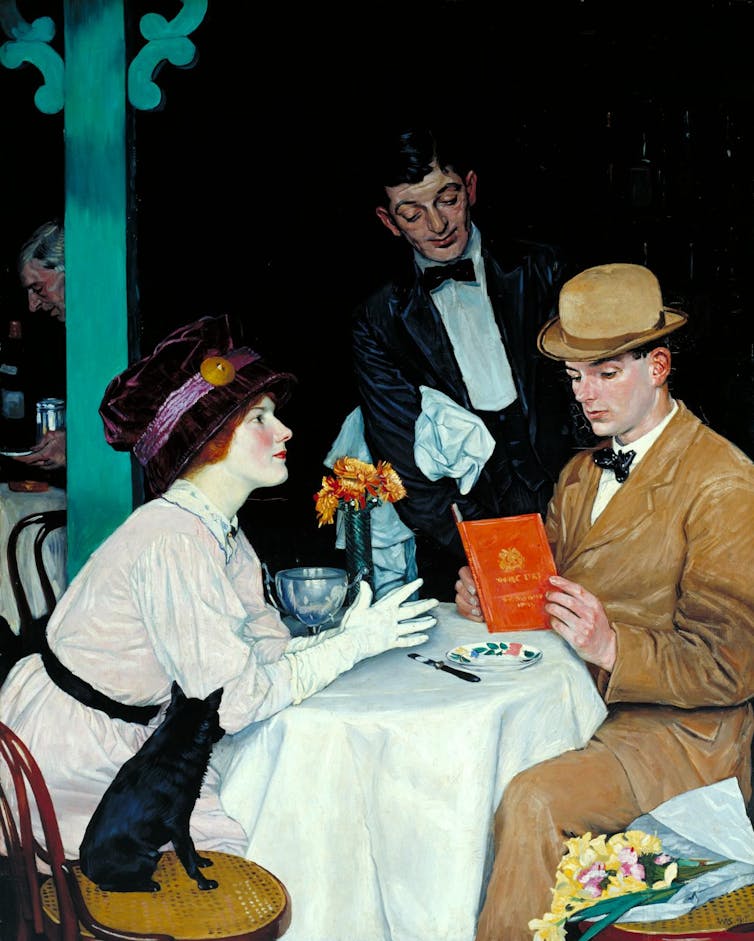
5. Bank Holiday by William Strang (1912)

The Scottish painter William Strang’s Bank Holiday, in the Tate Britain collection, is not obviously brimming with passionate adventure. But it has stuck in my mind as a touchingly realistic depiction of the slight social awkwardness of courtship.

Painting of a man and woman at a restaurant table
Bank Holiday by William Strang (1912).
Tate

The nice-looking couple in their best clothes are probably not yet married, while the bouquet and moment of ordering suggest hope and promise rather than settled familiarity. Although freighted with class and gender conventions, there is evident respect and esteem between them. The woman’s eyes wander, more in mild discomfiture than boredom, when their close conversation is interrupted by the waiter. However, she still leans attentively forward with her hands towards her companion, with the cat-like dog (often an artistic symbol of fidelity and sometimes desire) by her side.

Love and companionship take patience and learning how to spend time together. One only wonders how these two would have fared through the first world war that came two years later.

Marius Kwint is a reader in visual culture

What is your favourite romantic painting of all time? Let us know in the comments below


Looking for something good? Cut through the noise with a carefully curated selection of the latest releases, live events and exhibitions, straight to your inbox every fortnight, on Fridays. Sign up here.


The Conversation

The authors do not work for, consult, own shares in or receive funding from any company or organisation that would benefit from this article, and have disclosed no relevant affiliations beyond their academic appointment.

ref. The five most romantic paintings of all time – according to art historians – https://theconversation.com/the-five-most-romantic-paintings-of-all-time-according-to-art-historians-275374

How are Olympic host cities chosen?

Source: The Conversation – UK – By Laura Donnellan, Lecturer in Law , University of Limerick

For the first time in Olympic history, two cities are jointly hosting the Games: Cortina d’Ampezzo, a pretty ski resort in Italy’s spectacular Dolomites, and Milan, the country’s second largest city, 410km away. This will be Cortina’s second time hosting the Winter Games, after its successful event 70 years ago in 1956. It will be the first time Milan has ever hosted the Games. But how are host cities actually chosen and who is eligible?

Initially there were six other cities in the running: Stockholm-Åre, Sweden; Calgary, Canada; Graz, Austria; Erzurum, Turkey; Sapporo, Japan; and Sion, Switzerland. In June 2019, at the 134th International Olympic Committee (IOC) Session in Lausanne, IOC members voted to elect Milan-Cortina as the host cities for the 2026 Winter Games. The two were declared the winning bid with 47 votes and runner up Stockholm-Åre received 34 votes.

As part of its Agenda 2020 reforms in 2014, the IOC replaced its traditional system of cities tendering bids with a new approach based on targeted invitations to host the 2024 Games. Before these reforms, the bidding system was highly competitive as it involved numerous cities putting their names forward via their National Olympic Committees (NOCs).

Interested cities often incurred huge expense as they traversed through the various stages. At the end only one city was chosen and cities that were unsuccessful were discouraged from applying to host future Olympic events.

The current process is referred to as the “new norm” and has paved the way for the hosting of Games by more than one city as host. It was redefined broadly to include multiple cities, regions or countries, and reflects a shift toward a more collaborative, flexible and sustainability oriented approach.

The use of more than one city will decrease the need for expensive new facilities being built. In Cortina, the sites that hosted the 1956 Games will be repurposed for use once more as will be the facilities used in the Torino Winter Games from 2006.

Positive change

There has been a notable move from an overtly competitive system to one based on dialogue. The first step involves an informal exchange between the IOC, the NOC and the city or region. The second step is predicated on there being a positive response from the informal exchange and an interest from all involved to proceed.

This phase involves the “interested party” refining its Olympic project and it is not attached to a particular Game edition or year. The IOC offers bespoke support to the interested party and helps it develop its Games plan and vision. Central to that is the aim of maximising the benefits for local communities.

At this juncture, there is no written submission or legal or financial assurances in place. The IOC carries out a feasibility study and arranges for an independent human rights assessment by a specialist focusing on the city or region under consideration.

Once a positive feasibility study is received and assuming that the human rights evaluation has not raised any concerns, the process moves to the targeted dialogue phase with the designated “preferred hosts”.

The stage entails extensive consultation with the International Sports Federations, as well as the commissioning of independent reports assessing venue-related costs, levels of public support and potential environmental impacts.

The IOC’s executive board can put forward one or more preferred hosts for election. Preferred hosts are free to withdraw at this stage and return to the dialogue stage and interested parties are encouraged to continue to collaborate with the IOC for hosting a future Olympics. If required, the executive board holds a secret electronic ballot following a presentation by the preferred host(s). Upon election, the contract is immediately signed.

Learning from the past

The impetus for this new way of selecting hosts can be traced to the fallout from the Salt Lake City scandal, which exposed significant weaknesses in the bidding system in the late 1990s.

In November 1998, the IOC became embroiled in a scandal after it emerged that the daughter of an IOC member received a scholarship to attend a US university which was funded by the Salt Lake Organising Committee for the 2002 Winter Olympics. While it may have appeared somewhat innocuous, the reporting of the scholarship was just the beginning.

What followed was something no one could have envisaged. The United States Department of Justice carried out an investigation into allegations of bribery and corruption among IOC members. Prosecutors filed criminal charges – bribery, conspiracy and fraud – against two IOC members. However, both were acquitted after the judge concluded that the case was unfounded, noting the complete absence of criminal intent. The conduct of IOC officials also reached the US Congress, as I explore in my book, Sport and the Law.

In an interesting turn of events, Salt Lake City has been successful in its bid to host the XXVII Olympic Winter Games in 2034. It secured 83 votes in favour, and six against out of 89 valid votes .

In the wake of the reputational fallout from the Salt Lake City scandal, the IOC recognised the importance of good governance. The new bidding process represents a significant streamlining compared to previous models, and the transition can largely be viewed as a constructive step. It embraces sustainability, the reduction of costs for the host (largely supported by public funding), the importance of human rights, and maximising profits for the local economy.

For Milan-Cortina, hosting the Winter Games places the two cities on the global stage. As a historic dual pairing, Milan gets to showcase its role as a hub for ice sports. Aside from hosting the snow events, Cortina also gets to revisit its Olympic legacy 70 years after staging its first Winter Games.


Looking for something good? Cut through the noise with a carefully curated selection of the latest releases, live events and exhibitions, straight to your inbox every fortnight, on Fridays. Sign up here.


The Conversation

Laura Donnellan does not work for, consult, own shares in or receive funding from any company or organisation that would benefit from this article, and has disclosed no relevant affiliations beyond their academic appointment.

ref. How are Olympic host cities chosen? – https://theconversation.com/how-are-olympic-host-cities-chosen-275111

Trump insists Iran talks must continue, but military action is not off the table

Source: The Conversation – UK – By Christian Emery, Associate Professor in International Politics, UCL School of Slavonic and East European Studies, UCL

Israeli prime minister Benjamin Netanyahu’s trip to Washington on February 11 appears not to have achieved what many observers saw as its central purpose: to persuade Donald Trump to harden his demands on Iran to the point that negotiations between the countries fail. According to reports, Trump told Netanyahu he wanted talks with Iran to continue.

What will be concerning Netanyahu is that while he can probably rely on Trump to take a hard line on limiting Iran’s nuclear programme, it is less clear where his unpredictable ally stands on limiting Iran’s ballistic missile capabilities and ending its support for regional armed groups.

Trump had previously indicated that any deal with Iran had to include missiles. But more recently, he has suggested the US may be open to dropping this demand. On February 10, when asked by a reporter if an agreement with Iran would be acceptable if it only covers nuclear issues, Trump said: “Yeah, that would be acceptable, but the one thing and right up front, no nuclear weapons.”

This, as well as positive statements by US and Iranian officials about their brief indirect talks in Oman days earlier, will have spooked Israeli officials. Both Iran and Israel understand that it is missiles, not nuclear enrichment or even Iranian regional proxies, that underpin Iran’s increasingly shaky deterrence.

For the moment, Trump seems to think that a deal limited to the nuclear issue may be preferable to going to war to tackle everything else. Yet opponents of US military action, which include all of Washington’s Middle Eastern allies except Israel, should still be worried.

It is far from clear whether Iran will offer the kind of nuclear deal Trump would find acceptable, and Trump himself does not seem to know what else to do other than double down on military threats. That alone may scupper the talks.

Netanyahu is also a seasoned political operator who showed how adept he is at manoeuvring Trump into supporting military action in 2025, when the US joined Israel in striking Iranian nuclear facilities. And the current US military build-up in the Persian Gulf has now reached a point where that option is on the table.

Trump’s Iran policy

The uncertainty over whether Trump will strike Iran underscores how shallow his Iran policy is. He does not have a conventional, institutionalised policy apparatus of the kind the Obama administration relied upon to negotiate a deal to limit Iran’s nuclear programme in 2015.

Instead, Trump is pursuing indirect talks with Iran that are being overseen by two officials with no prior diplomatic experience. These two officials, Steve Witkoff and Jared Kushner, have simultaneously been tasked by Trump with ending the war between Russia and Ukraine.

Trump also seems undecided about whether any deal should focus narrowly on the nuclear issue or whether he should pursue something resembling a grand bargain. Nor has he articulated what he is prepared to offer Iran as part of a deal or how he would justify incentives such as sanctions relief for a regime that has just murdered thousands of its citizens in a brutal protest crackdown.

His approach to Iran is so ad hoc that it allows different groups with access to him, Netanyahu on one side and increasingly assertive regional states such as Saudi Arabia, Qatar and Turkey on the other, to influence key decisions. It was this latter group of Middle Eastern states that intervened recently to press Trump to proceed with talks when they threatened to collapse over Iran’s refusal to discuss issues beyond the nuclear file.

These states are cautioning Trump that US strikes might precipitate the collapse of the Iranian regime. However desirable that might seem, experience in Iraq, Libya and Syria suggests that state fragmentation, mass displacement, violence and regional destabilisation would be more likely than any orderly democratic transition.

And if strikes fall short of toppling the regime, even a weakened Iran could inflict serious economic and strategic damage on Gulf oil shipping and infrastructure.

Trump’s ad-hoc approach to diplomacy is in stark contrast to the Obama administration’s negotiations in 2015. Then, the International Atomic Energy Agency provided compliance verification and technical expertise, and the EU chaired the joint commission that oversaw the deal’s implementation.

The UN security council formalised the agreement under international law and established a mechanism for reimposing sanctions in the event of noncompliance. There was also a clear, if largely unfulfilled, strategic rationale related to Obama’s desire to reduce the US’s regional footprint and pivot towards Asia.

Trump’s approach is radically different. He withdrew the US from the nuclear deal in 2018 without a clear plan for what would replace it beyond something he could describe as better and attach his name to. He has no interest in brokering a multilateral agreement and does not appear to have a coherent set of demands or strategic aims that could anchor one.

A thin deal without substance, institutional anchoring and clear mechanisms for handling the inevitable disputes over sanctions relief and compliance is unlikely to endure, even if Trump can push the Iranians into signing it.

The Conversation

Christian Emery does not work for, consult, own shares in or receive funding from any company or organisation that would benefit from this article, and has disclosed no relevant affiliations beyond their academic appointment.

ref. Trump insists Iran talks must continue, but military action is not off the table – https://theconversation.com/trump-insists-iran-talks-must-continue-but-military-action-is-not-off-the-table-275857

Stop overthinking your Valentine’s gift – behavioural science says you’re probably worrying about the wrong thing

Source: The Conversation – UK – By Gaëlle Vallée-Tourangeau, Professor of Behavioural Science, Kingston University

Pixel-Shot/Shutterstock

Have you ever feared looking cheap or incompetent with your Valentine’s gift? Or perhaps you’ve dismissed the idea of exchanging gifts because you worried your partner would think it’s too corny.

If so, you’re not alone. But research suggests we may be missing out on an opportunity to strengthen our close relationships by rejecting this ritual entirely.

In romantic relationships, the act of giving serves as a fundamental signal of relationship value, where the investment of resources like time, effort and money communicates a partner’s level of commitment and care.

When choosing a Valentine’s gift for a loved one, we may find ourselves worrying about making the “wrong” choice and leaning towards a safe, albeit expensive option. Yet psychological research suggests we’re often worrying about the wrong thing when deciding on a gift. Expensive gifts aren’t inherently bad, but people systematically underestimate the appreciation our partner may feel when they receive a thoughtful gift, regardless of its polish.

A 2025 study documented what the researchers called the “who cares more” asymmetry. When giving gifts, we are good at judging the positive impact of a “good” gift, but we tend to catastrophise imperfection.

We are stricter judges of the gifts we offer than those we receive. And we overestimate the potential for a “bad” gift to make our partner upset or harm our relationship. This blindspot explains why we feel such intense pressure to avoid a “miss” when choosing a gift.

Paradoxically, this also explains why we might often miss out on choosing the better gift for our relationship. The problem arises when we default to expensive-but-generic options because they feel safer — the £200 trendy restaurant instead of that quirky pub from your third date.

Research reveals a pattern, called the gift gap. As givers, we often prioritise practical care when choosing gifts but as receivers, we prefer gifts that are “relational signalling”, that is, that convey thoughtfulness about the relationship.

This gift gap is exacerbated for gifts with sentimental value where thoughtfulness is communicated through an emotional attachment or nostalgia associated with the gift itself. Givers avoid them as risky because they require more vulnerability, yet recipients report appreciating them more.

There is some evidence to suggest that, while we are all susceptible to fall for the gift gap, women are more likely to overestimate the importance of selecting a good gift for their friends whereas men tend to overthink it when choosing a gift for their partner.

But here’s what makes this complicated: personalisation isn’t about price point. An expensive restaurant reservation can be deeply personal if it’s the place your partner has been hinting about for months, or where you first met. Fine chocolates can signal genuine care if you remembered their favourite artisan chocolatier from that trip to Paris.

This is where corny gifts gain their unexpected power, not as cheap replacements for thoughtful expensive gifts, but as evidence of a different kind of investment.

Two people exchanging a red gift box tied with ribbon.
Getting it right on Valentine’s day?
maxbelchenko/Shutterstock

These gifts work because they signal a receiver-focused sacrifice. They change how your partner sees you for the better. Perceiving your partner as willing to invest mental energy and to pay sustained attention to you is a better predictor of a relationship’s wellbeing than the actual gift quality.

A 2024 analysis of previous studies confirmed this pattern holds across relationship
types (such as friendships, romantic or work relationships) and occasions. The mismatch isn’t about money; it’s about vulnerability.

In fact, expensive gifts can backfire when they miss this personalisation mark. Suspiciously large expenditures can undermine appreciation of the gift when recipients question the giver’s motives or worry about reciprocation. For example, when asked to imagine receiving a wine bottle as a gift, participants in a 2024 study were more suspicious about the intent of the giver when the bottle was described as “expensive” rather than “typically priced”.

This study illustrates the principle of instrumentality, which is the psychological association between money and self-serving, transactional goals. Big, expensive presents can lead the recipient to look a gift horse in the mouth by questioning if the giver is trying to gain a specific favour or create a power imbalance.

It is important to note that the research evidence shows that expensive but unpersonal gifts are rarely a mark of a lack of effort on the giver’s part; rather the “gift gap” is most often a result of givers misunderstanding what recipients value and being stricter judges of their own performance than they would be of their partners.

So don’t worry about looking bad this Valentine, instead know it’s OK to risk looking a bit corny by showing you’ve genuinely been paying attention. In fact, that’s probably the best thing you can do for your relationship.

The Conversation

Gaëlle Vallée-Tourangeau does not work for, consult, own shares in or receive funding from any company or organisation that would benefit from this article, and has disclosed no relevant affiliations beyond their academic appointment.

ref. Stop overthinking your Valentine’s
gift – behavioural science says you’re probably worrying about the wrong thing – https://theconversation.com/stop-overthinking-your-valentines-gift-behavioural-science-says-youre-probably-worrying-about-the-wrong-thing-274579