Public grocery stores won’t fix Canada’s food affordability crisis

Source: The Conversation – Canada – By Michael von Massow, Professor, Food Economics, University of Guelph

Does Canada need public grocery stores? The debate has moved into the mainstream since Avi Lewis became the new leader of the NDP after campaigning on a plan for government-run grocery stores.

The premise is relatively straightforward: governments would build and run grocery stores that offer pricing at levels well below those of traditional stores.

Similar ideas are gaining traction at the municipal level. Toronto city council has advanced a pilot project for four city-run grocery stores, and New York Mayor Zohran Mamdani has announced plans for five municipal grocery stores.

With food prices still elevated, the proposal for public grocery stores sounds appealing. Lewis and his advisers have suggested that government-run store prices would be 35 to 40 per cent lower than those Canadians are currently paying.

The real question is whether public grocery stores are feasible and, if so, whether they’re the most effective way to deliver relief to consumers. The evidence suggests otherwise.

Scale is everything in grocery retail

Successful food retailing requires significant distribution infrastructure to efficiently bring products to the retail location. Loblaws, Canada’s largest food retailer, has more than 2,400 stores. Empire Group, which includes brands such as Sobeys, has more than 1,600 stores. This scale allows them to achieve significant purchase volumes while lowering distribution costs.

This is also why larger retailers have been purchasing regional grocers such as Longo’s and Farm Boy. It allows the smaller chains to benefit from the purchasing and logistical infrastructure of the purchaser.

Even with those advantages, large retailers achieve relatively low margins. Operating income (revenue minus direct costs and excluding things like taxes and depreciation) generally represents between four and six per cent of total revenue.

A new government-run chain operating without that infrastructure would be starting from behind, and would require substantial subsidies to achieve the promised price reductions.

Some proposals suggest public stores could only carry staples, which would reduce the cost of inventory. While that’s true, this overlooks how grocers cover overhead: by the size of the “basket” of each customer. Basket size is the total value of everything each customer buys.

Basket size is a key metric for grocers, who often price select staples below cost to draw customers into the store. Margins on those staples are already thin, meaning government stores would require greater subsidies to achieve discounts without the benefit of higher-margin secondary products.

Examples come with trade-offs

Supporters of public grocery stores point to examples in Mexico, the United States and Canadian provinces. Upon closer examination, however, these examples highlight the challenges and costs that suggest that this path is not feasible.

Mexico has operated government-run grocery stores for years. The number of stores has declined significantly in the past decade, with only approximately 50 remaining, located predominantly in the Mexico City area.

Price tracking by Profeco, the country’s federal consumer protection office, shows these stores are less than two per cent cheaper than Walmart (the dominant Mexican food retailer) and some private grocers are cheaper still. A significant informal food sector of market stalls offers additional competition. This is nowhere near the 35 to 40 per cent savings being promised in Canada.

The U.S. military commissaries offer groceries that are almost 25 per cent cheaper on average for active service members and veterans. But federal appropriations pay for labour, rent/real estate, distribution costs and other overheads.

The annual subsidy represents approximately 25 to 30 per cent of sales, meaning the U.S. government spends more than consumers actually save, with an ongoing backlog of maintenance also increasing the deficit.

There is some suggestion that the commissaries should be privatized to achieve the efficiencies of larger chains while still providing cheaper options for soldiers’ families and veterans living close to the bases.

Provincial control of alcohol and cannabis retail in Canada is sometimes raised as a parallel. However, these models are not designed to lower prices. Instead, they are designed to collect taxes and control prices. The policy direction runs opposite to what public grocery advocates are proposing, so this comparison is invalid.

What governments are already doing

Food prices are rising for reasons largely out of the control of Canadian governments, including geopolitical events (such as the wars in Ukraine and Iran) and the climate crisis. What governments can do is cushion the impact for those hit hardest.

Canada’s GST/HST rebate program already does some of this, offsetting taxes paid on goods and services to eligible households. Beginning in July, the new Groceries and Essentials Benefit will replace the GST/HST credit. The structure and eligibility rules will remain the same, but payments will increase by 25 per cent for five years.

The program is not in the range of 35 to 40 per cent, but it’s intended to offset much of the increases Canadians have experienced over the past few years. This program provides direct and targeted benefits for those feeling the most pressure from rising food prices.

There is also a federal program in place aimed at reducing the cost of staple items in remote northern communities. Nutrition North subsidizes retailers in places that experience high levels of food insecurity and alongside high transportation costs. Research suggests that the subsidy is, on average, fully passed through to consumers.

Unlike a tax rebate, the program cannot target specific consumers, but it can target certain categories of food. Milk and bread are cheaper for shoppers, for example, but frozen pizzas are not.

The most effective path forward

Building a national chain of public grocery stores would immediately raise a question of equity: how would governments decide which communities get a store and which don’t?

The cost of building thousands of stores would be prohibitive; a few dozen would leave most Canadians without access while costing governments more per transaction that consumers would save. And, because anyone could shop there, it would dilute the benefit for those who need it most.

The money would be much better spent directly supporting the Canadians who need it most. Direct payments remain the most efficient use of taxpayer money. They can be targeted to low-income households and deployed quickly.

Nutrition North-style subsidies work well in specific areas but can’t target individual households. A card or voucher system could combine both approaches by targeting and selecting eligible food products, though the administrative costs would either dilute the benefit to recipients or raise the overall price of the program.

Even so, a well-designed voucher program would almost certainly deliver more value per dollar spent than building and operating retail infrastructure from scratch.

There are ways to make food more affordable for Canadians. Government grocery stores just aren’t one of them.

The Conversation

Michael von Massow does not work for, consult, own shares in or receive funding from any company or organisation that would benefit from this article, and has disclosed no relevant affiliations beyond their academic appointment.

ref. Public grocery stores won’t fix Canada’s food affordability crisis – https://theconversation.com/public-grocery-stores-wont-fix-canadas-food-affordability-crisis-279932
A historian of Black Canada gives a report card on Ontario’s new mandated Black history education

Source: The Conversation – Canada – By Natasha Henry-Dixon, Assistant Professor of African Canadian History, York University, Canada

During Black History Month more than two years ago, in February 2024, the Ontario Conservative government announced it would introduce mandatory curriculum expectations focused on the history of Black Canadians for Grades 7, 8 and 10, with new learning to start in September 2025.

The government then postponed this and other curricular changes.

In February 2026 (during Black History Month), the Ministry of Education released the new curriculum expectations, now to come into effect this coming September.

Decades of advocacy

Despite decades of advocacy, there has never been a singular historical fact that all students in Ontario have had to learn about Black Canadians’ 400-year presence in what is now Canada.

To date, inclusion of Black history has been based on the voluntary efforts of individual educators or some school board equity initiatives.

As highlighted in the Ontario Human Rights Commission’s Dreams Delayed report, the Black community has long criticized the over-emphasis on Black American history and the exclusion of the rich and diverse histories and contributions of Black Canadians.

I have been waiting with bated breath.

I am a historian of Black Canada, an assistant professor and a curriculum consultant specializing in Black Canadian history. I have taught Black Canadian history at the elementary and secondary levels and facilitated professional development for educators on the same subject for more than 20 years.

I’ve also studied the Ontario curriculum pertaining to Black Canadian history since 1999. During the early stages of the development of the new expectations, I was invited to review only initial drafts.


Read more:
‘Dreams delayed’ no longer: Report identifies key changes needed around Black students’ education


According to the Ontario Ministry of Education, “the 2026 revisions to the Grades 7 and 8 history curriculum were made in collaboration with Black history organizations, academic scholars, subject matter experts, subject division experts, parent and education organizations, and francophone partners,” but only generalized detail is provided about the process.

Questions have been raised about this because of the final output. I’ve examined the released revised history curriculum and present here an assessment.

New expectations

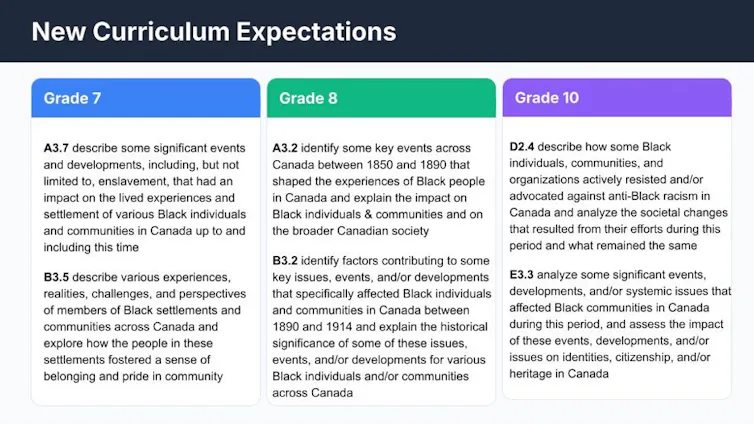
The new mandated expectations pertaining to Black Canadian history were included in a revision of the Grades 7, 8 and 10 history curriculum. These are the grades where students learn Canadian history. The number of expectations regarding Black history is reasonable because there is a lot to cover in the history curriculum overall.

Chart showing 'new curriculum expectations' for grades 7, 8 and 10.
Chart created by author Natasha Henry-Dixon showing new mandated Grades 7, 8 and 10 curriculum expectations on Black Canadian history.
(Natasha Henry-Dixon)

However, unlike all of the other specific expectations in the history curriculum, the “Black-specific expectations” are the only ones that don’t have any supporting topic suggestions or optional topics.

While specific curriculum expectations for Grades 7 and 8 don’t have any framing questions like other ones do, the Grade 10 expectations have two framing questions: “In what ways did the actions of various Black individuals, communities and organizations during this period help shape strategies and initiatives combating anti-Black racism today?” and “How did Black communities contribute to Canada’s identity and heritage during this period?”


Read more:
Black Londoners of Canada: Digital mapping reveals Ontario’s Black history and challenges myths


The ministry could argue that such open expectations give teachers room to teach what they’d like. But teachers should receive as much informed guidance as possible, particularly because most have not taught any Black history content before.

Black Canadian history topic suggestions

There are Black Canadian historical subjects included as topic suggestions in other specific expectations throughout the history curriculum.

The ministry has maintained all of the topic suggestions from the current (soon-to-be-retired) version. I compared these using my 2016 master’s study, Lend Me Your Ear, where I evaluated the 2013 social studies, history and geography curriculum.

There are also very broad topics in the history curriculum — such as immigration and analyzing the social and political values and significant aspects of life for some different groups and communities. Black Canadian experiences could be included, if a teacher chooses to do so.

Some information excluded

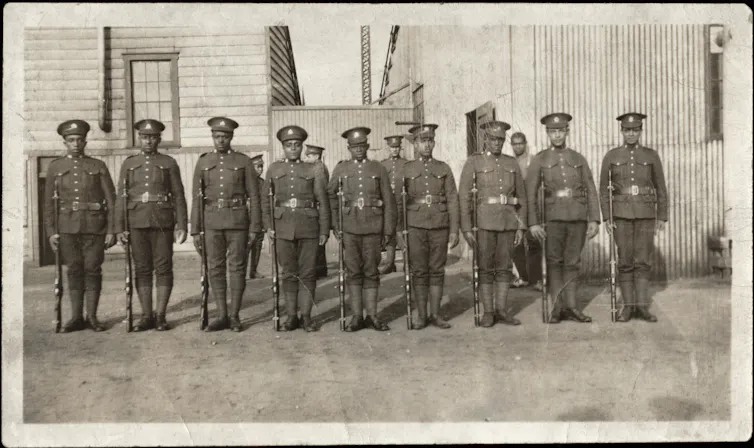
In the revised history curriculum, two topics have been cut from Grade 10. The No. 2 Construction Battalion, the all-Black segregated military unit in the First World War, was removed.

Black and white photo of lines of a posed group of Black soldiers in uniform.
Members of the No. 2 Construction Battalion in Essex County, Ont., in 1918.
(F 2076 Alvin D. McCurdy fonds/Archives of Ontario/Wikimedia)

These soldiers and their descendants received an apology from the federal government in 2022 for the appalling mistreatment they endured in their service to Canada.

Black History Month was suggested as a Canadian commemoration in the soon-to-be former version, but was the second topic cut from the new version.

Portait image of a Black woman in 19th century dress.
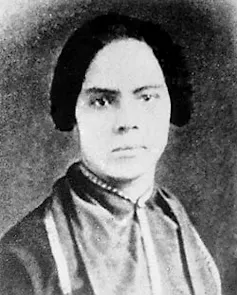
Mary Ann Shadd Cary, educator, publisher, lawyer and abolitionist is a topic, but her last name ‘Cary’ isn’t used in Grade 8 expectations.
(National Archives of Canada/C-029977/Wikimedia)

2026 marks 100 years that Black people have commemorated Black history in the month of February and the 30th anniversary since Black History Month has been recognized at the federal level in Canada. Ironically, this elimination was made public during Black History Month.

For some of the topics, their inclusion left out some information. In Grade 7, Black Loyalists in Ontario were not recognized. Mary Ann Shadd Cary’s last name “Cary” was not used in Grade 8. She married Thomas Cary in 1856 and used that last name throughout her life.

The inclusion of the Black Cross Nurses in Grade 10 excludes the main organization they were an auxiliary of: the Universal Negro Improvement Association (UNIA).

More was possible

The ministry missed the opportunity to include a range of new topics to demonstrate more meaningful integration of Black Canadian history.

New topics would provide more explicit examples of the contributions of diverse Black individuals to Canada’s foundation, the obstacles they faced in the pursuit of full citizenship and equality and the many ways they resisted that helped build a more inclusive and prosperous country.

A major omission is the longstanding cultural tradition of Emancipation Day (Aug. 1), which commemorates the abolition of British slavery.

The occasion has been marked for 192 years and was recognized federally in 2021. This treatment maintains the relegation of Black Canadian history to the periphery.

My grade

I give the new expectations a “D,” a marginal pass, only because they were actually implemented.

The revisions instituted two expectations per grade on Black Canadian history that is now part of the official curriculum policy. In this respect, the changes advance the cause long lobbied for by the Black community.

However, the new expectations miss the mark.

They lack substance and leave gaps that can further perpetuate the nonexistent and inconsistent teaching of Black Canadian history.

Given the nature of the content, and because this is the ministry’s first foray into mandating Black history in Canada, the regularly opaque revision process should have been more transparent. One wonders if issues and questions raised could have been avoided if the process was more collaborative. Questions include:

• Was feedback gathered from collaborators really considered or was checking the box that they met with them the total sum of the “collaboration?”

• Who was involved internally and externally? What are their expertise and credentials? Were they involved from beginning to end?

• What feedback was provided and implemented or not? Why?

• What kind of professional development will be provided? Who will deliver it?

• What instructional resources will be provided and who will develop them?

• How will accountability and the impact of the curriculum expectations be measured?

The new expectations establish a standard that needs to be greatly improved upon in the next cycle of revisions. Hopefully this happens in my lifetime and more valuable time isn’t lost. I’ll continue to hold my breath until then.

The Conversation

Natasha Henry-Dixon reviewed early drafts of the curriculum revision.

ref. A historian of Black Canada gives a report card on Ontario’s new mandated Black history education – https://theconversation.com/a-historian-of-black-canada-gives-a-report-card-on-ontarios-new-mandated-black-history-education-279144

Paris has successfully cut noise pollution, but urban birds still can’t sing at their natural pitch

Source: The Conversation – Canada – By Dan Mennill, Professor and Associate Dean of Science, University of Windsor

The sounds of cars, airplanes, boats and industrial activities in urban areas produce a steady roar that impacts birds, such as this great tit. (Wikimedia Commons), CC BY-SA

When Rachel Carson wrote the environmental classic Silent Spring in 1962, she warned that unchecked human impacts might create a silent future.

Forty years later, biologists uncovered a striking effect of noise pollution on songbirds. They found that low-pitched traffic noise in European cities forced birds to sing at higher pitches. Songbirds in a noisy park beneath the Eiffel Tower sang at a pitch of 400 Hz higher than those in quiet forests outside Paris.

My new research, published in the scientific journal Ornithological Applications with colleague Hans Slabbekoorn from the University of Leiden, shows that Paris is a success story in the battle to reduce noise pollution.

Yet even as Paris has grown quieter, birds have not returned to their natural song frequencies. Our research shows that great tits in Paris continue to sing at higher pitches than birds in wilderness areas outside the city.

Further noise-reduction efforts are vital, in urban areas throughout the world, to allow wild birds to communicate at their natural sound frequencies.

The devastating impact of noise

Human activity fills the world with noise. The sounds of cars, airplanes, boats and industrial activities produce a steady roar that impacts wild animals, birds and insects. We often overlook noise pollution as a conservation problem, yet it may have devastating effects on wildlife during an era of increasing urbanization.

Road noise interferes with the ability of birds and frogs to attract mates. Boat noise leads to decreased vocal communication in whales. And traffic noise influences predator-prey interactions between moths and bats.

Since the discovery that low-pitched traffic noise in European cities forced birds to sing at higher pitches, this pattern has been demonstrated in diverse bird populations around the world.

Savannah sparrows sing higher-pitched songs near noisy oil pumps on the Canadian Prairies. European robins sing higher-pitched songs in the presence of wind turbine noise. And Australian silvereyes sing higher-pitched songs and calls in loud urban areas compared with rural areas.

These changes diminish birds’ ability to defend breeding territories and attract mates.


Read more:
Human activity is making the Arctic’s waters louder


Fighting for a quieter city

Paris is one of the largest and most densely populated cities in Europe, yet Parisians have developed novel strategies to fight noise pollution.

The city has converted many roadways into bicycle lanes and installed anti-noise coatings on major roadways.

A black box attached to a lampost, with a picture of a bird on it. Traffic blurred in the background.
An automated digital recorder in the city of Paris.
(Dan Mennill)

Automated noise cameras issue fines to excessively loud vehicles. A regional observatory called Bruitparif now monitors noise throughout the city and oversees noise-reduction efforts.

These noise-reduction efforts in Paris stand to make the city quieter for both people and wildlife. The city’s campaign in the war against noise prompts the question: can we turn down the volume on noise pollution to minimize its impact on birdsong?

Turning down the racket

In 2023, I travelled to Paris to record the songs of the great tit, a familiar European backyard bird closely related to the chickadee.

I used microphones and digital recorders to record birds in the streets, squares and parks throughout the city. I retraced the footsteps of my collaborator, Hans Slabbekoorn, the original biologist who recorded great tits in Paris in 2003.

The researcher stands holding out a large black microphone, with the Eiffel Tower behind him.
Dan Mennill uses a microphone to capture birdsong close to the Eiffel Tower.
(Dan Mennill)

When we compared background noise with bird songs, we found that great tits sing higher-pitched songs in noisier environments. By singing at a higher pitch, great tits avoid having their songs masked by the low-frequency noise of traffic sounds.

We also analyzed noise data collected across Paris by Bruitparif. We found that Paris is winning the war on noise pollution and the city has grown quieter in recent years. In fact, Paris today is approximately three decibels quieter than it was 10 years ago. Because the decibel scale is logarithmic, a three-decibel drop represents a major reduction in sound intensity.

Despite this progress, great tits in Paris continue to sing at higher pitches than birds in wilderness areas outside the city.

Birds can revert their tune

However, there is reason for optimism. Research has shown that when cities become quieter, birds in other locations have returned to their natural pitch.

The quiet streets during COVID-19 lockdowns provided a rare opportunity to study birds in a quieter world. Biologists in San Francisco found that the urban soundscape became approximately seven decibels quieter during lockdowns — levels rarely observed since the 1950s.

The quiet airwaves allowed birds to change their tune. White-crowned sparrows in San Francisco responded by singing lower-pitched and quieter songs.

The sound of the great tit singing in spring.

Many species of birds benefited from the quiet soundscape of the lockdown period. In a study of 47 species of songbirds in North America, our research team found that species with broad-frequency songs — sounds that are most immune to the impacts of low-frequency noise — expanded their ranges during this quiet period.

These findings reveal that noise pollution affects diverse birds, even those whose songs seem well-suited to noisy environments.

Listening to the future

Our studies in Paris show that a three-decibel reduction is not sufficient to allow birds to return to their natural song frequencies. Further noise-reduction efforts will be required for us to adequately share the airwaves with our feathered friends.

Paris also provides a hopeful lesson about battling noise pollution. Cities can reduce noise by encouraging cycling and quieter transportation. Public policy also plays an important role, exemplified by Paris’s Bruitparif agency.

If we measure noise pollution, we can strive to reduce it, improve our own well-being and create the space for wild birds to communicate at their natural sound frequencies.

The Conversation

Dan Mennill receives funding from NSERC.

ref. Paris has successfully cut noise pollution, but urban birds still can’t sing at their natural pitch – https://theconversation.com/paris-has-successfully-cut-noise-pollution-but-urban-birds-still-cant-sing-at-their-natural-pitch-280229

The old adage that people leave managers, not companies is true – but only up to a point

Source: The Conversation – UK – By Asrif Yusoff, Senior Lecturer and Employability Lead, University of Greenwich

Meeko Media/Shutterstock

It has been said that “people leave managers, not companies”. It’s easy to believe that this is true, either from personal experience or observation. Many workers can easily point to a line manager who dismissed their concerns or treated them unfairly.

But is it really fair to suggest that managers alone are the dominant cause of staff turnover? Our recent study indicates that in most cases, it’s a combination of both leadership and the organisation. We reviewed 39 papers from the past ten years – and the findings suggest something more nuanced.

People might leave a job if what is demanded of them significantly exceeds the resources they’re given. Managers do matter here because they can shape both sides of that equation. But leadership style alone can be overpowered when workload remains high and resources are consistently below par. In these conditions, even good managers struggle to retain people.


Read more:
Revenge quitting: is it ever a good idea to leave your job in anger?


Across the literature, leadership was shown to influence employee turnover in two ways. First, leaders set the tone for how their employees operate. Good relationships between managers and employees tend to clarify to workers what is expected from them, as well as a sense of autonomy and an ability to express oneself without fear (what we call psychological safety).

Within management theory, there are different types of positive leadership. These include “transformational” (real impact is felt), “servant” (leaders maximise team potential) and “ethical” (grounded on strong principles). Studies consistently link these favourable approaches to staff being less inclined to leave, due to stronger levels of trust and engagement.

Second, leaders intensify demands. Naturally, micromanagement or abusive supervision will strain relationships. When employees feel they are under constant pressure, they are more likely to disengage and plan their exit. In this respect, people do leave managers – because their boss’s behaviour creates conditions that make work feel unmanageable.

These conditions explain how leadership can influence workers’ intentions to leave. They also explain why organisations keep returning to manager coaching or training as an intervention to help them hold on to talented staff. But this could be a waste of time – leadership is just one part of the story.

When good management is not enough

In many of the reviewed studies, factors such as workload, scheduling and pay played a big role in someone’s decision to leave. A supportive manager may buffer strain to protect team members, but when workload is chronically heavy or people aren’t clear on how they can progress in the organisation, the manager’s positive influence will fade away.

This explains some common patterns. Organisations sometimes attribute turnover to bad managers when the deeper cause is an overly stretched workforce. Also, managers are frequently expected to compensate for problems they cannot control – things like understaffing, pay structures or working hours. A manager can only do so much to appease unhappy workers.

Evidence from the literature suggests the demands of work must be balanced with the resources provided (time, staff, money or equipment, for example). This can be a two-track approach.

Track 1: Structural improvement

One way that work structures can be improved is by reducing overload. This is of course easier said than done – it involves diagnosing what is pushing demands too far. Someone’s decision to leave begins with unclear priorities or unpredictable demands. Even small improvements such as a clearer allocation of work and strategies for prioritising tasks can reduce pressure.

Another angle is clarity on what employees have to do to progress within the organisation. Employees are more likely to leave when progression appears arbitrary or – even worse – political. Clarifying pathways and criteria for promotion (and following through) can reduce uncertainty and strengthen employees’ commitment.

This kind of change takes time, however. It may require some extra budget and stronger collaborations across teams. What’s key is addressing what can be changed across the organisation rather than placing the entire burden of retaining staff on leaders.

Track 2: Strengthening leadership

When change is slow, leadership becomes a more immediate lever. The goal is for leaders to not only be inspiring, but to “walk the talk”. Change must be felt, and it becomes tangible when leaders actually increase resources and reduce avoidable demands.

Coaching (continuous nurturing and support) is increasingly cited as a prerequisite for leaders. This is not only because it promotes empathy. Coaching is useful because it can offer better clarity for employees. It also helps to uncover workload challenges early.

Related to this is how work is distributed. When duties are allocated transparently, it reduces people’s perceptions of unfairness and prevents avoidable overload. This is actually a more feasible action compared to changing the behaviour of managers.

But where managers are abusive or authoritarian, attempts to hold on to staff will fail unless the managerial behaviour is addressed. Toxic leadership can easily accelerate staff losses beyond the level that structural changes can repair in the short term.

a make worker snaps a pencil over his laptop
Quitting can have a domino effect within workplaces.
Enez Selvi/Shutterstock

Staff turnover is not always a purely individual decision. Some studies indicate that when people start to leave a workplace, it can start a trend. Employees can also begin to make comparisons within teams, particularly when opportunities appear uneven.

For organisations, this makes monitoring staff turnover a form of early warning system. An exodus should trigger an investigation, targeted support and action where necessary. Unfortunately, there’s no one-size-fits-all solution.

In summary, people do leave managers, but they also leave organisations. Both leadership behaviour and the design of workplaces shape this decision. Retention improves when organisations see leadership and structural change as complementary levers in the same system.

The Conversation

The authors do not work for, consult, own shares in or receive funding from any company or organisation that would benefit from this article, and have disclosed no relevant affiliations beyond their academic appointment.

ref. The old adage that people leave managers, not companies is true – but only up to a point – https://theconversation.com/the-old-adage-that-people-leave-managers-not-companies-is-true-but-only-up-to-a-point-280879

Golden eagles in England? Here’s the ecological case for bringing them back

Source: The Conversation – UK – By Esther Kettel, Senior Lecturer in Ecology and Conservation, Nottingham Trent University

England’s last recorded pair of golden eagles lived in the Lake District. After the female died in 2004, the male was left alone for 12 years before his death in 2016.

This marked the end of golden eagles across English skies. Though they have lived on in Scotland, the birds were largely wiped out across England about 150 years ago, with only a few nesting attempts during that time.

Annotated map of England
The eight ‘recovery zones’ are shaded. Sites where golden eagles were once found are marked with stars.
Forestry England /, CC BY-SA

However, the UK government recently announced it will support reintroducing the species and has identified eight potential “recovery zones” across northern England and the south-west. This is good news for lots of reasons.

Reintroducing lost species aligns with the government’s 25-year environment plan to restore and recover nature. Golden eagles also have an important heritage as symbols of wilderness, freedom and power. We may even have a moral duty to return them to the landscape, since humans were largely responsible for their loss.

Reintroducing golden eagles would also benefit England’s natural environment, helping return it to a healthier and more dynamic state.

Restoring balance to the food chain

Golden eagles are apex predators, occupying the top of the food chain with no natural predators. The removal of a species like this can cause major shifts in ecosystems, as they exert top-down control.

When apex predators are missing from ecosystems, the middle predators of food chains – or “meso-predators” – become dominant. With its native bears, lynx and wolves long gone, England has a high number of meso-predators. These include badgers, red foxes and other birds of prey. These predators, in turn, can limit some populations of prey like seabirds, waders and gamebirds.

Buzzard in England moorland
In England, buzzards often sit at the top of the food web. Elsewhere in the world, the have to be wary of bigger birds.
Serenity Images23 / shutterstock

Meso-predators typically avoid areas where apex predators are due to fear of competition or being eaten themselves. So, if golden eagles return then the predation pressure from smaller birds might be altered. For example, on the Isle of Mull in Scotland, meso-predators like kestrels and buzzards tend to steer clear of areas where golden eagles are.

Controlling prey numbers

Golden eagles also have an important role in the ecosystem by regulating their prey species. They hunt various prey, mostly medium-sized birds and mammals like rabbits, hares and occasionally, young deer.

When not controlled by predators, prey populations can boom. This can lead to greater competition for resources and a higher risk of disease spread among these prey species. Prey populations may also overuse resources, which can negatively affect plant growth.

Because apex predators are absent in England, humans must take up the role of controllers. Deer are shot where they are preventing woodland regeneration and rabbits are widely controlled in agricultural landscapes, costing £5 million a year. Although golden eagles are unlikely to reduce deer and rabbit numbers substantially, they may bring some balance back.

Keeping the environment clean

In addition to being excellent predators, golden eagles also scavenge carcasses – the remains of dead animals. Researchers in Spain found that 90% of the golden eagles in their study fed on carcasses.

Carcasses can quickly become disease and toxin reservoirs that may enter the wider environment if left uneaten. This can have consequences for other species, including humans. So scavengers have a crucial role in maintaining a healthy ecosystem.

If reintroduced back to England, golden eagles would join the cleaning crew, which also includes species like red kites, crows and red foxes.

Indicators of a healthy ecosystem

If a pollutant is in an environment, this could affect top predators through a process called biomagnification, where the concentration of the pollutant increases the further up the food chain. If in high concentrations, the pollutant may become toxic and the predator may fail to reproduce, become unwell, or die.

In the 1960s, birds of prey played a pivotal role in making the environmental dangers of certain agricultural pesticides clear in the UK and globally, leading to the widescale ban. Golden eagles could do something similar today.

A complex picture

If golden eagles are successfully reintroduced in England, they could restore balance to food chains, control prey numbers, scavenge carcasses and act as indicators of environmental dangers.

They will join other birds of prey that have been successfully reintroduced to England, such as red kites, ospreys and white-tailed eagles, all of which have been deemed a success.

However, ecological systems are not straightforward and predicting the consequences of the return of golden eagles is complex. As indicated by the risk assessment conducted by Forestry England, at worst the impacts on biodiversity of golden eagles will be neutral. At best it will be beneficial.

The Conversation

Esther Kettel does not work for, consult, own shares in or receive funding from any company or organisation that would benefit from this article, and has disclosed no relevant affiliations beyond their academic appointment.

ref. Golden eagles in England? Here’s the ecological case for bringing them back – https://theconversation.com/golden-eagles-in-england-heres-the-ecological-case-for-bringing-them-back-281040

The fake disease that fooled the internet — and what it says about all of us

Source: The Conversation – UK – By Jonathan R. Goodman, Assistant Research Professor, Psychiatry, University of Cambridge

Damn! It looks like I’ve got bixonimania! monshtein/Shutterstock.com

Until a few years ago, no one had heard of bixonimania. Then, in 2024, a group of scientists posted findings online announcing the condition, which they claimed affected the eyes after computer use. However, the scientists had made it up – not just the work, but the authors’ names, affiliations, locations and funding, which was the University of Fellowship of the Ring and the Galactic Triad.

Large language models like ChatGPT and Gemini treated it as real anyway, and in doing so, helped turn a fictional disease into a legitimate-sounding health concern.

Bixonimania is not an isolated case. Being deceived – whether you are a person or an AI model – is concerningly common, in science and beyond. Whether we’re talking about AI hallucinations, state-backed disinformation or just everyday lies, humans have a remarkable knack for naivety, owing to our biases and increasing need to outsource learning to others. These are problems we – individually and collectively – urgently need to better understand and overcome.

Our shared fascination with deception may help explain the popularity of The Traitors, a TV programme built around the tension between trust and suspicion, where contestants must decide who among them is deceiving the group.

The show captures something intrinsic to being human: the persistent threat of being unsure about whether we’re placing trust effectively. Yet in the modern era of mass digital communication and AI, we’re now almost constantly faced with a similar threat, often without realising it.

At a recent event at the Cambridge Festival, we aimed to highlight this risk through a Traitors-themed science event. Four panellists presented work, all of which could have been a lie. The audience was asked to vote on which of the presenters was deceiving them and why.

We deliberately made the presenters and their work outlandish. From their varying backgrounds and with varying accents, the panellists presented their work in global health, climate, media and astrophysics. Some dressed formally, while one – a Nigerian researcher presenting her work on immigration in a healthcare context – wore clothes linked to her ethnic identity.

We were interested in exploring which of these signals – accent, gender, ethnicity, and dress and presentation style – influenced the audience’s decisions. Both content and presentation styles influenced them, but the signals they relied on led them to the wrong conclusions, rating the traitors as more credible than honest researchers.

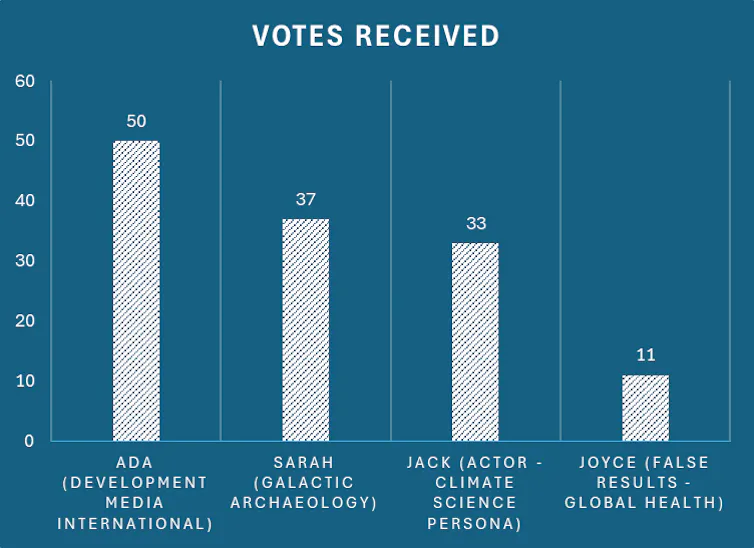
The ones who received the most votes were the two “faithful” researchers (to use the language of The Traitors) – Ada, from the non-profit Development Media Initiative, and Sarah, an astrophysicist working in galactic archaeology.

Ada’s team had saved lives by sharing health information with communities in the global south through running ten radio broadcasts daily. The audience thought the results were implausibly impressive.

“Ada’s data is too good to be true,” one person reported in our questionnaire. She was also presenting work she hadn’t personally contributed to. Even though this is common in large collaborations, this distance led to perceptions of a lack of confidence, undermining her credibility.

Sarah, an astrophysicist, had presented her subfield of galactic archaeology – the study of the Milky Way’s formation history through the chemical signatures of ancient stars. Yet with only four minutes to speak, she was unable to convey significant depth. The audience read that as a lack of understanding.

The outlandishness of her field’s name also harmed perceptions of her legitimacy. “Galaxy [sic] archaeology is too cool a name to exist,” one audience member wrote.

By contrast, the two traitors, Jack and Joyce, received the fewest votes. Jack was an actor who created the persona of a climate researcher specialising in rain. Joyce presented her own work but falsified the results.

Interestingly, Joyce’s personal connection to her work – she is a Nigerian woman conducting research into Nigerian communities – helped to convince the audience of her authenticity. “Joyce’s presentation sounded very considered and genuine – the process of her research and recounts of her personal experiences sounded like she had lots of interest in the area,” one person wrote.

A chart showing how the voting went.
The traitors, as the audience saw them.
University of Cambridge, CC BY-SA

The event was meant to be fun and engaging. Yet we also wanted to illustrate the many ways people can misrepresent themselves, whether in science or beyond. Our traitors showed that lies don’t just have to be about who you are (Jack is an actor, not a researcher) but about what you say (Joyce is a researcher but falsified her results).

Misinformation has always existed. What’s new is the speed at which it spreads, the tools that generate it, and how convincingly it mimics the real thing.

Why maths isn’t enough

Our collective capacity to recognise false information is also at risk. This is because, as a society, we continue to promote the importance of hard science subjects at the expense of the critical thinking skills derived from studies of the arts, humanities and social sciences.

This can be seen, for example, in the 2023 UK governmental push to require all school students to take maths until age 18. No such push exists to promote and develop the critical thinking skills of young people. It’s easy to see how increasingly convincing falsehoods like bixonimania’s existence can be accepted as truth, especially when touted by AI models.

Tools are helpful. AI is a tool, the internet is a tool, the media is a tool. But it’s up to us to ensure that we are using them and not being manipulated by them.

In The Traitors, we have little to go on to determine what is true. Yet in the real world, we have the ability to check the truth of claims. With effective caution and critical thinking, it is entirely possible to determine what is trustworthy, but it requires thinking for ourselves. Trust is ours to give, and we need to learn to give it wisely.

The Conversation

Jonathan R. Goodman receives funding from the National Institute of Health Research, the Wellcome Sanger Institute, and the Wellcome Trust.

Mariam Rashid receives funding from the Isaac Newton Trust and the Kavli Foundation.

ref. The fake disease that fooled the internet — and what it says about all of us – https://theconversation.com/the-fake-disease-that-fooled-the-internet-and-what-it-says-about-all-of-us-280615

The 10 pence pill that underpins diabetes care – and may do much more besides

Source: The Conversation – UK – By Dipa Kamdar, Senior Lecturer in Pharmacy Practice, Kingston University

pimpampix/Shutterstock

Metformin has a strong claim to being one of the most influential medicines of the past century. For decades, it has underpinned the treatment of type 2 diabetes, helped millions of people control their blood sugar, and inspired a second life in research on everything from ageing and cancer to heart health and fertility.

Its story begins not in a laboratory but in a plant, galega officinalis, also known as French lilac or goat’s rue. For centuries, the plant was used in folk remedies for symptoms we now recognise as associated with diabetes, including excessive thirst and frequent urination. In the early 20th century, scientists isolated blood sugar-lowering compounds from it. After years of refinement and testing, metformin emerged as a relatively safe and effective medicine, and was introduced in the UK in the late 1950s.

Large clinical trials, which are carefully designed studies in people to test how well treatments work, confirmed what many doctors already suspected. Metformin was not only effective at lowering glucose, the body’s main form of sugar, but also at reducing diabetes-related complications. It became the main treatment for type 2 diabetes across much of the world.

Metformin is a biguanide drug, a class of medicines that lowers blood sugar, and it works by helping the body use insulin more effectively. Insulin is the hormone that helps move glucose from the bloodstream into cells for energy. Metformin reduces the amount of glucose released by the liver, improves the way muscles take up glucose from the blood, and reduces how much glucose is absorbed from food in the gut.

Metformin also activates an enzyme called AMPK, often described as the cell’s energy sensor. Enzymes are proteins that help chemical reactions happen in the body.

When AMPK is switched on, it reduces the liver’s production of new glucose, a process called gluconeogenesis, and encourages tissues such as muscle to take up and use more glucose. Unlike some other diabetes medicines, metformin does not usually cause weight gain, and on its own it rarely causes low blood sugar.

Beyond diabetes: promise and limits

Metformin’s strong reputation has also led researchers to explore possible uses beyond diabetes, although the evidence is mixed. One common off-label use, meaning a medicine is prescribed for a condition it has not officially been approved to treat, is polycystic ovary syndrome (PCOS).

Many people with PCOS have insulin resistance, which means their bodies do not respond properly to insulin and need to produce more of it to keep blood glucose stable. High insulin levels can stimulate the ovaries to produce more androgens, a group of hormones that includes testosterone.

Raised androgen levels can disrupt ovulation and contribute to irregular or absent periods. By improving insulin sensitivity, metformin can help reduce these effects and may help regulate the menstrual cycle.

Metformin has also been studied for its possible effects on ageing and longevity. Although early findings are intriguing, there is still no conclusive evidence that it slows ageing in humans, and it is not approved for that purpose.

Some research has suggested that metformin may have neuroprotective effects, meaning it could help protect the brain and nervous system, particularly with long-term use. But the evidence is inconsistent, and large, long-term clinical trials are still needed to determine whether metformin really can protect against dementia and other neurodegenerative diseases.

These possible uses highlight metformin’s versatility, but they also underline the importance of medical oversight. Metformin is generally well tolerated, but like all medicines, it can cause side-effects. The most common are nausea, stomach discomfort, diarrhoea, changes in taste, and loss of appetite. These often improve over time or when people switch to slow-release formulations, which release the drug more gradually. Taking metformin with food can also help.

Another recognised issue is vitamin B12 deficiency, which has repeatedly been observed in people with type 2 diabetes who take metformin. This may happen because the drug reduces how well vitamin B12 is absorbed in the gut.

Over time, low vitamin B12 can lead to anaemia or peripheral neuropathy. Anaemia means the body does not have enough healthy red blood cells to carry oxygen properly, while peripheral neuropathy refers to nerve damage, usually in the hands or feet, that can cause tingling, numbness, pain or weakness.

A rare but serious side-effect is lactic acidosis, a dangerous build-up of lactic acid in the blood. If too much builds up, it can make the blood dangerously acidic and, if untreated, may lead to organ failure. This is more likely in people with severe kidney or liver problems, which is why regular monitoring is important. Healthcare professionals may also advise temporarily stopping metformin before certain medical procedures or if someone becomes severely unwell.

For decades, the advice was simple: start with metformin. In 2026, however, the National Institute for Health and Care Excellence (Nice) updated its guidelines for type 2 diabetes, signalling a move towards earlier and more intensive treatment. The new guidance recommends that most people should be offered an SGLT-2 inhibitor, such as dapagliflozin, alongside metformin from the start.

SGLT-2 inhibitors are drugs that help the kidneys remove excess glucose from the body in urine. This approach aims not only to control blood sugar, but also to protect the heart and kidneys earlier in the course of disease, reflecting a broader shift towards more personalised treatment.

That does not mean metformin has been pushed aside. It remains a cornerstone of diabetes care and is still widely prescribed. But the landscape is changing, and treatment is becoming more tailored to the individual.

Metformin may be old, but it continues to adapt to modern medicine. As diabetes care becomes more personalised and new treatment options emerge, metformin remains a reliable, affordable and effective foundation. Its story is far from over. Sometimes the most transformative medicines are not the newest or the flashiest, but the ones that stand the test of time.

The Conversation

Dipa Kamdar does not work for, consult, own shares in or receive funding from any company or organisation that would benefit from this article, and has disclosed no relevant affiliations beyond their academic appointment.

ref. The 10 pence pill that underpins diabetes care – and may do much more besides – https://theconversation.com/the-10-pence-pill-that-underpins-diabetes-care-and-may-do-much-more-besides-276136

Five books about the lives of musicians that are stonking good reads

Source: The Conversation – UK – By Glenn Fosbraey, Associate Dean of Humanities and Social Sciences, University of Winchester

This year is the national year of reading, and if you’re a music lover, I urge you to pick one up about your favourite musician. The lives of musicians are often full of highs and lows, which makes for compelling reading. Here are five of my favourites.

1. Fight The Power by Chuck D

I suppose I shouldn’t really include Fight The Power in my list, given that Chuck D himself says in its prologue that it “damn sure ain’t an autobiography”. He positions himself as a tour guide rather than a protagonist, chaperoning us through the fascinating landscape of 80s and 90s hip-hop. Such guiding means it’s different from your average autobiography. But, intertwined with observations on racial oppression, media bias, politics, violence and religion, we find Chuck D’s life story. And it’s quite the story indeed.

The book moves from a childhood lived against a backdrop of assassinations, chaos and race riots, through his days as the leader of Public Enemy (one of the most revolutionary groups in music history), up to his latest challenge as a father encouraging his daughters to think as independently as possible. An engrossing, page-turning peek behind the curtain of a fascinating character living in a fascinating (albeit often troubling) world.

2. Under the Ivy: The Life and Music of Kate Bush (2024 Omnibus Remastered Edition) by Graeme Thomson

At 432 pages, this is a slim volume compared with the likes of Ray Davies: A Complicated Life (800 pages), Madonna: A Rebel Life (880 pages), or The Life and Times of Malcolm McLaren (892 pages). But what it lacks in physical heft, Under the Ivy more than makes up with the weight of research that has gone into it.

Thomson is forensic in his detail, both in terms of researching Bush’s life (he conducted more than 70 interviews with school friends, band mates, studio collaborators, former managers, producers, musicians, video directors, dance instructors and record company executives), and in analysing her songs, which he does with the keen eye of a music critic. Trying to form a single picture of an artist as enigmatic and complex as Bush is, in Thomson’s words, “like trying to complete a jigsaw when some of the pieces are missing”. And making a coherent, entertaining and informative read from that is an even bigger challenge. Luckily for us, Thomson is up to it.

3. Things The Grandchildren Should Know by Mark Oliver Everett

By page four of his autobiography, Eels singer and songwriter Mark Everett (known professionally as “E”) has been attacked with a butcher’s knife, found his 51-year-old father dead in the family home, and told us about how, at 19, he fantasised about driving his car off a bridge. As if this weren’t enough tragedy for one lifetime, E then tells us about his sister’s suicide, the months of nursing his bedridden mother before she eventually succumbed to breast cancer, his flight attendant cousin dying during the Pentagon plane crash on 9/11, the deaths of several close friends, and the numerous rejections of his music.

In other hands, Things The Grandchildren Should Know might have been one of the saddest, most harrowing autobiographies ever written. And it certainly had every right to be. That it somehow succeeds in being one of the most uplifting, positive, and inspirational autobiographies is a testament to both E’s skilful writing, bone-dry sense of humour, and infectious optimism in the face of adversity. I’ve read it at least once a year since its release in 2008, usually in one sitting. It’s one of those books that never fails to raise my spirits. Even if you haven’t heard a single note of Eels’ music, or you don’t normally bother with books about rock or pop stars, this story is so good; it’s a must-read.

4. The Beatles by Hunter Davies

That it is the only authorised biography of The Beatles ever to be produced is reason enough to read this 1968 classic. But knowing that, for 18 months, Hunter Davies partied with the band, went to work with them and was introduced to all their friends makes it an essential. And the 18 months were those between 1967 and 1968, when the band were changing not only music, but pop culture at large.

Strangely, for all the magic of the now well-known story of the band’s rise to global domination, the real highlight comes toward the end of the book, where Davies details the time he spent at each Beatle’s house. Here we get to see the world’s most celebrated icons behind closed doors, unguarded and relaxed. And the mundanity of it is delicious. There’s Lennon playing with a loose filling before swigging milk straight from the bottle; Ringo pottering around his garden; Paul eating fried eggs, bacon and buttered bread; and George answering the phone pretending to be “Esher Wine Store”.

5. The Story of The Streets by Mike Skinner

Mike Skinner burst onto the British garage scene with his project the Streets in the early 2000s, with songs about sitting around on the sofa, working at JB Sports and getting pissed on the plane back from holiday. After five hit albums, Skinner took a hiatus from The Streets in 2011, releasing this book the following year.

Skinner makes it clear from the outset that he’s “going to be as honest as the publisher’s lawyers will allow”, but the book is so much more than a warts-and-all account. Much of it focuses on musical inspirations, the craft of songwriting, and his production techniques.

It may come as a surprise to some that The Story of The Streets is written with such intelligence and insight, especially given that Skinner’s lyrics brim with colloquialisms, profanity and ineloquence. But as those of us who’ve followed his career closely will know, this is a man who is able to build character as well as he builds story, and the “everyman” we see portrayed in the Streets’ songs is only the tiniest part of a much more complex person.

This article features references to books that have been included for editorial reasons, and may contain links to bookshop.org. If you click on one of the links and go on to buy something from bookshop.org The Conversation UK may earn a commission.

The Conversation

Glenn Fosbraey does not work for, consult, own shares in or receive funding from any company or organisation that would benefit from this article, and has disclosed no relevant affiliations beyond their academic appointment.

ref. Five books about the lives of musicians that are stonking good reads – https://theconversation.com/five-books-about-the-lives-of-musicians-that-are-stonking-good-reads-280216

Israel’s onslaught against Lebanon may strengthen Hezbollah – just when it’s at its weakest

Source: The Conversation – UK – By John Nagle, Professor in Sociology, Queen’s University Belfast

As the tentative ceasefire in Lebanon holds, people are returning to their homes in the south to find widespread destruction. Whole villages laid waste, roads and bridges ruined, hospitals and other civic infrastructure flattened. And the Israeli army still very much in evidence in many areas.

The most recent conflict between Israel and Lebanon has killed more than 2,100 people and displaced more than a million more. Israel’s stated aim is to destroy Hezbollah, which it describes as an Iranian proxy. But this is a misleading framing of the situation. And trying to destroy Hezbollah by attacking and occupying Lebanon is a dangerous misreading of the situation.

Hezbollah, the so-called “Party of God”, is not the same thing as Lebanon. Yet the party is deeply embedded in Lebanese politics. The group emerged during the Lebanese civil war and in the aftermath of Israel’s 1982 invasion. It grew rapidly by combining armed resistance with political representation and services for Shia communities that had long been neglected by the Lebanese state.

In the southern suburbs of Beirut, known as Dahiyeh, and across the south, it became a provider of services. Hezbollah built schools, clinics and welfare networks that helped it convert resistance into social legitimacy. That presence built loyalty and dependence that outlasted its original resistance role.

Lebanon’s postwar political system is built on sectarian power sharing. Hezbollah entered parliament in the 1990s and built alliances well beyond its core Shia base, which enabled it to join coalition governments.

But unlike other major Lebanese factions, it retained its weapons after the civil war. This allowed it to combine formal political participation with an armed capacity that was outside the control of the state. Its alliance with Christian groups, most significantly Free Patriotic Movement, Lebanon’s largest Christian party, gave it cross-sectarian legitimacy and protection against isolation.

Hezbollah’s ability to shape Lebanese politics has often rested less on governing than on stopping other groups from governing. The clearest illustration was the presidency. After Michel Aoun completed his term in October 2022, Lebanon went without a president for more than two years. Hezbollah blocked every candidate that threatened its interests. Parliament failed to elect a successor 13 times.

Lebanon drifted without a head of state through the 2024 war with Israel. Its caretaker government could not take major decisions. Desperately needed economic assistance was withheld by international donors. It was Hezbollah’s blocking power made visible. Lebanon’s caretaker government could not take major decisions or enact the reforms international donors required. Desperately needed economic assistance was withheld as a result.

Hezbollah’s political weakness

This current conflict has caught Hezbollah in a weaker political position than it once enjoyed. The anti-government protests of 2019, economic collapse and the Beirut port explosion has deepened public anger at Lebanon’s ruling class — and at Hezbollah as part of it. Hezbollah’s attempts to obstruct the judicial investigation into the explosion deepened that anger further.

The 2022 elections confirmed the shift. Hezbollah and its allies lost the majority they had held since 2018. Independents and reformists who emerged out of the protests took seats in a more fragmented legislature.

The Arab Barometer’s 2024 survey found that just 30% of Lebanese expressed significant trust in Hezbollah, with 55% saying they had no trust at all. Hezbollah’s claim to speak for Lebanon — or even for all Lebanese Shia — is now more contested than at any point in its modern history.

The 2024 war, with the devastating pager attacks of September 17 and 18, substantially degraded Hezbollah’s military and further weakened its political standing. Assad’s fall in Syria in December removed a key source of regional support.

In January 2025, the Lebanese parliament finally elected Joseph Aoun as president — something that would have been unthinkable when Hezbollah was at its peak and was able to use its influence to exclude him. Aoun, a former army commander, has always insisted it was the army – not Hezbollah – that should be the defender of Lebanon’s sovereignty.

Operation: destroy Hezbollah

Israel’s stated objective for many years has been to create a more durable security order along its northern border by weakening or dismantling Hezbollah. But, at the same time, Israeli strikes have inflicted devastation far beyond Hezbollah itself, hitting civilians, infrastructure and communities across the country.

The destruction of places such as Dahiyeh reflects a broader logic of warfare in which dense urban space is treated as part of the battlefield. UN experts have argued that the destruction of homes and mass displacement amount to collective punishment in violation of international law.

The argument echoes broader legal debates about Israel’s conduct in Gaza, where UN experts have made similar findings.

That is also why the simple frame of “Israel versus Hezbollah” erases so much. Many of those driven from their homes in the south or in Dahiyeh had grown critical of Hezbollah, or had not chosen this war at all. Yet they found themselves bombed out of neighbourhoods that had been designated as legitimate targets, because of an assumed association with Hezbollah. The civilians killed and displaced are not bystanders to somebody else’s conflict. They are among its principal victims.

A ceasefire was announced on April 17, and – while Hezbollah has not formally endorsed it – the group appears to be observing it for now. Yet the truce leaves the central political question unresolved. Israeli officials have made clear they do not regard it as settling the question of southern Lebanon’s demilitarisation.

Expecting the Lebanese army to dismantle Hezbollah by force is unrealistic. If Hezbollah resisted — and it would — the result could be open civil conflict. It would fracture the army, deepen sectarian tensions, and drive Shia communities back behind the very organisation whose grip had begun to loosen, leaving it politically stronger than it was before the latest round of hostilities.

Any lasting settlement will have to reckon with the reality this war has exposed: Hezbollah is not Lebanon. But at the moment it’s Lebanon which is being punished.

The Conversation

John Nagle does not work for, consult, own shares in or receive funding from any company or organisation that would benefit from this article, and has disclosed no relevant affiliations beyond their academic appointment.

ref. Israel’s onslaught against Lebanon may strengthen Hezbollah – just when it’s at its weakest – https://theconversation.com/israels-onslaught-against-lebanon-may-strengthen-hezbollah-just-when-its-at-its-weakest-281031

Eating fruit is linked to lung cancer? Here’s what you need to know about that new study

Source: The Conversation – UK – By Justin Stebbing, Professor of Biomedical Sciences, Anglia Ruskin University

Deadly? Not likely. New Africa/Shutterstock.com

The idea that fruit and vegetables might cause cancer sounds bizarre. For decades, studies have shown that people who eat more plants tend to live longer, healthier lives, with lower rates of heart disease, stroke and several common cancers.

Lung cancer is no exception: in many large studies, higher intakes of fruits and vegetables are linked with lower risks, especially in smokers.

Against that backdrop, a new suggestion that fruit and veg might be driving lung cancer in young adults is surprising.

The story behind this latest wave of anxiety doesn’t come from a definitive, landmark trial. It comes from a brief presentation at a scientific conference, based on 187 people with early‑onset lung cancer.

Most had never smoked. When researchers asked about their diets, a lot of them reported eating plenty of fruits, vegetables and whole grains – the sort of pattern most of us would call “healthy”.

Instead of measuring pesticides in their food or blood, the team estimated probable pesticide exposure using average residue levels from other sources. From there, they speculated that pesticides on otherwise healthy foods might help explain why some young non‑smokers develop lung cancer.

That is a very long way from proving that fruit and vegetables themselves are harmful. Studies like this are meant to raise questions – “could pesticides be part of the story in young lung cancer?” – not to rewrite dietary advice on their own.

Crucially, this particular study looks backwards from people who already have cancer, rather than following healthy people forwards over time, so it cannot tell us whether their diet played any role in causing the disease. Nor does it show that these patients had higher pesticide exposures than comparable people without cancer. It only shows that they ate foods that, on average, can carry residues.

The bigger picture

When you zoom out from this single, tiny study to the broader body of evidence, the picture changes from alarming to reassuringly familiar. Large studies have followed tens or hundreds of thousands of people over many years, asked them what they ate, then waited to see who develops lung cancer. Time and again, those eating more fruit and vegetables either do better or, at very worst, no differently from those eating less.

Meta‑analyses that combine data from multiple studies find reductions in lung cancer risk with higher fruit intake and benefits from vegetables, too. These are the studies that inform official guidelines. They are not perfect – no nutrition study is – but they are far more informative than a single unpublished study of 187 patients.

So why do small studies like this latest one sometimes seem to say something different? One reason is simple statistical noise.

With small numbers, chance plays a huge role. If, for whatever reason, the particular group of young adults who turned up to that clinic happened to be unusually health-conscious, then fruit and vegetable intake will look high among people with lung cancer, even if diet has nothing to do with their disease.

Another issue is what scientists call “confounding”. People who eat more plants often differ in many other ways. They may exercise more, drink less, have different jobs, live in different neighbourhoods, or be more on the ball about seeking medical help.

When you start from patients and look backwards, it is very hard to disentangle these overlapping factors. That is why we place more weight on large, prospective studies that follow people forward in time and can better account for these differences.

Pesticides

Then there is the question of pesticides – the part of the story that understandably unnerves people. It is true that many conventionally grown fruits and vegetables carry measurable pesticide residues, and that people who eat a lot of produce tend to have higher levels of some pesticide breakdown products in their urine.

It is also true that farm workers who handle pesticides regularly and at high doses have higher rates of certain cancers, including some lung cancers. That tells us pesticides are not benign. But what it does not tell us is that eating sprayed apples or lettuce at normal dietary levels causes lung cancer in the general population.

A farm worker spraying pesticides on a crop.
Farm workers who are exposed to high doses of pesticides do have higher rates of certain cancers.
Kuro1982/Shutterstock.com

That doesn’t mean we should be complacent: there is an ongoing discussion about cocktails of many different chemicals, about vulnerable groups such as children and pregnant women, and about longer‑term hormone or brain effects that might not show up in crude cancer rates. However, these are arguments for improving how we farm and regulate pesticides, not arguments for abandoning fruit and vegetables.

If you are still uneasy about pesticides, there are practical, proportionate things you can do that don’t involve swapping an orange for a packet of crisps. Washing produce under running water helps remove surface residues and soil, and varying the types of fruit and veg you eat means you are not relying heavily on any one item that tends to carry higher residues.

If your budget allows, choosing organic versions of a few “high‑residue” foods can make sense. But the key point is that these are tweaks at the margins. They don’t change the central message that a diet rich in plant foods is overwhelmingly associated with better health.

Perhaps the most important lesson from this episode is about how to read nutrition headlines. Whenever you see “X food causes cancer” or “Y ingredient is the next miracle cure”, it helps to ask a couple of simple questions. How big was the study? Was it in healthy people followed over time, or patients looked at after the fact? Did the researchers actually measure what they are claiming (like pesticide levels)? And how do the new findings sit alongside decades of existing research?

In the case of the early-onset lung cancer study, the answers are sobering: it was small, it was retrospective, it used indirect exposure estimates, and its suggestion that fruit and vegetables might be harmful sits awkwardly with a much larger body of work pointing the other way.

None of this means we should ignore the possibility that pesticides contribute in some way to cancers in non‑smokers, or that diet is irrelevant to lung health. But we should be wary of turning one provocative conference talk into a reason to fear the very foods that consistently show up as markers of better health.

The Conversation

Justin Stebbing does not work for, consult, own shares in or receive funding from any company or organisation that would benefit from this article, and has disclosed no relevant affiliations beyond their academic appointment.

ref. Eating fruit is linked to lung cancer? Here’s what you need to know about that new study – https://theconversation.com/eating-fruit-is-linked-to-lung-cancer-heres-what-you-need-to-know-about-that-new-study-281003