Mark Carney’s new majority government should spark renewed calls for electoral reform

Source: The Conversation – Canada – By Julie Simmons, Associate Professor, Department of Political Science, University of Guelph

Canadians have never before seen a minority government become a majority government through a combination of floor crossing and byelections.

A small increase in the number of Liberal caucus members has given the government sweeping power, all without voters having a say in a general election.

Current conversations about the appropriateness of floor crossings are an opportunity for a broader discussion about electoral reform. If Canada used some form of proportional representation where the percentage of votes for each party reflected their percentage of seats in the House of Commons, floor crossings would be unnecessary.

Forcing a byelection

Official opposition leader Pierre Poilievre, has argued that floor crossing amounts to winning majority status through “dirty backroom deals.”

He advocates for recall, or the ability of constituents to sign a petition to force a byelection, “to put people back in charge of our democracy” — even though the Conservative party itself argued against such measures in 2011.

NDP leader Avi Lewis has also argued that getting a Liberal majority largely through floor crossings “just feels wrong.


Read more:
The Lewis dynasty makes a third bid to shape democratic socialism in Canada


Canadians seem to agree; just one in four surveyed in a recent public opinion poll said floor crossers should be able to complete their term with their new party.

But achieving a majority through a general election — or via byelections in the electoral districts of floor crossers — does not address a more fundamental shortcoming of how democracy is practised in Canada.

The current system

Even in general elections, Canada’s single-member plurality electoral system almost never produces a majority government that’s also supported by a majority of voters.

The last one was in 1984, when Brian Mulroney won a landslide 74.8 per cent of seats and 50.03 per cent of the popular vote. While there have been five majority governments elected since 1984, each of them has been supported by less than 50 per cent of voters.

With single-member plurality, the local candidate with the most votes (a plurality) wins each electoral district. Each MP represents all constituents in the electoral district, even if that MP is supported by fewer than 50 per cent of the voters in their riding.

As a result, in most elections, more Canadians vote for parties that do not form the majority. Does this really resolve the perceived democratic legitimacy gap left by floor-crossing?

Floor crossing: Symptom of a bigger problem

A cynic might say floor crossers are opportunistic. MPs choose to ride the coattails of a popular government into the next election, seeking rewards for their electoral districts or personally benefiting from “carrots” in the form of future committee appointments or other perks.

But floor crossing is also a symptom of the difficulty of working collaboratively in Canada’s version of parliamentary government, characterized by incredibly strict party discipline.

A 2020 report by the Samara Centre for Democracy found that Canadian MPs voted with their party 99.6 per cent of the time between 2015 and 2019.

When toeing the party line trumps constructive debate, floor-crossing can serve as one of the few available ways to express defiance when MPs are unhappy with the party’s direction or leader and feel neither are serving their constituencies.


Read more:
Another MP jumps to Carney’s Liberals, igniting concerns about the health of Canada’s democracy


Alternative solution

Proportional representation, an electoral system where the percentage of seats a party has in the legislature closely mirrors the percentage of people who voted for that party, is the most popular electoral system in the world, employed by 130 countries.

Because proportional representation more accurately reflects how people voted in an election, it overcomes the single-member plurality system’s tendency to create majority governments supported by a minority of voters.

It also promotes cross-partisan collaboration and deliberation. Unlike with single-member plurality, strategic voting by constituents is not commonplace.

Proportional representation is not a “winner take all” system. Voters will no longer feel the need to choose the more palatable of the two leading candidates in tight races, even if neither is their preferred candidate.

In the absence of strategic voting, a greater number of political parties have smaller portions of seats, and must negotiate among themselves to form a coalition majority government or support a minority government on a case-by-case basis. Political authority remains tethered to voters’ choices, but parties must work with each other to solve policy problems.

With this culture of collaboration built into the system, MPs would not have to resort to floor crossing to work with others outside their parties.

Parties in charge have the most to lose

In Canada, the provinces of British Columbia, Prince Edward Island, Ontario, New Brunswick and Québec have all considered moving away from single-member plurality towards some form of proportional representation.

Electoral reform was part of Justin Trudeau’s campaign platform in the 2015 election. But his Liberal government rejected a House of Commons committee’s recommendation that Canadians chose between proportional representation and single-member plurality in a referendum.


Read more:
Canada’s first-past-the-post electoral system highlights once again the need for reform


Unfortunately, the parties that have formed governments under single-member plurality have the most to lose if Canada adopts some form of proportional representation.

Because of strong party discipline and floor crossings, Mark Carney’s Liberal government is now assured to pass its policy agenda through the House of Commons.

But Canadians should push for more than immediate byelections after floor crossings to strengthen the country’s democracy — they should turn their attention once again to broader electoral reform.

The Conversation

Julie Simmons does not work for, consult, own shares in or receive funding from any company or organisation that would benefit from this article, and has disclosed no relevant affiliations beyond their academic appointment.

ref. Mark Carney’s new majority government should spark renewed calls for electoral reform – https://theconversation.com/mark-carneys-new-majority-government-should-spark-renewed-calls-for-electoral-reform-280499


US government ramps up mass surveillance with help of AI tech, data brokers – and your apps and devices

Source: The Conversation – USA – By Anne Toomey McKenna, Affiliated Faculty Member, Institute for Computational and Data Sciences, Penn State

On a Saturday morning, you head to the hardware store. Your neighbors’ Ring cameras film your walk to the car. Your car’s sensors, cameras and microphones record your speed, how you drive, where you’re going, who’s with you, what you say, and biological metrics such as facial expression, weight and heart rate. Your car may also collect text messages and contacts from your connected smartphone.

Meanwhile, your phone continuously senses and records your communications, info about your health, what apps you’re using, and tracks your location via cell towers, GPS satellites and Wi-Fi and Bluetooth.

As you enter the store, its surveillance cameras identify your face and track your movements through the aisles. If you then use Apple or Google Pay to make your purchase, your phone tracks what you bought and how much you paid.

All this data quickly becomes commercially available, bought and sold by data brokers. Aggregated and analyzed by artificial intelligence, the data reveals detailed, sensitive information about you that can be used to predict and manipulate your behavior, including what you buy, feel, think and do.

Companies unilaterally collect data from most of your activities. This “surveillance capitalism” is often unrelated to the services device manufacturers, apps and stores are providing you. For example, Tinder is planning to use AI to scan your entire camera roll. And despite their promises, “opting out” doesn’t actually stop companies’ data collection.

While companies can manipulate you, they cannot put you in jail. But the U.S. government can, and it now purchases massive quantities of your information from commercial data brokers. The government is able to purchase Americans’ sensitive data because the information it buys is not subject to the same restrictions as information it collects directly.

The federal government is also ramping up its abilities to directly collect data through partnerships with private tech companies. These surveillance tech partnerships are becoming entrenched, domestically and abroad, as advances in AI take surveillance to unprecedented levels.

As a privacy, electronic surveillance and tech law attorney, author and legal educator, I have spent years researching, writing and advising about privacy and legal issues related to surveillance and data use. To understand the issues, it is critical to know how these technologies function, who collects what data about you, how that data can be used against you, and why the laws you might think are protecting your data do not apply or are ignored.

Big money for AI-driven tech and more data

Congressional funding is supercharging huge government investments in surveillance tech and data analytics driven by AI, which automates analysis of very large amounts of data. The massive 2025 tax-and-spending law netted the Department of Homeland Security an unprecedented US$165 billion in yearly funding. Immigration and Customs Enforcement, part of DHS, got about $86 billion.

Disclosure of documents allegedly hacked from Homeland Security reveal a massive surveillance web that has all Americans in its scope.

DHS is expanding its AI surveillance capabilities with a surge in contracts to private companies. It is reportedly funding companies that provide more AI-automated surveillance in airports; adapters to convert agents’ phones into biometric scanners; and an AI platform that acquires all 911 call center data to build geospatial heat maps to predict incident trends. Predicting incident trends can be a form of predictive policing, which uses data to anticipate where, when and how crime may occur.

DHS has also spent millions on AI-driven software used to detect sentiment and emotion in users’ online posts. Have you been complaining about Immigration and Customs Enforcement policies online? If so, social media companies including Google, Reddit, Discord, and Facebook and Instagram owner Meta may have sent identifying data, such as your name, email address, phone number and activity, to DHS in response to hundreds of DHS subpoenas served on the companies.

Meanwhile, the Trump administration’s national policy framework for artificial intelligence, released on March 20, 2026, urges Congress to use grants and tax incentives to fund “wider deployment of AI tools across American industry” and to allow industry and academia to use federal datasets to train AI.

Using federal datasets this way raises privacy law concerns because they contain a lifetime of sensitive details about you, including biographical, employment and tax information.

Blurring lines and little oversight

In foreign intelligence work, the funding, development and controlled use of certain AI-driven gathering of data makes sense. The CIA’s new acquisition framework to turbocharge collaboration with the private sector may be legal with proper oversight. But the line between collaborating for lawful national security purposes versus unlawful domestic spying is becoming dangerously blurred or ignored.

For example, the Pentagon has declared a contractor, Anthropic, a national security risk because Anthropic insisted that its powerful agentic AI model, Claude, not be used for mass domestic surveillance of Americans or fully autonomous weapons.

On March 18, 2026, FBI Director Kash Patel confirmed to Congress that the FBI is buying Americans’ data from data brokers, including location histories, to track American citizens.

As the federal government accelerates the use of and investment in AI-driven spy tech, it is mandating less oversight around AI technology. In addition to the national AI policy framework, which discourages state regulation of AI, the president has issued executive orders to accelerate federal government adoption of AI systems, remove state law AI regulation barriers and require that the federal government not procure the use of AI models that attempt to adjust for bias. But using advanced AI systems is risky, given reports of AI agents going rogue, exposing sensitive data and becoming a threat, even during routine tasks.

Your data

The surveillance capitalism system requires people to unwittingly participate in a manipulative cycle of group- and self-surveillance. Neighborhood doorbell cameras, Flock license plate readers and hyperlocal social media sites like Nextdoor create a crowdsourced record of all people’s movements in public spaces.

Sensors in phones and wearable devices, such as earbuds and rings, collect ever more sensitive details. These include health data, including your heart rate and heart rate variability, blood oxygen, sweat and stress levels, behavioral patterns, neurological changes and even brain waves. Smartphones can be used to diagnose, assess and treat Parkinson’s disease. Earbuds could be used to monitor brain health.

This data is not protected under HIPAA, which prohibits health care providers and those working with them from disclosing your health information without your permission, because the law does not consider tech companies to be health care providers nor these wearables to be medical devices.

Legal protections

People have little choice when buying devices, using apps or opening accounts but to agree to lengthy terms that include consent for companies to collect and sell their personal data. This “consent” allows their data to end up in the largely unregulated commercial data market.

The government claims it can lawfully purchase this data from data brokers. But in buying your data in bulk on the commercial market, the government is circumventing the Constitution, Supreme Court decisions and federal laws designed to protect your privacy from unwarranted government overreach.

The Fourth Amendment prohibits unreasonable search and seizure by the government. Supreme Court cases require police to get a warrant to search a phone or use cellular or GPS location information to track someone. The Electronic Communications Privacy Act’s Wiretap Act prohibits unauthorized interception of wire, oral and electronic communications.

Despite some efforts, Congress has failed to enact legislation to protect data privacy, the use of sensitive data by AI systems or to restore the intent of the Electronic Communications Privacy Act. Courts have allowed the broad electronic privacy protections in the federal Wiretap Act to be eviscerated by companies claiming consent.

In my opinion, the way to begin to address these problems is to restore the Wiretap Act and related laws to their intended purposes of protecting Americans’ privacy in communications, and for Congress to follow through on its promises and efforts by passing legislation that secures Americans’ data privacy and protects them from AI harms.

This article is part of a series on data privacy that explores who collects your data, what and how they collect, who sells and buys your data, what they all do with it, and what you can do about it.

The Conversation

Anne Toomey McKenna serves on the Advisory Board to the Institute for Electrical and Electronics Engineers (IEEE)-USA’s Artificial Intelligence Policy Committee (AIPC) and Chairs multiple AIPC subcommittees. The AIPC work involves subject matter and education-related interaction with U.S. Senate and House congressional staffers and the Congressional AI Caucus. McKenna has received funding from the National Security Agency for the development of legal educational materials about cyberlaw (a course which the government still makes available online for the public) and funding from The National Police Foundation together with the U.S. Department of Justice-COPS division for legal analysis regarding the use of drones in domestic policing.

ref. US government ramps up mass surveillance with help of AI tech, data brokers – and your apps and devices – https://theconversation.com/us-government-ramps-up-mass-surveillance-with-help-of-ai-tech-data-brokers-and-your-apps-and-devices-277440

Umbilical cord blood may hold clues for a child’s risk of developing Type 1 diabetes

Source: The Conversation – USA – By Angelica P. Ahrens, Assistant Research Scientist in Data Science and Microbiology, University of Florida

Some people with Type 1 diabetes wear continuous glucose monitors to manage their condition. Svetlana Repnitskaya/Moment via Getty Images

Your early life may quietly set the stage for developing Type 1 diabetes, an increasingly common, lifelong condition that can significantly affect daily life.

Our team’s research, published in the journal Nature Communications, shows that biological pathways associated with future Type 1 diabetes may begin as early as pregnancy, and that these signs could be detected in umbilical cord blood.

As a group, we study how living systems respond to stress. Understanding the early biology of Type 1 diabetes can help uncover windows of opportunity to treat the disease sooner.

Early stressors and Type 1 diabetes

Type 1 diabetes affects the pancreas. Specifically, its insulin-producing beta cells that help control blood sugar are progressively destroyed.

While this condition has typically been attributed to a dysfunctional immune system, a growing body of research suggests that beta cells themselves play an active role in disease development. Beta cells become stressed when overworked or exposed to harmful conditions. In some cases, they may even self-destruct before the immune system shows signs of affecting the pancreas. Potential stressors include infection, increased energy demands and smaller pancreas size.

Type 1 diabetes involves overly high glucose levels in the blood.

Type 1 diabetes does not fit neatly within the traditional definition of an autoimmune disease. It ultimately develops when the body can no longer make enough insulin. During periods of increased demand for insulin, such as after consuming a large amount of carbohdyrates or during infection, beta cells are forced to work harder. When stressed beta cells stop working properly or die, they release molecular signals that can activate an immune response. This raises the possibility that immune responses may, in some cases, follow rather than initiate beta cell injury.

These observations suggest that stressed beta cells are not merely a consequence of Type 1 diabetes but also a contributor to its onset.

Studying diabetes in a general population

Our team wanted to see whether we could detect early signs of beta cell vulnerability before Type 1 diabetes symptoms start – or even before the immune system begins attacking the pancreas.

While genetics does play a role in Type 1 diabetes, an increasing number of people without a family history of diabetes are developing the disease. Much of the existing research has focused on children with high genetic risk. This is in part because, although Type 1 diabetes is increasing, it’s relatively rare – affecting less than 1% of people globally – making it hard to study before the disease starts.

In contrast, we sought to study children from a general population, not just those known to be at high risk for Type 1 diabetes. So we used data from the All Babies in Southeast Sweden cohort, a longitudinal study founded by one of us, Johnny Ludvigsson, which has been following mothers and their children since the late 1990s.

As part of the study, researchers collected and stored umbilical cord blood samples. Decades later, we selected samples from babies who later developed Type 1 diabetes for this study and screened them for proteins known to be involved in inflammation. We then used machine learning tools to identify factors linked to disease risk.

Two clinicians in scrubs holding newborn in a bassinet after cutting the umbilical cord
A child’s risk of developing certain diseases later in life can be detected before they’re even born.
dimarik/iStock via Getty Images Plus

We found that the levels of several proteins in umbilical cord blood predicted the likelihood of whether a child in this cohort developed Type 1 diabetes in the future. These protein biomarkers fell into a few categories, including ones that help molecules get to where they need to be; ones that do not belong in the body, such as pollution; ones involved in the maintenance of cell structure; and ones that help regulate immune responses.

Our machine learning tool also identified some proteins that were associated with the absence of future Type 1 diabetes. These proteins, like tissue inhibitor of metalloproteinases-3 (TIMP3) and adenosine deaminase (ADA), are known to regulate inflammation by suppressing overactive immune responses, supporting healthy cellular communication and improving insulin production. Researchers have previously found that TIMP3 plays a role in glucose stabilization.

We found that levels of two specific proteins best predicted whether a baby would eventually develop Type 1 diabetes: IDS, which helps break down the long sugar molecules giving tissues strength and flexibility, and HLA-DRA, which is involved in activating the immune system. Type 1 diabetes is known to affect the long sugar molecules that IDS breaks down in several organs.

Importantly, the ability of these proteins to predict disease risk wasn’t heavily reliant on genetics. Although some differences were more pronounced in children with certain variants of HLA linked to increased risk of Type 1 diabetes, including this information in our machine learning algorithm only marginally improved accuracy. Instead, the proteins themselves were driving disease risk.

Type 1 diabetes isn’t inevitable

To be clear, the biomarkers we identified reflect possibility, not destiny. Like blood pressure and growth milestones, these measures could tell clinicians about someone’s risk of disease and ways to treat it.

Currently, screening for Type 1 diabetes typically relies on genetic testing and testing for the presence of autoantibodies, which are proteins that indicate the body is attacking insulin-producing cells. However, by the time autoantibodies appear, it may be too late to address the biological changes that set the stage for Type 1 diabetes.

Some of the markers we observed could be linked to widespread environmental exposures, including PFAS and other forever chemicals, that affect disease risk. Understanding how these toxic substances that pregnant people routinely and inadvertently encounter affect early biology could inform environmental and public health policies.

Child sitting in examination room, clinician measuring their blood sugar levels with a finger prick test
Type 1 diabetes is a condition that requires lifelong management.
Maskot/Getty Images

Our findings suggest that umbilical cord blood could help clinicians and parents more proactively address a child’s risk for Type 1 diabetes. Cord blood is often tossed out during the birthing process. But this “waste” can hold valuable information about early life and future health outcomes.

Beyond its potential value for early screening, cord blood is already used to source lifesaving stem cell treatments. Our work adds to growing evidence that cord blood is an important resource for supporting child health.

What’s next?

We are a long way from applying our findings to the clinic. Our study identified biomarkers associated with the later development of Type 1 diabetes in a group of Swedish children. But we now need to study broader populations and biomarkers, as well as figure out the biology behind these signals. Identifying whether there are specific factors in the first several years of life that could be addressed to offset these protein imbalances could help reduce disease risk.

Our group is also studying umbilical cord blood markers in relation to other conditions, including childhood obesity, depression, autism and inflammatory bowel disease. As a data scientist-, pediatrician- and microbiologist-led team, we use biological data to look for early signs of these conditions to find opportunities to support children before those disease pathways are set.

The Conversation

Eric W. Triplett receives funding from the EU Horizon program.

Johnny Ludvigsson receives funding from the EU Horizon program

Angelica P. Ahrens does not work for, consult, own shares in or receive funding from any company or organization that would benefit from this article, and has disclosed no relevant affiliations beyond their academic appointment.

ref. Umbilical cord blood may hold clues for a child’s risk of developing Type 1 diabetes – https://theconversation.com/umbilical-cord-blood-may-hold-clues-for-a-childs-risk-of-developing-type-1-diabetes-273072

Data centers don’t have to be a burden on local communities – and can even support them by generating power and repurposing waste heat

Source: The Conversation – USA (2) – By Gregor Henze, Professor of Civil, Environmental and Architectural Engineering, University of Colorado Boulder

A data center is planned to occupy a vacant commercial building in Monterey Park, Calif., near homes and businesses and not far from downtown Los Angeles. Robert Gauthier/Los Angeles Times via Getty Images

Many consumers – and state policymakers and even utility companies – are worried about the possibility of large numbers of data centers raising electricity demand and power prices.

Those are real concerns, but our engineering research finds that if designed, constructed and operated carefully, data centers can actually help the communities that host them.

On-site energy storage

Locating power-generating capacity on-site, even using modified jet engines to drive steam turbines, is one emerging option to address data centers’ high power needs.

But there are other options, too. Data centers can install backup batteries that would kick in during an outage or could be used to avoid an outage when demand spikes. The batteries could not only provide power to the data center but also to the surrounding area in times of need.

Various types of battery designs and chemistries offer options for storing enough energy to keep a data center running from a few hours to a few days. This would be critical in supplying electricity during outages because of extreme weather events or excess demand on the grid during periods of peak usage.

Longer duration batteries are also in development. Plans for a new Google data center in Minnesota include solar panels and wind turbines with batteries that would become the world’s largest electricity storage system, with a power capacity of 300 megawatts. Google plans to install iron-air batteries, which are based on chemical reactions with iron to separate and store charge, that would store enough electrical energy to keep a data center running for as much as 100 hours.

Another long-duration battery design uses zinc and water as its key chemical ingredients. It needs relatively little cooling, so batteries can be stacked closely. Significant storage capacity could allow data center owners to flexibly decide when to use energy directly from the grid, when to run off the batteries, when to recharge the batteries, and even whether to sell power back to the grid to earn extra money.

A person wearing reflective clothes and a hard hat stands next to a row of large metal containers.
Battery energy storage systems, like this one in California, can support their local communities with reliable energy.
Irfan Khan/Los Angeles Times via Getty Images

Using waste heat in the community

Data centers produce large amounts of heat, which must be removed from the computer chips. A data center gives off enough heat to potentially keep nearby buildings warm.

Many cities around the world already have what are called “district heating systems,” in which a group of buildings are connected with a pipe network and receive their heat from a central heat source.

Data centers could serve as a heat source for these systems. Recent improvements in these systems, called a “thermal microgrid” or an “ambient loop,” don’t require steam or extremely hot water, but rather use cooler temperatures of water to transport heat between the buildings. Efficient electric heat pumps in each building use that water loop to adjust the building’s air temperature in both winter and summer, creating combined district heating and cooling systems.

In this scenario, data center heat becomes not wasted energy rejected into the air but a money- and energy-saving resource for the local community. For example, a 75 megawatt data center in the town of Mantsala, Finland, is supplying heat to approximately 2,500 homes in the community.

Combining energy production, storage and heating

In our research, we suggest that combining data centers equipped with on-site power generation and battery energy storage and systems that use the waste heat could make the data center a benefit to the community rather than a drain on its resources.

Locating a data center with on-site battery energy storage in a neighborhood and, crucially, connecting them both thermally and electrically could create a small-scale energy community. In addition to providing heat, the data center could help meet the neighborhood’s electricity needs during power outages, storms or peak usage periods.

A diagram shows connections between a data center and its nearby community buildings.
Combined thermal and electrical microgrids form an integrated energy community with data center waste heat reuse.
Gregor Henze and Sean Shaheen, CC BY-NC-ND

Improved efficiency of computing

As a fourth dimension to achieving sustainability in data centers, an emerging approach involves drastically reducing the energy consumed for every unit of computation. That would mean exponential growth in computational tasks does not require a corresponding exponential growth in hardware or electricity usage.

Advances in computer chip designs are making data center processors significantly more efficient, able to do larger numbers of more complex calculations more quickly while using less electricity.

But however efficient the chips get, there is both need and opportunity to make them dramatically more so. A growing field called “unconventional computing” is poised to help.

This field, which includes computing approaches inspired by the architecture of the human brain in the emerging technology of neuromorphic AI, as well as engineering innovations such as chips that use their own waste heat, can exhibit thousands-, millions-, or even billionsfold increases in power efficiency. That could make data centers immensely more capable of the computing tasks needed for training AI systems.

Improvements in data center efficiency would reduce the demand for more computing chips and more electricity to run them, even while producing more output.

Researchers across academia, industry and government agencies are developing road maps to scaling these new pathways for energy-efficient computing and are planning for a future where new materials with fundamentally different properties improve efficiency even more.

Some of these advances may be months away, though others could be decades into the future. But we believe that taken together, the opportunities for power generation and storage, waste heat reuse and improved computational efficiency could make data centers beneficial for their communities, and society as a whole, in support of energy affordability and resilience.

The Conversation

The authors do not work for, consult, own shares in or receive funding from any company or organization that would benefit from this article, and have disclosed no relevant affiliations beyond their academic appointment.

ref. Data centers don’t have to be a burden on local communities – and can even support them by generating power and repurposing waste heat – https://theconversation.com/data-centers-dont-have-to-be-a-burden-on-local-communities-and-can-even-support-them-by-generating-power-and-repurposing-waste-heat-276729

Signs of economic instability emerge in Oakland County, one of Michigan’s wealthiest

Source: The Conversation – USA (2) – By Grigoris Argeros, Professor of Sociology, Eastern Michigan University

Oakland County is known for its affluence, but some of its communities are experiencing changes in socioeconomic status. Notorious4life (talk) (Uploads), CC0, via Wikimedia Commons

Oakland County, home to nearly 1.3 million residents, ranks among Michigan’s wealthiest counties.

But that description does not tell the whole story.

Since 2020, Oakland County’s population and income have grown steadily. Over the same period, Wayne County’s population declined, and Macomb County experienced slower growth.

Oakland County also has higher incomes overall. Median household income is about US$97,760 in Oakland County, compared with $77,837 in Macomb County and $60,539 in Wayne County.

Some of Oakland’s communities, such as Birmingham and Bloomfield Hills, rank among the most affluent in the tri-county Detroit metro region, with rapidly increasing home prices. Homes in these communities can sell for well over $1 million. Residents here have generally better health outcomes and have remained at the top of the socioeconomic ladder over time. The median household income is $153,510 in Birmingham and $189,942 in Bloomfield Hills.

However, median household incomes can be misleading and mask important differences within the county. Prosperity is not evenly shared, a sign of long-standing economic inequality.

My sociology research focuses on neighborhood and socioeconomic change in American cities. To see where and how divides are emerging, it is necessary to look beyond overall averages and focus on communities within individual counties. Let’s see what we find when we look deeper into the communities in Oakland County.

Measuring inequality

To do that analysis, I used an index of neighborhood socioeconomic status, developed by geographer Joe Darden and political scientist Sameh Kamel. Darden is known for his research on residential segregation and neighborhood inequality in the Detroit region.

Urban researchers and public health scholars use this index to compare neighborhood conditions within and across metropolitan regions and to examine how inequality is distributed.

The index uses census data to combine measures of income, education, housing and employment into a single score ranging from 0 to 100. Higher scores indicate higher socioeconomic position. Like any composite index, it summarizes complex social conditions into a single measure and cannot capture every difference between communities.

Oakland County’s wealth isn’t evenly shared

On this index, Oakland County’s communities are spread across the full socioeconomic range rather than clustering entirely at the top.

In 2023 about 61% fell into the highest socioeconomic tier. The rest were divided between the middle and lowest tiers.

Communities such as Birmingham, Bloomfield Hills, Troy and Rochester Hills remain relatively well-off, with some of the highest scores on the county’s socioeconomic index.

Cities such as Pontiac, along with suburbs such as Oak Park, Hazel Park and Madison Heights, fall in the county’s lowest socioeconomic tier with some of the lowest scores on the index.

Pockets of socioeconomic change

About 80% of communities in Oakland county remained in the same tier between 2010 and 2023.

Socioeconomic stability was strongest at the top: 9 in 10 high-tier communities stayed there.

But the rest of the county tells a different story.

Several communities outside the top tier changed position over time. Wixom and Keego Harbor moved up from the lowest tier into the middle, while Oxford and Rose townships rose from the middle tier into the highest.

Addison, Brandon and White Lake townships shifted from the highest tier into the middle, while Holly township moved from the middle tier into the lowest.

Wealth gaps point to growing disadvantage

These differences point to a growing socioeconomic divide within one of Michigan’s wealthiest counties, similar to trends in other parts of the U.S.

Understanding these divides is key to making sense of the region’s broader challenges, from rising housing costs to differences in job opportunities across metropolitan Detroit.

Communities with a low socioeconomic score have higher poverty and unemployment rates, lower median household income and fewer residents with a college degree or higher. Higher-tier communities show the opposite pattern, with lower poverty and unemployment, higher incomes, higher educational attainment and much higher home values.

The middle tier includes communities such as Ferndale, Auburn Hills, Waterford Township, South Lyon and Wixom. As a group, middle-tier communities resemble the county’s wealthiest areas on some indicators – such as unemployment and homeownership. On others, especially poverty, they remain closer to lower-income places.

A key distinction, however, is the continuing gap between the middle and the top. Middle-tier communities have lower incomes, fewer college graduates and far lower home values than higher-tier communities. The typical home in a middle-tier place is worth about $259,000, compared with more than $405,000 in the highest tier. The gap in median home values leads to significant differences in family wealth, which in turn affects retirement savings, the ability to pay for college and the financial cushion available during economic downturns.

These differences suggest that Oakland County’s stratification is not limited to a divide between struggling areas and wealthy ones. Instead, even its middle-tier communities lag behind the county’s most affluent places, especially when it comes to education and wealth. The divide, therefore, runs not only between the bottom and the top but also between the middle and the most advantaged communities.

How does Oakland compare with nearby counties?

In Oakland County, movement was evenly split, with 10% of communities moving up and 10% moving down, suggesting that gains and losses occurred at roughly the same rate.

In Macomb County, 13% of communities moved up, while 4% moved down. Wayne County showed the least change overall, with about 91% of communities remaining in the same tier between 2010 and 2023. This may be due to decades of economic hardship that have made it more unlikely for communities there to move in either direction.

Oakland County remains one of Michigan’s wealthiest counties. But its communities are not all moving in the same direction. Understanding these differences will be important as the region plans for the future.

The Conversation

The authors do not work for, consult, own shares in or receive funding from any company or organization that would benefit from this article, and have disclosed no relevant affiliations beyond their academic appointment.

ref. Signs of economic instability emerge in Oakland County, one of Michigan’s wealthiest – https://theconversation.com/signs-of-economic-instability-emerge-in-oakland-county-one-of-michigans-wealthiest-274506

Despite all the likes, literallys and dropped g’s, English isn’t decaying before our eyes

Source: The Conversation – USA (2) – By Valerie M. Fridland, Professor of Linguistics, University of Nevada, Reno

Fear not: There isn’t anything that needs saving. LisaStrachan/iStock via Getty Images

As a linguistics professor, I’m often asked why English is decaying before our eyes, whether it’s “like” being used promiscuously, t’s being dropped deleteriously or “literally” being deployed nonliterally.

While these common gripes point to eccentric speech patterns, they don’t point to grammatical annihilation. English has weathered far worse.

Let’s start with something we can all agree on: Old English, spoken from approximately A.D. 450 to 1100, is pretty unintelligible to us today. Anyone who’s had the pleasure of reading “Beowulf” in high school knows how different English back then used to sound. Word endings did a lot more grammatical work, and verbs followed more complicated patterns. Remnants of those rules fuel lingering debates today, such as when to use “whom” over “who,” and whether the past tense of “sneak” is “snuck” or “sneaked.”

The language went on to experience centuries of tumult: Viking invasions, which introduced Old Norse influence; Anglo-Norman French rule, which shifted the language of the elite to French; and 18th-Century grammarians, who dictated norms with their elocution and grammar guides.

In that time, English has lost almost all of the more complex linguistic trappings it was born with to become the language we know and – at least, sometimes – love today. And as I explain in my new book, “Why We Talk Funny: The Real Story Behind Our Accents,” it was all thanks to the way that language naturally evolves to meet the social needs of its speakers.

From dropping the ‘l’ to dropping the ‘g’

The things we tend to label as “bad” or sloppy English – for instance, the “g” that gets lost from our -ing endings or the deletion of a “t” when we say a word like “innernet” – actually reflect speech habits that are centuries old.

Take, for example, “often.” Originally spoken with the “t,” that pronunciation gradually became less favored around the 15th century, alongside that “l” in “talk” and the “k” in know. Meanwhile, the “s” now stuck on the back of verbs like “does” and “makes” began as a dialectal variant that only became popular in 16th-century London. It gradually replaced “th” whenever third persons were involved, as in “The lady doth protest too much.”

While dropping the “l” in talk may have been initially frowned upon, today it would be strange if you pronounced the letter. And the shift makes sense: It smoothed out some linguistic awkwardness for the sake of efficiency.

If people learned to look at language more like linguists, they might come around to seeing that there is more than one perspective on what good speech consists of.

And yes, that absolutely is a sentence ending with a preposition – something many modern grammar guides discourage, even though the idea only took hold after 18th-century grammarian Robert Lowth intimated it was a less elegant choice based on the model of Latin.

Though Lowth voiced no hard and fast rule against it, many a grammar maven later misconstrued his advice as an admonition. Just like that, a mere suggestion became grammatical law.

The rise of the grammar sticklers

Many of today’s ideas about what constitutes correct English are based on a singular – often mistaken – 19th-century view of the forces that govern our language.

In the late 18th century, the English-speaking world began experiencing class restructuring and higher literacy rates. As greater class mobility became possible, accent differences became class markers that separated new money from old money.

Emulation of upper-crust speech norms became popular among the nouveau riche. With literacy also on the rise, grammarians and elocutionists raced to dictate the terms of “proper” English on and off the page, which led to the rise of usage guides and dictionaries that were eager to sell a certain brand of speech.

Another example of grammarian angst reconfiguring the view of an otherwise perfectly fine form is the droppin’ of the “g.” It became so tied to slovenly speech that it was branded with an apostrophe in the 19th century to make sure no one missed its lackadaisical and nonstandard nature.

Up until the 19th century, however, no one seemed to care whether one pronounced it as “-in” or “-ing.”

In fact, evidence suggests that -ing wasn’t even heard as the correct form. Many elocution guides from the 18th century provide rhyming word pairs like “herring/heron,” “coughing/coffin” and “jerking/jerkin,” which suggest that “-in” may have been the preferred pronunciation of words ending with “-ing.” Even writer and satirist Jonathan Swift – a frequent lobbyist for “proper” English – rhymes “brewing” with “ruin” in his 1731 poem “Verses on the Death of Dr. Swift, D.S.P.D..”

Embrace the change

Language has always shifted and evolved. People often bristle at changes from what they’ve known to what is new. And maybe that’s because this process often begins with speakers that society usually looks less favorably on: the young, the female, the poor, the nonwhite.

But it’s important to remember that being disliked and bad are not the same thing – that today’s speech pariahs are driven by the same linguistic and social needs as the Londoners who started going with “does” instead of “doth” or dropped the “t” in often.

So if you think the speech that comes from your lips is the “correct” version, think again. Thou, like every other English speaker, art literally the product of centuries of linguistic reinvention.

The Conversation

Valerie M. Fridland does not work for, consult, own shares in or receive funding from any company or organization that would benefit from this article, and has disclosed no relevant affiliations beyond their academic appointment.

ref. Despite all the likes, literallys and dropped g’s, English isn’t decaying before our eyes – https://theconversation.com/despite-all-the-likes-literallys-and-dropped-gs-english-isnt-decaying-before-our-eyes-279955

Placebo effect can work as well as real medicine – but your body may need permission to use it

Source: The Conversation – USA (3) – By Phil Starks, Associate Professor of Biology, Tufts University

From empty pills to homeopathy to sham surgery, placebos have powerful effects on the body. Irina Marwan/Moment via Getty Images

The first time the placebo effect really got under my skin was when I read that roughly one-third of people with irritable bowel syndrome improve on placebo treatments alone. Usually this statistic is presented as a fascinating quirk of medicine. My reaction was anger.

Humanity possesses an extremely effective treatment, with essentially zero side effects – and patients need someone else’s permission to use it.

The placebo effect refers to the improvements in symptoms that patients experience after they’re given an inert treatment like a sugar pill. Driven by expectation, context and social cues rather than pharmacology, the placebo effect is often dismissed as all in the mind. But decades of research have shown it is anything but imaginary.

Placebo treatments can trigger measurable changes in the brain, immune system and hormone function. In studies on pain, placebos cause the brain to release endorphins, the body’s natural opioids. In Parkinson’s disease, placebo injections increase dopamine activity in the brain. The placebo effect isn’t magic. It’s biology.

Having spent nearly a quarter-century teaching evolutionary medicine, I’ve come to see placebos not as curiosities of clinical trials but as windows into how human biology responds to social signals. And it’s that relationship that is exactly what makes the placebo effect unsettling.

Medicine works, even when it isn’t medicine

The placebo effect is so reliable that researchers must account for it in nearly every clinical trial.

When testing a new drug, scientists compare its effects to what patients experience on a placebo treatment like sugar pills, saline injections or sham surgery. If the drug doesn’t outperform the placebo, it rarely reaches the public. Placebo responses are common and powerful enough to rival active treatments.

Even surgery isn’t immune to the placebo effect. In several well-documented studies of knee procedures, patients who received sham operations – incisions without the full surgical repair – improved almost as much as those who received the real procedure.

Clinician in scrubs and gloves holding wrist of patient lying on a hospital bed
The experience of going under the knife can itself be healing.
Jacob Wackerhausen/iStock via Getty Images Plus

Clearly something real is happening inside the body. But the strangest part of the placebo effect is not that it works. It’s what makes it work.

The prescription of belief

Placebo treatments tend to be more effective when delivered by credible authorities. Pills work better when prescribed by doctors wearing white coats. Expensive pills outperform cheap ones. Injections produce stronger responses than tablets.

Some researchers have even removed the deception from placebo experiments entirely. In open-label placebo studies, patients are directly told they are receiving a placebo; and yet many still report significant improvement.

But look more closely at how these studies are run. Patients are not simply handed a sugar pill and sent home. They receive an explanation from a clinician, in a medical setting, within a structured ritual of care: a context that may be doing much of the biological work.

Even when the deception disappears, the social scaffolding remains. The permission to heal is still being granted by someone else.

The placebo effect extends beyond the patient

The placebo effect is often framed as something happening inside an individual. But it does not operate in isolation.

Consider what happens in veterinary medicine. Dogs and cats cannot believe a treatment they’re given will work; they have no concept of receiving medication. Yet when owners and vets believe an animal is being treated, they consistently report improvements in pain and mobility that medical tests do not confirm.

In one study of dogs with osteoarthritis, owners reported improvement roughly 57% of the time for animals receiving only a placebo.

Dog resting head against person's arm while vet inspects a front leg
Is Fido feeling better, or is the placebo effect working on you?
Chalabala/iStock via Getty Images Plus

The animals themselves may not have improved. But the humans caring for them perceived they had. The healing signal, it turns out, travels through the humans in the room.

When healing makes things worse

There have been times when going to the doctor made you less likely to survive. In the 19th century, mainstream medicine was built on bloodletting, purging and doses of mercury and arsenic – treatments that killed as often as they cured.

Homeopathy emerged in the late 18th century precisely in this context. Its founder, Samuel Hahnemann, was a physician horrified by the harm the conventional medicine of his time was causing. His highly diluted versions of contemporary remedies did nothing pharmacologically. But they also did not kill people, which put them decisively ahead of the competition.

Homeopathic patients not only survived but also reported dramatic recoveries from chronic ailments and acute infections alike. During the cholera epidemics of the mid-1800s, patients at homeopathic hospitals had lower death rates than those receiving standard care. Why was that?

The standard cholera treatment of the era was aggressive and exhausting; for a disease that already caused massive fluid loss, doctors often prescribed further bloodletting, along with toxic purgatives such as calomel – a form of mercury – to “flush” the system. In contrast, homeopathic care involved extreme dilutions of substances in water or alcohol, effectively providing hydration and a calm, structured environment without the physiological assault.

Death rates were lower not because homeopathy worked but because the placebo effect – combined with not poisoning patients – was more effective than the medicine of the day.

One principle of homeopathy posits that diluting a drug enhances its effects.

Healing is not free

The body needs resources to heal from injury and disease. Activating systems such as immune responses, tissue repair and inflammation at the wrong time can be dangerous.

A full-scale immune response is metabolically expensive, with fever increasing metabolic rate by roughly 10% per degree Celsius rise in body temperature. Triggered at the wrong time, this can deplete critical energy reserves needed for immediate survival, such as escaping a predator. Furthermore, misplaced or overzealous inflammation causes collateral damage to healthy tissues, potentially leading to chronic dysfunction.

Some researchers have proposed that placebo responses reflect a kind of biological health governor: a system that regulates when the body invests heavily in recovery. Cues from trusted individuals may be exactly the signal the body waits for before committing resources to recovery. A caregiver’s reassurance, a physician’s authority and the rituals of medicine may tell the body that conditions are finally stable enough to devote energy to healing.

If that interpretation is correct, the placebo effect is not a trick of the mind. It is an ancient biological system responding to social information.

Body under stress

The placebo effect resembles another system people struggle with today: the stress response.

Stress evolved to keep you alive in the face of acute danger – predators, famine, immediate physical threat. These days, this useful piece of biological engineering might fire when someone hasn’t replied to your email. The system that once saved people’s lives now makes many miserable over things that would have been unimaginable to their ancestors.

You can talk back to the stress response, consciously reappraising the threat – in other words, reframing a looming deadline not as a catastrophe but as a manageable challenge – to help quiet it. But notice what you cannot do: You cannot simply decide to activate your placebo response. You cannot will yourself to release pain-relieving endorphins by believing hard enough in a sugar pill. For that, you still need the ritual, the white coat, the authority figure. You need someone else.

The stress response, misfiring as it is, remains yours. The placebo response has been outsourced: not because it wasn’t always social, but because even now, people still can’t seem to access it on their own.

The uncomfortable implication

The placebo effect is not a trick of the mind. It is a feature of human biology that people have largely surrendered to whoever performs authority most convincingly.

If belief can activate biological healing pathways, belief can also be manipulated. Charismatic figures, elaborate medical rituals and expensive treatments may produce real improvement in symptoms even when the underlying treatment is physiologically inert. That is how wellness culture works. It leverages the same social scaffolding of care to trigger the body’s internal pharmacy, regardless of whether the treatment itself does anything.

The placebo effect is often celebrated as proof that the mind can heal the body. But I believe that may not be its most interesting lesson. It also reveals that human physiology evolved to take its cues from other people. Your brain, immune system and pain response are not isolated machines. They are deeply intertwined with social signals, expectations and trust.

In a world filled with doctors, advertisements, wellness influencers and elaborate medical rituals, that insight is both fascinating and profoundly maddening. People are walking around with one of the most powerful healing systems ever documented locked inside them, and they can reliably access it only when someone in a position of authority gives them permission.

The Conversation

Phil Starks does not work for, consult, own shares in or receive funding from any company or organization that would benefit from this article, and has disclosed no relevant affiliations beyond their academic appointment.

ref. Placebo effect can work as well as real medicine – but your body may need permission to use it – https://theconversation.com/placebo-effect-can-work-as-well-as-real-medicine-but-your-body-may-need-permission-to-use-it-279923

Attending multiple places of worship is the norm for many Americans

Source: The Conversation – USA (3) – By Katie E. Corcoran, Professor of Sociology, West Virginia University

Many of the Americans who go to more than one congregation do so to experience a different worship style or because friends attend. Rawpixel/iStock via Getty Images Plus

Most U.S. adults who attend religious services attend multiple congregations, at least occasionally, according to our new research.

As sociologists who research congregational life in the United States, we fielded a nationally representative survey in 2023. We asked over 2,000 adults across many religious affiliations, and those with no religion, a variety of questions about their religious beliefs and activities.

Our analysis, which was published in the Review of Religious Research, found that roughly 12% of all adults who attend services go to multiple congregations “regularly” and 45% attend multiple congregations “occasionally.” Of those who attend multiple congregations, 73% attend two congregations and 27% attend three or more, at least occasionally.

Adults who attend multiple congregations are more likely to be politically liberal, whereas political conservatives are more likely to always attend one congregation. We also found that evangelical Protestants are less likely to attend multiple places of worship than Catholics. About 17% of those attending a single place of worship identified as evangelical Protestant, versus only 10% of people who attended more than one.

Catholics, on the other hand, are more likely to attend multiple congregations. Unsurprisingly, so are people who identify with multiple religious traditions.

Why attend multiple places of worship? Of those who do, 24% said it’s to experience a “different style of service,” and another 24% said “I have friends that attend.” Another common reason was to attend special events at another congregation.

Americans who attend multiple congregations generally give less time and money to each congregation they attend. Cumulatively, however – across all the congregations they attend – they donate and volunteer at similar levels to people who always attend the same house of worship.

Why it matters

Historians and social scientists sometimes refer to religion in the U.S. as a “marketplace” in which different places of worship compete for members. That theory assumes that when people begin attending a new place of worship, they stop attending their old one – that their loyalties are exclusive.

Instead, our research shows that many individuals across regions and religions take a more flexible approach. They might attend one place because they appreciate its worship style, but they also attend another to hang out with a particular friend group.

For researchers, this complicates how we measure and track changes in American religion. Many surveys, for example, ask people only a single question about how often they attend religious services. How do people who attend multiple congregations respond? Do they only report how often they attend their most frequent place of worship, try to add up across the different congregations they attend, or something else?

If surveys are not asking about multiple attendance, then they are likely missing pieces of the puzzle.

What’s next

Our survey results suggest that researchers need to move away from thinking about congregational attendance as exclusive.

While our survey focused on the characteristics and behaviors of individuals, we would like to see future surveys examine what types of congregations are more likely to have exclusive versus nonexclusive attenders. Similarly, our research did not distinguish between in-person versus virtual service attendance, which could provide additional insights into why people attend multiple congregations.

The Research Brief is a short take on interesting academic work.

The Conversation

Katie E. Corcoran receives funding from the National Science Foundation, the John Templeton Foundation, and the Patient-Centered Outcomes Research Institute. This article was made possible through the support of Grant 62630 from the John Templeton Foundation. The opinions expressed in this publication are those of the author(s) and do not necessarily reflect the views of the John Templeton Foundation.

Christopher P. Scheitle receives funding from the National Science Foundation and the John Templeton Foundation. This article was made possible through the support of Grant 62630 from the John Templeton Foundation. The opinions expressed in this publication are those of the author(s) and do not necessarily reflect the views of the John Templeton Foundation.

ref. Attending multiple places of worship is the norm for many Americans – https://theconversation.com/attending-multiple-places-of-worship-is-the-norm-for-many-americans-277484

Why understanding autism means looking beyond spoken language – two autistic researchers of communication explain

Source: The Conversation – UK – By Lou Harvey, Associate Professor of Education, University of Leeds

The idea of the “autism spectrum” is widely used in diagnosis, education and public discussion. First developed by the psychiatrist Lorna Wing in the 1980s, the term was intended to reflect the wide range of autistic experiences and needs.

But a growing body of research is questioning whether the concept still helps us understand autistic lives.

We are autistic researchers of communication, education and neurodiversity. Our research focuses on paying attention to how people express knowledge and experience when communication does not fit mainstream expectations, particularly when it goes beyond spoken language.

Across this work, one finding is consistent: both autistic and non-autistic people communicate meaningfully in various ways. But this variety is often overlooked or misunderstood by traditional models of autism.

These models tend to come from cognitive science and clinical practice, where autism is defined primarily as a communication “disorder”. They suggest that autistic people have difficulty speaking, maintaining eye contact, or engaging in back-and-forth conversation.

Diagnosis is typically based on external observation by doctors, rather than on autistic people’s own accounts of their experience.

When different perspectives are dismissed

Critics argue that this approach reflects what is known as “neuronormativity”. This is the belief that there is a standard or “normal” way to communicate, think and behave. It is rooted in an assumption that language, especially speech, is what makes us fully human. Therefore, when people communicate differently, their knowledge can be treated as less valid or harder to access.

Autistic scholar M. Remi Yergeau has argued that autism has often been framed as a “narrative condition” by cognitive scientists. In other words, it is assumed that autistic people are unable to express meaningful self-knowledge.

If someone’s way of communicating is already judged incoherent or unintelligible, their perspective can easily be dismissed. This means autistic people are not considered to be reliable sources of knowledge about their own lives.

Our research, and that of other autistic scholars, challenges this assumption.

Communication is more than words

There is increasing evidence that autistic people express themselves in a wide range of ways that are not always recognised as communication. Chris’s research, for example, shows how autistic people often communicate through deep engagement with particular interests. These interests can be a way of expressing identity, connection and meaning, rather than simply being a “symptom”.

Many autistic people also use rhythmic or repeated movement and sound – often referred to as “stimming” – or repetition of words and phrases, known as echolalia. These forms of expression can communicate comfort, distress, humour, joy or focus. They can also provide sensory regulation or pleasure. They may not fit conventional ideas of language, but they are meaningful.

However, because of the deeply ingrained belief that “real” communication must be verbal, these forms of expression have received little attention within mainstream science. Yet they point to something important: communication and knowledge are not just about words. They are also about feeling, and the things we cannot say.


Read more:
What autistic people – and those with ADHD and dyslexia – really think about the word ‘neurodiversity’


Research by the neuroscientist Antonio Damasio has shown that emotion is not separate from thinking but fundamental to it. Feelings shape attention, decision-making and understanding. In this sense, feeling is part of how we know the world. If we are to take people’s knowledge about themselves seriously, we must pay attention to it.

Our research builds on this idea, showing that communication and knowledge are not limited to what can be clearly spoken or measured.

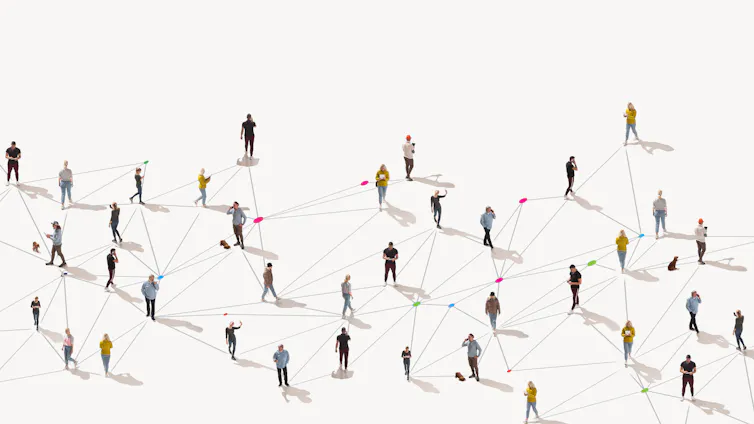
Aerial view of crowd people connected by lines
Language has limits.
Master1305/Shutterstock

From diagnosis to paying attention

Clinical diagnosis remains necessary because it enables access to support and services. But diagnosis alone may not fully capture how autistic people experience and communicate their needs.

We suggest a shift in emphasis. Rather than asking, “What is wrong with this person?” we may ask, “How can we pay attention to this person?”

Paying attention means taking feeling seriously as a way of knowing and recognising that language has limits. Research by Lou and colleagues has found that when spoken language is not available or not sufficient, other forms of interaction – such as art, play, care and simply being with others – can become more meaningful. These forms of communication are often harder to observe or measure than language, which may explain why they have received less attention in traditional research.

But they are fundamental to how many people, autistic or not, experience connection and understanding. Recognising this has practical implications. It means that decisions about education, support and policy are shaped by how autistic people actually experience the world.

In schools, this could lead to better identification of barriers and more responsive teaching practices. In policy, it could inform more effective approaches to special educational needs provision, diagnosis and employment support.

More broadly, it suggests that expanding how we understand communication could benefit everyone. All of us – regardless of whether we are autistic – have experiences that are difficult to express in words.


Read more:
Why it’s time to rethink the notion of an autism ‘spectrum’


The concept of the autism spectrum was originally intended to reflect diversity. But if it continues to rely on narrow assumptions about communication and knowledge, it may not fully capture that diversity in practice. Our work is part of a growing area of research exploring how to better recognise different forms of expression and understanding, including those that fall outside conventional definitions of language.

Taking these forms seriously does not mean abandoning science. It means broadening what we consider to be valid evidence, and who we recognise as knowledgeable about autistic experience. If we do this, we may find that approaches designed to support autistic people can support many others too.

The Conversation

Lou Harvey has received funding from the UK Arts and Humanities Research Council, the former Higher Education Funding Council for England, and the Society for Research into Higher Education.

Chris Bailey received academic funding from the UK Literacy Association (UKLA) to to total of £1400 for the Ruling Passions project that is mentioned in this article.

ref. Why understanding autism means looking beyond spoken language – two autistic researchers of communication explain – https://theconversation.com/why-understanding-autism-means-looking-beyond-spoken-language-two-autistic-researchers-of-communication-explain-278633

How school grades can affect mental health – particularly for girls

Source: The Conversation – UK – By Anna Linder, Researcher in Health Economics, Lund University

LightField Studios/Shutterstock

Schools increasingly rely on testing, grading and performance accountability. In England, Ofsted inspections and school league tables sharpen the focus on measurable performance. Similar developments have taken place in Sweden, where repeated reforms have introduced earlier and more detailed assessments.

Performance-driven school environments shape young people’s wellbeing. Yet despite frequent reforms to evaluation systems, their psychological consequences rarely take centre stage in policy debates.

Our new study connects these trends with rising youth mental health issues. Our research shows that earlier and more formal grading can increase clinically diagnosed mental health problems, particularly among girls.

Our research examined a Swedish reform introduced in 2012 that moved the start of formal grading from grade eight (around age 14) to grade six (around age 12). This meant official grades and clearer signals of relative performance arrived two years earlier than before.

To estimate the effects, we compared children born just before and just after the reform cut-off. Because exposure depended strictly on date of birth, students on either side were similar in background but differed in whether they received earlier grades. We also accounted for certain underlying trends across this time period, such as an overall increase in mental health diagnoses over time. Comparing cohorts in this way allows us to isolate whether earlier grading itself led to changes in mental health diagnoses.

Our analysis draws on nationwide linked education and health registers covering more than 520,000 children born between July 1992 and June 2000. We examined psychiatric diagnoses recorded in outpatient and inpatient care during the year students entered grade nine (the end of lower-secondary school).

Earlier grades affect girls’ mental health

Earlier grading increased diagnoses of depression and anxiety among girls, with the largest effects among girls whose academic achievement ranged from low to average. Effects for boys were smaller and less consistent.

Among girls, the share diagnosed with depression or anxiety increased from 1.4% to 2.0%. While the absolute change (0.6 percentage points) may appear modest, psychiatric diagnoses at this age are relatively uncommon. The change represents roughly a two-fifths increase compared with before the reform.

A young teen girl with her face in her hands being comforted by adults
Depression and anxiety were shown to be more common in girls who received grades at earlier ages.
SeventyFour/Shutterstock

Our findings point to academic pressure and social comparison as likely reasons for this increase in mental health problems. Formal grades make performance more visible at a younger age, clearly signalling how a child ranks among their peers. At a stage when young people’s understanding of themselves is still developing, this may heighten their sensitivity to comparison and perceived failure.

One plausible explanation is greater sensitivity to performance feedback among girls. In earlier research, we found that when girls received grades more favourable than their measured performance would predict, their mental health improved. This suggests they may be particularly responsive to evaluative feedback, and therefore more vulnerable when grading intensifies.

Wider consequences

Our findings indicate that academic pressure may contribute to gender gaps in adolescent mental health. If girls are more likely to internalise the pressure and stress of academic evaluation, earlier grading may unintentionally widen the well-documented existing gender disparities in mental health.


Read more:
Making sense of the widening gender mental health gap: what teenage girls told us


We do not argue that grading is inherently harmful. Grades can motivate, guide learning and inform parents and teachers. But timing and design matter. When evaluation becomes more formal earlier in schooling, unintended psychological costs can emerge alongside academic goals.

As grading systems continue to evolve, questions of timing and intensity deserve careful thought. Schools are not only institutions for measuring performance, but environments where young people form their identities. Designing education systems that support both learning and healthy development requires taking both aims seriously.

Education policy inevitably involves trade-offs. Systems designed to measure and raise standards also shape students’ daily experience. Our findings suggest that when policymakers move formal evaluation to younger ages, they should weigh mental health impacts alongside academic benefits.

Accountability policies should consider psychological effects. This does not mean abandoning grading, but evaluation systems should be sensitive to the development stage of students and accompanied by relevant support that helps students interpret feedback constructively.

Students respond differently to evaluation. Reforms that work well for some may create strain for others, particularly those already vulnerable to performance pressure. Monitoring wellbeing alongside academic outcomes can help identify unintended consequences early.

The Conversation

Anna Linder receives funding from the Swedish Research Council for Health, Working Life and Welfare and the Public Health Agency of Sweden.

Gawain Heckley currently receives funding from Swedish Research Council , Swedish Research Council for Health, Working Life and Welfare and Jan Wallanders och Tom Hedelius stiftelse.

Ulf Gerdtham receives funding from Swedish Council for Working Life and Social Research.

ref. How school grades can affect mental health – particularly for girls – https://theconversation.com/how-school-grades-can-affect-mental-health-particularly-for-girls-277907