Is Israel committing genocide in Gaza? We asked 5 legal and genocide experts how to interpret the violence

Source: The Conversation – Global Perspectives – By Melanie O’Brien, Associate Professor in International Law, The University of Western Australia

In January 2024, the International Court of Justice (ICJ) issued a provisional ruling in a case brought by South Africa against Israel, alleging genocide in Gaza. The court found Palestinians have a “plausible” right to protection from genocide in Gaza and that Israel must take all measures to prevent a genocide from occurring.

Since then, United Nations experts and human rights groups have concluded that Israel is committing genocide in Gaza. In recent weeks, others have done the same, including leading genocide scholars and two Israeli human rights groups.

While the ICJ case may take years to play out, we asked five Australian experts in international law and genocide studies what constitutes a genocide, what the legal standard is, and whether the evidence, in their view, shows one is occurring.

The Conversation

Melanie O’Brien is the president of the International Association of Genocide Scholars (IAGS). This piece does not represent the view of IAGS.

Ben Saul is the United Nations special rapporteur on human rights and counter-terrorism, an independent expert appointed by consensus of the member states of the United Nations Human Rights Council.

Eyal Mayroz served as a counterterrorism specialist with the Israeli Defence Forces in the 1980s.

Paul James and Shannon Bosch do not work for, consult, own shares in or receive funding from any company or organisation that would benefit from this article, and have disclosed no relevant affiliations beyond their academic appointment.

ref. Is Israel committing genocide in Gaza? We asked 5 legal and genocide experts how to interpret the violence – https://theconversation.com/is-israel-committing-genocide-in-gaza-we-asked-5-legal-and-genocide-experts-how-to-interpret-the-violence-262688

Climate-fuelled El Niño events are devastating butterflies, beetles and other tropical insects

Source: The Conversation – Global Perspectives – By Nigel Stork, Emeritus Professor in the Centre for Planetary Health and Food Security, Griffith University

Insects are arguably the most important animals on the planet. Their variety is unparalleled in nature, and they carry out vital tasks such as pollinating plants and providing food for other animals.

But all is not well in the insect world. Research over the last few years has shown sustained declines in insect species and numbers. It appeared Earth was witnessing a global-scale crash in insects – and climate change was partly to blame.

The evidence was mostly confined to temperate regions in the Northern Hemisphere. But our new research – published today in Nature – shows it’s also happening in the tropics, where most of Earth’s species live.

We found significant biodiversity loss in spiders, as well as insects including butterflies and beetles. The likely culprit is long-term changes to the El Niño cycle, caused by climate change. It suggests the life-support system underpinning the tropics is at serious risk in a warmer world.

Uncovering the effects of El Niño

El Niños vary massively across tropical regions, but are often characterised by hot and dry conditions (as opposed to the cool and moist conditions of La Niña).

Alternating El Niño and La Niña events can naturally cause many insects to come and go. That’s due to changes in temperature and moisture levels which can affect insect breeding, life cycles and behaviour.

But as climate change worsens, strong El Niño events are becoming more frequent and intense. We wanted to know how this affected insects in tropical regions.

To find out, we examined 80 existing studies of insects in relatively pristine tropical forests – mostly from the tropical Americas. We linked that data to measures of strength in El Niño and La Niña through time.

We found cause for concern. El Niño events appear to cause a rapid decline in both insect biodiversity, and the ecological tasks they perform. These trends were persistent and highly unnatural.

Several types of insects have become more rare in the tropical Americas over recent decades. These included butterflies, beetles and “true bugs” – insects from the order Hemiptera distinguished by two sets of wings and piercing mouthparts used to feed on plants. Butterflies in tropical Asia were also declining.

The strongest declines were in rare insects that would naturally decrease during El Niño. These insect populations would usually bounce back in a La Niña. But climate-fuelled El Niños are causing many populations to fall so far, they cannot recover.

Drastic changes to forests

Our findings suggest the diversity of tropical insects could be chipped away with every El Niño event. This is not just a problem for the species themselves, but other parts of the ecosystem that depend on them.

Our research also involved modelling the decomposition and consumption of leaves by insects across the tropical Americas, Asia and Africa. Both processes are crucial to the health of tropical forests.

Decomposition fluctuated in line with the abundance of termites, which are probably the most important decomposers in the tropics. And worryingly, the amount of live leaves consumed by insects appears to have crashed in recent decades. This correlated strongly with the crash in butterflies and beetles.

These drastic changes may have implications for food webs and other organisms that rely on insects.

a black beetle
The diversity of tropical insects could be chipped away with every El Niño event.
Li Ajang/Shtterstock

A difficult future ahead

Our research could not take in the huge diversity of tropical insects – most of which have not yet been formally described by scientists. But it points to a difficult future for insects – and their habitats – as climate change worsens.

Little data exists on insect numbers in Australia’s Wet Tropics, in Queensland. However, monitoring work is underway at facilities such as the Daintree Rainforest Observatory. Such projects will help us better understand changes in insect biodiversity under climate change.

More research is also needed at other locations around the world. Given the fundamental role insects play in supporting life on Earth, the urgency of this work cannot be overstated.

The Conversation

Nigel Stork receives funding from Australian Research Council grant DP200103100

Adam Sharp receives funding from Hong Kong University Grants Committee Collaborative Research Fund (C7048-22GF).

ref. Climate-fuelled El Niño events are devastating butterflies, beetles and other tropical insects – https://theconversation.com/climate-fuelled-el-nino-events-are-devastating-butterflies-beetles-and-other-tropical-insects-262625

Why Sydney Sweeney’s American Eagle campaign is part of a wider cultural backlash

Source: The Conversation – Canada – By Meaghan Furlano, PhD Student, Sociology, Western University

Actress Sydney Sweeney is once again embroiled in controversy. This time the debate isn’t centred around Sweeney selling soaps infused with her bathwater or posting pictures of MAGA-inspired red caps. Instead, the Euphoria star is making rounds for her role in a contentious ad campaign with American Eagle Outfitters.

While the entire campaign sparked debate online, one particular ad has drawn especially intense criticism.

In it, Sweeney lounges artfully on a chaise while fastening a pair of American Eagle jeans. In a breathy voiceover, she says, “Genes are passed down from parents to offspring, often determining traits like hair colour, personality and even eye colour.”

As the camera slowly pans upward and she turns her eyes toward the viewer, Sweeney concludes, “My jeans are blue.”

Commentators and social media users have argued the campaign serves as a conservative dog whistle, conveying thinly veiled support for white supremacy and eugenics.

Sydney Sweeney in the most controversial American Eagle ad.

American Eagle released a statement defending the ad on August 1, writing “‘Sydney Sweeney Has Great Jeans’ is and always was about the jeans,” on Instagram.

Innocent marketing or intentional dog whistle?

Eugenics is a discredited ideology rooted in white supremacy and scientific racism. It promotes the false belief that racial groupings are biologically determined, and that some groups are genetically superior to others and should selectively reproduce to preserve their “good genes.”

Historically, the end goal of eugenics has been to eliminate so-called “bad genes” — often associated with non-white, disabled, poor or otherwise marginalized communities — so social elites can maintain their dominance.

Fashion advertising playing on eugenic themes has a long history. Commentators have gestured to similarities between the Sweeney ad and the infamous 1980s campaign for Calvin Klein featuring a then-15-year-old Brooke Shields, who rolls around in her Calvins while talking about genetic codes, evolution and survival of the fittest — language evocative of eugenic thinking.

The American Eagle campaign appears to be a direct homage to the Calvin campaign, but is rhetoric reminiscent of eugenics really something we want to reference in marketing?

The return of ‘traditional’ femininity

The American Eagle campaign is pointedly titled “Sydney Sweeney Has Great Jeans,” with “jeans” sometimes swapped out for “genes.” It’s clearly meant to be tongue-in-cheek.

But this is not just a harmless ad. If the campaign didn’t reflect broader cultural tensions, neither U.S. President Donald Trump nor Sen. Ted Cruz would have commented on it.

“The crazy Left has come out against beautiful women,” Cruz wrote in a tweet about the controversy. A right-wing media outlet went further, claiming body positivity was bringing “the giggling blonde with an amazing rack … to the brink of extinction.”

With its celebration of Sweeney’s conventionally attractive appearance, American Eagle has reintroduced the “traditional” feminine figure loudly and proudly. In this sense, the campaign symbolizes a changing of the cultural tides: out with body positivity, in with the “amazing rack” and all it signifies.

In our present cultural moment saturated with conservative messaging, Sweeney — a young, thin, white and sexualized Hollywood star — is hardly a surprising figure to hear extolling the quality of her “genes” (sorry, jeans).


Read more:
Trad wives hearken back to an imagined past of white Christian womanhood


From the rise of tradwife influencers and SkinnyTokers to the ritualized feminine performance of “morning shedders,” the campaign lands squarely within a broader revival of regressive feminine ideals wrapped in aspirational, white-washed beauty.

Exorcising self-love from the corporate agenda

As a feminist media scholar interested in the intersection of pop culture and the far right, my ongoing research explores the rise of anti-feminism and right-wing politics. We are no longer in the age of popular feminism, when corporations eagerly appropriated feminist rhetoric to sell their products and services.

In its place, brands are reverting to traditional imagery: thin, white women styled for the male gaze — a term referring to the objectification and sexualization of women in popular media, from film and television to fashion ads. It’s a strategy that has long worked for them, and it’s one they’re glad is back in vogue.

The aesthetic regression encapsulated in the Sweeney American Eagle campaign reveals what many critics suspected all along: the corporate embrace of feminism was never sincere.


Read more:
How neoliberalism colonised feminism – and what you can do about it


Campaigns touting “love your body,” “empowerment,” and “confidence” in the late 2010s and early 2020s were intentionally designed to court progressive consumers and profit from the popularity of feminism. The core business model of these corporations — sell insecurities and reap profits for shareholders — had not fundamentally changed.

If anything, as other scholars argue, self-love marketing encouraged women to not only upgrade their bodies but also their minds. It was no longer culturally acceptable that women look good; they had to also feel good about their bodies. That standard required more work and, of course, products, which brands happily supplied.

Spurred on by an increasingly conservative political climate, many brands are no longer shy about expressing their motives. Thin is back in and whiteness is re-associated with rightness.

Living through the cultural backlash

As I have argued elsewhere, we are currently living in backlash times. In her 1991 book, journalist Susan Faludi wrote that backlash is “a recurring phenomenon” that “returns every time women begin to make some headway toward equality.”

Although many news articles are describing a consumer “backlash” to the Sweeney American Eagle campaign, I’m referring to something different: the rise of a cultural backlash against progressive social movements and politics. This backlash is currently taking shape across political, legal and economic domains, and it goes beyond a single ad.

Today’s current backlash is a reaction to popular feminism, Black Lives Matter, DEI and incisive systemic analyses found in feminist, anti-racist and queer scholarship and activism. The Sweeney campaign is just one expression of this larger pattern.

Faludi shrewdly observed that “images of the restrained women line the walls of the popular culture’s gallery” during periods of backlash. That insight feels newly relevant.

Just days after American Eagle dropped its campaign, Kim Kardashian’s company SKIMS released their “sculpt face wraps” — a product designed to give users a more “sculpted” jawline. On the SKIMS website, product images show women ensnared in products that resemble Hannibal Lecter’s famous mask or a surgical brace. They are disconcerting, to say the least.

If Faludi has taught us anything, it’s that a trend of images showing women restrained — physically or to rigidly defined roles — are not only harbingers of a menacing future, but are indicative of a chilling present that we must recognize to resist.

The Conversation

Meaghan Furlano does not work for, consult, own shares in or receive funding from any company or organisation that would benefit from this article, and has disclosed no relevant affiliations beyond their academic appointment.

ref. Why Sydney Sweeney’s American Eagle campaign is part of a wider cultural backlash – https://theconversation.com/why-sydney-sweeneys-american-eagle-campaign-is-part-of-a-wider-cultural-backlash-262417

Wildfire season is starting weeks earlier in California – a new study shows how climate change is driving the expansion

Source: The Conversation – USA (2) – By Gavin D. Madakumbura, Postdoctoral Researcher, University of California, Los Angeles

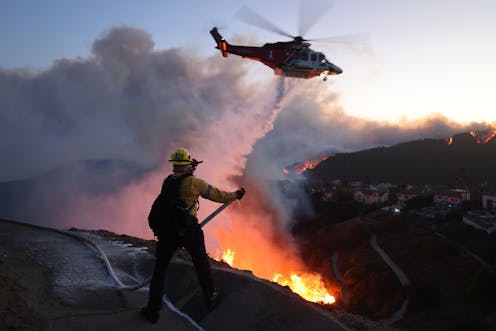
Firefighters battle in Pacific Palisades, Calif., on Jan. 7, 2025 David Swanson/AFP via Getty Images

Fire season is expanding in California, with an earlier start to wildfire activity in most of the state. In parts of the northern mountains, the season is now starting more than 10 weeks earlier than it did in the 1990s, a new study shows.

Atmospheric scientists Gavin Madakumbura and Alex Hall, two authors of the study, explain how climate warming has been driving this trend and why the trend is likely to continue.

What did your study find about how wildfire season is changing?

Over the past three decades, California has seen a trend toward more destructive wildfire seasons, with more land burned, but also an earlier start to fire season. We wanted to find out how much of a role climate change was playing in that shift to an earlier start.

We looked at hundreds of thousands of fire records from 1992 to 2020 and documented when fire season started in each region of the state as temperatures rose and vegetation dried out.

While other research has observed changes in the timing of fire season in the western U.S., we identified the drivers of this trend and quantified their effects.

The typical onset of summer fire season, which is in May or June in many regions, has shifted earlier by at least one month in most of the state since the 1990s, and by about 2½ months in some regions, including the northern mountains. Of that, we found that human-caused climate change was responsible for advancing the season between six and 46 days earlier across most of the state from 1992 to 2020.

Our results suggest that as climate warming trends continue, this pattern will likely persist, with earlier starts to fire season in the coming years. This means longer fire seasons, increasing the potential for more of the state to burn.

California typically leads the nation in the number of wildfires, as well as the cost of wildfire damage. But the results also provide some insight into the risks ahead for other fire-prone parts of North America.

What’s driving the earlier start to fire season?

There are a few big contributors to long-term changes in wildfire activity. One is how much fuel is available to burn, such as grasses and trees. Another is the increase in ignition sources, including power lines, as more people move into wildland areas. A third is how dry the fuel is, or fuel aridity.

We found that fuel aridity, which is controlled by climate conditions, had the strongest influence on year-to-year shifts in the timing of the onset of fire season. The amount of potential fuel and increase in ignition sources, while contributing to fires overall, didn’t drive the trend in earlier fires.

Year-to-year, there will always be some natural fluctuations. Some years are wet, others dry. Some years are hotter than others. In our study, we separated the natural climate variations from changes driven by human-caused climate warming.

We found that increased temperatures and vapor pressure deficit – a measure of how dry the air is – are the primary ways climate warming is shifting the timing of the onset of fire season.

Just as a warmer, drier year can lead to an earlier fire season in a single year, gradual warming and drying caused by climate change are systematically advancing the start of fire seasons. This is happening because it is increasing fuel flammability.

Why has the start to fire season shifted more in some regions than others?

The biggest shifts we’ve seen in fire season timing in California have been in the northern mountains.

In the mountains, the winter snowpack typically keeps the ground and forests wet into summer, making it harder for fires to burn. But in warmer years, when the snowpack melts earlier, the fire potential rises earlier too.

A map of California shows where fires season is starting earlier. Most of the state is starting at least 1 days per year earlier now.

Gavin Madakumbura, et al., Science Advances, 2025

Those warmer years are becoming more common. The reason climate change has a stronger impact in mountain regions is that snowpack is highly sensitive to warming. And when it melts sooner, vegetation dries out sooner.

In contrast, drier regions, such as desert ecoregions, are more sensitive to precipitation changes than to temperature changes. When assessing the influence of climate change in these areas, we mainly look at whether precipitation patterns have shifted due to climate warming. However, there is a lot of natural year-to-year variability in precipitation, and that makes it harder to identify the influence of climate change.

It’s possible that when precipitation changes driven by climate warming become strong enough, we may detect a stronger effect in these regions as well.

The Conversation

Gavin D. Madakumbura receives funding from the Gordon and Betty Moore Foundation.

Alex Hall receives funding from the NSF, DOE, NOAA, LADWP, and State of California, among other sources.

ref. Wildfire season is starting weeks earlier in California – a new study shows how climate change is driving the expansion – https://theconversation.com/wildfire-season-is-starting-weeks-earlier-in-california-a-new-study-shows-how-climate-change-is-driving-the-expansion-262666

How to talk to your friends about climate action

Source: The Conversation – UK – By Bella Zanin, Knowledge Exchange Associate, Centre for Climate Change and Social Transformations, University of Bath

DimaBerlin/Shutterstock

How often do you chat about climate change? When the weather’s been “a bit crazy”? Maybe with an estranged uncle over Christmas dinner? Recent polling reveals that over half of British adults rarely or never share their opinions about our warming planet.

Why does this matter? Because talking about climate change is one of the most important things we can do to tackle it. Conversations shape social norms, and social norms shape behaviour.

To be clear: it’s not about convincing your friends, family, neighbours or colleagues to care about climate change. Chances are they already do. It’s about letting them know you care too – that it’s normal to care, and typical to take action.

Talking about climate change is how we break the taboo, build a sense of unity, inspire hope and kickstart action. And it’s easier than you might think.

The analysis by insights platform Climate Barometer finds that 56% of Brits say they “rarely” or “never” share their opinions about climate change in day-to-day life. Its survey of 2,796 British adults, conducted in April 2025, revealed that only one in ten regularly express their climate views. This “climate silence” persists even among supporters of environmental policies.

Other studies paint a slightly chattier picture. In Ireland, 33% of people reportedly discuss climate change with family and friends “often”, while 39% of respondents to the Scottish Climate Survey had spoken about climate change at least weekly in the last month.

A similar pattern emerges in sport. Research by my colleagues at the Centre for Climate Change and Social Transformations found one-third of UK football fans speak to their friends, family and colleagues “often” or “very often” about climate change – although they are much less likely to speak to other football fans and strangers about the topic.

While climate chatter varies with things like age, social grade, education and political affiliation, generally people aren’t talking about climate change very often, especially when it involves sharing their opinion.

Yet numerous surveys show that most people are worried about rising global temperatures, willing to make sustainable lifestyle swaps, and support ambitious government climate policy. The problem is, many of us don’t know that others are feeling and behaving this way.

two women chatting outside in park
People care more about climate change than some might think.
Bricolage/Shutterstock

Polling demonstrates that 89% of people globally want stronger political action on climate issues, with eight in ten being in favour of taxing oil and gas corporations to pay for climate damages. In Britain, the public support most net zero policies, despite media reports of a shattered consensus, and want more of their energy produced by renewables.

They are acting, too. Recently, over 5,000 people travelled to Westminster for one of the decade’s largest climate lobbies. And earlier this summer, over 110,000 UK residents urged the government to ban fossil fuel advertising. Heat pump installations, electric car sales and consumption of meat-free meals are all on the rise too.

However, if we don’t talk to each other about climate issues – and climate lobbies don’t make front-page news – it’s easy to mistakenly assume that others aren’t willing to act on climate change.

This cognitive error – repeatedly making incorrect assumptions about other people’s beliefs and behaviour – is called “pluralistic ignorance”. This phenomenon, also known as “perception gaps”, is something that politicians unfortunately fall victim to as well, because they consistently underestimate public support for net zero policies.

Social influence is incredibly powerful. If you’ve ever laughed at a joke that everyone else was laughing at even though you didn’t understand it, you’ll know this to be true. People don’t like deviating from social norms. So, if we think the norm is not to care about climate change, we won’t take collective climate action.

Talking is the antidote to this “spiral of silence” – it makes climate action socially acceptable, sparking change beyond our own lives. Indeed, just knowing someone with a heat pump makes people more likely to consider installing one. So, chatting can be an effective form of climate action.

How to talk about climate change

You might be hesitant to chat about climate change. But luckily, research shows you don’t need to be an expert or get political to have effective climate conversations.

In fact, you could be the best climate messenger for the people in your life. We tend to trust information from our friends and family, and more readily accept advice from those with common interests – as researchers investigating how to encourage meat-eaters to reduce their meat intake discovered.

There’s little to be gained from discussing climate change with climate deniers, because people with strong views tend to dismiss information that challenges their beliefs. Instead, talk to the majority of people who are worried about climate change, but don’t know what to do about it.

Chatting to your mates is a good place to start: you probably already have a trusting relationship and shared interests. You could also approach your MP or local councillor to call for stronger policy action – our academic review and interviews with MPs show that voters’ views influence politicians’ engagement with climate change.

If you’re wondering how to begin a climate conversation, start by finding some common ground. Find a value or interest that you and your conversation partner share and explore how it relates to climate change. It can be as simple as asking a foodie friend: “I’m really enjoying cooking more veggie meals – have you got any good recipes?”

Climate framings that tend to unite rather than divide include improving health, benefiting the local community, protecting future generations, achieving balance with nature and avoiding waste. Your experience of climate impacts (hot days, storms, flooding) can also be a good bridging topic – Brits love talking about the weather.

Chatting about climate change is one of the most powerful (and overlooked) climate solutions. It normalises caring, boosts hope and catalyses action. You’re an expert on your own experience of climate impacts and solutions. So why not share it? Ask a question. Start a conversation. You never know who you might inspire.


Don’t have time to read about climate change as much as you’d like?

Get a weekly roundup in your inbox instead. Every Wednesday, The Conversation’s environment editor writes Imagine, a short email that goes a little deeper into just one climate issue. Join the 45,000+ readers who’ve subscribed so far.


The Conversation

Bella Zanin receives funding from The Economic & Social Research Council.

ref. How to talk to your friends about climate action – https://theconversation.com/how-to-talk-to-your-friends-about-climate-action-261023

We fed people a milkshake with 130g of fat to see what it did to their brains – here’s what we learned

Source: The Conversation – UK – By Chris Marley, Senior Lecturer in Exercise Physiology, University of South Wales

An enormous milkshake BrittanyD/Shutterstock

A greasy takeaway may seem like an innocent Friday night indulgence. But our recent research suggests even a single high-fat meal could impair blood flow to the brain, potentially increasing the risk of stroke and dementia.

Dietary fat is an important part of our diet. It provides us with a concentrated source of energy, transports vitamins and when stored in the body, protects our organs and helps keep us warm. The two main types of fat that we consume are saturated and unsaturated (monounsaturated and polyunsaturated), which are differentiated by their chemical composition.

But these fats have different effects on our body. For example, it is well established that eating a meal that is high in saturated fat, such as that self-indulgent Friday night takeaway pizza, can be bad for our blood vessels and heart health. And these effects are not simply confined to the heart.

The brain has limited energy stores, which means it is heavily reliant on a continuous supply of blood delivering oxygen and glucose to maintain normal function.

One of the ways the body maintains this supply is through a process known as “dynamic cerebral autoregulation”. This process ensures that blood flow to the brain remains stable despite everyday changes in blood pressure, such as standing up and exercising. It’s like having shock absorbers that help keep our brains cool under pressure.

But when this process is impaired, those swings in blood pressure become harder to manage. That can mean brief episodes of too little or too much blood reaching the brain. Over time, this increases the risk of developing conditions like stroke and dementia.

What role might diet play?

After eating a meal high in saturated fat, levels of fat in the blood rise and peak after around four hours. At the same time, blood vessels become stiffer and lose their ability to relax and expand. This restricts blood flow around the body. But little is known about what happens to the brain during this time and how well its blood supply is protected.

To address this for the first time, we recruited 20 young men between the ages of 18 and 35, and 21 men between 60 and 80. We measured how well blood vessels linked to heart and brain health worked before, and four hours following, consumption of a meal high in saturated fat.

We assessed how well a blood vessel in the arm could open up in response to increased blood flow to obtain an indication of heart health. This is a method known as “flow-mediated dilatation”.

To evaluate how well blood vessels in the brain could cope with swings in blood pressure, our participants performed body-weight squats. We used ultrasound to determine how well blood flowed through vessels during both methods.

The test meal was a milkshake, which we called “the brain bomb” because it consisted mostly of heavy whipping cream. The drink contained 1,362 calories and 130g of fat, mimicking the fat load of a fast-food takeaway.

Our findings confirmed previous research that has shown that a high-fat meal impairs the ability of the blood vessels linked to heart health to open in both young and old participants. These impairments reduced the brain’s ability to buffer changes in blood pressure. This was more pronounced (by about 10%) in the older adults, suggesting that older brains may be more vulnerable to the effects of the meal.

Although we didn’t directly test for the long-term effects of a high-fat meal on mental functioning in this study, we have previously shown that such a meal increases free radicals (unstable, cell-damaging molecules) and decreases nitric oxide (molecules that help blood vessels relax and open up to transport oxygen and glucose around the body).

This may explain the reduced blood flow regulation we observed in our recent study.

This has important clinical implications. While an occasional takeaway is unlikely to cause harm on its own, our results suggest that even one fatty meal has an immediate effect on the body.

Our study highlights the importance of consuming a diet that is low in saturated fat to protect not only our heart health, but also our brain health. This is particularly important for older adults whose brains appear to be more vulnerable to the effects of such a meal and are already at increased risk of stroke and neurodegenerative diseases.

The NHS recommendeds that men consume no more than 30g of saturated fat a day, while women should consume no more than 20g. Yet many of us routinely exceed that, particularly during weekend takeaways, pub lunches or fast-food splurges.

What’s more, we may spend much of our waking lives in a post-meal state. This period, known as “post-prandial lipaemia”, is when fat levels are elevated, and when the body, it seems, may be most at risk.

Food for thought

There’s still so much more we need to learn about this topic.

Public health guidance recommends swapping saturated fats for polyunsaturated ones. These are found in foods like oily fish, walnuts and seeds, which are associated with better heart and brain health over the long term. But we don’t yet know how the brain responds to a single meal that is high in polyunsaturated fat.

Nor do we know how the female brain responds to a high-fat meal. This is a crucial gap in our knowledge since women face a greater risk of stroke and dementia in later life compared to men.

Our study offers a timely reminder that diet doesn’t just shape our long-term health. It also affects our body and brain in real time. And as we’re learning, when it comes to protecting brain health, every meal may count.

The Conversation

D.M.B. is supported by a Royal Society Wolfson Research Fellowship (Grant No. WM170007). D.M.B. is Editor-in-Chief of Experimental Physiology, Chair of the Life Sciences Working Group, member of the Human Spaceflight and Exploration Science Advisory Committee to the European Space Agency, member of the Space Exploration Advisory Committee to the UK and Swedish National Space Agencies and member of the National Cardiovascular Network for Wales and South-East Wales Vascular Network. D.M.B. is also affiliated to Bexorg, Inc. (USA) focused on the technological development of novel biomarkers of cerebral bioenergetic function and structural damage in humans.

Chris Marley does not work for, consult, own shares in or receive funding from any company or organisation that would benefit from this article, and has disclosed no relevant affiliations beyond their academic appointment.

ref. We fed people a milkshake with 130g of fat to see what it did to their brains – here’s what we learned – https://theconversation.com/we-fed-people-a-milkshake-with-130g-of-fat-to-see-what-it-did-to-their-brains-heres-what-we-learned-259961

China’s increased military might gives it new weapon in challenging global order

Source: The Conversation – UK – By Tom Harper, Lecturer in International Relations, University of East London

Chinese weapons are starting to show up in the world’s biggest conflict zones, underscoring its technological advancement and investment in this area.

In the 1990s and 2000s, Chinese weapons systems and military equipment were seen as being little more than imitations of old Russian or even Soviet systems. China was largely reliant on exports from Moscow and lacked the capacity to create its own systems.

However, with China’s recent economic development and technological growth, state-run Chinese firms are now increasingly significant military players. Reports suggest that China now has significantly more advanced weapons systems. An example of this is a J-20 fighter flying seemingly undetected through Tsushima Strait in June 2025, in range of US, Japanese and South Korean radar systems.

As conflicts, including the war in Ukraine, are increasingly dominated by drone warfare, China’s drone technology has become more sophisticated. It has also made advances in developing hypersonic missiles and stealth technology.

China’s recent moves in the Pacific show off its military power, most recently its unannounced naval exercises off the coast of Australia. The exercise caused significant disruption to flights in the Tasman Sea. And China’s fleet sailed close to sensitive military sites in Australia including the Amberley airbase, which hosts the US’s B-2 stealth bomber fleet. This also shows how bold China has become, as well as illustrating how sensitive assets are in striking range of China’s forces.

Latest Chinese weaponry

Chinese weapons systems were in action in the Indo-Pakistani conflict in June. Pakistan used several Chinese-made J-10C fighters to shoot down several Indian jets, most notably the French-made Rafale fighter.

The Asian conflict sparked interest in the Chinese jet, with Egypt and Nigeria now showing interest in buying the J-10. A year earlier at the Zhuhai airshow in China, several Middle Eastern nations, including the UAE, made significant purchases of Chinese systems, following up earlier purchases of Chinese drones and fighter jets.

China’s J-20 jets in action.

Chinese military companies now may have also found another potential client – Iran. Several Iranian military officials were recently photographed in the cockpit of a J-10 at the Zhuhai airshow.

The history of why China has invested significantly in military hardware is significant. Chinese military weaknesses were highlighted during the Gulf war and the third Taiwan Strait crisis in 1996. This saw China conduct missile tests in the Taiwan Strait as a signal to Taipei, which was seen as moving towards independence.

Washington deployed two carrier groups in response, consisting of two aircraft carriers and a large number of escorts. These significantly outclassed China’s ships, with more firepower and more advanced technology. At that time, Beijing was dependent on Soviet-made equipment. Its limitations were highlighted by the Chinese navy’s inability to detect US submarines in the Taiwan Strait.

The need to upgrade its military led to a continuous 10% increase in the Chinese defence budget, as well as widespread military reforms. These occurred under Jiang Zemin, chairman of the Central Military Commission (the supreme military body for the Chinese Communist Party) from 1989 to 2004, and president of China from 1993 to 2003. These changes laid the foundations for China’s modernised military systems today.

Technological power

China’s military modernisation has also been representative of its wider investment in technology. With some Chinese technology, such as AI chatbot DeepSeek, now challenging western domination.

Scholars have long argued that economic power leads to greater military power and a greater global role.

With the conflicts in Ukraine, south Asia, and the Middle East showing the limitations of more established European and Russian hardware, there are growing opportunities for Chinese weapons technology. It’s also likely that Chinese military systems will find customers among countries that are not on Donald Trump’s list of favoured nations, such as Iran. Should Iran be able to equip itself with Chinese systems, it will be better placed to go head-to-head with Israel.

All of these military advancements have given Beijing greater confidence as well as making the strategic position of the US and its allies in Asia more precarious. While the J-20 demonstrated the vulnerability of the first island chain, (a string of strategically important islands in east Asia) the latest innovation, the J-36, could reshape aerial warfare in the region. Integrated with AI and linked with drone swarms, the system has the potential to serve as a flying server, creating an integrated system not unlike the one recently used by Pakistan, but with even more advanced technologies.

All of these military manoeuvres show how China is becoming a significant player in global conflicts, and how this may give it more strength to challenge the current world order.

The Conversation

Tom Harper does not work for, consult, own shares in or receive funding from any company or organisation that would benefit from this article, and has disclosed no relevant affiliations beyond their academic appointment.

ref. China’s increased military might gives it new weapon in challenging global order – https://theconversation.com/chinas-increased-military-might-gives-it-new-weapon-in-challenging-global-order-262731

A parents’ guide to keeping kids safe online in the summer holidays

Source: The Conversation – UK – By Michelle McManus, Professor of Safeguarding and Violence Prevention, Co-Director of the Institute for Children’s Futures, Manchester Metropolitan University

aerophoto/Shutterstock

Parenting over the summer holidays, especially when juggling work and childcare, comes with significant challenges. One of those is screen time and staying safe online.

Children’s time online has the potential to soar in the summer, and when you’re doing your best to work from home with the kids around, it’s pretty difficult to monitor what they’re doing on the tablet or TV. Devices help us get through the day, but they also open the door to risks we may not fully see.

I get it because I live it. I’m a safeguarding expert who researches child online safety, and I’m also the parent of two children currently on their school summer holidays.

According to a 2025 Ofcom report on child media use, over half (55%) of under-13s are already using social media, although many of these apps – such as TikTok, Snapchat and Instagram – have a 13+ age limit.

Among older children, around one in five (21%) of 13- to 17-year-olds are now livestreaming their own videos, adding a further layer of visibility and vulnerability. Around 30% of children aged between 13 and 17 couldn’t correctly identify a fake social media profile.

So how do we keep kids safe online this summer without becoming full-time tech experts? Here are four real-life scenarios and some practical ways to stay ahead.

You’re working from home… and they’re on YouTube

You finally have 15 quiet minutes to answer that backlog of emails. Meanwhile, your child is watching YouTube in the next room.

Even with the best intentions, YouTube’s autoplay and content suggestions can lead children down unexpected rabbit holes. According to Ofcom, YouTube is the most-watched online platform for children aged three to 17 – and therefore likely to be one of the first platforms where they may come across unsafe or confusing content.

Use YouTube Kids for younger children, and set restricted mode on regular YouTube for older ones. Turn off autoplay, which automatically plays a new video after the one you chose finishes, and check the watch history regularly.

Watch a few videos with them when you have a moment, and make it routine to ask: “What’s the funniest (or weirdest, or most interesting) video you watched today?” Openness beats surveillance every time.

Even among younger children, Ofcom’s data shows that social media is often used unsupervised, highlighting the importance of settings, filters and shared conversations about what they’re watching.

Your kids’ friends come over, and bring their phones

You might have set your own digital rules at home: no Snapchat or TikTok yet, for instance. Then a friend visits and pulls out their phone, casually opening apps your child isn’t allowed to use.

This kind of peer-led digital exposure is a challenge for parents, especially when visiting devices come with open access and fewer restrictions. Establish clear and simple house rules that are easy to apply to all devices, such as “No phones upstairs”. Limiting where children use their devices is helpful because it encourages openness and reduces the risk of hidden or unsupervised activity.

Talk with your child about why these rules matter: they might encounter age-inappropriate content, for instance. Make communal areas like the living room or kitchen tech-visible zones: places where screens are used in plain sight. This helps normalise check-ins and casual supervision, so it feels natural rather than intrusive.

What matters most is that children feel safe talking to you when something doesn’t feel right, whether it’s their phone or someone else’s.

“Everyone’s on Snapchat – why can’t I be?”

This is the classic peer-pressure moment. Your child tells you they’re the only one without a particular app and they just want to stay in touch with friends over the holidays.

This exact situation came up in our household. My daughter told me all her friends were using Snapchat, and she didn’t want to feel left out. Instead of simply saying no, I invited her to do some research first. She wrote a short summary explaining why she wanted the app, what the benefits were for her, what the potential dangers were and how she would reduce those risks.

She took the task seriously – she wanted the app! It turned into a great learning moment for both of us and gave her a sense of ownership and responsibility.

If this comes up in your household, you could try the same approach. Ask your child to present a case for any new app, including how they plan to stay safe. Discuss age limits (Snapchat is rated 13+) and why they exist.

You can say no to their request, but talk about why, and perhaps make a plan for when they can use it. If you agree, explore the app together. Review privacy settings, turn off location visibility, and look at any built-in safety tools.

When children feel informed and included in the process, they’re more likely to come to you when something doesn’t feel right.

You’re not a tech expert – and you’re worried

Let’s face it, many of us feel outpaced by the variety of new platforms. But here’s the truth: you don’t need to master every app. What matters most is creating a home culture where communication is open, boundaries are clear, and digital safety is part of everyday life, not something reserved for a crisis.

Set screen time limits early and revisit them together as your child grows. Where possible, link accounts, use family management tools or set up parental controls (even older children can benefit from some guardrails). Don’t be afraid to pick up your child’s phone and scroll through it, but with them, not behind their back. Openness builds trust.

If something feels off, talk about it. And if you’re unsure, ask for help, from schools, other parents, or one of the many expert resources available.

You don’t need to know everything. You just need to stay curious, stay involved and let your child know that if something goes wrong, you’re the first person they can turn to for support.

The Conversation

Michelle McManus has received funding from Home Office, Department for Education and National Independent Safeguarding Board Wales. She is also currently seconded as part of a Chancellor’s Fellowship at Manchester Met, with the VKPP, which is part of the National Centre for VAWG and Public Protection.

ref. A parents’ guide to keeping kids safe online in the summer holidays – https://theconversation.com/a-parents-guide-to-keeping-kids-safe-online-in-the-summer-holidays-262361

Israel’s plans for a full occupation of Gaza would pave the way for Israeli resettlement

Source: The Conversation – UK – By Leonie Fleischmann, Senior Lecturer in International Politics, City St George’s, University of London

Israeli prime minister, Benjamin Netanyahu is reportedly considering an expansion of fighting and a “full occupation of the Gaza Strip”.

There is strong opposition to the idea from within Israel’s senior military ranks, amid growing international condemnation of Israel for the increasingly dire humanitarian disaster in Gaza. Yet Netanyahu is expected to present the plan to his cabinet to capture the last areas of the strip not held by the Israeli military, including areas where the remaining hostages are believed to be being held.

A majority of Israelis want the war to end and see any remaining live hostages returned safely. But a section of the population are preparing for the very real possibility that their dreams of resettling Gaza will be realised. Netanyahu’s decision is not necessarily driven by the same motives as the would-be settlers, but the consequences on the ground may end up aligning.

This reflects similar dynamics in the history of Israeli settlement building. Based on security rationale, successive Israeli governments have set about controlling the Palestinian population.

In the wake of military conquest, settlers have moved in to establish outposts. Gradually, these outposts have become settlements as families have flooded in, whether driven by secular Zionist ideology, encouraged by cheaper properties, stirred through religious beliefs, or inspired by dreams of a better quality of life.

The Gaza Strip was first occupied by Israel at the beginning of what became known as the “six-day war”. Responding to intelligence reports that its neighbours were mobilising against it, Israel launched a series of pre-emptive strikes against Syria, Jordan and Egypt.

On June 5 1967, Israel Defense Forces (IDF) major general, Yeshayahu Gavish, commanded his troops to occupy the Gaza Strip, which was then under the control of Egypt. He did so in defiance of orders from Israel’s then defence minister, Moshe Dayan, who had warned against being “stuck with a quarter of a million Palestinians” in an area “bristled with problems … a nest of wasps”.

But once it had moved IDF troops into the Strip, the Israeli government followed a policy of breaking up Palestinian-populated areas by establishing military outposts, which then became civilian settlements.

In 1970, Israel’s then Labour government established two “Nahal settlements”. Named after the Nahal brigade, founded by Israel’s first prime minister, David Ben Gurion, these settlements were agricultural communities established by military force. By 2005, there were 21 civilian settlements in the strip, with a total estimated population of 8,600, living alongside a Palestinian population of around 1.3 million.

Map of Israeli settlements in the Gaza Strip before disengagement: May 2005.
US Central Intelligence Agency via Wikipedia

The settlers’ ideology at that stage did not include the sort of racist anti-Arab sentiments that have become prolific in the ultranationalist corners of the settler movement. But the disparities between the overpopulated Palestinian refugee camps and the flourishing Israeli settlements in the Gaza Strip – protected by IDF troops – led to growing Palestinian resentment.

Disengagement from Gaza

Things began to change with the second intifada (uprising), which erupted in 2000 and led to a reassessment of Israel’s settlement policy. Security considerations and a desire to reduce confrontations between the IDF and Palestinian civilians necessitated a new policy of separation.

The Israeli government also wanted to maintain a majority-Jewish population in areas under its control. So the idea of separating off majority Arab areas under the control of a Palestinian authority was appealing to the government of the then prime minister, Ariel Sharon.

Sharon had previously been known as the father of the settlement project. But in 2004 he ordered the evacuation of all Israeli settlements from the Gaza Strip and four settlements in the north of the West Bank, a project which was accomplished in 2005.

Ariel Sharon speaking into microphones.
Former Israeli prime minister Ariel Sharon.
Jim Wallace/Smithsonian Institution via Wikimedia Commons, CC BY-SA

The previously consistent alignment between the settler movement and the state came to an abrupt end. While the majority of Israelis supported the plan, the religious right was violently opposed.

The Jerusalem Post reported: “For Religious Zionists, who link Torah, people, and land, the state’s bulldozers felt like a theological betrayal.”

The “disengagement plan” had significant consequences on the settler movement which then fragmented. A militant racist wing emerged, which has since grown in power and influence.

After the 2022 Israeli national elections, two of the wing’s leaders, Itamar Ben-Gvir and Bezalel Smotrich, were included in Netanyahu’s cabinet. The pair have been able to use their leverage over the prime minister to influence the trajectory of the war in Gaza.

The call for renewed Jewish settlement

Since Israel began its onslaught in Gaza, settler groups have been calling for the resettlement of Gaza. These radicals go beyond the families that were evacuated in 2005. They include the Nachala settler organisation whose raison d’etre is establishing Jewish settlements to control the West Bank and Gaza.

The liberal newspaper Haaretz recently reported a Nachala-organised march by thousands of Israelis on July 30 to the borders of Gaza, calling for the settlement of areas of the northern Gaza Strip currently occupied by the IDF. Operational plans to establish settlements have been drawn up and 1,000 families have signed up to reestablish a Jewish community in Gaza.

It’s not yet clear whether Netanyahu will order the full occupation of Gaza – or whether he plans to allow the establishment of civilian settlements there. But historical precedent makes this a very real possibility.

The Conversation

Leonie Fleischmann does not work for, consult, own shares in or receive funding from any company or organisation that would benefit from this article, and has disclosed no relevant affiliations beyond their academic appointment.

ref. Israel’s plans for a full occupation of Gaza would pave the way for Israeli resettlement – https://theconversation.com/israels-plans-for-a-full-occupation-of-gaza-would-pave-the-way-for-israeli-resettlement-262723

Animal Farm at 80: George Orwell’s enduring commitment to socialist revolution

Source: The Conversation – UK – By Glenn Burgess, Professor of Early Modern History, University of Hull

During the early years of the second world war, George Orwell believed that England’s revolutionary moment had arrived. The defeat at Dunkirk had discredited the country’s ruling elite. Their bungling had left England on the verge of invasion and defeat.

To win the war and defeat fascism, a social revolution was needed, as Orwell explained in his socialist manifesto, The Lion and the Unicorn (1941). Now was the time, he argued, to turn “this war into a revolutionary war and England into a socialist democracy”.

Orwell believed this revolution, though likely to be violent, would also conserve much, setting free “the native genius of the English people”. England’s long liberal tradition would be retained and enhanced, and the revolution would be more patriotic than class-based:

From the English-speaking culture … a society of free and equal human beings will ultimately arise.

However, while Orwell never overtly abandoned his commitment to socialist revolution, he quickly came to lose heart in its imminence. He came to think that the war would defeat fascism but not totalitarianism, and that real socialism still lay a long way in the future.

In this mood, he wrote Animal Farm in the last months of 1943 and first half of 1944 – with much support and possibly substantial input from his first wife, Eileen O’Shaughnessy. August 17 2025 marks the 80th anniversary of the novel’s publication.


This article is part of Rethinking the Classics. The stories in this series offer insightful new ways to think about and interpret classic books and artworks. This is the canon – with a twist.


In September 1944, just after completing Animal Farm (it wouldn’t be published for another year), Orwell explained some of his wider purposes in a letter to the American intellectual and fellow liberal socialist, Dwight Macdonald.

The Soviet Union, Orwell thought, really did provide people with hope in a socialist future, and for that reason it would not be good to see it destroyed. But at the same time, working people in the west needed “to become disillusioned about it and to realise that they must build their own Socialist movement without Russian interference”. The success of this might then have a “regenerative influence upon Russia” itself.

Orwell, Zamyatin and Animal Farm

It was while writing Animal Farm that Orwell first learned something of substance about the Russian author Yevgeny Zamyatin and his dystopian satire, We, published in 1924.

That book became a significant influence for Nineteen Eighty-Four (1949). Though Orwell did not read We in full until late 1945, he knew a little about the book from Gleb Struve’s anthology 25 Years of Soviet Russian Literature in early 1944, and wrote to Struve to tell him it had whetted his appetite to know more about Zamyatin.

Struve’s anthology quotes a passage that Orwell would pick out as important. In it, one character declares that “our revolution was the last and there can never be another”. To which his interlocutor responds: “Just like numbers, revolutions are infinite and there can never be a final one.”

black and white photo of Orwell
George Orwell in 1943.
BNUJ

When he adapted Animal Farm for the radio in 1946, Orwell had Napoleon the pig say: “When there has been one rebellion, there can never be another.” But he must surely have had in mind the reply: “There can always be another.”

It was again to Macdonald that Orwell spelled out the implications of Animal Farm in December 1946. Though “primarily” a “satire on the Russian revolution”, Orwell was clear it had “wider application” as a denunciation of “that kind of revolution (violent, conspiratorial) that can only lead to a change of masters”. Revolutions can improve things, he wrote, but only when “the masses … know how to chuck out their leaders as soon as … they have done their job”.

Orwell had earlier written in September 1944 that “all revolutions are failures, but they are not all the same failure”. They all fail because perfection is beyond human grasp – the challenge is to fail better and in ways that improve things, as he told Macdonald:

If people think I am defending the status quo [in Animal Farm], that is … because they have grown pessimistic and assume that there is no alternative except dictatorship and or laissez faire capitalism.

Animal Farm is one of those very short and very accessible books that defy easy interpretation. Classic examples are Niccolo Machiavelli’s The Prince (1532) and Thomas More’s Utopia (1516). Though political, they are not manifestos, unlike Orwell’s The Lion and the Unicorn – that book sought to mobilise people behind a clear vision of an attainable better future.

Animal Farm, in contrast, is a melancholy reflection on the corruption of revolution, and the need to keep looking for a better one.

Beyond the classics

As part of the Rethinking the Classics series, we’re asking our experts to recommend a book or artwork that tackles similar themes to the canonical work in question, but isn’t (yet) considered a classic itself. Here is Glenn Burgess’s suggestion:

Painting of a man in a suit
Yevgeny Zamyatin as painted by Boris Kustodiev (1923).
Wiki Commons

Orwell could not have read anything by Yevgeny Zamyatin other than his dystopian novel, We. It is not much easier for us. Little of Zamyatin’s other fiction is currently in print in English translation, apart from a very recent collection of a few stories from Alma Classics.

His two short satires of middle-class English sanctimonious hypocrisy, which Orwell would have greatly enjoyed, were once available as Islanders and the Fisher of Men. Penguin also used to publish a collection of Zamyatin’s diverse short fiction: The Dragon and Other Stories. This contains, among much else, “two tales for grown-up children” (a description that could apply to Animal Farm). One of them is a two-page story, The Church of God, which tells what happens when violent acts are used to pursue noble (in this case, holy) purposes.

Like Animal Farm, the story is a reflection on the relationship of ends to means. Zamyatin’s stories include more on this theme. He was an early supporter of the Bolsheviks, and an equally early critic of the Bolshevik revolution.


This article features references to books that have been included for editorial reasons, and may contain links to bookshop.org. If you click on one of the links and go on to buy something from bookshop.org The Conversation UK may earn a commission.


Looking for something good? Cut through the noise with a carefully curated selection of the latest releases, live events and exhibitions, straight to your inbox every fortnight, on Fridays. Sign up here.


The Conversation

Glenn Burgess does not work for, consult, own shares in or receive funding from any company or organisation that would benefit from this article, and has disclosed no relevant affiliations beyond their academic appointment.

ref. Animal Farm at 80: George Orwell’s enduring commitment to socialist revolution – https://theconversation.com/animal-farm-at-80-george-orwells-enduring-commitment-to-socialist-revolution-251952