Ukraine’s drone air war has given Zelensky additional bargaining power with Putin – new research

Source: The Conversation – UK – By Marcel Plichta, PhD Candidate in the School of International Relations, University of St Andrews

Donald Trump appears to be making another attempt to organise a three-way summit with Vladimir Putin and Ukraine’s president, Volodymyr Zelensky, to end the Russian invasion.

Putin’s reluctance to meet his Ukrainian counterpart so far has often made it appear that he doesn’t think Ukraine has enough bargaining power to enter direct negotiations. But one thing that may be helping to shift the balance in Zelensky’s favour at this stage in the war is Ukraine’s enhanced drone capability.

Ukrainian drones have made it impossible for the Russian population to isolate itself from the effects of a conflict fought mostly on Ukrainian soil. Attacks on Moscow, in particular, have caused disruptions to air travel within Russia and forced the Russian government to divert dozens of air defence systems to ensure that the capital is protected.

Kyiv’s use of long-range one-way attack (OWA) drones against Russia has done far more damage to Russia’s military and economy than had previously been predicted. Previous drone analysis suggested that the current generation were too easy for defenders to shoot down to have a strategic impact and that prior cases of drone use overstated their strategic benefits.

Unlike traditional military drones, OWA drones are designed to detonate on or above a designated target. In my new research, I analysed Ukraine’s use of these OWA drones from mid-2022 to early 2025 to research whether they can indeed have a notable strategic impact on conflict. I found that Ukraine’s OWA drone campaign was not only able to overcome Russian air defences, but that the impact of the campaign has so far had far-reaching effects, ranging from where Russia has placed its air defences to stoking fuel price rises.

Independent estimates suggest that the damage to Russian oil facilities caused by OWA drones, from late 2024 to early 2025, could have cost Russia more
than US$700 million (£516 million). Ukraine’s drone campaign has done so much damage to Russian infrastructure and economy, that it has given Ukraine’s president, Volodymyr Zelensky, a significant bargaining chip with Vladimir Putin.

Ukraine launches drone attack on Moscow.

In early 2024, Ukraine launched a large series of strikes on Russian oil
infrastructure. By April, Nato officials claimed that the strikes had temporarily halted approximately 15% of Russia’s refining capacity, caused a halt in exports and caused fuel price spikes in Russia.

Once Ukrainian drones started regularly attacking targets deep within Russia, Moscow had to respond. Putin began by moving air defence systems. For instance, in early 2023, the Russian military placed Pantsir air defence systems on Moscow rooftops to intercept OWA drones. Russia was also forced to move air defence systems to public places to reassure the public, once Ukrainian drone attacks began to hit targets near major cities.

My assessment is based on data collected from Ukrainian and international journalists as well as independent researchers who documented Ukrainian strikes and the level of damage. On the economic side, Ukrainian drones have struck dozens of oil refineries, depots, and storage facilities. Russia’s economy is heavily reliant on the fossil fuel industry, so damaging these kinds of facilities quickly increases costs and lowers state revenue.

The Russian military is also under pressure from these drone attacks. Ukraine has successfully struck airbases, long-range radars and command centres that Russia needs to continue the war. Notably, Ukraine has struck the drone factory at Yelabuga (where Russia manufactures its own OWA drones) on multiple occasions in an effort to slow its drone campaigns.

Zelensky’s bargaining power

The success of the drone campaign gives Ukrainian diplomats a strong bargaining chip. Zelensky’s calls for a ceasefire in the sky and at sea in early 2025 were partially underpinned by the threat Ukraine was able to pose.

Belarussian president Alexander Lukashenko has said that Putin wanted to pressure Ukraine to end drone attacks by appealing to the US, which indicates that the Kremlin is feeling public pressure on this front. And recently Zelensky offered Donald Trump a “mega deal” to share its drone technology and bring the US up to speed, in exchange for US weapons.

So what accounts for the unexpected impact of Ukraine’s drone use? The data indicates that while individual drones are often easy to shoot down, large numbers of long-range OWA drones attacking multiple targets are tricky to stop. This is because Russia needs to guess where Ukraine will attack and place defences accordingly.

Russia has lots of air defence systems, but it is also the largest country on earth and cannot defend everything at once. The need to pick and choose what areas of the country to defend and which to leave vulnerable creates an air defence dilemma for Russia that Ukraine has exploited.

My findings that an OWA drone campaign can impose serious costs on defenders like Russia are consequential for how other countries should organise their air defences. As the case of Ukraine shows, the fact that these drones combine long-range and relative precision means that attackers can target lots of different sites across the country and take circuitous paths around air defence to get there. These factors make it difficult for all nations to anticipate where the next attack will come from and take action in time.

This is a global problem. The relative ease of manufacturing, procuring, and proliferating OWA drones, compared to a missile means that many states and terror groups could acquire the ability to launch long-range attacks much more easily than a few years ago. Drones costs tend to be in the tens of thousands of dollars while missiles are often in the hundreds of thousands at the very least.

Countries that might not benefit from procuring OWA drones may still have to find ways to intercept hostile ones. The UK, for instance, found itself shooting down Houthi OWA drones that threatened shipping in the Red Sea. The UK development of “Dragonfire”, a ship-mounted air defence laser for the Royal Navy, was at least partially motivated by this kind of threat.

Even as Kyiv puts more effort into developing conventional missiles, OWA drones have proven too effective to ignore. For the Russian leadership, these attacks create a serious dilemma and force them to pick what parts of the country are “worth” defending. This kind of technology is altering the nature of conflict and other nations will need to take note.

The Conversation

Marcel Plichta works as an intelligence instructor for Grey Dynamics Ltd.

ref. Ukraine’s drone air war has given Zelensky additional bargaining power with Putin – new research – https://theconversation.com/ukraines-drone-air-war-has-given-zelensky-additional-bargaining-power-with-putin-new-research-260336

Transgender, nonbinary and disabled people more likely to view AI negatively, study shows

Source: The Conversation – USA – By Oliver L. Haimson, Assistant Professor of Information, University of Michigan

Transgender and nonbinary people report negative attitudes toward AI. alvaro gonzalez/Moment via Getty Images

AI seems to be well on its way to becoming pervasive. You hear rumbles of AI being used, somewhere behind the scenes, at your doctor’s office. You suspect it may have played a role in hiring decisions during your last job search. Sometimes – maybe even often – you use it yourself.

And yet, while AI now influences high-stakes decisions such as what kinds of medical care people receive, who gets hired and what news people see, these decisions are not always made equitably. Research has shown that algorithmic bias often harms marginalized groups. Facial recognition systems often misclassify transgender and nonbinary people, AI used in law enforcement can lead to the unwarranted arrest of Black people at disproportionately high rates, and algorithmic diagnostic systems can prevent disabled people from accessing necessary health care.

These inequalities raise a question: Do gender and racial minorities and disabled people have more negative attitudes toward AI than the general U.S. population?

I’m a social computing scholar who studies how marginalized people and communities use social technologies. In a new study, my colleagues Samuel Reiji Mayworm, Alexis Shore Ingber, Nazanin Andalibi and I surveyed over 700 people in the U.S., including a nationally representative sample and an intentional oversample of trans, nonbinary, disabled and racial minority individuals. We asked participants about their general attitudes toward AI: whether they believed it would improve their lives or work, whether they viewed it positively, and whether they expected to use it themselves in the future.

The results reveal a striking divide. Transgender, nonbinary and disabled participants reported, on average, significantly more negative attitudes toward AI than their cisgender and nondisabled counterparts. These results indicate that when gender minorities and disabled people are required to use AI systems, such as in workplace or health care settings, they may be doing so while harboring serious concerns or hesitations. These findings challenge the prevailing tech industry narrative that AI systems are inevitable and will benefit everyone.

Public perception plays a powerful role in shaping how AI is developed, adopted and regulated. The vision of AI as a social good falls apart if it mostly benefits those who already hold power. When people are required to use AI while simultaneously disliking or distrusting it, it can limit participation, erode trust and compound inequities.

Gender, disability and AI attitudes

Nonbinary people in our study had the most negative AI attitudes. Transgender people overall, including trans men and trans women, also expressed significantly negative AI attitudes. Among cisgender people – those whose gender identity matches the sex they were assigned at birth – women reported more negative attitudes than men, a trend echoing previous research, but our study adds an important dimension by examining nonbinary and trans attitudes as well.

Disabled participants also had significantly more negative views of AI than nondisabled participants, particularly those who are neurodivergent or have mental health conditions.

These findings are consistent with a growing body of research showing how AI systems often misclassify, perpetuate discrimination toward or otherwise harm trans and disabled people. In particular, identities that defy categorization clash with AI systems that are inherently designed to reduce complexity into rigid categories. In doing so, AI systems simplify identities and can replicate and reinforce bias and discrimination – and people notice.

A more complex picture for race

In contrast to our findings about gender and disability, we found that people of color, and Black participants in particular, held more positive views toward AI than white participants. This is a surprising and complex finding, considering that prior research has extensively documented racial bias in AI systems, from discriminatory hiring algorithms to disproportionate surveillance.

Our results do not suggest that AI is working well for Black communities. Rather, they may reflect a pragmatic or hopeful openness to technology’s potential, even in the face of harm. Future research might qualitatively examine Black individuals’ ambivalent balance of critique and optimism around AI.

a Black man wearing glasses looks at a computer screen in an office
Black participants in the study reported more positive attitudes about AI than most demographics, despite facing algorithmic bias.
Laurence Dutton/E+ via Getty Images

Policy and technology implications

If marginalized people don’t trust AI – and for good reason – what can policymakers and technology developers do?

First, provide an option for meaningful consent. This would give everyone the opportunity to decide whether and how AI is used in their lives. Meaningful consent would require employers, health care providers and other institutions to disclose when and how they are using AI and provide people with real opportunities to opt out without penalty.

Next, provide data transparency and privacy protections. These protections would help people understand where the data comes from that informs AI systems, what will happen with their data after the AI collects it, and how their data will be protected. Data privacy is especially critical for marginalized people who have already experienced algorithmic surveillance and data misuse.

Further, when building AI systems, developers can take extra steps to test and assess impacts on marginalized groups. This may involve participatory approaches involving affected communities in AI system design. If a community says no to AI, developers should be willing to listen.

Finally, I believe it’s important to recognize what negative AI attitudes among marginalized groups tell us. When people at high risk of algorithmic harm such as trans people and disabled people are also those most wary of AI, that’s an indication for AI designers, developers and policymakers to reassess their efforts. I believe that a future built on AI should account for the people the technology puts at risk.

The Conversation

Oliver L. Haimson receives funding from National Science Foundation.

ref. Transgender, nonbinary and disabled people more likely to view AI negatively, study shows – https://theconversation.com/transgender-nonbinary-and-disabled-people-more-likely-to-view-ai-negatively-study-shows-260397

Gaza isn’t the first time US officials have downplayed atrocities by American-backed regimes – genocide scholars found similar strategies used from East Timor to Guatemala to Yemen

Source: The Conversation – USA – By Jeff Bachman, Associate Professor, Department of Peace, Human Rights & Cultural Relations, American University School of International Service

Palestinians crowd to get food in Gaza City on July 30, 2025. Abdalhkem Abu Riash/Anadolu via Getty Images

Since World War II, the United States has repeatedly supported governments that have been committing mass atrocities, which are defined by genocide scholar Scott Straus as “large-scale, systematic violence against civilian populations.”

This includes U.S. support for Israel, which has remained consistent despite President Donald Trump’s recent disagreement with Prime Minister Benjamin Netanyahu over whether Palestinians are being starved in Gaza.

We are scholars of genocide and other mass atrocities, as well as international security. In our research for a forthcoming article in the Journal of Genocide Research, we analyzed official statements, declassified documents and media reports across four cases that involve U.S. support for governments as they were committing atrocities: Indonesia in East Timor from 1975 to 1999, Guatemala from 1981 to 1983, the Saudi-led coalition – known as the “Coalition” – in Yemen since 2015, and Israel in Gaza since October 2023.

We identified six rhetorical strategies, which are ways of talking about something, used by U.S. officials to publicly distance the U.S. from atrocities committed by those who receive its support.

This is significant because when Americans, as well as others around the world, accept such rhetoric at face value, the U.S. can maintain impunity for its role in global violence.

Feigned ignorance

When U.S. officials deny any knowledge of atrocities perpetrated by parties receiving U.S. support, we call that feigned ignorance.

For example, after the Coalition bombed a school bus in Yemen, killing dozens of children, U.S. Sen. Elizabeth Warren asked Gen. Joseph Votel whether the U.S. Central Command tracks the purpose of the missions it is refueling.

His response: “Senator, we do not.”

This proclaimed ignorance stands in stark contrast with well-documented Coalition war crimes since 2015. As Yemen expert Scott Paul put it, “No one can feign surprise when lots of civilians are killed anymore.”

Obfuscation

When evidence of atrocities can no longer be ignored, obfuscation is used by U.S. officials, who muddle the facts.

When Indonesian forces carried out massacres in 1983, killing hundreds of civilians, the U.S. Embassy in Jakarta sent a telegram to the secretary of state and multiple U.S. embassies, consulates and missions questioning the reports because they had “not received substantiation from other sources.”

Similarly, during the genocide in Guatemala, following Efraín Ríos Montt’s successful coup, U.S. officials skewed reports of violence perpetrated by the government, instead blaming the guerrillas.

‘I know that President Ríos Montt is a man of great personal integrity and commitment,’ said U.S. President Ronald Reagan after meeting with the Guatemalan president in 1982.

In its 1982 report on human rights in Guatemala, for example, the State Department claimed, “Where it has been possible to assign responsibility [for killings in Guatemala] it appears more likely that in the majority of cases the insurgents … have been guilty.”

Yet U.S. intelligence said the contrary.

Reports of state atrocities and abuses in Guatemala can be found in U.S. intelligence documents from the 1960s onward. One 1992 CIA cable explicitly noted that “several villages have been burned to the ground” and that the “army can be expected to give no quarter to combatants and noncombatants alike.”

Negation

As evidence of atrocities continue to mount, as well as evidence of who is responsible, U.S. officials have often turned to negation. They deny not that U.S. aid is being provided, but rather that it was not directly used in the commission of atrocities.

For example, during Indonesia’s atrocities in East Timor, the U.S. was actively training members of Indonesia’s officer corps. When Indonesian security forces massacred as many as 100 people at a cemetery in Dili in 1991, the George H.W. Bush administration’s reaction was simply to say that “none of the Indonesian military officers present at Santa Cruz had received U.S. training.”

Diversion

When public scrutiny of U.S. support reaches levels no longer easily dismissed, U.S. officials may turn to diversion.

These are highly publicized policy adjustments that rarely involve significant changes. They often include a form of bait-and-switch. This is because the aim of diversion is not to change the behavior of the recipient of U.S. aid; it is merely a political tactic used to placate critics.

In 1996, when the Clinton administration bowed to pressure from activists by suspending small arms sales to Indonesia, it still sold Indonesia US$470 million in advanced weaponry, including nine F-16 jets.

More recently, responding to both congressional and public criticism, the Biden administration paused the delivery of 2,000-pound and 500-pound bombs to Israel in May 2024 – but only briefly. All its other extensive weapons transfers remained unchanged.

As exemplified by U.S. support for Israel, diversion also includes perfunctory U.S. investigations that signal concern with abuses, without consequence, as well as support for
self-investigation, with similarly foreseeable exculpatory results.

Aggrandizement

When atrocities committed by recipients of U.S. support are highly visible, U.S. officials also use aggrandizement to praise their leaders and paint them as worthy of assistance.

President Ronald Reagan in 1982 praised President Suharto, the dictator responsible for the deaths of more than 700,000 people in Indonesia and East Timor between 1965 and 1999, for his “responsible” leadership. Meanwhile, Clinton officials deemed him “our kind of guy.”

Similarly, Guatemala’s leader Ríos Montt was portrayed by Reagan in the early 1980s as “a man of great personal integrity and commitment,” being forced to confront “a brutal challenge from guerrillas armed and supported by others outside Guatemala.”

These leaders are thus presented as using force either for a just cause or only because they are faced with an existential threat. This was the case for Israel, with the Biden administration stating Israel was “in the throes of an existential battle.”

This aggrandizement not only morally elevates leaders but also justifies the violence they commit.

Two men sitting in high-backed chairs in front of a fireplace.
Indonesian President Suharto, left, visiting President Bill Clinton in 1993, was praised by Clinton administration officials as ‘our kind of guy’ despite being responsible for the deaths of more than 700,000 people in his country.
Kazuhiro Nogi/AFP via Getty Images

Quiet diplomacy

Finally, U.S. officials also often claim to be engaging in a form of quiet diplomacy, working behind the scenes to rein in recipients of U.S. support.

Importantly, according to U.S. officials, for quiet diplomacy to succeed, continued U.S. support remains necessary. Therefore, continued support for those committing atrocities becomes legitimized precisely because it is this relationship that allows the U.S. to influence their behavior.

In East Timor, the Pentagon argued that training increased “Indonesian troops’ respect for human rights.” When a U.S.-trained Indonesian military unit massacred about 1,200 people in 1998, the Defense Department said that “even if American-trained soldiers had committed some of the murders,” the U.S. should continue training to “maintain influence over what happens next.”

U.S. officials also implied in 2020 that Yemenis under attack from the Coalition, led by Saudi Arabia, are advantaged by U.S. arms support to the Coalition because the support gave the U.S. influence over how the arms are used.

In the case of Gaza, U.S. officials have repeatedly referenced quiet diplomacy as promoting restraint, while seeking to block other systems of accountability.

For example, the United States has vetoed six United Nations Security Council resolutions on Gaza since October 2023 and has imposed sanctions on five International Criminal Court judges and prosecutors because of arrest warrants issued against Netanyahu and former Israeli Defense Minister Yoav Gallant.

Distancing and minimizing

U.S. officials have long used a variety of rhetorical strategies to distance the country from, and minimize its contributions to, atrocities committed by others with U.S. support.

With these strategies in mind, Trump’s acknowledgment of “real starvation” in Gaza can be viewed as a diversion from unchanged U.S. support for Israel as famine conditions in Gaza worsen and Palestinians are killed while waiting for food.

From feigning ignorance to minimizing violence and praising its perpetrators, U.S. governments and presidents have long used deceptive rhetoric to legitimize the violence of leaders and countries the U.S. supports.

But there are two necessary elements that allow this framing to continue to work: One is the language of the U.S. government; the other is the credulity and apathy of the public.

The Conversation

The authors do not work for, consult, own shares in or receive funding from any company or organization that would benefit from this article, and have disclosed no relevant affiliations beyond their academic appointment.

ref. Gaza isn’t the first time US officials have downplayed atrocities by American-backed regimes – genocide scholars found similar strategies used from East Timor to Guatemala to Yemen – https://theconversation.com/gaza-isnt-the-first-time-us-officials-have-downplayed-atrocities-by-american-backed-regimes-genocide-scholars-found-similar-strategies-used-from-east-timor-to-guatemala-to-yemen-262563

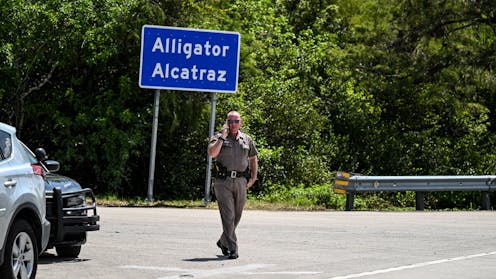
Understanding key terms swirling around Alligator Alcatraz and immigration enforcement in the US

Source: The Conversation – USA – By Mark Schlakman, Senior Program Director, Center for the Advancement of Human Rights, Florida State University

The right terms can help you properly express your feelings about Alligator Alcatraz. Chandan Khanna/AFP via Getty Images

A July 2025 CBS/YouGov poll asked Americans, “Do you approve or disapprove of the Trump administration’s program to find and deport immigrants who are in the U.S. illegally?”

The respondents were divided, with 49% of Americans approving and 51% disapproving.

But, as I’ll explain, that survey question addresses only part of the administration’s immigration enforcement agenda.

I’m a lawyer and former adviser to senior state officials in Florida, and to the Clinton and George W. Bush administrations. I also teach human rights and national security courses at Florida State University, including an interdisciplinary seminar called Refugees, Asylees & Migrants.

Immigration issues are complex. Discussing them is challenging, since key terms are often conflated and confused.

Clarifying these terms and their legal implications can help ensure people are talking about the same things – regardless of whether they agree about who should be in the country.

Some key immigration-related terms

Let’s start with terms describing different aspects of immigration.

Immigrant is a common term meaning a foreign national who intends to remain in the U.S. or another country where they weren’t born.

Migrant is a generic term that doesn’t have any specific legal meaning and is often used incorrectly as a synonym for immigrant.

Immigrants are considered documented if they’ve been issued an immigrant visa or a green card, thereby achieving lawful permanent resident status. Green cards and visas can be revoked – typically a consequence of certain criminal convictions. Visas allow foreign nationals to travel to a U.S. port of entry and request permission to enter but do not guarantee entry.

A lawful permanent resident generally can apply for U.S. citizenship after five years. This process is known as naturalization. In fiscal year 2024, 818,500 people were naturalized.

Once naturalized, revocation of U.S. citizenship – or denaturalization – is rare, traditionally resulting from fraud, omission during the application process or other extraordinary causes. Between 1990 and 2017, about 11 people annually had their naturalized citizenship revoked.

The Trump administration is reportedly expanding the scope of denaturalization and is being called out for allegedly weaponizing it against current political adversaries such as Elon Musk. However, denaturalization numbers remain low. The first Trump administration filed 102 denaturalization cases, and his current administration has filed five so far, according to NBC News.

In May 2025 – a typical month representing some of the most recent data available – about 47,000 immigrants entered the U.S. with one of the many kinds of immigrant visas. For example, the visas may be used for family-based immigration, including legitimate marriages to U.S. citizens and international adoptions. Immigrant visas are also available for employment-based immigration, including foreign nationals who invest substantial capital in the U.S. economy.

An array of nonimmigrant visas

Apart from immigrant visas, a variety of nonimmigrant or temporary visas are available.

For instance, there are visas for international students, although the Trump administration has expressed its intention to significantly restrict availability.

There are visas to facilitate travel and tourism, business, temporary workers, and for those with extraordinary abilities or achievements.

There are special visas for victims of human trafficking and other crimes who assist law enforcement.

There are even visas to facilitate international sports competitions.

In fiscal year 2024, the U.S. issued a record 8.5 million visitor visas. Stays are generally limited to six months.

In addition, visitors from more than 40 countries are allowed to travel to the U.S for tourism or business for up to 90 days without obtaining a visa.

Significantly, a foreign national entering the U.S. with a visitor visa, also known as a tourist visa, isn’t authorized to work.

What it means to be ‘undocumented’

The term undocumented essentially refers to people who didn’t obtain a green card or a visa – or stayed in the U.S.
after their documents expired. An estimated 11 million undocumented immigrants live in the U.S.

A protester holds a sign reading
People in Los Angeles rally in support of undocumented immigrants.
Noah Berger/AP Photo

Visa “overstays” represent approximately 40% of the undocumented population. As a matter of law, such overstays are civil rather than criminal violations.

Attracting more political attention are foreign nationals who cross U.S. borders outside of an authorized checkpoint without asserting a credible claims for asylum. The Border Patrol recorded an historic high of 249,741 encounters with such migrants in December 2023. That figure dropped 77% by August 2024, according to a Pew Research Center analysis.

The Trump administration’s deployment of the U.S. military at the border has reportedly further reduced the number of encounters to the lowest level in decades, but questions regarding the legality of the deployment remain unanswered.

The Trump administration is also encouraging voluntary departure by offering travel assistance and $1,000 to illegal immigrants who self-deport.

Being undocumented can be legal

Being undocumented doesn’t necessarily mean a foreign national is in the U.S. illegally.

Some foreign nationals are admitted into the country without documentation. Asylum-seekers, also known as asylees, are people fleeing persecution in their home countries. They generally must present themselves to federal immigration authorities at a port of entry, or after entering the country by other lawful means, and eventually substantiate their claims.

The Trump administration’s action to ban asylum at the U.S.-Mexico border was recently limited by a federal appellate court. The court’s decision effectively curtails the administration’s practice of deporting people to places where they could be tortured or persecuted, subject to any further consideration by the U.S. Supreme Court.

Migrants escaping desperate economic circumstances are not eligible for asylum.

Refugees, like asylum-seekers, are fleeing a well-founded fear of persecution in their home countries and are protected under the 1951 Refugee Convention as amended by its 1967 Protocol. This identifies five forms of persecution for relief – race, religion, nationality, membership in a particular social group, or political opinion. In 1980, Congress passed and President Jimmy Carter signed the Refugee Act, which incorporated these international standards into U.S. law.

Unlike asylum-seekers, refugees apply for relief and substantiate their claims through the United Nations. They generally don’t get to choose whether or where they may be resettled.

Refugees and people granted asylum may seek lawful permanent resident status and eventually apply for U.S. citizenship.

In 2024, the U.S. accepted about 100,000 of an estimated 43 million refugees worldwide. Refugees are among the 122 million estimated to be forcibly displaced worldwide.

With limited exceptions, the Trump administration has suspended the U.S. Refugee Admissions Program and narrowed relief for women seeking protection from domestic and sexual violence in their home countries.

Humanitarian parole and TPS

Foreign nationals admitted into the U.S. as humanitarian parolees are undocumented initially, but their presence is authorized.

The federal government has historically used humanitarian parole to facilitate the admission of people from countries confronting significant violence or other compelling humanitarian crises when other processes are unavailable, overwhelmed or simply too slow.

For example, the U.S. launched a new humanitarian parole initiative in late 2022 to admit foreign nationals from Cuba, Haiti, Nicaragua and Venezuela.

Humanitarian parole also was used to admit foreign nationals following U.S. intervention in Vietnam and in Iraq after 9/11; after American troops withdrew from Afghanistan in 2021; and following Russia’s invasion of Ukraine.

Those granted temporary protected status, or TPS, by the federal executive branch are also believed to face extraordinary dangers if they return to their home countries. However, TPS can be granted only to foreign nationals who are already present in the U.S.

Generally, the federal executive branch has discretion to rescind both humanitarian parole and TPS, subject to certain rule-making requirements, if it concludes recipients can return safely to their home countries.

The Trump administration signaled its intent to terminate humanitarian parole and TPS broadly.

DACA recipients, or Dreamers, who arrived in the country without authorization as children, represent another protected category of undocumented foreign nationals legally living in the U.S. However, their status is uncertain due to ongoing litigation.

The Conversation

Mark Schlakman is Of Counsel to Rambana & Ricci, P.L.L.C., Immigration Attorneys, in Tallahassee, Florida.

ref. Understanding key terms swirling around Alligator Alcatraz and immigration enforcement in the US – https://theconversation.com/understanding-key-terms-swirling-around-alligator-alcatraz-and-immigration-enforcement-in-the-us-261427

As the Colorado River slowly dries up, states angle for influence over future water rights

Source: The Conversation – USA (2) – By Sarah Porter, Director of the Kyl Center for Water Policy, ASU Morrison Institute for Public Policy, Arizona State University

Lake Mead, impounded by Hoover Dam, contains far less water than it used to. Kevin Carter/Getty Images

The Colorado River is in trouble: Not as much water flows into the river as people are entitled to take out of it. A new idea might change that, but complicated political and practical negotiations stand in the way.

The river and its tributaries provide water for about 5 million acres of cropland and pasture, hydroelectric power for millions of people, recreation in the Grand Canyon, and critical habitat for fish and other wildlife. Thirty federally recognized Native American tribes assert rights to water from the Colorado River system. It is also an important source of drinking water for cities within the Colorado River Basin, including Phoenix, Tucson and Las Vegas, and cities outside the basin, such as Los Angeles, San Diego, Salt Lake City, Denver and Albuquerque.

The seven Colorado Basin states have been grappling with how to deal with declining Colorado River supplies for a quarter century, revising usage guidelines and taking additional measures as drought has persisted and reservoir levels have continued to decline. The current guidelines will expire in late 2026, and talks on new guidelines have been stalled because the states can’t agree on how to avoid a future crisis.

In June 2025, Arizona suggested a new approach that would, for the first time, base the amount of water available on the river’s actual flows, rather than on reservoir level projections or historic apportionments. While the proposal has been praised as offering “a glimmer of hope,” coming to agreement on the details presents daunting challenges for the Colorado Basin.

The Colorado River Compact

The 1922 Colorado Compact divided the 250,000-square-mile Colorado River Basin into an Upper Basin – which includes parts of Colorado, New Mexico, Utah and Wyoming, as well as the northeastern corner of Arizona – and a Lower Basin, encompassing most of Arizona and parts of California and Nevada. The compact apportions each basin 7.5 million acre-feet of water from the river each year. An acre-foot of water is enough to cover 1 acre in water 1 foot deep, which amounts to approximately 326,000 gallons. According to a 2021 estimate from the Arizona Department of Water Resources, 1 acre-foot is sufficient to supply 3.5 single-family households in Arizona for one year.

Anticipating a future treaty with Mexico for sharing Colorado River water, the compact specified that Mexico should be supplied first with any surplus available and any additional amount needed “borne equally” by the two divisions. A 1944 water-sharing treaty between Mexico and the U.S. guarantees Mexico at least 1.5 million acre-feet of Colorado River water annually.

The compact also specified that the Upper Basin states of Colorado, New Mexico, Utah and Wyoming “will not cause the flow of the river … to be depleted below an aggregate of 75,000,000 acre-feet for any period of 10 consecutive years.”

The Lower Basin states of Arizona, California and Nevada contend that this provision is a “delivery obligation,” requiring the Upper Basin to ensure that over any 10-year period, a total of at least 75 million acre-feet flows to the Lower Basin.

By contrast, the Upper Basin states contend that the language merely creates a “non-depletion obligation” that caps their collective use at 7.5 million acre-feet per year in times when additional use by the Upper Basin would cause less than 75 million acre-feet to be delivered to the Lower Basin over a 10-year period.

This disagreement over the compact’s language is at the heart of the differences between the two basins.

Snow sits on steep rocky slopes.
Snowfall in Western mountains, including the Flatirons outside Boulder, Colo., is the primary source of water for the Colorado River Basin.
AP Photo/Thomas Peipert

A small source area

Nearly all of the water in the Colorado River system comes from snow that falls in the Rocky Mountains in the Upper Basin. About 85% of the Colorado Basin’s flows come from just 15% of the basin’s surface area. Most of the rest of the basin’s lands are arid or semi-arid, receiving less than 20 inches of precipitation a year and contributing little to the flows of the Colorado River and its tributaries.

Rain and snowfall vary dramatically from year to year, so over the course of the 20th century, the Colorado Basin states – with the assistance of the U.S. Bureau of Reclamation, the agency of the Department of the Interior responsible for operating federal water and power projects in the U.S. West – developed a complex system of reservoirs to capture the extra water in wet years so it could be available in drier years. The most notable reservoirs in the system are Lake Mead, impounded by Hoover Dam, which was completed in 1936, and Lake Powell, impounded by Glen Canyon Dam, completed in 1966.

Over the past 25 years, the quantity of water stored in Lake Mead and Lake Powell has declined significantly. A primary driver of this decline is a lengthy drought likely amplified by climate change: One study estimated that the region may be suffering its driest spell in 1,200 years.

But human errors are also adding up. The Colorado Compact’s original negotiators made unrealistically optimistic assumptions about the river’s average annual flow – perhaps knowingly. In their book “Science be Dammed,” Colorado River experts Eric Kuhn and John Fleck document how compact negotiators willfully or wishfully ignored available data about the river’s actual flows. Kuhn and Fleck argue the negotiators knew it would be decades before demand would exceed the river’s water supply, and they wanted to sell a big vision of Southwestern development that would merit massive federal financing for reservoirs and other infrastructure.

In addition, the current Colorado River system accounting does not factor in the roughly 1.3 million acre-feet of water lost annually from Lake Mead due to evaporation into the air or seepage into the ground. This accounting gap means that under normal annual releases to satisfy the apportionments to the Lower Basin and Mexico, Lake Mead’s water level is steadily declining.

Stabilization efforts

The seven Colorado River states and Mexico have taken significant steps to stabilize the reservoirs. In 2007, they agreed to new guidelines to coordinate the operations of Lake Mead and Lake Powell to prevent either reservoir from reaching catastrophically low levels. They also agreed to reduce the amount of water available to Arizona and Nevada depending on how low Lake Mead’s levels go.

When the 2007 guidelines proved insufficient to keep the reservoir levels from declining, the Colorado Basin states and Mexico agreed in 2019 to additional measures, authorizing releases from Upper Basin reservoirs under certain conditions and additional cuts to water users in the Lower Basin and Mexico.

By 2022, projections for the reservoir levels looked so dire that the states started negotiating additional near-term measures to reduce the amount of water users withdrew from the river. The federal government helped out, too: $4 billion of Inflation Reduction Act funding has helped pay the costs of water-conservation measures, primarily by agricultural districts, cities and tribes.

These reductions are real. In 2023, Arizona, California and Nevada used only 5.8 million acre-feet of Colorado River water – their lowest combined annual consumption since 1983. The Lower Basin’s total consumption in 2024 was slightly higher, at 6.09 million acre-feet.

People stand on a boat looking at a body of water and mountains beyond.
Lake Powell, a key Colorado River reservoir, holds only one-third as much water as it is designed to contain.
Rebecca Noble/Getty Images

A new opportunity?

With the 2007 guidelines and additional measures expiring in 2026, the deadline for a new agreement looms. As the Colorado River states try to work out a new agreement, Arizona’s new proposal of a supply-driven approach offers hope, but the devil’s in the details. Critical components of that approach have not been ironed out – for instance, the percentage of the river’s flows that would be available to Arizona, California and Nevada.

If the states can’t agree, there is a chance that the secretary of the Interior, acting through the Bureau of Reclamation, may decide on his own how to balance the reservoirs and how much water to deliver out of them. That decision would almost certainly be taken to court by states or water users unhappy with the result.

And the Lower Basin states have said they are fully prepared to go to court to enforce what they believe to be the Upper Basin’s delivery obligation, which, the Upper Basin has responded, it is prepared to dispute.

In the meantime, farmers in Arizona’s Yuma County and California’s Imperial County cannot be sure that in the next few years they will have enough water to produce winter vegetables and melons for the nation. The Colorado River Basin’s municipal water providers are worried about how they will meet demands for tap water for homes and businesses. And tribal nations fear that they will not have the water they need for their farms, communities and economies.

The Conversation

Sarah Porter is the Director of the Kyl Center for Water Policy, part of Arizona State University’s Morrison Institute for Public Policy. In 2021, the Kyl Center for Water Policy received a grant from the Walton Family Foundation to develop a data visualization tool showing how Colorado River shortage will impact cities, tribes and agricultural districts in Arizona.

ref. As the Colorado River slowly dries up, states angle for influence over future water rights – https://theconversation.com/as-the-colorado-river-slowly-dries-up-states-angle-for-influence-over-future-water-rights-254132

Teen drivers face unique challenges during ‘100 deadliest days’ of summer, but safety measures can make a difference

Source: The Conversation – USA (2) – By Shannon Roberts, Associate Professor of Industrial Engineering, UMass Amherst

Summer is the riskiest time of year for teenage drivers. Martin Novak/Moment via Getty Images

The last few weeks of summer, heading into Labor Day weekend, can sometimes mean vacations and driving more miles on the road for all people, including teens.

Traffic crashes are the No. 1 cause of death for teens, and the crash rate for teen drivers is disproportionately higher than the share of licensed teen drivers.

In addition to this grim statistic, summer is the riskiest time for teen drivers. The 100 deadliest days represent the period from Memorial Day to Labor Day when the number of fatal crashes involving teen drivers dramatically increases. A third of each year’s teen driver crashes occur during the summer.

We are scholars who research transportation safety and teen driver behavior. Our expertise helps us understand that these 100 days are not just a statistical fluke – they reflect a dangerous intersection of factors such as inexperience and a propensity to take risks.

A young woman turns to face a young man while sitting in a convertible car
More time on the road means more risk for inexperienced drivers.
Klaus Vedfelt/Digital Vision via Getty Images

What makes summer different?

Regardless of the season, some teen drivers engage in risky behaviors that increase their likelihood of a fatal crash, such as getting distracted, driving with friends in the vehicle, driving under the influence, not wearing seat belts and a lack of hazard awareness.

Teens also have more free time in the summer, since most aren’t in school. Combined with the longer days and better weather, teens drive more over the summer. More time on the road means more risk, especially for inexperienced drivers.

Teens may also be more likely to drive after dark during the summer, in comparison to more experienced drivers. But nighttime driving is also when visibility is reduced and crash risks are higher, particularly for teens who haven’t fully developed the skills necessary for night driving. This increased exposure, in addition to teens’ general risky driving tendencies, contributes to the 100 deadliest days for teen drivers.

The increased crash risk for teens over the summer isn’t equally distributed either. Crashes with teen drivers that lead to serious injuries are more likely to occur with male drivers, in rural areas, for those of lower socioeconomic status and for those with disorders, such as attention deficit and hyperactivity disorder.

A rear view of an instructor holding a clipboard and guiding a student during a driving lesson.
Driver’s education programs can be effective, but not all teenagers have access to them.
Antonio Diaz/iStock via Getty Images

Teaching young drivers

Driver’s education programs are the formal method to teach teen drivers the rules of the road.

In driver’s education programs, teens receive information about driver and road safety though classroom and behind-the-wheel instruction in preparation for the licensing exam. Some states require teens to complete a driver’s education course if they want to receive a license under the age of 18. Of teens who have a license, nearly 80% of them have gone through some form of driver’s education.

Though driver’s education programs can be helpful, their effects are not equally felt. In some states, teens and their guardians must pay out of pocket for driver’s education courses to obtain a license. This makes driver’s education and, as a consequence, obtaining a driver’s license inequitable.

There are also driving school deserts – areas where the poverty rate is 20% or above and there are no behind-the-wheel driver education courses within a 10- to 15-minute drive. This makes driver education courses inaccessible. Many of these driving school deserts happen to be in areas with high populations of minorities.

Over 20 years ago, graduated driver licensing was introduced to reduce teen crash rates. This is a phased licensing system wherein teen drivers are restricted in terms of when, where and with whom they can drive until they turn 18. Such a system allows teens to gradually learn and gain experience with driving over time.

Graduated driver licensing has been implemented in all 50 states, and it has been shown to reduce teen driver crash rates. However, its effectiveness is limited to those who participate in the system. A large number of teens are unlicensed and are of low socioeconomic status. Many of these unlicensed teens forgo the entire process and remain unlicensed but still drive, well into their 20s when the graduated driver licensing restrictions are lifted.

A father shows his teenage son the functions that buttons in a car performs.
Adults can serve as good role models for teenagers who are learning to drive.
fotostorm/E+ via Getty Images

Making summer safer

There are two things people can do to turn the 100 deadliest days into the 100 safest days.

First, it is important that communities offer free supplementary training programs for teen drivers, because becoming a safe and responsible teen driver shouldn’t be limited to those with resources. As one example, in collaboration with industry partners, we have developed a program called Risk-ATTEND. It is a free, online, evidence-based program that teaches teen drivers how to anticipate risks while driving. Our research has shown that programs such as these can improve teen driving skills and may be especially effective for teen drivers in high-poverty areas.

Second, our research has shown that parents and guardians still play an important role in influencing teen driver behavior. Studies show that teens mirror the behaviors they observe: If they see adults text and drive, they’re more likely to do the same.

Once teenagers become old enough to drive, it is also important to establish rules and guidelines about expectations to establish clarity and accountability. Written agreements or checklists can address high-risk conditions such as nighttime driving, driving with other young passengers, phone use and adherence to speed limits.

Systems to help monitor and enforce rules have been shown to be effective in improving teen driver behavior. One such program is Checkpoints, which is a Connecticut-based program in which families agree to limit teen driving during high-risk conditions. Teens face consequences for violating these limits, such as a temporary loss of driving privileges. However, the limits are gradually lifted as they gain driving experience.

A young woman with curly smiles as she drives a car.
Programs that monitor teen driver behavior have shown promising results.
Fotografía de eLuVe/Moment via Getty Images

More than rules matter

Ultimately, preventing crashes in the summer and beyond extends beyond mere adherence to regulations. Avoiding them fundamentally hinges on cultivating a robust safety culture that emphasizes a collective commitment to risk reduction and continuous improvement in driving practices.

For teens, the summer months present unique challenges and opportunities.

Drawing on best practices, such as training programs, teens can build essential skills in varied conditions before gaining full, unsupervised privileges.

The Conversation

Shannon Roberts receives funding from the Massachusetts Department of Transportation, National Science Foundation, Sloan Foundation, and US Department of Transportation. She has received funding from GM and Toyota Collaborative Safety Research Center in past years.

Anuj Kumar Pradhan receives funding from the Massachusetts Department of Transportation, National Institutes of Health, and the US Department of Transportation. He has received funding from Toyota Collaborative Safety Research Center and State Farm in past years.

ref. Teen drivers face unique challenges during ‘100 deadliest days’ of summer, but safety measures can make a difference – https://theconversation.com/teen-drivers-face-unique-challenges-during-100-deadliest-days-of-summer-but-safety-measures-can-make-a-difference-260899

‘KPop Demon Hunters’ is attracting huge audiences worldwide – young Philadelphians told us K-pop culture inspires innocence, joy and belonging

Source: The Conversation – USA (2) – By A. Stefanie Ruiz, Assistant Professor in Nonprofit Leadership, College of Behavioral, Social and Health Sciences, Clemson University

‘KPop Demon Hunters,’ released June 20, 2025, is Netflix’s most-watched original animated film ever.
Netflix

“Born with voices that could drive back the darkness,” the character Celine, a former K-pop idol, narrates at the start of Netflix’s new release “KPop Demon Hunters.” “Our music ignites the soul and brings people together.”

The breakout success of “KPop Demon Hunters,” Netflix’s most-watched original animated film, highlights how “hallyu,” or the Korean Wave, keeps expanding its pop cultural reach. The movie, which follows a fictional K-pop girl group whose members moonlight as demon slayers, amassed over 26 million views globally in a single week and topped streaming charts in at least 33 countries.

From K-pop and K-dramas to beauty products and e-sports, hallyu – which refers to the global popularity of South Korean culture – has drawn in millions of fans worldwide. But beyond entertainment, many young people describe how their engagement with Korean culture supports their mental health and sense of belonging.

We conducted interviews with 30 non-Korean hallyu fans aged 18-30 in Philadelphia in 2019 to understand how they experience Korean cultural content. Our findings were recently published in the peer-reviewed World Leisure Journal.

The core themes, such as the emotional support, community building and cultural exploration offered by hallyu, remain relevant today, especially as Korean media continues to expand their global influence and resonate with new generations of fans.

A light space in a heavy world

Participants described hallyu, especially K-pop and K-dramas, as a refuge from the stress and negativity they associate with mainstream Western media.

“I think Western music is a lot … more mellow,” a 24-year-old social worker explained. “It’s like a blunt kind of depression … it doesn’t make you go out in the world and smile at everything.”

In contrast, K-pop was often described as uplifting, playful and emotionally resonant. This contrast was especially important for individuals who felt overwhelmed by the hypersexualized or violent content common in Western pop culture.

“I feel like the stories in [Korean dramas] make more of an effort to connect with people,” said a 22-year-old communications associate. “They’re not as explicit. [For instance, simply] holding hands is a huge deal.”

Another participant, a 19-year-old college student and part-time barista who identified as asexual, shared: “I really like seeing content where they portray a hug or simple kisses as extremely intimate. … [I]t just makes me more comfortable.”

Music as emotional medicine

For many interviewees, hallyu had become a form of emotional self-care.

“It supplements my happiness,” a 25-year-old researcher said. “I’m a pretty optimistic person; it just kind of supplements that baseline optimism.”

Others described how specific songs helped them through difficult times. The college student and barista recalled listening to the boy band BTS’ “Magic Shop” during a spell of depression. “I would just wrap a blanket around myself, sip tea … and it made me feel immensely better,” she said.

‘Magic Shop’ by BTS.

This therapeutic effect is not accidental. BTS, one of the most globally recognized K-pop groups, has built its brand around messages of self-love and mental health awareness.

“They try to spread a message of loving yourself,” a 24-year-old medical assistant explained. “Like no one can love you unless you love yourself first.”

Building community online and offline

Another key benefit of hallyu culture is the sense of community it fosters. Individuals from all backgrounds and ages connect through social media, fan clubs and local events.

“I’ve met a lot of people through [the K-pop club] on Temple’s campus,” one participant said. “We’d watch K-pop and K-dramas together. … [T]hat is still one of our major connections.”

Online platforms also play a crucial role. Individuals share translations, create fan art and organize charity projects in honor of their favorite idols.

“We do projects for BTS’ birthdays,” a 28-year-old government appraiser said. She also donated blood on the birthday of Mingyu, a member of the K-pop group Seventeen.

Exploring identity and culture

For many Asian American fans, hallyu has also become a way to explore and affirm their cultural identity.

“I think the Asian cultural dynamic … is familiar to me,” a Chinese American participant said. “It encouraged me to be more proud of my own culture.”

Another Chinese American participant, a third-year college student, reflected on how Korean dramas helped her appreciate traditional values: “They made me more aware … of how you should talk or act around people. It’s constantly reminding me of ways I can self-improve.”

Even non-Asian fans connected with the values portrayed in Korean media. One Jewish participant, a 26-year-old Ph.D. candidate, noted the similarities between Korean and Jewish family structures: “Our morals, our values … just fit very well together.”

A meaningful investment of time

While some fans acknowledged that their engagement with hallyu could be time-consuming, many saw it as a worthwhile investment.

“It’s probably an embarrassing amount of time,” one participant admitted. “But pretty much anytime I’m bored, I turn to K-pop.”

Another compared their hallyu consumption to “therapy sessions.”

Others described how, over time, they became more involved in fan communities or online content, and this deeper level of engagement often led to skill-building and personal growth as they learned video editing, translation, event planning and even fundraising. Participants who raised money for animal shelters or dance studios, for example, said they were inspired by the values promoted in hallyu culture. These efforts helped them feel more connected to both their idols and one another.

“I created a huge analysis on costuming in a certain music video for Seventeen,” a 26-year-old restaurant manager said. “I just couldn’t help myself.”

In a media landscape often dominated by cynicism and spectacle, the Korean Wave offers an alternative: a space where joy, vulnerability and connection are not only possible, but celebrated.

‘Don’t Wanna Cry’ by Seventeen.

Read more of our stories about Philadelphia.

The Conversation

The authors do not work for, consult, own shares in or receive funding from any company or organization that would benefit from this article, and have disclosed no relevant affiliations beyond their academic appointment.

ref. ‘KPop Demon Hunters’ is attracting huge audiences worldwide – young Philadelphians told us K-pop culture inspires innocence, joy and belonging – https://theconversation.com/kpop-demon-hunters-is-attracting-huge-audiences-worldwide-young-philadelphians-told-us-k-pop-culture-inspires-innocence-joy-and-belonging-262179

A toxicologist’s guide to poison ivy’s itch and bee stings’ burning pain – 2 examples of nature’s chemical warfare

Source: The Conversation – USA (3) – By Christopher P. Holstege, Professor of Emergency Medicine and Pediatrics, University of Virginia

There’s a lot to explore out there. aldomurillo/E+ via Getty Images

Enjoying the outdoors carries the danger of running into nature’s less-friendly side: toxic plants and animals.

As toxicologists at the University of Virginia’s Blue Ridge Poison Center, we see many patients each year suffering from itchy rashes from poison ivy and stings from wasps or bees.

Plants and animals deploy toxins most often in order to defend themselves. Learning how they do that and what happens when the human body is exposed to these substances can offer insights on how to prevent or manage these encounters with nature.

The goal is not to scare people away from the outdoors, but to equip them with the knowledge to appreciate these organisms’ intricate self-preservation strategies and to protect themselves in return.

Poison ivy, a ubiquitous source of itch

Whether in a remote state park or on a city playground, most people have encountered poison ivy. This plant is recognizable by its characteristic arrangement of leaves growing in groups of three with edges that vary from smooth to jagged. It can take many forms: a single small plant, a mass of ground cover, a small bush, or a climbing vine reaching many feet up a tree or building.

Poison ivy with big leaves growing on a tree
Poison ivy contains an oily chemical called urushiol that most people are allergic to.
Chris Light via Wikimedia Commons, CC BY

Poison ivy – its scientific name is Toxicodendron radicans – and its close relatives poison oak and poison sumac contain an oily substance called urushiol. This chemical is found in every part of the plant: the leaves, roots, stems and even the small white berries it produces in late summer.

About 75% of people will develop an allergic reaction on contact with urushiol. Urushiol has antimicrobial properties, and scientists think its job in the poison ivy plant is to protect it from diseases.

Because it is so oily, urushiol spreads easily. It can transfer from the plant to your skin, clothes, garden tools or even your pets. Direct plant contact isn’t the only risk: If urushiol is on your clothing or a pet’s fur and your skin later brushes against it, you can develop the same rash as you’d get from directly touching the plant.

A white goat munches plants including poison ivy.
Goats happily munch poison ivy as part of their expansive vegetarian diet. Only people and perhaps some other primates are allergic to poison ivy.
Terry Donovan via flickr, CC BY

From plant to skin

Urushiol triggers a delayed allergic reaction. When the oil touches your skin, it binds to skin cells, changing their shape. A molecule called CD1a then clocks urushiol as a foreign substance, prompting the immune system to mount an attack on the cells – hence the rash.

The symptoms do not appear instantly; the rash usually appears 12 to 48 hours after exposure. It often starts as redness and itching, then develops into small bumps or fluid-filled blisters. The reaction can be mild or severe, depending on how sensitive you are and how much urushiol got on your skin.

The rash itself isn’t contagious. Fluid from the blisters doesn’t spread it. What spreads the rash to other areas of your body or to others is the urushiol lingering on your skin, clothing, tools or pets. Once the oil is adequately washed away, the rash can’t spread to other people or to other areas of your body.

If you have touched poison ivy, wash the area as soon as you can with soap and water and change your clothes if possible. After that, the rash will eventually resolve on its own. You can help alleviate symptoms by using a topical steroid or anti-itch cream on the rash. In severe cases, or if the face is affected, patients may require oral steroids to treat the symptoms.

Bees and wasps: Home defenders

Bees and wasps are most active in the late summer. Because of this, we receive more frequent poison center calls about them during this season.

A bee sitting on a red and yellow flower
Stinging is how bees protect themselves and their hives from predators and attackers.
Ionenlaser via Wikimedia Commons, CC BY

Bees and wasps generally sting to defend their hives or nests or to protect themselves from perceived threats. They store venom in their abdominal sacs. When they sting, the venom flows through their stinger and is injected into their target’s skin.

This venom is a clear, slightly acidic liquid loaded with various active ingredients. For example, it contains enzymes such as phospholipase A2 that break down cell membranes, and peptides such as melittin that cause pain. The venom also contains natural chemicals such as histamine and epinephrine that affect blood vessels and the immune system.

Sting mechanics

Unlike with poison ivy, where the immune system’s reaction to the substance causes irritation, with bee and wasp stings it’s primarily the substance itself that causes pain – although immune response can still play a role. As soon as the venom enters a person’s skin, their body reacts.

A sharp, burning pain comes first as the components of the venom begin to inflict damage, followed by redness and then swelling of the area. Symptoms commonly peak within a few hours and fade within a day. However, some people have stronger reactions with larger areas of swelling that can last for several days. This is because everyone’s immune system is slightly different, and some people tend to have stronger reactions than others to foreign substances.

A closeup of a bee's stinger
A bee’s stinger is sharp and barbed, and it can continue to deliver venom for up to a minute if it remains stuck in your skin.
US Geological Survey via Wikimedia Commons

In rare cases, the immune system overreacts, releasing large amounts of histamine and other chemicals all at once. Histamine is most often released in response to a foreign substance, causing symptoms of an allergic reaction. This can lead to anaphylaxis, a severe allergic reaction that can make breathing difficult, lower blood pressure and cause airway swelling, and which can quickly become life-threatening.

Getting stung multiple times at once can also be life-threatening due to the sheer amount of venom injected, even in people without a bee venom allergy.

If you’re stung and the stinger is stuck in the skin, it should be removed immediately by the quickest means available. Bee stingers are barbed and can continue to deliver venom for up to a minute. Most bee or wasp stings require only symptomatic treatment, such as an over-the-counter steroid cream or oral antihistamine to reduce itching and swelling.

However, people who begin to develop more severe symptoms such as full body hives, vomiting or difficulty breathing should immediately seek emergency care. Anaphylactic reactions require rapid treatment with a medication called epinephrine and close monitoring in the hospital.

The Conversation

The authors do not work for, consult, own shares in or receive funding from any company or organization that would benefit from this article, and have disclosed no relevant affiliations beyond their academic appointment.

ref. A toxicologist’s guide to poison ivy’s itch and bee stings’ burning pain – 2 examples of nature’s chemical warfare – https://theconversation.com/a-toxicologists-guide-to-poison-ivys-itch-and-bee-stings-burning-pain-2-examples-of-natures-chemical-warfare-261156

Vaccines hold tantalizing promise in the fight against dementia

Source: The Conversation – USA (3) – By Anand Kumar, Professor and Department Head of Psychiatry, University of Illinois Chicago

Researchers are in the earliest phase of piecing together how the shingles vaccine could play a role in lowering the risk of dementia. PM Images/DigitalVision via Getty Images

Over the past two centuries, vaccines have been critical for preventing infectious diseases. The World Health Organization estimates that vaccination prevents between 3 million and 5 million deaths annually from diseases like diphtheria, tetanus, influenza, measles and, more recently, COVID-19.

While there has long been broad scientific consensus that vaccines prevent or mitigate the spread of infections, there is new research suggesting that the therapeutic impact might go beyond the benefit of preventing infectious diseases.

An April 2025 study published in the prominent journal Nature found tantalizing evidence that the herpes zoster – or shingles – vaccine could lower the risk of dementia in the general population by as much as 20%.

We are a team of physician scientists with expertise in the clinical and basic science of neurodegenerative disorders and dementia.

We believe that this study potentially opens the door to other breakthroughs in understanding and treating dementia and other degenerative disorders of the brain.

A role for vaccines in reducing dementia risk?

One of the major challenges researchers face when trying to study the effects of vaccines is finding an unvaccinated “control group” for comparison – a group that is similar to the vaccine group in all respects, save for the fact that they haven’t received the active vaccine. That’s because it’s unethical to assign some patients to the control group and deprive them of vaccine protection against a disease such as shingles.

The Nature study took advantage of a policy change in Wales that went into effect in 2013, stating that people born on or after September 2, 1933, were eligible for the herpes zoster vaccination for at least a year, while those born before that cutoff date were not. The vaccine was administered to prevent shingles, a painful condition caused by the same virus that causes chickenpox, which can lie dormant in the body and be reactivated later in life.

The researchers used the policy change as a natural laboratory of sorts to study the effect of shingles vaccination on long-term health outcomes. In a statistically sophisticated analysis of health records, the team found that the vaccine reduced the probability of getting dementia by one-fifth over a seven-year period. This means that people who received the shingles vaccine were less likely to develop clinical dementia over the seven-year follow-up period, and women benefited more than men.

The study design allowed researchers to compare two groups without actively depriving any one group of access to vaccination. The two groups were also of comparable age and had similar medical comorbidities – meaning similar rates of other medical conditions such as diabetes or high blood pressure.

Results from this and other related studies raise the possibility that vaccines may have a broader role in experimental therapeutics outside the realm of infectious diseases.

These studies also raise provocative questions about how vaccines work and how our immune system can potentially prevent dementia.

How vaccines might be protective

One scientific explanation for the reduction of dementia by the herpes zoster vaccine could be the direct protection against the shingles virus, which may play a role in exacerbating dementia.

However, there is also the possibility that the vaccine may have conferred protection by activating the immune system and providing “trained immunity,” in which the immune system is strengthened by repeated exposure to vaccines or viruses.

The study did not differentiate between different types of dementia, such as dementia due to Alzheimer’s disease or dementia due to stroke. Additionally, researchers cannot draw any definitive conclusions about possible mechanisms for how the vaccines could be protective from an analysis of health records alone.

The next step would be a prospective, randomized, double-blind, placebo-controlled study – the “gold standard” for clinical trials in medicine – to directly examine how the herpes zoster vaccine compares with a placebo in their ability to reduce the risk of dementia over time. Such studies are necessary before any vaccines, as well as other potential therapies, can be recommended for routine clinical use in the prevention of dementia.

Brain image of early Alzheimer's disease
Randomized, placebo-controlled trials are needed in order to determine how the shingles vaccine compares with a placebo over time in protecting against dementia.
Peter Dazeley/Getty Images News

The challenges of untangling dementia

Dementia is a major noncommunicable disease that is a leading cause of death around the world.

A January 2025 study provided updated figures on lifetime dementia risk across different subsets of the U.S. population. The researchers estimate that the lifetime risk of dementia after age 55 is 42% – more than double earlier estimates. The dementia risk was 4% by age 75, and 20% by age 85, with the majority of risk occurring after 85. The researchers projected that the number of new cases of dementia in the U.S. would double over the next four decades from approximately 514,000 cases in 2020 to 1 million in 2060.

Once considered a disease largely confined to the developed world, the deleterious effects of dementia are now apparent throughout the globe, as life expectancy increases in many formerly developing countries. While there are different forms of dementia with varying clinical manifestations and underlying neurobiology, Alzheimer’s disease is the most common.

Prospective studies that specifically test how giving a vaccine changes the risk for future dementia may benefit from studying patient populations with specific types of dementia because each version of dementia might require distinct treatments.

Unfortunately, for the past two to three decades, the amyloid hypothesis of Alzheimer’s disease – which posits that accumulation of a protein called amyloid in the brain contributes to the disorder – dominated the scientific conversation. As a result, most of the efforts in the experimental therapeutics of Alzheimer’s disease have focused on drugs that lower the levels of amyloid in the brain.

However, results to date have been modest and disappointing. The two recently approved amyloid-lowering therapies have only a minimal impact on slowing the decline, are expensive and have potentially serious side effects. And no drug currently approved by the Food and Drug Administration for clinical use reverses the cognitive decline.

Studies based on health records suggest that past exposure to viruses increase the risk of dementia, while routine vaccines, including those against tetanus, diphtheria, pertussis, pneumonia, shingles and others, reduce the risk.

Innovation and an open mind

There is sometimes a tendency among scientists to cling to older, familiar models of disease and a reluctance to move in more unconventional directions.

Yet the process of doing science has a way of teaching researchers like us humility, opening our minds to new information, learning from our mistakes and going where that data takes us in our quest for effective, lifesaving therapies.

Vaccines may be one of those paths less traveled. It is an exciting possibility that may open the door to other breakthroughs in understanding and treating degenerative disorders of the brain.

The Conversation

Jalees Rehman receives funding from NIH.

Anand Kumar does not work for, consult, own shares in or receive funding from any company or organization that would benefit from this article, and has disclosed no relevant affiliations beyond their academic appointment.

ref. Vaccines hold tantalizing promise in the fight against dementia – https://theconversation.com/vaccines-hold-tantalizing-promise-in-the-fight-against-dementia-257807

This stone tool is over 1 million years old. How did its maker get to Sulawesi without a boat?

Source: The Conversation – Global Perspectives – By Adam Brumm, Professor of Archaeology, Griffith University

A stone tool from 1.04 million year ago. M.W. Moore/University of New England

Stone tools dating to at least 1.04 million years ago have been found on the Indonesian island of Sulawesi. This means early hominins made a major sea crossing from the Asian mainland much earlier than previously thought – and they likely didn’t have any boats.

This discovery, made by a team of Indonesian archaeologists working in collaboration with Australian researchers, is published today in Nature.

It adds to our understanding of how extinct humans once moved across the Wallace Line – an imaginary boundary that runs through the Lombok Strait in the Indonesian archipelago.

Beyond this line, unique and often peculiar animal species – including hominins – evolved in isolation.

Hominins in Wallacea

The oceanic island zone between the Asian and Australian landmasses is known as Wallacea.

Previously, archaeologists have found hominins lived here from at least 1.02 million years ago, thanks to discoveries of stone tools at Wolo Sege on the island of Flores. Meanwhile, tools dated to around 194,000 years ago have been found at Talepu on Sulawesi.

The human evolutionary story in the islands east of the Asian landmass is strange.

The ancient human species that used to live on the island of Flores were small in stature. We know this thanks to the fossils of Homo floresiensis (popularly known as “hobbits”), as well as the 700,000-year-old fossils of a similar small-bodied hominin.

These discoveries suggest it could have been the extinct Asian hominin Homo erectus that breached the formidable marine barrier between this small Wallacean island and mainland Southeast Asia. Over hundreds of thousands of years, their body size reduced in what’s known as island dwarfism.

To the north of Wallacea, the island of Luzon in the Philippines has also yielded evidence of hominins from around 700,000 years ago. Just recently, fossils of a previously unknown diminutive hominin species, Homo luzonensis, were found here.

So how and when did ancient human species cross the Wallace Line?

The Sulawesi stone tools

Our new study reveals the first evidence a sea crossing to Sulawesi may have happened at least 1 million years ago. That’s much earlier than previously known, and means humans reached here at about the same time as Flores, if not earlier.

A field team led by senior archaeologist Budianto Hakim from the National Research and Innovation Agency of Indonesia (BRIN), excavated a total of seven stone artefacts from the sedimentary layers of a sandstone outcrop in a modern corn field at Calio in southern Sulawesi.

In the Early Pleistocene, there was a river channel nearby. This would have been the site of hominin tool-making and other activities such as hunting.

The Calio artefacts consist of small, sharp-edged fragments of stones (flakes) that the early human tool-makers struck from larger pebbles they most likely found in nearby riverbeds.

To produce these flakes, the hominins hit the edge of one stone with another in a controlled manner. This would fracture the first stone in a predictable way.

This tool-making activity left telltale marks on the stones that can be clearly distinguished from naturally broken rocks. So we can say unequivocally that hominins were living in this landscape, making stone tools, at the time the ancient river sediments that comprise the sandstone rock were accumulating.

And that was a very long time ago. Indeed, the team confirmed an age of at least 1.04 million years for the stone artefacts based on paleomagnetic dating of the sandstone itself, along with direct dating of a pig fossil found alongside the artefacts.

A group of people on an archaeological dig under a blue shade cloth.
Excavations at the Early Pleistocene site of Calio in South Sulawesi, Indonesia.
BRIN

Who were these hominins and how did they get to Sulawesi?

As noted earlier, previous research has shown that archaic, stone tool-making hominins managed to get across from the Asian continental landmass to colonise at least some islands in Wallacea.

The discovery of the extremely old stone tools at Calio is another significant new piece of the puzzle. This site has yet to yield any hominin fossils, however. So while we now know there were tool-makers on Sulawesi 1 million years ago, their identity remains a mystery.

Indeed, there are many fascinating questions that remain unanswered, including how these hominins were able to cross the Wallace Line in the first place.

When sea levels were at their lowest, the shortest possible distance between Sulawesi and the nearest part of the adjacent Asian landmass would have been about 50 kilometres.

This is too far to swim, especially since the ocean currents are far too strong. It’s also unlikely these archaic hominins had the cognitive ability to develop watercraft capable of making sea voyages. Setting sail over the horizon to an unseen land would have required advanced planning to gather resources – something they probably weren’t capable of.

Most likely, then, they crossed to Sulawesi from the Asian mainland in the same way rodents and monkeys are suspected to have done – by accident. Perhaps they were castaways on natural “rafts” of floating vegetation.

Our discovery also leads us to wonder what might have happened to Homo erectus on the world’s 11th largest island. Sulawesi is more than 12 times the size of Flores, and much closer to the adjacent Asian mainland.

In fact, Sulawesi is a bit like a mini-continent in itself, which sets it apart from other Wallacean islands. If hominins were cut off in the ecologically rich habitats of this enormous island for a million years, would they have undergone the same evolutionary changes as the Flores hobbits? Or might something completely different have happened?

To unravel this fascinating story, we will continue to search the islands of Wallacea – especially those close to the Asian mainland – for ancient artefacts, fossils and other clues.

The Conversation

Adam Brumm receives funding from the Australian Research Council.

Basran Burhan is a researcher at Pusat Kolaborasi Riset Arkeologi Sulawesi (BRIN-Universitas Hasanuddin).

Gerrit (Gert) van den Bergh has received funding from the Australian Research Council.

Maxime Aubert receives funding from the Australian Research Council.

Renaud Joannes-Boyau receives funding from the Australian Research Council.

ref. This stone tool is over 1 million years old. How did its maker get to Sulawesi without a boat? – https://theconversation.com/this-stone-tool-is-over-1-million-years-old-how-did-its-maker-get-to-sulawesi-without-a-boat-262337