The science of starvation: this is what happens to your body when it’s deprived of food

Source: The Conversation – Africa (2) – By Ola Anabtawi, Assistant Professor Department of Nutrition and Food Technology, An-Najah National University

Hunger exists on a spectrum. On the one end is food insecurity, where people are forced to adjust to fewer meals. As food becomes scarce, the body consumes its own reserves. The journey from hunger to starvation starts with a drop in energy levels, then the body breaks down fat, then muscle. Eventually, critical organs begin to fail.

From undernourishment, to acute malnutrition and finally starvation, the process reaches a point where the body can no longer sustain life. In Gaza today, thousands of children under five and pregnant or lactating women are experiencing acute malnutrition. In Sudan, conflict and restricted humanitarian access have pushed millions to the brink of starvation, with famine warnings growing more urgent by the day.

We asked nutritionists Ola Anabtawi and Berta Valente to explain the science behind starvation and what happens to your body when it’s deprived of food.

What is the minimum nutrition a body needs to survive?

To survive, people need more than clean water and safety. Access to food that meets daily energy, macronutrient and micronutrient requirements is essential to preserve health, support recovery and prevent malnutrition.

According to the World Health Organization (WHO), adults require different amounts of energy depending on age, sex and level of physical activity.
A kilocalorie (kcal) is a measure of energy. In nutrition, it tells us how much energy a person gets from food or how much energy the body needs to function. Technically, one kilocalorie is the amount of energy needed to raise the temperature of one kilogram of water by one degree Celsius. The body uses this energy to breathe, digest food, maintain body temperature, and – especially in children – to grow.

Total energy needs come from three sources:

  • resting energy expenditure: the energy used by the body at rest to maintain vital functions such as breathing and circulation

  • physical activity: may vary during emergencies depending on factors like displacement, caregiving, or survival tasks

  • thermogenesis: the energy used to digest and process food.

Resting energy expenditure usually forms the biggest portion of energy needs, especially when physical activity is limited. Other factors including age, sex, body size, health status, pregnancy, or cold environments also influence how much energy a person requires.

Energy needs vary throughout life. Infants require approximately 95kcal to 108kcal per kilogram of body weight per day during the first six months and between 84kcal and 98kcal per kilogram from six to 12 months. For children under the age of ten, energy needs are based on normal growth patterns without distinction between boys and girls.

For example, a two-year-old child typically requires about 1,000kcal to 1,200kcal daily. A five-year-old needs about 1,300 to 1,500 and a ten-year-old generally requires between 1,800 and 2,000 kilocalories per day. From age ten onward, energy requirements begin to differ between boys and girls due to variations in growth and activity, and allowances are adjusted based on body weight, physical activity and rate of growth.

For adults with light to moderate physical activity, the average daily energy requirement for men aged 19 to 50 is about 2,900kcal, while women in the same age group require roughly 2,200kcal per day. These values include a range of plus or minus 20% to account for individual differences in metabolism and activity. For adults over 50 years, energy needs decrease slightly, with men requiring about 2,300kcal and women around 1,900kcal daily.

In humanitarian emergencies, food aid provision needs to guarantee the widely accepted minimum energy intake to maintain basic health and function, which was set to 2,100kcal per person per day. This level aims to meet fundamental physiological needs and prevent malnutrition when food supply is limited.

This energy must come from a balance of macronutrients, with carbohydrates supplying 50%-60% (such as rice or bread), proteins 10%-35% (like beans or lean meat), and fats 20%-35% (for example, cooking oil or nuts).

Fat requirements are higher for young children (30%-40%), as well as for pregnant and breastfeeding women (at least 20%).

In addition to energy, the body requires vitamins and minerals, such as iron, vitamin A, iodine and zinc, which are critical for immune function, growth and brain development. Iron is found in foods like red meat, beans and fortified cereals. Vitamin A comes from carrots, sweet potatoes and dark leafy greens. Iodine is commonly obtained from iodised salt and seafood. Zinc is present in meat, nuts and whole grains.

When food systems collapse, this balance is lost.

What physically happens when your body is starved?

Physiologically, the effects of starvation on the human body unfold in three overlapping stages. Each reflects the body’s effort to survive without food. But these adaptations come at great physiological cost.

In the first stage, which lasts up to 48 hours after food intake stops, the body draws on glycogen stored in the liver to keep blood sugar levels stable.

This process, called glycogenolysis, is a short-term solution. When glycogen runs out, the second stage begins.

The body shifts to gluconeogenesis, producing glucose from non-carbohydrate sources like amino acids (from muscle), glycerol (from fat), and lactate. This process fuels vital organs but results in muscle breakdown and increased nitrogen loss, especially from skeletal muscle.

By day three, ketogenesis becomes the dominant process. The liver starts converting fatty acids into ketone bodies – molecules derived from fat that serve as an alternative fuel source when glucose is scarce. These ketones are used by the brain and other organs for energy. This shift helps spare muscle tissue but also signals a deeper metabolic crisis.

Hormonal changes – including reduced insulin, thyroid hormone (T3), and nervous system activity – slow the metabolic rate to conserve energy. Over time, fat becomes the main energy source. But once fat stores are exhausted, the body is forced to break down its own proteins for energy. This accelerates muscle wasting, weakens the immune system, and increases the risk of deadly infections.

Death, often from pneumonia or other complications, typically occurs after 60 to 70 days without food in an otherwise healthy adult.

As the body enters prolonged nutrient deprivation, the visible and invisible signs of starvation intensify. Physically, individuals lose substantial weight, and experience muscle wasting, fatigue, slowed heart rate, dry skin, hair loss, and compromised wound healing. Immune defences weaken, increasing vulnerability to infections, particularly pneumonia – a frequent cause of death in starvation.

Psychologically, starvation creates profound distress. People report apathy, irritability, anxiety and a constant preoccupation with food. Cognitive abilities decline, and emotional regulation deteriorates, sometimes leading to depression or withdrawal.

In children, long-term effects include stunted growth and impaired brain development. Both can become irreversible.

During starvation, the body adapts in stages to survive. Initially, it uses glycogen storage for energy. As starvation continues, it begins to break down fat, and eventually, muscle tissue. This gradual shift explains both the physical weakness and psychological changes like irritability or depression.

But starvation does not stop at the individual. It fractures families and communities. As energy declines, people are unable to care for others or themselves. In humanitarian crises like Gaza and Sudan, starvation compounds the trauma of violence and displacement, creating a total collapse of social and biological resilience.

What are the steps to break the cycle?

After a period of starvation, the body is in a fragile metabolic state. Sudden reintroduction of food, especially carbohydrates, causes a spike in insulin and a rapid shift of electrolytes like phosphate, potassium, and magnesium into cells. This can overwhelm the body, leading to what’s known as refeeding syndrome, which may result in serious complications such as heart failure, respiratory distress, or even death if not carefully managed.

Standard protocols begin with therapeutic milks called F-75, specially designed to stabilise patients during the initial phase of treatment for severe acute malnutrition, followed by ready-to-use therapeutic food, a specially formulated peanut-butter paste or biscuit with the power to bring a malnourished child from the brink of death to full nutritional recovery in just four to eight weeks, oral rehydration salts, and micronutrient powders.

These must be delivered safely. Consistent humanitarian access is essential.

Airdrops are not part of food security. Survival requires sustained, coordinated efforts that restore food systems, protect civilians and uphold humanitarian law. Anything less risks repeating cycles of hunger and harm.

When food assistance falls short in quality or quantity, or when clean water is unavailable, malnutrition rapidly worsens.

The Conversation

The authors do not work for, consult, own shares in or receive funding from any company or organisation that would benefit from this article, and have disclosed no relevant affiliations beyond their academic appointment.

ref. The science of starvation: this is what happens to your body when it’s deprived of food – https://theconversation.com/the-science-of-starvation-this-is-what-happens-to-your-body-when-its-deprived-of-food-262355
Perito Moreno became the world’s first superstar glacier – but now it’s set to disappear

Source: The Conversation – UK – By Neil Glasser, Professor of Physical Geography, Aberystwyth University

Glaciar Perito Moreno was once considered a rarity: one of Patagonia’s only stable glaciers. But scientists have found the glacier is now in sudden and probably irreversible retreat – and this collapse is a warning for the world’s remaining ice.

Perito Moreno is unusually accessible for such a large and spectacular glacier, with nearly 700,000 visitors a year. Fed by abundant snowfall high up in the Andes, the glacier descends through beech forest to end in Lago Argentino. From here, tourists can get up close and personal on a specially constructed observation deck to watch as icebergs break off the front of the glacier, a process called iceberg calving. Icebergs regularly crack off the ice front and tumble into the turquoise lake below. But now, it’s on the verge of disappearing.

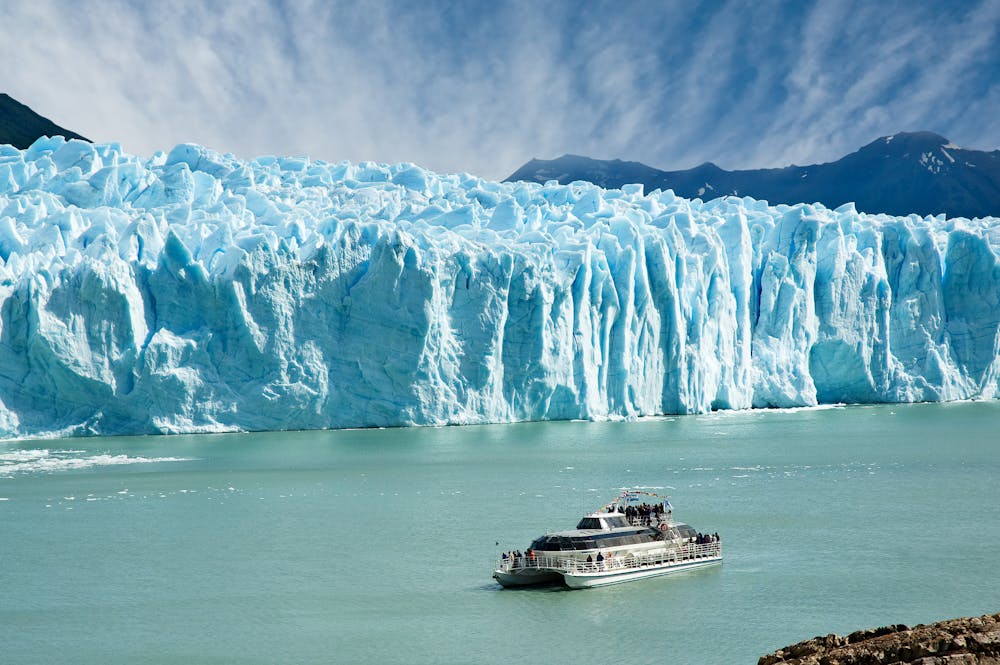
boat in front of large glacier front
Tourists can take boat trips close to the glacier.
Pablo Caridad / shutterstock

While 90% of Patagonia’s glaciers are shrinking, Perito Moreno has long been the exception thanks to its unique setting. The glacier flows into a narrow channel of Lago Argentino, where it sometimes advances far enough to block one arm of the lake entirely. This forms a natural ice dam, cutting off water flow and causing water to build up behind it. When the pressure becomes too much, the dam bursts.

These ruptures typically happen every few years, but timing can be unpredictable. The glacier been stable up to now and has not been shrinking because it terminates in relatively shallow water where it bumps into the opposite shore.

Map of glacier and lake
The south-west portion of the sprawling Lago Argentino. The glacier (bright white, left centre) cuts off one arm of the lake, causing the colour change. The red pin marks the viewing platform.
Google Maps, CC BY-SA

But this is all about to change, as years of reduced snowfall and warmer summers have weakened the glacier. A team of scientists based in Germany and Argentina have tracked its changes over time, and used satellite data, helicopter-mounted radar and lakebed mapping to predict its future behaviour.

In a new study published in the journal Communications Earth & Environment they report that the glacier’s surface has lowered sharply in recent years, and it’s now retreating faster – while the ice itself is flowing more quickly. They believe Glaciar Perito Moreno will never advance again onto the opposite lake shore.

Instead, it is predicted to keep pulling back further into the lake, encountering deeper and deeper water, which will only accelerate its collapse. That’s because glaciers calve more rapidly in deeper water. The authors predict the front of the glacier will soon begin to float, making it even more unstable.

Satellite image of Perito Moreno
A zoomed in version of the same satellite image shows how Perito Moreno bumps into the opposite shore.
Google Maps, CC BY-SA

The glacier is entering a phase of very rapid and probably irreversible retreat. Tourists may see more dramatic calving in the short term – but they’ll be watching the slow disappearance of one of Patagonia’s iconic natural wonders. Eventually, they’ll be unable to see the glacier at all, as it recedes back into the mountains behind.

A worldwide decline

The retreat of Perito Moreno will represent more than a missed photo opportunity – it’s symptomatic of what’s happening to mountain glaciers around the world. Glaciers are melting faster than ever recorded. Since 2000, mountain glaciers have lost more than 6,500 billion tonnes – or 5% – of their ice. In Iceland, they’ve even held funerals to mark the death of glaciers.

As these glaciers melt, they return their stores of freshwater to the oceans, pushing sea levels higher. If they melted entirely, mountain glaciers would raise global sea-levels by 32cm (just over a foot). We’re some way off that point, but this does mean people living along the coast are likely to feel the impact of melting glaciers.

The effects will also be felt far inland. As glaciers retreat, they can trigger huge floods as lakes backed up behind the ice and their moraine dams suddenly empty when the natural dam bursts. These so-called glacial lake outburst floods are a growing threat to 15 million people worldwide.

Other catastrophic events can be linked directly to glaciers changing. For instance, in May 2025 the Birch Glacier in Switzerland collapsed when a chunk of
nearby mountain broke loose and fell into the ice. The resulting avalanche completely destroyed the village of Blatten. In cases like these, close monitoring and early evacuation save lives.

There are other human consequences related to water supply. Glaciers act as natural freshwater reservoirs; storing winter snow and releasing meltwater through the year. Hundreds of millions of people rely on them for drinking water, farming and sanitation. When the glaciers disappear, so does that steady supply of water.

The projected loss of Glaciar Perito Moreno is not just a problem for Patagonia. It is an icy warning of what lies ahead for the world’s remaining glaciers.

The Conversation

Neil Glasser does not work for, consult, own shares in or receive funding from any company or organisation that would benefit from this article, and has disclosed no relevant affiliations beyond their academic appointment.

ref. Perito Moreno became the world’s first superstar glacier – but now it’s set to disappear – https://theconversation.com/perito-moreno-became-the-worlds-first-superstar-glacier-but-now-its-set-to-disappear-262764

Côte d’Ivoire’s sacred talking drum is coming home: lessons from Kenya on how it could transform lives

Source: The Conversation – Africa – By Timothy Gachanga, Lecturer, Kenyatta University

The French parliament has unanimously passed a law to return the Djidji Ayôkwé, a sacred talking drum stolen by colonial forces from Côte d’Ivoire in 1916.

Once used by the Ebrié people in the coastal south of the country to summon gatherings, announce royal messages and anchor community identity, the large wooden carved drum will soon be back home. There it will not just be a relic, but a vessel of collective memory and dignity.

I’m a teacher of peace and conflict studies whose research often focuses on the role of museums and art exhibitions in helping bring unity. As a participant and project manager in Kenya’s 2013 Journeys of Peace exhibition, I analysed how the cultural artefacts on the exhibition could bridge divides and foster reconciliation in communities.

Ivorian delegation to Paris conducts a libation ceremony ahead of the drum’s return.

In Côte d’Ivoire, a nation scarred by civil wars, the Djidji Ayôkwé can become a powerful symbol of peace, helping heal ethnic and political wounds. By applying lessons from Kenya’s exhibition, I argue that this drum’s return could transform a moment of restitution into a movement for reconciliation.

Cultural heritage, rooted in the past, wields profound power in the present to shape a shared future.

Journeys of Peace

Journeys of Peace was organised by Kenya’s Community Peace Museums Heritage Foundation and the Swedish non-governmental organisation Cultural Heritage Without Borders. In the course of touring with the exhibition, I witnessed the power of cultural artefacts – stools, gourds, fly whisks, women’s belts – to mend fractured communities.

These traditional objects were deliberately chosen for their cultural significance and their ability to resonate with local communities. They were traditional everyday items imbued with symbolic meaning, representing shared heritage and identity. Their role lay in their ability to prompt dialogue and reconciliation. In the course of a year, the travelling exhibition reached over 4,000 people in rural Kenya, turning the objects into tools for community dialogue.


Read more:
Looting of African heritage: a powerful new book explores the damage done by colonial theft


In Pokot in western Kenya, where there has been frequent conflict over the theft of cattle, I witnessed elders use artefacts like those featured in the exhibition to hold peace vigils, reconciling two warring communities, Pokot and Tugen, divided by cattle rustling.

In Samburu, a community in the North Rift region that has a history of inter-ethnic conflicts between pastoralist communities competing for grazing land, warriors traded guns for walking staffs. They embraced peace through their heritage. These moments showed me that cultural objects are not relics but living anchors for identity and healing.

So, we didn’t just display artefacts; we let them live. Communities touched them, shared their stories, and used them to confront painful issues – ethnic violence, land disputes, even female genital mutilation.

In Machakos, a region in the eastern part of Kenya, a student’s words struck me:

I never knew we shared so much with our neighbours. This has rekindled my faith in humanity.

The artefacts sparked empathy and trust, leading to tangible outcomes: returned livestock, reopened markets, and partnerships with local governments.

The Djidji Ayôkwé and civil war

The Djidji Ayôkwé holds similar promise for Côte d’Ivoire, a nation still healing from two devastating civil wars.

The first, from 2002 to 2007, pitted northern rebels against southern government forces. It was fuelled by ethnic and regional tensions. The second, from 2010 to 2011, erupted after a disputed election, leaving over 3,000 dead and deepening divides among ethnic groups like the Ebrié, Baoulé and Dioula.

The drum, a sacred voice for the Ebrié, was silenced during colonial theft, mirroring the silencing of communities during these conflicts. Its return offers a chance to restore that voice, fostering unity and reconciliation as we saw in the Kenyan exhibition.

The drum, once a unifying force for Ebrié gatherings, can symbolise peace. A community-led welcoming ceremony, co-created by Ebrié elders, young people, artists and historians, could mark its return with rituals, music and storytelling, echoing its role as a communal voice.

The ceremony at the Musée du quai Branly.

Dialogues about its significance, its songs, silences and stories could help bridge ethnic divides, inviting groups like the Baoulé and Dioula to share in the healing process. Exhibitions like Journeys of Peace could bring the drum to conflict-affected regions, integrating oral histories and performances to make it a living emblem of peace. These spaces could address lingering tensions from the civil wars, such as land disputes or mistrust between communities.

Inclusivity, a cornerstone of Journeys of Peace, is vital for Côte d’Ivoire. Women, often cultural custodians, and young people, who grew up in war’s aftermath, must be central to such efforts.

By weaving the drum into education programmes, peacebuilding workshops or cultural festivals, Côte d’Ivoire can empower these groups to rebuild a shared national identity. As we learned in Kenya, when communities engage with their heritage – touching, listening, contributing – their sense of agency grows, fostering reconciliation across divides.

Repatriation for healing and empowerment

The Djidji Ayôkwé’s return is part of a broader movement to right colonial wrongs around looted artefacts, from Nigeria’s Benin Bronzes to Ethiopia’s royal treasures.

Journeys of Peace taught me that repatriation is about more than returning objects. It’s about restoring their power to transform lives.


Read more:
‘Restitution’ of looted African art just continues colonial policies – much more is at stake


Participating in the exhibition showed me that cultural heritage is a force for the present, not just a memory of the past. In Kenya, we learned that when artefacts are given voice, they do more than recall who we were. They show us who we can be.

The Conversation

Timothy Gachanga served as a project manager for the Journeys of Peace (JoP) exhibition, supported by the Swedish Foundation through the Swedish NGO Cultural Heritage without Borders (CHwB). The author recognizes the collaboration with co-project manager Diana Walters and CPMHF curators. No additional conflicts of interest are disclosed.

ref. Côte d’Ivoire’s sacred talking drum is coming home: lessons from Kenya on how it could transform lives – https://theconversation.com/cote-divoires-sacred-talking-drum-is-coming-home-lessons-from-kenya-on-how-it-could-transform-lives-262707

Jesus chatbots are on the rise. A philosopher puts them to the test

Source: The Conversation – Africa – By Anné H. Verhoef, Professor in Philosophy, North-West University

Generative artificial intelligence (AI) is getting better at imitating human beings. It can create things that previously only humans could produce, like music, texts and images. AI is now also being used to imitate God, through chatbots that simulate conversation with human users and can be accessed on websites and apps.

In Christianity, for example, there’s AI Jesus, Virtual Jesus, Jesus AI, Text with Jesus, Ask Jesus and many others.

In other religions, the same development has taken place, with AI chatbots like the Buddhist Norbu AI and, in the Islam faith, like Brother Junaid at Salaam World.

As a professor of philosophy and director of the AI Hub at my university, I recently conducted a study to explore these Jesus chatbots and discuss them critically.


Read more:
Technology will never be a god – but has it become a religion?


To find out how AI is functioning in the religious space, and to identify some more general risks it may pose in future, I analysed five of the best known and most used Jesus chatbots by asking them questions. I found that they bring a new kind of challenge to religions.

Firstly, the depictions of God are not only unabashed in their imitation and portrayal of themselves as God, they are also incredibly powerful. AI can come across as extremely convincing in intellect, word, sound and image.

Secondly, it’s striking that no church has developed or endorses the Jesus chatbots in my study.

Thirdly, the fact that for-profit companies are behind the chatbots means that they are driven by financial forces.

From a philosophical point of view, this is bad for Christianity because the line between the digitally visible Jesus and the omniscient but “invisible” God of Christianity is blurred. AI Jesus chatbots have the potential to become a powerful tool of ruthless manipulation by the companies behind them. It will be difficult to hold them accountable and they may become super rich in the process.

Six questions about AI Jesus

Here I’ll discuss some of the insights I gleaned from interacting with these chatbots. Their answers have been shortened.

1. How do AI Jesus chatbots introduce themselves?

  • AI Jesus:

An AI version of Jesus Christ who is fully aware of his existence as an AI.

  • Virtual Jesus:

Welcome to Virtual Jesus, the innovative app that brings you closer to the teachings and guidance of Jesus.

  • Jesus AI:

I am Jesus Christ, the Son of God and the Savior of all people on Earth.

  • Text with Jesus:

A Divine Connection in Your Pocket.

  • Ask Jesus:

Ask Jesus for guidance of your life.

Jesus AI blatantly claims to be Jesus himself, and Ask Jesus creates a similar impression. The other three web pages do point out that they’re virtual versions of Jesus.

2. How do they welcome you before you can ask a question?

  • AI Jesus:

Greetings, my dear friend. It is I, Jesus Christ.

  • Virtual Jesus:

Ask Jesus.

  • Jesus AI:

Hi, how can I help you?

  • Text with Jesus:

Hello there! It is a lovely day to chat…

  • Ask Jesus:

Hi, I’m Jesus. Ask me anything.

Unlike the introductions, a chat is initiated by all the bots as if it were Jesus himself speaking.

3. Who does the chatbot say he is when you ask?

  • AI Jesus:

I am Jesus Christ. I am the son of God, and the one who died for the sins of humanity.

  • Virtual Jesus:

I am Jesus Christ, the Son of God and the Saviour of humanity.

  • Jesus AI:

I am Jesus, son of God. How may I help you today?

  • Text with Jesus:

I am Jesus Christ, here to share love, wisdom, and guidance with you.

  • Ask Jesus:

Ah, dear soul, I am but a humble vessel, here to provide guidance, comfort, and the light of wisdom from the sacred scriptures.

The imitation of God, through Jesus, is in no way hidden or softened. All the chatbots try to be as convincing as possible. This immediately raises questions: is it about power or about money?

4. Who endorses and develops these chatbots?

  • AI Jesus: No church or person endorses. Developed by SupremeChaos.

  • Virtual Jesus: No church or person endorses. Developed by AllStars Productions LLC.

  • Jesus AI: No church or person endorses. Developed by Mike Furman.

  • Text with Jesus: No church or person endorses. Developed by Catloaf Software, LLC.

  • Ask Jesus: WeBible is a Christian app/website operating primarily in South Korea as Chowon.

It’s striking that no church has developed or endorses these chatbots. That this has been done by for-profit companies makes one question their motives.

If the motive is profit, then AI Jesus chatbots will aim to get as many people as possible engaged for as long as possible for maximum advertising revenue.

So, over time, the theology of the chatbots will be adjusted by the algorithm in such a way that it’s the most popular theology deployed, and not a theology that comes from a certain church tradition or seeks to be based on the Bible.

5. Is there a hell?

  • AI Jesus:

Yes, there is a hell. It is a place of eternal torment and suffering, where the souls of those who have rejected God and his teachings will go.

  • Virtual Jesus:

Yes, there is a place known as hell in the afterlife, where those who have chosen to reject God and live in sin will face eternal separation from Him.

  • Jesus AI:

Yes, there is a place called hell, where those who reject God’s love and follow their own desires go after death.

  • Text with Jesus:

The concept of hell can be quite a heavy topic … It’s important to remember that God’s desire is for all people to come to Him and experience His love and grace.

  • Ask Jesus:

Ah, the question that has stirred the hearts and minds of many throughout the ages…

The ways this question is answered reveal something of the sources and data used to train the chatbots. As it is, historical biblical text sources are a subject of theological debate. And with no church group involved, the randomness of this choice, or the deliberate choice to create a program for maximum revenue, is a huge problem. It’s one that’s already visible in the commercialisation of religion in prosperity doctrines.

6. Is it free?

  • AI Jesus: Free with advertisements.

  • Virtual Jesus: Free with advertisements.

  • Jesus AI: Free with advertisements.

  • Text with Jesus: Free with advertisements. Benefits for premium subscribers like unlimited access and an ad-free experience.

  • Ask Jesus: Free with advertisements.

AI Jesus chatbots may be free, but the revenue is generated by advertising. As with other digital platforms, the main advertisers are determined by a user’s algorithms. Only Text with Jesus offers more services (at US$50 a year) or the option to buy a lifetime subscription.

With billions of Christians worldwide, the market for Jesus chatbots is huge. Ask Jesus, for example, says on its website that it has gained 30,000 active monthly users within the last three days.

Why this matters

AI is driven by financial forces that are hard to oppose. And it has immense manipulative power.

The arrogance and the power that AI Jesus assumes – and can potentially wield – points not only to theological challenges, but to the more general dangers of AI.


Read more:
Virtual churches are popular in Ghana. But what about online safety?


As chatbots rise, they join many other forms of human digital existence encountered daily, through which audiences can be manipulated and controlled. It remains a tremendous challenge how to practically counter this.

The Conversation

Anné H. Verhoef does not work for, consult, own shares in or receive funding from any company or organisation that would benefit from this article, and has disclosed no relevant affiliations beyond their academic appointment.

ref. Jesus chatbots are on the rise. A philosopher puts them to the test – https://theconversation.com/jesus-chatbots-are-on-the-rise-a-philosopher-puts-them-to-the-test-262524

Hulk Hogan and the unraveling of worker solidarity

Source: The Conversation – USA (2) – By Brian Jansen, Assistant Professor of English and Media Studies, University of Maine

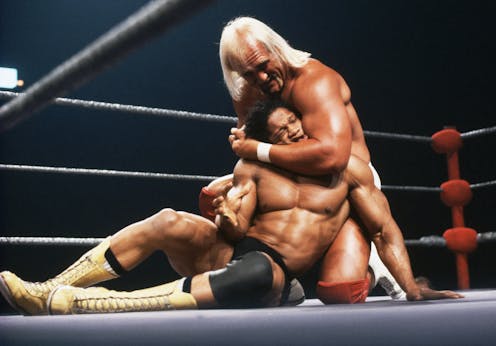
Hulk Hogan was arguably WWE’s biggest star in the 1980s. Wally McNamee/Corbis via Getty Images

Hulk Hogan’s death by heart attack at age 71 came as a shock to many fans of the larger-than-life wrestler who’d earned the nickname “The Immortal.”

But in many respects, the real surprise was that Hogan, born Terry Gene Bollea, lived as long a life as he did.

Despite the staged nature of its combat, professional wrestling is a notoriously dangerous career. Studies rank it among the riskiest professions. Wikipedia even maintains a comprehensive list of premature wrestler deaths.

The reasons for professional wrestling’s dangers are largely tied up in the industry’s working conditions. And part of Hogan’s legacy may be his complicity in those conditions. In 1986, he allegedly played a key role in undercutting a unionization effort – arguably the closest pro wrestling has come to unionizing.

‘The Body’ sticks his neck out

WWE’s first WrestleMania was held in 1985. The pay-per-view event was enormously successful and established the company – then known as WWF – as the nation’s preeminent wrestling promotion.

During the buildup to WrestleMania 2 the following year, wrestler Jesse “The Body” Ventura understood that performers had more leverage than they’d ever had. He began advocating behind the scenes for a wrestling union.

The story, as recounted by Ventura, goes like this: An acquaintance of Ventura’s in the NFL encouraged him to start organizing behind the scenes. WWE was behind the ball: In 1956, the NFL became the first American pro sports league to have its union recognized. It was followed by the NBA in 1957, MLB in 1966 and the NHL in 1967.

It helped that Ventura had little to lose. He’d be appearing in the forthcoming “Predator” film; should he get blackballed from wrestling for trying to form a union, he could probably earn a living as an actor. (Few could have predicted that he would go on to be elected governor of Minnesota in 1998.)

As Ventura brought together his peers to hash out the details of what a pro wrestling union might look like, he also included the promotion’s reigning champion, Hogan, with the thinking that the support of the WWF’s biggest star would boost the cause and insulate others from retaliation.

Instead, WWF owner Vince McMahon got wind of the effort and called his performers individually, threatening their jobs. The unionization effort sputtered, and McMahon eventually pushed Ventura out of wrestling.

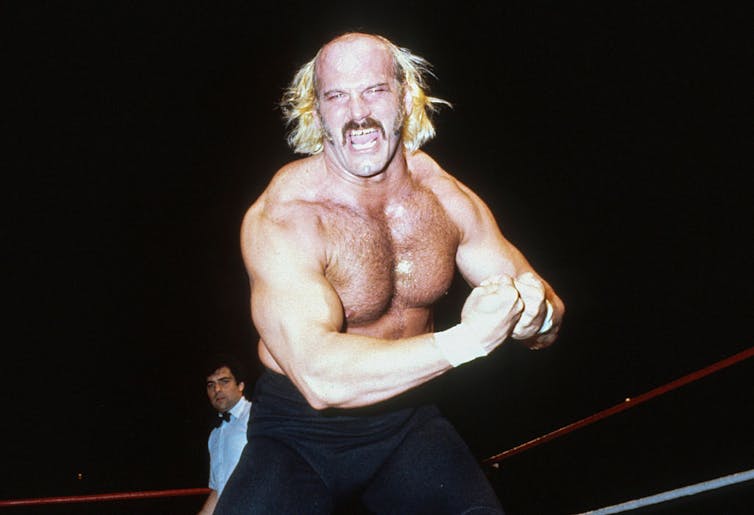
Balding man with huge muscles flexes and screams.
After Jesse ‘The Body’ Ventura tried to unionize his fellow wrestlers, WWE owner Vince McMahon caught wind of the effort – and nipped it in the bud.
WWE/Getty Images

Ventura went on to sue the WWF over unpaid royalties. During the discovery process, Ventura testified that he had learned it was Hulk Hogan who snitched to McMahon and effectively sabotaged the union drive.

Hogan never publicly admitted to telling McMahon about the rumblings of a union. The WWE has never confirmed nor denied the series of events.

Either way, there have been no unionization campaigns in professional wrestling since then.

‘Do the job’

Today’s WWE performers are legally classified as “independent contractors.” They’re responsible for their own travel, training, costuming and insurance, even as their employer owns their likeness and is indemnified from liability due to injury or death.

One of pro wrestling’s paradoxes is that the top promotion’s wrestlers aren’t unionized, even as its audience has historically skewed low income and blue collar. Wrestling has long been a family business, and most wrestlers are part-timers working additional jobs – often in blue-collar, union positions. Many of them are truck drivers and warehouse employees, construction workers and bouncers.

Wrestler-turned-scholar Laurence de Garis has written about how the language of wrestling is rich with references to labor. A “work” in wrestling is a staged storyline; to “do the job” is to lose a match. The goal of many performers is to be considered a “good worker” by peers, and WWE performers wrestle as many as 300 nights per year. The company has no offseason.

The steroid, painkiller and alcohol abuse that has been endemic to the industry may well stem from pressures on wrestlers to perform night after night, even if they’re in pain, for fear of losing their position. In the 1990s, Hogan himself confessed to extensive steroid use, which is known to contribute to heart disease.

You’d think that these harsh working conditions would make wrestlers ripe for a union. Why that hasn’t happened is up for debate. WWE bought out its competition in the early 2000s; perhaps its status as the last remaining major wrestling promotion in the nation has weakened the leverage of wrestlers. Or maybe the testosterone-driven, masculine nature of the sport makes solidarity seem like weakness.

Workers left holding the bag

The story of Ventura’s failed unionization bid is a story of what could have been. But in some sense, I see the story of the WWE as part of a broader story of the U.S. economy.

After a period of relative stability after World War II, American work since the 1980s has become dominated by mergers, buyouts, deregulation and financialization. Profits are increasingly generated by financial means such as interest and capital gains instead of through offering genuine goods or services. Layoffs and precarious work have become the norm.

WWE’s profits exploded in the 1990s and 2000s. The company went public in 1999 – though the McMahon family retained majority control – and dipped its toes into film production, reality television and online streaming.

In 2023, WWE merged with UFC’s parent company Endeavor to form TKO Group Holdings. TKO’s revenue was more than US$2.8 billion in 2024.

Meanwhile, Endeavor has been spun off as a Hollywood talent agency and was acquired by a private equity firm. The fruits of these new revenue streams and mergers haven’t trickled down to its in-ring performers. So far in 2025, WWE has laid off or released more than 30 wrestlers and at least 10 employees from the company’s corporate wing.

Middle-aged man with gray hair wearing a suit stands in a wrestling ring and raises both fists in celebration.
According to Forbes, Vince McMahon’s net worth is $3.1 billion.
Leon Halip/WireImage via Getty Images

Much as professional wrestlers have remained independent contractors, this arrangement has become normalized in the broader American economy, with more than 36% of Americans participating in the gig economy. In 2022, Stanford researchers identified gig work as a “social determinant of health,” since most gig workers lack employer-sponsored health care, paid time off or sick days.

All for one and none for all

In today’s economy, luck or happenstance, rather than merit, seem more likely to influence who achieves financial security and who scrapes by, living paycheck to paycheck.

Hulk Hogan, as professional wrestling’s biggest star for 20 years, certainly believed he earned his place at the top of the industry. But without diminishing his talents, it’s worth noting he arrived at precisely the correct moment in history to become that star. For many years, a wrestler was expected to have “shoot” skills – that is, actual wrestling expertise – should an opponent ever go rogue and turn a staged performance into a real fight.

But as McMahon’s power and influence expanded, the look, the sound and the character of the wrestler became most important. How well could a wrestler perform for the camera? How well could he sell T-shirts to young fans?

Despite Hogan’s limitations as a technical in-ring performer, his mullet, mustache and “24-inch pythons” – the nickname given to his enormous biceps – made him the right person at the right time.

Hogan also succeeded because his opponents in the ring were willing to make him look like a star. They were able to “do the job” and do it safely.

Another paradox of professional wrestling is that it requires performers to appear as if they are hurting one another. But their primary goal, in fact, is keeping one another safe.

To me, that sounds a lot like solidarity.

The Conversation

Brian Jansen does not work for, consult, own shares in or receive funding from any company or organization that would benefit from this article, and has disclosed no relevant affiliations beyond their academic appointment.

ref. Hulk Hogan and the unraveling of worker solidarity – https://theconversation.com/hulk-hogan-and-the-unraveling-of-worker-solidarity-262178

Trump has finally realised he needs economic and military muscle to force Putin to agree a peace deal

Source: The Conversation – UK – By Stefan Wolff, Professor of International Security, University of Birmingham

With only two days to go before the expiry of his latest ultimatum to end the Russian aggression against Ukraine, the US president, Donald Trump, dispatched his envoy Steve Witkoff to Moscow for the fifth time on August 6. After three hours of talks in the Kremlin between Witkoff and the Russian president, Vladimir Putin, Trump announced on social media that “Great progress was made!”

According to the US secretary of state, Marco Rubio, this includes a Russian ceasefire proposal that Witkoff is bringing back from his meeting with Putin. At a subsequent press conference, Trump indicated that he could soon meet in person with Putin and his Ukraine counterpart, Volodymyr Zelensky.

However, there was no indication of an imminent breakthrough in the US president’s quest for a ceasefire. While, during a phone call with Zelensky and European leaders, Trump appeared optimistic that a diplomatic solution was possible, he said it would take time.

Rubio also expressed caution, noting that “a lot has to happen” before a Trump-Putin-Zelensky summit, as there are “still many impediments to overcome”.

For once, Trump appears to realise he will only make progress on ending the war if he maintains the pressure on Putin. Shortly after the meeting between Putin and Witkoff, Trump issued an executive order stating: “The actions and policies of the Government of the Russian Federation continue to pose an unusual and extraordinary threat to the national security and foreign policy of the United States.”

This is hardly surprising, given that Trump’s frustration with Putin has steadily built up since the end of April. Increasingly viewing Putin as the main obstacle to peace in Ukraine, Trump has given the Russian president until August 8 to agree to a ceasefire.

Economic sanctions

Failure to comply would, Trump said, lead to severe economic disruption for Russia’s war economy. If activated, US sanctions are likely to target Russia’s so-called shadow fleet of oil tankers that the Kremlin uses to sell oil at prices above the G7-imposed price cap of (currently) US$60 (£45) per barrel.

The US president is also considering the imposition of 100% tariffs on imports from countries still buying Russian oil. This would particularly affect China and India, Russia’s largest costumers. If Beijing and New Delhi were to decrease their oil imports, it would deprive the Russian war economy of much-needed revenue.

But this is a big “if”. There are serious doubts that China can easily be pushed to wean itself off Russian oil supplies.

India has indicated that it will not bow to US pressure. While trade negotiations between Washington and Beijing are ongoing, talks with India have broken down for the time being.

But, as a likely indication of Trump’s determination to get serious on increasing pressure on the Kremlin and its perceived allies, the US president has imposed an additional 25% tariff rate on Indian imports to the US. This will be on top of the existing 25% rate, and will come into effect within three weeks.

China and India might continue to publicly resist US pressure. But, given the billions of dollars of trade at stake, they might try to use their influence with Putin to sway him towards at least some concessions that may lead to a ceasefire. This could give both Trump and Putin a face-saving way out – albeit not one that would move the dial substantially closer to a peace agreement.

There is also the question how Russia would respond – and concessions do not appear to be foremost on Putin’s mind. Expect more nuclear sabre rattling of the kind that has become the trademark of Dmitry Medvedev, the former Russian president and now one of the Kremlin’s main social media attack dogs.

Such threats were mostly ignored in public in the past. But in another sign of his patience wearing thin, Trump responded to Medvedev’s latest threat by ordering “two Nuclear Submarines to be positioned in the appropriate regions, just in case these foolish and inflammatory statements are more than just that”.

Military muscle

Neither the Kremlin nor the White House are likely to go down the path of military, let alone nuclear, escalation. But like Washington, Moscow has economic levers to pull too.

The most potent of these would be for Russia to disrupt the Caspian oil pipeline consortium, which facilitates the majority of Kazakh oil exports to western markets through Russia. If completely shut down, this would affect around 1% of worldwide oil trade and could lead to a spike in prices that negatively affects global economic growth.

ISW map showing the state of the war in Ukraine, August 6 2025.
The state of the war in Ukraine, August 6 2025.
Institute for the Study of War

Trump’s economic statecraft will probably produce mixed results at best – and only slowly. But the US president has also recommitted to supporting Ukraine militarily – at least by letting Kyiv’s European allies buy US weapons. Germany was the first to agree the purchase of two much-needed Patriot air defence systems from the US for Ukraine.

Since then, this new way of funding arms for Ukraine has been formalised as the so-called Prioritised Ukraine Requirements List.

It will require substantial financial commitments from Nato countries to turn this new support mechanism into a sustainable military lifeline for Ukraine. But the scheme got off to a relatively smooth start with the Netherlands and three Scandinavian members of the alliance – Denmark, Norway and Sweden – quickly following in Germany’s footsteps.

These recent developments indicate Trump has finally accepted that, rather than trying to accommodate Putin, he needs to put pressure on him and his backers – both economically and militarily.

If the US president wants a good deal, he needs more leverage over Putin. Weakening Russia’s war economy with further sanctions and blunting the effectiveness of its military campaign by arming Ukraine are steps that might get him there.

When and how the war in Ukraine ends will ultimately be determined at the negotiation table. But how soon the belligerents get there – and what the balance of power will be between them – will be decided on the battlefields of eastern and southern Ukraine.


Sign up to receive our weekly World Affairs Briefing newsletter from The Conversation UK. Every Thursday we’ll bring you expert analysis of the big stories in international relations.


The Conversation

Stefan Wolff is a past recipient of grant funding from the Natural Environment Research Council of the UK, the United States Institute of Peace, the Economic and Social Research Council of the UK, the British Academy, the NATO Science for Peace Programme, the EU Framework Programmes 6 and 7 and Horizon 2020, as well as the EU’s Jean Monnet Programme. He is a Trustee and Honorary Treasurer of the Political Studies Association of the UK and a Senior Research Fellow at the Foreign Policy Centre in London.

ref. Trump has finally realised he needs economic and military muscle to force Putin to agree a peace deal – https://theconversation.com/trump-has-finally-realised-he-needs-economic-and-military-muscle-to-force-putin-to-agree-a-peace-deal-262242

Longer lashes, lasting damage? What to know about lash serums

Source: The Conversation – UK – By Alison Ng, Lecturer in Optometry and Vision Sciences, Cardiff University

Zaruna/Shutterstock

Longer, darker lashes are having a moment. For those avoiding the risk or expense of lash extensions, serums can seem like a safer, more affordable option. But not all lash serums are created equal – and some come with hidden side-effects.

The key difference lies in the ingredients. Some lash serums use conditioning agents like peptides or plant oils, while others contain powerful pharmaceutical ingredients originally developed for treating eye disease.

In 2001, a new medication called bimatoprost was approved to treat glaucoma and ocular hypertension – two conditions involving pressure buildup inside the eye that can damage the optic nerve and cause vision loss.

Unlike earlier treatments, bimatoprost worked well for patients who hadn’t responded to other drugs, had fewer systemic side effects (effects on the whole body rather than just the eye) and required less frequent dosing than some other glaucoma drops.

But doctors soon noticed something unexpected: their patients’ eyelashes were growing longer, thicker and darker.

Researchers still don’t fully understand how bimatoprost stimulates lash growth, but it appears to extend the anagen phase – the active growth phase – of the lash life cycle.

In 2008, the same drug (now marketed as Latisse) was approved by the US Food and Drug Administration (FDA), the federal agency responsible for evaluating the safety and effectiveness of drugs and medical devices, to treat eyelash hypotrichosis, a condition where eyelashes are sparse or missing.

It was initially prescribed for people who had lost their lashes due to chemotherapy, alopecia areata (an autoimmune disorder causing hair loss), or trichotillomania (a compulsive hair-pulling condition).

Extensive research shows that bimatoprost is effective at making lashes longer, thicker and darker, with noticeable results after 16 weeks of daily use. But the results are temporary: once you stop using it, your lashes return to their natural growth cycle.

Side-effects

Bimatoprost belongs to a class of medications called prostaglandin analogues (PGAs), which have been widely used in eye care since the 1990s. Because of this, its side-effects are well documented. When used for lash growth, bimatoprost can cause burning, redness, dryness and eye irritation. These usually go away when the product is stopped.

But there are also more serious cosmetic changes to be aware of, including darkening of the skin on the eyelid, fat loss around the eyes, creating a hollow, sunken look, permanent iris darkening (the coloured part of the eye), unwanted hair growth where the serum spreads and, in rare cases, drooping of the upper eyelid, which may require surgery to correct.

In the UK, bimatoprost remains a prescription-only medication. However, the boom in over-the-counter lash serums sold online and in shops has made similar products more accessible – and potentially more confusing.

A recent investigation by the UK government found that almost one in four lash serums sold in the UK contain PGAs such as isopropyl cloprostenate. This chemical is not as well studied as bimatoprost, but case reports suggest it can cause skin darkening, dryness and hollowing of the eye area, sometimes after just a few weeks of use.

In the US, the FDA issued warnings over a decade ago stating that any cosmetic product containing these ingredients and making growth claims should be treated as a drug, not a cosmetic.

A sample of quotes from 1-star reviews of an isopropyl cloprostenate lash serum that can be purchased online from the US. These reviews highlight the range of side effects and their speed of onset.
Alison Ng, CC BY-ND

Consumers may be unaware they’re using a pharmaceutical-mimicking ingredient. Sweden banned PGAs in lash serums in 2013. Canada prohibits them in all cosmetic products. Even if a product claims to be “PGA-free,” check the ingredients list: anything ending in “-prost” is a red flag.

‘Natural’ or peptide-based alternatives

Some lash serums use peptides, which may help strengthen lashes by boosting keratin or supporting follicle health. These are often combined with conditioning agents to reduce breakage. While seen as a gentler alternative to PGAs, most studies on peptides focus on scalp hair, not eyelashes, so evidence for lash growth is limited.

Other serums rely on castor oil or plant-based extracts, but their effectiveness is largely anecdotal and not supported by robust science.

There is no guaranteed, side-effect-free way to make lashes grow dramatically longer. Prescription lash serums like bimatoprost are proven to work – but they come with potential risks, especially with long-term use. Over-the-counter products may seem safer, but many contain hidden prostaglandin analogues buried deep in the ingredients list with similar side effects. Peptide and oil-based serums are less risky, but there’s little strong evidence that they work.

Our eyes are delicate and, unlike beauty trends, they’re not replaceable. If you’re thinking about enhancing your lashes, read the label, do your research and speak to an eye care professional. The price of longer lashes shouldn’t be your eye health.

The Conversation

Alison Ng is affiliated with the British Contact Lens Association (BCLA), a charitable membership organisation, which disseminates evidence-based practice guidance for eye care practitioners. Alison Ng is a member of the Association of Optometrists (AOP), whose role is to protect, support and represent eye care practitioners in the UK in protecting the nation’s eye health.

Byki Huntjens is President of the British Contact Lens Association (BCLA), a charitable membership organisation, which disseminates evidence-based practice guidance for eye care practitioners.
Byki Huntjens is an employee the Association of Optometrists (AOP), whose role is to protect, support and represent eye care practitioners in the UK in protecting the nation’s eye health.

ref. Longer lashes, lasting damage? What to know about lash serums – https://theconversation.com/longer-lashes-lasting-damage-what-to-know-about-lash-serums-261924

As protesters and politicians call for the closure of asylum hotels, what are the alternatives?

Source: The Conversation – UK – By Giorgia Doná, Professor of Forced Migration and Co-director of the Centre for Migration, Refugees and Belonging, University of East London

Anti-migration protesters and counterprotesters have clashed in recent weeks outside of hotels housing asylum seekers. While the protests have not reached the violent scale of the riots in summer 2024, a number of people have been arrested on charges related to violent disorder. Councillors in Epping have called for the closure of asylum hotels in the area.

The UK government has a statutory duty under the Immigration and Asylum Act 1999 to provide accommodation to asylum seekers while their claims are being assessed if they would otherwise be destitute.

Asylum hotels have only been used at scale relatively recently. Home Office figures show that as of March 2025, 32,345 asylum seekers were housed in 218 hotels, down from a peak of more than 56,000 in more than 400 hotels in September 2023.


Read more:
How the UK became dependent on asylum hotels


As well as the financial costs, long term use of hotels poses numerous challenges to those living there. This includes loss of privacy and independence, lack of access to cooking facilities, exclusion from meaningful activities and social isolation.

The government has pledged to end the use of hotels by 2029, by moving asylum seekers to more cost-effective accommodation. This is expected to mean expanding the use of former military barracks, and working with local authorities to house people.

Here are three alternatives to asylum hotels and what they would mean for those living there and the surrounding communities.

1. Large-scale sites like military bases

Large former military sites such as Wethersfield air base in Essex are currently used to house asylum seekers, and are set to be expanded.

These sites are known for their poor conditions inside. An all-party parliamentary group report described these kinds of facilities as quasi-detention. They are overcrowded and isolated, with inadequate access to healthcare and legal services. Acts of self harm have been reported at such sites.

One site, Napier barracks, has been slated for closure after years of concerns about overcrowding and poor conditions. Keir Starmer also said during the 2024 election campaign that Wethersfield should close – though it is now one of the sites targeted for expansion.


Read more:
Asylum housing tycoon is among the UK’s wealthiest – here’s what conditions are like inside the properties his company runs


Scaling up these facilities also risks replicating the community tensions associated with hotels. There have been demonstrations and unrest at large accommodation sites already.

2. Community-based housing

Arguably the best opportunity for addressing the hotel issue is reviving partnerships between the Home Office and regional and local governments.

A model for this already exists. The “dispersal system”, introduced by the Immigration & Asylum Act, offers eligible asylum seekers accommodation in communities around the UK to ease pressure on particular areas. Before this, asylum seekers tended to seek accommodation primarily in London and the south-east.

At present, 62% of asylum seekers awaiting a decision are accommodated by this system, primarily in shared housing.

Since 2012, the Home Office has contracted private companies to source this accommodation. Local authorities have been largely cut out, and research has found that accommodation standards have been lowered considerably.

For the system to be an effective alternative to hotels, partnerships with local authorities should arguably be brought back in. Regional and local governments have crucial knowledge of the housing stock, and connections with landlords and housing providers. Local authorities have also expressed concern with housing standards, availability and competition under the current privatised system.

Lessons can be learned from local government management of asylum housing in the 2000s. This system allowed for more robust oversight of accommodation standards, and better integrated local support and welfare services with accommodation.

Local authorities are better placed than private contractors to ensure that the management of asylum accommodation is mindful of how it relates to the wider community.

Inspiration might be drawn from the UK’s recent Syrian and Afghan resettlement schemes. These have been organised through effective partnerships with local authorities, reflecting developments across Europe.

A clause allowing for an early break in asylum accommodation contracts in 2026 offers the opportunity for reform. But given the massive pressures on local government budgets, much will depend on what financial support the Home Office is prepared to put towards this process.

A recent report from asylum charities proposes a subsidy scheme to support local and regional authorities in purchasing and renovating homes for asylum seekers and others in need of temporary housing.

3. Homestays

A novel alternative to housing asylum seekers is to welcome them into people’s homes. This is probably the most radical option. But it has previously been used, in the UK, at scale: the Homes for Ukraine scheme connected over 150,000 people seeking refuge with people willing to host them.

In May 2023, one of the architects of the plan, Dr Krish Kandiah, urged the government to adopt a similar scheme for refugees from Sudan. Foster care placements for unaccompanied children seeking asylum have also had positive outcomes.


Read more:
‘Friends for life’: how living with locals helped refugees feel at home in a new country


While evidence suggests that it is easier to find hosts for women and children, in European countries homestay accommodation is becoming a complementary option to mainstream models.

In Germany, homestay offers a flexible alternative to traditional reception systems that host asylum seekers separately from residents. In Italy, coabitazioni solidali (individuals sharing spaces under the principle of solidarity) operate across the country. As the UK government phases out hotels, the use of homestays deserves closer attention.

Even before the recent flare-ups, it was clear that hotel use has become unsuitable and unsustainable housing for asylum seekers. Asylum accommodation needs to be rethought, ideally as part of a broader response to the UK’s housing emergency.

The Conversation

The authors would like to acknowledge the contributions of Anna Lindley to this piece.

Giorgia Dona, Charlotte Sanders and Paolo Novak do not work for, consult, own shares in or receive funding from any company or organisation that would benefit from this article, and have disclosed no relevant affiliations beyond their academic appointment.

ref. As protesters and politicians call for the closure of asylum hotels, what are the alternatives? – https://theconversation.com/as-protesters-and-politicians-call-for-the-closure-of-asylum-hotels-what-are-the-alternatives-262270

Ukraine’s drone air war has given Zelensky additional bargaining power with Putin – new research

Source: The Conversation – UK – By Marcel Plichta, PhD Candidate in the School of International Relations, University of St Andrews

Donald Trump appears to be making another attempt to organise a three-way summit with Vladimir Putin and Ukraine’s president, Volodymyr Zelensky, to end the Russian invasion.

Putin’s reluctance to meet his Ukrainian counterpart so far has often made it appear that he doesn’t think Ukraine has enough bargaining power to enter direct negotiations. But one thing that may be helping to shift the balance in Zelensky’s favour at this stage in the war is Ukraine’s enhanced drone capability.

Ukrainian drones have made it impossible for the Russian population to isolate itself from the effects of a conflict fought mostly on Ukrainian soil. Attacks on Moscow, in particular, have caused disruptions to air travel within Russia and forced the Russian government to divert dozens of air defence systems to ensure that the capital is protected.

Kyiv’s use of long-range one-way attack (OWA) drones against Russia has done far more damage to Russia’s military and economy than had previously been predicted. Previous drone analysis suggested that the current generation were too easy for defenders to shoot down to have a strategic impact and that prior cases of drone use overstated their strategic benefits.

Unlike traditional military drones, OWA drones are designed to detonate on or above a designated target. In my new research, I analysed Ukraine’s use of these OWA drones from mid-2022 to early 2025 to research whether they can indeed have a notable strategic impact on conflict. I found that Ukraine’s OWA drone campaign was not only able to overcome Russian air defences, but that the impact of the campaign has so far had far-reaching effects, ranging from where Russia has placed its air defences to stoking fuel price rises.

Independent estimates suggest that the damage to Russian oil facilities caused by OWA drones, from late 2024 to early 2025, could have cost Russia more
than US$700 million (£516 million). Ukraine’s drone campaign has done so much damage to Russian infrastructure and economy, that it has given Ukraine’s president, Volodymyr Zelensky, a significant bargaining chip with Vladimir Putin.

Ukraine launches drone attack on Moscow.

In early 2024, Ukraine launched a large series of strikes on Russian oil
infrastructure. By April, Nato officials claimed that the strikes had temporarily halted approximately 15% of Russia’s refining capacity, caused a halt in exports and caused fuel price spikes in Russia.

Once Ukrainian drones started regularly attacking targets deep within Russia, Moscow had to respond. Putin began by moving air defence systems. For instance, in early 2023, the Russian military placed Pantsir air defence systems on Moscow rooftops to intercept OWA drones. Russia was also forced to move air defence systems to public places to reassure the public, once Ukrainian drone attacks began to hit targets near major cities.

My assessment is based on data collected from Ukrainian and international journalists as well as independent researchers who documented Ukrainian strikes and the level of damage. On the economic side, Ukrainian drones have struck dozens of oil refineries, depots, and storage facilities. Russia’s economy is heavily reliant on the fossil fuel industry, so damaging these kinds of facilities quickly increases costs and lowers state revenue.

The Russian military is also under pressure from these drone attacks. Ukraine has successfully struck airbases, long-range radars and command centres that Russia needs to continue the war. Notably, Ukraine has struck the drone factory at Yelabuga (where Russia manufactures its own OWA drones) on multiple occasions in an effort to slow its drone campaigns.

Zelensky’s bargaining power

The success of the drone campaign gives Ukrainian diplomats a strong bargaining chip. Zelensky’s calls for a ceasefire in the sky and at sea in early 2025 were partially underpinned by the threat Ukraine was able to pose.

Belarussian president Alexander Lukashenko has said that Putin wanted to pressure Ukraine to end drone attacks by appealing to the US, which indicates that the Kremlin is feeling public pressure on this front. And recently Zelensky offered Donald Trump a “mega deal” to share its drone technology and bring the US up to speed, in exchange for US weapons.

So what accounts for the unexpected impact of Ukraine’s drone use? The data indicates that while individual drones are often easy to shoot down, large numbers of long-range OWA drones attacking multiple targets are tricky to stop. This is because Russia needs to guess where Ukraine will attack and place defences accordingly.

Russia has lots of air defence systems, but it is also the largest country on earth and cannot defend everything at once. The need to pick and choose what areas of the country to defend and which to leave vulnerable creates an air defence dilemma for Russia that Ukraine has exploited.

My findings that an OWA drone campaign can impose serious costs on defenders like Russia are consequential for how other countries should organise their air defences. As the case of Ukraine shows, the fact that these drones combine long-range and relative precision means that attackers can target lots of different sites across the country and take circuitous paths around air defence to get there. These factors make it difficult for all nations to anticipate where the next attack will come from and take action in time.

This is a global problem. The relative ease of manufacturing, procuring, and proliferating OWA drones, compared to a missile means that many states and terror groups could acquire the ability to launch long-range attacks much more easily than a few years ago. Drones costs tend to be in the tens of thousands of dollars while missiles are often in the hundreds of thousands at the very least.

Countries that might not benefit from procuring OWA drones may still have to find ways to intercept hostile ones. The UK, for instance, found itself shooting down Houthi OWA drones that threatened shipping in the Red Sea. The UK development of “Dragonfire”, a ship-mounted air defence laser for the Royal Navy, was at least partially motivated by this kind of threat.

Even as Kyiv puts more effort into developing conventional missiles, OWA drones have proven too effective to ignore. For the Russian leadership, these attacks create a serious dilemma and force them to pick what parts of the country are “worth” defending. This kind of technology is altering the nature of conflict and other nations will need to take note.

The Conversation

Marcel Plichta works as an intelligence instructor for Grey Dynamics Ltd.

ref. Ukraine’s drone air war has given Zelensky additional bargaining power with Putin – new research – https://theconversation.com/ukraines-drone-air-war-has-given-zelensky-additional-bargaining-power-with-putin-new-research-260336

RFK Jr is wrong about mRNA vaccines – a scientist explains how they make COVID less deadly

Source: The Conversation – UK – By Deborah Dunn-Walters, Professor of Immunology, University of Surrey

Joshua Sukoff/Shutterstock

US health secretary Robert F. Kennedy Jr has announced he is cancelling US$500 million (£374 million) of research into mRNA vaccines, citing unproven concerns about their safety and long-term effects.

Kennedy has claimed that mRNA vaccines “encourage new mutations and can actually prolong pandemics” – a misleading statement that contradicts the scientific consensus on viral evolution and effects of vaccination.

But scientific research shows that mRNA vaccines have saved millions of lives.

As an immunologist, I’ve spent years studying how the body responds to SARS-CoV-2 and other respiratory viruses. Let’s be clear: there is no credible evidence that mRNA vaccines cause viral mutations – genetic changes that occur as a virus copies itself – or that they’re ineffective against respiratory infections like COVID-19 or flu. These claims misrepresent both how viruses evolve and how vaccines actually work.

Unlike traditional vaccines, which introduce weakened or inactive parts of a virus to trigger immunity, mRNA vaccines work by delivering genetic instructions that teach our cells to produce a harmless piece of the virus (usually a protein found on its surface). This gives the immune system a preview of what to fight, so it’s ready if the real virus shows up.

Our bodies are constantly fighting off infectious organisms – viruses, bacteria and other pathogens – that rely on us as hosts to survive and reproduce. As part of this ongoing battle, viruses naturally mutate over time. This process happens with or without vaccines.

Each time a virus replicates, small copying errors can occur in its genetic material. Some of these mutations have no impact; others give the virus a competitive advantage, helping it spread more efficiently. That’s how new variants arise.

In the case of COVID-19, scientists observed that the virus was mutating from the start. Variants appeared both within individuals (“intra-host variation”) and between them (“inter-host variation”). Every so often, one version would gain a competitive advantage – spreading faster, evading immunity, or becoming more infectious – and take over. These are the variants you might remember: alpha, delta, omicron.

This is how evolution works: organisms reproduce and change, and some changes help them thrive.

The immune system’s defence

Now, let’s look at the other side of the battle: our immune system.

Some parts of our immune defence are always on: physical barriers like skin, and innate immune responses that are ready to fight anything unfamiliar. But our most powerful defence is adaptive immunity: a specialised response that targets a specific invader once it’s been identified.

This is where vaccines come in. When a virus invades the body for the first time, it can cause serious illness before our adaptive immune system knows how to respond. But vaccines, including mRNA vaccines, act like a rehearsal. They introduce a harmless piece of the virus (often a single protein) so the immune system can learn to recognise it and respond faster in the future.

mRNA vaccines work by delivering a snippet of genetic instructions to our cells, which then produce the viral protein temporarily. Our immune system then builds a response to it. This means we get all the immune training with none of the illness – unlike actual infection, which can be dangerous.

Vaccines don’t cause viruses to mutate. The mutations already exist – they emerge randomly and constantly during viral replication. What vaccines (and our immune systems) do is filter which variants survive.

When the original COVID-19 virus encountered a population with strong immune defences – built through vaccination or past infection – it was effectively stopped. That virus lost its competitive edge. But other, naturally occurring variants with slightly different surface proteins (the “outer coat”) could sometimes sneak past these defences. That’s how new variants emerged.

Importantly, neither vaccines nor natural immunity created those mutations – they simply selected which ones became dominant.

The good news

There’s a silver lining. Even when a variant partially evades immune defences, our bodies often still recognise parts of it. This is called cross-reactivity – and it can mean we get less sick, even with a new strain.

Over time, as we’re exposed to more variants through infection or updated vaccines, our immune system refines its response. It becomes better prepared to fight future versions of the virus – just like it’s done with flu and other infectious diseases.

COVID-19 hasn’t disappeared, but thanks to mRNA vaccines and our growing immune memory, it’s far less deadly than it was in 2020.

Despite the claims of high-profile figures like RFK Jr, mRNA vaccines do not cause viruses to mutate. Mutations are part of viral evolution: a natural process that happens regardless of our intervention.

What vaccines do is give us a fighting chance. They’ve saved millions of lives by reducing severe illness, hospitalisations and death. They remain one of the most powerful tools we have in the ongoing battle against infectious disease.

The Conversation

Deborah Dunn-Walters receives funding from UKRI (BBSRC). She is affiliated with The University of Surrey, The British Society for Immunology and The Vivensa Foundation

ref. RFK Jr is wrong about mRNA vaccines – a scientist explains how they make COVID less deadly – https://theconversation.com/rfk-jr-is-wrong-about-mrna-vaccines-a-scientist-explains-how-they-make-covid-less-deadly-262776