Rural women are at a higher risk of violence − and less likely to get help

Source: The Conversation – USA (3) – By Walter S. DeKeseredy, Professor of Sociology, West Virginia University

Rural areas have higher rates of violence against women than suburban and urban places. pocketlight/E+ via Getty Images

I have been teaching a course on rural criminology since 2014, and most of my students are surprised by the information on violence against women presented to them.

Due to the lack of media attention to rural areas, my students come to class with the impression that all countrysides and small towns are safer than urban and suburban locales. In reality, rates of violent crime are often higher in many rural communities, and at times there’s even more silence around it.

Nearly 50 years of research shows that male violence against women knows no geographical or demographic boundaries. It occurs among all socioeconomic groups and in almost all communities, regardless of their size and location. Yet, crime in rural and remote places is reported to the police at lower rates than in urban areas.

Most criminology scholars do not study violence of any type in rural communities, which partly contributes to the widespread belief that rural women are safer than their urban and suburban counterparts. Media reporting also overlooks brutal forms of violence perpetrated by men in intimate relationships with women.

Hidden in plain sight

Janet, from rural southeast Ohio, whom I interviewed along with sociologist Martin Schwartz in 2003, like some other women in this region we talked to, was beaten by her husband after going through brutal degradation:

“He wanted sex … or with his buddies or made me have sex with a friend of his. … He tied me up so I could watch him have sex with a 13-year-old girl. And then he ended up going to prison for it.”

Janet is by no means an outlier. I analyzed aggregate 1992 to 2005 National Crime Victimization Survey data along with criminologists Callie M. Rennison and Molly Dragiewicz. This data conclusively shows that rural women across the U.S. report physical and sexual violence at higher rates than those in more densely populated areas.

Research also shows that rural women in the U.S. are more likely to be killed by their current or former male partners compared to their urban and suburban counterparts. A study looking at data from 2005 to 2017 across 16 states, for example, found that female homicide rates are higher in rural places.

Another rural Ohio woman told Schwartz and me about the violence she suffered in her relationship: “He’d come home and pull a double barrel and cock both barrels and said he was going to kill me. And it was like, wait a minute here, you know, it was two o’clock in the morning.”

Why are rural women at higher risk?

Research conducted since 1988 has identified several reasons for rural women being at higher risk of violence compared to those living in urban and suburban places. These include geographic and social isolation, widespread acceptance of violence against women, and community norms prohibiting women from seeking social support. What makes it even worse is the absence of effective social support services and the higher rates of gun ownership.

A woman on the floor, face hidden in her knees, with the looming shadow of a man’s fist beside her.
Geographic and social isolation can make rural women more vulnerable.
funky-data/E+ via Getty Images

Many social workers, for example, must travel vast distances to reach rural battered women, often at their own expense. What is more, rural abusers “feed off” their female partners’ isolation.

As a woman Schwartz and I interviewed from Meigs County, Ohio, told us, “I didn’t have a car. I wasn’t allowed to go anywhere.” Her husband, however, who had “plenty of cars,” disabled them to stop her from seeking freedom and independence. “He taught me a lot about cars and I knew what parts I need. And there would be no spare. So, I couldn’t leave.”

In rural sections of Ohio and other states, as my research uncovered, there is common acceptance of abuse of women. In many rural areas, community norms often prohibit survivors from publicly talking about their experiences and from seeking help.

As one Appalachian woman put it: “I don’t sit around and share. I keep it to myself. Um, I, I believe that’s part of my mental illness. But I’m not one to sit around and talk about what’s happened.”

Jackie, another rural Ohio woman Schwartz and I interviewed, said that numerous women in her community suffer in silence: “It’s like we see, but we don’t. It’s like three monkeys: don’t see, don’t hear, don’t speak.”

Other women told similar stories of the unwillingness of people in their community to help them.

Gun ownership is a strong correlate of intimate partner violence in rural parts of the U.S.: In rural areas, 46% of adults own guns compared to 19% in urban places. Moreover, firearms are used in 54% of all rural domestic homicides.

What Neil Websdale, director of Arizona State University’s Family Violence Center, stated nearly 30 years ago still holds:

“Rural culture, with its acceptance of firearms for hunting and self-protection, may include a code among certain men that accepts the casual use of firearms to intimidate wives and intimate partners. In urban areas, it is more difficult for abusers to discharge their weapons and go undetected. People in the country are more familiar with the sound of gunshots and often attribute the sound to legitimate uses such as hunting.”

Gun ownership can create safety concerns for social workers, many of whom work alone.

Pathways to prevention

One, albeit highly controversial, prevention strategy is banning the possession, purchase, sale and transfer of handguns, which are the weapons men use the most to kill women regardless of where they live. That would greatly reduce the rate of male-to-female homicide in rural places, as it would in more densely populated areas.

For example, it is estimated that 38% fewer women are shot to death by intimate male partners in states where background checks are required for all handgun owners.

Similarly, the federal Violence Against Women Act includes provisions that, when an order of protection – also referred to as a restraining order – is granted, it leads to the person being restrained losing any gun permits or permission to keep guns at home.

This, in turn, leads to a reduction in intimate femicide. A number of states have gone further than the federal law, extending gun possession bans to people under temporary – not just permanent – restraining orders. Such bans have further reduced intimate partner homicide, by a best estimate of 14%.

Libraries as safe spaces

Rural libraries have proven to be a vital resource in the struggle to end interpersonal forms of abuse of women. They are more accessible in many U.S. rural communities than are shelters, public transportation and other services.

Rural librarians can direct survivors to legal assistance and domestic violence service websites, help find books and pamphlets that are useful for survivors, and provide programming for survivors’ children if survivors need time to think about their options.

The librarian could also help survivors travel from the library to the nearest shelter and work with the police to provide transportation assistance. Moreover, the librarian could help connect survivors with shelter workers via telephone and arrange for the arrival of survivors and their children at a shelter.

We are starting to see attorneys offering survivors legal advice in rural public libraries and providing libraries with information kiosks that include materials on legal issues related to the abuse of women.

A word of caution, though, is necessary. Libraries and other places that offer services to abused rural women require architectural changes that preclude people from hearing survivors talk about their violent experiences.

The chances that people might overhear survivors talking is much greater in smaller communities and hence more likely to jeopardize the safety of survivors and their children.

A multipronged strategy is always necessary. For example, some experts in the field call for setting up women’s police stations and safe houses in rural areas. They also recommend getting rural men to participate in anti-violence and anti-sexist community-based activities, such as holding town hall meetings to raise awareness about violence against women.

All too often, people think of ending violence as an event simple enough to fit on a bumper sticker or the side of a coffee mug. Just leave, and then it will be over.

Unfortunately, for a large number of women and children, particularly in rural areas, leaving and ending up in a safe place is a complex, ongoing process, and for some women and children it is one that never ends.

The Conversation

Walter S. DeKeseredy receives funding from West Virginia University..

ref. Rural women are at a higher risk of violence − and less likely to get help – https://theconversation.com/rural-women-are-at-a-higher-risk-of-violence-and-less-likely-to-get-help-258976

From public confession to private penance: How Catholic confession has evolved over centuries

Source: The Conversation – USA (3) – By Timothy Gabrielli, Gudorf Chair in Catholic Intellectual Traditions, University of Dayton
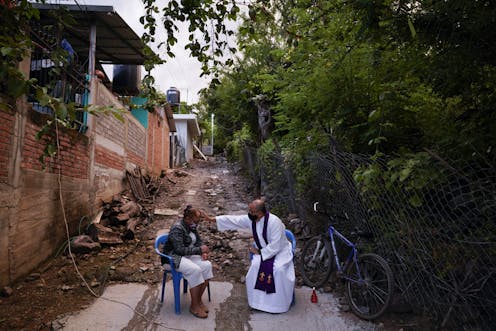
A priest blesses a person giving confession in Aguililla, Mexico, on Oct. 29, 2021. AP Photo/Eduardo Verdugo

The 1953 Alfred Hitchcock film “I Confess,” based on an earlier play, features a priest suspected of murder. He’s innocent, and has even heard the murderer’s confession – but cannot clear his own name.

The Catholic sacrament of reconciliation, also known as penance or confession, has been a compelling set piece for fiction writers over the ages, from medieval novels to contemporary films. One reason the practice has intrigued both authors and audiences is the dramatic potential of the “seal of the confessional” – that is, the requirement that priests not disclose any identifying information about what they have heard during confession.

Recently, this sacrament has garnered nonfictional attention. Washington state passed a law on reporting child abuse, which was scheduled to go into effect in July 2025. In some circumstances, the law requires clergy to report abuse or neglect, even if it is revealed during confession. On July 18, however, a federal judge put the law on hold, amid a lawsuit alleging the measure would violate First Amendment rights to religious freedom.

But what is the sacrament of reconciliation, and how has the practice developed in the Catholic Church?

‘I have sinned’

Today, the most common form of confession takes place between a penitent and the “minister of the sacrament” – a priest or bishop. There may be a screen between the two, or they may sit across from one another without anonymity.
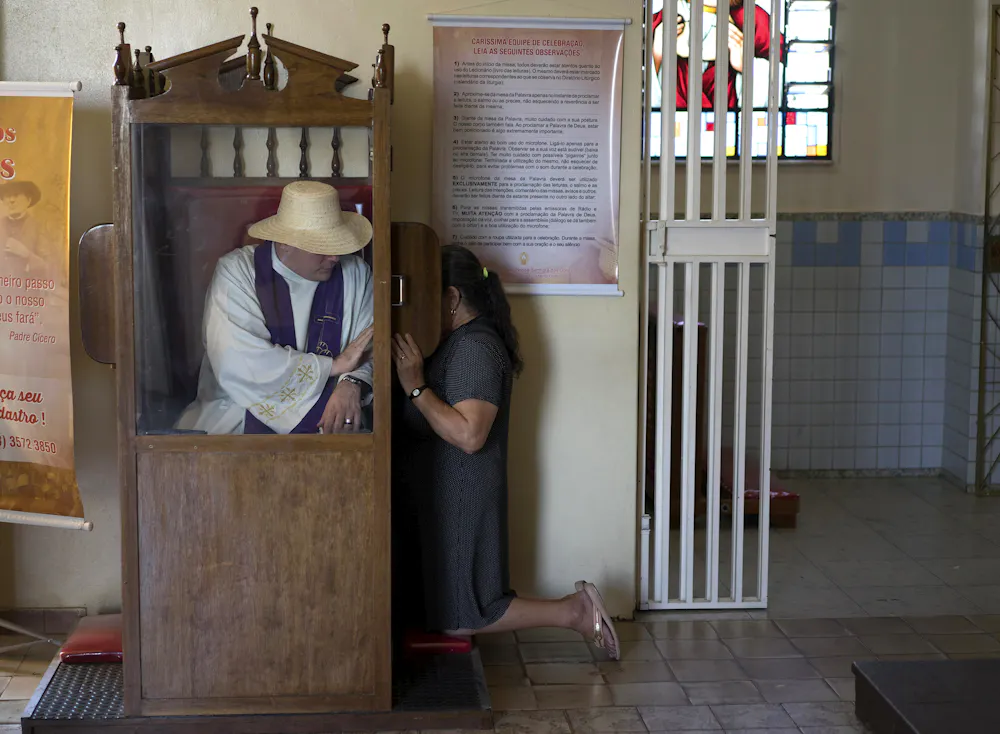
A man in a white robe and straw hat sits inside a wooden cubicle as a woman keels beside it, with a small screen shielding her face.
A priest listens to a pilgrim’s confession at Our Lady of Perpetual Help Church in Juazeiro do Norte, Brazil, on Oct. 30, 2015.
AP Photo/Leo Correa

At the beginning of the rite, the minister greets the penitent “with kindness,” offers a prayer and sometimes reads from the Bible.

The penitent then confesses the sins they believe they have committed since their last visit. In Catholic teaching, a sin is defined as a failure in loving God and others properly.

Christians believe that sin distances humans from God, but that Jesus’ life, death and resurrection repaired that wounded relationship. The confessor – the ordained clergy hearing the confession – reminds the penitent that through the sacrament, they participate in this central mystery of faith.

Following the confession, the priest or bishop proposes an act of penance: a prayer or action by which the penitent might grow in holiness and make amends. Afterward, the penitent offers a prayer of contrition, asking for God’s mercy. The confessor then absolves the penitent in the name of God before exclaiming, “The Lord has forgiven your sins,” and dismissing the penitent to “Go in peace.”

History of the sacrament

Confession is a form of repentance: turning away from wrongdoing and heeding the call of God, a theme long emphasized in the Jewish and Christian traditions. While still an important emphasis today for Jews and Christians, practices around repentance vary.

In the Catholic tradition, baptism – the first sacrament a person receives – washes away sin and brings the baptized into the church. As Jesus’ apostle Peter says in the New Testament, “Repent and be baptized every one of you in the name of Jesus Christ so that your sins may be forgiven, and you will receive the gift of the Holy Spirit.”

A man in white robes and a white skullcap, seen from the back, kneeling in front of an ornate wooden cubicle.
Pope Francis kneels in confession during a penitential liturgy in St. Peter’s Basilica at the Vatican, March 9, 2018.
Stefano Rellandini/Pool Photo via AP

Gradually, the church developed communal practices for reconciliation after baptism. Typically, penitents would remain outside church gatherings, demonstrating their repentance by prostrating themselves, and then publicly confess. Though the historical record is complex, communal penance usually could be undertaken only once.

In an important variation, medieval soldiers returning from war regularly spent an extended period of penance in monasteries – a recognition of Catholicism’s teaching that any war is inherently sinful.

During the Middle Ages, the practice of individual confession developed in what is now Ireland. The rite introduced private confession to a priest, who ritually represents both Christ and the wider church. Eventually, this rite became repeatable.

Individual confession was codified into church law at the Fourth Lateran Council, a meeting of bishops in 1215. The council also emphasized the sanctity of the seal of confession – that is, clergy’s requirement not to “betray” a penitent by revealing something confessed to them during the sacrament of reconciliation.

This absolute confidentiality helps give penitents the confidence to approach confession forthrightly, without holding back. The automatic consequence for a confessor who breaks the seal of confession is excommunication – that is, banned, at least temporarily, from the sacraments of the church. In some cases, the offender can be removed from the clergy.

Public and private

Two elements of confession are emphasized throughout Christian history, sometimes in a kind of back-and-forth: interior attitude of repentance, and outward expression of that repentance. Catholicism teaches that speaking aloud one’s sins makes them concrete in a way that private prayer cannot – and makes the forgiveness concrete, as well. As Pope John Paul II wrote, confession “forces sin out of the secret of the heart and thus out of the area of pure individuality, emphasizing its social character as well.”
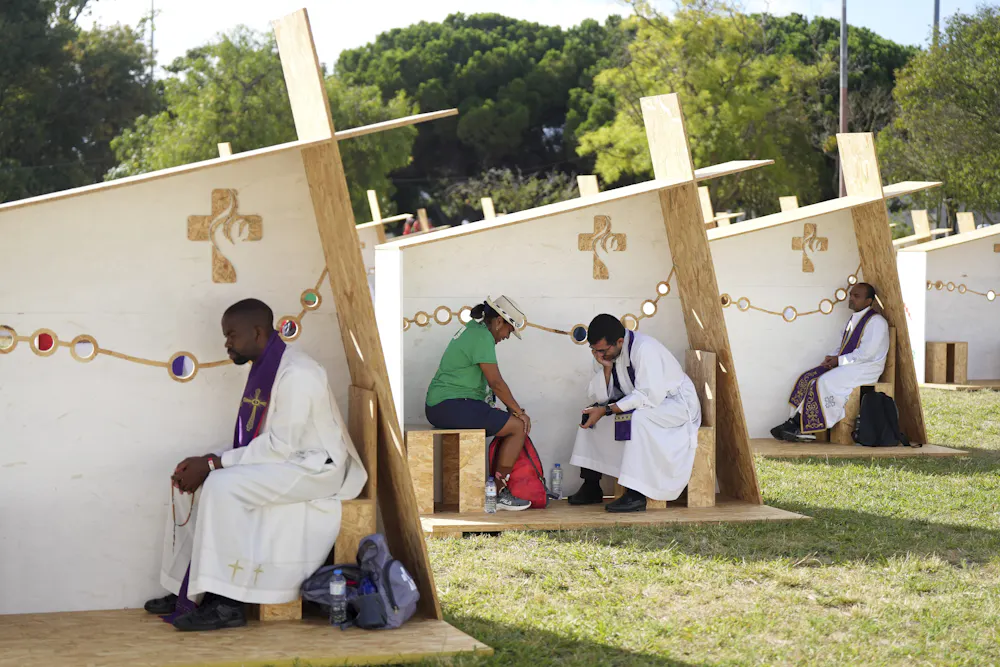
A row of open-air structures, with three walls for privacy, set up in a row, with a man in white robes sitting in each one.
A priest listens to confession in a row of confessionals set up for pilgrims during World Youth Day in Lisbon, Portugal, on Aug. 1, 2023.
AP Photo/Ana Brigida

In the standard form of the Catholic sacrament today, the communal element is reduced but not lost, since the confessor stands in for the presence of Christ and for the presence of the wider Christian community. Other penitential acts bring the communal aspect more to the fore. Indeed, at every Catholic Mass, participants offer a general confession of sins without specifying particular actions. They ask for each other’s prayers, and pray for God’s forgiveness.

The sacrament of reconciliation, however, remains a practice in which Catholics can be specific and concrete about what they understand to be serious sins. Dorothy Day, an American peace and labor activist who is under consideration for sainthood, famously reflected that “confession is hard. … You do not want to make too much of your constant imperfections and venial sins, but you want to drag them out to the light of day as the first step in getting rid of them.”

At its best, the sacrament of reconciliation aims to support this practice and bring about God’s abundant grace upon the penitent.

The Conversation

Timothy Gabrielli does not work for, consult, own shares in or receive funding from any company or organization that would benefit from this article, and has disclosed no relevant affiliations beyond their academic appointment.

ref. From public confession to private penance: How Catholic confession has evolved over centuries – https://theconversation.com/from-public-confession-to-private-penance-how-catholic-confession-has-evolved-over-centuries-262187

Forget the warm fuzzies of finding common ground – to beat polarization, try changing your expectations

Source: The Conversation – USA (3) – By Sarah Pessin, Professor of Philosophy, University of Denver

Americans are increasingly polarized in their political views. John M Lund Photography Inc/Getty Images

More than 70% of voters in Colorado’s Douglas County, conservative and progressive alike, voted “no” on home rule in June 2025. The ballot measure would have granted the county increased control over certain local matters such as building zoning, parking rules and sewer maintenance.

Historically Republican, but home to a growing population of vocal Democrats, the county is a microcosm of American political divides – from book ban debates to COVID mask controversies. Does this divided county’s bipartisan rejection of home rule mean that Coloradans have cracked the polarization problem?

Alas, not really.

It turns out both sides recoiled at the expensive and rushed nature of the election. It was hardly the heartwarming tale of opponents warming up to each other, which is often the civic solution good humans on both sides seem to be wishing for.

You can sense that longing in a public radio headline announcing the “liberal urban gardener breaking bread with a conservative military-family matriarch.” Or in Sarah Silverman’s “I Love You, America,” a TV series in which the comedian set out to high-five her way across a divided country. You see it in The Village Square, a nonprofit civic organization that describes itself as a “nervy bunch of liberals and conservatives” who promise bipartisan dialogue with disagreement but also “a good time.”

But what if this particular kind of trying sets the bar too high – or, at least, too comfy and cozy?

As a philosopher who studies meaning-making, ethics and politics across traditions, I’d like to suggest that Coloradans don’t need to hug it out or high-five their way forward. Rather, they can look to a variety of ethical traditions for insights about protecting each other even when they hate each other’s views and values.

On becoming fussy princesses

For starters, in American democracy some tensions are a feature, not a bug. While most would insist racism and sexism need to go, some disconnects – such as religious differences – are going to stay. So dreaming of full-on harmony with neighbors kind of misses the point.

Furthermore, as I’ve argued elsewhere, the unity dream can put well-meaning neighbors at risk of becoming the civic equivalents of the princess and the pea. from the Hans Christian Andersen fairy tale. Just like a royal so pure that even piles of plush mattresses can’t prevent her being awakened by the lumpiness of a single pea, constantly seeking common ground can dispose people to become sameness-seekers who are increasingly allergic to difference.

And this can make everyone’s stomachs churn even more furiously at all of their not-just-like-them neighbors.

The legacy of Hard Hope

When it comes to better civics, embracing each other is not the only alternative to erasing each other. I’ve been developing a different remedy for rancor in American civic life.

It’s based on my decades of studying philosophy and gravitating always to each text’s most precarious and vulnerable insights on human authenticity and ethical response.

I call it “Hard Hope.”

Hard Hope takes its inspiration from the theological and ethical politics of a wide array of thinkers from many different backgrounds.

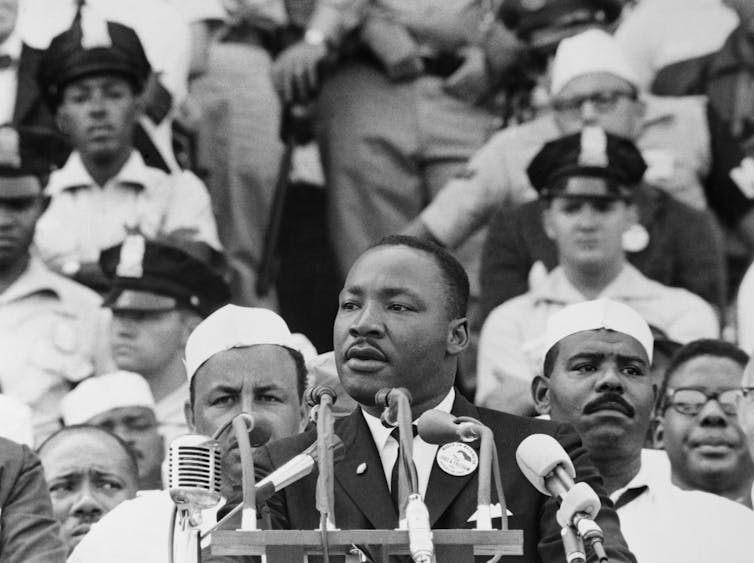
Martin Luther King Jr speaks into microphones with people in the background.
Martin Luther King Jr. reflected on God’s request that his followers love their neighbors, not like them.
Bettmann/Getty Images

In a Christmas sermon in 1958, Martin Luther King Jr. reflected on the biblical injunction to “love thy enemy.” Referring to God, he notes: “It’s significant that he does not say, ‘Like your enemy.’ Like is a sentimental something, an affectionate something. There are a lot of people that I find it difficult to like.”

It’s an arresting insight that takes a moment to sink in: He’s saying that real neighborly love has little to do with heart emojis.

Similarly, Emmanuel Levinas, a Jewish philosopher, emphasizes being called upon to serve others not in light of shared ground but in light of their being “the absolutely other which I can not contain.” Levinas was inspired by Exodus 33:20 which says no human can see God’s face. He describes the utter otherness of the neighbor as an unknowable face to which people are nonetheless ethically beholden. People are beholden to others inasmuch as they are other, Levinas argues. Not inasmuch as people feel connected.

And in like spirit, the queer Chicana feminist Gloria Anzaldúa calls for a “spiritual activism” in which justice requires not only interrupting inequity, but also building with opponents. For such radical connection with others, Anzaldúa draws on the Nahuatl term for in between, “nepantla,” and issues a call to “nepantleras” – people who are able to navigate ambiguous thresholds within split perspectives.

“Honoring people’s otherness, las nepantleras advocate a ‘nos/otras’ position — an alliance between ‘us’ and ‘others.’ In nos/otras, the ‘us’ is divided in two, the slash in the middle representing the bridge – the best mutuality we can hope for at the moment,” she writes.

Hard Hope is a call to look out not only for neighbors we like but for neighbors we like least. That’s even as people take to voting booths to reject their opponents’ worst oversteps, and even as they work within and across communities to elevate justice and secure better futures for all. It’s not a call to change a group’s politics, though at times it can mean tempering them. And it always means distinguishing the call to engage politics from the call to engage people – even as it expects everyone to do both.

Hard Hope asks people to take a break from the bubblegum optimism of believing everyone is just moments away from seeing eye to eye and bursting into compassion, friendship and harmony across divides. Instead, Hard Hope invites people to take up the unusual mood of feeling a sense of debt to their neighbors without liking them. It’s a call to dig deep, beyond a sense of “shared humanity” to an even deeper sense of an “unshared otherness” that calls people into service to others.

It’s a radical form of hope that’s more about indebted coexistence than enthusiastic camaraderie.

And not a single loaf of bread needs baking or breaking in the process.

The Conversation

Sarah Pessin does not work for, consult, own shares in or receive funding from any company or organization that would benefit from this article, and has disclosed no relevant affiliations beyond their academic appointment.

ref. Forget the warm fuzzies of finding common ground – to beat polarization, try changing your expectations – https://theconversation.com/forget-the-warm-fuzzies-of-finding-common-ground-to-beat-polarization-try-changing-your-expectations-260890

Namibia celebrates independence heroes, but glosses over a painful history

Source: The Conversation – Africa (2) – By Henning Melber, Extraordinary Professor, Department of Political Sciences, University of Pretoria

Namibia celebrates 26 August as Heroes’ Day. It recalls the first military encounter between the South African army and members of the South West Africa People’s Organisation (Swapo), Namibia’s liberation movement, in 1966. Initially a German colony (1884-1915), the country was then administered by South Africa, which refused to give up the occupation.

Since independence in 1990, the heroic Swapo liberation narrative has also been inscribed in Heroes’ Acre, a monument built by North Korea.

The institutionalised public commemoration in Namibia today – rightly – recalls the sacrifices of those who were willing to fight for self determination. At the same time, it glosses over the toxic impact of the way warfare was conducted. Those involved in the struggle for independence were far from innocent in the execution of the military resistance. Yet their violations of human rights were never addressed.

This ambiguity was visible in 2025 in a public controversy when tribute poured out to the late Solomon Hawala, whose combat name was Jesus. He was a leading fighter in Swapo’s military wing, known as PLAN.

He also had a bloody track record of eliminating fellow Namibians in exile.

The celebration of Hawala finally moved me to resign as a member of Swapo, an organisation I joined when I was 24 years old. I set out my reasons in an interview accessible on YouTube.

Since the late 1970s I have specialised as an academic in Namibian history and politics. Since the early 1990s I have engaged with the traumatic side of so-called liberation. More recently I wrote a book chapter giving voice to the victims.

Patriotic history versus struggle realities

The history of liberation movements displays their authoritarian nature. Their camps in southern Africa forged bonds of comradeship. For Mozambique’s Frelimo, the African National Congress, Swapo, the People’s Movement for the Liberation of Angola and Zimbabwe African People’s Union, Tanzania’s Kongwa camp in the 1960s provided a first operational base in preparation for the armed struggle abroad.


Read more:
Tanzania’s independence leader Julius Nyerere built a new army fit for African liberation: how he did it


The movements then started to arrange for their own bases in host countries.

In the early to mid 1970s Swapo established the Old Farm outside Lusaka in Zambia. This was followed by Nyango. Finally, a Health and Education Centre was established in Angola’s Kwanza Zul.

The administration and management required strict discipline and reinforced repressive hierarchies.

There were several times in Swapo’s exile history when internal critics were silenced. Testimonies of the early stages in the late 1960s and early to mid 1970s offer insights by those persecuted. These included the former Swapo secretary for information Andreas Shipanga, the first generation Swapo member Hans Beukes, the former Swapo Youth League activist Keshii Nathanael and one of the first PLAN cadres, Samson Ndeikwila.

Speaking out and thereby disclosing the crimes, the Namibian chaplain in exile Salatiel Ailonga and his wife Anita were forced to seek refuge elsewhere.

Some scholars have drawn attention to the plight of the dissidents. The first waves of repression triggered two of those academics in solidarity with the liberation struggles to ask questions about liberation and democracy.

These earlier events were only a prelude to the “spy drama” in the 1980s. This was a chapter of horrendous crimes, mainly committed by a group of PLAN members at the camp in Lubango in southern Angola.


Read more:
Painted messages in Angola’s abandoned liberation army camps offer a rare historical record


Over 1,000 Swapo members were incarcerated in dungeons. Their fate was most likely triggered by setbacks in the border war in southern Angola between the South African army and PLAN units backed by Cuban forces. In 1978, the South African army had attacked a Swapo camp at Cassinga in Angola, killing hundreds of women and children.

Members of the higher ranking Swapo military, the so-called securocrats, blamed spies for the disaster and other military setbacks. They tortured the accused to extract confessions and to implicate others. With no proof of guilt, people were often executed, disappeared or died of neglect in the dungeons. Numbers of the missing with no traces were estimated by the surviving victims at around 2,000.

Victims were, in the main, rank and file Swapo members. That South African spies had most likely penetrated the higher echelons of the movement was ignored.

Some of the victims, like Oiva Angula, have published accounts of their suffering.

Those who pointed out the unfolding terror were dismissed by the international solidarity movement as anti-Swapo propaganda. This included the early revelations by Siegfried Groth, a pastor for the refugees in Zambia. He was blamed for besmirching the image of the freedom fighters.

Glorification of the perpetrators

With the passing on of the first generation of struggle stalwarts, the number of posthumously celebrated heroes increased. Many of the veterans were put to rest in full honour by state funerals.

Hawala passed away aged 89 on 11 August 2025. Until his retirement in 2006 he had been the chief of the defence force.

President Netumbo Nandi-Ndaitwah recognised his

distinguished military service, steadfast leadership and unwavering dedication to the cause of Namibia’s liberation and nation-building. His legacy remains a symbol of courage, patriotism, and commitment to the ideals of freedom and independence.

This triggered a public debate. It brought back memories of heinous crimes in which he played a crucial role. Named the “Butcher of Lubango” by those who survived the ordeal, he was the personification of a brutal and ruthless system targeting those accused of spying and those who dissented with the leadership.

In his defence, a former Swapo MP pointed out that he was merely acting on Swapo’s instructions. People, he argued, “were killed with the knowledge of senior Swapo leaders”, and some of these were already buried at Heroes’ Acre.

Unheroic heroism

The survivors of the dungeons who are still alive were in shock over celebrating Hawala. But as they also pointed out, he personified a system.

I argued along similar lines when I was interviewed about my resignation from Swapo after more than 50 years as a member. Before the announcement that Hawala would get a state funeral I had urged in an article that his death should be an opportunity to finally address the plight of his victims. Instead the blinkers remained.

This motivated my letter of resignation: I had joined Swapo for believing in its slogan “Solidarity, Freedom, Justice”. Out of loyalty to these values and as a matter of – albeit belated – restoration of moral integrity, I had no choice but to depart.

Praising the perpetrators as heroes adds insult to injury to their surviving victims. Such denialism and amnesia lies like a lead cloak over truth and reconciliation. It shows the limits to liberation when Heroes’ Day is celebrated.

The Conversation

Henning Melber was a member of SWAPO from 1974 until August 2025..

ref. Namibia celebrates independence heroes, but glosses over a painful history – https://theconversation.com/namibia-celebrates-independence-heroes-but-glosses-over-a-painful-history-263654

Ancient shells and pottery reveal the vast 3,200-years-old trade routes of Oceania’s Indigenous peoples

Source: The Conversation – Global Perspectives – By Bryce Barker, Professor in Archaeology, University of Southern Queensland

Shutterstock

New research conducted at Walufeni Cave, an important archaeological site in Papua New Guinea, reveals new evidence of long-distance interactions between Oceania’s Indigenous societies, as far back as 3,200 years ago.

Our new study, published in the journal Australian Archaeology, is the first archaeological research undertaken on the Great Papuan Plateau. The findings continue to undermine the historical Eurocentric idea that early Indigenous societies in this region were static and unchanging.

Instead, we find further evidence for what Monash Professor of Indigenous Archaeology Ian J. McNiven calls the Coral Sea Cultural Interaction Sphere: a dynamic interchange of trade, ideas and movement over a vast region encompassing New Guinea, the Torres Strait, and north-eastern Australia.

Walufeni Cave is an important archaeological site in the Great Papuan Plateau.
Bryce Barker

Tracking movement across Sahul

The goal of the Great Papuan Plateau project was to determine whether the plateau may have been an eastern pathway for the movement of early people into north-eastern Australia, at a time when New Guinea and Australia were joined in the continent of Sahul.

The two countries as we know them separated about 8,000 years ago due to sea levels rising after the last glacial period.

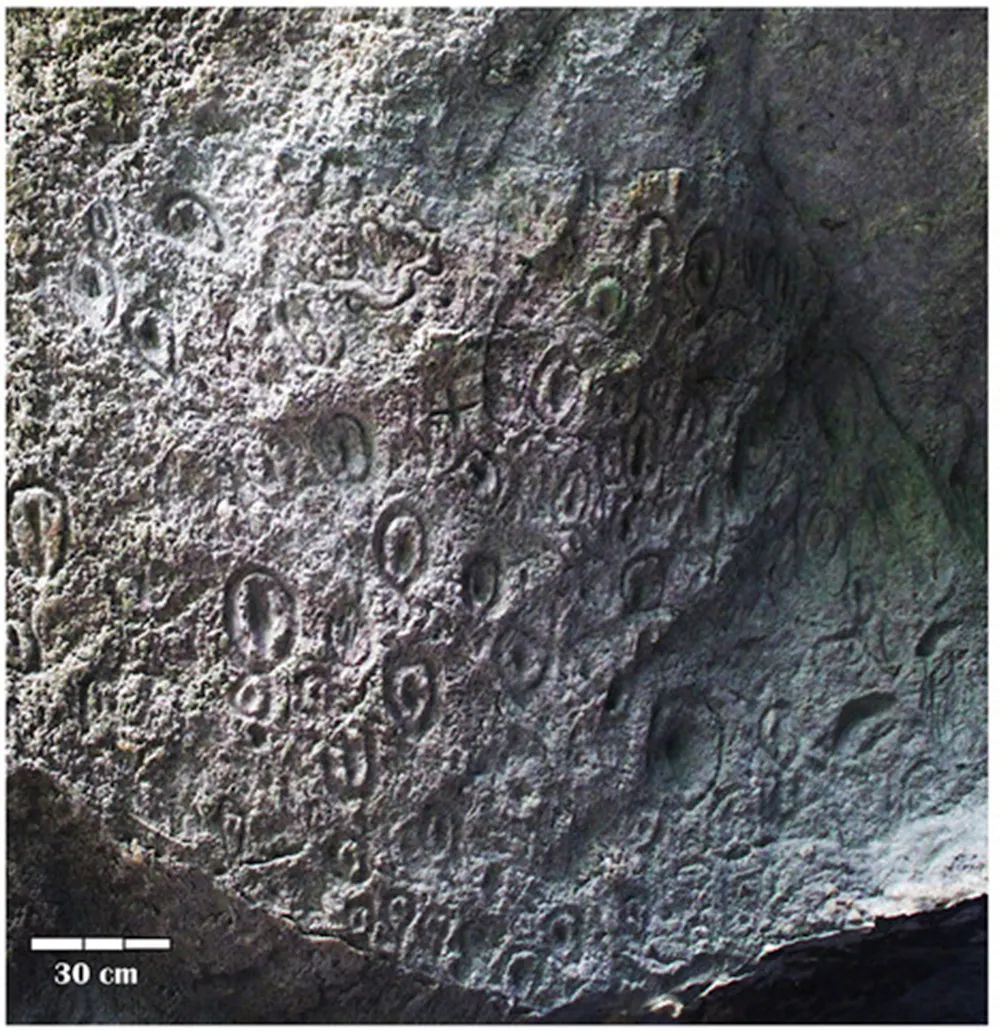
Our research in Walufeni Cave, located near Mount Bosavi in New Guinea’s southern highlands province, identified occupation dating back more than 10,000 years. We also found a unique and as yet undated petroglyph rock art style.

Petroglyph rock engraving from Walufeni Cave.
Author provided

Our analyses of cave deposits reveals significant changes in how the site was used starting from just over 3,000 years ago. This includes changes to the frequency of occupation, to plant and animal use, as well as the sudden appearance of coastal marine shell.

Specifically, we found 3,200-year-old evidence for the transport of marine shell 200km inland, which has previously been recorded as coming from the southern coast of the Gulf of Papua, and from as far away as Torres Strait.

This suggests the long-distance maritime trade and interaction networks between the societies of coastal southern New Guinea, Torres Strait and northern Australia extended far inland – and much further than previously known.

The significance of marine shells

Archaeologists and ethnographers have widely documented the use of culturally modified marine shells as important items of trade and prestige in New Guinea.

These shells were used as markers of status and prestige, for ritual purposes, as currency and wealth, as tools, and to facilitate long-distance social ties between groups.

Despite the coastal availability of a large variety of shellfish, only a relatively small selection are recorded as being commonly used in New Guinea.

The most prominent of these are dog whelks (Nassaridae), cowrie shells (Cypraeidae), cone shells (Conidae), baler shell (Volutidae), and pearl/kina shell (Pteriidae). Many of these are significant for ritual and symbolic functions across the Indo-Pacific and indeed, globally.

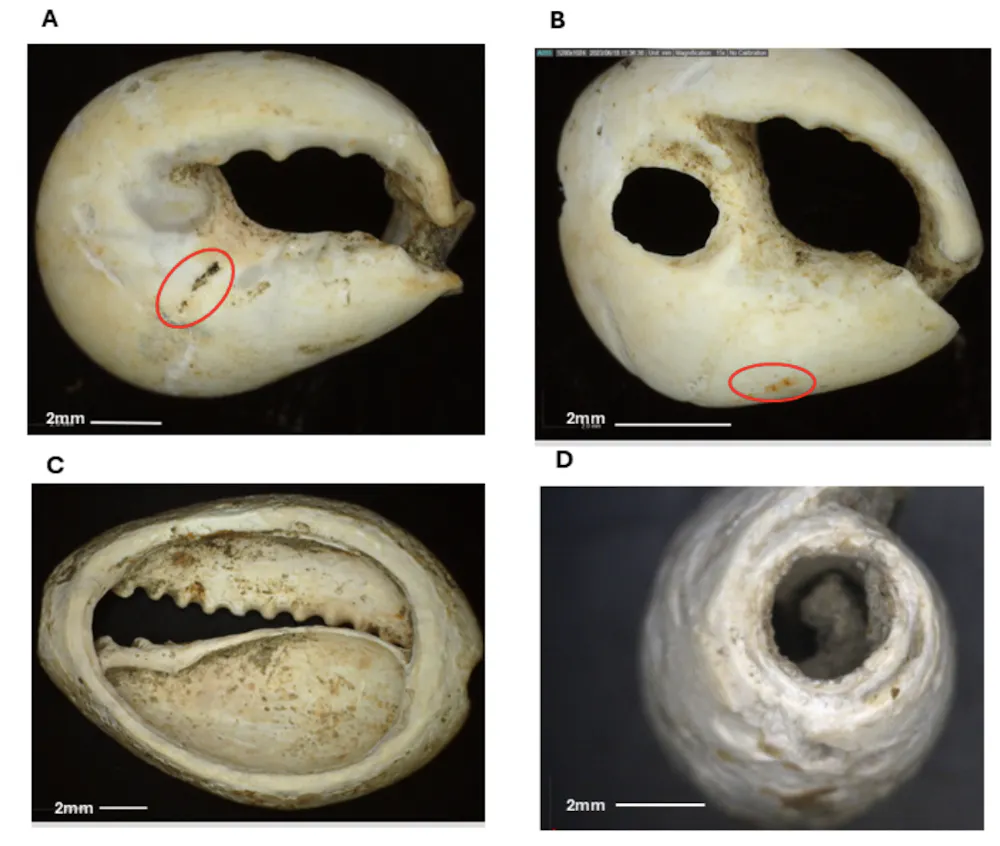
Dog whelks were the predominant species we found in Walufeni Cave, along with olive shells and cowrie shells. These come from very small “sea snails”, or gastropods.

All of the shells we found had been culturally modified, such as to allow stitching onto garments, or threading onto strings.

Gastropod shells continue to be used by today’s plateau societies. They may be sewn onto elaborate ceremonial costumes, or offered in long strings as trade items, or as bridal dowry.

Images of modified marine shell found at Walufeni Cave. A and B are dog whelk, while C is cowrie shell and D is olive shell.
Author

Pottery and oral tradition

Further evidence for long-distance voyaging between the southern coast of Papua New Guinea and the Torres Strait and Northern Australia comes in the form of pottery.

Researchers have found Lapita pottery at two archaeological sites on the south coast of New Guinea (Caution Bay and Hopo). These have been dated to 2,900 and 2,600 years ago, respectively.

Lapita pottery is a distinctive feature of Austronesian long-distance voyagers with origins in modern-day Taiwan and the Philippines. Lapita peoples bought the first pottery to New Guinea about 3,300 years ago, providing the template for later localised pottery production.

In a separate finding, Aboriginal pottery dating back to 2,950 years ago was reported from Jiigurru (Lizard Island), off the coast of the Cape York Peninsula. While this pottery isn’t stylistically Lapita, the technology used to make it is.

Similar pottery dating back 2,600 years ago has been reported on the eastern Murray Islands of Torres Strait, and in the Mask Cave on Pulu Island, western Torres Strait. Analysis of the Murray Island pottery indicates the clay was derived from southern Papua New Guinea.

These studies suggest the Lapita peoples’ knowledge of how to make pottery spread to Torres Strait and northern Australia via the interaction sphere.

Furthermore, the cultural hero Sido/Souw, who is present in oral tradition on the Great Papuan Plateau, is also present in oral tradition from the Torres Strait and southern New Guinea. This demonstrates sociocultural connections across a vast area.

Our research builds on the continuing reevaluation of the capabilities of Indigenous societies, which were often characterised by early anthropologists as static and unchanging.

The Conversation

Bryce Barker receives funding from the Australian Research Council .

Tiina Manne receives funding from the Australian Research Council.

ref. Ancient shells and pottery reveal the vast 3,200-years-old trade routes of Oceania’s Indigenous peoples – https://theconversation.com/ancient-shells-and-pottery-reveal-the-vast-3-200-years-old-trade-routes-of-oceanias-indigenous-peoples-261950

Israel’s attacks on Gaza are putting people with disabilities at extreme risk

Source: The Conversation – Global Perspectives – By Aleta Moriarty, PhD student, economic opportunities for people with autism, The University of Melbourne

Recent images of an emaciated Gazan child, Muhammad Zakariya Ayyoub al-Matouq, provoked global outrage. Some sought to minimise this harm, attributing it instead to pre-existing conditions or disability.

But framing starvation deaths in Gaza in terms of underlying disabilities or comorbidities is misleading. It is essential to recognise these conditions do not justify suffering or death.

Rather, the crisis in Gaza has intensified existing vulnerabilities for people with disabilities, who face extreme barriers to evacuation, aid and medical treatment.

So, what type of practical humanitarian response is needed right now for people with disabilities in Gaza?

For people with disabilities, conflict supercharges risk

Conflict and humanitarian crises intensify and compound vulnerabilities faced by people with disabilities.

Evidence shows that in armed conflicts and humanitarian crises, people with disabilities:

Women and children with disabilities face heightened risks of violence, neglect and exploitation, while also contending with stigma and discrimination.

A tragedy within a tragedy

International law is clear on this issue.

The UN Convention on the Rights of Persons with Disabilities, which Israel ratified in 2012, requires it to take

all necessary measures to ensure the protection and safety of persons with disabilities in situations of risk, including situations of armed conflict.

The UN Security Council has also recognised the disproportionate impact of conflict on people with disabilities.

There is significant evidence suggesting Israel has not upheld these obligations.

UN special rapporteurs have expressed alarm at what they describe as “harrowing conditions for Palestinians with disabilities trapped in Gaza”.

The UN estimates about 92% of homes in Gaza have been destroyed or damaged. More than than 90% of Gazans have now been displaced, some more than ten times.

People with disabilities are at particular risk. The UN has documented cases where evacuation orders were issued by Israel in inaccessible formats, leading to additional deaths. Piles of rubble and unexploded ordinance have made access impossible for many, with 81% of roads now damaged or destroyed.

More than 83% of people with disabilities in Gaza have lost their assistive devices (such as wheelchairs or hearing aids).

UN representatives report being shocked by the account of a 14-year-old girl with cerebral palsy. She had lost her assistive devices, including a wheelchair, and had to be carried by her parents as they fled from north to south Gaza.

Exhausted and exposed to danger along the way, the girl cried out in desperation, “Mama, it’s over. Leave me here, and you run away.”

Hospitals and rehabilitation facilities are necessary for many people with disabilities. However, only half of Gaza’s hospitals and about 39% of primary health care centres are partially functional.

A mass disabling event

Israel’s war in Gaza constitutes a mass disabling event.

A joint assessment by the World Bank, United Nations and European Union found in February that the prevalence of disabilities had doubled since October 2023.

Most recent data indicates that 151,442 people have sustained injuries in this conflict.

In 2024, the World Health Organisation estimated that around 25% of all those injured are likely to have acute and ongoing rehabilitation needs.

The NGO Humanity and Inclusion UK reports Gaza now has the highest rate of child amputees per capita in the world. According to UNICEF, more than ten children per day have lost one or both of their legs.

The substantial rise in the prevalence of disability means demand for rehabilitation services and accessibility has quickly outstripped supply.

UNICEF reports more than one million children also need mental health and psychosocial support.

With historical evidence suggesting Israeli forces have pursued deliberate disablement policies, this demands urgent investigation.

What’s needed now

An immediate, sustained ceasefire is essential.

Israel’s expanded assault on Gaza city significantly threatens people with disabilities and risks further deaths and disability.

Israel should also abandon its current flawed system of aid delivery via the Gaza Humanitarian Foundation. Principled aid delivery must be restored, ensuring safe access for people with disability.

To meet its obligations under international law, Israel should keep relief corridors open for the safe passage of humanitarian and medical personnel and goods. This includes assistive devices and the batteries needed to power them.

Forcible displacement must cease. Evacuations must comply with international law, be accessible, and keep families, carers and assistive devices together.

Protecting people with disabilities would mean ensuring shelters and wash facilities are accessible and equipped, and evacuation backlogs cleared.

Expanding rehabilitation, mental health support, access to assistive technology and tailored services is crucial. Civilian infrastructure and medical facilities must be protected, and rubble and ordnance cleared to ensure safe and accessible passage.

An equitable humanitarian response must be inclusive, centring the voices of persons with disabilities (especially women and children, who face heightened risks).

Without immediate action to end the violence, restore access and ensure disability inclusion, the most vulnerable will lose further dignity, safety and lives.

The Conversation

Aleta Moriarty previously worked for international organisations on the rights of people with disability.

ref. Israel’s attacks on Gaza are putting people with disabilities at extreme risk – https://theconversation.com/israels-attacks-on-gaza-are-putting-people-with-disabilities-at-extreme-risk-263029

Yes, vets sometimes prescribe human drugs to pets. But don’t try it at home

Source: The Conversation – Global Perspectives – By Nial Wheate, Professor, School of Natural Sciences, Macquarie University

Ayla Verschueren/Unsplash

When your dog starts limping or your cat comes down with a sniffle, it’s natural to worry. For many families, pets are more than just animals – and we want them to have a standard of medical care similar to our own.

But it can still be surprising when the vet prescribes a medication that looks identical to something in your own bathroom cabinet.

Many human medicines are safe and effective for pets when used under veterinary guidance. But others can be harmful due to differences in how animals process drugs. So sometimes, pets need their own medicines.

So let’s examine the differences between drugs for humans and animals – and why you shouldn’t just give a pet your own medications.

Pet medications on a white table.
Don’t give a pet your own medications.
Tahir Xəlfə /Pexels

Pet and human medicines explained

In Australia, the Therapeutic Goods Administration approves and regulates drugs for humans. The Australian Pesticides and Veterinary Medicines Authority APVMA does the same for pet drugs.

While both agencies consider efficacy and safety in deciding whether to approve a product, the APVMA also considers environmental impact. For example, medicines given to animals – especially when given at scale on farms – can leach into waterways, affecting aquatic life and water quality.

The market for animal medicines is smaller than that for humans, making them less cost-effective to develop. Sometimes, no medicine exists for an animal condition and vets may need to use a human medicine.

For certain diseases and conditions, vets are legally permitted to dispense human medicines for pets through a process called off-label prescribing.

There are also medicines approved for both humans and pets. They include classes of antibiotics, antidepressants, corticosteriods (anti-inflammatory drugs), antiparasitics and chemotherapy drugs.

For example, doxorubicin is a chemotherapy drug used in humans to treat cancers including those of the lungs and bone. In dogs, it is commonly used to treat lymphomas, melanomas and cancers of the bone, among others. In both humans and dogs, doxorubicin is used to treat mammary gland (breast) cancer.

Similarly, ivermectin can be used to treat parasite infections such as scabies in humans and animals.

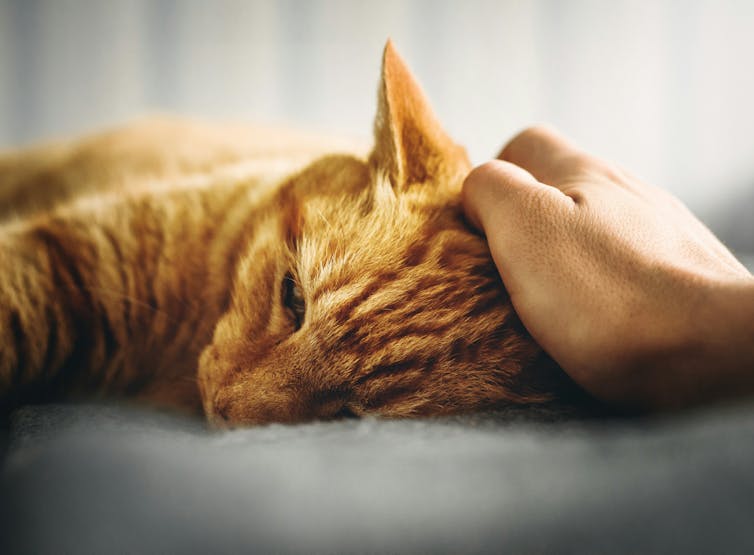
Hand strokes a tired-looking cat.
Sometimes, vets may need to use a human medicine on pets.
Alexander Andrews/Unsplash

Beware the safety issues

While many drugs are shared between humans and pets, not all are safe. In fact, some common household medications can badly harm or kill animals.

The painkillers ibuprofen and paracetamol are toxic to both dogs and cats. They can cause damage to the animal’s stomach and kidneys, and may kill them.

This is because dogs and cats break down medicines different to the human body. For example, the proteins in a cat’s liver are different from the human liver, so they can’t break down paracetamol. It can damage their red blood cells and reduce their body’s ability to carry oxygen.

And the situation can differ between animals. The flea and tick medication permethrin, for instance, is safe for dogs but highly toxic to cats – potentially causing tremors, seizures and death.

And pets are far more sensitive to drug dosages than humans, so even small quantities of the wrong medicine can be fatal.

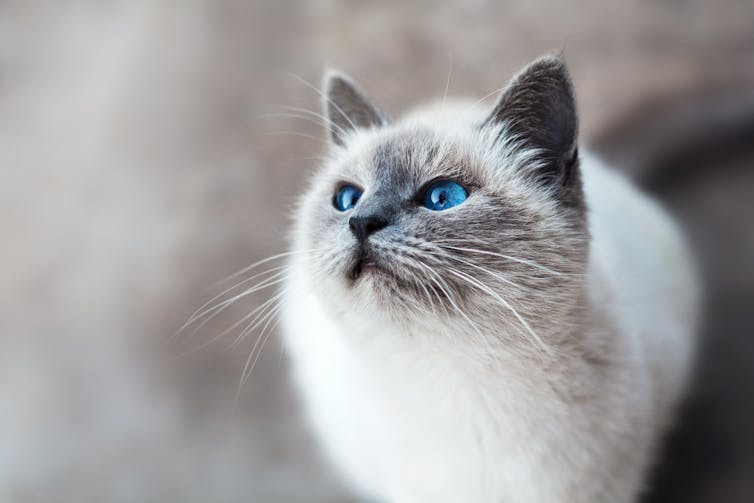
A white and grey cat with blue eyes.
Pets are far more sensitive to drug dosages than humans.
Mikhail Vasilyev/Unsplash

Animal-only medicines

Pets may also be given medicines no longer used for humans, or one specifically developed for animals.

Carprofen is a non-steroidal anti-inflammatory drug previously used in humans but is now only prescribed for dogs. A vet might prescribe it for pain or inflammation.

We don’t use it in humans anymore because it’s expensive to manufacture. But it’s still used for dogs because it’s effective, and alternatives such as paracetamol and ibuprofen aren’t suitable for them.

Typically, medicines are developed for pets only when they address a condition specific to animals.

For example, humans don’t usually suffer from heartworm, but infection in pets is common. The arsenic-based drug melarsomine was designed specifically for animals and treats heartworm in adult dogs.

And of course, humans should not take medication prescribed for their pet.

While pet medicine may look similar to yours, there may be differences in formulation or dose that can cause side effects or toxicity in humans.

A small dog running, followed by a larger dog
Melarsomine treats adult heartworm in dogs.
wooof woof/Unsplash

What to remember

If your pet is sick or injured, never give them a drug out of your own medicine cabinet – even if the vet has previously prescribed them the medication.

Take your animal to the vet. They will advise on the most appropriate treatment and dose, so you don’t do your pet further harm.

The Conversation

Nial Wheate in the past has received funding from the ACT Cancer Council, Tenovus Scotland, Medical Research Scotland, Scottish Crucible, and the Scottish Universities Life Sciences Alliance. He is a fellow of the Royal Australian Chemical Institute. Nial is the chief scientific officer of Vaihea Skincare LLC, a director of SetDose Pty Ltd (a medical device company) and was previously a Standards Australia panel member for sunscreen agents. He is a member of the Haleon Australia Pty Ltd Pain Advisory Board. Nial regularly consults to industry on issues to do with medicine risk assessments, manufacturing, design and testing.

ref. Yes, vets sometimes prescribe human drugs to pets. But don’t try it at home – https://theconversation.com/yes-vets-sometimes-prescribe-human-drugs-to-pets-but-dont-try-it-at-home-259675

The triumph of the Oasis reunion: Resilience rules the day as the Gallaghers end their feud

Source: The Conversation – Canada – By Ramona Alaggia, Professor, Social Work, University of Toronto

Noel and Liam Gallagher are seen on the jumbo screen at a recent concert in Edinburgh. (Lee-Anne Goodman)

The long-awaited Oasis reunion tour is a rousing success. Since launching in Wales in July, the band has been selling out shows across four continents, including two stops in Toronto.

Reviews have been glowing, and fans are thrilled not just with the music but also with the sight of Noel and Liam Gallagher showing each other genuine brotherly affection on stage — something that once seemed impossible.

This is a far cry from 2009, when Oasis broke up after an epic fallout. Noel, the elder brother, announced he could no longer put up with Liam’s drug-fuelled antics and frequent no-shows. The brothers then spent nearly 15 years estranged.


Read more:
Oasis reunion: How to stop your sibling feud from becoming a lifelong estrangement


Painful childhood

Their conflict isn’t surprising when you consider their childhood. Research shows that family violence and abuse can have lasting effects on sibling relationships.

In the Gallaghers’ case, Noel has spoken of being abused by their father, and both brothers witnessed domestic violence against their mother. Growing up with these adversities can make close family bonds harder to sustain — and may help explain the long rift between them.

So what’s made the difference? How have they managed to heal wounds and reunite? One answer may be resilience.

In my research, I’ve found that resilience is what allows some people, with the right support and circumstances, to rise above adversity and come out stronger. Back in 2017, I explored how this might apply to the Gallagher brothers, who grew up in a difficult and sometimes violent home.


Read more:
The Oasis brothers: Father’s abuse explains feud, resilience could end it


Parental influence

Resilience is a complex idea, and one way to understand it is through social learning theory. The basic idea is that we learn from the examples around us.

For the Gallaghers, growing up in a violent and chaotic home meant they were exposed to unhealthy patterns of behaviour and relationships. But at the same time, they also had a powerful positive influence in their lives through their mother, Peggy.

By ultimately leaving her abusive husband, despite the difficulties that followed, she modelled to her children that there are alternatives to destructive relationships.

This balance of negative and positive role models matters. Harmful examples can damage development, but protective role models can demonstrate healthier ways of coping, relating and moving forward.

In 2024, when the brothers announced their reunion tour, I revisited their story offering ideas on how they might get along to make the tour a success and how they might finally put their long-running feud behind them.

I suggested that counselling focused on conflict resolution could help. These approaches often include learning skills like open communication, active listening, exploring options together, collaborating, compromising, and aiming for a win-win solution.

Apologizing and avoiding casting blame are also important parts of the process. While we may never know if the Gallagher brothers were provided any of these supports, or used them to resolve their conflicts, it’s clear they’ve achieved some significant measure of reconciliation.

Noel has even recently talked about how much he enjoys being around his brother and how proud he is of him.

Not looking back in anger

The combined raw talent of the Gallagher brothers, along with the drive and persistence to form a band, captured the hearts of a generation of music-lovers and is continuing to attract new and younger fans around the world.

After years apart, their return to the stage shows that reconciliation is possible and that even the most fractured relationships can find a way forward.

Watching the Gallaghers side by side on stage, frequently laughing and embracing, it seems clear that resilience, combined with a genuine desire to reconcile, has helped bring them back together.

Their reunion is more than a comeback tour; it’s a story of overcoming adversity that speaks to a universal hope. They’re showing that even long-standing family conflicts can be healed.

The Conversation

Ramona Alaggia’s studies have been funded by the Social Sciences and Humanities Research Council of Canada.

ref. The triumph of the Oasis reunion: Resilience rules the day as the Gallaghers end their feud – https://theconversation.com/the-triumph-of-the-oasis-reunion-resilience-rules-the-day-as-the-gallaghers-end-their-feud-263789

Is your diet influencing your dreams? Here’s what our research says about food and nightmares

Source: The Conversation – Canada – By Jade Radke, PhD Student, Behavioral Sustainability Lab, University of British Columbia

Have you ever wondered if a bizarre dream was caused by something you ate the night before? If so, you’re not alone. We all have strange or unsettling dreams now and then, and when we do, we want to know what might cause them.

For centuries, people have believed that what and when they eat can influence their dreams. A prominent example of this can be found in the early 20th-century comic strip Dream of the Rarebit Fiend, in which characters often blamed their strange dreams on having eaten a cheese dish — like Welsh rarebit — the night before.

But even though folklore has long suggested that food and dreams are connected, scientific research into this notion has been limited.

A few exploratory surveys have provided preliminary, suggestive results. One study from 2007 found that people who ate more organic food reported having more vivid and bizarre dreams than those who consumed more fast food.

Similarly, a 2022 survey linked fruit consumption to more frequent dream recall, high fruit and fish intake to more lucid dreams, and sugary food consumption to more nightmares. And in our 2015 study, we found that nearly 18 per cent of participants endorsed the idea that what they ate influenced their dreams, with dairy being the most frequently cited culprit.

As a follow-up to that study, we recently conducted an online survey with 1,082 Canadian psychology students that asked them about their food habits, general health, sleep quality and dreams. We tested several hypotheses about how diet and food sensitivities might influence dreaming — including possible influences on the severity of nightmares.

What we found

Just over 40 per cent of participants told us that certain foods either worsened or improved their sleep quality. Around five per cent believed food affected their dreams, with desserts, sweets and dairy being the most frequently cited culprits.

People with food allergies or gluten intolerance were more likely to perceive that food influenced their dreams, while participants with lactose intolerance were more likely to report that food worsened their sleep.

We also found that participants with a food allergy or lactose intolerance reported more frequent and severe nightmares. Interestingly, the frequency of gastrointestinal symptoms, such as abdominal pain and bloating, was associated with both lactose intolerance and nightmares, thereby possibly explaining the relationship between the two.

These findings support a growing body of evidence suggesting a connection between the gut microbiome and the central nervous system (the gut-brain axis). What is novel about our findings is that they suggest gut discomfort can manifest psychologically during sleep as nightmares.

This connects to developing research examining the relationship of diet to post-traumatic stress disorder (PTSD), one symptom of which is frequent nightmares. While research in this area has focused on the relationship of overall dietary patterns to PTSD, our findings suggest that specific foods, such as dairy and sweets, could exacerbate nightmares in particular.

This suggests that treatments for PTSD might usefully include an assessment of dietary habits, allergies and intolerances, and making dietary changes.

While our research provides insight into how food might affect dreaming, the results are correlational. Experiments are needed to test the extent to which certain foods can impact dreams.

The next steps could involve controlled experiments that test what happens when people consume certain trigger foods, such as cheese that contains lactose versus cheese that does not contain lactose, especially among those with lactose intolerance or who have frequent nightmares. Similar experiments could be done for participants with various types of food allergies.

Some practical takeaways

Beyond dreaming, our findings, combined with what we know from previous research, suggest a few things you could do to help minimize food-related sleep disruptions:

  1. Avoid eating late at night, especially heavy, sugary or spicy foods. We found that evening eating was associated with more negative dream content and poorer sleep quality.

  2. If you’re lactose intolerant, try avoiding dairy before bed or switching to lactose-free options. For example, hard, aged cheeses tend to be lower in lactose than soft, fresh cheeses.

  3. If you have food allergies, consider minimizing your intake of culprit foods before bed. Fears and anxieties associated with potential allergic reactions could creep into your dreams.

  4. Keep track of any foods that seem to influence your sleep or dreams, and experiment with removing them for intermittent periods of time to see if they influence your sleep or dream quality.

In general, eating a nutrient-dense, balanced diet with fibre, fruits, vegetables and lean proteins could help support sleep or dream quality. Overall, the main takeaway is to listen to your body. If certain foods or dietary habits consistently lead to poor sleep or strange dreams, it’s worth taking these symptoms seriously.

The Conversation

The authors do not work for, consult, own shares in or receive funding from any company or organisation that would benefit from this article, and have disclosed no relevant affiliations beyond their academic appointment.

ref. Is your diet influencing your dreams? Here’s what our research says about food and nightmares – https://theconversation.com/is-your-diet-influencing-your-dreams-heres-what-our-research-says-about-food-and-nightmares-260796

What, exactly, is space-time?

Source: The Conversation – Canada – By Daryl Janzen, Observatory Manager and Instructor, Astronomy, University of Saskatchewan

Few ideas in modern science have reshaped our understanding of reality more profoundly than space-time — the interwoven fabric of space and time at the heart of Albert Einstein’s theory of relativity.

Space-time is frequently described as the “fabric of reality.” In some accounts, this fabric is referred to as a fixed, four-dimensional “block universe” — a complete map of all events, past, present and future.

In others, it’s a dynamic field that bends and curves in response to gravity. But what does it really mean to say that space-time exists? What kind of thing is it — is space-time structure, substance or metaphor?

The heart of modern physics

These questions aren’t just philosophical. They sit at the heart of how we interpret modern physics and quietly shape everything from how we understand general relativity to how we imagine time travel, multiverses and our origins.

These questions inform the emergence of space-time itself and radical new proposals that treat it as the universe’s memory. And yet the language we use to describe space-time is often vague, metaphorical and deeply inconsistent.


Read more:
Why do metaphors of space help us understand time?


Austrian-British philosopher Ludwig Wittgenstein once warned that philosophical problems arise when “language goes on holiday.” Physics, it turns out, may be a prime example.

Over the last century, familiar words such as “time,” “exist” and “timeless” have been repurposed in technical contexts without examining what baggage they carry from everyday speech.

This has led to widespread confusion about what these terms actually mean.

The problem with language

In the philosophy of physics, particularly in a view known as eternalism, the word “timeless” is used literally. Eternalism is the idea that time doesn’t flow or pass — that all events across all time are equally real within a four-dimensional structure known as the “block universe.”

rows of blocks
Eternalism understands that everything, everywhere, exists atemporally and all at once.
(Rick Rothenberg/Unsplash), CC BY

According to this view, the entire history of the universe is already laid out, timelessly, in the structure of space-time. In this context, “timeless” means that the universe itself does not endure or unfold in any real sense. There is no becoming. There is no change. There is only a block, and all of eternity exists atemporally within it.

But this leads to a deeper problem. If everything that ever happens throughout eternity is equally real, and all events are already there, what does it actually mean to say that space-time exists?

An elephant in the room

There’s a structural difference between existence and occurrence. One is a mode of being, the other, of happening.

Imagine there’s an elephant standing beside you. You’d likely say: “This elephant exists.” You might describe it as a three-dimensional object, but importantly, it is a “three-dimensional object that exists.”

In contrast, imagine a purely three-dimensional elephant that flashes into the room for an instant: a cross-sectional moment in the life of an existing elephant, appearing and disappearing like a ghost. That elephant doesn’t really exist in the ordinary sense. It happens. It occurs.

An existing elephant endures over time, and space-time catalogues every moment of its existence as a four-dimensional world line — an object’s path through space and time throughout its existence. The imaginary “occurring elephant” is just one spacelike slice of that tube; one three-dimensional moment.

Now apply this distinction to space-time itself. What does it mean for four-dimensional space-time to exist in the sense that the elephant exists? Does space-time endure in the same sense? Does space-time have its own set of “now” moments? Or is space-time — the manifold of all the events that happen throughout eternity — merely something that occurs? Is space-time simply a descriptive framework for relating those events?

Eternalism muddies this distinction. It treats all of eternity — that is, all of space-time — as an existing structure, and takes the passage of time to be an illusion. But that illusion is impossible if all of space-time occurs in a flash.

To recover the illusion that time passes within this framework, four-dimensional space-time must exist in a manner more like the three-dimensional existing elephant — whose existence is described by four-dimensional space-time.

Every event

Let’s take this thought one step further.

If we imagine that every event throughout the universe’s history does “exist” within the block universe, then we might ask: when does the block itself exist? If it doesn’t unfold or change, does it exist timelessly? If so, then we’re layering another dimension of time onto something that was supposed to be timeless in the literal sense.

To make sense of this, we could construct a five-dimensional framework, using three spatial dimensions and two time dimensions. The second time axis would let us say that four-dimensional space-time exists in exactly the same way we commonly think of an elephant in the room as existing within the three dimensions of space that surround us, the events of which we catalogue as four-dimensional space-time.

At this point, we’re stepping outside established physics that describes space-time through four dimensions only. But it reveals a deep problem: we have no coherent way to talk about what it means for space-time to exist without accidentally smuggling time back in through an added dimension that isn’t part of the physics.

It’s like trying to describe a song that exists all at once, without being performed, heard or unfolding.

From physics to fiction

This confusion shapes how we imagine time in fiction and pop science.

In the 1984 James Cameron film, The Terminator, all events are treated as fixed. Time travel is possible, but the timeline cannot be changed. Everything already exists in a fixed, timeless state.

In the fourth film in the Avengers franchise, Avengers: Endgame (2019), time travel allows characters to alter past events and reshape the timeline, suggesting a block universe that both exists and changes.

That change can only occur if the four-dimensional timeline exists in the same way our three-dimensional world exists.

But regardless of whether such change is possible, both scenarios assume that the past and future are there and ready to be travelled to. However, neither grapples with what kind of existence that implies, or how space-time differs from a map of events.

Understanding reality

When physicists say that space-time “exists,” they are often working within a framework that has quietly blurred the line between existence and occurrence. The result is a metaphysical model that, at best, lacks clarity, and at worst obscures the very nature of reality.

None of this endangers the mathematical theory of relativity or the empirical science that confirms it. Einstein’s equations still work. But how we interpret those equations matters, especially when it shapes how we talk about reality and how we approach the deeper problems in physics.

These understandings include attempts to reconcile general relativity with quantum theory — a challenge explored both in philosophy and popular science discussions.

Defining space-time is more than a technical debate — it’s about what kind of world we think we’re living in.

The Conversation

Daryl Janzen does not work for, consult, own shares in or receive funding from any company or organisation that would benefit from this article, and has disclosed no relevant affiliations beyond their academic appointment.

ref. What, exactly, is space-time? – https://theconversation.com/what-exactly-is-space-time-259630