How businesses deflect responsibilities for addressing modern slavery in their supply chains

Source: The Conversation – Canada – By Kam Phung, Assistant Professor of Business & Society, Beedie School of Business, Simon Fraser University

Despite growing awareness and legislation aimed at eradicating modern slavery — including forced labour, bonded labour and other extreme forms of human exploitation — efforts to combat the issue remain largely ineffective.

The United Kingdom, the first to enact a modern slavery act in 2015, is a case in point. The latest government figures show 5,690 potential victims in the U.K. were referred to the Home Office between April and June. This is the highest quarterly figure since the national referral mechanism began in 2009.

This could be attributed to a multitude of reasons, including an actual rise in exploitation, growing awareness of the issue and more training being provided for frontline services. But the effectiveness of transparency and disclosure laws in achieving substantive change in businesses’ behaviours has long been questioned.


Read more:
Ten years after the Modern Slavery Act, why has this ‘world-leading’ legislation had so little impact?


Canada also has a modern slavery act, Fighting Against Forced Labour and Child Labour in Supply Chains Act, which came into effect in 2024. It requires certain private-sector and government entities to report on efforts to prevent and reduce the risk the issues.


Read more:
Canada’s Modern Slavery Act is the start — not the end — of efforts to address the issue in supply chains


It’s still too early to tell if Canada’s approach has amounted to any real change. However, since its onset, experts have cautioned that such a transparency and disclosure law “falls short of what is required to make large corporations exercise due diligence to prevent labour abuse from occurring within their supply chains.”

Deflecting responsibilities

When confronted with modern slavery risks, some companies justify their inaction or adopt ineffective measures that do little to address the problem.

In a recent book chapter published in the The Routledge Companion to Responsible Business, my co-researchers and I explore three rationalizations used by businesses and professionals to deflect responsibility for addressing modern slavery and other pressing societal issues, even as pressure to do so increases.

Our insights emerged from interviews we conducted with a range of businesses operating in Canada with global supply chains leading up to Canada’s enactment of modern slavery legislation. They represent some, but not all, of the ways businesses deflect responsibilities for addressing modern slavery.

Deflection involves redirecting attention, blame or responsibility away from oneself to avoid taking accountability or confronting uncomfortable truths and negative feelings. Rather than addressing an issue, focus is shifted elsewhere, enabling an organization to get away with inaction or sub-par action that can enable modern slavery.

In everyday organizational life, these deflections can be hard to spot. They manifest in subtle ways, and may sound reasonable on the surface but ultimately serve to sidestep meaningful responsibility.

Perceptual rationalizations

“Perceptual rationalization” occurs when businesses resist addressing modern slavery because they fear negative perceptions and consequences.

In our interviews, some businesses worried that acknowledging the issue might be seen as an admission of guilt, making their company vulnerable to media criticism and public backlash.

To some companies, modern slavery is considered so toxic and stigmatized that they prefer to avoid the topic altogether. In the face of media coverage on linkages to modern slavery, some businesses fear that bringing attention to the issue will become a public relations nightmare.

This is despite evidence that broader society may, in fact, praise businesses for detecting and publicly disclosing such information.

Ironically, this suggests the media’s role as “watchdogs” of corporate behaviour may actually deter some businesses from taking action rather than deter socially irresponsible behaviours.


Read more:
Modern slavery is endemic in global supply chains. Companies should be praised – not shamed – for detecting it


Structural rationalizations

“Structural rationalizations” happen when businesses claim that industry factors like regulations or systemic factors absolve them of responsibility.

For example, company representatives in highly regulated industries like transportation argued their supply chains are already monitored and therefore have a “low risk” of modern slavery — despite using high-risk materials like rare minerals, including conflict minerals, in their parts.

Meanwhile, others claimed that modern slavery is a “system issue” that requires government intervention and changes in consumer behaviours, not corporate action.

While acknowledging the systemic nature of the problem is important, we found some companies use this perspective to shift responsibility to external entities like governments, consumers and other businesses instead of taking proactive steps.

In this way, the systemic nature of issues such as modern slavery, and other issues like climate change, may actually be leveraged by some as a way to avoid doing their part to address them. System issues are all-hands-on-deck issues. Everyone needs to be doing their part.

Territorial rationalizations

“Territorial rationalization” was one of the most common rationalizations in our interviews. It occurs when individuals or organizations argue modern slavery falls outside their scope of responsibility, leaving it for others to address.

At the individual level, someone might say their performance indicators don’t include addressing the issue, so it’s outside the scope of their work. At the organizational level, companies may claim the issue is simply irrelevant to them. However, such dismissals are often based on false assumptions or misunderstandings.

Some companies, for example, believe that because their products are high quality goods, they are shielded from the issue despite legitimate risks.

Yet, modern slavery is not confined to low-quality goods. In 2024, for instance, the Democratic Republic of Congo accused Apple subsidiaries in France and Belgium of using conflict minerals. Similarly, Italy’s competition authority is investigating claims of worker exploitation linked to Armani and Dior.

Taking ownership means shifting from “that’s not my job” to “how can I help solve this?” while still maintaining reasonable boundaries.

Transforming inaction into accountability

The fight against modern slavery in supply chains reveals a troubling paradox: the very factors that should drive corporate action, like moral urgency and the systemic nature of the issue, often become excuses for inaction and deflection.


Read more:
Here’s what businesses and consumers can do to tackle modern slavery in supply chains


Progress requires business leaders to embrace accountability within their sphere of influence. The path forward demands three critical shifts:

  1. Business education must evolve to prepare professionals, managers and executives with moral frameworks and practical tools to address systemic challenges. They must be taught to view social issues as an opportunity rather than a challenge or threat.

  2. Companies must resist the temptation to hide behind the systemic nature of problems and instead focus on what they can control and influence.

  3. Stakeholders like leadership teams and regulators must design incentive structures that encourage engagement, not avoidance.

Successful managers and businesses recognize that social responsibility is not about shouldering blame for every systemic issue, but contributing to solutions within their operational reach.

An important first step is being able to spot deflections on the ground, whether it involves you, a colleague or any other stakeholder, and understand how it can perpetuate any given issue.

The Conversation

Kam Phung receives funding from the Social Sciences and Humanities Research Council of Canada (SSHRC), Humanity United Action, and the Ford Foundation.

ref. How businesses deflect responsibilities for addressing modern slavery in their supply chains – https://theconversation.com/how-businesses-deflect-responsibilities-for-addressing-modern-slavery-in-their-supply-chains-262859

Is your diet influencing your dreams? Here’s what our research says about food and nightmares

Source: The Conversation – Canada – By Jade Radke, PhD Student, Behavioral Sustainability Lab, University of British Columbia

Have you ever wondered if a bizarre dream was caused by something you ate the night before? If so, you’re not alone. We all have strange or unsettling dreams now and then, and when we do, we want to know what might cause them.

For centuries, people have believed that what and when they eat can influence their dreams. A prominent example of this can be found in the early 20th-century comic strip Dream of the Rarebit Fiend, in which characters often blamed their strange dreams on having eaten a cheese dish — like Welsh rarebit — the night before.

But even though folklore has long suggested that food and dreams are connected, scientific research into this notion has been limited.

A few exploratory surveys have provided preliminary, suggestive results. One study from 2007 found that people who ate more organic food reported having more vivid and bizarre dreams than those who consumed more fast food.

Similarly, a 2022 survey linked fruit consumption to more frequent dream recall, high fruit and fish intake to more lucid dreams, and sugary food consumption to more nightmares. And in our 2015 study, we found that nearly 18 per cent of participants endorsed the idea that what they ate influenced their dreams, with dairy being the most frequently cited culprit.

As a follow-up to that study, we recently conducted an online survey with 1,082 Canadian psychology students that asked them about their food habits, general health, sleep quality and dreams. We tested several hypotheses about how diet and food sensitivities might influence dreaming — including possible influences on the severity of nightmares.

What we found

Just over 40 per cent of participants told us that certain foods either worsened or improved their sleep quality. Around five per cent believed food affected their dreams, with desserts, sweets and dairy being the most frequently cited culprits.

People with food allergies or gluten intolerance were more likely to perceive that food influenced their dreams, while participants with lactose intolerance were more likely to report that food worsened their sleep.

We also found that participants with a food allergy or lactose intolerance reported more frequent and severe nightmares. Interestingly, the frequency of gastrointestinal symptoms, such as abdominal pain and bloating, was associated with both lactose intolerance and nightmares, thereby possibly explaining the relationship between the two.

These findings support a growing body of evidence suggesting a connection between the gut microbiome and the central nervous system (the gut-brain axis). What is novel about our findings is that they suggest gut discomfort can manifest psychologically during sleep as nightmares.

This connects to developing research examining the relationship of diet to post-traumatic stress disorder (PTSD), one symptom of which is frequent nightmares. While research in this area has focused on the relationship of overall dietary patterns to PTSD, our findings suggest that specific foods, such as dairy and sweets, could exacerbate nightmares in particular.

This suggests that treatments for PTSD might usefully include an assessment of dietary habits, allergies and intolerances, and making dietary changes.

While our research provides insight into how food might affect dreaming, the results are correlational. Experiments are needed to test the extent to which certain foods can impact dreams.

The next steps could involve controlled experiments that test what happens when people consume certain trigger foods, such as cheese that contains lactose versus cheese that does not contain lactose, especially among those with lactose intolerance or who have frequent nightmares. Similar experiments could be done for participants with various types of food allergies.

Some practical takeaways

Beyond dreaming, our findings, combined with what we know from previous research, suggest a few things you could do to help minimize food-related sleep disruptions:

  1. Avoid eating late at night, especially heavy, sugary or spicy foods. We found that evening eating was associated with more negative dream content and poorer sleep quality.

  2. If you’re lactose intolerant, try avoiding dairy before bed or switching to lactose-free options. For example, hard, aged cheeses tend to be lower in lactose than soft, fresh cheeses.

  3. If you have food allergies, consider minimizing your intake of culprit foods before bed. Fears and anxieties associated with potential allergic reactions could creep into your dreams.

  4. Keep track of any foods that seem to influence your sleep or dreams, and experiment with removing them for intermittent periods of time to see if they influence your sleep or dream quality.

In general, eating a nutrient-dense, balanced diet with fibre, fruits, vegetables and lean proteins could help support sleep or dream quality. Overall, the main takeaway is to listen to your body. If certain foods or dietary habits consistently lead to poor sleep or strange dreams, it’s worth taking these symptoms seriously.

The Conversation

The authors do not work for, consult, own shares in or receive funding from any company or organisation that would benefit from this article, and have disclosed no relevant affiliations beyond their academic appointment.

ref. Is your diet influencing your dreams? Here’s what our research says about food and nightmares – https://theconversation.com/is-your-diet-influencing-your-dreams-heres-what-our-research-says-about-food-and-nightmares-260796

250,000 Ethiopians migrate every year: what drives them and what needs to change

Source: The Conversation – Africa – By Girmachew Adugna, Advisory Board Member, Research Center for Forced Displacement and Migration Studies, Addis Ababa University

Migration is increasingly replacing the traditional, education-focused life paths that shaped previous generations in Ethiopia. In the past, becoming a civil servant after completing secondary and tertiary education was seen as both socially respected and economically rewarding.

Although access to education at all levels has expanded in recent decades, its value has diminished as many graduates struggle to find employment and decent livelihood opportunities. In Ethiopia, individuals under the age of 30 comprise approximately 70% of the total population, and the urban youth unemployment rate stood at around 25.3% as of 2022.

The consequences are often tragic.

Irregular migration involving overcrowded and unseaworthy boats is responsible for a rising number of deaths at sea. In the first six months of 2025 alone, more than 350 migrants lost their lives while attempting the crossing over the Gulf of Aden and Red Sea from the Horn of Africa. A tragic incident on 3 August claimed the lives of around 102 migrants, most of whom were Ethiopian.

I have been studying Ethiopian migration for more than a decade. In this article, I explore why many people choose irregular migration over legal pathways. I also consider what the Ethiopian government should be doing to manage the increasing number of young people choosing to leave the country for work.

Ethiopia serves as a country of origin, transit and destination for migrants. About 250,000 Ethiopians migrate annually.

Given the human toll of irregular migration, more must be done to tackle its root causes.

Based on my research findings, creating decent job opportunities in the country is crucial, so that young people can see a future without the need to leave. At the same time, for those who do wish to migrate, legal pathways must be made more accessible, safer and more efficient.

Equally important is expanding these migration pathways beyond domestic work to include skilled and semi-skilled workers and sectors that typically employ male migrants in destination countries. Those sectors include construction, agriculture and driving.

The drivers

In the early and mid-2000s, young men could migrate legally to Gulf countries. Saudi Arabia was the preferred destination for jobs such as driving and security work. Ethiopia imposed a temporary ban on labour migration to the Gulf countries from late 2013 to early 2018 over reported abuses and deaths. During this period, many individuals migrated through irregular channels, and those patterns became entrenched over time.

The number of women migrants is increasing, however, now accounting for a third of migrants on these routes.

The driving causes of migration from Ethiopia have always been complex. Factors include limited job and livelihood opportunities, conflict and instability, high unemployment, pressure from family and peers, hopes for a better life abroad, and a sense of hopelessness about a decent future at home.

In some parts of the country, a culture of migration has taken root, with migration perceived as a quick and effective way to earn income and generate broader benefits for both migrants and their families. Within these communities, having a family member abroad is increasingly regarded as a symbol of social status.

Lack of opportunities is central. It is evidenced by high youth unemployment and scarcity of quality jobs. Rural poverty, slow industrial development, and obstacles to starting businesses intensify the push factors.


Read more:
Half a million Ethiopian migrants have been deported from Saudi Arabia in 5 years – what they go through


Secondly, the ongoing conflict in the Amhara region and parts of Oromia, and escalating tensions in Tigray have created insecurity and disrupted livelihoods. This makes public services inaccessible and prompts many young people to migrate in search of safety and stability. Young people in conflict-affected regions face a stark reality: either join armed conflicts that seem never-ending or struggle to make a living.

Thirdly, rules set by government that allow Ethiopians to migrate legally have tightened. Standard requirements for applicants involve numerous documents and pre-departure training. The documents include ID cards, passports, educational qualifications, health certificates and a certification of competence. Some of these are not readily accessible for many aspiring migrants. The cost of a passport, for instance, is prohibitive for most. So instead, people are driven to irregular and often perilous migration options.

Legal migration offers limited opportunities. Existing bilateral agreements with Middle Eastern countries primarily cover domestic work, which largely absorbs women.

The routes

The route that has become common over the past decade involves crossing the Red Sea to reach Saudi Arabia through war-torn Yemen. Known as the eastern route, this path is one of the most dangerous, claiming the lives of many young men and women.

Since 2014, the International Organisation for Migration has recorded 76,524 migrant deaths worldwide. Of these, over 1,098 occurred by drowning at sea off Yemen along the eastern route. In 2021, the Ethiopian Central Statistics Service reported that over 51,000 Ethiopian migrants had gone missing after leaving the country in the previous five years.

Ethiopian migration from southern regions to South Africa – known as the southern route – is the second largest irregular migration corridor. The last is the northern route, towards Europe via Sudan, Libya and the Mediterranean Sea.

The answers

Now more than ever, Ethiopia needs to create greater economic opportunities at home. This can be done by expanding opportunities in the agriculture, industrial and service sectors. The government should also support skills training and entrepreneurship together with access to basic services in the countryside.

Secondly, legal pathways must be expanded. This can be done by establishing more bilateral labour agreements. Currently, Ethiopia has agreements with Saudi Arabia, UAE, Jordan, Lebanon and Kuwait. It is close to finalising one with Oman. But these agreements mostly cover domestic work.


Read more:
Young middle-class Nigerians are desperate to leave the country: insights into why


In contrast, the Philippines has signed labour agreements with over 30 countries. These include several European countries and cover a broader range of opportunities.

Third, these agreements must expand the job opportunities that young people can apply for, for example, skilled and semi-skilled jobs in construction, retail and agriculture. This would offer young Ethiopians more diverse employment opportunities abroad.

Legal migration pathways should be streamlined, time-efficient, and accessible to the majority of aspiring migrants. Equally important is the need for targeted, tailored, and comprehensive awareness-raising initiatives at the household, school, and community levels to ensure informed decision-making around migration.

The Conversation

Girmachew Adugna does not work for, consult, own shares in or receive funding from any company or organisation that would benefit from this article, and has disclosed no relevant affiliations beyond their academic appointment.

ref. 250,000 Ethiopians migrate every year: what drives them and what needs to change – https://theconversation.com/250-000-ethiopians-migrate-every-year-what-drives-them-and-what-needs-to-change-263465

The Gambia’s new constitution has stalled again – 5 reasons why and what that means for democracy

Source: The Conversation – Africa (2) – By Satang Nabaneh, Director of Programs, Human Rights Center; Research Professor of Law, University of Dayton School of Law, University of Dayton

The Gambia’s post-dictatorship democratic transition recently suffered a setback. The Constitution of the Republic of The Gambia (Promulgation) Bill, 2024 failed to pass its second reading in the national assembly.

Passing the bill required the support of at least 75% of The Gambia’s 58-member parliament, including the speaker. Now, there’s uncertainty over the country’s democratic reforms.

This leaves The Gambia governed by the 1997 constitution drafted under Yahya Jammeh’s military junta. The 1997 constitution was widely seen as a tool for executive overreach. It didn’t have term limits, stalled key democratic reforms and lacked sufficient protection for human rights and democratic principles.

Failure to pass the new constitution is a setback to the “New Gambia” agenda, a campaign promise of the 2016 ruling coalition, which included the drafting of a new constitution and ensuring accountability for past human rights violations, and could lead to renewed political tension.

Proponents hailed the proposed new constitution as a step towards institutionalising checks and balances and strengthening civil liberties. Critics pointed to a lack of transparency, the absence of broad stakeholder consultation, and specific controversial clauses.

Those clauses included the removal of a retroactive presidential term limit, the weakening of checks and balances by reducing parliamentary oversight on appointments, and the potential erosion of judicial independence.

I am a Gambian legal scholar, researcher and human rights practitioner and I have been tracking The Gambia’s journey to solidify its democracy since the dictatorship of Jammeh. In this article, I present five of the most important things to know about this constitutional reform effort and why it failed to advance.

New constitution triggers and why it failed

1. Unfulfilled search for a new foundation:

A truly democratic constitution has been a central promise since the ousting of former president Jammeh in 2017.

An initial 2020 draft, the product of extensive nationwide consultations, also failed to pass. There were disagreements over provisions like retroactive presidential term limits. But the 2024 bill continues to face political and social hurdles.

The 1997 constitution presents a paradoxical approach to democratic governance, particularly in its mechanisms for political transition and constitutional amendment. For example, it has stringent requirements for constitutional change: a three-quarters majority vote from all national assembly members across two readings.

It also requires a national referendum, with 50% voter participation and 75% approval.

A high bar for constitution amendments can protect against impulsive alterations. But it also puts disproportionate power in the hands of a parliamentary super majority. This politicises constitutional reform, making it contingent on party allegiance and strategic manoeuvring rather than a broad national consensus.

An arrangement like the one in The Gambia could hinder the natural evolution of democratic governance and limit the nation’s capacity to adapt its basic law to the changing will of the people.

2. Unresolved concerns over presidential powers:

A key reason the 2024 draft faced such strong opposition related to presidential powers. The 2020 draft sought a two-term limit with a retroactive clause (meaning President Adama Barrow would not be able to run in the 2026 election). But the 2024 draft removed this retroactive counting.

This remained a point of contention, fuelling fears of potential term limit manipulation. More broadly, the bill proposed removing parliamentary oversight for all appointments, including ministers, the Independent Electoral Commission and independent institutions.

It also sought to grant the president more power over national assembly members. These proposals were viewed as undue centralisation of authority and a regression from the 1997 constitution.

3. Unaddressed threats to judicial independence:

The bill’s stated goal of judicial independence was undermined by certain provisions. The 2024 draft removed the requirement that the national assembly confirm the appointment of the chief justice and Supreme Court judges.

It also removed the citizenship requirement for the chief justice. Given The Gambia’s recent history where foreign judges on politically appointed, renewable contracts served as a tool of repression and eroded public trust, these changes therefore raised alarm about judicial impartiality and the erosion of oversight.

The bill left out Chapter V on “Leadership and Integrity” which was in the 2020 draft. This chapter, which outlined a framework for public officer conduct and aimed at combating corruption, was seen as vital for accountability.

4. Contentious provisions on human rights and civil liberties:

While the 2024 draft generally aimed to modernise fundamental rights and introduce additional socio-economic protections, it also contained specific restrictions that human rights advocates criticised. These included an increase in police detention periods from 48 to 72 hours, and perceived limitations on the rights to education, to petition public officials, and to freedom of assembly.

Provisions affecting citizenship by marriage (doubling the waiting period for foreign spouses to gain citizenship) and limiting media ownership and operation to Gambian citizens sparked debates over inclusivity and media freedoms.

These clauses likely contributed to the insufficient votes for the bill to pass.

5. Public fatigue amid the bill’s failure:

The failure of the 2024 constitution draft bill to pass second reading reflects a complex and polarised public discourse. While the government championed the bill as essential for stability and a modern republic, the main opposition, the United Democratic Party, opposed it.

Numerous civil society organisations expressed concerns about the diluted democratic safeguards and expanded presidential powers. In the end, a perceived lack of genuine public participation prevented its advancement.

The way forward

This outcome shows a division among the public. Some are tired of the drawn-out constitutional reform process. They want stability now. Others want to keep pursuing a genuinely transformative constitution.

This division is made worse by widespread disillusionment due to economic hardships and slow progress with various reforms since the post-dictatorship transition began.

The failure of the 2024 bill leaves The Gambia in a state of uncertainty about its foundational legal framework.

As I have noted elsewhere, it’s time for all to commit to an inclusive reform process.

The Conversation

Satang Nabaneh does not work for, consult, own shares in or receive funding from any company or organisation that would benefit from this article, and has disclosed no relevant affiliations beyond their academic appointment.

ref. The Gambia’s new constitution has stalled again – 5 reasons why and what that means for democracy – https://theconversation.com/the-gambias-new-constitution-has-stalled-again-5-reasons-why-and-what-that-means-for-democracy-261809

Data that is stored and not used has a carbon footprint. How companies can manage dark data better

Source: The Conversation – Africa (2) – By Hanlie Smuts, Professor and Head of Department, University of Pretoria

In today’s world, huge amounts of data are being created all the time, yet more than half of it is never used. It stays in silos, or isn’t managed, or can’t be accessed because systems change, or isn’t needed because business priorities change. This “dark data” accumulates in servers and storage devices, consuming electricity and inflating the digital carbon footprint.

It may appear harmless, but this growing mass of digital waste has consequences for the environment. Storing unused or obsolete digital data requires constant power for servers and cooling systems. This drives up electricity consumption and greenhouse gas emissions. Dark data alone is estimated to generate over 5.8 million tonnes of CO₂ annually. This is the equivalent of emissions from 1.2 million cars per annum.

Dark data also accelerates e-waste from hardware replacement and depletes resources through manufacturing, such as using recycled raw materials, and water-intensive cooling.

Organisations collect vast volumes of information during routine operations. But it might never be analysed or repurposed. System log files that track user activity, errors and transactions remain untouched after initial storage. We’re talking about every email, photo, video, or unused spreadsheet saved on a server. Think of it like forgotten boxes stored in a warehouse, except this warehouse uses energy all the time. Managing dark data is not only a matter of working efficiently; it is a pressing sustainability issue.

The solution lies partly in effective knowledge management practices.

This means making an effort to reduce the environmental impact of digital systems, particularly those related to data storage and usage. Organisations should collect, manage and retain data with energy consumption and carbon emissions in mind.

My research aimed to find ways to do this. I collected 539 quantitative and qualitative questionnaire responses representing North America at 31.9% (172), followed by Europe at 21.5% (116) and Asia at 19.9% (107). Africa (10.8%) and Australia (9.8%) were represented too, while South America (5.8%) and Antarctica (0.4%) had the smallest shares.

The findings highlighted the need for data governance, data security and continuous learning within organisations. It showed the value of energy efficient information technology practices, centralised knowledge repositories and working across disciplines to address dark data risks.

My research also provided organisations with guidelines to make digital decarbonisation part of the way they operate and make decisions. This would improve organisational efficiency, reduce carbon footprints and promote the reuse of valuable data insights.

The digital dilemma: more data, more emissions

As digital technologies become more embedded in everyday operations, the demand for data storage and processing power surges. Globally, data centres already account for about 2% of greenhouse gas emissions, equal to the environmental impact of the aviation industry. The figure is expected to double by 2030 as digital adoption accelerates.

But dark data isn’t getting much attention. This is because it is mostly unstructured, hidden in legacy systems or backup servers. Information technology and sustainability teams tend to overlook it. It’s expensive to manage and easy to ignore. But it consumes costly storage space and drives up energy bills for powering and cooling servers. It also requires ongoing backup, security and compliance measures despite delivering no business value.

Knowledge management to tidy up dark data

Knowledge management strategies can address the dark data problem. Knowledge management acts like a smart organiser for all the information that organisations hold. It makes it possible to find hidden or forgotten files buried in systems, understand whether the data is useful or outdated, and decide on the best course of action. That can be by turning valuable data into insights or securely deleting what’s no longer needed.

This reduces wasted storage, cuts costs, lowers the environmental impact and ensures that the information kept actually supports better decision-making.

We recommend two things organisations can do: classification and streamlining.

1. Classification: organise, tag, and unlock value

Classification is the first step in bringing order to data chaos. It involves discovering, tagging, categorising and assessing data to determine its relevance and value. Artificial intelligence (AI) and machine learning can help with this.

This approach not only reduces waste, but also unlocks hidden opportunities. For example, previously unused customer feedback data can be analysed for product innovation, or old project documentation can inform new initiatives.

2. Streamlining: stop hoarding, start reducing

Streamlining is about developing leaner, cleaner data environments. It calls for robust data governance, including clear retention policies, regular audits and employee education on digital hygiene. Using AI tools, organisations can identify duplicated, outdated, or irrelevant files and automate their safe deletion.

It’s not just a technical process. It involves cultivating a culture that values purposeful data usage and discourages unnecessary hoarding. When employees understand the environmental cost of unmanaged data, they become more responsible stewards of digital information. The outcome is a more agile, cost-effective and sustainable data ecosystem.

One example of an organisation doing this is the car brand, BMW Group. It’s made digital decarbonisation part of its production processes.

Google has invested in sustainable IT practices, including energy-efficient data storage and processing. The data centres of the company have been carbon-neutral since 2007, and it is working towards running its operations on 100% renewable energy.

Let data work smarter, not harder

Digital sustainability does not demand that organisations do less; it encourages them to do better. Rethinking dark data management is a step towards reducing digital emissions and conserving resources.

Through knowledge management strategies like classification and streamlining, organisations can turn an overlooked liability into a strategic asset.

Data should serve us, not burden us.

The Conversation

Hanlie Smuts does not work for, consult, own shares in or receive funding from any company or organisation that would benefit from this article, and has disclosed no relevant affiliations beyond their academic appointment.

ref. Data that is stored and not used has a carbon footprint. How companies can manage dark data better – https://theconversation.com/data-that-is-stored-and-not-used-has-a-carbon-footprint-how-companies-can-manage-dark-data-better-262966

Netanyahu remains unmoved by Israel’s lurch toward pariah status − but at home and abroad, Israelis are suffering the consequences

Source: The Conversation – Global Perspectives – By Asher Kaufman, Professor of History and Peace Studies, University of Notre Dame

Israel’s conduct in Gaza increasingly risks turning the state into a pariah.

Whereas world leaders initially rallied around Israel after the Oct. 7, 2023, massacre by Hamas militants, the resulting destruction inside the Palestinian enclave has seen the country ever more isolated on the international stage.

In recent weeks, even long-standing allies such as Germany, the U.K. and Australia have distanced themselves from the Israeli government, notably by pushing for recognition of Palestinian statehood.

As an Israeli scholar of the Middle East working in the U.S., I have seen how these international currents are affecting Israel’s standing in the world. And while the government of Prime Minister Benjamin Netanyahu has stood defiant and unmoved by the hardening stance against it, the blowback against its citizens is certainly being felt.

Images of starvation

The change in attitude toward Israel has been unfolding since soon after the start of the war. It has been driven by Israeli actions that are increasingly seen as disproportionate and indefensible. But it has reached new heights – or lows – in recent months given the increasingly desperate plight of Palestinians being broadcast around the globe.

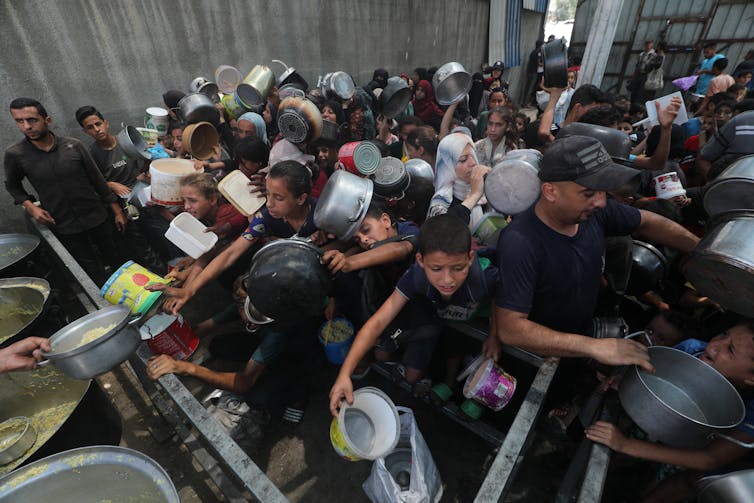
Horrifying images of starving children and thousands of people skirmishing for scraps of food in what a U.N.-backed body has called famine are now regularly reported in media outlets around the world and in the U.S. Even conservative platforms such as Fox News that until recently were sympathetic to Israel’s response to Oct. 7 have dedicated airtime to reporting on the hunger crisis and questioning its motives.

Children hold pots and pans.
Palestinian children struggle to acquire food in the Gaza Strip.
Moiz Salhi/Anadolu via Getty Images

Increasingly, Israel’s onslaught on Gaza – which to date has killed at least 62,000 people, around half of whom are women and children, and left 70% of the strip in ruins – is being viewed through a critical lens.

Nearly two years after the attack that sparked the Israeli operation, the war aims of Israel are understood more and more as politically motivated, with the purpose being the political survival of Netanyahu and his government.

There is increasing international condemnation and sanctioning of some of the government’s more prominent members who are accused of using genocidal language against the Palestinians in Gaza and elsewhere.

Australia recently barred the entrance of one far-right Israeli parliamentarian, citing his violent and inflammatory language against Palestinians. The U.K. has sanctioned two members of Netanyahu’s government, Itamar Ben-Gvir and Bezalel Smotrich, for similar reasons.

Moreover, international organizations and scholars are increasingly framing the actions of the Israeli government as a whole in Gaza as genocide – and recently two Israeli human rights organizations have joined them.

Israeli public opinion

But to what extent are Israeli citizens being conflated with the Netanyahu government in international criticism?

Israeli public opinion polls tell a complex story of views on the war in Gaza. On one hand, Netanyahu’s government remains deeply unpopular among 70% of Israeli citizens, and a growing number of Israelis now fully believe that the prime minister is prolonging the war for his own political interests.

Such sentiment has seen an uptick in protests over the war. On Aug. 17, the country practically shut down during a widespread strike and demonstration against the government. Hundreds of thousands of people gathered in Tel Aviv in an unprecedented mass rally, calling for the end of the war and a ceasefire deal that would bring all hostages back.

Yet polls also show that a majority of Israelis remain either indifferent to the suffering of Palestinians in Gaza or are in support of it, as dehumanization of Palestinians is widespread among large swaths of Israeli society.

It seems that only recently cracks in this wall of indifference have emerged.

Bans, booing and ostracism

The labeling of Israel as a pariah state internationally does not seem to bother the government.

Netanyahu insists that all the reporting about the humanitarian catastrophe in Gaza is fake news, orchestrated by Hamas and antisemitic forces around the world. Netanyahu has also responded to the moves by Western governments to recognize the Palestinian state by labeling their decisions as antisemitic.

But there are signs that international condemnation of the war in Gaza is affecting Israelis themselves – both at home and abroad.

Israelis and Israeli organizations from all walks of life are facing increased instances of anti-Israeli actions and sentiments.

The movement to boycott, divest and sanction Israel, known as BDS, has been in existence since 2005, but until the war in Gaza it had only limited success in generating wide support for its campaign. Now, 20 years after its establishment, the floodgates have seemingly been lifted and resulted in a deluge of boycotts and other actions that are slowly affecting almost every sector in Israel. To give one example, the British grocery chain Co-op earlier this year announced that it would stop sourcing Israeli produce at its 2,300 stores.

Israeli tourists in Greece have been targeted by pro-Palestinian demonstrations. And there are multiple reports of Israeli tourists being questioned or harassed elsewhere for their possible involvement in the war in Gaza.

There is pressure on FIFA to force Israel out of the global soccer organization, and matches involving Israeli teams in European capitals have been marred by violence by fans on both sides.

Meanwhile, a growing number of academics around the world are refusing to collaborate with their Israel peers. The EU is considering a move to block Israel from accessing its prestigious Horizon Europe research and innovation program. And Israeli artists are now regularly ostracized and disinvited from artistic events around the world, from music festivals to architecture exhibitions.

International cultural events that are scheduled to take place in Israel are now routinely modified or canceled, as just happened with the International Harp Competition, which had been scheduled for December 2025. Meanwhile, the popular Eurovision Song Contest has now been a site of anti-Israeli demonstrations for the second year in a row. This is despite Israeli fans of the event, hugely popular among the LGBTQ community, belonging predominantly to the progressive left-leaning camp in Israel – the very people most likely to be in opposition to the current government.

A person holds aloft a red, black, white and green flag
A protestor whistles and waves the Palestinian flag as Yuval Raphael, representing Israel, performs during the rehearsal of the 69th Eurovision Song Contest opening ceremony on May 15, 2025, in Basel, Switzerland.
Harold Cunningham/Getty Images

Israelis have responded to this challenge in multiple ways. Even prior to the mass demonstration on Aug. 17, tens of thousands of Israelis have protested the government for months on end, accusing Netanyahu and his far-right government for turning Israel into a pariah state. Artists and academics have issued petitions, acknowledging Israeli’s responsibility for the humanitarian catastrophe in Gaza and calling for the end of the war.

Abroad, Israelis, who are known for being avid international tourists, are now traveling more to sites that are deemed less hostile to Israel. Many prefer not to disclose their Israeli identify. Reservists and discharged soldiers are fearful of being arrested abroad after posting on social media about their military service in Gaza.

Claims of antisemitism

Yet Netanyahu, who is subject to an outstanding arrest warrant by the International Criminal Court, along with his far-right Cabinet, seem to be unmoved. The global isolation may even serve their narrow interests by putting Israel in this precarious situation and helping them mobilize their base around the argument that all anti-Israeli actions are motivated by antisemitism.

And while antisemitism is real and widespread, and some of it drives anti-Israeli actions, it is a far cry to argue that antisemitism – and not Israeli government policy – is the main reason for current global sentiments and actions against the country.

The government is particularly indifferent to areas that are considered “elitist” and that have been mainly affected by the global protest movement against Israel.

Members of the government and its supporters see Israeli academia or Israeli arts as fields filled with liberal leftists whose power should be curbed. It is telling that when the Weitzman Institute, one of Israel’s most distinguished academic centers, was hit by an Iranian missile during the 12-day war in June, a popular far-right radio and TV anchor and supporter of the government tweeted: “God 1; Weitzman Institute 0.” The suggestion was that God punished this globally renowned academic institution for its lack of support for the government.

The tweet was condemned by journalists and some members of the opposition but was endorsed and repeated on Channel 14, widely known as Netanyahu’s “house TV channel.” Government officials remained silent.

When this is the sentiment among the government and its supporters, why would they be bothered with the consequences to Israeli academia and indeed its citizens by Israel being increasingly seen as a pariah state?

The Conversation

Asher Kaufman does not work for, consult, own shares in or receive funding from any company or organization that would benefit from this article, and has disclosed no relevant affiliations beyond their academic appointment.

ref. Netanyahu remains unmoved by Israel’s lurch toward pariah status − but at home and abroad, Israelis are suffering the consequences – https://theconversation.com/netanyahu-remains-unmoved-by-israels-lurch-toward-pariah-status-but-at-home-and-abroad-israelis-are-suffering-the-consequences-263154

#MeToo in the movies – what to watch, see and play this week

Source: The Conversation – UK – By Anna Walker, Senior Arts + Culture Editor, The Conversation

It’s been almost a decade since the #MeToo movement promised to bring abusers in Hollywood to account. I’ve watched with interest as films have interrogated the moment in the years since. In 2020, there was Promising Young Woman, in which Carey Mulligan played a woman hellbent on punishing those who get away with abuse. And in 2023, Women Talking focused on a group of American Mennonite women who meet to discuss their future after discovering a history of rape in the colony.

Sorry Baby, which won awards at this year’s Sundance Film Festival, joins this decade of conversation. The film follows Agnes (played by the film’s writer-director Eva Victor), an English professor at a small American college, in the aftermath of a sexual assault.

The story, based on Victor’s own experiences, is structured in non-linear chapters that encompass the time after, before and during the abuse. This makes for an unflinching yet nuanced depiction of trauma’s aftermath. As our reviewer argues: “Victor portrays her female characters in a broad light, not allowing them to be solely defined by trauma, and in doing so allows something truly authentic to emerge.”

Sorry Baby is in select cinemas now

Another film experimenting with non-linear storytelling this week is The Life of Chuck. It’s an adaptation of a novella by Stephen King. When I told our resident King expert, international affairs editor Jonathan Este, about the film, he was puzzled – surely, he asked, the structure of that story is unfilmable? But somehow, director Mike Flanagan makes it work.

Starring Tom Hiddleston, The Life of Chuck explores the formative moments of Charles “Chuck” Krantz, chronicled in reverse chronological order. But this is no Benjamin Button story. It’s a joyful adaptation that honours the King novella while bringing in nice touches of its own.

As Hiddleston – who gets to show off his dancing skills in the film – told the audience at a recent screening: “I think the most important word in the title of the film is the word ‘life’. This is a film about life.”

The Life of Chuck is in cinemas now

Now open at the Bowhouse in Fife, Making Waves; Breaking Ground brings together the work of 11 artists to explore the natural environments of our modern world. Spanning painting, photography and film, these artists share a commitment to pursuing a more compassionate way of looking and being in a place.

And the works are stunning. Photographs of flowers frozen in time in extreme close-up by Kathrin Linkersdorff. A painting by Susan Derges that at first appears to be the Moon surrounded by clouds, but soon morphs before your eyes to be its shimmering reflection in a scummy river, and then something stranger – the perspective of a creature below the surface. A trout’s-eye view of the night sky.

As our reviewer, art historian Alistair Rider explains, these artists “don’t see themselves as separate from the worlds they depict. Our seeing eyes, they suggest, are made of the same physical substances as the things they see.”

Making Waves; Breaking Ground is a free exhibition running until August 31 at the Bowhouse, St Monans, Fife

It’s a truth universally acknowledged that every arts and culture editor has a secret taste for terrible TV. Mine? Love is Blind. I’ve binged the American show – all eight seasons of it – but my real soft spot is for Love is Blind UK. The couples are a little older, a little less media-savvy and all the more entertaining for it.

What I love about this show is the central premise – testing the idea that two people can fall in love without seeing each other in the flesh. Or, as the show cloyingly puts it, fall in love “sight unseen”. With the second season streaming now, we asked a psychologist to tell us what the research says – is love truly blind?

Love is Blind UK is streaming on Netflix now

While I’m in a confessional mood, here’s another guilty pleasure of mine. In moments of overwhelm, I have been known to turn off my phone, curl up under a blanket and fire up my laptop for a marathon game of The Sims. In that life simulation game, I create mini avatars who decorate their houses, fall in love, make friends and steadily work their way up the career ladder.

Turns out I’m not alone. More and more gamers are spending their time playing virtual jobs over fantasy adventures. The latest offering is Tiny Bookshop, where players spend hours organising shelves, recommending novels and chatting with customers.

Is it a little dystopian to finish work and log straight in for a virtual shift in your favourite video game? Perhaps. But as creative industries expert Owen Brierley argues: “The next time someone questions why you’re wasting time managing a virtual bookshop, remind them you’re not escaping work. You’re experiencing what work could be. Voluntary. Meaningful. Genuinely productive.”


Looking for something good? Cut through the noise with a carefully curated selection of the latest releases, live events and exhibitions, straight to your inbox every fortnight, on Fridays. Sign up here.


The Conversation

ref. #MeToo in the movies – what to watch, see and play this week – https://theconversation.com/metoo-in-the-movies-what-to-watch-see-and-play-this-week-263659

Hydration may be your best defence against stress, new study shows

Source: The Conversation – UK – By Daniel Kashi, Post-Doctoral Research Officer, Liverpool John Moores University

rahmi ayu/Shutterstock.com

Most people know they should drink more water, but our new research reveals an unexpected consequence of falling short: it could be making everyday stress significantly harder to handle.

Our study, published in the Journal of Applied Physiology, found that people who drank less than 1.5 litres daily showed dramatically higher levels of cortisol – the body’s primary stress hormone – when faced with stressful situations. The finding suggests that chronic mild dehydration may amplify stress responses in ways we’re only beginning to understand.

We tested healthy young adults by dividing them into two groups based on their usual fluid intake. One group drank less than 1.5 litres daily, while the other exceeded standard recommendations of roughly two litres for women and 2.5 litres for men. After maintaining these patterns for a week, participants faced a laboratory stress test involving public speaking and mental arithmetic.

Both groups felt equally nervous and showed similar heart rate increases. But the low-fluid group experienced a much more pronounced cortisol surge – a response that could prove problematic if repeated daily over months or years. Chronic elevation of cortisol has been linked to increased risks of heart disease, kidney problems and diabetes.

Surprisingly, the under-hydrated participants didn’t report feeling thirstier than their well-hydrated counterparts. Their bodies, however, told a different story. Darker, more concentrated urine revealed their dehydration, demonstrating that thirst isn’t always a reliable indicator of fluid needs.

The mechanism behind this stress amplification involves the body’s sophisticated water management system. When dehydration is detected, the brain releases vasopressin, a hormone that instructs the kidneys to conserve water and maintain blood volume. But vasopressin doesn’t work in isolation, it also influences the brain’s stress-response system, potentially heightening cortisol release during difficult moments.

Double burden

This creates a physiological double burden. Although vasopressin helps preserve precious water, it simultaneously makes the body more reactive to stress. For someone navigating daily pressures – work deadlines, family responsibilities, financial concerns – this heightened reactivity could accumulate into significant health harms over time.

Our findings add hydration to the growing list of lifestyle factors that influence stress resilience. Sleep, exercise, nutrition and social connections all play roles in how we handle life’s challenges. Water now emerges as a potentially underappreciated ally in stress management.

The implications extend beyond individual physiology. In societies where chronic stress is increasingly recognised as a public health crisis, hydration emerges as a surprisingly accessible intervention. Unlike many stress-management strategies that require significant time or resources, drinking adequate water is straightforward and universally available.

However, our research doesn’t suggest that water is a cure-all for stress. The study involved healthy young adults in controlled laboratory conditions, which cannot fully replicate the complex psychological and social stressors people face in everyday life. Hydration alone cannot address all aspects of real-world stress. We need long-term studies to confirm whether maintaining optimal hydration genuinely reduces stress-related health problems over years or decades.

A stressed man at work in front of his computer.
Mild dehydration could amplify the stress response.
PeopleImages.com – Yuri A/Shutterstock.com

Individual water needs vary considerably based on age, body size, activity levels and climate. Guidelines provide useful targets, but tea, coffee, milk and water-rich foods also contribute to daily fluid intake. The key is consistency rather than perfection.

A simple check involves monitoring urine colour: pale yellow typically indicates adequate hydration, while darker shades suggest increased fluid needs. This practical approach removes guesswork from an essential daily habit.

Good health stems from accumulated daily choices rather than dramatic interventions. Although proper hydration won’t eliminate life’s pressures, it might help ensure your body is better equipped to handle them. In a world where stress feels inevitable, that physiological advantage could prove more valuable than we’ve previously recognised.

Water remains essential for life in ways that extend far beyond basic survival. Our research suggests it may also be essential for managing the psychological demands of modern life, offering a simple but powerful tool for supporting both physical and mental resilience.

The Conversation

Dr Daniel Kashi’s Post-Doctoral salary was paid by Danone Research & Innovation

Prof Neil Walsh received no honoraria for the completion of this work. Liverpool John Moores University received funding for this work from Danone Research & Innovation specifically to cover research staff salaries and costs associated with data collection.

ref. Hydration may be your best defence against stress, new study shows – https://theconversation.com/hydration-may-be-your-best-defence-against-stress-new-study-shows-263361

Movement signatures: how we move, gesture and use facial expressions could be as unique as a fingerprint

Source: The Conversation – UK – By Karen Lander, Senior Lecturer in Experimental Psychology, University of Manchester

What do you think your movement fingerprint looks like? Studio Romantic/Shutterstock

The way someone walks, talks, smiles, or gestures gives a clue to who they are. Whether through the flick of an eyebrow, the rhythm of our walk, or the tilt of a head, movement speaks volumes.

And my recent paper shows that people may have their own movement fingerprint. This is a style of movement that is characteristic of a person’s identity. So, someone who uses expressive facial gestures might also speak with animated hand movements or walk with a lively gait. These consistencies could form a motion fingerprint that is unique to the individual.

First, let’s explore how faces move and why this matters.

Everyone has their own style of moving their face, for example, how they raise an eyebrow, purse their lips, or squint when laughing. These patterns of movement help us recognise familiar people even when visual quality is poor – such as in low lighting or from a distance. And as a person becomes more familiar to us, we become tuned to the way they move, learning their unique patterns of motion, just like we remember their face or voice.

Human faces are constantly in motion; they blink, smile, grimace and talk, to name a few movements. Researchers categorise facial motion into rigid movements (such as turning or nodding the head) and non-rigid movements (like expressing emotion or speaking). It’s the non-rigid movements that tend to be most personally distinctive.

The way we gesture with our hands, shift our posture and tilt our heads all carry identity information. Gestures are often shaped by personal habits or cultural norms, for example, someone might habitually nod three times when agreeing, or use a distinctive hand wave common in their home country.

Facial movements are synchronised with the way we sound. When we talk our face plays a role in shaping the sound of our voice. For example, if you talk with a wide open mouth, your speech sounds deeper and richer. Studies show that people can match other people’s voices to moving faces more accurately than to static ones. This suggests that dynamic cues to identity are present in the movement of the face and the sound of the voice.

People with face recognition difficulties (those who are “face blind” or prosopagnosic) may be better at recognising moving faces than still ones. Typically, people who are face blind can see faces and the differences between them, but struggle to link the face to a specific person. Here, idiosyncratic information from movement can provide an additional clue to identity.

Gait, a person’s walking style, is one of the most studied body movements. Early research, such as a 2005 study, investigated participants’ recognition of identity from gait using point-light displays. In this case, bright spots (lights) were placed on key areas of a person’s body. All other visual cues were removed. Participants could only see bright spots against a dark background. The study found participants could tell fairly well who someone was from the way the spots moved.

Characteristics such as stride length, limb movement, posture and pace form a consistent motion pattern that is unique and surprisingly difficult to fake, making gait analysis a reliable clue for identifying people.

Movement fingerprints

My review brought together evidence from behavioural and brain imaging studies to consider if such consistencies between different types of motion exist and how we might explore this phenomenon further. The paper proposes that people have an overall style of movement.

More work needs to be done to find direct evidence of movement fingerprints. For example, we still aren’t sure what part of the brain processes these movement-based identity cues.

So far, research shows that the posterior temporal sulcus – an area of the brain located roughly above your ear on each side – responds not just to faces and bodies, but to how someone moves more generally. This area is active when we hear voices or see people speak, suggesting it may help link motion and sound. Also, this region plays a key role in allowing us to understand our social world, interpreting other people’s actions, determining where they are looking, and picking up on social cues such as gestures, facial expressions and changes in gaze direction.

However, it’s probably just one part of a larger brain network involved in recognising others through motion.

Real-world applications

Motion-based identity traits aren’t as stable or specific as fingerprints or DNA. They’re what researchers call soft biometrics: useful but not always accurate.

But as we better understand the link between motion and identity, exciting real-world applications are emerging.

Motion analysis could support contactless identity verification from gait-based authentication at airports to gesture-based identification in smart environments, such as homes that respond to a user’s unique movement patterns. In clinical settings, movement analysis might help support people with social cognition impairments, face recognition or movement issues. For example, helping a doctor identify changes in the way a patient produces non-verbal cues.

But many questions remain. We still aren’t sure how consistent motion fingerprints are as someone gets older and in different contexts. Individual differences in people and environmental factors like lighting, clothing or stress could affect them.

Researchers also aren’t sure how exactly we manage to understand all this movement in everyday life without even thinking about it.

Figuring this out could not only help improve technologies like social robots and develop tools for people with recognition and communication difficulties, but also tell us more about how we process and react to other people.

The Conversation

Karen Lander does not work for, consult, own shares in or receive funding from any company or organisation that would benefit from this article, and has disclosed no relevant affiliations beyond their academic appointment.

ref. Movement signatures: how we move, gesture and use facial expressions could be as unique as a fingerprint – https://theconversation.com/movement-signatures-how-we-move-gesture-and-use-facial-expressions-could-be-as-unique-as-a-fingerprint-262893

Glasgow’s Citizens Theatre reopens: what its seven-year transformation reveals about the future of historic venues

Source: The Conversation – UK – By Andrew Filmer, Senior Lecturer in Theatre and Performance, Aberystwyth University

The relaunching of Glasgow’s famous Citizens Theatre – known locally as the “Citz” – marks the end of a significant seven-year redevelopment project that has seen the people of the city go without a cherished cultural landmark. It also highlights wider trends in how historic theatres are being redeveloped to make them more accessible, socially connected and sustainable while also preserving their heritage.

Extensive work has been done to improve almost all areas of the theatre, from foyer spaces and audience access, to sightlines in the auditorium and technical facilities. The redevelopment makes a feature of the Citizens’ history by revealing previously hidden sandstone walls in the foyer, and restoring its beloved statues of William Shakespeare, Robert Burns and assorted Greek goddesses to their position above the front entrance.

Opened in 1878 as the Royal Princess’s Theatre, the building has been the home of the Citizens Theatre Company since 1945, known for its bold stage productions, its youth and community theatre and participatory arts programmes.

Like many theatres, the Citizens has been continuously adapted over its 147-year history. In 1977 its neoclassical facade was removed following an earlier fire, and in 1989 a new foyer space and studio theatre were added. The current redevelopment, which began in 2018, was undertaken to ensure the building continues to serve the needs of the company and its community in the working-class Gorbals area, south of the river Clyde.

Connection, accessibility, sustainability

The redevelopment and restoration of older theatres such as the Citizens has become important as their social value and anchoring presence in towns and cities has been recognised. And of course it makes better sense environmentally and economically to reimagine and modernise old buildings than construct new ones.

Recent trends in redevelopments such as the Citizens provide insights into our shifting cultural values. Theatres are being renovated and redeveloped to make them more accessible and inclusive, more energy efficient and more flexible, while also keeping their history and heritage at the heart of the project.

Accessibility is a key feature of the redeveloped Citizens, reflecting the importance of the theatre as a place for social connection, community and inclusion. Attention has been focused on connecting the theatre to its urban environment, and improving the physical accessibility of audience spaces through step-free entrances, better circulation and lifts. Audiences will also be able to glimpse views of backstage activities.

Theatres increasingly serve an expanded social role with cafes, bars and spaces for exhibitions, not to mention education and participation programmes. Redesigned foyers signal this spatially, reinvented as public spaces. The Bristol Old Vic, which reopened in 2021, has a substantial new foyer which connects the existing theatre to the street, serves as a social space and can house events and performances.

Energy efficiency measures and lower carbon emissions are another factor in recent redevelopments, reflecting the need to address the climate emergency. According to a 2008 report by the Greater London Authority, around 80% of carbon emissions produced by London’s theatres come from building operation. Lowering energy consumption through energy efficiency measures like insulation, passive ventilation, and lighting controls are increasingly common.

Even relatively modern civic theatres from the late 20th century are hugely inefficient compared with contemporary standards and technologies. Theatr Clwyd in Mold, first opened in 1976 and recently refurbished, has replaced gas heating with air-source heat pumps, solar panels and natural ventilation. The renovated theatre now has “green” walls and roofs and has avoided significant use of concrete in favour of more sustainable materials.

Another feature in redeveloping older theatres is the need to design in flexibility so venues can house multiple types of events and also be adaptable for new art forms and technologies. Regular schedules for maintenance and the gradual upgrade of electrical and mechanical systems are being introduced to avoid less frequent, and more costly, redevelopments.

In July 2022 the Sydney Opera House completed a ten-year renewal programme which has seen significant upgrade of its concert hall. New features including movable wooden acoustic panels, automated systems to change the stage level and sound dampening drapes enable it to better accommodate different musical performances and events.

Theatres play an important role in the social and cultural life of towns and cities. The mix of old and new features in the redeveloped Citizens’ Theatre is a final important aspect which is common to all redevelopment projects. Theatres anchor communities, serving as places of memory and sites for the stories which connect us to each other, to the past and to our possible futures.

The reopening of Glasgow’s most famous theatre reflects how we value accessibility, social connection and sustainability. Theatres are never just performance spaces, but rather places which support our shared cultural life. The decisions we are making in their renewal today reveal a positive vision of the cultural life we want to sustain in the years ahead.


Looking for something good? Cut through the noise with a carefully curated selection of the latest releases, live events and exhibitions, straight to your inbox every fortnight, on Fridays. Sign up here.


The Conversation

Andrew Filmer does not work for, consult, own shares in or receive funding from any company or organisation that would benefit from this article, and has disclosed no relevant affiliations beyond their academic appointment.

ref. Glasgow’s Citizens Theatre reopens: what its seven-year transformation reveals about the future of historic venues – https://theconversation.com/glasgows-citizens-theatre-reopens-what-its-seven-year-transformation-reveals-about-the-future-of-historic-venues-263688