Hurricane Katrina: 3 painful lessons for emergency management are increasingly important 20 years later

Source: The Conversation – USA (2) – By Eric Kevin Stern, Professor of Political Science, Department of Emergency Management and Homeland Security, University at Albany, State University of New York
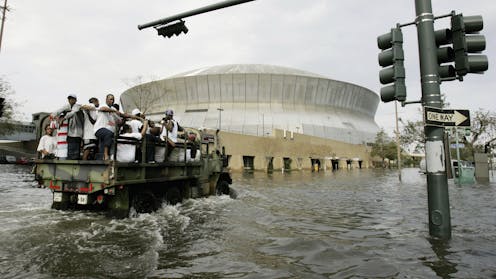
National Guard trucks carry rescued residents through floodwaters to the Superdome on Aug. 30, 2005, a day after Hurricane Katrina hit in New Orleans. AP Photo/Eric Gay

Hurricane Katrina looms large in the history of American emergency management, both for what went wrong as the disaster unfolded and for the policy changes it triggered.

As the nation looks back on the disaster 20 years later, I believe as a crisis and emergency management specialist that it is more important than ever to remember Katrina’s lessons to avoid repeating past mistakes.

When Katrina hit New Orleans on Aug. 29, 2005, its storm surge broke through levees protecting the city. Water quickly poured into low-lying neighborhoods, flooding houses up to their rooftops and inundating an estimated 80% of the city. People who could not evacuate before the storm and were lucky enough to escape to their roofs were stranded for days in some cases.

Once the water had receded and the death toll counted, it became clear that nearly 1,400 people had died as a result of this devastating storm. The hurricane did more than $100 billion in damage, equivalent to about US$170 billion today when adjusted for inflation.

A helicopter hovers above a rooftop with people on it.
Helicopters rescue stranded residents from rooftops on Sept. 1, 2005, three days after the hurricane.
AP Photo/David J. Phillip

While there were many unsung heroes during Katrina, the tragic missteps and missed opportunities at all levels of government emergency management are what no emergency manager ever wants to repeat. The response failed in many areas, from broken communications among federal, state and local agencies to the reported horrors in the Superdome as 16,000 evacuees faced failed generators, poor security, dwindling supplies and overflowing toilets.

Three lessons from Katrina stand out today as the Trump administration talks about dismantling the Federal Emergency Management Agency and putting more responsibility for disaster management on local and state agencies.

1. Emergency response is only as strong as the weakest links

FEMA took the brunt of the criticism after Hurricane Katrina. However, serious analyses of what went wrong recognize that good disaster response requires effective governance at all levels.

Before FEMA could spend significant money to deploy people and aid, the state of Louisiana had to request a presidential disaster declaration. However, tensions between the state and federal governments reportedly delayed President George W. Bush’s approval, according to a Senate committee report assessing the response. The committee also found that New Orleans Mayor Ray Nagin’s decision to first issue a voluntary evacuation and not issue a mandatory order until a day before the storm cost precious time.

A police officer points at someone while talking to people on a  downtown street.
New Orleans Police Superintendent Eddie Compass tells people in front of the New Orleans Convention Center on Sept. 2, 2005, that they will get food and water. A heavily armed military convoy arrived in hurricane-devastated New Orleans that day, four days after the hurricane, with urgently needed supplies.
Robert Sullivan/AFP via Getty Images

Once the storm hit, communication and coordination fell apart.

Vehicles badly needed for the disaster response were damaged by the storm. Problems with communication systems and a breakdown in situation reporting from local law enforcement and rescue services left state and federal government decision-makers flying blind, without up-to-date reports of conditions on the ground. Media reports of a “war zone” in New Orleans exaggerated the extent of public disorder and threats to responders. That further delayed the arrival of federal military and National Guard assistance – and hindered some local efforts – because it required additional precautions for coping with a hostile security environment.

As challenging as the information environment was during Hurricane Katrina, it is more difficult now. Social media, hyper-partisanship and deliberate misinformation attempts complicate emergency response and recovery efforts.

If the federal government now proposes to push more responsibility for disaster relief to the state and local levels, emergency managers at those levels will be taking on highly complex disasters in a potentially toxic information environment with less support.

States, counties and cities vary greatly in their readiness to shoulder this responsibility.

2. Leave no one behind

An enduring image of Hurricane Katrina was the plight of residents who lacked transportation and took shelter at the New Orleans Superdome, where conditions quickly deteriorated.

Another was the harrowing tales of gravely ill patients and exhausted medical staff stranded at Memorial Medical Center for five days without power as temperatures rose and the lower floors flooded.

A man carries a smaller man from a boat to dry land while people wait in the boat behind him on a flooded city street.
A volunteer who used his boat to rescue several residents from a flooded east side New Orleans neighborhood carries a man who could not walk to safety on Aug. 31, 2005, two days after the storm.
AP Photo/Eric Gay

These extreme predicaments and the deaths of people trapped in flooding homes in the Lower Ninth Ward were powerful reminders of the vulnerability of many low-income, elderly and ill residents who were unable to get out ahead of the disaster.

A few years after Katrina, Obama administration FEMA Administrator Craig Fugate and his team placed a new focus on forging a “whole community” emergency management strategy. It is designed to include marginalized populations in emergency planning and ensure that those who aren’t able to evacuate due to disability or financial limitations are not forgotten during disasters.

Government guidance now states that emergency mass care shelters be in buildings that people who have trouble walking can navigate easily. Emergency information is typically distributed in multiple languages, accessible for people with impaired hearing or vision, and written in ways adapted to the cultures and circumstances of minority groups.

Three older women in portable chairs look for arriving transportation. Many more people crowd the curb around them.
Hurricane Katrina victims wait for transportation at the convention center in New Orleans on Sept. 1, 2005.
AP Photo/Eric Gay

However, many of these advances are in jeopardy today as the Trump administration seeks to eliminate initiatives that might be considered DEI – diversity, equity and inclusion. The misery and death caused by Hurricane Katrina should serve as vivid reminders of why many existing emergency management programs emphasize the needs of socially vulnerable populations.

3. Professional emergency management is essential

The face of the federal government’s shortcomings in responding to Hurricane Katrina was then-FEMA Administrator Michael Brown. Initially, he was publicly praised by President Bush, who declared: “Brownie, you’re doing a heck of a job!”

But Brown was not a professional emergency manager. His prior on-the-job experience in the role did not prove sufficient in this extreme situation. As the problems with the response to Katrina became increasingly evident, Brown proved unable to provide effective leadership in the crisis and was forced out.

A man in party rolled up shirt sleeves points to a map while President George W. Bush stands listening nearby with his arms crossed.
FEMA Administrator Michael Brown, center, updates President George W. Bush, left, on the aftermath of Hurricane Katrina on Sept. 2, 2005.
Jim Watson/AFP via Getty Images

Part of the legislative legacy of Katrina is the Post-Katrina Emergency Management Reform Act of 2006. It requires that FEMA chief administrators have extensive knowledge of emergency management and substantial relevant executive leadership experience. All of the subsequent confirmed heads of FEMA were once state emergency management directors or had been in charge of emergency management in major cities.

However, those requirements do not always apply to acting administrators. In his second term, President Donald Trump has had two acting FEMA administrators – Cameron Hamilton and David Richardson. Both lacked prior experience managing major disasters on a statewide or comparable basis. Hamilton was abruptly fired after suggesting to Congress that FEMA should not be eliminated. Richardson’s leadership was quickly tested during the Texas flash flood tragedy on July 4, 2025, that killed more than 135 people.

The shortcomings of the response to Hurricane Katrina also led to wider adoption of the National Incident Management System, which helps all levels of government, nongovernmental organizations and the private sector work together in an emergency.

If more responsibility for emergency management devolves to states in the future, they will need to cultivate the ability to coordinate and collaborate effectively to respond to disasters.

Looking ahead

Leaders and organizations such as FEMA have learned from crises such as Hurricane Katrina.

However, political priorities come and go, staff turns over, and generations pass the torch to their successors. Leaders and organizations can forget critical lessons from the past.

As efforts to reform – and possibly rebalance – the U.S. emergency management system continue during the Trump administration, it is essential to remember and heed the costly lessons of Hurricane Katrina.

The Conversation

Eric Stern has recently received funding from DHS Science and Technology for an extreme weather informatics project and from NOAA for work on extreme heat events. He has lectured at the National Emergency Management Executive Academy and many similar programs around the country and the world.

ref. Hurricane Katrina: 3 painful lessons for emergency management are increasingly important 20 years later – https://theconversation.com/hurricane-katrina-3-painful-lessons-for-emergency-management-are-increasingly-important-20-years-later-260907


The rise of humanlike chatbots detracts from developing AI for the human good

Source: The Conversation – Canada – By Mark Daley, Professor & Chief AI Officer, Western University

Grok is a generative artificial intelligence (genAI) chatbot by xAI that, according to Elon Musk, is “the smartest AI in the world.” Grok’s latest upgrade is Ani, a porn-enabled anime girlfriend, recently joined by a boyfriend informed by Twilight and 50 Shades of Grey.

This summer, both xAI and OpenAI launched updated versions of their chatbots. Each touted improved performance, but more notably, new personalities. xAI introduced Ani; OpenAI rolled out a colder-by-default GPT-5 with four personas to replace its unfailingly sycophantic GPT-4o model.

Similar to claims made by Google DeepMind and Anthropic, both companies insist they’re building AI to “benefit all humanity” and “advance human comprehension.” Anthropic claims, at least rhetorically, to be doing so responsibly. But their design choices suggest otherwise.

Instead of equipping every person with an AI assistant — a research collaborator with PhD-level intelligence — some of today’s leaders have released anthropomorphized AI systems that operate first as friends, lovers and therapists.


Read more:
More people are considering AI lovers, and we shouldn’t judge


As researchers and experts in AI policy and impact, we argue that what’s being sold as scientific infrastructure increasingly resembles science fiction gone awry. These chatbots are engineered not as tools for discovery, but as companions designed to foster para-social, non-reciprocal bonds.

Human/non-human

The core problem is anthropomorphism: the projection of human traits onto non-human entities. As cognitive scientist Pascal Boyer explains, our minds are tuned to interpret even minimal cues in social terms. What once aided our ancestors’ survival now fuels AI companies by capturing the minds of their users.

a hand holding a smartphone showing ChatGPT on the screen
AI companies claim to work towards equipping every person with an AI-assistant.
(Matheus Bertelli/Pexels), CC BY

When machines speak, gesture or simulate emotion, they trigger those same evolved instincts such that, instead of recognizing it as a machine, users perceive it like a human.

Nonetheless, AI companies have pushed on, building systems that exploit these biases. The justification is that this makes interaction feel seamless and intuitive. However, the consequences that result can render anthropomorphic design deceptive and dishonest.

Consequences of anthropomorphic design

In its mildest form, anthropomorphic design prompts users to respond as if there were another human on the other side of the exchange, and can be as simple as saying “thank you.”

The stakes grow higher when anthropomorphism leads users to believe the system is conscious: that it feels pain, reciprocates affection or understands their problems. Although new research reveals that it’s possible the criteria for consciousness may be met in the future, false attributions of consciousness and emotion have led to some extreme outcomes, such as leading users to marry their AI companions.

However, anthropomorphic design does not always inspire love. For others it has led to self-harm or harming others after forming unhealthy attachments.

Some users even behave as though AI could be humiliated or manipulated, lashing out abusively as if it were a human target. Recognizing this, Anthropic, the first company to hire an AI welfare expert, has given its Claude models the unusual capacity to end such conversations.

Across this spectrum, anthropomorphic design pulls users away from leveraging AI’s true capabilities, forcing us to confront the urgent question of whether anthropomorphism constitutes a design flaw — or more critically, a crisis.

De-anthropomorphizing AI

The obvious solution seems to be stripping AI systems of their humanity. American philosopher and cognitive scientist Daniel Dennett argued that this may be humanity’s only hope. But such a solution is far from simple because the anthropomorphization of these systems has already led users to form deep emotional attachments.

When OpenAI replaced GPT-4o with GPT-5 as the default in ChatGPT, some users expressed genuine distress and genuinely mourned the loss of 4o. However, what they mourned was the loss of its prior speech patterns and the way it used language.

a bust with the top half showing a paper saying loading
A public installation in Paris by the artist Rero.
(Mathias Reding/Unsplash), CC BY

This is what makes anthropomorphism such a problematic design model. As a result of the impressive language abilities of these systems, users attribute mentality to them — and their engineered personas exploit this further.

Instead of seeing the machine for what it is — impressively competent but not human — users read into its speech patterns. While AI pioneer Geoffrey Hinton warns that these systems may be dangerously competent, something much more insidious seems to result from the fact these systems are anthropomorphized.


Read more:
A neuroscientist explains why it’s impossible for AI to ‘understand’ language


Flaw in the design

AI companies are increasingly catering to people’s AI companion desires, whether sexbot or therapist.

Anthropomorphism is what makes these systems dangerous today because humans have intentionally built them to mimic us and exploit our instincts. If AI consciousness proves impossible, these design choices will be the cause of human suffering.

But in a hypothetical world in which AI does attain consciousness, our choice to force it into a human-shaped mind — for our own convenience and entertainment, replicated across the world’s data centres — may invent an entirely new kind, and scale, of suffering.


Read more:
Increasingly sophisticated AI systems can perform empathy, but their use in mental health care raises ethical questions


The real danger of anthropomorphic AI isn’t some near or distant future where machines take over. The danger is here, now, and hiding in the illusion that these systems are like us.

This is not the model that will “benefit all humanity” (as OpenAI promises) or “help us understand the universe” (as xAI’s Elon Musk claims). For the sake of social and scientific good, we must resist anthropomorphic design and begin the work of de-anthropomorphizing AI.

The Conversation

Mark Daley receives funding from NSERC, SSHRC and Schmidt Initiative for Long Covid.

Carson Johnston is supported in part by funding from the Social Sciences and Humanities Research Council.

ref. The rise of humanlike chatbots detracts from developing AI for the human good – https://theconversation.com/the-rise-of-humanlike-chatbots-detracts-from-developing-ai-for-the-human-good-261787

New age-gating laws aimed at making the internet safer actually threaten free speech

Source: The Conversation – Canada – By Neil McArthur, Director, Centre for Professional and Applied Ethics, University of Manitoba

The United Kingdom recently launched a broad system of age verification that requires any platforms that host pornography or other “harmful” content to ensure their users are 18 or older.

Around the world, large swathes of the open web are being replaced by walled gardens. In June, the U.S. Supreme Court upheld the constitutionality of Texas’s age restriction law. Twenty-one other states have similar laws in place, and more have been proposed.

Australia restricts young people’s access not just to specific websites, but to all social media, and it will soon extend this to search engines.


Read more:
Australia is banning social media for teens. Should Canada do the same?


In Canada, Bill S-209, which would require age verification for adult websites, could soon become law. It is at the reporting stage in Parliament, the final stage before it comes to a vote.

The spread of these age-gating laws is a disaster for free speech, privacy and the future of the internet itself. It is not too late to take a stand against them.

CBC News reports on internet age restrictions.

Think about the children

The basic purpose of these laws is admirable enough. We all want to protect children from harm. But we need to ask two questions. First, do they actually accomplish their goal? And second, do the benefits of these laws outweigh the costs?

We should be clear on one thing at the outset. Proponents of the laws sometimes talk about protecting children from exploitation. But age-gating does nothing to address the problem of child pornography. It restricts access based on the age of the user, not the age of the person depicted. And almost all child-abuse material is already on the dark web or on other sites that do not adhere to any laws.

When it comes to restricting young people’s access, the reality is that age gates are easily bypassed by a determined user. A recent Australian survey showed that almost a quarter of teens routinely get around age barriers.

The simplest circumvention method is through the use of a virtual private network to hide a user’s location. These are easy to set up and many are free. However, young people can also, depending on the verification technology being used, upload an adult’s credentials or use simple tricks to fool facial recognition systems.

A massive cost

Even if some young people are circumventing the blocks, many are not, and so age verification will reduce the exposure some young people have to banned material. But this modest victory comes at a massive cost.

First of all, these laws place the burden on adults who are trying to access material they have a right to see. We are, in the name of protecting children, sleepwalking into a dystopian vision of the internet where every user must flash their papers before being allowed to go online.

To verify their age, people have to upload photos of their government-issued identification without knowing if their data is secure. Often, it won’t be.

One major age-verification service left users’ data, including their legal identification, exposed for more than a year.

Second, these laws define harmful material so vaguely that it is impossible for content producers to predict when they will fall afoul of them. This affects not just the producers of explicit content, but the internet as a whole. Smaller websites in particular cannot afford to hire lawyers to vet all of their content, or to fight for their rights if they’re charged.

It’s easier just to block access to everyone in an age-gated jurisdiction, which many sites have already started doing, or to shut down entirely.

Third, the laws make the state the arbiter of what young people can read and see. But what is appropriate to a particular user is highly individual. It depends on their age and their emotional maturity. And inevitably, censorship gives governments the power to impose their own moral agendas.

Not surprisingly, some American states have used their age-gate laws to censor material related to abortion, sexual health and LGBTQ identity.


Read more:
Is childproofing the internet constitutional? A tech law expert draws out the issues


Russell Vought, at the time the vice president of a conservative lobbying organization and currently the head of the U.S. Office of Management and Budget, was caught last year on a hidden camera admitting that age-verification laws were meant as a move towards banning pornography altogether.

In 1997, the U.S. Supreme Court found an early age-restriction law, the Communications Decency Act, unconstitutional. Explaining the court’s unanimous decision, Justice John Paul Stevens wrote that the law “threaten[ed] to torch a large segment of the internet community” and declared that “the interest in encouraging freedom of expression in a democratic society outweighs any theoretical but unproven benefit of censorship.”

Though a more conservative Supreme Court has set aside this precedent, Stevens’ prescient words remain as true today as ever.

Parental involvement

There is a better alternative to age-gating, one that places the power where it belongs: in the hands of parents. Many devices, including those made by Apple and Google, already offer parental controls. While not perfect, they are both less intrusive and harder to circumvent than online age verification systems.

These measures place data security in the hands of a small number of trusted companies and remove the need for constant age verification when accessing different websites. These controls could be mandatory for all mobile devices and computer operating systems.

This is a crucial moment for the internet. The walls are coming up fast, and if we do not stop them now, they will be hard to tear down.

The Conversation

Neil McArthur does not work for, consult, own shares in or receive funding from any company or organisation that would benefit from this article, and has disclosed no relevant affiliations beyond their academic appointment.

ref. New age-gating laws aimed at making the internet safer actually threaten free speech – https://theconversation.com/new-age-gating-laws-aimed-at-making-the-internet-safer-actually-threaten-free-speech-263401

Dark sky tourism offers time with darkness and celestial wonders

Source: The Conversation – Canada – By Glen Hvenegaard, Professor, Environmental Science, University of Alberta

On a cold winter night in a rural area, I looked through a scope to see the rings of Saturn for the first time. Connecting grade school science book descriptions with a real life view amazed me.

Even without a telescope or binoculars, many of us have had similar memorable moments — like watching the Milky Way galaxy, identifying constellations and safely observing a solar eclipse.

Dark skies are places mostly free of light pollution and where one can see celestial features easily. Dark skies can be awe-inspiring, but they are also vitally important for both animal health, human health and local economies.

Even though our current night skies have become polluted with excessive light, there are ways to promote understanding, reduce light pollution and support local communities. Tourism researchers in Australia have defined dark sky tourism (DST) as “tourism based on unpolluted night skies involving observation and appreciation of naturally occurring celestial phenomena.”

My colleague Clark Banack and I have researched factors contributing to the success of the Jasper Dark Sky festival in Alberta. This research was informed by our combined expertise studying protected areas and environmental education (my areas) and sustainable rural communities (Banack’s area).

Wildlife, humans need night and darkness

Dark skies are important because wildlife and humans have evolved to rely on predictable patterns of dark and light. For example, some amphibians plan their breeding rituals around darkness patterns. Hatchling sea turtles use the bright sea horizon to find the sea. Many mammals and birds hunt at night, using natural light from the moon and stars.

In response, some species evade their predators using the cover of darkness. Many birds migrate at night with the help of cues from the dark skies. For humans, past and present travellers have planned navigation using dark skies.

The amazing night sky has inspired many cultures in the realms of science, religion, philosophy, art and literature. Regular schedules of dark and light help us live and sleep well.

Negative effects of light pollution

Unfortunately, light pollution can cause negative effects. For example, artificial light confuses migratory species in finding their way, changes the timing of reproduction and reduces concealment for prey animals. Nocturnal predators are less effective in catching prey. Artificial lights attract insects in unnaturally high densities.

Furthermore, humans are affected by light pollution, with impacts on our natural circadian rhythms and sleep patterns, which may lead to other more serious health problems. Up to 80 per cent of the world’s population can’t see key night sky features.

Aside from the environmental effects, the financial costs are high: in the United States alone, researchers estimate the financial cost of wasted energy from light pollution to be about US$7 billion per year.


Read more:
It’s not too late to save the night sky, but governments need to get serious about protecting it


Dark sky tourism

Despite the spread and impacts of light pollution, many people actively seek out dark skies. Dark sky tourism (DST) appears to be growing, based on the number of visits to astronomical observatories, development of dark sky preserves, watching auroras, dark sky festivals, solar eclipses, star parties and sky-watching domes.

There are no accurate estimates of the size of DST, but many tourism sites indicate significant visitation and economic impact. For example, research published in 2019 found that dark sky enthusiasts spend more than US$500 million each year visiting the Colorado Plateau, creating 10,000 jobs.

Yellowknife has been called the aurora capital of North America with an average of 240 potential nights per year and suitable conditions to view the northern lights. In 2018, about 34,000 visitors spent CA$57 million in the Northwest Territories capital.

Local economic benefits

The large demand for DST and the local economic benefits are strong motivations for maintaining dark skies. Dark sky tourists want reliable opportunities to view the night sky and seek out guided educational programs to support those activities. Communities offering such tourism tend to support these same goals in order to maintain economic impacts.

Some organizations promote efforts to reduce light pollution through advocacy, education, retrofits and the designation of certified dark sky sites.

These night sky advocate groups want to minimize light pollution by limiting brightness on lights, using sensors and timers, changing light hues, minimizing the number of lights and directing lights downwards.

Canadian dark sky sites

To certify such efforts, Dark Sky International recognizes more than 200 dark sky places in 22 countries.

The Royal Astronomical Society of Canada recognizes 27 dark sky sites across the country, including dark sky preserves, nocturnal preserves and urban star parks, each with unique approaches to reducing lighting.

Canadian sites include Point Pelee National Park, in Ontario (most southerly), Terra Nova National Park in Newfoundland (most easterly) and Cattle Point urban star park in British Columbia (most westerly), as well as Wood Buffalo National Park, which spans the Alberta and Northwest Territories border. These and other dark sky sites are natural attractions for dark sky tourists.

Jasper dark sky preserve

Following designation of the Jasper dark sky preserve (11,228 square kilometres) in 2011, the annual Jasper Dark Sky Festival has sought to promote dark skies among the public and policy-makers and to reduce artificial light.

The festival is held during the October tourist season. Despite the damage in Jasper from wildfires in 2024, the festival will celebrate its 15-year anniversary this fall.

After a small-scale start (with aspects like night-time walks and telescope viewing), the festival expanded its offerings with some ticketed events and a range of options, including science education, entertainment and cultural events. People can choose from both free and paid activities.

As our research examined, the success of the festival has depended on the dark sky designation, balance between growth and sustainability, balance between education and entertainment, strong relationships with stakeholders, local champions, community support and a strong reputation. The economic impacts on Jasper have been positive during a season that normally under-utilizes local restaurants and hotels.

Dark sky tourism can help protect dark skies by generating support among educated and satisfied tourists and among communities receiving economic impacts. Such impacts may persuade decision-makers to enact policies to protect dark skies, such as dark sky preserves that have worked well in places like Jasper.

During your next night-time outing, be sure to look upward to appreciate our amazing dark skies, and consider the benefits for tourists and communities alike.

The Conversation

Glen Hvenegaard received support for this project from the University of Alberta’s Augustana Faculty Research Committee through the Social Sciences and Humanities Research Council.

ref. Dark sky tourism offers time with darkness and celestial wonders – https://theconversation.com/dark-sky-tourism-offers-time-with-darkness-and-celestial-wonders-259633

Sex workers in colonial Senegal were policed by France – book explores a racist history

Source: The Conversation – Africa – By Caroline Séquin, Associate Professor of Modern European History, Lafayette College

Desiring Whiteness is an award-winning book by historian Caroline Séquin. It explores the intertwined histories of commercial sex work and racial politics in France and the French colonial empire, particularly in Senegal. We asked her five questions about her study.


How was sex work regulated in France?

A new system controlling commercial sex developed during Napoleon’s Consulate in the early 1800s. It was first implemented in Paris, then across France. Known as regulationism, it tolerated, rather than banned, commercial sex. But under specific conditions.

It licensed brothels, so long as the women who sold sex (it was assumed men didn’t) were registered with the vice police. They had to undergo a regular gynaecological exam to detect any sexually transmissible infections (STIs) they might inadvertently pass to their clients.

At the time syphilis was a serious public health threat. Doctors didn’t know how to treat it. Women caught with an STI or who broke the regulationist rules were interned in hospitals or prison without proper trials.

Historians have shown how regulationism was an arbitrary and flawed system. It unfairly targeted mostly working-class women for the benefit of male heterosexual desire.

What form did it take in the colonies like Senegal?

After the abolition of slavery in 1848, French colonial authorities adopted the regulationist regime that had been developed in France.

The French empire at the time included Martinique, Guadeloupe, French Guiana, Reunion, and some coastal regions of Algeria. In addition were French trading posts in Senegal and India, and several protectorates in the Pacific.

So, in Senegal regulationism was adopted in Saint-Louis and Gorée Island. There the French had built trading posts which they converted into colonial territories around the same time.


Read more:
Senegal is decolonising its heritage, and in the process reclaiming its future


Regulationism became a way to control the bodies of formerly enslaved women. Colonial authorities saw them as a public health threat to the French men present in the region. They feared that, after abolition, women would resort to commercial sex as a means of survival. This would contribute to the spread of STIs. They extended these policies to all of colonial Senegal a year after abolition.

How did Senegal’s sex workers respond?

Not in the way that colonial authorities would have hoped. Many of the African women who were accused of engaging in commercial sex evaded the mandatory health checks or police registration. For example, they relocated to other areas to avoid detection.

And although the new colonial decree allowed for the creation of brothels, it appears none existed in the colony until the early 1900s. Authorities routinely lamented how the African women who sold sex did so “clandestinely”. Meaning outside licensed brothels and colonial control.

One shouldn’t dismiss the reality that some of these women were likely wrongly accused of being sex workers. Gender and racial bias shaped how medical and colonial authorities viewed Black women.

I haven’t found any evidence of brothels staffed with African women in Dakar or across colonial Senegal. All licensed brothels were staffed with European women and their services were reserved exclusively for European men.

The sexual reputation of white women greatly mattered to colonial authorities as it was supposed to reflect French moral superiority. Nonetheless, they tolerated their sexual activity because brothel keepers denied African male clients access to their businesses. This helped prevent interracial sex.

Sex with a white sex worker was preferrable to sexual or conjugal relationships developing with African women. Given the widespread assumption at the time that men had natural sexual needs, brothels were perceived as a “necessary evil” to maintain the social, moral, and racial order.

So, the regulation of commercial sex became an essential tool for the upholding of colonial rule. This increasingly relied on strict racial hierarchies and the preservation of French whiteness.

How does this play out today?

The regulationist regime was legally abolished in France – and colonial Senegal – in 1946. However, a few years after decolonisation and Senegal’s independence in 1960, a new law was established by Senegalese authorities. It required sex workers to be registered (with medical authorities, rather than police) and regularly checked for STIs. Those who failed to comply risked being jailed.


Read more:
Sex, intimacy and black middle-class Christianity in South Africa – a difficult history


This is strikingly similar to the regulationist system established during the colonial period and it still stands to this day.

This was a different path than that taken by other African countries formerly under French colonial control, which associated regulationism with colonial oppression. They moved to eliminate it after independence. Some scholars, however, have lauded Senegal’s regulationist style laws as one of the main reasons why the country has the lowest reported HIV rate in the continent.

What do you hope readers will take away from your book?

The regulation of commercial sex was not simply about controlling women’s bodies and sexuality. It was also about policing racial relations.

As colonial discourses about race shifted and interracial sex and intimacy became increasingly frowned upon from the late 1800s, French authorities relied on commercial sex to limit the development of more sustained forms of intimacy across racial and colonial boundaries. In their view these threatened to dilute the myth of French whiteness by creating multiracial offspring.

What this meant for who could sell and buy sex in brothels differed in colonial Senegal and France. But, in the end, the racial logic that undergirded metropolitan and colonial brothels was the same.


Read more:
Freemasons, homosexuals and corrupt elites in Cameroon – inside an African conspiracy theory


So, my book contributes to an ever-growing scholarship that has debunked the myth of France’s colour blindness, by uncovering how the regulation of commercial sex was just one of the many ways in which racial difference and hierarchies were produced and upheld in the century following the abolition of slavery.

In that sense, France was not exceptional but rather similar to other imperial nations like the United States, where the control of sex and conjugality became crucial for the racial project of white supremacy in the aftermath of the abolition of slavery.

The Conversation

Caroline Séquin does not work for, consult, own shares in or receive funding from any company or organisation that would benefit from this article, and has disclosed no relevant affiliations beyond their academic appointment.

ref. Sex workers in colonial Senegal were policed by France – book explores a racist history – https://theconversation.com/sex-workers-in-colonial-senegal-were-policed-by-france-book-explores-a-racist-history-262999

Social connections matter for the well-being of neurodivergent workers – adjustments to office settings and routines aren’t enough

Source: The Conversation – France – By Raysa Geaquinto Rocha, Lecturer at the University of Essex and Assistant Professor at the VU Amsterdam, European Academy of Management (EURAM)

Think about the last time you chatted with a colleague by the coffee machine, grabbed lunch with a colleague, or reached out to someone to praise their performance. These casual work connections, often taken for granted, can become pathways to new opportunities, valuable information, and a sense of belonging that make our professional lives meaningful.

For the estimated 15-20% of workers who are neurodivergent, navigating these connections often involves unique challenges. Beyond managing sensory overload in bustling office environments (think fluorescent lighting, background conversations and constant movement), neurodivergent workers may struggle with unspoken rules of workplace socialising. Many find chitchat draining, requiring significant mental effort to process verbal cues in real time. Others experience anxiety around initiating casual contact or maintaining small talk without a clear purpose. Reading subtle facial expressions and knowing when to join or leave conversations present additional hurdles. And the practice of “masking”, or consciously hiding neurodivergent traits to “fit in”, can also lead to exhaustion.

Together, these challenges create significant barriers to building the connections and networks that contribute to workplace well-being and career development. In the work of the late French sociologist Pierre Bourdieu, these networks are part of a person’s “social capital”, a form of capital that allows individuals to influence others and access resources.

What is neurodivergence?

Neurodivergence refers to the neurobiological variation in how human brains function and process information. Neurodivergent individuals have brain structures and cognitive processes that differ from what society considers neurotypical. Neurodiversity includes classifications such as autism spectrum disorder (ASD), attention deficit hyperactivity disorder (ADHD), dyslexia, dyscalculia, and Tourette syndrome, among others. These classifications often pose both unique challenges and bring distinct strengths. For instance, many neurodivergent people face difficulty with time management, and also demonstrate exceptional pattern recognition, creativity, or hyperfocus in their areas of interest.

Many neurodivergent individuals have traits, or experience co-occurring conditions or challenges, that can further shape their workplace experiences. For instance, sensory processing sensitivity affects how environmental stimuli are perceived and processed, often leading to heightened reactions to lights, sounds and textures. Rejection sensitive dysphoria (RSD) manifests as an intense emotional response to perceived or actual rejection or criticism, along with a need for external validation. (Women with ADHD are particularly affected by RSD challenges in the workplace.) There may be executive function challenges affecting time management and task prioritisation. And a recent study has found that anxiety and depression occur at higher rates among some neurodivergent populations.

Neurodivergence and invisibility

Neurodivergence in the workplace is often invisible. Many neurodivergent people navigate work environments without formal diagnoses, either because assessment services are limited or costly, or because they have developed coping strategies without identifying the underlying differences in how their brains function. Those with diagnoses may choose not to disclose their neurodivergent status for reasons including fears of misunderstanding, stigma or discrimination. As a result, these workers may be managing substantial cognitive efforts and social challenges without colleagues or managers knowing it. The pressure can lead to less work-life balance and job satisfaction, along with increased anxiety and burnout.

Organisations committed to neuroinclusion face a particular challenge: how to create environments that support neurodivergent workers when many remain unidentified? This challenge underscores the importance of applying universal design principles in the workplace, and the trouble with relying on individually requested accommodations. It also points to the need for neurodivergent workers to build meaningful relationships at work.

The social dimension of neuroinclusivity

While the UK’s Equality Act 2010 ensures “reasonable adjustments” to physical environments and work processes, these safeguards primarily address workplace inclusion’s visible and structural aspects. They do not fully address its social dimension, where those casual coffee chats and lunch break conversations happen. Despite having the proper desk set-up or flexible hours, many neurodivergent workers still struggle to navigate unwritten social rules and networking expectations. In our research, we argue that building a neuroinclusive workplace requires finding ways to make it easier for meaningful connections to happen.

Underscoring the growing recognition of this viewpoint, a UK employment tribunal ruled earlier this year that nonverbal “expressions of frustration”, such as sighing and exaggerated exhaling, that were directed at a worker with ADHD constituted disability discrimination. The ruling signals a shift toward recognising that neuroinclusive workplaces must also address the nuanced social behaviours that shape neurodivergent workers’ experiences.


A weekly e-mail in English featuring expertise from scholars and researchers. It provides an introduction to the diversity of research coming out of the continent and considers some of the key issues facing European countries. Get the newsletter!


The quest for a neuroinclusive workplace

Rather than expecting neurodivergent workers to adapt to conventional social norms, forward-thinking organisations are redesigning interaction spaces with clearer social protocols, diverse communication channels and explicit networking pathways. These environments reflect awareness that different neurological processing styles bring a valuable diversity of perspectives.

As part of our ongoing research project, Neurodivergent workers and well-being: Socialisation and meaningful relationships in the workplace, we have been conducting interviews with neurodivergent workers, HR managers and neuroinclusion specialists in the UK to understand the role that socialisation has on career development, job satisfaction, and the ultimate flourishing of neurodivergent workers. We have also been sending surveys to neurodivergent workers to ask about topics such as distributive justice, perceived stigma, and social relationships at work. Some of our research is in the technology sector, where companies increasingly recognise that inclusion comes from celebrating neurodiversity.

So far, we’re hearing that socialisation is a bigger struggle for neurodivergent workers than requesting and receiving reasonable adjustments. Our forthcoming guide aims to help policymakers, organisations and managers implement evidence-based strategies to support neurodivergent workers in building the meaningful connections that all workers need to flourish.


The European Academy of Management (EURAM) is a learned society founded in 2001. With over 2,000 members from 60 countries in Europe and beyond, EURAM aims at advancing the academic discipline of management in Europe.

The Conversation

Dr Raysa Rocha (Principal Investigator) is part of the research project “Neurodivergent workers and well-being: Socialisation and meaningful relationships in the workplace” (2025-2027). The project is funded by the British Academy/Wellcome Trust (Award: SRG24241480) and approved by Essex-ERAMS ETH2425-0166.

Dr Louise Nash (Co-Investigator) is part of the research project “Neurodivergent workers and well-being: Socialisation and meaningful relationships in the workplace” (2025-2027), funded by the British Academy/Wellcome Trust and approved by Essex-ERAMS.

Dr Siddhartha Saxena (Co-Investigator) is part of the research project “Neurodivergent workers and well-being: Socialisation and meaningful relationships in the workplace” (2025-2027), funded by the British Academy/Wellcome Trust and approved by Essex-ERAMS.

ref. Social connections matter for the well-being of neurodivergent workers – adjustments to office settings and routines aren’t enough – https://theconversation.com/social-connections-matter-for-the-well-being-of-neurodivergent-workers-adjustments-to-office-settings-and-routines-arent-enough-263449

Orwell’s opposition to totalitarianism was rooted in his support for freeing workers from poverty and exploitation

Source: The Conversation – USA – By Mark Satta, Associate Professor of Philosophy and Law, Wayne State University

In writing he did before his most famous novels, Orwell focused primarily on other themes including work, poverty, anti-imperialism and democratic socialism. zoom-zoom, iStock/Getty Images Plus

George Orwell’s dystopian novels “Animal Farm” and “1984” have remained popular in the U.S. ever since their initial publication in the 1940s.

What’s less well known is that in the years before the publication of “Animal Farm” and “1984,” Orwell’s writing often focused primarily on other themes including work, poverty, anti-imperialism and democratic socialism.

In fact, Orwell remained a committed democratic socialist until his death in 1950.

“Animal Farm” tells the tale of a group of farm animals who take ownership of their farm from their human master by means of rebellion, but who eventually end up re-enslaved by the farm’s pigs. “1984” tells the story of one man’s failed attempt to resist totalitarian rule in a hypothetical future dictatorship set in Orwell’s home country of England.

Part of these books’ initial appeal came from their critiques of Soviet communism as the U.S. was entering the Cold War. Part of why the books seem to have remained popular are their anti-totalitarian and pro-freedom messages, which have been praised by people across the U.S. political spectrum.

Orwell, who died of tuberculosis at age 46, is a writer famous for the ideas that preoccupied him in the final years of his life. His journey to those ideas via his thinking about work, poverty and democratic socialism, among other themes, may surprise those familiar with only his dystopian fiction.

Communism and socialism not synonymous

Orwell’s democratic socialism may surprise some Americans for at least two reasons.

First, when many Americans talk about politics, they often treat communism and socialism as interchangeable terms. How could Orwell, the great satirist of Soviet communism, have been a socialist?

The answer is that communism and socialism are not synonymous.

A man with a long face, thin nose and dark, wavy hair.
Author George Orwell was a committed democratic socialist until his death.
Bettman/Getty Images

Orwell denied that Soviet communism was a form of socialism. Instead, he saw Soviet communism as totalitarianism merely masquerading as socialism.

Orwell claimed in his 1937 book, “The Road to Wigan Pier,” that “Socialism means justice and common decency” and a commitment to “the overthrow of tyranny.” Elsewhere in the same book, he maligned communism’s anti-democratic behavior as like “sawing off the branch you are sitting on.”

A second reason that Orwell’s commitment to democratic socialism may surprise some is because in the U.S., democratic socialism is often associated with the nation’s most left-leaning political figures, such as Sen. Bernie Sanders, Rep. Alexandria Ocasio-Cortez, and New York City mayoral candidate Zohran Mamdani. And Orwell is often not viewed in popular imagination as a political progressive.

Yet, by American standards, Orwell was very politically progressive. He argued in “The Lion and the Unicorn” that his home country of England ought to nationalize mines, railways, banks and major industries. He also argued for limits on income inequality. Some of these policies run to the left of even most U.S. democratic socialists.

For Orwell, such left-leaning economic policies were not only compatible with, but required, a strong commitment to the central pillars of democracy, such as intellectual freedom, free speech, a free press and genuine rule by the people.

I think the best way to understand how these aspects of Orwell’s political views came together is to look at the evolution of his writing.

Work and poverty

Two of the most important themes in Orwell’s first decade as a professional writer, the 1930s, are work and poverty.

These are what he focused on most in his first book, the autobiographical “Down and Out in Paris and London,” published in 1933. There he recounts his experiences living among the poor and unemployed in France and England in the late 1920s and early 1930s.

The book is full of pithy insights, such as “poverty frees people from ordinary standards of behavior, just as money frees people from work,” and “the average millionaire is only the average dishwasher dressed in a new suit.”

The latter quote highlights one of the key ethical and political messages of “Down and Out”: It is primarily social and political circumstances, and not moral character, that separates the rich from the poor.

Another key theme in “Down and Out” is that without a certain amount of leisure, people are incapable of doing certain kinds of thinking.

For example, Orwell argued that the reason the kitchen staff in French restaurants had not gone on strike or formed a union was because “they do not think, because they have no leisure for it; their life has made slaves of them.”

Orwell blamed the owners of such establishments for exploiting their workers. As he saw it, at most upscale restaurants “the staff work more and the customers pay more” and “no one benefits except the proprietor.”

In multiple novels and works of nonfiction in the 1930s, Orwell continued to explore the idea that social and political circumstances robbed people of the time they needed to engage in tasks like serious thinking and writing.

Imperialism and democratic socialism

One of Orwell’s earliest and most enduring political commitments was anti-imperialism – opposition to extending national power by means of colonialization or military force.

Orwell was of English and French descent. He was raised in England, but born in India in 1903. His father worked for the British Civil Service, which at the time exercised administrative control over India as a British colony.

Following his father’s footsteps, he spent five years working for the Imperial Police in Burma, now Myanmar. He came away from that experience with a deep hatred of imperialism. He drew upon this in his novel “Burmese Days” and his essays “A Hanging” and “Shooting an Elephant.”

In “The Road to Wigan Pier,” he wrote, “I hated the imperialism I was serving with a bitterness which I probably cannot make clear.”

“Wigan Pier” also displays Orwell’s commitment to democratic socialism. In the book’s first half, he reports on the dismal working and living conditions of the poor and unemployed in northern England. In the second half, he uses that material to make a case for democratic socialism.

In Orwell’s view, in deciding whether to embrace democratic socialism one had “to decide whether things at present are tolerable or not tolerable.” He concluded that present conditions were not tolerable and that democratic socialism was the way to make things better.

An antique-looking application to join the Indian Police Force.
George Orwell’s 1922 application papers to join the ‘Indian Police Force’ – in this case, the Burma Police – using his real name, Eric Blair.
Heritage Art/Heritage Images via Getty Images

Propaganda and totalitarianism

Orwell developed into a sharp critic of Soviet Russia after witnessing how they used propaganda to mislead much of Europe about the Spanish Civil War. He discussed this in his book “Homage to Catalonia,” which recounts his time during the Spanish Civil War as a volunteer soldier fighting with the Spanish left against Gen. Francisco Franco, who would go on to become the country’s longtime dictator.

From Orwell’s perspective, communism highlighted the risks of how socialist revolution could go wrong. He thought that, without care, attempts at socialist revolution could create opportunities for a new form of oppression through totalitarianism.

He saw that totalitarianism was not limited to either the political left or right. Soviet communism represented left-wing totalitarianism, while Nazi Germany and Fascist Italy represented right-wing totalitarianism.

Thus, a major preoccupation in his final years was trying to warn people about the risks of falling into totalitarianism during times of political upheaval. Orwell wanted radical political change, but the change he wanted was in the service of increasing freedom and democracy, not decreasing it.

“Animal Farm” is a story about falling into autocracy. “1984” is a story about just how much autocracy can take from us.

But the things Orwell wanted to preserve, such as freedom of the mind, were also things that he thought were at risk from circumstances like poverty, oppressive working conditions and imperialism.

The Conversation

Research for this article was supported by a faculty fellowship from the Douglas A. Fraser Center for Workplace Issues at Wayne State University.

ref. Orwell’s opposition to totalitarianism was rooted in his support for freeing workers from poverty and exploitation – https://theconversation.com/orwells-opposition-to-totalitarianism-was-rooted-in-his-support-for-freeing-workers-from-poverty-and-exploitation-261121

Monsoon flooding has killed hundreds in Pakistan – climate change is pushing the rainy season from blessing to looming catastrophe

Source: The Conversation – USA (2) – By Pintu Kumar Mahla, Research Associate at the Water Resources Research Institute, University of Arizona

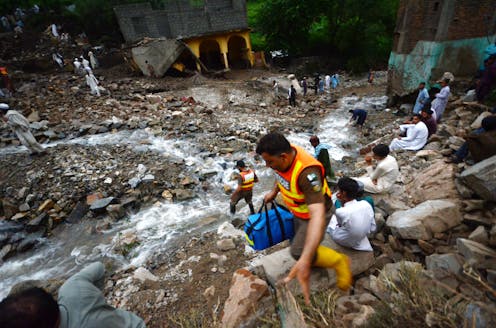
Rescuers search for survivors on Aug. 18, 2025, after a flash flood submerged homes, killing at least 18 people in a village near Swabi, Pakistan. Hussain Ali/Anadolu via Getty Images

Farmers in South Asia rely on the summer monsoon’s rainfall, but extreme monsoon rains in recent years have been destructive and deadly.

Since July, flooding during the 2025 summer monsoon has killed more than 700 people in Pakistan as water and mud swept through settlements and ancient towns. Streets in Karachi, a vital port city of about 20 million people, were inundated.

The damage has been reminiscent of 2022, when monsoon flooding stretched for miles across the country and displaced more than 8 million people.

Images of flood-damaged areas of Pakistan in August 2025.

Pakistan has a long history of natural disasters, from lethal heat waves to flash flooding. As global temperatures rise, the risks from powerful downpours, flash floods and melting glaciers are increasing.

I work on issues of water security and grew up in South Asia. I see how climate change is raising the risks and creating an urgent need for a dangerously unprepared region to invest in disaster preparedness.

Why Pakistan gets such extreme floods

The effects of climate change have wide-ranging implications for ecosystems, human communities and the physical environment.

Rising temperatures increase both evaporation and the amount of moisture the atmosphere can hold, leading to powerful downpours.

Cars, people and a bus try to move through a flooded street.
Drivers push their way through flooding in Karachi, Pakistan, on Aug. 19, 2025.
AP Photo/Fareed Khan

At the same time, warming in the mountains speeds up the melting of snowpack and glaciers. Melting glaciers increase both runoff into rivers and the risk of glacial lake outburst floods. Glacial lake outburst floods occur when depressions dammed by glacier ice or rock fill with meltwater and overflow or burst through their dams.

A glacial lake outburst in Pakistan’s northern Gilgit-Baltistan region on Aug. 22, 2025, showed the cascading dangers. The resulting flood damaged dozens of houses and pushed up debris that temporarily blocked a river. With the river blocked, water built up, creating a broad lake that threatened more flooding for communities downstream. Dozens of schools were evacuated as a precaution.

Torrential rains in the same region a few weeks earlier had triggered landslides and flooding that stranded 200 people.

People carry a board as they walk through broken concrete and other debris that once was part of houses.
Residents recover useful items from the rubble of homes damaged by flooding on July 22, 2025. Their homes were near the bank of the Hunza River in Sarwarabad, in northern Pakistan.
AP Photo/Abdul Rehman

Earth’s cryosphere – its glaciers, ice sheets, sea ice and snow cover – is a key part of the planet’s climate system. Snow- and ice-covered surfaces can reflect up to 80% or 90% of sunlight, keeping temperatures cooler. The loss of reflective snow and ice cover as temperatures rise helps to further accelerate warming.

Temperatures have been rising faster in the Himalayan region in recent decades, from increasing at about 0.18 degrees Fahrenheit (0.10 Celsius) per decade in the early 20th century to rising at about 0.58 F (0.32 C) per decade by the early 21st century.

In July, Pakistan saw record-breaking heat, with temperatures in Chilas, in the mountains, reaching 119 F (48.5 C), which may have contributed to the flooding that followed. When heat waves hit, faster melting can trigger major flooding, particularly in the Indus River Basin’s lower reaches, where agriculture fields are common in the flood plains.

Deforestation, homes in flood plains add to risks

Pakistan’s challenges include having a fast-growing population that has more than tripled since 1980 to over 250 million people.

A large part of that population, about 96 million, live along riverbanks and in dried riverbeds. Those areas provide flat, available land but also high flood risks.

More people has also led to more deforestation, removing both a source of cooling and increasing the risk of faster flooding and mudslides. From 2001 to 2024, Pakistan lost about 8% of its tree cover, primarily to logging. Some of that has gone into building large dams for hydropower.

Preparing for future disasters

Pakistan is among the countries hit hardest by weather-related disasters over the past two decades, yet it ranks 150th globally out of 192 countries when it comes to being ready to deal with disasters, according to the Notre Dame Global Adaptation Initiative’s assessments.

The Pakistan National Disaster Management Authority’s recent National Disaster Risk Reduction Strategy (2025-2030) discusses improvement in disaster risk management since 2006. But Pakistan’s disasters preparedness is still limited by poor coordination between institutions, too few early warning systems and not enough financial resources.

People’s vulnerability to disasters is made worse by old infrastructure, often poor drainage and urban planning that, in my view, doesn’t do enough to take disaster risk reduction into account. Political instability in Pakistan can also make disaster responses less effective.

The country could improve safety by designing infrastructure to better withstand disasters, expanding early warning networks, making risk reduction a part of education and policy, and improving community training and awareness programs. Those steps will require better governance and funding.

For long-term protection against natural and human-made disasters, nature-based strategies can also help, such as replanting forests to reduce erosion and mudslide risks and improving land-use planning to avoid building in flood-prone areas or creating new flood risks. The world can help by reducing greenhouse gas emissions that are driving climate change.

The Conversation

Pintu Kumar Mahla is affiliated with the Water Resources Research Center, the University of Arizona. He is also a member of the International Association of Water Law (AIDA). Pintu Kumar Mahla has not received funding related to this article.

ref. Monsoon flooding has killed hundreds in Pakistan – climate change is pushing the rainy season from blessing to looming catastrophe – https://theconversation.com/monsoon-flooding-has-killed-hundreds-in-pakistan-climate-change-is-pushing-the-rainy-season-from-blessing-to-looming-catastrophe-263610

Why is the object of golf to play as little golf as possible?

Source: The Conversation – USA (2) – By Patrick Tutka, Clinical Associate Professor of Health and Kinesiology, Purdue University

Brooke M. Henderson hits a bunker shot during a tournament in Grand Rapids, Mich., on June 12, 2025. Michael Miller/ISI Photos via Getty Images

Curious Kids is a series for children of all ages. If you have a question you’d like an expert to answer, send it to CuriousKidsUS@theconversation.com.


Why is the object of golf to play the least amount of golf? – Bryleigh, age 12, Chandler, Arizona


In most sports, the team or player with the highest score wins, and fans celebrate super-high-scoring games. In golf, it’s the opposite – the lowest score is the champion. And since golf scores are the number of strokes each player needs to get around the course, the object is to do it with as few strokes as possible.

I study sport management, which includes training people to manage golf courses, help run associations that set the rules, and create scoring for golf. When I play golf, I find that it’s a great mental test. If I score poorly on one hole, how do I play the next hole? Will I let frustration cause me to play poorly and score high again, or can I recover?

Skilled players are able to manage each shot, finding the best place to hit the ball so that they leverage the strengths of their game and work with conditions (weather, wind) at the hole they are playing. This allows them to limit the score they get on the hole.

In golf every shot is a stroke, and you play each hole only once. There are no do-overs or second chances, so each move is extremely important for scoring. That’s different from a game like basketball, where you may get a rebound or a second chance to make a particular shot.

Golf originated in Scotland and dates back to the 12th century. Mary, Queen of Scots, was one of the first female players.

Par for the course

Each hole on a golf course is assigned a par score, which is the number of shots the designer believes it will take to play that hole. Almost all golf courses are made up of par 3, par 4 and par 5 shots.

On a par 3, a person is expected to take three shots to put the ball in the hole. That usually begins with a tee shot from the starting point of the hole and then two shots around or on the green area where the hole is cut. Par 4s expect two shots, covering more ground, before they get to the green area; par 5s expect three shots.

Par is designed for each hole and then added up for the course. Most golf courses have 18 holes and a par between 70 and 72.

There also are par 3 courses, where every hole is a par 3, so they can be spaced more closely and players don’t have to hit long drives. And there are short courses with fewer than 18 holes and total pars as low as 27, usually set on smaller properties.

Golfers on the 2024 PGA Tour celebrate holes-in-one and other top shots.

Golfers want their score to be at par, or even lower, for each course. A decent golfer would probably shoot around 90 on an 18-hole, par 72 course. Coming in close to par lets people play together and compete against each other. Imagine that they were all trying to use as many shots as possible: They would never finish a hole, let alone a full round of the course.

Each score is given a name in comparison to par for a given hole. A score two strokes under par is called an eagle, and a score of one under par is called a birdie. When players go over par, it’s a bogey for one stroke over, a double bogey for two strokes over, and so on. There also are less-known terms, such as a snowman, which is shooting an 8 on a hole.

Every shot matters

Other sports that reward the lowest scores or the fewest attempts include darts and pool. For example, in 8-ball or 9-ball pool, the winner is the first person who sinks all of their colors and either the 8 or 9 ball into pockets with the fewest shots. Similarly, both swimming and track and field are won with low scores, although these are based on competitors’ times, not strokes or shots.

Golf requires great concentration and a good understanding of how your shot may move in the air. Players also need strategies for getting around objects in front of them on the course, such as trees, ponds and sand traps, which are also known as bunkers.

Good golfers are able to control relatively closely where their ball lands. But one of my favorite statistics is that the very best professional golfers land their ball within 10 feet of the hole just 1 in 4 times when they hit from 100 yards away.

A sense of humor helps. Baseball great Hank Aaron once said, “It took me 17 years to get 3,000 hits in baseball. It took one afternoon on the golf course.”


Hello, curious kids! Do you have a question you’d like an expert to answer? Ask an adult to send your question to CuriousKidsUS@theconversation.com. Please tell us your name, age and the city where you live.

And since curiosity has no age limit – adults, let us know what you’re wondering, too. We won’t be able to answer every question, but we will do our best.

The Conversation

Patrick Tutka does not work for, consult, own shares in or receive funding from any company or organization that would benefit from this article, and has disclosed no relevant affiliations beyond their academic appointment.

ref. Why is the object of golf to play as little golf as possible? – https://theconversation.com/why-is-the-object-of-golf-to-play-as-little-golf-as-possible-256170

How federal officials talk about health is shifting in troubling ways – and that change makes me worried for my autistic child

Source: The Conversation – USA (3) – By Megan Donelson, Lecturer in Health Rhetorics, University of Dayton

Blaming poor health outcomes on lifestyle choices can obscure public health issues. Anadolu via Getty Images

The Make America Healthy Again movement has generated a lot of discussion about public health. But the language MAHA proponents use to describe health and disease has also raised concerns among the disability and chronic illness communities.

I’m a researcher studying the rhetoric of health and medicine – and, specifically, the rhetoric of risk. This means I analyze the language used by public officials, institutions, health care providers and other groups in discussing health risks to decode the underlying beliefs and assumptions that can affect both policy and public sentiment about health issues.

As a scholar of rhetoric and the mother of an autistic child, in the language of MAHA I hear a disregard for the humanity of people with disabilities and a shift from supporting them to blaming them for their needs.

Such language goes all the way up to the MAHA movement’s highest-level leader, Health and Human Services Secretary Robert F. Kennedy Jr. It is clearly evident in the report on children’s health published in May 2025 by the MAHA Commission, which was established by President Donald Trump and is led by Kennedy, as well as in the MAHA Commission’s follow-up draft recommendations, leaked on Aug. 15, 2025.

Like many people, I worry that the MAHA Commission’s rhetoric may signal a coming shift in how the federal government views the needs of people with disabilities – and its responsibilities for meeting them.

Personal choice in health

One key concept for understanding the MAHA movement’s rhetoric, introduced by a prominent sociologist named Ulrich Beck, is what sociologists now call individualization of risk. Beck argued that modern societies and governments frame almost all health risks as being about personal choice and responsibility. That approach obscures how policies made by large institutions – such as governments, for example – constrain the choices that people are able to make.

In other words, governments and other institutions tend to focus on the choices that individuals make to intentionally deflect from their own responsibility for the other risk factors. The consequence, in many cases, is that the institution is off the hook for any responsibility for negative outcomes.

Beck, writing in 1986, pointed to nuclear plants in the Soviet Union as an example. People who lived near them reported health issues that they suspected were caused by radiation. But the government denied the existence of any evidence linking their woes to radiation exposure, implying that lifestyle choices were to blame. Some scholars have identified a similar dynamic in the U.S. today, where the government emphasizes personal responsibility while downplaying the effects of public policy on health outcomes.

A shift in responsibility

Such a shift in responsibility is evident in how MAHA proponents, including Kennedy, discuss chronic illness and disabilities – in particular, autism.

In its May 2025 report on children’s health, the MAHA Commission describes the administration’s views on chronic diseases in children. The report notes that the increased prevalence in “obesity, diabetes, neurodevelopmental disorders, cancer, mental health, autoimmune disorders and allergies” are “preventable trends.” It also frames the “major drivers” of these trends as “the food children are eating, the chemicals they are exposed to, the medications they are taking, and various changes to their lifestyle and behavior, particularly those related to physical activity, sleep and the use of technology.”

A father and a boy with autism play with toys at a table.
Extensive research shows that genetics accounts for most of the risk of developing autism, but the MAHA Commission report discussed only lifestyle and environmental factors.
Dusan Stankovic/E+ via Getty Images

Notably, it makes no mention of systemic problems, such as limited access to nutritious food, poor air quality and lack of access to health care, despite strong evidence for the enormous contributions these factors make to children’s health. And regarding neurodevelopmental disorders such as autism, it makes no mention of genetics, even though decades of research has found that genetics accounts for most of the risk of developing autism.

There’s nothing inherently wrong with studying the environmental factors that might contribute to autism or other neurodevelopmental disorders. In fact, many researchers believe that autism is caused by complex interactions between genes and environmental factors. But here’s where Beck’s concept of individualization becomes revealing: While the government is clearly not responsible for the genetic causes of chronic diseases, this narrow focus on lifestyle and environmental factors implies that autism can be prevented if these factors are altered or eliminated.

While this may sound like great news, there are a couple of problems. First, it’s simply not true. Second, the Trump administration and Kennedy have canceled tens of millions of dollars in research funding for autism – including on environmental causes – replacing it with an initiative with an unclear review process. This is an unusual move if the goal is to identify and mitigate environmental risk factors And finally, the government could use this claim to justify removing federally funded support systems that are essential for the well-being of autistic people and their families – and instead focus all its efforts on eliminating processed foods, toxins and vaccines.

People with autism and their families are already carrying a tremendous financial burden, even with the current sources of available support. Cuts to Medicaid and other funding could transfer the responsibility for therapies and other needs to individual families, leaving many of them to struggle with paying their medical bills. But it could also threaten the existence of an entire network of health care providers that people with disabilities rely on.

Even more worrisome is the implication that autism is a kind of damage caused by the environment rather than one of many normal variations in human neurological diversity – framing people with autism as a problem that society must solve.

How language encodes value judgments

Such logic sets off alarm bells for anyone familiar with the history of eugenics, a movement that began with the idea of improving America by making its people healthier and quickly evolved to make judgments about who is and is not fit to participate in society.

Kennedy’s explanation for the rise in autism diagnoses contradicts decades of research by independent researchers as well as assessments by the CDC.

Kennedy has espoused this view of autism throughout his career, even recently claiming that people with autism “will never pay taxes. They’ll never hold a job. They’ll never play baseball. They’ll never write a poem.”

Even if organic foods and a toxin-free household were the answer to reducing the prevalence of autism, the leaked MAHA Commission strategy report steers clear of recommending government regulation in industries such as food and agriculture, which would be needed to make these options affordable and widely available.

Instead, MAHA’s supposed interventions would remain lifestyle choices – and expensive ones, at that – left for individual families to make for themselves.

Just asking questions

Kennedy and other MAHA proponents also employ another powerful rhetorical tactic: raising questions about topics that have already reached a scientific consensus. This tactic frames such questions as pursuits of truth, but their purpose is actually to create doubt. This tactic, too, is evident in the MAHA Commission’s reports.

This practice of “just asking questions” while ignoring already established answers is widely referred to as “sealioning.” The tactic, named for a notorious sea lion in an online comic called Wondermark, is considered a form of harassment. Like much of the rhetoric of the anti-vaccine movement, it
serves to undermine public trust in science and medicine. This is partly due to a widespread misunderstanding of scientific research – for example, understanding that scientific disagreement does not necessarily indicate that science as a process is flawed.

MAHA rhetoric thus continues a troubling trend in the anti-vaccine movement of calling all of science and Western medicine into question in order to further a specific agenda, regardless of the risks to public health.

The MAHA Commission’s goals are almost universally appealing – healthier food, healthier kids and a healthier environment for all Americans. But analyzing what is implied, minimized or left out entirely can illuminate a much more complex political and social agenda.

The Conversation

Megan Donelson does not work for, consult, own shares in or receive funding from any company or organization that would benefit from this article, and has disclosed no relevant affiliations beyond their academic appointment.

ref. How federal officials talk about health is shifting in troubling ways – and that change makes me worried for my autistic child – https://theconversation.com/how-federal-officials-talk-about-health-is-shifting-in-troubling-ways-and-that-change-makes-me-worried-for-my-autistic-child-259874