Are ultramarathon runners really at increased risk of bowel cancer?

Source: The Conversation – UK – By Justin Stebbing, Professor of Biomedical Sciences, Anglia Ruskin University

Izf/Shutterstock.com

Exercise is a cornerstone of good health and evidence shows it can even help prevent cancers returning following treatment. But new findings are raising an unexpected question: could very high-volume endurance training carry its own risks?

At the 2025 American Society of Clinical Oncology meeting, researchers from Inova Schar Cancer Institute reported that a surprising number of dedicated marathon and ultramarathon runners had precancerous growths in their colons. Among 100 athletes aged 35 to 50, 15% had advanced adenomaslesions that can develop into bowel cancer – while 41% had at least one adenoma.

The study is small and not yet peer-reviewed, but the signal is strong enough to have captured global attention. Here’s what the findings really mean, why experts urge caution in interpreting the results, and what runners should watch for.

At first glance, it seems counterintuitive. Decades of evidence show regular exercise lowers cancer risks, including bowel cancer, and improves outcomes after a cancer diagnosis. This study doesn’t overturn that science. Instead, it suggests a narrow group of young, very high–volume endurance athletes might face unique bowel stress that could increase their odds of developing precancerous changes over time.

Young people with colon cancer has been called a new epidemic, and we don’t really understand why it’s increasing so much.

The Inova study deliberately excluded people with known genetic conditions or bowel disease to focus on runners who otherwise seemed low risk. Yet their screening found more advanced lesions than expected for that age group – a pattern outside experts, commenting in the New York Times, described as worth investigating, not a final answer.

How might heavy endurance training contribute to bowel changes? One theory focuses on temporary blood flow reductions to the gut during prolonged, intense exercise. Distance runners are familiar with runner’s colitis – cramping and occasional bleeding after long runs. Repeated cycles of low–oxygen stress, inflammation and tissue repair in the bowel could, theoretically, encourage adenoma development in susceptible people.

The Inova team highlighted this mechanism based on observations and runners’ reports of gut symptoms, though the study didn’t directly measure blood flow, oxygen or inflammation markers. It also didn’t isolate other lifestyle factors that might matter, such as dehydration strategies, anti–inflammatory drug use, specific nutrition practices, or very low body fat levels.

Just as important is what this study doesn’t establish. It doesn’t prove marathons or ultramarathons cause bowel cancer. It doesn’t show most young–onset bowel cancers occur in runners – doctors not involved in the study emphasised that most younger patients with these cancers aren’t endurance athletes. And it doesn’t address whether more moderate exercise carries similar risks.

The comparison point – the expected rate of advanced adenomas in the late 40s – comes from broader population studies, not from a matched control group. That makes the observed difference notable but still preliminary.

The research is clinically grounded, but its size and design mean it should be seen as a starting point for larger studies rather than a basis for changing general exercise guidance.

Still, there are practical lessons for endurance athletes and doctors. First, persistent blood in stool, changes in bowel habits, unexplained stomach pain, or iron–deficiency anaemia shouldn’t be dismissed as “just running”.

In a community where gut complaints are common and often normalised, it’s easy to miss warning signs. The lead oncologist argued that young runners with bleeding after long runs should be offered screening – a stance grounded in the fact that colonoscopy can remove precancerous lesions and prevent cancers developing. This is more cautious than current guidelines for average–risk adults but aligns with individualised, symptom–driven care.

Second, the study reinforces the difference between exercise as medicine and exercise as extreme sport. For cancer prevention and overall health, the strongest evidence supports regular, moderate–to–vigorous activity, not necessarily repeated ultra–endurance feats.
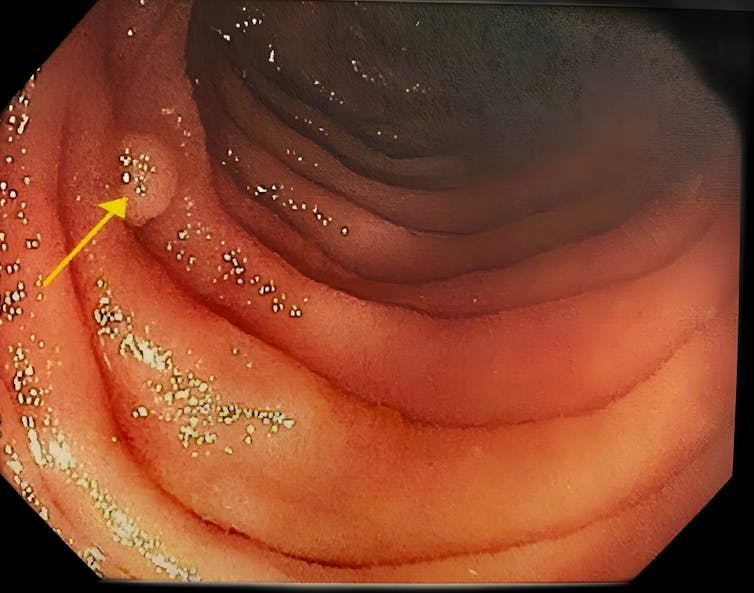
A yellow arrow pointing to a polyp in the large intestine.
Polyps can be removed during colonoscopy.
WendyJo/Shutterstock.com

Careful attention needed – not panic

Recent conferences highlighted data showing structured exercise after bowel cancer treatment improves long–term outcomes, underlining that physical activity remains one of the most powerful, low–cost tools in cancer prevention and care. This runner study doesn’t contradict that larger story. It flags a potential exception at the extreme end of training that needs careful attention, not panic.

If future research confirms a link, what might change? Screening recommendations could evolve for a clearly defined group of high–volume endurance athletes, perhaps starting colonoscopy earlier than the current age–45 threshold for average–risk adults.

Athletes and coaches might adapt training, nutrition and recovery to protect gut health – paying attention to hydration, heat stress, gradual progression, and avoiding unnecessary anti–inflammatory medication around long efforts.

Sports medicine and gastroenterology clinics might work together on protocols for evaluating gut bleeding in runners, narrowing the gap between “common” and “concerning” symptoms. But these steps depend on replication in larger, diverse groups and understanding which components of endurance life – intensity, duration, heat, altitude, nutrition – matter most.

For now, a balanced message serves the public best. Endurance running is a profound source of meaning and health for many people, and quitting running isn’t the lesson from a single small study.

The key is keeping the proven benefits of exercise in view while being clear–eyed about potential risks at extremes. Listen to your body’s signals, especially bleeding. Treat red–flag symptoms as medical, not merely athletic. And discuss personal risk factors and family history with your doctor.

As science probes this signal further, the likely outcome isn’t a blanket warning but more nuanced guidance: who might need earlier screening, when to investigate symptoms, and how to train hard with the gut in mind.

The study’s real contribution may be cultural as much as clinical: it gives runners and doctors permission to ask a question they’ve too often waved away, and to catch dangerous lesions before they become cancers.

The Conversation

Justin Stebbing does not work for, consult, own shares in or receive funding from any company or organisation that would benefit from this article, and has disclosed no relevant affiliations beyond their academic appointment.

ref. Are ultramarathon runners really at increased risk of bowel cancer? – https://theconversation.com/are-ultramarathon-runners-really-at-increased-risk-of-bowel-cancer-263564


Brain chemistry reveals psychiatry’s false divisions – new study

Source: The Conversation – UK – By Sameer Jauhar, Clinical Associate Professor, Imperial College London

Fahroni/Shutterstock.com

For decades, psychiatrists have treated psychosis as if it were separate conditions. People experiencing hallucinations and delusions might be diagnosed with schizophrenia, bipolar disorder, severe depression and related diagnoses, and receive completely different treatments based on diagnosis. But new research suggests this approach may be fundamentally flawed.

Our latest study, published in Jama Psychiatry, reveals that the brain changes driving psychotic symptoms are remarkably similar across these supposedly distinct mental health conditions. The findings could change how doctors choose treatments for the millions of people worldwide who experience psychosis.

Psychosis itself is not a disease, but rather a collection of generally deeply distressing symptoms, where people may struggle to distinguish reality from normal perception. They might hear voices that are not there, hold false beliefs with unshakeable conviction, or find their thoughts becoming jumbled and incoherent. These symptoms are new in onset, and terrifying – regardless of whether they occur alongside depression, mania, or without these mood symptoms.

We studied 38 people experiencing their first episode of psychosis with mood symptoms, comparing them with healthy volunteers. Using sophisticated brain scanning technology, we measured the synthesis of dopamine – a brain chemical tied to motivation and reward – in different regions of the brain.

We found that while most people with manic episodes showed higher dopamine synthesis in emotion-processing areas of the brain compared to those with depression, there was a common pattern across all participants: higher dopamine synthesis in thinking and planning regions were consistently linked to more severe psychosis symptoms (hallucinations and delusions), regardless of their official diagnosis.

This discovery challenges some aspects of modern psychiatric practice. Currently, treatment decisions rely heavily on diagnostic categories that may not reflect what is actually happening in people’s brains. Two people with identical symptoms might receive entirely different drugs simply because one was diagnosed with bipolar disorder and another with depression.

Our study shows dopamine dysfunction is not uniform in psychosis. Moving beyond trial-and-error prescribing requires matching treatments to underlying biology rather than diagnostic categories alone.

A psychiatrist and his patient.
These findings could help us move away from one-size-fits-all prescribing.
Yurii Maslak/Shutterstock.com

Towards precision psychiatry

The implications could be profound. Rather than basing treatment solely on psychiatric categories, doctors might soon use biological markers to identify which drugs will work best for individual people. This approach, known as precision psychiatry, mirrors how oncologists already tailor cancer treatments to the genetic makeup of specific tumours.

For people with psychosis, this could mean faster recovery and fewer side-effects, by switching from drugs that do not work. Finding the right treatment often involves months of trying different drugs while people continue to suffer from debilitating symptoms.

Our research suggests people whose psychosis involves strong mood symptoms might benefit from drugs that target emotion-processing brain circuits, while those without mood disorders might need drugs that work differently on thinking and planning regions. Some people might even benefit from treatments that address cognitive problems alongside hallucinations and delusions.

This does not mean psychiatric diagnoses are worthless. They remain crucial for organising healthcare services, facilitating communication between professionals, and determining access to treatment. But they may no longer be the best guide for choosing medications.

The study involved a relatively small number of people, and the findings need to be replicated in larger groups before changing clinical practice. Still, this research represents a significant step towards a more scientific, biology-based approach to treating one of psychiatry’s most challenging symptoms.

As our understanding of the brain advances, the rigid categories that have dominated psychiatry for decades are beginning to blur. If the brain (and mother nature) does not respect diagnostic boundaries, neither should our treatments.

The Conversation

Dr Jauhar reported personal fees from Recordati, LB Pharmaceuticals, Boehringer Ingelheim, Wellcome Trust, Lundbeck, Janssen, and Sunovion and nonfinancial support from the National Institute for Health and Care Excellence, British Association for Psychopharmacology, and Royal College of Psychiatrists outside the submitted work.

Robert McCutcheon receives personal fees from Boehringer Ingelheim, Janssen, Karuna, Lundbeck, Newron, Otsuka, and Viatris outside the submitted work.

ref. Brain chemistry reveals psychiatry’s false divisions – new study – https://theconversation.com/brain-chemistry-reveals-psychiatrys-false-divisions-new-study-263319

How a church row over a pre-Christian ritual reflects an ancient Italian village’s battle for survival

Source: The Conversation – UK – By Aurora Moxon, Postdoctoral Fellow, University College Cork

High in the Aspromonte mountains in the toe of Italy’s boot lies the ancient Calabrian village of Bova. Over the last two millennia, a series of invaders and settlers have left their mark on the Aspromonte, including the ancient Greeks – influencing a way of life from farming to language.

Protected by the absence of roads until the mid-20th century, remnants of this Greek culture survive in Bova. The Greco-Calabro language, spoken day-to-day only by local goatherders and the elderly, includes words and phrases from ancient Greek. And for centuries, locals have created “Persephoni” – woven symbols of Persephone, the Greek goddess of spring, to celebrate the season’s arrival and invoke an abundant agricultural year.

Made from olive leaves woven onto canes and decorated with local wildflowers, fruit and goat’s cheese, these figures represent an important ritual to mountain people whose lives have depended on the land for centuries. Gradually, as Christianity was adopted by the Romans, these figures were absorbed into Catholic rituals by these local people.

From the 1990s, the Persephoni figures attracted attention as interest in the Greek cultural influences of the area grew. Then, in 2013, the local bishop refused to allow Persephoni to enter Bova’s cathedral after being informed these structures were folkloric puppets (pupazze) – a move that threatened this longstanding tradition with pre-Christian roots.

The procession of the Persephoni into Bova’s cathedral.

Challenging ideas of what is ‘modern’

As well as researching food, farming and ecotourism in the Aspromonte mountains, I investigate the negative effects of stereotypes of this area – and how contemporary local practices challenge ideas of what is “modern”. As part of this study, I visited Bova and spoke to villagers about their way of life.

Some told me how, in 2014, they successfully put pressure on the church to restore their cherished Persephoni tradition. They explained to the bishop the importance of the Persephoni, and the church’s blessing for this ancient tradition – which prompted him to relent and allow the figures back into Bova’s cathedral.

A decorated woven symbol of Persephone made of leaves, flowers and red ribbon.
A decorated Persephone figure ready for the procession.
Aurora Moxon, Fourni par l’auteur

However, as I witnessed earlier this year, the current priest’s message reiterated the church’s distance from what it calls “folklore” – despite the thousands of visitors the Persephoni attract to Bova, a village that is losing its young people every year to other towns and cities. Journalists and anthropologists continue use the term “puppets” to describe the Persephoni, which puts emphasis on a more pagan intepretation.

In nearby Locri, archaeologists have unearthed terracotta reliefs called pinakes (depicting the goddess of spring and the agricultural seasons) at the site of a shrine to Persephone. Referred to as the “flower-faced maiden” in the Homeric Hymns – a collection of 34 Greek poems addressed to the ancient gods – it’s not hard to understand why locals believe their celebration of Persephone has Ancient Greek origins.

Carrying their Persephoni around Bova on Palm Sunday and receiving the priest’s blessing before taking them into mass is one of the most important moments of the religious year for locals here. It’s the culmination of a month of long evenings spent plaiting pairs of olive leaves from local trees and attaching them to cane skeletons. Two metres tall, the largest Persephone is carried by Bova’s mayor.

On the eve of Palm Sunday, people decorate their Persephoni with fruits and flowers picked from local hillsides, and the following morning, goat’s cheeses called musulupu are added on. Some of these cheeses take the form of men and women, others are circular with “teats”. Like Persephone, they symbolise fertility and new birth.

Every year, thousands of people visit Bova to watch the procession, after which the local people hand out chunks of musulupu and ’nguta (a biscuity cake with hard-boiled eggs baked into the mix) in the town’s main square.

Population decline, cultural loss

Like much of Italy’s south, especially its mountainous areas, Bova has long suffered the effects of emigration. Today, inhabitants are attracted to jobs and the lifestyle in towns along Calabria’s built-up coast. In the 1970s, Bova’s population numbered 1,401; today it hovers around just 400.

Young Bovese feel compelled to leave the region once they have finished school. Agropastoralism, a form of subsistence farming involving the cultivation of crops and raising livestock, does not appeal to many youngsters, and yet a number of villagers continue to work as goatherders and small-scale farmers. Once landless, they now find themselves in a position to buy up abandoned land.

Goatherders milk their capre Aspromontane, an indigenous breed of goat, to make the cheeses attached to the Persephoni, pressing them into intricately carved wooden moulds. These goatherders use words from Greco-Calabro to describe their goats: zzarì means “grey coat”, for example, and zzerògasto means “hard to milk”.

While the Greco-Calabro language is a source of pride, the historic association of this language with herders and landless peasants has contributed to its decline.

Today’s grandparents discouraged their children from speaking it, as the language had become a marker of shame and perceived backwardness. This is part of a wider problem that sees the denigration of southerners in Italy – particularly in rural areas – as backward terroni, meaning “people who are the dirt beneath our feet”.

But herders and small-scale farmers in the mountains are also often called backward by middle-class Calabrians in cities and coastal towns. The relentless association of Calabria – and the Aspromonte in particular – with organised crime exacerbates the marginalisation of this area.

Through their symbolic figures of Persephone, inhabitants of Bova assert the value of their deeply rooted rural identity and ancient agropastoral spirituality, insisting the Catholic church recognises this hybrid religious practice. The determination to preserve it speaks of resistance in the face of population decline and cultural loss.


Looking for something good? Cut through the noise with a carefully curated selection of the latest releases, live events and exhibitions, straight to your inbox every fortnight, on Fridays. Sign up here.


The Conversation

Aurora Moxon receives funding from the Irish Research Council. Aurora Moxon previously received funding from the South West and Wales Doctoral Training Partnership.

ref. How a church row over a pre-Christian ritual reflects an ancient Italian village’s battle for survival – https://theconversation.com/how-a-church-row-over-a-pre-christian-ritual-reflects-an-ancient-italian-villages-battle-for-survival-258852

Why I had to become a murder detective for my book about an 18th-century Jewish pedlar

Source: The Conversation – UK – By Tony Kushner, James Parkes Professor of Jewish/non-Jewish Relations, University of Southampton

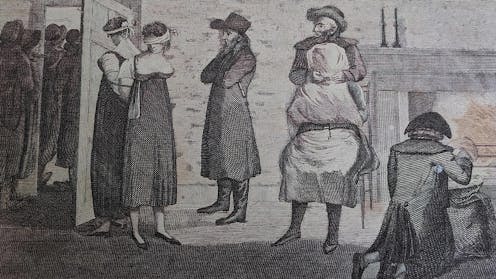
An illustration of the crime from 1771. London Jewish Museum

This article contains details of antisemitism and violence that some readers may find upsetting.

It’s evening at a remote Sussex pub in 1734 and a vicious triple murder has just taken place. Jacob Harris – a Jewish pedlar, smuggler and possible highwayman – stands accused of slitting the throats of the publican, his ill wife and a female servant.

I’ve studied the case for my latest book, The Jewish Pedlar: An Untold Criminal History. The point of interest for me was not whether Harris was guilty (he probably was). Or even whether – despite the seriousness of the crime – he was a victim of English antisemitism in everything from the newspaper coverage to the way he was later remembered. I was more interested in a series of questions about Harris’s background and motivations.

Harris had many aliases including Hirshal Hirsh and James Daves, reflecting both his criminal tendencies and complex identity that was both continental Jewish and very local. How on earth did someone of German-Jewish origin manage to integrate himself into the close-knit smuggling fraternity of Sussex?

What was Harris even doing in Ditchling Common, many decades before there was anything approximating to a Jewish community in Sussex? And what motivated him to commit the murders?

Despite the potential for prejudice against Jewish people at the time, I concluded that in the criminal world, as long as someone was trusted and useful, their background did not matter. It was only when Harris fell out with a fellow smuggler leading to a fatal fight that his life fell apart. The quandary for me as a social and cultural historian was how to write anything like a biography of Harris when there are no direct quotes from him in the surviving archive.

Completing my 340-page study therefore felt like somewhat of an achievement. To do so required intricate detective work (and indeed the advice of a real retired detective) to interrogate every piece of contemporary evidence.

This included the sparse legal record of the murders, the first Sussex assizes (court) record to be kept in the National Archives at Kew; a contemporary diary from a local landholder; and copious reports in British newspapers which “borrowed” heavily from one another.

There was also a bill sent to the Treasury by the county of Sussex for the catching, imprisonment, trial, hanging and gibbeting of Harris (gibbeting involves placing a hanged body in a specially constructed iron cage at the scene of the crime). And there was a ballad which would have been written and sold at the gibbeting and has survived in various forms ever since.

Not one of these sources is straightforward, and this is also true of most of the authors and major players in contemporary responses to the murders.

The complexities of the case

Harris was not the only person in the case who had multiple names. There was also his first victim, the publican Richard Miles. His many names strongly suggest that he was on the wrong side of the law and almost certainly a fellow smuggler.

The lead justice of peace in the case, who later became an MP and major landowner, had also changed his name. As did the newspaper entrepreneur who was the only one who made explicit Harris’s Jewishness when reporting in his new title, Walker’s Weekly Post.

Even Sir Robert Eyre, the judge from London who sentenced Harris to be hanged and gibbeted, had a reputation for corruption, though I’m not saying it affected the decision in this case. I don’t doubt that Harris was guilty of the horrendous crimes he was charged with.

The gibbeted body

Having been found guilty in the county assizes at Horsham and hanged in that town, Harris’ body was then carted to the scene of the crime a good 15 miles away to be placed in the gibbet cage.

Illustration of a post surrounded by a crude wooden fence
Remnants of the gibbet post, illustration from Thomas Blaker, Burgess Hill as a Health Resort (1883).
Author provided

A history of a local Sussex family compiled over many generations suggests that his skull remained in the cage some decades later. The post from which the gibbet cage was hung remained in position for much longer and soon became known as “Jacob’s Post”. Despite his crimes and his Jewish origins, he became a local folk hero.

To this day there is a heritage display on Ditchling Common to mark this momentous event in the district’s history.

Later Jewish criminals who were hanged became prized for their body parts by surgeons such as William Hunter (of the Hunterian museum in London) for racialised display. I didn’t want to treat Harris as this kind of object of study, but as a human being with family and friends (and no doubt enemies).

To discover more about Harris, his occupations and identity, I covered the period up to the second world war and followed Jewish pedlars and criminals in many different places from China to South America, from Sierra Leone to the Hebrides and from South Africa to the Caribbean. I also charted how the memory of Harris altered through time, from the Victorians who saw him as racially different and “naturally” criminal, through to a growing sensitivity towards his Jewishness in a post-Holocaust world.

It might be argued that at a time of growing hostility towards those of migrant origin and increasing racism, including antisemitism, what we don’t need now is a book on a Jewish criminal. I would argue that by trying to understand the individuality of these often remarkable – if often controversial – figures, it emphasises their fundamental humanity.

We cannot – and must not – expect any group of people to be perfect. As an asylum seeker (a former professional in Yemen) in an Essex hotel which has been subject to constant demonstrations in summer 2025 told The Guardian: “Yes, there are some refugees who do not behave respectfully or who do not follow the rules of the host society.” He added that this should not mean that all are regarded as such and that “every refugee has a story, and every human deserves dignity”.

In this respect in my book I certainly do not glorify Harris or downplay his crimes. I do, however, insist that he is not demonised as a “Jew murderer” as the Victorians would have it, and that see him instead as part and parcel of 18th century English rural life – a world far more diverse than we often assume.


Looking for something good? Cut through the noise with a carefully curated selection of the latest releases, live events and exhibitions, straight to your inbox every fortnight, on Fridays. Sign up here.


This article features references to books that have been included for editorial reasons, and may contain links to bookshop.org. If you click on one of the links and go on to buy something from bookshop.org The Conversation UK may earn a commission.

The Conversation

Tony Kushner does not work for, consult, own shares in or receive funding from any company or organisation that would benefit from this article, and has disclosed no relevant affiliations beyond their academic appointment.

ref. Why I had to become a murder detective for my book about an 18th-century Jewish pedlar – https://theconversation.com/why-i-had-to-become-a-murder-detective-for-my-book-about-an-18th-century-jewish-pedlar-262671

Winners and losers in a hotter ocean

Source: The Conversation – UK – By Will de Freitas, Environment + Energy Editor, The Conversation

Meet your winners. E. PUIG / shutterstock

The ocean is heating up – in some places, faster than scientists once thought possible. For the fish, crustaceans and plankton that underpin life in the sea, this means habitats will shift, food supplies will change, and predators may suddenly find their prey has vanished. This isn’t a simple story of loss, but of winners and losers in a lottery weighted by climate change.


This roundup of The Conversation’s climate coverage comes from our award-winning weekly climate action newsletter. Every Wednesday, The Conversation’s environment editor writes Imagine, a short email that goes a little deeper into just one climate issue. Join the 45,000+ readers who’ve subscribed.


Fish are already threatened by polluted seas and overfishing by humans. Climate change adds another threat by reshaping the very waters they depend on – testing their ability to adapt.

Sevrine Sailley, a marine ecosystem modeller at Plymouth Marine Laboratory, explains:

“As the ocean heats up, fish try to stay in the conditions they’re best suited to. Some species will move, but others can’t relocate so easily – for example, if they need to live in a certain habitat at a particular life-stage, such as in kelp that offers shelter for breeding fish.”

Sailley and her colleagues used a computer programme to simulate the oceans around the UK over the rest of this century. They looked at 17 key commercial species and identified some winners and losers:

“While sardines may thrive, with a 10% boost in Atlantic abundance, our model suggests mackerel could decline by 10% in the Atlantic and 20% in the North Sea.”

Warm-water species like bluefin tuna could do well, she writes, but “bottom-dwelling species like cod and saithe (pollock) face a tougher future. These fish prefer colder, deeper waters and have fewer options to escape warming seas due to depth limitations.”


Read more:
How climate change is making Europe’s fish move to new waters


Sudden changes

Those fish are typically responding to what’s happening below them in the food web. And these shifts don’t just play out slowly. They can unfold dramatically during events such as marine heatwaves, when the sea itself becomes layered in ways that choke the food web.

Ocean scientist Tom Rippeth of Bangor University described this process during an “unprecedented” heatwave in the seas around the UK two years ago. That summer, the already-warm surface was heating up faster than ever.

Smiley cod fish
This cod has nothing to smile about.
Miroslav Halama / shutterstock

“Those stratified seas”, Rippeth writes, “on the continental shelf around Britain and Ireland are some of the most biologically productive on the planet. They have long been an important area for fishing cod, haddock, mackerel and other species. Those fish eat smaller fish and crustaceans, which in turn feed on microscopic plants known as plankton.”

Those plankton depend on nutrients mixed up from the deep water into the surface layer. However, during the marine heatwave, Rippeth feared the high surface temperatures would mean stronger stratification, less mixing, and a diminished supply of nutrients.

Bad news for the plankton. And bad news that will ripple up the food web.


Read more:
An ‘extreme’ heatwave has hit the seas around the UK and Ireland – here’s what’s going on


What the jellyfish tell us

Few creatures illustrate these shifts more clearly than jellyfish. Marine conservation expert Abigail McQuatters-Gollop of the University of Plymouth says jellyfish numbers are increasing in certain regions, including the UK. For her, this is a signal of dramatic changes in the ocean food web.

Jellyfish tend to feed directly on plankton, so they’re pretty low in the food web. In fact, since they drift rather than swim, they’re technically plankton themselves. Yet they’re big enough (and scary enough, in some eyes) for humans to notice when their numbers rise, which makes them an eye-catching indicator that waters are warming.

“Warmer sea temperatures”, McQuatters-Gollop writes, “mean that jellyfish can now inhabit a wider range of habitats, with some species moving polewards into waters that were once too cold for them.”

This has changed how energy moves through the food web:

“The warmer-water zooplankton species which now dominate northern European waters are generally smaller and less nutritious than the cold-water species they have replaced.”

It also contributes to what scientists call a predator-prey mismatch.

“While the seasonal cycle of phytoplankton [tiny plants] is driven by sunlight and so hasn’t changed, the point in the year when some zooplankton species [tiny animals] are most abundant now arrives earlier, as shorter and warmer winters cause the eggs of some species to hatch sooner. This has meant a mismatch between the spring phytoplankton bloom and the annual peak abundance of the zooplankton that gorge on it.”

These shifts cascade upwards through the food web – one reason why those warm-water bluefin tuna are likely to prosper in UK waters, while cold-water cod and herring are set to struggle.


Read more:
Jellyfish alert: increased sightings signal dramatic changes in ocean food web due to climate change


Post-carbon

Last week, we asked if severe heatwaves have affected your holiday plans. Several readers said they had given up on summer holidays in hot countries entirely.

For instance Andrew Strong said: “We are not holidaying in Europe between June and September, not even in the UK! It’s too much.”

Next week, we’d like your thoughts on air conditioning at home. Do you have it? Do you want it? Do you see it as an unnecessary and frivolous waste of energy, or an inevitable response to increasing summer heat? (If you’re American or Australian, do you laugh at us backwards Europeans for even having this debate?).

The Conversation

ref. Winners and losers in a hotter ocean – https://theconversation.com/winners-and-losers-in-a-hotter-ocean-263556

How cloves might help relieve pain and inflammation

Source: The Conversation – UK – By Dipa Kamdar, Senior Lecturer in Pharmacy Practice, Kingston University

Jamaan/Shutterstock

Cloves have long been a staple in kitchens and traditional medicine cabinets. Known for their warm, spicy flavour, they’re typically found whole or ground, and as clove oil or extract. But beyond their culinary charm, cloves are gaining scientific attention from researchers and clinicians for their potent analgesic (painkiller) properties. But could this humble spice rival ibuprofen or other commonly used painkillers?

Cloves, the aromatic flower buds of the Syzygium aromaticum tree, are native to Indonesia and widely used in global cuisines, especially in spice blends and festive dishes. Medicinally, they’re most commonly used in the form of clove oil. It contains eugenol, a compound with well-documented anaesthetic and anti-inflammatory effects.

Eugenol, the main active compound in cloves, is a naturally occurring plant chemical that works in multiple ways. It blocks certain chemicals and nerve responses that cause pain, including histamine – a chemical involved in immune responses, inflammation and allergic reactions – and noradrenaline, a neurotransmitter and hormone that can heighten pain sensitivity during stress.

Eugenol also inhibits the production of prostaglandins – substances that trigger inflammation and contribute to pain and swelling. This is the same biological pathway targeted by anti-inflammatory painkillers like ibuprofen. Because of these anti-inflammatory effects, eugenol could, in theory, be useful for conditions such as arthritis, although human evidence is limited. In an animal study, eugenol improved limb function in rats with osteoarthritis.

While research into its use for joint pain is still in early stages, most of the solid human evidence for cloves comes from dentistry.

Clove extracts are used in balms or diluted oils for muscle aches, brewed into teas for headaches, and applied as oil for toothache. Cloves have been a go-to dental remedy since at least the 13th century. Clove oil remains available in pharmacies for temporary toothache relief in adults and children over two years.

Studies suggest cloves may provide pain relief comparable to some conventional painkillers and topical anaesthetics. In dentistry, topical anaesthetics such as lidocaine or benzocaine are applied to the surface of the gums or skin to numb an area before treatment. They work by blocking pain signals from nerves near the surface – a mechanism thought to be similar to that of eugenol.

In paediatric dentistry, researchers compared clove oil, lidocaine gel and ice cones applied to injection sites in the mouth. Clove oil emerged as the most effective in reducing pain and anxiety among children, suggesting it could be a natural, cost-effective and well-accepted option to improve dental experiences. Another clinical trial in adults found clove gel to be as effective as benzocaine gel in minimising pain from dental injections, with no significant difference in pain scores.

These findings are supported by broader reviews, which show that topical clove preparations consistently outperform placebo treatments. In dental procedures, clove oil and gels not only reduce pain but also offer antiseptic and anti-inflammatory effects.

Beyond dentistry

There’s also evidence for using cloves in other types of pain relief. In one clinical trial, combining topical clove oil with lidocaine significantly reduced pain at episiotomy sites (the small surgical cuts made between the vagina and anus during childbirth to help deliver the baby) compared with lidocaine alone. These results suggest that clove oil may enhance the effectiveness of standard anaesthetics.

Cloves may also offer a range of other potential health benefits. Laboratory and animal studies indicate that eugenol and isoeugenol – a closely related plant compound with similar aroma and antimicrobial effects – have anti-inflammatory and antibacterial properties, inhibiting bacteria such as E. coli and Staphylococcus aureus.

Animal models suggest cloves may help protect the liver from damage and support its detoxification processes. Certain compounds, including nigricin (a naturally occurring clove constituent that appears to influence how cells handle sugar), have been linked to improved insulin sensitivity and glucose uptake, raising the possibility of better blood sugar control.

Eugenol has also shown cytotoxic effects (meaning it can kill or damage certain cells) against specific cancer cell lines in laboratory studies. However, these are early-stage findings, and no clinical trials in humans have yet confirmed its effectiveness or safety as a cancer treatment.

Side effects

While cloves are generally safe in culinary doses, concentrated forms such as clove oil should be used with caution.

Bottle of clove oil next to dried cloves
Ingesting larger amounts of clove oil or high-dose extracts can cause serious side effects.
Wirestock Creators/Shutterstock

In the mouth, clove oil may cause blistering, swelling, or lip irritation, and on the skin it can trigger burning sensations or rashes. Eugenol can be toxic in high amounts, and allergic reactions, though rare, are possible. Swallowing clove oil should be avoided, though small amounts used for toothache are generally harmless. Ingesting larger amounts of clove oil or high-dose extracts can cause serious side effects such as seizures and liver damage. High doses may also interfere with blood clotting, so anyone taking anticoagulants like warfarin should exercise caution. Animal studies have shown eugenol can lower blood sugar, so people with diabetes on insulin should monitor their levels closely.

Cloves may never replace ibuprofen across the board, but their proven effectiveness for topical and dental pain, combined with a suite of other possible health benefits, makes them a compelling natural option. For now, they remain best suited as a complementary remedy – but one with a long history, promising science and a rightful place in both the spice rack and the medicine cabinet.

The Conversation

Dipa Kamdar does not work for, consult, own shares in or receive funding from any company or organisation that would benefit from this article, and has disclosed no relevant affiliations beyond their academic appointment.

ref. How cloves might help relieve pain and inflammation – https://theconversation.com/how-cloves-might-help-relieve-pain-and-inflammation-262767

Five pieces of sleep advice that could be making your insomnia worse – a sleep therapist explains

Source: The Conversation – UK – By Kirsty Vant, Doctoral Researcher, Department of Psychology, Royal Holloway University of London

Shisu Ka/Shutterstock

We all know how much better we feel after a good night’s sleep. Science backs this up: high-quality sleep boosts cardiovascular health, immune function, brain health and emotional wellbeing. Unsurprisingly, many people are keen to improve their sleep – and “sleep hygiene” has become a go-to strategy.

Sleep hygiene refers to the habits and environmental factors that promote good sleep, such as keeping a regular bedtime, avoiding screens before bed, and cutting back on caffeine. These are sensible tips for healthy sleepers. But for people with insomnia, some sleep hygiene practices can backfire – reinforcing sleeplessness rather than resolving it.

As a sleep therapist, I’ve seen how good intentions can sometimes make things worse. Here are five common sleep hygiene strategies that may do more harm than good for people struggling with insomnia.

1. Spending more time in bed

When sleep isn’t coming easily, it’s tempting to go to bed earlier or lie in later, hoping to “catch up”. But this strategy often backfires. The more time you spend in bed awake, the more you weaken the mental association between bed and sleep – and strengthen the link between bed and frustration.

Instead, try restricting your time in bed. Go to bed a little later and wake up at the same time each morning. This strengthens sleep pressure – your body’s natural drive to sleep – and helps restore the bed as a cue for sleep, not wakefulness.

2. Strictly avoiding screens

We’re often told to ditch screens before bed because the blue light they emit suppresses melatonin, a hormone that helps regulate sleep. But this advice may be overly simplistic.

In reality, people with insomnia may reach for their phones because they can’t sleep – not the other way around. Lying in the dark with nothing to occupy your mind can create the perfect storm for anxiety and overthinking, both of which fuel insomnia.

Rather than banning screens entirely, consider using them strategically. Choose calming, non-stimulating content, use night-mode settings, and avoid scrolling mindlessly. A quiet podcast or gentle documentary can be just the right distraction to help you relax.

3. Cutting out caffeine completely

Caffeine blocks adenosine, a neurotransmitter that makes us feel sleepy. But not everyone processes caffeine the same way – genetics play a role in how quickly we metabolise it.

Some people may find a morning coffee helps them shake off sleep inertia (the grogginess you feel upon waking) and get active, which can support a healthy sleep-wake rhythm. If you’re sensitive to caffeine, it’s wise to avoid it later in the day – but cutting it out altogether isn’t always necessary. Understanding your individual response is key.

4. Trying too hard to ‘optimise’ sleep

The global “sleep economy” – encompassing everything from wearable trackers to specialised mattresses and “sleep-promoting” sprays – is worth over £400 billion. While many of these products may be well-meaning, they can contribute to a modern condition known as orthosomnia: anxiety driven by trying to perfect your sleep.

It’s important to remember that sleep is an autonomic function, like digestion or blood pressure. While we can influence sleep through healthy habits, we can’t force it to happen. Becoming obsessed with sleep quality can paradoxically make it worse. Sometimes, the best approach is to care less about sleep – and let your body do what it’s designed to do.

5. Expecting the same amount of sleep each night

Healthy sleep isn’t a fixed number of hours – it’s dynamic and responsive to our lives. Factors like stress, physical health, age, environment, and even parenting responsibilities all affect sleep. For example, human infants need to feed every few hours, and adult sleep patterns adapt to meet that need. Flexibility in our sleep has always been a survival trait.

Expecting rigid consistency from your sleep sets up unrealistic expectations. Some nights will be better than others – and that’s normal.

In my years as a sleep therapist, I’ve noticed how sleep privilege – the ability and opportunity to sleep well – can distort conversations around sleep. Telling someone with insomnia to “just switch off” is like telling someone with an eating disorder to “just eat healthy”. It oversimplifies a complex issue.

Perhaps the most damaging belief baked into sleep hygiene culture is the idea that sleep is entirely within our control – and that poor sleepers must be doing something wrong.

If you’re struggling with sleep, there are evidence-based treatments beyond sleep hygiene. Cognitive Behavioural Therapy for Insomnia (CBT-I) is the gold standard psychological intervention. New medications are also available, such as orexin receptor antagonists (suvorexant, lemborexant and daridorexant, for example) – drugs that block the brain’s wake-promoting orexin system to help you fall and stay asleep .

Insomnia is common and treatable – and no, it’s not your fault.

The Conversation

Kirsty Vant undertook consultancy work in 2024 from AGB Pharma who manufacture melatonin for use in children with ADHD.

ref. Five pieces of sleep advice that could be making your insomnia worse – a sleep therapist explains – https://theconversation.com/five-pieces-of-sleep-advice-that-could-be-making-your-insomnia-worse-a-sleep-therapist-explains-261682

Israel’s call-up of 130,000 reservists raises legal risks for dual citizens and their home countries

Source: The Conversation – Global Perspectives – By Shannon Bosch, Associate Professor (Law), Edith Cowan University

Senior Israeli Defence Force (IDF) officials have announced that around 130,000 reservists will take part in Israel’s planned military operation to take over Gaza City. Fighting is expected to continue well into 2026.

The first set of 40,000–50,000 reservists are due to show up for duty on September 2.

Our research, to be published in a forthcoming book, shows the call-up plans raise significant legal issues for countries that permit their dual-Israeli nationals to serve in the IDF — whether through voluntary enlistment programs such as Mahal and Garin Tzabar, or compulsory reserve duty.

Compulsory service and dual citizenship

Under Israeli law, every citizen or permanent resident must serve in the IDF for between 18 to 36 months (based on their age, marital status and gender), followed by ten years of reserve duty.

Dual citizens living abroad are not exempt and are expected to settle their conscription status through Israeli consulates and embassies.

Following the October 7 2023 Hamas attacks, Israel expanded compulsory service to three years, boosting the IDF to 169,500 active troops and 465,000 reservists.

While many reservists are currently residents in Israel, significant numbers also live overseas.

What the ICJ and UN experts have said

In July 2024, the International Court of Justice (ICJ) handed down an advisory opinion on the legal consequences of Israel’s occupation of Palestinian territory. The court advised that all UN member states are obligated to refrain from providing assistance to Israel in maintaining the occupation.

This came after the ICJ had already issued a preliminary ruling saying Palestinians in Gaza had a plausible right to protection from genocide in Gaza.

In response to the ICJ’s July 2024 opinion, 40 independent UN experts advised that states should be taking steps to prevent their dual Israeli citizenship from serving in the IDF to avoid being potentially complicit in war crimes or crimes against humanity.

And earlier this year, an independent international commission established by the UN Human Rights Council urged UN member states to investigate and prosecute those accused of committing crimes in Gaza, either under their own domestic laws or using universal jurisdiction.

These opinions and reports have intensified the debate over the legal obligations of states that allow their dual Israeli nationals to enlist in the IDF.

How other countries view serving in foreign armies

The countries with the largest Jewish populations have done little to restrict IDF recruitment.

The United States, France, Canada, Germany and the United Kingdom all have laws against foreign enlistment. However, they allow IDF recruitment through exemptions, treaties or permissive interpretations of the laws.

Australian law prohibits citizens from engaging in foreign conflicts as mercenaries, but permits enlistment in foreign armies. Recruiting Australians to join a foreign military, that aligns with Australia’s defence or international interests may be permitted by the Attorney General, but the Criminal Code Act of 1995 does however prohibit Australian nationals entering foreign military zones where a designated terrorist organisation is engaged.

South Africa has a law against its citizens fighting in foreign wars without permission. It has also explicitly threatened to prosecute those who join the IDF. Yet, enforcement has been rare and selective. .

Civil society mobilisation

In Canada, the Royal Canadian Mounted Police confirmed in June it was investigating possible war crimes in Gaza. Many believed this was targeted at dual national IDF reservists.

In May 2024, the Hind Rajab Foundation, a Palestinian advocacy group based in Belgium, submitted a dossier of evidence to the International Criminal Court alleging war crimes committed by some
1,000 IDF soldiers, including a number of dual citizens.

A related group also filed a complaint with the ICC about dual Dutch-Israeli soldiers allegedly committing war crimes in Gaza.

And in April 2025, UK advocacy groups submitted a dossier to the Metropolitan Police war crimes team targeting ten British nationals for alleged war crimes and crimes against humanity in the war.

Meanwhile, in Australia, a legal group called the Australian Centre for International Justice has been monitoring about 20 dual nationals who have served in the IDF.

In response to the group, the government urged Australians seeking to serve in foreign armies to “carefully consider their legal obligations and ensure their conduct does not constitute a criminal offence”.

Obligations of countries

All ten countries we surveyed — the US, UK, Canada, France, Germany, Australia, Brazil, Argentina, Russia and South Africa — are parties to the Geneva Conventions, the Convention against Torture, and the Genocide Convention. These treaties impose obligations on members to not only punish violations, but prevent them.

Israel’s mobilisation of 130,000 reservists dramatically increases the potential that more dual nationals will be drawn into operations that have been condemned by the UN and ICJ as unlawful.

For dual citizens, the risks are profound. Not only can they be involved in a protracted conflict, but they can also be potentially exposed to future prosecution for grave crimes.

For states, the stakes are just as high – silence and inaction may amount to complicity in genocide. The question now is whether governments will uphold their obligations and effectively warn their citizens about fighting in Gaza, and investigate and prosecute them, where necessary.

The Conversation

The authors do not work for, consult, own shares in or receive funding from any company or organisation that would benefit from this article, and have disclosed no relevant affiliations beyond their academic appointment.

ref. Israel’s call-up of 130,000 reservists raises legal risks for dual citizens and their home countries – https://theconversation.com/israels-call-up-of-130-000-reservists-raises-legal-risks-for-dual-citizens-and-their-home-countries-263783

Medicinal cannabis is most often prescribed for pain, anxiety and sleep. Here’s what the evidence says

Source: The Conversation – Global Perspectives – By Suzanne Nielsen, Professor and Deputy Director, Monash Addiction Research Centre, Monash University

Vilin Visuals/Getty Images

Medicinal cannabis use has increased rapidly in recent years in Australia. Since access pathways were expanded in 2016, more than 700,000 prescription approvals have been issued.

The vast majority of medicinal cannabis products on the market have not been registered on the Australian Register of Therapeutic Goods. But medical practitioners can apply to the Therapeutic Goods Administration (TGA) for approval to prescribe them to patients.

Data shows the three most common conditions for which scripts are approved are chronic pain, anxiety and sleep disorders.

Although many patients report benefits, professional bodies and regulators have raised concerns about whether prescribing is outpacing the evidence.

So what does the evidence actually say? Does medicinal cannabis work for the conditions for which it’s most commonly prescribed?

Medicinal cannabis for pain

Medicinal cannabis refers to cannabis products that are legally prescribed to treat a medical condition. This can be the plant itself, or natural compounds extracted from the plant. Some compounds similar to or the same as those found in cannabis (for example, dronabinol and nabilone) are made in a lab.

Two of the most common compounds in the plant are THC (tetrahydrocannabinol) and CBD (cannabidiol), known as cannabinoids.

These are commonly found at various concentrations in medicinal cannabis products which come in forms including oils, capsules, dried flower (used in a vaporiser), sprays and gummies.

Chronic pain is the most common reason for medicinal cannabis use. But as we’ve written in a previous article, research shows only modest benefits, with limited improvements in pain and physical functioning.

The TGA says there’s limited evidence medicinal cannabis provides clinically significant pain relief for many conditions, and should only be tried if other standard therapies haven’t helped.

Does medicinal cannabis work for anxiety?

Beside chronic pain, a growing number of people are now turning to medicinal cannabis for anxiety.

Multiple reviews have examined whether it works for this purpose and have come to similar conclusions. For THC-based products the evidence is mixed, with some patients finding relief, while others report their symptoms are worse.

There is emerging evidence for CBD, however it’s too soon to recommend medical cannabis as a first-line treatment for anxiety. So far, studies of CBD in anxiety have been small, only measured effects under experimental conditions designed to induce stress, had no comparison group, or only tested a one-off dose. Because of these limitations, the studies can’t tell us if CBD is effective for ongoing anxiety management.

A recent review found CBD had positive effects on anxiety, but these effects were seen in studies deemed to have problems with their methods, and not in studies that were more rigorously designed and conducted.

Similarly, a small Australian study (with no control group) demonstrated positive effects of CBD in young people with anxiety who had already tried other treatments. However, the authors stated more rigorous trials were still needed.

What’s more, there are recent case reports of acute psychosis arising from medicinal cannabis use. Taken together with the ambiguous evidence, the role for cannabinoids for anxiety remains far from clear.

How about sleep disorders?

The evidence for cannabis in the treatment of sleep disorders and insomnia is perhaps even more limited, with neither CBD or THC having shown clear benefits reducing the number of awakenings or time spent awake during the night, or improved sleep quality. That said, some people do report they have fewer symptoms of insomnia when using medicinal cannabis.

Similar to anxiety, many of the studies have major weaknesses in their study design which make it difficult to draw strong conclusions. There are also few studies that compare medicinal cannabis to proven treatments for sleep disorders and insomnia. This makes it hard to make recommendations for treatment based on the current research evidence.

THC can make you drowsy, and in the short term, may help people fall asleep, or feel like they’re getting more sleep. But there are some important downsides to consider, too.

For example, if you take medicinal cannabis regularly to fall asleep your body can get used to it, making it harder to fall asleep without it. In the long term, medicinal cannabis can also affect the amounts of light and deep sleep a person will have, which can result in poorer sleep quality.


Read more:
Cannabinoid products may reduce total sleep time in adults with insomnia: new study


There is good evidence for some conditions

Some of the strongest evidence for medicinal cannabis products are for rare forms of epilepsy that don’t respond to existing treatments, and for treating symptoms associated with multiple sclerosis.

The only TGA-approved medicinal cannabis products are for these conditions.

There’s also evidence medicinal cannabis can help with chemotherapy-induced nausea and vomiting. Though as newer medications with fewer side effects are now available, medicinal cannabis products are not considered first-line treatments.

Risks and side effects

Common side effects with THC in the short term include drowsiness, anxiety, dry mouth, nausea, vomiting and appetite changes. For some people, these effects reduce over time.

Some people with preexisting health conditions such as schizophrenia, psychosis or heart conditions may be more prone to experiencing side effects.

An estimated one in four people using medical cannabis meet the criteria for dependence (known as cannabis use disorder). In the longer term, dependence appears more common with medical use, particularly when combined with non-medical use.

If you are suffering with anxiety, sleep problems or chronic pain, and are wondering what treatments might be most effective for you, speak to your regular GP.

The Conversation

Suzanne Nielsen receives funding from the Australian National Health and Medical Research Council, and has previously received funding from Worksafe and the Therapeutic Goods Administration to provide independent evidence reviews on medical cannabis. She is the president-elect of the Australasian Society for Professionals on Alcohol and other Drugs.

Myfanwy Graham receives funding from the Australian National Health and Medical Research Council, alongside government and university institutes. Myfanwy has served as a consultant for the UNODC, WHO and NASEM. She is an appointed member of the Therapeutic Goods Administration’s Medicinal Cannabis Expert Working Group. This article does not represent the views of the TGA or the Expert Working Group.

ref. Medicinal cannabis is most often prescribed for pain, anxiety and sleep. Here’s what the evidence says – https://theconversation.com/medicinal-cannabis-is-most-often-prescribed-for-pain-anxiety-and-sleep-heres-what-the-evidence-says-262429

Israel’s killing of journalists follows a pattern of silencing Palestinian media that stretches back to 1967

Source: The Conversation – Global Perspectives – By Maha Nassar, Associate Professor in the School of Middle Eastern and North African Studies, University of Arizona

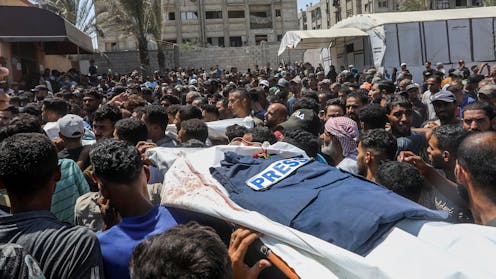
A funeral ceremony takes place in the courtyard of Nasser Hospital in Gaza following the deaths of five journalists on Aug. 25, 2025. Abed Rahim Khatib/Anadolu via Getty Images

Five journalists were among the 22 people killed on Aug. 25, 2025, in Israeli strikes on the Nasser Hospital in the Gaza Strip. Following global condemnation, the office of Israeli Prime Minister Benjamin Netanyahu issued a statement saying Israel “values the work of journalists.” But the numbers tell a different story.

Those deaths bring the total number of journalists killed in Gaza in almost two years of war to 192. The Committee to Protect Journalists, which collates that data, accuses Israel of “engaging in the deadliest and most deliberate effort to kill and silence journalists” that the U.S.-based nonprofit has ever seen. “Palestinian journalists are being threatened, directly targeted and murdered by Israeli forces, and are arbitrarily detained and tortured in retaliation for their work,” the committee added.

As a scholar of modern Palestinian history, I see the current killing of reporters, photographers and other media professionals in Gaza as part of a longer history of Israeli attempts to silence Palestinian journalists. This history stretches back to at least 1967, when Israel militarily occupied the Palestinian territories of the West Bank, East Jerusalem and the Gaza Strip following the Six-Day War.

Beyond the humanitarian toll, what makes matters even more drastic now is that, with Israeli restrictions on foreign media entering Gaza, local Palestinian journalists are the only people who can bear witness to the death and destruction taking place – and report it to a wider world. Indeed, nearly all of the nearly 200 journalists killed since Oct. 7, 2023, have been Palestinian.

A decades-long process in the making

From the first days of the occupation in 1967, Israel has tried to keep a tight grip on media reporting, building a legal and military architecture that aimed to control and censor Palestinian journalism.

In August 1967, the army issued Military Order 101, effectively criminalizing “political” assembly and “propagandistic” publications in the occupied territories.

Yet despite such restrictions, local journalism persisted and grew. By the early 1980s, Palestinians in the occupied territories were publishing three dailies, five weeklies and four magazines. The most popular publications circulated up to 15,000 copies.

But all Palestinian publications were subject to Israeli military censorship. Every night, editors were forced to submit two copies of everything they planned to print to Israeli censors. That included articles, photos, ads, weather reports and even crossword puzzles.

Anything the Israeli censor deemed to be “of political significance” had to be removed prior to publication. Editors who violated these terms, or who were accused of belonging to Palestinian political groups, could be detained or deported. These practices have echoes today with Israel often accusing the journalists it kills of being Hamas operatives.

Censorship regimes

Objecting to these and many other restrictions, Palestinians launched the first intifada, or uprising, against the Israeli occupation in December 1987. During the uprising’s first year, Israeli forces reportedly jailed 47 Palestinian reporters, temporarily banned eight local and regional newspapers, permanently revoked the licenses of two magazines and closed four press service offices.

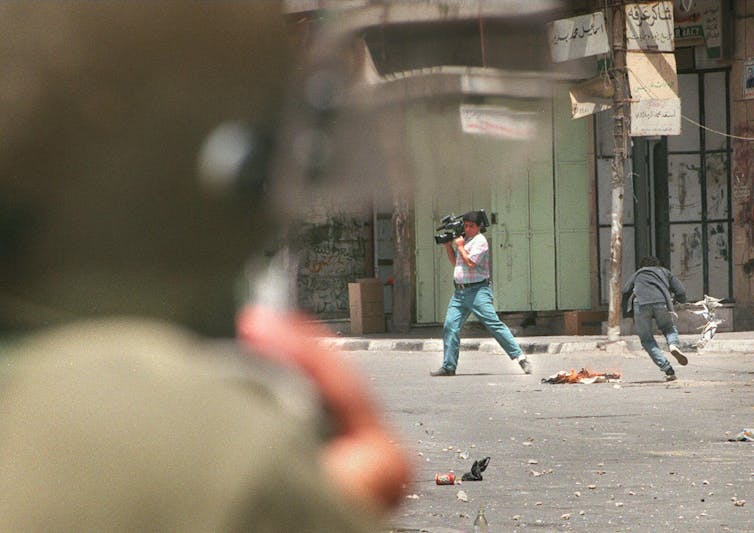
A man is seen in a street holding a video camera.
Reuters TV journalist Mazen Dana runs as he is hit by rubber-jacketed metal bullets fired by Israeli soldiers as he films a youth burning an Israeli flag in 1997.
Hossam Abu Alan/AFP via Getty Images

While intended to be a show of force, most Palestinians saw the restrictions as evidence that Israel was afraid of Palestinians reporting on their own conditions.

Many people hoped that the Oslo Accords – a series of negotiations between Israel and the Palestinian Liberation Organization that formally launched in 1993 – would lead to greater press freedoms. But it was not to be the case.

Israeli authorities continued to enforce military censorship on what they deemed to be “security topics.” They also revoked the press cards of reporters who did not stay in line and assaulted and harassed journalists reporting from the ground.

Meanwhile, the newly established Palestinian Authority, set up as part of the Oslo process to partially govern Palestinian territories on what was meant to be a temporary basis, built a censorship regime of its own. It, too, arrested, suspended and closed news outlets it deemed too critical of its actions.

Shootings and impunity

By the 2000s, Israel’s attacks on journalists in the West Bank and Gaza Strip grew deadlier. Israeli forces fatally shot Palestinian photographer Imad Abu Zahra in Jenin in the West Bank in 2002, British filmmaker James Miller in Rafah in 2003 and Reuters cameraman Fadel Shana in Gaza in 2008.

Since 2008, as battles between Israeli forces and Palestinian militant groups have grown fiercer, journalists have worked under even deadlier conditions. Yet even during unarmed demonstrations, journalists have faced deadly Israeli force. In 2018, during the mass unarmed protests in Gaza known as the Great March of Return, Israeli forces shot and killed Palestinian journalists Yaser Murtaja and Ahmed Abu Hussein. Both were wearing “PRESS” vests when they were shot. In addition, at least 115 journalists were wounded while covering the protests, which lasted six months.

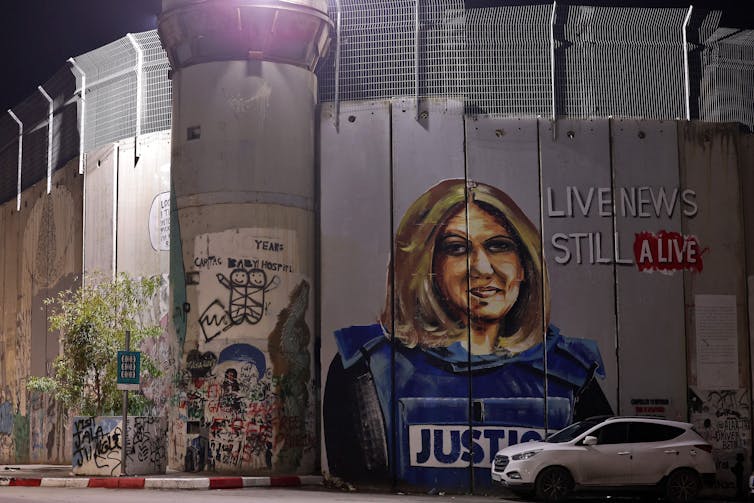
The deadly force has not been limited to Palestinians in Gaza. In May 2022, Palestinian American journalist Shireen Abu Akleh was killed in the Jenin refugee camp. One of the most famous Palestinian reporters at the time, Abu Akleh’s death drew hundreds of thousands of mourners, while Israeli police beat pallbearers at her funeral service.

Legitimate military targets?

International humanitarian law makes clear that journalists are civilians and therefore cannot be targeted during combat. That includes war correspondents who are covering war while under the protection of an armed group.

For their part, Israeli officials argue that they do not target journalists. They say that their strikes are aimed at legitimate military objectives, often asserting that Hamas embeds itself in civilian buildings or that some of the journalists killed were militants.

But such allegations are often made without independently verifiable evidence. Israel alleged that Murtaja, the journalist killed in Gaza in 2018, was a militant, but provided no proof.

The image of a woman with a flak jacket with 'justice' written on it is seen on a wall
A mural of slain U.S.-Palestinian correspondent Shireen Abu Akleh on a section of Israel’s separation fence between Jerusalem and the city of Bethlehem in the occupied West Bank.
Ahmad Gharabli/AFP via Getty Images

In the case of Abu Akleh, Israeli officials initially claimed that she may have been killed by Palestinian militants. They eventually admitted there was a “high possibility” that Israeli forces killed Abu Akleh, but claimed that the killing was accidental and therefore the government would not press charges. A recent documentary refutes that claim and identifies the Israeli soldier alleged to have killed Abu Akleh intentionally.

Culture of impunity

Even prior to the deadly Hamas-led attacks on Israel on Oct. 7, 2023, the picture emerging was that of impunity for Israeli forces who killed journalists – by accident or by design. A May 2023 report from the Committee to Protect Journalists concluded that Israel engaged in a “deadly pattern” of lethal force against journalists and failed to hold perpetrators accountable.

Since October 2023, journalists in Gaza have faced even deadlier conditions. Israel continues to ban international news agencies from reporting inside the Gaza Strip. As a result, local Palestinian journalists are often the only ones on the ground.

Aside from the deadly conditions, they contend with Israeli smears against their work and threats against their families.

Palestinian journalists there often run toward bombardments when others run away. As a result, they are sometimes killed in “double-tap” strikes, where Israeli air and drone strikes return to an area that has just been struck, killing rescue workers and the journalists covering them.

All this has led to an unbearable personal toll for those continuing to report from within Gaza. On Oct. 25, 2023, Al Jazeera’s Gaza bureau chief, Wael al-Dahdouh, was reporting live on air when he learned that an Israeli airstrike had killed his wife, two children and grandson. He returned on air the next day.

And the killing has not eased up. On Aug. 10, 2025, Israeli forces killed Anas al-Sharif in Gaza City, another prominent Al Jazeera correspondent who had stayed on the streets through months of bombardment. Five of his fellow journalists were also killed in the same airstrike.

The Aug. 25 strike on Nasser Hospital is just the latest in this deadly pattern.

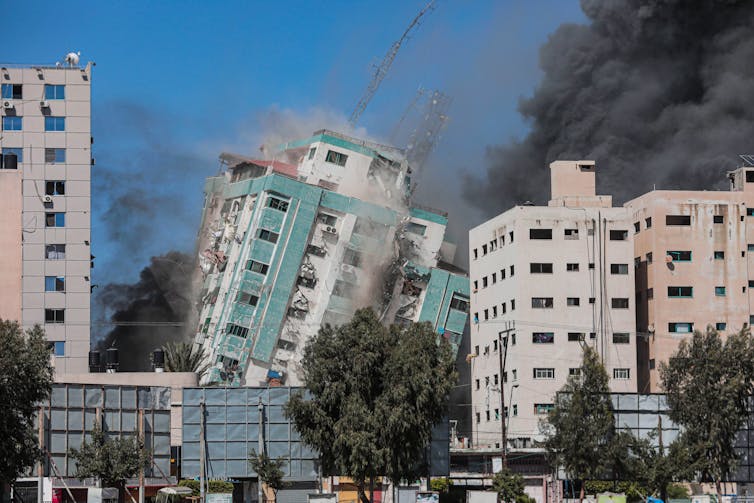
A building is seen toppling to the ground with thick black smoke around it.
The Jala Tower, home to media outlets, collapses after an Israeli airstrike in Gaza on May 15, 2021.
Momen Faiz/NurPhoto via Getty Images

Among the five journalists killed in that attack were freelancers working for Reuters and The Associated Press – two international media outlets frustrated by Israel’s refusal to allow its journalists into Gaza to document the war.

Despite the danger, global newsrooms have repeatedly urged Israel to open Gaza to independent media, and a coalition of 27 countries recently pressed for access in Gaza.

Israel continues to refuse these requests. As such, Palestinian journalists remain the primary witnesses of Israel’s relentless assault on Gaza. And they are increasingly killed as they do so. The question remains whether the international community will hold Israel to account.

The Conversation

Maha Nassar does not work for, consult, own shares in or receive funding from any company or organization that would benefit from this article, and has disclosed no relevant affiliations beyond their academic appointment.

ref. Israel’s killing of journalists follows a pattern of silencing Palestinian media that stretches back to 1967 – https://theconversation.com/israels-killing-of-journalists-follows-a-pattern-of-silencing-palestinian-media-that-stretches-back-to-1967-263891