Euro 2025: women’s football has exploded – here’s how it can grow even more

Source: The Conversation – UK – By Christina Philippou, Associate Professor in Accounting and Sport Finance, University of Portsmouth

Aside from victory and sporting glory, the players in the women’s Euro 2025 football tournament are playing for more money than ever before. The prize fund of €41 million (£35 million), to be shared among the 16 participating sides, is more than double what it was last time around.

It’s still a long way off from the prize money on offer to the men’s equivalent tournament (€331 million), but is a clear indication of the continuing rise of interest and investment in women’s football, particularly within England.

The English team’s hosting and victory of the 2022 women’s Euros were rightly credited with providing a massive boost to the game three years ago. But interest in women’s club football was already on the rise, with an almost sixfold increase in revenue between 2011 (the first season of the Women’s Super League (WSL)) and 2019.


Get your news from actual experts, straight to your inbox. Sign up to our daily newsletter to receive all The Conversation UK’s latest coverage of news and research, from politics and business to the arts and sciences.


Other numbers are encouraging too. Generally, match-day attendances have seen a dramatic rise including for the sport’s second tier (now named WSL2).

Broadcasting income for WSL was up 40% in 2023-24 compared to the previous season. And a new five-year deal with Sky Sports and the BBC, worth £65 million, is worth almost double the previous arrangement.

However, there’s room for improvement.

Research suggests that well-considered scheduling (weekend games are best) can have a marked effect on attendances (as does weather and pricing). And stadium capacity matters too, partly because more people can attend but also because a larger (often iconic) stadium tends to act as an attraction in itself.

For example, Arsenal’s women’s side saw average crowds of just under 29,000 in 2024-25 compared to a WSL average of 6,662. They have the highest revenue from match-day income, with nine games being played at the Emirates stadium last season and all WSL games scheduled to be played there in the next.

Facilities within the stadiums are another concern, as they were traditionally built for mostly male spectators, so do not cater as well to the more female and family demographic of women’s football.

This means, for example, that there are often not enough women’s toilets available, while refreshment options may be geared towards drinkers rather than children. Even the gates seem designed for a steady entry trickle of fans over an hour rather than a mass turnout of time-pressured families arriving just before kick-off.

Some good news on this front is that Brighton and Hove Albion FC are now building a stadium specifically for use by their women’s team, due to be in use by 2027. And Everton have decided to repurpose Goodison Park for use by its women’s side following the men’s move to a new stadium.

Commercial break

But aside from people actually watching the matches, the biggest chunk of income for women’s teams comes from commercial enterprises. And while affiliated teams (those linked to a men’s side) can benefit from sharing a brand, there are also a large number of commercial partners emerging specifically in the women’s game.

Companies selling makeup, baby products, sports bras and period pants are all involved in the business side of women’s football. More will probably follow.

But while commercial and competition success stories are something to celebrate, women’s football still faces challenges. One of the big ones is to do with building a legacy – the idea that just hosting a major tournament should not be the end goal, but something which ensures lasting change and development.

Building a legacy is not straightforward, but after England’s success in Euro 2022, the side used their platform to ensure change on issues including access to football for girls in schools and availability of kit.

As for the club game, attitudes to building a legacy by offering financial support to women’s teams are mixed. Some clubs view the women’s team as different (in terms of marketing, say) but integrated as part of the club (in terms of ticketing and sharing of resources). Others seem to consider a women’s side as good PR or community outreach rather than a genuine commercial opportunity.

In the last couple of years, we have seen both Reading and Blackburn women’s teams withdraw from the WSL2, while Wolves failed to apply for license to the league.

All of those teams mentioned worries over costs. And most women’s teams do lose money.

But men’s teams tend to lose money too, with the majority not only making losses but also being technically insolvent (meaning owners need to pump money in to keep clubs going).

The difference is that women’s football is essentially in a start-up phase, with lots of commercial, broadcasting and match-day potential, as showcased by annual revenue growth rates. In contrast, the men’s football market is a mature one that has been professional for decades, and shows much lower annual revenue growth.

Euro 2025 then, needs to play its part in keeping up momentum. It needs to keep the crowds, the commercial partners, the broadcasters and fans on board and committed.

For while women’s football is connected to men’s football, it is a different business. And celebrating that difference could do the women’s game a world of economic good.

The Conversation

Christina Philippou does not work for, consult, own shares in or receive funding from any company or organisation that would benefit from this article, and has disclosed no relevant affiliations beyond their academic appointment.

ref. Euro 2025: women’s football has exploded – here’s how it can grow even more – https://theconversation.com/euro-2025-womens-football-has-exploded-heres-how-it-can-grow-even-more-257864
Why investing in climate-vulnerable countries makes good business sense

Source: The Conversation – UK – By Ali Serim, Advisor for the Centre of Geopolitics of Global Change, ODI Global

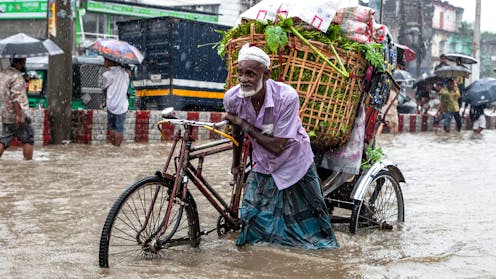
A new flood barrier is being built to prevent climate-induced Flooding in Chittagong in Bangladesh. amdadphoto/Shutterstock.com

At a coastal port in Chittagong, Bangladesh, something remarkable is underway. With support from a US$850 million (£620 million) investment from the World Bank, engineers are building flood-resistant infrastructure that can survive rising seas and stronger storms. A new 3.7-mile-long barrier will protect people, homes, and trade in one of the world’s most climate-vulnerable regions.

Projects like this do more than save lives. They show why investing in climate
adaptation is one of the smartest financial opportunities of our time. There are plenty of global conferences where leaders discuss climate change and make big
promises. Yet, less than 5.5% of global climate finance actually reaches the countries most at risk. That is not just a failure of fairness. It is a missed chance for real impact.

As the world gathers in Seville, Spain for the fourth international meeting on development financing, the focus must go beyond pledges and shift toward practical, on-the-ground investment in resilience.

At the previous UN climate finance meeting, also held in Seville, leaders focused
on fixing how public money flows through global institutions. But just as important is the need to invest in climate adaptation. This means helping people live with the changes already happening, including more floods, longer droughts, rising seas and intense heat.

While mitigation is about stopping climate change getting worse (by switching to clean energy or protecting forests that absorb carbon, for example), adaptation is about coping with the effects we can no longer avoid. It includes building stronger homes, growing more resilient crops, and improving hospitals and schools so they can keep working during extreme weather. Both approaches are necessary, but adaptation often gets less attention. And less money.

Private investors have already committed large sums to clean energy projects. But they have done much less to support communities on the frontlines of climate change. Many of these countries struggle with limited budgets, complex rules for accessing finance, and a lack of support to develop viable projects. So promising ideas often go unfunded.

children in colourful clothing getting on to solar powered boat on river
Children attend a school on a solar-powered boat in Rajshahi district, Bangladesh.
G.M.B Akash/Panos Pictures, CC BY-NC-ND

That is beginning to change. New tools are helping investors take on less risk and back more projects. These include low-interest loans, partnerships between public and private institutions, and guarantees that reduce the risk of failure.

The Green Climate Fund is the largest source of dedicated climate finance for developing countries. By the end of 2023, it had approved US$13.5 billion in funding, rising to US$51.9 billion when co-financing is included. This money helps unlock adaptation efforts that were previously out of reach.

We can already see progress. In Kenya and Ethiopia, farmers are using drought-resistant seeds to grow more food in changing conditions. In the Caribbean, solar energy is powering schools and clinics in remote communities. And in Bangladesh, the new port infrastructure in Chittagong is protecting a vital economic hub while boosting local businesses.

Working with nature

In coastal areas, restoring mangrove forests can reduce the force of incoming storms, protect biodiversity and support fisheries. The Pollination Group, a climate investment firm, is helping turn “nature-based solutions” like these into projects that attract private finance.

In his previous role as the Prince of Wales, King Charles III launched the Natural Capital Investment Alliance, an initiative that aims to mobilise US$10 billion for projects that restore and protect nature while offering solid financial returns. The alliance also helps investors better understand these kinds of opportunities by creating clearer guidance and standards. This supports the Terra Carta, a charter created by King Charles III that offers a roadmap for businesses to align with the needs of both people and the planet by 2030.

Investors who step into these emerging spaces gain more than financial returns. They build long-term relationships with governments and local communities. They help shape future policy. And they create lasting foundations for growth in places that are ready to lead if given the chance.

Adaptation projects also bring real benefits to people. They improve access to clean water, protect food supplies, create jobs, strengthen education and support healthcare systems. For families already facing climate disruption, these changes are not just improvements. They are lifelines.

By creating stable and welcoming environments for responsible investment, governments can accelerate this shift. By simplifying how money is accessed, international institutions can make it easier for good ideas to become funded projects. Philanthropic groups and development agencies can help build local skills and prepare projects for funding. Private investors can bring capital, innovation and experience.

Investing in climate adaptation is no longer just a moral issue. It is a smart, scalable and necessary response to a changing world.


Don’t have time to read about climate change as much as you’d like?

Get a weekly roundup in your inbox instead. Every Wednesday, The Conversation’s environment editor writes Imagine, a short email that goes a little deeper into just one climate issue. Join the 45,000+ readers who’ve subscribed so far.


The Conversation

Ali Serim does not work for, consult, own shares in or receive funding from any company or organisation that would benefit from this article, and has disclosed no relevant affiliations beyond their academic appointment.

ref. Why investing in climate-vulnerable countries makes good business sense – https://theconversation.com/why-investing-in-climate-vulnerable-countries-makes-good-business-sense-259732

Why white clothing is a requirement at Wimbledon

Source: The Conversation – UK – By Roger Fagge, Associate Professor in the Department of History, University of Warwick

When Carlos Alcaraz beat Jannik Sinner at the Roland Garros men’s final on June 8 2025, in what is already seen as a classic match, there was some comment on the sartorial choices of the two players.

They both wore Nike tops. Alcaraz’s was collarless, with horizontal blue bordered green and black stripes, and black shorts. Meanwhile Sinner wore a green polo-style shirt with collar, blue shorts and a blue Nike cap. Sinner’s shirt bore more than a passing resemblance to an Irish rugby union top, and was seen by some as somewhat incongruous on a tennis court.

In the women’s final on June 7, meanwhile, Coco Gauff brilliantly defeated Aryna Sabalenka, the number one seed. Gauff wore a custom New Balance kit with a dark blue marbled effect, finished off with a stylish grey leather jacket worn to and from the court. Sabalenka wore a colourful Nike tennis dress.

Technology, design and fashion all play a role in a player’s choice of tennis kit, as does their commercial potential – Sabalenka’s exact dress can be bought from the Nike website. But things are different at the Wimbledon championships, where “almost entirely white” kit is still a requirement.


Looking for something good? Cut through the noise with a carefully curated selection of the latest releases, live events and exhibitions, straight to your inbox every fortnight, on Fridays. Sign up here.


Founded in 1877, making it the oldest and most prestigious tennis tournament in the world, at Wimbledon, any colour must be limited to a 10mm strip.

White clothing was enforced at Wimbledon from the 19th century, in part because it covered up unwelcome signs of sweat. White clothing was also seen as cooler in the summer heat. But as time went on it became tied in with a sense of history and tradition, and the uniqueness of the Wimbledon tournament. Though there have been some occasional notable revisions.

Many women in the tennis community, including Billie Jean King, Judy Murray and Heather Watson, have argued that women players find white undershorts problematic when they are menstruating. As a result, the All England Club revised the rules in 2023 to allow dark undershorts, “provided they are no longer than their shorts or skirt”.

There had been earlier controversies over clothing at Wimbledon, sometimes over propriety, as in 1949, when Gertrude Moran challenged dress codes with “visible undergarments”. More recently in 2017 Venus Williams was asked to change during a rain break in a match because of visible fuchsia bras straps. The following year, Roger Federer, chasing his eighth Wimbledon title, was asked to change his orange-soled Nike shoes. They all acquiesced.

This history of all-white kits

All-white clothing is also linked to cricket, which shares elements of class and tradition with tennis. Playing in the summer sun meant cricket “whites” were a sensible option. However coloured caps of a player’s county or nation, were allowed by the cricket authorities, and cricket jumpers for the not so sunny days typically had the colours of the team on the v neck.

Man in cricket whites
White clothing is also associated with cricket.
Shutterstock

By 2020 the international Cricket Council (ICC) allowed larger sponsorship on shirts. The move to limited overs games played under floodlights saw the introduction of coloured kit, sometimes displaying a garishness that surpassed football shirts. However Test matches and longer-form cricket like the four-day county championship matches are still played in cricket whites.

And white shirts and kit have played a role in other sports, including football. If white shirts suggest respectability and style, somewhat ironically, the powerful white-clad Leeds side of the mid 1960s-70s, managed by Don Revie, earned the sobriquet “dirty Leeds” for their feisty approach to the dark arts of football. History and tradition matter as much in football as any sport, and fans of a certain age at other clubs, still refer to the Yorkshire club by this moniker.

But that’s enough football, as we’re firmly in Wimbledon season. So break out the Pimm’s, scones and jam, and let’s enjoy the tennis. Thankfully for the traditionalists among us there will be no marbled, green or blue kit on the centre court.

This article features references to books that have been included for editorial reasons, and may contain links to bookshop.org. If you click on one of the links and go on to buy something from bookshop.org The Conversation UK may earn a commission.

The Conversation

Roger Fagge does not work for, consult, own shares in or receive funding from any company or organisation that would benefit from this article, and has disclosed no relevant affiliations beyond their academic appointment.

ref. Why white clothing is a requirement at Wimbledon – https://theconversation.com/why-white-clothing-is-a-requirement-at-wimbledon-259469

How far is your closest hospital or clinic? Public health researchers explain why Africa needs up-to-date health facility databases

Source: The Conversation – Africa (2) – By Peter M Macharia, Senior postdoctoral research fellow, Institute of Tropical Medicine Antwerp

The lack of reliable information about health facilities across sub-Saharan Africa became very clear during the COVID-19 pandemic. Amid a surge in emergency care needs, information was lacking about the location of facilities, bed capacity and oxygen availability, and even where to find medical specialists. This data could have enabled precise assessments of hospital surge capacity and geographic access to critical care. Peter Macharia and Emelda Okiro, whose research focuses on public health and equity of health service access in low resource settings, share the findings of their recent study, co-authored with colleagues.

What are open health facility databases?

A health facility is a service delivery point where healthcare services are provided. The facilities can range from small clinics and doctor’s offices to large teaching and referral hospitals.

A health facility database is a list of all health facilities in a country or geographic area, such as a district. A typical database should assign each health facility a unique code, name, size, type (from primary to tertiary), ownership (public or private), operational status (working or closed), location and subnational unit (county or district). It should also record services (emergency obstetric care, for example), capacity (number of beds, for example), infrastructure (electricity availability, for example), contact information (address and email), and when this information was last updated.

The ideal method of compiling this list is to conduct a census, as Kenya did in 2023. But this takes resources. Some countries have compiled lists from existing incomplete ones. Senegal did this and so did Kenya in 2003 and 2008.

This list should be open to stakeholders, including government agencies, development partners and researchers. Health facility lists must be shared through a governance framework that balances data sharing with protections for data subjects and creators. In some countries, such as Kenya and Malawi, these listings are accessible through web portals without additional permission. In others, such facility lists do not exist or require extra permission.

Why are they useful to have?

Facility listings can serve the needs of individuals and communities. They also serve sub-national, national and continental health objectives.

At the individual level, a facility list offers a choice of alternatives to health seekers. At the community level, the data can guide decisions like where to place community health workers, as seen in Mali and Sierra Leone.

Health lists are useful when distributing commodities such as bed nets and allocating resources based on the health needs of the areas they serve. They help in planning for vaccination campaigns by creating detailed immunisation microplans.

By taking account of the disease burden, social dynamics and environmental factors, health services can be tailored to specific needs.

Detailed maps of healthcare resources enable quicker emergency responses by pinpointing facilities equipped for specific crises. Disease surveillance systems depend on continuously collecting data from healthcare facilities.

At the continental level, lists are crucial for a coordinated health system response during pandemics and outbreaks. They can facilitate cross-border planning, pandemic preparedness and collaboration.

During the COVID-19 pandemic, these lists informed where to put additional resources such as makeshift hospitals or transport programmes for adults over  60 years of age.

The lists are used to identify vulnerable populations at risk of emerging pathogens and populations that can benefit from new health facilities.

They are important when it comes to making emergency obstetric and newborn care accessible.

What goes wrong if you don’t have them?

Many problems arise if we don’t know where health facilities are or what they offer. Healthcare planning becomes inefficient. This can result in duplicate facility lists and the misallocation of resources, which leads to waste and inequities.

We can’t identify populations that lack services. Emergency responses weaken due to uncertainty about where best to move patients with specific conditions.

Resources are wasted when there are duplicate facility lists. For example, between 2010 and 2016, six government departments partnered with development organisations, resulting in ten lists of health facilities in Nigeria.

In Tanzania, over 10 different health facility lists existed in 2009. Maintained by donors and government agencies, the function-specific lists didn’t work together to share information easily and accurately. This prompted the need for a national master facility list.

What needs to happen to build one?

A comprehensive list of health facilities can be compiled through mapping exercises or from existing lists. The health ministry should take responsibility for setting up, developing and updating this list.

Partnerships are crucial for developing facility lists. Stakeholders include donors, implementing and humanitarian partners, technical advisors and research institutions. Many of these have their own project-based lists, which should integrate into a centralised facility list managed by the ministry. The health ministry must foster a transparent environment, encouraging citizens and stakeholders to contribute to enhancing health facility data.

Political and financial commitment from governments is essential. Creating and maintaining a proper list requires significant investment. Expertise and resources are necessary to keep it updated.

A commitment to open data is a necessary step. Open access to these lists makes them more complete, reliable and useful.

The Conversation

Peter Macharia is funded by Fonds voor Wetenschappelijk Onderzoek- Belgium (FWO, number 1201925N) for his Senior Postdoctoral Fellowship.

Emelda Okiro receives funding for her research from the Wellcome Trust through a Wellcome Trust Senior Fellowship (#224272).

ref. How far is your closest hospital or clinic? Public health researchers explain why Africa needs up-to-date health facility databases – https://theconversation.com/how-far-is-your-closest-hospital-or-clinic-public-health-researchers-explain-why-africa-needs-up-to-date-health-facility-databases-259190

Moon mining is getting closer to reality: Why we need global rules for extracting space resources

Source: The Conversation – Canada – By Martina Elia Vitoloni, DCL Candidate Air and Space Law, McGill University

Mountains on the moon as seen by NASA Lunar Reconnaissance Orbiter. (NASA/GSFC/Arizona State University)

In science-fiction stories, companies often mine the moon or asteroids. While this may seem far-fetched, this idea is edging closer to becoming reality.

Celestial bodies like the moon contain valuable resources, such as lunar regolith — also known as moon dust — and helium-3. These resources could serve a range of applications, including making rocket propellant and generating energy to sustaining long missions, bringing benefits in space and on Earth.

The first objective on this journey is being able to collect lunar regolith. One company taking up this challenge is ispace, a Japanese space exploration company ispace that signed a contract with NASA in 2020 for the collection and transfer of ownership of lunar regolith.

The company recently attempted to land its RESILIENCE lunar lander, but the mission was ultimately unsuccessful. Still, this endeavour marked a significant move toward the commercialization of space resources.

These circumstances give rise to a fundamental question: what are the legal rules governing the exploitation of space resources? The answer is both simple and complex, as there is a mix of international agreements and evolving regulations to consider.

What does the international legal system say?

The cornerstone legal instrument for space activity is the Treaty on Principles Governing the Activities of States in the Exploration and Use of Outer Space, including the Moon and Other Celestial Bodies, more commonly referred to as the Outer Space Treaty.

While space law is often considered a novel legal field, the Outer Space Treaty dates back to 1967, making it more than half a century old.


Read more:
Space exploration should aim for peace, collaboration and co-operation, not war and competition


Space activities have exponentially evolved since the treaty’s adoption. In the 60 years following the launch of Sputnik 1 — the first satellite placed in orbit — less than 500 space objects were launched annually. But since 2018, this number has risen into the thousands, with nearly 3,000 launched in 2024.

Because of this, the treaty is often judged as inadequate to address the current complexities of space activities, particularly resource exploitation.

A longstanding debate centres on whether Article II of the treaty, which prohibits the appropriation of outer space — including the moon and other celestial bodies — also prohibits space mining.

The prevailing position is that Article II solely bans the appropriation of territory, not the extraction of resources themselves.

We are now at a crucial moment in the development of space law. Arguing over whether extraction is legal serves no purpose. Instead, the focus must shift to ensuring resource extraction is carried out in accordance with principles that ensure the safe and responsible use of outer space.

International and national space laws

A significant development in the governance of space resources has been the adoption Artemis Accords, which — as of June 2025 — has 55 signatory nations. The accords reflect a growing international consensus concerning the exploitation of space resources.

Notably, Section 10 of the accords indicates that the exploitation of space resources does not constitute appropriation, and therefore doesn’t violate the Outer Space Treaty.

Considering the typically slow pace of multilateral negotiations, a handful of nations introduced national legislation. These laws govern the legality of space resource exploitation, allowing private companies to request licenses to conduct this type of activity.

To date, six nations have enacted this type of legislation: the United States in 2015, Luxembourg in 2017, the United Arab Emirates in 2019, Japan in 2021, Brazil in 2024 and most recently, Italy, which passed its law on June 11, 2025.

Among these, Luxembourg’s legal framework is the most complete. It provides a series of requirements to provide authorization for the exploitation of space resources. In fact, ispace’s licence to collect lunar regolith was obtained under this regime.

Earth in outer space with part of a spacecraft seen off to the side
This first high-resolution image taken on the first day of the Artemis I mission by a camera on the tip of one of Orion’s solar arrays. The spacecraft was 57,000 miles from Earth when the image was captured.
(NASA)

The rest of the regulations usually tend to limit themselves to proclaiming the legality of this activity without entering into too much detail and deferring the specifics of implementation to future regulations.

While these initiatives served to put space resources at the forefront of international forums, they also risk regulatory fragmentation, as different countries adopt varying standards and approaches.

What does the future hold?

Recognizing the need for a co-ordinated global approach, the United Nations Committee on Peaceful Uses of Outer Space created a Working Group on Legal Aspects of Space Resource Activities. Its mandate is to develop a set of general principles to guide the development of the activity.

In May 2025, the chair of the working group, Steven Freeland, presented a draft of recommended principles based on input from member states.

These principles reaffirm the freedom of use and exploration of outer space for peaceful purposes, while introducing rules pertaining to the safety of the activities and their sustainability, as well as the protection of the environment, both of Earth and outer space.

The development of a legal framework for space resources is still in its early stages. The working group is expected to submit its final report by 2027, but the non-binding nature of the principles raises concerns about their enforcement and application.

As humanity moves closer to extracting and using space resources, the need for a cohesive and responsible governance system has never been greater.

The Conversation

Martina Elia Vitoloni does not work for, consult, own shares in or receive funding from any company or organisation that would benefit from this article, and has disclosed no relevant affiliations beyond their academic appointment.

ref. Moon mining is getting closer to reality: Why we need global rules for extracting space resources – https://theconversation.com/moon-mining-is-getting-closer-to-reality-why-we-need-global-rules-for-extracting-space-resources-259343

Does eating cheese before bed really give you nightmares? Here’s what the science says

Source: The Conversation – Global Perspectives – By Charlotte Gupta, Senior Postdoctoral Research Fellow, Appleton Institute, HealthWise Research Group, CQUniversity Australia

Phoenixns/Shutterstock, The Conversation, CC BY

Have you heard people say eating cheese before bed will cause you to have vivid dreams or nightmares?

It’s a relatively common idea. And this week, a new study has landed this suggestion back in the spotlight.

But is it true? Let’s unpack the evidence.

A gouda night’s sleep?

Canadian researchers recently investigated this idea in a sample of 1,082 undergraduate psychology students. The students completed a survey, which included questions about how they perceived their diet influenced their sleep and dreams.

Some 40% of participants reported certain foods impacted their sleep, with 25% of the whole sample claiming certain foods worsened their sleep, and 20% reporting certain foods improved their sleep.

Only 5.5% of respondents believed what they ate affected the nature of their dreams. But many of these people thought sweets or dairy products (such as cheese) made their dreams more strange or disturbing and worsened their sleep.

In contrast, participants reported fruits, vegetables and herbal teas led to better sleep.

This study used self-reporting, meaning the results rely on the participants recalling and reporting information about their sleep and dreams accurately. This could have affected the results.

It’s also possible participants were already familiar with the notion that cheese causes nightmares, especially given they were psychology students, many of whom may have studied sleep and dreaming.

This awareness could have made them more likely to notice or perceive their sleep was disrupted after eating dairy. In other words, the idea cheese leads to nightmares may have acted like a self-fulfilling prophecy and results may overestimate the actual likelihood of strange dreams.

Nonetheless, these findings show some people perceive a connection between what they eat and how they dream.

While there’s no evidence to prove cheese causes nightmares, there is evidence that does explain a link.

The science behind cheese and nightmares

Humans are diurnal creatures, meaning our body is primed to be asleep at night and awake during the day. Eating cheese before bed means we’re challenging the body with food at a time when it really doesn’t want to be eating.

At night, our physiological systems are not primed to digest food. For example, it takes longer for food to move through our digestive tract at night compared with during the day.

If we eat close to going to sleep, our body has to process and digest the food while we’re sleeping. This is a bit like running through mud – we can do it, but it’s slow and inefficient.

Cheese can be particularly challenging to digest at night because of high concentrations of fat and protein, which slows down our digestion.

If your body is processing and digesting food instead of focusing all its resources on sleep, this can affect your shut-eye. Research has shown eating close to bedtime reduces our sleep quality, particularly our time spent in rapid eye movement (REM) sleep, which is the stage of sleep associated with vivid dreams.

People will have an even harder time digesting cheese at night if they’re lactose intolerant, which might mean they experience even greater impacts on their sleep. This follows what the Canadian researchers found in their study, with lactose intolerant participants reporting poorer sleep quality and more nightmares.

It’s important to note we might actually have vivid dreams or nightmares every night – what could change is whether we’re aware of the dreams and can remember them when we wake up.

Poor sleep quality often means we wake up more during the night. If we wake up during REM sleep, research shows we’re more likely to report vivid dreams or nightmares that we mightn’t even remember if we hadn’t woken up during them.

This is very relevant for the cheese and nightmares question. Put simply, eating before bed impacts our sleep quality, so we’re more likely to wake up during our nightmares and remember them.

A woman sleeping.
What we eat, particularly just before bed, can affect our sleep.
Ivan Oboleninov/Pexels

Can I still have brie before bedtime?

Don’t panic – I’m not here to tell you to give up your cheesy evenings. But what we eat before bed can make a real difference to how well we sleep, so timing matters.

General sleep hygiene guidelines suggest avoiding meals at least two hours before bed. So even if you’re eating a very cheese-heavy meal, you have a window of time before bed to digest the meal and drift off to a nice peaceful sleep.

How about other dairy products?

Cheese isn’t the only dairy product which may influence our sleep. Most of us have heard about the benefits of having a warm glass of milk before bed.

Milk can be easier to digest than cheese. In fact, milk is a good choice in the evening, as it contains tryptophan, an amino acid that helps promote sleep.

Nonetheless, we still don’t want to be challenging our body with too much dairy before bed. Participants in the Canadian study did report nightmares after dairy, and milk close to bed might have contributed to this.

While it’s wise to steer clear of food (especially cheese) in the two hours before lights out, there’s no need to avoid cheese altogether. Enjoy that cheesy pasta or cheese board, just give your body time to digest before heading off to sleep. If you’re having a late night cheese craving, opt for something small. Your sleep (and your dreams) will thank you.

The Conversation

Charlotte Gupta does not work for, consult, own shares in or receive funding from any company or organisation that would benefit from this article, and has disclosed no relevant affiliations beyond their academic appointment.

ref. Does eating cheese before bed really give you nightmares? Here’s what the science says – https://theconversation.com/does-eating-cheese-before-bed-really-give-you-nightmares-heres-what-the-science-says-260205

AI-powered assistive technologies are changing how we experience and imagine public space

Source: The Conversation – Canada – By Ron Buliung, Professor, Geography and Planning, University of Toronto

AI-powered assistive devices, like hearing aids, are changing how the people who use them experience public space. (Shutterstock)

New applications and the integration of artificial intelligence (AI) with wearable devices are changing the way users interact with their environments and each other. The impacts and reach of these new technologies have yet to be fully understood.

Connections between technologies and bodies is not a new thing for many disabled persons. Assistive technologies — tools and products designed to support people with disabilities — have played a part in mitigating built and institutional barriers experienced by disabled persons for decades.

While not strictly considered assistive, immersive and wearable technologies have the potential to change the relationship between disabled users and their experience of place.

For example, Ray-Ban’s Meta glasses use AI to describe what the cameras are capturing using the Be My Eyes app. Using OpenAI’s large language model, ChatGPT, this effectively turns a user’s smart phone into a vision assistant.

Beyond wearables, some technologies are more closely tied to or integrated with the body. Examples include brain-computer interfaces, AI-enabled prosthetics and bone-anchored hearing aids.

The availability and production of environmental data from these technologies may impact how we relate to each other, how we move through and understand space, and how we engage with the physical environment around us at any given moment.

Sam Seavey, founder of TheBlindLife.com, reviews the possibilities and limitations of Apple’s VisionPro. (The Blind Life)

We’re at a critical juncture where AI-enabled technologies used by individuals may profoundly impact our urban futures.

What happens, for example, when wearables make any “place” a digital work or play place? What does a largely private-sector, consumer-driven, AI-enabled digital intervention into a city’s spaces mean for planning, zoning and taxation? What are the environmental costs of the global AI project?

And crucially, who gets to participate in this digital reimagining?

AI and the city

While access can be challenging — wearables are often costly — ableist thinking regarding the use of technology to render invisible Blind and/or Deaf people and culture is also a problem. Some people might naively assume that all Blind and Deaf people are universally seeking a bio-technological “miracle.”

There are also other challenges: how a technology captures or describes its data may not match up to a user’s pre-existing sense of place. Moreover, access to tech can produce some unintended consequences, including the erosion of in-person community building among disabled people.

Hearing loss of some kind affects around 1.5 billion people: I am one of those people. I am a disability studies scholar who wears behind-the-ear hearing aids to augment my hearing experience.

My hearing aids use AI and machine learning to sense and adjust my sound environment. They help me cope with the ways in which the places of my everyday life — such as my home or the lecture hall — are generally configured for people without hearing loss.

When I use my hearing aids, I find that the city has never sounded so wonderful, and yet sometimes irritatingly loud. The sound of birds is one thing; the grinding sound of a breaking subway is another entirely.

Cumulative exposure to noisy indoor and outdoor places of the city poses auditory health risks, such as noise-induced hearing loss or tinnitus, and can contribute to poor health more broadly. I have to be careful about ongoing noise exposure, and by adjusting the volume of my hearing aids, I can turn down the city when I want to.

Future bodies and urban futures

AI-powered technologies can exacerbate issues of access, privilege and freedom of movement. This happens both through who is able to purchase and use devices, as well as through data and their applications. Data may be biased in terms of race, gender, sexuality and disability.

Scientific research and media representations tend to highlight the benevolent possibilities of technologies for “repairing” bodies conceived as being functionally medically deficient.

Much less is said about disabled persons controlling the narrative, taking up key roles in the messy terrain of AI, machine learning and data governance, and in the planning and design of future cities.

Digital modelling

We are also witnessing growing interest in the digital twinning — creating highly accurate digital models — of everything from human hearts to entire cities.

Whether rendered at the scale of the body or city, the motivation for twinning appears centred on planning and performance optimization — a quest for perfection. Like any model, we are dealing with an abstraction from reality. City twins seem to fail to capture many of the fine grain environmental barriers experienced by disabled persons.


Read more:
What are digital twins? A pair of computer modeling experts explain


Ownership limits

Not everyone can, should or wishes to be technologically “assisted” or augmented. There are medical, identity and culture, affordability, legal, moral and ethical concerns.


Read more:
Super-intelligence and eternal life: transhumanism’s faithful follow it blindly into a future for the elite


Other issues raised by brain-computer interface research, for example, include concerns about legal capacity and ownership of the self, including ownership of device-generated data.

In a study on the impact of neural technologies, researchers shared the legal repercussions relating to two disabled people deprived of voting rights in Spain. The person who recovered the ability to communicate autonomously using their finger and a computer had their rights restored, while the other, who used a human intermediary, did not.

Legal questions also arise regarding how liability is assigned when augmented bodies are injured or cause injuries to others.

Where does the person end and the technology begin, and vice versa? Who gets to decide?

Future technologies

As the use of AI and assistive technologies increases in everyday urban life, we will need to address these questions sooner rather than later.

And if disabled persons are not adequately involved in these discussions and decisions, then cities will be less — rather than more — accessible.

The Conversation

Ron Buliung does not work for, consult, own shares in or receive funding from any company or organisation that would benefit from this article, and has disclosed no relevant affiliations beyond their academic appointment.

ref. AI-powered assistive technologies are changing how we experience and imagine public space – https://theconversation.com/ai-powered-assistive-technologies-are-changing-how-we-experience-and-imagine-public-space-229836

Experiencing extreme weather and disasters is not enough to change views on climate action, study shows

Source: The Conversation – Global Perspectives – By Omid Ghasemi, Research Associate in Behavioural Science at the Institute for Climate Risk & Response, UNSW Sydney

STR / AFP via Getty Images

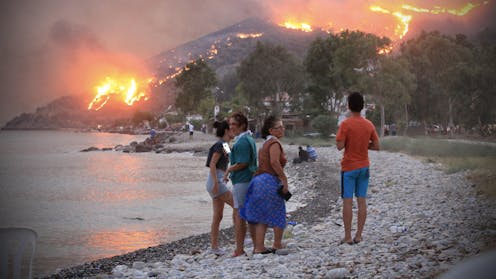
Climate change has made extreme weather events such as bushfires and floods more frequent and more likely in recent years, and the trend is expected to continue. These events have led to human and animal deaths, harmed physical and mental health, and damaged properties and infrastructure.

Will firsthand experience of these events change how people think and act about climate change, making it seem immediate and local rather than a distant or future problem?

Research so far has offered a mixed picture. Some studies suggest going through extreme weather can make people more likely to believe in climate change, worry about it, support climate policies, and vote for Green parties. But other studies have found no such effects on people’s beliefs, concern, or behaviour.

New research led by Viktoria Cologna at ETH Zurich in Switzerland may help to explain what’s going on. Using data from around the world, the study suggests simple exposure to extreme weather events does not affect people’s view of climate action – but linking those events to climate change can make a big difference.

Global opinion, global weather

The new study, published in Nature Climate Change, looked at the question of extreme weather and climate opinion using two global datasets.

The first is the Trust in Science and Science-related Populism (TISP) survey, which includes responses from more than 70,000 people in 68 countries. It measures public support for climate policies and the extent that people think climate change is behind increases in extreme weather.

The second dataset estimates how much of each country’s population has been affected each year by events such as droughts, floods, heatwaves and storms. These estimates are based on detailed models and historical climate records.

Public support for climate policies

The survey measured public support for climate policy by asking people how much they supported five specific actions to cut carbon emissions. These included raising carbon taxes, improving public transport, using more renewable energy, protecting forests and land, and taxing carbon-heavy foods.

Responses ranged from 1 (not at all) to 3 (very much). On average, support was fairly strong, with an average rating of 2.37 across the five policies. Support was especially high in parts of South Asia, Africa, the Americas and Oceania, but lower in countries such as Russia, Czechia and Ethiopia.

Exposure to extreme weather events

The study found most people around the world have experienced heatwaves and heavy rainfall in recent decades. Wildfires affected fewer people in many European and North American countries, but were more common in parts of Asia, Africa and Latin America.

Cyclones mostly impacted North America and Asia, while droughts affected large populations in Asia, Latin America and Africa. River flooding was widespread across most regions, except Oceania.

Do people in countries with higher exposure to extreme weather events show greater support for climate policies? This study found they don’t.

In most cases, living in a country where more people are exposed to disasters was not reflected in stronger support for climate action.

Wildfires were the only exception. Countries with more wildfire exposure showed slightly higher support, but this link disappeared once factors such as land size and overall climate belief were considered.

In short, just experiencing more disasters does not seem to translate into increased support for mitigation efforts.

Seeing the link between weather and climate change

In the global survey, people were asked how much they think climate change has increased the impact of extreme weather over recent decades. On average, responses were moderately high (3.8 out of 5) suggesting that many people do link recent weather events to climate change.

Such an attribution was especially strong in Latin America, but lower in parts of Africa (such as Congo and Ethiopia) and Northern Europe (such as Finland and Norway).

Crucially, people who more strongly believed climate change had worsened these events were also more likely to support climate policies. In fact, this belief mattered more for policy support than whether they had actually experienced the events firsthand.

What does this study tell us?

While public support for climate policies is relatively high around the world, even more support is needed to introduce stronger, more ambitious measures. It might seem reasonable to expect that feeling the effects of climate change would push people to act, but this study suggests that doesn’t always happen.

Prior research shows less dramatic and chronic events like rainfall or temperature anomalies have less influence on public views than more acute hazards like floods or bushfires. Even then, the influence on beliefs and behaviour tends to be slow and limited.

This study shows climate impacts alone may not change minds. However, it also highlights what may affect public thinking: helping people recognise the link between climate change and extreme weather events.

In countries such as Australia, climate change makes up only about 1% of media coverage. What’s more, most of the coverage focuses on social or political aspects rather than scientific, ecological, or economic impacts.

Many stories about disasters linked to climate change also fail to mention the link, or indeed mention climate change at all. Making these connections clearer may encourage stronger public support for climate action.

The Conversation

Omid Ghasemi receives funding from the Australian Academy of Science. He was a member of the TISP consortium and a co-author of the dataset used in this study.

ref. Experiencing extreme weather and disasters is not enough to change views on climate action, study shows – https://theconversation.com/experiencing-extreme-weather-and-disasters-is-not-enough-to-change-views-on-climate-action-study-shows-260308

How do we define Canadian content? Debates will shape how creatives make a living

Source: The Conversation – Canada – By Daphne Rena Idiz, Postdoctoral fellow, Department of Arts, Culture and Media, University of Toronto

What should count as Canadian content (CanCon) in the era of streaming and generative AI (GenAI)?

That’s the biggest unknown at the heart of the Canadian Radio-television and Telecommunications Commission’s recent (CRTC) public hearing, held in Gatineau, Que., from May 14 to 27.

The debate is about how Canada’s current points-based CanCon system remains effective in the context of global streaming giants and generative AI. Shows qualify as CanCon by assigning value to roles like director, screenwriter and lead actors being Canadian.

The outcome will shape who gets to tell Canadian stories and what those stories are, and also which ones count as Canadian under the law. This, in turn, will determine who in the film and television industries can access funding, tax credits and visibility on streaming services.

It will also determine which Canadian productions big streamers like Netflix will invest in under their Online Streaming Act obligations.

The federal government’s recent announcement that it’s rescinding the Digital Services Tax reveals the limits of Canada’s leverage over Big Tech, underscoring the significance of CanCon rules as parameters around how streaming giants contribute meaningfully to the country’s creative industries.

CanCon: Who gets to decide?

The CRTC’s existing approach to defining CanCon relies on the citizenship of key creative personnel.

The National Film Board argued that this misses the “cultural elements” of Canadian storytelling. These include cultural expression, narrative themes and connection to Canadian audiences. That is, a production might technically count as CanCon by hiring Canadians, without feeling particularly “Canadian.”

It’s worth noting there are varied global regulatory frameworks for defining film nationality. The Writers Guild of Canada supports the CRTC’s view that cultural elements shouldn’t be part of CanCon certification, and argues that attempting to further codify cultural criteria risks reducing Canadian identity to superficial symbols like maple leaves or hockey sticks, and could exclude entire genres like sci-fi or fantasy.

‘Canadianness’ too broad to regulate?

The Writers Guild of Canada argues that while Canadians should expect to see cultural elements in programming, the concept of “Canadianness” is too broad and subjective to be effectively regulated.

Cultural elements are regulated by the 1991 Broadcasting Act as amended by the 2023 Online Streaming Act. Broadcasters and streamers must reflect Canadian stories, identities and cultural expressions.


Read more:
How the Online Streaming Act will support Canadian content


The acts empower broadcasters and streamers to decide which Canadian stories and content will be developed, produced and distributed through commissioning and licensing powers. This implicitly limits the CRTC’s role to setting rules about which creatives are at the table.

The Writer’s Guild advocates broadening the pool of Canadian key creatives to modernize the CanCon system. It trusts the combined perspectives of a broader pool to make creative decisions about Canadian identity in meaningful ways. Accordingly, it supports the CRTC’s intent to add the showrunner role to the point system since showrunners are the “the chief custodian of the creative vision of a series.

Battle over Canadian IP

Streaming introduces more players with financial stakes, complicating who controls content and who profits from it. A seismic shift is happening in how intellectual property (IP) is handled.

CRTC has proposed that the updated CanCon definition include Canadian IP ownership as a mandatory element to enable Canadian companies and workers to retain some control over their own IP, and thereby earn sustainable income. For example, in a streaming drama, Canadian screenwriters who retain ownership of the IP could earn ongoing revenue through licensing deals, international sales and royalties each time the series is distributed.

However, the Motion Picture Association-Canada (MPA-Canada), representing industry titans like Netflix, Amazon and Disney, is pushing back against requirements that mandate the sharing of territory or IP.

Without IP rights, Canadian talent and the industry as a whole may be reduced to becoming service providers for global companies.

Fair remuneration, IP rights needed

Our own research highlights how this type of contractual arrangement increases the power asymmetries between producers, distributors and streaming services. We emphasize the critical importance of fair remuneration and IP rights for creators.

Intervenors shared a range of preferences from 100 per cent Canadian IP ownership to none at all. One hundred per cent Canadian IP ownership means Canadian creators like a producer of a streaming series would control the rights to the content. They would receive the majority of profits from licensing, distribution and future adaptations.

Even 51 per cent ownership could give them a controlling stake, but would likely require sharing revenue and decision-making with the streaming service.

AI and CanCon

And then, of course, there’s the question of how generative AI should be considered within the updated CanCon definition. The Writers Guild of Canada has drawn a firm line in the sand: AI-generated material should not qualify as Canadian content.

The guild argues that since current AI tools don’t possess identity, nationality or cultural context, their output cannot advance the goals of the Broadcasting Act, centred on promoting Canadian voices and stories.

The Alliance of Canadian Cinema, Television and Radio Artists (ACTRA) raised a different concern around AI. AI, ACTRA argued, “should not take over the jobs of the creators in the ecosystem that we’re in and we should not treat AI-generated performers as if they are a Canadian actor.”

Depending on how the CRTC addresses AI, this could mean that streaming content featuring AI-generated scripts, characters, or performances — even if developed by a Canadian creator or set in Canada — would not qualify as CanCon.

The WGC notes that it has already negotiated restrictions on AI use in screenwriting through its agreement with the Canadian Media Producers Association. These guardrails are being held up as the “emerging industry standard.”

Follow the money

Another contested point is how streamers should pay into CanCon: through direct investment or through more traditional modes of financing. Under the Online Streaming Act, streamers are required to pay five per cent of their annual revenues to certain Canadian funds.

This model echoes previous requirements used to manage decision-making at media broadcasters, some at the much more substantial level of 30 per cent.

But no payments have been made yet, and streamers are appealing this requirement. Streamers prefer investing directly into Canadian content, taking a risk on its commercial potential to benefit from resulting successes.

Research in the European Union and Canada highlight how different stakeholders benefit from different forms of financial obligations, suggesting the industry may be best served by a policy mix.

As Canada rewrites its broadcasting rules, defining Canadian content is a courtroom drama unfolding in real time — and the verdict will have serious ramifications.

The Conversation

MaryElizabeth Luka receives research project funding from peer-adjudicated grants from the Social Sciences and Humanities Research Council and internal grants at University of Toronto, such as the Creative Labour Critical Futures Cluster of Scholarly Prominence.

Daphne Rena Idiz does not work for, consult, own shares in or receive funding from any company or organisation that would benefit from this article, and has disclosed no relevant affiliations beyond their academic appointment.

ref. How do we define Canadian content? Debates will shape how creatives make a living – https://theconversation.com/how-do-we-define-canadian-content-debates-will-shape-how-creatives-make-a-living-258013

Antarctic research is in decline, and the timing couldn’t be worse

Source: The Conversation – Global Perspectives – By Elizabeth Leane, Professor of Antarctic Studies, School of Humanities, University of Tasmania

Oleksandr Matsibura/Shutterstock

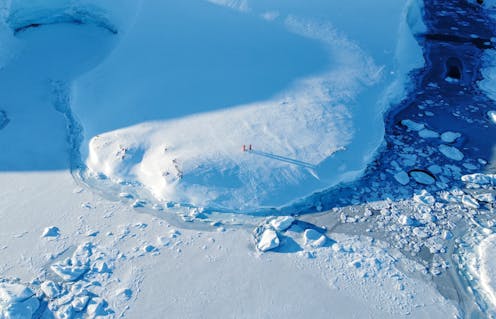
Ice loss in Antarctica and its impact on the planet – sea level rise, changes to ocean currents and disturbance of wildlife and food webs – has been in the news a lot lately. All of these threats were likely on the minds of the delegates to the annual Antarctic Treaty Consultative Meeting, which finishes up today in Milan, Italy.

This meeting is where decisions are made about the continent’s future. These decisions rely on evidence from scientific research. Moreover, only countries that produce significant Antarctic research – as well as being parties to the treaty – get to have a final say in these decisions.

Our new report – published as a preprint through the University of the Arctic – shows the rate of research on the Antarctic and Southern Ocean is falling at exactly the time when it should be increasing. Moreover, research leadership is changing, with China taking the lead for the first time.

This points to a dangerous disinvestment in Antarctic research just when it is needed, alongside a changing of the guard in national influence. Antarctica and the research done there are key to everyone’s future, so it’s vital to understand what this change might lead to.

Why is Antarctic research so important?

With the Antarctic region rapidly warming, its ice shelves destabilising and sea ice shrinking, understanding the South Polar environment is more crucial than ever.

Ice loss in Antarctica not only contributes to sea level rise, but impacts wildlife habitats and local food chains. It also changes the dynamics of ocean currents, which could interfere with global food webs, including international fisheries that supply a growing amount of food.

Research to understand these impacts is vital. First, knowing the impact of our actions – particularly carbon emissions – gives us an increased drive to make changes and lobby governments to do so.

Second, even when changes are already locked in, to prepare ourselves we need to know what these changes will look like.

And third, we need to understand the threats to the Antarctic and Southern Ocean environment to govern it properly. This is where the treaty comes in.

What is the Antarctic Treaty?

The region below 60 degrees south is governed by the 1959 Antarctic Treaty, along with subsequent agreements. Together they are known as the Antarctic Treaty System.

Fifty-eight countries are parties to the treaty, but only 29 of them – called consultative parties – can make binding decisions about the region. They comprise the 12 original signatories from 1959, along with 17 more recent signatory nations that produce substantial scientific research relating to Antarctica.

This makes research a key part of a nation’s influence over what happens in Antarctica.

For most of its history, the Antarctic Treaty System has functioned remarkably well. It maintained peace in the region during the Cold War, facilitated scientific cooperation, and put arguments about territorial claims on indefinite hold. It indefinitely forbade mining, and managed fisheries.

Lately, however, there has been growing dysfunction in the treaty system.

Environmental protections that might seem obvious – such as marine protected areas and special protections for threatened emperor penguins – have stalled.

Because decisions are made by consensus, any country can effectively block progress. Russia and China – both long-term actors in the system – have been at the centre of the impasse.


Read more:
Antarctic summer sea ice is at record lows. Here’s how it will harm the planet – and us


What did our report find?

Tracking the amount of Antarctic research being done tells us whether nations as a whole are investing enough in understanding the region and its global impact.

It also tells us which nations are investing the most and are therefore likely to have substantial influence.

Our new report examined the number of papers published on Antarctic and Southern Ocean topics from 2016 to 2024, using the Scopus database. We also looked at other factors, such as the countries affiliated with each paper.

The results show five significant changes are happening in the world of Antarctic research.

  • The number of Antarctic and Southern Ocean publications peaked in 2021 and then fell slightly yearly through to 2024.
  • While the United States has for decades been the leader in Antarctic research, China overtook them in 2022.
  • If we look only at the high-quality publications (those published in the best 25% of journals) China still took over the US, in 2024.
  • Of the top six countries in overall publications (China, the US, the United Kingdom, Australia, Germany and Russia) all except China have declined in publication numbers since 2016.
  • Although collaboration in publications is higher for Antarctic research than in non-Antarctic fields, Russia, India and China have anomalously low rates of co-authorship compared with many other signatory countries.

Why is this research decline a problem?

A recent parliamentary inquiry in Australia emphasised the need for funding certainty. In the UK, a House of Commons committee report considered it “imperative for the UK to significantly expand its research efforts in Antarctica”, in particular in relation to sea level rise.

US commentators have pointed to the inadequacy of the country’s icebreaker infrastructure. The Trump administration’s recent cuts to Antarctic funding are only likely to exacerbate the situation. Meanwhile China has built a fifth station in Antarctica and announced plans for a sixth.

Given the nation’s population and global influence, China’s leadership in Antarctic research is not surprising. If China were to take a lead in Antarctic environmental protection that matched its scientific heft, its move to lead position in the research ranks could be positive. Stronger multi-country collaboration in research could also strengthen overall cooperation.

But the overall drop in global Antarctic research investment is a problem however you look at it. We ignore it at our peril.

The Conversation

Elizabeth Leane receives funding from the Australian Research Council, the Dutch Research Council, the Council on Australian and Latin American Relations DFAT and HX (Hurtigruten Expeditions). She has received in-kind support from Hurtigruten Expeditions in the recent past. The University of Tasmania is a member of the UArctic, which has provided support for this project.

Keith Larson is affiliated with the UArctic and European Polar Board. The UArctic paid for the development and publication of this report. The UArctic Thematic Network on Research Analytics and Bibliometrics conducted the analysis and developed the report. The Arctic Centre at Umeå University provided in-kind support for staff time on the report.

ref. Antarctic research is in decline, and the timing couldn’t be worse – https://theconversation.com/antarctic-research-is-in-decline-and-the-timing-couldnt-be-worse-260197