The digital movement that is enabling Indigenous people to show for themselves how the Amazon region is changing

Source: The Conversation – UK – By Carolina Machado Oliveira, Filmmaker, Senior Lecturer in Factual, Bournemouth University

Deep in the Amazon, sound designer Eric Terena has been capturing the sounds of the rainforest while sitting silently beneath the dense, towering treetops with his recording equipment. He has noticed some huge changes.

“What the environment once spoke, what biodiversity once sang, has shifted to sounds from industrial projects that have arrived in our territories,” said Terena, co-founder of Mídia Indígena, a Brazilian media and communications network which promotes and preserves Indigenous cultures.

His words describe more than a change in sound – they show how nature is gradually being replaced by machines. Ancestral songs have been drowned out by industrial noise. Terena shares these changes using digital tools to bring local stories to global audiences, turning lived experience into climate knowledge.

In our research with Indigenous communities in the Brazilian Amazon, we examine how film and other media technologies, from smartphones to social platforms, are being used to document environmental change, defend land rights and influence climate debates. Together with Indigenous leaders and the Intercultural Faculty in Mato Grosso, Brazil, we explore how “educommunication” – which combines media education with active community participation – can build the technical skills and political capacity that young communicators need to tell their stories to different audiences, from local villagers to global leaders.

As Cop30, the UN climate summit, comes to Brazil this November, our research shows how these digital tools are enabling Indigenous voices to help reshape global understanding of the climate crisis – ensuring their perspectives are present not only in cultural storytelling, but in international environmental decision-making.

A pivotal shift

This shift didn’t happen overnight. It began with a few voices that grew into a movement. Terena co-founded Mídia Indígena in 2017 at the Free Land Camp, a yearly Indigenous rights gathering in Brasília. Alongside him, a group of young Guajajara leaders (Indigenous peoples from Maranhão, Brazil) launched the platform, training 128 young Indigenous people how to report, record and share their stories. Mídia Indígena has grown quickly – its videos now receive more than 10 million views each year.

Erisvan Guajajara shares his experience of creating and growing the Mídia Indígena network.

At the heart of this work is a powerful idea: “Nothing about us, without us.” Indigenous people can now tell their own stories without relying on outsiders to speak for them. They decide what to film, how to tell a story, and who sees it.

The impact of this shift became clear during the Yanomami humanitarian crisis in early 2023. The Yanomami, one of the largest Indigenous groups in the Amazon, live across northern Brazil and southern Venezuela in territories deeply affected by illegal gold mining. That year, reports emerged of severe malnutrition, child deaths and mercury poisoning caused by mining operations contaminating rivers and destroying forest ecosystems.

Because Mídia Indígena’s reporters were already present in the territory, they were the first to document and publish evidence of the crisis. Their coverage not only exposed the immediate health emergency but also linked it to broader issues of environmental destruction and climate change. National and international outlets eventually followed with their own reports – but only after Indigenous journalists had already broken the story.

This was more than journalism; it was lived truth, rooted in a deep knowledge of the land. Mídia Indígena’s reporting had an authenticity that no outsider could match.

And they are not alone. Young communicators from Xingu+, a network from the Xingu River basin and surrounding Indigenous territories in Brazil, created a powerful video called Fire is burning the eyes of Xingu, showing illegal fires destroying parts of the Amazon. Their video caught the attention of the US Agency for International Development and the EU, emphasising how local stories can prompt global awareness.

Films by the Ijã Mytyli Manoki and Myki Cinema Collective, founded in 2020 by two neighbouring Indigenous peoples of Mato Grosso, show how traditional knowledge and rituals are being praised in Europe, even if they’re less known in Brazil. As filmmaker Renan Kisedjê said in the short film Our Grandparents Hunted Here, “we are digital warriors”. Where once bows and arrows defended the land, today cameras and smartphones continue the fight for land, rights and justice.

The short film Our Grandparents Hunted Here (www.peoplesplanetproject.org).

Challenging outdated ideas

Collectives such as Mídia Guarani are another part of this digital resistance. Their videos challenge outdated ideas about Indigenous life and show how deeply these communities are connected to both nature and technology.

But this storytelling is not only about identity – it’s about survival. These creators shine a light on urgent threat such as Brazil’s “devastation bill”, which seeks to weaken environmental safeguards by expanding environmental self-licensing and eroding protections for traditional territories. Such measures open the door to unchecked pollution and land grabs.

By reporting on dangers like this, Indigenous communicators seek to hold governments and corporations to account. Their stories do more than inform – they generate public pressure and demand change.

This shift matters internationally too. The UK has pledged £11.6 billion in climate finance between 2021 and 2026, including £3 billion for nature restoration and £1.5 billion for forests. Yet the Independent Commission for Aid Impact, an organisation that scrutinises UK aid spending, warns that changes in accounting may have “moved the goalposts”, inflating apparent spending without ensuring impact on the ground.

Much of this funding has traditionally flowed through large international charities and foundations, such as the Rainforest Foundation UK and the International Institute for Environment and Development, which work with Indigenous communities on mapping, monitoring, advocacy and sustainable policy.

Increasingly, however, Indigenous communities are speaking directly to funding donors and shaping allocations. This shift matters because they collectively manage vast areas of land critical to conservation. While many governments invest in expensive climate technologies, these communities have long protected ecosystems through practices proven over generations.

For the first time in the history of UN climate summits, large numbers of South American Indigenous people will attend Cop30 in November – both in person and online. For a long time, they’ve been building networks to fill the gap left by mainstream media. Now, these once silenced voices are loud, clear and deeply informed.

In late August, a hundred Indigenous reporters gathered in Belém for the 1st National Meeting of Indigenous Communication. Under the motto “Indigenous communication is resistance, territory and future”, they strengthened their networks and prepared collectively for COP30.

As the world’s most experienced environmental defenders gain more power in climate talks, their stories, and the way they tell them, will help shape the decisions that affect us all.


Don’t have time to read about climate change as much as you’d like?

Get a weekly roundup in your inbox instead. Every Wednesday, The Conversation’s environment editor writes Imagine, a short email that goes a little deeper into just one climate issue. Join the 45,000+ readers who’ve subscribed so far.


The Conversation

The authors do not work for, consult, own shares in or receive funding from any company or organisation that would benefit from this article, and have disclosed no relevant affiliations beyond their academic appointment.

ref. The digital movement that is enabling Indigenous people to show for themselves how the Amazon region is changing – https://theconversation.com/the-digital-movement-that-is-enabling-indigenous-people-to-show-for-themselves-how-the-amazon-region-is-changing-261616


National anxieties and personal fear – what psychoanalysis tells us about the comfort we find in flags

Source: The Conversation – UK – By Callum Blades, Interdisciplinary PhD Researcher, Bournemouth University

The recent proliferation of English flags, from lampposts to roundabouts, can be viewed as more than a simple act of patriotism. It could be argued that it is an expression of deep-seated national anxieties.

Hanging these flags may function as a public psychological defence against a world perceived as increasingly complicated. Against this uncertainty, a flag is a simple, bold symbol. It provides a stark distinction between “us” and “them”, potentially allowing for a sense of order and belonging.

Flags may help us manage what the psychoanalyst Melanie Klein called “persecutory anxiety” – the fear that we are being pursued or attacked. When we feel overwhelmed by forces such as economic instability, social change or a health crisis, we do what we can to cope. We may, for example, resort to a primary psychological defence known as “splitting”. This is a process in which we divide the world into two camps: the “good” and the “bad”.

The flags, in this sense, can become a public object onto which we project our anxieties. Those who choose to put up the flag in public spaces may feel a part of the “good”, authentic, local group and feel the need to differentiate themselves from external “bad” forces, such as unseen globalist elites, the “woke” mob, or anyone who is offended by their flag. These forces are perceived as being linked to the person’s problems.

Psychoanalyst Donald Winnicott developed a concept called a “transitional object” to describe the crutches we use in times of anxiety. When a child is moving from a state of total dependence on their primary caregiver as a baby to a state of recognising themselves as a separate person, they often become intensely attached to a teddy or other toy.

The teddy is an object they keep with them that reminds them of their infancy as they move into a new, unknown state, and becomes an omnipotent extension of the inner psychic world. In the same way, a flag is a physical item that people can hold on to. It provides a feeling of stability and continuity – and a reminder of a more stable past – as we move into an uncertain future.

People might even find a sense of control and empowerment in the offence caused to some others with their flag. They stop perceiving themselves as passive victims of uncertain political or economic circumstances and start seeing themselves as an actor. The flag is a way of saying: “I am here, and I am on the side of good.”

An appeal to our emotions

Flags are not the only recent example of our tendency to gravitate towards symbolic objectives to channel stress. During the pandemic, for example, simple physical objects and the associated ideology could be seen as a way for people to identify with a like-minded community.

People displayed NHS rainbow flags in their windows. And baking banana bread or sourdough or banging pots and pans became objects of solidarity during lockdowns. Those who opposed masks and lockdowns pasted stickers around the urban environment inviting people to join conspiratorial groups in another form of group action.

These objects may have helped us convert the anxiety of lockdown and social change into shared symbols. National flags could be seen to function in a similar way, acting as an invitation to join a community built around a shared symbolic meaning.

It’s possible that what makes these actions so effective is that they bypass rational debate and appeal directly to our emotions. You don’t need a complex understanding of economics or immigration policy to understand a flag.

It is an immediate, emotive symbol that allows for a powerful sense of unity and shared purpose. This may be the reason why such movements can spread so quickly and seemingly without a leader. The flag itself comes to the fore as the call to action, drawing people into a mutually reinforcing social system.

Recognising these underlying psychological dynamics helps us understand the enduring appeal of these movements. They may show us that to understand the world, we could first look at how we, as individuals and as a society, manage our deepest fears. The flags on our streets may not just be a political statement, but potentially a sign of a society grappling with its anxieties.

Want more politics coverage from academic experts? Every week, we bring you informed analysis of developments in government and fact check the claims being made.

Sign up for our weekly politics newsletter, delivered every Friday.


The Conversation

Callum Blades does not work for, consult, own shares in or receive funding from any company or organisation that would benefit from this article, and has disclosed no relevant affiliations beyond their academic appointment.

ref. National anxieties and personal fear – what psychoanalysis tells us about the comfort we find in flags – https://theconversation.com/national-anxieties-and-personal-fear-what-psychoanalysis-tells-us-about-the-comfort-we-find-in-flags-264992

When ‘sustainable’ fashion backfires on the environment

Source: The Conversation – UK – By Erez Yerushalmi, Professor of Economics, Birmingham City University

triocean/Shutterstock

The circular economy – the idea of “reduce, reuse and recycle” – has long been promoted as one solution to the environmental crisis. Instead of the old “take, make, use, throw away” model, it aims to keep materials in play for as long as possible.

In fashion, this means going well beyond traditional repair habits and shopping secondhand. It entails innovations such as clothing rental platforms, fibre-to-fibre recycling, and AI tools that cut waste in supply chains and sort textiles for recycling.

This sounds like a win-win: less waste, fewer raw materials used, and a lighter footprint on the planet. But in fact, these innovations could end up making things worse.

In our recent study, we found that innovations in the circular economy – especially in the textiles and clothing industry – can trigger what’s called a “backfire rebound effect”. This is where the production and consumption of clothing rises, potentially wiping out any environmental gains. It happens when efficiency improvements lower costs and make products seem more sustainable, tempting consumers to buy more.

The rebound effect is an index measuring how innovation affects production – ranging from below zero (“super conservation”: the best outcome for the environment) to above one (“backfire”: the worst), with a range of outcomes in between.

It’s not a new concept. In 1865, British economist William Stanley Jevons observed that improvements in coal efficiency actually led to more coal being burned. Today, the same dynamics can occur in fashion.

Recycled clothing, marketed as eco-friendly, may tempt people to buy more. And if fashion brands then scale up – at home or abroad – the negative environmental impact is amplified, wiping out many of the gains from recycling.

Until now, no studies had quantified the rebound effect for the global textile industry. Clothing and textiles are widely held to be the world’s second-most polluting sector after energy, consuming around 20% of the world’s water every year, emitting 1.7 billion tonnes of CO₂ annually (about 10% of global emissions), and generating 92 million tonnes of waste each year. Less than 1% of this waste is recycled into new garments.

a large pile of used clothing for recycling
Less than 1% of waste textiles are recycled into new garments.
RymanStudio/Shutterstock

With annual global production of new textiles projected to climb to 160 million tonnes by 2030 (from 124 million tonnes in 2023), the speed of this growth means there is a clear need for more recycling and reuse. Yet our research suggests that environmental innovations could actually lead to increased levels of global textile consumption.

Specifically, we found a global average backfire effect of 1.6 – a strikingly high figure. This means that for every 1% gain in environmental textile innovation, there will be an increase in new textile production of 0.6%.

We can think of it in terms of cars that become more fuel-efficient: instead of saving petrol, people may drive more. In the same way, rather than easing pressure on the planet, innovation in textiles is fuelling more production and harm. What we really need is a rebound effect below 1 (a “partial rebound”) – or better still, below zero (super conservation).

What causes this special rebound in textiles?

When an efficient recycling innovation is introduced, production costs drop, similar to the example of the fuel-efficient cars. Consumers, drawn by lower prices and the moral appeal of “sustainable” products, increase their purchases. Businesses see opportunities to expand into new markets. Soon, the gains from the innovation are overwhelmed by rising demand, leaving the planet worse off.

This doesn’t mean circular economy strategies for fashion should be abandoned – but they need guardrails. In our simulations, a Pigouvian tax (a tax on damaging behaviour) was effective in reducing the rebound effect.

The greater the efficiency gains from circular innovations, the higher the tax required to prevent unsustainable consumption. For textiles, we found that a 10% efficiency gain from circular innovation – such as fibre-to-fibre recycling or AI sorting – requires a minimum uniform tax of 1.25% on production to prevent backfire (full rebound). A 2.5% tax could reduce the rebound to manageable levels (partial rebound).

Use of taxes to reduce rebound effect of environmental textile innovations

Other traditional policy tools could achieve similar results, including production caps on new clothes, incentives for longer lifespans for products, and measures to encourage genuinely sustainable consumption.

And because the rebound effect is not uniform across the world, such policies require both international coordination and measures that are specific to individual regions.

For example, in Bangladesh, where textiles account for more than 80% of exports and employ millions of people, blunt curbs on fast fashion could devastate livelihoods. Yet it is demand from wealthy countries for cheap clothing that fuels this dependence. Policies must therefore balance global environmental goals with local economic realities.

But the challenge goes deeper – right to the tension between a growth-driven economic system and the planet’s limits. Degrowth theory (the controversial but increasingly discussed idea that populations could voluntarily curb production and consumption) asks whether true sustainability is possible if economies remain dependent on increasing consumption.

Behavioural change is crucial – this means embracing minimalism, reusing more, and buying only what truly adds value. In the fashion world, this could mean campaigns that promote repairing clothes and cutting back on consumption, backed by policies that guide consumers towards these more sustainable habits.

Real-life examples already exist. France has a repair fund that refunds part of the cost of mending clothes. The Waste and Resources Action Programme works in the UK, Europe and Australia as a public–private partnership to cut waste across the fashion sector. And schemes like the Better Cotton Initiative, Cascale and Fashion Pact aim to shift production towards more sustainable practices.

Our study is the first to quantify the rebound effect of circular economy innovation in textiles at both global and regional scales. Its findings suggest a nuanced reality: circularity can help, yet without additional changes it risks accelerating the problems it was meant to solve.

We believe that measuring this rebound effect is key if policies are to deliver in practice. The fashion industry needs to back its sustainability promises with evidence, not just good intentions.

The Conversation

The authors do not work for, consult, own shares in or receive funding from any company or organisation that would benefit from this article, and have disclosed no relevant affiliations beyond their academic appointment.

ref. When ‘sustainable’ fashion backfires on the environment – https://theconversation.com/when-sustainable-fashion-backfires-on-the-environment-264309

Alien: Earth – how realistic are the extraterrestrials? Three experts rank them

Source: The Conversation – UK – By Thomas Haworth, Reader in Astrophysics, Queen Mary University of London

The TV series Alien:Earth has introduced a number of new creatures to the much loved, albeit terrifying, Alien franchise.

But how realistic are the new aliens? That’s a question that we – a trio of scientists who are also great fans of the franchise and show – have tried to tackle with a ranking. To be clear, we are not trying to find flaws in the show. Like many fans we are simply having fun using science to analyse the creatures.

All species in the series draw inspiration from real living organisms and processes seen on Earth, but crank it up to the extreme. We therefore won’t explore all those parallels, but instead focus on how plausible the organisms are in terms of underlying processes such as physics, chemistry, metabolism and evolution.

1. The tick

Our most plausible creature is the large blood-sucking tick. On Earth, the deer tick Ixodes do swell to the size of a walnut when feeding, which is not too different from the Alien:Earth tick. In the show, we see it attack the jugular and quickly take on a couple of pints of blood.

The perhaps surprisingly quick death of the unfortunate prey most likely results from hemorrhagic shock due to how quickly the blood is lost. It is possible that some sort of chemical agent (perhaps an anticoagulant, as has repeatedly evolved in blood predators on Earth) is also injected. We do see a defence mechanism in episode five where the ticks release an airborne toxin to prevent them being removed from their host. Chemical defences like poisons and venom are common in animals and plants on Earth to deter predators.

In later episodes, we see it break containment (with the help of another alien) but we’ll assume it is simply seeking a body of water to lay its tadpoles in, rather than exhibiting intelligence. Horrifically, we see nothing that completely prohibits a life form like this.

2. D. plumbicare (the plant pod)

This creature, which as discovered and named in the show by the crew of the USCSS Maginot, benefits from not having been seen much (at the stage of writing, we have viewed the first six episodes). As the series progresses, it could move down our list. Initially, the character Kirsh questions whether it is flora or fauna. The science officer’s analysis ultimately shows they classify it as a carnivorous plant. Its green colour could indicate it also uses chlorophyll the way photosynthetic organisms like plants do on Earth.

Not an ideal shape for photosynthesis.
Youtube, CC BY-SA

However, a near spherical body is in fact the worst structure for photosynthesis. It lacks any of the surface area enhancing adaptations you’d expect from a photosynthetic organism, such as leaves. This would be particularly important given it appears to hang underneath covering structures like cave roofs. Perhaps this is why it needs to capture prey: rather than evolving more efficient light capturing mechanisms, it instead alternates between photosynthesis and predation, depending on the resources available.

This is known as mixotrophy in science, but is a feature only of single-cell organisms on Earth. “Carnivorous” plants are not mixotrophs as they merely source compounds like nitrates, potassium and phosphorus from captured insects, rather than carbohydrates. Animals are heterotrophic, meaning they get energy by consuming other organisms.

Some organisms, such as corals, have bacterial symbiotes – “friendly” parasites – that can photosynthesise energy for them from the sun, which could be the case here.

3. Trypanohyncha ocellus

T. ocellus is the lovable little eyeball octopus parasite. It attacks its host, removing an eyeball and then takes over entirely via connections to the brain.

T Ocellus captured in the lab.
youtube, CC BY-SA

This may seem like pure science fiction, but there are parasites on Earth that replace body parts and even control their host’s behaviour. However, the latter are usually relatively simple organisms, like the Ophiocordyceps fungus where taking over the brain of another animal is a necessary part of their life cycle. The behavioural changes these parasites induce are simple, such as moving the host towards light, water or the scent of a predator.

Toxoplasma gondii, for example, is a parasite that alters the behaviour of mice, making them less avoidant of the smell of cat urine. The infected mice are therefore more likely to be eaten by cats, which then spread long-lasting parasite spores in their faeces.

T. ocellus, in contrast, is very mobile, highly intelligent and strong, showing behaviour like monitoring situations and distracting humans. This behaviour is plausible with distributed ganglia (clusters of nerve cells) in the tentacles, similar to octopuses.

The length of these tentacles, however, exceeds that of similar structures on Earth, such as chameleon tongues, and is therefore somewhat implausible (but nevertheless incredibly cool). Our main issue here is why it needs to be parasitic at all – this is ultimately a formidable life form without requiring that.

4. The fly

First seen in episode 6, the fly appears to consume metal and metal ores and it pre-digests its food by spitting an enzyme, similar to flies on earth. Our main issue with it is that it’s unclear whether this is a supplement (such as iron and other trace elements in our diet) or a main energy source.

There is a process on Earth known as chemolithotrophy (literally “rock eating”) in which energy and biomass production can be harnessed by oxidation (removal of electrons from) of geochemicals – including iron, manganese and other metals.

On Earth, this is exclusive to single celled archea such as Ferroplasma and bacteria such as Acidithiobacillus, organisms generally associated with very slow growth. Multicellularity is energetically demanding, not to mention flying, meaning metal oxidation is not a very plausible energy source for the fly.

Of course, the metal could simply be a supplement, albeit a very large one, needed to create a metallic shell. Biomineralisation of iron compounds into the teeth of marine molluscs like chitons and limpets, who need hard teeth graze on rocky surfaces, is well documented.
A similar mechanism could explain the hard metals in the Xenomorph’s exoskeleton (which it needs to be able to scratch through the metal in a ship’s hull).

5. The Xenomorph

The Xenomorph might come in at the bottom of this plausibility ranking, but it takes the top spot in our hearts/chests. The main problem with it is its impossibly fast growth rate, transitioning from a relatively small chest-burster to a fully grown adult in a very short period of time.

The Xenomorph.
The Xenomorph.
Youtube, CC BY-SA

Very crudely, if we assume it has a similar metabolic efficiency to humans, and that it weighs roughly 100 kg, then it would need to consume and convert millions of calories of food (over a tonne of pork-like meat) in what seems to be a few days at most. Of course, it could have a much higher metabolic efficiency than humans, though it would always be bound by the conservation of mass and energy. You can’t acquire more biomass than you consume. And we never see it eat, not even its initial host.

Circumventing this would require an ultradense (entirely hypothetical) energy source that it carries with it from the egg (Ovomorph). But energy has to enter the system at some point, implying the Queen would have to eat or capture huge amounts of energy somehow.

Another issue for the Xenomorph is that, if it did need to eat the huge amount of creatures it kills, it would rapidly deplete any prey resource and there would probably be no stable ecosystem that could support it. However, in the expanded universe, it seems that the Xenomorphs are artificial beings, created from a bio-weapon intended to obliterate an ecosystem, leaving a clean slate. In which case, they seem very effective.

The Conversation

Thomas Haworth receives funding from The Royal Society and UKRI.

Jen Bright receives funding from BBSRC

Chris Duffy does not work for, consult, own shares in or receive funding from any company or organisation that would benefit from this article, and has disclosed no relevant affiliations beyond their academic appointment.

ref. Alien: Earth – how realistic are the extraterrestrials? Three experts rank them – https://theconversation.com/alien-earth-how-realistic-are-the-extraterrestrials-three-experts-rank-them-263553

Why Moldova’s election is important for the whole of Europe

Source: The Conversation – UK – By Amy Eaglestone, PhD Candidate, University of Birmingham and Lecturer, Leiden University

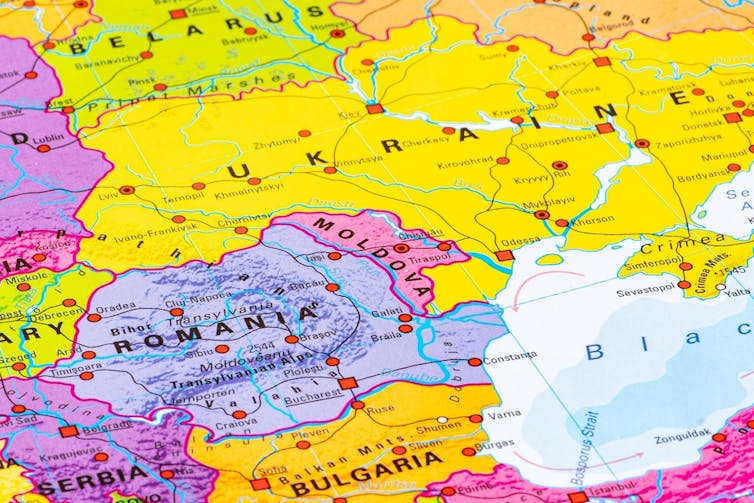
Parliamentary elections will be held in Moldova on September 28. While this may seem like a minor event for the rest of Europe, implications for the rest of the continent’s security and stability could be profound.

Moldova plays a vital role in supporting Ukraine. Even though it is among Europe’s poorest countries, it absorbed over 1.5 million Ukrainian refugees at one point during the war and is now home to more than 100,000.

It also helps to ship grain to and from Ukraine through its Danube ports, offering an alternative route and alleviating pressure on Ukraine’s Black Sea routes which are often cut off by Russian blockades.

Should Moldova pivot towards Moscow, Ukraine’s support structure will be weakened, undermining the EU’s eastern resilience. This would increase the risk of military attacks around the EU’s borders, with Romania looking particularly threatened, but increased attacks on Poland and the Baltic states not out of the question.

European leaders signalled awareness of just what could be at risk, with the French president, Emmanuel Macron, along with the chancellor of Germany, Friedrich Merz, and the Polish prime minister, Donald Tusk, travelling to Moldova to talk about unity and commitment to the country at the end of August.

Russia’s president, Vladimir Putin, has previously suggested he planned to occupy the whole of Ukraine, bringing his forces even closer to the rest of Europe. Footage released by Russia’s defence ministry on August 30 suggests a plan to seize Odesa and Kharkiv oblasts, areas along the Black Sea. Meanwhile, a pro-Russian Moldovan government could offer an eastern base for attacks – or even to open a new front. Another factor is that Russia already has around 1,500 troops stationed in Transnistria, a pro-Russian breakaway region of Moldova on the Ukraine border, which demanded independence in 2006, after a ballot that was not recognised by Moldova or the international community.


Read more:
Russia has provided fresh evidence of its territorial ambitions in Ukraine


This raises the stakes for the majority of nearby states, many of which are Nato members. Nato members have collective defence commitments under Nato’s article 5, which means they should come to the aid of a fellow Nato member if it were to be attacked.

Moldova’s current state

Moldova’s pro-EU president Maia Sandu currently holds 63 seats in the 101-seat parliament as part of the Party of Action and Solidarity (PAS). Since the party came to office in 2021 it has moved closer to the EU, applying for membership in 2021 after the full-scale invasion of Ukraine. Moldova was awarded candidacy status in June 2022.

A map of Moldova.

Shutterstock

In June 2024, accession negotiations were formally opened and, in July 2025, the first EU-Moldova summit was held. The population still broadly supports EU membership, but PAS is projected to vote share, although it is still leading in the polls. This dip in support from an initial 52.8% in the previous parliamentary elections in July 2021 to 25.8% in August 2025 stems from domestic dissatisfaction with [the party] and lack of progress on its policy platform.

In its election campaign PAS promised to fight corruption, make the public sector more efficient, and improve the economy, but they have not made significant progress on any of these plans.


Read more:
Why experts expect Russian interference in upcoming election on Ukraine’s borders


PAS has presented its progress on EU accession as a key achievement. But without seeing concrete benefits, the electorate has become increasingly alienated from the process.

The PAS government has been in crisis mode for much of its time in power, dealing with a variety of threats created by Russia such as an ongoing energy crisis, raising gas prices and eventually cutting off supplies and a significant loss of exports to Russia and Ukraine has also contributed to a stagnant economy.

So what’s likely to happen?

The most likely election result is that PAS will be forced into a coalition with one or more of the pro-Russian opposition parties, groups that advocate distancing Moldova from Europe. PAS has dominated the pro-EU political space, but the recently established pro-European Alternative Bloc (8.1%) is projected to gain enough votes to overcome the 5% threshold to enter parliament.

While PAS might still gain the most votes, the Patriotic Bloc of Communists, a pro-Russia group led by former president Igor Dodon, is currently expected to be the second-biggest political grouping. This brings together a number of parties including the Party of Socialists, Party of Communists, the Heart of Moldova and Future of Moldova parties. Dodon is currently facing charges of using corrupt practices to control decision making during his presidential term, and allowing state resources to be embezzled on a large scale. The US Treasury also claimed that he was involved in systemic corruption in conjunction with Russia. Court proceedings are ongoing. Dodon denies all charges, and has complained to the European Court of Human Rights that he is facing an unfair trial.

Advancing Russian influence?

Moldova has become a testing ground for Russian cyberattacks and large-scale disinformation campaigns.

It has been a target of Russian political interference. This was evident in the presidential elections and EU referendum in 2024, where attempts at manipulation and foreign influence were widely documented.


Read more:
Maia Sandu’s victory in second round of Moldovan election show’s limits to Moscow’s meddling


Similar, if not more, interference from Russia is expected in the upcoming election by the current Moldovan government and the EU.

These 2025 elections come at a decisive moment, not only for Moldova’s future but for the rest of Europe. Other countries need to pay attention to what is happening, and any interference in how the election is carried out.

The Conversation

Amy Eaglestone does not work for, consult, own shares in or receive funding from any company or organisation that would benefit from this article, and has disclosed no relevant affiliations beyond their academic appointment.

ref. Why Moldova’s election is important for the whole of Europe – https://theconversation.com/why-moldovas-election-is-important-for-the-whole-of-europe-264078

Introducing War on Climate, a new series that explores how conflict interacts with environmental issues around the globe

Source: The Conversation – UK – By Sam Phelps, Commissioning Editor, International Affairs, The Conversation

Wars are incredibly environmentally destructive. Gorodenkoff / Shutterstock

The world is the most violent it has been in decades. A report by the Peace Research Institute Oslo recorded 61 conflicts across 36 countries last year – the highest level since 1946. Given the number of conflicts currently active worldwide, this figure could well be taken to new heights again this year.

Wars carry an obvious human cost. Almost 65,000 Palestinians have been killed in Gaza since Israel began its assault on the territory in October 2023, while the lives of up to 250,000 Russian troops are thought to have been lost in Ukraine.

We’re all familiar with these figures. This is because they’re the ones that tend to dominate news headlines. But wars are also incredibly environmentally destructive – and the damage often goes unnoticed until it’s too late to remedy.


This roundup of The Conversation’s climate coverage comes from our award-winning weekly climate action newsletter. Every Wednesday, The Conversation’s environment editor writes Imagine, a short email that goes a little deeper into just one climate issue. Join the 45,000+ readers who’ve subscribed.


There are three reasons why the climate crisis must reshape how we think about war, says Duncan Depledge of Loughborough University. His first point is that war degrades the environment. The fighting itself causes considerable damage to land, while hostilities can fragment international cooperation on climate change.

The emissions associated with military operations worldwide – such as those generated by military aircraft – also probably rival some of the highest-polluting countries.

Depledge, a senior lecturer in geopolitics and security, acknowledges that it’s not easy to calculate the footprint of military activities. China and Russia’s military emissions, for instance, have proved almost impossible to assess due to the lack of data they report.

“But the crucial point is that recognition of the climate costs of war increasingly raises moral and practical questions about the need for more strategic restraint and whether the business of war can ever be rendered less environmentally destructive.”

His second point is that the effects of climate change may well intensify the risk of violence in certain parts of the world. “Some conflicts in the Middle East and Sahel have already been labelled ‘climate wars’, implying they may not have happened if it were not for the stresses of climate change.”

And third, he suggests that military forces could soon be rendered less effective due to more extreme and unpredictable climate conditions. Depledge says that these factors are together leaving researchers “with the uncomfortable prospect of having to rethink how military force can – and ought to be – wielded” in a changing world.


Read more:
Three reasons why the climate crisis must reshape how we think about war


Has climate change always led to violence? This was the question I put to Jay Silverstein, an expert on the archaeology of warfare at Nottingham Trent University. “There is a wide consensus that climatic stress contributes to regional escalations of violence when it has an impact on food production”, he told me in response. “Yet historical evidence reveals a more complex reality.”

Silverstein explains that looming crises have often spurred human ingenuity. This has enabled some civilisations to survive and others to thrive. “Water-lifting technologies – from the Egyptian shaduf to Chinese water wheels and Persian windmills – expanded arable land and intensified production”, he notes as an example.

However, climate stress has also triggered violence that has helped wipe entire civilisations from the map. “As humanity confronts an escalating environmental crisis driven by global warming, the reflexive response to climate stress – political instability and conflict – should be challenged by a renewed commitment to adaptation, cooperation and innovation.”


Read more:
Environmental pressures need not always spark conflict – lessons from history show how crisis can be avoided


Mayan ruins.
Environmental change contributed to the collapse of the Mayan civilisation in Mesoamerica.
milosk50 / Shutterstock

War’s lasting legacy

While travelling down the coast of Vietnam a few years ago, I stopped off in the small rural province of Quảng Trị. The area was a major battleground during the Vietnam war and was pretty much bombed flat by American forces. The province remains littered with unexploded ordnance today.

Unexploded bombs continue to kill and injure people throughout Vietnam, as well as in many other places around the world. They also cause considerable damage to the environment. Sarah Njeri and Christina Greene of SOAS, University of London and the University of Arizona respectively explain that this manifests in different ways.

Unexploded bombs and landmines “can leak heavy metals and toxic waste into the soil, polluting land and water”. And even the methods for clearing unexploded ordnance can contribute to land degradation, they say, drawing on evidence of the release of hazardous metals into the soil in northeastern Iraq following demining activities.

Climate change is making matters worse. Floods and heavy rainfall can unearth or displace landmines, while extreme heat can cause abandoned or unexploded munitions to explode.

Evidence of this came just weeks ago. Wildfires on the North Yorkshire moors in the UK – where we’ve just endured our hottest summer on record – caused 18 bombs to explode that had been lodged in the soil since the second world war.

“Explosive remnants of war have a lasting impact”, say Njeri and Greene. “Climate change is only making the threat more unpredictable and challenging to address.”


Read more:
How unexploded bombs cause environmental damage – and why climate change exacerbates the problem


Another lasting effect of war is that it displaces people from their homes. These people, writes Kerrie Holloway of the ODI Global thinktank, are particularly vulnerable to the effects of climate change.

According to Holloway, a research fellow in the Humanitarian Policy Group, displaced people “are likely to have used up whatever money and other assets they had prior to their displacement, leaving them unable to make the same adaptations as those who have not been displaced.”

They also often find themselves settling on land that is only available because existing residents do not want it. Holloway points to the Iraqi city of Mosul – where Yusuf, a refugee I got to know some years ago, was forced to flee from – as an example.

“Stagnated reconstruction following the liberation of the city from the Islamic State militant group in 2017 has resulted in a scarcity of adequate housing. This has left many displaced people residing in unfinished or makeshift shelters on unpaved roads that are prone to flooding during heavy rains.”

And finally, displaced people are often overlooked in disaster management plans. This, Holloway writes, “can result in them not heeding early warnings when they are given”.


Read more:
Why people displaced by conflict are particularly vulnerable to climate risks


The Conversation

ref. Introducing War on Climate, a new series that explores how conflict interacts with environmental issues around the globe – https://theconversation.com/introducing-war-on-climate-a-new-series-that-explores-how-conflict-interacts-with-environmental-issues-around-the-globe-264815

Charlie Kirk’s assassination is the latest act of political violence in a febrile United States

Source: The Conversation – Global Perspectives – By Jared Mondschein, Director of Research, US Studies Centre, University of Sydney

In yet another shocking act of political violence in the United States, Charlie Kirk, who came to prominence as a conservative influencer and supporter of Donald Trump, was assassinated while debating with students at a university in Utah.

The 31-year-old, who came to fame by doing just that – debating whoever wanted to engage with him – was undeniably the most influential figure in young conversative politics.

News of his killing sent social media into an all-too familiar frenzy, with opposing political camps blaming each other for the increasingly febrile environment in contemporary America. It has also raised fears it may provoke even more violence.

Who was Charlie Kirk?

The meagre tent in which Kirk would set up shop on university campuses around America to engage in debate with university students should not be mistaken for meagre support.

Kirk’s political organisation, Turning Point USA (TPUSA), had a revenue of US$78,000 (A$118,000) when he founded it in 2012. As of last year, its annual revenue had grown to US$85 million (A$129 million).

His podcast, The Charlie Kirk Show, boasted between 500,000 and 750,000 downloads for each episode, ranking it as one of the top 25 most listened to podcasts in the world. Even Kirk’s 7 million X account followers is greater than MSNBC’s 5 million.

Outside the online world, TPUSA today has a presence in more than 3,500 high school and college campuses, with more than 250,000 student members, and more than 450 full- and part-time staff. But perhaps the most important metric is the fact that a TikTok survey of users under 30 found that, among those who voted for Trump, they trusted Kirk more than any other individual.

As much as Kirk’s many detractors abhorred his views and his conduct – particularly his views of Black people, Jews, trans people and immigrants, as well as his efforts to denounce professors engaging in “leftist propaganda” – there was no denying he was willing to debate practically anyone.

Whether it was in storied lecture halls at Oxford University or a progressive university campus in the US, Kirk engaged in political debate with anyone willing to come to the open microphone at his events, encouraging students to “prove me wrong”. The dissemination of clips of these interactions – typically an unwitting progressive student asking Kirk a question only to have Kirk counter-argue – garnered hundreds of millions of views across a variety of social media channels.

Support for Trump

Kirk first came to prominence championing more conventional Republican politicians, including Texas Senator Ted Cruz and former Wisconsin governor Scott Walker. But he eventually came around to supporting Trump in 2016, and never looked back.

Indeed, when many – particularly within the Republican party – sought to distance themselves from Trump after incidents such as the infamous Access Hollywood tape in 2016 or the violence at the US Capitol on January 6 2021, Kirk stayed the course.

The combination of his unceasing loyalty to Trump and his increasing popularity among young voters saw him increase his power within conservative circles. This power saw his organisation contribute millions of dollars to various Trump-aligned campaigns. TPUSA also bolstered support for embattled cabinet nominee, and now defence secretary, Pete Hegseth, and initiate efforts to oust former chair Ronna McDaniel from the Republican National Committee.

But perhaps Kirk’s most notable political win was harnessing a record number of young people to vote for Trump in 2024, despite the fact he was the oldest ever person to lead the Republican presidential ticket.

US political violence

Some may look at yet another instance of deadly US political violence and wonder whether it would have any sort of lasting impact. After all, the creation of the US followed an act of political violence known to Americans as the Revolutionary War. And this founding preceded more political violence, including the Civil War, Reconstruction and Civil Rights movement, among others.

Yet, as much as the entirety of US history is filled with such incidents, there is no denying that for the past generation in particular, it has also grown worse.

Numerous studies have found that the number of attacks and plots against elected officials, political candidates, political party officials, and political workers is exponentially higher now than in recent history. In examining 30 years of data, the Center for Strategic and International Studies (CSIS) found the number of attacks and plots in the past five years is nearly triple that of the preceding 25 years combined.

But beyond the numbers, US politicians themselves increasingly cite the spectre of violence as a reason why they have either retired from politics or – perhaps more worryingly – changed their votes.

Ultimately, there’s little question as to whether the US will continue to suffer from political violence. The greater question is to what extent and at what cost.

Kirk’s death will affect far more than just his friends and his family – including his widow and two young children. Today marked the loss of a unique leader in the US conservative movement.

The Conversation

Jared Mondschein does not work for, consult, own shares in or receive funding from any company or organisation that would benefit from this article, and has disclosed no relevant affiliations beyond their academic appointment.

ref. Charlie Kirk’s assassination is the latest act of political violence in a febrile United States – https://theconversation.com/charlie-kirks-assassination-is-the-latest-act-of-political-violence-in-a-febrile-united-states-265063

Can Israel use self-defence to justify its strike on Qatar under the law?

Source: The Conversation – Global Perspectives – By Shannon Bosch, Associate Professor (Law), Edith Cowan University

Israel launched a targeted airstrike on the Hamas leadership in Doha, the capital of Qatar, on Tuesday. Six people were reported killed, including the son of a senior Hamas figure.

Global condemnation was swift. The Qatari government called the strike a “clear breach of the rules and principles of international law”, a sentiment echoed by Turkish President Recep Tayyip Erdogan, Malaysian Prime Minister Anwar Ibrahim, and others.

UN Secretary-General António Guterres called the attack “a flagrant violation of sovereignty and the territorial integrity of Qatar”. The prime ministers of both the UK and Australia also said the strike violated the sovereignty of Qatar.

Even US President Donald Trump, Israel’s strongest ally, distanced himself from the attack:

Unilaterally bombing inside Qatar, a Sovereign Nation and close Ally of the United States, that is working very hard and bravely taking risks with us to broker Peace, does not advance Israel or America’s goals.

So, what does the law say about this? Was Israel’s attack against Hamas on the territory of another country lawful?

Israel’s justification

Israeli Prime Minister Benjamin Netanyahu justified the strike by saying it targeted the political leadership of Hamas in retaliation for two attacks: a shooting in Jerusalem that killed six people and an attack on an army camp in Gaza that killed four soldiers. He said:

Hamas proudly took credit for both of these actions. […] These are the same terrorist chiefs who planned, launched and celebrated the horrific massacres of October 7th.

Netanyahu speaks after the Qatar strike.

What does international law say?

Article 2(4) of the UN Charter prohibits the use of force against the “territorial integrity or political independence” of another state.

Any use of force requires either the authorisation of the UN Security Council, or a justification that force is being used strictly in self-defence and in accordance with Article 51 of the UN Charter.

So, does this mean Israel could claim self-defence against Hamas’ leadership in Qatar, if the group did indeed direct the two attacks against its citizens in Jerusalem and Gaza?

The answer is complicated.

Self-defence against groups like Hamas

The International Court of Justice (ICJ) has repeatedly stressed the paramount importance of territorial sovereignty in international law.

As such, it has restricted the use of self-defence to armed attacks that can be attributable to a state, not merely to non-state actors operating from a state’s territory.

After the September 11 2001 terror attacks, the United States and other countries claimed they could use force in self-defence against non-state actors (such as terrorist groups) that are sheltering and operating from another state’s territory, even if that state was not directly involved.

In response to these developments, Sir Daniel Bethlehem, an expert in international law and foreign policy advisor to the UK government, proposed several principles aimed at curtailing this justification within the intent of Article 51.

The “Bethlehem principles”, which remain contested, argue that Article 51 can cover actual or imminent attacks by terrorist groups, but only if necessity (the use of force in self-defence is truly a last resort) and proportionality are satisfied.

Moreover, as a rule, force on another state’s soil requires the consent of that state. The only narrow exceptions are when there’s a reasonable, objective belief the host state is colluding with the group or is unable or unwilling to stop it – and no other reasonable option short of force exists.

Israel argues Hamas’ leadership based abroad in countries such as Qatar, Lebanon and Iran remains part of the command structure that orchestrates hostilities against its soldiers in Gaza and citizens in Israel.

That alone, however, is not enough to justify self-defence according to the Bethlehem principles.

By Netanyahu’s own admission, the objective of the Qatar strike was retaliatory, not to prevent an ongoing or imminent attack.

Questions could also be raised about whether proportionality was observed given the diplomatic context of striking a sovereign state and the potential for disproportionate civilian harm in this part of Doha, which houses many diplomatic residences.

Targeting political leaders meeting in a third state — especially one engaged in mediation — also raises questions about whether force was the only means available to address the threat posed by Hamas in this situation.

Moreover, under these principles, Israel would need to demonstrate that Qatar is either colluding with or is unable or unwilling to stop Hamas – and that there was no other effective or reasonable way to respond to the situation.

Qatar has hosted Hamas’ political offices since 2012 and has been one of the group’s main financial backers since it came to power in Gaza.

At the same time, Qatar has played an important mediation role since the October 7 attacks.

This makes it difficult to argue Qatar is unwilling or unable to neutralise Hamas’ operations from its territory. Its mediation would also suggest there is a reasonably effective alternative to force to counter Hamas’ actions.

Final verdict

Without UN Security Council authorisation, Israel’s strikes on Qatar do appear to be a violation of territorial sovereignty and possibly an act of aggression under the UN Charter.

This is further bolstered by the narrow approach the ICJ has taken on self-defence against non-state actors in third-party states, and its stringent requirements of proportionality and necessity – neither of which appear to have been met here.

The Conversation

Shannon Bosch does not work for, consult, own shares in or receive funding from any company or organisation that would benefit from this article, and has disclosed no relevant affiliations beyond their academic appointment.

ref. Can Israel use self-defence to justify its strike on Qatar under the law? – https://theconversation.com/can-israel-use-self-defence-to-justify-its-strike-on-qatar-under-the-law-264975

10 years ago, gravitational waves changed astronomy. A new discovery shows there’s more to come

Source: The Conversation – Global Perspectives – By Simon Stevenson, ARC DECRA Fellow, Swinburne University of Technology

Carl Knox, OzGrav, Swinburne University of Technology

Ten years ago, scientists heard the universe rumble for the first time. That first discovery of gravitational waves proved a key prediction from Albert Einstein’s theory of general relativity and began a new era of astronomy.

Now, a new gravitational-wave discovery marks the anniversary of this major breakthrough. Published today in Physical Review Letters, it puts to the test a theory from another giant of science, Stephen Hawking.

What are gravitational waves?

Gravitational waves are “ripples” in the fabric of space-time that travel at the speed of light. They are caused by highly accelerated massive objects, such as colliding black holes or the mergers of massive star remains known as neutron stars.

These ripples propagating through the universe were first directly observed on September 14 2015 by the twin Laser Interferometer Gravitational-wave Observatory (LIGO) detectors in the United States.


Read more:
Gravitational waves discovered: how did the experiment at LIGO actually work?


That first signal, called GW150914, originated from the collision of two black holes, each more than 30 times the mass of the Sun and more than a billion light years away from Earth.

This was the first direct proof of gravitational waves, exactly as predicted by Einstein’s theory of relativity 100 years earlier. The discovery led to the award of the 2017 Nobel Prize in Physics to Rainer Weiss, Barry Barish and Kip Thorne for their pioneering work on the LIGO collaboration.

This simulation shows the gravitational waves produced by two orbiting black holes.

Hundreds of signals in less than a decade

Since 2015, more than 300 gravitational waves have been observed by LIGO, along with the Italian Virgo and Japanese KAGRA detectors.

Just a few weeks ago, the international LIGO/Virgo/KAGRA collaboration released the latest results from their fourth observing run, more than doubling the number of known gravitational waves.

Now, ten years after the first discovery, an international collaboration including Australian scientists from the Australian Research Council’s Centre of Excellence for Gravitational Wave Discovery (OzGrav), has announced a new gravitational-wave signal, GW250114.

The signal is almost a carbon copy of that very first gravitational wave signal, GW150914.

The observed gravitational wave GW250114 (LVK 2025). The observed data is shown in light grey. The smooth blue curve represents the best fit theoretical waveform models, showing excellent agreement with the observed signal.
LIGO, Virgo and KAGRA collaboration

The black hole collision responsible for GW250114 had very similar physical properties to GW150914. However, due to significant upgrades to the gravitational wave detectors over the past ten years, the new signal is seen much more clearly (almost four times as “loud” as GW150914).

Excitingly, it’s allowed us to put to the test the ideas of another groundbreaking physicist.

Hawking was right, too

More than 50 years ago, physicists Stephen Hawking and Jacob Bekenstein independently formulated a set of laws that describe black holes.

Hawking’s second law of black hole mechanics, also known as Hawking’s area theorem, states that the area of the event horizon of a black hole must always increase. In other words, black holes can’t shrink.

Meanwhile, Bekenstein showed that the area of a black hole is directly related to its entropy, a scientific measure of disorder. The second law of thermodynamics tells us that entropy must always increase: the universe is always getting messier. Since the entropy of a black hole must also increase with time, it tells us that its area must also increase.

How can we test these ideas? Colliding black holes, it turns out, are the perfect tool.

The precision of this recent measurement allowed scientists to perform the most precise test of Hawking’s area theorem to date.

Previous tests using the first detection, GW150914, showed that signal was in good agreement with Hawking’s law, but could not confirm it conclusively.

Black holes are surprisingly simple objects. The horizon area of a black hole depends on its mass and spin, the only parameters necessary to describe an astrophysical black hole. In turn, the masses and spins determine what the gravitational wave looks like.

By separately measuring the masses and spins of the incoming pair of black holes, and comparing these to the mass and spin of the final black hole left over after the collision, scientists were able to compare the areas of the two individual colliding black holes to the area of the final black hole.

The data show excellent agreement with the theoretical prediction that the area should increase, confirming Hawking’s law without a doubt.

Which giant of science will we put to the test next? Future gravitational wave observations will allow us to test more exotic scientific theories, and maybe even probe the nature of the missing components of the universe – dark matter and dark energy.

The Conversation

Simon Stevenson receives funding from the Australian Research Council. He works for Swinburne University of Technology. He is a member of OzGrav and the LIGO Scientific collaboration.

ref. 10 years ago, gravitational waves changed astronomy. A new discovery shows there’s more to come – https://theconversation.com/10-years-ago-gravitational-waves-changed-astronomy-a-new-discovery-shows-theres-more-to-come-264131

Blue, green, brown, or something in between – the science of eye colour explained

Source: The Conversation – Global Perspectives – By Davinia Beaver, Postdoctoral research fellow, Clem Jones Centre for Regenerative Medicine, Bond University

Pouya Hajiebrahimi/Unsplash

You’re introduced to someone and your attention catches on their eyes. They might be a rich, earthy brown, a pale blue, or the rare green that shifts with every flicker of light. Eyes have a way of holding us, of sparking recognition or curiosity before a single word is spoken. They are often the first thing we notice about someone, and sometimes the feature we remember most.

Across the world, human eyes span a wide palette. Brown is by far the most common shade, especially in Africa and Asia, while blue is most often seen in northern and eastern Europe. Green is the rarest of all, found in only about 2% of the global population. Hazel eyes add even more diversity, often appearing to shift between green and brown depending on the light.

So, what lies behind these differences?

It’s all in the melanin

The answer rests in the iris, the coloured ring of tissue that surrounds the pupil. Here, a pigment called melanin does most of the work.

Brown eyes contain a high concentration of melanin, which absorbs light and creates their darker appearance. Blue eyes contain very little melanin. Their colour doesn’t come from pigment at all but from the scattering of light within the iris, a physical effect known as the Tyndall effect, a bit like the effect that makes the sky look blue.

In blue eyes, the shorter wavelengths of light (such as blue) are scattered more effectively than longer wavelengths like red or yellow. Due to the low concentration of melanin, less light is absorbed, allowing the scattered blue light to dominate what we perceive. This blue hue results not from pigment but from the way light interacts with the eye’s structure.

Green eyes result from a balance, a moderate amount of melanin layered with light scattering. Hazel eyes are more complex still. Uneven melanin distribution in the iris creates a mosaic of colour that can shift depending on the surrounding ambient light.

What have genes got to do with it?

The genetics of eye colour is just as fascinating.

For a long time, scientists believed a simple “brown beats blue” model, controlled by a single gene. Research now shows the reality is much more complex. Many genes contribute to determining eye colour. This explains why children in the same family can have dramatically different eye colours, and why two blue-eyed parents can sometimes have a child with green or even light brown eyes.

Eye colour also changes over time. Many babies of European ancestry are born with blue or grey eyes because their melanin levels are still low. As pigment gradually builds up over the first few years of life, those blue eyes may shift to green or brown.

In adulthood, eye colour tends to be more stable, though small changes in appearance are common depending on lighting, clothing, or pupil size. For example, blue-grey eyes can appear very blue, very grey or even a little green depending on ambient light. More permanent shifts are rarer but can occur as people age, or in response to certain medical conditions that affect melanin in the iris.

The real curiosities

Then there are the real curiosities.

Heterochromia, where one eye is a different colour from the other, or one iris contains two distinct colours, is rare but striking. It can be genetic, the result of injury, or linked to specific health conditions. Celebrities such as Kate Bosworth and Mila Kunis are well-known examples. Musician David Bowie’s eyes appeared as different colours because of a permanently dilated pupil after an accident, giving the illusion of heterochromia.

A collage of three people, each with different coloured eyes.
Celebrities such as David Bowie, Mila Kunis and Kate Bosworth (L to R) are well-known examples of people whose eyes are different colours.
Wikimedia Commons/The Conversation

In the end, eye colour is more than just a quirk of genetics and physics. It’s a reminder of how biology and beauty intertwine. Each iris is like a tiny universe, rings of pigment, flecks of gold, or pools of deep brown that catch the light differently every time you look.

Eyes don’t just let us see the world, they also connect us to one another. Whether blue, green, brown, or something in-between, every pair tells a story that’s utterly unique, one of heritage, individuality, and the quiet wonder of being human.

The Conversation

Davinia Beaver does not work for, consult, own shares in or receive funding from any company or organisation that would benefit from this article, and has disclosed no relevant affiliations beyond their academic appointment.

ref. Blue, green, brown, or something in between – the science of eye colour explained – https://theconversation.com/blue-green-brown-or-something-in-between-the-science-of-eye-colour-explained-264681