Mars rovers serve as scientists’ eyes and ears from millions of miles away – here are the tools Perseverance used to spot a potential sign of ancient life

Source: The Conversation – USA – By Ari Koeppel, Earth Sciences Postdoctoral Scientist and Adjunct Associate, Dartmouth College

Scientists absorb data on monitors in mission control for NASA’s Perseverance Mars rover. NASA/Bill Ingalls, CC BY-NC-ND

NASA’s search for evidence of past life on Mars just produced an exciting update. On Sept. 10, 2025, a team of scientists published a paper detailing the Perseverance rover’s investigation of a distinctive rock outcrop called Bright Angel on the edge of Mars’ Jezero Crater. This outcrop is notable for its light-toned rocks with striking mineral nodules and multicolored, leopard print-like splotches.

By combining data from five scientific instruments, the team determined that these nodules formed through processes that could have involved microorganisms. While this finding is not direct evidence of life, it’s a compelling discovery that planetary scientists hope to look into more closely.

A streaked and spotted rock surface
Bright Angel rock surface at the Beaver Falls site on Mars shows nodules on the right and a leopard-like pattern at the center.
NASA/JPL-Caltech/MSSS

To appreciate how discoveries like this one come about, it’s helpful to understand how scientists engage with rover data — that is, how planetary scientists like me use robots like Perseverance on Mars as extensions of our own senses.

Experiencing Mars through data

When you strap on a virtual reality headset, you suddenly lose your orientation to the immediate surroundings, and your awareness is transported by light and sound to a fabricated environment. For Mars scientists working on rover mission teams, something very similar occurs when rovers send back their daily downlinks of data.

Several developers, including MarsVR, Planetary Visor and Access Mars, have actually worked to build virtual Mars environments for viewing with a virtual reality headset. However, much of Mars scientists’ daily work instead involves analyzing numerical data visualized in graphs and plots. These datasets, produced by state-of-the-art sensors on Mars rovers, extend far beyond human vision and hearing.

A virtual Mars environment developed by Planetary Visor incorporates both 3D landscape data and rover instrument data as pop-up plots. Scientists typically access data without entering a virtual reality space. However, tools like this give the public a sense for how mission scientists experience their work.

Developing an intuition for interpreting these complex datasets takes years, if not entire careers. It is through this “mind-data connection” that scientists build mental models of Martian landscapes – models they then communicate to the world through scientific publications.

The robots’ tool kit: Sensors and instruments

Five primary instruments on Perseverance, aided by machine learning algorithms, helped describe the unusual rock formations at a site called Beaver Falls and the past they record.

Robotic hands: Mounted on the rover’s robotic arm are tools for blowing dust aside and abrading rock surfaces. These ensure the rover analyzes clean samples.

Cameras: Perseverance hosts 19 cameras for navigation, self-inspection and science. Five science-focused cameras played a key role in this study. These cameras captured details unseeable by human eyes, including magnified mineral textures and light in infrared wavelengths. Their images revealed that Bright Angel is a mudstone, a type of sedimentary rock formed from fine sediments deposited in water.

Spectrometers: Instruments such as SuperCam and SHERLOC – scanning habitable environments with Raman and luminescence for organics and chemicals – analyze how rocks reflect or emit light across a range of wavelengths. Think of this as taking hundreds of flash photographs of the same tiny spot, all in different “colors.” These datasets, called spectra, revealed signs of water integrated into mineral structures in the rock and traces of organic molecules: the basic building blocks of life.

Subsurface radar: RIMFAX, the radar imager for Mars subsurface experiment, uses radio waves to peer beneath Mars’ surface and map rock layers. At Beaver Falls, this showed the rocks were layered over other ancient terrains, likely due to the activity of a flowing river. Areas with persistently present water are better habitats for microbes than dry or intermittently wet locations.

X-ray chemistry: PIXL, the planetary instrument for X-ray lithochemistry, bombards rock surfaces with X-rays and observes how the rock glows or reflects them. This technique can tell researchers which elements and minerals the rock contains at a fine scale. PIXL revealed that the leopard-like spots found at Beaver Falls differed chemically from the surrounding rock. The spots resembled patterns on Earth formed by chemical reactions that are mediated by microbes underwater.

A diagram of the Perseverance rover with lines pointing to its instruments
Key Perseverance Mars Rover instruments used in this analysis.
NASA

Together, these instruments produce a multifaceted picture of the Martian environment. Some datasets require significant processing, and refined machine learning algorithms help the mission teams turn that information into a more intuitive description of the Jezero Crater’s setting, past and present.

The challenge of uncertainty

Despite Perseverance’s remarkable tools and processing software, uncertainty remains in the results. Science, especially when conducted remotely on another planet, is rarely black and white. In this case, the chemical signatures and mineral formations at Beaver Falls are suggestive – but not conclusive – of past life on Mars.

There actually are tools, such as mass spectrometers, that can show definitively whether a rock sample contains evidence of biological activity. However, these instruments are currently too fragile, heavy and power-intensive for Mars missions.

Fortunately, Perseverance has collected and sealed rock core samples from Beaver Falls and other promising sites in Jezero Crater with the goal of sending them back to Earth. If the current Mars sample return plan can retrieve these samples, laboratories on Earth can scrutinize them far more thoroughly than the rover was able to.

The Perseverance rover on the dusty, rocky Martian surface
Perseverance selfie at Cheyava Falls sampling site in the Beaver Falls location.
NASA/JPL-Caltech/MSSS

Investing in our robotic senses

This discovery is a testament to decades of NASA’s sustained investment in Mars exploration and the work of engineering teams that developed these instruments. Yet these investments face an uncertain future.

The White House’s budget office recently proposed cutting 47% of NASA’s science funding. Such reductions could curtail ongoing missions, including Perseverance’s continued operations, which are targeted for a 23% cut, and jeopardize future plans such as the Mars sample return campaign, among many other missions.

Perseverance represents more than a machine. It is a proxy extending humanity’s senses across millions of miles to an alien world. These robotic explorers and the NASA science programs behind them are a key part of the United States’ collective quest to answer profound questions about the universe and life beyond Earth.

The Conversation

Ari Koeppel previously received funding from NASA science grants. He is affiliated with The Planetary Society. Any views represented in this article are those of the author. The budget cuts do not directly affect the author’s work and he is not currently formally connected to the rover campaign.

ref. Mars rovers serve as scientists’ eyes and ears from millions of miles away – here are the tools Perseverance used to spot a potential sign of ancient life – https://theconversation.com/mars-rovers-serve-as-scientists-eyes-and-ears-from-millions-of-miles-away-here-are-the-tools-perseverance-used-to-spot-a-potential-sign-of-ancient-life-265144


How a fly sees the world – and why understanding its vision can help prevent disease

Source: The Conversation – UK – By Roger Santer, Lecturer in Zoology, Aberystwyth University

What do you look like to a house fly? Lee Hua Ming/Shutterstock

Jakob von Uexküll was a Baltic German biologist ahead of his time, intrigued by the idea that animals inhabit unique perceptual worlds quite unlike our own. In 1934, he described angling for flies by swinging an adhesive-covered pea on a thread, finding that male flies would dive on the pea and be caught. Within the perceptual world of a fly, the swinging pea was a potential mate.

We can’t be exactly sure what a fly’s perceptual world looks like, but we know it must be very different to our own. And learning about it can do much more than satisfy our curiosity. It could help keep people safe from disease.

While a human eye has only one lens, the main eyes of flies are compound eyes that each consist of hundreds or thousands of individual lenses. A fruit fly eye has about 700, and a blowfly eye 5,000. Each of these lenses is part of a sampling unit called an ommatidium, which also contains eight light-sensitive photoreceptor cells.

The structure of the compound eye affects a fly’s ability to make out shapes and patterns. In houseflies, light from a given point in its field of view activates seven photoreceptors in seven separate ommatidia through their respective lenses. Combined, that information is a bit like an image pixel.

Information about shape and pattern is generated when the visual system compares neighbouring “pixels”. The arrangement of lenses in the compound eye limits the minimum size of a “pixel” and thus a fly’s ability to make out spatial details.

As a result, a fly can only resolve relatively coarse spatial detail. If a housefly and a human with 20/20 vision were taking an eyesight test, the fly would need to be about 6cm from the chart to make out the detail that the human could at six metres. For the fly to achieve human-like spatial resolution, it would need larger lenses and a flatter eye, resulting in a compound eye about one metre in diameter.

This lack of spatial acuity is compensated for with speed. Some fly species’ photoreceptors respond much faster than human photoreceptors. This is true of day-active flies which have faster-responding photoreceptors than their more ponderous, nocturnal kin. For us, a flashing light blurs into a constant one at 50-90 flashes per second, but a blowfly’s photoreceptors can distinguish more than 200 separate flashes per second. Thus, we perceive motion in the fast sequence of static images comprising a cartoon, but a fly might not be fooled.

Green bottle fly on leaf.
Blowfly photoreceptors are much faster than human ones.
PARMAM-BHUN2556/Shutterstock

Given this, it’s no wonder that swatting an irritating fly can be a challenge.
When a scientist from Florida tried to photograph resting long-legged flies, he found that the flies were generally in flight, potentially startled by the flash, before the image was even captured.

Saying this, some fly eyes are specially adapted for both spatial and temporal detail. Male flies of many species have eyes that meet at the top and front of the head, whilst those of females have an obvious gap. The extra region of the male eye is the “love spot”, with larger lenses and faster-responding photoreceptors that give improved sensitivity to small and fast-moving objects needed for tracking females during high-speed airborne courtship chases.

Killer fly relatives of the humble housefly are also adapted for great visual prowess, here needed to catch small insect prey like fruit flies mid-flight.

Most people don’t consider perception as they try to shoo an annoying fly out of an open window, or whack it with a newspaper. However, understanding insect perception can inspire new ways of controlling pests, as von Uexküll’s fly “fishing rod” demonstrated. This is important because lots of flies transmit disease, so we need to control flies to prevent sickness in humans and animals.

Perception of colour is important in this context. The human retina has three kinds of cone photoreceptors sensitive to blue, green and red light, and our brains compare those three signals to create colour perceptions. By contrast, a typical housefly ommatidium has five types of photoreceptors including a couple sensitive to UV, but none that are particularly sensitive to red light.

As a result, colour perceptions must be quite different for flies and humans, and experiments with blowflies suggest they perceive just four distinct colours, some with no human equivalent. Whether this is true of other flies remains to be seen.

In Africa, tsetse flies spread sleeping sickness, which has profound effects on the central nervous system that upset the sleep/wake cycle, cause confusion and sensory disturbances, and ultimately lead to death without treatment.

Coloured fabric targets doused with insecticide are often used to control tsetse flies and protect humans and animals, and normally these targets are blue. However, we modelled fly colour perception to develop a better colour for luring flies, which turned out to be purple to a human eye. We recently found that this colour attracts stable flies and houseflies as well, which are also vectors of human and animal disease.

In urban settings, we are combining colour and spatial vision models to understand how to better manage flies in these environments. A particular challenge is that artificial lighting is designed for human vision, and lacks UV wavelengths that flies are sensitive to. This gives the light an entirely different colour from their point of view, and potentially prevents flies from differentiating between colours that they otherwise would under natural lighting.

By delving into the fly’s perceptual world, we hope we can better understand their behaviour, and devise new methods to control them.

The Conversation

Roger Santer has received funding from the Global Challenges Research Fund delivered through the Higher Education Funding Council for Wales and distributed via the Centre for International Development Research at Aberystwyth. He has also benefitted from funding from the Biotechnology and Biological Sciences Research Council to Aberystwyth University.

Matt Sparks receives funding from a PhD studentship through an EPSRC UKRI Doctoral Training Partnership between Swansea University and Rentokil Initial under the name ‘Characterisation and manipulation of urban light environments for fly control’.

ref. How a fly sees the world – and why understanding its vision can help prevent disease – https://theconversation.com/how-a-fly-sees-the-world-and-why-understanding-its-vision-can-help-prevent-disease-257151

Harvard, like all Americans, can’t be punished by the government for speaking freely – and a federal court decision upholds decades of precedents saying so

Source: The Conversation – USA – By Stephanie A. (Sam) Martin, Frank and Bethine Church Endowed Chair of Public Affairs, Boise State University

The Trump administration’s actions against Harvard threaten a foundational American value – free speech. zpagistock/Getty Images

When the federal government threatened to cancel billions in research funds from Harvard University – as it has also done to other research universities – the message was clear: Institutions that speak or think in ways elected officials dislike can expect to pay a price.

But in a recent ruling that underscored a principle at the heart of American democracy, a federal judge struck down the Trump administration’s move. The “government-initiated onslaught against Harvard was much more about promoting a governmental orthodoxy in violation of the First Amendment than about anything else,” U.S. District Judge Allison Burroughs wrote.

The Harvard controversy began when the Trump administration announced plans to cut off billions in federal research funds because it objected to the university’s public positions, campus culture and some of its academic scholarship. No one contended that Harvard had mismanaged money or failed to meet grant requirements.

Instead, the White House said the school had done too little to eliminate so-called woke diversity, equity and inclusion – DEI – policies and alleged that antisemitism proliferated on campus, as evidenced by student demonstrations against Israel’s conduct in the Gaza war.

Along with the American Association of University Professors, Harvard filed suit in response to the funding cuts, arguing that the administration’s action was punitive and unconstitutional – a textbook case of retaliation. By canceling funding, the government was deploying financial pressure to silence disfavored speech.

White House Press Secretary Karoline Leavitt on April 15, 2025, spoke about President Donald Trump’s moves against Harvard.

Protection for dissent and disagreement

In striking down the funding cut, Burroughs ruled that the administration’s move violated the First Amendment. The First Amendment protects freedom of speech, press, religion and assembly by limiting government intrusion. While government officials may disagree with Harvard’s speech – whether that means faculty scholarship, public statements or the culture of campus debate – they cannot retaliate by pulling federal support, the judge wrote.

As chair of a public policy institute devoted to strengthening deliberative democracy, I have written two books about the media and the presidency, and another about media ethics. My research traces how news institutions shape civic life and why healthy democracies rely on free expression.

The principle at work in the Harvard case is simple: Free speech protections don’t just apply to individuals in the town square or in places where public decisions are being made.

First Amendment rights extend to private institutions, even when their views or policies contravene official government opinions, and even when they receive funding from the government. Government reprisal does more than chill speech – it sets up a system where only state-approved viewpoints can flourish.

Supreme Court has seen this before

The ruling in Harvard’s favor follows a long legal tradition of Supreme Court rulings that bar the government from demanding ideological acquiescence in exchange for support.

In the case Speiser v. Randall that was decided in 1958, the court struck down a California law requiring veterans to sign loyalty oaths to receive tax exemptions. The decision created the doctrine of unconstitutional conditions, a principle that forbids government from making the receipt of a government benefit or entitlement conditional in a way that interferes with the exercise of a constitutional right.

In Perry v. Sindermann, a 1972 decision, a professor was denied reappointment at a state college after criticizing administrators. Even without tenure, the court held, the government could not retaliate against him for protected speech.

And in Legal Services Corp. v. Velazquez, the court in 2001 invalidated restrictions that barred federally funded legal aid lawyers from challenging welfare laws. Justice Anthony Kennedy wrote that such limits “distort the legal system” by preventing some members of the bar from making arguments on behalf of their clients, while the government would face no similar restriction in promoting their own views.

A large, columned building with red banners hanging from the front.
People walk past the Harry Elkins Widener Memorial Library on Harvard’s campus on June 5, 2025.
Heather Diehl/The Boston Globe via Getty Images

Supreme Court’s contemporary signals

More recent cases show the court wrestling with the same question in new contexts.

The court’s 2013 decision in Agency for International Development v. Alliance for Open Society International struck down a requirement that nonprofits adopt a government-approved position opposing prostitution in order to receive global health funding.

The government, Chief Justice John Roberts wrote, could not make program funds dependent on grant-seeking groups adopting particular political or moral beliefs. In this case, that meant the Alliance for Open Society did not have to condemn sex work in order to qualify for public health funding.

Likewise, in Janus v. AFSCME from 2018, the court struck down an Illinois law that required public employees who chose not to join a union to still pay fees to support it. The state had argued that these “fair-share fees” were necessary because unions bargain on behalf of all workers. But the court said that forcing nonmembers to pay was a form of compelled speech – subsidizing union political organizing – that abridged the First Amendment.

While the context is very different from Harvard’s funding dispute, both cases highlight the same principle: The government cannot use money – whether through subsidies, grants or mandatory fees – as a way to compel or suppress expression. These rulings show that the First Amendment protections apply to government funding and policy questions that quietly shape who gets heard and who does not.

Long history of retaliation

While American myth celebrates the idea that the United States welcomes dissent, the government has a history of punishing protesters.

The Alien and Sedition Acts of 1798 criminalized criticism of the federal government. During World War I, the Espionage and Sedition Acts were used to imprison activists and silence newspapers. In the 1950s, Sen. Joseph McCarthy’s crusade against alleged communists extended to universities, with faculty losing jobs and having their careers destroyed.

In each of those episodes, dissent was framed as dangerous to national security or social stability. And in each case, the tools of government – whether criminal law, congressional investigations or funding threats – were used to discipline voices that strayed from the party line. The impulse to punish institutions for perceived ideological deviance is part of a recurring American story.

What’s distinctive today is how the tactic has been folded into the culture wars.

Where earlier generations of politicians used criminal prosecution or loyalty oaths, the contemporary fight often plays out in budget spreadsheets. Defund public radio. Cut university budgets. Zero out grants to the arts.

These are not just fiscal decisions; they are symbolic moves aimed at disciplining institutions seen by conservatives as too liberal or too critical.

A portrait of an 18th-century man, with white curls and wearing old-fashioned clothes.
President John Adams supported the 1798 Alien and Sedition Acts, which criminalized criticism of him but not opposition leader and Vice President Thomas Jefferson.
Library of Congress

Why this matters beyond the courts

The latest ruling may protect Harvard in this instance, but the larger conflict is not going away.

The legal decision confirms that retaliation violates the First Amendment, but political leaders may continue to test the boundaries. And among the public, the idea that universities should play along with official doctrine in exchange for continued government funding may eventually gain traction. That possibility feels especially real given Trump’s promises, echoed by Vice President JD Vance and White House Deputy Chief of Staff Stephen Miller, to wield federal power against universities and civic groups they portray – often inaccurately – as leftist, radical or violent.

A society where public funding flows only to institutions aligned with those in power is not a free society. It’s one where government can shape the landscape of knowledge and debate to its own ends.

The Harvard decision offers a reminder: The First Amendment is not just about the right to speak without fear of jail. It’s also about ensuring that the government cannot punish speech indirectly by threatening livelihoods and institutions. That’s why this case matters to the future of free expression in American democracy.

The Conversation

Stephanie A. (Sam) Martin does not work for, consult, own shares in or receive funding from any company or organization that would benefit from this article, and has disclosed no relevant affiliations beyond their academic appointment.

ref. Harvard, like all Americans, can’t be punished by the government for speaking freely – and a federal court decision upholds decades of precedents saying so – https://theconversation.com/harvard-like-all-americans-cant-be-punished-by-the-government-for-speaking-freely-and-a-federal-court-decision-upholds-decades-of-precedents-saying-so-264743

Federal judge overturns part of Florida’s book ban law, drawing on nearly 100 years of precedent protecting First Amendment access to ideas

Source: The Conversation – USA – By James B. Blasingame, Professor of English, Arizona State University

Some school librarians in Florida have found themselves in the midst of controversy over complaints of “obscene” titles in their libraries. Trish233/iStock via Getty Images

When a junior at an Orange County public high school in Florida visited the school library to check out a copy of “On the Road” by Jack Kerouac, it wasn’t in its Dewey decimal system-assigned location.

It turns out the title had been removed from the library’s shelves because of a complaint, and in compliance with Florida House Bill 1069, it had been removed from the library indefinitely. Kerouac’s quintessential chronicle of the Beat Generation in the 1950s, along with hundreds of other titles, was not available for students to read.

Gov. Ron DeSantis signed the bill into law in July 2023. Under this law, if a parent or community member objected to a book on the grounds that it was obscene or pornographic, the school had to remove that title from the curriculum within five days and hold a public hearing with a special magistrate appointed by the state.

On Aug. 13, 2025, Judge Carlos Mendoza of the U.S. Middle District of Florida ruled in Penguin Random House v. Gibson that parts of Florida HB 1069 are unconstitutional and violate students’ First Amendment right of free access to ideas.

The plaintiffs who filed the suit included the five largest trade book publishing houses, a group of award-winning authors, the Authors Guild, which is a labor union for published professional authors with over 15,000 members, and the parents of a group of Florida students.

Though the state filed an appeal on Sept. 11, 2025, this is an important ruling on censorship in a time when many states are passing or debating similar laws.

I’ve spent the past 26 years training English language arts teachers at Arizona State University, and 24 years before that teaching high school English. I understand the importance of Mendoza’s ruling for keeping books in classrooms and school libraries. In my experience, every few years the books teachers have chosen to teach come under attack. I’ve tried to learn as much as I can about the history of censorship in this country and pass it to my students, in order to prepare them for what may lie ahead in their careers as English teachers.

Legal precedent

The August 2025 ruling is in keeping with legal precedent around censorship. Over the years, U.S. courts have established that obscenity can be a legitimate cause for removing a book from the public sphere, but only under limited circumstances.

In the 1933 case of United States v. One Book Called Ulysses, Judge John Munro Woolsey declared that James Joyce’s classic novel was not obscene, contradicting a lower court ruling. Woolsey emphasized that works must be considered as a whole, rather than judged by “selected excerpts,” and that reviewers should apply contemporary national standards and think about the effect on the average person.

In 1957, the Supreme Court further clarified First Amendment protections in Roth v. United States by rejecting the argument that obscenity lacks redeeming social importance. In this case, the court defined obscenity as material that, taken as a whole, appeals to a prurient – that is, lascivious – interest in sex in average readers.

The Supreme Court’s 1973 Miller v. California decision created the eponymous Miller test for jurors in obscenity cases. This test incorporates language from the Ulysses and Roth rulings, asking jurors to consider whether the average person, looking at the work as a whole and applying the contemporary standards in their community, would find it lascivious. It also adds the consideration of whether the material in question is of “serious literary, artistic, political, or scientific value” when deciding whether it is obscene.

Another decision that is particularly relevant for teachers and school librarians is 1982’s Island Trees School District v. Pico, a case brought by students against their school board. The Supreme Court ruled that removing books from a school library or curriculum is a violation of the First Amendment if it is an attempt to suppress ideas. Free access to ideas in books, the court wrote, is sacrosanct: “If there is any fixed star in our constitutional constellation, it is that no official, high or petty, can prescribe what shall be orthodox in politics, nationalism, religion or other matters of opinion.”

Covers of 23 books with the quote from Judge Mendoza, 'None of these books are obscene.'
These 23 books were removed from Florida school libraries under Florida HB 1069. In his ruling in Penguin Random House v. Gibson, Judge Carlos Mendoza named them and stated, ‘None of these books are obscene.’
Illustration by The Conversation

What this ruling clarifies

In his ruling in August 2025, Mendoza pointed out that many of the removed books are classics with no sexual content at all. This was made possible in part by the formulation of HB 1069. The law allows anyone from the community to challenge a book simply by filling out a form, at which point the school is mandated to remove that book within five days. In order to put a book back in circulation, however, the law requires a hearing to be held by the state’s appointed magistrate, and there is no specified deadline by which this hearing must take place.

Mendoza did not strike down the parts of HB 1069 that require school districts to follow a state policy for challenging books. In line with precedent, he also left in place challenges for obscenity using the Miller test and with reference to age-appropriateness for mature content.

The Florida Department of Education argued that HB 1069 is protected by Florida’s First Amendment right of government speech, a legal theory that the government has the right to prevent any opposing views to its own in schools or any government platform. Mendoza questioned this argument, suggesting that “slapping the label of government speech on book removals only serves to stifle the disfavored viewpoints.”

What this means for schools, in Florida and across the US

In the wake of Mendoza’s decision, Florida schools are unlikely to pull more books from the shelves, but they are also unlikely to immediately return them. Some school librarians have said that they are awaiting the outcome of the appeal before taking action.

States with similar laws on the books or in the works will also be watching the appeal.

Some of these laws in other states have also been challenged, with mixed outcomes. The U.S. Court of Appeals for the 5th Circuit already struck down Texas’ appeal of a ruling against Texas House Bill 900. And parts of an Iowa bill currently are being challenged in court.

But the NAACP’s lawsuit against South Carolina Regulation 43-170 was dismissed On Sept. 8, 2025. And Utah’s House Bill 29 has not yet faced a challenge in court, though it could be affected by the outcomes of these lawsuits in other states.

The Conversation

James B. Blasingame does not work for, consult, own shares in or receive funding from any company or organization that would benefit from this article, and has disclosed no relevant affiliations beyond their academic appointment.

ref. Federal judge overturns part of Florida’s book ban law, drawing on nearly 100 years of precedent protecting First Amendment access to ideas – https://theconversation.com/federal-judge-overturns-part-of-floridas-book-ban-law-drawing-on-nearly-100-years-of-precedent-protecting-first-amendment-access-to-ideas-263893

‘Fat but fit’: what the latest study reveals

Source: The Conversation – UK – By Rachel Woods, Senior Lecturer in Physiology, University of Lincoln

Being a bit overweight later in life may have protective health effects. Niks Ads/Shutterstock.com

Being slightly overweight might not shorten your life, but being very thin might. A large Danish study tracking more than 85,000 adults has found that people with a BMI below 18.5 were nearly three times more likely to die early than those in the middle to upper end of the so-called “healthy” range.

The link between body weight and health is more complicated than often assumed. This new research, which is yet to be peer reviewed, suggests that the lowest risk of death may not sit neatly in the traditional “healthy” body mass index (BMI) range.

Instead, the findings suggest that people with BMIs that would normally be classed as “overweight” appear to have outcomes that are just as good as, or even better than, those with lower BMIs.

Researchers found a U-shaped curve when plotting BMI against mortality, meaning those with the lowest and highest BMIs were at the highest risk of death.

In the data, presented as a conference paper at the Annual Meeting of the European Association for the Study of Diabetes, being underweight carried the greatest danger. People with a BMI below 18.5 were nearly three times more likely to die prematurely than those with a BMI between 22.5 and 24.9.

Those at the lower end of the “healthy” range also faced higher risks, with BMIs between 18.5 and 19.9 doubling the likelihood of death. Even people with BMIs between 20 and 22.4 were at a 27% higher risk of an early death compared with the reference group. These findings seem surprising, given that the BMI range of 18.5 and 24.9 is usually considered optimal.

At the other end of the scale, carrying extra weight did not always translate into greater risk. In the study, people with BMIs between 25 and 35 (typically categorised as “overweight” or “obese”) showed no significant increase in mortality compared with the reference group.

Only those with a BMI of 40 or more saw their risk of death rise substantially, more than doubling (2.1 times).

These findings add further data that challenges the common societal association between thinness and health. But research shows that being underweight is a risk to health, particularly in older age.

Having some fat reserves can help the body cope with illness. For example, patients undergoing cancer treatments, such as chemotherapy, tend to lose weight due to factors such as appetite loss and changes to taste.

Those with more fat reserves at the start can draw on them, helping their bodies continue essential functions. In contrast, someone with very little fat may run out of reserves quickly, limiting their body’s ability to recover.

Unintentional weight loss is also often a warning sign of illness, with conditions such as cancer and type 1 diabetes often resulting in weight loss before diagnosis. This means a low BMI can sometimes be a marker of underlying disease.

Not surprising

Following on from the researchers’ conference paper, there have been headlines such as: Being too thin can be deadlier than being overweight, Danish study reveals. That might sound surprising, but it shouldn’t. We need food to survive, and without it, we will die. We know this, and have known this for hundreds, if not thousands of years.

Without food, the body enters a catabolic state, where it breaks down tissues to get the energy needed to keep the brain functioning. In this process, other important body functions, such as immune function, are put on hold to prioritise energy for the brain.

It is worth noting that the Danish participants in this study had all undergone body scans for health reasons. These scans are costly, so they are usually carried out for a good reason – when a health issue is suspected.

The researchers acknowledge that a possible reason for their findings is that participants could be losing weight due to an underlying illness, and so it could be the illness itself, rather than the associated weight loss that is increasing the risk of death.

Still, the findings reinforce what other research has suggested: thinness is not always protective, and extra weight is not always harmful. The concept that you can be “fat but fit” continues to gain scientific backing.

Does this mean the “healthy” BMI range should be revised upward? The researchers suggest this, saying that modern medical advances, which help people manage obesity-related conditions such as diabetes and heart disease, could be shifting the safest weight range higher than before. A BMI between 22.5 and 30 may now carry the lowest risk of death, at least in the Danish population studied.

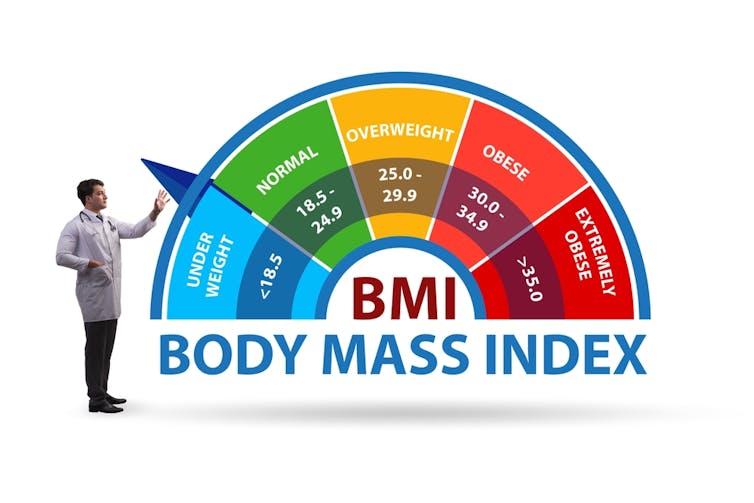
A man pointing at a body mass index chart.
A blunt tool.
Elnur/Shutterstock.com

A blunt tool

The trouble is, BMI has always been a blunt tool, as I have previously argued. It doesn’t take into account important factors for health, such as diet, lifestyle, and fat distribution, among others.

BMI can be misleading for people from different racial, ethnic, or cultural backgrounds. Critics say the standard cutoffs are based on white body types, which can make perfectly healthy bodies from other groups seem “unhealthy”.

Indeed, BMI was developed nearly two centuries ago using data from a small sample of white, European men. Although some efforts have been made to adapt ranges for certain ethnic groups, for example, NHS guidance lowers the BMI thresholds for increased risk of diabetes in Asian and black groups, BMI still fails to account for differences in body composition, fat distribution and baseline risk among individuals in our diverse society.

When significant healthcare decisions – such as access to fertility treatments and certain surgeries – are based on BMI, we should expect it to be an accurate and fair measure, developed and validated in populations that truly represent the people it is applied to.


Read more:
Why you can’t judge health by weight alone


In an ideal world, healthcare professionals would have access to more detailed measures such as blood tests, imaging scans, and detailed lifestyle information. These are costly and time consuming, but they reveal much more than a height-to-weight ratio ever can. Until better measures are widely available, BMI will continue to be used, but studies like this underline the need to refine how it is interpreted.

The Danish data is still preliminary. More details and further research will be needed before drawing firm conclusions. But the headline message stands: being very thin is dangerous, and carrying some extra weight may not shorten life. The real lesson is not that thin is bad and fat is good, but that BMI alone is a fragile measure of health.

The Conversation

Rachel Woods does not work for, consult, own shares in or receive funding from any company or organisation that would benefit from this article, and has disclosed no relevant affiliations beyond their academic appointment.

ref. ‘Fat but fit’: what the latest study reveals – https://theconversation.com/fat-but-fit-what-the-latest-study-reveals-265305

Why are state visits such powerful diplomatic tools? A constitutional expert explains

Source: The Conversation – UK – By Stephen Clear, Lecturer in Constitutional and Administrative Law, and Public Procurement, Bangor University

The US president and first lady, at the king’s invitation, are on a state visit to the UK and will stay at Windsor castle. The event is laden with ceremony and glitz, but it also carries great political potential – for the host nation in particular.

Formal visits by foreign heads of state are generally aimed at strengthening international relationships. The invitation for this visit was handed to Donald Trump in the Oval Office, on camera, by Keir Starmer at a time when the British prime minister was seeking to act as the bridge between the US and Europe over the war in Ukraine.

While many countries have state visits, their ceremonial style varies. In the US, ceremonial honours usually involve arrival on the White House south lawn, accompanied by a military band, 21-gun salute and then a state dinner. But it is the scale and grandeur of the UK’s carriage processions, state banquets, speeches in parliament and military pageantry, tied to the monarchy’s long history, which make them a powerful diplomatic tool for the UK. Trump has made no secret of his delight at being invited for an unprecedented second state visit.

Trump’s praise of the royal family is testament to the soft power at work here. An offer of an audience with the king can deepen diplomatic ties. In this instance, it’s a powerful tool for enhancing the UK-US relationship at a time when this is a priority for Britain.

How state visits work

In the UK, the procedures surrounding state visits are guided by conventions (traditions) and protocols. The prerogative – the government’s residue discretionary power – also comes into play.

The formal invitation for a UK state visit is issued in the name of the king, as head of state. However, in practice, the decision as to who receives them is usually based on another country firstly expressing an interest, and then the UK government offering ministerial advice to the king to extend an invitation. This advice usually comes from the foreign secretary in conjunction with the prime minister, as part of their prerogative powers surrounding foreign relations.

Windsor castle
Most of Trump’s visit will take place at Windsor castle.
Shutterstock/Tomas Marek

Once an invitation is issued, the Foreign, Commonwealth and Development Office, together with the royal household, will set the agenda for ceremonies, banquets, guards of honour and meetings with the king and prime minister.

Typically, the king will receive two foreign heads of state per year. In 2024, he hosted the emperor and empress of Japan, and the amir sheikh and sheikha of Qatar. These visits are usually only a couple of days and start with a ceremonial welcome attended by the king and other senior royal family members.

Having arrived in London on Tuesday, September 16, Trump will spend Wednesday at Windsor castle with the royal family and attend a state banquet in the evening. He will leave on Thursday for Chequers, the prime minister’s country residence, where the two will hold a bilateral meeting.

Diplomatic immunity, costs and threat levels

To facilitate secure visits, the State Immunity Act 1978 affords heads of state the same privileges as are applied to the heads of diplomatic missions. The visits are further underpinned by customary international sources such as the Vienna Convention on Diplomatic Relations of 1961. While these do not make explicit reference to state visits, they establish practices surrounding immunities and the treatment of heads of state in the discharge of their public duties.

In reality, hosting the US president means the UK has to manage a high threat level – which also means paying a lot, mostly for security and policing. Trump’s last state visit in 2019 cost £3.9 million.

But state visits bring reward as well as expenditure. These are not just opportunities for ceremony: meetings take place around the pomp, and there are always vigorous diplomatic efforts to reach agreements that can be announced while leaders are delivering speeches during the visit.

Even before Trump had touched down, it had been announced that Google would invest £5 billion in artificial intelligence in the UK over the next two years. More announcements of this kind can be expected to follow.

This will go some way to meeting a call from the UK parliament’s Business and Trade Committee for Starmer to apply “maximum pressure” on Trump to secure a trade and technology alliance to rival China. Starmer will also be hoping to negotiate on tariffs during the Chequers meeting on Thursday.

What the king does

The UK is a constitutional monarchy, meaning the king’s powers are limited by law, and are largely used by the UK government rather than the royal family. While the king is able to “advise and warn”, decisions are ultimately taken by the government. In that sense, the king reigns, but does not rule.

Nonetheless, the monarchy is very useful in delicate diplomatic situations. Wielding significant soft power in international diplomacy and serving as a visible symbol of stability and continuity on the global stage as head of the Commonwealth, the king can promote shared values and cooperation across borders.

His role in awarding honours, celebrating the voluntary and charitable sector, and delivering speeches often makes him synonymous with officially recognising success and excellence. The demands made of the monarchy to remain politically neutral on all matters can lead to them being seen as a unifying force.

It is noteworthy that even during moments of intense geopolitical tension, such as after the Russian invasion of Ukraine in 2022 when significant economic sanctions were being placed on Russia by the UK, the Russian president, Vladimir Putin, still offered condolences to the new king upon the death of Queen Elizabeth II – describing it as a “heavy, irreparable loss” of an “authority on the world stage”.

In this context, the king’s capacity to act as a bridge in diplomacy is an asset. Starmer will be hoping that the cost of hosting this second state visit will translate into tangible outcomes for the UK.

The Conversation

Stephen Clear does not work for, consult, own shares in or receive funding from any company or organisation that would benefit from this article, and has disclosed no relevant affiliations beyond their academic appointment.

ref. Why are state visits such powerful diplomatic tools? A constitutional expert explains – https://theconversation.com/why-are-state-visits-such-powerful-diplomatic-tools-a-constitutional-expert-explains-265425

Serious mental illness often brings rapid weight gain – but support is missing

Source: The Conversation – UK – By Charlotte Lee, Research Fellow, Primary Care Health Sciences, University of Oxford

Rostislav Sedlacek/Shutterstock.com

Being diagnosed with a serious mental illness like schizophrenia or bipolar disorder often brings an overlooked challenge: rapid and sustained weight gain. This side-effect can raise the risk of diabetes, heart disease and early death – widening an already stark life expectancy gap.

A new study my colleagues and I conducted, published in The Lancet Psychiatry, is the largest and longest to track these changes in real-world settings. Analysing GP health records of over 113,000 adults in the UK between 1998 and 2020, we found that weight gain is not only common but predictable.

A 39-year-old newly diagnosed with schizophrenia or bipolar disorder can expect to gain 2kg in the first year and roughly 5kg within five years. Fifteen years on, the average increase is about 5.5kg. In comparison, people of the same age and gender without serious mental illness gained barely 1.5kg over the same period, on average.

Initially, we wondered if some early weight gain might reflect recovery – a bounce-back effect. People typically regain their appetite after a period of acute illness once they begin treatment. But in our study, most people were already overweight at diagnosis, and then gained enough weight to become obese over time. That shows the rise is a sustained, long-term increase, not a rebound related to recovery.

These patterns are not just statistical quirks; they reflect well-known physiological and social factors. Antipsychotics can trigger metabolic and appetite changes, and most people with a serious mental illness take these medications. In our study, people taking antipsychotics showed the greatest weight gain, an average of 5.9kg over 15 years.

Person holding a blister pack of pills.
People on antipsychotic medication gained the most weight.
Gerdesk89/Shutterstock.com

But people who had never been prescribed them still gained substantial weight, averaging 2.5kg over the same period. Other factors also play a role, from social isolation and poverty to poor access to healthy food, exercise and regular routines – but our study could not monitor them because this data is not held in GP records.

We also examined whether people were getting help to lose weight. People with schizophrenia or bipolar disorder who were overweight or obese were around 10% more likely than the average overweight or obese person to be told to lose weight. Yet, despite their much higher risk of diabetes and heart disease, they were no more likely to be offered a place on a weight-loss programme. Only 4.5% had any record of a referral, compared with about 3% of people without mental illness.

The people most at risk of chronic conditions like diabetes and heart disease are being warned to lose weight, but not given help to do so. Community weight-loss groups can be effective – but without a referral, many people don’t know they exist or can’t get to them.

Mental health staff often have to focus on immediate psychiatric care: managing crises, stabilising symptoms, and keeping people safe. That leaves little scope for preventive physical healthcare. Meanwhile, in GP practices, staff may feel unsure how to approach weight loss with people who have complex mental health needs.

The result is a gap between policy and practice. National plans like the government’s recently launched 10-Year Health Plan for England emphasise cardiovascular prevention for people with serious mental illness, but in everyday care many still slip through the cracks. This is not a uniquely British problem; health systems worldwide are struggling to deliver integrated physical and mental healthcare.

What needs to change

This pattern is not inevitable. Weight gain after a diagnosis of serious mental illness is predictable, measurable and, with the right action, preventable.

Our findings show that the years immediately after diagnosis are a critical window to act. Intervening within the first five years could reduce the risk of long-term obesity, diabetes and heart disease, improve quality of life, and narrow the life expectancy gap. It could also ease the strain on health systems already crumbling under rising rates of chronic disease.

Despite this potential, the common belief that people with schizophrenia or bipolar disorder cannot lose weight persists, and it is wrong. Effective support means intervening early with evidence-based care and regular follow-ups. Community weight-loss groups should fit the person, adapting to their changing mental health, medication side-effects, and everyday difficulties like getting to appointments.

People with mental illnesses deserve the same chance of good physical health as everyone else. If potential benefits are to be realised, primary care and mental health services must check weight at diagnosis, and refer patients with schizophrenia or bipolar disorder to tailored weight-loss programmes before rapid gains set in. This is essential to delivering on the ambitions of national plans for cardiovascular prevention in our most underserved communities.

The Conversation

Charlotte Lee does not work for, consult, own shares in or receive funding from any company or organisation that would benefit from this article, and has disclosed no relevant affiliations beyond their academic appointment.

ref. Serious mental illness often brings rapid weight gain – but support is missing – https://theconversation.com/serious-mental-illness-often-brings-rapid-weight-gain-but-support-is-missing-264842

A pretty face helped make Robert Redford a star. Talent and dedication kept him one

Source: The Conversation – Global Perspectives – By Daryl Sparkes, Senior Lecturer, Media Studies and Production, University of Southern Queensland

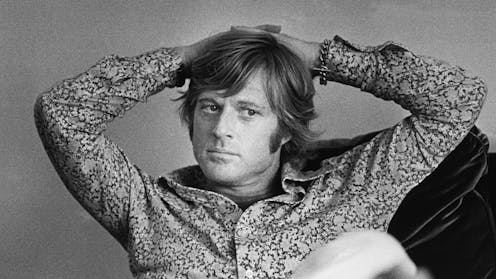
Miroslav Zajic/CORBIS/Corbis via Getty Images

Hollywood is the place where having a great face will get you far. Think Errol Flynn, James Dean, George Clooney, Brad Pitt – a handsome appearance opens acting doors.

Those good looks, the magical smile, the natural charm all became synonymous with Robert Redford, who has died aged 89.

But good looks can only get you so far. You still need the acting chops as well as the strength of character to make a real impression in the world of cinema, and in the world itself.

Redford had this all in spades.

The young actor

After a rough start in life, including the death of his mother and dropping out of college, Redford began acting at 23 on Broadway and in small roles in quality television productions such as The Untouchables (1963), Maverick (1960), Dr Kildare (1962) and The Twilight Zone (1962), to name a few, which all honed his screen presence.

He made his feature film debut with a minor role in Tall Story (1960), alongside Jane Fonda (also her debut). This started a lifelong friendship between the two. They would act on several productions together, and Fonda admitted she was in love with Redford her whole life.

His talent was soon recognised. He was nominated for his first Emmy in 1962 for his supporting role in the TV movie The Voice of Charlie Pont.

After this, Redford soon became an in-demand actor. Larger roles in film and TV soon came his way, many as a romantic character.

Films such as Inside Daisy Clover (1965), This Property is Condemned (1966) and Barefoot in the Park (1967) portrayed Redford as the lover/husband to strong female characters, the first two with Natalie Wood, the third, again, with Fonda.

The birth of an icon

His good looks sometimes grated on Redford, which led him to refuse a role in Who’s Afraid of Virginia Woolf (1966) and being turned down for the lead in The Graduate (1967). He went in search of more diverse roles.

This led to a film that didn’t just make Redford a star, but a Hollywood icon.

Butch Cassidy and the Sundance Kid (1969) was one of the greatest actor partnerships in Hollywood history. Paul Newman was a much bigger star than Redford at the time of the movie’s release, but arguably it propelled Redford’s star beyond anyone else at that time.

Redford portrayed Sundance with sly wit, simmering masculinity, sardonic smartness and, well, just outright sexiness. Suddenly both teenage boys and girls had his poster on their bedroom wall. The world fell in love with him.

a poster for George Roy Hill's 1969 biopic Butch Cassidy and the Sundance Kid.

Movie Poster Image Art/Getty Images

Redford was on a roll. Over the next half-decade came hit after hit, including The Candidate (1972), The Way We Were (1973) with Barbara Streisand, The Sting (1972) again with Newman, and The Great Gatsby (1974), to name but a few. Redford was cemented as the lead man du jour.

The saying “lightning never strikes twice” never reckoned on Redford. In 1976 he took on his next highly iconic role alongside Dustin Hoffman in All the President’s Men.

It could be said that Hoffman, well regarded as the actor’s actor, was eclipsed by Redford in his role as Watergate journalist Bob Woodward. To me it was a travesty that Redford (or Hoffman, for that matter) was not nominated for Oscars in these roles.

By now Redford wasn’t just seen as the “pretty boy” but as a serious actor who took on more and more dramatic roles in The Electric Horseman (1979), Brubaker (1980), Out of Africa (1985) and Indecent Proposal (1998).

Being on screen for over five decades, younger audiences possibly wondered who the grizzled old man playing agent Alexander Pierce in two Marvel movies in 2014 and 2019 was.

A lasting legacy

Beginning in the 70s, Redford increasingly yearned to also be behind the camera.

As early as 1969 he took on the executive producer role in Downhill Racer.

Into the 80s he began directing. His feature directorial debut, Ordinary People (1980), won him his one and only Oscar (although he was given an honorary one in 2002).

He would go on to direct and produce notable films such as The Horse Whisperer (1998), A River Runs Through It (1992) and Quiz Show (1994), among others.

He was still working as an executive producer up until recently on the TV series Dark Wind (2022–25).

Away from the cameras, Redford was widely known as a philanthropist, environmentalist and a strong supporter of American First Nations and LGBTQI+ rights.

Publicly, though, Redford will probably be most remembered for the Sundance Institute and the film festival that sprang from it.

Redford poses for a photo in front of a snow capped mountain.
Redford at the Sundance Film Festival in Salt Lake City, Utah, in 1994.
Tom Smart/Liaison

The largest independent festival in the United States, it gave a leg up to hundreds of up-and-coming independent filmmakers over the years including Quentin Tarantino, Robert Rodriguez, Jane Schoenbrun, Kevin Smith and Paul Thomas Anderson.

When we look back on his body of work, though, one thing becomes plainly obvious.

While Redford may have used his looks to initially open the Hollywood doors to success and fame, it was his talent and dedication to his craft that kept those doors open.

A versatile actor, director and producer who gave back to the industry just as much, if not more, than he took. For this, Redford was much, much more than a pretty face.

The Conversation

Daryl Sparkes does not work for, consult, own shares in or receive funding from any company or organisation that would benefit from this article, and has disclosed no relevant affiliations beyond their academic appointment.

ref. A pretty face helped make Robert Redford a star. Talent and dedication kept him one – https://theconversation.com/a-pretty-face-helped-make-robert-redford-a-star-talent-and-dedication-kept-him-one-265426

Charlie Kirk shooting suspect had ties to gaming culture and the ‘dark internet’. Here’s how they radicalise

Source: The Conversation – Global Perspectives – By Matthew Sharpe, Associate Professor in Philosophy, Australian Catholic University

Tyler Robinson, the 22-year-old Utah man suspected of having fatally shot right-wing activist Charlie Kirk, is reportedly not cooperating with authorities. Robinson was apprehended after a more than two-day manhunt and is being held without bail at the Utah County Jail.

While a motive for the shooting has yet to be established, Utah Governor Spencer Cox has highlighted Robinson’s links to gaming and the “dark internet”.

Bullet casings found at the scene were inscribed with various messages evoking gaming subcultures. One of the quotes – “Notices bulges, OwO what’s this” – can be linked to the furry community, known for role-playing using animal avatars.

Another message – “Hey, fascist! Catch! ↑ → ↓↓↓” – features arrow symbols associated with an action that allows players to drop bombs on their foes in Helldiver 2, a game in which players play as fascists fighting enemy forces.

One casing reads “O Bella ciao, Bella ciao, Bella ciao, Ciao, ciao!”, words from an Italian anti-Mussolini protest song, which also appears in the shooter game Far Cry 6. Yet another is a homophobic jibe: “if you read this you are gay LMAO”.

If Robinson does turn out to be a shooter radicalised through online gaming spaces, he would not be the first. Previous terrorist shootings at Christchurch (New Zealand), Halle (Germany), Bærum (Norway), and the US cities of Buffalo, El Paso and Poway were all carried out by radicalised young men who embraced online conspiracies and violent video games.

In each of these cases, the shooter attempted (and in all but the Poway shooting, succeeded) to live stream the atrocities, as though emulating a first-person shooter game.

A growing online threat

The global video game market is enormous, with an estimated value of almost US$300 billion (about A$450 billion) in 2024. Of the more than three billion gamers, the largest percentage is made up of young adults aged 18–34.

Many of these are vulnerable young men. And extremist activists have long recognised this group as a demographic ripe for radicalisation.

As early as 2002, American neo-Nazi leader Matt Hale advised his followers “if we can influence video games and entertainment, it will make people understand we are their friends and neighbours”.

Since then, far-right groups have produced ethnonationalist-themed games, such as “Ethnic Cleansing” and “ZOG’s Nightmare”, in which players defend the “white race” against Islamists, immigrants, LGBTQIA+ people, Jews and more.

Studying radicalisation in gamer circles

For many, the Kirk shooting has resurfaced the perennial question about the link (or lack thereof) between playing violent video games and real-world violence.

But while this is an important line of inquiry, the evidence suggests most radicalisation takes place not through playing video games themselves, but through gaming platform communication channels.

In 2020, my colleagues and I studied an extraordinary data dump of more than nine million posts from the gaming platform Steam to understand this process.

We found evidence of radicalisation occurring through communication channels, such as team voice channels. Here, players establish connections with one another, and can leverage these connections for political recruitment.

The radicalisation of vulnerable users is not instantaneous. Once extremists have connected with potential targets, they invite them into platforms such as Discord or private chat rooms. These spaces allow for meme and image sharing, as well as ongoing voice and video conversations.

Skilful recruiters will play to a target’s specific grievances. These may be personal, psycho-sexual (such as being unable to gain love or approval), or related to divisive issues such as employment, housing or gender roles.

The recruit is initiated into a fast-changing set of cynical in-jokes and in-group terms. These may include mocking self-designations, such as the Pepe the Frog meme, used by the far-right to ironically embrace their ugly “political incorrectness”. They also use derogatory terms for “enemies”, such as “woke”, “social justice warriors”, “soyboys”, “fascists” and “cultural Marxists”.

Gradually, the new recruit becomes accustomed to the casual denigration and dehumanisation of the “enemies”.

Dark and sarcastic humour allow for plausible deniability while still spreading hate. As such, humour acts an on-ramp to slowly introduce new recruits to the conspiratorial and violent ideologies that lie at the heart of terrorist shootings.

Generally, these ideologies claim the world is run by nefarious and super-powerful plutocrats/Jews/liberals/communists/elites, who can only be stopped through extreme measures.

It then becomes a question of resolve. Who among the group is willing to do what the ideology suggests is necessary?

What can be done?

The Australian Federal Police, as well as the Australian parliament, has recognised the threat of violence as a result of radicalisation through online gaming. Clearly, it’s something we can’t be complacent about.

Social isolation and mental illness, which are sadly as widespread in Australia as they are elsewhere, are some of the factors online extremists try to exploit when luring vulnerable individuals.

At the same time, social media algorithms function to shunt users into ever more sensational content. This is something online extremists have benefited from, and learned to exploit.

There is a growing number of organisations devoted to trying to prevent online radicalisation through gaming platforms. Many of these have resources for concerned parents, teachers and care givers.

Ultimately, in an increasingly online world, the best way to keep young people safe from online radicalisation is to keep having constructive offline conversations about their virtual experiences, and the people they might meet in the process.

The Conversation

Matthew Sharpe does not work for, consult, own shares in or receive funding from any company or organisation that would benefit from this article, and has disclosed no relevant affiliations beyond their academic appointment.

ref. Charlie Kirk shooting suspect had ties to gaming culture and the ‘dark internet’. Here’s how they radicalise – https://theconversation.com/charlie-kirk-shooting-suspect-had-ties-to-gaming-culture-and-the-dark-internet-heres-how-they-radicalise-265279

Since WWII, it’s been taboo to force nations to cede land after war. Russia wants to normalise conquest again

Source: The Conversation – Global Perspectives – By Jon Richardson, Visiting Fellow, Centre for European Studies, Australian National University

A frequent question around peace talks over Russia’s invasion of Ukraine is whether Ukraine should give up land as part of an interim or final settlement.

United States President Donald Trump has often suggested this would be a natural and inevitable outcome, particularly given Ukraine has – in his view – a weak hand of “cards”. When Ukrainian President Volodymyr Zelensky visited the White House last month, Trump told him there was no getting back Crimea, which has been occupied by Russia since 2014.

Trump has jokingly described his motivation for promoting peace in Ukraine as a desire to “get to heaven”. But as the saying goes, the path to hell is paved with good intentions.

Indeed, Trump has aligned himself with many Russian officials on territorial concessions, including Foreign Minister Sergei Lavrov, who has said history has many examples of peace agreements that shift borders.

It is important to debunk this notion. Acquisition of territory through war has, in fact, been taboo since the end of the second world war and the establishment of the United Nations.

While there have been many military conflicts, there are no evident examples of a UN member country ceding recognised, independent territory to another UN member following a war or invasion.

Wars and conquest

Until the early 20th century, territorial concessions were the norm after wars, backed by all sorts of narratives about hereditary rights, ancient borders, superior civilisations, punishments for unpaid debts or simple law of the jungle.

A classic example was the Treaty of Guadeloupe-Hidalgo, which ended the Mexican-American War of 1846–48. Mexico was forced to cede 55% of its territory, including present-day New Mexico, Utah, Nevada, Arizona, California, Texas and western Colorado.

Mexican territory that was relinquished in the Treaty of Guadalupe Hidalgo, coloured white.
Wikimedia Commons

In a recent article, Yale academics Oona Hathaway and Scott Shapiro explain that before the first world war, shifting borders was a legally recognised means by which states resolved disputes. They calculate there were more than 150 territorial conquests around the world before 1945.

The end of the second world war saw massive border changes in Eastern Europe. Soviet leader Joseph Stalin shifted the borders of Poland hundreds of kilometres westward at the expense of Germany, while the Soviet Union swallowed swathes of eastern Poland. Italy also lost some of its pre-war territory to Yugoslavia and France.

The Soviet Union also got to keep regions it had absorbed in the wake of the 1939 Nazi-Soviet Non-Aggression Pact, including the Baltic States, Moldova, western Ukraine and parts of Finland. These changes reflected the facts on the ground and were accepted at the Yalta and Potsdam conferences.

But in the broader zeitgeist, it was time to put an end to wars of conquest. This was articulated in Article 2 of the UN Charter, which requires states to refrain from the use of force against the “territorial integrity or political independence” of any other state.

The principle was further cemented in UN Security Council resolution 242 following the 1967 Arab-Israeli Six-Day War, which decrees that acquisition of territory following war cannot be accepted.

That is why the international community has largely rejected any move towards Israeli sovereignty over the occupied Palestinian territories of the West Bank, Gaza and East Jerusalem, along with the Golan Heights. (The United States, however, accepted the latter in 2019.)

The taboo on conquest since 1945

The only successful territorial conquests broadly accepted by the international community since 1945 have been a few cases of newly independent countries in the 1960s taking over enclaves or neighbouring territory formerly held by colonial powers. This includes, for example, India taking Goa from Portugal.

But other seizures of ex-colonial territories have been broadly rejected, or at least strongly contested. The main examples are Morocco’s annexation of Western Sahara and Indonesia’s seizure of East Timor. Indonesia’s takeover of West Papua was accepted by the international community as part of a UN-mandated self-determination process, though this has since been condemned by many as deeply flawed.

South Vietnam’s ultimate takeover by the North might be regarded as a conquest, but neither Vietnam recognised the other as a separate country, seeing the conflict effectively as a continuation of civil war. Neither was a UN member.

Before Russia’s invasion of Ukraine, the most blatant attempt to conquer independent territory was Iraqi dictator Saddam Hussein’s invasion and annexation of Kuwait. This was repelled by a UN-sanctioned force.

Global opposition to Russia’s seizures

Distinct from invasions, there have been many unresolved border disputes that have occasionally flared into armed conflict. Russia, however, had no such dispute with Ukraine before its 2014 takeover of Crimea.

After the dissolution of the Soviet Union, Russia and Ukraine negotiated a border treaty to delineate their borders in precise detail. Russian President Vladimir Putin signed the treaty in 2003 and later affirmed that Russia had no territorial claim against Ukraine.

An overwhelming number of UN members have rejected Russia’s annexation of Crimea and four other regions of southeastern Ukraine.

However, the initial outrage at the invasion has weakened over time. Many countries have accused the US of a double standard, given its invasion of Iraq in 2003 (even if that didn’t involve territorial conquest). Trump’s statements about acquiring Greenland, Canada, Gaza and the Panama Canal have only further weakened confidence in US opposition to territorial conquest.

As political scientist Tanisha Fazal argues, the norm against territorial conquest risks suffering a “death of a thousand cuts”. Allowing Russia to keep parts of Ukraine could be a terminal blow.

What a lasting peace should look like

Some commentators have argued for an interim settlement under which Russia would retain control of occupied territory without Ukraine ceding it formally. A final settlement would be left to the future.

Some have called this de facto recognition of Russian annexation, but that is a misguided notion. De facto recognition implies acceptance of a new status quo, along with a return to business as usual.

The outcome of the war will only be partially about territory. Russia has imposed a brutal occupation on these regions, with widespread allegations of torture, killings, disappearances, population transfers and thefts of Ukrainian businesses and homes. Ukrainian language, culture and identity are being erased under a draconian regime.

Ukraine appears willing to accept an interim ceasefire to stop the bloodshed. But its territorial integrity should be fully supported by making clear to Russia that its invasion and occupation remain illegal and unacceptable.

This would include maintaining economic sanctions, demanding accountability for war crimes, returning property stolen from Ukrainians, and allowing Ukrainians transferred to Russia to return home. Ukraine must also be given the means to defend itself against a renewed Russian attack.

Advocates of anything less would be condoning and normalising flagrant territorial aggression. They would merit neither earthly rewards, such as Nobel Prizes, nor divine blessings.

The Conversation

Jon Richardson does not work for, consult, own shares in or receive funding from any company or organisation that would benefit from this article, and has disclosed no relevant affiliations beyond their academic appointment.

ref. Since WWII, it’s been taboo to force nations to cede land after war. Russia wants to normalise conquest again – https://theconversation.com/since-wwii-its-been-taboo-to-force-nations-to-cede-land-after-war-russia-wants-to-normalise-conquest-again-264590