Paul Biya at 92: will defections weaken his grip on absolute power in Cameroon?

Source: The Conversation – Africa (2) – By David E Kiwuwa, Associate Professor of International Studies, University of Nottingham

Cameroonians go to the polls in October 2025 in what some people hoped might be a break from the country’s troubled recent past. They thought that President Paul Biya (92) might stand aside to allow a transition.

Three years ago I was one of those who expressed optimism about the 2025 poll. But I was wrong.

Biya is set to run yet again for an 8th term. He is already one of Africa’s longest ruling presidents, behind only Equatorial Guinea’s Teodoro Nguema.

Biya is on the cusp of achieving lifetime presidency since taking office in 1982.

In July 2025, after months of speculation, he confirmed in a tweet that he would run again.

Having weathered coups, silenced dissent, defied death rumours, and outlasted generations of challengers, he reminded friend and foe alike that he remains at the centre of Cameroon’s political ecosystem.

I am a long time scholar of and commentator on African politics, regime transformation, democratic transition and broader governance. Given regional developments that have seen the military deposing long term leaders, one might expect Biya to superintend a managed transition. The intriguing question is: what is it about the situation in Cameroon that continues to defy logic?

There is evident restlessness and frustration among young Cameroonians as well as clear clamour for change. Yet, the incumbent remains the front-runner, supported by the ruling party, the Cameroon People’s Democratic Movement, and his near-total command of the state’s political machinery.

Simply, the system has been designed to serve Biya’s interests. With government control of the media, resources, and judicial and electoral institutions, it is unlikely that the opposition can bring about systemic change.

Some things have changed, however. Biya’s previous wins were landslides that left no room for debate. This time things could potentially be different on account of high-profile defections from his party. These men will be challenging him at the polls.

The field

The last electoral cycle, leading up to the 2018 poll, was characterised by subdued challenges and a co-opted or deeply divided opposition. This time Biya appears to face a relatively organised opposition.

Initially, 83 candidates signalled their interest. In July the electoral commission cleared 13 to run. The commission controversially disqualified Maurice Kamto, a renowned legal scholar who performed respectably in the 2018 electoral cycle with 14% of the vote.

Human Rights Watch warned that this would cast a shadow over the credibility of the electoral process.

Nevertheless, several credible figures across the political spectrum remain in the race and present alternatives.

Biya faces two other former allies turned political adversaries.

One is Issa Tchiroma Bakary, his minister of employment and vocational training. A longtime insider of the regime, he served in various ministerial roles and was long considered a loyalist. Yet in June 2025, he resigned from the government, delivering a searing critique of the system he once represented.

He then launched his campaign, running on the ticket of the Front for the National Salvation of Cameroon.

The minister of tourism and leisure, Bello Bouba Maigari, still formally holding office, declared his intention in July 2025 to run against his boss in the October elections.

This announcement was especially striking given the deep political history between the two men. Maigari is not just any cabinet member. He is a long-standing confidant of the president, having been appointed Biya’s prime minister in 1982 and hailing from the vote-rich northern region. The decision to enter the race marks a shift from loyal lieutenant to presidential challenger, revealing the growing fissures within the ruling elite.

Others in the race worth noting are:

  • Akere Muna, a former speaker who swore in Biya in 1982 and a tireless advocate for transparency and accountability. He ran for the top job in 2018 (but withdrew at the last minute).

  • Cabral Libii, from the Cameroon Party for National Reconciliation, a young and dynamic leader who also ran for president in 2018 and garnered 6% of the total vote.

  • Joshua Osih, a seasoned politician with a strong track record.

The issues

The nation’s pressing issues remain the same as they have been for a long while.

These include:

  • Endemic corruption. Cameroon is ranked 140 out of 180 countries by Transparency International. The reasons are systemic decay of state institutions and maladministration.

  • Economic stasis, including stubborn unemployment forecast at 7.34% by Statista; 23% live below the international poverty line and 3.3 million are food insecure.

  • The ongoing anglophone regional crisis pitting the English speaking regions against the dominant francophone centre.

  • Biya’s ability to govern and the succession question, given his very advanced age and the potential vacuum or infighting if he couldn’t complete his term.

The external dimension

Western actors have been consistent critics of Biya’s regime in the recent past. However, some have adopted a more cautious tone, balancing criticism with strategic interests.

The US, for instance, suspended some military assistance to Cameroon in 2019 over human rights abuses. But it continues counter-terrorism cooperation against Boko Haram.

The European Union, while pressing for peaceful resolution of the anglophone conflict, remains an important trade and aid partner.

China has become Cameroon’s largest bilateral creditor and a top trading partner. According to a report by Business in Cameroon, in 2024 Cameroon owed about 64.8% of its external bilateral debt to China. This is primarily for infrastructure loans that have funded projects like the Kribi Deep Sea Port, the Yaoundé-Douala highway, and hydropower stations.

For regime survival, Biya has pursued a pragmatic foreign policy. Beijing’s diplomatic stance of non-interference and respect for sovereignty resonates with Cameroonian political elites wary of western scrutiny and criticism over democratic backsliding and the anglophone conflict.

But Biya has not severed ties with the west. For example, the government maintains partnerships with France for security training, with Germany for decentralisation support, and with the US for counterinsurgency.

This balancing is not simply geopolitical. It is also deeply embedded in domestic patronage networks. Foreign aid, loans and investments serve as resources to consolidate elite power, strengthen the patronage system and suppress dissent.

The October polls are sure to reaffirm the status quo.

The Conversation

David E Kiwuwa does not work for, consult, own shares in or receive funding from any company or organisation that would benefit from this article, and has disclosed no relevant affiliations beyond their academic appointment.

ref. Paul Biya at 92: will defections weaken his grip on absolute power in Cameroon? – https://theconversation.com/paul-biya-at-92-will-defections-weaken-his-grip-on-absolute-power-in-cameroon-264915

Robert Redford: the ‘golden boy with a darkness in him’

Source: The Conversation – UK – By Nathan Abrams, Professor of Film Studies, Bangor University

Robert Redford, who has died at the age of 89, was perhaps everybody’s idea of a classical Hollywood movie actor. His conventional good looks – his blond hair, boyish charm and chiselled chin – led him to be cast as a sex symbol and a romantic lead opposite Jane Fonda in Barefoot in the Park (1967), Barbra Streisand in The Way We Were (1973), and Meryl Streep in Out of Africa (1985).

Dustin Hoffman described him as a “walking surfboard”. But the Californian golden boy belied his appearance. No airhead, beneath the surface was a shy and sensitive actor who used his looks to his advantage, insisting on starring in and later directing movies with weight. These included a series of anti-establishment and countercultural films that reflected his anti-corruption and pro-environmental activism.

From the early 1960s through to the 2020s, Robert Redford appeared in some of the most iconic, if unconventional, films of the second half of the 20th century. Those of us born in the late 1960s and early 1970s grew up with Redford. He came to attention as the timid, newly married Paul Bratter in Neil Simon’s Broadway play, Barefoot in the Park, in 1967, before starring in the movie of the same name.

His breakout role was as the titular Sundance in the irreverent and subversive paean to the wild west, Butch Cassidy and the Sundance Kid (1969), beginning what would later be called a bromance with his co-star, Paul Newman. He teamed up again with Newman, a fellow activist, in the Depression-era set The Sting (1973), which led to Redford’s first and only Oscar nomination as an actor.

That same year, he starred in The Way We Were alongside Streisand, who described him as “the blond, suntanned California guy, surfing and riding horses”. Directed by Sydney Pollack, Redford would go on to star in a further six of his films. The director called him “an interesting metaphor for America, a golden boy with a darkness in him”.

Following his liberal instincts, Redford appeared in two of the post-Watergate and post-Vietnam War films that encapsulated the pervasive feeling of distrust and suspicion of the government that followed the administration of Richard Nixon.

In the spy thriller Three Days of the Condor (1975), Redford was an introverted CIA codebreaker caught up in a conspiracy. And in All the President’s Men (1976), he played the real-life Washington Post journalist Bob Woodward alongside Dustin Hoffman as Carl Bernstein as they exposed the Watergate Hotel scandal that helped to bring down Nixon.

The film, which Redford was instrumental in bringing to the screen, was so powerful that it has been credited by some with swinging the presidential election of that year to the Democrat Jimmy Carter.

Redford branched into directing with Ordinary People in 1980, about an upper-middle-class family’s fracturing with grief following their son’s death. The film starred Donald Sutherland and Mary Tyler Moore and won four Oscars, including for best picture and best director, beating Martin Scorsese’s Raging Bull.

Redford’s later efforts were not always as successful, but Quiz Show in 1994, about the real-life scandal of a fixed television game show in the 1950s, received Academy nominations.

Other films he directed showcased his politics. The Milagro Beanfield War (1988), about the fight to protect a small beanfield in a New Mexico village against larger business and political interests, reflected Redford’s own concerns about the environment and land preservation.

His 2007 Lions for Lambs explored the impact of US foreign policy through the intersecting lives of a US congressman (Tom Cruise), a journalist (Meryl Streep) and an academic (Redford) against the backdrop of the war on terror in Afghanistan.

In 2014, Redford even joined the Marvel cinematic universe, starring as US government leader and secret Hydra operative Alexander Pierce in 2014’s Captain America: The Winter Soldier and Avengers: Endgame in 2019. It was a callback to those 1970s paranoid thrillers, especially Three Days of the Condor. This introduced him to a younger generation of fans and audiences most likely unfamiliar with his earlier work.

“The idea of the outlaw has always been very appealing to me. If you look at some of the films, it’s usually having to do with the outlaw sensibility, which I think has probably been my sensibility. I think I was just born with it,” Redford said in 2018.

“I wanted to tell stories about the America that I grew up in. And for me, I was not interested in the red, white and blue part of America. I was interested in the grey part – that’s where complexity lies.”

The Conversation

Nathan Abrams receives and has previously received external funding from charities and government-funded, foundation or research council grants.

ref. Robert Redford: the ‘golden boy with a darkness in him’ – https://theconversation.com/robert-redford-the-golden-boy-with-a-darkness-in-him-265507

Why do big oil companies invest in green energy?

Source: The Conversation – USA (2) – By Michael Oxman, Professor of the Practice of Sustainable Business, Georgia Institute of Technology

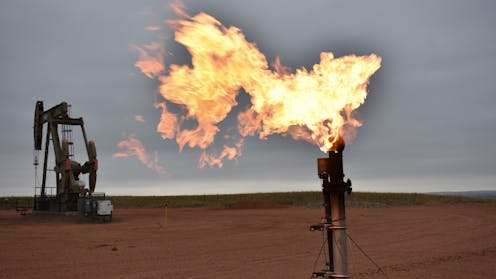
A flare burns natural gas at an oil well on Aug. 26, 2021, in Watford City, N.D. AP Photo/Matthew Brown

Some major oil companies such as Shell and BP that once were touted as leading the way in clean energy investments are now pulling back from those projects to refocus on oil and gas production. Others, such as Exxon Mobil and Chevron, have concentrated on oil and gas but announced recent investments in carbon capture projects, as well as in lithium and graphite production for electric vehicle batteries.

National oil companies have also been investing in renewable energy. For example, Saudi Aramco has invested in clean energy while at the same time asserting that it’s unrealistic to phase out oil and gas entirely.

But the larger question is why oil companies would invest in clean energy at all, especially at a time when many federal clean energy incentives are being eliminated and climate science is being dismantled, at least in the United States.

Some answers depend on whom you ask. More traditional petroleum industry followers would urge the companies to keep focused on their core fossil fuel businesses to meet growing energy demand and corresponding near-term shareholder returns. Other shareholders and stakeholders concerned about sustainability and the climate – including an increasing number of companies with sustainability goals – would likely point out the business opportunities for clean energy to meet global needs.

Other answers depend on the particular company itself. Very small producers have different business plans than very large private and public companies. Geography and regional policies can also play a key role. And government-owned companies such as Saudi Aramco, Gazprom and the China National Petroleum Corp. control the majority of the world’s oil and gas resources with revenues that support their national economies.

Despite the relatively modest scale of investment in clean energy by oil and gas companies so far, there are several business reasons oil companies would increase their investments in clean energy over time.

The oil and gas industry has provided energy that has helped create much of modern society and technology, though those advances have also come with significant environmental and social costs. My own experience in the oil industry gave me insight into how at least some of these companies try to reconcile this tension and to make strategic portfolio decisions regarding what “green” technologies to invest in. Now the managing director and a professor of the practice at the Ray C. Anderson Center for Sustainable Business at Georgia Tech, I seek ways to eliminate the boundaries and identify mutually reinforcing innovations among business interests and environmental concerns.

People march holding signs objecting to fossil fuels.
Protesters call for companies and international organizations to reduce their spending on fossil fuels.
Kent Nishimura/Getty Images

Diversification and financial drivers

Just like financial advisers tell you to diversify your 401(k) investments, companies do so to weather different kinds of volatility, from commodity prices to political instability. Oil and gas markets are notoriously cyclical, so investments in clean energy can hedge against these shifts for companies and investors alike.

Clean energy can also provide opportunities for new revenue. Many customers want to buy clean energy, and oil companies want to be positioned to cash in as this transition occurs. By developing employees’ expertise and investing in emerging technologies, they can be ready for commercial opportunities in biofuels, renewable natural gas, hydrogen and other pathways that may overlap with their existing, core business competencies.

Fossil fuel companies have also found what other companies have: Clean energy can reduce costs. Some oil companies not only invest in energy efficiency for their buildings but use solar or wind to power their wells. And adding renewable energy to their activities can also lower the cost of investing in these companies.

Public pressure

All companies, including those in oil and gas, are under growing pressure to address climate change, from the public, from other companies with whom they do business and from government regulators – at least outside the U.S. For example, campaigns seeking to reduce investment in fossil fuels are increasing along with climate-related lawsuits. Government policies focused on both mitigating carbon emissions and enhancing energy independence are also making headway in some locations.

In response, many oil companies are reducing their own operational emissions and setting targets to offset or eliminate emissions from products that they sell – though many observers question the viability of these commitments. Other companies are investing in emerging technologies such as hydrogen and methods to remove carbon dioxide from the atmosphere

Some companies, such as BP and Equinor, have previously even gone so far as rebranding themselves and acquiring clean energy businesses. But those efforts have also been criticized as “greenwashing,” taking actions for public relations value rather than real results.

A net containing fish is pulled aboard a fishing vessel.
Fishing, like energy production, does not have to be done in ways that damage the environment.
Thomas Barwick/DigitalVision via Getty Images

How far can this go?

It is even possible for a fossil fuel company to reinvent itself as a clean energy operation. Denmark’s Orsted – formerly known as Danish Oil and Natural Gas – transitioned from fossil fuels to become a global leader in offshore wind. The company, whose majority owner is the Danish government, made the shift, however, with the help of significant public and political support.

But most large oil companies aren’t likely to completely reinvent themselves anytime soon. Making that change requires leadership, investor pressure, customer demand and shifts in government policy, such as putting a price or tax on carbon emissions.

To show students in my sustainability classes how companies’ choices affect both the environment and the industry as a whole, I use the MIT Fishbanks simulation. Students run fictional fishing companies competing for profit. Even when they know the fish population is finite, they overfish, leading to the collapse of the fishery and its businesses. Short-term profits cause long-term disaster for the fishery and the businesses that depend on it.

The metaphor for oil and gas is clear: As fossil fuels continue to be extracted and burned, they release planet-warming emissions, harming the planet as a whole. They also pose substantial business risks to the oil and gas industry itself.

Yet students in a recent class showed me that a more collective way of thinking may be possible. Teams voluntarily reduced their fishing levels to preserve long-term business and environmental sustainability, and they even cooperated with their competitors. They did so without in-game regulatory threats, shareholder or customer complaints, or lawsuits.

Their shared understanding that the future of their own fishing companies was at stake makes me hopeful that this type of leadership may take hold in real companies and the energy system as a whole. But the question remains about how fast that change can happen, amid the accelerating global demand for more energy along with the increasing urgency and severity of climate change and its effects.

The Conversation

In the past, Michael Oxman has worked with Chevron and consulted with other oil/gas companies. The views expressed in this article are his and do not necessarily reflect the views of Georgia Institute of Technology.

ref. Why do big oil companies invest in green energy? – https://theconversation.com/why-do-big-oil-companies-invest-in-green-energy-260855

Would you eat a grasshopper? In Oaxaca, it’s been a tasty tradition for thousands of years

Source: The Conversation – USA (2) – By Jeffrey H. Cohen, Professor of Anthropology, The Ohio State University

Billions of people regularly eat insects. In the southern Mexican state of Oaxaca, chapulines – toasted grasshoppers – stand out as a beloved seasonal treat that follows the start of the rainy season, a period that runs from late May through September.

My new book, “Eating Grasshoppers: Chapulines and the Women who Sell Them,” dives into the history and cultural significance of entomophagy (eating insects) and this unique snack.

Chapulineras – the women who sell chapulines – often learn their craft from their mothers and grandmothers. Most will use nets or mesh bags to capture grasshoppers in their “milpa” – alfalfa and maize fields – during the cool, early morning hours.

Teresa Silva, whom I spoke with at her home in Zimatlán, Oaxaca, shared some of her experience:

“I began with my husband’s family, following their traditions after we married. My husband would bring me chapulines in large quantities, and with him and my in-laws’ support, I started to cook and sell [them]. It wasn’t easy at first … but I liked the money I made. Now, I have been selling chapulines for 23 years.”

Prepping chapulines isn’t hard. A dip in boiling water turns the grasshoppers a rich, deep red. Then you toss them on the “comal” – a ceramic or metal cooking surface – with a little garlic, lemon, chile and “sal de gusano,” a mixture of ground agave worms, salt and other seasonings. In a few minutes, the grasshoppers are ready to eat.

Culture and cuisine in Oaxaca

Chapulines have been a staple food for thousands of years. Like other insects and their by-products – including honey – grasshoppers are easily digestible, high in protein and an excellent source of vitamins and minerals.

They are also plentiful. Archaeologist Jeffrey Parsons estimates that harvests before the arrival of European settlers might have included 3,900 metric tons of insects and their eggs, if not more, annually.

One of the earliest references to chapulines appears in Franciscan Friar Bernardino de Sahagún’s 1577 “General History of the Things of New Spain.” Sometimes called the “first anthropologist,” Sahagún describes their importance as a beloved seasonal food in the local diet.

A drawing of seven grasshoppers of various colors and sizes.
An illustration of grasshoppers from Bernardino de Sahagún’s ‘General History of the Things of New Spain.’
Mexicolore

High praise. But perhaps it isn’t surprising that Spanish colonists largely ignored grasshoppers and other Indigenous foods while introducing new crops, animals and unique ways of eating. The Spanish also reorganized life according to the casta system – a racially based hierarchy that restricted the rights and opportunities of Indigenous people.

While chapulines and other insects remained critical to the local diet, the Spanish preferred eating dishes made from the animals and crops they’d brought with them, including wheat and cattle.

Nor were these new foods readily adopted by locals. Indigenous cuisine lacked Spanish parallels. Grains and livestock were not suited to local dishes; furthermore, even as the Spanish colonists had locals grow these new crops, they usually prohibited them from keeping any of the harvest.

An old reliable

Of course, with time, the introduced crops and livestock took hold, and local cuisine incorporated these foods into many of the dishes the world knows today as Mexican.

However, whenever there’s not enough to eat – whether due to discrimination, a natural disaster or a human-made crisis – Mexicans often fall back on edible insects. They were critical following floods and famines in the 18th and 19th centuries. And when Oaxacans fled their homes and farmland during the Mexican Revolution, they turned to chapulines as a replacement for more typical proteins like chicken, turkey, beef tripe and pork.

A basket of toasted bugs with half of a lime sitting atop the pile.
Boiling chapulines gives them their rich, red color.
Artur Widak/NurPhoto via Getty Images

Most recently, when the COVID-19 lockdowns made it nearly impossible to shop for foods, chapulineras created a touchless economy that connected vendors and customers through messaging services like WhatsApp. Some chapulineras also provided no-interest loans to people who could not cover the costs of their orders.

Carmen Mendoza, whom I interviewed at Mercado Benito Juárez in Oaxaca City, described her experience of the lockdown:

“When the pandemic hit, I said to myself, ‘Look, you need to keep selling, but from home.’ I know where I am, and I know my clients. I also know how much people want, how many kilos of chapulines they will buy. So people came to my house. Sometimes they would bring me their harvest, other times they would call and ask for two or three kilos. I could do that.”

The meaning, use and value of chapulines are changing, as Oaxaca has become a popular tourist destination and has been commemorated as a UNESCO heritage site. For foodies and tourists, tasting chapulines is a way to consume and experience the past.

Chapulineras will happily sell to foodies who want to “eat bugs.” But they also know tourists cannot support their market. Visitors usually swoop in for a few days, buy a small handful of chapulines and leave. Most will never return.

And so chapulineras continue to depend on locals whose families have been eating the insects for generations. Many chapulineras have achieved financial security through their efforts, earning incomes that exceed that of most rural women in Oaxaca.

In Oaxaca, just as it was 3,000 years ago, chapulines are “what’s for dinner.”

The Conversation

Jeffrey H. Cohen received funding from the National Science Foundation (Household Producer Effects of Rural Diet Transformation, BCS award 1918324), National Geographic, Fulbright and the Ohio State University Institute for Population Studies to support this research.

ref. Would you eat a grasshopper? In Oaxaca, it’s been a tasty tradition for thousands of years – https://theconversation.com/would-you-eat-a-grasshopper-in-oaxaca-its-been-a-tasty-tradition-for-thousands-of-years-263868

Calling deaths ‘preventable’ can obscure barriers to health care access and shift blame to individuals

Source: The Conversation – USA (3) – By Zachary W. Schulz, Senior Lecturer of History, Auburn University

Deaths from so-called preventable causes often follow familiar policy lines. Tonpor Kasa/iStock via Getty Images Plus

Each year in the U.S., tens of thousands of deaths are categorized as “preventable” — meaning, in theory, they did not need to happen. A missed cancer screening, a fatal asthma attack or a death from untreated infection might all be counted as preventable.

The term is commonly used in public health reports, policy documents and local news coverage, and it generally implies that something went wrong and could have been prevented.

But it’s also deceptively simplistic. Researchers have noted that definitions of preventable death are often imprecise and shaped by subjective judgment. In clinical settings like intensive care units, reviews of mortality frequently focus on individual decisions or errors, while broader systemic issues — like hospital understaffing or regional disparities in access — may go unexamined.

I’m a historian of public health who studies how U.S. health systems have developed over time, especially in rural and underserved areas. I study how structural decisions — about Medicaid, dental care and regional health investment — shape health access and outcomes today.

The language of preventability is widely used and often well-intentioned. But it can make certain deaths appear to be caused by regrettable choices or the failures of an overburdened health system. This, in turn, can lead to policy choices based on mistaken assumptions about where responsibility lies and how solutions should be designed.

What does ‘preventable death’ really mean?

In epidemiology, a preventable death typically refers to a death that could have been avoided with timely and effective medical care, public health intervention or behavioral change. The Centers for Disease Control and Prevention uses the term to describe deaths from conditions like heart disease, diabetes, respiratory illness and certain infections — illnesses that can often be managed or averted with adequate care.

This definition is useful: It helps health departments set priorities, allocate funding and measure progress.

But when the term circulates outside that context — in news articles, political speeches or everyday conversation — it often loses its technical grounding. In those settings, “preventable” can imply that prevention is merely a matter of personal knowledge or access, obscuring the deeper structural forces at play.

A nurse sits with an older man, holds his hand while measuring his blood oxygen levels.
The term ‘preventable death’ can miscast structural forces as personal shortcomings.
alvaro gonzalez/Moment via Getty Images

For example, a person who dies from untreated high blood pressure might be counted in preventable death statistics, since their death could likely have been avoided with routine medical care, effective treatment and support for managing blood pressure.

Health outcomes shaped by policy

But the label overlooks some deeper causes. For example, it doesn’t reflect whether a patient had stable health insurance, lived near a provider or faced cost barriers to filling a prescription. And it doesn’t show whether they were one of the millions of Americans living in states that have not expanded Medicaid, which provides government-supported health insurance for low-income Americans under the Affordable Care Act. These variables can be the determining factor for whether someone is able to receive the care they need that could have made the death preventable.

Since 2010, states have had the option to expand Medicaid, and many states did. But a number of states — primarily in the South — have chosen not to. This policy choice has left many low-income adults without access to affordable health coverage, especially in Southern and rural regions.

Research shows that these decisions have real consequences. Numerous studies have linked Medicaid expansion with lower rates of premature death, better cancer outcomes and improved management of chronic diseases.

Similarly, dental care is one of the most consistently under-resourced parts of the health system. Medicare does not include dental benefits, and Medicaid dental coverage varies widely by state. Dental disease can lead to serious medical complications, including infections that can become life-threatening — yet dental deserts, especially in rural America, leave many without timely access to care.

Rural hospitals and clinics also face persistent underinvestment. According to the Chartis Center for Rural Health, more than 141 rural hospitals have closed since 2010, with hundreds more at risk. Many rural areas struggle to attract and retain health care workers, leaving residents with long travel times and limited emergency coverage.

A pattern, not a fluke

National health statistics reflect these structural gaps. According to the CDC, rates of potentially preventable death are significantly higher in the South than in other regions of the U.S. They are also higher among Black, Native and Hispanic populations compared with white populations — disparities that track closely with differences in poverty rates, insurance coverage and local health infrastructure.

In other words, when one looks more closely at who is dying from so-called preventable causes — and where — consistent patterns emerge. These are not random tragedies, but outcomes that follow familiar policy lines. They are, in many cases, the foreseeable result of long-standing policy decisions and predictable outcomes shaped by structural inequities.

Yet the language of “preventable death” rarely points directly to those decisions. Instead, it implies that the right care simply wasn’t accessed — but not why it wasn’t available or affordable in the first place.

How language shapes perception

In public health, the terms used matter — they shape how both the public and the health system perceives risk, attribute responsibility and support reform.

Without context, calling a death preventable can imply individual failure — that someone didn’t eat right, didn’t take their medication, didn’t go to the doctor in time. The word erases the conditions that make such behaviors difficult or impossible, miscasting structural faults as personal shortcomings. Someone without transportation to a clinic, or without health insurance to cover basic treatment, may not be positioned to “prevent” anything. In that sense, the death is only preventable in theory — not in practice.

As public health experts increasingly embrace the importance of structural barriers to health, some are proposing alternatives to the phrase or are calling for clearer explanations when it is used.

As the health system grapples with widening inequities and eroding trust, speaking clearly about how individual choices interact with the systems in which people make them will help guide stronger policies, more equitable health systems and genuine access to health care. For patients and families, that clarity can mean something as basic as knowing a local clinic will be open when they need it, or that cost won’t keep them from filling a prescription.

The Conversation

Zachary W. Schulz does not work for, consult, own shares in or receive funding from any company or organization that would benefit from this article, and has disclosed no relevant affiliations beyond their academic appointment.

ref. Calling deaths ‘preventable’ can obscure barriers to health care access and shift blame to individuals – https://theconversation.com/calling-deaths-preventable-can-obscure-barriers-to-health-care-access-and-shift-blame-to-individuals-260915

Muslim men have often been portrayed as ‘terrorists’ or ‘fanatics’ on TV shows, but Muslim-led storytelling is trying to change that narrative

Source: The Conversation – USA (3) – By Tazeen M. Ali, Assistant Professor of Religion and Politics, Washington University in St. Louis

Hulu’s comedy-drama series ‘Ramy,’ created by actor-comedian Ramy Youssef, follows a young Egyptian-American Muslim navigating life’s challenges. Youssef, center, appears at a press conference in 2019. Frederick M. Brown/Getty Images

For over a century, Hollywood has tended to portray Muslim men through a remarkably narrow lens: as terrorists, villains or dangerous outsiders. From shows such as “24” and “Homeland” to procedural dramas such as “Law and Order,” this portrayal has seldom allowed for complexity or relatability.

Such depictions reinforce Orientalist stereotypes – a colonial worldview that treats cultures in the East as exotic, irrational or even dangerous.

However, recent years have seen a noticeable increase in Muslim-led storytelling across platforms in the U.S. and U.K. While still a minority, these stories depart from decades of misrepresentation.

As a scholar of Islam and gender who has conducted research on masculinity, sexuality and national belonging in Muslim entertainment media, I analyze a new wave of critically acclaimed shows where Muslim characters are at the center of the narrative.

Historical stereotypes

Scholar of media and race Jack Shaheen has documented the systematic vilification of Arabs and Muslims in Western media. In his 2001 book “Reel Bad Arabs,” he analyzed over a thousand films and found that the vast majority depicted Arab and Muslim men almost exclusively as fanatics, oil-rich villains and misogynists.

‘Reel Bad Arabs’ documentary.

More recently, a 2021 study from the University of Southern California’s Annenberg Inclusion Initiative looked at 200 popular movies and found that Muslim characters were either completely missing or shown as violent.

Despite the consistency of negative representations of Muslims on television following the rise in Islamophobia, the post-9/11 climate actually saw the introduction of more diverse Muslim characters. Such portrayals promoted the idea of the U.S. as a tolerant, liberal society.

Scholar of popular culture Evelyn Alsultany writes that Hollywood introduced Muslim characters who were often law-abiding citizens or patriotic allies. She explains that despite these positive attempts, these characters were still depicted in simplistic ways, as either “good Muslims” or “bad Muslims.” The “good Muslim/bad Muslim” framework was coined by scholar of postcolonialism Mahmood Mamdani to describe how Muslims are understood across this binary. The “good Muslims” distance themselves from their faith and align themselves with Western liberal values to gain acceptance.

Expanding on this theme, Islamic studies scholar Samah Choudhury explains how the mainstream success of South Asian Muslim male comedians such as Hasan Minhaj, Kumail Nanjiani and Aziz Ansari is shaped by their adoption of secular ideals.

Even so-called “positive” characters, such as Muslim FBI agents or loyal informants in shows like “NCIS” or “Homeland,” ultimately served to normalize state surveillance and justify the global war on terrorism, a global campaign initiated by the U.S. following the Sept. 11, 2001, terrorist attacks. These brown and sometimes Black Muslim characters are portrayed as “good” only when aligned with U.S. state power.

Effort in contemporary television

Hulu’s comedy drama series “Ramy” is a milestone in Muslim storytelling. Created by actor-comedian Ramy Youssef, the series, which debuted in 2019, follows a young Egyptian-American Muslim navigating family, faith and relationships in New Jersey.

Ramy is devoid of storylines about national security. Instead, the show foregrounds its main character’s grappling with religiosity, dating and identity. Moreover, as I have argued elsewhere, the protagonist’s religious devotion is never a punchline but a part of his everyday experience.

For instance, Ramy prays five times a day – at the mosque and at home, fasts during Ramadan, and abstains from alcohol as a matter of Islamic observance. At the same time, he also partakes in hookup culture and wrestles with guilt for falling short of Islamic ideals. By showcasing this duality, the show illuminates internal debates within American Muslim communities, including on gendered norms around marriage and sexual ethics.

Across the Atlantic, the BBC comedy series “Man Like Mobeen,” created by comedian-actor Guz Khan, offers a layered portrayal of Muslim life in inner-city Birmingham, England. The show follows Mobeen, a reformed British Pakistani gangster, striving and often failing to leave his criminal past behind and live as a devout Muslim while raising his teenage sister.

The show explores the struggles of the working class. It situates Muslim communities within broader class and racial dynamics whereby working-class Black and brown men are vulnerable to racial profiling by law enforcement and gang violence.

With incisive and dark humor, it challenges British racism against Muslims and offers social and political commentary on U.K. society. This includes critiques of British far-right movements and their racism, as well as the failures of the National Health Service.

Muslim women on screen

The flip side of stereotypical portrayals of Muslim men as violent and misogynist is the equally reductive portrayal of Muslim women as passive or oppressed. When Muslim women appear on screen, they are often presented as submissive or “liberated” only by a white non-Muslim male romantic interest. This process of liberation usually involves removing their hijab or distancing themselves from Islam.

A refreshing departure from such storytelling norms can be found in the British Channel 4 comedy “We Are Lady Parts,” created by filmmaker and writer Nida Manzoor, which debuted in 2021.

The show follows an all-female Muslim punk band in London. The bandmates are funny, creative and rebellious. While they defy Western views of Muslim women, they do not appear to be written solely to shatter stereotypes.

They reflect the contradictions that many Muslims live with, juggling faith, identity and politics in their music. The band’s songs include feminist themes but are diverse, subverting Islamophobic stereotypes against women with humor with songs like “Voldemort Under My Headscarf,” or lusting after a love interest in “Bashir with the good beard.”

‘Voldemort Under My Headscarf,’ a song from the music comedy ‘We Are Lady Parts.’

The band members are also often seen engaged in ritual prayer together, a unified display of worship among women who otherwise have very different personalities, fashion sensibilities and goals in life. The show also addresses queerness, Islamophobia and intergenerational conflict with nuance and humor.

I explore all of these themes in further detail in my forthcoming book, in which I examine how this new wave of Muslim media offers insights about the lived religious experiences of American and British Muslims.

Narrative authority

What unites these series is their rejection of reductive and stereotypical narratives. Muslim characters in these shows are not defined by violence, trauma or assimilation. Nor do they serve as spokespeople for all Muslims; they are written as flawed and evolving individuals.

This wave of nuanced portrayals of Muslim life includes other recent productions such as Netflix’s 2022 series “Mo” and Hulu’s 2025 reality series “Muslim Matchmaker,” which centers real people whose lives and romantic journeys showcase American Muslim life in authentic ways. Muslims in the show are depicted as having various professions, levels of faith and life experiences.

These series and their creators signal that real progress comes when Muslim voices are telling their own stories, not simply reacting to the gaze of outsiders or the pressures of political headlines. By foregrounding daily ritual, spiritual aspiration and even awkwardness and desire, “Ramy,” “Man Like Mobeen” and “We Are Lady Parts” all refuse the burden of “representation.”

By moving away from the binary of “threatening other” versus “assimilated citizen,” this new wave of media challenges the legacy of Orientalism. Instead, they offer characters who reflect the complex realities of Muslim lives that are messy, joyful and evolving.

The Conversation

Tazeen M. Ali does not work for, consult, own shares in or receive funding from any company or organization that would benefit from this article, and has disclosed no relevant affiliations beyond their academic appointment.

ref. Muslim men have often been portrayed as ‘terrorists’ or ‘fanatics’ on TV shows, but Muslim-led storytelling is trying to change that narrative – https://theconversation.com/muslim-men-have-often-been-portrayed-as-terrorists-or-fanatics-on-tv-shows-but-muslim-led-storytelling-is-trying-to-change-that-narrative-263404

How Luxembourg detects microbes in its water supply before they pose a health risk

Source: The Conversation – UK – By Jean-Baptiste Burnet, Lead R&T Scientist, Luxembourg Institute of Science and Technology (LIST)

Microbes in water are like invisible travellers – and some carry disease with them. Keeping the water that flows through our treatment plants, rivers and taps healthy and safe from microbial infection is a challenge.

The distribution of microbes varies considerably across time and space. This makes them difficult to track through conventional monitoring programmes which rely on infrequent sampling (monthly or weekly at best) at fixed locations.

When contamination occurs, it can be very episodic (for just a few hours, say) and microbial concentrations can be extremely low. Without advanced and highly sensitive detection methods, some microbes will remain undetected.

Continuous monitoring is the best way to detect epidemics before they explode, identify contaminations before they spread, and proactively protect public health. In the small country of Luxembourg, we have been trialling new online monitoring initiatives such as Microbs and Cyanowatch to achieve this at a national level.

Luxembourg acts as a “living laboratory” where, by collaborating directly with local authorities, our team at the Luxembourg Institute of Science and Technology (List) is developing ways to prevent swimmers’ exposure to toxic bacteria, for example, or to protect people during viral outbreaks like the COVID-19 pandemic.

Water flows from natural sources through streams and rivers to treatment plants, then through distribution networks to our homes, and finally to wastewater treatment – before returning back into the environment. At each step, our dedicated observatories, equipped with multiple sampling and measurement instruments, continuously collect samples and monitor microbial water quality.

These observatories mean we can assess risks to the Luxembourg public’s health continuously – and take rapid, meaningful decisions early when needed.

Meet the microbes

These advanced surveillance systems become even more crucial as global changes intensify the microbial threats we face. Climate change, population growth, biodiversity loss and agricultural intensification are creating an explosive cocktail for the emergence – or re-emergence – of human and animal pathogens, by enabling more contact between people and animals.

aerial view looking down on wastewater treatment plant
A wastewater treatment plant.
Bilanol/Shutterstock

Blue-green algae known as cyanobacteria are ancient bacteria that can turn toxic when flooded with excess nutrients (phosphorous and nitrogen) from sewage and agricultural run-off. In warm, stagnant waters, this can create massive algal blooms that cost societies billions each year.

These blooms can disrupt natural ecosystems through the release of toxins into the water. In acute cases of human exposure, they can trigger gastro-intestinal, skin or neurological symptoms.

Viruses present a different challenge. These tiny invaders survive in water for extended periods, spreading rapidly through interconnected wastewater and drinking water supplies. From SARS-CoV-2 (the virus that causes COVID-19) to the noroviruses that cause vomiting and diarrhoea, they can trigger major outbreaks of disease.

This triple threat – climate change-induced water temperature increase, nutrient pollution, and the complex ways that pathogens circulate – demands monitoring approaches that can detect these hazards before they strike.

Monitoring these microbes

At List, we are creating innovative tools to protect public health by closely monitoring microbial hazards.

For example, at Haute-Sûre reservoir (the country’s main recreation site and drinking water supplier), a field observatory is equipped with automated instruments for real-time, 24-7 monitoring of cyanobacteria blooms. Automated cameras take hourly images at key locations, and sensor buoys in the water detect early signs of harmful blooms.

When a risk is detected, on-site toxin tests are performed – with results available within an hour. Local authorities can be alerted immediately to issue bathing bans in contaminated areas while keeping safe zones open. Such bans can also be lifted more quickly using this system.

Another water observatory was recently set up in Luxembourg to remotely and continuously monitor bacteria in drinking water. Using sensors which transmit high-resolution data in near-real time, this observatory tracks changes in microbial water quality at strategic spots across the drinking water supply network. This helps improving water management and supports the long-term supply of safe drinking water.

Meanwhile, our wastewater-based observatory, Microbs, brings together information from the inlets of 13 wastewater treatment plants across the country to monitor viruses such as SARS-CoV-2 and influenza. On-site instruments autonomously collect wastewater samples which are analysed in the lab to provide an early warning of viral outbreaks – often before they appear in the community.

Covering around 75% of Luxembourg’s population, this observatory played a key role during the COVID-19 pandemic. The data, shared regularly with health authorities, became as important as case numbers or hospitalisations, helping to guide targeted testing and implement an early response to protect the population.

To complement our technology-driven observatories, we have also launched a citizen-based observatory. Together with UK scientists, we adapted an app called Bloomin’ Algae which allows the public to report and upload photos of cyanobacteria blooms at Luxembourg’s bathing sites. These can then be verified by experts, with confirmed sightings appearing on a public map.

As climate change and population growth put strain on precious water resources, technology and citizen input, used together, are an important way to improve water monitoring and protect public health, quickly.


Don’t have time to read about climate change as much as you’d like?

Get a weekly roundup in your inbox instead. Every Wednesday, The Conversation’s environment editor writes Imagine, a short email that goes a little deeper into just one climate issue. Join the 45,000+ readers who’ve subscribed so far.


The Conversation

Jean-Baptiste Burnet receives funding from the National Research Fund Luxembourg (project 329963 INTER AUDACE) and from the Ministry of Environment (SMARTWATER, CYANOMON and CYANOWATCH projects).

Leslie Ogorzaly receives funding from the National Research Fund Luxembourg (Grant numbers: COVID-19/2022/14806023/CORONASTEP+, C21/BM/15793340/VIRALERT) and jointly from the Ministry of Health and Social Security and the Ministry of Environment (SUPERVIR project).

ref. How Luxembourg detects microbes in its water supply before they pose a health risk – https://theconversation.com/how-luxembourg-detects-microbes-in-its-water-supply-before-they-pose-a-health-risk-258018

Israel is committing genocide in Gaza, says UN commission. But will it make any difference?

Source: The Conversation – UK – By Malak Benslama-Dabdoub, Lecturer in law, Royal Holloway University of London

The UN’s independent international commission of inquiry has just released a report that may go down as one of the most significant documents in modern international law. After nearly two years of investigation, the commission has concluded that Israel is committing genocide in Gaza.

Chaired by former UN human rights chief Navi Pillay and supported by human rights experts Miloon Kothari of India and Chris Sidoti of Australia, the commission made the explosive determination of “genocidal intent”. It’s a legal and moral threshold that few international bodies have thus far dared to cross.

The Israel Defense Forces (IDF) are pressing ahead with a new ground offensive in Gaza City, despite criticism from human rights bodies as well as many of Israel’s allies and large numbers of Israeli citizens, who have protested against the ongoing military operation.

So, the UN commission’s report prompts an important question: does this determination matter? And if the UN’s most serious legal finding cannot compel action to prevent further genocidal acts (if that is what Israel is guilty of), what is the fate of the rules-based international order?

What makes this report fundamentally different from prior condemnations is its focus on intent. Accusations of war crimes and crimes against humanity have been levelled before, but genocide, as defined by the 1948 convention, requires a specific mindset. To prove genocide, it’s necessary to show an “intent to destroy, in whole or in part, a national, ethnic, racial or religious group”.

The commission’s finding is not merely an interpretation of Israel’s actions but a direct indictment of its leadership’s purpose. The report cites statements by senior Israeli officials as “direct evidence of genocidal intent” – such as Yoav Gallant describing Gazans as “human animals” when the then-defense minister announced that Israel would impose a total siege of Gaza, two days after the October 7 Hamas attack.

Israel’s president, Isaac Herzog, is also quoted by the report saying: “It’s an entire nation out there that is responsible. It is not true, this rhetoric about civilians who were not aware and not involved. It is absolutely not true.” His words are taken by the commission as “incitement to the Israeli security forces personnel to target the Palestinians in Gaza as a group as being collectively culpable for the 7 October 2023 attack in Israel”.

The report cites Israel’s prime minister Benjamin Netanyahu’s reference to the bible story in which God tells the Israelites to wipe out their enemies in the town of Amalek – “kill both man and woman, child and infant, ox and sheep, camel and donkey” – as evidence of genocidal intent. It further notes that IDF personnel “yelled and chanted direct references to Amalek as they launched attacks in Gaza”.

The UN commission also singles out the destruction of Gaza’s only IVF clinic. The clinic had stored an estimated 4,000 embryos and 1,000 sperm samples. Deliberate targeting of the clinic was, the report said, “a measure intended to prevent births among Palestinians in Gaza”.

It concludes that “genocidal intent was the only reasonable inference that could be drawn from the totality of the evidence”.

Does this determination matter?

This is the first time an international body has named a genocide as it unfolds. In Rwanda in 1994, officials avoided the word “genocide” until most of the killing had already taken place. In Bosnia, the Srebrenica massacre was only formally recognised as genocide years later by international courts. In Myanmar, the UN fact-finding mission waited until 2018 – a year after the military’s campaign against the Rohingya – to conclude that the generals acted with genocidal intent.

Here, the UN is recognising genocide as it takes place. The Commission’s report could provide fresh evidence for the ongoing cases against the state of Israel and its leaders that are before the International Court of Justice and International Criminal Court (ICC).

Yet here lies the core problem. Courts can issue orders and warrants but without cooperation from states, enforcement is weak. Israel is not an ICC member, and its powerful allies are unlikely to surrender any of Israel’s leaders who may face charges.

Meanwhile the UN security council, paralysed by the US’s use of its veto, cannot compel action. Israel has repeatedly ignored all UN resolutions and reports, calling them biased.

The UK, too, has continued to do business with Israel. Just this month, its prime minister, Keir Starmer, hosted Herzog in Downing Street. Enforcement depends on state power. If the US, UK and EU continue to shield Israel diplomatically, the commission’s report will not translate into any tangible resolutions or actions – thereby illustrating the weakness of international law.

International law at stake

Genocide against the Palestinian people must be prevented at all costs. But the credibility of international law is also at stake if nothing is done in response to the UN commission’s determination.

The UN charter was designed to prevent the very kind of impunity we are witnessing. Yet when one permanent member of the security council, the US, can unilaterally block action, the system itself breaks down.

The commission’s report lays bare the hypocrisy of a global system that claims to be governed by law but is, in practice, governed by the political will of a few powerful states.

If a formal legal finding of genocide has no practical effect on the ground – if it does not stop the killing, the starvation or the destruction – this implies that international law is merely a suggestion, not a mandate, when powerful nations are at the centre of the controversy.

For Palestinians, the report is validation. For international law, it is a test. Either the genocide determination triggers real accountability – sanctions, arms embargoes, prosecutions – or it exposes the gap between lofty promises and political reality.

The UN commission’s report is likely to fuel pressure in the UN general assembly. It will undoubtedly energise civil society and may strengthen ongoing legal cases. But whether it has concrete consequences depends on states being willing to act against Israel – and, crucially, whether the US and UK maintain their protective stance.

The UN still counts for something, but perhaps not in the way it once did. Its power is not in the capacity to enforce, but in the power to name, to document and to judge.

The future of international law may well be judged on what happens next: whether the gravest crime in its canon can be recognised but left unchecked.

The Conversation

Malak Benslama-Dabdoub does not work for, consult, own shares in or receive funding from any company or organisation that would benefit from this article, and has disclosed no relevant affiliations beyond their academic appointment.

ref. Israel is committing genocide in Gaza, says UN commission. But will it make any difference? – https://theconversation.com/israel-is-committing-genocide-in-gaza-says-un-commission-but-will-it-make-any-difference-265513

What NATO could learn from Ukraine as it navigates Russian threats to European security

Source: The Conversation – Canada – By James Horncastle, Assistant Professor and Edward and Emily McWhinney Professor in International Relations, Simon Fraser University

Russian drones recently violated Polish and Romanian airspace.

These intrusions, whether intentional or not, caused Poland to shut down airports and both Polish and Romanian officials deployed their air forces. The Polish air force, ultimately, succeeded in downing 19 drones while Romania monitored but did not engage for fear of collateral damage.

The media focus in the aftermath of these incursions is on the political ramifications. Both Poland and Romania are NATO members, and Poland has invoked Article 4 of the NATO treaty. It’s one of only eight times a country has invoked it.

Article 4, the shortest of the NATO treaty’s 14 articles, states that:

“The Parties will consult together whenever, in the opinion of any of them, the territorial integrity, political independence or security of any of the Parties is threatened.”

‘Here we go!’

American President Donald Trump wrote about the incursions on social media: “What’s with Russia violating Poland’s airspace with drones? Here we go!

This statement stoked hopes among Ukraine’s supporters that Trump would increase either his support for Ukraine or boost sanctions on Russia. Besides stating that he would impose harsh sanctions if NATO countries stop importing Russian oil, Trump has so far done nothing.

The political ramifications are important. Noted war theorist Carl von Clausewitz, after all, defined war as a political act.

What’s missing from recent analyses, however, is how Ukraine’s struggle over the last three years has yielded valuable lessons for Europe’s defence.

A BBC report on Russian drones in Poland.

An ongoing peace

Polish Prime Minister Donald Tusk, in the aftermath of the intrusion, declared in parliament that “this situation brings us the closest we have been to open conflict since World War Two.” Tusk’s statement highlighted the political significance of Russia’s actions and underscored the seriousness of the incident.

It also highlights how many European countries have had little engagement with direct conflict since the Second World War. There are notable exceptions to this point, specifically for the United Kingdom and France, but for many European countries, their engagement with war has been more theoretical and less practical.

Even in the case of the U.K. and France, military operations they’ve engaged in are not similar to those Ukraine faces against Russia. France and Britain have fought either insurgency campaigns or in wars against states that lacked their military capabilities, like Iraq.

These actions, while useful from a military standpoint, could be distorting perceptions about their capabilities when it comes to engaging against a competitor with similar military strength.

Fighting the ‘last war’

Militaries face a constant problem in their preparations as they determine what tools will be needed for the next war. This question is complex.

The interaction between new technologies and human beings can create unique dynamics that can alter the balance of warfare. Germany’s ability to combine radio, mobility and mission tactics in the form of the Panzer tank, for example, initially shifted the balance of the Second World War.

Some technologies, however, can end up being a proverbial dead end and cost a state significantly for no appreciable gain. Admiral John Fisher, the First Sea Lord of the British Royal Navy at the start of the 20th century, believed a vessel known as the battle cruiser would revolutionize warfare. Battle cruisers were ships with the weapons of a battleship and the armour and speed of a cruiser.

The concept of the battle cruiser, one that would outrun a battleship and destroy any lesser ship, was sound. Human nature and a lack of creativity, however, meant that British admirals frequently used them against battleships. Deploying battle cruisers against targets they were not designed to fight ended in tragedy.

The result of such deployments was disaster at the Battle of Jutland off the coast of Denmark in the First World War, and further calamity when the German battleship Bismarck sank the British battle cruiser HMS Hood during the Second World War.

In other words, armed forces can spend large sums of money on technological innovations and end up with no appreciable gain. In fact, a country can place itself at a distinct disadvantage if it invests incorrectly.

A black-and-white photo shows to large battle cruisers at anchor in a harbour.
Battle cruisers HMS. Hood, with the HMS Repulse behind it, at anchor during a visit by the Royal Naval Fleet to South Australia in January 1924.
(State Library of South Australia), CC BY

Finding the right tools and practices

Russia’s incursion into Polish and Romanian airspace has the potential to expose the vulnerability of both countries, and more broadly NATO as well. Although Poland succeeded in eliminating the drones, it needed to employ aircraft to do so. Ukraine’s experience demonstrates there are much cheaper and more efficient ways of eliminating enemy drones than employing expensive aircraft.

Ukraine continues to develop a multi-layered air defence system to protect its soldiers and civilians from Russia’s nightly drone bombardment.

These methods range from interceptor drones to electronic warfare jammers.

In the aftermath of Russia’s incursion into Poland, in fact, European nations are looking for guidance from Ukraine on practices and technology to combat drone attacks.

Dealing with drones in contemporary warfare is just one facet of what observers can learn from the enduring war in Ukraine. But there are other lessons that could have an even greater impact on what European countries should consider in their defence policies.

Learning from Ukraine

First among them is the importance of mass armies. Western military doctrine seeks to overcome the question of mass through technological innovations that promote manoeuvre on the battlefield to overcome larger armies.

But unfortunately, technological innovations in the war in Ukraine — whether they’ve involved drones or advanced sensors — have reinforced attrition versus the manoeuvre tactics favoured by western countries. In such a war the size of one’s army, and its capacity to produce munitions, are of paramount importance.

Second, the western experience of peace has distorted collective perceptions of war. Ukraine has shown us that disinformation campaigns, often considered a form of warfare by the West, are simply not on par with the destruction and harm a conventional war inflicts on people.

Western countries have spent too much energy preparing for disinformation campaigns and other forms of hybrid warfare versus the traditional-style war Ukraine faces against Russia.


Read more:
Russian propaganda is making inroads with right-wing Canadians


This distortion has contributed to the West’s slow response time in Ukraine. European states, three years after the current phase of the conflict, are still coming up short. Armaments production in the European Union is not sufficient to support Ukraine, let alone the continent’s needs.

Throughout its war with Russia, Ukraine is providing a formula: large armies and certain new technologies are what European and other states require for a contemporary war. The question remains, however, if these states will heed these lessons.

The Conversation

The authors do not work for, consult, own shares in or receive funding from any company or organisation that would benefit from this article, and have disclosed no relevant affiliations beyond their academic appointment.

ref. What NATO could learn from Ukraine as it navigates Russian threats to European security – https://theconversation.com/what-nato-could-learn-from-ukraine-as-it-navigates-russian-threats-to-european-security-265347

Your immune system attacks drugs like it does viruses – paradoxically offering a way to improve cancer treatment

Source: The Conversation – USA – By Tom Anchordoquy, Professor of Pharmaceutical Sciences, University of Colorado Anschutz Medical Campus

Researchers are studying the potential of gold nanoparticles (yellow dots) to deliver drugs into the body. Veronika Sapozhnikova, Konstantin Sokolov, Rebecca Richards-Kortum/M.D. Anderson Cancer Center and Rice University via NIH/Flickr

When the first cells appeared on Earth approximately 3.8 billion years ago, viruses were already here to greet them. Ever since, viruses have been devising ways to infect cells, and cells have been responding by evolving ways to stop these infections. This evolutionary dance eventually led to the development of your immune system.

A key aspect of your immune system is to distinguish “self” from “nonself” so it can destroy and remove foreign materials from your body. While this immune reaction protects you from viruses, it also has implications for how well foreign materials such as medications work.

I am a researcher studying ways to make drugs work better, including how to get them to the site of disease within the body before being removed or destroyed. One way to do this is to encapsulate drugs in nanoparticles – materials small enough to be taken up by cells. While these materials still trigger an immune response to get them out of the body, scientists like me have found that this reaction could actually be used to improve the effectiveness of cancer treatment.

The immune system and drug delivery

In addition to detecting pathogens, your immune system also responds to tissue damage. You might observe this reaction as inflammation – such as redness and swelling – when drugs are injected into your body with a needle.

Typically this inflammatory response is minimal. But the potential for a sustained reaction increases when drugs are administered slowly over a prolonged period of time, such as during chemotherapy infusions that can take an hour or more. For this reason, some patients are given anti-inflammatory medications before infusion to reduce the potential for an adverse immune response during treatment.

The most recent breakthroughs in getting drugs into the body is using nanoparticles. These materials – which can be made from lipids, proteins, gold or other components – have the advantage of being very small: The diameter of a typical nanoparticle is about 10-thousandths of a millimeter. Their small size allows diseased cells to easily take them up. So when nanoparticles contain drugs, they can act as a drug delivery system.

Nanomaterials are used across many industries, including medicine.

Despite being so small, nanoparticles can hold a large number of drug molecules, allowing them to deliver a potent cargo of treatment directly into a cell. They can also deliver drugs made of DNA and RNA. The most well-known example of this technology is the COVID-19 vaccine, which uses nanoparticles made of modified fat molecules to deliver mRNA that teaches the immune system to protect itself against COVID-19 infection.

Your innate immune system also identifies nanoparticles as foreign invaders when they are injected into your body. As a result, some patients experience an initial inflammatory reaction when the body tries to attack the nanoparticle.

But what if this reaction could actually be used to improve treatment?

Exploiting the innate immune response

For the past 30 years, my laboratory at the University of Colorado has been studying how nanoparticles deliver drugs. More recently, we have focused on understanding how the innate immune system responds to an injection of nanoparticles. While this immune reaction is typically considered a drawback, we wanted to explore whether it could enhance therapy.

In a 2022 study on how nanoparticles affect the immune response in mice, we found that the innate immune response triggered by an initial dose of nanoparticles carrying a drug will also reduce the effects of a second dose if it is injected shortly afterward – typically within days. It does this by clearing the drug out from the body more quickly. This reaction is similar to how an initial viral infection would trigger a short-term protective response against a subsequent infection from another virus.

Microscopy image of blue spheres surrounded by magenta borders, many small yellow dots concentrated inside
Nanoparticles – the yellow dots – can be designed to home in on cancer cells, which are blue.
NIH

One critical aspect of this protective effect involves the production of a protein called interferon lambda. This molecule “interferes” with the infection process by restricting viruses from gaining access to different tissues in the body. Researchers have previously tested this protein as a potential antiviral drug to treat COVID-19.

Similarly, the interferon lambda made in response to the first dose of nanoparticles limits the ability of the second dose to deliver the drug to healthy tissues in the body. However, it did not affect the nanoparticle’s ability to access tumors, possibly because tumors can impair the immune response.

In conventional cancer treatment, chemotherapy drugs are used to kill the tumor. Because these drugs are also toxic to healthy cells, patients often experience side effects such as hair loss, gastrointestinal problems and skin rashes. Using nanoparticles to deliver cancer treatment could help reduce these side effects, and combining them with interferon lambda could allow the nanoparticle-encapsulated drug to stay in the body long enough to have its full effects.

Our team is studying whether directly injecting interferon lambda before chemotherapy with nanoparticles could help limit the amount of drug that ends up in healthy tissues while increasing their concentration in tumors. In an initial test of this strategy in mice with colon cancer, all mice that received interferon lambda saw increased survival time and reduced weight loss. A better understanding of how this effect happens could help researchers eventually test this approach to cancer treatment in human patients.

Scientists have a long way to go in developing nanoparticles that are as efficient as viruses at getting into cells. But our hope is that exploiting an immune response that evolved approximately a billion years ago to prevent viral infections could help reduce the toxic side effects from treatment while improving its effectiveness.

The Conversation

Tom Anchordoquy receives funding for this work from the Nationals Institutes of Health through grant # RO1 CA289447.

ref. Your immune system attacks drugs like it does viruses – paradoxically offering a way to improve cancer treatment – https://theconversation.com/your-immune-system-attacks-drugs-like-it-does-viruses-paradoxically-offering-a-way-to-improve-cancer-treatment-249824