Magical alchemy: Arundhati Roy’s compelling memoir illuminates a ‘restless, unruly’ life

Source: The Conversation – Global Perspectives – By Debjani Ganguly, Professor of Literature, Australian Catholic University

Photo: Mayank Austen Soofi

“She was my shelter and my storm.” With these words in the opening pages of her memoir, Arundhati Roy unfurls a narrative of extraordinary filial bonds that renders trite those therapeutic memoirs of family dysfunction scattered across the publishing world.

Even Philip Larkin’s memorable poem beginning with, “They f..k you up, your mum and dad,” does not come close, though Roy’s anger is recognisable in these lines with which Larkin’s poem ends: “Get out as early as you can / And don’t have any kids yourself.”


Review: Mother Mary Comes to Me – Arundhati Roy (Penguin Random House)


Roy walked away from her abusive maternal home in Kerala at the age of 17. While training as an architect in Delhi she did not see her mother for the next seven years. She also never had children. When her lover’s young daughters ask her if she is their new mother, she quickly disavows her role and requests they call her “Noonie,” a word from a folk song in Massey Sahib, the film in which Roy acted in her early twenties.

Roy’s memoir is a powerful rendition of her mother, Mary Roy, who terrifies her children and compels them to find their place in the world bereft of the push and pull of natal intimacy. Yet when Mary dies, Roy feels orphaned at the loss of her novelistic subject, that “unpredictable, irreplaceable spark of mad genius”.

Mary remains a formal “Mrs Roy” to her daughter except when she is terminally ill. Arundhati Roy calls her “Kochamma” then. Little Mother.

The work captures in its early pages the terror of living with a formidable parent who rages against motherhood, and who makes it very clear Arundhati was an unwanted second child, the one who barely escaped being aborted by a wire hanger.

But Mrs Roy, the divorcee with an alcoholic ex, and a single mother shunned even by her own family, was also a pioneering educator and feminist icon. Mary Roy established an experimental coeducational school in Kottayam in the southern Indian state of Kerala at a time when such women-led enterprises were unheard of. Her life revolved around the school and her office was her home.

Arundhati and her brother Lalith lived in the dorms with other pupils. Mrs Roy, who suffered from debilitating asthma attacks, revelled in the veneration of her pupils and devoted staff even as she showed no mercy when they erred or failed to meet her needs.

A few comic scenes in the memoir revolve around these acolytes. One is described as a “frightened minion carrying her asthma inhaler as though it were a crown or a sceptre”.

Two glum-looking children stand close to their mother.
A young Roy and her brother with her mother, Mary.
Courtesy of Arundhati Roy

As a child, Arundhati was so afraid she would be held responsible for Mrs Roy’s death if she suffered a fatal asthma attack she found herself breathing for her mother, becoming a “valiant organ-child”.

School and home merged in the early years of the children’s upbringing. They had no sanctuary against hard discipline and no privacy in which to cry in shame. For Arundhati, living with Mrs Roy was like picking her way through a

minefield without a map. My feet and fingers and sometimes even my head were often blown off, but after floating around untethered for a while, they would magically reattach themselves.

Before their life within the confines of the school, the children had roamed wild in their ancestral village of Ayemenem, memories of which Roy celebrates vividly in her Booker Prize-winning novel The God of Small Things.

Blowing up the gilded cage

The memoir alternates between vignettes of Mrs Roy’s excruciating cruelty towards Arundhati and her brother, and her astonishing courage in challenging the norms of the patriarchal Syrian Christian community that chewed her up and threw her out like roughage.

Mary Roy’s own childhood in an abusive home where her entomologist father beat her and her mother – routinely throwing them out of the house in the dark of the night – sharpened her determination to take on the entire legal establishment decades later. She challenged the Travancore Christian Succession Act of 1916 that denied daughters from the Syrian Christian community their rightful share of inheritances.

In 1986 she won a landmark case in the Supreme Court of India that gave Mary and countless other women in Kerala their inheritance rights. Mary’s brother and her widowed mother, who had once threatened to evict her from their family cottage when she was a young, single mother, experienced Mrs Roy’s delayed wrath when they were forced into penury by her action.

The memoir also cuts a swathe through the Arundhati Roy’s dual authorial self: screenplay writer and renowned novelist and activist-writer of narrative non-fiction. We get a fascinating backstage tour of her evolution as a writer, a lover, a friend, and a political conscience-keeper on the global stage – currently the bête noire of India’s right-wing government.

A young woman smoking a cigarette.
A younger Roy: the book charts her evolution as a political conscience-keeper.
Carlo Buldrini

Roy famously shunned her bird-in-a-golden-cage celebrity status after The God of Small Things won the Booker in 1997. At the turn of the millennium, she observed with dread the rise of the Hindu Right in her beloved country, especially the euphoria around India’s creation of the nuclear bomb in 1998. In 2001 she published her soul-stirring essay on 9/11, The Algebra of Infinite Justice.

What followed was an intimate and often precarious engagement with some of the iconic grassroots movements in contemporary India: the Narmada Bachao Andolan movement (Save the Narmada River), which opposed the building of a huge dam that would inundate the Narmada valley and destroy the habitation of millions across four Indian states and the Maoist Naxalites in India’s heartland, who engaged in guerrilla warfare to protect tribal lands from vast mining conglomerates.

In 2024, due to her advocacy on behalf of the Kashmiri people caught in the crossfire between India and Pakistan, the Modi government threatened to prosecute Roy under a draconian law reserved for anti-national activities.


Read more:
The prosecution of Arundhati Roy is business as usual for the Modi government – and bad news for freedom of expression in India


We begin to understand Roy’s intrepid embrace of danger, her shunning of domestic security and career comforts when she, at her most disarming, reveals to the reader that she cannot seem to help it.

With a childhood that felt like living on the edge of a ledge from which a fall was inevitable at any moment, she has grown accustomed to precarity. For years after The God of Small Things, she writes,

I wandered through forests and river valleys, villages and border towns, to try to better understand my country. As I travelled, I wrote. That was the beginning of my restless, unruly life as a seditious, traitor-writer. Free woman. Free Writing. Like Mother Mary taught me. I hadn’t just avoided the gilded age. I had blown it to smithereens.

Mary Roy’s volatility also helped incubate Arundhati’s novelistic self, a self that could stand apart and assess the turbulence around her. Towards the end of her memoir, she confesses that while she could never quite anticipate her mother’s changeable moods, she had learned “to stand outside the range of their clawing, lashing fury”.

‘Read this as you would a novel’

Some of the most compelling passages in the memoir are about Arundhati Roy’s quest for what she calls her prey, a grazing language-animal she struggled to find for ages.

Language, she claims, was rarely her friend, rarely amenable to taming. When she arrives at the realisation that she is ready to devote herself to The God of Small Things, she writes, “I knew then that I had hunted down my language-animal. I had disembowelled it and drunk its inky blood.”

Her language-animal has surrendered yet again to the power of her claw-pen. In Mother Mary Comes to Me, Roy’s novelistic self appears in full command as she steers the flow of rage, outrage, wonder, sorrow and joy with just the right touch, and at just the right moment, each time it threatens to overwhelm the narrative.

In her wry, inimitable style she writes,

most of us are a living, breathing soup of memory and imagination [..] so read this book as you would a novel. It makes no larger claim.

Not surprisingly, the magical alchemy of The God of Small Things reemerges at startling moments in this work. Unforgettable characters, images, turn of phrase, and the coruscating rhythm of the prose, remind us why Roy remains an indubitable literary force almost three decades after her blockbuster first novel.

The Conversation

Debjani Ganguly has received funding from the ARC and the Mellon and Chiang Ching Kuo Foundations.

ref. Magical alchemy: Arundhati Roy’s compelling memoir illuminates a ‘restless, unruly’ life – https://theconversation.com/magical-alchemy-arundhati-roys-compelling-memoir-illuminates-a-restless-unruly-life-262506

Court rulings increasingly demand scientific certainty – but that’s not always possible

Source: The Conversation – Global Perspectives – By Sarah Wilson, PhD Candidate in Emerging Technologies Governance, Institue for Sustainable Futures, University of Technology Sydney

melanfolia/Unsplash

Last month, courts on both sides of the Atlantic delivered a clear verdict: when classifying titanium dioxide as carcinogenic, regulatory agencies had overreached.

These parallel legal defeats expose deeper questions about who gets to interpret contested science.

In the modern world, legal decisions – especially ones dealing with regulation – are increasingly based on complex science. But sometimes, the science isn’t settled. When certainty remains elusive, who gets to be the authority?

The case of titanium dioxide

Titanium dioxide lies at the heart of the recent legal challenges. It’s a white mineral powder used in many everyday products such as paint, sunscreen, toothpaste and even food.

For decades, titanium dioxide was considered safe. However, in the early 2000s, with the advent of nanomaterials science, it became widely available in nanoparticle form. And scientists found that typical titanium dioxide powder contains some nanoparticles too.

Research emerged showing these tiny titanium dioxide particles may interact with biological systems differently compared with their larger counterparts. This sparked controversy about a substance previously thought to be safe.

The turning point came in 2010, when the International Agency for Research on Cancer (IARC) classified titanium dioxide as “possibly carcinogenic to humans”. This means there’s limited evidence for human carcinogenicity, but there could be some evidence from animal studies, or simply evidence that the substance has the characteristics of a carcinogen.


Read more:
Does this cause cancer? How scientists determine whether a chemical is carcinogenic – sometimes with controversial results


In the case of titanium dioxide, the classification was primarily based on studies in rats. The animals had more lung tumours when they breathed in high concentrations of titanium dioxide particles.

Naturally, regulators responded. California added airborne titanium dioxide of certain particle sizes to its Proposition 65 list in 2011. This meant products with it, such as spray-on sunscreens and cosmetic powders, would need warning labels.

A Reddit user posted the State of California’s cancer warning about titanium dioxide in their acoustic guitar.
AcousticGuitars/Reddit

Eight years later, the European Commission also classified titanium dioxide powder as a suspected carcinogen. This resulted in mandatory warning labels on products with titanium dioxide powder sold in Europe.

Decisive – or not so much?

A warning label might seem decisive. However, beneath it lies a profound scientific uncertainty. It’s a common challenge with emerging fields such as nanoscience.

For titanium dioxide, the uncertainty manifested in two ways.

First, as with many suspected carcinogens, the IARC classification ignited debate within the scientific community. Could animal study results meaningfully predict human cancer risk? Animal studies often demonstrate a strong mechanism for harm, but it’s not possible to test directly in humans. That makes it tricky to establish cause and effect.


Read more:
If ‘correlation doesn’t imply causation’, how do scientists figure out why things happen?


Second, studies on nano titanium dioxide toxicity continue to yield inconsistent and contradictory findings. Current research shows toxicity heavily depends on several factors, from exposure to individual susceptibility.

Evidence in the courts

The scientific complexity on titanium dioxide created fertile ground for legal challenges. Industry groups contested both “carcinogenic” rulings, arguing regulators had misinterpreted the science.

The courts ultimately agreed. On August 1 2025, Europe’s highest court sided with the titanium dioxide industry. It found European regulators had failed to consider all relevant factors when assessing scientific evidence.

This ruling hinged on something highly technical. The courts found regulators had used an incorrect particle density value when calculating lung overload in rat studies. This undermined their assessment of whether the animal data reliably predicted human cancer risk. The court nullified the classification entirely.

Similarly, on August 12 2025, a US federal court struck down warning requirements for titanium dioxide in cosmetics.

While acknowledging the warnings were technically accurate sentence-by-sentence, the court found the underlying science didn’t meet the established legal standard of being “purely factual and uncontroversial”.

In part, the warnings were deemed “controversial” because significant scientific debate persists.

The legal landscape is changing

These court rulings represent a critical evolution in regulatory science.

In their initial classification decisions, the US and European agencies prioritised precaution. They recognised that animal studies typically come before human evidence, and that research on nano titanium dioxide was still emerging.

They followed the proper established processes and made reasonable decisions under uncertainty.

In both cases, the courts used legal knowledge standards to reject these scientific applications. This blurs the boundary between science and how courts oversee regulatory processes.

Critics argue courts “are not scientists” and lack the expertise to make these types of decisions. Judges are trained for legal complexity and shouldn’t replace the decisions of trained scientific committees in areas of scientific uncertainty.

When courts and science intertwine

Rulings such as the ones on titanium dioxide raise several important questions for our legal system.

How much do judges really understand science? Should judges be able to override trained scientists to resolve technical disputes? Or does judicial oversight effectively balance against regulatory overreach in complex scientific contexts?

When should regulators act on complex science? Since the 1950s, many toxic substances present this dilemma: controlled human studies are unethical, and widespread exposure eliminates the unexposed control groups needed for comparison. Should agencies wait for definitive proof – which may not be possible to obtain – or act on evidence of potential harm to protect public health?

Can scientists effectively communicate uncertainty? Emerging science is in a constant state of uncertainty. By contrast, legal systems require definitive decisions within specific timeframes. When scientific consensus is lacking, how can scientists help regulators and courts proceed?

These questions aren’t just about interpreting science. As complex technologies continue to be integrated into our daily lives, scientific uncertainty could increasingly become a legal concern. How do we make sure our legal institutions are up to the task?

This is a big challenge, but one thing is clear: scientific and legal experts must work together to find the solution.

The Conversation

Rachael Wakefield-Rann receives research funding from various government and non-government organisations. She does not work for, consult, own shares in or receive funding from any company or organisation that would financially benefit from this article, and has disclosed no relevant affiliations beyond her academic appointment.

Sarah Wilson does not work for, consult, own shares in or receive funding from any company or organisation that would benefit from this article, and has disclosed no relevant affiliations beyond their academic appointment.

ref. Court rulings increasingly demand scientific certainty – but that’s not always possible – https://theconversation.com/court-rulings-increasingly-demand-scientific-certainty-but-thats-not-always-possible-264991

US strikes on Venezuelan ‘drug boats’ have killed 14 people. What is Trump trying to do?

Source: The Conversation – Global Perspectives – By Philip Johnson, Lecturer, College of Business, Government and Law, Flinders University

A screenshot of a video reportedly showing an airstrike on a boat. Donald Trump/Truth Social

In the past few weeks, the United States military has been involved in multiple fatal strikes on boats in international waters off the coast of Venezuela.

The first airstrike was on September 5 and killed 11 people. The second occurred this week, killing three people. No efforts were made to apprehend the vessels or identify the people before the strikes.

President Donald Trump has claimed the boats and the people on them were trafficking illegal drugs bound for the US, dubbing them “narcoterrorists”.

The White House has provided little detail about the attacks in general, and no evidence the boats were trafficking drugs. It’s possible they weren’t.

Here’s what’s going on in the region and what might happen next.

Why is this happening now?

During the 2024 presidential election campaign, Trump repeatedly promised to crack down on immigration from Latin America.

He often drew a connection between crime and immigration, especially from Haiti and Venezuela (though some of the cases of gang crime he cited have since been questioned or debunked).

Once in office, Trump declared a number of gangs as terrorist organisations, including one Venezuelan group, Tren de Aragua.

The Trump government has claimed that Venezuelans deported from the US were members of Tren de Aragua, often without much substantial evidence.

Trump has also entertained the idea of using the US military to target criminal groups.

This is now reality, through a large military buildup deploying multiple warships, submarines and fighter jets to the Caribbean.

A tumultuous history

This is the latest chapter in a long and sometimes hostile relationship between Venezuela and the US.

Venezuela holds the world’s largest proven oil reserves, affording the country political and economic influence within the region. This has made Venezuela a valued ally, and sometimes a competitor, to the United States.

But for the past two decades or so, relations have been more antagonistic.

When left-wing populist President Hugo Chavez was in power in Venezuela in 2002, the US was accused of giving tacit approval to a coup attempt against him.

America has also imposed economic sanctions against the country since 2005. These particularly ramped up under Trump’s first administration against Chavez’s successor and current president, Nicolas Maduro.

While less popular than his predecessor, Maduro remains extremely powerful. US attempts to destabilise his government, including one in 2019, have been unsuccessful.

Although many in Venezuela would welcome a change of government, any US intervention in the region is likely to be immensely unpopular. It provides a nationalist rallying point for Maduro: a way to boost his local support.

What do we know about the gang?

Trump claims both boats were operated by the Tren de Aragua gang.

The group started in Venezuelan prisons before spreading across other Latin American countries, primarily through people fleeing Maduro’s authoritarian regime.

Estimates of the size of the gang are contested and hard to measure, but best guesses put it at around 5,000 members.

Tren de Aragua members have been identified in 16 US states, but there has been little conclusive evidence of large-scale criminal or terrorist activity. In New York, Tren de Aragua has primarily been associated with retail theft.

Why is the US bombing boats?

Destroying individual boats is unlikely to have an impact on drug trafficking into the US. Most fentanyl, for example, is trafficked into the US over land borders by US citizens.

However, bombing the boats does reinforce the idea of an existential threat to the United States that can only be defeated with violence. The same sense of threat is used to justify the deportation of hundreds of Venezuelans to brutal prisons in El Salvador.

The Venezuelan government is of less concern to Trump. Indeed, the White House has authorised increased imports of Venezuelan oil in recent weeks.

Others within the US government are more committed to regime change in Venezuela. For Secretary of State, Marco Rubio, the military operations are a direct effort to destabilise what he sees as an illegitimate Venezuelan regime.

Is it legal?

These airstrikes are the first unilateral US military action in Latin America since the invasion of Panama in 1989.

However, the military operations fit within a much longer history of overt and covert intervention in the region.

Scholars have said the decision to attack the boats was likely illegal under the law of the sea.

The US government justifies the attack in the broadest terms: Venezuelan gangs traffic drugs that can kill American citizens, therefore any violence is warranted to prevent this. This is an argument not about legality, but urgent security.

Impunity is the larger point, a display of power in itself. After the first strike, Vice President JD Vance declared “I don’t give a shit what you call it”.

Trump and Rubio have both asserted the strikes will continue, without concern for the possibility that they could be considered war crimes.

Without a clear prospect of legal jeopardy, the strikes will remain available as a way to project US power. The strikes will likely stop, or pause, when the government wants to claim that it has achieved some victory.

The Conversation

Philip Johnson does not work for, consult, own shares in or receive funding from any company or organisation that would benefit from this article, and has disclosed no relevant affiliations beyond their academic appointment.

ref. US strikes on Venezuelan ‘drug boats’ have killed 14 people. What is Trump trying to do? – https://theconversation.com/us-strikes-on-venezuelan-drug-boats-have-killed-14-people-what-is-trump-trying-to-do-265481

‘To my happy surprise, it grew beyond my imagination’: Robert Redford’s Sundance legacy

Source: The Conversation – Global Perspectives – By Jenny Cooney, Lecturer in Lifestyle Journalism, Monash University

Robert Redford at The Filmmakers’ Brunch during 2005 Sundance Film Festival. George Pimentel/WireImage

When Robert Redford launched the Utah-based Sundance Institute in 1981, providing an independent support system for filmmakers named after his role in Butch Cassidy and the Sundance Kid (1969), it would transform Hollywood and become his biggest legacy.

Redford, who has passed away age 89, was already a huge movie icon when he bought land and created a non-profit space with a mission statement “to foster independent voices, champion risky, original stories, and cultivate a community for artists to create and thrive globally”.

Starting with labs, fellowships, grants and mentoring programs for independent filmmakers, he finally decided to launch his own film festival in nearby Park City, Utah in 1985.

“The labs were absolutely the most important part of Sundance and that is still the core of what we are and what we do today,” Redford reflected during my last sit-down with him in 2013 at the Toronto International Film Festival, while promoting his own indie, All is Lost.

After the program had been running for five years, he told me

I realised we had succeeded in doing that much, but now there was nowhere for them to go. So, I thought, ‘well, what if we created a festival, where at least we can bring the filmmakers together to look at each other’s work and then we could create a community for them?’ And then, to my happy surprise, it grew beyond my imagination.

That’s putting it mildly. An astonishing list of filmmakers can all thank Redford for their career breakthroughs. Alumni of the Sundance Institute include Bong Joon-ho (who workshopped early scripts at Sundance labs before Parasite), Chloé Zhao and Taika Waititi, who often returns as a mentor.

Three people on a stage
President and founder of Sundance Institute Robert Redford, executive director of Sundance Institute Keri Putnam and Sundance Film Festival director John Cooper during the 2018 festival.
Nicholas Hunt/Getty Images

First films that debuted at the festival include Quentin Tarantino’s Reservoir Dogs (1992), Steve Soderbergh’s Sex, Lies, and Videotape (1989), Richard Linklater’s Slackers (2002), Paul Thomas Anderson’s Cigarettes and Coffee (1993), Nicole Holofcener’s short film Angry (1991), Darren Aronofsky’s Pi (1998) and Damian Chazelle’s Whiplash (2014).

Australian films which recently made their Sundance debut include Noora Niasari’s Shayda (2023), Daina Reid’s Run, Rabbit, Run (2023) and Sophie Hyde’s Jimpa (2025).


Read more:
A pretty face helped make Robert Redford a star. Talent and dedication kept him one


Creating a haven

For anyone lucky enough to have attended Sundance in the early days, it was a haven for indie filmmakers. It was not uncommon to see “Bob”, as he was always known in person, walking down the main street on his way to a movie premiere or a dinner with young filmmakers eager for his advice.

Watching Redford portray Bob Woodward in the Watergate thriller All the President’s Men (1976) was one of my earliest inspirations for pursuing a career in journalism. Also, nurturing a crush since The Sting (1973) and The Way We Were (1973) made it hard not to be intimidated crossing paths with him in Park City.

Robert Redford and Andie MacDowell at the Sundance Film Festival in 2003.
Randall Michelson/WireImage

Bob, however, quickly made you forget the icon status. Soon, you’d just be chatting about a new filmmaker he was excited to support, or his environmental work (he served as a trustee for five decades on the non-profit organisation, Natural Resources Defense Council).

Everyone felt equal in that indie film world, and Redford was responsible for that atmosphere.

In 1994, I waited in a Main Street coffee shop for Elle MacPherson to ski off a mountain and do an interview promoting her acting role in the Australian film Sirens. Later that day, I commiserated over a hot chocolate with Hugh Grant as he complained about frostbitten toes from wearing the wrong shoes and finding himself trekking through a snowstorm to the first screening of Four Weddings and a Funeral.

In the early days, Sundance was a destination for film lovers, not hair and makeup people, inappropriately glamorous designer gowns or swag lounges.

The arrival of Hollywood

But eventually, there was no denying the clout of any film making it to Sundance, and Hollywood came knocking.

“In 1985, we only had one theatre and maybe there were four or five restaurants in town, so it was a much quieter, smaller place and over time it grew so incredibly the atmosphere changed,” Redford reflected during our interview.

Suddenly all these people came in to leverage off our festival and because we are a non-profit, we couldn’t do anything about it. We had what we called ‘ambush mongers’ coming in to sell their wares and give out swag and I’m sure there will always be those people, but we are strong enough to resist being overtaken by it.

The festival resisted but the infrastructure gave in. In 2027, the Sundance Film Festival will finally relocate to Boulder, Colorado after a careful selection process aimed at ensuring the spirit of Sundance remains.

Redford stepped back from being the public face of the festival in 2019, dedicating himself instead to spend more time with filmmakers and their projects. But he supported the move to Colorado, and said in his statement of the announcement

Words cannot express the sincere gratitude I have for Park City, the state of Utah, and all those in the Utah community that have helped to build the organization.

The spirit of Sundance lives on, but it just won’t be the same without Bob on the streets or in the movie theatres.

The Conversation

Jenny Cooney does not work for, consult, own shares in or receive funding from any company or organisation that would benefit from this article, and has disclosed no relevant affiliations beyond their academic appointment.

ref. ‘To my happy surprise, it grew beyond my imagination’: Robert Redford’s Sundance legacy – https://theconversation.com/to-my-happy-surprise-it-grew-beyond-my-imagination-robert-redfords-sundance-legacy-265478

Heat, air quality, insurance costs: how climate change is affecting our homes – and our health

Source: The Conversation – Global Perspectives – By Ang Li, ARC DECRA and Senior Research Fellow, NHMRC Centre of Research Excellence in Healthy Housing, Melbourne School of Population and Global Health, The University of Melbourne

This year, ten days of extreme heat in Europe killed roughly 2,300 people, severe flooding on the New South Wales coast left more than 48,000 stranded, and wildfires in Los Angeles destroyed at least 16,000 homes and other buildings.

Events such as these signal what climate scientists have long warned: climate-related extremes are becoming more frequent and intense.

Poor housing can leave us more vulnerable to the effects of climate change. So in today’s warming world, it’s increasingly important our homes and our housing system are climate resilient. This means they must protect us from heatwaves, floods and bushfires, and keep out air pollutants. And the housing system must function to provide affordable and secure housing.

Location is important too. Australia’s first National Climate Risk Assessment, released this week, estimates 8.7% of residential buildings are in very high-risk areas (prone to hazards). This proportion is projected to increase to 13.5% by 2090 in a scenario with a high global warming level.

Housing and health are inextricably linked. In a new paper published in the Lancet Public Health, my colleagues and I identify several ways climate change affects our homes, and in turn, our health.

On a basic level, housing shields us from the elements. But when we look at the bigger picture, resilient housing and housing systems have a key role to play in helping us face the challenges of climate change.

How does climate change affect our homes and our health?

Climate change can lead to deterioration in the indoor conditions in our homes.

For example, extreme temperatures can compromise air quality by making building materials more likely to degrade and generate pollutants. Particulate matter and other hazardous air pollutants from bushfire smoke can infiltrate indoor environments. Both of these processes can contribute to poor indoor air quality. This is not to mention that extreme heat outside can lead to unbearable temperatures indoors.

Meanwhile, floods, storms and cyclones can cause structural and water damage to homes. This can expose occupants to toxins, for example from contaminated water, and increase the risk of allergic reactions, respiratory problems, and infectious diseases (such as water-borne and mosquito-borne diseases).


Read more:
Eradicating mould would save millions in health-care costs: how our homes affect our health


Climate change and housing security

The risks associated with climate change can also influence housing security and affordability.

Both housing insecurity and unaffordability are significant predictors of poor mental health and wellbeing, and both are already significant problems independent of climate change.

But a changing climate exacerbates these problems. Equally, the housing crisis leaves us more vulnerable to climate change.

Climate-related disasters put a strain on housing costs and general cost-of-living pressures. Residents may need to pay for maintenance and repairs alongside their mortgages and rental payments. Meanwhile, increasing extreme weather events push insurance premiums higher. All this puts pressure on housing affordability.

Extreme temperatures also increase the risk of energy poverty. Not being able to adequately heat or cool a home can negatively affect both physical and mental health for its occupants.

What’s more, climate-related disasters can drive forced relocation, with flow-on effects to health and wellbeing through disruption to family life, loss of income, gender-based violence, social disconnection, and reduced access to services.

Notably, the effects of climate change reduce the supply of affordable housing, especially affordable rentals, which are more likely to be damaged or lost from hazards, for example due to lower structural quality. Lower-income renters as a result find it harder to compete for the remaining stock.

There are also other examples showing the effects of climate change on housing are inequitable, with the consequences flowing disproportionately to less advantaged groups.

When areas with low climate risk become more desirable, this can drive up housing and other costs in an area. Climate “gentrification” can displace low-income households to higher risk and less protected areas. We’ve seen this happen in countries including the United States and Denmark.

What does climate-resilient housing look like?

Housing needs to protect people from the growing risks posed by climate change. In a physical sense, this means it must be robust enough to bear more intense weather conditions, be energy efficient, and have good thermal performance that allows for both ventilation and climate control.

To achieve this, climate-resilient housing should include features such as:

  • well-constructed foundations, walls and roofs
  • ventilation and insulation
  • energy-efficient cooling and heating
  • exterior shading and roof reflectivity
  • building materials that are fire- and heat-resistant.

Building codes need to be cognisant of the changing climate, while existing housing may need to be upgraded.

We’ve seen some signs of progress. For example, updates to the National Construction Code in recent years have accounted for the increasing impact of climate change, by raising energy efficiency and thermal performance standards, among other measures.

There is also a need for stronger tenant protection policies. Rental housing is disproportionately of poor quality, yet it houses a large portion of the more vulnerable people in the population. Minimum standards for rental housing must be climate resilient.

But housing people well isn’t just a question of the physical construction of homes.

Climate-resilient housing should be affordable, secure and provide residents the chance to access opportunities for work, education and social connection that sustain wellbeing.

So much public discussion has focused on the need to meet housing supply targets, but we can’t forget that people need to be housed well to flourish.

This article is part of a series, Healthy Homes.

The Conversation

Ang Li receives funding from the Australian Research Council.

ref. Heat, air quality, insurance costs: how climate change is affecting our homes – and our health – https://theconversation.com/heat-air-quality-insurance-costs-how-climate-change-is-affecting-our-homes-and-our-health-263278

A booming longevity industry wants to sell us ‘immortality’. There could be hidden costs

Source: The Conversation – Global Perspectives – By Samuel Cornell, PhD Candidate in Public Health & Community Medicine, School of Population Health, UNSW Sydney

Lu ShaoJi/Getty

If you could, would you pay to live forever? Some Silicon Valley billionaires aren’t just making tech products – they’ve set their sights on immortality.

Social media is flooded with influencers promoting peptides, “functional” mushroom powders and other (often non-evidence-based) hacks said to maximise your lifespan. Some even claim to reverse your “biological age”.

The quest to live longer, look younger or just live one’s “best life” has become a booming industry, encompassing treatments as diverse as ice baths, saunas, cryotherapy chambers and even red light therapy.

But behind much of the marketing and social media posts are commercial interests willing to cater to a population fearful of ageing and dying.

Nobody lives forever

The key reason humans aren’t immortal hinges on evolution. This process favours genetic traits promoting successful reproduction and adaptation over those promoting unlimited lifespan for individuals.

The ancient Greeks told cautionary tales about life extension. Those who reached for immortality mostly found this came at a terrible cost. The mythical Tithonus, for example, was doomed to endless ageing and decline after being granted eternal life without eternal youth.

Fast forward to today, the longevity industry has the backing of venture capital funds, celebrity investors and pharmaceutical companies.

But much of this money is being funnelled into products and services with little or no evidence for how they actually improve health or lengthen lifespan.

In his well-publicised quest for life extension, US venture capitalist Bryan Johnson reportedly spends millions and undergoes constant medical testing with the impossible aim of never dying.

Johnson’s longevity regimen includes a hyper-controlled diet, hundreds of daily supplements and strict sleep and exercise routines. He has even received transfusions of his own son’s blood plasma.

We see three major problems with the longevity industry that are a cause for concern.

Profit before evidence

Innovation is central to the longevity industry, attracting an influx of Silicon Valley investors seeking to “hack” the ageing process. Yet, these innovations are infrequently backed by high-quality evidence.

For example, full-body MRI is marketed as a way to identify cancer and other abnormalities early before they are harder to treat. Yet, there is no evidence these scans improve health outcomes. Medical colleges around the world do not recommend full-body MRI in healthy individuals.

Tests like these can lead to “incidentalomas” – unexpected findings that may prompt unnecessary follow-up procedures, costs and anxiety.

The longevity industry pitches itself as a disruptive alternative to mainstream health care. But it still depends on that system to function. Scans, blood tests and experimental treatments inevitably flow back into hospitals and clinics for follow-up, specialist consultations and interventions.

This puts added strain on already stretched services – both financially and in terms of workforce – while arguably delivering little benefit to population health.

Technician analyses test tube in laboratory.
Unnecessary tests can divert precious resources from a health-care system already under strain.
Lourdes Balduque/Getty

Test and you shall find

Despite widespread public enthusiasm for screening tests, experts have long warned more testing does not always lead to better health.

One of the clearest risks is overdiagnosis – when an abnormality or disease is diagnosed that will never impact a person’s health during their lifetime. The more you test, the more you’ll find – much of it clinically irrelevant. This creates a self-affirming cycle.

Unnecessary investigations can result in overdiagnosis, incidental findings and potentially cascades of further unnecessary procedures or tests.


Read more:
We analysed almost 1,000 social media posts about 5 popular medical tests. Most were utterly misleading


Longevity isn’t the same as prevention

Marketers of longevity claim their services and products are part of “preventive” medicine: spotting disease before it strikes and keeping people healthier for longer.

But the longevity movement differs drastically from the public health principle of prevention.

Prevention, in mainstream medicine, is about simple, evidence-based measures. This includes immunisations and screening for cancer at the right ages.

But there’s no clear evidence many of the exhaustive tests and treatments the longevity industry promotes improve long-term outcomes for otherwise healthy people.

They simply cost a lot of money, are resource intensive and may lead to further unnecessary testing.

Why this matters

By medicalising ageing, the longevity movement is a classic example of disease mongering. It also risks embedding ageism into everyday commerce – pathologising normal ageing rather than accepting it as part of life.

It also risks diverting attention and resources away from important and basic public health system functions that can improve quality of life for millions as we all gracefully age.

The hype around many unfounded longevity claims distracts us from what we already know works: regular exercise, healthy food, sound sleep, meaningful relationships and fair access to evidence-based medical treatment.

The Conversation

Samuel Cornell receives funding from an Australian Government Research Training Program Scholarship.

Brooke Nickel receives fellowship funding from the National Health and Medical Research Council (NHMRC). She is on the Executive Committee for Wiser Healthcare and the Scientific Committee of the Preventing Overdiagnosis Conference.

Sean Docking does not work for, consult, own shares in or receive funding from any company or organisation that would benefit from this article, and has disclosed no relevant affiliations beyond their academic appointment.

ref. A booming longevity industry wants to sell us ‘immortality’. There could be hidden costs – https://theconversation.com/a-booming-longevity-industry-wants-to-sell-us-immortality-there-could-be-hidden-costs-264879

Weight loss drug semaglutide shown to be safe and potentially more effective at higher dose – new findings

Source: The Conversation – UK – By Martin Whyte, Associate Professor of Metabolic Medicine, University of Surrey

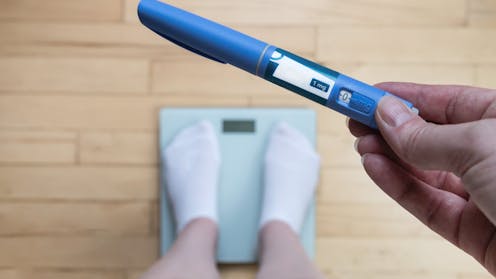
These were the first trials to examine the effects of a 7.2mg dose of semaglutide on body weight. Caroline Ruda/ Shutterstock

A higher dose of the weight loss drug semaglutide (better known by its brand name Wegovy) may help people lose up to 25% of their body weight – without the risk of severe side-effects. These findings are based on the results of two recently published clinical trials.

Semaglutide has proven to be effective in helping people lose weight. But weight loss tends to plateau after about one year of use – even when taking the highest approved dose of the drug. This means patients may not reach their weight loss goals.

So researchers set out to understand whether a higher dose can be effective without the risk of severe side-effects.

In the first trial, researchers studied the effect of a 7.2mg dose of semaglutide in adults with obesity. This is three times the currently approved 2.4mg dose found in Wegovy. Participants were randomly assigned to either receive the higher dose, the standard dose or a placebo drug once a week for a period of 72 weeks.


Read more:
Semaglutide: beware of buying the weight-loss drug online


Participants were also told to reduce their daily calorie intake by around 500 calories per day and increase the amount of physical activity they did each week (aiming for around 150 minutes).

The participants who received the 7.2mg dose lost an average of nearly 21% of their body weight – compared with 17.5% for those on the standard dose. Participants who took the placebo only lost 2.4% of their body weight. These figures are based on those who fully adhered to the treatment regimen.

Around 33% of the participants on the higher dose also experienced very high levels of weight loss – losing 25% or more of their total body weight. This is roughly double the proportion seen in the standard-dose group, where just under 17% achieved this degree of weight loss.

The participants who used semaglutide also saw greater improvements in their cardiometabolic health compared to those who only received the placebo.

As might be anticipated, side-effects were more common in people taking the higher dose of semaglutide than those taking the lower dose. The most common side-effects were gastrointestinal issues, such as nausea or diarrhoea. Around 3% of participants using the higher dose and 2% of participants using the standard dose stopped using the drug because of these gastrointestinal issues.

A second trial then investigated what effect a higher dose of semaglutide would have in people with type 2 diabetes.

It’s well established that people with type 2 diabetes tend to lose less weight on semaglutide compared to those without diabetes. It’s not currently known why this is. So the second trial sought to understand whether a higher dose of semaglutide would also have a significant effect on weight loss in people with type 2 diabetes.

Two vials of semaglutide, with a blue measuring tape wrapped around them.
The higher dose of semaglutide also helped people with type 2 diabetes lose more weight.
Edugrafo/ Shutterstock

This time they recruited 512 participants with obesity who also had type 2 diabetes. They used the exact same study design as they did in the previous study.

Those treated with 7.2mg of semaglutide lost just over 13% of their body weight. The standard dose group lost around 10% of their body weight, while the placebo group lost just under 4% of their total body weight.

Beyond weight loss, the 7.2mg dose of semaglutide brought measurable improvements in metabolic health. On average, waist circumference decreased by 6.5cm compared to the placebo group. Blood glucose levels (HbA1c, a measure of diabetes control) also fell by nearly 2% in those taking the higher dose.

Gastroinstestinal problems were again the most commonly experienced side-effects in those taking semaglutide – with around 6% of the study’s participants stopping the trial because of these side-effects.

Patient benefit

Semaglutide promotes weight loss by mimicking the body’s natural GLP-1 hormone, which helps regulate blood sugar and appetite. These drugs act on brain pathways that control energy balance and food intake, leading to reduced hunger and an earlier sense of fullness (satiety) after eating. This can help people to eat less, leading to weight loss.


Read more:
Eight conditions weight-loss jabs might be beneficial for


Higher doses of semaglutide lead to greater weight loss by more strongly activating the brain regions that control appetite, resulting in reduced hunger and increased feelings of fullness. They also slow stomach emptying more effectively, helping to decrease overall food intake.

The results from these two trials show that a higher dose of semaglutide is both safe to use and very effective. Being able to use a higher dose of semaglutide offers more options for patients when it comes to managing their weight and controlling their blood sugar. It also gives an option to people who may not respond to the standard 2.4mg dose or whose weight loss may plateau.

These findings also show that semaglutide can compete against other weight loss drugs, such as tirzepatide (Mounjaro). In an earlier head-to-head trial, a 10gm-15mg dose of tirzepatide resulted in a 20% loss of body weight in participants – while a standard dose of semaglutide only resulted in an approximately 14% loss in body weight. But these recent studies now show that a higher dose of semaglutide can lead to comparable levels of weight loss.

These results may also raise questions about whether dose escalation may become a future standard of care in obesity treatment.

The Conversation

Martin Whyte does not work for, consult, own shares in or receive funding from any company or organisation that would benefit from this article, and has disclosed no relevant affiliations beyond their academic appointment.

ref. Weight loss drug semaglutide shown to be safe and potentially more effective at higher dose – new findings – https://theconversation.com/weight-loss-drug-semaglutide-shown-to-be-safe-and-potentially-more-effective-at-higher-dose-new-findings-265312

Fed rate cut is attempt to prevent recession without sending prices soaring

Source: The Conversation – USA (2) – By Ryan Herzog, Associate Professor of Economics, Gonzaga University

The Fed’s job can seem like a balancing act. Dimitri Otis/DigitalVision via Getty Images

The Federal Reserve on Sept. 17, 2025, cut its target interest rate as it shifts focus from fighting inflation to supporting the choppy labor market.

As financial markets expected, the Fed lowered rates a quarter point to a range of 4% to 4.25%, its first cut since December 2024.

The Fed’s decision to begin cutting rates comes as evidence mounts that the U.S. labor market is losing momentum. The headline unemployment rate has stayed steady at near record lows, but the underlying trends are more concerning.

At the same time, the fight against inflation is not over yet. While a cooling jobs market could lead to a recession, cutting rates too much could drive inflation higher.

So if you’re the Fed, what do you do?

I’m an economist who tracks labor market data and monetary policy, examining how changes in hiring, wages and unemployment influence the Federal Reserve’s efforts to steer the economy. There’s an incredibly large amount of data the Fed, investors, economists like me and many others use to understand the state of the economy – and much of it often tells conflicting stories.

Here are some the data points I’ve been following most closely to better understand where the U.S. economy might go from here – and the tough choices the Fed has to make.

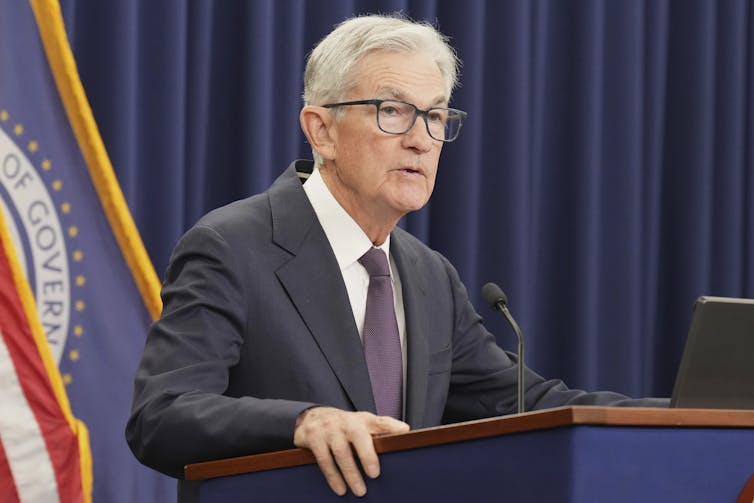
a bespectacled white man in a suit stands before a podium with a micrphone
Fed Chairman Jerome Powell speaks during a news conference after the rate-cut decision.
AP Photo/Jacquelyn Martin

Underlying trouble in the labor market

The labor market looks stable on the surface, but more granular data tells a different story.

The unemployment rate has remained close to historic lows at 4.3% as of August 2025, according to the U.S. Bureau of Labor Statistics.

But the number of long-term unemployed – people out of work for 27 weeks or longer – rose to 1.9 million in August, up 385,000 from a year earlier. These workers now make up 25.7% of all unemployed people, the highest share since February 2022. Persistent long-term joblessness often signals deeper cracks forming in the labor market.

At the same time, new claims for unemployment benefits are spiking. Initial claims for unemployment insurance – a leading indicator of labor market stress – jumped by 27,000 to 263,000 for the week ending Sept. 6, according to the U.S. Department of Labor. That’s the sharpest increase in months and well above economists’ forecasts. It suggests layoffs are becoming more common.

We also got news that past payroll growth was overstated. In a process the Bureau of Labor Statistics undertakes annually to double-check its data, the bureau recently revised its jobs data downward from April 2024 through March 2025 by 911,000. In other words, the economy created roughly 75,000 fewer jobs per month than previously reported. This implies the labor market was weaker than it appeared all along.

Finally, workers are losing confidence. The Federal Reserve Bank of New York reported in August that confidence in finding a job fell to its lowest level – 44.9% – since it started surveying consumers in June 2013. That’s another sign workers are feeling less secure about their prospects.

Taken together, these data points paint a clear picture: The labor market is not collapsing, but it is softening. That helps explain why the Fed is beginning to cut rates now – hoping to stimulate spending – before the job market breaks more sharply.

packages of bacon and other meat are on display in a grocery store
Prices of meat and other groceries have been on the rise recently.
Scott Olson/Getty Images

Tariffs are complicating the inflation data

Even as the labor market softens, tariffs are pushing certain prices higher than they otherwise would be, complicating the Federal Reserve’s effort to bring inflation down.

Government data shows that businesses have begun passing the costs of President Donald Trump’s new import tariffs to consumers. In August, clothing prices rose 0.5% and grocery prices rose 0.6%, with especially strong gains for tariff-sensitive items such as coffee.

Lower-income households are getting hit hardest because they spend more of their budget on imported goods, which tend to be the lower-cost items most affected by tariffs. A report from the Yale Budget Lab found that core goods prices are about 1.9% above pre-2025 trends as tariffs raise costs for basic items such as appliances and electronics.

Phillip Swagel, director of the Congressional Budget Office, said recently that Trump’s tariffs have pushed inflation higher than CBO analysts had expected, even as overall economic activity has weakened since January.

Typically, a slowdown in the labor market is met with slower inflation. But while the CBO now projects that the tariffs will reduce the federal budget deficit by about US$4 trillion over the next decade – roughly $3.3 trillion in new revenue and $700 billion in lower debt service costs – but it will come at the cost of near-term upward pressure on prices.

This creates a difficult balancing act for the Fed: Cut rates too quickly, and tariff-driven price pressures could reignite inflation; move too slowly, and the softening labor market could tip into recession.

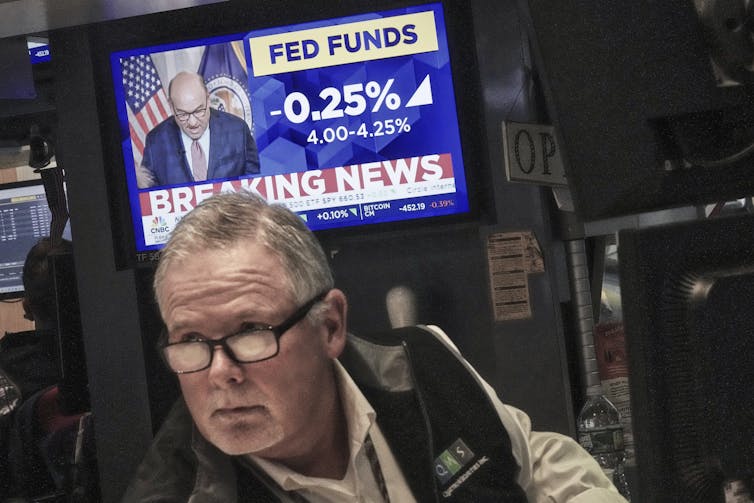
a bespectacled white man in a vest look on as a tv screen shows news of fed rate cut behind him
Traders react to the Fed news.
AP Photo/Richard Drew

A narrow path to a soft landing

As it resumes cutting rates, the Federal Reserve is trying to thread a narrow needle – easing policy enough to keep the labor market from cracking while not reigniting inflation, which is proving stickier in part because of tariffs.

Markets are betting the Fed will keep cutting. The futures market is betting the Fed will cut rates by another half point by the end of the year. And the one-year Treasury yield has dropped about 150 basis points (1.5%) since June, signaling that investors expect a series of rate cuts through 2025 and into 2026.

At its latest meeting, the Fed signaled two more rate cuts in 2025 and at least one rate cut in 2026.

Such cuts would ultimately bring the federal funds rate closer to 3% and hopefully reduce 30-year mortgage rates to around 5% – from an average of 6.35% as of Sept. 11. If the labor market continues to weaken – with jobless claims climbing, payrolls revised down and more workers stuck in long-term unemployment – that expectation will likely harden into consensus.

But the path is far from certain. Cutting rates too quickly could cause inflation to spike, while going too slow could lead to further deterioration in the labor market. Either outcome would jeopardize the Fed’s credibility – whether by appearing unable to control prices or by allowing unemployment to rise unnecessarily. That would undermine its ability to influence markets and enforce its dual mandate of maximum employment and stable prices.

Another tricky issue is Trump’s public campaign to push the Fed to cut rates – appearing to do his bidding could also undercut Fed credibility. For what it’s worth, the Sept. 17 rate cut appears driven less by politics than by economic data. The Fed itself was projecting a year ago that rates would be much lower today than they actually are, suggesting it’s been following the data.

The economy appears to be slowing but remains resilient, which is why the Fed is likely to move gradually. The risk is that the window for a soft landing is closing. The coming months will determine whether the Fed can ease early enough to avoid recession, or whether it has already waited too long.

The Conversation

Ryan Herzog does not work for, consult, own shares in or receive funding from any company or organization that would benefit from this article, and has disclosed no relevant affiliations beyond their academic appointment.

ref. Fed rate cut is attempt to prevent recession without sending prices soaring – https://theconversation.com/fed-rate-cut-is-attempt-to-prevent-recession-without-sending-prices-soaring-265370

Vaccine death and side effects database relies on unverified reports – and Trump officials and right-wing media are applying it out of context

Source: The Conversation – USA (3) – By Matt Motta, Assistant Professor of Health Law, Policy and Management, Boston University

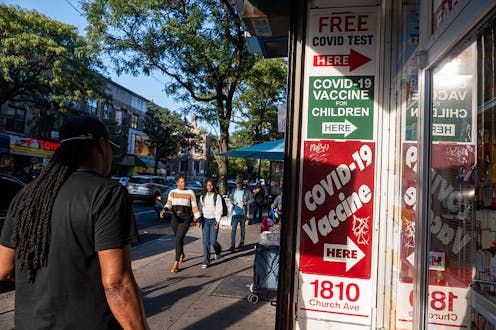
Government approval of COVID-19 vaccines determines their availability to populations vulnerable to infection, such as children. Spencer Platt/Getty Images

Trump officials intend to link 25 child deaths to COVID-19 vaccines, according to reporting from The Washington Post. These findings will reportedly be discussed during the Sept. 18-19, 2025, meeting of the Centers for Disease Control and Prevention’s Advisory Committee on Immunization Practices, with implications for who may be eligible for COVID-19 vaccines in the future.

These death reports are reportedly derived from the Vaccine Adverse Event Reporting System, or VAERS, a database co-managed by the CDC and the Food and Drug Administration. It was originally established in 1990 to detect possible safety problems with vaccines. Unfortunately, the anti-vaccine movement has used this database to spread misinformation about the COVID-19 vaccine. Health and Human Services Secretary Robert F. Kennedy Jr., a prominent anti-vaccine activist, has promulgated this misinformation through the Make America Healthy Again movement in efforts to limit access to COVID-19 vaccines.

VAERS is ripe for exploitation because it relies on unverified self-reports of side effects. Anyone who received a vaccine can submit a report. And because this information is publicly available, misinterpretations of its data has been used to amplify COVID-19 misinformation through dubious social media channels and mass media, including one of the most popular shows on cable news.

We are political scientists who study the social, political and psychological underpinnings of vaccine hesitancy in the U.S. In our research, we argue that VAERS, despite its limitations, can teach us about more than just vaccine side effects – it can also offer powerful new insights into the origins of vaccine hesitancy in the U.S.

What the side effects database was designed to do

Medical experts at the Department of Health and Human Services are well aware of VAERS’ limitations. Rather than taking each individual report at face value, regulators remove clearly fraudulent reports. Demonstrating this, anesthesiologist and autism advocate James Laidler once used the system to report that a vaccine turned him into the “Incredible Hulk,” which was removed only after he agreed to have the data deleted.

Regulators also look for reporting patterns that can be corroborated by additional evidence. For example, reports of Guillain-Barré syndrome should be more common in people over 50 than in younger adults. This can help researchers identify potential adverse events that were not detected in clinical trials.

Because VAERS claims are self-reported, they tell us something about what ordinary people, as opposed to doctors and medical researchers, think about vaccine safety. In other words, people who feel that a vaccine is responsible for a side effect they might be experiencing can log that concern with the federal government, whether or not those claims would stand scrutiny in rigorous clinical testing.

Red breaking news banner behind two vials of COVID-19 vaccine.
Media stories on vaccine side effects can influence public sentiments toward vaccination.
MikeMareen/iStock via Getty Images Plus

Consequently, VAERS reports might not only document people’s negative experiences with vaccination but also their attitudes toward vaccination. People may be more likely to report side effects, for example, in response to media stories about vaccine safety concerns. If reports to VAERS increase following these stories, then the reporting system may be functioning similarly to a public opinion poll. It could reflect, in part, public attentiveness to and concern about potential side effects.

To see whether this is the case, we examined a well-known case of vaccine misinformation: the since-retracted paper that claimed a link between the measles-mumps-rubella vaccine (MMR) to childhood autism.

Is a fraudulent study responsible for MMR vaccine skepticism?

In 1998, former physician Andrew Wakefield and his colleagues published a since-retracted paper claiming that the MMR vaccine could cause autism in children. Although the study was rife with unreported conflicting interests and data manipulation, it nevertheless garnered significant media attention in the late 1990s. Some journalists and researchers have since argued that the paper played a major role in inspiring MMR vaccine hesitancy.

While this is plausible, there hasn’t been evidence to support the argument. Virtually no opinion polling about MMR existed prior to the publication of Wakefield’s paper. Consequently, researchers have not been able to directly observe whether the study influenced how Americans think about the MMR vaccine.

VAERS data, however, could offer some clues. In our study, we examined whether the number of VAERS reports following publication of Wakefield’s paper was significantly greater than expected based on typical report numbers prior to its publication. We found that the number of adverse event reports for MMR increased by about 70 reports per month following publication of the paper. This is significantly greater than what we would expect by chance based on previous reporting frequencies. Notably, we did not find a similar effect for other childhood vaccines in the same time period. This further underscores the power this since-debunked study has had in shaping public opinion about the MMR vaccine.

Importantly, we also found that adverse event reporting rates rose in tandem with negative media coverage of the MMR vaccine. Following the publication of Wakefield’s paper, television and print news published significantly more stories about MMR than before the paper was published. These results suggest that Wakefield’s article influenced how much more attentive Americans were about the MMR vaccine.

VAERS: A double-edged sword

Since the COVID-19 pandemic, interest in the side effects reporting system had significantly grown. Google search engine trends suggest that more Americans were looking up VAERS than ever before shortly after emergency use authorization of the first COVID-19 vaccines in the U.S. This trend continued to increase until a peak in August 2021.

This search behavior is likely a result of increased media attention to VAERS, particularly by right-leaning news outlets. According to the data from media research platform Media Cloud, there have been 459 stories in mainstream national news outlets, such as CNN or USA Today, mentioning VAERS between December 2020 and mid-August 2021. In right-wing media outlets such as Fox News, The Daily Caller and Breitbart, however, coverage soared to 3,254 stories – over seven times more than mainstream news media.

Consequently, VAERS data could be seen as something of a double-edged sword. On one hand, it has been weaponized by the anti-vaccine movement and political actors on the right to sow doubt and distrust about COVID-19 vaccinations. On the other hand, this data could also tell public health researchers something useful about how American vaccine skepticism might ebb and flow in response to events such as the brief pause in Johnson & Johnson COVID-19 vaccine administration or fluctuations in the tone of media coverage about COVID-19 vaccines.

VAERS data may even offer an important advantage over public opinion polls, which, with the exception of weekly vaccine uptake polls, have typically been administered much less frequently. Our research cautions that media attention to discredited vaccine-related claims may undermine public confidence in vaccination.

How to avoid another wave of misinformation

To ensure that VAERS is used properly, journalists and scientific researchers can team up to help the public interpret new findings. Journalists should, in our view, contextualize their coverage within a broader body of scientific evidence. Scientific researchers can aid in this by helping journalists accurately portray studies on vaccine side effects, clearly outlining their methodologies and results in accessible language.

By working together, researchers and journalists can take constructive action to address vaccine hesitancy before it has a chance to germinate.

This an updated version of an article originally published on Aug. 25, 2021.

The Conversation

Matt Motta has received funding from the National Science Foundation.

Dominik Stecuła receives funding from the National Science Foundation.

ref. Vaccine death and side effects database relies on unverified reports – and Trump officials and right-wing media are applying it out of context – https://theconversation.com/vaccine-death-and-side-effects-database-relies-on-unverified-reports-and-trump-officials-and-right-wing-media-are-applying-it-out-of-context-265362

Right-wing extremist violence is more frequent and more deadly than left-wing violence − what the data shows

Source: The Conversation – USA – By Art Jipson, Associate Professor of Sociology, University of Dayton

President Donald Trump is targeting left-wing organizations he incorrectly says promote political violence. Celal Gunes/Anadolu via Getty Images

After the Sept. 10, 2025, assassination of conservative political activist Charlie Kirk, President Donald Trump claimed that radical leftist groups foment political violence in the U.S., and “they should be put in jail.”

“The radical left causes tremendous violence,” he said, asserting that “they seem to do it in a bigger way” than groups on the right.

Top presidential adviser Stephen Miller also weighed in after Kirk’s killing, saying that left-wing political organizations constitute “a vast domestic terror movement.”

“We are going to use every resource we have … throughout this government to identify, disrupt, dismantle and destroy these networks and make America safe again,” Miller said.

But policymakers and the public need reliable evidence and actual data to understand the reality of politically motivated violence. From our research on extremism, it’s clear that the president’s and Miller’s assertions about political violence from the left are not based on actual facts.

Based on our own research and a review of related work, we can confidently say that most domestic terrorists in the U.S. are politically on the right, and right-wing attacks account for the vast majority of fatalities from domestic terrorism.

Trump aide Stephen Miller says the administration will go after ‘a vast domestic terror movement’ on the left.

Political violence rising

The understanding of political violence is complicated by differences in definitions and the recent Department of Justice removal of an important government-sponsored study of domestic terrorists.

Political violence in the U.S. has risen in recent months and takes forms that go unrecognized. During the 2024 election cycle, nearly half of all states reported threats against election workers, including social media death threats, intimidation and doxing.

Kirk’s assassination illustrates the growing threat. The man charged with the murder, Tyler Robinson, allegedly planned the attack in writing and online.

This follows other politically motivated killings, including the June assassination of Democratic Minnesota state Rep. and former House Speaker Melissa Hortman and her husband.

These incidents reflect a normalization of political violence. Threats and violence are increasingly treated as acceptable for achieving political goals, posing serious risks to democracy and society.

Defining ‘political violence’

This article relies on some of our research on extremism, other academic research, federal reports, academic datasets and other monitoring to assess what is known about political violence.

Support for political violence in the U.S. is spreading from extremist fringes into the mainstream, making violent actions seem normal. Threats can move from online rhetoric to actual violence, posing serious risks to democratic practices.

But different agencies and researchers use different definitions of political violence, making comparisons difficult.

The FBI and Department of Homeland Security define domestic violent extremism as threats involving actual violence. They do not investigate people in the U.S. for constitutionally protected speech, activism or ideological beliefs.

Domestic violent extremism is defined by the FBI and Department of Homeland Security as violence or credible threats of violence intended to influence government policy or intimidate civilians for political or ideological purposes. This general framing, which includes diverse activities under a single category, guides investigations and prosecutions.

Datasets compiled by academic researchers use narrower and more operational definitions. The Global Terrorism Database counts incidents that involve intentional violence with political, social or religious motivation.

These differences mean that the same incident may or may not appear in a dataset, depending on the rules applied.

The FBI and Department of Homeland Security emphasize that these distinctions are not merely academic. Labeling an event “terrorism” rather than a “hate crime” can change who is responsible for investigating an incident and how many resources they have to investigate. “investigate IT”?

For example, a politically motivated shooting might be coded as terrorism in federal reporting, cataloged as political violence by the Armed Conflict Location and Event Data Project, and prosecuted as homicide or a hate crime at the state level.

Patterns in incidents and fatalities

Despite differences in definitions, several consistent patterns emerge from available evidence.

Politically motivated violence is a small fraction of total violent crime, but its impact is magnified by symbolic targets, timing and media coverage.

In the first half of 2025, 35% of violent events tracked by University of Maryland researchers targeted U.S. government personnel or facilities – more than twice the rate in 2024.

Right-wing extremist violence has been deadlier than left-wing violence in recent years.

Based on government and independent analyses, right-wing extremist violence has been responsible for the overwhelming majority of fatalities, amounting to approximately 75% to 80% of U.S. domestic terrorism deaths since 2001.

Illustrative cases include the 2015 Charleston church shooting, when white supremacist Dylann Roof killed nine Black parishioners; the 2018 Tree of Life synagogue attack in Pittsburgh, where 11 worshippers were murdered; the 2019 El Paso Walmart massacre, in which an anti-immigrant gunman killed 23 people. The 1995 Oklahoma City bombing, an earlier but still notable example, killed 168 in the deadliest domestic terrorist attack in U.S. history.

By contrast, left-wing extremist incidents, including those tied to anarchist or environmental movements, have made up about 10& to 15% of incidents and less than 5% of fatalities.

Examples include the Animal Liberation Front and Earth Liberation Front arson and vandalism campaigns in the 1990s and 2000s, which were more likely to target property rather than people.

Violence occurred during Seattle May Day protests in 2016, with anarchist groups and other demonstrators clashing with police. The clashes resulted in multiple injuries and arrests. In 2016, five Dallas police officers were murdered by a heavily armed sniper who was targeting white police officers.

A woman crying at a memorial of many flowers outside a church.
A memorial outside Emanuel AME Church in Charleston, S.C., on June 19, 2015, after a white supremacist killed nine Black parishioners there.
Brendan Smialowski/AFP via Getty Images

Hard to count

There’s another reason it’s hard to account for and characterize certain kinds of political violence and those who perpetrate it.

The U.S. focuses on prosecuting criminal acts rather than formally designating organizations as terrorist, relying on existing statutes such as conspiracy, weapons violations, RICO provisions and hate crime laws to pursue individuals for specific acts of violence.

Unlike foreign terrorism, the federal government does not have a mechanism to formally charge an individual with domestic terrorism. That makes it difficult to characterize someone as a domestic terrorist.

The State Department’s Foreign Terrorist Organization list applies only to groups outside of the United States. By contrast, U.S. law bars the government from labeling domestic political organizations as terrorist entities because of First Amendment free speech protections.

Rhetoric is not evidence

Without harmonized reporting and uniform definitions, the data will not provide an accurate overview of political violence in the U.S.

But we can make some important conclusions.

Politically motivated violence in the U.S. is rare compared with overall violent crime. Political violence has a disproportionate impact because even rare incidents can amplify fear, influence policy and deepen societal polarization.

Right-wing extremist violence has been more frequent and more lethal than left-wing violence. The number of extremist groups is substantial and skewed toward the right, although a count of organizations does not necessarily reflect incidents of violence.

High-profile political violence often brings heightened rhetoric and pressure for sweeping responses. Yet the empirical record shows that political violence remains concentrated within specific movements and networks rather than spread evenly across the ideological spectrum. Distinguishing between rhetoric and evidence is essential for democracy.

Trump and members of his administration are threatening to target whole organizations and movements and the people who work in them with aggressive legal measures – to jail them or scrutinize their favorable tax status. The administration’s focus is on left-wing organizations, but research shows that it’s organizations on the right that the government needs to focus on with prevention and investigation.

The Conversation

The authors do not work for, consult, own shares in or receive funding from any company or organization that would benefit from this article, and have disclosed no relevant affiliations beyond their academic appointment.

ref. Right-wing extremist violence is more frequent and more deadly than left-wing violence − what the data shows – https://theconversation.com/right-wing-extremist-violence-is-more-frequent-and-more-deadly-than-left-wing-violence-what-the-data-shows-265367