Romeo and Juliet: a ‘Sliding Doors’ production that plays with time to explore what might have been

Source: The Conversation – UK – By Will Shüler, Vice-Dean of Education and Senior Lecturer, School of Performing and Digital Arts, Royal Holloway, University of London

Structurally, Romeo and Juliet is almost a Shakespearean comedy. The Bard’s comic plays tend to turn the world upside down and then neatly restore the social order, usually by means of marriage.

The world of Romeo and Juliet is turned upside down when two adolescents from warring families fall in love, and the world is set right when the families are united in marriage. But then there are three more acts and the plot veers towards tragedy, tallying six deaths by its end.

Robert Icke’s new production of Romeo and Juliet at the Harold Pinter Theatre thoughtfully interrogates the play’s structure by introducing moments of might-have-been throughout. Starring Noah Jupe (Hamnet) and Sadie Sink (Stranger Things) in the respective titular roles, Icke offers glimpses of how the story might have unfolded differently, in a kind of Sliding Doors version of the play.

Early in the production, Lord Capulet (Clark Gregg) gives the invitation list for his party to the Nurse (Clare Perkins). Then time freezes, we move backwards, and Capulet hands the note instead to an illiterate servant, who bumps into Romeo on the street and asks for his help reading it. Romeo learns of the party and decides to attend in order to see his current crush, Rosaline. Had the Nurse been given the task, she would never have needed help reading the list and Romeo would never have met Juliet.

In this way, the production is riddled with tiny moments that could have altered the plot’s trajectory away from tragedy. In doing so, we get to see alternate universes that make up a multiverse. The multiverse has been a regular device in recent popular storytelling, from the Marvel Cinematic Universe to the adult cartoon Rick and Morty.

Plays like Nick Payne’s Constellations, which had a West End revival in 2021, stage a multiverse by showing how the same scene between two characters might have happened in several different ways, across an infinite number of timelines.

I have written about theatrical multiverses, demonstrating that they offer the audience space to reflect upon how things might have gone differently in their own worlds. In 2021, just after the third UK Covid lockdown, the audience of Constellations was likely attuned to contemplating a world in which they did not expect to find themselves.

With the tumultuous state of the world, it can sometimes feel like we are living in the wrong timeline. The popularity of multiverse stories may seen as ways of reconciling living in our own world, that often feels as if it has been turned upside down.

Romeo and Juliet’s multiverse

As Daniel Swift’s programme note attests, Romeo and Juliet is very much about time. The plot is compressed into five days and it includes more references to days of the week, hours and minutes than any of Shakespeare’s other works. This preoccupation with time is emphasised by Hildegard Bechtler’s set design, which includes two moving panels with illuminated clocks, presenting the precise time and date in fair Verona.

Along with helping the audience understand when we see alternate timelines, the constant reminder of time allows us to reflect on just how quickly things escalate for Romeo and Juliet.

The lovers marry within hours of meeting each other and Romeo is already banished in Mantua before they’ve been wedded for a full day. In this way, the clock points to the youthful haste which creates so much waste. This theme is developed in the emphasis on how quickly Lady Capulet (Eden Epstein) was was made a wife and mother (younger than Juliet, and based on the text she could be as young as 26). This comes through in her subtle portrayal of depression at the thought of lost youth and cowardice in the face of her much older husband.

Jupe’s performance is standout. He is able to capture a contemporary take on the lines without losing any of their rhythm and poetry. This is in contrast to Sink, whose staccato delivery and frequent line breaks (perhaps emphasised by the American accent) jar against the poetry.

Kasper Hilton-Hille’s Mercutio – Romeo’s closest confidant – is a convincingly arrogant scamp. Throughout the production he is an active agent of chaos, always looking for trouble, mooning the Nurse and shaking his crotch at the fiery Tybalt (Aruna Jalloh). In fact he has been so relentlessly seeking out trouble across every timeline explored, that it is curious when in his death throes he calls down a plague on both the houses of Montague and Capulet. Surely he himself is to blame for his own demise?

My one criticism of the use of the multiverse in this production relates to the parts of the plot in which it is deployed. Often, Icke’s alternate timelines relate to chance, rather than the decisions made by the characters. For example, a drink is accidentally spilled, preventing Tybalt from attacking Romeo before he meets Juliet at the party. Or a messenger evades quarantine and delivers a letter informing Romeo that Juliet is actually still alive.

But what if it was the decisions of the characters that played out instead? For example, it would have been interesting to see Romeo not take revenge on Tybalt because he values his duty to Juliet over Mercutio. This would elevate the importance of the actions we take over the randomness of external factors. By emphasising happenstance over agency, Icke’s multiverses situate humans as flotsam on the waves of fate.

A more powerful call to action in our turbulent times would be to emphasise that it is the choices we make that can shape whether our story is a comedy or a tragedy.

Romeo and Juliet is at the Harold Pinter Theatre, London until June 20.

The Conversation

Will Shüler does not work for, consult, own shares in or receive funding from any company or organisation that would benefit from this article, and has disclosed no relevant affiliations beyond their academic appointment.

ref. Romeo and Juliet: a ‘Sliding Doors’ production that plays with time to explore what might have been – https://theconversation.com/romeo-and-juliet-a-sliding-doors-production-that-plays-with-time-to-explore-what-might-have-been-281156

Asha Bhosle: the bad sister whose singing opened up a world of queer possibility for me

Source: The Conversation – UK – By Priyal Chitale, CHASE AHRC Doctoral Researcher and PhD student in the Department of Music, SOAS, University of London

Asha Bhosle, the last surviving singing legend of the golden era of Hindi cinema, has died at 92. She debuted in the industry shortly after Indian independence in the late 1940s and is now widely considered the best-known singer in India, with more than 12,000 songs to her name. Over the course of a long and prolific career, she demonstrated extraordinary enthusiasm for reinvention, and a range and versatility that still remain unmatched.

Fans of Bhosle found joy in her singing and intrigue in her tumultuous love life. She was often associated with the trope of the fallen woman in the public imagination and pitted against her singing elder sister, Lata Mangeshkar, who famously did her best to steer clear of “vulgar” songs and was seen to embody piety, modesty, and self-sacrifice.

The painting of Mangeshkar’s good sister to Bhosle’s bad reflected the distinct categorisation of female characters as either submissive women of virtue or self-serving women of vice, which prevailed in Hindi cinema well into the 1980s. This was mapped onto the singing voices of the sisters by music directors. For instance, Anil Biswas, the pioneer of playback singing, quipped that “Asha has body while Lata has soul”.

However, it was precisely this penchant for breaking the rigid bonds and boundaries of acceptable femininity that always drew me, as it did many other queer south Asian misfits, to Bhosle’s songs.

Possibility and Plenitude

Bhosle belonged to the first generation of star playback singers. These were singers who record songs for actors to lip synch over in films – a common practice in south Asian cinema. Although she was behind the scenes, the quality of her singing made her, in many cases, more famous than the actors who mimed along to her voice.

The hundreds of songs Bhosle sang in the voice of “the other woman” moved sapphic (women and non-binary people who are attracted to women) listeners like me not because they were literally addressed to women, but because they gave voice to women whom Hindi cinema often treated as excessive, dangerous or disposable.

The actors who lip-synched her pre-recorded vocals on screen were frequently women who stood just outside the moral centre of the film: cabaret dancers, courtesans, mistresses, club performers and women whose desire was too intense to be easily domesticated. In their films, such women were often punished, abandoned or contained. In Bhosle’s voice, however, they became vivid, thinking, feeling subjects.

This is why Aao Huzoor Tumko from romantic thriller Kismat (1968) is so revealing. Sung by Bhosle, composed by O.P. Nayyar and written by Noor Devasi, the song is an invitation into intoxicated romance during a seduction scene in the film. Its refrain may be translated as: “Come, my lord, let me take you among the stars; let me take you into such springtime that your heart begins to sway.”

The actor Babita Kapoor performs the song on screen for her beloved, who is played by the debonair Biswajit Chatterjee. But what I hear in Bhosle’s performance is not simply a woman offering herself to a man. I hear a woman luxuriating in the textures of her own desire.

Bhosle laughs, hiccups, sighs and croons languorously through the song. These are not merely ornamental flourishes, but also small acts of vocal acting: ways of turning a film song into a miniature performance of mood, body and selfhood.

When she lingers on the word “mein” (“in” or “into” ) in phrases such as “sitaron mein le chalun” (“let me take you among the stars”), “baharon mein le chalun” (“let me take you into springtime”) and “hazaaron mein le chalun” (“let me take you among thousands”), she makes each repetition feel slightly different. She carefully infuses each “mein” with a distinctive flavour of longing, turning an intoxicated declaration of desire into an intoxicating invitation into female interiority.

For me, the space of this song was never only straight. The song invited me into an elsewhere: into stars, springtime, crowds, intoxication, laughter and the strange privacy of a woman’s pleasure. It allowed me to imagine desire not as shame, sin, or plot device, but as atmosphere. This is what Bhosle so often made possible: the reimagining of a spectacle of seduction as a scene of emotional complexity.

Poster for Kismat 1968.
Asha Bhosle recorded songs for Kismat (1968)
Wikimedia, CC BY

Bhosle herself seemed to understand the power of such performances. In later years, when asked to name her favourite actor to sing for, she chose Helen, who appeared in countless films as a dancer. She remembered Helen as so beautiful that she would stop singing when she entered the room, and joked that, had she been a man, she would have eloped with her.

To me, this felt like a gift to queer women: not because the remark makes Bhosle queer in any simple biographical sense, but because it acknowledged the force of female beauty, female performance and female fascination without embarrassment.

Bhosle did not merely sing women who desired men. She made female desire itself sound artful and alive: playful, pensive, hungry, theatrical, contradictory. In her voice, levity became a mode of serious identity construction, melancholy a means of knowing, and seduction something more than a narrative device designed to punish the woman who performed it. Time and again, she made room for coyness, brazenness, restlessness, satisfaction, anger and hunger to coexist within the same sonic space.

If the pure and pious heroines of Hindi cinema were often permitted only dignity and devotion, Bhosle’s women were granted appetite, ambivalence and ambition. Her singing offered us possibility and plenitude: complex ways of feeling, sensing and relating to love and life that the moral world of Hindi cinema could neither name nor contain.

Her singing was often sinuous and sensuous, and deliberately so, but it was also playful, pensive and passionate in equal measure. She embraced and enlivened the full spectrum of femininity, and rendered women profoundly, excitingly and almost achingly human in ways that were often unthinkable in the narratives that her songs animated. For me, she will always be the greater sister.

The Conversation

Priyal Chitale does not work for, consult, own shares in or receive funding from any company or organisation that would benefit from this article, and has disclosed no relevant affiliations beyond their academic appointment.

ref. Asha Bhosle: the bad sister whose singing opened up a world of queer possibility for me – https://theconversation.com/asha-bhosle-the-bad-sister-whose-singing-opened-up-a-world-of-queer-possibility-for-me-281215

As Arctic waters open up, Canada must prepare for oil spills

Source: The Conversation – Canada – By Chunjiang An, Associate Professor, Building, Civil, and Environmental Engineering, Concordia University

Canada’s Arctic is opening faster than protection efforts are keeping pace. As sea ice declines, shipping is expanding across Arctic and sub-Arctic waters.

That may bring economic opportunities, but it also raises the risk of fuel spills and other pollution in some of the most fragile coastal environments on Earth. The real question is no longer whether the Arctic is at risk. It’s whether Canada is ready for the kind of spill response these places actually require.

The answer is: not yet.

Arctic conditions are changing. September sea ice extent fell from 7.05 million square kilometres in 1979 to 4.37 million square kilometres in 2023. Over the same period, Arctic shipping grew, with traffic in the region reaching 12 million nautical miles in 2022.

More open water means more vessel traffic, longer shipping seasons and more pressure on northern coastlines. It also means a higher chance that a marine accident could turn into a shoreline emergency.

Arctic shorelines aren’t easy places to clean up. Oil does not behave the same way in icy, remote and cold environments as it does in warmer waters. It can be trapped by sea ice, pushed onto shorelines, mixed into snow or persist in sediments and coastal habitats that recover very slowly.

Cleanup is also harder because responders, vessels and equipment may have to travel long distances, often with limited local infrastructure. Even methods that work elsewhere can become far less effective once ice, cold temperatures and remoteness are part of the picture.

Oil spills in the Arctic

In our recently published research, colleagues and I highlight the dangers oil spills pose in the Arctic and the steps policymakers need to take to prepare for them.

The federal government’s Oceans Protection Plan and Multi-Partner Research Initiative are important steps in the right direction. Research supported through these programs has helped improve understanding of spill impacts, response methods and decision-making.

Policies like the Canada Shipping Act and the Arctic Waters Pollution Prevention Act also provide an important regulatory base. Canada is not standing still. But being on the right track is not the same as being ready for an accident.

Preparing before a spill

Canada needs better shoreline vulnerability mapping for Arctic and sub-Arctic regions. Not every shoreline is equally sensitive, and not every place has the same ecological, cultural or community value. A spill near a harvesting area, a culturally important coastal site or a fish habitat used by a nearby community may cause damage far beyond what a standard response map can show.

Preparedness should identify which shorelines matter most, why they matter and what kind of response makes sense in each place. That means combining physical data with ecological, social and cultural knowledge.

Second, we need a better grasp of how oil moves and changes in Arctic coastal areas. Ice cover, water salinity, waves, shoreline slope and sediment type all affect where spilled oil goes and how long it stays. Without that knowledge, response plans can look good on paper but fail in practice. More research is needed on cold-region transport and the special challenge posed by oil mixed with snow and ice.

Third, we need cleanup tools designed for these environments, not borrowed from somewhere else and assumed to work.

Our research points to the need for low-toxicity shoreline cleaners made from more environmentally friendly materials, along with treatment methods that avoid creating secondary waste during cleanup. Being ready for spills should not just mean faster response. It should also mean a safer and more sustainable response.

Indigenous communities vital

Most importantly, Canada’s Arctic cannot adequately prepare for spills without Indigenous partnership at the centre of planning. Many Indigenous communities are located along Canada’s coast, and about 75 per cent of the country’s coastline lies along the Arctic Ocean.

These communities are often among the first to face the effects of shoreline pollution, whether through impacts on food harvesting, water safety, coastal use or culturally important places.

My ongoing research looks into how shoreline protection can be improved through community-led monitoring, local training and stronger participation in governance. Those are not optional add-ons. They are part of what real preparedness looks like.


Read more:
Canada’s Arctic security depends on more than defence — here’s how immigration could help


That also means respecting Indigenous knowledge in spill planning and response. By bringing Indigenous knowledge and western science together to guide shoreline protection, governments can identify culturally important areas and support better responses. In the Arctic, local knowledge is not just helpful; it’s essential operational knowledge.

If Canada wants to open up its Arctic waters to more shipping, it must also prepare for accidents. That means investing in prevention, local capacity, science, Indigenous partnership and region-specific cleanup tools before the next major spill happens, not after.

Canada has made meaningful progress. But there is still a long way to go. A truly spill-ready Arctic will depend on governments, researchers, responders, industry and communities working together, with northern and Indigenous communities treated not as voices on the sidelines, but as core partners in protecting the coast.

The Conversation

Chunjiang An receives funding from the Natural Sciences and Engineering Research Council of Canada and Natural Resources Canada.

ref. As Arctic waters open up, Canada must prepare for oil spills – https://theconversation.com/as-arctic-waters-open-up-canada-must-prepare-for-oil-spills-280010

New test promises to detect cancer earlier — from tiny particles in bodily fluids

Source: The Conversation – Canada – By Sara Hassanpour Tamrin, Postdoctoral Associate, Department of Chemical and Petroleum Engineering, Schulich School of Engineering, University of Calgary

Cancer claims more than 10 million lives every year globally. Research shows that detecting cancer early can greatly improve a patient’s chance of survival. And yet we lack reliable, affordable tools for early detection.

Scientists are now discovering that our bodies may carry early warning signals packaged within tiny, bubble-like particles that circulate in bodily fluids like blood.

In the Schulich School of Engineering at the University of Calgary, we are developing a new technology to capture these particles and read their signals. Our recent work suggests that the electrical signals of these particles could offer a fast, label-free way to use them for diagnostic applications.

Our goal is to develop simple and non-invasive tests for early cancer detection.

Sara Hassanpour Tamrin presents an overview of her research during the Falling Walls Science Summit 2024 in Berlin.

The challenge of early detection

When cancer is found earlier, physicians can start treatment sooner. This helps to save more lives and lower health-care costs for both families and health-care systems.

However, many cancers are still not diagnosed until they are at an advanced stage. This is often because patients are either asymptomatic or dismiss their symptoms because they ascribe them to less serious causes.

Physicians often use bodily fluid tests to look for hidden warning signs in people who do not yet show symptoms of disease. These tests search for special substances (called biomarkers) that cancer cells release into bodily fluids like blood. But most of these biomarkers are rare and do not last long in the body during the early stages of cancer. Because of this, simple blood or urine tests are less reliable for early cancer detection.

What is needed is a simple tool that is cost-effective and can detect new, more robust biomarkers that current tests are unable to detect. It could then be added to the slate of analyses that are routinely run on bodily fluids.

Our interest in this challenge began with a simple question: What if cancer cells were already sending us quiet hints? Messages we had not yet learned to hear? Learning to detect and interpret these signals could enable earlier detection and help change the story for cancer patients.

Reading cancer’s secret language

Whether they are healthy or not, cells in our bodies are constantly communicating, almost like they are “talking” to each other. One way they do this is by packaging messages into tiny, bubble-like particles known as small extracellular vesicles.

A coloured drawing of cells sending and receiving information to each other.
Cells communicate by sending tiny message particles from one cell to another.
(Sara Hassanpour Tamrin)

The messages in these particles can be in the form of genetic material and other biomolecules.

These particles are released by cells into bodily fluids, which, much like a natural postal system, carry and deliver them to target cells, which read the messages and respond to the information they’ve been given. If we can capture these tiny particles from the bodily fluids and analyze their contents, it should provide us with a snapshot of the health of the cells that made them.

When these particles are released from cancer cells, they carry disease-related information both inside them and on their surface. What makes them especially promising for early cancer detection is that they can appear in bodily fluids long before other biomarkers that have traditionally been used to detect cancer. Often this is well before symptoms begin.

This understanding led our team at the University of Calgary to explore ways to collect these tiny particles from bodily fluids and translate their messages into signals that could help physicians detect cancer sooner and make earlier, more informed treatment decisions.

A novel technology to capture these particles

Although small extracellular vesicles hold great promise for early cancer detection, finding these tiny particles in bodily fluids is not straightforward. They are extremely small, about 500 times smaller than a typical pollen grain, and are mixed with many other components in complex fluids like blood and urine.

As a result, isolating them in a reliable way, without damaging them or losing important information, has been a major scientific challenge.

A prototype device with wires, test tubes and electrical current.
A prototype device that uses gentle electrical forces to separate and purify these tiny particles from biological fluids.
(Sara Hassanpour Tamrin)

One important idea in this field is to study these particles in their natural state, without adding foreign molecules like antibodies as labels that may alter their properties. As we discussed in a review article, this kind of approach helps preserve the true signals these particles carry and allows for more accurate analysis.

Building on this, we developed a new technology that uses the natural electrical properties of these particles to capture them directly from bodily fluids.

This technology gently collects these particles using electrical force and preserves the information they carry. This represents a new direction in how we study these particles for diagnostic applications. The technology is patent pending.

From lab research to real-world impact

We are now working to bring our new technology, EXOSense, from the lab into real-world diagnostic tools.

EXOSense captures tiny particles and reads their signals to help find cancer sooner.
(Sara Hassanpour Tamrin)

The EXOSense platform is still under development and needs to be tested with patient samples. It could make a meaningful difference in people’s lives through simple liquid biopsy tests. Much of our work focuses on developing miniaturized platforms, using microfluidic technology, that are both user-friendly and cost-effective.

This approach aims to improve access to diagnostic tools, particularly in under-served communities with limited laboratory infrastructure. Over time, we anticipate this work will lead to a new test that can detect cancer early using just a drop of biofluid and will contribute to reducing the burden of cancer.

The Conversation

Sara Hassanpour Tamrin receives funding from Banting Postdoctoral Fellowship program, supported by the Natural Sciences and Engineering Research Council of Canada (NSERC). She previously received support through the Alberta Innovates Postdoctoral Fellowship program.

Arindom Sen receives funding from the Natural Sciences and Engineering Research Council of Canada (NSERC).

ref. New test promises to detect cancer earlier — from tiny particles in bodily fluids – https://theconversation.com/new-test-promises-to-detect-cancer-earlier-from-tiny-particles-in-bodily-fluids-280663

King Charles embarks on state visit to the US – can he repair the special relationship?

Source: The Conversation – UK – By Francesca Jackson, PhD candidate, Lancaster Law School, Lancaster University

King Charles’s four-day state visit to the US is going ahead as planned, after a shooting at the White House correspondents’ dinner raised doubts about security. The royal trip, which coincides with the 250th anniversary of American independence, is the first since 2007, when the late Queen Elizabeth II was hosted by President George W. Bush.

State visits are formal, international visits made by the heads of state, which in the UK is the king. In September 2025, the king hosted an inbound state visit for US President Donald Trump. Now, he and Queen Camilla will head to Washington DC, New York and Virginia.

The visit, which runs from April 27 to 30, has been controversial amid tensions between the White House and Downing Street. Trump has repeatedly criticised Keir Starmer over a lack of support for the US military operation in Iran. Trump’s threats to buy Greenland, and capture of Venezuela’s president Nicolás Maduro, have also received varying levels of criticism from the UK government.

Trump has also called the UK’s plan to cede sovereignty of the Chagos Islands to Mauritius an “act of great stupidity”, and reports suggest the US is reviewing its position on Britain’s claim to sovereignty of the Falkland Islands.

Diplomacy between the two countries is currently at an “all time low”, according to former Labour defence minister and Nato secretary general Lord Robertson. Lib Dem leader Ed Davey has called for the visit to be cancelled, and Emily Thornberry, chair of the foreign affairs select committee, has said it should be delayed while the war in Iran is ongoing.

In addition, the visit is difficult for the king personally. Charles’ brother, Andrew Mountbatten-Windsor, was a close associate of the convicted sex offender Jeffrey Epstein. The king has been urged to meet with Epstein’s victims. No such meeting is currently scheduled, although the queen is due to meet representatives of campaigns against violence against women.

The final decision over whether to cancel or proceed with a state visit lies with the government, not the king. It is constitutional convention that the monarch must ultimately accept the advice of the prime minister.

Indeed, the Buckingham Palace press release announcing the visit stated that it would take place “on advice of His Majesty’s Government”. This specific wording is rare – usually, there is no explicit mention of state visits being made on the advice of the government. Given Trump’s respect for the royal family, Starmer’s government likely sees this visit as a necessary opportunity to ease UK-US tensions.

How are state visits arranged?

Both inbound and outbound state visits are coordinated by the UK Royal Visits Committee (RVC), which is comprised of Cabinet Office officials. They pass the RVC’s recommendations to the prime minister, who offers formal advice to the monarch. The king’s representatives attend RVC meetings.

According to the 19th-century constitutional historian Walter Bagehot, the monarch has “the right to be consulted, the right to advise, and the right to warn”. This seems to at least give the monarch a bit of discretion over details of their state visits.

George VI – the first reigning British monarch to make a state visit to the US, in 1939 – made some changes to the itinerary originally presented to him, including requesting not to address Congress due to his stammer.

Following talks with the White House, Buckingham Palace have reportedly made some “modest operational adjustments” to a few engagements during this visit due to security concerns sparked by the shooting at the correspondents’ dinner.

Tricky political climate

It is not unusual for political events to cast a shadow over state visits. Queen Elizabeth II’s first US state visit took place amid the Suez crisis. Her presence helped to “preserve the special relationship” at a time when it was being tested like never before.


Read more:
What to expect next from the ‘special relationship’ as Trump again lashes out at Keir Starmer


Ahead of the US bicentennial celebrations in 1976, the British ambassador in Washington even warned against sending the queen to Washington due to political events. Amid the Watergate scandal, there was “a very real chance not only of embarrassment to Her Majesty, but of impairment to the dignity of the monarchy”. The RVC suggested that Charles, then Prince of Wales, should go instead.

The British government has long referred to state visits as their “big gun” thanks to the popularity of the monarchy and the symbolic power of a state visit.

Trump is known to admire the British royal family, describing the king as a “fantastic man”. Recent history suggests the king may even be one of the few people to whom Trump is willing to listen.

Just a week after visiting Windsor Castle in September 2025, the president went from urging Kyiv to make territorial concessions to insisting, at the UN General Assembly of Nations, that it could win back all of the territory captured by Russia since 2022. According to Volodymyr Zelensky’s chief of staff, King Charles was a “key influence” on this shift.

Most recently, private comments made by the king to the president were said to have encouraged Trump to backtrack from his comments about British soldiers “staying back” from the front lines in Iraq.

The king will address both houses of Congress and deliver a speech at the state banquet. These diplomatically chosen words, which are likely to have been carefully written for him by the government with the involvement of royal aides, will provide opportunities for him to quell the tensions of recent months. The government will hope that – just as Trump has claimed it can – the king’s visit will “absolutely repair” UK-US relations.

The Conversation

Francesca Jackson does not work for, consult, own shares in or receive funding from any company or organisation that would benefit from this article, and has disclosed no relevant affiliations beyond their academic appointment.

ref. King Charles embarks on state visit to the US – can he repair the special relationship? – https://theconversation.com/king-charles-embarks-on-state-visit-to-the-us-can-he-repair-the-special-relationship-281454

Dawn Chorus Day: a composer on the musical styles of birdsong

Source: The Conversation – UK – By Justin Morey, Senior Lecturer in Music Production, Leeds Beckett University

International Dawn Chorus Day (May 3 for 2026) is a great time to hear the UK’s birds at their most vocal. While we can enjoy the variety and beauty of birdsong, for the birds themselves it serves more practical purposes – to attract a mate and establish and defend a breeding territory.

Birds can produce complex vocal sounds, which we refer to as “song” because they have a vocal organ called the syrinx – which, unlike the larynx possessed by mammals like the human, can make two distinct notes simultaneously. This ability to generate notes in rapid succession is helpful because birds hear their song and the songs of other birds differently to humans.

Research suggests that they are able to perceive small and rapid changes in sound much more clearly than we can, meaning what we may hear as a single or buzzy note will be distinguished by them as multiple notes. Birdsong to a bird is something of much greater complexity than we can apprehend.


International Dawn Chorus Day brings casual bird appreciators, ornithological experts and dedicated twitchers together in a celebration of birdsong. In our series, experts give their insights on nature’s chorus.


While I understand that I hear bird song very differently to the creatures that make it, my background as a music producer, field recordist, sound artist – and keen amateur birdwatcher (and listener) – has made me think about which notable musicians and pieces of music might have something in common stylistically with the songs of certain birds. The following is both speculative and entirely subjective and I would welcome other ideas and opinions.

Blackbird

Whether delivered from rooftop or treetop, their sweet, tender and calming song, which has been likened to human whistling, can often be heard book-ending our daylight hours. Bobby McFerrin’s whistled introduction to Don’t Worry Be Happy captures something both of the blackbird’s performance and sense of ease it can create in the listener.

Though joined by visitors from colder climes in autumn and winter, our breeding population of blackbirds are common year-round residents in UK gardens and woodlands.

Nightingale

There are few wildlife experiences in the UK that can match hearing a nightingale singing at close range, and this summer visitor – a scarcer cousin of the blackbird and song thrush – should be in full voice by International Dawn Chorus Day. The dynamics, dexterity and variation in its song are extraordinary, and it is no surprise that it has inspired poets such as Keats, Milton and Rossetti, and composers including Stravinsky, Beethoven and Rimsky-Korsakov.

When thinking about a musician who can get some way to matching the expressiveness of the nightingale, Italian American operatic soprano Amelita Galli-Curci’s 1927 recording of the Russian popular song The Nightingale (Solovey) by Alyabyev
captures something of the bird’s style with her nimble and vivid flourishes.

However, the nightingale is known for never performing the same song twice, and as
one of nature’s great musical improvisers, a better match might be the solos of jazz saxophonist John Coltrane.

In Bye Bye Blackbird Coltrane combines fast-paced bursts of melody with more thoughtful and lyrical sections, evoking something of the nightingale’s song. Coltrane is also quite a loud player and nightingales, as anyone who has heard one in the flesh will know, are loud – you can’t miss them.

Reed warbler

A wetland reedbed bird that arrives in the UK in mid-April, the reed warbler
couldn’t be further from the melodic and rhythmic variation of the nightingale. It prefers an almost monotonic song.

The hypnotic main riff on New York DJ and producer Joey Beltram’s Energy Flash comes to mind for its rhythmic solidity, while its subtle filter adjustments evoke the bird’s buzzy modulation.

Sedge warbler

The reed warbler, or at least its sound, might not be out of place in a subterranean Berlin techno club at 4am, but its reedbed neighbour the sedge warbler is much more of a bebop hep cat. Its fast and complex patterns combining staccato sections with more melodic phrases could recall the sharp accents and raid trills of “the Bird” himself – legendary saxophonist Charlie Parker.

But for me, the sedge warbler is too buzzy and raspy for the smooth tones of a tenor sax, and the rapid-fire delivery of trumpeter Fats Navarro on cuts like Wail or The Chase is a better fit.

Blackcap

One of our more common migrant warblers in the UK, the blackcap’s loud and
frequent song can be heard in wooded areas across the country. To my ears, its
volume and power is matched only by its tunelessness, with every note sounding just
a little flat or sharp in relation to what proceeds and follows.

It is reminiscent of an enthusiastic singing talent show auditionee belting out Anastasia’s I’m Outta Love. Nine out of ten for effort, but a much lower score for the precision of its pitching.

Bittern

The elusive bittern is usually a bird to be heard but not seen. Another denizen of the reedbed, its booming song can be likened to someone blowing across the top of a very large bottle or beginning to play a giant didgeridoo and then thinking better of it. Like the reed warbler, it prefers to stay hidden among the reeds where it provides some serious sub bass accompaniment to that other bird’s techno riffing. Think of a bleep-and-bass classic like LFO by LFO.

I hope you enjoy the variety and virtuosity of song on offer in your own garden, local park or woodland on International Dawn Chorus Day. Or like me, you can head for the rave going on at your nearest wetland nature reserve.

The Conversation

Justin Morey does not work for, consult, own shares in or receive funding from any company or organisation that would benefit from this article, and has disclosed no relevant affiliations beyond their academic appointment.

ref. Dawn Chorus Day: a composer on the musical styles of birdsong – https://theconversation.com/dawn-chorus-day-a-composer-on-the-musical-styles-of-birdsong-279870

Canada’s Arctic security depends on more than defence — here’s how immigration could help

Source: The Conversation – Canada – By Hamed Kazemzadeh, Adjunct Assistant Professor, Peace and Conflict, University of Calgary; L’Université d’Ottawa/University of Ottawa

A Canadian Ranger patrols the frozen landscape near Eureka, Ellesmere Island, Nunavut, on a snowmobile bearing the Canadian flag.
(Kevin Paul/The Arctic Institute), CC BY

Canada is facing a new reality: Arctic security is no longer just about military presence. It’s increasingly about whether communities in the North have the people, infrastructure and capacity to sustain sovereignty in a rapidly changing region.

In February 2026, the Arctic Summit in Whitehorse brought together policymakers, defence experts and Indigenous leaders to address emerging challenges in the North.

Much of the discussion focused on rising geopolitical threats — particularly Russia’s military activity and China’s growing presence in the Arctic.

But a critical piece of the puzzle is often overlooked: the role of immigration and migration.

Security isn’t just military

A recent Canadian Senate report on Arctic security argues that the concept must extend beyond defence to include environmental, economic and social dimensions, especially the well-being of northern communities.

This reflects a broader shift in thinking. Climate change is opening Arctic waters, increasing shipping traffic and access to natural resources.

At the same time, new threats — including long-range missiles and cyber operations — mean geography alone no longer protects Canada’s North. Security also depends on something more basic: people.

Northern Canada faces significant labour shortages, limited infrastructure and declining or stagnant populations. These challenges affect everything from emergency response and health care to transportation and construction. Without a stable work force and strong communities, Canada’s ability to maintain a consistent presence in the Arctic is weakened.

Immigration/migration as a security tool

Immigration and migration are usually considered part of economic policy. In the Arctic, they’re also a security strategy.

Research shows that immigration can help address demographic and labour challenges in rural and northern regions. However, attracting newcomers is only part of the equation — retaining them remains a major challenge.

Statistics Canada data shows that retention rates vary widely across regions, with northern and smaller communities often struggling to keep newcomers over the long term.

This matters for security. A temporary workforce doesn’t build resilient communities. Long-term settlement does. If newcomers to the North stay, they contribute to infrastructure development, local economies and essential services. They become part of the social fabric that supports everything from search-and-rescue operations to climate adaptation efforts.

children board a schoolbus
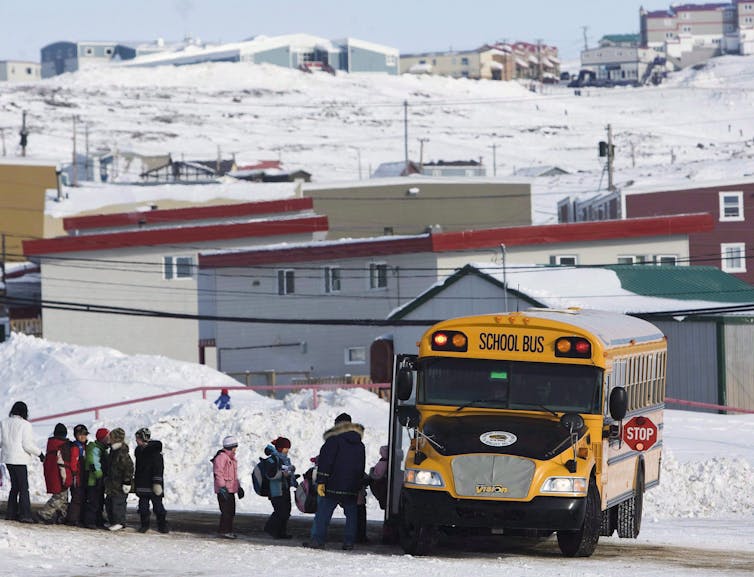
Students board a school bus at Nakasuk Elementary School in Iqaluit, Nunavut.
THE CANADIAN PRESS/Nathan Dennette.

Geopolitical situation is changing

The urgency of this issue is rapidly growing. Russia has invested heavily in Arctic military infrastructure while China has declared itself a “near-Arctic state,” increasing its research and economic activities in the region.


Read more:
Chinese scientists are increasingly shaping the future of the Arctic amid China’s rising presence


At the same time, Canada is working closely with the United States through NORAD to monitor emerging threats, including hypersonic weapons.

In response, Canada is investing billions in Arctic defence, including surveillance systems and infrastructure upgrades. The federal government has also launched a new Defence Industrial Strategy aimed at strengthening domestic capacity and supply chains.

But these investments require people — skilled workers, engineers, technicians, health professionals and community members — to be effective. Without a strong population base, infrastructure cannot be built or maintained, and defence capabilities cannot be fully realized.


Read more:
Indigenous women in Northern Canada creating sustainable livelihoods through tourism


Indigenous partnership is central

Any discussion of immigration and migration in the North must also recognize that Indigenous Peoples are not stakeholders — they are rights holders.

Indigenous communities have lived in the Arctic for thousands of years and play a central role in Canada’s sovereignty. Policies that ignore this reality risk repeating past harms.

The Senate report emphasizes that Arctic security decisions must involve Indigenous governments and reflect their knowledge and priorities. This applies equally to immigration and migration.

Newcomer attraction and settlement must be aligned with Indigenous governance, local economic goals and community needs. When done properly, immigration or migration can support Indigenous-led development and expand opportunities without undermining existing communities.

From policy gap to opportunity

Canada already has some tools in place. Yukon and the Northwest Territories use nominee programs to attract workers, while Nunavut relies more heavily on federal mechanisms. But these systems are not yet fully aligned with Arctic security objectives.

A more co-ordinated approach could link immigration and migration policy with defence planning, infrastructure investment and regional economic development.

For example, new defence infrastructure projects could include workforce strategies that prioritize both local and newcomer employment. Settlement supports — such as housing, language services and community integration — could be expanded to improve retention.


Read more:
Canada’s Arctic defence policy update: All flash, no bang


Canada’s Arctic sovereignty has long been associated with geography and military presence. But sovereignty is now also about resilience — the ability of communities to live, work and thrive in the North.

The Centre for Immigrant Research, a Calgary-based Canadian think tank, argues in its recent work on the North that immigration and migration — when thoughtfully designed and implemented in partnership with Indigenous and territorial governments — can play a key role in strengthening regional resilience and national sovereignty.

Therefore, Canada has an opportunity to rethink its approach. While defence investments are essential, they aren’t sufficient on their own. In the Arctic, security ultimately depends on people — and on ensuring they are able to build and sustain long-term lives in the North.

The Conversation

Hamed Kazemzadeh does not work for, consult, own shares in or receive funding from any company or organisation that would benefit from this article, and has disclosed no relevant affiliations beyond their academic appointment.

ref. Canada’s Arctic security depends on more than defence — here’s how immigration could help – https://theconversation.com/canadas-arctic-security-depends-on-more-than-defence-heres-how-immigration-could-help-281061

Why the Southeast is burning – extreme drought is only part of the cause

Source: The Conversation – USA (2) – By Zachary Handlos, Atmospheric Science Educator, Georgia Institute of Technology

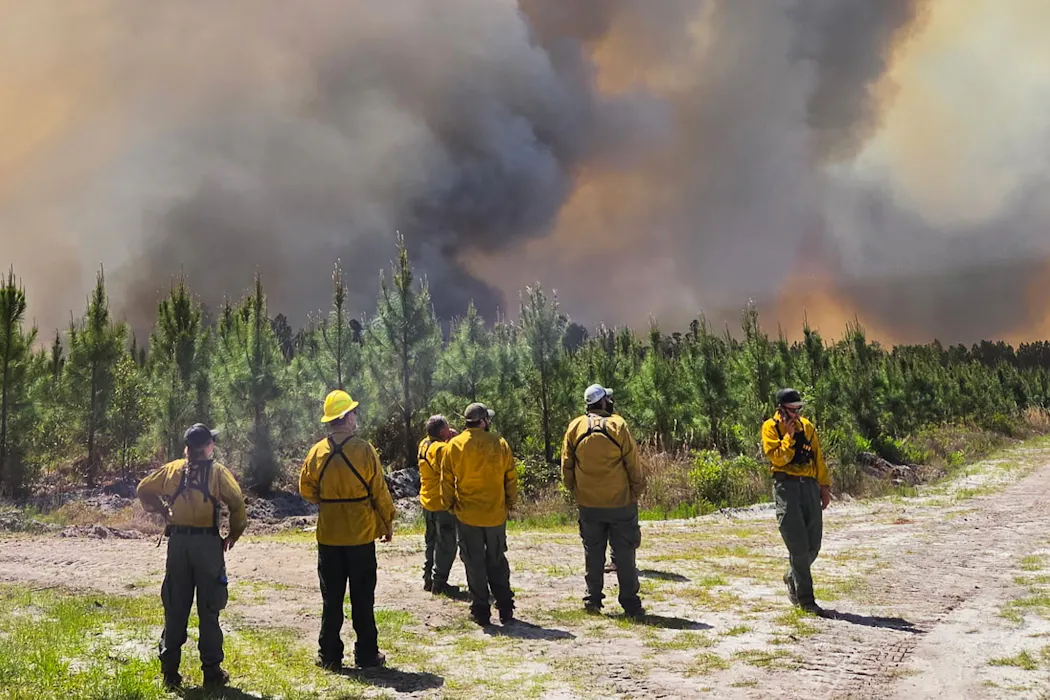
Fire crews responded to dozens of wildfires burning in Georgia and northern Florida on April 23, 2026. Georgia Department of Natural Resources via AP

Large parts of the southeastern U.S. are in the midst of an exceptional drought, and it is fueling dozens of wildfires in Florida and Georgia.

One of those wildfires, in southeastern Georgia’s Brantley County, had burned about 90 homes and had spread to more than 20,000 acres by April 27, 2026. Another fire near the Georgia-Florida border had burned more than 30,000 acres and about 35 structures. The smoke from the blazes triggered air quality alerts in Atlanta.

Why is a region of the U.S. more often known for thunderstorms and humidity in spring seeing so many wildfires?

A forested area with a burned-out vehicle, burned trees and gray ash covering everything.
A fire near the Florida-Georgia line had burned nearly 30,000 acres by April 23, 2026, leaving ash behind.
Georgia Department of Natural Resources via AP

I teach meteorology at the Georgia Institute of Technology, including how weather patterns can lead to conditions conducive to wildfires. Here’s what’s happening to drive these conditions.

Key ingredients for a wildfire

Wildfires need a few key ingredients to spread: low relative humidity, dry fuels and strong winds.

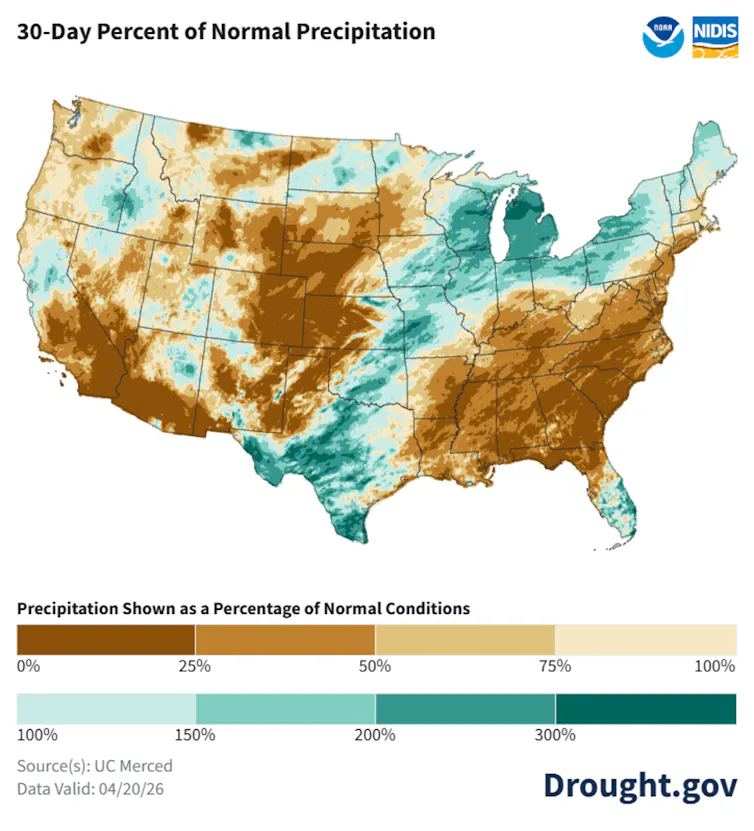
Much of the Southeast has been in a drought since July 2025. From mid-March to mid-April 2026, the region saw less than a quarter of its normal precipitation for that time of year.

A U.S. map showing very dry conditions over much of the eastern U.S., the Southwest and the Great Plains.
A map showing how far above or below average precipitation has been in each region from mid-March to mid-April 2026 shows just how dry much of the U.S. Southeast has been.
Drought.gov

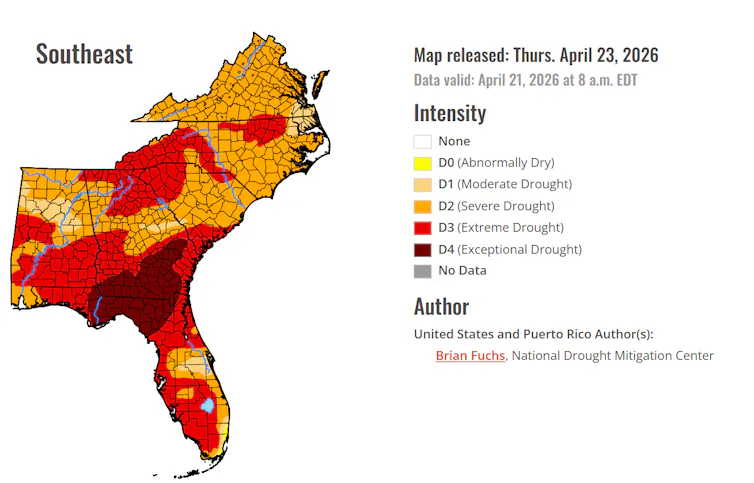
As a result, the U.S. Drought Monitor classified most of this region in “extreme” or “exceptional” drought by mid-April.

In the map of the Southeast, an area of exceptional drought stretches from the Florida Panhandle to central coastal Georgia. much of the rest of the two states are extreme drought.
A map of the U.S. Southeast as of April 21, 2026, shows exceptional drought across the Georgia-Florida border area and extreme drought in many other areas.
Brian Fuchs, National Drought Mitigation Center/U.S. Drought Monitor

Part of the reason for the lack of rainfall has been a persistent high-pressure system over the Southeast.

High-pressure systems are areas where air aloft sinks toward the surface, preventing clouds and precipitation from forming. The Southeast high-pressure system resulted from the presence of a “ridge” in the jet stream, a northward bend in this fast current of air several miles above Earth’s surface.

Another consequence of this high pressure has been the presence of generally southeast winds, which have transported warm and fairly dry air into the area.

The relative humidity – a measure of the amount of moisture in the air relative to the maximum amount the air can contain at its actual air temperature – has also been very low due to warmer-than-usual temperatures and lower-than-usual moisture.

A weather map shows the high-pressure system over the Southeast keeping conditions dry.
A weather map from the Global Forecast System for April 23, 2026, shows the forecasted low-pressure (red L) and high-pressure (blue H) systems.
Pivotal Weather

As a result of these conditions, trees, grass and leaves dry out and can quickly become fuel for wildfires. That kind of dry fuel is widespread throughout rural areas of Georgia and north Florida.

Once a fire starts, whether from lightning, power lines or other human sources, strong winds can spread it rapidly in these conditions. Georgia fire officials said the largest fire in mid-April, near the Florida state line, started with a spark from welding equipment that ignited surrounding vegetation. They believe a mylar balloon hitting a power line sparked the fire that burned dozens of homes in Brantley County.

What’s ahead for the region?

As global temperatures rise, the frequency of drought conditions in the Southeast will increase. This, in combination with less soil moisture content in the summer, could be conducive for increased wildfire activity.

Wildfires do eventually burn out. It takes a combination of help from the atmosphere, with moisture to douse them, and firefighters clearing away dry fuel to stop their spread.

Georgia and Florida may get a reprieve soon from the weather, as multiple low-pressure systems are forecast for the region in late April and early May that could bring rainfall. In the meantime, more than half of Georgia’s counties are under a state of emergency, as several agencies battle the flames to protect homes with helicopters in the air and scores of firefighters on the ground.

This article, originally published April 23, 2026, has been updated with more homes damaged and the suspected causes.

The Conversation

Dr. Zachary Handlos receives funding from the U.S. National Science Foundation. He is affiliated with the Georgia Institute of Technology (i.e., “Georgia Tech”) School of Earth and Atmospheric Sciences (EAS) and is the Director of their Atmospheric and Oceanic Sciences (AOS) undergraduate degree program. He is also currently the chair of the American Meteorological Society (AMS) Board on Higher Education (BHE).

ref. Why the Southeast is burning – extreme drought is only part of the cause – https://theconversation.com/why-the-southeast-is-burning-extreme-drought-is-only-part-of-the-cause-281392

Here’s what we know about the climate cost of white trails aircraft leave in the sky

Source: The Conversation – UK – By Nicolas Bellouin, Professor of Climate Processes, University of Reading

Ciprian23/Shutterstock

Contrails, short for condensation trails, are the white streaks often seen in the sky behind aircraft. The international cloud atlas, which classifies clouds, has a category just for them: cirrus homogenitus, an example of man-made clouds.

Contrails contribute to climate change, adding to the warming by the carbon dioxide emitted by aviation. Although the exact amount of warming caused by these wispy-looking clouds is uncertain, what is understood now suggests that reducing the number of contrails has the potential to reduce the climate impact of flights.

Contrails are made of ice crystals. These reflect sunlight, causing the Earth’s surface to receive less energy, but at the same time trapping some of Earth’s outgoing infrared radiation. Depending on the balance between those two opposite effects, a net loss of energy or a gain of energy, individual contrails can be either warming or cooling over their lifetime, but warming dominates once averaged over the global, annual contrail population.

How are they made?

Contrails form behind aircraft at around an altitude of 10-11km. They only form in sufficiently cold and humid regions of the atmosphere, where water vapour condenses on to the soot particles emitted by aircraft engines to form liquid droplets, which freeze into ice crystals. The regions with the most contrails are over Europe, the North Atlantic, and eastern North America. They are rarer in Asia.

Soot particles are needed to form contrails, yet even engines that emit very few soot particles still generate contrails. Other particles, often formed in the engine plume, take over and lead to contrail formation. But some combinations of fuel and engine technology may yet provide a way to form fewer contrails, or at least contrails with a smaller climate impact.

The characteristics of a contrail depend initially on the size, shape and engine position of the aircraft that created it, but atmospheric conditions are ultimately more important.

In a dry atmosphere, contrails only last a few minutes and cover a tiny surface area: their climate impact is negligible. But if the atmosphere remains cold and moist enough, many contrails form, grow, and come together to form fields of ice clouds, called contrail cirrus.

Contrail cirrus impact the climate because they last for several hours and can cover large areas, sometimes spanning entire countries, as has been observed over the UK and France, for example.

Sky showing numerous trails from aircraft.
Contrails from aircraft form in colder temperatures.
we12e/Shutterstock

Some contrail cirrus clouds can exert the same climate impact as tens, even hundreds, of tons of carbon dioxide.

Two effects make contrails particularly potent. Although they initially form from the few hundred kilograms of water vapour and the
dozens of grams of soot released every minute of flight, contrails then gain mass from the humidity of the atmosphere. Also, ice crystals absorb infrared radiation at virtually all wavelengths, while carbon dioxide only absorbs in narrow wavelength ranges.

However, contrail cirrus strongly affect the flow of energy in and out of the Earth for a few hours. This is in contrast to the comparatively weaker changes caused by carbon dioxide, which last for centuries. So the warming caused by a flight will initially be dominated by contrails, but carbon dioxide will dominate a few years after the flight.

Routing aircraft to avoid flying in the regions where contrails form may slow down the climate warming caused by a growing aviation sector. But there are still many things scientists need to understand about how to predict which flights would see their climate impact reduced the most using this kind of planning.

Weather forecasts of humidity at flight altitude need to improve, and one way to do so is to have more accurate and more frequent measurements of humidity. This is the aim of the Mist research project, where I work with Honeywell Aerospace UK and Boeing UK to develop a humidity sensor to detect contrail formation, see how the sensor can be integrated on commercial aircraft, and evaluate how better humidity measurements affect the predicted climate impact of contrails.

Many research projects are seeking to better quantify the climate impact of contrails and find ways to form fewer warming contrails. Changing fuel or engine technology is slow. But optimising flight trajectories with weather forecasts to avoid the cold, moist regions of the atmosphere where contrails form might be achievable more quickly.

The Conversation

Nicolas Bellouin has received and receives funding for aviation non-CO2 climate research, which includes contrail research, from the UK National Environment Research Council, Innovate UK and the Aerospace Technology Institute, the European Union’s Horizon programme, the SESAR Joint Undertaking, and the French Civil Aviation Authority. He is a member of the Aviation Non-CO2 Expert Network (ANCEN) of the European Aviation Safety Agency.

ref. Here’s what we know about the climate cost of white trails aircraft leave in the sky – https://theconversation.com/heres-what-we-know-about-the-climate-cost-of-white-trails-aircraft-leave-in-the-sky-279505

Kenya’s Sawe breaks the 2-hour barrier: what’s next for the men’s marathon world record?

Source: The Conversation – Africa – By Simon D. Angus, Professor, Department of Economics & SoDa Laboratories, Monash Business School, Monash University

Well, well. Kenyan marathon runner Sabastian Sawe has officially broken through the fabled “sub-2-hour” marathon barrier.

On a reportedly perfect Sunday, 26 April 2026 in London, the 31-year-old Sawe ran through the finish gate on the Mall in front of Buckingham Palace’s gilded architectural flourishes in an official marathon time of 1 hour 59 minutes and 30 seconds.

This betters the marathon world record by a whopping 65 seconds, the largest single improvement since 2018. The previous world record was held by the late Kelvin Kiptum, also of Kenya. Kiptum’s 2 hours and 35 seconds, set in Chicago in 2023, now somehow seems an entire era away.

In fact, saying Sawe broke 2 hours is something of an understatement. Such was the brilliance of the moment, that Sawe pushed the second-placed Yomif Kejelcha of Ethiopia below the sub-2-hour mark as well, just 11 seconds behind Sawe.

But as we absorb all of this, it’s hard not to wonder, “What next?”

My interest as a data scientist and economist (and fellow runner) lies in analysing the historical progression of the men’s and women’s world marathon records.

If sub-2 was the driving force behind the marathon in the last decade, what’s left to aim for?


Read more:
Marathon under 2 hours is closer than ever – scientist shows how Kenya’s Kiptum tests human limits


Humanity seems obsessed with the limits of human creativity, ingenuity and performance. We award extravagant prizes for world firsts and remember the greatest achievements through bronze statues in prominent squares the world over.

But can we actually calculate these limits? Is there a “maths” of human endeavour?

Historical world record progression

Back in 2018, the legendary Eliud Kipchoge of Kenya ran 2 hours 1 minute and 9 seconds in the official Berlin Marathon. At the time, many dared to dream Kipchoge could be the one to take the men’s marathon below 2 hours.

In fact, a year later, Kipchoge appeared to do just that – running a phenomenal 1 hour 59 minutes and 40 seconds in a tightly orchestrated “breaking 2” display in Vienna.

However awe-inspiring, the Vienna effort would never make it into the official marathon books. The run was contrived in a number of ways, fully understood and acknowledged by Kipchoge and the organisation around him. This was never about the record, but instead, it was, he said, about proving that limits are there to be broken.

Around the same time, I had been working on a statistical approach to modelling the progression of marathon world records over the last few decades. I was intrigued to apply learnings from technological change in economics to the question of human performance.

There are all kinds of factors that feed into a world-record marathon performance. These range from training methods, nutrition, supplementation and biometrics, to performance analysis, and of course, clothing and shoe technology.

However, my approach, drawn from the economics of innovation, is founded on the idea that while performance gains can be made in any of these areas at any time – providing innovation rates stay steady over time – then the next world record marathon performance should be somewhat predictable.

Back then, I estimated that the official men’s marathon would break the sub-2 barrier around May 2032. That is, assuming a pretty rare 1-in-10 chance on any given marathon day of it happening.

Since then, we’ve had Kipchoge himself break his own record at Berlin in 2022, then Kiptum in Chicago in 2023, and now Sawe in London.


Read more:
Eliud Kipchoge broke the men’s marathon record by 30 seconds. How close is the official sub-2 hour barrier now?


At each point, I’ve adjusted my predictions, since the model can use the new world record marks to improve its accuracy.

My most recent prediction, made in October 2023 for a runner similar to Kiptum, would be that the official sub-2 would go down in March 2027. From the perspective of a prediction exercise starting with data from the 1960s, Sawe was just a touch early!

How likely was Sawe’s run?

Using my original modelling framework, if we include data only up to Kiptum’s Chicago run in Oct 2023, the likelihood of a sub-2 on 26 April 2026 is estimated to be 1 in 4.29 (just less likely than 1 in 4 odds). In other words, pretty likely!

However, this is the likelihood of a run of just under 2 hours – 1 hour 59 minutes 59 seconds to be precise.

But Sawe went well under 2 hours, so what were the odds of his actual run?

If I use my framework to calculate the odds of Sawe’s actual time on that day, given the sweep of historical world records since 1960, I find the likelihood of 1 hour 59 minutes, 30 seconds on 26 April 2026 to be 1 in 7.4 (around 2 in 15) – that’s pretty rare.

Clearly, a lot of things had to click for the performance that played out in London. And indeed, the backstory already includes:

  • the timing of Sawe’s fitness meshing perfectly with the London event;

  • the importance of getting fuelling and shoe technology right;

  • the “just so” conditions in London on Sunday (something that was absent in Berlin during Sawe’s previous attempt on the record); and, of course,

  • the competitive environment that saw Sawe pushed by the second-best-of-all-time Kejelcha until the final few hundred metres.

So then what’s next?

My statistical framework uses an assumption that, over time, performance gains get harder and harder to achieve. Any of us who have aimed to improve on our local park run time will know all too well how hard it becomes to eke out more performance gains after the initial euphoria of the first week or two’s improvements is over.

In my model, if we follow the improvement process out for very long time periods, we can estimate the eventual limits of human performance. That is, an estimate of the best possible human marathon time ever. I call it the “limiting” time.

In 2019 when my findings were first published, based on men’s world record times up to and including Kipchoge’s world record of 2 hours 1 minute and 39 seconds set in 2018 in Berlin, the limiting men’s marathon time came out to be 1 hour 58 minutes and 5 seconds.

In 2023 I updated this forecast to include Kipchoge’s next world-record time of 2 hours 1 minute and 9 seconds (also set in Berlin, 2022) and Kiptum’s astonishing Chicago run of 2 hours 35 seconds (2023). At that time, and following the “Kiptum line” – a runner like him closer to the 1 in 4 odds line – the new limiting marathon time dropped to 1 hour 55 minutes 40 seconds.

As I remarked then, Kiptum had given the limits of human performance a real bump.

After Sawe obliterated the men’s 2-hour barrier, rerunning my model sees the limiting time once more drop, but this time, not by quite so much.

The new limit comes out to 1 hour 54 minutes – a full 5 minutes 30 seconds faster than Sawe produced in London. In performance gap terms, there is still around four and a half percent of performance gains to be made.

Naturally, there are a lot of inherent assumptions. And such is the exercise that new data points (new world records) tend to have a significant impact on forecasts. Furthermore, we are talking here about the limits of human endeavour – potentially hundreds of years into the future.

The tiniest deviations in a line of forecast today can have outsize impact on a point thousands of days into the future.

Which is a long way of saying, when Sawe’s Italian coach, Claudio Berardelli, hinted that Sabastian might go faster on a better suited course like Chicago or Berlin, I for one, will not be surprised.

The statistical arc of human endeavour in the marathon keeps bending upwards. There is still much to be inspired by.

The Conversation

Simon D Angus has received funding from the Paul Ramsay Foundation, the Judith Neilson Institute, the Scanlon Foundation, and the Public Interest Journalism Initiative and the Defence, Science & Technology Group (Department of Defence). He is a co-founder of SoDa Laboratories, Monash Business School, and co-founder and the Director of the Monash IP Observatory, Monash University, and co-founder and director of KASPR Datahaus Pty Ltd.

ref. Kenya’s Sawe breaks the 2-hour barrier: what’s next for the men’s marathon world record? – https://theconversation.com/kenyas-sawe-breaks-the-2-hour-barrier-whats-next-for-the-mens-marathon-world-record-281568