I was a designer for RuneScape – its comeback reveals how old games can be rejuvenated

Source: The Conversation – UK – By Matthew Holland, Senior lecturer in game design and development, Anglia Ruskin University

RuneScape experienced a surge of popularity over the 2025 holiday season. While fan nostalgia for a game that is now 25 years old plays a role, the revival more clearly reflects recent changes to RuneScape’s controversial monetisation – changes that appear to be drawing players back.

I worked at RuneScape from 2008 until 2014. First as a content developer – a designer, writer and implementer for the frequent updates – then as a senior designer, design lead and product owner for non-subscription monetisation.

Runescape is a multiplayer fantasy roleplaying video game, originally played via web browser but now downloadable. It was venerable even when I joined, and the questions that were on my team’s minds at the time are still relevant now – particularly around risks and benefits of courting player nostalgia, preserving versus modernising the game, and how to monetise in a sensitive way.

Reliable player numbers for RuneScape are hard to come by. The game’s publisher Jagex publishes real-time concurrent player counts, which show clear long-term trends, but does not release monthly active user figures. While exact revenue breakdowns are not public, changes in active players still matter because engaged players are the most likely to subscribe or spend.

The RuneScape franchise includes the main game, which has been live since 2001, and Old School RuneScape. The latter was launched in 2013 as a deliberately preserved version of the game as it existed in 2007, aimed at nostalgic players.

A comparison of active players shows that Old School RuneScape doesn’t share the current surge in RuneScape’s popularity. It had a peak in April 2025, which is difficult to attribute because Sailing – Old School RuneScape’s first new skill since 2013 – was added later in the year.

The skill allows players to captain custom ships, explore vast oceans and discover new islands. Sailing itself highlights the fascinating dichotomy of making substantial additions to a game whose tradition and timelessness were such a selling point.

There’s much to be said about nostalgia as a player motivation; including players long absent from RuneScape returning to it, and those travelling back via Old School RuneScape. Research on World of Warcraft and World of Warcraft Classic suggests that nostalgia may be tied less to game mechanics than to social presence – the experience of a densely populated world. Returning players may find that this social dimension no longer exists in the same form.

RuneScape – balanced more toward modernisation than Old School RuneScape’s respect for long-standing players – is experiencing a revival of its own. Nostalgia may be a factor, but a more immediate explanation for December’s player spike lies in one of the game’s enduring development tensions: how far Jagex can modernise and monetise the game without alienating its most loyal players.

The influence of monetisation

In 2012, RuneScape added options for microtransactions – additional payments on top of or alongside subscriptions. These included a conventional store and a game of chance for cosmetic upgrades or gameplay-affecting items.

An additional revenue stream is important to a publisher; a subscription limits how much can be earned from players with greater spending power and generates nothing from those who cannot afford it.

Resistance to microtransactions is well documented in western markets, particularly when players perceive them as double charging or as granting unfair competitive advantages. Publishers often continue despite negative reactions, as seen in the controversy around the Blizzard game Diablo Immortal in 2022.

This secondary monetisation was often heavily adjusted, even while I worked on the original implementation and oversaw that group in 2013-14. Since 2014, RuneScape also had a polls system and a remarkably powerful programme of letting player choice influence development.

October 2025 introduced a poll for players to approve a considerable rework to reduce and stabilise the impact of microtransactions on player progression. It passed the required 100,000 votes on the first day. The vote wasn’t left to chance, though. For Jagex, under new CEO Jon Bellamy, it’s part of a strategy to “restore” RuneScape “even if it hurts the bottom line”. The result of the vote was predictable but valuable in proving this viewpoint isn’t just a vocal minority.

The surge suggests it’s working so far. Whether these players remain active and subscribed remains to be seen: some may be returning from 2012, and their nostalgia for RuneScape as it was may not fit the current game. Others might have been long-term players had it not been for the monetisation. It may attract new players, familiar with the game but deterred by the billing model.

Also unpredictable is whether additional subscriptions will restore the lost revenue. Some of the key monetisation features remain – including Bonds, which allow cash-rich players to buy game-time that can be sold for in-game currency to time-rich players – so Jagex’s financial flexibility remains better than subscriptions alone. The move is “something most games wouldn’t dare” according to gaming news platform Polygon, and should be very popular with players. But will that goodwill translate into enough shifted revenue?

I’m pleased with the outcome and I suspect others who’ve worked on RuneScape monetisation would share that. That balance between happy players and the bottom line – which can easily fail in either direction – was always difficult to maintain. While contributing to studio health is satisfying, I hope there are several developers soon being freed up to work on other content.


Looking for something good? Cut through the noise with a carefully curated selection of the latest releases, live events and exhibitions, straight to your inbox every fortnight, on Fridays. Sign up here.


The Conversation

Matthew Holland does not work for, consult, own shares in or receive funding from any company or organisation that would benefit from this article, and has disclosed no relevant affiliations beyond their academic appointment.

ref. I was a designer for RuneScape – its comeback reveals how old games can be rejuvenated – https://theconversation.com/i-was-a-designer-for-runescape-its-comeback-reveals-how-old-games-can-be-rejuvenated-273308


Northern England’s rail upgrade could signal change in direction fo public transport

Source: The Conversation – UK – By Marcus Mayers, Visiting Research Fellow, Manchester Metropolitan University

M Barratt/Shutterstock

The UK government says it has learned valuable lessons from the expense, delays and political embarrassment of HS2. And now it has laid out detailed plans for train passengers in northern England who have been so badly “let down” in the past.

Northern Powerhouse Rail will apparently bring new and upgraded routes from east to west of the region, linking Liverpool, Manchester, Bradford, Leeds, Sheffield and Hull. Major capacity and journey time improvements have been promised.

Away from the actual tracks though, the scheme could come to represent a welcome change in the direction of travel for public transport more generally.

Funding for example, will follow a new hybrid model – with central government retaining overall control but with local authorities also contributing through devolved transport budgets and regional investment plans.

Delivery of the project will also involve a large amount of collaboration between the London-based Department for Transport (DfT) and politicians in the north of England. This could signal a welcome political commitment to a nationally significant scheme being shaped through regional collaboration.

But it could also prove to be quite a test for a government department that is often criticised for being too centralised and overly complex. So is the DfT ready to implement a genuinely devolved transport system?

As it is, the department has a fairly broad range of responsibility. Apart from railways, it covers roads and local transport, maritime issues and security, and decarbonisation and technology.

Over the years, each of these areas within the department has developed close relationships with the industries they oversee. And while such collaboration can be beneficial, it also risks creating a revolving door between government and industry.

This can distract from the fundamental objective of delivering an efficient transport system, as decisions are made which benefit industries rather than the travelling public.

Moving forward

An alternative approach for the department would be to redefine transport outputs more clearly in terms of social or economic value. After all, if journeys do not create value, why are they being made?

The department could then be reorganised to focus on specific demands and needs rather than particular modes of transport. There could be a section focused on commuting and local travel for example, with another specialising in intercity travel, and another devoted to international passengers.

For instance, suppose there is a departmental goal to support 150,000 business meetings and 150,000 social interactions each day between Manchester and Birmingham. A broad mix of tactics to achieve this might include high-speed rail, intercity coaches, private car travel and digital connectivity through virtual meetings.

Some devolved regions are already experimenting with this kind of demand-based approach. Manchester’s “Bee network” initiative – the first mayoral authority to take buses back from commercial operators – is one example.

Railway track stretches ahead to horizon.
On the right tracks?
semen semyonitch/Shutterstock

What is certain is that the DfT must adapt if it is to serve the UK population effectively, especially as regional powers grow and digital technology continues to reshape how people connect.

As the transport pioneer Henry Ford observed: “If you always do what you’ve always done, you’ll always get what you’ve always got.”

New links

The challenge for the UK government, beyond a plan to improve rail travel in northern England, is to configure the DfT’s resources in a way that ensures both physical and digital transport are fit to support the people and economy of the UK.

Northern Powerhouse Rail therefore becomes a test not just of investment ambition, but of institutional and operational design. Had the DfT been organised more clearly around outcomes or needs (rather than modes of transport), a more integrated set of solutions might have emerged sooner, combining rail, road and digital connectivity as a single system.

Even so, the programme signals a long overdue and welcome shift in direction. By forcing new ways of working between Whitehall and the regions, it creates the conditions for a more integrated approach to transport over time.

If the department is willing to learn from this experiment in devolution, Northern Powerhouse Rail could mark not just a new railway for the north, but the beginning of a more adaptive and effective transport system across the whole of England.

The Conversation

Marcus Mayers receives is a transport advisor to the MP JJulia Buckley.

David Bamford does not work for, consult, own shares in or receive funding from any company or organisation that would benefit from this article, and has disclosed no relevant affiliations beyond their academic appointment.

ref. Northern England’s rail upgrade could signal change in direction fo public transport – https://theconversation.com/northern-englands-rail-upgrade-could-signal-change-in-direction-fo-public-transport-273516

Environment issues have never been so fiercely debated in a Welsh election campaign as they will be in 2026

Source: The Conversation – UK – By Michael Woods, Professor of Human Geography, Aberystwyth University

Wales prides itself in being a pioneer in environmental policy. It was the first country in the world to adopt a statutory duty for public bodies to make development sustainable, in 2015. Yet, environmental issues have rarely featured prominently in elections to the Senedd (the Welsh parliament).

This year is different. Wales votes for a new Senedd in May and parties are using contentious statements around environmental issues to differentiate themselves. Issues including windfarms, expansion of pylons and support for farmers are already starting to be fiercely debated.

For the first time, Reform UK is a major player in Welsh politics, and is using the urban-rural divide as part of its messaging. Recent polling has been suggesting that Senedd control could be a close fought battle between Reform and Plaid Cymru, a centre-left Welsh nationalist party.

But one new poll by YouGov for ITV Cymru Wales and Cardiff University has just suggested Plaid is now pulling ahead, up seven percentage points since September. Analysis suggests this could be most significant election in Wales for 100 years, with a major shift away from Labour.

The Senedd has been led by a Labour government since its creation in 1999, when it was known as the National Assembly. Labour has traditionally held the vote in the urban areas of Wales, while the less populated rural areas historically voted Conservative, Liberal or Plaid.

Farming and the environment

One big issue that shows how the campaign battle is unfolding is around the Welsh government’s new sustainable farming scheme (SFS). Designed as a post-Brexit replacement for the common agricultural policy (which provided support for UK farmers when the UK was an EU member), the SFS ties financial assistance for farmers more strongly to environmental objectives than the EU assistance did.

The original plans proposed that farmers would be required to plant 10% of their land with trees to qualify for support. The proposal provoked vociferous opposition from farmers, who feared that the viability of small farms would be threatened, with several protests across Wales. Over half of farms in Wales are small, under 20 hectares, and typically operate on tight margins.

On average, farms in Wales are the least profitable of farms in the four UK nations. The average farm income for all farm types in Wales was £34,300 in 2021. This compared to £34,402 in Northern Ireland, £39,347 in Scotland and £51,900 in England.


Read more:
Farmers and supermarkets worry that extreme weather will stop food getting to consumers – here’s what needs to change


While the Welsh government backed down and moderated the SFS requirements, the episode has reinforced a perception that Labour doesn’t understand the countryside. The perception has been both stoked and exploited by opposition parties, notably Reform UK, which is targeting Welsh farmers for support.

Reform leader Nigel Farage attracted large crowds when he appeared at the Royal Welsh Show in July 2025 and used a rally in Llandudno in November to attack Labour’s agricultural and environmental policies. Reform’s strategy in Wales is primarily aimed at converting voters from the Conservatives, who have also been vocal critics of the SFS, but rural discontent with Labour could threaten First Minister Eluned Morgan’s chances of re-election in the rural Ceredigion Penfro constituency.

A Welsh government decision to cut the speed limit to 20mph in some areas caused controversy. This is one of many environmental issues being discussed in the campaign.

Reform’s messaging to Welsh farmers includes statements opposing mass tree planting and rewilding and backing livestock farming. These positions refer to wider debates in Wales around the contribution of livestock farming to climate change as well as different approaches to land management and food production.

Protesting pylons

Among the most contentious issues is the conversion of land in Wales for renewable energy generation. According to the Campaign to Protect Rural Wales there were over 50 planned onshore windfarm projects in early 2025, many accompanied by local opposition.

Campaign groups are also protesting against plans for new lines of pylons to connect windfarms in upland Wales with urban centres, especially in Powys and Carmarthenshire. Both the Conservatives and Reform UK have backed pylon campaigners but opposition is not limited to those parties.

Plaid has also outlined some opposition to pylon projects, favouring more expensive underground cabling. This position, along with alignment with farmers on the SFS, reflects the importance of rural areas as heartlands for the party.

Yet, some commentators argue that there is a contradiction between these stances and Plaid Cymru’s strong green rhetoric on climate change, that could be targeted by a Labour party willing to defend its policies as necessary pro-climate actions.

Rivers and roads

Several other locally significant issues have potential to be amplified nationally in the campaign. Pollution of the River Wye, which runs along the Welsh-English border, from intensive poultry units helped the Greens to win North Herefordshire across the border in the 2024 UK general election.

It is also a concern in the Senedd constituencies through which it runs, Brycheiniog Tawe Nedd and Sir Fynwy Torfaen. The former is the top target for the Liberal Democrats, who campaigned on water quality in Brecon, Radnor and Cwmtawe during the UK election in 2024.

The long-running issue of the Newport relief road could also be resurrected by parties seeking to advocate a pro-motorist platform. Plans to relieve congestion on the M4 by building a new motorway through the Gwent Levels split the Labour party and were cancelled in 2019 as incompatible with Wales’s sustainable development commitments.

The rise of the Greens

One factor that could help to further propel environment issues to prominence is increased support for the Green party in Wales. The January YouGov poll put the Greens ahead of Labour, in third place on 13%. If that polling trend holds, the Greens could have a decisive role in the formation of the next administration.

The Greens are in competition with Plaid for disaffected Labour voters, but with their key targets in urban south Wales they are less beholden to appeasing rural voters. As such, emphasising more radical positions on agriculture, renewable energy, and river pollution could help to differentiate the Greens from Plaid and set up potential wins in post-election negotiations between the parties.

In May environment issues are likely to play a bigger part in shaping the outcome of the election in Wales than they ever have done before.


Don’t have time to read about climate change as much as you’d like?

Get a weekly roundup in your inbox instead. Every Wednesday, The Conversation’s environment editor writes Imagine, a short email that goes a little deeper into just one climate issue. Join the 47,000+ readers who’ve subscribed so far.


The Conversation

Michael Woods receives funding from UKRI. He is a member of the Liberal Democrats.

ref. Environment issues have never been so fiercely debated in a Welsh election campaign as they will be in 2026 – https://theconversation.com/environment-issues-have-never-been-so-fiercely-debated-in-a-welsh-election-campaign-as-they-will-be-in-2026-273161

The UK spends millions on services for homeless people. Housing them could make more economic sense

Source: The Conversation – UK – By Anton Roberts, Sociologist and Social Policy Researcher at the Policy Evaluation and Researcher Unit at Manchester Metropolitan University, Manchester Metropolitan University

Jon C 303/Shutterstock

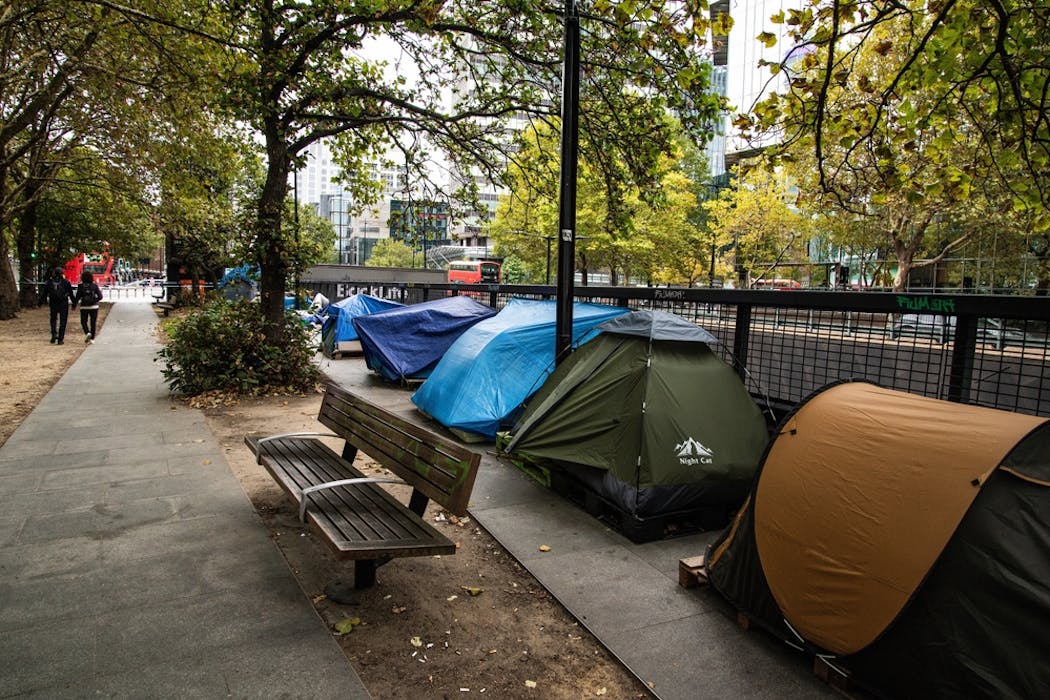
The government’s recently announced grand plan to end homelessness in England is the latest instalment in a long line of promises (and failures) by governments across the UK. This latest strategy, published in December, promises billions in investment in rough sleeping services, alongside a previous commitment to build 1.5 million new homes by the end of this parliament.

It’s an attempt to address the UK’s acute housing crisis. On the surface, there is plenty to praise in the plan, and these proposals are already receiving support from the wider sector.

For example, the scrapping of the two-child benefit limit will lift many vulnerable children out of poverty. And the strategy hints at more preventative approaches to the problem of homelessness.

But there’s a problem. Can the government achieve this objective within the narrow political window that this parliament offers? If not, perhaps it should consider whether this is the most effective use of public money.

One striking omission in the strategy is the absence of a commitment to the “housing first” model which, as the name suggests, would provide immediate access to housing for a homeless person. This omission is surprising, given the report’s repeated emphasis on housing as a solution.

Housing first combines an unconditional home with range of wraparound services for things like mental health problems or addiction. It’s distinct in being a genuinely long-term housing intervention, catering to those with multiple and complex needs. It is one of the most robustly evidenced homelessness interventions.

There are some isolated case studies of housing first mentioned in the report, but responsibility once again falls to the third sector. Charitable organisations are already forced to compete for insufficent funding pots, while also working alongside cash-strapped local authorities.

The average cost of housing first support per person is highly economical, according to the government’s own cost-and-benefit analysis data. The expected benefits to society have been calculated at £15,880 per person, which is more than double the £7,737 average cost.

According to a recent report from the charity Crisis evaluating housing first trials, a national roll out would cost £226 million per year. But this would be offset by reductions in provision burdens, equivalent to £280 million per year. This equates to total cost of £17,068 per individual per year, with a related saving surplus of £3,313.

The false economy of ‘business as usual’

Moral and human costs aside, homelessness is astoundingly expensive. Temporary accommodation alone costs billions each year. Although exact data on this is sparse, people experiencing rough sleeping are often referred to as “frequent flyers” through public services such as A&E departments, police and the courts.

The most recent calculation from Crisis, which goes back to 2015, estimated the annual cost of rough sleeping to be around £20,000 per person (or £27,872 when adjusted for inflation). This is due to things like use of NHS services, policing and the courts system. As seen with the government’s own rough sleeping snapshot, it continues to rise in the UK.

Arguably, business as usual isn’t working. There is little point in diverting funding to services that don’t work, or funding housing programmes for people with complex needs who may not be ready for a tenancy. If the aim is to reduce or end homelessness sustainably, the answer is not more short-term funding, but significant structural reform.

mobile phone screen showing universal credit login page alongside some pound coins and notes.
Benefit sanctions can hit people who are already at rock-bottom.
AndrewMcKenna/Shutterstock

In my research with my colleague, Joanne Massey, we explored some of these wider structural constraints facing people in poverty. We framed these constraints as forms of intentional and unintentional harms by the state. They include a welfare system where, despite annual rises, the range of benefits remains out of touch with living costs, alongside things like universal credit sanctions that make already difficult lives even more challenging.

Without confronting these, homelessness cannot be prevented or reduced. As such, the report falls short. For this to be a pragmatic and cost-effective strategy, the system must change from one of economically wasteful short-termism. There is no shortage of impactful and evidence-based examples – including housing first.

However, merely increasing funding will not achieve the necessary changes. The government must also commit to a public health approach. This means prioritising prevention through early intervention, as well as tackling the causes of homelessness at their structural root. Homelessness is a problem for all of society to address.

And merely listing poverty as a cause of homelessness does nothing to address it permanently, nor replace what has been lost from hundreds of billions of pounds of cuts to public services. A public health approach to homelessness would address challenges like these at the individual, community and societal levels simultaneously. It would also be a better use of taxpayer funds.

As an example, efforts in Wales to improve health with a prevention strategy produced a £14 return for every £1 invested using a public health approach. There was an annual saving of £9,266 per person when using preventative homelessness programmes. This approach combines the third sector, council services, education, health and the criminal justice system into one coherent strategy.

The government’s homelessness strategy is a positive start, but it will not replace what has been lost. Nor, as it stands, will it address the complex reasons why homelessness persists.

The Conversation

Anton Roberts does not work for, consult, own shares in or receive funding from any company or organisation that would benefit from this article, and has disclosed no relevant affiliations beyond their academic appointment.

ref. The UK spends millions on services for homeless people. Housing them could make more economic sense – https://theconversation.com/the-uk-spends-millions-on-services-for-homeless-people-housing-them-could-make-more-economic-sense-272569

Data suggests Labour would be making a mistake if it ousted Keir Starmer after May elections

Source: The Conversation – UK – By Paul Whiteley, Professor, Department of Government, University of Essex

The prime minister insisted he was staying in the job during an interview with Laura Kuenssberg at the start of the year. Number 10/Flickr, CC BY-NC-ND

British electoral politics in the 1980s were dominated by Margaret Thatcher, the prime minister for the whole of that decade. Similarly, Tony Blair dominated elections when he was in Downing Street from 1997 to 2007. In sharp contrast, the decade from 2015 to 2025 saw no fewer than six prime ministers come (and mostly go) – five Conservatives and Keir Starmer for Labour.

Traditionally, Labour has been reluctant to sack its leader, but if the May elections turn out to be as bad as the polls suggest, the party might well adopt the Conservative strategy of changing its leader as frequently as premier league football managers.

However, the data suggests that sacking Starmer after those elections would be a mistake. This is because voters focus much more on the performance of the government overall than the prime minister when it comes to casting a ballot.

If he were removed, it would also trigger a serious internal conflict in the party on the scale of the turmoil in the Conservative party over Brexit. This played a major role in explaining the Tories’ massive defeat in the 2024 general election.

Trends in voting intentions, satisfaction with governments and with prime ministers for governing parties, 2015 to 2025:

A chart showing how satisfaction with parties and with governments has fluctuated over the years, tracked against voting behaviour.
How satisfaction with parties and PMs relates to voting.
P Whiteley, CC BY-ND

To see why this is the case, we can examine polling data on perceptions of the performance of incumbent governments and prime ministers alongside data on voting intentions for their parties over the decade since 2015. The key comparison is between the effects of the performance of governments with that of prime ministers on the vote.

The relationship between these variables is very strong, with correlations all greater than 0.80. It is tricky to find out which of the satisfaction measures is most important for predicting the vote, but this can be done with the help of multiple regression. This is a statistical technique that can predict changes in vote intentions from the satisfaction measures together with some other variables which also influence voting for governing parties.

These other variables in the analysis relate to challenger parties affecting both Conservative and Labour governments. The three national challenger parties are Reform, the Liberal Democrats and the Greens.

In the case of Reform, I’ve included vote intentions for its ancestor parties, UKIP and the Brexit party, since it did not officially exist until 2021. The focus is on explaining voting intentions for the Conservative government from 2015 to 2024 and subsequently the Labour government up to 2025.

The effects of the satisfaction measures and the challenger parties on support for the governing parties appear in the chart below. The analysis identifies the impact of each variable on changes in vote intentions for the governing party.

To illustrate, a score of 1.0 would mean that a 1% increase in the satisfaction with government would produce a 1% increase in voting intentions for the governing party. In fact, the coefficient is 0.2, a lot less than 1.0 but nonetheless highly significant. An increase of 10% in government satisfaction increases government vote intentions by 2%.

Impact of variables on voting intentions for governing parties:

A chart showing How votes for smaller parties interact with government and PM satisfaction.
How votes for smaller parties interact with government and PM satisfaction.
P Whiteley, CC BY-ND

The same cannot be said about the effects of satisfaction with the prime minister. This had a negligible impact on voting for the government. It’s not surprising that polling on the popularity or unpopularity of the prime minister attracts a lot of media attention. After all, they are the main spokesperson for the party. But when it’s time to vote, this evidence shows people judge the government in general rather than the spokesperson.

A clear example of this is the fact that the rapid changes in the leadership of the Conservative party had little overall effect on the party’s support in the long run. They ended up losing terribly in 2024 despite the tendency to replace their leaders.

To be fair, there were exceptions to this, as can be seen in the first chart. After David Cameron resigned following the Brexit referendum his successor, Theresa May, was more popular than her party.

Satisfaction with her government rose, but satisfaction with her performance rose faster. However, she was subsequently brought down by her decision to break a promise and call an early election in 2017.

She nearly lost that election and as a result was unable to get a “soft” Brexit deal through Parliament and had to resign. Boris Johnson did win the 2019 general election, but his chaotic government prepared the ground for the electoral rout for the Conservatives in 2024

The challenger parties

Challenger parties all influence voting for the governing party. The strongest impact is seen in vote intentions for Reform and its ancestor parties. Reform took votes away from both Labour and the Conservatives when each was in government. An increase of 10% in the Reform vote reduces the support for the governing party by 2.5%.

The impact of the Liberal Democrats on the governing party has been negative when they are looked at without considering the complex interactions of voting in a five-party system in England and six-party systems in Scotland and Wales.

These complexities ensured that Liberal Democrat support increased with government support as some voters were drawn to Reform, or when Labour took over as the governing party. Finally, the impact of the Greens on government support was negligible.

These results suggest that a change of leadership in the Labour party will not have any significant effects on vote intentions for the party. The only way to improve things is for Labour to deliver on its manifesto promises, particularly on economic growth and so change the mood of the country.

The Conversation

Paul Whiteley has received funding from the British Academy and the ESRC.

ref. Data suggests Labour would be making a mistake if it ousted Keir Starmer after May elections – https://theconversation.com/data-suggests-labour-would-be-making-a-mistake-if-it-ousted-keir-starmer-after-may-elections-273048

Why restoring nature can work so much more effectively when led by local people

Source: The Conversation – UK – By Neil Dawson, Research Fellow in International Development, University of East Anglia

Tree planting in Vietnam. Michael Habana Coronel/Shutterstock

The success of restoration efforts hinges on involving local communities. That was the finding of our recent study which explored restoration programmes around the world.

From the English fens, where soils are degraded from decades of intensive farming, to the cattle rangelands of the Brazilian state of Rondônia where the Amazon rainforest clearance has been extensive, the best option for nature may not be conservation, but restoration.

Conservation involves preventing harm to existing nature, while restoration is the repair of ecosystems that have degraded over long periods or due to specific events like an oil spill.

Our research found that many restoration projects are run by governments or private organisations with a target-driven focus on planting trees, improving soils or reintroducing species, with limited local input. This often fails to achieve lasting results because of the mismatch with the lives and livelihoods of those most connected to the landscape.

Restoration can more effectively reverse degradation, address its causes and benefit local people if communities can shape and lead initiatives to align with their own needs, knowledge and aspirations.

Restoration programmes are being established around the world at a staggering rate. For example, 196 nations are signatories to a UN target to start restoring 30% of the world’s degraded land and sea by 2030. Worldwide, pledges have already been made to restore over a billion hectares – an area bigger than the US.

This level of ambition is welcome, but there are social and political challenges to be confronted.

Degraded lands and seas are nearly always occupied, most often by farming communities. Some are cherished, like the UK’s much-loved “sheep-wrecked” uplands where high numbers of livestock suppress the diversity of vegetation in many places.

Restoration may sound universally desirable. Who could be against planting lots of trees or restoring fisheries? But people actively resist restoration that’s imposed on them without their involvement. They might experience harms as well as benefits.

In Wales, plans to require farmers to have trees on 10% of their land were dropped after protests. The Scottish government also dropped plans to designate 10% of its seas as highly protected marine areas (areas of the sea where certain activities – usually fishing – are banned), due to a lack of community input and protests.

A promising alternative centres on local communities shaping the restoration process. We have identified four levels of involvement for Indigenous and local communities in ecological restoration: exclusionary (fully imposed), managerial (with limited consultation or incentives), collaborative (a more genuine partnership) and just and transformative (led by local ideas and values).

Four levels of community involvement

With a short-term focus on environmental results such as area of trees planted, exclusionary restoration projects may ignore local perspectives or even displace Indigenous people or local communities with rights to the land.

In Kenya, logging and charcoal production destroyed parts of the Mau forest affecting downstream water supplies. Since 2009, the government has tried to restore the area, but measures included evicting many Indigenous Ogiek who had sought to protect their forest home. Despite a 2017 ruling of the African Court on Human and Peoples’ Rights supporting their ancestral claim, the Ogiek’s struggle continues.

Sometimes locals are invited to consultations or to manage land for nature, but cannot influence decisions. One example of this managerial approach is Vietnam’s 30-year tree planting programme. While tree planting was performed by smallholders, these farmers had little input and many lacked land rights. The focus on growing commercial trees to fell and sell also meant forests were not native and did not mature, so benefits for nature were limited.

In collaborative approaches, a more balanced negotiation means locals may influence what is to be restored as well as where, how, by whom and how any benefits will be allocated. In northern India, forest planting projects have involved both the Himachal Pradesh Forest Department and communities. In some areas, local people selected which tree species would be most suitable for fuelwood and livestock fodder, or have planted trees and monitored their progress.

people planting mangrove saplings on foreshore by water
Mangrove restoration in Indonesia.
U.S. Department of State via Flickr

“Just and transformative” restoration approaches centre around local values, decisions and stewardship. This tends to be more successful for people and nature. The Miawpukek First Nation in Newfoundland, Canada, based restoration around species that are culturally significant to them, like the caribou, blueberries and Labrador tea.

Women in India’s Western Ghats are carefully nurturing the plants, creepers and mosses that hold the forest ecosystem together. And community networks lead mangrove restoration in Thailand’s Phang-Nga Bay.

Restoring the ability of local communities to be the custodians of nature is a promising approach to both ecological and social recovery – and ultimately environmental justice.


Don’t have time to read about climate change as much as you’d like?

Get a weekly roundup in your inbox instead. Every Wednesday, The Conversation’s environment editor writes Imagine, a short email that goes a little deeper into just one climate issue. Join the 47,000+ readers who’ve subscribed so far.


The Conversation

Neil Dawson is affiliated with the Commission on Environmental, Economic and Social Policy of the International Union for the Conservation of Nature.

Adrian Martin receives funding from the UK Natural Environment Research Council

Iokiñe Rodríguez works for the University of East Anglia (UEA). She receives funding from the UK Research Councils.

ref. Why restoring nature can work so much more effectively when led by local people – https://theconversation.com/why-restoring-nature-can-work-so-much-more-effectively-when-led-by-local-people-272289

Iran: how the Islamic Republic uses internet shutdowns as a tool of repression

Source: The Conversation – UK – By Dr Konstantinos Mersinas, Senior Lecturer in Information Security, Royal Holloway, University of London

When a protest by angry traders about what they see as the Islamic Republic’s poor handling of the economy morphed into a national uprising across Iran, the authorities moved quickly to shut down the internet. It’s a tactic the regime has used before. Closing down communications makes it harder for resistance to organise. It also makes it hard for people protesting in Iran to communicate with and enlist support from the outside world.

Authoritarian regimes, such as the Islamic Republic in Iran, tend to rely on two distinct modes for managing information and collective action. The first is surveillance. Communications are monitored, platforms filtered, metadata analysed, and users channelled toward spaces that remain visible to the state. In such conditions, limited circumvention is often tolerated.

The regime allows the use of virtual private networks (VPNs) for example, since only a fraction of the population is technically savvy enough to use them. A VPN is a tool that routes a user’s internet traffic through an external server, masking its destination and bypassing local restrictions. In practice, VPNs can help users evade censorship and reduce visibility to domestic internet controls by making their connections appear to originate from outside the country – though they still depend on the underlying internet infrastructure to function.

The second mode is shutdown, deployed under exceptional conditions. When people start to mobilise and their protests start to exceed the ability of the authorities to control them with surveillance and become visible to the outside world, the authorities escalate from monitoring communications to disrupting them.

Shutdowns are indiscriminate and economically damaging. But they sever the connective infrastructure that allows protest movements to form, share information, coordinate and scale up. Iran’s repeated shutdowns in 2019, 2022, and 2026 illustrate this transition from surveillance as a norm to shutdown as an emergency instrument of rule.

In Iran, shutdowns are implemented in stages rather than a single intervention. Early stages typically involve bandwidth throttling, unstable connections or selective blocking of platforms.

As protests intensify, authorities escalate by disabling mobile data, restricting broadband access and withdrawing routing information that allows Iranian networks to be reached from the global internet. Government directives instruct providers to shut down services and block routes to the outside world. This effectively removes Iran’s digital address from the global network.

In Iran this week, internet traffic monitoring indicates near-total isolation. Connectivity is reported to have fallen to around 1% of normal levels.

Enforcement is neither uniform nor static. Restrictions are reported to be geographically targeted at those neighbourhoods most prone to protest. They tend to be synchronised with mobilisation and are adjusted in real time as required. Communications disruption now extends beyond the internet to include mobile and landline phones and basic digital services. At this point, the objective is to immobilise information flow across the whole of society.

Shutdowns as a political tool

Authorities have repeatedly justified shutdowns as necessary for national security or cybersecurity. Yet analyses indicate such measures as ineffective against state-level cyber operations. What shutdowns primarily restrict is societal access to information and communication, both internally and externally.

The fact that Iran persists with shutdowns despite the often severe economic and humanitarian costs, shows how effective they judge them to be. Each blackout disrupts banking, payments, logistics and everyday life. Yet authorities repeatedly accept these costs when legitimacy risks threaten regime survival. Shutdowns thus function as coercive signals as much as technical means, demonstrating a willingness to suspend digital society itself.

VPNs are widely used in Iran to bypass censorship and surveillance. Research shows that VPN use is often tolerated outside crisis periods, operating as a managed pressure valve while allowing the state to keep an eye on the sort of people who use them. At the same time, VPN traffic is detectable, providers are routinely blocked or throttled, and legal ambiguity enables selective enforcement.

Crucially, VPNs depend on underlying connectivity. Once authorities escalate to disruption on an infrastructure level, VPNs become ineffective because tunnels (encrypted connections that carry internet traffic) cannot be established. This explains why VPN use is significantly reduced when shutdowns are imposed. The same holds for the Tor network (a decentralised system that routes internet traffic through multiple relays to obscure users’ identities and locations). This has been used by Iranians in the past.

Satellite internet, particularly Starlink, enabled limited information flows during recent shutdowns. This allowed some reporting to the outside world. By bypassing domestic infrastructure, satellite connectivity undermines territorial control over data flows – but access remains uneven because connectivity depends on equipment which is scarce, expensive and difficult to distribute discreetly.

Possessing or operating such equipment carries personal risk, particularly during periods of heightened repression. Even when available, connectivity is not guaranteed – satellite links can be degraded andobstructed, and are vulnerable to disruption through signal interference. As a result, satellite internet provides limited, uneven connectivity rather than a reliable substitute.

Shutdown conditions also create fertile ground for social engineering attacks. Fake “Starlink apps” and misleading claims about other circumvention tools can exploit citizens by harvesting data or identifying users.

Shutdowns are rarely the first choice for a regime like the Islamic Republic. They are deployed when mobilisation becomes rapid, visible, and difficult to contain. A recurring feedback loop follows: protesters adapt through VPNs or alternative channels, authorities escalate to infrastructure-level disruption, and this escalation fragments coordination while intensifying perceived injustice.

This explains why shutdowns may suppress mobilisation in the short term yet worsen instability over time. It’s a pattern that was evident across Iran’s previous blackouts.

When they feel under threat, regimes move from monitoring private communication to restricting information flows at scale. This trajectory underscores a broader warning for democracies: the erosion of privacy initiates a shift in power toward the state by normalising control infrastructures that can be activated during crises. This is a dynamic the Iranian case illustrates, manifesting in the disruption of communication itself.

The Conversation

The authors do not work for, consult, own shares in or receive funding from any company or organisation that would benefit from this article, and have disclosed no relevant affiliations beyond their academic appointment.

ref. Iran: how the Islamic Republic uses internet shutdowns as a tool of repression – https://theconversation.com/iran-how-the-islamic-republic-uses-internet-shutdowns-as-a-tool-of-repression-273519

‘Heated Rivalry’ scores for queer visibility — but also exposes the limits of representation

Source: The Conversation – Canada – By Adam Davies, Associate Professor, College of Arts, University of Guelph

Connor Storrie, left, and Hudson Williams in a scene from ‘Heated Rivalry.’ (Bell Media)

Heated Rivalry, the Bell Media-produced Canadian gay hockey romance based on the novel by Rachel Reid, has taken the world by storm.
The series stars Hudson Williams as Shane Hollander, a Japanese Canadian hockey player for the Montréal Metros, and Connor Storrie as Ilya Rozanov, a Russian hockey player for the Boston Raiders.

With much of the series was filmed in Guelph, Ontario and other Canadian locations, the series highlights both Canadian hockey and queer representation and desires.

Heated Rivalry explores the growing sexual tension and eventual romance between Hollander and Rozanov as they navigate the highly masculinized and heteronormative social pressures of playing in a professional hockey league.

While the series has become a huge audience success and received largely positive critical evaluations of its acting, production and characterization, it has gained widespread attention for its representation of queer romance, particularly gay sports romance.

The show has also received media commentary for its large following of women who are fans of the show and its actors. Many have been debating and discussing the show on social media.

Given the current climate of anti-LGBTQ legislation and increased political and social transphobia and homophobia, Heated Rivalry could signal crucial queer representation during a politically dangerous time.

Hockey’s culture of masculinity

Hockey is a very heteronormative and masculinized sport and continues to face serious issues related to sexual violence and racism — problems that have been widely reported on over the past several years.

In 2022, Hockey Canada faced numerous public controversies amid reports that it paid $8.9 million for sexual abuse settlements to 21 complainants since 1989.


Read more:
High-profile sex assault cases — and their verdicts — have consequences for survivors seeking help


Research has also documented persistent racial inequities within Canadian hockey that fuel the erasure of Black Canadians’ contributions to the establishment of ice hockey in Canada, as well as historical and ongoing experiences with taunting, harassment and exclusion of racialized hockey players in Canadian hockey leagues.

Against this backdrop, Heated Rivalry offers a rare interruption to hockey’s normative culture, even as it remains constrained by many of the sport’s dominant values.

Visibility versus structural change

Whether Heated Rivalry will meaningfully impact the willingness or safety of professional players to come out is an open question. Currently, there are no openly queer hockey players in the National Hockey League.

Former Canadian hockey player Brock McGillis, who is often noted as one of the first out gay professional hockey players, has expressed skepticism. He has argued the show is “more likely to have an adverse effect on a player coming out.”

McGillis said that he enjoys the show while also explaining: “I don’t believe that many hockey bros are going to watch it. And I don’t think, if they are watching it, they’re talking about it positively.”

Meanwhile, the NHL has previously banned rainbow Pride coloured hockey stick tape. Given the popularity of Heated Rivalry, the NHL released a statement articulating its hope that the series will act as a “unique driver for creating new fans.”

Whether such symbolic gestures will translate into structural changes that address the ingrained homophobia within hockey remains to be seen.

Representation and intersectionality

Within my research, I analyze issues related to gender and sexuality, often particularly as it pertains to the experiences of gay and queer men.

For many gay men, navigating masculinity is complicated in terms of both in-group and out-group discrimination. It is not uncommon for white, muscular and masculine-presenting gay men to receive the most media attention and be positioned as highly desirable within gay men’s communities.

Heated Rivalry provides valuable representation for gay male romance and sexualities, but it also raises important questions about both its potential and its limitations.

Shane Hollander’s character gestures toward the intersections of race and sexuality through his experiences as an Asian hockey player, although this storyline could have been explored further in the series. Ilya Rozanov’s narrative, meanwhile,
explores family-based and nationalistic homophobia through his background as a Russian-born queer man.

A close-up of the face of an Asian man in a hockey helmet and uniform
Hudson Williams as Shane Hollander in ‘Heated Rivalry.’
(Bell Media)

Although both characters benefit from financial and gender-based privileges that many LGBTQ people do not share, their experiences navigating identity and homophobia as it intersects with family, state-sanctioned homophobia and race and ethnicity, are meaningful for viewers.

However, much of the storyline still focuses on the experiences of two men who are traditionally attractive, fit and muscular, and masculine-presenting. This echoes much of the mainstream queer representation, which glorifies fit male bodies and gay gym cultures.

The limits of mainstream representation

Many mainstream representations of queer identities, such as the 2018 film Love Simon, fail to represent the nuances and complexities of multifaceted queer experiences and identities outside of white, masculine and upper-middle class norms.

Gay media platforms such as Grindr, the well-known gay hook-up app, are known for emphasizing fit bodies, muscular physiques and gym or beach selfies. These norms can lead to forms of discrimination or prejudice against app users who do not conform, as well as body dysmorphia and body image issues that disproportionately affect gay and queer men.

Gay men’s sexualities, dating and relationships are often shaped through shame and secrecy, fuelling tropes that gay men are unable to form healthy and meaningful long-term romantic relationships.

Much of Heated Rivalry emphasizes secrecy, shame and risk as the two main characters wrestle with their romantic feelings for each other.
While this might reflect the realities many queer men face, positioning such experiences as normative risks reinforcing longstanding negative stereotypes.

Queer joy — and what’s still missing

Heated Rivalry’s creator and writer, Jacob Tierney — himself a gay writer, actor and producer — has emphasized that the end of the first season is intended to be more celebratory than earlier episodes.

“For these last two episodes,” he told journalist Philiana Ng, “you’re going to finally get the joy that we wanted from the beginning – just queer joy, pure happiness and sweetness and love and all that other good stuff.”

A white man in a hockey uniform leans over while holding his stick against his thighs
Connor Storrie as Ilya Rozanov in ‘Heated Rivalry.’
(Bell Media)

However, there has been controversy about the show’s stars’ and creator’s resistance towards publicly identifying the lead actors’ sexual orientations. Given the common practice of having straight and cisgender actors play queer and trans characters in film and media, questions regarding authenticity in LGBTQ representation continue.

It’s worth noting, however, that Heated Rivalry does feature openly queer performers. François Arnaud, who plays Scott Hunter, is openly bisexual, and trans actor Harrison Browne — a former professional hockey player — stars in a minor role.

Tierney has pushed back at questions about the main actors’ sexual orientations, saying “I don’t think there’s any reason to get into that stuff.” He noted that what matters is an actor’s enthusiasm and willingness to do the work, and questions about actors’ sexuality are legally off-limits in casting.

Advocates for casting queer actors in queer roles acknowledge that while respecting actors’ privacy is essential, choices can be made through the casting and production process to create a more inclusive industry.

Queer romance on the ice

Beyond questions of representation, Tierney has been clear about the show’s thematic focus. Highlighting the love story between the two main characters, he has noted how “a gay love story set in the world of hockey … is an act of rebellion” and that audiences “deserve to have a gay show that is sexy and horny and fun.”

Still, audiences deserve to have gay shows that are sexy, horny, fun and representative of a variety of lived experiences and bodies.

With Heated Rivalry renewed for a second season, whether the show “scores” in terms of shifting conversations about masculinity, sexuality and sport is still up in the air.

The Conversation

Adam Davies receives funding from the Social Sciences and Humanities Research Council.

ref. ‘Heated Rivalry’ scores for queer visibility — but also exposes the limits of representation – https://theconversation.com/heated-rivalry-scores-for-queer-visibility-but-also-exposes-the-limits-of-representation-271253

Ontario’s proposed nuclear waste repository poses millennia-long ethical questions

Source: The Conversation – Canada – By Maxime Polleri, Assistant Professor, Université Laval

The heat produced by the radioactive waste strikes you when you enter the storage site of Ontario Power Generation at the Bruce Nuclear Generating Station, near the shore of Lake Huron in Ontario.

Massive white containers encase spent nuclear fuel, protecting me from the deadly radiation that emanates from them. The number of containers is impressive, and my guide explained this waste is stored on an interim basis, as they wait for a more permanent solution.

I visited the site in August 2023 as part of my research into the social acceptability of nuclear waste disposal and governance. The situation in Ontario is not unique, as radioactive waste from nuclear power plants poses management problems worldwide. It’s too dangerous to dispose of spent nuclear fuel in traditional landfills, as its radioactive emissions remain lethal for thousands of years.

To get rid of this waste, organizations like the International Atomic Energy Agency believe that spent fuel could be buried in deep geological repositories. The Canadian government has plans for such a repository, and has delegated the task of building one to the Nuclear Waste Management Organization (NWMO) that’s funded by Canadian nuclear energy producers.

In 2024, NWMO selected an area in northwestern Ontario near the Township of Ignace and the Wabigoon Lake Ojibway Nation as a potential site for a deep geological repository. Now, a federal review has begun bringing the project closer to potential reality.

Such repositories raise complex ethical questions around public safety, particularly given the millennia-long timescales of nuclear waste: How to address intergenerational issues for citizens who did not produce this waste but will inherit it? How to manage the potential dangers of these facilities amid short-term political cycles and changing public expectations?

Rethinking the cost-benefit calculus

While NWMO describes the deep geological repository as the safest way to protect the population and the environment, its current management plan does not extend beyond 160 years, a relatively short time frame in comparison with the lifespan of nuclear waste. This gap creates long-term public safety challenges, particularly regarding intergenerational ethics. There are specific issues that should be considered during the federal review.

NWMO argues that the deep geological repository will bring a wide range of benefits to Canadians through job creation and local investment. Based on this narrative, risk is assessed through a cost-benefit calculus that evaluates benefits over potential costs.

Academics working in nuclear contexts have, however, criticized the imbalance of this calculus, as it prioritizes semi-immediate economic benefits, like job creation, over the long-term potential impacts to future generations.

In many official documents, a disproportionate emphasis on short-term economic benefits is present over the potential dangers of long-term burial. When risks are discussed, they’re framed in optimistic language and argue that nuclear waste burial is safe, low risk, technically sound and consistent with best practices accepted around the world.

This doesn’t take into account the fact that the feasibility of a deep geological repository has not been proven empirically. For the federal review, discussions surrounding risks should receive an equal amount of independent coverage as those pertaining to benefits.

Intergenerational responsibilities and risks

After 160 years, the deep geological repository will be decommissioned and NWMO will submit an Abandonment License application, meaning the site will cease being looked after.

Yet nuclear waste can remain dangerous for thousands of years. The long lifespan of nuclear waste complicates social, economic and legal responsibility. While the communities of Ignace and Wabigoon Lake Ojibway Nation have accepted the potential risks associated with a repository, future generations will not be able to decide what constitutes an acceptable risk.

Social scientists argue that an “acceptable” risk is not something universally shared, but a political process that evolves over time. The reasons communities cite to decide what risks are acceptable will change dramatically as they face new challenges. The same goes for the legal or financial responsibility surrounding the project over the centuries.

In the space of a few decades, northwestern Ontario has undergone significant municipal mergers that altered its governance. Present municipal boundaries might not be guarantees of accountability when millennia-old nuclear waste is buried underground. The very meaning of “responsibility” may also undergo significant changes.

NWMO is highly confident about the technical isolation of nuclear waste, while also stating that there’s a low risk for human intrusion. Scientists that I’ve spoken with supported this point, stating that a deep geological repository should not be located in an area where people might want to dig.

The area proposed for the Ontario repository was considered suitable because it does not contain significant raw materials, such as diamonds or oil. Still, there are many uncertainties regarding the types of resources people will seek in the future. It’s difficult to make plausible assumptions about what people might do centuries from now.

Communicating long-term hazards

a yellow triangular sign with a nuclear symbol.
Current governing plans around nuclear waste disposal have limited time frames which do not fully consider intergenerational public safety.
(Unsplash)


Read more:
100,000 years and counting: how do we tell future generations about highly radioactive nuclear waste repositories?


When the repository is completed, NWMO anticipates a prolonged monitoring phase and decades of surveillance. But in the post-operation phase, there is no plan for communicating risks to generations of people centuries into the future. The long time frame of nuclear materials complicates the challenges of communicating hazards. To date, several attempts have surrounded the semiotics of nuclear risk; that is, the use of symbols and modes of communication to inform future generations.

For example, the Waste Isolation Pilot Plan in New Mexico tried to use various messages to communicate the risk of burying nuclear waste. However, the lifespan of nuclear waste vastly exceeds the typical lifespan of any known human languages.

Some scientists even proposed a “ray cat solution.” The project proposed genetically engineering cats that could change color near radiation sources, and creating a culture that taught people to move away from an area if their cat changed colour. Such projects may seem outlandish, but they demonstrate the difficulties of developing pragmatic long-term ways of communicating risk.

Current governing plans around nuclear waste disposal have limited time frames that don’t fully consider intergenerational public safety. As the Canadian federal review for a repository goes forward, we should seriously consider these shortcomings and their potential impacts on our society. It is crucial to foster thinking about the long-term issues posed by highly toxic waste and the way it is stored, be it nuclear or not.

The Conversation

Maxime Polleri has received funding from the Social Sciences and Humanities Research Council of Canada.

ref. Ontario’s proposed nuclear waste repository poses millennia-long ethical questions – https://theconversation.com/ontarios-proposed-nuclear-waste-repository-poses-millennia-long-ethical-questions-273181

AI disruptions reveal the folly of clinging to an idealized modern university

Source: The Conversation – Canada – By Dani Dilkes, PhD student, Digital Learning, Ontario Institute for Studies in Education, University of Toronto

In the past five years, higher education has been in a seemingly endless state of disruption.

In early 2020, the COVID-19 pandemic resulted in a mass rapid pivot to emergency remote teaching. In shifting to unfamiliar digital learning environments, instructors scrambled to replicate classroom learning online. When restrictions lifted, many institutions pushed for a “return to normal,” as though the pre-pandemic educational standard was ideal.

Now, with generative AI disruptions, we are seeing a similar desire to cling to an idealized vision of the modern university. AI has unsettled long-established forms of assessment, simultaneously instigating a return to older assessment models in the interest of “academic integrity.”

If students navigating higher education believe the goal is to pass rather than to learn, then student misuse of generative AI technologies is nothing more than a rational action by a rational agent.

For meaningful university education, we need to shift to a process of building relations and knowledge with others through dialogue and critical inquiry. Part of this means taking lessons from pre-industrial forms of learning and contemporary educational movements.

We also need to shift from compliance-based assessments and grading to meaningful and supportive feedback and opportunities for growth, rooted in teaching and learning with care.

‘Knowledge factory’ invites generative AI misuse

Modern higher education systems in North America often function as a “production enterprise” or a “knowledge factory” focused on research outputs and producing skilled graduates.

Philosopher Jean-François Lyotard described how contemporary education is designed to manufacture educated individuals whose primary role is to contribute to the optimal functioning of society — a class of people he refers to as “intelligentsia.”

He argued that education produces two categories of intelligentsia: “professional intelligentsia” capable of fulfilling pre-existing social roles, and “technical intelligentsia” capable of learning new techniques and technologies to contribute to social progress and advancement.

These roles align with some actions being taken in higher education institutions to respond to generative AI interruptions. For example, institutions are:

If we concede that the primary purpose of higher education is to feed the workforce and enable social and economic progress — a “knowledge factory” or “production enterprise” — then ensuring graduates are authentically skilled at AI or enabling them to develop AI literacy can be seen as rational responses to generative AI disruption.

Misalignment with meaningful learning

Mirroring the observations of Lyotard, cultural critic Henry Giroux argues that when shaped by market-driven forces, the purpose of higher education shifts from democratic learning and critical citizenship to producing “robots, technocrats and compliant workers.”

This infusion of corporate culture in higher education has created the conditions that make it particularly vulnerable to generative AI.

Some key characteristics of the knowledge factory model of education include standardized tests and assignments, large class sizes, an emphasis on productivity over process and the use of grades to indicate performance. Many of these existing practices are outdated and often misaligned with meaningful learning.

For example, traditional exams shift learners’ focus from learning to performing, often amplifying existing inequities. Debates around the efficacy of lectures have been raging for years.

Grading practices are inconsistent and have a detrimental effect on learners’ desire to learn and willingness to take risks. When students feel a lack of autonomy, they tend towards avoiding failing rather than learning. This is another compelling reason for students to adopt technologies that remove any friction or discomfort caused by learning.

Importantly, these conditions pre-date the arrival of generative AI. Generative AI simply highlights how instrumental logic — the factory model of university — can hinder learning.

Alternative ways to imagine education

In a time of information abundance and overlapping crises of deepening social divides, climate breakdown and rising authoritarianism, those with the agency to shape higher education (including educators, policymakers, staff and students) can draw on alternative visions of higher education to create meaningful places of learning.

Pre-industrial education served markedly different purposes than the current model of education, creating environments that would likely have been much more resistant to generative AI disruption.

In the ancient world, Plato’s Academy was a place of educational inquiry fostered through discussion, a multiplicity of perspectives and a focus on student well-being.

Access to the academy was exclusive, with the majority of students being wealthy enough to cover their own expenses — and only two documented female students. However, in spite of this elitism, the absence of standardized curricula, exams and formal grading allowed learning to be built on relationships and dialogue.

Contemporary educational movements

Higher education can, and historically has, offered more than a pathway to economic advancement. Multiple emerging ways of teaching and engaging learners also offer alternative visions of higher education that recentre learning and the learner.

The ungrading movement refocuses education on learning by emphasizing meaningful feedback and curiosity and moving away from compliance-motivated grading practices.

The open education movement resists the transactional nature of industrial education. It empowers learners to become producers of knowledge and reimagines the boundaries of education to expand beyond the classroom walls.

Other modern educational movements, commonly associated with the work of philosopher Nel Noddings in the 1980s, place an ethic of care at the centre of teaching and learning. Teaching with care focuses on creating learning climates that holistically support learners and educators. It also recognizes and embraces diversity, and acknowledges the need to repair educational systems.

Each of these approaches offer alternative visions of higher education, which may be less susceptible to AI automation — and more aligned with higher education as places of democratic learning and connection.

The university of the future

The knowledge factory model is outdated and ill-suited to meaningful
learning. In this form of education, generative AI technologies will increasingly outperform students.

Reimagining higher education today is neither nostalgic nor Utopian. The students of today come to post-secondary institutions needing, above all, hope; we owe it to them to help them find meaningful purpose while learning to navigate an increasingly complex world.

The Conversation

The authors do not work for, consult, own shares in or receive funding from any company or organisation that would benefit from this article, and have disclosed no relevant affiliations beyond their academic appointment.

ref. AI disruptions reveal the folly of clinging to an idealized modern university – https://theconversation.com/ai-disruptions-reveal-the-folly-of-clinging-to-an-idealized-modern-university-266720