What courage is, how to build it and why you should take a risk

Source: The Conversation – USA (3) – By Gregory Crawford, President, Miami University

Courage demands that we evaluate an action’s goals and risks. Elisa Schu/picture alliance via Getty Images

From ancient epics to contemporary headlines, humans have spent centuries canonizing courage as a rare and admirable virtue. Aristotle writes, “You will never do anything in this world without courage.” But what does it really mean to be courageous, and what does it look like in a classroom or a checkout line?

On April 1, 2026, The Conversation hosted a webinar examining the virtue of courage. Panelists Greg Crawford, president of Miami University, and Cynthia Pury, professor of psychology at Clemson University, discussed the different ways we understand courage, how it can be built and why it is a worthwhile risk to take.

Crawford has leveraged his academic role to elevate entrepreneurship education, innovative research and entrepreneurial startups at Brown University, the University of Notre Dame and Miami University. Pury has consulted on courage with numerous national and international organizations. The webinar has been edited and condensed for print.

Beth Daley: What are the ingredients of courage?

Greg Crawford: I would break courage down into three areas: taking calculated risks, accepting the possibility of failure and taking action. That sometimes means choosing principles that you’re going to uphold no matter what because it’s a matter of purpose or mission. To quote Maya Angelou: “Courage is the most important of all the virtues, because without courage you can’t practice any other virtue consistently.”

April 1 webinar led by The Conversation U.S. Executive Editor Beth Daley examining the virtue of courage.

I think the first component or ingredient of courage would be clarity of purpose. Courage isn’t just about action, it’s about a directive action. The second ingredient would be realistic awareness of that risk. You’re not trying to minimize risk nor exaggerate the danger; you’re trying to be balanced so as to understand the consequences of that decision. Finally, courage includes the willingness to act despite fear. We make these decisions, and it’s more about resolve. Fear is never absent in the face of courage.

BD: Are you born with courage, or is it a muscle one can build and teach and learn?

Cynthia Pury: Both yes and no. Even in animals, you see evidence of boldness or exploration despite risk. When we moved houses a few years ago, I watched our cats explore. It was clear that they were afraid, but they were still going to check it out. It’s hard for me to think that my cats learned how to do that. You see that in other animal species, too.

The longer I do this, the more I’m convinced that it all comes down to people’s evaluations of the goals and risks of a given situation. So, there are some goals that I would find very easy to be courageous for, like saving someone’s life. Other goals I might not share with others, like my love of doing theater.

Similarly, there are also some risks that we all agree are universal. Fire is dangerous for every human, and we all are susceptible to being burned. I think that’s one of the reasons firefighters are often the least controversial helper people who are seen as heroic and are part of this “monumental courage,” as professor Robin Kowalski and I call it.
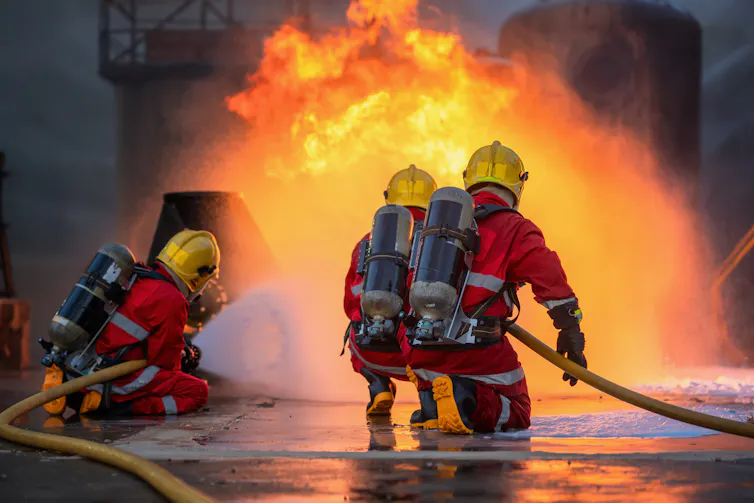
Professional team of firefighters spraying high-pressure water at fire.
We are all susceptible to being burned, and perhaps that is why firefighters are universally considered courageous.
Cravetiger/Moment via Getty Images

We also have situations where people have particular fears or vulnerabilities that aren’t necessarily apparent to others. One of the bravest things I’ve ever seen is a former patient of mine wrapping a gift for his child. This person had experienced horrific wartime trauma at Christmastime and had never given his child a Christmas present and he really wanted to. Wrapping the Christmas present brought back all the terrible things that had happened, and in the context of that – and really understanding PTSD – it was quite courageous.

In a day-to-day setting, a lot of the things people report doing that they say are courageous in their everyday life are things that are particular to them or a form of personal courage.

BD: How do you develop courage as an individual?

GC: At Notre Dame I was involved in raising money for Niemann-Pick Type C, a rare disease. The research center reported to me, but I was a physicist, so I couldn’t do genomics and proteomics and those kinds of things, but I wanted to be involved with it. So I decided to ride my bicycle across the country and raise funds for the Ara Parseghian Medical Research Foundation. People would ask me how I got in shape to bike cross-country, and the fact of the matter is I never did. I just had the courage to start and get in shape along the way.

I would tell people today, you’ll take these leadership positions and jobs, and you’ll never be ready because everything changes and comes at you quicker than ever before. You need to have the courage to get in shape along the way, be flexible and have confidence.

At one point, earlier in my career, I was talking about how my hit rate on grants was 20% or 30%. A lay person had asked me if that means I waste 70% of my time. I think my answer today is absolutely not, because I spend 100% of my time developing courage. Sometimes you have to try things over and over again. You keep pushing, and a failure or a misstep often results in a great answer later down the road. So there’s an element of courage when you do fail, but you keep learning, progressing and advancing, and then it comes full circle and you finally get there.

BD: How does failure relate to courage?

CP: Failure is really tied, more than people think it is, to how courageous action is perceived. If you decide to move to the other side of the country to take your dream job, but then the company folds when you get there, you’re not as likely to think that the move was courageous in retrospect.

The Carnegie Medal for heroism, for example, has rewarded people’s acts of physical bravery mostly in instances where the would-be rescuer dies and the would-be victim lives. Not a single time was it rewarded when the would-be rescuer lived and the would-be victim died. And I find that kind of startling.

In my research, people say that a courageous thing they did was something that made a situation better and didn’t make it worse. When they try to do something and fail, people don’t report their action to be courageous. And even people who say that it doesn’t matter if you succeed or fail still end up rating the courageousness of failed things the same way as everybody else does. So that’s definitely something to be aware of and look out for.

Swimmer at the edge of a racing pool with her head bowed.
We tend to view failed actions as less courageous than successful ones.
Oleg Breslavtsev/Moment via Getty Images

BD: What does a courageous conversation actually look like in practice, especially when delivering difficult feedback or talking to people who don’t agree with us?

GC: It’s important to normalize dissent as part of the process. When you can control and manage dissent, you can advance ideas in a much better way. I would say sometimes when you get criticism and so forth, it’s a good thing. Some people would call it a gift that you’re able to have the courage to either push back or to be open to influence and change your mind.

In today’s world, criticism comes nonstop and all the time in these leadership roles. So there’s courage in accepting it and not being defensive about it, and there’s also courage in trying to find a solution and an answer to it, and in some cases acknowledging it and moving forward.

BD: In terms of political courage, when there seems to be a collective consensus about what the right thing to do is, why don’t people act when they want to or others feel like they should?

CP: I wonder how much of what we see with political courage is people having different views about what the right thing is to do in this situation. Is it the right thing to take a stand here? Is this the thing to have your political career die on? Or is it more courageous to just let this go and be there for whatever the next thing is?

I also wonder how much of the courage talk in politics is people signaling, “I value this, I don’t value this.” Having the humility to listen to another side seems to be an important and missing virtue.

The Conversation

Cynthia Pury has received funding from the American Psychological Association and the Department of Defense. She is affiliated with Alchemy Comedy Theater, Greenville, SC.

Gregory Crawford does not work for, consult, own shares in or receive funding from any company or organization that would benefit from this article, and has disclosed no relevant affiliations beyond their academic appointment.

ref. What courage is, how to build it and why you should take a risk – https://theconversation.com/what-courage-is-how-to-build-it-and-why-you-should-take-a-risk-280257

An uncomfortable truth: healthcare is both a protector of health and a contributor to one of its greatest threats

Source: The Conversation – UK – By Lucy Bray, PhD Candidate and Public Health Registrar, University of Southern Denmark

When we think about the causes of climate change, the usual suspects often come to mind: coal-fired power plants, traffic-choked roads, industrial agriculture. Rarely do we picture hospitals.

Yet if global healthcare were a country, it would be one of the world’s top five greenhouse gas emitters. With healthcare responsible for about 5% of total global emissions. This puts it on par with some of the most polluting industries on earth.

The far-reaching consequences of climate change are increasingly recognised as the greatest threat to human health in the 21st century.

Rising temperatures and environmental disruption are already harming on human health. Indeed, this can be seen in the increase in heart and lung disease, the spread of infectious diseases carried by insects, heat-related illness, injuries from extreme weather events and worsening mental health. And then there are issues of disrupted access to clean water, food and shelter.

This reveals an uncomfortable truth: healthcare is both a protector of health and a contributor to one of its greatest threats.

Inside hospital emissions

One of the most surprising aspects of healthcare’s carbon footprint is where most of the emissions come from. While hospitals themselves use large amounts of energy, most emissions – up to 70% – actually arise from the healthcare supply chain itself.

This includes the manufacture, transport and disposal of pharmaceuticals, medical devices, reusable equipment and single-use items such as gloves, masks and syringes.

Modern medicine depends heavily on these products and every item carries its own hidden environmental cost. This means that the carbon footprint of healthcare is not just tied to buildings and electricity use, but to the entire global network required to deliver care.

Hospitals themselves are a major source, accounting for around 30% of healthcare-related emissions in high-income countries. With operating theatres three to six times more energy intensive than other hospital areas.

Individual surgical procedures can also have significant carbon footprints. For example, a heart bypass operation has been estimated to be roughly equivalent to driving 1,700 miles in a petrol car. And even a tonsil removal, a relatively simple operation, is estimated to be like driving 150 miles. When multiplied across the millions of procedures performed worldwide each year, these emissions quickly add up.

Even small, everyday treatments can have surprisingly large environmental impacts. Inhalers, for example, commonly used to treat asthma and other lung conditions, can contain extremely powerful greenhouse gases.

Some of these gases have a global warming potential up to 3,000 times greater than carbon dioxide – a key culprit of climate change. Indeed, inhalers account for over 3% of the total carbon footprint of the National Health Service (NHS) in England alone.

Healthcare emissions are also deeply unequal across the world. Wealthy, technologically advanced countries produce the majority of healthcare related greenhouse gases – with estimates indicating that they account for around 75% of the global total. While poorer countries, which contribute far less to the problem, often face the most severe health consequences of climate change.

Rethinking patient care

But despite the scale of the problem, it is possible to reduce emissions by using different treatments or approaches without compromising patient care.

Where appropriate, this can mean switching patients from high-emission pump inhalers to lower-impact alternatives such as dry powder or capsule-based devices. It could also include doing more procedures as day cases to avoid hospital admissions. Or opting for non-surgical treatment of common conditions instead of operating.

Actually changing clinical practice is, however, a challenge. One of the biggest barriers is that without understanding exactly where emissions occur, it is difficult to identify what changes need to be made and where they’d have the greatest effect.

This is why our team is in the process of measuring the environmental impact of different treatments – from physical training to pain medication, to surgery – to identify the processes responsible for the most emissions.

Although our initial focus will be on a single condition, knee osteoarthritis, our model will eventually be able to be applied more widely across the healthcare system, hopefully allowing real change to occur. This is important because ultimately, hospitals cannot fully protect human health while contributing to the environmental changes that threaten it.


This article was commissioned as part of a partnership between Videnskab.dk and The Conversation, where articles are also published in Danish.

The Conversation

Lucy Bray is affiliated with Læger for Klimaet (Doctors for the Climate).

Søren T. Skou does not work for, consult, own shares in or receive funding from any company or organisation that would benefit from this article, and has disclosed no relevant affiliations beyond their academic appointment.

ref. An uncomfortable truth: healthcare is both a protector of health and a contributor to one of its greatest threats – https://theconversation.com/an-uncomfortable-truth-healthcare-is-both-a-protector-of-health-and-a-contributor-to-one-of-its-greatest-threats-269319

How King Charles charmed the US while taking digs at Trump in historic speech to Congress

Source: The Conversation – UK – By Philip Murphy, Director of History & Policy at the Institute of Historical Research and Professor of British and Commonwealth History, School of Advanced Study, University of London

King Charles’s speech to the US Congress – only the second such address by a British monarch – demonstrates how much both the US and the UK have changed in the last three decades.

The first speech was in May 1991 during his mother, Queen Elizabeth II’s, third state visit to the US. The underlying purpose of both speeches was the same: to stress the enduring links between Britain and the US. But the circumstances in which they were delivered were very different.

The late queen’s speech came in the wake of joint action by US and British forces, along with other allies, to eject Saddam Hussein’s Iraqi troops from Kuwait. She referenced this in her speech as a concrete example of the strength of the Anglo-American alliance.

In 2026, the UK has pointedly refused to join the US-Israeli attack on Iran, angering President Donald Trump. Charles’s speech adroitly inverted the moral of this apparent diplomatic rift, suggesting that tensions in the past had always been overcome. Referring to the revolution of 1776 he noted: “Ours is a partnership born out of dispute, but no less strong for it”, because ultimately “our nations are in fact instinctively like-minded”.

A speech like this, voiced by the monarch, can serve at least two useful purposes. The first is to portray things that are, at heart, profoundly political, as being somehow above politics. The second is to place the transitory difficulties of day-to-day diplomacy within the much longer-term perspective of a dynasty that traces its lineage back to the Norman Conquest.

These two elements featured in how both Elizabeth II and Charles’s speeches depicted the Anglo-American alliance. The latter was the basis of a joke by the king, who referred to the actions of the Founding Fathers “250 years ago, or, as we say in the United Kingdom, just the other day”.

Charles’s speech was beautifully crafted and delivered with a degree of warmth and conviction that was always beyond the range of his mother’s public oratory. That, in itself, was almost an implicit reproach to the president’s own rambling, undisciplined public pronouncements.

And in more than one way the address was pitched over the head of Trump. The lack of any immediate pushback from the president suggests that the subtlety of some of the messaging eluded him. But in a more significant sense, it was an appeal to causes that still resonate with much of the American political class if not with the Trump administration itself.

Charles stressed the value of Nato and the importance of “the defence of Ukraine and her most courageous people”. He made a sly reference to his proud association with the Royal Navy – an institution that has been the subject of some disparagement by Trump in recent weeks.

He emphasised the importance of protecting the environment, although couched in a Trumpian language of profit and loss: “We ignore at our peril the fact that these natural systems – in other words, Nature’s own economy – provide the foundation for our prosperity and our national security.”

Perhaps his most pointed remarks – and those that generated the loudest applause from some (although not all) in the hall – were directed at the US itself. He described Congress as “this citadel of democracy created to represent the voice of all American people”. He mentioned the role of Magna Carta in laying the foundation for the constitutional principle that “executive power is subject to checks and balances”. Trump’s opponents clearly enjoyed that.

Saving the special relationship

State visits by British monarchs to the US have been relatively rare, and state visits to London by US presidents are even rarer. Trump is unique in having made two. This in itself is a mark of the desperate attempts by British governments, both Tory and Labour, to find ways of managing relations with his administration. This desperation was also apparent in Keir Starmer’s reckless decision to appoint Peter Mandelson as British ambassador to Washington.

The king’s speech pushed in interesting ways at the boundaries of what a British monarch might be expected to have said in Trump’s America. Yet some of the sentiments in his mother’s 1991 address to Congress – considered uncontroversial at the time – could no longer be expressed without the risk of offending the current administration.

Queen Elizabeth noted: “Some people believe that power grows from the barrel of a gun. So it can, but history shows us that it never grows well nor for very long. Force, in the end, is sterile.”

That may be a lesson Trump will have to learn the hard way. But for the moment, he and his immediate circle seem to have an unwavering belief in the primacy of kinetic force, and have little interest in the objective Charles described of stemming “the beating of ploughshares into swords”.

The queen also commended “the rich ethnic diversity of both our societies”. Charles spoke instead about interfaith understanding. This is not quite the same thing – but is certainly more compatible with the Trump administration’s disturbingly relaxed approach to the rise of white-supremacist politics.

Perhaps the saddest feature of a comparison of the two speeches is the queen’s proud boast in 1991 that “Britain is at the heart of a growing movement towards greater cohesion within Europe, and within the European Community in particular”. If the US has changed since 1991, so has Britain. It would be nice to think that one day the monarch might give an equally generous speech about shared history and values in front of the UK’s European neighbours.

The Conversation

Philip Murphy has received funding from the AHRC. He is a member of the European Movement UK.

ref. How King Charles charmed the US while taking digs at Trump in historic speech to Congress – https://theconversation.com/how-king-charles-charmed-the-us-while-taking-digs-at-trump-in-historic-speech-to-congress-281766

The race to mine critical minerals for AI and clean energy is creating ‘sacrifice zones’ that harm water and health of world’s poor

Source: The Conversation – USA (2) – By Abraham Nunbogu, Institute for Water, Environment and Health, United Nations University

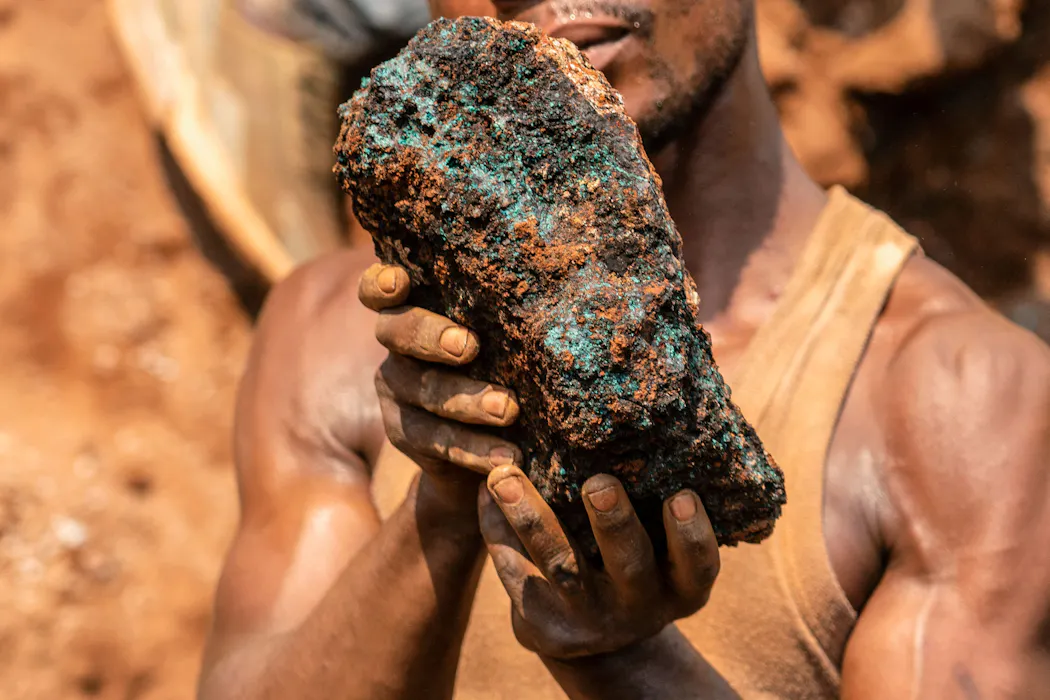
An artisanal miner holds a cobalt stone at a mine near Kolwezi, Congo, in 2022. About 20,000 people work there among toxic materials. Junior Kannah/AFP via Getty Images

There is a troubling contradiction at the heart of the global transition to a cleaner, greener, tech-driven future: Modern technologies – everything from AI to wind turbines, as well as cellphones, electric vehicles and defense systems – depend on critical minerals. But many of the communities where those minerals are mined end up with polluted water and poorer health because of the mining.

Lithium powers batteries. Cobalt stabilizes them. Copper carries electricity. Rare earth elements make wind turbines and digital devices efficient and durable. Each of these are essential to the technologies of the fourth industrial revolution, but they are also toxic and require enormous amounts of water to extract.

As researchers at the United Nations University Institute for Water, Environment and Health, we have been studying the impacts of critical mineral mining on communities around the world. Our new report shows why mining will end up worsening the lives of some of the world’s poorest people if critical mineral supply chains are not monitored and regulated.

One of us is from the Middle East, a region still suffering from the long-term consequences of supplying the fuel consumed for the remarkable economic developments of the 20th century. And one of us comes from Africa, the continent that is now serving as a major supplier of the critical minerals that fuel technological advancements in the 21st century.

Based on our experiences and our research, we believe that if there aren’t major changes in how countries, corporations and communities manage critical minerals, humanity risks reproducing the injustices of the oil extraction era, this time with the technological advancements meant to address the problems fossil fuels created.

Mining contributes to growing water bankruptcy

One of the most significant impacts of critical minerals extraction is its effect on water.

In 2024 alone, global lithium production required an estimated 456 billion liters of water. That is equivalent to the annual domestic water needs of roughly 62 million people in sub‑Saharan Africa. At the same time, much of the world is facing water bankruptcy, meaning people and industries are using more fresh water than nature can replenish, leading to irrecoverable ecosystem damages.

A worker in protective gear and a face mask drags a large hose beside brine pools.
Workers perform maintenance at pools where evaporation concentrates lithium-rich brine in Chile’s Atacama Desert in 2023. To extract lithium, mines pump water from beneath the salt flats.
AP Photo/Rodrigo Abd

In arid regions such as Chile’s Salar de Atacama, mining activities account for up to 65% of total regional water use, competing with agriculture and ecosystems. Groundwater levels have dropped, salt lagoons have shrunk, and freshwater aquifers are increasingly at risk of being depleted and contaminated.

Water pollution compounds problems like this. Mining generates large quantities of toxic waste and wastewater containing heavy metals, acids and radioactive residues.

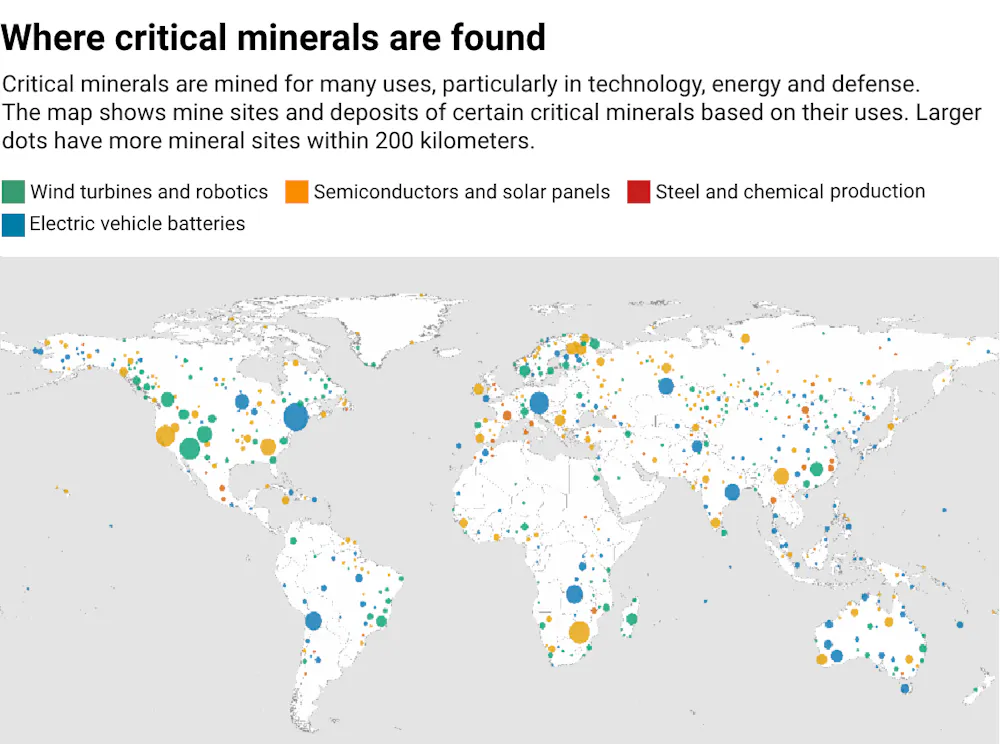
Map shows critical mineral mine and deposit sites and areas with large numbers of them.

Source: United Nations University Institute for Water, Environment and Health

Rare earth mineral production, for example, generates up to 2,000 metric tons of waste for every metric ton of usable material. Rare earth minerals are often extracted by creating leaching ponds and adding chemicals to separate the metals. When the effluent isn’t treated or is improperly stored, the chemicals can seep into groundwater and waterways, contaminating aquifers and rivers.

In some parts of the world, rivers near cobalt and copper mines have become so acidic that communities can no longer drink water from them. Fish stocks have collapsed, and farmlands have been poisoned. Water insecurity is no longer a side effect of mining; it is a systemic cost.

Health crises hidden in supply chains

Communities living near these extraction sites report people suffering from skin diseases, gastrointestinal illnesses, reproductive health problems and chronic health conditions associated with long‑term exposure to heavy metals in polluted water and soil.

Evidence from mining regions in the Democratic Republic of the Congo is particularly stark.

Studies document high rates of miscarriages, congenital malformations and infant mortality among populations exposed to environments contaminated with cobalt and other metals. Maternity wards in southern Democratic Republic of the Congo that are close to mining operations report significantly more birth defects than those farther away.

In communities near mining operations, residents talk about how women and girls living near cobalt and copper mining sites have been experiencing gynecological health problems, including infections, menstrual irregularities, miscarriages and infertility. These risks are linked to prolonged contact with contaminated water, compounded by limited access to sanitation and healthcare.

In Chile’s Antofagasta region, cancer mortality is the highest in the country. Lung cancer rates there are nearly three times the national average. Physicians in the region also report rising cases of neurological and developmental disorders, which they link to early exposure to contaminated water and air.

Thousands of children are estimated to be employed in artisanal cobalt mines in the Democratic Republic of the Congo. In the informal mines, they may be exposed to cobalt dust and other hazardous materials without protective gear.

These health risks are heightened by weak systems for water, sanitation and healthcare. As of 2024, only about one-third of people in the Democratic Republic of the Congo had at least basic drinking water services.

Food costs of the energy transition

The water problems caused by critical minerals extraction also pose a major threat to local food systems. In Peru, zinc mining has contaminated the Cunas watershed. Runoff pollutes water used to irrigate crops and provide water for livestock.

In Bolivia’s Uyuni region, lithium mining has led to persistent water shortages that are making it increasingly difficult to grow quinoa, a staple crop central to local diets and economies. Across the wider “lithium triangle” of Argentina, Chile and Bolivia, mining has reduced water availability for crops and farm animals.

Similar patterns are evident in parts of the Democratic Republic of the Congo and Zambia. In both countries, polluted rivers have contributed to declining fish stocks and livestock illnesses, harming households that are already struggling to feed themselves.

Ways to protect mining communities

Innovation and technological advances have the potential to do good. But we believe a fair and sustainable energy and digital transition requires deliberate actions to avoid creating “sacrifice zones,” places where human and ecological well-being are traded away for technological breakthroughs.

A man with dried mud on his bare arms stand near a water-filled mine where a child and woman are searching for minerals.
A family works at an artisanal cobalt and copper mine site in 2025 in Kolwezi, Democratic Republic of the Congo. These mines are often unregulated.
Michel Lunanga/Getty Images

One option is to create stronger international governance. Moving beyond voluntary guidelines toward binding international rules, such as treaties, enforceable supply chain due-diligence laws, mandatory environmental and human rights standards for mining operations, and potentially establishing a global mineral trust that would manage critical minerals as shared planetary assets, could improve water protection, pollution control and human rights across mineral supply chains.

Companies can also invest in less water-intensive mining technologies. Countries can tighten their wastewater controls and expand independent environmental monitoring and reporting.

A large retaining pond with ragged edges, roads along its sides and mountains in the background.
Copper-mining companies create huge tailings ponds, like this one in Chile in 2019, to store toxic byproducts of mining. Hundreds of these waste ponds exist across the country and carry the risk of leaking acidic water and heavy metals such as arsenic, copper and mercury into groundwater.
Martin Bernetti/AFP via Getty Images

Governance arrangements that give local and Indigenous communities a stronger voice, a fair share in the benefits and genuine co-governance of resources could further rebalance who has power and who bears risk.

On the consumption side, extending product lifespans, expanding recycling and encouraging less reliance on newly mined minerals would ease pressure on water‑stressed regions.

For the people who use these technologies, the social and environmental costs embedded in critical minerals supply chains are often out of sight and out of mind. Making these impacts visible can enable consumers to make informed choices and engage in greater scrutiny of corporate practices.

Critical minerals are essential to advancing sustainability. But if cleaner technologies are built in ways that result in polluted rivers, sick children and dispossessed communities, the transition will fall short of its promise.

The Conversation

The authors do not work for, consult, own shares in or receive funding from any company or organization that would benefit from this article, and have disclosed no relevant affiliations beyond their academic appointment.

ref. The race to mine critical minerals for AI and clean energy is creating ‘sacrifice zones’ that harm water and health of world’s poor – https://theconversation.com/the-race-to-mine-critical-minerals-for-ai-and-clean-energy-is-creating-sacrifice-zones-that-harm-water-and-health-of-worlds-poor-281524

UAE’s OPEC exit has been long in the works – and may mark the beginning of a Gulf realignment

Source: The Conversation – USA (2) – By Kristian Coates Ulrichsen, Fellow for the Middle East at the Baker Institute, Rice University

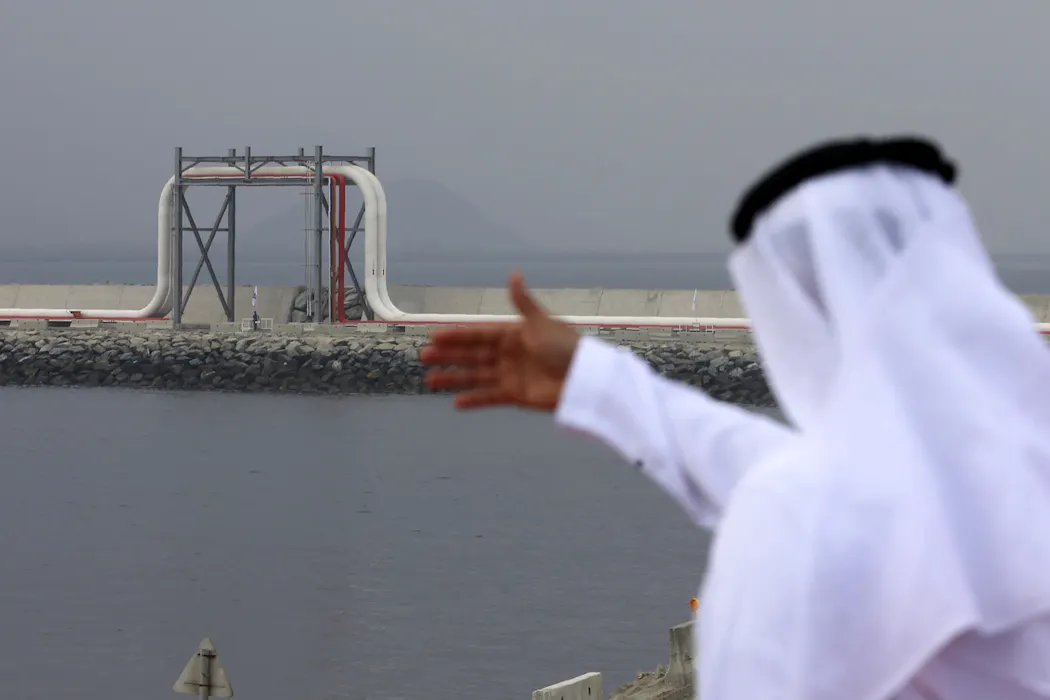
The Emiratis are poised to turn their back on their oil cartel buddies. Karim Sahib/AFP via Getty Images

The United Arab Emirates’ decision to withdraw from the Organization of Petroleum Exporting Countries will leave the oil cartel weakened at a crucial time. It also illustrates the ongoing tensions between the UAE and Saudi Arabia, OPEC’s largest producer and de facto leader.

The UAE announced on April 28, 2026, that it will depart OPEC and OPEC+, an expanded grouping which includes Russia, on May 1, depriving the groups of their third- and fourth-largest oil producer, respectively.

Though the move may seem abrupt, as a close observer of the UAE and intra-Gulf politics, I believe Abu Dhabi’s decision to leave OPEC and go it alone was in the cards for a while and follows years of Abu Dhabi’s complaints about the cartel.

The announcement also follows years of divergence between Emirati and Saudi oil policies, as well as the growth of competitive rivalries between the two countries over wider regional questions. This rift between the two largest Sunni Gulf states burst into the open in December 2025, when competing visions for security in Yemen threatened to reignite civil conflict in the war-torn country.

Unity in the face of Iranian attacks since then should not mask that underlying split, of which the UAE’s OPEC decision is merely the latest manifestation.

The world’s most prominent cartel

OPEC formed in 1960 as a way for the main oil producers to set production limits and therefore control the price of crude around the world.

The UAE has been a member of OPEC since the seven-emirate federation was established in 1971, although Abu Dhabi – the emirate that holds 95% of Emirati oil reserves – has been a member since 1967.

A large building with 'Organization of the Petroleum Exporting Countries' written on it.
Exterior view of OPEC’s headquarters in Vienna.
Christian Bruna/Getty Images

At its height in the mid- and late-1970s, OPEC played a powerful role in reshaping the balance of power between oil producers and consumers, and countering Western dominance in a postcolonial setting of resource nationalization.

While other members have withdrawn from OPEC in recent years – such as Qatar in 2019 and Angola in 2024 – the impact of the UAE’s departure is on a far greater scale, affecting about 12% of OPEC’s total oil output.

Furthermore, the exit of the UAE removes one of the few major swing producers from OPEC, weakening the organization’s ability to respond rapidly to changing market conditions in the future.

Diverging Gulf priorities

The UAE has been signaling a potential split for at least five years, when differences of opinion with Saudi Arabia on how to manage oil policy emerged ahead of a November 2020 OPEC+ summit. The rift became openly visible during a subsequent meeting of OPEC+ countries in July 2021.

In both cases, the UAE wished to increase oil production – which had been sharply curtailed by OPEC members during the COVID-19 pandemic – while the Saudis sought to maintain high prices by keeping output lower and prices higher.

In part, this reflects the different circumstances of the two Gulf nations. The Saudis are reliant on higher oil prices to drive the revenues needed to fund its lavish budget and pay for massive infrastructure projects like its Vision 2030 project. The Emirati economy, on the other hand, is more diversified and less directly dependent on oil revenues.

Instead, Abu Dhabi has invested heavily in recent years to expand capacity to be able to increase oil production from 3.4 million barrels a day before the U.S.-Israel war against Iran to 5 million barrels a day by 2027 – and potentially higher later on. This reflects a desire to monetize its reserves and move the oil to market to avoid the risk of stranded assets should global demand fall in any future transition away from fossil fuels.

Shorn of the constraints of OPEC quotas, which the Emiratis have chafed against for years, officials in Abu Dhabi will be able to increase production should it wish to do so once the impasse with Iran is broken and the Strait of Hormuz fully reopens.

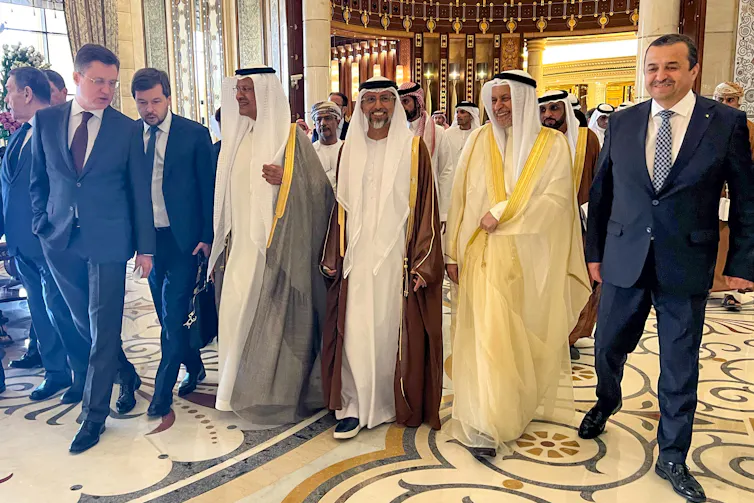
Men in suits and traditional Gulf attire stand.
Energy ministers from Russia, Saudi Arabia and the UAE at an OPEC meeting in Riyadh, Saudi Arabia, on June 2, 2024.
Haitham El-Tabei/AFP via Getty Images

Post-Iran war regional shifts

It is clear that UAE leadership is first and foremost intent on doubling down on the pursuit of its national interests, with an emphasis on prioritizing ties with the U.S. – and likely also Israel – over those with countries that Abu Dhabi feels reflect an old world it is now seeking to leave behind.

While the war in Iran may have temporarily overshadowed the eruption of Saudi-Emirati tensions over Yemen and visions for the region, the rift had not been resolved prior to the U.S. and Israeli launch of military operations on Feb. 28.

Comments by prominent Emiratis have suggested tk: links to comments that officials in the UAE have paid close attention to which countries have, in their view, stepped up to assist the UAE in times of crisis, and which have not.

The OPEC decision thus reflects a calculation in Abu Dhabi that there is no longer any utility in remaining part of a Saudi-dominated organization. The UAE’s reconsideration of other memberships, such as the Arab League, Organization of Islamic Conference or even the Gulf Cooperation Council, may be next, as the UAE and other regional countries begin to think ahead to an uncertain post-war landscape.

The Conversation

Kristian Coates Ulrichsen does not work for, consult, own shares in or receive funding from any company or organization that would benefit from this article, and has disclosed no relevant affiliations beyond their academic appointment.

ref. UAE’s OPEC exit has been long in the works – and may mark the beginning of a Gulf realignment – https://theconversation.com/uaes-opec-exit-has-been-long-in-the-works-and-may-mark-the-beginning-of-a-gulf-realignment-281699

Another alleged attempt on Trump’s life: A political lifeline or a damaging display of weakness?

Source: The Conversation – Canada – By James K. Rowe, Associate Professor of Political Ecology, University of Victoria

United States President Donald Trump has apparently dodged yet another bullet.

If history is any indication, the latest alleged attempt on his life at the White House Correspondents dinner couldn’t have happened at a better time given his sagging popularity. But amid widespread skepticism and the Trump team’s efforts to promote the construction of a White House ballroom in the immediate aftermath of the shooting, it’s far from clear whether this incident will benefit the president.

Assassination attempts often make elected politicians more popular. In 1981, Ronald Reagan was shot in the same Washington Hilton Hotel that was the site of Trump’s latest assassination attempt. Reagan’s approval ratings jumped after he survived the attack.

Why does political violence help bolster approval ratings?

The obvious answer is that being subject to violence can humanize victims, softening criticism from supporters and critics alike.

The less obvious reason is that dodging or surviving bullets can super-humanize politicians, making them seem “touched” by God or like they have command over the vital powers of life and death.

Trump as superhero

When Trump lifted his fist in defiance, a trickle of blood on his face in Butler, Pa., a few months before the 2024 presidential election, he created an iconic image that bolstered his campaign and created a myth of invincibility.

This is the same man who claimed in 2016 that he “could stand in the middle of Fifth Avenue and shoot somebody, and…wouldn’t lose any voters.” Despite two impeachments, convictions on 34 felony charges, an admission of sexual assault on a hot microphone and multiple assault allegations, Trump was re-elected in 2024. Where others might have whithered, his forward march continued.


Read more:
Ego, hubris and narcissism: Where Donald Trump ranks among the other 45 American presidents


While Trump once claimed the ability to shoot people in downtown Manhattan and survive politically, the Butler shooting gave the impression that he himself could also be shot without losing his life, that he isn’t subject to normal vulnerabilities and that he is somehow superhuman. Trump himself has cited divine intervention as key to his ongoing survival despite multiple assassination attempts.

Terror management

Terror management theory (TMT) is a school of psychology that tracks how our relationships to life and death shape political outcomes.

According to TMT, we cope with our anxieties about death by pursuing “earthly heroism” — meaning we seek esteem according to our chosen world views. There is a growing body of experimental evidence to support this hypothesis.

Trump is walking confirmation of TMT.

He is a known germaphobe obsessed with perceptions of vitality. He obsesses over his hair since he sees baldness as weakness and defeat. By ruthlessly pursuing money — the measure of worth in capitalist economies — and by stamping his name on everything from buildings, vodka and Bibles, he has sought heroism. Even before he ran for president, you could buy a Trump-branded action figure.

According to American anthropologist Ernest Becker, whose Pulitzer Prize-winning book The Denial of Death laid the intellectual groundwork for TMT:

“The real world …tells man that he is a small trembling animal who will decay and die. Illusion changes all this, makes man seem important, vital to the universe, immortal in some way.”

From his fixation on gold, grandiosity and golden locks despite his age, Trump is a master of illusion, crafting a mirage of super heroism for his MAGA base.

Heroism can also be pursued vicariously. This is something many of us do with our preferred sport teams, celebrities and politicians, feeling their victories and losses like our own.

Good timing?

Trump’s victory over death in Butler two years ago — an incident that is now being questioned even by his MAGA supporters — helped carry him across the finish line. His chief of staff, Susie Wiles, said Butler was a “big part” of his victory in 2024.

And so what to make of the recent apparent attempt on his life? Will it help resuscitate his historically low approval ratings?


Read more:
Donald Trump’s US ratings fall to a record low amid Iran war


In crass political terms, historical precedent suggests the assassination attempt couldn’t have happened at a better time. Tarred by his association with deceased pedophile Jeffrey Epstein and prosecuting an unpopular war of choice against Iran that is costing billions while raising gas prices for voters, Trump needed a lifeline.

The timing is so good for him that conspiracy theories immediately began to swirl that the attack was an inside job aimed at bolstering Trump’s slumping approval ratings.

Avoiding political death?

It is unlikely, however, that this recent incident will stave off political death. After the political failures of the Department of Government Efficiency (DOGE), the Epstein files and a risky war with no clear exit, Trump is politically weakened.


Read more:
Panicking scientists, canceled experiments – federal funding cuts turned my work as a research dean into crisis management


Influential members of his own base, including former Fox News pundit Tucker Carlson, are no longer lionizing him, instead musing whether he might be the anti-Christ.

Images from the recent shooting suggest weakness, not vitality. Secret service agents struggled to get him out of his seat likely due to ongoing mobility issues (though Trump claims his sluggishness was due to courageously overseeing the action).

Likewise, instead of lifting his fist triumphantly like in Butler, Trump fell down as he was rushed off stage (again, he claims he was told to get down, but his exit looks weak).

A report on the apparent assassination attempt in Washington, D.C. (CNN)

While his team will spin the latest shooting as further evidence of his super humanity, Trump is looking more politically and existentially mortal by the day.

Trump had his time in the sun, but like Icarus, his hubris and overreach are finally melting his wings. While illusion can obscure the inevitable for a while, what goes up must always come down.

The Conversation

James K. Rowe does not work for, consult, own shares in or receive funding from any company or organisation that would benefit from this article, and has disclosed no relevant affiliations beyond their academic appointment.

ref. Another alleged attempt on Trump’s life: A political lifeline or a damaging display of weakness? – https://theconversation.com/another-alleged-attempt-on-trumps-life-a-political-lifeline-or-a-damaging-display-of-weakness-281675

Women who expand their freelance careers hit a different kind of glass ceiling — the glass wall

Source: The Conversation – Canada – By Christy Zhou Koval, Professor, Smith School of Business, Queen’s University, Ontario

Most people know about the glass ceiling: the invisible barrier that keeps women from reaching top leadership positions. Researchers have also identified the glass cliff, where women are placed in leadership roles during times of crisis, and the glass escalator, where men in female-dominated fields get fast-tracked into management.

These concepts all assume careers move up. Increasingly, however, they do not. More people are building careers sideways — taking on extra gigs, branching into new skill areas or negotiating customized roles within their organizations. We call this lateral work.

As companies flatten their hierarchies and organize around project-based work, lateral moves have become the new career ladder. According to Statistics Canada, roughly 2.4 million Canadians — nearly nine per cent of the working-age population — engaged in some form of gig work in 2022.

This is especially true for freelancers, who must constantly seek out new clients and new income streams to advance. For women, advancing this way comes with added challenges. Our research shows that they hit a different kind of invisible barrier — the “glass wall.”

The freelancing catch-22

Freelancers face a well-documented dilemma: you need experience to get hired, but you need to get hired to gain experience.

The standard advice is to start as a specialist, build a reputation, then gradually branch out into new areas of work. A songwriter may focus on specializing in writing top lines but later take on writing lyrics. A cinematographer might move into production design. This kind of lateral expansion is meant to signal ambition and versatility.

In our research, we tested whether this advice works equally for men and women by tracking the careers of more than 8,000 K-pop songwriters.

When men expanded into new work roles, they were seen as strategic and ambitious, and their career prospects improved. But when women made the exact same move, they were perceived as less in control of their careers, and their prospects did not improve. This is the glass wall in action: the invisible barrier that limits women’s career opportunities when they try to expand into new roles.

In two follow-up experiments with participants from South Korea and the United States, we found that these patterns stem from gender stereotypes about agency. Agency — the sense that a person is acting deliberately and on their own terms — is a trait that is historically associated with men more than women.

Men’s lateral moves are read as deliberate career moves, while women’s are read as reactions to circumstance — signs they are impulsive, accommodating or that they failed in their original role. That gap in perceived agency, in turn, lowers how competent and committed women are seen to be.

Not just a freelancing problem

Although we identified the glass wall in freelancing, the dynamic almost certainly extends into conventional workplaces as well. The modern workplace increasingly expects employees to manage their own career trajectories.

Employees are expected to negotiate customized work arrangements, take on responsibilities outside their original job descriptions and signal their versatility through lateral moves.

In all of these cases, workers are doing something similar to the role expansion we studied: branching into new areas under conditions of ambiguity, where it is hard for others to evaluate their competence upfront.

Our theory predicts that in these situations — where workers have autonomy and evaluations are uncertain — gender stereotypes can creep in.

The presence of a glass wall matters now more than ever. The McKinsey Women in the Workplace report found that up to 19 per cent of organizations have scaled back flexible work options and up to 17 per cent have reduced diversity and inclusion resources.

The pay data tells a similar story. Statistics Canada data from 2025 shows that women aged 15 and older earned 88 cents for every dollar earned by men, and the gap is wider still for racialized and Indigenous women. In the United States, women now earn 82 cents per dollar.

Among freelancers, the gap is larger still. A 2024 analysis found that women quote approximately 10 per cent lower hourly rates than men. With fewer structures governing how lateral moves are evaluated, gender stereotypes are more likely to shape who gets the next opportunity.

What can be done

Addressing the glass wall requires action on several fronts. Most companies track whether men and women are promoted at equal rates. However, few track what happens when employees move sideways. Auditing lateral move outcomes by gender would be a practical first step.

For clients and hiring managers, the glass wall represents a missed opportunity. Women with multiple skill sets are, in effect, an undervalued talent pool; they are likely to be discounted not because of ability, but because of bias.

Freelancers themselves can take steps too. In our interviews with K-pop songwriters, several women told us that presenting under an incorporated business name, rather than their personal name, helped redirect clients’ attention from gender cues to their portfolio alone. This small shift can change the frame substantially.

Finally, for policymakers, accredited certification schemes for skill expansion could help all freelancers, especially women, to credibly signal their investment in new roles. When credentials carry real weight, evaluators have less reason to fall back on gut feelings shaped by stereotypes.

The rise of freelancing and flexible work was supposed to free people from the biases embedded in corporate bureaucracy. Research on gender stereotypes has long suggested that bias does not disappear when formal structures are removed, but rather expands into the space left behind. Our findings bear that out.

As careers become more fluid and self-directed, we need to pay attention not just to who gets promoted, but to who gets credit for growing sideways. The glass wall may be invisible, but its consequences are not.

The Conversation

Yonghoon Lee received funding from Hong Kong Research Grants Council (ECS:26504918), which was completed on 2021

Christy Zhou Koval and Susie Lee do not work for, consult, own shares in or receive funding from any company or organisation that would benefit from this article, and have disclosed no relevant affiliations beyond their academic appointment.

ref. Women who expand their freelance careers hit a different kind of glass ceiling — the glass wall – https://theconversation.com/women-who-expand-their-freelance-careers-hit-a-different-kind-of-glass-ceiling-the-glass-wall-280416

Climate policy isn’t partisan — research suggests more on the right support it than oppose it

Source: The Conversation – Canada – By Emily Huddart, Professor of Sociology, University of British Columbia

Climate change has become entangled in partisan politics. In Canada, as in other countries, climate concern and support for climate policy are often coded as left-leaning positions. Meanwhile, climate change skepticism or denial is more likely to be espoused by those on the political right.

This pattern helps explain why those on the political left are consistently more likely than those on the right to accept climate science and support action to address climate change. But how big a gap is there between the left and the right in Canada? And what explains differences in levels of support for climate policy?

Our recent representative survey of Canadians, conducted in the summer of 2024, set out to answer these questions. Using a telephone survey, we gathered responses from 2,503 Canadians across the country.

We asked about their support for climate policies, their feelings about ordinary people on the left and the right, as well as their political ideology, where they live, and whether they had economic ties to the oil and gas industry.

We also examined how people feel about political groups. Political scientists refer to this feeling as affective polarization — the extent to which people feel warmth toward their own political side and hostility toward the other.

We focused our analysis on the political right. Respondents identifying as politically left-leaning showed consistently high support for climate policy, leaving little variation to explain. Those on the right expressed a wider range of views. Contrary to common assumptions, we found that more people on the right supported climate policy than opposed it. The next question is what explains the differences within the right.

Affective polarization

A commonly cited explanation for different levels of support for climate policy is economic self-interest. This factor is particularly relevant for provinces like Alberta, where the oil and gas sector plays a major role in employment and government revenue. Qualitative researchers have argued that people with ties to this industry are less likely to support climate policy.

However, we found that having ties to the oil and gas sector did not significantly predict their support for climate policy. Likewise, the degree of conservatism — whether someone identified as centre-right or far-right — didn’t make conservatives less likely to support climate policy either.

There were modest regional differences. Respondents in the Prairie provinces expressed somewhat lower levels of support compared with those in Atlantic Canada and Québec. However, region explained only a small portion of the variation within the political right.

What mattered most was affective polarization.

Negative feelings toward the left and positive feelings toward the right were by far the strongest predictors of climate policy attitudes, and explained the most variation in support.

In simple terms, people on the right who felt the most hostility toward the left, and the most warmth toward the right, were more likely to oppose climate policy.

Implications for climate change politics

These findings have important implications for how climate conversations unfold in Canada.

Avoiding political discussion with people on the opposing side of the issue may be counterproductive. Many people steer clear of contentious topics in everyday conversation, especially with those they disagree with.

At the same time, social media environments often reinforce existing views by connecting people with like-minded others. The result is fewer opportunities for meaningful exchange across political divides.

Such exchanges can help reduce polarization, but only under certain conditions.

When discussions are framed as attempts to persuade or “win,” they often entrench existing positions. When they are approached as opportunities to understand another person’s perspective, they can reduce hostility and open space for dialogue.

People rarely change their views in response to arguments alone. Instead, attitudes are shaped over time through relationships, experiences and social context. Conversations that build trust and mutual understanding are more likely to shift perspectives than those focused on delivering facts.

If opposition to climate policy is rooted in social and political identity, then strategies for building support need to reflect that reality. This doesn’t mean abandoning efforts to implement climate policies. It suggests that building broader support for climate action will require engaging people across political lines in ways that reduce, rather than heighten, partisan divisions.

In real terms, this will mean finding core needs that Canadians have in common and seeking policies that can have climate benefits while meeting those core needs.

Climate change is a complex and urgent challenge. Addressing it will require not only technological and policy solutions, but also social ones. Creating space for constructive, respectful conversations across political differences may be one of the most important and overlooked parts of that effort.

The Conversation

Emily Huddart receives funding from the Social Sciences and Humanities Research Council of Canada to conduct this research.

Tony Silva received funding (as co-applicant) from the Social Sciences and Humanities Research Council of Canada to conduct this research.

ref. Climate policy isn’t partisan — research suggests more on the right support it than oppose it – https://theconversation.com/climate-policy-isnt-partisan-research-suggests-more-on-the-right-support-it-than-oppose-it-280912

Another alleged attempt on Trump’s life: Is it a political lifeline or a damaging sign of weakness?

Source: The Conversation – Canada – By James K. Rowe, Associate Professor of Political Ecology, University of Victoria

United States President Donald Trump has apparently dodged yet another bullet.

If history is any indication, the latest alleged attempt on his life at the White House Correspondents dinner couldn’t have happened at a better time given his sagging popularity. But amid widespread skepticism and the Trump team’s efforts to promote the construction of a White House ballroom in the immediate aftermath of the shooting, it’s far from clear whether this incident will benefit the president.

Assassination attempts often make elected politicians more popular. In 1981, Ronald Reagan was shot in the same Washington Hilton Hotel that was the site of Trump’s latest assassination attempt. Reagan’s approval ratings jumped after he survived the attack.

Why does political violence help bolster approval ratings?

The obvious answer is that being subject to violence can humanize victims, softening criticism from supporters and critics alike.

The less obvious reason is that dodging or surviving bullets can super-humanize politicians, making them seem “touched” by God or like they have command over the vital powers of life and death.

Trump as superhero

When Trump lifted his fist in defiance, a trickle of blood on his face in Butler, Pa., a few months before the 2024 presidential election, he created an iconic image that bolstered his campaign and created a myth of invincibility.

This is the same man who claimed in 2016 that he “could stand in the middle of Fifth Avenue and shoot somebody, and…wouldn’t lose any voters.” Despite two impeachments, convictions on 34 felony charges, an admission of sexual assault on a hot microphone and multiple assault allegations, Trump was re-elected in 2024. Where others might have whithered, his forward march continued.

While Trump once claimed the ability to shoot people in downtown Manhattan and survive politically, the Butler shooting gave the impression that he himself could also be shot without losing his life, that he isn’t subject to normal vulnerabilities and that he is somehow superhuman. Trump himself has cited divine intervention as key to his ongoing survival despite multiple assassination attempts.

Terror management

Terror management theory (TMT) is a school of psychology that tracks how our relationships to life and death shape political outcomes.

According to TMT, we cope with our anxieties about death by pursuing “earthly heroism” — meaning we seek esteem according to our chosen world views. There is a growing body of experimental evidence to support this hypothesis.

Trump is walking confirmation of TMT.

He is a known germaphobe obsessed with perceptions of vitality. He obsesses over his hair since he sees baldness as weakness and defeat. By ruthlessly pursuing money — the measure of worth in capitalist economies — and by stamping his name on everything from buildings, vodka and Bibles, he has sought heroism. Even before he ran for president, you could buy a Trump-branded action figure.

According to American anthropologist Ernest Becker, whose Pulitzer Prize-winning book The Denial of Death laid the intellectual groundwork for TMT:

“The real world …tells man that he is a small trembling animal who will decay and die. Illusion changes all this, makes man seem important, vital to the universe, immortal in some way.”

From his fixation on gold, grandiosity and golden locks despite his age, Trump is a master of illusion, crafting a mirage of super heroism for his MAGA base.

Heroism can also be pursued vicariously. This is something many of us do with our preferred sport teams, celebrities and politicians, feeling their victories and losses like our own.

Good timing?

Trump’s victory over death in Butler two years ago — an incident that is now being questioned even by his MAGA supporters — helped carry him across the finish line. His chief of staff, Susie Wiles, said Butler was a “big part” of his victory in 2024.

And so what to make of the recent apparent attempt on his life? Will it help resuscitate his historically low approval ratings?


Read more:
Donald Trump’s US ratings fall to a record low amid Iran war


In crass political terms, historical precedent suggests the assassination attempt couldn’t have happened at a better time. Tarred by his association with deceased pedophile Jeffrey Epstein and prosecuting an unpopular war of choice against Iran that is costing billions while raising gas prices for voters, Trump needed a lifeline.

The timing is so good for him that conspiracy theories immediately began to swirl that the attack was an inside job aimed at bolstering Trump’s slumping approval ratings.

Avoiding political death?

It is unlikely, however, that this recent incident will stave off political death. After the political failures of the Department of Government Efficiency (DOGE), the Epstein files and a risky war with no clear exit, Trump is politically weakened.


Read more:
Panicking scientists, canceled experiments – federal funding cuts turned my work as a research dean into crisis management


Influential members of his own base, including former Fox News pundit Tucker Carlson, are no longer lionizing him, instead musing whether he might be the anti-Christ.

Images from the recent shooting suggest weakness, not vitality. Secret service agents struggled to get him out of his seat likely due to ongoing mobility issues (though Trump claims his sluggishness was due to courageously overseeing the action).

Likewise, instead of lifting his fist triumphantly like in Butler, Trump fell down as he was rushed off stage (again, he claims he was told to get down, but his exit looks weak).

A report on the apparent assassination attempt in Washington, D.C. (CNN)

While his team will spin the latest shooting as further evidence of his super humanity, Trump is looking more politically and existentially mortal by the day.

Trump had his time in the sun, but like Icarus, his hubris and overreach are finally melting his wings. While illusion can obscure the inevitable for a while, what goes up must always come down.

The Conversation

James K. Rowe does not work for, consult, own shares in or receive funding from any company or organisation that would benefit from this article, and has disclosed no relevant affiliations beyond their academic appointment.

ref. Another alleged attempt on Trump’s life: Is it a political lifeline or a damaging sign of weakness? – https://theconversation.com/another-alleged-attempt-on-trumps-life-is-it-a-political-lifeline-or-a-damaging-sign-of-weakness-281675

Benin election: Wadagni’s landslide win raises questions about his legitimacy

Source: The Conversation – Africa (2) – By Narcisse Martial Yèdji, Sociologue politiste et enseignant-chercheur, University d’Abomey-Calavi de Bénin

Romuald Wadagni won the 2026 presidential election in Benin with over 94% of the vote. Wadagni, 50, is a technocrat who became an influential finance minister under Patrice Talon from 2016 until his election.

The Beninese political system is a pluralist democracy organised around a presidential system, with regular elections and political alternation. It is also characterised by a strict institutional framework governing electoral competition, particularly since recent reforms.

The outcome raises questions about the current dynamics of Benin’s political system. How should the 2026 presidential results be interpreted in a context marked by reforms to the party system and the electoral framework? Political sociologist Narcisse M. Yèdji offers some insights.


How do you interpret the 94% result?

With the current national political climate, the landslide victory raises several questions. At first glance, the results suggest very strong support for the presidential majority. Statistically, this means a very low dispersion of votes between the two competing duos: the winning ticket formed by Romuald Wadagni and Mariam Chabi Talata, and the one formed by Paul Hounkpè and Rock Judicaël Hounwanou. More broadly, such a scenario is typical of electoral contexts where the opposition plays only a formal role and has no real chance of winning.

That said, the enormous margin between the two main candidates may also reflect strong support for the winning pair, giving the impression of a broad consensus in their favour.

Clearly, recent changes introduced to the country’s party system and the electoral code have tilted the balance in favour of the ruling party. Such a victory was predictable. The margin, however, was not.

A comparison with the 2021 presidential election places the 2026 result in a broader perspective. The 2021 election was won by Patrice Talon with 86% of the vote. The race was slightly more open. It involved a larger number of candidates: three pairs in total.

The statements are not contradictory. In a context where the political offer is restricted, voters have several options: either to stay at home, or to cast a default vote. Therefore, the 94% may reflect strong popular support. Or, given the limited set of choices, it may reflect the option of a default vote. The 2026 landslide victory can thus be read as a reflection of growing electoral support for the incumbent administration.

The latest complete overhaul of the rules of political competition left voters without meaningful and credible alternatives, thereby increasing the likelihood of people voting by default.

However, what might appear to be a gradual consolidation of electoral support for the ruling party could, in fact, be the effect of these reforms. The endorsement system, in particular, has played a key role in shaping how votes are distributed. It is a system that requires any presidential candidate to obtain the formal support of a certain number of elected officials (members of parliament or mayors) in order to be eligible to run. The threshold, initially set at 10% (16 endorsements), was raised to 15% in 2024 (28 endorsements), making it harder for the main opposition party to enter the race, as it was unable to secure the required number of endorsements.

It is therefore misleading to view the presidential ticket’s success as mere coincidence. A more realistic reading points to a long-matured political project, executed with cold calculation by those in power.


Read more:
Présidentielle au Bénin : comment les réformes politiques sous Patrice Talon ont remodelé la compétition électorale


There are two issues at stake. First, avoiding any risk of retaliation from a resentful successor. The long siege of more than 50 days imposed by security forces on former president Thomas Boni Yayi’s residence after the controversial 2019 legislative election lends weight to this argument. Second, to enable reforms and economic transformation projects to continue, while reducing political uncertainty.

In 2025, Talon had, in fact, hinted at his wish to pass the baton to a successor who would “not undo” his reform programme.

From this perspective, Wadagni’s success is no accident. It is the planned outcome of political system designed to ensure its own continuity.

How do you interpret the voter turnout?

A comparison with previous presidential elections highlights a mixed trend in voter turnout. The 2026 turnout was 63.57%. That is higher than 2021’s 50.17% turnout. However, civil society disputes that 2021 figure, claiming it was actually 26.47%. These turnout rates (for the 2021 and 2026 presidential runs) contrast sharply with recent legislative elections. Turnout was 27.12% in 2019; 38.66% in 2023; 36.74% in 2026.

This contrast reveals a hierarchy among elections. Presidental elections draw stronger turnout, even without real electoral options. For many citizens, electing the head of state is a central political moment.

However, the higher turnout for 2026 (63.57%) should not be interpreted as a revival of political interest. Voter participation has steadily declined since 2006. It averaged at 74.85% in 2006 and 84.82% in 2011.

There is another important reading from the 2026 presidential elections. The relatively high voter turnout of 63.57% happened at the same time as the electoral choices narrowed. In other words, turnout does not appear to be conditioned by the perception of effective pluralism in the electoral process.

Ultimately, these changes reflect how citizens relate to elections. Presidential votes still hold some appeal. Yet, the broader electoral trend remains one of growing abstention and mistrust.

This trend can clearly be linked to a limited belief in the effectiveness of the voting process. It may also stem from a narrower range of electoral choices. If a restricted political offer appears not to affect electoral participation, this does not imply that those who went to vote fully trust the electoral process.

It is entirely possible to be distrustful of the system while still voting, especially when abstention is not perceived as the best option.

Finally, it may be indicative of shifting social expectations regarding political representation.

What are the main challenges facing the new president?

Several challenges await the new president. The first is political legitimacy. Many see his term as a direct continuation of Talon’s rule. For them, Wadagni is his designated successor.


Read more:
Au Bénin, le bilan de Patrice Talon à l’épreuve des élections législatives


From this perspective, the new president appears to be both heir and hostage. He inherits the previous administration’s achievements. But he also inherits its liabilities. This raises a central question: can he build an independent authority of his own?

The central challenge of his term, therefore, is to distance himself from this divisive political legacy. He must build an image as an independent president. Wadagni has stated that his predecessor would “step aside” if he wins. But, doubts remain about whether this promised distance will become reality.

On the institutional front, the new president inherits a fragile executive branch. Parliament owes full allegiance to Talon. The Senate could also limit his room for action.

From the first challenge stems the second: restoring trust between politics and people. The outgoing president will sit in the Senate and is likely to remain, for years to come, one of the country’s most influential political figures. Meeting this challenge will undoubtedly depend on how the public will perceive Talon’s influence on government affairs from within the Senate.

Restoring trust between the political sphere and the people means winning back voters who have walked away from electoral processes. This will require credible actions that must prove renewed approach to governance.

The legitimacy of the new president’s policies may depend on this effort.

Beyond that, the deepest challenge might be national reconciliation. Recent political dynamics such as the electoral reforms appear to have contributed to deepening divisions among Beninese citizens. To ensure long term stability, the new president will need to take credible actions to ease tensions and rebuild social cohesion.

For this to happen, strong actions are expected quickly after his inauguration, especially on highly sensitive issues:

  • security issues in the northern border regions exposed to terrorist threats

  • economic and social issues, including the cost of living, improving purchasing power, youth employment, and reducing wage inequalities

  • political and institutional issues, including “political prisoners”, exiles, and those in similar situations; easing the tax burden; and rebuilding public trust in institutions.

Amid the profound political and institutional changes underway, Wadagni’s ability to meet all these expectations will shape his legitimacy. It will also determine the overall success of his seven-year term.

The Conversation

Narcisse Martial Yèdji does not work for, consult, own shares in or receive funding from any company or organisation that would benefit from this article, and has disclosed no relevant affiliations beyond their academic appointment.

ref. Benin election: Wadagni’s landslide win raises questions about his legitimacy – https://theconversation.com/benin-election-wadagnis-landslide-win-raises-questions-about-his-legitimacy-281005