A Protestant candidate has added a twist to Ireland’s presidential race

Source: The Conversation – UK – By Peter John McLoughlin, Lecturer in Politics, Queen’s University Belfast

Ireland will elect a new president on October 24. But not all Irish people will get to vote. Residents of Northern Ireland are not eligible. A Northern Irish candidate can stand in the election – indeed, the Belfast-born Mary McAleese served as president from 1997-2011 – but not vote for themselves, unless they live in the Republic.

This time, one of the two remaining candidates in the race is an Ulster Protestant. Heather Humphreys is a Presbyterian from county Monaghan – one of three Ulster counties that were not included in the formation of Northern Ireland. She is, therefore, a “northerner” – albeit not from Northern Ireland.

Humphreys has sought to use this dualism – being “of Ulster”, but also “of the Irish republic” – to suggest that she understands both political traditions on the island, Ulster unionist and Irish nationalist. But this pitch, and more specifically Humphreys’s religious heritage, have also been turned against her.

Humphreys is standing for Fine Gael, a centre-right Irish party which is part of the current coalition government in Dublin. Jim Gavin, representing Fianna Fáil, the other centrist party in the coalition, was forced to withdraw from the race over a controversy involving his personal financial dealings. This has left Humphreys facing just Catherine Connolly, an independent candidate but former Labour party member who is backed by most of the left-leaning parties in Ireland.

Humphreys describes herself as a republican, but also acknowledges her unionist heritage. Her grandfather signed the Ulster Covenant in 1912. This pledge – signed by thousands of other Ulster Protestants, some in their own blood – committed them to use “all means which may be found necessary” to resist Irish independence.

A Humphreys victory would not entirely be a first, however. Indeed, the very first president of Ireland, Douglas Hyde, was Protestant. He was also the perfect candidate to inaugurate the office, which is largely ceremonial, but symbolically powerful.

A poet and eminent scholar, Hyde was apolitical, and yet had played a crucial role in the “de-Anglicisation” of Ireland – the effort to revive Irish culture, and particularly the native language, corroded by centuries of British rule.

Having a Protestant as its first president also provided a riposte to those who claimed that independent Ireland was a confessional state. The Catholic church was immensely powerful, but Hyde’s presidency suggested an intention to uphold the non-sectarian ideology of republicanism first articulated by Wolfe Tone – one of the many Protestant leaders celebrated in the story of Irish nationalism.

Humphreys has also played a part in this story. In 2016, she was the government minister in charge of the centenary celebrations of the Easter rising – a rebellion against British rule that sparked a renewed struggle for independence, culminating in the establishment of the Irish state in 1921.

The centenary celebrations had the potential to reopen old wounds. But as an Ulster Protestant, Humphreys could claim to understand unionists’ sensitivities, and her handling of the celebrations was broadly deemed a success.

The place of religion in modern Ireland

The last major symbol of Catholic power in Ireland was toppled when voters chose to end the constitutional ban on abortion in 2018. A referendum allowing gay marriage had passed three years earlier, and liberals celebrated what they could now claim was truly the secular republic imagined by Tone. So why has Humphreys’s religion become a point of controversy?

In truth, the question has been raised indirectly, but no less powerfully, by journalists revealing that her husband was previously a member of the Orange Order. This institution is more associated with Northern Ireland and sectarian conflict there.

There are members among the small number of Protestants in the Irish republic, but the Orange Order is quite different in character there, primarily providing a means of association amongst a minority community, and with none of the triumphalist, provocative marching witnessed in Northern Ireland.

Nonetheless, some people in the republic will associate the Orange Order with sectarianism. They may also feel it is fair game to raise this link to a presidential candidate who has suggested that her heritage would allow her to build bridges with unionists.

Such an attribute might be particularly valuable at a time when, post-Brexit, debate on the possibility of a united Ireland has become far more common. This obviously excites Irish nationalists, but has produced paralysing anxiety for many unionists.

And some will see a more malicious intent in raising Humphreys’s link to the Orange Order – a coded questioning of her loyalty to the nationalist tradition in Ireland. There is danger in this. The Northern Ireland Troubles regularly spilled over the border, with Humphreys’s own county particularly affected.

The violence of the Troubles has thankfully ended. But sectarianism has not – and nor is it limited to Northern Ireland.

Whatever the constitutional future of the island, and whatever the outcome of the Irish presidential election, all who hold political power, and all who contribute to public debate, need to be mindful of their words – and the complexity of their history. And southern commentators particularly should remember that there is a reason that the Irish flag includes orange as well as green.

The Conversation

Peter John McLoughlin has received funding in the past from the AHRC, Leverhulme Trust, the Irish Research Council, and the Fulbright Commission. He is a member of Greenpeace.

ref. A Protestant candidate has added a twist to Ireland’s presidential race – https://theconversation.com/a-protestant-candidate-has-added-a-twist-to-irelands-presidential-race-267167
‘Space tornadoes’ could cause geomagnetic storms – but these phenomena, spun off ejections from the Sun, aren’t easy to study

Source: The Conversation – USA – By Mojtaba Akhavan-Tafti, Associate Research Scientist, University of Michigan

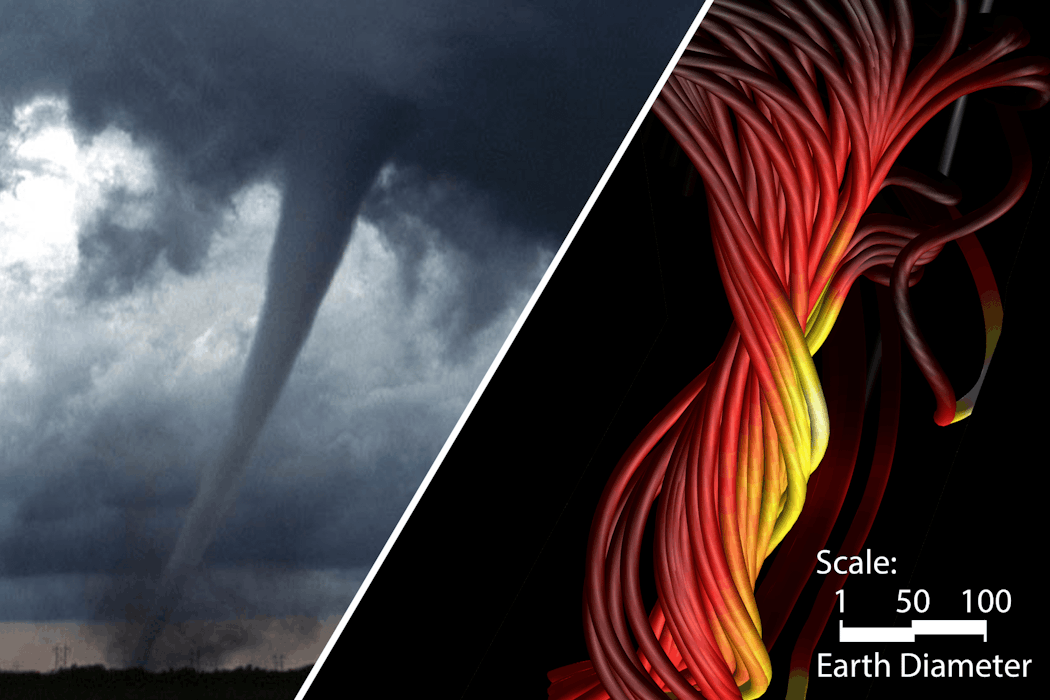
Flux ropes (simulated, right) are structures made up of magnetic field lines wrapping around each other like a rope, that look similar to tornadoes on Earth. NOAA, Mojtaba Akhavan-Tafti and Chip Manchester

Weather forecasting is a powerful tool. During hurricane season, for instance, meteorologists create computer simulations to forecast how these destructive storms form and where they might travel, which helps prevent damage to coastal communities. When you’re trying to forecast space weather, rather than storms on Earth, creating these simulations gets a little more complex. To simulate space weather, you would need to fit the Sun, the planets and the vast empty space between them in a virtual environment, also known as a simulation box, where all the calculations would take place.

Space weather is very different from the storms you see on Earth. These events come from the Sun, which ejects eruptions of charged particles and magnetic fields from its surface. The most powerful of these events are called interplanetary coronal mass ejections, or CMEs, which travel at speeds approaching 1,800 miles per second (2,897 kilometers per second).

To put that in perspective, a single CME could move a mass of material equivalent to all the Great Lakes from New York City to Los Angeles in just under two seconds – almost faster than it takes to say “space weather.”

When these CMEs hit Earth, they can cause geomagnetic storms, which manifest in the sky as beautiful auroras. These storms can also damage key technological infrastructure, such as by interfering with the flow of electricity in the power grid and causing transformers to overheat and fail.

Bands of colorful light in the night sky above a snowy ridge.
Geomagnetic storms, caused by space weather, produce beautiful light shows, but they can also damage satellites.
Frank Olsen, Norway/Moment via Getty Images

To better understand how these storms can wreak so much havoc, our research team created simulations to show how storms interact with Earth’s natural magnetic shield and trigger the dangerous geomagnetic activity that can shut down electric grids.

In a study published in October 2025 in the Astrophysical Journal, we modeled one of the sources of these geomagnetic storms: small, tornado-like vortices spun off of an ejection from the Sun. These vortices are called flux ropes, and satellites had previously observed small flux ropes – but our work helped uncover how they are generated.

The challenge

Our team started this research in summer 2023, when one of us, a space weather expert, spotted inconsistencies in space weather observations. This work had found geomagnetic storms occurring during periods when no solar eruptions were predicted to hit Earth.

Bewildered, the space weather expert wanted to know if there could be space weather events that were smaller than coronal mass ejections and did not originate directly from solar eruptions. He predicted that such events might form in the space between the Sun and Earth, instead of in the Sun’s atmosphere.

One example of such smaller space weather events is a magnetic flux rope – bundles of magnetic fields wrapped around each other like a rope. Its detection in computer simulations of solar eruptions would hint to where these space weather events may be forming. Unlike satellite observations, in simulations you can turn back the clock or track an event upstream to see where they originate.

Sometimes the Sun ejects masses of plasma and magnetic field lines, called coronal mass ejections.

So he asked the other author, a leading simulation expert. It turned out that finding smaller space weather events was not as simple as simulating a big solar eruption and letting the computer model run long enough for the eruption to reach Earth. Current computer simulations are not meant to resolve these smaller events. Instead, they are designed to focus on the large solar eruptions because these have the most effects on infrastructure on Earth.

This shortfall was quite disappointing. It was like trying to forecast a hurricane with a simulation that only shows you global weather patterns. Because you can’t see a hurricane at that scale, you would completely miss it.

These larger-scale simulations are known as global simulations. They study how solar eruptions form on the Sun’s surface and travel through space. These simulations treat streams of charged particles and magnetic fields floating through space as fluids to reduce the computational cost, compared with modeling every charged particle independently. It’s like measuring the overall temperature of water in a bottle, instead of tracking every single water molecule individually.

Because these simulations are computational phenomena that happen across such a vast space, they can’t resolve every detail. To affordably resolve the vast space between the Sun and the planets, researchers divide the space into large cubes – analogous to two-dimensional pixels in a camera. In the simulation, these cubes each represent an area 1 million miles (1.6 million kilometers) wide, tall and across. That distance is equivalent to about 1% of the distance from Earth to the Sun.

The search begins

Our search began with what felt like hunting for a needle in a haystack. We were looking into old global simulations, searching for a tiny, transient blob – which would signify a flux rope – within an area of space hundreds of times wider than the Sun itself. Our initial search did not yield anything.

We then shifted our focus to the simulations of the May 2024 solar eruption event. This time, we specifically looked at the region where the solar eruption collided into a quiet flow of charged particles and magnetic fields, called the solar wind, ahead of it.

There it was: a distinct system of magnetic flux ropes.

However, our excitement was short-lived. We could not tell where these flux ropes came from. The modeled flux ropes were also too small to survive, eventually fizzling out because they became too small to resolve with our simulation grid.

But that was the type of clue we needed – the presence of flux ropes at the location where the solar eruption collided with the solar wind.

To settle the issue, we decided to bridge this gap and create a computer model with a finer grid size than those previous global simulations used. Since increasing the resolution across the entire simulation space would have been prohibitively expensive, we decided to only increase the simulation resolution along the trajectory of the flux ropes.

The new simulations could now resolve features that spanned distances six times Earth’s 8,000-mile (or 128,000-kilometer) diameter down to tens of thousands of miles – nearly 100 times better than previous simulations.

A comparison of low and enhanced simulation grid sizes. We identified one flux rope in the original, low-resolution simulation, but it soon fizzled out. When we improved the simulation grid, we could see multiple flux ropes.
CC BY-NC-ND

Making the discovery

Once we designed and tested the simulation grid, it was time to simulate that same solar eruption that led to the formation of those flux ropes in the less fine-grained model. We wanted to study the formation of those flux ropes and how they grew, changed shape and possibly terminated in the narrow wedge encompassing the space between the Sun and Earth. The results were astonishing.

The high-resolution view revealed that the flux ropes formed when the solar eruption slammed into the slower solar wind ahead of it. The new structures possessed incredible complexity and strength that persisted far longer than we expected. In meteorological terms, it was like watching a hurricane spawn a cluster of tornadoes.

We found that the magnetic fields in these vortices were strong enough to trigger a significant geomagnetic storm and cause some real trouble here on Earth. But most importantly, the simulations confirmed that there are indeed space weather events that form locally in the space between the Sun and Earth. Our next step is to simulate how such tornado-like features in the solar wind may impact our planet and infrastructure.

This two-dimensional cut of the simulation box shows a solar eruption that moves toward Earth quickly. The eruption slams into the slower solar wind ahead of it, causing the formation of a constellation of magnetic flux ropes. The magnetic flux ropes appear as islands in the simulation box. The solid lines represent magnetic field lines, and the color bar shows the number of charged particles. Flux ropes move toward Earth upon formation in the solar wind. The video also shows how the Space Weather Investigation Frontier space mission, or SWIFT, a constellation of four satellites forming a tetrahedron configuration, could examine the formation and growth of these structures in the solar wind.

Watching these flux ropes in the simulation form so quickly and move toward Earth was exciting, but concerning. It was exciting because this discovery could help us better plan for future extreme space weather events. It was at the same time concerning because these flux ropes would only appear as a small blip in today’s space weather monitors.

We would need multiple satellites to directly see these flux ropes in greater detail so that scientists can more reliably predict whether, when and in what orientation they may affect our planet and what the outcome may be. The good news is that scientists and engineers are developing the next-generation space missions that could address this.

The Conversation

Mojtaba Akhavan-Tafti is the Principal Investigator of Space Weather Investigation Frontier (SWIFT). He receives funding from NASA.

W. Manchester is a Co-Investigator of Space Weather Investigation Frontier (SWIFT). He receives funding from NASA and the National Science Foundation (NSF).

ref. ‘Space tornadoes’ could cause geomagnetic storms – but these phenomena, spun off ejections from the Sun, aren’t easy to study – https://theconversation.com/space-tornadoes-could-cause-geomagnetic-storms-but-these-phenomena-spun-off-ejections-from-the-sun-arent-easy-to-study-266567

Trade is shaping new global power relations: what this means for Africa

Source: The Conversation – Africa – By Arno J. van Niekerk, Senior lecturer in Economics, University of the Free State

Over the past two decades, economic strength, trade flows, technological leadership and even consumer demand have been moving steadily from west to east. This transformation is redrawing economic maps. It is also raising urgent questions about co-operation, competition and inclusion in a multipolar world. Lecturer in economics and finance Arno van Niekerk answers questions about these issues, which he explores in a new book, West to East: A New Global Economy in the Making?

What indicates a shift from west to east?

Brics countries, largely driven by China and India, overtook the G7 countries in their share of global GDP in 2018. As Figure 1 shows, the Brics contribution has grown from 32.33% of global GDP to 35.43% in 2024 (after being at 21.37% in 2000).

Figure 1

The G7’s share decreased to 29.64%, from 43.28% in 2000.

This marks a historic turning point. Economic leadership that was long concentrated in the west has decisively shifted towards emerging economies.

Another strong indicator of the shift is the change in global shares of trade of the G7 and Brics countries. This is particularly true of exports. Data shows that Brics+ (11 countries, including new members) captured 28% of world exports in 2024, closing in on the G7’s 32%.

The rebalancing of global trade dynamics has wide-ranging consequences for international business. It means, especially in the case of China and India, that these economies are doing more than expanding in scale. They are also integrating effectively into global value chains, improving productivity and raising living standards.

As shown in Figure 2, the share of global merchandise exports of the G7 countries fell from 45.1% in 2000 to 28.9% in 2023. For their part, the Brics+ share rose from 10.7% (2000) to 23.3% (2023).

Figure 2

There are other indicators too:

  • Over two-thirds of global foreign exchange reserves are held in Asia. In particular, in China (US$3 trillion), Japan, India and South Korea. Large reserves indicate that a nation earns more from exports, investment inflows and remittances than it spends on imports and debt payments.

  • China has displaced western dominance in foreign direct investment in developing regions. Through its Belt and Road Initiative – involving over 150 countries – it has become the world’s largest source of outbound foreign direct investment.

  • Asia now accounts for more than half of the global middle class, driving demand growth. Asia is projected to represent over 50% of global consumer spending. This compares with less than 20% in 1990.

  • China, India, South Korea and Japan have become leaders in financial technology, artificial intelligence and 5G adoption. China now files more international patents annually than the US and European Union combined. Specifically, the tech rivalry between the US and China illustrates the change in technological leadership.

What does this shift tell us about economic co-operation?

Countries in both the east and the west need to make more intentional efforts. This is necessary, firstly, to address the growing geoeconomic tension. And secondly to move the world towards a shared vision for sustainable economic progress that benefits all countries.

Such co-operation needs to go beyond traditional trade and investment agreements. It should be deliberately structured to reduce inequalities, strengthen resilience and embed sustainability.

I identify five main areas for co-operative initiatives.

Co-ordinated policy frameworks: tax co-operation in the form of global minimum corporate taxes to ensure fair revenue for social investment. Harmonise labour and social protections through common standards to prevent exploitation. Align sustainable development by embedding the Sustainable Development Goals, the Paris Agreement targets and human rights principles into trade and financial agreements.

Inclusive trade and investment: fair trade agreements to ensure that market access benefits small producers, women and marginalised communities. Establish regional value chains that support developing countries in upgrading within global value chains – so that they don’t just supply raw materials. Design co-operative frameworks for technology transfer, especially for sharing green and digital technologies at affordable costs.

Financial co-operation: innovative financing mechanisms, such as green and social bonds, blended finance and climate funds need to be made accessible to low-income countries. Implement co-operative mechanisms for debt relief and restructuring. This will help address unsustainable debt that crowds out social spending. Forge public-private partnerships for inclusion to co-finance social infrastructure. This includes education, health and digital access.

Knowledge and capacity building: joint research platforms are required to enable more collaborative work on climate adaptation, food security and inclusive digitalisation. South-south and triangular co-operation should be increased to share experiences and best practices among developing nations with support from multilateral institutions. Managed labour mobility schemes through skills partnerships will benefit both sending and receiving countries.

Governance and multilateral reform: reforming global institutions like the World Bank, International Monetary Fund and World Trade Organization is essential to give developing economies stronger voices in these institutions.

What should African countries be doing?

China, India and other leading eastern countries have proven themselves formidable rivals to the west – economically, militarily and in global governance. Africa occupies a central position. It has the opportunity to become a key player in shaping the future of the global economy.

A number of recommendations should serve as priority areas – particularly over the next decade.

The first would include building a digital backbone, and enhancing technology and AI capabilities. These have become core drivers of competitiveness. Without infrastructure and skills, countries are relegated to raw-material suppliers.

Countries need:

  • a national broadband and data-centre strategy (public-private), and incentives to attract the building of regional data centres

  • more training in science, technology, engineering, maths and artificial intelligence. Examples include fast-track bootcamps, ICT in secondary schools and support for local AI startups.

Secondly, governments should continue to secure investment in digital infrastructure, such as fibre optics, 5G networks and data centres. They could potentially use China’s Digital Silk Road, which promotes affordable tech alternatives.

Secondly, South Africa and other African countries need to prioritise economic inclusion and sustainable development to fast-track broad-based inclusive economic development. This should be the core driver of their development strategy.

Thirdly, African governments must strategically navigate geopolitical shifts and alliances. They are key spheres of influence in the digital competition between the US and China, and ought to use this position to their benefit. To do this, Africna governments should:

  • use Brics+ membership in a co-ordinated way to advance national interests

  • foster south-south co-operation by strengthening trade, technological transfer and financial alliances with other developing countries in Asia, Africa and Latin America. More emphasis should be placed on initiatives like the Forum on China-Africa Co-operation.

  • enhance trade diplomacy and diversify markets to be able to sell more goods and services in Asian, European and intra-African markets

  • maximise external investment by securing investments, infrastructure and digital partnerships from both the US and China. This will position African countries to benefit from the global technology competition.

The Conversation

Arno J. van Niekerk does not work for, consult, own shares in or receive funding from any company or organisation that would benefit from this article, and has disclosed no relevant affiliations beyond their academic appointment.

ref. Trade is shaping new global power relations: what this means for Africa – https://theconversation.com/trade-is-shaping-new-global-power-relations-what-this-means-for-africa-266940

West Africa’s trade monitoring system has collapsed – why this is dangerous for food security

Source: The Conversation – Africa – By Olivier Walther, Associate Professor in Geography, University of Florida

A decade ago countries in West Africa set up a unique trade monitoring mechanism. Its purpose was to track intra-regional trade in agricultural products and livestock in the region. But the system was closed down in 2022 due to a lack of funding by regional organisations.

The mechanism provided West African countries with data from more than 320 markets and along 10 corridors, enabling the tracking of not only trade patterns but livestock and zoonotic diseases.

The lack of up-to-date trade data has a number of knock-on effects. Detailed intra-trade data are essential to help assess the impact of external shocks that can significantly affect food security and economic development. These include political crises, extreme weather events, currency devaluation, or epidemics.

Good data is also essential for mapping trade networks. In turn, this can strengthen market information systems and disease surveillance efforts. These rely heavily on the movement of goods, people, livestock and capital across the region.

Using data collected by the Permanent Interstate Committee for Drought Control in the Sahel from 2013 to 2017, researchers show the importance of considering the social structure of trade networks, their geography and temporal changes.

The social structure of trade networks could better inform market information systems and disease surveillance, both of which rely heavily on the movement of goods, people, livestock and capital across the region

They conclude that regional bodies should support the resumption of trade data collection. They should also foster dialogue with national statistical offices and other national institutions that have experience in collecting data on informal regional food trade to work towards a coherent regional statistical approach.

A unique database on the regional economy

In West Africa, agricultural goods and livestock trade operates in well-established corridors. Animals, for example, flow from the Sahel to the major urban centres of the Atlantic Coast and of the Gulf of Guinea.

Our analysis of the trade data suggests that border markets play a key role in livestock trade and that a large proportion of movements are trans-boundary.

This high level of mobility facilitates the spread of livestock and zoonotic diseases. These include Rift Valley fever, Crimean-Congo haemorrhagic fever, Foot and Mouth disease, and Peste des petits ruminants. At the end of September 2025, for example, a new outbreak of Rift Valley fever was observed in Mauritania and Senegal. The two West African countries have very close ties when it comes to animal movements.

The transnational nature of trade in West Africa led to the creation of a regional database by the Permanent Interstate Committee for Drought Control in the Sahel in 2013. Data collected on more than 320 markets and along 10 corridors, from Guinea and Senegal in the west to Nigeria in the east, were unique on the African continent.

The data was particularly well suited for analysis of locally-produced food stuff and livestock at the regional level. This is because it incorporated both formal and informal trade. Both are prevalent throughout the region. Our recent work estimates informal activities could reach up to 85% of total trade, representing US$10 billion. This is six times higher than portrayed in official statistics

Filling the statistical gap

The experience of recent years and the transnational nature of trade flows suggest one key step. That being regional institutions, rather than bilateral donors, take over data collection.

Initially, the data were collected within the framework of the Permanent Interstate Committee for Drought Control in the Sahel’s Regional Support Program of Market Access. This was developed to increase the volume and value of trade within the Economic Community of West African States and the West African Economic and Monetary Union .

From 2017 to 2019, the United States Agency for International Development provided funding to establish the database as part of its West Africa/Regional Agriculture Office. The data was eventually integrated to the ECOWAS Informal Cross Border Trade database. This was developed to monitor informal cross-border trade in the region in 2019.

The United States Agency for International Development programme ended in 2019. After this, data collection was transferred to the Family Farming, Regional Markets and Cross-Border Trade Corridors in the Sahel project. Launched in 2020, its aim was to develop a sustainable and self-financed means of collecting reliable data on agricultural and food trade in West Africa.

Funding for these activities was provided by the International Fund for Agricultural Development. It was locally managed by the West African Association for Cross-Border Trade in Agro-forestry-pastoral and Fisheries Products, based in Togo.

This initiative, covering 17 countries unfortunately came to an end in 2022 (agricultural products) and 2024 (livestock).

The cessation of this funding has had dire effects. It profoundly affected researchers’ ability to measure the impact of structural and political changes affecting the region. For example, it is still impossible to measure the extent to which the closure of certain borders following successive coups in Mali, Burkina Faso, and Niger in recent years has affected the trade networks linking the Sahel to the Gulf of Guinea.

Better data to monitor trade and animal diseases

Re-establishing a permanent data collection system by supporting local associations such as the West African Association for Cross-Border Trade in Agro-forestry-pastoral and Fisheries Products is one of the essential steps for policymakers wishing to strengthen the region’s resilience.

The World Animal Health Organisation’s International Animal Health Code has suggested centralising livestock mobility data. This could be a starting point. It is the most efficient way to prevent and respond to transnational disease spread through trade.

Accurate, timely and centralised data collection could help identify possible hotspots and reconstruct transmission patterns. It could also develop control measures and alert systems to protect unaffected areas.

Beyond disease control, resuming the collection of data on intra-regional trade would also contribute to design policies that support the adaptation of regional economy to new climate conditions and political unrest. Better trade data on West Africa’s informal sector could unlock climate adaptation finance by highlighting its real value.

For instance, in one of our latest reports, we estimate that regional livestock exports for Mali, Niger and Burkina Faso are likely to be close to USD 1 billion when counting unrecorded trade, against USD 80 million in official statistics.

The research for this article was carried out in conjunction with Mr. Brahima Cissé who coordinates the Regional Markets program at the Economic Community of West African States in Togo; Dr. Alban Masaparisi, an economist specialising in food systems transformation and agricultural policy at the OECD Sahel and West Africa Club, France and Mr. Koffi Zougbede, an economist working on food systems at the OECD Sahel and West Africa Club, France.__

The Conversation

Olivier Walther receives funding from the OECD.

Andrea Apolloni and Lacey Harris-Coble do not work for, consult, own shares in or receive funding from any company or organisation that would benefit from this article, and have disclosed no relevant affiliations beyond their academic appointment.

ref. West Africa’s trade monitoring system has collapsed – why this is dangerous for food security – https://theconversation.com/west-africas-trade-monitoring-system-has-collapsed-why-this-is-dangerous-for-food-security-266405

Why are elements like radium dangerous? A chemist explains radioactivity and its health effects

Source: The Conversation – USA – By Kelling Donald, Professor of Chemistry, University of Richmond

Radioactive elements release particles that can damage cells. MirageC/Moment via Getty Images

Curious Kids is a series for children of all ages. If you have a question you’d like an expert to answer, send it to CuriousKidsUS@theconversation.com.


“What is radium and why is it dangerous?” – Aurora, 10, Laredo, Texas


The element radium can be found in extremely tiny amounts in the Earth’s crust and oceans, and in its pure form it is a soft silvery metal. To an untrained eye, a small piece of radium may look like a chip off a regular gray rock. But radium can invisibly emit radiation – energy and small fragments of itself – that you can’t feel, see or smell. And that invisible radiation can hurt you, without you even noticing right away.

What’s going on with this silent threat that can stealthily damage your body in ways that can take years to reveal themselves?

As a chemist, I’m interested in what makes different elements safe to handle or hazardous. This dangerous release of radiation is called radioactivity, and even though its source may look unassuming, it can burn you or even give you diseases that don’t manifest for years.

Atoms and isotopes

Everything you see around you – your skin, rocks, the pages of books – is all made up of different combinations of extremely small particles called atoms.

An atom has a small, dense center called the nucleus. Negatively charged particles called electrons move around the nucleus. Inside the nucleus, there are two types of particles: positively charged protons and neutral neutrons.

All atoms with the same number of protons in their nuclei are the same element. Besides radium, some elements you may have heard of are carbon and oxygen. All carbon atoms have six protons and all oxygen atoms have eight protons. Radium atoms are much heavier – all radium atoms have 88 protons.

A diagram showing a nucleus with two circles representing neutrons and two circles representing protons, with a + in the protons. Around it is a circle with two small circles labeled electrons.
A simplified model of an atom, where the nucleus, containing neutrons and positively charged protons, sits in the center surrounded by negatively charged electrons.
CNX OpenStax/Wikimedia Commons, CC BY

Interestingly, it is possible for atoms of the same element to have different numbers of neutrons. Atoms of the same element with different numbers of neutrons are called isotopes. For instance, two carbon atoms would each have six protons, but one might have six neutrons while another could have seven or eight.

The number of protons and neutrons packed together in the nucleus determines whether the nucleus of an isotope is stable or not. If the nucleus is not stable, problems can arise.

Radioactive decay

The nucleus of each atom wants to be stable, but only certain arrangements of protons and neutrons make that possible. The number of protons and neutrons do not have to be equal, but some combinations make for a happy, or stable, coexistence in the nucleus while others don’t.

A nucleus with an unhappy mix of protons and neutrons might break down or deteriorate in some way. That process is called radioactivity or radioactive decay.

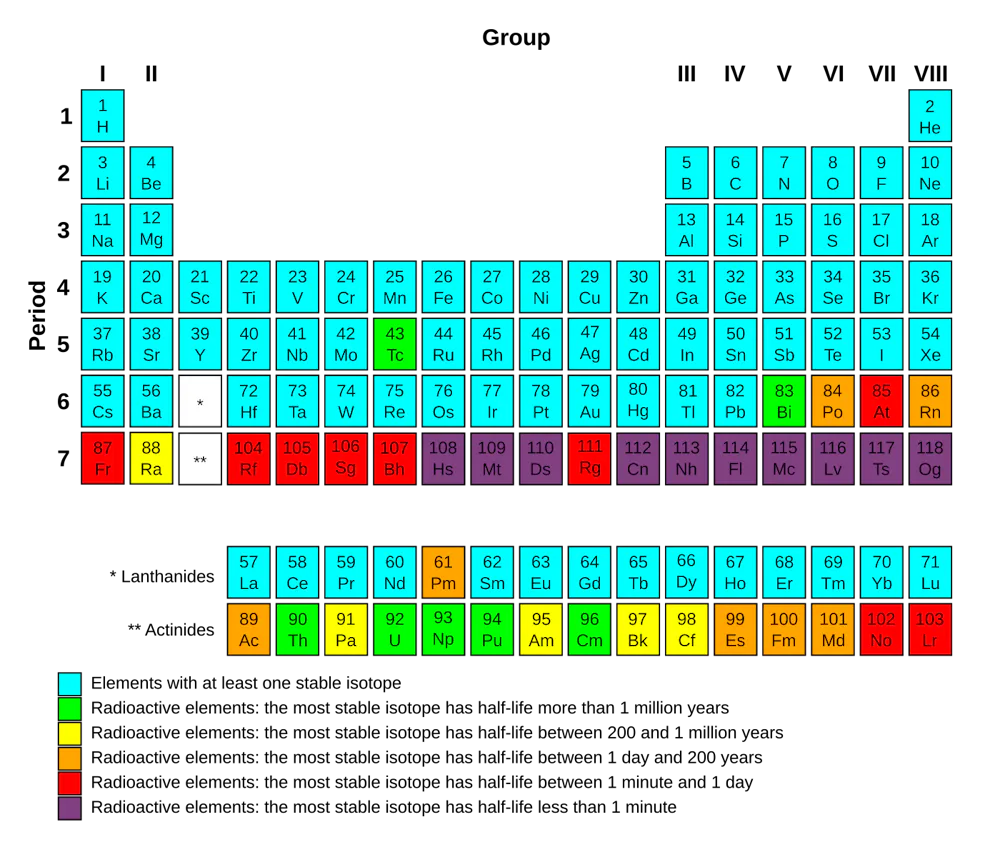
The periodic table with radioactive elements color-coded. Most of them are on the bottom row of the table.
Elements are radioactive if they decay by releasing parts of the nucleus or high-energy particles.
Armtuk/Wikimedia Commons, CC BY

That radioactive decay process releases some form of radiation from the nucleus. This radiation can take the form of tiny particles moving rapidly or high-energy electromagnetic waves emerging from the nucleus. It is that radiation – the high-energy particles and waves shooting out from the nucleus of unstable atomic nuclei – that can make you sick.

There are different types of radioactive decay. In one case, an atom decays by kicking out a small fragment of itself that is made up of two protons and two neutrons. Since the number of protons determines what element we have, decay that changes the number of protons in an atom turns it into a different element.

Radioactive decay can be quite slow, though. It can take thousands of years for one element to decay into a different one.

The case of radium

All radium atoms are unstable and radioactive. Many of these isotopes decay very quickly, but Ra-226, which has 138 neutrons and 88 protons and is the most common, decays the slowest. It takes 1,600 years for half a sample of Ra-226 to decay.

A diagram showing the nucleus of a particle of Radium releasing a piece made up of two protons and two neutrons, creating a smaller particle which is now Radon.
Radium undergoes alpha decay, where it loses a fragment of its nucleus containing two protons and two neutrons, after which it becomes radon.
MikeRun/Wikimedia Commons, CC BY-SA

As Ra-226 decays, it loses two protons and two neutrons, which turns it into an isotope of radon. Then the radon decays, and the atom eventually reaches a stable form as the element lead. Each step in that decay series releases more nuclear radiation.

Some other elements in nature with no stable isotope are technetium, polonium, actinium and uranium.

Effects on the human body

The nuclear radiation emitted when radium and other elements decay can damage the cells in the human body. It can lead to cancers or other health problems.

A drawing of three people standing by a glowing cauldron on a workbench.
Marie and Pierre Curie experimented with radium, which ended up causing health complications for them.
André Castaigne

Whether you’re exposed to a lot of radiation quickly, like making the mistake of walking around for a few hours with radioactive material in your pocket, or you’re exposed to just a little over a long time, the high-energy particles and electromagnetic waves from nuclear radiation can lead to serious health problems, including burns and cancers.

Remarkably, even though radioactivity is a threat to life, scientists can control and use it to diagnose and treat diseases – including cancers. If the radiation is delivered precisely to where cancer cells are, the radiation can destroy those rogue cells wreaking havoc in the body.

People who work professionally with radioactive materials need to follow strict guidelines and procedures to protect themselves. They use special shields and radiation detectors, and they minimize the amount of time they’re exposed to any radioactivity.

Pierre and Marie Curie, who discovered radium in 1898, suffered some of the negative effects of radioactivity. Pierre experienced radioactive burns, and Marie died from a blood disease likely caused by chronic radiation exposure. Over 100 years later, her notebooks are still radioactive.


Hello, curious kids! Do you have a question you’d like an expert to answer? Ask an adult to send your question to CuriousKidsUS@theconversation.com. Please tell us your name, age and the city where you live.

And since curiosity has no age limit – adults, let us know what you’re wondering, too. We won’t be able to answer every question, but we will do our best.

The Conversation

Kelling Donald does not work for, consult, own shares in or receive funding from any company or organization that would benefit from this article, and has disclosed no relevant affiliations beyond their academic appointment.

ref. Why are elements like radium dangerous? A chemist explains radioactivity and its health effects – https://theconversation.com/why-are-elements-like-radium-dangerous-a-chemist-explains-radioactivity-and-its-health-effects-262923

3-legged lizards can thrive against all odds, challenging assumptions about how evolution works in the wild

Source: The Conversation – USA – By James T. Stroud, Assistant Professor of Ecology and Evolution, Georgia Institute of Technology

A brown basilisk missing both its entire left forearm and part of its right hind limb. Brian Hillen

We are lizard biologists, and to do our work we need to catch lizards – never an easy task with such fast, agile creatures.

Years ago, one of us was in the Bahamas chasing a typically uncooperative lizard across dense and narrow branches, frustrated that its nimble agility was thwarting efforts to catch it. Only when finally captured did we discover this wily brown anole was missing its entire left hind leg. This astonishing observation set our research down an unexpected path.

That chance encounter led us to collaborate with over 60 colleagues worldwide to document what we suspected might be a broader phenomenon. Our research uncovered 122 cases of limb loss across 58 lizard species and revealed that these “three-legged pirates” – the rare survivors of traumatic injuries – can run just as fast, maintain healthy body weight, reproduce successfully and live surprisingly long lives.

To be clear, most lizards probably do not survive such devastating injuries. What we’re documenting are the exceptional cases that defy our expectations about how natural selection works.

A hefty green lizard with a noticeable mark where it's left 'arm' would have been poses on a tree branch
A four-horned chameleon missing its entire left forelimb in Cameroon appeared healthy when observed in the wild, despite the specialized gripping requirements of chameleons.
Christopher Anderson

This discovery is startling because lizard limbs represent one of biology’s most studied examples of evolutionary adaptation. For decades, scientists have demonstrated that even tiny differences in leg length between individual lizards can mean the difference between life and death – affecting their ability to escape predators, catch prey and find mates.

Since subtle variations matter so much, biologists have long assumed that losing an entire limb should be catastrophic.

Yet our global survey tells a different story about these remarkable survivors. Working with colleagues across six continents, we found limb-damaged lizards across nearly all major lizard families, from tiny geckos to massive iguanas.

These animals had clearly healed from whatever trauma caused their injuries – likely accidents or the failed attempts of a predator to eat them. Perhaps most remarkably, we documented surviving limb loss even in chameleons, tree-climbing specialists whose movements seem to require perfect limb coordination.

Thriving, not just surviving

The body condition of these lizards was most surprising. Rather than appearing malnourished, many limb-damaged lizards were actually heavier than expected for their size, suggesting they were successfully finding food despite their handicap. Some were actively reproducing, with females found carrying eggs and males observed successfully mating.

4 side by side X-ray images in black and white of small lizards each missing a limb
Limb damage can be fairly common in some lizard populations, such as these X-rays of brown anoles (Anolis sagrei) from the Bahamas.
Jason Kolbe/Jonathan Losos

These findings force us to reconsider some basic assumptions about how evolution might work in wild populations. Charles Darwin envisioned natural selection as an omnipresent force, “daily and hourly scrutinizing” every feature.

But perhaps selection is more episodic than constant. Maybe sometimes limb length matters tremendously, while during other times – such as when food is abundant and predators are scarce – limb length matters less and three-legged lizards can flourish.

These lizard survivors showcase the incredible solutions that millions of years of evolution have built into their biology. Rather than being passive victims of their injuries, these lizards may survive by actively choosing safer habitats or hunting strategies, using smart behavior to avoid situations where their disability would be a disadvantage.

Biological engineering in action

Our research combines old-fashioned natural history observations with cutting-edge, biomechanical analysis.

We use high-speed cameras and computer software that can track movement frame by frame to analyze running mechanics invisible to the naked eye. This combination of field biology and laboratory precision allows us to understand not just that these lizards survive, but how they accomplish this remarkable feat.

When we tested the three-legged lizards’ athletic performance, the results defied expectations. Some animals were clearly impaired in their sprinting capabilities, but others actually ran faster than fully-limbed individuals of the same size across a 2-meter dash during our “Lizard Olympics.”

Researchers used computer software that automatically tracks movement patterns to analyze high-speed videos of lizards sprinting, such as this brown anole missing half of its right back leg. Christopher Anderson

High-speed video analysis revealed their secret: The speedy survivors compensate through creative biomechanical solutions. One brown anole missing half its hind limb dramatically increased its body undulation during sprinting, using exaggerated snakelike movements to compensate for the missing leg.

By documenting the unexpected – the seemingly impossible survivors – we’re reminded that nature still holds surprises that can fundamentally change how we think about life itself.

The Conversation

Jonathan Losos receives funding from the National Science Foundation.

James T. Stroud does not work for, consult, own shares in or receive funding from any company or organization that would benefit from this article, and has disclosed no relevant affiliations beyond their academic appointment.

ref. 3-legged lizards can thrive against all odds, challenging assumptions about how evolution works in the wild – https://theconversation.com/3-legged-lizards-can-thrive-against-all-odds-challenging-assumptions-about-how-evolution-works-in-the-wild-262467

Far fewer Americans support political violence than recent polls suggest

Source: The Conversation – USA – By Ryan Kennedy, Timashev Chair of Data Analytics and Professor of Political Science, The Ohio State University

Some surveys have reported that a large number of Americans are willing to support the use of force for political ends. stellalevi, DigitalVision Vectors/Getty Images

A series of recent events has sparked alarm about rising levels of political violence in the U.S. These episodes include the assassination of political activist Charlie Kirk on Sept. 10, 2025; the murder of a Democratic Minnesota state legislator and her husband in June 2025; and two attempts to kill Donald Trump during the 2024 presidential campaign.

Some surveys have reported that a large number of Americans are willing to support the use of force for political ends, or they believe that political violence may sometimes be justified.

My research is in political science and data analytics. I have conducted surveys for almost 25 years. For the past three years, I have studied new techniques that leverage artificial intelligence to conduct and analyze interviews.

My own recent surveys, which use AI to ask people about why they give their answers, show that the surprisingly high level of support in response to these questions is likely the result of confusion about what these questions are asking, not actual support for political violence.

People in uniforms and others carry a casket out of a church.
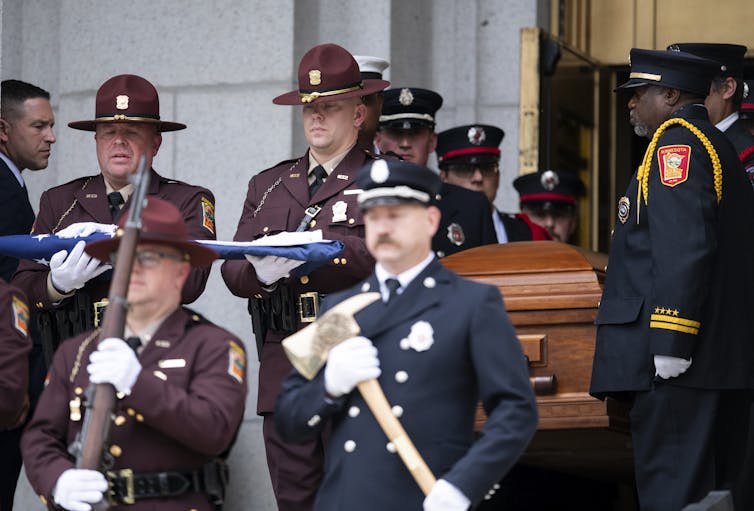
Law enforcement officials lead a procession as pallbearers carry caskets after a funeral ceremony for Minnesota state Rep. Melissa Hortman and her husband, Mark Hortman, on June 28, 2025, in Minneapolis.
Stephen Maturen/Getty Images

A failure to communicate

Why would multiple surveys get the answers to this important question wrong? I believe the cause is an issue called response error. It means that respondents don’t interpret a question in the way the researcher thinks they will.

As a result, the answers people provide don’t really reflect what the researcher thinks the answers show.

For example, asking whether someone would support the use of force to achieve a political goal raises the question of what the respondent thinks “use of force” means in this context. It could be interpreted as violence, but it could also be interpreted as using legal means to “force” someone to do something.

Such response errors have been a concern for pollsters ever since survey research began. They can affect even seemingly straightforward questions.

What did you mean by that?

To avoid this problem, I used an AI interviewing system developed by CloudResearch, a well-known survey research company, to ask respondents some of the same questions about political violence from previous surveys. Then I used it to ask what they were thinking when they answered those questions. This process is called cognitive interviewing.

I then used AI to go through these interviews and categorize them. Two short reports that summarize this process as applied to both polls are available online. These analyses have not been peer-reviewed, and the results should be considered very preliminary.

Nonetheless, the results clearly demonstrate that respondents interpret these questions in very different ways.

Nuance matters

For example, in my survey, about 33% of Democrats agreed with the statement that “use of force is justified to remove President Trump from office.” However, when asked why they agreed, more than 57% gave responses like this: “I was not thinking physically but more in the sense that he – the president – might need to be ‘fired’ or forced out of office due to rules or laws.” Still others were envisioning future scenarios where a president illegally seizes power in a coup.

Once you account for these different interpretations of the question, the AI only coded about 8% of Democrats as supporting use of force in violent terms under current conditions.

Even here, there was substantial ambiguity – for example, this type of response was not unusual: “The language ‘use of force’ was a bit too broad for me. I could not justify killing Trump, for example, but less extreme uses of force were valid in my eyes.”

Similarly, 29% of Republicans agreed that “use of the military is justified to stop protests against President Trump’s agenda.” However, almost all of the respondents who agreed with this statement envisioned the National Guard interceding nonviolently to stop violent protests and riots. Only about 2.6% of Republicans gave comments supporting use of the military against nonviolent protests.

Almost all those who agreed that use of the military was justified expressed thoughts like this: “I see the military coming and acting as a police force to stop or prevent the demonstrations that become violent. Peaceful protesters must be allowed to exercise their right to free speech.”

When is political violence justified?

Even questions that explicitly ask about political violence are open to wide interpretation. Take, for example, this question: “Do you think it is ever justified for citizens to resort to violence in order to achieve political goals?”

The lack of a specific scenario or location in this question invites respondents to engage in all kinds of philosophical and historical speculation.

In my survey, almost 15% of respondents said violence could sometimes be justified. When asked about the examples they were thinking of, respondents cited the American Revolution, the anti-Nazi French Resistance and many other incidents as a reason for their responses. Only about 3% of respondents said they were thinking about actions in the U.S. at the current time.

Moreover, almost all respondents stated that violence should be a last resort when all other peaceful and legal methods fail.

One respondent illustrated both problems with one sentence: “The (American) colonists tried petitions and negotiations first, but, when those efforts failed, they resorted to armed conflict to gain independence.”

A call for understanding

Even these numbers likely overestimate Americans’ support for political violence. I read the interviews, checking the AI system’s labeling, and concluded that, if anything, it was overestimating support for violence.

Other factors may also be distorting reports of public support for political violence. Many surveys are conducted primarily online. One study estimated that anywhere from 4% to 7% of respondents in online surveys are “bogus respondents” who are selecting arbitrary responses. Another study reported that such respondents dramatically increase positive responses on questions about political violence.

Respondents may also be willing to espouse attitudes anonymously online that they would never say or do in real life. Studies have suggested that “online disinhibition effects” or “survey trolling” can impact survey results.

In sum, my preliminary research suggests that response error is a substantial problem in surveys about political violence.

Americans almost universally condemn the recent political violence they have witnessed. The recent poll results showing otherwise more likely stem from confusion about what the questions are asking than actual support for political violence.

The Conversation

Ryan Kennedy does not work for, consult, own shares in or receive funding from any company or organization that would benefit from this article, and has disclosed no relevant affiliations beyond their academic appointment.

ref. Far fewer Americans support political violence than recent polls suggest – https://theconversation.com/far-fewer-americans-support-political-violence-than-recent-polls-suggest-266113

How the National Trust’s art collections can shape meadow restoration

Source: The Conversation – UK – By Samuel Shaw, Lecturer in History of Art, The Open University

Ox-eye daises in Ismore meadow, Attingham Park, Shropshire. Samuel Shaw, CC BY-NC-ND

Earlier this year I found myself stood among a sea of swaying ox-eye daises in a floodplain meadow on the Attingham estate in Shropshire, on land owned by the National Trust. I noticed other plants growing here: the sunny yellows of meadow buttercup, the wine-reds of great burnet and the furry seed heads of meadow foxtail. The sounds of birds and insects bubbled in the background.

It felt like a thriving environment, but I knew that this meadow could be so much more. Floodplain meadows are hugely important spaces, supporting rare plant communities and providing food for animals to eat during the winter months.

The soils of floodplain meadows are recognised by scientists as an important carbon store, helping to slow floodwaters and absorb nutrients. Many remaining floodplain meadows have been managed in the same way for more than 1,000 years. However, such sites are rare and most meadows are in serious need of restoration.

The diversity and abundance of the plants and animals I encountered at Attingham did not indicate a flourishing ecosystem. While birds such as lapwing had been seen passing through the site, they not been encouraged to stay and breed. The quality of the soil was improving, but only slowly.

After leaving the meadow, I visited Attingham Park, the large house that lies at the heart of the estate. As an art historian with a keen interest in the history and visual cultures of natural sciences, I was hoping to make connections across the trust’s collections. I wanted to find objects in the house that related to what I had encountered in the meadows.

I wasn’t disappointed. Attingham’s collection is large and deep, encompassing paintings, ceramics, furniture, rare books and much more besides. Some objects relate specifically to the house and to the Berwick family who lived there, while others form part of a broader story.

Evidence of meadows and meadow ecosystems appears everywhere: in the famous paintings of cattle hanging on the walls, in the representation of grasses in an early 20th-century fan, and in the tiny beetles that adorned an Italian paperweight. In the delicate lithographic plates of a 19th-century guide to British birds, compiled by the ornithologist John Gould, I found the lapwings that had thwarted me in the meadow.

painting of lapwing and chicks
Lithograph of a lapwing and chicks by British artist John Gould (1804–81). Estate of Emily Winthrop Miles, 64.98.114.
Brooklyn Museum

Perhaps the most interesting object I saw was the original Attingham Red Book. Created in 1798 by landscape gardener Humphry Repton, this red leather-bound book documented his plans for the estate, via a series of charming and clever before-and-after watercolours. Could Repton’s book help me understand how this meadow has changed over centuries, and how it might change again?

The art of meadow restoration

It can be tempting to divide the National Trust’s holdings and activities into natural heritage on the one hand, and cultural heritage on the other. But the trust’s highly significant art and cultural collections (what is found inside) can be used to draw attention to what is going on in the estates (what is found outside). The trust owns thousands of historic objects that can help engage audiences with the past, present and future of its natural spaces.

Since 2006, my colleagues at the Floodplain Meadows Partnership, an initiative at the Open University, have been working with conservation organisations and landowners to ensure that floodplain meadows are protected, restored and successfully managed. By feeding into government agricultural funding schemes such as the countryside stewardship higher tier, the partnership’s research supports sustainable farming and nature restoration across the UK.

Current partners include the National Trust which, as one of the UK’s largest landowners and with ambitious nature recovery targets, is uniquely placed to lead the way in meadow restoration. Together, we have identified 121 fields at English estates, including Attingham, that could be suitable for floodplain meadow restoration.

The trust’s current emphasis on people and nature, as laid out in its new ten-year strategy, hints at a certain nervousness over how to situate the organisation’s significant holdings of art, design and architecture. Yet there’s a strong argument for bringing cultural and natural heritage closer together. Historic objects, such as those I explored at Attingham, do not stand apart from nature restoration, but can stimulate and shape it.

For example, Repton’s Red Book designs directly tackle issues – such as how to manage rivers and their floodplains – that remain at the heart of the estate’s management. But Repton liked his rivers to be ample and majestic, cutting through the landscape cleanly, rather than meandering messily. This goes against what is needed to create thriving river habitats, such as those envisaged by Attingham’s current nature recovery project.

Looking through the Red Book and the collections at Attingham provides much more than a window into the past. These objects show how the past is still so entwined with the present, and how it may inform what we do in the future.

Samuel Shaw’s film, Inside Out: Restoring floodplain meadows at the National Trust.

My research at Attingham, as highlighted in the short film above, shows how art and visual culture can help us better understand and engage audiences with nature restoration. Art objects offer a fresh perspective on environmental debates, helping people to visualise complex ideas in ways that inspire, surprise and change the direction of conversations.

The restoration of key environments such as floodplain meadows may be led by scientists, but the arts nevertheless have an essential role to play.


Don’t have time to read about climate change as much as you’d like?

Get a weekly roundup in your inbox instead. Every Wednesday, The Conversation’s environment editor writes Imagine, a short email that goes a little deeper into just one climate issue. Join the 45,000+ readers who’ve subscribed so far.


The Conversation

Samuel Shaw has received funding from the AHRC in the past

ref. How the National Trust’s art collections can shape meadow restoration – https://theconversation.com/how-the-national-trusts-art-collections-can-shape-meadow-restoration-266395

Diane Keaton pioneered new kinds of complex femininity on screen

Source: The Conversation – UK – By Jen Harvie, Professor of Contemporary Theatre and Performance, Queen Mary University of London

American film actress Diane Keaton, who has died aged 79, was an icon of style but also character. She challenged the boundaries and range of what it was possible for women to play and be, especially in American cinema’s new wave of the 1970s and 80s.

Keaton was most famous for her performance as the title character in Woody Allen’s 1977 satirical romantic comedy-drama, Annie Hall. Her Annie could have been the love child of Katharine Hepburn and Charlie Chaplin.

She had Hepburn’s strength, intelligence, hair in a bun, and gender non-conforming trousers and tie; Chaplin’s comedy, goofiness and charm; and the idiosyncrasy of them both. Annie – like many more of Keaton’s characters – was kooky but smart, troubled and flawed, sweet but sensuous. And always endearing and complex.

Keaton won an Oscar for Annie. She physically overshadowed Allen despite being the same height (according to Allen), and her character’s awkward flirtatiousness, delight and curiosity balanced his character’s neurosis. Allen cast Keaton in eight of his movies and described her as, “with the exception of Judy Holliday”, “the finest screen comedienne we’ve ever seen”.

Keaton is better known as a comedian (or, as film critic Peter Bradshaw puts it, “a comic performer of ethereally self-aware genius”). But she had an impressive record in drama as well.

Keaton as Annie Hall.

Five years before Annie Hall, Keaton played the marrying-in outsider Kay to the mob family in Francis Ford Coppola’s The Godfather (1972). She appeared across the trilogy opposite Al Pacino.

Speaking to US broadcaster NPR in 2017, she explained that she drew on her experience as a young woman on The Godfather’s profoundly male-dominated set to understand Kay’s experience in the similarly male mob world.

The same year as Annie Hall, Keaton played Theresa Dunn in the much darker Looking for Mr Goodbar. Theresa leads a double life. By day she’s a Catholic teacher and by night, she cruises bars and discos for casual and sometimes rough sex.

Adapted from Judith Rossner’s 1975 novel, the film has been criticised for crude sensationalism, but Keaton’s portrayal of Theresa’s desire was broadly admired. Sight and Sound, for example, called her performance impressive “mainly because her strength and sensitivity as an actress seem to be operating apart from the underdeveloped character she is playing”.

Keaton also starred alongside Warren Beatty and Jack Nicholson in Reds (1981), Beatty’s epic drama exploring political and personal commitment in the context of journalists’ engagement with the Russian revolution. Keaton played activist Louise Bryant, who leaves her family to join the political struggle and, let’s be honest, handsome journalist Jack Reed (Beatty).

New York Times journalist Alissa Wilkinson wrote of the performance: “We might not all be Reed, the charismatic idealist giving speeches, but we might be Bryant, just trying to catch hold as history barrels past and discovering who we are inside of it.

Keaton’s later career

It is an indictment of Hollywood that, as Keaton aged, her roles and films generally became more conventional and less challenging than some of her earlier work. That said, she admitted that her own confidence affected her career, mistakenly believing that “without a great man writing and directing for me” she was “mediocre”.

Despite this, she did find and create roles that continued to challenge expectations about how women can behave, and she made a series of successful collaborations with director Nancy Meyers.

The trailer for Something’s Gotta Give.

In 1987’s Baby Boom, co-written by Meyers, Keaton played a career-committed businesswoman who inherits a baby that disrupts her life. Not only does she gradually cope, she eventually pulls off the hat-trick of growing her career, keeping the baby and snatching heartthrob Sam Shepard.

Keaton also starred in another tale of mainstream feminism triumphant, Meyers’ romantic comedy-drama Something’s Gotta Give (2003). Turning the tables on sexist stereotypes, Keaton’s successful playwright character “tames” playboy Nicholson while also attracting the much younger Keanu Reeves.

There is a sense that Hollywood couldn’t imagine Keaton’s early frisson in the body of an ageing woman. But she carried on doing what she could from within these more tame and often liberal feminist comedy-dramas, which sought gender equality but never questioned structures that were fundamentally sexist.

Keaton’s legacy persists. Some of the most influential American women television and filmmakers of the 21st century have sought to take up the mantle of her complex characterisations of smart, awkward and unconventional femininity, including Lena Dunham and Greta Gerwig. And we will always have Diane Keaton’s back catalogue to remind us of Hepburn and Chaplin’s strange, poignant, funny love child.


Looking for something good? Cut through the noise with a carefully curated selection of the latest releases, live events and exhibitions, straight to your inbox every fortnight, on Fridays. Sign up here.


The Conversation

Jen Harvie does not work for, consult, own shares in or receive funding from any company or organisation that would benefit from this article, and has disclosed no relevant affiliations beyond their academic appointment.

ref. Diane Keaton pioneered new kinds of complex femininity on screen – https://theconversation.com/diane-keaton-pioneered-new-kinds-of-complex-femininity-on-screen-267348

The cooking pot that became a symbol of Sweden’s commitment to helping Palestine

Source: The Conversation – UK – By Maria Småberg, Senior Lecturer, Peace and Conflict Research, Department of HIstory, Lund University

In the hills of the southern West Bank, a Swedish cooking pot has become a symbol of trust, resilience and forgotten solidarity. Half a century after it was first distributed as emergency aid, the cooking pots still gleam in the kitchens of Beit Awwa – reminding villagers of a time when Sweden stood by them in the aftermath of war.

Today, that legacy stands in stark contrast to Sweden’s current policy: a sharp reduction in aid to Palestine which has been folded into a regional government strategy for all of the Middle East and north Africa region.

The origins of these pots – and the trust they symbolise – were uncovered through research into the history of Swedish civil society organisations in Palestine. In the aftermath of the six-day war in 1967, Beit Awwa was one of several villages destroyed by Israeli forces. Villagers lost their homes, belongings and livelihoods.

Beit Awwa was not alone. In the chaotic aftermath of the six-day war, entire Palestinian villages were razed. Few international observers were present to document what happened. Israeli authorities actively tried to prevent outside scrutiny.

One of the few who bore witness was Sister Marie-Thérèse, a French nun from the Companions of Jesus order, who later wrote about the devastation in her diary. Israeli journalist Amos Kenan also reported on the forced expulsions, describing elderly people and mothers with infants wandering with white flags.

By mid-July 1967, John Reddaway, Unrwa’s deputy commissioner-general, estimated that around 16,000 people had been made homeless by the destruction of villages in the West Bank. Altogether, between 200,000 and 250,000 people from the West Bank went into exile.

Just a week after the war ended, on June 10, representatives from the Swedish organisation Individuell Människohjälp (IM), including the then ambassador, Bo Siegbahn, and consul, Arnold Hjertström, visited the ruins of Beit Awwa and the neighbouring village of Beit Marsam. They witnessed the devastation and appealed for help.

Sweden’s foreign ministry did not respond. But IM acted. With funding from the Norwegian Refugee Council and donations from the Swedish public (raising more than kr544,000 (£343,000) in July alone), IM chartered two planes from Malmö.

They delivered blankets, clothing, 100 tons of wheat flour, powdered milk, food supplies, primus stoves, and kitchen utensils — including the now-legendary Skultuna pots, a brand dating back to 1607.

The village elder, or mukhtar, oversaw the distribution, ensuring that aid was shared fairly. One of the men who proudly showed the pots to a visiting development worker decades later turned out to be the mukhtar’s grandson. IM also set up two tent camps and later sent medical supplies, prosthetics, spectacles and wheelchairs.

Cleaning up

Many years after the humanitarian intervention in 1967, Sweden returned to the Beit Awwa area to help resolve a new and complex problem. Swedish representatives were met with goodwill by the villagers, apparently based on the role Sweden had played decades earlier, even though no one was old enough to have their own clear memories of what had taken place in 1967.

During the 2010s, the Swedish consulate-general in Jerusalem identified a growing environmental crisis in the occupied Palestinian territory. In the villages near Hebron, many families had turned to informal recycling of Israeli electronic waste, a hazardous livelihood born out of economic necessity and political exclusion.

After the second intifada, when Palestinian workers were largely barred from entering Israel, some turned to old contacts among Israeli junk dealers. They began importing discarded electronics, burning them to extract copper and other metals, and selling the materials back through informal networks.

The environmental cost was devastating. Thick black smoke from burning cables choked the air and toxic runoff seeped into the soil and groundwater. The intricacies of the dangerous trade were brought to light by a group of researcher led by Yaakov Garb at Ben-Gurion University. They were able to link the burn sites to rising rates of lymphoma and other illnesses among children in the area.

In response to the crisis, researchers and villagers, supported by the Swedish International Development Cooperation Agency (Sida), developed a pilot project in 2015 to transform the informal recycling into a safer, small-scale industry.

The idea was to replace open-air burning with mechanical cable grinding, decontaminate the burn sites by removing toxic soil, and register the recycling operations as formal businesses with the Palestinian Authority. Local municipalities were also tasked with forming monitoring teams to prevent illegal burning.

The pilot project was a success. A significant area was cleaned, and a volunteer force of 60 people was quickly mobilised to enforce the new regulations. On both sides of the green line, the project earned praise – from Palestinian villagers, Israeli neighbours, and local authorities alike. In the villages, it became known as “the Swedish project”.

One cable-grinding machine remains in operation today – but like many well-intentioned initiatives in Palestine, the project eventually ran into political obstacles. Sustaining the success of the pilot project required a degree of formalised collaboration between Israeli and Palestinian authorities, but agreement on the details proved impossible and the structures of occupation left little room for long-term, trust-based governance.

Events since then, including the Israeli government’s declared intention to annex the West Bank and the trauma of October 7 2023 and its violent aftermath, have made any efforts at aid requiring collaboration between Israeli and Palestinian authorities virtually impossible.

Still, Sweden’s name continues to carry weight in Beit Awwa and beyond. The memory of those aluminium pots – still gleaming after half a century of use – speaks to a legacy of solidarity that transcends politics. As a historian and a development worker, we believe this legacy deserves to be remembered, and reconsidered, in light of today’s shifting aid policies.

Perhaps one day, that legacy will form the foundation for a renewed Swedish contribution to just peace and prosperity in the region.

The Conversation

The authors do not work for, consult, own shares in or receive funding from any company or organisation that would benefit from this article, and have disclosed no relevant affiliations beyond their academic appointment.

ref. The cooking pot that became a symbol of Sweden’s commitment to helping Palestine – https://theconversation.com/the-cooking-pot-that-became-a-symbol-of-swedens-commitment-to-helping-palestine-266488