Slender-billed curlews are officially extinct – here’s why the loss of these migratory birds really matters

Source: The Conversation – UK – By Esther Kettel, Senior Lecturer in Ecology and Conservation, Nottingham Trent University

The Eurasian curlew, a close relative of the now-extinct slender-billed curlew. David Havel/Shutterstock

The slender-billed curlew (Numenius tenuirostris) has been officially declared extinct by the International Union for Conservation of Nature (IUCN).

This is the first-ever recorded global bird extinction from mainland Europe, North Africa, and West Asia. An accolade that no species wants. Yet, sadly, here we are. So how did we get here and what does this tragic extinction mean?

Numerous warning signs indicated the decline of the slender-billed curlew, with the first documented in 1912. Declines of the species continued over the subsequent decades but it was not until 1988 that it was classified in the high conservation concern category.

Extensive searches for any remaining slender-billed curlews were conducted but there have been no sightings since the mid-1990s. Extinction was declared as highly probable in 2024, and made official by the IUCN in October 2025.

The curlew was once thought to be fairly widespread. It was a migratory species that bred in central Asia and wintered in Europe, North Africa and the Middle East. As such, like many migratory species, the curlew relied on various habitats and safe passage routes.

The pressures leading to the extinction are largely unknown. However, due to its migratory nature, the extinction of this species is likely due to a combination of factors across its historic range.


Read more:
Europe’s wild bird species are on the brink – but there are ways to bring them back


Hunting of the species was carried out in many countries along its migratory route and is considered to be one of the major causes of initial declines. In conjunction, drainage of wetlands and overgrazing of grasslands led to the rapid loss of breeding sites for this ground-nesting bird. Conservation efforts were complicated by the fact that its distribution and ecology were largely unknown. So, death rates were high, birth rates were low, and very little could be done.

The last call?

Slender-billed curlews were striking birds. They stood proud with their long legs and slim, pointed, black bill. Their calls were sweet and whistling, but somewhat haunting. It is a sad fact that this bird will never be seen or heard again.

More widely, the loss of this species shines light on the global extinction crisis. Each species plays a vital role within its ecosystem. These curlews fed on small insects, crustaceans and molluscs by probing mud with their thin bills. The role these birds played as a predator in aquatic ecosystems (such as peat bogs) is now no longer filled. This gap will undoubtedly have consequences for other species.

misty shot of curlew wading bird on brown peat bog land
Curlews are ground-nesting birds that rely on healthy peat bogs and other aquatic ecosystems.
F-Focus by Mati Kose/Shutterstock

Slender-billed curlews were indicators of the health of the boggy habitats in which they inhabited. Their decline to eventual extinction signifies that these habitats are under severe stress. Waterbirds like the curlew can also be valuable indicators of water contamination, lack of food availability and changes in nutrient levels.

Wading birds like the slender-billed curlew are declining globally and are considered to be the most pressing bird conservation priority in the UK. Populations of species such as lapwing (Vanellus vanellus), redshank (Tringa tetanus), snipe (Gallinago gallinago) and oystercatcher (Haematopus ostralegus) are declining in size and range across much of the UK due to habitat loss and reduced reproductive success.

The Eurasian curlew (Numenius arquata), a relative of the slender-bill, is of particular conservation concern and is thought to be the UK’s most rapidly declining species. Much effort is being made to save the Eurasian curlew so that it doesn’t follow the same fate as the slender-bill.

The UK Action Plan for Curlew (a coalition of farmers, scientists and charities) is calling for urgent and coordinated action that includes monitoring and research, habitat protection, predator management and guidance for land managers. While populations fell by 51% between 1995 and 2023 across the UK, there are signs that intensive conservation efforts are working, even if only locally.

The loss of the slender-billed curlew is truly saddening. But perhaps, just maybe, we can use this as a wake-up call to do more, and more quickly, for other wading birds that are on a similar trajectory.


Don’t have time to read about climate change as much as you’d like?

Get a weekly roundup in your inbox instead. Every Wednesday, The Conversation’s environment editor writes Imagine, a short email that goes a little deeper into just one climate issue. Join the 45,000+ readers who’ve subscribed so far.


The Conversation

Esther Kettel does not work for, consult, own shares in or receive funding from any company or organisation that would benefit from this article, and has disclosed no relevant affiliations beyond their academic appointment.

ref. Slender-billed curlews are officially extinct – here’s why the loss of these migratory birds really matters – https://theconversation.com/slender-billed-curlews-are-officially-extinct-heres-why-the-loss-of-these-migratory-birds-really-matters-267282

Can you catch shingles? A GP explains what people get wrong about this common virus

Source: The Conversation – UK – By Dan Baumgardt, Senior Lecturer, School of Psychology and Neuroscience, University of Bristol

ThalesAntonio/Shutterstock

The idea that you can “catch” shingles is one of the more common misconceptions I hear from patients who arrive worried they’ve got it. Often, they’ve recently been near a child with chickenpox or someone else with shingles, and are understandably anxious they’ve picked it up.

As a GP, I encounter this misunderstanding all the time. In fact, a study from my own University of Bristol found that while most patients had heard of shingles, few actually understood what it is.

Shingles isn’t something you catch from someone else. It’s the reactivation of a virus already inside your body: the varicella zoster virus, the same one that causes chickenpox. After you recover from chickenpox, the virus doesn’t leave; it hides in the nerve cells that supply sensation to your skin, lying dormant for years, sometimes decades. Shingles is what happens when that virus “wakes up”.


Read more:
Chickenpox vaccine recommended for NHS – here’s why a jab is better than getting the disease


When it reactivates, it causes clusters of small, fluid-filled blisters known as vesicles. Before the rash appears, people can feel tingling, burning or pain in one area of the body – sometimes two or three days beforehand. The skin can become unusually sensitive, and you might feel generally tired, feverish or unwell.

Shingles is common, affecting about one in 25 people. It tends to follow a characteristic pattern. The rash usually appears in a strip or band on one side of the body, corresponding to a dermatome (an area of skin served by one spinal nerve). It’s rare for shingles to appear on both sides of the body.

The blisters eventually burst, scab over and heal within three to four weeks, sometimes leaving small scars. Until each blister has crusted, a person with shingles is considered infectious, meaning they can transmit the virus to others – but not in the way most people think.

1. You can catch chickenpox from someone with shingles

To develop shingles, you must already have had chickenpox. For some patients though, chickenpox can be mild or have happened so long ago that they may struggle to recall having it.

When the shingles blisters burst, the fluid inside them contains the same, live varicella zoster virus. If someone who has never had chickenpox (or hasn’t been vaccinated against it) comes into direct contact with that fluid, they can become infected and develop chickenpox – but not shingles. Shingles only occurs when the dormant virus reawakens inside someone who has already had chickenpox.

For that reason, people with shingles should keep their rash covered (with clothing or a non-adherent dressing) until all the blisters have crusted over and healed.

It’s important to avoid contact with anyone for whom chickenpox could be particularly dangerous. That includes pregnant women – as varicella can sometimes cause complications for the mother and may harm the unborn baby. Newborn infants, whose immune systems are not yet strong enough to fight the infection are also at risk. Other patients with weakened immune systems (such as the elderly, those undergoing chemotherapy or living with conditions like HIV) may also struggle to fight the virus. Chickenpox can become a severe illness in these people, leading to complications like pneumonia.

2. Shingles can occur at any age

Although shingles becomes more likely as we age, it can occur at any time after you’ve had chickenpox – even in young adults or children. It’s more common when the immune system is weakened, which can happen with age, and in people receiving chemotherapy or other immunosuppressive treatments.

3. It can affect more than just your torso

Most cases appear on the chest or back, but shingles can occur anywhere on the body, including the face, limbs and even the genitals. When it affects the face, it can involve the eyes through nerve branches that extend there. This form, known as ophthalmic herpes, can threaten vision and cause blindness if not treated promptly. It can also affect the facial nerve which controls your facial muscles – otherwise known as Ramsay Hunt syndrome.

Some people develop pain, tingling, or sensitivity without a visible rash. The appearance of shingles can also vary by skin tone, making it harder to spot in darker skin.

4. Early treatment helps

If you suspect shingles, see a clinician promptly. Antiviral medications can help shorten recovery time and reduce complications, but they work best when started within 48-72 hours of the rash appearing.

Certain groups, including young, pregnant and breastfeeding patients, people with weakened immune systems and anyone with shingles affecting the face, nose, eyes (including the eye’s surface) or any visual changes, should definitely seek medical attention urgently.

5. The story doesn’t always end when the rash heals

For some, shingles can cause problems even after the visible rash clears. Open blisters can become infected with bacteria, sometimes requiring antibiotics. The virus can also damage nearby nerves, leading to post-herpetic neuralgia – persistent nerve pain that can last for months or even years after the skin has healed. It can feel like burning, stabbing or throbbing pain in the same area where the rash appeared.

Unfortunately, shingles can return again, sometimes in a different part of the body. The shingles vaccine significantly reduces both the risk of developing shingles and the chance of long-term nerve pain like post-herpetic neuralgia, though it doesn’t remove the risk entirely.

Think of shingles not as something you “catch”, but as something that can wake up again within your own body. It’s a reminder that viruses don’t always leave when we think they do. And that protecting yourself and others means recognising the signs early, covering the rash, and getting prompt medical advice.

The Conversation

Dan Baumgardt does not work for, consult, own shares in or receive funding from any company or organisation that would benefit from this article, and has disclosed no relevant affiliations beyond their academic appointment.

ref. Can you catch shingles? A GP explains what people get wrong about this common virus – https://theconversation.com/can-you-catch-shingles-a-gp-explains-what-people-get-wrong-about-this-common-virus-266653

The dark history of medical illustrations and the question of consent

Source: The Conversation – UK – By Lucy E. Hyde, Lecturer, Anatomy, University of Bristol

Vector Hut/Shutterstock.com

They were pregnant. Some were prisoners. Others were the poorest of the poor, forgotten in death as in life. Yet dissection and depiction of their bodies have become the foundation of anatomical teaching.

Cradled in the pages of anatomy textbooks are figures stripped bare, not only of skin but of identity. Eduard Pernkopf’s infamous Nazi-era atlas contains exquisite, hyper-realistic drawings created from the bodies of political prisoners executed under Hitler’s regime.

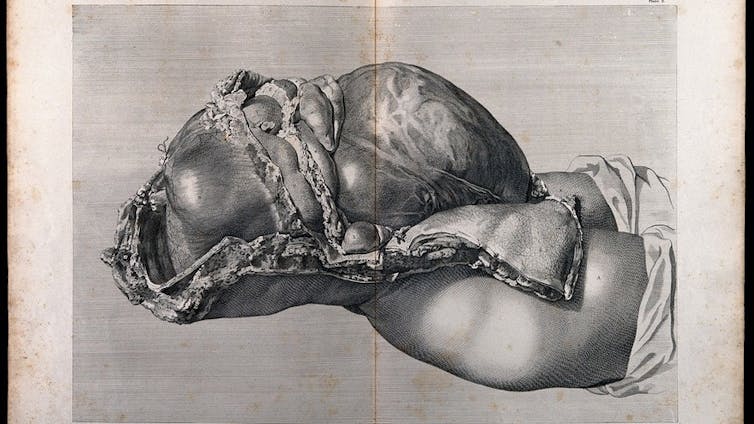
William Hunter’s celebrated The Gravid Uterus (1774) shows dissected pregnant women with clinical detachment, their swollen wombs exposed. But who were these women? How did they end up on the dissection table? And, crucially, did they ever consent? It’s something rarely considered by educators, students and the public alike.

Today, body donation is governed by clear laws and ethics. In the UK, the 2004 Human Tissue Act (2006 in Scotland) requires informed, personal consent for anatomical investigation, and further consent to be given for production of images.

Annual memorial and thanksgiving services also honour donors, and those studying anatomy are taught to treat cadavers with the same dignity they would offer the living – the medic’s first patient, albeit silent.

But historical anatomical illustrations, still in use across education and medicine, were produced at times long before such safeguards existed. Most texts and imagery feature people who never gave permission to be dissected, let alone depicted for eternity. Should we keep using these images? Or does that make us complicit in a long history of medical exploitation?

Anatomical illustration and, therefore, the history of the peoples depicted, mirrors the legal and cultural attitudes toward dissection at the time. The first recorded human dissections occurred around 300BC in Alexandria, Egypt. In the second century, Galen, a Greek physician, dissected animals and treated gladiators, and laid the foundations for anatomical understanding in Europe for over a thousand years.

In medieval Europe, dissection was rare and heavily ritualised, often serving theological rather than scientific purposes. By the Renaissance, anatomy began to take its modern form. Leonardo da Vinci conducted detailed dissections, producing hundreds of drawings that combined anatomical accuracy with artistic brilliance. Yet he, too, was not above questionable methods, reportedly obtaining bodies through informal deals with hospitals and executioners. The identities of his subjects remain unknown.

In 1543, Andreas Vesalius published De Humani Corporis Fabrica, challenging centuries of Galenic error with visual evidence from dissection. His cadavers, however, were idealised, muscular, often white and probably male.

In one image, a body holds back its own skin to reveal its musculature, just like Saint Bartholomew the Apostle in his martyrdom. Never before had an anatomical text been so highly illustrated. The images were groundbreaking, but they romanticised death and dehumanised the dead.

Over time, anatomical realism became the goal. In the 17th and 18th centuries, Dutch and British anatomists like Govard Bidloo and William Hunter embraced unflinching detail – depicting the morbidity of the cadaver, showing decomposition, often violent incisions, and the tools of dissection.

Hunter’s The Gravid Uterus aimed to transform obstetrics through realism. But it relied on 14 pregnant bodies whose origins remain ethically troubling.

Dissection of the pregnant female abdomen, showing the skin peeled away to reveal the swollen uterus.
The gravid uterus.
Copperplate engraving by G. Scotin after I.V. Rymsdyk, for W. Hunter The Gravid Uterus. 1774, reprinted 1851.

How did he obtain them? Even though the 1752 Murder Act allowed the anatomisation of executed murderers, only a few bodies were legally available in this way, insufficient for demand. Between 1752 and 1776, just four cadavers were sourced under the Act in London.

At the time, the proportion of women dying in childbirth was also low, around 1.4%. The likelihood that Hunter’s subjects were legally obtained is slim. More likely, they were acquired through body snatching, a common but illegal practice. Their identities were never recorded. Their images endure.

Grave robbers or “resurrection men” helped meet the growing demand for cadavers – driven by the expansion of medical education and legal restrictions on supply – by targeting the poor: those buried in shallow, recent or unmarked graves at the edges of cemeteries. Wealthier people could protect their dead in gated cemeteries patrolled by paid guards, coffins protected by iron cages or in stone vaults.

The rich could buy safety even in death. The poor were left exposed, not because they lacked value, but because they lacked power.

The 1832 Anatomy Act curbed grave robbing but entrenched injustice. Unclaimed institutionalised bodies became the new legal supply, those from workhouses, poorhouses, asylums, prisons and hospitals.

Until the 1984 Anatomy Act, and more definitively the 2004 Human Tissue Act, informed consent was not required. Let’s be clear: the bodies in most anatomical images were not volunteers. They were poor, criminalised and marginalised – those who in life already suffered the most.

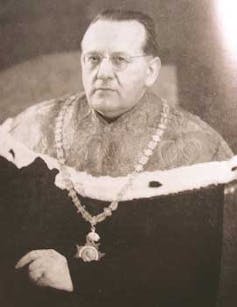
Eduard Pernkopf in full academic regalia.
Medizinische Universität WienImmediate

The most extreme more modern example is Pernkopf’s Atlas of Topographical and Applied Human Anatomy. Widely regarded as one of the most detailed and visually stunning anatomical texts, particularly in its depiction of the peripheral nerves, it is the most ethically troubling.

The atlas was created during the Nazi regime, with at least 1,300 bodies of Jewish prisoners, Roma, queer individuals and political dissidents, many of whom were executed in Vienna’s Gestapo prison.

Despite its origins in medical atrocities, the atlas remained in print until the 1990s. Even decades later, its influence persists. A 2019 study found that 13% of neurosurgeons still use the atlas.

Some defend its continued use, citing its anatomical precision, especially in complex neurological surgeries, so long as its dark history is acknowledged. Others argue that any clinical benefit is outweighed by the ethical cost, and that continued use implies endorsement of its origins.

Efforts underway

But Pernkopf is only the most dangerous example. Across many historical images, the same fundamental question arises: can medical knowledge built on exploitation ever be fully separated from it?

There’s no single solution, but there are efforts underway. Some educators are adding context in lectures, footnotes and course materials, taking time to teach the history, acknowledging who was probably depicted and under what circumstances.

Medical illustrators are creating new images based on informed consent and modern day guidelines, partly also to create diverse representation across population history, gender, body type and ability. Institutions are digitising and cataloguing old collections with proper historical notes, so they aren’t used uncritically.

But these efforts are piecemeal. There are no universal standards or regulations governing historical anatomical imagery, falling out of the remit of even the most strict governing body. Meanwhile, these illustrations circulate freely online, in textbooks, even on social media, stripped of context, divorced from their origins.

And so, the same injustices risk being quietly perpetuated. We must start by asking better questions: who is represented in anatomical imagery today? Whose bodies are missing? And whose stories are never told?

Short term, we need clear provenance research, labelling and transparency around historical illustrations. Teachers, editors and publishers must acknowledge the sources of these images, even if unknown.

Long term, we must invest in creating new, inclusive anatomical libraries that reflect the full diversity of human bodies, across gender identities, racial backgrounds, disabilities and life stages. With ethical sourcing and clear consent, we can build materials that respect the living and the dead alike.

The people in these illustrations, silent, anonymous and dissected, were never asked to teach us. But they have and now, it’s our responsibility to ask: what kind of legacy are we creating in return?

If we want medicine to be ethical, inclusive and just, it starts with the very images we learn from. It’s time to look again at the bodies behind the drawings. And this time, to really see them.

The Conversation

Lucy E. Hyde does not work for, consult, own shares in or receive funding from any company or organisation that would benefit from this article, and has disclosed no relevant affiliations beyond their academic appointment.

ref. The dark history of medical illustrations and the question of consent – https://theconversation.com/the-dark-history-of-medical-illustrations-and-the-question-of-consent-265738

Famous monkey-face ‘Dracula’ orchids are vanishing in the wild

Source: The Conversation – UK – By Diogo Veríssimo, Research Fellow in Conservation Marketing, University of Oxford

cotosa/Shutterstock

They look like tiny monkeys peering out from the mist. Known to scientists as Dracula, the so-called “monkey-face orchids” have become online celebrities.

Millions of people have shared their photos, marvelling at flowers that seem to smile, frown or even grimace. But behind that viral charm lies a very different reality: most of these species are teetering on the edge of extinction.

A new global assessment has, for the first time, revealed the conservation status of all known Dracula orchids. The findings are dire. Out of 133 species assessed, nearly seven in ten are threatened with extinction.

Many exist only in tiny fragments of forest, some in just one or two known locations. A few are known only from plants growing in cultivation. Their wild populations may already be gone.

These orchids grow mainly in the Andean cloud forests of Colombia and Ecuador, some of the most biologically rich but also most endangered ecosystems on the planet. Their survival depends on cool, humid conditions at mid to high altitudes, where constant mist wraps the trees.

Unfortunately, those same slopes are being rapidly cleared for cattle pasture, crops like avocado, and expanding roads and mining projects, activities that are directly threatening several Dracula species (such as Dracula terborchii. As forests shrink and fragment, the orchids lose the microclimates (the specific temperature, light and humidity conditions) that they depend on for survival.

Another threat comes from people’s fascination with these rare and charismatic plants. Orchids have been prized for their flowers for hundreds of years, with European trade starting in the 19th century, when “orchid fever” captivated wealthy collectors leading to huge increases in wild collection in tropical areas.

Today, that fascination continues, fuelled by the internet. Many enthusiasts and professional growers trade in cultivated plants responsibly, but others still seek wild orchids, and Dracula species are no exception. For a plant that may exist in populations of just a few dozen individuals, a single collecting trip can be disastrous.


Many people think of plants as nice-looking greens. Essential for clean air, yes, but simple organisms. A step change in research is shaking up the way scientists think about plants: they are far more complex and more like us than you might imagine. This blossoming field of science is too delightful to do it justice in one or two stories.
This article is part of a series, Plant Curious, exploring scientific studies that challenge the way you view plantlife.


Turning popularity into protection

In Ecuador’s north-western Andes, a place named Reserva Drácula protects one of the world’s richest concentrations of these orchids. The reserve is home to at least ten Dracula species, five of them found nowhere else on Earth.

But the threats are closing in. Deforestation for agriculture, illegal mining and even the presence of armed groups now endanger the reserve’s staff and surrounding communities.

Local conservationists at Fundación EcoMinga, who manage the area, have described the situation as “urgent”. Their proposals include strengthening community-based monitoring, supporting sustainable farming and developing eco-tourism to provide income from protecting, rather than clearing, the forest.

black dracula orchid, black background
Dracula orchid – CAPTION.
Leela Mei/Shutterstock

When you see these flowers up close, it’s easy to understand why they attract such fascination. Their name, Dracula, comes not from vampires but from the Latin for “little dragon”, a nod to their long, fang-like sepals, the petal-like structures that protect the developing orchid flower.

Their strange shapes astonished 19th-century botanists, who thought they might be a hoax. Later, as more species were discovered, people began to notice that many resembled tiny primates, hence the nickname “monkey-face orchids”. They’ve been called the pandas of the orchid world: charismatic, instantly recognisable, but also deeply endangered.

That charisma, however, hasn’t yet translated into protection. Until recently, only a handful of Dracula species had had their conservation status formally assessed, leaving most of the group’s fate a mystery.

The new assessment was led by a team of botanists from Colombia and Ecuador, with collaborators from several international organisations including the University of Oxford and the International Union for Conservation of Nature (IUCN) Species Survival Commisso’s Orchid Specialist Group, finally closes that gap.

It draws on herbarium records (dried plant specimens collected by botanists), field data and local expertise to map where each species occurs and estimate how much forest remains. The results confirm what many orchid specialists had long suspected: Dracula species are in serious trouble.

view over tree tops in cloudy forest
Dracula orchids are found in the cloud forests of Central America.
Ondrej Prosicky/Shutterstock

Despite this grim outlook, there are reasons for hope. The Reserva Drácula and other protected areas are vital refuges, offering safe havens not only for orchids but for frogs, monkeys and countless other species.

Local organisations are working with communities to promote sustainable agriculture, develop ecotourism and reward conservation through payments for ecosystem services. These are modest efforts compared with the scale of the challenge, but they show that solutions exist, if the world pays attention.

There’s also an opportunity here to turn popularity into protection. The same internet fame that fuels demand for these orchids could help fund their conservation. If viral posts about “smiling flowers” included information about where they come from and how threatened they are, they could help change norms about the need to avoid overcollection.

Just as the panda became a symbol for wildlife conservation, monkey-face orchids could become icons for plant conservation, a reminder that biodiversity isn’t only about animals. Whether future generations will still find these faces in the forest, and not just in digital feeds, depends on how we act now.


Don’t have time to read about climate change as much as you’d like?

Get a weekly roundup in your inbox instead. Every Wednesday, The Conversation’s environment editor writes Imagine, a short email that goes a little deeper into just one climate issue. Join the 45,000+ readers who’ve subscribed so far.


The Conversation

This work was carried out by a team including Cristina Lopez-Gallego, Santiago Mesa Arango, Sebastian Vieira, and Nicolás Peláez-Restrepo in Colombia, and Luis Baquero and Marco Monteros in Ecuador. Diogo Veríssimo receives funding from the UK Government Illegal Wildlife Trade Challenge Fund. Diogo is affiliated with IUCN SSC Orchid Specialist Group.

Amy Hinsley receives funding from the UK Government Darwin Initiative, and has received funding for work on Dracula from the IUCN SSC and SSC EDGE small grant funds, and from Indianapolis Zoo. Amy is the co-chair of the IUCN SSC Orchid Specialist Group.

Luis Baquero does not work for, consult, own shares in or receive funding from any company or organisation that would benefit from this article, and has disclosed no relevant affiliations beyond their academic appointment.

ref. Famous monkey-face ‘Dracula’ orchids are vanishing in the wild – https://theconversation.com/famous-monkey-face-dracula-orchids-are-vanishing-in-the-wild-266859

With Riot Women, Sally Wainwright is turning menopause into punk rebellion

Source: The Conversation – UK – By Beth Johnson, Professor of Television & Media Studies, University of Leeds

Sally Wainwright’s new BBC drama Riot Women opens not with music, but with the sound of ice clinking in a glass and tonic fizzing as it’s poured over gin.

Beth (Joanna Scanlan) calmly prepares to end her life in a beautiful, light-filled room overlooking green gardens and a vista of rolling hills – a quiet, almost idyllic setting for an act of despair. It’s a devastating and deeply ironic beginning, setting the emotional stakes with precision.

Riot Women takes its name from, and subtly reworks, the 1990s Riot Grrrl feminist punk movement. This is no whimsical story of midlife reinvention. When Beth is drawn, almost accidentally, into forming a punk band with four other women of a certain age, the series unfolds as something richer: a fierce, surprising exploration of care-giving, menopause, resilience and the reclamation of voice.

The ensemble cast is crucial. Alongside Scanlan, Wainwright brings together a group of formidable performers including Amelia Bullmore, a frequent collaborator whose presence links this series to the distinctive tone of earlier work such as At Home with the Braithwaites (2000) and Happy Valley (2014-2023).

Lorraine Ashbourne is excellent as Jess, bringing dry humour and sharp, unfiltered observations that cut through the show’s darker moments. Tamsin Greig’s Holly, meanwhile, brings a brisk edge that undercuts sentimentality without ever losing emotional depth. Together, they capture the show’s tonal dexterity – its ability to let humour and anger sit side by side.

Rosalie Craig as Kitty – the youngest member of the group – adds another layer. In one striking scene, a hot flush during a chaotic arrest is portrayed without metaphor or euphemism: menopause as sudden, disruptive and inescapably public. These moments are neither played for comedy nor medicalised. They puncture the narrative with a kind of physical truth.

The decision to focus explicitly on midlife marks a shift. Where other dramas might hint or gesture, Wainwright places it at the centre – structurally, thematically and sonically.

Punk as midlife language

The punk framing is more than a stylistic flourish. The music, written by Brighton punk duo ARXX, is raw and deliberately unpolished. The cast learned to play their instruments from scratch, and their awkward early rehearsals mirror the hesitations and vulnerabilities of finding a new kind of voice.

Punk has historically been the sound of youthful rebellion; here, it becomes the medium for midlife articulation.

The trailer for Riot Women.

The music itself is extraordinary. It’s angry, raw and unexpectedly moving – a sonic expression of rage, frustration and survival that feels both personal and collective. There’s nothing glossy or performative about it: the songs grow out of the women’s experiences of family, work, menopause and friendship, and they hit with a force that’s as emotional as it is political.

Punk becomes not just a genre, but a way of giving shape to feelings that have been contained for too long. Its raw, unpolished energy cuts through irony and self-consciousness, allowing those emotions to be expressed openly and with unfiltered emotion.

Much of that energy is channelled through Kitty, who has only ever sung karaoke before joining the band. On stage, she’s electrifying: her voice is powerful, and she performs with the intensity of someone who has found a language for experiences that have never had an outlet. There’s a raw, unsettling power to her presence – the sense of a past that can’t be fully spoken, only channelled through sound.

Kitty embodies how midlife expression can be forged from pain, anger and survival, becoming something both personal and collective.

This punk-inflected turn also makes sense in the context of Wainwright’s career. As my colleague Kristyn Gorton and I explore in our recent book, Wainwright’s work consistently foregrounds women whose lives and voices fall outside television’s dominant storylines. Riot Women extends that project into new cultural territory.

Riot Women also arrives within a media landscape that has been slow to make space for older women. While there has been an uptick in midlife-centred stories, they are often muted in tone or treated as exceptions. Wainwright – one of the few high-profile British screenwriters consistently placing midlife women at the centre of her work – goes further. She integrates menopause into a broader story about midlife, giving it cultural and emotional weight without letting it define the story.

The series also gestures to the structural pressures shaping these lives: ageism in commissioning, the scarcity of roles for older women, narrow ideas about audience demographics. By weaving these industrial realities into the story, rather than commenting from outside, Wainwright makes Riot Women both a drama and a critique.

Set in Hebden Bridge in Yorkshire, the series carries her trademark sensitivity to place and class. These women are not celebrities or high-powered executives; they’re public servants – teachers, carers and community workers. This rootedness gives the show a political weight beyond its surface premise.

What’s most striking is the show’s tonal balance. The quiet despair of the opening scene isn’t erased by the band’s formation; it underpins everything that follows. Wainwright doesn’t romanticise midlife, but she refuses to render it invisible.

The series is unflinching about the realities of this life stage: divorce, care-giving for both parents and children, suicidal thoughts, bodies that are bleeding and ageing, anger that has nowhere to go and the fragile but sustaining force of female friendship. These are not neat storylines; they are ongoing negotiations with life. By giving these experiences space and weight, Wainwright re-frames midlife as a layered cultural terrain, situating menopause not as an isolated biological event but as part of a dense network of social, emotional and physical changes.

Where Amazon Prime drama The Assassin folded menopause into genre conventions, Riot Women is louder and more expansive. It doesn’t simply include menopause in television drama, it weaves it into the aesthetic, emotional and political fabric of the series. That is both culturally and industrially significant.

By centring midlife experiences in a punk-inflected drama, Wainwright opens a new televisual space for women: neither comic diversion nor medical case study, but fully realised creative protagonists. The series is less about a single transformation than about a shared refusal to stay quiet.

From its first scene, Riot Women makes clear that silence is no longer an option. In turning everyday experiences of midlife into collective, cultural expression, Wainwright has produced her boldest and most necessary work yet.


Looking for something good? Cut through the noise with a carefully curated selection of the latest releases, live events and exhibitions, straight to your inbox every fortnight, on Fridays. Sign up here.


The Conversation

Beth Johnson receives funding from the AHRC.

ref. With Riot Women, Sally Wainwright is turning menopause into punk rebellion – https://theconversation.com/with-riot-women-sally-wainwright-is-turning-menopause-into-punk-rebellion-267045

Millions will get a windfall over car finance. Research helps us understand what they’ll do with it

Source: The Conversation – UK – By Stuart Mills, Assistant Professor of Economics, University of Leeds

MJTH/Shutterstock

Millions of motorists across the UK could be in line for payments of around £700 after car dealers mis-sold finance to earn commission. Finance providers stand to lose billions compensating consumers after the scandal.

The UK regulator, the Financial Conduct Authority (FCA), recently announced that lenders must compensate buyers who took out finance for a new or secondhand car. Millions paid more than they should have because of secret fees paid by lenders to dealerships.

For many, this compensation will be a welcome surprise. For others, it will be hard-won compensation after a complicated legal battle. For others still, £700 may not be enough compensation for the time and stress involved – the sum is lower than the FCA had previously estimated – although the total paid out could top £8 billion.

This settlement begs an interesting question. What should recipients do with this money? This is hardly a trivial question. Organisations such as the National Lottery provide financial advice to big winners, recognising that a windfall involves a lot more than popping the champagne corks.

However, financial advice after winning the lottery – pay off debts, buy a house, invest in long-term assets – does not apply to the relatively small sum of £700. But neither is it smart to write off £700 as if it were only a small win. Economically speaking too, a spending boost of up to £8 billion would show up in UK GDP figures.

Behavioural economists have found that people’s decisions about money depend on their mental frame of reference. If they feel like they’ve lost money, their decisions to save or spend will be quite different to if they feel they’ve gained something. Precisely because many people will have already written off the costs of mis-selling, it is likely that they will choose to spend their compensation.


Read more:
The car finance scandal proves that the financial sector still has trust issues that need to be sorted


The psychology of winning can be pernicious because of what economists call “licensing” effects. Licensing happens when a previous event or behaviour influences future actions. If you’ve gone to the gym in the morning, you might choose to have a dessert in the evening – but only because you went to the gym.

Likewise, if you “win” £700 you had mentally written off, you will be more inclined to buy things you would otherwise avoid. In this mental state, small luxuries like eating out or buying designer shoes are likely to feel more tempting. Very quickly, that £700 could disappear.

Spending money is not a bad thing. It is only through spending that the economy grows, which to a lesser or greater extent benefits everyone. And using the money to invest in a new hobby, for instance, is likely to be personally rewarding in ways a cold financial outlook fails to appreciate.

But there is also a more sympathetic, and less explored perspective. Someone might understand what they ought to do financially, but reasonably decide that £700 is not worth the effort. For example, earning 3% on £700 means next year you’d be £21 richer, ignoring inflation. From this perspective, it is reasonable – if not economically rational – to decide spending is preferable to saving.

A growing issue

The question of how to use a windfall is fascinating because it’s an example of something economies like the UK are going to see a lot more of in the coming decades. The movement of wealth from retirees to their adult children (those aged around 30 to 50) has been called the greatest wealth transfer in human history.

It’s not going to be an even transfer. Some millennials will receive enormous sums as their parents pass on houses and savings pots. Others will receive very little. But a large group will receive something in the middle – an unexpected windfall, too large to write off but too small to lay down new financial roots by buying a house, for example.

In the years ahead, what this group does with its slice of a generational inheritance will shape the financial landscape of the UK, and many more countries, too.

young woman in sports clothing doing exercises in a park.
Investing in a new hobby could pay dividends that traditional financial metrics can’t measure.
mimagephotography/Shutterstock

This £700 settlement is therefore an interesting example. While people may feel they know what they ought to do with unexpected money, behavioural economics can tell us what people probably will do.

The “ought” depends on someone’s financial circumstances. For those set to receive £700, it might be a good idea not to treat it as a windfall. They had probably mentally written it off, so if they avoid seeing it as a gain they are more likely to pay off debts or save it.

Payments could start coming through from early next year. With that in mind, another sensible place for many to “invest” £700 might be in credit with their energy supplier. This could smooth out financial bumps in the road, given rising energy costs.

Many people dislike saving because it can feel like losing money, as they are moving the funds from a “fungible mental account” – where they can do anything with it – to a “non-fungible mental account” (such as a rainy-day fund).

For economists, examples like a £700 compensation are fascinating because they expose elements of human behaviour that we are all guilty of.

But this compensation scheme is also likely to be a precursor to a much bigger economic phenomenon. What will people do when they suddenly receive a sum that’s too big to ignore but too little to change their financial foundations?

The Conversation

Stuart Mills does not work for, consult, own shares in or receive funding from any company or organisation that would benefit from this article, and has disclosed no relevant affiliations beyond their academic appointment.

ref. Millions will get a windfall over car finance. Research helps us understand what they’ll do with it – https://theconversation.com/millions-will-get-a-windfall-over-car-finance-research-helps-us-understand-what-theyll-do-with-it-267244

Should parents allow their children to go online? All the inflammatory coverage makes the decision far harder

Source: The Conversation – UK – By Phil Wilkinson, Principal Academic in Communications, Bournemouth University

Damned if you do … Studio Romantic

Young teenagers on TikTok can easily access hardcore porn content, a new study has found.

By creating fake accounts for 13-year-olds, researchers at the non-governmental organisation Global Witness were quickly offered highly sexualised search terms. Despite setting the app to “restrictive mode”, the researchers were able to click through to videos showing everything from women flashing to penetrative sex.

Most of these videos had been created in such a way that they were designed to evade discovery, and TikTok has moved swiftly to take them down.

But the fact that they were easy to find is a fresh blow to the UK Online Safety Act. The act, which came into force over the summer, requires tech companies to prevent children from being able to access pornography and other harmful content.

There have already been reports that Meta’s efforts to make Instagram safer for young people are similarly ineffective.

There are also concerns about a surge in VPN downloads and traffic to pirate sites by users aiming to get around the restrictions in the act. Some are now calling for VPNs to be banned, though that seems unlikely.

It would be easy for parents reading these reports to conclude that there is nothing that can be done to make the internet safe for their children. Many will increasingly be tempted to ban access outright rather than try to navigate the risks in a more measured way.

Certainly, the act was introduced for good reason. According to research published in 2025, one in 12 children were being exposed to online sexual exploitation or abuse. An EU report from 2021 that surveyed more than 6,000 children also found that 45% reported they had seen violent content and 49% had encountered cyberbullying.

Yet there is a danger in downplaying progress. Since the act was introduced, most of the top 100 adult sites have introduced age checks or blocked UK access – and so have sites that allow pornographic content such as X and Reddit.

It wouldn’t be the first time that media coverage has over-focused on the online risks to children. Take Roblox, for instance. Launched in 2006, it’s a “virtual universe” that allows users to create their own content. As of 2025 it has over 85 million daily active users, of which 39% are below the age of 13.

The site has come in for heavy criticism for incentivising harmful content by rewarding creators for attracting high engagement from other users, while lacking adequate content moderation to prevent violations of the rules.

This has exposed children to undesirable things such as Nazi roleplaying games and sexual content. One much-quoted report published in 2024 even declared it an “X-rated paedophile hellscape”.

True enough, children can potentially be exposed to harmful content on the platform – as with any platform of user-generated content. But a paedophile hellscape? It’s worth reflecting that Roblox is also being studied by researchers for its ability to help young people learn and explore their identities in more wholesome ways (it also introduced extra safeguards for children a few months ago).

To stress, there are online risks parents need to contend with, but the way these risks are reported does not help. TikTok, for instance, has been in trouble over its content before. In 2022, research by the Centre for Countering Digital Hate concluded that children can be exposed to harmful content every 39 seconds – with one newspaper turning this into a headline about TikTok’s “thermonuclear algorithm”.

Given that some parents already lack confidence in managing digital technology, this kind of sensationalist language doesn’t help. This 2024 study points to the “joy, connection and creativity” that children also experience on the platform.

We’ve been here before

In truth, we’ve been hearing about the technological threat to children for a very long time. The 1935 New York study, Radio and the Child, argued that radio presented a new insidious threat as it encroached into the family home and children’s bedrooms: “No locks would keep this intruder out, nor can parents shift their children away from it.”

A 1941 study from San Francisco, Children’s Reactions to Movie Horrors and Radio Crime, called the technology a “habit-forming practice very difficult to overcome, no matter how the aftereffects are dreaded”.

A few years later, television had become the focus of parental fears. According to the 1962 BBC Handbook: “Nobody can afford to ignore the dangers of corruption by television through violence or through triviality, especially the young.”

Soon came the 1964 Television Act, which introduced the 9pm watershed. It prevented broadcasters from showing programmes unsuitable for children before that time, which seems quaint next to today’s concerns.

The clear pattern is that one generation’s moral panic becomes a source of amusement to the next one as they focus on a new threat. Time and again, the coverage is so distorted and inflamed that it makes parents feel more anxious and estranged. This makes managing the actual risks much more difficult.

The negotiated alternative

The reality is that restrictive approaches by parents can be counterproductive, especially as they may encourage children to be evasive. Children’s instincts, according to the research, are to talk about potentially harmful material with their parents, but they’re less likely to do so if parents take a hard line since it makes them fear they’ll be judged. In other words, they’ve become more likely to consume harmful content as a result.

The alternative is for parents to adopt a strategy of negotiated decision-making with their children. Instead of viewing online material as alien or inherently negative, it becomes proactively integrated into family life. One researcher described it as “living out family values through technology”. It becomes about accepting risk with a view to building children’s resilience.

Father and daughter not talking to one another
Negotiation helps.
Maya Lab

Unfortunately this sits uncomfortably with the current rhetoric around the internet, since it’s recommending moderated, negotiated exposure to something “thermonuclear”. Compounding this is the abundance of digital pundits offering reactionary and unworkably prescriptive advice. Any parent who deviates from the “recommended” screen-time for their children runs a risk of judgement, treating technology as a “digital pacifier”.

Just like the watershed before it, the Online Safety Act mitigates risks but won’t remove them altogether. It is ultimately still on parents to decide how to deal with them in accordance with their family values. The more the reporting around this area is endlessly negative, the more difficult that becomes.

The Conversation

Phil Wilkinson does not work for, consult, own shares in or receive funding from any company or organisation that would benefit from this article, and has disclosed no relevant affiliations beyond their academic appointment.

ref. Should parents allow their children to go online? All the inflammatory coverage makes the decision far harder – https://theconversation.com/should-parents-allow-their-children-to-go-online-all-the-inflammatory-coverage-makes-the-decision-far-harder-264801

The UK military says Russia targets its satellites on a weekly basis. What can be done about it?

Source: The Conversation – UK – By Jessie Hamill-Stewart, PhD Candidate in Cybersecurity, University of Bath

The UK operates the Skynet series of military communications satellites. Defence Images

Russia is targeting UK space infrastructure, and in particular military satellites, on a weekly basis, according to the head of UK Space Command.

In an interview with the BBC, Maj Gen Paul Tedman said that Russia was “shadowing” UK satellites. Shadowing involves orbiting and aligning a satellite close to the target satellite, in order to be near enough to jam communications or intercept signals to steal critical information.

Tedman said Russia’s satellites had “payloads on board that can see our satellites and are trying to collect information from them”. He also confirmed that jamming of UK military satellites was taking place.

This involves broadcasting signals on the same frequencies as those used by satellites, in order to intentionally disrupt or overwhelm legitimate signals. It does not physically damage spacecraft, so as soon as the jamming signal is no longer being emitted, communications can be restored. The jamming of satellite signals can take place from the ground, ocean or air, as well as from space.

But what about other tactics that could be used to disrupt satellites? One thing not mentioned in relation to the attacks on British military satellites, is the use of lasers. These can be deployed to dazzle satellites’ onboard optical sensors. This can interfere with electronic circuity but would not cause lasting physical damage.

The most serious type of attack of course would be the use of a direct-ascent missile, which can be launched from the ground, sea or air, to destroy an orbiting satellite. Previous tests of this kind of anti-satellite (Asat) weapon have generated worrying levels of orbiting debris. This debris can then collide with other satellites, potentially generating even more debris for other space-based assets to avoid.

On February 24, 2022, the day of Russia’s invasion of Ukraine, satellite broadband users across Europe got a taste of the kind of attacks that the military is now used to. A cyber-attack was launched against Viasat’s Ka-Sat satellite network, which supplies internet access to tens of thousands of people across Ukraine and the rest of Europe. Experts said they believed the purpose of the attack was to interrupt service rather than to access data or systems.

A recent talk by German IT researchers also revealed how much damage hackers could potentially do if given unfettered access to a satellite’s onboard systems. The experts said that attackers could exploit vulnerabilities in open source software used by Nasa and Airbus to control satellites. This in turn could give the intruders access to the control functions on a satellite, allowing them to change its orbit by sending a command to fire its thrusters.

Attacks don’t need to target the satellite directly. Targeting control stations on the ground can also disrupt operation of the satellites in orbit. This can also have consequences for end users of a satellite service.

Wider problem

It’s not just the UK’s satellites that are being targeted, however. In September, the head of French space command Maj Gen Vincent Chusseau said there had been a spike in hostile activity in space. Chusseau said activity had increased since Russia’s full-scale invasion of Ukraine in 2022.

He said that adversaries, especially Russia, have diversified methods of disrupting satellites and that jamming, lasers and cyber-attacks have become commonplace.

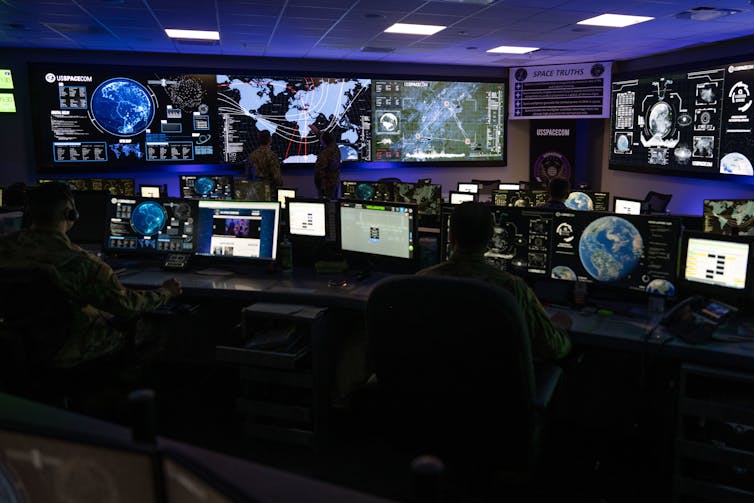
The US Space Command Joint Operations Center at Peterson Space Force Base, Colorado
In September 2025, the US and UK conducted their first coordinated satellite manoeuvre.
Christopher DeWitt, Space Command

The same month, Brig Gen Christopher Horner, commander of 3 Canadian Space Division told a space security summit that there were more than 200 anti-satellite weapons orbiting Earth.

While he didn’t provide details on their nature, he said it was a “shocking number” to threaten allied satellites.

Increased investment

It’s possible to satellites by improving the encryption of data transmitted to them as well as with anti-jamming technology. This uses a variety of techniques to block out or nullify the signals used by jammers to interfere with satellite communications. It’s also important to ensure there are alternative providers for critical space services as a backup in case of attack.

In response to increasing threats to UK satellite infrastructure, the UK government has recently increased its investment in projects geared towards space security. The government has invested £500,000 in a project to develop sensors that counter lasers used to blind satellites. The UK has also recently developed Borealis, a software platform designed to monitor and protect critical UK and allied satellites.

As well as investing in its own projects, the UK has also sought to improve space-based security by strengthening international partnerships. For instance, the UK recently invested €163 million (£141 million) in Eutelsat, which provides satellite internet and is a rival to Elon Musk’s Starlink system.

Starlink’s importance not only for consumers, but also for military applications has been demonstrated in the Ukraine war – where Ukrainian troops had come to rely heavily on it for battlefield communications. But the drawback to this dependency on a privately owned company such as Starlink was highlighted when Musk denied coverage to Kyiv in 2023.

The investment in Eutelsat not only strengthens space-based collaboration between the UK and France, but also boosts a company providing a backup system for satellite communications.

The US and UK also recently conducted their first coordinated satellite manoeuvre. The US repositioned one of its own satellites to examine a UK satellite to make sure it was operating normally. Such a manoeuvre could potentially be used following an attack designed to disable a spacecraft.

The reports of Russian meddling highlight the importance of security in orbit as global tensions continue to expand into space.

The Conversation

Jessie Hamill-Stewart does not work for, consult, own shares in or receive funding from any company or organisation that would benefit from this article, and has disclosed no relevant affiliations beyond their academic appointment.

ref. The UK military says Russia targets its satellites on a weekly basis. What can be done about it? – https://theconversation.com/the-uk-military-says-russia-targets-its-satellites-on-a-weekly-basis-what-can-be-done-about-it-267232

Who are the women supporting Trump?

Source: The Conversation – UK – By Clodagh Harrington, Lecturer in American Politics, University College Cork

Twenty five per cent of US voters think that the Republican party has a better plan for women’s rights than the Democrats, according to new polling.

While many liberal female voters are critical about Donald Trump’s remarks about women as well as his policies related to women’s rights, it’s worth noting that between the 2020 and 2024 presidential elections, Trump increased his support among women voters, from 42% to 45%.

Making assumptions about female voters as a single voting block is tempting, but there are multiple layers and contradictions within this hugely diverse group. Polling shows that there are a few broad conclusions about their voting patterns.

For example, in the modern era, women have higher turnout rates at US elections than men and have consistently been more likely to vote Democrat.

So, who are those women voters that Trump appeals to? The short answer is white women, or at least, some of them. With a couple of election exceptions (1964, 1996) white women tend to prefer Republican candidates over Democrats. They maintained this trend with Donald Trump.

Trumpism and the Maga movement doesn’t tend to appeal to many college-educated white women. However, religion is a factor.

Born-again or Evangelical believers who tend to be committed to the idea of the traditional family where the man goes to work and the woman stays at home and looks after the children have proved essential to Trump’s support in 2024. Eight in ten (80%) of voters who identified as Christian cast their ballots for the Trump/Vance ticket, up from 71% in 2020.

Women in this group may be more likely to appreciate the Trump administration’s attempts to encourage and support women to have more children. Trump’s proposed “National Medal of Motherhood” would create financial incentives for women to have large families. Women with six or more children may be eligible.

The government has already launched what are known as money accounts for growth and advancement. These saving plans will put a US$1000 (£742) deposit from the government into an account for babies born between 2024 and 2028, with families able to add up to US$5,000 annually before the children can access the money at age 18.

Around 64% of all American women support a legal right to abortion. However, national access to abortion is only supported by 39% of Republican women over 50, according to one poll, and this is another group that may be supportive on the Trump administration agenda on families, which has included moves to restrict abortion.

The tradwives movement has become far more widely discussed since it gained support from Maga politicians.

Factory jobs and the future

The Maga-influenced GOP is not the conservative party of yesteryear, but some aspects of its appeal are not new. Voter priority has long been “the economy, stupid”. And around 24% of women (compared to 17% of men) rank inflation and prices as their most important policy issue.

Trump made slashing the price of eggs a major talking point in his recent election campaign, and this will have resonated with women voters worried about the cost of living. Indeed, Trump claimed he won the election on immigration and groceries.


Read more:
Why Americans care so much about egg prices – and how this issue got so political


Trump also plans to “fix” the economy and “tariff the hell” out of countries that have “taken advantage” of the US. These policies aim to rebuild US domestic manufacturing. For women in manufacturing communities who have seen the negative impact of globalisation – factory closures, job losses and an undermining of the social fabric – this holds appeal.

Those reliant on the local economy for their livelihoods are aware that the survival of this community ecosystem is crucial, not only for those working in industry but for those whose lives are intertwined. Such views are not necessarily Maga-centric, but the movement’s cultural concerns align with these challenges.

Trump’s promises to reject globalism and “embrace patriotism” may offer comfort to those whose socio-economic security has been undermined by the trade decisions of his predecessors.

Trump’s political opponents would be well advised to listen to the concerns of conventionally conservative America. Dismissing their anxieties will not dissipate them. Instead, it may encourage more socially traditional women to embrace the some of Trump’s policies.

But Trump will also need to worry about the state of the economy, and delivering on his price promises. If he doesn’t deliver, those women who put the cost of living at the top of the list may take their votes elsewhere.

The Conversation

Clodagh Harrington does not work for, consult, own shares in or receive funding from any company or organisation that would benefit from this article, and has disclosed no relevant affiliations beyond their academic appointment.

ref. Who are the women supporting Trump? – https://theconversation.com/who-are-the-women-supporting-trump-265027

Black hats, cauldrons and broomsticks: the historic origins of witch iconography

Source: The Conversation – UK – By Mari Ellis Dunning, PhD Candidate, Languages and Literature, Aberystwyth University

Shutterstock

Whether they’re knocking at your door trick or treating, or hung as decorations in shop windows, witches are rife at this time of year. They’re easy to recognise, wearing tall, pointed hats, carrying broomsticks, or peering into a cauldron – but where did these stereotypes associated with witches come from?

1. Broomsticks

Much like brooms today, in the 1500s the broomstick was a household tool used to sweep hearths and floors. In rural villages, broomsticks were also often used as a form of signage by alewives, who would place them outside their cottages to show that ale was for sale within. Somehow, this innocuous object found its way into stories of witchcraft.

Marginalia showing a woman riding a broomstick
The image from Martin Le Franc’s Le Champion des Dames believed to be the first of a witch on a broomstick.
The Museum of Witchcraft Ltd

The first image of women flying on broomsticks is believed to be in the manuscript of French poet Martin Le Franc’s Le Champion des Dames (The Defender of Ladies), published in 1485. Women sat astride broomsticks are drawn alongside the text, in the margins of the pages, much as accused witches were often maligned women on the margins of society.

One of the most influential pieces of writing on witchcraft was the Malleus Maleficarum published in 1486 by German clergyman Heinrich Kramer. Kramer’s anti-witchcraft tract alluded to witches flying on anointed broomsticks with the aid of the devil. Given that the work is firmly rooted in misogyny, and depicts witches as a direct threat to the domestic sphere, it’s fitting that such a mundane household item became an object of malice.

2. Cauldrons

Another domestic item, the cauldron, has also become synonymous with witchcraft.

Painting of three witches over a cauldron
The Three Witches from Macbeth by Daniel Gardner (1775).
The National Portrait Gallery

Instead of stews and broths, witches are often shown using cauldrons to stir up potions and spells. Again, it’s likely that this is rooted in ideas of women subverting their usual household duties, as well as a connection to healing practices.

In the 16th and 17th century, people relied on lay healers, people who learned their craft through experience and knowledge passed down through the generations. These healers were usually women who had knowledge of herbal remedies and salves that would claim to cure ailments and heal people and sick animals.

As the reformation drew in and the church became more powerful, lay healing practices and unlicensed healing was pushed aside in favour of trained physicians. With this shift, lay healers boiling herbs in their cauldrons were looked on with increasing suspicion.

3. Tall black hats

Painting of a woman in a pointed hat
Portrait of an Older Woman in a Pointed Hat, artist unknown (c. 17th century).
Concept Art Gallery

Depictions of witches vary across Europe, but there’s no doubt that a tall, black hat has become associated with witches, especially in the UK and the US.

There’s no definitive source for this strange stereotype, but speculation about where it came from is rife, ranging from ideas about Quaker hats to general medieval dress.

Women in early modern (1500 to 1780) Wales typically dressed in long, heavy woollen skirts, aprons, blouses and a large woollen shawl, and a traditional tall, black hat, so there is speculation among some researchers that this served as inspiration for the wide-brimmed hat of the fairy tale witch.

This is fitting given that Wales, along with Cornwall, was seen by Protestant reformers of the early modern period as a land rife with magic and sorcery.

Outside of Europe, tall black hats have also been found on mummies from 200BC unearthed in Subeshi, China, leading scientists to name them the “the witches of Subeshi”.

4. Long, scraggly hair

Depictions of witches usually involve women with long, scraggly hair, often trailing behind them as they ride their broomsticks.

painting of a woman with long black hair reading a book
Black-Haired Woman Reading by Adolf von Becker (1875).
Finnish National Gallery

It’s likely that this conception of witches comes from the dichotomy between “good” Christian women and their “bad” witch counterparts that was established during the reformation.

In the post-medieval period, married women ordinarily covered their hair beneath a cap, and loose hair was generally regarded as an improper attribute of temptresses and the dissolute.

Agnes Griffiths, a Welsh woman accused of witchcraft in 1618, was reportedly seen through the window of her home using something sharp to prick a wax figure, and was described as doing this “with her heare aboute her eares”. The accusation suggests disdain for women who refused to conform to expectations of their gender. In an extension of this, witches were also suspected of hiding wax, which they would use for their sorcery, in their hair, contributing to the stereotype of witches as having greasy locks.

5. Black cats

Women accused of witchcraft between the 14th and 17th centuries were often accused of keeping a familiar – an animal that was actually the devil or a demon in disguise.

A witch with a black cat at her feet
The Love Potion by Evelyn De Morgan (1903).
De Morgan Centre

Familiar spirits were said to come in any number of guises, from frogs and rats to dogs, small horses and even badgers. In a perverse parody of breastfeeding an infant, witches were believed to feed the familiars from their own bodies, and were often consequently stripped and searched for a “witch’s teat”.

The cleric Robert Holland’s witchcraft treatise, which presents some colourful ideas about witchcraft, recounts a story about a witch who would always have a docile rat feeding in her lap.

It goes on to claim that demons would appear in the form that was easiest to keep as a pet, such as cats, mice and frogs, and tells of an old woman and her daughter who were known to have kept the devil for a long time in various animal guises. Supposedly, the older woman fed the animals with blood from her own breasts.

In one particularly famous case of witchcraft, that of Elizabeth Clarke of Manningtree, Clarke admitted to keeping several familiar spirits, and the most well remembered of these was her cat, Vinegar Tom.


Looking for something good? Cut through the noise with a carefully curated selection of the latest releases, live events and exhibitions, straight to your inbox every fortnight, on Fridays. Sign up here.


The Conversation

Mari Ellis Dunning does not work for, consult, own shares in or receive funding from any company or organisation that would benefit from this article, and has disclosed no relevant affiliations beyond their academic appointment.

ref. Black hats, cauldrons and broomsticks: the historic origins of witch iconography – https://theconversation.com/black-hats-cauldrons-and-broomsticks-the-historic-origins-of-witch-iconography-266417