AI-powered assistive technologies are changing how we experience and imagine public space

Source: The Conversation – Canada – By Ron Buliung, Professor, Geography and Planning, University of Toronto

AI-powered assistive devices, like hearing aids, are changing how the people who use them experience public space. (Shutterstock)

New applications and the integration of artificial intelligence (AI) with wearable devices are changing the way users interact with their environments and each other. The impacts and reach of these new technologies have yet to be fully understood.

Connections between technologies and bodies is not a new thing for many disabled persons. Assistive technologies — tools and products designed to support people with disabilities — have played a part in mitigating built and institutional barriers experienced by disabled persons for decades.

While not strictly considered assistive, immersive and wearable technologies have the potential to change the relationship between disabled users and their experience of place.

For example, Ray-Ban’s Meta glasses use AI to describe what the cameras are capturing using the Be My Eyes app. Using OpenAI’s large language model, ChatGPT, this effectively turns a user’s smart phone into a vision assistant.

Beyond wearables, some technologies are more closely tied to or integrated with the body. Examples include brain-computer interfaces, AI-enabled prosthetics and bone-anchored hearing aids.

The availability and production of environmental data from these technologies may impact how we relate to each other, how we move through and understand space, and how we engage with the physical environment around us at any given moment.

Sam Seavey, founder of TheBlindLife.com, reviews the possibilities and limitations of Apple’s VisionPro. (The Blind Life)

We’re at a critical juncture where AI-enabled technologies used by individuals may profoundly impact our urban futures.

What happens, for example, when wearables make any “place” a digital work or play place? What does a largely private-sector, consumer-driven, AI-enabled digital intervention into a city’s spaces mean for planning, zoning and taxation? What are the environmental costs of the global AI project?

And crucially, who gets to participate in this digital reimagining?

AI and the city

While access can be challenging — wearables are often costly — ableist thinking regarding the use of technology to render invisible Blind and/or Deaf people and culture is also a problem. Some people might naively assume that all Blind and Deaf people are universally seeking a bio-technological “miracle.”

There are also other challenges: how a technology captures or describes its data may not match up to a user’s pre-existing sense of place. Moreover, access to tech can produce some unintended consequences, including the erosion of in-person community building among disabled people.

Hearing loss of some kind affects around 1.5 billion people: I am one of those people. I am a disability studies scholar who wears behind-the-ear hearing aids to augment my hearing experience.

My hearing aids use AI and machine learning to sense and adjust my sound environment. They help me cope with the ways in which the places of my everyday life — such as my home or the lecture hall — are generally configured for people without hearing loss.

When I use my hearing aids, I find that the city has never sounded so wonderful, and yet sometimes irritatingly loud. The sound of birds is one thing; the grinding sound of a breaking subway is another entirely.

Cumulative exposure to noisy indoor and outdoor places of the city poses auditory health risks, such as noise-induced hearing loss or tinnitus, and can contribute to poor health more broadly. I have to be careful about ongoing noise exposure, and by adjusting the volume of my hearing aids, I can turn down the city when I want to.

Future bodies and urban futures

AI-powered technologies can exacerbate issues of access, privilege and freedom of movement. This happens both through who is able to purchase and use devices, as well as through data and their applications. Data may be biased in terms of race, gender, sexuality and disability.

Scientific research and media representations tend to highlight the benevolent possibilities of technologies for “repairing” bodies conceived as being functionally medically deficient.

Much less is said about disabled persons controlling the narrative, taking up key roles in the messy terrain of AI, machine learning and data governance, and in the planning and design of future cities.

Digital modelling

We are also witnessing growing interest in the digital twinning — creating highly accurate digital models — of everything from human hearts to entire cities.

Whether rendered at the scale of the body or city, the motivation for twinning appears centred on planning and performance optimization — a quest for perfection. Like any model, we are dealing with an abstraction from reality. City twins seem to fail to capture many of the fine grain environmental barriers experienced by disabled persons.


Read more:
What are digital twins? A pair of computer modeling experts explain


Ownership limits

Not everyone can, should or wishes to be technologically “assisted” or augmented. There are medical, identity and culture, affordability, legal, moral and ethical concerns.


Read more:
Super-intelligence and eternal life: transhumanism’s faithful follow it blindly into a future for the elite


Other issues raised by brain-computer interface research, for example, include concerns about legal capacity and ownership of the self, including ownership of device-generated data.

In a study on the impact of neural technologies, researchers shared the legal repercussions relating to two disabled people deprived of voting rights in Spain. The person who recovered the ability to communicate autonomously using their finger and a computer had their rights restored, while the other, who used a human intermediary, did not.

Legal questions also arise regarding how liability is assigned when augmented bodies are injured or cause injuries to others.

Where does the person end and the technology begin, and vice versa? Who gets to decide?

Future technologies

As the use of AI and assistive technologies increases in everyday urban life, we will need to address these questions sooner rather than later.

And if disabled persons are not adequately involved in these discussions and decisions, then cities will be less — rather than more — accessible.

The Conversation

Ron Buliung does not work for, consult, own shares in or receive funding from any company or organisation that would benefit from this article, and has disclosed no relevant affiliations beyond their academic appointment.

ref. AI-powered assistive technologies are changing how we experience and imagine public space – https://theconversation.com/ai-powered-assistive-technologies-are-changing-how-we-experience-and-imagine-public-space-229836
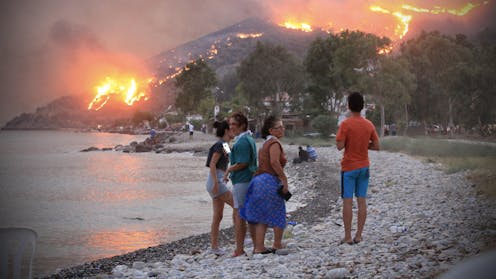
Experiencing extreme weather and disasters is not enough to change views on climate action, study shows

Source: The Conversation – Global Perspectives – By Omid Ghasemi, Research Associate in Behavioural Science at the Institute for Climate Risk & Response, UNSW Sydney

STR / AFP via Getty Images

Climate change has made extreme weather events such as bushfires and floods more frequent and more likely in recent years, and the trend is expected to continue. These events have led to human and animal deaths, harmed physical and mental health, and damaged properties and infrastructure.

Will firsthand experience of these events change how people think and act about climate change, making it seem immediate and local rather than a distant or future problem?

Research so far has offered a mixed picture. Some studies suggest going through extreme weather can make people more likely to believe in climate change, worry about it, support climate policies, and vote for Green parties. But other studies have found no such effects on people’s beliefs, concern, or behaviour.

New research led by Viktoria Cologna at ETH Zurich in Switzerland may help to explain what’s going on. Using data from around the world, the study suggests simple exposure to extreme weather events does not affect people’s view of climate action – but linking those events to climate change can make a big difference.

Global opinion, global weather

The new study, published in Nature Climate Change, looked at the question of extreme weather and climate opinion using two global datasets.

The first is the Trust in Science and Science-related Populism (TISP) survey, which includes responses from more than 70,000 people in 68 countries. It measures public support for climate policies and the extent that people think climate change is behind increases in extreme weather.

The second dataset estimates how much of each country’s population has been affected each year by events such as droughts, floods, heatwaves and storms. These estimates are based on detailed models and historical climate records.

Public support for climate policies

The survey measured public support for climate policy by asking people how much they supported five specific actions to cut carbon emissions. These included raising carbon taxes, improving public transport, using more renewable energy, protecting forests and land, and taxing carbon-heavy foods.

Responses ranged from 1 (not at all) to 3 (very much). On average, support was fairly strong, with an average rating of 2.37 across the five policies. Support was especially high in parts of South Asia, Africa, the Americas and Oceania, but lower in countries such as Russia, Czechia and Ethiopia.

Exposure to extreme weather events

The study found most people around the world have experienced heatwaves and heavy rainfall in recent decades. Wildfires affected fewer people in many European and North American countries, but were more common in parts of Asia, Africa and Latin America.

Cyclones mostly impacted North America and Asia, while droughts affected large populations in Asia, Latin America and Africa. River flooding was widespread across most regions, except Oceania.

Do people in countries with higher exposure to extreme weather events show greater support for climate policies? This study found they don’t.

In most cases, living in a country where more people are exposed to disasters was not reflected in stronger support for climate action.

Wildfires were the only exception. Countries with more wildfire exposure showed slightly higher support, but this link disappeared once factors such as land size and overall climate belief were considered.

In short, just experiencing more disasters does not seem to translate into increased support for mitigation efforts.

Seeing the link between weather and climate change

In the global survey, people were asked how much they think climate change has increased the impact of extreme weather over recent decades. On average, responses were moderately high (3.8 out of 5) suggesting that many people do link recent weather events to climate change.

Such an attribution was especially strong in Latin America, but lower in parts of Africa (such as Congo and Ethiopia) and Northern Europe (such as Finland and Norway).

Crucially, people who more strongly believed climate change had worsened these events were also more likely to support climate policies. In fact, this belief mattered more for policy support than whether they had actually experienced the events firsthand.

What does this study tell us?

While public support for climate policies is relatively high around the world, even more support is needed to introduce stronger, more ambitious measures. It might seem reasonable to expect that feeling the effects of climate change would push people to act, but this study suggests that doesn’t always happen.

Prior research shows less dramatic and chronic events like rainfall or temperature anomalies have less influence on public views than more acute hazards like floods or bushfires. Even then, the influence on beliefs and behaviour tends to be slow and limited.

This study shows climate impacts alone may not change minds. However, it also highlights what may affect public thinking: helping people recognise the link between climate change and extreme weather events.

In countries such as Australia, climate change makes up only about 1% of media coverage. What’s more, most of the coverage focuses on social or political aspects rather than scientific, ecological, or economic impacts.

Many stories about disasters linked to climate change also fail to mention the link, or indeed mention climate change at all. Making these connections clearer may encourage stronger public support for climate action.

The Conversation

Omid Ghasemi receives funding from the Australian Academy of Science. He was a member of the TISP consortium and a co-author of the dataset used in this study.

ref. Experiencing extreme weather and disasters is not enough to change views on climate action, study shows – https://theconversation.com/experiencing-extreme-weather-and-disasters-is-not-enough-to-change-views-on-climate-action-study-shows-260308

How do we define Canadian content? Debates will shape how creatives make a living

Source: The Conversation – Canada – By Daphne Rena Idiz, Postdoctoral fellow, Department of Arts, Culture and Media, University of Toronto

What should count as Canadian content (CanCon) in the era of streaming and generative AI (GenAI)?

That’s the biggest unknown at the heart of the Canadian Radio-television and Telecommunications Commission’s recent (CRTC) public hearing, held in Gatineau, Que., from May 14 to 27.

The debate is about how Canada’s current points-based CanCon system remains effective in the context of global streaming giants and generative AI. Shows qualify as CanCon by assigning value to roles like director, screenwriter and lead actors being Canadian.

The outcome will shape who gets to tell Canadian stories and what those stories are, and also which ones count as Canadian under the law. This, in turn, will determine who in the film and television industries can access funding, tax credits and visibility on streaming services.

It will also determine which Canadian productions big streamers like Netflix will invest in under their Online Streaming Act obligations.

The federal government’s recent announcement that it’s rescinding the Digital Services Tax reveals the limits of Canada’s leverage over Big Tech, underscoring the significance of CanCon rules as parameters around how streaming giants contribute meaningfully to the country’s creative industries.

CanCon: Who gets to decide?

The CRTC’s existing approach to defining CanCon relies on the citizenship of key creative personnel.

The National Film Board argued that this misses the “cultural elements” of Canadian storytelling. These include cultural expression, narrative themes and connection to Canadian audiences. That is, a production might technically count as CanCon by hiring Canadians, without feeling particularly “Canadian.”

It’s worth noting there are varied global regulatory frameworks for defining film nationality. The Writers Guild of Canada supports the CRTC’s view that cultural elements shouldn’t be part of CanCon certification, and argues that attempting to further codify cultural criteria risks reducing Canadian identity to superficial symbols like maple leaves or hockey sticks, and could exclude entire genres like sci-fi or fantasy.

‘Canadianness’ too broad to regulate?

The Writers Guild of Canada argues that while Canadians should expect to see cultural elements in programming, the concept of “Canadianness” is too broad and subjective to be effectively regulated.

Cultural elements are regulated by the 1991 Broadcasting Act as amended by the 2023 Online Streaming Act. Broadcasters and streamers must reflect Canadian stories, identities and cultural expressions.


Read more:
How the Online Streaming Act will support Canadian content


The acts empower broadcasters and streamers to decide which Canadian stories and content will be developed, produced and distributed through commissioning and licensing powers. This implicitly limits the CRTC’s role to setting rules about which creatives are at the table.

The Writer’s Guild advocates broadening the pool of Canadian key creatives to modernize the CanCon system. It trusts the combined perspectives of a broader pool to make creative decisions about Canadian identity in meaningful ways. Accordingly, it supports the CRTC’s intent to add the showrunner role to the point system since showrunners are the “the chief custodian of the creative vision of a series.

Battle over Canadian IP

Streaming introduces more players with financial stakes, complicating who controls content and who profits from it. A seismic shift is happening in how intellectual property (IP) is handled.

CRTC has proposed that the updated CanCon definition include Canadian IP ownership as a mandatory element to enable Canadian companies and workers to retain some control over their own IP, and thereby earn sustainable income. For example, in a streaming drama, Canadian screenwriters who retain ownership of the IP could earn ongoing revenue through licensing deals, international sales and royalties each time the series is distributed.

However, the Motion Picture Association-Canada (MPA-Canada), representing industry titans like Netflix, Amazon and Disney, is pushing back against requirements that mandate the sharing of territory or IP.

Without IP rights, Canadian talent and the industry as a whole may be reduced to becoming service providers for global companies.

Fair remuneration, IP rights needed

Our own research highlights how this type of contractual arrangement increases the power asymmetries between producers, distributors and streaming services. We emphasize the critical importance of fair remuneration and IP rights for creators.

Intervenors shared a range of preferences from 100 per cent Canadian IP ownership to none at all. One hundred per cent Canadian IP ownership means Canadian creators like a producer of a streaming series would control the rights to the content. They would receive the majority of profits from licensing, distribution and future adaptations.

Even 51 per cent ownership could give them a controlling stake, but would likely require sharing revenue and decision-making with the streaming service.

AI and CanCon

And then, of course, there’s the question of how generative AI should be considered within the updated CanCon definition. The Writers Guild of Canada has drawn a firm line in the sand: AI-generated material should not qualify as Canadian content.

The guild argues that since current AI tools don’t possess identity, nationality or cultural context, their output cannot advance the goals of the Broadcasting Act, centred on promoting Canadian voices and stories.

The Alliance of Canadian Cinema, Television and Radio Artists (ACTRA) raised a different concern around AI. AI, ACTRA argued, “should not take over the jobs of the creators in the ecosystem that we’re in and we should not treat AI-generated performers as if they are a Canadian actor.”

Depending on how the CRTC addresses AI, this could mean that streaming content featuring AI-generated scripts, characters, or performances — even if developed by a Canadian creator or set in Canada — would not qualify as CanCon.

The WGC notes that it has already negotiated restrictions on AI use in screenwriting through its agreement with the Canadian Media Producers Association. These guardrails are being held up as the “emerging industry standard.”

Follow the money

Another contested point is how streamers should pay into CanCon: through direct investment or through more traditional modes of financing. Under the Online Streaming Act, streamers are required to pay five per cent of their annual revenues to certain Canadian funds.

This model echoes previous requirements used to manage decision-making at media broadcasters, some at the much more substantial level of 30 per cent.

But no payments have been made yet, and streamers are appealing this requirement. Streamers prefer investing directly into Canadian content, taking a risk on its commercial potential to benefit from resulting successes.

Research in the European Union and Canada highlight how different stakeholders benefit from different forms of financial obligations, suggesting the industry may be best served by a policy mix.

As Canada rewrites its broadcasting rules, defining Canadian content is a courtroom drama unfolding in real time — and the verdict will have serious ramifications.

The Conversation

MaryElizabeth Luka receives research project funding from peer-adjudicated grants from the Social Sciences and Humanities Research Council and internal grants at University of Toronto, such as the Creative Labour Critical Futures Cluster of Scholarly Prominence.

Daphne Rena Idiz does not work for, consult, own shares in or receive funding from any company or organisation that would benefit from this article, and has disclosed no relevant affiliations beyond their academic appointment.

ref. How do we define Canadian content? Debates will shape how creatives make a living – https://theconversation.com/how-do-we-define-canadian-content-debates-will-shape-how-creatives-make-a-living-258013

Antarctic research is in decline, and the timing couldn’t be worse

Source: The Conversation – Global Perspectives – By Elizabeth Leane, Professor of Antarctic Studies, School of Humanities, University of Tasmania

Oleksandr Matsibura/Shutterstock

Ice loss in Antarctica and its impact on the planet – sea level rise, changes to ocean currents and disturbance of wildlife and food webs – has been in the news a lot lately. All of these threats were likely on the minds of the delegates to the annual Antarctic Treaty Consultative Meeting, which finishes up today in Milan, Italy.

This meeting is where decisions are made about the continent’s future. These decisions rely on evidence from scientific research. Moreover, only countries that produce significant Antarctic research – as well as being parties to the treaty – get to have a final say in these decisions.

Our new report – published as a preprint through the University of the Arctic – shows the rate of research on the Antarctic and Southern Ocean is falling at exactly the time when it should be increasing. Moreover, research leadership is changing, with China taking the lead for the first time.

This points to a dangerous disinvestment in Antarctic research just when it is needed, alongside a changing of the guard in national influence. Antarctica and the research done there are key to everyone’s future, so it’s vital to understand what this change might lead to.

Why is Antarctic research so important?

With the Antarctic region rapidly warming, its ice shelves destabilising and sea ice shrinking, understanding the South Polar environment is more crucial than ever.

Ice loss in Antarctica not only contributes to sea level rise, but impacts wildlife habitats and local food chains. It also changes the dynamics of ocean currents, which could interfere with global food webs, including international fisheries that supply a growing amount of food.

Research to understand these impacts is vital. First, knowing the impact of our actions – particularly carbon emissions – gives us an increased drive to make changes and lobby governments to do so.

Second, even when changes are already locked in, to prepare ourselves we need to know what these changes will look like.

And third, we need to understand the threats to the Antarctic and Southern Ocean environment to govern it properly. This is where the treaty comes in.

What is the Antarctic Treaty?

The region below 60 degrees south is governed by the 1959 Antarctic Treaty, along with subsequent agreements. Together they are known as the Antarctic Treaty System.

Fifty-eight countries are parties to the treaty, but only 29 of them – called consultative parties – can make binding decisions about the region. They comprise the 12 original signatories from 1959, along with 17 more recent signatory nations that produce substantial scientific research relating to Antarctica.

This makes research a key part of a nation’s influence over what happens in Antarctica.

For most of its history, the Antarctic Treaty System has functioned remarkably well. It maintained peace in the region during the Cold War, facilitated scientific cooperation, and put arguments about territorial claims on indefinite hold. It indefinitely forbade mining, and managed fisheries.

Lately, however, there has been growing dysfunction in the treaty system.

Environmental protections that might seem obvious – such as marine protected areas and special protections for threatened emperor penguins – have stalled.

Because decisions are made by consensus, any country can effectively block progress. Russia and China – both long-term actors in the system – have been at the centre of the impasse.


Read more:
Antarctic summer sea ice is at record lows. Here’s how it will harm the planet – and us


What did our report find?

Tracking the amount of Antarctic research being done tells us whether nations as a whole are investing enough in understanding the region and its global impact.

It also tells us which nations are investing the most and are therefore likely to have substantial influence.

Our new report examined the number of papers published on Antarctic and Southern Ocean topics from 2016 to 2024, using the Scopus database. We also looked at other factors, such as the countries affiliated with each paper.

The results show five significant changes are happening in the world of Antarctic research.

  • The number of Antarctic and Southern Ocean publications peaked in 2021 and then fell slightly yearly through to 2024.
  • While the United States has for decades been the leader in Antarctic research, China overtook them in 2022.
  • If we look only at the high-quality publications (those published in the best 25% of journals) China still took over the US, in 2024.
  • Of the top six countries in overall publications (China, the US, the United Kingdom, Australia, Germany and Russia) all except China have declined in publication numbers since 2016.
  • Although collaboration in publications is higher for Antarctic research than in non-Antarctic fields, Russia, India and China have anomalously low rates of co-authorship compared with many other signatory countries.

Why is this research decline a problem?

A recent parliamentary inquiry in Australia emphasised the need for funding certainty. In the UK, a House of Commons committee report considered it “imperative for the UK to significantly expand its research efforts in Antarctica”, in particular in relation to sea level rise.

US commentators have pointed to the inadequacy of the country’s icebreaker infrastructure. The Trump administration’s recent cuts to Antarctic funding are only likely to exacerbate the situation. Meanwhile China has built a fifth station in Antarctica and announced plans for a sixth.

Given the nation’s population and global influence, China’s leadership in Antarctic research is not surprising. If China were to take a lead in Antarctic environmental protection that matched its scientific heft, its move to lead position in the research ranks could be positive. Stronger multi-country collaboration in research could also strengthen overall cooperation.

But the overall drop in global Antarctic research investment is a problem however you look at it. We ignore it at our peril.

The Conversation

Elizabeth Leane receives funding from the Australian Research Council, the Dutch Research Council, the Council on Australian and Latin American Relations DFAT and HX (Hurtigruten Expeditions). She has received in-kind support from Hurtigruten Expeditions in the recent past. The University of Tasmania is a member of the UArctic, which has provided support for this project.

Keith Larson is affiliated with the UArctic and European Polar Board. The UArctic paid for the development and publication of this report. The UArctic Thematic Network on Research Analytics and Bibliometrics conducted the analysis and developed the report. The Arctic Centre at Umeå University provided in-kind support for staff time on the report.

ref. Antarctic research is in decline, and the timing couldn’t be worse – https://theconversation.com/antarctic-research-is-in-decline-and-the-timing-couldnt-be-worse-260197

We don’t know what happens to the waste we recycle, and that’s a problem

Source: The Conversation – Canada – By Faisal Shennib, Environmental Specialist, 24-25 Concordia Public Scholar, PhD Candidate in Individualized Program, Concordia University

There is a glaring lack of tracking for global recycling. Poor waste management is deeply connected to climate change, plastic pollution and global nutrient imbalances globally.

Economies also suffer from the lack of tracking. We extract, process and then landfill and incinerate trillions of dollars of materials per year. Instead, these could be recirculating, creating new jobs and reducing reliance on global trade.

To shift to alternative, circular models, we need better data on local and global waste management.

My research demonstrates that more local waste tracking through digitalization could yield multiple benefits. It could help track hyper-local recycling and reuse, initiatives that are usually considered too small and burdensome to include in national waste tracking efforts.

And compared to national waste tracking, localized waste tracking could also provide more timely and relevant insights on the effectiveness of policies, infrastructure investments and education.

Measuring waste

The units for measuring waste are fairly standard across the world. Quantity of waste is measured by weight (tonnes) and waste performance is the per cent of total waste not sent for landfill and incineration.

However, waste terminology varies across both academia and industry. In some settings, “recycling” may mean that the material was collected for recycling, but not necessarily recycled. A term like “municipal waste” can include waste from offices and businesses — or not. This confusion makes global waste tracking challenging.

Regular global reporting on waste is sorely lacking. The United Nations’ Sustainable Development Goals (SDGs) call for global action on waste management, but there have been no figures for global recycling in recent UN SDG reports. This is likely due to the lack of available, reliable data.

Reports on global waste are compiled from sources using a wide variety of formats; a source may represent annual or daily waste, and total waste or waste per capita. Data is often from different years, making it useful for trend analysis but not strict comparisons.

Estimations and incomplete data are common; only 39 per cent of populations in developing countries are served by waste collection services. Double-counting is another risk when data comes from varied sources like waste collectors, processors and local governments.

With all these challenges, global waste reports require years to compile, leading to multiyear gaps in published reports.

Insufficient data

Even nations with consistent reporting are not immune to methodological gaps. The European Union and Canada both require annual reporting on waste, but allow for a wide variety of methods in data sourcing, including estimation.

In the United States, annual waste data is reported by states to the Environmental Protection Agency (EPA) on a voluntary basis. No new nationwide reports have been published since 2018.

Another challenge is that reporting focuses on the weight of waste, but there is a lack of data on its composition. Much of what is collected is not recycled due to contamination, the nature of the material or the lack of a local market.

Waste characterization is the process of determining waste composition, and when reporting waste, this information is often optional. In the U.S., few states provide updated characterization studies to the EPA. The EU and Canada require reporting on composition but don’t specify requirements for how to determine the composition.

Reliable waste characterization requires the waste to be audited: sampled, weighed, separated into categories, and then weighed again. It’s a labour-intensive and cost-prohibitive process, which might explain why American states haven’t provided updated waste characterizations to the EPA since 2018.

Estimating recycling stats

The oft-cited fact that nine per cent of global plastics are recycled comes from a 2022 report. It was calculated in several steps, each with significant uncertainties, including how much plastic was produced globally, how long it was used for, and how much was collected and likely to have been recycled.

The nine per cent figure is very much an estimate, representing global plastic waste in 2019. And now, it is an outdated figure.

Global plastic trade is likely 40 per cent higher than previously estimated. And 40 per cent of textiles exported for reuse and recycling are dumped or incinerated.

In South Korea, for example, a country renowned for its waste policies and programs, reports a 73 per cent recycling rate for plastics, while Greenpeace estimates that the rate is 26 per cent because much of what is collected is not recycled.

In Canada, plastic recycling tracking suffers from the same lack of standardization and transparency as recycling in general.

A much-needed global consensus

Material consumption and management is a global problem requiring international collaboration, commitments and adequate tracking.

Consensus on how to define and measure waste data are important, as well as commitments from nations to regularize reporting. The upcoming United Nations Environment Programme session to develop a global plastics treaty might catalyze these steps, at least for plastics.

To track the quality of waste handled, governments should adopt guidelines for waste characterization, like the UN-Habitat’s Waste Wise Cities Tool. Traceability needs to be integrated into waste management methods. Digital solutions like blockchain and artificial intelligence could improve transparency, automate waste tracking and reduce associated costs.

The Conversation

Faisal Shennib does not work for, consult, own shares in or receive funding from any company or organisation that would benefit from this article, and has disclosed no relevant affiliations beyond their academic appointment.

ref. We don’t know what happens to the waste we recycle, and that’s a problem – https://theconversation.com/we-dont-know-what-happens-to-the-waste-we-recycle-and-thats-a-problem-254171

What damage did the US do to Iran’s nuclear program? Why it’s so hard to know

Source: The Conversation – USA – By Joshua Rovner, Associate Professor of International Relations, American University

Gen. Dan Caine, chairman of the Joint Chiefs of Staff, describes the U.S. military attack on Iranian nuclear sites, which occurred on June 21, 2025, . AP Photo/Alex Brandon

The U.S. Air Force dropped a dozen ground-penetrating bombs, each weighing 30,000 pounds (13,607 kilograms), in a raid on Iran’s nuclear site at Fordo on June 21, 2025. The attack was an attempt to reach the uranium enrichment facility buried deep inside a mountain. The target, President Donald Trump declared, was “completely and totally obliterated.”

Others were less sure. On June 24, the administration canceled a classified intelligence briefing to members of Congress, leading to frustration among those with questions about White House claims. While Defense Intelligence Agency analysts apparently agree that the strikes did real damage, they dispute the idea that the attack permanently destroyed Iran’s enrichment capability. Reports emerged that their initial analysis found that the strikes had only set Iran back a few months.

Such disagreements are unsurprising. Battle damage assessment – originally called bomb damage assessment – is notoriously difficult, and past wars have featured intense controversies among military and intelligence professionals. In World War II, poor weather and the limits of available technology conspired against accuracy.

Battle damage assessment remained a thorny problem decades later, even after radical improvements in surveillance technology. In the first Gulf War in 1990, for example, military leaders argued with CIA officials over the effects of airstrikes against Iraq’s armored forces.

I am a scholar of international relations who studies intelligence and strategy in international conflicts, and the author of “Fixing the Facts: National Security and the Politics of Intelligence.” I know from history that overcoming the challenges of battle damage assessment is especially hard when the target is a facility hidden under hundreds of feet of earth and rock, as is the case at Fordo.

How the U.S. military’s ‘bunker buster’ bomb works.

Tools of the trade

The intelligence community has a number of tools and techniques that can help with challenges like assessing the damage at Fordo. Imagery intelligence such as satellite photography is the obvious starting point. Before-and-after comparisons might reveal collapsed tunnels or topographical changes, suggesting unseen subterranean damage.

More exotic data collection techniques may be able to help infer the underground effects based on particle and electromagnetic emissions from the site. These platforms provide what is called measurement and signatures intelligence. Specialized sensors can measure nuclear radiation, seismographic information and other potentially revealing information from camouflaged facilities. When combined with traditional imagery, measurement and signatures intelligence can provide a more detailed model of the likely effects of the bombing.

Other sources may prove useful as well. Reporting from human intelligence assets – spies or unwitting informers with firsthand or secondhand knowledge – may provide information on internal Iranian assessments. These may be particularly valuable because Iranian officials presumably know how much equipment was removed in advance, as well as the location of previously enriched uranium.

The same is true for signals intelligence, which intercepts and interprets communications. Ideally, battle damage assessment will become more comprehensive and accurate as these sources of intelligence are integrated into a single assessment.

Pervasive uncertainty

But even in that case, it will still be difficult to estimate the broader effects on Iran’s nuclear program. Measuring the immediate physical effects on Fordo and other nuclear sites is a kind of puzzle, or a problem that can be solved with sufficient evidence. Estimating the long-term effects on Iranian policy is a mystery, or a problem that cannot be solved even with abundant information on hand. It’s impossible to know how Iran’s leaders will adapt over time to their changing circumstances. They themselves cannot know either; perceptions of the future are inherently uncertain.

Regarding the puzzle over Fordo, Trump seems to believe that the sheer volume of explosives dropped on the site must have done the job. As White House Press Secretary Karoline Leavitt put it: “Everyone knows what happens when you drop 14 30,000-pound bombs perfectly on their targets: total obliteration.”

But the fact that Fordo is buried in the side of a mountain is a reason to doubt this commonsense conclusion. In addition, Iran may have moved enriched uranium and specialized equipment from the site in advance, limiting the effects on its nuclear program.

Trump’s instincts might be right. Or the skeptics might be right. Both make plausible claims. Analysts will need more intelligence from more sources to make a confident judgment about the effects on Fordo and on Iran’s broader nuclear efforts. Even then, it is likely that they will disagree on the effects, because this requires making predictions.

News coverage of the attack on Fordo and White House claims of success.

Politicized intelligence

In a perfect world, policymakers and intelligence officials would wrestle with dueling assessments in good faith. Such a process would take place outside the political fray, giving both sides the opportunity to offer criticism without being accused of political mischief. In this idealized scenario, policymakers could use reasonable intelligence conclusions to inform their decision-making process. After all, there are a lot of decisions about Middle Eastern security left to be made.

But we are not in a perfect world, and hopes for a good faith debate seem hopelessly naïve. Already the battle lines are being drawn. Congressional Democrats are suspicious that the administration is being disingenuous about Iran. The White House, for its part, is going on the offensive. “The leaking of this alleged assessment is a clear attempt to demean President Trump,” Leavitt declared in a written statement, “and discredit the brave fighter pilots who conducted a perfectly executed mission.”

Relations between policymakers and their intelligence advisers are often contentious, and U.S. presidents have a long history of clashing with spy chiefs. But intelligence-policy relations today are in a particularly dismal state. Trump bears the most responsibility, given his repeated disparagement of intelligence officials. For example, he dismissed the congressional testimony on Iran from Director of National Intelligence Tulsi Gabbard: “I don’t care what she said.”

The problem goes deeper than the president, however. Intelligence-policy relations in a democracy are difficult because of the persuasive power of secret information. Policymakers fear that intelligence officials who control secrets might use them to undermine the policymakers’ plans. Intelligence officials worry that the policymakers will bully them into giving politically convenient answers. Such fears led to intelligence-policy breakdowns over estimates of enemy strength in the Vietnam War and estimates of Soviet missile capabilities in the early years of detente.

This mutual suspicion has become progressively worse since the end of the Cold War, as secret intelligence has become increasingly public. Intelligence leaders have become recognizable public figures, and intelligence judgments on current issues are often quickly declassified. The public now expects to have access to intelligence findings, and this has helped turn intelligence into a political football.

What lies ahead

What does all this mean for intelligence on Iran? Trump might ignore assessments he dislikes, given his history with intelligence. But the acrimonious public dispute over the Fordo strike may lead the White House to pressure intelligence leaders to toe the line, especially if critics demand a public accounting of secret intelligence.

Such an outcome would benefit nobody. The public would not have a better sense of the questions surrounding Iran’s nuclear effort, the intelligence community would suffer a serious blow to its reputation, and the administration’s efforts to use intelligence in public might backfire, as was the case for the George W. Bush administration after the war in Iraq.

As with military campaigns, episodes of politicizing intelligence have lasting and sometimes unforeseen consequences.

The Conversation

Joshua Rovner is associate professor of international relations at American University, and nonresident senior fellow at the Brookings Institution.

ref. What damage did the US do to Iran’s nuclear program? Why it’s so hard to know – https://theconversation.com/what-damage-did-the-us-do-to-irans-nuclear-program-why-its-so-hard-to-know-260058

Despite claims they’d move overseas after the election, most Americans are staying put

Source: The Conversation – USA – By Amanda Klekowski von Koppenfels, Honorary Reader in MIgration and Politics, University of Kent

Not that many people are preparing to leave the U.S. gerenme/E+ via Getty Images

Based on pronouncements in 2024, you might think now is the time to see U.S. citizens streaming out of the country. Months before the 2024 presidential election, Americans were saying they would leave should candidate Donald Trump win the election. Gallup polling in 2024 found that 21% of Americans wanted to leave the United States permanently, more than double the 10% who had said so in 2011.

And indeed in June 2025, a Vermont legislator announced that she was resigning her seat and moving to Canada because of political concerns and economic opportunities. To be sure, people are moving. Even so, as a scholar of American migration overseas, my research finds that the vast majority of Americans are not about to depart for greener shores.

A western Massachusetts group

In October 2024, I surveyed 68 Americans in western Massachusetts, an area with a slight Democratic majority, asking if they wanted to leave the United States for a lengthy period of time, but not necessarily permanently. Over 90% said no, noting that there were factors limiting their mobility, such as financial obligations or having a partner who would not move, and that there were reasons that made them want to stay, such as owning property and having friends nearby.

Just three respondents indicated they were making plans to move, while an additional 11 said they wanted to move “someday.”

Reality strikes

After the November 2024 election, I interviewed seven of those respondents, two of whom had said prior to the election that they might leave the United States. After the election, they all said they planned to stay.

One who had said she wanted to leave acknowledged her reversal, saying: “I may have flippantly said, ‘Oh, if (Trump) gets voted in … I would leave,’ but I can’t see leaving. Part of it is because of my daughter,” who had recently become a mother. She continued, “It’s never crossed my mind seriously enough to even research it.”

Another told me, “I’m not going to let somebody push me out of what I consider my country and my home because he’s a jerk.”

Others spoke of needing to work several more years in order to receive a pension, or having family responsibilities keeping them in the country. None supported the current administration.

On a national level

In two nationally representative surveys, my colleague Helen B. Marrow, a sociologist of immigration, and I found no significant increase in migration aspiration between 2014 and 2019. We also found that respondents mentioned exploration and adventure much more often than political or economic reasons for wanting to move abroad.

Even though the U.S. passport grants visa-free visitor access to more than 180 countries, U.S. citizens still need residence and work visas. At home, they, like others, have family commitments and financial constraints, or may just not want to leave home. More than 95% of the world’s population do not move abroad – and U.S. citizens are no different.

Relocation coaching

In addition to my academic research on overseas Americans, I am also an international relocation coach. I help Americans considering a move abroad navigate the emotional, practical and professional complexities of relocation, whether they’re just starting to explore the idea or actively planning their next steps.

Many of my clients do not want to live in a United States that no longer aligns with their values, while others are concerned about their safety, particularly, but not only, due to racism or homophobia. They are finding jobs overseas, retiring abroad or acquiring a European citizenship through a parent or grandparent. Most recently, American academics seeking to leave are being courted by European universities.

But most are staying

In February 2025, a national poll found that 4% of Americans said they were “definitely planning to move” to another country.

That same month, I followed up with my seven interviewees from western Massachusetts, including one trans man. They all reiterated their choice to remain in the United States. One person, who might move abroad at some point, told me she hadn’t changed her mind about leaving soon: “Leaving doesn’t necessarily mean anything will be better for me, even if it was a financial possibility.”

Two people said that recent political developments actually meant that they were more committed to remaining in the United States. One told me, “Now, more than ever, individuals need to figure out what small actions can be taken to help our fellow Americans get through this dark period.”

But even those “definitely planning on moving” can have other factors intervene. Two clients of mine who were making serious plans had to stop when family members’ health situations changed for the worse.

So how many people are actually leaving? It is clear that a growing number of Americans are considering a move abroad. But far fewer are conducting serious research, seeking professional consultation or actually moving. Drawing on available data, my own academic research and my coaching experience, my educated estimate is that no more than 1% to 2% of U.S. citizens are actively making viable plans to leave the country. Nor are all of those leaving out of protest; many are still motivated by exploration, adventure, employment or to be with a partner.

Even so, that figure is roughly 3 million to 6 million people – which would be a significant increase over the estimated 5.5 million Americans currently living abroad. As with many migration flows, even the movement of a small percentage of a population can still have the potential to reshape both the United States and its overseas population.

The Conversation

Amanda Klekowski von Koppenfels does not work for, consult, own shares in or receive funding from any company or organization that would benefit from this article, and has disclosed no relevant affiliations beyond their academic appointment.

ref. Despite claims they’d move overseas after the election, most Americans are staying put – https://theconversation.com/despite-claims-theyd-move-overseas-after-the-election-most-americans-are-staying-put-250728

The rule of law is key to capitalism − eroding it is bad news for American business

Source: The Conversation – USA (2) – By Robert Bird, Professor of Business Law & Eversource Energy Chair in Business Ethics, University of Connecticut

Something dangerous is happening to the U.S. economy, and it’s not inflation or trade wars. Chaotic deregulation and the selective enforcement of laws have upended markets and investor confidence. At one point, the threat of tariffs and resulting chaos evaporated US$4 trillion in value in the U.S. stock market. This approach isn’t helping the economy, and there are troubling signs it will hurt both the U.S. and the global economy in the short and long term.

The rule of law – the idea that legal rules apply to everyone equally, regardless of wealth or political connections − is essential for a thriving economy. Yet globally the respect for the rule of law is slipping, and the U.S. is slipping with it. According to annual rankings from the World Justice Project, the rule of law has declined in more than half of all countries for seven years in a row. The rule of law in the U.S., the most economically powerful nation in the world, is now weaker than the rule of law in Uruguay, Singapore, Latvia and over 20 other countries.

When regulation is unnecessarily burdensome for business, government should lighten the load. However, arbitrary and frenzied deregulation does not free corporations to earn higher profits. As a business school professor with an MBA who has taught business law for over 25 years, and the author of a recently published book about the importance of legal knowledge to business, I can affirm that the opposite is true. Chaotic deregulation doesn’t drive growth. It only fuels risk.

Chaos undermines investment, talent and trust

Legal uncertainty has become a serious drag on American competitiveness.

A study by the U.S. Chamber of Commerce found that public policy risks — such as unexpected changes in taxes, regulation and enforcement — ranked among the top challenges businesses face, alongside more familiar business threats such as competition or economic volatility. Companies that can’t predict how the law might change are forced to plan for the worst. That means holding back on long-term investment, slowing innovation and raising prices to cover new risks.

When the government enforces rules arbitrarily, it also undermines property rights.

For example, if a country enters into a major trade agreement and then goes ahead and violates it, that threatens the property rights of the companies that relied on the agreement to conduct business. If the government can seize assets without due process, those assets lose their stability and value. And if that treatment depends on whether a company is in the government’s political favor, it’s not just bad economics − it’s a red flag for investors.

When government doesn’t enforce rules fairly, it also threatens people’s freedom to enter into contracts.

Consider presidential orders that threaten the clients of law firms that have challenged the administration with cancellation of their government contracts. The threat alone jeopardizes the value of those agreements.

If businesses can’t trust public contracts to be respected, they’ll be less likely to work with the government in the first place. This deprives the government, and ultimately the American people, of receiving the best value for their tax dollars in critical areas such as transportation, technology and national defense.

Regulatory chaos also allows corruption to spread.

For example, the Foreign Corrupt Practices Act, which prohibits businesses from bribing foreign government officials, has leveled the playing field for firms and enabled the best American companies to succeed on their merits. Before the law was enacted in 1977, some American companies felt pressured to pay bribes to compete. “Pausing” enforcement of the law, as the current presidential administration has done, increases the cost of doing business and encourages a wild west economy where chaos thrives.

When corruption grows, stable and democratic governments weaken, opportunities for terrorism increase and corruption-fueled authoritarian regimes, which oppose the interests of the U.S., thrive. Halting the enforcement of an anti-bribery law, even for a limited time, is an issue of national security.

Legal uncertainty fuels brain drain

Chaotic enforcement of the law also corrodes labor markets.

American companies require a strong pool of talented professionals to fuel their financial success. When legal rights are enforced arbitrarily or unjustly, the very best talent that American companies need may leave the country.

The science brain drain is already happening. American scientists have submitted 32% more applications for jobs abroad compared with last year. Nonscientists are leaving too. Ireland’s Department of Foreign Affairs has witnessed a 50% increase in Americans taking steps to obtain an Irish passport. Employers in the U.K. saw a spike in job applications from the United States.

Business from other countries will gladly accept American talent as they compete against American companies. During the Third Reich, Nazi Germany lost its best and brightest to other countries, including America. Now the reverse is happening, as highly talented Americans leave to work for firms in other nations.

Threats of arbitrary legal actions also drive away democratic allies and their prosperous populations that purchase American-made goods and services. For example, arbitrarily threatening to punish or even annex a closely allied nation does not endear its citizens to that government or the businesses it represents. So it’s no surprise that Canadians are now boycotting American goods and services. This is devastating businesses in American border towns and hurts the economy nationwide.

Similarly, the Canadian government has responded to whipsawing U.S. tariff announcements with counter-tariffs, which will slice the profits of American exporters. Close American allies and trading partners such as Japan, the U.K. and the European Union are also signaling their own willingness to impose retaliatory tariffs, increasing the costs of operations to American business even more.

Modern capitalism depends on smart regulation to thrive. Smart regulation is not an obstacle to capitalism. Smart regulation is what makes American capitalism possible. Smart regulation is what makes American freedom possible.

Clear and consistently applied legal rules allow businesses to aggressively compete, carefully plan, and generate profits. An arbitrary rule of law deprives business of the true power of capitalism – the ability to promote economic growth, spur innovation and improve the overall living standards of a free society. Americans deserve no less, and it is up to government to make that happen for everyone.

The Conversation

Robert Bird does not work for, consult, own shares in or receive funding from any company or organization that would benefit from this article, and has disclosed no relevant affiliations beyond their academic appointment.

ref. The rule of law is key to capitalism − eroding it is bad news for American business – https://theconversation.com/the-rule-of-law-is-key-to-capitalism-eroding-it-is-bad-news-for-american-business-254922

Legal wrangling over estate of Jimmy Buffett turns his widow’s huge inheritance into a cautionary tale

Source: The Conversation – USA (2) – By Reid Kress Weisbord, Distinguished Professor of Law and Judge Norma Shapiro Scholar, Rutgers University – Newark

Musician Jimmy Buffett and his wife, Jane Slagsvol, attend a Lincoln Center for the Performing Arts event in 2018 in New York. Evan Agostini/Invision via AP

Lawyers often tell their clients that everyone should have a will that clearly states who should inherit their assets after they die. But even having a will is not necessarily enough to avoid a costly and contentious legal dispute.

Consider what happened after Jimmy Buffett died of skin cancer at the age of 76 in 2023. The singer and entrepreneurial founder of the Margaritaville brand ordered in his will that his fortune be placed in a trust after his death. To manage the trust, Buffett named two co-trustees: his widow, Jane Slagsvol, and Richard Mozenter, an accountant who had served as the singer’s financial adviser for more than three decades.

In dueling petitions filed in Los Angeles and Palm Beach, Florida, in June 2025, however, Slagsvol – identified as Jane Buffett in her legal filing – and Mozenter are both seeking to remove each other as a trustee.

The outcome of this litigation will determine who gets to administer Buffett’s US$275 million estate.

As law professors who specialize in trusts and estates, we teach graduate courses about the transfer of property during life and at death. We believe that the Buffett dispute offers a valuable lesson for anyone with an estate, large or small. And choosing the right person to manage the assets you leave behind can be just as important as selecting who will inherit your property.

Buffett’s business empire

Buffett’s estate includes valuable intellectual property from his hit songs, including “It’s 5 O’Clock Somewhere,” “Oldest Surfer on the Beach” and “Cheeseburger in Paradise.” Buffett’s albums have sold more than 20 million copies worldwide and continue to generate some $20 million annually in royalties. Buffett also owned a yacht, real estate, airplanes, fancy watches and valuable securities.

In addition, he owned a 20% stake in Margaritaville Holdings LLC, a brand management company he and Slagsvol founded in the 1990s. Margaritaville owns 30 restaurants and 20 hotels, along with vacation clubs, casinos and cruise ships. It also sells branded merchandise.

According to Slagsvol’s petition, Buffett’s trust was set up to benefit his widow. Slagsvol, who married Buffett in 1977, is one of two trustees of that trust, which is required to have at least one “independent trustee” in addition to her “at all times.” That requirement is stated expressly in Buffett’s trust declaration.

Slagsvol receives all income earned by the trust – an estate-planning technique for giving away property managed by a trustee on behalf of the trust beneficiaries – for the rest of her life. She can also receive additional trust funds for her health care, living expenses and “any other purpose” that the independent trustee – Mozenter, as of July 2025 – deems to be in Slagsvol’s best interests.

The estate plan also created separate trusts for their three children: Savannah, Sarah “Delaney” and Cameron Buffett, who are in their 30s and 40s. Each child reportedly received $2 million upon Jimmy’s death. When Slagsvol dies, she can decide who will receive any remaining assets from among Buffett’s descendants and charities.

The structure of Buffett’s plan is popular among wealthy married couples. It provides lifelong support for the surviving spouse while ensuring that their kids and grandchildren can inherit the remainder of their estate – even if that spouse remarries. This type of trust typically cannot be changed by the surviving spouse without court approval.

Rear view of female caregiver walking with retired male on footpath.
If you’re fortunate enough to reach your golden years with a sizable nest egg, it helps your loved ones if you can draft a detailed will. You might also want to consider establishing a trust.
Maskot/Getty Images

Dueling trustee removal petitions

Slagsvol is trying to remove Mozenter as the trust’s independent trustee.

She claims he refused to comply with her requests for financial information, failed to cooperate with her as her co-trustee, and hired a trust attorney who pressured her to resign as trustee. Slagsvol also raised numerous questions about the trust’s income projections and compensation paid to Mozenter for his services.

Mozenter’s petition, filed in Florida, is not available to the public. According to media coverage of this dispute, he seeks to remove Slagsvol as trustee. He claims that, during his decades-long role as Buffett’s financial adviser, the musician “expressed concerns about his wife’s ability to manage and control his assets after his death.”

That led Buffett to establish a trust, Mozenter asserted, “in a manner that precluded Jane from having actual control” over it.

Estate planning lessons

We believe that the public can learn two important estate planning lessons from this dispute.

First, anyone planning to leave an estate, whether modest or vast, needs to choose the right people to manage the transfer of their property after their death.

That might mean picking a professional executor or trustee who is not related to you. A professional may be more likely to remain neutral should any disputes arise within the family, but hiring one can saddle the estate with costly fees.

An alternative is to choose a relative or trusted friend who is willing to do this for free. About 56% of wills name an adult child or grandchild as executor, according to a recent study. Some estates, like Buffett’s trust, name both a professional and a family member. An important consideration is whether the people asked to manage the estate will get along with each other – and with anyone else who is slated to inherit from the estate.

The second lesson is, whether you choose a professional, a loved one or a friend to manage your estate, make clear what circumstances would warrant their removal. Courts are reluctant to remove a handpicked trustee without proof of negligence, fraud or disloyalty. But trustees can be removed when a breakdown in cooperation interferes with their ability to administer the estate or trust.

Some trusts anticipate such conflicts by allowing beneficiaries to replace a professional trustee with another professional trustee. That can resolve some disputes while avoiding the cost of seeking court approval.

Preventing disputes from erupting in the first place can help people avert the costly and embarrassing kind of litigation now ensnaring Jimmy Buffett’s estate.

The Conversation

The authors do not work for, consult, own shares in or receive funding from any company or organization that would benefit from this article, and have disclosed no relevant affiliations beyond their academic appointment.

ref. Legal wrangling over estate of Jimmy Buffett turns his widow’s huge inheritance into a cautionary tale – https://theconversation.com/legal-wrangling-over-estate-of-jimmy-buffett-turns-his-widows-huge-inheritance-into-a-cautionary-tale-259116

Philadelphia’s $2B affordable housing plan relies heavily on municipal bonds, which can come with hidden costs for taxpayers

Source: The Conversation – USA (2) – By Jade Craig, Assistant Professor of Law, University of Mississippi

The Parker administration says it will issue $800 million in bonds over the next four years to fund affordable housing. Jeff Fusco/The Conversation, CC BY-NC-SA

Philadelphia Mayor Cherelle Parker’s Housing Opportunities Made Easy initiative, which was included in the city budget passed June 12, 2025, is an ambitious effort to address the city’s affordable housing challenges.

Parker has promised to create or preserve 30,000 affordable housing units throughout the city, at a cost of roughly US$2 billion.

To help fund the plan, the Parker administration says it will issue $800 million in housing bonds over the next three years.

In an April 2025 report on the housing plan, the Parker administration admits that, in light of declining federal investment in affordable housing, proceeds from municipal bonds issued by the local government “have taken on an outsized role” in Philadelphia’s housing programs.

Often, only city treasurers and the finance committees of city councils pay attention to the details behind these municipal bonds.

As a law professor who studies the social impact of municipal bonds, I believe it’s important that city residents understand how these bonds work as well.

While municipal bonds are integral to the city’s effort to increase access to affordable and market-rate housing, they can include hidden costs and requirements that raise prices in ways that make city services unaffordable for lower-income residents.

New construction housing in urban area on sunny day
The Parker administration has vowed to create or preserve 30,000 affordable housing units in Philly through new construction, rehabilitation and expanded rental assistance.
Jeff Fusco/The Conversation, CC BY-SA

How municipal bonds work

Most people are aware that companies sell shares on the stock market to raise capital. State and local governments do the same thing in the form of municipal bonds, which help them raise money to cover their expenses and to finance infrastructure projects.

These bonds are a form of debt. Investors can purchase an interest in the bond and, in exchange, the local government promises to pay the money back with interest in a specified time period. The money from investors functions like a loan to the government.

Municipal bonds are often used so that one generation of taxpayers is not having to bear the full cost of a project that will benefit multiple generations of residents. The cost of building a bridge, for example, which will be in use for decades, can be spread out over 30 years so that residents pay back the loan slowly over time rather than saddle residents with huge tax increases one year to cover the cost.

However, the cost of borrowing pushes up the cost of projects by adding interest payments the same way a mortgage adds to the overall cost of buying a house. Overall, the market and state and local governments have historically viewed this cost as a worthy trade-off.

Some municipal bonds have limits

The Parker administration has several options when it comes to raising capital on the municipal market.

The most common method is through general obligation bonds, which are backed by the city’s authority to impose and collect taxes. Bondholders rely on the city’s “full faith and credit” to assure them that if the city has difficulty paying back the debt, the city will raise taxes on residents to secure the payment.

The city plans to use general obligation bonds to help fund its affordable housing plan, but there are limits on how much it can borrow this way. The state constitution limits Philadelphia’s ability to incur debt to a total of 13.5% of the value of its assessed taxable real estate, based on an average of this amount for the preceding 10 years.

Block of colorful row homes on sunny day
Philadelphia is more affordable than several other big U.S. cities, according to a 2020 report from the Pew Charitable Trusts, but it has a high poverty rate.
Jeff Fusco/The Conversation, CC BY-SA

Philly has another option

The city, however, also has the authority to take on another form of debt: revenue bonds. Revenue bonds rely on specific sources of revenue instead of the government’s taxing power. Jurisdictions issue revenue bonds to fund particular projects or services – usually ones that generate income from fees paid by users.

For example, a publicly owned water utility or electric company relies on water and sewage fees or electricity rates and charges to pay back their revenue bonds. Likewise, a transportation authority will rely on tolls to pay back revenue bonds issued to build a toll road, such as the Pennsylvania Turnpike.

Under state law, revenue bonds are “non-debt debts.” They are not debts owed by the city, because the city has not promised to repay the debt through the use of its own taxing powers. Instead, the people who pay the fees to use the service are paying back the debt.

Since states began to place stricter limits on debt in the wake of the Great Depression in the 1930s, cities across the U.S. have increasingly used revenue bonds to get around state debt limits and still fund valuable public services, including affordable housing projects.

When another government entity – rather than the city – issues the bond, and the city pays them a service fee for doing so, it’s a form of what’s called conduit debt. That obligation to pay the service fee to the other government entity is the conduit debt that the city pays out of its general fund.

In Philadelphia, conduit debt includes revenue bonds issued by the Philadelphia Authority for Industrial Development and Philadelphia Redevelopment Authority.

From fiscal years 2012 to 2021, the city’s outstanding debt from general obligation bonds paid for out of its general fund was between $1.3 billion to $1.7 billion per year. However, the city’s conduit debt outstripped that number every year, ranging from $1.8 billion to nearly $2.3 billion. In more recent years, conduit debt has been less than the city’s debt from general obligation bonds.

The city keeps conduit debt on its books – and is obligated to pay it back – even though it comes from bonds issued by the development authorities, because these debts loop back to the city. In the bonds issued by these agencies, the city actually becomes like a client of the agency. The city is typically obligated to pay the agency service fees as part of a contractual obligation that cannot be canceled.

The revenue on which the development agencies’ bonds rely, the money from which bondholders expect to be paid back, does not come from fees that residents pay out of their own pocket – for example through ticket sales from a sports stadium built with revenue bonds. The money instead comes out of the city’s treasury.

A loophole to affordable housing

Essentially this is a loophole for the city to bypass debt limits set for Philadelphia in the state constitution. Sometimes creativity in government requires using loopholes to get the job done – to get to yes instead of a stalemate.

Consider this analogy. Say your sister takes out a bank loan to buy a car for you because your credit limit is maxed out. She is relying on you to pay her back, and she uses your payment to pay the bank. But if you don’t pay her back, she’s not responsible by law for paying the bank herself. So, it’s your debt, but she is the conduit.

If the city holds itself accountable, it can use conduit debt responsibly to make affordable housing construction a reality.

The mayor’s office did not respond to my questions about whether they plan to use conduit debt issued by a development authority, whether that conduit debt would include service fees, and what funds would be used to pay those fees.

In its quest to increase access to affordable housing, the Parker administration should, in my view, be mindful of limiting the service fees it agrees to pay – which have no legally prescribed limits – and also account for where it will find income to cover these costs. For example, will it come from the sale of city-owned land? Fees charged to developers? Or some other source?

Otherwise, taxpayers may be left to foot a bill that is essentially unlimited.

Read more of our stories about Philadelphia.

The Conversation

Jade Craig does not work for, consult, own shares in or receive funding from any company or organization that would benefit from this article, and has disclosed no relevant affiliations beyond their academic appointment.

ref. Philadelphia’s $2B affordable housing plan relies heavily on municipal bonds, which can come with hidden costs for taxpayers – https://theconversation.com/philadelphias-2b-affordable-housing-plan-relies-heavily-on-municipal-bonds-which-can-come-with-hidden-costs-for-taxpayers-253522