How wildfires and other climate disasters put health systems under extreme pressure

Source: The Conversation – Canada – By Bhavini Gohel, Clinical Associate Professor, Cumming School of Medicine, University of Calgary

Wildfires are no longer rare disasters in Canada. They are now an annual reality, and 2025 has already been one of the worst on record, with 3,582 fires burning 6.2 million hectares as of July 30 — quadruple the 10-year average.

At a time when hospitals are already strained by staff shortages, long wait times and rising costs, wildfires add yet another layer of pressure.

Rural communities are usually the hardest hit by wildfires. These communities rely on small health facilities with limited staff and equipment.

When fires cut off access or force evacuations, these facilities struggle to provide even basic care. As a frontline health-care worker and system leader, I have seen first-hand how every part of health system — from hospital operations to workforce readiness and community partnerships — is being tested. Leading resilience initiatives has shown me how urgently we need system-wide co-ordination and investment to protect patients when disasters strike.

Frontline health-care workers face surging pressure during wildfires: treating burns, vehicle accidents during evacuation and smoke-related illnesses that damage lungs, worsen asthma, and increase risks of strokes, heart attacks and cardiac arrest. Seniors, children, pregnant women and people with chronic illnesses are especially vulnerable.

Beyond physical harm, survivors often face lasting anxiety, depression and trauma. Wildfires are not just environmental events; they are public health crises that demand stronger, more resilient health systems.

Preparing for a predictable risk

During wildfires, poor air quality makes it difficult for both patients and staff to stay safe indoors. Fires can disrupt medical supply chains, damage buildings and force hospitals, clinics and operating rooms to close. Surgeries can be delayed, emergency care becomes harder to access, and patients often crowd into the few facilities still running, stretching resources even thinner.

Health-care workers face their own challenges: finding safe routes to work, arranging child or elder care during evacuations, and coping with the uncertainty of when, or if, they can return home.

Past wildfires in Alberta, British Columbia and the Northwest Territories have forced urgent evacuations of patients, the relocation of health-care workers and the rapid reorganization of care at enormous cost. Each of these events has added millions of dollars in costs and created more strain for a health system already struggling to keep up.

Wildfires are now a predictable part of Canada’s climate reality. Yet health systems remain under-prepared. While emergency management frameworks exist, they often fall short of addressing broader and long-term needs during wildfires and fail to build true resilience. The Climate-Resilient Acute Care Clinical Operations framework and wildfire framework highlight what is required, but these requirements must be scaled and integrated across the entire health system.

What resilience looks like

Building climate resilience in health care requires focusing on several key pillars.

Leadership and governance must come first. Yet many health leaders are not provided with the knowledge or training they need to understand how wildfires affect both health outcomes and health-care systems. Leaders must be equipped to make quick, informed decisions that safeguard patients and staff when disasters strike.

Financing is another critical piece. Resources must be directed to the areas most at risk during wildfire season and reviewed regularly to ensure funding keeps pace with reality. Without sustainable financing, health systems are left reacting instead of being prepared.

Health information systems also need to be strengthened. Power outages and connectivity failures can wipe out access to patient records and communication tools at the worst possible moment. Developing reliable backup systems and clear plans ensures that records, co-ordination and critical data are not compromised.

At the same time, the health-care workforce must be supported. Staff need training, such as simulation-based exercises that prepare them for wildfire events. Protecting the mental health of staff and encouraging personal resiliency plans are equally important, allowing workers to remain in the system when demands are highest. Workers can only serve patients effectively if they themselves are supported.

Workforce planning must also account for seasonal risks. Wildfire season falls in the summer, when health systems are already short-staffed due to vacations. Every winter, we prepare for respiratory virus surges, but we do not treat wildfires with the same seriousness. This must change.

Strengthening access to care

Protecting medical supply chains is another priority, as disruptions are common during wildfires. Identifying alternatives and ensuring backups to maintain critical supplies is key. Technology can help fill gaps: virtual care platforms can keep patients connected to doctors even when roads are closed, facilities are damaged or patients are displaced.

Equally important is ensuring that patients and communities know how to access care under stress. Preparedness should include clear communication, education kits, checklists, extra medication supplies and mental health resources. Collaboration with municipalities, under-served groups and high-risk communities is vital, since they often feel the effects of wildfires first and most severely.

An investment that pays off

Strengthening health systems for wildfire resilience will require resources. But it’s anticipated that these investments will ultimately save money in the long run by reducing disruptions, preventing costly emergency transfers and minimizing long-term health impacts. Most importantly, they protect access to health care for patients with urgent or ongoing chronic conditions.

If we fail to prepare, wildfires will continue to exacerbate the cracks in our health system. Patient-centred, climate-resilient care is no longer optional; it is essential.

The Conversation

Bhavini Gohel is affiliated with Canadian Coalition for Green Healthcare & Brain Climate Equity Collaborative

ref. How wildfires and other climate disasters put health systems under extreme pressure – https://theconversation.com/how-wildfires-and-other-climate-disasters-put-health-systems-under-extreme-pressure-265483

What ‘The Paper’ reveals about local news and journalism today

Source: The Conversation – Canada – By Adrian Ma, Assistant Professor, Journalism, Toronto Metropolitan University

‘The Paper’ is a spinoff of ‘The Office,’ with the character Oscar Martinez now employed at the Toledo Truth-Teller in Toledo, Ohio. (NBC Universal)

In the debut episode of the new sitcom The Paper, freshly appointed editor-in-chief Ned Sampson tries to rouse the spirits of his colleagues at The Truth Teller, a fictional local newspaper in Toledo, Ohio.

It’s a community institution with a storied past but a precarious future — in recent years, the paper has relied almost exclusively on news wire articles and clickbait entertainment to meet its bottom line.

Ned makes a declaration while standing on a desk, as a documentary film crew records it all:

“If you have ever wanted to be the first person to know what’s going on in the place where you live, or if you want to make sure the people who are running your city are telling the truth … You are more than welcome, all of you, to volunteer your time at this newspaper.”

It’s meant to be an uplifting moment, with the earnest but inexperienced leader insisting that good journalism can make the paper profitable again. But, even as some colleagues respond with cautious optimism (if not skeptical curiosity), the episode ends by cutting back to an earlier gag — a nearby building has been on fire the entire time, unnoticed and unreported.

It’s an apt, if unsettling, metaphor for the state of local news in North America, where so many outlets have vanished that residents often don’t know what’s happening in their own backyard.

Trailer for ‘The Paper.’

Alarming rate of collapse

Local newspapers are collapsing at an alarming pace. In Canada, more than 500 outlets have closed since 2008, affecting more than 370 communities, according to the Local News Research Project.

In the United States, the number exceeds 2,800 closures since 2005, based on research by Northwestern University’s Medill School of Journalism.

The result is what scholars call “news deserts” — places where no professional local news source remains to cover councils, courts or communities.

The causes of this decline are multifaceted. Reporters and editors need to be paid, newsrooms need resources and investigative journalism is costly and time-consuming. Print advertising, once the financial lifeblood of local papers, has been in steep decline for years as businesses moved their spending to platforms like Google and Facebook.

That collapse in revenue left papers more dependent on digital ads and subscriptions, neither of which has filled the gap. According to the Florida-based Poynter Institute for Media Studies, local news websites saw about a 20 per cent drop in page views and unique visitors in 2022, undercutting the ad impressions needed to sustain online revenue.

Patchwork assistance

Canadian news organizations have sought compensation for the ways tech platforms profit from news content. Google reached a deal with the Canadian government to provide $100 million annually for five years to domestic publishers in exchange for an exemption from the Online News Act, which allows continued access to Canadian news links.

As Gretel Kahn with the Reuters Institute reports, some Canadian outlets — including The Conversation Canada — have begun to benefit from these payments. The money is disbursed by the Canadian Journalism Collective, a federally incorporated nonprofit.

However, the effects are uneven: larger corporate chains such as Postmedia and Torstar are getting most of the support, while smaller independent and local publishers receive far less. This patchwork assistance offers temporary relief but does little to fix the deeper imbalance in how digital advertising profits are distributed.

Expectation of free news

Audiences have now grown accustomed to receiving news instantly and for free, often through social media feeds or aggregators rather than directly from a newspaper. Younger readers in particular encounter news on platforms like TikTok, Instagram or YouTube, where entertainment and opinion often overwhelm verified reporting.


Read more:
More Canadians are paying for news this year, but it’s still too early to celebrate


In this environment of declining ad dollars and fragmented attention, local outlets are trying harder than ever to convince audiences their work is worth supporting. This is the tension The Paper plays for laughs.

Throughout the series, the characters contend with all manner of challenges as they strive to keep their newspaper relevant and viable. They get scooped on major stories by a teenage blogger. They struggle to decide whether to chase sensationalism that attracts eyeballs or invest in reporting that actually matters. They try to revive accountability coverage by investigating local businesses but must tread carefully not to alienate the few remaining advertisers willing to support them.

Reporters as underdogs?

On screen, journalists have often been depicted as crusaders for truth — from All the President’s Men to Spotlight to The Newsroom. Even shows and films that explore the darker side of the industry, like The Wire, Bombshell or Tokyo Vice, frame journalism as a profession of serious consequence and high-stakes drama.

The Paper suggests something different: reporters not as larger-than-life figures, but as struggling underdogs doing their best and often getting it wrong. On one hand, this risks trivializing the work of local journalists at a time when the survival of their industry is already in doubt.

For real reporters, it’s no laughing matter. A 2022 Canadian study found many are experiencing high rates of burnout, anxiety and online harassment. In 2021, in the U.S., newsroom employment had fallen by more than a quarter since 2008, with those left behind facing heavier workloads as colleagues were laid off.

The loss of reporters has created gaps in coverage of councils, courts and communities that once formed the backbone of civic accountability.

Heartfelt missive

On the other hand, when it’s at its best, The Paper is a heartfelt missive about why local journalism has always mattered: that despite its sometimes dysfunctional newsroom, the reporters are people who truly understand and care about the community they cover because they live there too.

This kind of connection has long been a foundation for building public trust and encouraging dialogue. But it has been severely eroded as outlets close and news deserts spread.

Research shows that as local news declines, so does voter turnout, civic engagement and political accountability.

The Paper doesn’t pretend to solve the seemingly insurmountable problems facing local news, but it does capture the messy reality of trying to do the job. In a moment when journalists are often idealized or demonized, showing them as flawed but dedicated may not be comforting — but it may be closer to the truth.

The Conversation

Adrian Ma does not work for, consult, own shares in or receive funding from any company or organisation that would benefit from this article, and has disclosed no relevant affiliations beyond their academic appointment.

ref. What ‘The Paper’ reveals about local news and journalism today – https://theconversation.com/what-the-paper-reveals-about-local-news-and-journalism-today-264849

Fruit juices in South Africa are getting a free ride: why they should have the same health warning labels as fizzy drinks

Source: The Conversation – Africa (2) – By Siphiwe Dlamini, Lecturer, Department of Physiology, University of the Witwatersrand

South Africa is facing a sharp rise in obesity-related diseases like type 2 diabetes. Between 2010 and 2019, the prevalence of diabetes nearly tripled from 4.5% to 12.7%. This increase is linked to lifestyle risk factors including drinking sugary beverages, eating unhealthy foods, and not getting enough physical activity.

To help tackle the problem, the government has introduced several public health measures targeting key risk factors, including unhealthy eating.

One of the most prominent measures was the introduction of a tax on sugar-sweetened beverages in 2018. The tax targets added sugars, encouraging manufacturers to reformulate products like soft drinks and energy drinks to reduce their sugar content. But beverages containing naturally occurring sugars, such as 100% fruit juices, are exempt.

Often, 100% fruit juices are seen as healthier alternatives to sugar-sweetened or artificially sweetened drinks. But growing research shows this may not be true. A 2023 meta-analysis of 72 published studies involving over 3 million people found that drinking fruit juice does not lower the risk of type 2 diabetes or high blood pressure. It was instead linked to a higher risk of dying from cardiovascular diseases.

The recommendation from that meta-analysis and other studies is that fruit juices should not be considered a healthier alternative to sugar-sweetened beverages. This could be because, although fruit juices contain more vitamins and minerals than soft drinks, they are also high in natural sugars and lack the fibre found in whole fruits, which helps control blood sugar and keeps you feeling full.

In a further move to curb sugar intake in beverages the government has proposed new food labelling regulations. These would require front-of-package warning labels for products high in added sugar, saturated fat, sodium, or artificial sweeteners. The regulations are still under review. But they align with international best practices adopted by countries like Chile, Mexico and Brazil.

If implemented effectively, they could help South African consumers make more informed dietary choices.

But, once again, fruit juices are getting a free ride. This is even though they have the highest energy (calories) and sugar content (8.4%) across a range of soft and energy drinks, according to our recent study.

As researchers in public health nutrition, we are concerned that the regulations had some important gaps. The proposed regulations introduce a simple package warning label system for prepacked foods that contain added sugar, saturated fat, or sodium and exceed specific nutrient thresholds. It also requires warning labels for products containing artificial sweeteners, reflecting growing concerns about their long-term health effects.

But the regulations exclude certain sugar-containing beverages from front-of-pack warning label requirements, particularly those with naturally occurring sugars. Many juices, such as 100% fruit juices, are exempt despite their high sugar content and significant contribution to overall sugar and energy intake. This raises concerns about the consistency of the policy and whether it adequately addresses the health risks associated with excessive sugar consumption across all types of beverages.

To test the scale of the problem, we analysed over 600 non-alcoholic beverages sold in major South African supermarkets. The study found that 21.4% of beverages would require a warning for high sugar, 49.8% for artificial sweeteners, and 58.7% for at least one of these criteria.

Juices were least likely to qualify for warning labels. Only 30% of juices met the criteria , versus 94.1% of soft drinks and 96.9% of energy drinks. Excluding 100% fruit juices from South Africa’s proposed warning label regulations could have serious public health consequences.

We recommend that the health department revise the criteria for warning labels to include beverages that are high in naturally occurring sugars.

Fruit juices

Fruit juices are often seen as a healthier choice because of their natural origin. In South Africa, regular consumption of 100% fruit juice is common, with many consumers perceiving it as beneficial despite its high sugar content.

This is a problem for a number of reasons.

Because of their high sugar content, fruit juices can cause sharp spikes in blood glucose. For more than 2.3 million South Africans living with diabetes regular consumption may interfere with blood glucose control. But this is not only a concern for people with diabetes. Research shows that even among non-diabetics, frequent intake of fruit juice increases weight gain, and the risk of developing type 2 diabetes over time.

Labelling policies that ignore naturally occurring sugars risks misleading consumers. In particular, it misleads those trying to make healthier choices into over-consuming these products. International examples, such as Chile’s approach to food labelling, show that including total sugar content in warning criteria can reduce purchases of high-sugar items and improve public awareness.

Exempting juices also creates an uneven playing field. While soft drink and energy drink manufacturers are pushed to reformulate products to avoid taxes and warning labels, juice producers face no such pressure, despite offering products with comparable health risks.

We also demonstrated that nearly half of the beverages analysed contained artificial sweeteners, which are increasingly used to lower sugar content and bypass the sugar tax. Emerging research suggests these additives may negatively affect gut health and contribute to nutrition-related diseases. Taken together, these factors highlight the need for comprehensive regulation that reflects the full spectrum of health risks posed by sugary beverages.

Next steps

South Africa’s efforts to regulate sugary beverages are commendable and reflect a growing commitment to tackling lifestyle-related diseases. But excluding fruit juices from key policies risks undermining these efforts.

By aligning regulations with scientific evidence and international best practices, the country can take a more comprehensive approach to sugar reduction. This approach will protect all consumers, especially the most vulnerable.

To ensure that South Africa’s food labelling regulations achieve their intended public health outcomes, we recommend the following steps.

  • Include naturally occurring sugars: Revise the criteria for warning labels to account for total sugar content, not just added sugars. This would ensure that high-sugar juices are appropriately labelled, and consumers are fully informed.

  • Extend the sugar tax: Consider applying the sugar tax to fruit juices with high sugar content. This would encourage manufacturers to explore lower-sugar formulations.

  • Public education campaigns: Launch targeted education initiatives to raise awareness about the health risks associated with all types of sugar, including those found in fruit juices.

  • Ongoing monitoring: Establish systems to monitor the impact of both labelling and taxation policies on consumer behaviour and health outcomes, allowing for evidence-based adjustments over time.

The Conversation

Siphiwe Dlamini receives funding from the National Research Foundation.

ref. Fruit juices in South Africa are getting a free ride: why they should have the same health warning labels as fizzy drinks – https://theconversation.com/fruit-juices-in-south-africa-are-getting-a-free-ride-why-they-should-have-the-same-health-warning-labels-as-fizzy-drinks-266307

Our team of physicists inadvertently generated the shortest X-ray pulses ever observed

Source: The Conversation – USA – By Uwe Bergmann, Professor of Ultrafast X-Ray Science, University of Wisconsin-Madison

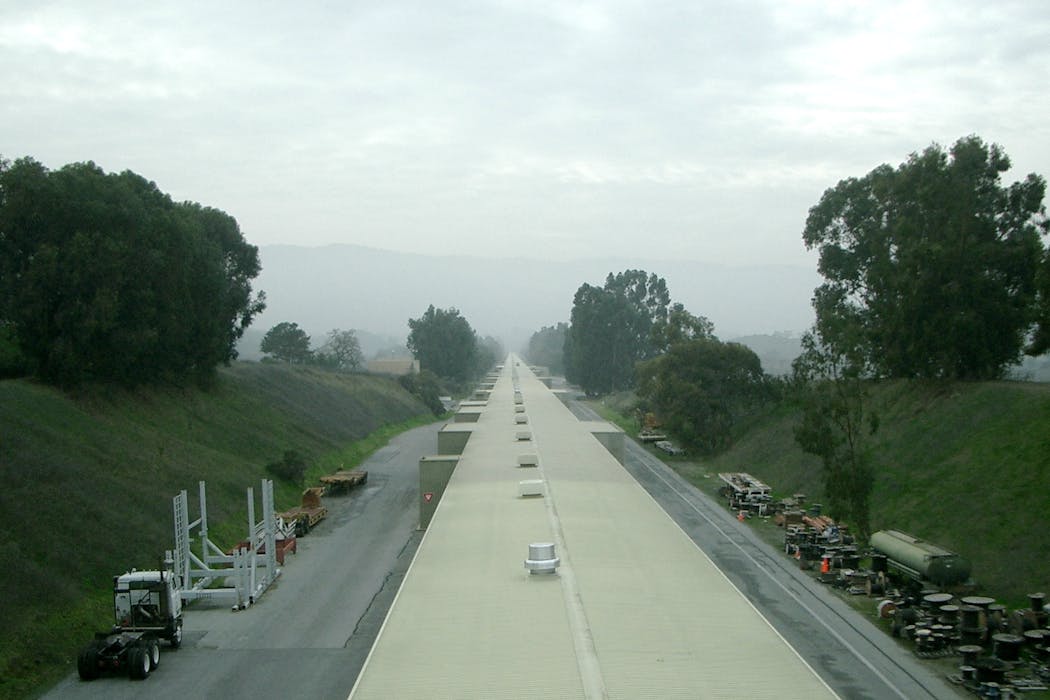
The Stanford linear accelerator creates super short X-ray pulses. Steve Jurvetson/Flickr, CC BY

X-ray beams aren’t used just by doctors to see inside your body and tell whether you have a broken bone. More powerful beams made up of very short flashes of X-rays can help scientists peer into the structure of individual atoms and molecules and differentiate types of elements.

But getting an X-ray laser beam that delivers super short flashes to capture the fastest processes in nature isn’t easy – it’s a whole science in itself.

Radio waves, microwaves, the visible light you can see, ultraviolet light and X-rays are all exactly the same phenomenon: electromagnetic waves of energy moving through space. What differentiates them is their wavelength. Waves in the X-ray range have short wavelengths, while radio waves and microwaves are much longer. Different wavelengths of light are useful for different things – X-rays help doctors take snapshots of your body, while microwaves can heat up your lunch.

A diagram of the electromagnetic spectrum, with radio, micro and infrared waves having a longer wavelength than visible light, while UV, X-ray and gamma rays have shorter wavelengths than visible light.
The rainbow of visible light that you can see is only a small slice of all the kinds of light. While all light is the same phenomenon, it acts differently depending on how long its wavelength is and how high its frequency is.
Inductiveload, NASA/Wikimedia Commons, CC BY-SA

Optical lasers are devices that emit parallel, or collimated, beams of light. They send out a beam where all the waves have the same wavelength – the red light you get from a laser pointer is one example – and oscillate in synchronicity.

Over the past 15 years, scientists have built X-ray free-electron lasers, which instead of emitting beams of visible light emit X-rays. They are housed in large facilities where electrons travel through a long accelerator – depending on the facility, between a few hundred meters and 1,700 yards – and after passing through a series of thousands of magnets they generate extremely short and powerful X-ray pulses.

An aerial image of a very long and thin facility.
The Stanford linear accelerator, shown here from above, is a 1.9-mile-long X-ray free-electron laser.
Peter Kaminski, using data from USGS, CC BY

The pulses are used kind of like flash photography, where the flash – the X-ray pulse – is short enough to capture the fast movement of an object. Researchers have used them as cameras to study how atoms and molecules move and change inside materials or cells.

But while these X-ray free-electron laser pulses are very short and powerful, they’re not the shortest pulses that scientists can make with lasers. By using more advanced technology and taking advantage of the properties some materials have, researchers can create even shorter pulses: in the attosecond region.

One attosecond is one-billionth of a billionth of a second. An attosecond is to one second about what one second is to the 14 billion-year age of the universe. The fastest processes in atoms and molecules happen at the attosecond scale: For instance, it takes electrons attoseconds to move around inside a molecule.

We’re physicists who work with X-ray free-electron lasers. We study what happens when we put different types of materials in the X-ray free-electron pulses’ path. In a new experiment we put copper and manganese samples in the path of highly focused X-ray free-electron laser pulses. We knew the interactions between these elements and the X-ray free-electron laser pulses would generate new X-ray laser pulses.

Originally, we wanted to find out how different chemical forms of the element manganese – for example, manganese-II and manganese-VII – would create small changes in the wavelengths of these newly generated X-ray laser pulses.

But along the way, we found some unexpected results that made the newly generated X-ray laser pulses act strangely. At first, we did not understand why, but when we eventually figured it out, we realized that we had discovered two unique laser phenomena, and that these effects had helped us generate X-ray laser pulses that where much shorter than we’d expected – shorter than the fastest X-ray pulses ever previously generated.

The short pulses generated by the laser at SLAC allow researchers to study molecules at the atomic scale or see how different materials interact with X-ray light.

Filamentation – irregular spurts

We found that our new X-ray laser pulses weren’t always shooting out in the forward direction, as we expected. When we increased the intensity of the X-ray free-electron laser pulses, the resulting new X-ray laser pulses spurted out irregularly, in slightly different directions.

For optical lasers, these irregular spurts – or filamentationresult from the index of refraction changing in the laser material. But we didn’t expect to see this effect for X-rays, since materials – including the manganese and copper we used – don’t refract X-rays very much.

However, the high intensity X-ray free-electron laser pulses we used generated the fluctuations at the quantum level in our materials that led to these irregular spurts.

Rabi cycling – a broad spectrum of light

Even more surprising than the filamentation effects we saw was the fact that the X-ray pulses we generated contained a variety of different wavelengths that were more spread out than what we expected to see with the materials we used.

Seventy years ago – five years before the first optical laser was built – physicists Stanley Autler and Charles Townes discovered a strange phenomenon in microwaves known as Rabi cycling. And the spread of wavelengths we saw looked just like Rabi cycling.

Autler and Townes knew that when light hit an atom, the atom would absorb its energy by exciting an electron from one energy level to a higher one. The hole left by that missing electron is filled by an electron that’s coming down from a higher energy level in the atom and releasing – or emitting – this energy difference as light.

What Autler and Townes found was that when the microwaves are very intense, the strong electric field can split each of these energy levels into two distinct levels, called doublets, which have slightly different energies.

These doublets are separated by an energy, or a frequency, known as the Rabi frequency. The Rabi frequency depends on the intensity of the new light. The stronger it is, the larger is the energy separation.

A figure showing several roughly spherical blobs of light, in a line with the largest and brightest in the center.
An X-ray laser shot spectrum exhibiting the three lines – called a Mollow triplet – that characterize Rabi cycling. The split energy is shown by the distance of the two smaller blobs from the stronger center blob.
Uwe Bergmann and Thomas Linker

In Autler and Townes’ discovery of Rabi cycling, they used microwaves. The energy splitting was so small that the Rabi frequency was very low, at radio wave frequencies.

In this new study we used X-rays, which have 100 million times shorter wavelengths than microwaves and 100 million times more energy. This meant the resulting new X-ray laser pulses were split into different X-ray wavelengths corresponding to Rabi frequencies in the extreme ultraviolet region. Ultraviolet light has a frequency 100 million times higher than radio waves.

This Rabi cycling effect allowed us to generate the shortest high-energy X-ray pulses to date, clocking in at 60-100 attoseconds.

Future directions and applications

While the pulses that X-ray free-electron lasers currently generate allow researchers to observe atomic bonds forming, rearranging and breaking, they are not fast enough to look inside the electron cloud that generates such bonds. Using these new attosecond X-ray laser pulses could allow scientists to study the fastest processes in materials at the atomic-length scale and to discern different elements.

In the future, we also hope to use much shorter X-ray free-electron laser pulses to better generate these attosecond X-ray pulses. We are even hoping to generate pulses below 60 attoseconds by using heavier materials with shorter lifespans, such as tungsten or hafnium. These new X-ray pulses are fast enough to eventually enable scientists to answer questions such as how exactly an electron cloud moves around and what a chemical bond actually is.

The Conversation

Uwe Bergmann receives funding from the Department of Energy and has previously worked at SLAC and Lawrence Berkeley National Laboratory.

Thomas Linker receives funding from the Department of Energy and works at SLAC National Accelerator Laboratory.

ref. Our team of physicists inadvertently generated the shortest X-ray pulses ever observed – https://theconversation.com/our-team-of-physicists-inadvertently-generated-the-shortest-x-ray-pulses-ever-observed-258776

Concerns about AI-written police reports spur states to regulate the emerging practice

Source: The Conversation – USA – By Andrew Guthrie Ferguson, Professor of Law, George Washington University

Body cameras generate audio transcripts that police can feed to AIs that write up reports. Robyn Beck/AFP via Getty Images

Police are getting a boost from artificial intelligence, with algorithms now able to draft police reports in minutes. The technology promises to make police reports more accurate and comprehensive, as well as save officers time.

The idea is simple: Take the audio transcript from a body camera worn by a police officer and use the predictive text capabilities of large language models to write a formal police report that could become the basis of a criminal prosecution. Mirroring other fields that have allowed ChatGPT-like systems to write on behalf of people, police can now get an AI assist to automate much dreaded paperwork.

The catch is that instead of writing the first draft of your college English paper, this document can determine someone’s liberty in court. An error, omission or hallucination can risk the integrity of a prosecution or, worse, justify a false arrest. While police officers must sign off on the final version, the bulk of the text, structure and formatting is AI-generated.

Who – or what – wrote it

Up until October 2025, only Utah had required that police even admit they were using an AI assistant to draft their reports. On Oct. 10, that changed when California became the second state to require transparent notice that AI was used to draft a police report.

Governor Gavin Newsom signed SB 524 into law, requiring all AI-assisted police reports to be marked as being written with the help of AI. The law also requires law enforcement agencies to maintain an audit trail that identifies the person who used AI to create a report and any video and audio footage used in creating the report. It also requires agencies to retain the first draft created with AI for as long as the official report is retained, and prohibits a draft created with AI from constituting an officer’s official statement.

The law is a significant milestone in the regulation of AI in policing, but its passage also signifies that AI is going to become a major part of the criminal justice system.

If you are sitting behind bars based on a police report, you might have some questions. The first question that Utah and California now answer is “Did AI write this?” Basic transparency that an algorithm helped write an arrest report might seem the minimum a state could do before locking someone up. And, even though leading police technology companies like Axon recommend such disclaimers be included in their reports, they are not required.

Police departments in Lafayette, Indiana and Fort Collins, Colorado, were intentionally turning off the transparency defaults on the AI report generators, according to an investigative news report. Similarly, police chiefs using Axon’s Draft One products did not even know which reports were drafted by AI and which were not because the officers were just cutting and pasting the AI narrative into reports they indicated they wrote themselves. The practice bypassed all AI disclaimers and audit trails.

The author explains the issues around AI-written police reports in an interview on CNN’s ‘Terms of Service’ podcast.

Many questions

Transparency is only the first step. Understanding the risks of relying on AI for police reports is the second.

Technological questions arise about how the AI models were trained and the possible biases baked into a reliance on past police reports. Transcription questions arise about errors, omissions and mistranslations because police stops take place in chaotic, loud and frequently emotional contexts amid a host of languages.

Finally, trial questions arise about how an attorney is supposed to cross-examine an AI-generated document, or whether the audit logs need to be retained for expert analysis or turned over to the defense.

Risks and consequences

The significance of the California law is not simply that the public needs to be aware of AI risks, but that California is embracing AI risk in policing. I believe it’s likely that people will lose their liberty based on a document that was largely generated by AI and without the hard questions satisfactorily answered.

Worse, in a criminal justice system that relies on plea bargaining for more than 95% of cases and is overwhelmingly dominated by misdemeanor offenses, there may never be a chance to check whether the AI report accurately captured the scene. In fact, in many of those lower-level cases, the police report will be the basis of charging decisions, pretrial detention, motions, plea bargains, sentencing and even probation revocations.

I believe that a criminal legal system that relies so heavily on police reports has a responsibility to ensure that police departments are embracing not just transparency but justice. At a minimum, this means more states following Utah and California to pass laws regulating the technology, and police departments following the best practices recommended by the technology companies.

But even that may not be enough without critical assessments by courts, legal experts and defense lawyers. The future of AI policing is just starting, but the risks are already here.

The Conversation

Andrew Guthrie Ferguson does not work for, consult, own shares in or receive funding from any company or organization that would benefit from this article, and has disclosed no relevant affiliations beyond their academic appointment.

ref. Concerns about AI-written police reports spur states to regulate the emerging practice – https://theconversation.com/concerns-about-ai-written-police-reports-spur-states-to-regulate-the-emerging-practice-267410

Winning with misinformation: New research identifies link between endorsing easily disproven claims and prioritizing symbolic strength

Source: The Conversation – USA – By Randy Stein, Associate Professor of Marketing, California State Polytechnic University, Pomona

For some symbolic thinkers, an independent mind is paramount. Axel Bueckert/iStock via Getty Images Plus

Why do some people endorse claims that can easily be disproved? It’s one thing to believe false information, but another to actively stick with something that’s obviously wrong.

Our new research, published in the Journal of Social Psychology, suggests that some people consider it a “win” to lean in to known falsehoods.

We are social psychologists who study political psychology and how people reason about reality. During the pandemic, we surveyed 5,535 people across eight countries to investigate why people believed COVID-19 misinformation, like false claims that 5G networks cause the virus.

The strongest predictor of whether someone believed in COVID-19-related misinformation and risks related to the vaccine was whether they viewed COVID-19 prevention efforts in terms of symbolic strength and weakness. In other words, this group focused on whether an action would make them appear to fend off or “give in” to untoward influence.

This factor outweighed how people felt about COVID-19 in general, their thinking style and even their political beliefs.

Our survey measured it on a scale of how much people agreed with sentences including “Following coronavirus prevention guidelines means you have backed down” and “Continuous coronavirus coverage in the media is a sign we are losing.” Our interpretation is that people who responded positively to these statements would feel they “win” by endorsing misinformation – doing so can show “the enemy” that it will not gain any ground over people’s views.

When meaning is symbolic, not factual

Rather than consider issues in light of actual facts, we suggest people with this mindset prioritize being independent from outside influence. It means you can justify espousing pretty much anything – the easier a statement is to disprove, the more of a power move it is to say it, as it symbolizes how far you’re willing to go.

When people think symbolically this way, the literal issue – here, fighting COVID-19 – is secondary to a psychological war over people’s minds. In the minds of those who think they’re engaged in them, psychological wars are waged over opinions and attitudes, and are won via control of belief and messaging. The U.S. government at various times has used the concept of psychological war to try to limit the influence of foreign powers, pushing people to think that literal battles are less important than psychological independence.

By that same token, vaccination, masking or other COVID-19 prevention efforts could be seen as a symbolic risk that could “weaken” one psychologically even if they provide literal physical benefits. If this seems like an extreme stance, it is – the majority of participants in our studies did not hold this mindset. But those who did were especially likely to also believe in misinformation.

In an additional study we ran that focused on attitudes around cryptocurrency, we measured whether people saw crypto investment in terms of signaling independence from traditional finance. These participants, who, like those in our COVID-19 study, prioritized a symbolic show of strength, were more likely to believe in other kinds of misinformation and conspiracies, too, such as that the government is concealing evidence of alien contact.

In all of our studies, this mindset was also strongly associated with authoritarian attitudes, including beliefs that some groups should dominate others and support for autocratic government. These links help explain why strongman leaders often use misinformation symbolically to impress and control a population.

President Trump speaks into a microphone with various uniformed people behind him
Attempts to debunk misinformation look weak to someone who values a symbolic show of strength, while standing by a disprovable statement seems powerful.
Anna Moneymaker/Getty Images

Why people endorse misinformation

Our findings highlight the limits of countering misinformation directly, because for some people, literal truth is not the point.

For example, President Donald Trump incorrectly claimed in August 2025 that crime in Washington D.C. was at an all-time high, generating countless fact-checks of his premise and think pieces about his dissociation from reality.

But we believe that to someone with a symbolic mindset, debunkers merely demonstrate that they’re the ones reacting, and are therefore weak. The correct information is easily available, but is irrelevant to someone who prioritizes a symbolic show of strength. What matters is signaling one isn’t listening and won’t be swayed.

In fact, for symbolic thinkers, nearly any statement should be justifiable. The more outlandish or easily disproved something is, the more powerful one might seem when standing by it. Being an edgelord – a contrarian online provocateur – or outright lying can, in their own odd way, appear “authentic.”

Some people may also view their favorite dissembler’s claims as provocative trolling, but, given the link between this mindset and authoritarianism, they want those far-fetched claims acted on anyway. The deployment of National Guard troops to Washington, for example, can be the desired end goal, even if the offered justification is a transparent farce.

Is this really 5-D chess?

It is possible that symbolic, but not exactly true, beliefs have some downstream benefit, such as serving as negotiation tactics, loyalty tests, or a fake-it-till-you-make-it long game that somehow, eventually, becomes a reality. Political theorist Murray Edelman, known for his work on political symbolism, noted that politicians often prefer scoring symbolic points over delivering results – it’s easier. Leaders can offer symbolism when they have little tangible to provide.

The Conversation

The authors do not work for, consult, own shares in or receive funding from any company or organization that would benefit from this article, and have disclosed no relevant affiliations beyond their academic appointment.

ref. Winning with misinformation: New research identifies link between endorsing easily disproven claims and prioritizing symbolic strength – https://theconversation.com/winning-with-misinformation-new-research-identifies-link-between-endorsing-easily-disproven-claims-and-prioritizing-symbolic-strength-265652

White British families more likely to depend on grandparents for childcare – our research explores why

Source: The Conversation – UK – By Athina Vlachantoni, Professor of Gerontology and Social Policy, University of Southampton

Iryna Inshyna/Shutterstock

About two-thirds of people in the UK will become grandparents during their lifetime. Half of those grandparents will provide some form of care to their grandchildren. But who makes up that half depends on a number of factors. One of these is ethnicity.

Understanding the extent to which parents from different communities in society rely on other people – such as paid-for childcare or their own parents – for the care of their children is an important question from a number of perspectives.

It tells us about the demographic composition of society. It reflects embedded cultural norms and expectations about caring for young children in the family.

Our analysis of the UK’s largest household dataset, the UK Household Longitudinal Study, showed that parents from Indian, Pakistani, Bangladeshi and African communities were less likely to use childcare provided by other people, including grandparents, than parents from white British communities. The reasons behind these differences are complex and could relate to other aspects of their lives.

To start with, employment rates among people – particularly women – from minority ethnic communities are lower on average than those of people from white British backgrounds. This could point to parents from minority ethnic communities being more likely to be available to provide care for their children, and having less need to rely on grandparents.

Nearly two-thirds of children in the white British group have a working mother, compared to 17% of children from Bangladeshi families. This means that white British mothers are more likely to depend on childcare, including from grandparents.

What’s more, the Office for National Statistics has shown that workers from Asian and Black communities were less likely than white workers to be managers, directors or senior officials. Workers from Black communities were more likely to work in caring, leisure and other service occupations.

This suggests that people from ethic minority backgrounds may have less disposable income to spend on paid childcare. They therefore may take time off work to look after children rather than looking to grandparents to fill in the gaps between periods of paid childcare.

However, these differences could also point to cultural norms within different communities. Our research shows that only Caribbean parents were more likely than white British parents to use childcare – defined as care for the child by anyone other than the parent or their partner. However, this care is less likely to be from grandparents than it is for white British and other ethnic groups.

Cultural reasons about who should care for young children could also interact with demographic and socio-economic factors to result in ethnic differences.

For example, our research also showed that 28% of white British children have no siblings, compared to 13% and 15% of Pakistani and Bangladeshi children. Having more children could lead to their mother spending more time looking after children at home, with less need to rely on grandparents.

Another explanation may relate to grandparents’ health. Research from the University of Southampton’s Centre for Research on Ageing has shown that – despite years of targeted governmental efforts – ethnic differences in health in later life remain.

Happy grandparents and granddaughter
Health difficulties may affect grandparents’ ability to look after their grandchildren.
PeopleImages/Shutterstock

For example, Indian, Pakistani and Bangladeshi men are between two and four times more likely to report their health as limiting their typical activities than white British men. Pakistani women are 11 times more likely to report limiting health than white British women.

This means that grandparents from ethnic minority backgrounds are less likely to be in good health. They may be physically less able to look after children than grandparents from white British communities.

However, in countries such as the UK, where the average cost of paid-for childcare is relatively high, the availability of grandparental childcare could form a pivotal way to allow working-age parents to enter and stay in the labour market for longer.

It’s also worth considering that providing childcare can take a toll on grandparents. It has a benefit for wellbeing for grandmothers, but only for the first grandchild.

Grandparental childcare is an important part of the caring ecosystem for many families in the UK. Closer attention to grandparent care and how it is experienced differently in different ethnic communities can offer a more nuanced understanding of healthy ageing, family bonds and labour market participation.

The Conversation

Athina Vlachantoni receives funding from the Economic and Social Research Council and the Natural Environment Research Council.

Maria Evandrou receives funding from the Economic and Social Research Council.

ref. White British families more likely to depend on grandparents for childcare – our research explores why – https://theconversation.com/white-british-families-more-likely-to-depend-on-grandparents-for-childcare-our-research-explores-why-253177

New nanoparticle treatment helps brain to clear toxic Alzheimer’s proteins in mice

Source: The Conversation – UK – By Rahul Sidhu, PhD Candidate, Neuroscience, University of Sheffield

meeboonstudio/Shutterstock.com

Alzheimer’s is a disease that robs people of their memory, and scientists have long sought ways to stop or reverse its effects. But the blood-brain barrier – the brain’s protective shield – has been both a friend and a foe. While it keeps harmful substances out, it also blocks many treatments from getting in.

Now researchers are trying a different approach. Rather than bypassing the barrier, they’re learning to work with it.

A new study shows that a single injection of specially designed nanoparticles can dramatically reduce levels of a toxic protein in the brains of mice. The protein, called beta-amyloid, is a hallmark of Alzheimer’s disease. It forms sticky clumps that disrupt communication between brain cells and trigger damage.

The innovation doesn’t attack the protein head-on. Instead, it targets the brain’s blood vessels, essentially reprogramming their transport systems to carry the toxic protein out of the brain.

Scientists at the Institute for Bioengineering of Catalonia in Spain and Sichuan University in China, created tiny nanoparticles coated with a molecule called angiopep 2. This molecule latches onto LRP1, a protein that naturally helps move beta-amyloid out of the brain and into the bloodstream.

The key lies in precision. The researchers had to attach exactly the right number of angiopep 2 molecules to each particle. Too few, and nothing happens. Too many, and the LRP1 protein gets pulled inside cells and destroyed. Get it just right, and LRP1 guides beta-amyloid across blood vessel walls and out of the brain.

When tested in mice genetically engineered to develop Alzheimer’s-like changes, a single injection decreased beta-amyloid levels in the brain by 45% within two hours. At the same time, the protein surged in the blood, showing it was being actively transported out. Brain scans confirmed the shift.

The benefits went beyond just reducing toxic protein. Tests showed that treated mice performed as well as healthy mice on learning and memory tasks. They also regained interest in everyday activities like building nests and choosing sweetened water – subtle signs their brains were functioning better.

A mouse in a maze.
Treated mice performed better on memory tasks.
Neil Lockhart/Shutterstock.com

Microscope images revealed how the treatment worked. After injection, more LRP1 proteins appeared on blood vessel surfaces, and fewer were being sent to the cell’s “recycling bins”. Other proteins shifted to favour routes that carry materials across blood vessel walls. In essence, the brain’s natural clearance system was being restored.

Most Alzheimer’s treatments focus on breaking down plaques or preventing their formation. Antibody therapies like lecanemab and donanemab can slow cognitive decline modestly, but they require repeated doses and carry risks such as brain swelling.

Other approaches aim to protect neurons or reduce inflammation. But few target the blood vessels themselves. This new method doesn’t bypass the blood-brain barrier – it repairs and reprogrammes it. The barrier becomes part of the treatment, not just an obstacle.

However, there are important caveats. The experiments involved only a few mice, and some statistical analyses may not fully account for repeated measurements from the same animals. The mice also carried genes linked to a rare, inherited form of Alzheimer’s, which doesn’t reflect how the disease typically develops in humans.

Mouse brains and blood vessels aren’t identical to human ones. What works in mice doesn’t always translate to people. These results need repeating in larger studies, and significant research lies ahead before this approach could be tested in humans.

Conceptual shift

Despite the limitations, the research represents a conceptual shift. Rather than viewing the blood-brain barrier as a wall to overcome, scientists are learning to harness it. If similar strategies work in humans, they could offer a new way to slow or even reverse aspects of Alzheimer’s by focusing on the brain’s own transport systems.

It also opens broader possibilities. Many neurological conditions involve disruptions in blood vessels or blood-brain barrier function. Learning to work with blood vessels could have implications far beyond Alzheimer’s.

For patients, this offers a glimpse of a future where brain blood vessels aren’t passive tubes, but active partners in treatment. The study provides proof of concept for a potential new class of therapies. But translating success from a handful of mice to human patients will require much more work.

The Conversation

Rahul Sidhu does not work for, consult, own shares in or receive funding from any company or organisation that would benefit from this article, and has disclosed no relevant affiliations beyond their academic appointment.

ref. New nanoparticle treatment helps brain to clear toxic Alzheimer’s proteins in mice – https://theconversation.com/new-nanoparticle-treatment-helps-brain-to-clear-toxic-alzheimers-proteins-in-mice-267254

Climate change divides the innovators from the defenders of the status quo – Europe must decide which it wants to be

Source: The Conversation – UK – By Francesco Grillo, Academic Fellow, Department of Social and Political Sciences, Bocconi University

“The European green deal is something we owe to our children because we do not own this planet.” These words date back to a few days before Christmas 2019. They defined Ursula Von Der Leyen’s first presidency of the European Commission but belong to what now seems like a different era.

Now, six years later, after the COVID-19 pandemic and one (still ongoing) war in Europe, what is left of the European green deal? How can we fix what does remain of it? And why are European voters suffering “climate fatigue” if climate change is accelerating? These are some of the questions that a forthcoming conference in Venice will try to address.

Acting to ensure the planet is habitable for our children is undoubtedly a moral imperative. However, for the EU it is one that requires at least two distinct (albeit connected) strategies.

The first is reducing greenhouse emissions in Europe. The second is convincing the rest of the world to do something with the 94% of the CO2 emissions that are produced outside Europe.

The history of the last ten years shows relative success on the former but far less on the latter. This may go some way to explaining why European voters are becoming frustrated – they feel they are doing their part and yet find themselves exposed to a crisis that is largely generated elsewhere.

Since the Paris agreement, which promised net zero CO2 emissions by 2050, the world has increased its pollution by 10%. In that time, the EU has cut its own by 13%. That said, Europe had started down this path long before it was binded into action by the Paris agreement. It had already cut emissions by 20% between 1990 and 2016.

Much of this progress is due to Europe’s comparatively weak economic growth and the pressure on European industries to avoid the costs of energy imports. According to a recently published paper the EU has done better than anybody else (if we consider the last 25 years) in terms of raising the percentage of energy consumption coming from renewables – even if it lags behind China on electrification.

This is a strong result but the EU has missed a number of important innovation trends that would aid the transition and reshape its economy in the process. China is still the greatest polluter but it is dominating parts of the renewables supply chain.

The EU dominates the ranking when it comes to the share of energy consumption coming from renewables. And yet it is China that dominates the supply of both solar panels and wind turbines.

Climate leadership

More worryingly, the EU has done very little to influence the speed at which the rest of the world is dealing with emissions. It should have made more of its emissions successes as a diplomacy tool to urge others to speed up their own transitions but it continues to struggle to find its place in a rapidly changing world.

Europe has often aligned itself with its greatest ally, the United States – such as in debates around the creation of the fund meant to compensate developing countries for “loss and damages” from climate change.

With the US now disengaging, Europe will be forced to find new partners at the next COP – and it does not appear to have come to terms with this challenge. In a recent example, Wopke Hoekstra, the EU climate commissioner, hit out at China for failing to set sufficiently ambitious climate targets while the EU has failed to set out its own.

Climate change doesn’t divide the world into good and bad – it separates the innovators from the defenders of the status quo. EU policymakers have mistakenly viewed climate change as merely a bill to pay rather than a chance to change. It focuses on regulations that companies and citizens need to comply with rather than the investments needed for creating endogenous industries and technologies.

This approach has backfired. Recent elections appear to have punished green parties and rewarded climate sceptics. However, European climate fatigue is at least not about denying climate change itself so much as questioning the approach being taken. That is something to work with. But Europe needs new ideas – and they may have to come from outside the Brussels bubble.

The Conversation

Francesco Grillo is affiliated with Vision, the think tank.

ref. Climate change divides the innovators from the defenders of the status quo – Europe must decide which it wants to be – https://theconversation.com/climate-change-divides-the-innovators-from-the-defenders-of-the-status-quo-europe-must-decide-which-it-wants-to-be-267355

How Israel’s famed intelligence agencies have always relied on help from their friends

Source: The Conversation – UK – By Aviva Guttmann, Lecturer in Strategy and Intelligence, Aberystwyth University

When Israel launched its attacks on Iran in the early morning of June 13, many news reports marvelled at the quality and ingenuity of its intelligence agencies in enabling the Israel Defense Forces to strike with such precision. But one element was not talked about in any detail: Israel’s network of relationships with other countries’ intelligence agencies and their contribution to these covert operations.

This cooperation, while critical, can come with a price. It inevitably means a degree of reliance on other countries. Intelligence partners can decide to stop cooperation at any point, which would leave Israel vulnerable to geopolitical shifts that could threaten these relationships and limit its striking capacities.

June’s surgical military interventions against Iran concluded a round of successes against its regional foes. These included the pager attack against Hezbollah in Lebanon as well as assassinations of top Hamas officials, including its political chief Ismail Haniyeh in Iran in July 2024.

All three of Israel’s security agencies were involved: Mossad, Israel’s foreign intelligence agency; Shin Bet, its domestic intelligence agency; and Aman, Israel’s military intelligence division.

Media reports from specialist journalists have revealed some impressive technological advancements. These included using artificial intelligence (AI) to sift through and connect millions of data points to determine targets. Israeli intelligence analysts also used spyware to hack into the phones of the bodyguards of Iranian leaders.

Aman and Mossad have also been adept at recruiting commandos from within local opposition groups. It used these to knock out Iranian air defence installations in the early hours of the first day of the attack.

Israel’s intelligence services are also very good at letting people know just how accomplished they are. It all burnishes their reputation. But much of the time those accomplishments are earned with the help of intelligence from friendly services.

This is nothing new, as I discovered while researching my recent book about Operation Wrath of God. This was the campaign of retribution that followed the Black September murder of members of the Israeli Olympics team at the 1972 summer games in Munich.

While searching the Swiss national archives, I found a large cache of encrypted telegrams that had been shared in a network called Kilowatt. This network involved 18 countries and shared information such as the movements of specific Palestinian people identified as terrorists, including the safe houses and vehicles they used.

Mossad was part of Kilowatt and could use the intelligence it received from European partners to plan and carry out its targeted assassinations in Europe. There is also ample evidence in the cables that western governments knew what Mossad was using the intelligence for.

Israel’s global net of spy friends

The US has historically always been one of the closest intelligence partners of Israeli intelligence. According to studies by the Israeli investigative journalist Ronen Bergman and the American journalist Jefferson Morley, an expert on the CIA, this intelligence-sharing liaison dates back to the early 1950s.

There are numerous cases of Israel calling on US assistance in carrying out targeted assassinations. This relationship endures to this day. Most recently, immediately after the October 7 Hamas attack on Israel, US intelligence dispatched a special unit to assist the IDF in the war in Gaza and established intelligence-sharing channels with Israel to help locate top Hamas commanders.

Black and white image of three Israeli military officers in uniform.
Mossad spy chief Meir Dagan (centre), photographed during the 1982 Lebanon war. Dagan went on to run Mossad from 2002 to 2011.
IDF Spokesperson’s Unit, CC BY-ND

Mossad has also worked with Arab intelligence agencies over the years. Meir Dagan, the director of Mossad from 2002 to 2011, set up a highly effective regional spy network during his tenure. Bergman has documented how this network enabled Israeli intelligence to significantly extend its operational reach. This enabled Mossad and Aman to identify, track and strike at targets in Lebanon and Syria.

These relationships operate despite Arab countries often outwardly condemning the actions of Israeli governments at the UN. For example, the Washington Post recently reported Arab states actually expanded their security and intelligence cooperation with Israel.

While talking about “genocide” in Gaza, countries such as Bahrain, Egypt, Jordan, Qatar, Saudi Arabia and the UAE were sharing data. This relationship also involved cooperation with the Five Eyes intelligence partnership of the US, UK, Australia, Canada and New Zealand.

According to documents obtained by journalists, the partnership, which was named the “Regional Security Construct” by the US, began in 2022 and continued even after Israel began its military operation in Gaza. But Israel’s strike on Qatar in early September, in an attempt to kill senior Hamas representatives meeting there, threatened to disrupt the partnership.

It is thought that anger from Gulf states after the attack was a key factor in focusing US pressure on Israel to agree to make a deal in Gaza. Cooperating to combat the regional threat from Iran is clearly one thing. Threatening the security of Qatar, an important player and key US ally in the Gulf region, is quite another.

Israel’s much-vaunted intelligence capabilities have always relied on some help from its friends. That is unlikely to change. The critical question is the extent to which it can retain the trust of its covert allies. As the past has shown, even in a climate of condemnation and isolation, intelligence cooperation with Israel has remained unaffected.

Strong intelligence connections have often helped overcome moments of crisis. Informal intelligence-sharing arrangements with regional powers, which are kept entirely secret, plausibly denied, and minimally documented, are thus especially crucial now as the region looks to heal its wounds after two years of bitter conflict.

The Conversation

Aviva Guttmann does not work for, consult, own shares in or receive funding from any company or organisation that would benefit from this article, and has disclosed no relevant affiliations beyond their academic appointment.

ref. How Israel’s famed intelligence agencies have always relied on help from their friends – https://theconversation.com/how-israels-famed-intelligence-agencies-have-always-relied-on-help-from-their-friends-264818