Why we keep hunting ghosts – and what it says about us

Source: The Conversation – UK – By Alice Vernon, Lecturer in Creative Writing and 19th-Century Literature, Aberystwyth University
shutterstock Juiced Up Media/Shutterstock

In 1874, renowned chemist Sir William Crookes sat in a darkened room, eyes fixed on a curtain over an alcove. The curtain twitched, and out came a glowing ghost of a young woman, dressed in a white shroud. He was entranced.

But the ghost was fake, and his involvement in séances nearly ruined his career. The lesson wasn’t learned, however, and Crookes, like thousands after him, continued to search for evidence of spirits.

The popularity of the Victorian séance, and its associated pseudo-religion Spiritualism, spread rapidly across the world. From small parlours hushed with the hopes of the recently bereaved, to grand concert halls, audiences were eager for a spooky spectacle.

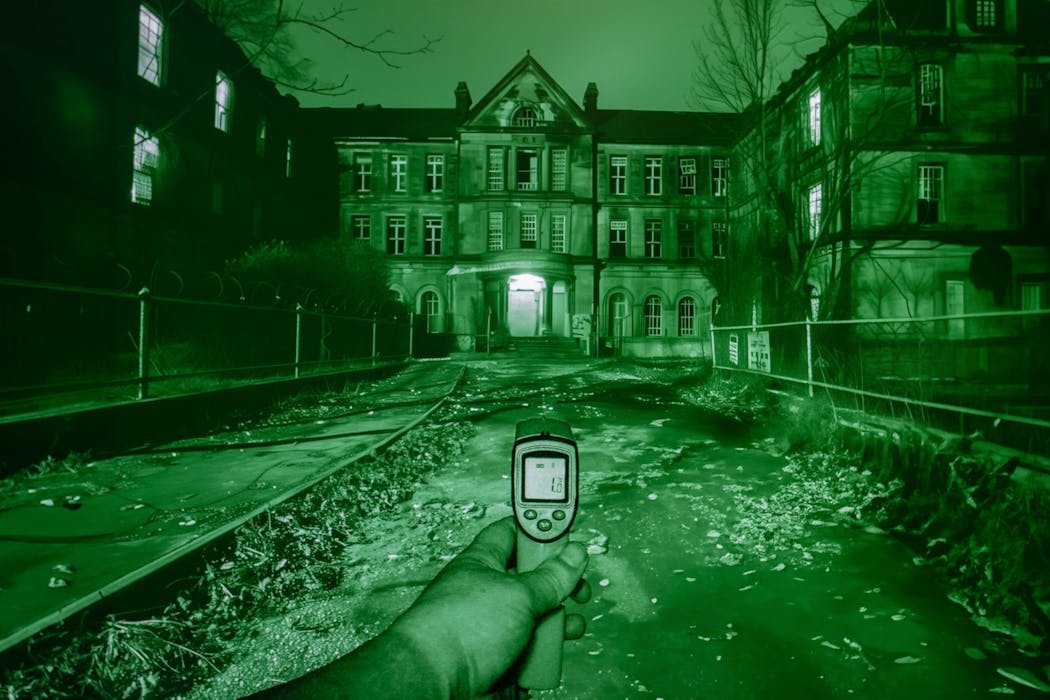
Ghost-hunting remains an immensely popular cultural interest. Platforms such as YouTube and TikTok are now awash with amateur investigators trudging through abandoned buildings and well-known haunted houses in order to capture evidence.

I’ve spent the last few years researching the social history of ghost-hunting for my new book, Ghosted: A History of Ghost-Hunting, and Why We Keep Looking, to examine ghosts from the perspective of the living. Why do we continue to cling to the hope of finding definite proof of a spectral afterlife?

Sam & Colby are popular ghost hunters on YouTube.

The active investigation of ghosts became an international phenomenon in 1848, when young sisters Kate and Mary Fox popularised a knocking code to communicate with the ghost that allegedly haunted their farmhouse in Hydesville, New York.

Five years later, it was estimated that they had amassed $500,000 (equivalent to almost £15,000,000 today). Spiritualism spread across the world, particularly to the UK, France and Australia. It was helped along by grief in the aftermath of the American civil war and, in the beginning of the 20th century, the mass bereavement of the first world war.

People turned to Spiritualism and ghost-hunting for fame and fortune, but also for genuine hope and an overwhelming need for evidence that death was not the end.

Rise of the sceptic

In direct parallel with Spiritualism, however, rose sceptics keen to seek out the truth of ghosts. The most vehement critics of Spiritualism were magicians, who felt that mediums were trying to copy their trade but from a morally reprehensible approach. At least a magician’s audience knew they were deliberately being deceived.

The famous illusionist Harry Houdini, for instance, often bitterly argued with his close friend and ardent Spiritualist, Sir Arthur Conan Doyle, about the fraudulent practice of mediums.

With the rise of modern scientific laboratories and the development of portable sound and image recording devices in the 20th century, ghost hunting became an increasingly popular and sensationalised hobby. Harry Price, psychical researcher, author and professional hobbyist, used ghost-hunting to create a cult of personality for himself, sniffing out any interesting haunting that could potentially lead to publicity.

But it was also Harry Price who brought ghost-hunting to the media as a form of entertainment. In 1936 he did a live BBC radio broadcast from a haunted house.

Price’s broadcast is the forgotten precursor for ghost-hunting as we know it today. Reality TV shows mimic the format of his 1936 broadcast, with examples such as Most Haunted gaining a loyal following since it began airing on Living TV in 2002. While no longer produced for television, the Most Haunted crew continue to film and post new episodes on their YouTube channel.

Most Haunted first appeared on TV in 2002 but now is available on YouTube.

It’s also a clear influence for international copies such as Ukraine’s Bytva ekstrasensov and New Zealand’s Ghost Hunt. Social media, too, has changed the way we ghost hunt. It has allowed for amateur groups and investigators to gain an immense audience across various platforms.

But ghost-hunting is also rife with competition as groups and investigators seek to outdo each other for the best evidence. For many, this means coming armed with Ghostbusters-style tools. These can include flashing gadgets and sensors, including electromagnetic field detectors, high-tech sound recorders and even motion-activated LED cat toys.

It’s all in a bid to gain the most “scientific” evidence and, therefore, popularity and respect among their peers. It seems that the more scientific we claim to be in the search for ghosts, the more we allow pseudo-scientific theories to encroach on the hunt.

It’s not about proof, it’s about people

Yet we never give up. This is what fascinated me when I undertook my research. I wanted to know why, after centuries, we’re no closer to achieving conclusive evidence for the paranormal, but ghost-hunting is more popular than ever before.

I even went on a couple of ghost hunts myself to try to figure out this conundrum. The answer, I think, is that ghost-hunting isn’t for scientific discovery at all. It’s for social connection, revealing more about the living than the dead.

I had one of the most fun experiences of my life while on a ghost hunt. Despite being a sceptic, I was drawn into the search, but also to the way it allowed me to connect with new people and with the history of the haunted building itself.

What I’ve learned through my research and experiences is that ghost-hunting is about us, the living, more than the ghosts we try to find. Ghost-hunting, done ethically, is a crucial social activity. It allows us to process grief, to analyse our fears of death and to explore what it means to be alive.

The Conversation

Alice Vernon does not work for, consult, own shares in or receive funding from any company or organisation that would benefit from this article, and has disclosed no relevant affiliations beyond their academic appointment.

ref. Why we keep hunting ghosts – and what it says about us – https://theconversation.com/why-we-keep-hunting-ghosts-and-what-it-says-about-us-267173


Will England’s new reading test for secondary pupils be useful?

Source: The Conversation – UK – By Stephen Gorard, Professor of Education and Public Policy, Durham University

Rawpixel.com/Shutterstock

All secondary-age school pupils in year eight (aged 12 and 13) in England will be required by the government to take a reading test. The declared purpose is to help drive up reading standards so that “everyone can thrive”. Is this additional test a good idea?

Although the results of the tests will not be published, they will be provided to families and to Ofsted (the body responsible for school inspections in England). The existence of the tests may therefore encourage secondary schools to devote more attention to improving reading.

The average levels of reading are high among young people in England, according to international tests. There was a small decline in scores following the pandemic, but this happened nearly everywhere.

The major concern should be for a minority of pupils who arrive at secondary school without the level of literacy needed for school and everyday life. This means that they are unable to access the wider curriculum. Low literacy at this stage is linked to lower exam results when children reach their GCSEs.

Primary schools tend to emphasise literacy and numeracy, but secondary schools introduce separate subject disciplines, many of which are almost impossible to understand without the ability to read fluently. Basic literacy should be a minimal threshold expectation for school attendance.

It is also vital for everyday and later life as a citizen. If the test means that secondary schools will focus even more on these “catch-up” pupils, then so far so good.

A few problems

However, any test involves a cost, as well as the curriculum time devoted to preparing for it. If schools do not prepare for it, then the test will merely provide a snapshot without changing anything.

It will highlight the lower achievement of children from groups we already know come to school with a disadvantage: those with special educational needs and disabilities, and those from poorer backgrounds.


Read more:
Poorer pupils do worse at school – here’s how to reduce the attainment gap


Tests also cause anxiety for some students. And they may not be accurate measures of what was intended. For example, summer-born children, who may start primary school when they are barely four, tend to score lower on reading tests without being behind the expected level for their actual age.

This “summer-born effect” persists well into secondary school. So will the new reading test be calibrated by age? If so, how?

Teenagers in uniform sitting a classroom test
Tests may make some children anxious.
Rawpixel.com/Shutterstock

It will be really hard to get everyone to pass this test. Even for the primary phonics screening test, taken in year one, the target is only that 90% of pupils pass. But it is precisely the other 10%, plus a few more (including home-schooled and hospitalised children), that this new test should be aimed at.

Otherwise the results given to Ofsted will just be a summary of the levels of poverty and learning challenges – special educational needs – of the pupil intake to any school. And my research shows that Ofsted is poor at separating context and raw test scores.

The way forward?

If this proposed new secondary school test is meant to be high stakes and to provoke a positive reaction from schools, then why not have it earlier, for a younger age group? Reading is something best learnt young. Perhaps in year four, when there are still two years to prepare for the transition to secondary school – but primary schools may not welcome another test in an already crowded phase.

Either way, a desire to help is not enough. Schools and teachers must know how to help that last 10% or so of children who struggle with reading, cost effectively and efficiently. There is a growing body of robust evidence on how best to improve literacy for struggling readers – but also a proliferation of less useful approaches promoted by advocates, salespeople, and those with a vested interest.

So, in addition to this new test, the government could do more to help schools judge the quality of evidence for or against specific literacy approaches. This would mean that schools use the limited time and resources they have to help children with their reading making use of the most effective ways to get results. They should not simply rely on organisations or commentators who present a collection of evidence without considering the quality of the underlying research.

The Conversation

Stephen Gorard receives funding from Economic and Social Research Council, and Department for Education, to conduct work in this general area.

ref. Will England’s new reading test for secondary pupils be useful? – https://theconversation.com/will-englands-new-reading-test-for-secondary-pupils-be-useful-267678

Trump’s heated White House meeting with Zelensky shows how well Putin is playing the US president

Source: The Conversation – UK – By Stefan Wolff, Professor of International Security, University of Birmingham

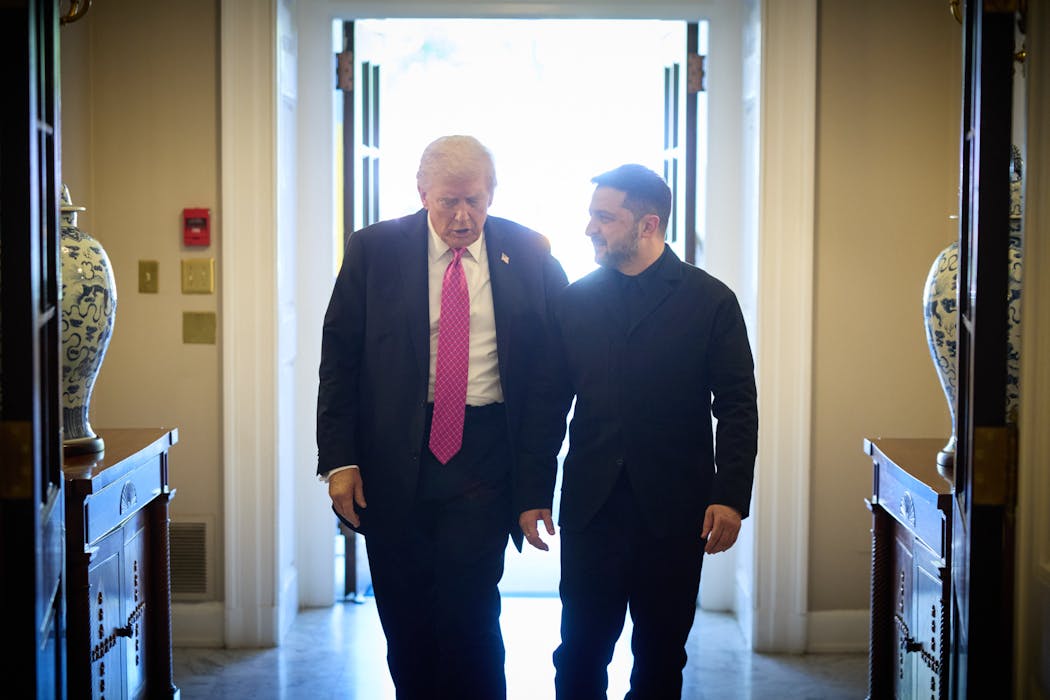
On-again, off-again relatonship: Donald Trump and Volodymyr Zelensky. Press service of the president of Ukraine

Within 24 hours last week Donald Trump performed yet another pivot in his approach to the Russian war against Ukraine. It’s become a familiar pattern of behaviour with the US president. First he expresses anger and frustration with his Russian counterpart, Vladimir Putin. Then he threatens severe consequences.

And finally – usually after some contact with the Russian president – he finds some imaginary silver lining that, in his considered view alone, justifies backing down and essentially dancing to the Russian dictator’s tune again.

The latest iteration of his by now very predictable sequence of events has unfolded as follows. Back in September, while he was still busy pushing his ultimately unsuccessful campaign to be awarded the Nobel peace prize, the US president began to envisage a Ukrainian victory against Russia. This, he said, would involve Kyiv reclaiming all territory lost to Russia’s aggression since the illegal annexation of Crimea in 2014.

To make this happen, there was suddenly talk of US deliveries of Tomahawk missiles to Ukraine. Access to these missiles would enable strikes against Russian military assets and energy infrastructure far beyond the current reach of most of Ukraine’s weapons. Trump and the Ukrainian president, Volodymyr Zelensky, spoke twice by telephone on October 11 and 12 to discuss the details. A deal was expected to be announced after they met in the White House on October 17.

Yet, the day before that meeting, Trump, apparently at the Kremlin’s request, took a phone call from Putin. Over the course of two hours of flattery and promises of reinvigorated trade relations, the Russian president managed to get Trump to back off his threat to supply Ukraine with Tomahawks.

This message was promptly delivered the following day to the Ukrainian delegation led by Zelensky. While clearly not as disastrous as their first encounter in the White House in February this year, Ukraine’s humiliation was clear.

Not only were Tomahawks taken off the table, but Kyiv and its European allies are essentially back to square one and the very real possibility of a deal between Putin and Trump. Or rather two deals to be hammered out by senior officials first and then sealed at another Trump-Putin summit in Budapest.

The first deal would likely be on the broader terms of a peace settlement. After the meeting, Trump posted on his social media channel that Russia and Ukraine should simply accept the current status quo and stop the fighting. With Trump thus appearing keen – again – to stop the fighting in Ukraine on the basis of a compromise between Russia and Ukraine means that Ukraine would lose as much as 20% of its internationally recognised territory. This is something that Kyiv and its European allies have repeatedly said is unacceptable.

The second deal would be on resetting relations between Washington and Moscow. This is something that Trump has been keen on for some time and suggests that more severe sanctions on Russia and its enablers, including India and China, are unlikely to be forthcoming any time soon.

Before Zelensky’s trip to Washington, there appeared to be some genuine hope that a ceasefire could be established as early as November. But Trump’s arrangements with Putin do not mention a ceasefire. Instead they make an end to the fighting conditional on a deal between the US and Russian presidents, which Zelensky is then simply expected to accept.

This will put further pressure on Ukraine, which suffers from daily attacks against critical infrastructure and is particularly harmful to the country’s economy and civilian population and foreshadows another difficult winter.

Russia continues its push for territory

So far, so bad for Ukraine. But this was not an accidental outcome that could have gone the other way, depending on the whims of Trump. Ever since the US president appeared to shift gear in his approach to the war in late September, the Kremlin carefully prepared the ground for a rapprochement between the two presidents – with a mixture of concern, threats and a good dose of flattery.

The goal of this rapprochement, however, is not a better peace deal for Russia. Putin surely knows this is unrealistic. Rather, it appears that the Kremlin’s main goal was buying itself more time to continue ground offensive in the Donbas.

ISW map showing state of the confict in Ukraine, October 19 2025.
State of the confict in Ukraine, October 19 2025.
Institute for the Study of War

This is best achieved by preventing the US from fully backing the position of Ukraine and its European allies. In this context, the choice of venue for a potentially deal-clinching summit between Trump and Putin is also interesting.

It will not be possible for Putin to travel to Budapest without flying through Nato airspace and through the airspace of countries that are at least candidate states for EU membership. This will put serious pressure on the EU and Nato to allow Putin passage or otherwise be seen as obstructing Trump’s peacemaking efforts – a narrative that the Kremlin has been peddling for some time, part of its strategy to disrupt the transatlantic relationship.

On the other hand, Trump’s latest turnaround – difficult as it may be for Kyiv to stomach – does not bring Ukraine closer to defeat. In Ukraine, mobilisation is in full swing and domestic arms production is increasing. Ukraine is further helped by the commitment of more than half of Nato’s member states to supply Kyiv with more US weapons.

There are three key takeaways from the diplomatic flurry over the past few weeks.

First, for all of Putin’s bluster, the threat of supplying Ukraine with Tomahawk missiles clearly had an effect. Putin made a move to reach out to Trump, thereby exposing an obvious vulnerability on Russia’s part. Second, and this barely needed confirmation, Trump is not a dependable ally of Ukraine or within the transatlantic alliance. He clearly has not given up on the possibility of a US-Russia deal, including one concluded behind the back and at the expense of Ukraine and European allies.

Finally, Zelensky may be down again after his latest fruitless encounter with Trump, but Ukraine is definitely not out. After all, Trump was right that Russia is a bit of a paper tiger and Ukraine can still win this war, or at least negotiate an acceptable settlement. Until Europe steps up, the key to this remains in the White House.

The Conversation

Stefan Wolff is a past recipient of grant funding from the Natural Environment Research Council of the UK, the United States Institute of Peace, the Economic and Social Research Council of the UK, the British Academy, the NATO Science for Peace Programme, the EU Framework Programmes 6 and 7 and Horizon 2020, as well as the EU’s Jean Monnet Programme. He is a Trustee and Honorary Treasurer of the Political Studies Association of the UK and a Senior Research Fellow at the Foreign Policy Centre in London.

Tetyana Malyarenko does not work for, consult, own shares in or receive funding from any company or organisation that would benefit from this article, and has disclosed no relevant affiliations beyond their academic appointment.

ref. Trump’s heated White House meeting with Zelensky shows how well Putin is playing the US president – https://theconversation.com/trumps-heated-white-house-meeting-with-zelensky-shows-how-well-putin-is-playing-the-us-president-267760

Budget 2025: what should Rachel Reeves do about tax? Join our live event

Source: The Conversation – UK – By Sarah Reid, Senior Business Editor, The Conversation

Sean Aidan Calderbank/Shutterstock

It is the economics version of music’s “difficult second album”. When the UK chancellor, Rachel Reeves, steps up to deliver her follow-up budget on November 26, she faces some daunting choices.

Now that the Office for Budget Responsibility – the UK’s’s independent financial watchdog – is expected to downgrade its predictions for UK prosperity, Reeves is widely anticipated to put up taxes again (something she herself alluded to recently). But beyond that, few people agree on the best way for her to do it.

The British Chambers of Commerce is calling this a “make-or-break budget”, demanding a tax approach that incentivises growth after Reeves hit employers with a national insurance (NI) rise last year. Equally, no one expects the chancellor to break Labour’s manifesto pledge and raise one of the “big three”: income tax, VAT or employee NI contributions.

So where does that leave her? And what would be best for Britain’s (and Labour’s) prospects of revival – not just in the short term, but for the long-term prosperity of those people, young and old, who find themselves struggling with the cost of living, spiralling rents and precarious employment?

To help us understand the complexities of this key political and socioeconomic moment, The Conversation and the LSE International Inequalities Institute have teamed up for a special pre-budget, online event on Tuesday, November 18 from 5pm-6.30pm GMT – in which leading experts from the worlds of business, taxation and government policy will tackle all these questions and more.

The experts who will join us for this event, which I will be chairing, are:

Headshot of Helen Miller, IFS director

Helen Miller (pictured), director of the Institute for Fiscal Studies (IFS), the leading UK thinktank whose pre-budget analyses always offer some important clues to the chancellor’s thinking.

Mike Savage, co-founder and former director of the International Inequalities Institute, and one of the UK’s leading voices on the relationship between wealth and inequality.

Emma Chamberlain, one of the UK’s leading tax experts working in London’s Pump Court Tax Chambers. She was a co-author of the Wealth Tax Commission’s 2020 final report on the pros and cons of an annual or one-off UK wealth tax.

Maha Rafi Atal, Adam Smith senior lecturer in political economy at the University of Glasgow and an award-winning business journalist.

Questions about wealth and inequality

One of the key aspects of our discussion will be how the chancellor could address the UK’s national and private wealth stores – not merely by changing tax rates, but by rethinking some antiquated taxes altogether. This could mean, for example, transforming Britain’s council tax system (as 13 of Reeves’ fellow MPs have called for), scrapping stamp duty in favour of a tax on some first-home sales, or releasing the triple lock on pensions.

Another option backed by many experts is a one-off windfall tax on existing wealth. In the UK, nearly 60% of total wealth is now held by the richest 10% of private individuals, whereas the bottom half of the UK population hold only around 5% of the total wealth between them. It is a startling rise in inequality which, according to our guest Mike Savage, means that:

The current debate about wealth taxation should not be framed purely in technical terms – whether it is an efficient way of raising funds for the public purse without damaging UK economic prosperity – but needs to be seen as a question of values and common purpose.

If you’d like to join us for our online expert discussion, please sign up for free here. And if you have a question you’d like our experts to answer, email it now to mybudgetquestion@theconversation.com.


Budget 2025 event advert with the chancellor's famous red briefcase.

The Conversation and LSE’s International Inequalities Institute have teamed up for a special pre-budget, online event on Tuesday, November 18 from 5pm-6.30pm. Join leading experts from the worlds of business, taxation and government policy as they discuss the difficult policy choices facing Chancellor Rachel Reeves in her upcoming budget.

Sign up for free here


The Conversation

ref. Budget 2025: what should Rachel Reeves do about tax? Join our live event – https://theconversation.com/budget-2025-what-should-rachel-reeves-do-about-tax-join-our-live-event-267878

Stroke can happen to anyone – an expert explains how to spot the signs and act fast

Source: The Conversation – UK – By Siobhan Mclernon, Senior Lecturer, Adult Nursing and co-lead, Ageing, Acute and Long Term Conditions. Member of Health and Well Being Research Center, London South Bank University

Pormezz/Shutterstock

Stroke can happen to anyone, at any age and at any time. The number of strokes among younger adults under 55 is rising worldwide, and every day in the UK around 240 people experience the traumatic and life-changing effects of a stroke.

A stroke is sometimes described by doctors and stroke awareness campaigns as a “brain attack” to help people understand that a stroke is as urgent and life-threatening as a heart attack. Both happen when blood flow is suddenly cut off, depriving vital tissue of oxygen and nutrients.

There are two main types of stroke. In an ischaemic stroke, blood flow to the brain is blocked, usually by a clot in a blood vessel. Without oxygen, brain cells begin to die, which can cause loss of movement, speech, memory or even death. In a haemorrhagic stroke, a blood vessel inside the brain bursts. This is often due to high blood pressure, which weakens blood vessel walls and makes them more likely to rupture.

Treating a stroke is a race against time because, as doctors say, “time is brain”: the longer the brain is starved of blood and oxygen, the more brain cells die. Treatments that can dissolve or remove a clot in an ischaemic stroke or lower dangerously high blood pressure in a haemorrhagic stroke must be given quickly to limit brain damage.

Anyone with a suspected stroke should be taken by emergency services directly to a specialist stroke unit. Patients admitted to these dedicated units tend to have better outcomes because they receive expert care from doctors trained specifically to manage stroke.

How to recognise the signs of stroke

A lack of early recognition of stroke symptoms is linked to higher mortality rates. The acronym “Fast” (Face, Arm, Speech, Time) has been a cornerstone of public stroke awareness for more than 20 years. It was developed as a quick screening tool for use before hospital admission, helping people recognise the signs of a stroke and seek urgent medical help.

Fast highlights the most common warning signs of stroke, but some strokes present differently. To make sure fewer cases are missed, additional symptoms such as dizziness, visual changes and loss of balance have been added, creating the Be Fast acronym.

B = Balance problems. A sudden loss of balance or coordination, dizziness, or a sensation that the room is spinning.

E = Eyes. Sudden blurred vision, loss of vision in one or both eyes, double vision, or difficulty focusing.

F = Face. Facial weakness or unevenness, often with a droop on one side of the mouth or eye.

A = Arm or leg weakness or numbness, often affecting one side of the body.

S = Speech difficulty, slurred speech, trouble finding words, or an inability to speak clearly.

T = Time to call an ambulance. Make a note of when symptoms began, as this helps doctors decide which treatment is most effective.

Other warning signs

Stroke symptoms often develop suddenly and can vary from person to person. Some people, particularly women, may experience stroke symptoms that are not included in the Be Fast acronym. Women are less likely to be recognised as having a stroke because their symptoms can differ from men’s. These may include sudden fatigue, confusion, nausea, fainting, or general weakness rather than clear paralysis or slurred speech.


Read more:
Paramedics are less likely to identify a stroke in women than men. Closing this gap could save lives – and money


Other possible signs for any person include a severe headache with no clear cause, vomiting, difficulty swallowing, agitation, or sudden memory loss. In some cases, a person may collapse, lose consciousness, or have a seizure.

Sometimes stroke symptoms last only a few minutes or hours before disappearing completely within 24 hours. This may indicate a Transient Ischaemic Attack (TIA), sometimes called a “mini stroke.” A TIA happens when the blood supply to the brain is briefly interrupted, causing temporary symptoms. The difference between a TIA and a full stroke is that the blockage clears on its own before permanent brain damage occurs. However, a TIA is still a medical emergency and a serious warning sign that a major stroke could soon follow.

Advances in technology

Telemedicine has become an important tool in making rapid diagnosis and early treatment possible. By using secure video links, paramedics can consult with hospital stroke specialists in real time, even while still at the scene or en route to hospital. This allows early diagnosis, faster decision making and immediate preparation for treatment once the patient arrives.

For example, some ambulances now operate as mobile stroke units equipped with brain imaging scanners and clot-busting medicines. In London, video calls between senior doctors and paramedics at emergency scenes have helped speed up care and direct patients to the most appropriate treatment centre.

While telemedicine connects specialists to paramedics on the move, other tools are bringing medical help directly to patients within moments of a 999 call. The GoodSAM app was first developed to improve survival after cardiac arrest by alerting nearby trained responders to begin CPR before an ambulance arrives. The platform has since expanded to support other life-threatening emergencies, including stroke.

When someone calls for help, the system identifies clinically trained staff or volunteers in the area and dispatches them to the scene while paramedics are on their way. These responders can provide rapid assessment, basic first aid and reassurance to the patient and family, and can help ensure that key information such as the time symptoms began is ready for the arriving medical team. By combining digital technology, trained volunteers and rapid communication, the app is helping bridge the critical gap between the onset of symptoms and hospital treatment: the period where, quite literally, every minute matters.

A stroke can strike suddenly and without warning, but quick recognition and immediate medical attention can mean the difference between life and death. Learning the Be Fast signs and acting immediately could save a life, protect the brain and preserve a person’s ability to speak, move and think.

The Conversation

Siobhan Mclernon does not work for, consult, own shares in or receive funding from any company or organisation that would benefit from this article, and has disclosed no relevant affiliations beyond their academic appointment.

ref. Stroke can happen to anyone – an expert explains how to spot the signs and act fast – https://theconversation.com/stroke-can-happen-to-anyone-an-expert-explains-how-to-spot-the-signs-and-act-fast-266039

From the cold war to today, why espionage cases are so difficult to prosecute

Source: The Conversation – UK – By Philip Murphy, Director of History & Policy at the Institute of Historical Research and Professor of British and Commonwealth History, School of Advanced Study, University of London

The collapse of the prosecutions of Christopher Cash and Christopher Berry is a reminder that bringing charges for espionage can be an extremely risky business, particularly in western democracies. Cash and Berry were accused of spying for China, but the CPS dropped the case before it could go to trial. They deny the charges against them.


Read more:
How Britain’s weakened global position may have pulled it into a Chinese spying scandal


Espionage cases have caused headaches for UK governments for decades. Harold Macmillan, who as prime minister from 1957 to 1963 suffered more than his fair share of embarrassment from them, complained to his biographer: “You can’t just shoot a spy as you did in the war.”

Instead, there would be a “great public trial”, during which “the Security Services will not be praised for how efficient they are but blamed for how hopeless they are. There will be an enquiry … a terrible row in the press, there will be a debate in the House of Commons and the Government will probably fall.”

Macmillan was describing the case of John Vassall, whose 1962 conviction for spying caused a major political scandal. But his words resonate powerfully today.

Espionage trials risk revealing the sometimes highly confidential methods by which evidence had been gathered against the accused. And in some cases, the evidence itself is too circumstantial to prove guilt beyond reasonable doubt.

One of the major postwar sources of secret information about Moscow’s agents were the Venona documents. These were Soviet messages partially decrypted by US intelligence officers. But the Venona project remained a closely guarded secret until the 1980s, and only officially made public in 1995. As such, it proved necessary to obtain other forms of evidence to convict some of those incriminated by this source.

In the case of Julius and Ethel Rosenberg, accused of passing nuclear secrets to the USSR, this took the form of a confession by Ethel’s brother, David Greenglass. Nevertheless, the couple’s execution in the US in 1953 drew condemnation from across the world, and Ethel’s conviction remains controversial.

It was only possible for British courts to convict another nuclear spy identified by Venona, Klaus Fuchs, because patient interrogation by MI5 officer William Skardon eventually led him to confess.

Immunity or prosecution

The current MI5 chief, Ken McCallum, has publicly distanced himself from the collapse of the cases against Cash and Berry, and the Security Service clearly hopes that the 2023 National Security Act will make future prosecutions much easier. But historically, the Security Service has sometimes been more than happy for suspects to avoid a trial in return for cooperation.

In 1961, MI6 officer George Blake was convicted of espionage for the USSR under section one of the 1911 Official Secrets Act. However, concerns over the weakness of the evidence against him led to questions about whether the case could or should be brought to court.

The authorised history of MI5, (2009) revealed that intelligence chiefs were prepared to contemplate offering Blake immunity from prosecution, in return for a confession. Luckily for them, he confessed before any such offer was made. He was sentenced to 42 years in prison, but managed to escape in 1966 with the help of two peace campaigners. He lived the rest of his life in Moscow.

Two decades later, similar concerns surrounded the case of Michael Bettaney, a disillusioned MI5 officer suspected of passing secrets to the USSR. As they interrogated Bettaney, his colleagues were anxiously aware that they did not have enough evidence against him that could be used in court. Potentially, he could simply walk away and even leave the country. Again, luckily, Bettaney broke under questioning, confessed and was sent to prison.

Political headaches

Aside from questions of evidence, the British establishment traditionally shied away from anything – criminal trials included – that cast light on the secret world of intelligence gathering.

Writing in 1985, military historian Michael Howard likened the prevailing attitude to that towards intramarital sex: “Everyone knows it goes on and is quite content that it should, but to speak, write or ask questions about it is regarded as extremely bad form.”

When the subjects of sex and espionage merged, as they did explosively in 1963 with allegations that the war minister John Profumo had shared a mistress with a Russian spy, they created a political shock which left Macmillan’s administration mortally damaged.

The following year, it became clear to the intelligence community that Anthony Blunt, the surveyor of the queen’s pictures in the royal household, was the “fourth man” in the Cambridge Five spy ring. The Tory government of Alec Douglas-Home gladly accepted the advice of the heads of MI5 and MI6 that Blunt should be offered immunity from prosecution in return for his full confession, and his treachery concealed from the British public.

The arrangement spared Douglas-Home a scandal on the scale of Profumo. But after the public unmasking of Blunt in 1979, the embarrassing task of defending the offer of immunity was left to Margaret Thatcher.

Frequently in the past, the urge to punish spies has been subordinated to broader considerations of the national interest. Much comment in the case of Cash and Berry has focused on the supposed difficulties in defining China as an “enemy”. However, the easy cold war distinction between enemies and allies has been breaking down.

The British government now regularly finds itself having to maintain effective diplomatic and trading relationships with countries that are disagreeable or positively malign. There is much about the current case we do not know and may never know. But if it turned out that influential figures in the British government were reluctant to endanger relations with China in the interests of prosecuting two fairly low-grade alleged Chinese agents, I doubt whether anyone would be very surprised.


Want more politics coverage from academic experts? Every week, we bring you informed analysis of developments in government and fact check the claims being made.

Sign up for our weekly politics newsletter, delivered every Friday.


The Conversation

Philip Murphy has received funding from the AHRC. He is a member of the European Movement UK.

ref. From the cold war to today, why espionage cases are so difficult to prosecute – https://theconversation.com/from-the-cold-war-to-today-why-espionage-cases-are-so-difficult-to-prosecute-267674

Pennsylvania’s budget crisis drags on as fed shutdown adds to residents’ hardships

Source: The Conversation – USA – By Daniel J. Mallinson, Associate Professor of Public Policy and Administration, Penn State

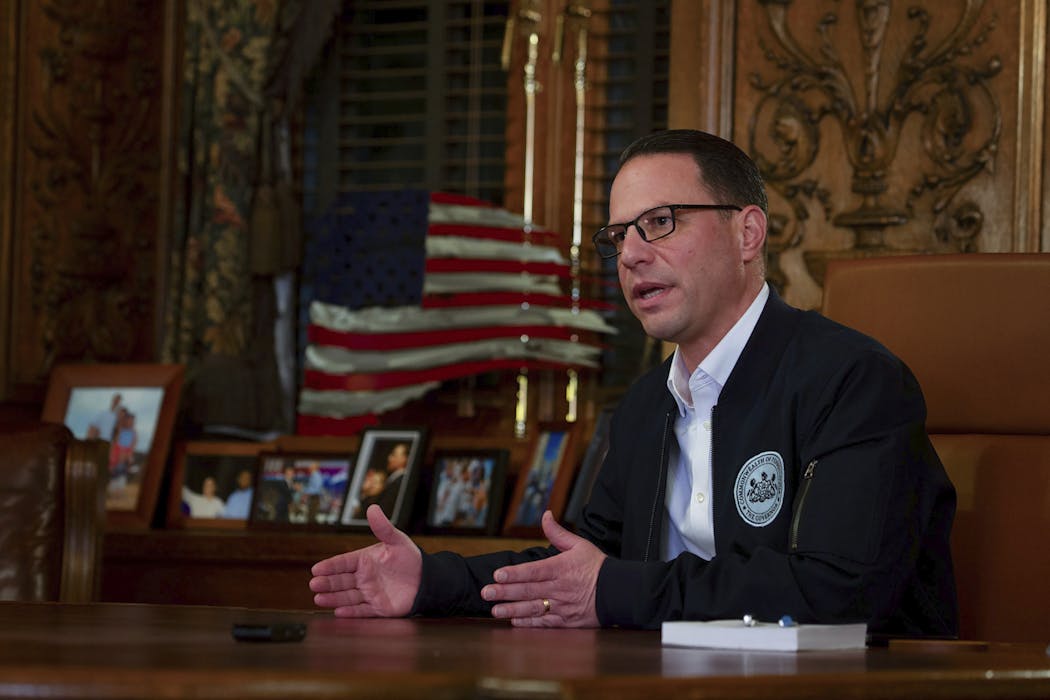
Pennsylvania Gov. Josh Shapiro’s first budget, in 2023, was not fully passed until mid-December. AP Photo/Daniel Shanken

While Americans across the country deal with the consequences of the federal government shutdown, residents of Pennsylvania are being hit with a double blow.

Pennsylvania has been without a state budget for over 100 days – and remains the only state currently operating without a budget.

As a political scientist at Penn State who studies state politics and policy, I see how Pennsylvania’s budget impasse has ripple effects that are compounded by the current budget problems in Washington.

Let’s look at the present budget problems in Pennsylvania and what we can learn from past battles over the state budget.

A double crisis

Double government budget crises, like the one Pennsylvania faces now, are rare. One reason is that 46 states, including Pennsylvania, begin their new fiscal year on July 1. The federal government’s fiscal year begins on Oct. 1. Even a state like Pennsylvania, that has had late budgets for eight of the last 10 years, would have to be very late in passing a budget for it to potentially coincide with a federal budget impasse. And, of course, federal government shutdowns do not happen all the time.

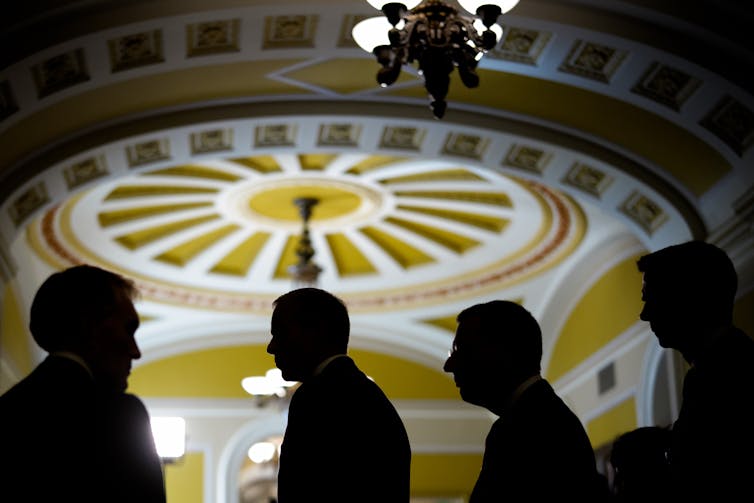
Men in suits shown in shadow underneath elaborate ceiling with arches
A group of Republican senators talk at the U.S. Capitol Building on Oct. 15, 2025, during a government shutdown that began Oct. 1.
Andrew Harnik via Getty Images

Pennsylvania’s Democratic Gov. Josh Shapiro faces a delicate political environment in Harrisburg – as he has since his first budget in 2023. The Democrats control the state House by a single seat, whereas the Republicans have a comfortable majority in the Senate.

The parties have been debating over the last several budget cycles how to handle funding surpluses – much of which came from Biden-era legislation like the Infrastructure Investment and Jobs Act – and when and how to deal with the inevitable end to those surpluses.

This year, the two sides are far apart on their views of the proper spending level.

The Democrats in the House passed a US$50.3 billion spending plan, but Senate Republicans want to keep state spending flat at $47.6 billion. The two sides have clashed over proposals surrounding school vouchers, marijuana legalization and more.

As for the federal government, Republicans have a trifecta – control of the White House, Senate and House of Representatives – but do not have the 60 votes in the Senate required to overcome a filibuster. Democrats have dug in over reversing cuts to health care from the earlier passed “one big beautiful bill” and expiring Obamacare subsidies.

There is little sign of an immediate end to either impasse.

In Pennsylvania, there is growing frustration on both sides about an inability to compromise. Nationally, House Speaker Mike Johnson has speculated that this may end up being the longest federal government shutdown in history. In neither case, though, does there seem to be a great deal of urgency in coming to a compromise.

Effects on Pennsylvania

These dual crises are affecting Pennsylvanians in many ways. The state government continues to function even without a budget, but counties, school districts and nonprofit organizations that rely on state funding are being forced to make difficult operating choices.

Some counties like Westmoreland and Northampton are beginning the process of furloughing employees. School districts are taking out loans, freezing hiring and deferring spending. The state already owes school districts more than $3 billion in missed payments for the past three months.

Woman reaches for loaf of bread on shelf that contains food products
Cozy Wilkins, 66, stocks the shelves at New Bethany, a nonprofit that provides food access, housing and social services, in Bethlehem, Pa., on July, 22, 2024.
Ryan Collerd/AFP via Getty Images

The social safety net is also fraying as social service organizations, like rape crisis centers and mental health providers, are also expending reserves, taking out loans and furloughing employees.

Then comes the federal shutdown.

Military families nationwide have been hit particularly hard, with many turning to food pantries to help meet their needs. The recent money maneuvers at the Department of Defense to pay active-duty and activated National Guard and Reserves personnel is temporary. The commonwealth also has the eighth-highest population of federal civilian employees, at over 66,000 who are not being paid.

Services like food banks are especially vulnerable in this situation, as they are seeing greater demand – which may increase due to federal workers going unpaid – but rely on both the state and federal governments for subsidies. Just this week, it was announced that Pennsylvanians buying health care through the state’s Affordable Care Act marketplace for 2026 should expect a 22% increase in premiums, on average. Part of that increase is due to expectations around the expiring Obamacare subsidies at the center of the Democrats’ demands in this shutdown.

All of these forces are coming together to pinch Pennsylvania residents.

Echoes of the past

While the compounding pain of the federal shutdown is unique, long budget delays in Pennsylvania are not.

In 2023, Gov. Shapiro’s first budget was not fully passed until Dec. 14. That budget was fundamentally delayed by the acrimonious implosion of a deal on school voucher spending between the governor and Senate Republicans. The budget negotiations ended after some horse-trading on specific programs, like removing the popular Whole-Home Repairs Program started during the COVID-19 pandemic but adding funding for lead and asbestos abatement in schools.

The difference between then and now, however, is that back then the governor and General Assembly agreed on the overall budget, but typical bargaining was needed to get the votes needed to pass the spending bills after the voucher blow-up. This time, the parties are almost $3 billion apart in what should even be spent.

In the end, however, both Pennsylvania and the federal government will pass budgets, and I expect that each will be the result of protracted negotiations over multiple spending items, as Americans have seen in the past. The question is: How much pain will citizens, nonprofits and local governments face in the interim?

Read more of our stories about Philadelphia and Pennsylvania, or sign up for our Philadelphia newsletter on Substack.

The Conversation

Daniel J. Mallinson does not work for, consult, own shares in or receive funding from any company or organization that would benefit from this article, and has disclosed no relevant affiliations beyond their academic appointment.

ref. Pennsylvania’s budget crisis drags on as fed shutdown adds to residents’ hardships – https://theconversation.com/pennsylvanias-budget-crisis-drags-on-as-fed-shutdown-adds-to-residents-hardships-267382

The great wildebeest migration, seen from space: satellites and AI are helping count Africa’s wildlife

Source: The Conversation – Africa (2) – By Isla C. Duporge, British–French zoologist and Postdoctoral Research Fellow, Princeton University

The Great Wildebeest Migration is one of the most remarkable natural spectacles on Earth. Each year, immense herds of wildebeest, joined by zebras and gazelles, travel 800-1,000km between Tanzania and Kenya in search of fresh grazing after the rains.

This vast, circular journey is the engine of the Serengeti-Mara ecosystem. The migration feeds predators such as lions and crocodiles, fertilises the land and sustains the grasslands. Countless other species, and human livelihoods tied to rangelands and tourism, depend on it.

Because this migration underpins the entire ecosystem, it’s vital to know how many animals are involved. A change in numbers would not only affect wildebeest, but would ripple outward to predators, vegetation and the millions of people who rely on this landscape.

For decades, aerial surveys have been the main tool for estimating the size of east Africa’s wildebeest population. Aircraft fly in straight lines (transects) a few kilometres apart and use these strips to estimate the total population. This dedicated and arduous work, using a long-established method, has given us an estimate of about 1.3 million wildebeest.

In recent years, conservation scientists have begun testing whether satellites and artificial intelligence (identifying patterns in large datasets) can offer a new way to monitor wildlife. Earlier work showed that other species – Weddell seals, beluga whales and elephants – could be identified in satellite imagery using artificial intelligence.

In 2023, we showed that migratory wildebeest could be detected from satellite images using deep learning. That study proved it’s possible to monitor large gatherings of mammals from space. The next step has been to move from simply detecting animals to estimating their populations – using satellites not just to spot them, but to count them at scale.

Our recent study was carried out through collaboration between biologists, remote sensing specialists and machine-learning scientists. We analysed satellite imagery of the Serengeti-Mara ecosystem from 2022 and 2023, covering more than 4,000km².

Using deep learning models

The images were collected at very high spatial resolution (33-60cm per pixel), with each wildebeest represented by fewer than nine pixels. We analysed the imagery using two complementary deep learning models: a pixel-based U-Net and an object-based YOLO model. Both were trained to recognise wildebeest from above. Applying them together allowed us to cross-validate detections and reduce potential bias. The images were taken at the beginning and end of August, corresponding to different stages of the dry-season migration. Smaller herds were observed earlier in the month, as expected.

Across both years, the models detected fewer than 600,000 wildebeest within the dry-season range. While these numbers are lower than some previous aerial estimates, this should not necessarily be interpreted as evidence of a population decline, and we encourage more surveying effort to work out the relative error biases in each approach. While some animals are inevitably missed, under trees or outside the imaged area, it is unlikely that such factors could account for hundreds of thousands more. To confirm that the main herds were covered, we validated the survey extent using GPS tracking data from collared wildebeest and ground-based observations from organisations monitoring herd movements in the region.

These results provide the first satellite-based dry-season census of the Serengeti-Mara migration. Rather than replacing aerial surveys, they offer a complementary perspective on seasonal population dynamics. The next step is to coordinate aerial and satellite surveys in parallel. This way each method can help refine the other and build a more complete picture of this extraordinary migration.

Future directions

Satellite monitoring is not a panacea. Images are expensive, sometimes obscured by cloud cover. And they can never capture every individual on the ground (neither can aerial surveys). But the advantages are compelling. Satellites can capture a snapshot of vast landscapes at a single moment in time, removing much of the uncertainty that comes from extrapolating localised counts.

The approach is scalable to many other species and ecosystems. And as more high-resolution satellites (capable of imaging at less than 50cm) are launched, we can now revisit the same spot on Earth multiple times a day, bringing wildlife monitoring closer to real time than ever before.

Beyond population counts, satellites also open up a new scientific frontier: the study of collective movement at scale. The wildebeest migration is a classic case of emergent behaviour: there is no leader, yet order still arises. Each animal follows simple cues like where the grass is greener or where a neighbour is moving, and together thousands create a vast, coordinated journey.

With high-resolution satellite data, scientists can now explore the basic physics that shape how animals move together in large groups. But how do density waves of movement propagate across the landscape, what scaling rules might be governing patterns of spacing and alignment, and how do these collective patterns influence the functioning of ecosystems?

Our findings demonstrate how satellites and AI can be harnessed not only for wildlife population monitoring but also for applications that extend beyond population counts to uncovering the mechanisms of collective organisation in animal groups.

The Conversation

Isla C. Duporge received funding support from the National Academy of Sciences (NAS) while leading this research. The imagery used in the project was acquired via her fellowship with NAS.

Daniel Rubenstein, David Macdonald, and Tiejun Wang do not work for, consult, own shares in or receive funding from any company or organisation that would benefit from this article, and have disclosed no relevant affiliations beyond their academic appointment.

ref. The great wildebeest migration, seen from space: satellites and AI are helping count Africa’s wildlife – https://theconversation.com/the-great-wildebeest-migration-seen-from-space-satellites-and-ai-are-helping-count-africas-wildlife-266308

The Erie Canal: How a ‘big ditch’ transformed America’s economy, culture and even religion

Source: The Conversation – USA (2) – By Matthew Smith, Visiting Assistant Professor of History, Miami University

The Erie Canal, seen here in Pittsford, N.Y., opened up western regions to trade, immigration and social change. Andre Carrotflower via Wikimedia Commons, CC BY-SA

Two hundred years ago, on Oct. 26, 1825, New York Gov. DeWitt Clinton boarded a canal boat by the shores of Lake Erie. Amid boisterous festivities, his vessel, the Seneca Chief, embarked from Buffalo, the westernmost port of his brand-new Erie Canal.

Clinton and his flotilla made their way east to the canal’s terminus in Albany, then down the Hudson River to New York City. This maiden voyage culminated on Nov. 4 with a ceremonial disgorging of barrels full of Lake Erie water into the brine of the Atlantic: pure political theater he called “the Wedding of the Waters.”

A faded black-and-white illustration of men in formal 18th-century clothing standing in front of a crowd as one pours a stream of water from a small barrel.
DeWitt Clinton pouring water from Lake Erie into the Atlantic, engraved by Philip Meeder.
The New York Public Library via Wikimedia Commons

The Erie Canal, whose bicentennial is being celebrated all month, is an engineering marvel – a National Historic Monument enshrined in folk song. Such was its legacy that as a young politician, Abraham Lincoln dreamed of becoming “the DeWitt Clinton of Illinois.”

As a historian of the 19th-century frontier, I’m fascinated by how civil engineering shaped America – especially given the country’s struggles to fix its aging infrastructure today. The opening of the Erie Canal reached beyond Clinton’s Empire State, cementing the Midwest into the prosperity of the growing nation. This human-made waterway transformed America’s economy and immigration while helping fuel a passionate religious revival.

But like most big achievements, getting there wasn’t easy. The nation’s first “superhighway” was almost dead on arrival.

Clinton’s folly

The idea of connecting New York City to the Great Lakes originated in the late 18th century. Yet when Clinton pushed to build a canal, the plan was controversial.

The governor and his supporters secured funding through Congress in 1817, but President James Madison vetoed the bill, considering federal support for a state project unconstitutional. New York turned to state bonds to finance the project, which Madison’s ally Thomas Jefferson had derided as “madness.”

Some considered “Clinton’s big ditch” blasphemy. “If the Lord had intended there should be internal waterways,” argued Quaker minister Elias Hicks, “he would have placed them there.”

Construction began on July 4, 1817. Completed eight years later, the canal stretched some 363 miles (584 kilometers), with 18 aqueducts and 83 locks to compensate for elevation changes en route. All this was built with only basic tools, pack animals and human muscle – the latter supplied by some 9,000 laborers, roughly one-quarter of whom were recent immigrants from Ireland.

A faded chart shows the names of cities, in order from west to east, along with their relative elevation.
An 1832 lithograph by David H. Burr shows elevation changes along the Erie Canal.
David Rumsey Map Collection via Wikimedia Commons

Boomtowns

Despite its naysayers, the Erie Canal paid off – literally. Within a few years, shipping rates from Lake Erie to New York City fell from US$100 per ton to under $9. Annual freight on the canal eclipsed trade along the Mississippi River within a few decades, amounting to $200 million – which would be more than $8 billion today.

Commerce drove industry and immigration, enriching the canal towns of New York – transforming villages like Syracuse and Utica into cities. From 1825-1835, Rochester was the fastest-growing urban center in America.

By the 1830s, politicians had stopped ridiculing America’s growing canal system. It was making too much money. The hefty $7 million investment in building the Erie Canal had been fully recouped in toll fees alone.

Religious revival

Nor was its legacy simply economic. Like many Americans during the Industrial Revolution, New Yorkers struggled to find stability, purpose and community. The Erie Canal channeled new ideas and religious movements, including the Second Great Awakening: a nationwide movement of Christian evangelism and social reform, partly in reaction to the upheavals of a changing economy.

Though the movement began at the turn of the century, it flourished in the hinterlands along the Erie Canal, which became known as the “Burned-Over District.” Revivalists like Charles Grandison Finney – America’s most famous preacher at the time – found a lively reception along this “psychic highway,” as one author later dubbed upstate New York.

Some denominations, like the Methodists, grew dramatically. But the “Burned-Over District” also gave birth to new churches after the canal’s creation. Joseph Smith founded the Church of Jesus Christ of Latter-day Saints, often known as Mormons, in Fayette, New York, in 1830. The teachings of William Miller, who lived near the Vermont border, spread west along the canal route – the roots of the Seventh-day Adventist Church.

A faded black-and-white illustration of a small crowd in front of a speaker's stand in a clearing amid trees.
A camp revival meeting of the Methodists , circa 1829.
Fine Art Images/Heritage Images/Getty Images

Door to the West

As Clinton predicted, the Erie Canal was “a bond of union between the Atlantic and Western States,” uniting upstate New York and the agrarian frontier of the Midwest to the urban markets of the Eastern seaboard.

In the mid-1820s, Ohio Gov. Ethan Allen Brown praised America’s canals “as veins and arteries to the body politic” and commissioned two canals of his own: one to link the Ohio River to the Erie Canal, completed in 1832; and another to link the Miami River, completed in 1845. These canals in turn connected to numerous smaller waterways, creating an extensive network of trade and transportation.

Like New York, Ohio had its canal towns, including Middletown: the birthplace of Vice President JD Vance and a city emblematic of America’s shifting industrial fortunes.

While America’s canal boom brought prosperity, this wealth came at a cost to many Indigenous communities – a cost that is only slowly being acknowledged. The Haudenosaunee, often known by the name “Iroquois,” especially paid the price for the Erie Canal. The confederacy of tribes was pressured into ceding lands to the state of New York, and further displaced by ensuing frontier settlement.

Past and future

As the U.S. nears its 250th birthday on July 4, 2026, the official website of this commemoration urges Americans “to pause and reflect on our nation’s past … and look ahead toward the future we want to create for the next generation and beyond.”

As the recent federal government shutdown suggests, however, the nation’s political system is struggling.

Overcoming gridlock demands bipartisan consensus on basic concerns. Technology changes, but the demands of infrastructure – from rebuilding roads and bridges to expanding broadband and sustainable energy networks – and the will needed to address them, persist. As the Erie Canal reminds us, American democracy has always been built upon concrete foundations.

The Conversation

Matthew Smith does not work for, consult, own shares in or receive funding from any company or organization that would benefit from this article, and has disclosed no relevant affiliations beyond their academic appointment.

ref. The Erie Canal: How a ‘big ditch’ transformed America’s economy, culture and even religion – https://theconversation.com/the-erie-canal-how-a-big-ditch-transformed-americas-economy-culture-and-even-religion-266343

Trump is attracting investment to the US – but at a huge cost to workers and the environment

Source: The Conversation – UK – By Benjamin Selwyn, Professor of International Relations and International Development, Department of International Relations, University of Sussex

Early in his second presidency, Donald Trump’s imposition of tariffs was met with widespread scepticism. Critics warned of economic decline and a global backlash. Yet the current landscape for the United States paints a more complex picture.

Less than a year into his second term in office, the White House claims that Trump is bringing manufacturing back to the US. It also proclaims that Trump has secured trillions of dollars of foreign direct investment (FDI) in 2025 alone. Other voices, however, estimate that these commitments will amount to just a fraction of that.

So what’s the true picture? Much of this FDI is going into the US’s burgeoning semiconductor sector. This inward investment is indeed a stark reversal from the post-1991 trend of outbound American capital, when US firms raced to set up factories in countries where it was cheaper to manufacture.

And the surge is bolstered by commitments of US$300 billion (£225 billion) in capital investment commitments from tech giants like Amazon, Microsoft, Alphabet and Meta. These investments reflect both Trump’s aggressive diplomacy and his close relationship with Silicon Valley’s tech elite.

Despite concerns about a tech bubble, these investments signal a deepening state-private partnership, and a reorientation of priorities with a view to coming out on top in the global AI race.

Central to this strategy is the reshaping of global supply chains. At a conference of venture capitalists in March, US vice-president J.D. Vance criticised US firms for their reliance on cheap overseas labour. He warned of the risks of losing the US’s technological advantage, especially to China.

The solution, Vance and Trump argue, is to bring investments and jobs back home. But does this logic – backed by massive domestic and foreign investment – translate into the kind of reshoring (when operations that were previously moved abroad transfer back to the country) that delivers good jobs?

In our new book Capitalist Value Chains, Christin Bernhold and I argue that global supply chains have made labour exploitation and environmental degradation worse. Efforts by both former president Joe Biden and Trump to contain China’s rise reflect not a retreat from globalisation, but a strategic reconfiguration of supply chains.

In the early days of globalisation, American administrations supported China’s rise as the workshop of the world and an exporter of low-cost consumer goods to the US. But over the last 15 years, the US has increased efforts to contain China’s technological rise, while continuing to rely on its cheap imports.

Trump’s tariffs on China represent a step change. The US’s strategy now seems to have shifted from slowing China’s advance to attempts to inflict severe economic damage on the Chinese economy in order to reduce it to a subordinate, rather than rival, trading partner.

So will these investments create quality employment? And what are the environmental consequences? The likely answers are probably not, and probably terrible.

Reshoring doesn’t mean abandoning global supply chains. Recently, Trump threatened sweeping tariffs on China in response to its restrictions on rare earth exports. Western industries – especially automotive and defence – warned that this escalation could break supply chains. US chip-dependent sectors such as electronics, defence and telecoms still rely heavily on Chinese rare earths.

Even if the US succeeds in reshaping supply chains, it doesn’t guarantee the creation of good jobs. Despite Trump’s pro-labour rhetoric, his administration’s actions tell a different story.

In March 2025, Elon Musk’s Department of Government Efficiency laid off 216,000 federal workers. Collective bargaining rights were stripped from 400,000 employees across agencies like Veterans Affairs, the Environmental Protection Agency and the Transportation Security Administration. The White House also revoked the US$15 per hour minimum wage requirement for publicly-funded businesses.

Pain for US workers

Traditional sectors are suffering. Since April, machinery giant John Deere has cut more than 2,000 jobs, citing cost increases blamed on Trump’s tariffs. The big three carmakers – Ford, GM and Stellantis – claim that tariffs will cost them US$7 billion in lost earnings in 2025, with severe consequences for pay and jobs.

Will the tech sector’s massive capital spends offset these losses? Most of the US$300 billion pledged by firms like Apple and Amazon is earmarked for AI infrastructure: high-powered data centres, custom chips, graphics processing units and cloud networks.

These are capital-intensive projects that generate short-term construction jobs but offer little in the way of long-term employment.

Simultaneously, tech companies are downsizing as they substitute AI for human labour. Microsoft announced layoffs of 6,000 and 9,000 employees from its 228,000-strong global labour force in May and July 2025, including 800 in Washington, Microsoft’s home state.

And what about the quality of the remaining jobs? At Amazon, for example, the company’s software engineers have described how it is using AI to cut jobs and speed up work. According to reports, tasks that previously took weeks are now expected to be completed in days. One engineer told journalists that his team was halved in size, but is expected to produce the same amount of code, using AI tools.

The environmental costs of AI are mounting. Researchers have found that data centres already consume 4.4% of the US’s electricity. By 2028, AI could require as much power as 22% of American households use annually.

aerial view of a google data centre in nevada, usa
Enormous data centres, like this one in Nevada, are using an increasing share of the US’s electricity.
Audio und werbung/Shutterstock

This surge in demand, combined with federal budget cuts to green energy initiatives, is diverting renewable energy away from broader decarbonisation efforts such as hydrogen tech projects, battery plants and upgrades to the electric grid.

These figures are only set to rise if the surge continues. According to the International Energy Agency, fossil fuels – particularly coal and natural gas – are expected to supply more than 40% of the additional electricity needed by data centres until 2030.

Trump’s push towards AI, coupled with his tariff regime and alliance with Silicon Valley’s elite, may reshape the economy and global supply chains – but not in favour of workers or the planet. The promise of revitalised manufacturing and job creation masks deeper risks: automation, weakened labour protections and escalating environmental harm.

The Conversation

Benjamin Selwyn does not work for, consult, own shares in or receive funding from any company or organisation that would benefit from this article, and has disclosed no relevant affiliations beyond their academic appointment.

ref. Trump is attracting investment to the US – but at a huge cost to workers and the environment – https://theconversation.com/trump-is-attracting-investment-to-the-us-but-at-a-huge-cost-to-workers-and-the-environment-267505