AI can make the dead talk – why this doesn’t comfort us

Source: The Conversation – Africa (2) – By Tom Divon, Researcher , Hebrew University of Jerusalem

For as long as humans have buried their dead, they’ve dreamed of keeping them close. The ancient Fayum portraits – those stunningly lifelike images wrapped in Egyptian mummies – captured faces meant to remain present even after life had left the body.

Effigies across cultures served the same purpose: to make the absent present, to keep the dead around in some form.

But these attempts shared a fundamental limitation. They were vivid, yet they could not respond. The dead remained dead.

Across time, another idea emerged: the active dead. Ghosts who slipped back into the world to settle unfinished business, like spirits bound to old houses. Whenever they did speak, however, they needed a human medium – a living body to lend them voice and presence.

Media evolved to amplify this ancient longing to summon what is absent. Photography, film, audio recordings, holograms. Each technique added new layers of detail and new modes of calling the past into the present.

Now, generative AI promises something unprecedented: interactive resurrection.

It offers an entity that converses, answers and adapts. A dead celebrity digitally forced to perform songs that never belonged to them. A woman murdered in a domestic-violence case reanimated to “speak” about her own death. Online profiles resurrecting victims of tragedy, “reliving” their trauma through narration framed as warning or education.


Read more:
Should AI be allowed to resurrect the dead?


We are researchers who have spent many years studying the intersection of memory, nostalgia and technology. We particularly focus on how people make meaning and remember, and how accessible technologies shape these processes.

In a recent paper, we examined how generative AI is used to reanimate the dead across everyday contexts. The easy circulation of these digital ghosts raises urgent questions: who authorises these afterlives, who speaks through them, and who decides how the dead are put to work?

What gives these audiovisual ghosts their force is not only technological spectacle, but the sadness they reveal. The dead are turned into performers for purposes they never consented to, whether entertainment, consolation or political messaging.

This display of AI’s power also exposes how easily loss, memory and absence can be adapted to achieve various goals.

And this is where a quieter emotion enters: melancholy. By this we mean the unease that arises when something appears alive and responsive, yet lacks agency of its own.

These AI figures move and speak, but they remain puppets, animated at the direction of someone else’s will. They remind us that what looks like presence is ultimately a carefully staged performance.

They are brought back to life to serve, not to live. These resurrected figures do not comfort. They trouble us into awareness, inviting a deeper contemplation of what it means to live under the shadow of mortality.

What ‘resurrection’ looks like

In our study, we collected more than 70 cases of AI-powered resurrections. They are especially common on video-heavy platforms like TikTok, YouTube and Instagram.

Given their current proliferation, the first thing we did was to compare all cases and look for similarities in their purposes and application. We also noted the data and AI tools used, as well as the people or institutions employing them.

A prominent use of generative AI involves the digital resurrection of iconic figures whose commercial, cultural and symbolic value often intensifies after death. These include:

  • Whitney Houston – resurrected to perform both her own songs and those of others, circulating online as a malleable relic of the past.

  • Queen Elizabeth II – brought back as a rap sis from the hood to perform with a swagger drawn from Black urban culture. This transformation illustrates how nationally significant figures, once held at an ivory-tower distance, become a form of public property after death.

These algorithmic afterlives reduce the dead to entertainment assets, summoned on command, stripped of context, and remade according to contemporary whims. But AI resurrection also moves along a darker register.

  • A woman who was raped and murdered in Tanzania has reappeared in AI-generated videos, where she is made to warn others not to travel alone, transforming her death into a cautionary message.

  • A woman is summoned through AI to relive the most tragic day of her life, digitally reanimated to tell the story of how her husband killed her, embedding a warning about domestic violence.

Here, AI ghosts function as admonitions – reminders of injustice, war and unresolved collective wounds. In this process, grief becomes content and trauma a teaching device. AI does not merely revive the deceased. It rewrites and redistributes them according to the needs of the living.

While such interventions may initially astonish, their ethical weight lies in the asymmetry they expose – where those unable to refuse are summoned to serve purposes to which they never consented. And it is always marked by a triangle of sadness: the tragedy itself, its resurrection and the forceful reliving of the tragedy.

The melancholy

We suggest thinking in terms of two distinct registers of melancholy to locate where our unease resides and to show how readily that feeling can disarm us.

The first register concerns the melancholy attached to the dead. In this mode, resurrected celebrities or victims are summoned back to entertain, instruct or re-enact the very traumas that marked their deaths. The fascination of seeing them perform on demand dulls our capacity to register the exploitation involved, and the unease, cringe, and sadness embedded in these performances.

The second register is the melancholy attached to us, the living revivalists. Here, the unease emerges not from exploitation but from confrontation. In gazing at these digital spectres, we are reminded of the inevitability of death, even as life appears extended on our screens. However sophisticated these systems may be, they cannot re-present the fullness of a person. Instead, they quietly re-inscribe the gap between the living and the deceased.


Read more:
Can you really talk to the dead using AI? We tried out ‘deathbots’ so you don’t have to


Death is inevitable. AI resurrections will not spare us from mourning; instead, they deepen our encounter with the inescapable reality of a world shaped by those who are no longer here.

Even more troubling is the spectacular power of technology itself. As with every new medium, the enchantment of technological “performance” captivates us, diverting attention from harder structural questions about data, labour, ownership and profit, and about who is brought back, how and for whose benefit.

Unease, not empathy

The closer a resurrection gets to looking and sounding human, the more clearly we notice what is missing. This effect is captured by the concept known as the uncanny valley, first introduced by Japanese roboticist Masahiro Mori in 1970. It describes how nearly-but-not-quite-human figures tend to evoke unease rather than empathy in viewers.

This is not solely a matter of technical defects in resurrections, imperfections may be reduced with better models and higher-resolution data. What remains is a deeper threshold, an anthropological constant that separates the living from the dead. It is the same boundary that cultures and spiritual traditions have grappled with for millennia. Technology, in its boldness, tries again. And like its predecessors, it fails.

The melancholy of AI lies precisely here: in its ambition to collapse the distance between presence and absence, and in its inability to do so.

The dead don’t return. They only shimmer through our machines, appearing briefly as flickers that register our longing, and just as clearly, the limits of what technology can’t repair.

The Conversation

The authors do not work for, consult, own shares in or receive funding from any company or organisation that would benefit from this article, and have disclosed no relevant affiliations beyond their academic appointment.

ref. AI can make the dead talk – why this doesn’t comfort us – https://theconversation.com/ai-can-make-the-dead-talk-why-this-doesnt-comfort-us-272944


Ransomware: what it is and why it’s your problem

Source: The Conversation – Africa (2) – By Thembekile Olivia Mayayise, Senior Lecturer, University of the Witwatersrand

Ransomware is a type of malicious software that makes a victim’s data, system or device inaccessible. It locks the target or encrypts it (converting text into an unreadable form) until the victim pays a ransom to the attacker.

It’s one of the most widespread and damaging forms of cyberattacks affecting organisations around the world. An Interpol report identified ransomware as one of the most widespread cyber threats across Africa in 2024. South Africa reported 12,281 detections and Egypt reported 17,849.

Despite global efforts to curb it, ransomware continues to thrive, driven by cybercriminals seeking quick financial gain. In its first-quarter 2025 report, global cybersecurity company Sophos revealed that 71% of the South African organisations hit by ransomware paid the ransom and recovered their data. But the full cost of a ransomware attack is difficult to quantify. It extends beyond the ransom payment to include revenue losses during the system downtime and potential reputational damage.

Cybercriminals often select organisations where service disruption can cause significant public or operational effects, increasing the pressure to pay the ransom. Power grids, healthcare systems, transport networks and financial systems are examples. When victims refuse to pay the ransom, attackers frequently threaten to leak sensitive or confidential information.

One reason ransomware has become so pervasive in Africa is the continent’s cybersecurity gap. Many organisations lack dedicated cybersecurity resources, along with the skills, awareness, tools and infrastructure to defend against cyberattacks.

In this environment, hackers can operate with relative ease. Every business leader, particularly those overseeing information and communication technology (ICT) or managing sensitive data, should be asking a critical question. Can our organisation survive a ransomware attack?

This is not just a technical issue; it is also a governance matter. Board members and executive teams are increasingly accountable for risk management and cyber resilience.

As a researcher and expert in the governance of information technology and cybersecurity, I see the African region emerging as a hotspot for cyberattacks. Organisations must be aware of the risks and take steps to mitigate them.

Ransomware attacks can be extremely costly, and an organisation may struggle or fail to recover after an incident.

Weaknesses that increase ransomware risk

Telecommunication company Verizon’s data breach report for 2025 revealed that the number of organisations hit by ransomware attacks had increased by 37% from the previous year. This exposes how unprepared many organisations are to prevent an attack.

A business continuity plan details how a business would continue its operations in the event of a business disruption. An ICT disaster recovery plan is part of the continuity plan. These plans are critical in ensuring continuity of operations after the attack, as affected businesses often experience prolonged downtime, loss of access to systems and data, and severe operational disruptions.

Professional hackers actually sell ransomware tools, making it easier and more profitable for cybercriminals to launch attacks without regard for their consequences.

Hackers can infiltrate systems in various ways:

  • weak security controls such as weak passwords or authentication mechanisms

  • unmonitored networks, where there is a lack of intrusion detection systems that can report any suspicious network activity

  • human error, where employees can mistakenly click on e-mail links which contain ransomware.

Poor network monitoring can allow hackers to remain undetected long enough to collect data on vulnerabilities and identify key systems to target. In many cases, employees unknowingly introduce malicious software, links or downloading attachments from phishing emails. Phishing is a social engineering attack that uses various manipulation techniques to deceive a user into disclosing sensitive details, such as payment or login details, or to trick them into clicking on malicious links.

Paying up

Attackers commonly demand payment in Bitcoin or other cryptocurrencies because the payments will be quite difficult to trace. Paying the ransom offers no guarantee of full data recovery or protection against future attacks. According to global cybersecurity company Check Point, notorious ransomware groups like Medusa have popularised double extortion tactics.

These groups demand payment and threaten to publish stolen data online. They often use social media platforms and the dark web – part of the internet which is only accessible by means of special software – allowing them to remain anonymous or untraceable. Their goal is to publicly shame victims or leak sensitive information, pressuring organisations to comply.

These breaches also contribute to phishing scams, as exposed email addresses and credentials circulate across the internet, which leads to more data breaches. Websites such as Have I Been Pwned can assist in checking whether your email has been compromised in any previous data breach.

Organisational resilience against ransomware

Organisations should strengthen their cybersecurity in several ways.

  • Put strong technical and administrative measures in place to keep data safe. They include effective access controls, network monitoring tools and regular system and data backups.

  • Use tools that block malware attacks early and provide alerts when suspicious activities occur. This includes using strong endpoint protection ensuring that any device which connects to the network has intrusion detection systems that help spot unusual network activity.

  • Equip staff with the knowledge and vigilance to detect and prevent potential threats.

  • Develop, document and communicate a clear incident response plan.

  • Bring in external cybersecurity experts or managed security services when the organisation does not have skills or capacity to handle security on its own.

  • Develop, maintain and regularly test business continuity and ICT disaster recovery plans.

  • Obtain cyber-insurance to cover the risks that can’t be completely prevented.

Ransomware attacks are a serious and growing threat to individuals and organisations. They can cause data loss, financial losses, operational disruptions and reputational damage. There are no security measures that can fully guarantee complete protection from such attacks. But the steps outlined here might help.

The Conversation

Thembekile Olivia Mayayise does not work for, consult, own shares in or receive funding from any company or organisation that would benefit from this article, and has disclosed no relevant affiliations beyond their academic appointment.

ref. Ransomware: what it is and why it’s your problem – https://theconversation.com/ransomware-what-it-is-and-why-its-your-problem-269430

Climate engineering would alter the oceans, reshaping marine life – new study examines each method’s risks

Source: The Conversation – USA (2) – By Kelsey Roberts, Post-Doctoral Scholar in Marine Ecology, Cornell University; UMass Dartmouth

Phytoplankton blooms, seen by satellite in the Baltic Sea, pull carbon dioxide out of the atmosphere. European Space Agency via Flickr, CC BY-SA

Climate change is already fueling dangerous heat waves, raising sea levels and transforming the oceans. Even if countries meet their pledges to reduce the greenhouse gas emissions that are driving climate change, global warming will exceed what many ecosystems can safely handle.

That reality has motivated scientists, governments and a growing number of startups to explore ways to remove carbon dioxide from the atmosphere or at least temporarily counter its effects.

But these climate interventions come with risks – especially for the ocean, the world’s largest carbon sink, where carbon is absorbed and stored, and the foundation of global food security.

Our team of researchers has spent decades studying the oceans and climate. In a new study, we analyzed how different types of climate interventions could affect marine ecosystems, for good or bad, and where more research is needed to understand the risks before anyone tries them on a large scale. We found that some strategies carry fewer risks than others, though none is free of consequences.

What climate interventions look like

Climate interventions fall into two broad categories that work very differently.

One is carbon dioxide removal, or CDR. It tackles the root cause of climate change by taking carbon dioxide out of the atmosphere.

The ocean already absorbs nearly one-third of human-caused carbon emissions annually and has an enormous capacity to hold more carbon. Marine carbon dioxide removal techniques aim to increase that natural uptake by altering the ocean’s biology or chemistry.

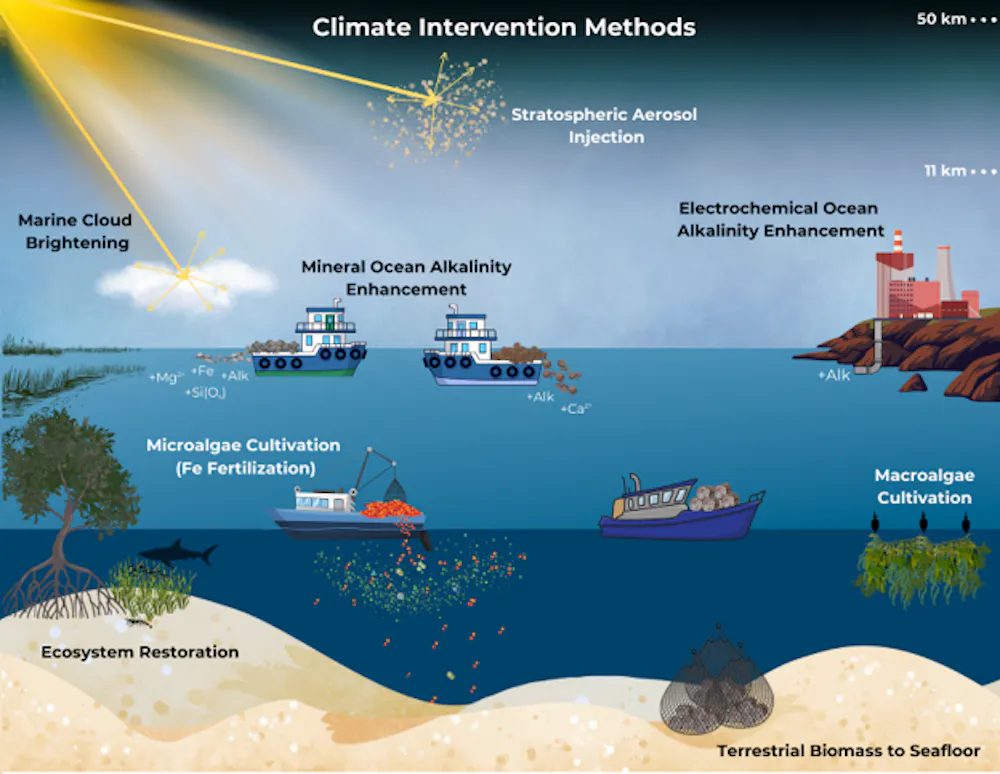
An illustration shows solar modification, ocean fertilization and other methods.
Some of the methods of climate interventions that affect the ocean, such as iron (Fe) fertilization.
Vanessa van Heerden/Louisiana Sea Grant

Biological carbon removal methods capture carbon through photosynthesis in plants or algae. Some methods, such as iron fertilization and seaweed cultivation, boost the growth of marine algae by giving them more nutrients. A fraction of the carbon they capture during growth can be stored in the ocean for hundreds of years, but much of it leaks back to the atmosphere once biomass decomposes.

Other methods involve growing plants on land and sinking them in deep, low-oxygen waters where decomposition is slower, delaying the release of the carbon they contain. This is known as anoxic storage of terrestrial biomass.

Another type of carbon dioxide removal doesn’t need biology to capture carbon. Ocean alkalinity enhancement chemically converts carbon dioxide in seawater into other forms of carbon, allowing the ocean to absorb more from the atmosphere. This works by adding large amounts of alkaline material, such as pulverized carbonate or silicate rocks like limestone or basalt, or electrochemically manufactured compounds like sodium hydroxide.

How ocean alkalinity enhancement methods works. CSIRO.

Solar radiation modification is another category entirely. It works like a sunshade – it doesn’t remove carbon dioxide, but it can reduce dangerous effects such as heat waves and coral bleaching by injecting tiny particles into the atmosphere that brighten clouds or directly reflect sunlight back to space, replicating the cooling seen after major volcanic eruptions. The appeal of solar radiation modification is speed: It could cool the planet within years, but it would only temporarily mask the effects of still-rising carbon dioxide concentrations.

These methods can also affect ocean life

We reviewed eight intervention types and assessed how each could affect marine ecosystems. We found that all of them had distinct potential benefits and risks.

One risk of pulling more carbon dioxide into the ocean is ocean acidification. When carbon dioxide dissolves in seawater, it forms acid. This process is already weakening the shells of oysters and harming corals and plankton that are crucial to the ocean food chain.

For images show a shell slowly dissolving over time.
How a shell placed in seawater with increased acidity slowly dissolves over 45 days.
National Oceanic and Atmospheric Administration, Pacific Marine Environmental Laboratory

Adding alkaline materials, such as pulverized carbonate or silicate rocks, could counteract the acidity of the additional carbon dioxide by converting it into less harmful forms of carbon.

Biological methods, by contrast, capture carbon in living biomass, such as plants and algae, but release it again as carbon dioxide when the biomass breaks down – meaning their effect on acidification depends on where the biomass grows and where it later decomposes.

Another concern with biological methods involves nutrients. All plants and algae need nutrients to grow, but the ocean is highly interconnected. Fertilizing the surface in one area may boost plant and algae productivity, but at the same time suffocate the waters beneath it or disrupt fisheries thousands of miles away by depleting nutrients that ocean currents would otherwise transport to productive fishing areas.

A glass beaker with cyanobacteria growing inside.
Cyanobacteria, or blue-green algae, can multiply rapidly when exposed to nutrient-rich water.
joydeep/Wikimedia Commons, CC BY-SA

Ocean alkalinity enhancement doesn’t require adding nutrients, but some mineral forms of alkalinity, like basalts, introduce nutrients such as iron and silicate that can impact growth.

Solar radiation modification adds no nutrients but could shift circulation patterns that move nutrients around.

Shifts in acidification and nutrients will benefit some phytoplankton and disadvantage others. The resulting changes in the mix of phytoplankton matter: If different predators prefer different phytoplankton, the follow-on effects could travel all the way up the food chain, eventually impacting the fisheries millions of people rely on.

The least risky options for the ocean

Of all the methods we reviewed, we found that electrochemical ocean alkalinity enhancement had the lowest direct risk to the ocean, but it isn’t risk-free. Electrochemical methods use an electric current to separate salt water into an alkaline stream and an acidic stream. This generates a chemically simple form of alkalinity with limited effects on biology, but it also requires neutralizing or disposing of the acid safely.

Other relatively low-risk options include adding carbonate minerals to seawater, which would increase alkalinity with relatively few contaminants, and sinking land plants in deep, low-oxygen environments for long-term carbon storage.

Still, these approaches carry uncertainties and need further study.

Scientists typically use computer models to explore methods like these before testing them on a wide scale in the ocean, but the models are only as reliable as the data that grounds them. And many biological processes are still not well enough understood to be included in models.

For example, models don’t capture the effects of some trace metal contaminants in certain alkaline materials or how ecosystems may reorganize around new seaweed farm habitats. To accurately include effects like these in models, scientists first must study them in laboratories and sometimes small-scale field experiments.

Scientists examine how phytoplankton take up iron as they grow off Heard Island in the Southern Ocean. It’s normally a low-iron area, but volcanic eruptions may be providing an iron source. CSIRO.

A cautious, evidence-based path forward

Some scientists have argued that the risks of climate intervention are too great to even consider and all related research should stop because it is a dangerous distraction from the need to reduce greenhouse gas emissions.

We disagree.

Commercialization is already underway. Marine carbon dioxide removal startups backed by investors are already selling carbon credits to companies such as Stripe and British Airways. Meanwhile, global emissions continue to rise, and many countries, including the U.S., are backing away from their emissions reduction pledges.

As the harms caused by climate change worsen, pressure may build for governments to deploy climate interventions quickly and without a clear understanding of risks. Scientists have an opportunity to study these ideas carefully now, before the planet reaches climate instabilities that could push society to embrace untested interventions. That window won’t stay open forever.

Given the stakes, we believe the world needs transparent research that can rule out harmful options, verify promising ones and stop if the impacts prove unacceptable. It is possible that no climate intervention will ever be safe enough to implement on a large scale. But we believe that decision should be guided by evidence – not market pressure, fear or ideology.

The Conversation

Through his role at Cornell University, Daniele Visioni receives funding from the Quadrature Climate Foundation and the Advanced Research + Invention Agency UK. Daniele Visioni is Head of Data for Reflective, a philanthropically-funded initiative focused on responsibly accelerating sunlight reflection research.

In addition to her primary role as UCSB faculty, Morgan Raven serves as the Chief Science Officer for, and holds minor equity in, a seed-funded startup company exploring applications of biomass-related CDR (Carboniferous). This work was supported by a grant from the Grantham Foundation for the Protection of the Environment to UCSB.

Through his role at the Univeristy of Tasmania, Tyler Rohr receives funding from the Australian government and Co-Labs ICONIQ Impact Co-Labs to research impacts and efficeincy of marine carbon dioxide removal.

Kelsey Roberts does not work for, consult, own shares in or receive funding from any company or organization that would benefit from this article, and has disclosed no relevant affiliations beyond their academic appointment.

ref. Climate engineering would alter the oceans, reshaping marine life – new study examines each method’s risks – https://theconversation.com/climate-engineering-would-alter-the-oceans-reshaping-marine-life-new-study-examines-each-methods-risks-270659

Supreme Court is set to rule on constitutionality of Trump tariffs – but not their wisdom

Source: The Conversation – USA (2) – By Kent Jones, Professor Emeritus, Economics, Babson College

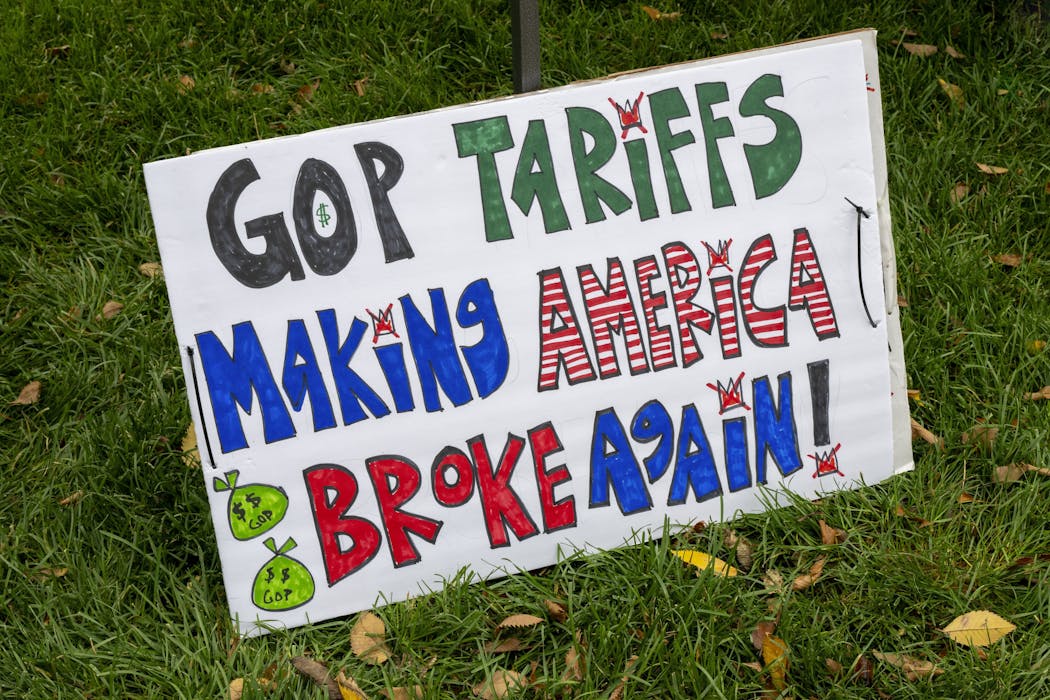
An anti-tariffs placard during a protest in St. Paul, Minnesota, on Oct. 25, 2025. Michael Siluk/UCG/Universal Images Group via Getty Images

The future of many of Donald Trump’s tariffs are up in the air, with the Supreme Court expected to hand down a ruling on the administration’s global trade barriers any day now.

But the question of whether a policy is legal or constitutional – which the justices are entertaining now – isn’t the same as whether it’s wise. And as a trade economist, I worry that Trump’s tariffs also pose a threat to “economic democracy” – that is, the process of decision-making that incorporates the viewpoints of everyone affected by the decision.

Founders and economic democracy

In many ways, the U.S. founders were supporters of economic democracy. That’s why, in the U.S. Constitution, they gave tariff- and tax-making powers exclusively to Congress.

And for good reason. Taxes can often represent a flash point between a government and its people. Therefore, it was deemed necessary to give this responsibility to the branch most closely tied to rule of, and by, the governed: an elected Congress. Through this arrangement, the legitimacy of tariffs and taxes would be based on voters’ approval – if the people weren’t happy, they could act through the ballot box.

To be fair, the president isn’t powerless over trade: Several times over the past century, Congress has passed laws delegating tariff-making authority to the executive branch on an emergency basis. These laws gave the president more trade power but subject to specific constitutional checks and balances.

The stakes for economic democracy

At issue before the Supreme Court now is Trump’s interpretation of one such emergency measure, the International Emergency Economic Powers Act of 1977.

Back in April 2025, Trump interpreted the law – which gives the president powers to respond to “any unusual and extraordinary threat” – to allow him to impose tariffs of any amount on products from nearly every country in the world.

Yet the act does not include any checks and balances on the president’s powers to use tariffs and does not even mention tariffs among its remedies. Trump’s unrestrained use of tariffs in this way was unprecedented in any emergency action ever taken by a U.S. president.

Setting aside the constitutional and legal issues, the move raises several concerns for economic democracy.

The first danger is in regards to a concentration of power. One of the reason tariffs are subjected to congressional debate and voting is that it provides a transparent process that balances competing interests. It prevents the interests of a single individual – such as a president who might substitute his own interests for that of the wider public interest – from controlling complete power.

Instead it subjects any proposed tariffs to the open competition of ideas among elected politicians.

Compare this to the way Trump’s tariffs were made. They were determined in large part by the president’s own political score-settling with other countries, and an ideological preference for trade surpluses. And they were not authorized by Congress. In fact, they bypassed the role of Congress as a check and balance – and this is not good for economic democracy in my view.

A building behind scaffolding and tarpaulin.
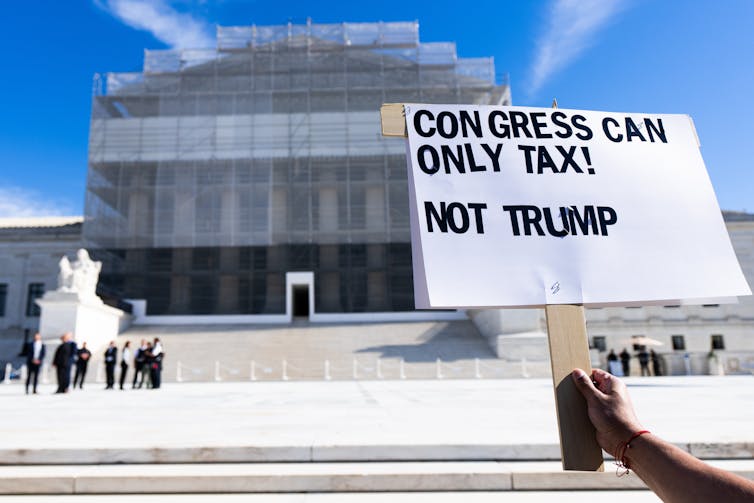
A protester holds a sign as the U.S. Supreme Court hears arguments on President Donald Trump’s tariffs on Nov. 5, 2025.
Bill Clark/CQ-Roll Call, Inc via Getty Images

The second danger is uncertainty. Unlike congressional tariffs, tariffs rolled out through the International Emergency Economic Powers Act under Trump have been altered many times and can continue to change in the future.

While supporters of the president have argued that this unpredictability gives the U.S. a bargaining advantage over competitor nations, many economists have noted that it severely compromises any goal of revitalizing American industries.

This is because both domestic and foreign investment in U.S.-based industries depends on stable and predictable import market access. Investors are unwilling to make large capital expenditures over several years and hire new workers if they think tariff rates might change at any time.

Even in the first year of the Trump tariffs, there is evidence of large-scale reductions in hiring and capital investment in the manufacturing sector due to this uncertainty.

The third danger concerns that lack of accountability involved in circumventing Congress. This can lead to using tariffs as a stealth way of increasing taxes on a population.

Importing companies generate revenue for the government through the additional levies they pay on goods from overseas. These costs are typically borne by domestic consumers, through increased prices, and importing companies, through lower profit margins.

Either way, Trump’s International Emergency Economic Powers Act interpretation has allowed him to use tariffs in a way that would – if allowed to stand – bring in additional government revenue of more than US$2 trillion over a 10-year period, according to estimates.

Trump frames the revenue his tariffs have raised as a windfall of foreign-paid duties. But in fact, the revenue is extracted from domestic consumer pockets and producer profit margins. And that amounts to a tax on both.

Corruption concerns

Finally, the way Trump’s used the act to roll out unilateral and changeable tariffs creates an incentive for political favoritism and even bribery.

This is down to what economists call “rent seeking” – that is, the attempt by companies or individuals to get extra money or value out of a policy through influence or favoritism.

As such, Trump can, should he wish, play favorites with “priority” industries in terms of tariff exemptions. In fact, he has already done this with major U.S. companies that import cell phones and other electronics products. They asked for special exemptions for the products they imported, a favor not granted to other companies. And there is nothing stopping recipients of the exemptions offering, say, to contribute to the president’s political causes or his renovations to the White House.

Smaller and less politically influential U.S. businesses do not have the same clout to lobby for tariff relief.

And this tariff-by-dealmaking goes beyond U.S. companies looking for relief. It extends into the world of manipulating governments to bend to Washington’s will. Unlike congressional tariffs under World Trade Organization rules, International Emergency Economic Powers Act tariffs discriminate from country to country – even on the same products.

And this allows for trade deals that focus on extracting bilateral deals that take place without considering broader U.S. interests. In the course of concluding bilateral Trump trade deals, some foreign governments such as Switzerland and Korea have even offered Trump special personal gifts, presumably in exchange for favorable terms. Presidential side deals and gift exchanges with individual countries are, as many scholars of good international governance have noted, not the best way to conduct global affairs.

The harms of having a tariff system that eschews the normal checks and balances of the American system are nothing new, or at least shouldn’t be.

Back in the late 1700s, with the demands of a tyrannical and unaccountable king at the front of their minds, the founders built a tariff order aimed at maintaining democratic legitimacy and preventing the concentration of power in a single individual’s hands.

A challenge to that order could have worrisome consequences for democracy as well as the economy.

The Conversation

Kent Jones does not work for, consult, own shares in or receive funding from any company or organization that would benefit from this article, and has disclosed no relevant affiliations beyond their academic appointment.

ref. Supreme Court is set to rule on constitutionality of Trump tariffs – but not their wisdom – https://theconversation.com/supreme-court-is-set-to-rule-on-constitutionality-of-trump-tariffs-but-not-their-wisdom-273092

12 ways the Trump administration dismantled civil rights law and the foundations of inclusive democracy in its first year

Source: The Conversation – USA – By Spencer Overton, Professor of Law, George Washington University

The second Trump administration has weakened federal civil rights law and is shredding the foundations of America’s racially inclusive democracy. imagedepotpro, iStock/Getty Images Plus

One year after Donald Trump’s second inauguration, a pattern emerges. Across dozens of executive orders, agency memos, funding decisions and enforcement changes, the administration has weakened federal civil rights law and the foundations of the country’s racially inclusive democracy.

From the start, the U.S. was not built to include everyone equally. The Constitution protected and promoted slavery. Most states limited voting to white men. Congress restricted naturalized citizenship to “free white persons.” These choices were not accidents. They shaped who could belong and who could exercise political power, and they entrenched a racial political majority that lasted for generations.

That began to change in the 1960s. After decades of protest and pressure, Congress enacted laws that prohibited discrimination in employment, education, voting, immigration and housing.

Federal agencies were charged with enforcing those laws, collecting data to identify discrimination and conditioning public funds on compliance. These choices reshaped U.S. demographics and institutions, with the current Congress “the most racially and ethnically diverse in history,” according to the Pew Research Center. The laws did not eliminate racial inequality, but they made exclusion easier to see and harder to defend.

The first year of the second Trump administration marks a sharp reversal.

In a March 2025 speech to Congress, Trump spoke of dismantling DEI programs.

Cumulative retreat

Rather than repealing civil rights statutes outright, the administration has focused on disabling the mechanisms that make those laws work.

Drawing on over two decades of teaching and writing about civil rights and my experience directing a GW Law project on inclusive democracy, I believe this pattern reflects not isolated administrative actions but a cumulative retreat from the federal government’s role as an enforcer of civil rights law.

Over the past year, the president and his administration have taken a series of connected actions:

• On its first day in office, announced the end of all federal diversity, equity and inclusion programs, including diversity officers, equity plans and related grants and contracts.

• Shut down or sharply cut funding for federal programs aimed at reducing inequality, including offices focused on minority health, minority-owned businesses, fair federal contracting, environmental justice and closing the digital divide in broadband.

• Warned schools that diversity programs could jeopardize their federal funding, opened investigations into colleges offering scholarships to students protected under DACA – the Obama-era policy providing deportation protection for undocumented immigrants who came to the U.S. as children – and signaled that colleges risk losing federal student aid if their accrediting agencies consider diversity.

• Revoked security clearances and access to federal buildings for employees at law firms with diversity policies. The FCC investigated media companies for promoting diversity and threatened to block mergers by companies with similar programs, leading several companies to drop their initiatives.

• Issued a government-wide memo labeling common best practices in hiring, admissions and other selection and evaluation processes – such as compiling diverse applicant pools, valuing cultural competence, considering first-generation or low-income status and seeking geographic and demographic representation – as potentially legally suspect. The memo warned that federal funding could be cut to schools, employers and state and local governments using such practices. Federal prosecutors reportedly investigated federal contractors that consider diversity, characterizing such initiatives as fraud.

• Weakened enforcement against discrimination by ordering agencies to stop using disparate impact analysis. That kind of analysis identifies disparities in outcomes, assesses whether they are justified by legitimate objectives, and intervenes when they are not. The Department of Justice, the EEOC, the National Credit Union Administration and other agencies complied and dropped disparate impact analysis. Because algorithmic systems typically operate without explicit intent, eliminating disparate impact analysis reduces federal agencies’ ability to detect and address discriminatory outcomes produced by increasingly automated government and private-sector decision-making.

Rescinded an executive order that barred discrimination by federal contractors, required steps to ensure nondiscriminatory hiring and employment, and subjected contractors to federal compliance reviews and record-keeping. This weakened a key mechanism used since 1965 to detect and remedy workplace discrimination.

A large group of people marching with signs urging passage of a civil rights bill.
Civil rights, union and religious leaders board a dedicated Pennsylvania Railroad train from New York to Washington, D.C., to march in support of the bill that would become the Civil Rights Act of 1964.
Bob Parent/Getty Images

• Eliminated data used to track inequality, including rolling back guidance encouraging schools to collect data on racial disparities in discipline and special education. The administration also removed data used to identify racial disparities in environmental harms.

• Dismantled or sharply reduced civil rights offices across federal agencies, including the Department of Homeland Security, the Social Security Administration and the Department of Education. About three-quarters of lawyers in the Justice Department’s Civil Rights Division left.

Pressured the Smithsonian to remove exhibits about racial injustice, restored Confederate monuments and military base names, and barred schools and teacher training programs from including material the administration labeled divisive, such as unconscious bias.

• Declared English the nation’s only official language, repealed a requirement that federal agencies provide meaningful access to government programs and services for people with limited English proficiency, and prompted the General Services Admininistration and the departments of Justice, Education and other agencies to scale back language-assistance requirements and services.

Attempted to limit birthright citizenship guaranteed by the 14th Amendment, and adopted practices that treat ethnicity and non-English accents as legitimate reasons for immigration stops.

The pattern is hard to miss

Taken together, these shifts have practical consequences.

When agencies stop collecting data on racial disparities, discrimination becomes harder to detect. When disparate impact analysis is abandoned, unfair practices with no legitimate purpose go unchallenged. When diversity programs are chilled through investigations and funding threats, institutions respond by narrowing opportunity. When history and language are recast as threats to unity, truth and freedom of speech and thought are suppressed and undermined.

A crowd of people gathered at the base of the Statue of Liberty.
Lyndon Johnson at the base of the Statue of Liberty on Oct. 3, 1965, before signing the Immigration and Nationality Act, which prohibited racial discrimination in the immigration process and repealed quotas heavily favoring immigration from northern and western Europe.
LBJ Library

Administration officials argue that these steps are needed to prevent discrimination against white people, promote unity, ensure “colorblind equality” and comply with a Supreme Court decision that struck down affirmative action in college admissions. But that ruling did not ban awareness of racial inequality, or neutral policies aimed at reducing it. Many of the administration’s actions rely on broad claims of illegality without providing specific violations.

The selective nature of enforcement is also telling.

Books about racism and civil rights were removed from military libraries, while books praising Nazi ideas or claiming racial intelligence differences were left untouched. The administration suspended admissions of refugees – over 90% of whom have been from Africa, Asia and Latin America in recent years – but then reopened the refugee program for white South Africans.

One year in, the pattern is hard to miss.

The administration is not simply applying neutral rules. It is dismantling the systems that once helped the U.S. move toward a more open and equal democracy. It is replacing them with policies that selectively narrow access to economic, cultural and educational participation.

The result is not simply a change in policy, but a fundamental shift in the trajectory of American democracy.

The Conversation

Spencer Overton is the faculty director of a program at GW Law that receives grants from non-profit foundations like the David & Lucile Packard Foundation, Democracy Fund, and the Rockefeller Brothers Fund.

ref. 12 ways the Trump administration dismantled civil rights law and the foundations of inclusive democracy in its first year – https://theconversation.com/12-ways-the-trump-administration-dismantled-civil-rights-law-and-the-foundations-of-inclusive-democracy-in-its-first-year-273433

China is becoming more sexually liberal – if you are a man

Source: The Conversation – UK – By Jieyu Liu, Professor of Sociology and China Studies, SOAS, University of London

Sexual attitudes have relaxed significantly in China since the Mao era. Approaching the 50th anniversary of Mao Zedong’s death and the subsequent end of the cultural revolution, there has been a significant de-politicisation of everyday life that some are calling a sexual revolution.

China’s opening up to the outside world has facilitated a gradual relaxation of sexual morality and widespread media discussion of sex and intimacy. But increasingly, it is clear that while sexual behaviour is liberalising in China, it is still closely influenced by traditional views, leaving women less liberated than men.

The American-Chinese documentary Mistress Dispellers (2024) reignited western interest in sex, love and intimacy trends in China – but especially, how men and women experience these developments differently.

It explores the recent phenomenon of professionals who help women remove a lover from their adulterous husband’s life. These paid persuaders deceive their way into the lives of cheating husbands and then, by ousting the extra lover, seek to restore monogamous harmony.

But how did such an extraordinary industry emerge in China? My recently published book, Embedded Generations, offers a comprehensive overview of Chinese family practices, including sexual behaviour seen through the eyes of three generations.

Generational shifts

Sex outside marriage has steadily become more commonplace in China. But for the oldest generation I studied, born in the 1930s and ’40s, courtship was the norm as they entered marriage in the Mao era (1949-76). During these years, the Chinese Communist Party enforced heterosexual marriage throughout the country, with premarital virginity emphasised as a virtue for both men and women.

Mao Zedong and his wife Jiang Qing  in 1938 reading and writing.
Mao Zedong and his wife Jiang Qing in 1938: under Mao’s leadership, heterosexual marriage was enforced throughout China.

During the Cultural Revolution (1966-76), the open expression of physical intimacy was forbidden. Social norms, as well as fear of political criticism and attack, meant that almost all men and women of the oldest generation denied any involvement in sex outside marriage.

But after Mao’s death, the modernising reforms under Deng Xiaoping enabled more “liberal” trends for the middle generation, born in the 1960s and ’70s. This was especially true for men, who for the first time could admit to having premarital sex. However, female virginity remained important as a condition of marriage, meaning most women of this generation still denied having pre-marital sex.

A turning point came in the late 1990s, when many barriers to premarital sex were eliminated. Sex outside marriage was legalised after the removal of the potential charge of hooliganism that had acted as a deterrence for so long.

Practical obstacles were overcome, including with the relaxation of university regulations on intimacy restrictions. While dormitories are still single-sex, there is a growing availability of leisure opportunities that include an increasing number of hotels near university campuses.

Most notably of all, the rapid growth of internet use has been hugely influential, helping to spread information about sexual behaviour.

Still a man’s world

The younger generation now regards sex as a key part of a loving relationship. But there is still a lingering cultural emphasis on the value of female virginity, highlighting different social expectations for men and women.

Within this lies a contradiction. Young men expect their girlfriends to be willing to have sex as a demonstration of love and commitment. Yet many also expect their brides to be virgins. This is a considerable source of tension and anxiety for many young women.

This means women who openly embrace feminist principles to assert their sexual agency and pleasure remain in the minority. Most are still conservative in outlook and behaviour. Despite the increased incidence of premarital sex, the number of young women’s sexual partners before marriage (on average, one) is not noticeably different from women of older generations.

Mistress Dispeller trailer.

Reflecting these broad changes, 80% of male and 60% of my female interviewees from the younger generation, born in the 1980s and ’90s, admitted having sex before marriage – but mostly with the person they were planning to marry. The younger generation also shows a growing tolerance towards extramarital affairs. However, in this regard too, women remain more constrained by traditional social norms.

As well as these unequal social norms, the Chinese job market still rewards men more than women. This means in later life, men tend to have accumulated more wealth and status, and so are regarded as still desirable. In contrast, an older woman in a lower-paid job might be regarded as less attractive in the dating market.

As wives have children and grow older, they may need to find ways to prevent their husbands from abandoning their families – which is where the mistress dispeller comes in. Typically, only wealthier and young urban women without children feel able to initiate divorce.

That said, many married men, including those with lovers outside their marriages, have remained cautious in initiating divorce proceedings. The often considerable financial costs of divorce in China, particularly when children are involved, act as a barrier. Under Chinese law, the spouse involved in an extramarital affair is the guilty party and so must carry the financial penalty. These can be so steep that men risk losing their life savings, meaning that divorce in these situations is still less common.

My research helps show that while sex outside marriage has become more normalised in China, sexual attitudes are held in check by deep-rooted traditional views. This has created an environment that disproportionately favours men and a privileged elite, leaving many wives no option but to find help from mistress dispellers when their husbands cheat. Anyone speaking of a sexual revolution in China needs to bear this in mind.

This article refers to a book for editorial reasons, and contains a link to bookshop.org. If you click on the link and go on to buy something from bookshop.org, The Conversation UK may earn a commission.

The Conversation

Jieyu Liu receives funding from European Research Council (grant agreement No. 640488).

ref. China is becoming more sexually liberal – if you are a man – https://theconversation.com/china-is-becoming-more-sexually-liberal-if-you-are-a-man-271010

Why do some people get ‘hangry’ more quickly than others?

Source: The Conversation – UK – By Nils Kroemer, Professor of Medical Psychology, University of Tübingen; University of Bonn

Kues/Shutterstock

“Come on, little fella – we should get going now.” But my son was not listening. The sand in the playground was just right, so he just kept digging with his new toy excavator.

As I drifted back to my list of to-dos, however, the laughter was suddenly replaced by sobs. My son was not hurt, just very upset. When I looked at my phone, I saw it was well past his regular mealtime – and he was feeling very hungry.

However old we are, we all have a tendency to grow irritated if our body lacks enough fuel. But while humans have experienced this for as long as we have been on the planet, a specific word to describe the phenomenon only entered the Oxford English dictionary in 2018. “Hangry: to be bad-tempered or irritable as a result of hunger.”

Perhaps more surprising is the scarcity of research into how hunger affects people’s everyday moods. Most studies on food and mood have focused on patients with metabolic or eating disorders – perhaps because many psychologists have traditionally understood hunger to be such a basic physiological process.

So, with colleagues from the fields of psychology and mental health, I decided to investigate how different people respond to feeling hungry. We wanted to see if (and why) some people are better at reacting calmly when hunger strikes. Perhaps there would be some lessons for those of us with young children, too.

Surprising results

In the animal world, hunger is frequently studied for its role as a key motivator. Hungry rodents, for example, will vigorously press a lever or climb over large walls to get to food rewards. In the wild, hungry animals often roam further to explore their environment, seeming restless as they seek to overcome the threat of low or no energy.

A Pallas’s cat (also known as a manul) gets increasingly hangry as it hunts for food. Video: BBC.

To investigate the relationship between energy levels, hunger and mood in people, we equipped 90 healthy adults with a continuous glucose monitor for a month. Glucose is the primary source of energy for the body and brain, and these monitors – used in clinical practice to help patients with diabetes regulate their blood sugar levels – report values every few minutes. (Participants could actively check their glucose levels using the sensor app, and we could see when they accessed them.)

We also asked our participants to complete mood check-ins on their smartphones up to twice a day. These included questions about how hungry or sated they felt on a scale from 0 to 100, as well as a rating of their current mood.

The results surprised us. First, people were only in a worse mood when they acknowledged feeling hungry – not simply when they had lower blood sugar levels. And second, people who more accurately detected their energy levels in general were less prone to negative mood swings.

This suggests there is a key psychological middle step between a person’s energy and mood levels, which scientists call interoception.

In the brain, hunger is signalled by neurons in the hypothalamus that detect a prolonged energy deficit. Conscious feelings of hunger are then linked to the insula, a part of the cerebral cortex that is folded deep within the brain, and which also processes taste and plays a role in feeling emotions.

In our recent study, people with high interoceptive accuracy experienced fewer mood swings. This does not mean they never felt hungry – they just seemed better at keeping their mood levels stable.

This is important, because a sudden change in mood can have knock-on effects on relationships with family, friends and colleagues. It can lead to bad decision-making and more impulsive behaviour – including buying fast-energy food that can be less good for you.

More generally, paying close attention to our bodies’ needs helps keep our minds at ease too, avoiding unnecessary wear and tear on both. Deviating too much from the body’s ideal state can pose a long-term risk to our health – mental as well as physical.

Caught off-guard

Young children find it hard to interpret all the signals from their rapidly developing body. They are also easily distracted by what is happening around them, and often fail to attend to their hunger or thirst without prompting – leading to a sudden meltdown like my son had in the playground.

Likewise for many adults in today’s fast-paced world full of digital distractions, it can be easy to be caught off-guard by dipping energy levels. One simple life hack is to keep a regular meal schedule, because hunger often kicks in when we skip a meal.

Everyone’s energy levels ebb and flow, of course. But it is possible to improve your interoceptive accuracy by allowing your inner systems to pay closer attention to your energy levels. In addition, exercise and physical activity can sharpen your hunger sensing and improve energy metabolism.

Most of the time, of course, our moods are only modestly affected by hunger, among the many other factors that can come into play. But one of the lessons of my time at the playground has been to take care of my son’s food needs long before they become obvious. Perhaps we all need to be more aware of the risk of getting hangry.

The Conversation

Nils Kroemer receives funding from the German Research Foundation (DFG). He is affiliated with the German Center for Mental Health (partner site Tübingen) and the German Center for Diabetes Research.

ref. Why do some people get ‘hangry’ more quickly than others? – https://theconversation.com/why-do-some-people-get-hangry-more-quickly-than-others-273617

Netflix’s killer new Agatha Christie mystery – what to watch and see this week

Source: The Conversation – UK – By Jane Wright, Commissioning Editor, Arts & Culture, The Conversation

Well 2026 has certainly got off to a flying start with a raft of excellent films, plays and TV dramas to keep our minds off the lack of sunlight and cash during this dreary month. And that’s the marvellous thing about art and culture: it is often free or costs relatively little (apart from going to the theatre in London, of course), and sustains the old spirits when things appear a bit gloomy.

This new year marks the 50th anniversary of the death of Agatha Christie, the British queen of crime; 1976 was also the year her final novel, Sleeping Murder, was published, after she had died on January 12. The author of 66 detective novels, Christie sold millions of books around the world and inspired countless film and TV adaptations.

To mark this anniversary, Netflix pays homage with a lavish production of Seven Dials, a three-part murder mystery set in the aristocratic world of England in the 1920s.

The glittering country pile of Chimneys is the scene, and the lady of the house, Lady Caterham (Helena Bonham Carter) has fallen on hard times and been forced to rent it out to some wealthy industrialist.

Now this sounds exactly like the set up in Jane Austen’s last novel, Persuasion – which is rather apt, given that Lady C’s irrepressible daughter, Lady Eileen “Bundle” Brent, is played by Mia Mckenna-Bruce, who also played the hilariously hypochondriac Mary Elliot, sister of Anne, in the 2022 film version.

Lady C and her daughter return as guests to attend a party in their own house, filled with people from “industry, aristocracy and the foreign office”. Naturally a murder ensues and Bundle is on the case, much to the chagrin of Superintendent Battle (Martin Freeman).

This new adaptation doesn’t just provide a rollicking piece of entertainment as it follows the exploits of feminist trailblazer Bundle. It exposes and confronts the brutal world of empire that provided the backdrop to Christie’s novels. Our reviewer, Catherine Wynne, says this excellent Netflix production refreshes Christie for the 21st century – “and does it admirably”.

Seven Dials is on Netflix


Read more:
Seven Dials: Netflix series turns Agatha Christie’s country-house mystery into a study of empire and war


Zombies and hockey players

Few horror films have actually filled me with a sense of dread – but the 28 Days Later series has always managed to do just that, turning the movie zombie from a shambling figure of fun into something fast, aggressive and terrifying. And as the franchise plays out, we realise it’s not really the zombies that we should be afraid of post-apocalypse, but other surviving humans. After 28 Days, Weeks and Months, the fourth instalment of the franchise, 28 Years Later: The Bone Temple, starring the ever-brilliant Ralph Fiennes, is out today.

28 Years Later: The Bone Temple is in cinemas now


Read more:
28 Years Later: The Bone Temple explores the legacy of shared trauma on the national psyche


I once watched a live ice hockey match in Canada, both spellbound and horrified. It was one of the most aggressive things I had ever seen, where exaggerated rivalry, macho posturing and squaring up for a fight seemed positively encouraged. The spectators, relishing every testosterone-fuelled moment, could have been lifted straight out of Gladiator. So I’m looking forward to watching Heated Rivalry, a gay love story set in this hypermasculine environment. Sports researcher and queer football fan Joe Sheldon gives us his take on the much-talked-about Canadian show that has just landed on Sky in the UK.

Heated Rivalry is on Now TV


Read more:
Heated Rivalry matters in a sporting culture that still sidelines queer men


Tragedy!

The experimental Belgian director Ivo van Hove has notched up another smash show in London’s West End with his production of Arthur Miller’s post-war play, All My Sons. It stars Bryan Cranston and Marianne Jean-Baptiste as Joe and Kate Keller, a couple mourning their son, who remains missing after the second world war. But respected businessman and good family man Joe is hiding a dark secret that threatens to bring his world crashing down. In this stripped-back production, van Hove has chosen to stage Miller’s play as a Greek tragedy, heightening the tensions of this heartwrenching drama.

All My Sons is on at Wyndham’s Theatre, London, till March 7


Read more:
All My Sons: director Ivo Van Hove powers up Arthur Miller’s post-war play with a Greek tragedy staging


The BBC’s new flagship drama Waiting for the Out is based on the real-life experiences of prison educator Andy West, recounted in his 2022 memoir The Life Inside. The drama tells the story of Dan, a young teacher from a criminal family who brings a little philosophy into the lives of inmates at a category-B prison, while trying to overcome his own mental health challenges. Abigail Harrison Moore, once a prison teacher herself, explains how the show illuminates the value of arts education for people often discarded by society, and how it provides a chink of light in a sometimes dark existence.

Waiting for the Out is on BBC iPlayer


Read more:
I taught art in a high-security prison – Waiting for the Out took me straight back to my classroom


Looking for something good? Cut through the noise with a carefully curated selection of the latest releases, live events and exhibitions, straight to your inbox every fortnight, on Fridays. Sign up here.


The Conversation

ref. Netflix’s killer new Agatha Christie mystery – what to watch and see this week – https://theconversation.com/netflixs-killer-new-agatha-christie-mystery-what-to-watch-and-see-this-week-273609

Fast fashion: why changes in return policies don’t do enough to address environmental damage

Source: The Conversation – UK – By Anastasia Vayona, Postdoctoral Research Fellow in Social Science and Policy, Faculty of Science and Technology, Bournemouth University

Around 40% of online shopping globally is driven by impulse buying. JadeThaiCatwalk/Shutterstock

Online fashion retailer Asos recently introduced additional fees for customers who return lots of items, marking a significant shift in the fast fashion model that has relied on free, frictionless return policies as a key competitive advantage.

And now the fashion retailer has introduced a new tool to show shoppers exactly what their return rate is, and if they are about to incur a fee. The new policy is aimed at encouraging shoppers with the highest return rates to cut back.

It’s not clear yet if other fast fashion brands such as H&M, Shein, Zara and Primark might follow Asos’s lead on returns, and whether it will change shopping habits.

There are two common fast fashion shopping scenarios. The first is where customers buy three or four versions of the same item in different sizes, then return the ones that they don’t want. The second is where a shopper will buy three or four completely different dresses, for example.

The first approach, called “bracketing” in the retail industry, may be affected more by the new cost of returns. So it may encourage some shoppers to cut down on the sizes they order, perhaps from four to two, if they continue to use Asos. This may have somewhat of a positive environmental effect, if it reduces the size of orders.

The second scenario, impulse buying, generates almost the 40% of all online spending globally, with clothing being the most frequently purchased category. But when faced with return fees, impulse buyers are significantly more likely to avoid the return process entirely, if it is seen as complicated or pricey.

A study in the US found 75% of online consumers have kept unwanted items due to complicated or expensive return processes, rather than initiating a return. This means instead of items going back to the online shop (where they can potentially be refurbished and resold), they remain in consumers’ homes or end up in local landfills.

Rather than reducing overall consumption, the return fee merely shifts the waste burden from the retail supply chain to individual households and council waste systems.

However, Asos says it is committed to sustainability. Its corporate strategy states that: “We recognise our responsibility for reducing our impact on the environment and protecting the people in our supply chain.” Meanwhile, Shein says: “We are working hard to drive continued progress toward our sustainability and social commitments.”

The environmental implications of Asos’s new policy, and fast fashion generally, reveal a complex picture. To understand what they are, we need to examine what happens to unwanted clothing in our fashion system, and what incentives genuinely drive more sustainable outcomes.

The returns problem

The textile sector is a significant contributor to global carbon emissions, accounting for 8-10% of worldwide emissions – surpassing the combined carbon footprint of aviation and maritime shipping. Within this broader impact, product returns create additional environmental damage through a cascade of effects: extra transportation, packaging waste, energy-intensive inspection and sorting processes, and ultimately disposal.

The costs of fast fashion to the environment are high.

When an item is returned, it enters a reverse logistics system (sending goods back from the customer to the retailer) that is far less efficient than the original chain from manufacturer to supplier. Returns often require individual courier pickups, adding transportation costs and emissions.

So on the surface, return fees appear to offer a straightforward solution: discourage returns, reduce transportation emissions, ease the burden on waste systems. But this logic fails to account for consumer behaviour when faced with financial penalties.

Garments languishing unworn in closets represent entirely wasted resources: all the water, chemicals, energy and labour invested in their production yield no value. Discarding an item of clothing locally just shifts the burden to council waste systems that are often unprepared to handle textiles.

Return fees, in other words, don’t necessarily solve the waste problem. They simply reduce consumers’ options, sometimes forcing them towards worse alternatives.

This reveals a deeper truth: the environmental problem isn’t returns but rather fast fashion itself. The system generates excess production by design. Retailers prefer inventory buffers to avoid being out of stock. This excess is fundamental to how fast fashion operates.

What would make a big difference

Charging for returns is unlikely to improve environmental outcomes that much. The following measures could be more effective:

Extended producer responsibility: In France, retailers are required to finance their collection and sorting systems, creating incentives to design more durable products and manage end-of-life properly. This shifts responsibility from consumers to producers, where it belongs.

Taxation on hazardous materials: Sweden’s proposed tax on clothing containing harmful chemicals targets the production phase, where most environmental damage occurs.

Investment in recycling infrastructure: Research clearly shows that viable textile-to-textile recycling at scale is the bottleneck. Without it, reuse becomes the only circular option.

Design standards: Polyester blends complicate recycling. Requiring higher recycled content percentages or limiting fibre blends would address some root causes of waste.

Transparency in returns data: Multiple studies show that retailers lack basic data on where returned items end up. Mandatory disclosure of what they do with returned items would expose the destruction problem and increase their accountability.

The path to greater sustainability in fashion probably isn’t through discouraging returns. It’s more closely tied to changing how clothing is designed, manufactured and valued. The real question isn’t whether returns should cost money – it’s why we’re producing products no one wants to keep in the first place.

The Conversation

Anastasia Vayona is affiliated with Bournemouth University and ReUse Foundation in volunteer bases

ref. Fast fashion: why changes in return policies don’t do enough to address environmental damage – https://theconversation.com/fast-fashion-why-changes-in-return-policies-dont-do-enough-to-address-environmental-damage-273633

Why the home secretary can’t fire a police chief who has done wrong – it’s key to the integrity of British policing

Source: The Conversation – UK – By John Fox, Senior Lecturer in Police Studies, University of Portsmouth

Shabana Mahmood delivers a statement to MPs about West Midlands police. UK Parliament/Flickr, CC BY-NC-ND

Craig Guildford, the chief constable of one of Britain’s largest police forces, West Midlands Police, will retire, after coming under pressure over a controversial decision by the police to ban visiting supporters of the Israeli football team Maccabi Tel Aviv from attending a match against Aston Villa.

Things escalated after it was revealed that the police used incorrect evidence that was hallucinated by AI in a report that led to their decision. Guildford had previously twice denied that AI was used. In an apology, the force said it had not deliberately distorted evidence.

The home secretary, Shabana Mahmood, then told MPs that she had “lost confidence” in Guildford, and announced that she would bring in new powers to allow any future home secretary to sack a chief constable. But such a promise, I argue, may be a threat to a key principle of policing in the UK.

When Robert Peel created the current British policing model, he insisted that officers must be non-partisan and free from political control and influence. Holding the office of constable means a police officer (including a chief constable) swears their allegiance to the king rather than any elected politician.

They should execute their duty independently, without fear or favour. Neither politicians nor anyone else may tell the police what decisions to take or what methods to employ, or not employ, to enforce the law. This is why the home secretary can’t just fire a chief constable.

How police are governed

For policing purposes, the UK has three separate criminal justice jurisdictions: Scotland, Northern Ireland and England and Wales. Whatever Mahmood implements will only apply to her jurisdiction, England and Wales. Since the 1970s, this includes 43 separate police forces, each covering a county or larger urban area such as the West Midlands.

The English and Welsh forces are governed by a shared system. Responsibility is divided between the Home Office, which provides half the police budget and sets national pay awards and regulations; the police and crime commissioner, an elected official with a mandate to set certain policing priorities; and the chief constable for an area, who is supposed to be operationally independent to decide how those priorities are met.

The notion of “independence from politics” has been under threat since the introduction of police and crime commissioners (PCCs) in 2011, most of whom are aligned to one of the main political parties. In addition, there have been questions raised about interference in the operational day-to-day running of police forces by at least one recent home secretary. The judge involved in this case said she found police had “maintained their operational independence”, and that the home secretary’s conversations with senior police had not influenced on-the-ground operations.


Read more:
Suella Braverman: why the home secretary can’t force the police to cancel a pro-Palestine march


Before 2011, the second limb of the three-pronged arrangement was a police authority. This consisted of 17 members drawn from local council, the magistracy and some members of the public. They were responsible for selecting (and if necessary, removing) their chief constable. The national police inspectorate would advise the police authority on suitability and qualifications, but there was no role for central government in the decision. Arguably, this removed personal enmity and political influence from the system.

Things changed in 1996, when the Police Act gave a home secretary the power to direct a police authority to force their chief constable to resign on the grounds of gross inefficiency or ineffectiveness. This was an extremely rare event, and generally chief constables were pretty safe in their role until a time of their choosing.

When the Conservative-led coalition government came to power in 2010, the prime minister was enamoured with the policing model in the US, whereby the local mayor had direct control of policing. This inspired Cameron’s government to create the current system of locally elected PCCs. They removed from the home secretary the power to sack a chief constable, and passed it to the PCC.

Last November, the government announced they were scrapping the model of PCCs. While we don’t yet know exactly what will replace them, the mood seems to be to give responsibility for policing to elected mayors or council leaders. Whether they will have sole power to fire the chief constable remains to be seen, but given Mahmood’s current stance it seems unlikely.

Policing by consent

To work effectively, “policing by consent” requires a sufficiently high level of public trust in the police. For several reasons, public confidence in the police is currently at a low ebb.

People want to be sure that their police service is free from political interference. It is, in my view, obviously undesirable for a chief constable to be scared of upsetting the home secretary of the day, and undesirable that any politician might bully a chief constable to suit their political ends. Losing a £100,000 pension is no doubt a sobering prospect.

As is often the case in politics, this fairly new home secretary probably wants to create the impression that she is strong, and will personally tackle inefficiency in policing. On the face of it, what Mahmood is planning to do is not particularly radical or remarkable – she is simply giving herself back the power that her predecessors had before the Tories took it away in 2011.

Although that power was rarely used, we must ask whether it was ever a desirable power for the home secretary to have in the first place.

The Conversation

John Fox is a former senior police detective.

ref. Why the home secretary can’t fire a police chief who has done wrong – it’s key to the integrity of British policing – https://theconversation.com/why-the-home-secretary-cant-fire-a-police-chief-who-has-done-wrong-its-key-to-the-integrity-of-british-policing-273615