Britons are less likely than Americans to invest in stocks – but they may not have the full picture

Source: The Conversation – UK – By Sam Pybis, Senior Lecturer in Economics, Manchester Metropolitan University

ymgerman/Shutterstock

UK chancellor Rachel Reeves would like Britons to invest more in stocks – particularly UK stocks – rather than keep their money in cash. She has even urged the UK finance industry to be less negative about investing and highlight the potential gains as well as the risks.

Stock ownership is important for governments for a variety of reasons. Boosting capital markets can encourage business expansion, job creation and long-term economic growth. It can also give people another source of income in later life, especially as long-term investing can offer greater returns than saving.

But in the UK, excluding workplace pensions, only 23% of people have invested in the stock market, compared to nearly two-thirds in the US. Survey results suggest that American consumers are generally more comfortable with financial risks.


Get your news from actual experts, straight to your inbox. Sign up to our daily newsletter to receive all The Conversation UK’s latest coverage of news and research, from politics and business to the arts and sciences.


And it appears that a greater degree of risk translates into closer political engagement. During market shocks driven by US president Donald Trump’s tariff chaos, many Americans tracked headlines – and their portfolios – closely. This contrasts with the UK, where most people keep their savings in safer assets like cash savings accounts or premium bonds.

If Britons are more risk-averse, media coverage that tends to be noisier when markets fall than when they recover may be having an impact. While concerns regarding market volatility may be valid, they can overshadow the long-term benefits of investing.

One key opportunity that many British consumers have missed out on is the rise of low-cost, diversified exchange-traded funds (ETFs), which have made investing more accessible and affordable. An ETF allows investors to buy or sell baskets of shares on an exchange. For example, a FTSE100 ETF gives investors exposure to the UK’s top 100 companies without having to buy each one individually.

This is exactly the kind of long-term, low-cost investing that Reeves appears to be promoting. But should savers be worried about current market volatility – much of it driven by trade tensions and tariff uncertainty? One view, of course, is that volatility is simply part of investing.

But it could also be argued that big shifts within the space of a single month are often exaggerated. People are also likely to be put off by news headlines, which tend to exaggerate the swings in the market.

Examining daily excess returns in the US stock market from November 2024 to April 2025, I plotted cumulative returns (which show how an investment grows over time by adding up past returns) within each month. April 2025 stands out. Despite experiencing several sharp daily losses, the market rebounded swiftly in the days that followed.

This pattern isn’t new. Historically, markets have shown a remarkable ability to recover from short-term shocks. Yet many potential investors could be deterred by alarming headlines that, while factually accurate, often highlight single-day declines without broader context.

The reality is that the stock market is frequently a series of short-lived storms. These are volatile, yes, but often followed by calm and recovery.

Fear and caution

During market downturns, it’s common for people to try to understand why this time is worse or analyse if this crash is more serious than previous ones.

The fear these headlines generate could feed into barriers to long-term investing in the UK. And that’s one of the challenges the chancellor faces in encouraging more Britons to invest.

For those already invested in the stock market, short-term declines are part of the journey. They are risks that can be borne with the understanding that markets tend to recover over time.

My analysis of daily US stock market data since 1926 shows that after sharp daily drops, the market often rebounds quickly (see pie chart below). In fact, more than a quarter of recoveries occur within just a few days.

But this resilience is rarely the focus of media coverage. It’s far more common to see headlines reporting that the market is down than to see follow-ups highlighting how quickly it bounced back.

Research has shown that negative economic information is likely to have a greater impact on public attitudes. For example, a sharp drop in the stock market might dominate front pages, while a steady recovery over the following weeks barely gets a mention. The imbalance reinforces a sense of crisis, even when the broader picture is less bleak.

front page of daily mail newspaper from april 2025 with the headline 'meltdown'
Markets went on to recover in April 2025… but did the headlines reflect this?
David G40/Shutterstock

Unbalanced reporting can distort perceptions, discouraging potential investors who might otherwise benefit from long-term participation in the market. It appears that American perceptions of their finances are also affected by news coverage in a similar way.

Over the long term, the difference between stock market returns and the generally lower returns from government bonds is known as the “equity risk premium puzzle”. Economists have long debated why this gap is so large. Some observers argue it may narrow in the future. But many others, including the chancellor, believe that investing in the stock market remains a beneficial long-term strategy.

If more people are to benefit from long-term investing, it’s vital to tell the full story. That means not just highlighting when markets fall, but following up on how they recover afterwards.

The Conversation

Sam Pybis does not work for, consult, own shares in or receive funding from any company or organisation that would benefit from this article, and has disclosed no relevant affiliations beyond their academic appointment.

ref. Britons are less likely than Americans to invest in stocks – but they may not have the full picture – https://theconversation.com/britons-are-less-likely-than-americans-to-invest-in-stocks-but-they-may-not-have-the-full-picture-259485

Seclusion rooms don’t make schools safe, and Ontario needs a policy

Source: The Conversation – Canada – By Hunter Knight, Assistant Professor of Childhood and Youth Studies, Western University

A recent report entitled Crisis in the Classroom: Exclusion, Seclusion and Restraint of Students with Disabilities in Ontario Schools shares accounts of the frightening use of seclusion rooms in schools. It makes recommendations towards improving inclusion, belonging and educational achievement for disabled students.

The report is from Community Living Ontario, a non-profit organization that advocates for people who have an intellectual disability. It analyzes the results from a survey of 541 caregivers of students with disabilities about their experiences in Ontario schools.

Seclusion rooms are spaces where students can be kept in isolation and are not permitted to leave. Respondents to the Crisis in the Classroom report detailed incidents such as a student being secluded in a padded room, and a student being isolated in a small, closet-sized room.


Read more:
How school systems can honour the human rights of people with disabilities


While some school boards have developed guidance independently, there is currently no provincial policy on the use of seclusion rooms in Ontario. The Crisis in the Classroom report calls for clear and enforceable provincial regulations and policy around seclusion and restraint.

As an assistant professor of childhood and youth studies whose work examines constructions of the “problem child” and everyday injustices against disabled and racialized children, I believe it is critical for Ontario residents and policymakers to take stock of the negative effects of seclusion rooms and commit to alternatives.

I am unaffiliated with this report, but earlier in my career, I worked as as a one-on-one educational aide for students who attended a special education school that used seclusion.

Defining seclusion rooms

As education researchers Nadine Alice Bartlett and Taylor Floyd Ellis show, there is inconsistent terminology used to describe seclusion in schools, meaning that “the conditions under which such practices may be used in some instances are subjective,” and this “may contribute to a broad interpretation of what is deemed acceptable … in schools.”

As opposed to sensory rooms, which students can usually leave at will and are often designed with sensory tools available for self-regulation (like weighted toys), seclusion rooms serve to isolate or contain students.

Across North America, there are reports of seclusion rooms being built into schools or constructed in classroom corners.

In the Crisis in the Classroom report, 155 survey respondents said seclusion was used on their child in the 2022-23 school year, where seclusion means having a locked/blocked door (83 respondents) or being physically prevented from leaving (25 respondents).

Regular, sustained seclusion

Crisis in the Classroom notes that almost half of the students who had experienced seclusion were secluded on a regular basis, and more than 10 per cent were secluded for longer than three hours.

Research shows that seclusion is often discriminatory along lines of race, class and ability. Reflecting these patterns identified in larger research, the report flags that students had a higher risk for being secluded if they came from households with lower parental education and income levels, and if they were labelled with a behavioural identification or a mild intellectual disability.

More than half of the caregivers surveyed had never given permission for their children to be secluded, and the report includes quotes from caregivers who were never told it was happening.

Response to perceived source of school violence

Seclusion rooms are commonly justified as necessary tools to keep teachers and (other) students safe.

This justification ignores the evidenced success of schools that have reduced seclusion or eliminated it entirely through adequate staff support and trauma-informed training that draws from research-proven de-escalation strategies.

I argue that turning to these alternatives, as the report recommends, is of dire importance. Investigations elsewhere repeatedly find that seclusion rooms are most frequently used for discipline or punishment — not for safety.

Children in a classroom close to a teacher reading a book.
With adequate staffing and trauma-informed training, some schools have reduced or eliminated seclusion.
(CDC/Unsplash)

Outside Ontario, where policy requires tracking the reasons why children are sent into seclusion, seclusion has followed incidents like spilling milk or asking for more food at lunch.

Seclusion rooms act primarily as a disciplinary tool that targets the most vulnerable students in our schools.

Ineffective, dangerous tools

Seclusion is an ineffective educational and therapeutic practice and highly dangerous: research shows that seclusion rooms increase injury and violence in schools.

This appears in the physical harm (for students and staff) that can occur in the physical restraints often required to force a student into a seclusion room. It also appears in the trauma that can ensue from seclusion (for students and staff) that increases the likelihood of future physical confrontations.

Placing students, often in high distress, into a locked space where they cannot be closely supervised can and has resulted in their deaths.

Seclusion without regulation

As the Crisis in the Classroom report and repeated exposés illustrate, a lack of policy does not mean seclusion isn’t happening in Ontario. It means seclusion is happening without provincial policy to regulate things like:

  • Which students can or cannot be secluded, for how long and how often;
  • What rooms for seclusion must look like and essential safety features;
  • What data staff must collect about why seclusion rooms are used;
  • When caregivers must be notified.

Without these guidelines, sometimes no one knows that seclusion is happening — much less in what spaces, for which students and why — beyond the students and school staff who may be traumatized by this practice.

Reports of violence in schools

Crisis in the Classroom notes that teachers’ unions have reported there’s been an increase in violence by students against teachers, often presented in a way that suggests that disabled students are a primary source of this violence. The report acknowledges that the Elementary Teachers’ Federation of Ontario has said that students with special education needs have been “chronically under-served by the government.”

News media coverage, the report suggests, “often takes the side of educational staff, and has an unfortunate habit of conflating disability with aggressive behaviour.”

Unfortunately, the faulty perspective that disabled students are a source of school violence depends on an ableist logic that has worked historically to subject disabled people to over-incarceration. It effaces the fact that disabled children are actually more likely to be subjected to violence than their peers.


Read more:
Achieving full inclusion in schools: Lessons from New Brunswick


The report points to the dire need to eliminate seclusion and turn towards possibilities that do not increase violence in schools and target disabled students.

The report’s recommendations echo calls from teachers’ unions for appropriate, adequate staffing in schools and increased professional development, especially trauma-informed training, that would support teachers’ work delivering supportive and inclusive education that keeps everyone safe.

And these recommendations make an urgent call for strong and clear policy on seclusion and restraint in Ontario that would severely limit it or eliminate it entirely — and at least track when it’s occurring.

Safer and more humane schools

This devastating report illustrates that we need policy on seclusion in Ontario now to protect everyone in our schools.

I know first-hand that teaching, especially for educators working with students with disabilities, is underpaid and underappreciated work.

More humane practices will keep schools safer for everyone, including teachers and all students, especially students who are still being subjected to seclusion today.

The Conversation

Hunter Knight receives funding from the Social Sciences and Humanities Research Council.

ref. Seclusion rooms don’t make schools safe, and Ontario needs a policy – https://theconversation.com/seclusion-rooms-dont-make-schools-safe-and-ontario-needs-a-policy-259010

Paolo Borsellino: the murder of an anti-mafia prosecutor and the enduring mystery of his missing red notebook

Source: The Conversation – UK – By Felia Allum, Professor of Comparative Organised Crime and Corruption, University of Bath

It has been 33 years since anti-mafia prosecutor Paolo Borsellino was blown up by Cosa Nostra in front of his mother’s home in Palermo, Sicily. His death on July 19 1992 came 57 days after the murder of his colleague, Giovanni Falcone. This was the peak of Cosa Nostra’s attack on state representatives.

A vital document was lost that day – a red notebook believed to have been in Borsellino’s work bag. This loss has hampered attempts to understand how deep into the Italian state Cosa Nostra’s activities run.

The early 1990s were a turbulent time in Italy. The fall of the Berlin wall in 1989 broke the Italian party system and wiped out the traditional political parties, which had been based around the opposing forces of the Christian Democrats (supported by the US and the Vatican) and the Communist party.

The Christian Democrats, in power during the post-war period, had often protected Cosa Nostra. But losing power meant an inability to honour its “pact” with mafiosi. This led to the mafia attacking anyone who got in its way.

Falcone and Borsellino, as anti-mafia prosecutors, had got under the skin of Cosa Nostra. Their work zoned in on its mentality and activities. They were the driving force behind the 1986 “maxi trial” that saw hundreds of mafiosi prosecuted. This was the first time important mafia bosses were imprisoned. Falcone and Borsellino had brought a new understanding to the internal workings of the mafia, including its links with politics and money laundering operations.

The mafia was deploying terrorist tactics against state representatives and institutions in the early 1990s in what appears to have been an attempt to get the state to negotiate with it. Borsellino, it is believed, was investigating this when he was murdered.

The red notebook

Crucially, on the day Borsellino was murdered, his work bag, which contained his red notebook (“l’agenda rossa”) disappeared from the wreckage of his car.

He carried his red notebook around with him everywhere, making copious notes of his investigations and ideas. Had it been recovered, l’agenda rossa could have revealed the possible links between state representatives (including with the police and judiciary), businessmen and Cosa Nostra.

It could, in effect, have mapped out how and to what extent Cosa Nostra had infiltrated the Italian state and the nature of its relationships with the new political class, the business elite, freemasons and other covert actors.

A photograph of a police officer walking off with what looks very much like the bag that presumably contained the notebook has circulated ever since. But this is where the trail ends. The bag – minus the notebook – was later found in the office of the head of the flying squad, with no explanation as to how and why it got there.

The disappearance of the red notebook remains a persistent enigma – and one which continues to haunt contemporary Italy because of what it might suggest about the nation’s underworld and political class.

This photo could even suggest that the goal of killing Borsellino was not just to eliminate a zealous public prosecutor but to remove a pantheon of knowledge about organised crime and its infiltration into the public realm as part of a more orchestrated plan.

Then, in 1993, Cosa Nostra suddenly and inexplicably ceased its terrorist tactics against the state. It was as though a truce had been reached. Could this be the case?

Many have speculated that there was a secret dialogue and a trattativa – a state-mafia negotiation entered and a deal struck between state representatives and Cosa Nostra leaders to stop the violence. In exchange for an end to the violence, it was suggested that state representatives promised softer anti-mafia laws. It’s possible that the disappearance of Borsellino’s red notebook could have been part of the deal.

Interpreting history

The history of these dynamics between state and the mafia has since been written and re-written, dividing Italians and mafia scholars.

At the heart of all these disagreements lie two questions: was the notebook taken intentionally and why did Cosa Nostra stop its attacks on the state at the specific moment that it did?. The answer to these would essentially establish whether or not there was a negotiated peace between the mafia and the state.

In 2014, high-profile politicians, police officers and mafiosi were put on trial, accused of playing a role and enabling these negotiations. This was, in effect, the Italian state putting itself on trial.

Some legal experts and historians have argued that the theory of coordinated action by state representatives and mafiosi was always an absurd hypothesis. While there might have been some random informal contacts, they contest that there was never a formal pact. The end of Cosa Nostra‘s violence, they argue, was due to a combination of other factors, including greater enforcement of the law.

Others argue that there is evidence of a pact. These include first-hand accounts from former criminals. But of course it is hard to make these stories stick because all evidence of a relationship of this kind would, by definition, be covert and off the books. As with many trials and in particular, mafia trials, there are no facts, just interpretations of facts.

In 2018, some state representatives and mafiosi were found guilty. But in 2023, the Italian supreme court overturned the 2018 ruling and concluded that there was no pact and no state-mafia negotiation.

All involved were cleared for different reasons as the court attempted to draw a line under the intrigue by articulating a clear position. But with the mafia, answers are rarely that simple. And history is not only written in the courtroom.

Borsellino’s legacy is celebrated in Italy to this day – but the unresolved matter of his missing notebook haunts the country more profoundly. His bag – minus the notebook – has recently been put on show at the Italian senate to celebrate his life. The display is also a reminder of how much remains unresolved from that period.

The Conversation

Felia Allum does not work for, consult, own shares in or receive funding from any company or organisation that would benefit from this article, and has disclosed no relevant affiliations beyond their academic appointment.

ref. Paolo Borsellino: the murder of an anti-mafia prosecutor and the enduring mystery of his missing red notebook – https://theconversation.com/paolo-borsellino-the-murder-of-an-anti-mafia-prosecutor-and-the-enduring-mystery-of-his-missing-red-notebook-259101

The golden oyster mushroom craze unleashed an invasive species – and a worrying new study shows it’s harming native fungi

Source: The Conversation – USA (2) – By Aishwarya Veerabahu, Ph.D. Candidate in Botany, University of Wisconsin-Madison

Golden oyster mushrooms can be cultivated, but they can also escape into the wild. DDukang/iStock/Getty Images Plus

Golden oyster mushrooms, with their sunny yellow caps and nutty flavor, have become wildly popular for being healthy, delicious and easy to grow at home from mushroom kits.

But this food craze has also unleashed an invasive species into the wild, and new research shows it’s pushing out native fungi.

In a study we believe is the first of its kind, fellow mycologists and I demonstrate that an invasive fungus can cause environmental harm, just as invasive plants and animals can when they take over ecosystems.

A woman with a phone camera takes pictures of large clumps of yellow mushrooms growing all over the base of a tree.
A scientist documents golden oyster mushrooms growing wild in a Wisconsin forest, where these invasive fungi don’t belong. DNA tests showed the species had pushed out other native fungi.
Aishwarya Veerabahu

Native mushrooms and other fungi are important for the health of many ecosystems. They break down dead wood and other plant material, helping it decay. They cycle nutrients such as carbon and nitrogen from the dead tissues of plants and animals, turning it into usable forms that enter the soil, atmosphere or their own bodies. Fungi also play a role in managing climate change by sequestering carbon in soil and mediating carbon emissions from soil and wood.

Their symbiotic relationships with other organisms also help other organisms thrive. Mycorrhizal fungi on roots, for example, help plants absorb water and nutrients. And wood decay fungi help create wooded habitats for birds, mammals and plant seedlings.

However, we found that invasive golden oyster mushrooms, a wood decay fungus, can threaten forests’ fungal biodiversity and harm the health of ecosystems that are already vulnerable to climate change and habitat destruction.

The dark side of the mushroom trade

Golden oyster mushrooms, native to Asia, were brought to North America around the early 2000s. They’re part of an international mushroom culinary craze that has been feeding into one of the world’s leading drivers of biodiversity loss: invasive species.

As fungi are moved around the world in global trade, either intentionally as products, such as kits people buy for growing mushrooms at home, or unintentionally as microbial stowaways along with soil, plants, timber and even shipping pallets, they can establish themselves in new environments.

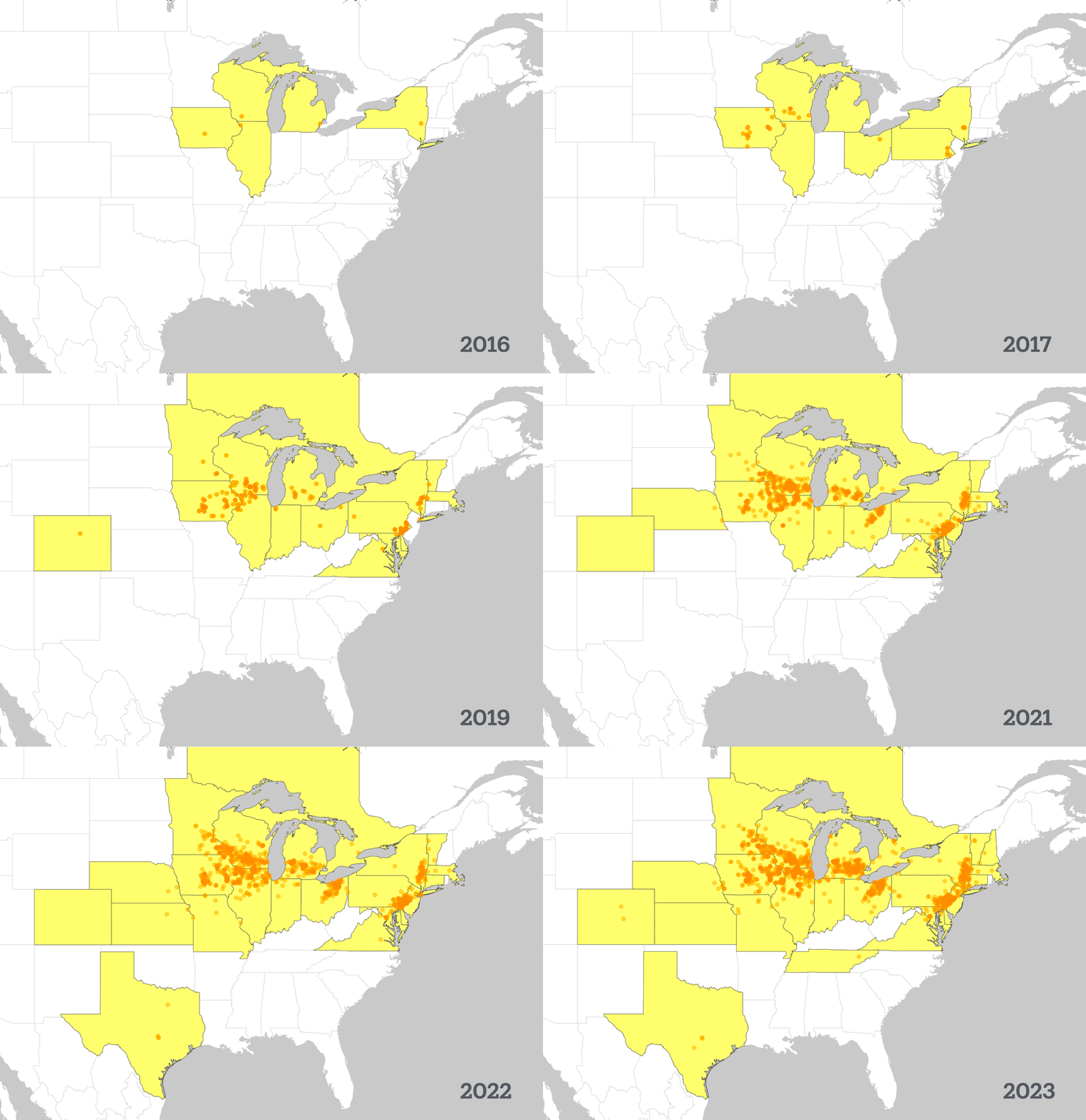
Where golden oyster mushrooms, an invasive species in North America, have been reported in the wild, including in forests, parks and neighborhoods. Red dots indicate new reports each year. States in yellow have had a report at some point. Aishwarya Veerabahu

Many mushroom species have been cultivated in North America for decades without becoming invasive species threats. However, golden oyster mushrooms have been different.

No one knows exactly how golden oyster mushrooms escaped into the wild, whether from a grow kit, a commercial mushroom farm or outdoor logs inoculated with golden oysters – a home-cultivation technique where mushroom mycelium is placed into logs to colonize the wood and produce mushrooms.

As grow kits increased in popularity, many people began buying golden oyster kits and watching them blossom into beautiful yellow mushrooms in their backyards. Their spores or composted kits could have spread into nearby forests.

Evidence from a pioneering study by Andrea Reisdorf (née Bruce) suggests golden oyster mushrooms were introduced into the wild in multiple U.S. states around the early 2010s.

Species the golden oysters pushed out

In our study, designed by Michelle Jusino and Mark Banik, research scientists with the U.S. Forest Service, our team went into forests around Madison, Wisconsin, and drilled into dead trees to collect wood shavings containing the natural fungal community within each tree. Some of the trees had golden oyster mushrooms on them, and some did not.

We then extracted DNA to identify and compare which fungi, and how many fungi, were in trees that had been invaded by golden oyster mushrooms compared with those that had not been.

We were startled to find that trees with golden oyster mushrooms housed only half as many fungal species as trees without golden oyster mushrooms, sometimes even less. We also found that the composition of fungi in trees with golden oyster mushrooms was different from trees without golden oyster mushrooms.

For example, the gentle green “mossy maze polypore” and the “elm oyster” mushroom were pushed out of trees invaded by golden oyster mushrooms.

Mossy green mushrooms grow like shelfs on the side of a tree trunk.
Mossy maze polypore growing on a stump. This is one of the native species that disappeared from trees when the golden oyster mushroom moved in.
mauriziobiso/iStock/Getty Images Plus

Another ousted fungus, Nemania serpens, is known for producing diverse arrays of chemicals that differ even between individuals of the same species. Fungi are sources of revolutionary medicines, including antibiotics like penicillin, cholesterol medication and organ transplant stabilizers. The value of undiscovered, potentially useful chemicals can be lost when invasive species push others out.

The invasive species problem includes fungi

Given what my colleagues and I discovered, we believe it is time to include invasive fungi in the global conversation about invasive species and examine their role as a cause of biodiversity loss.

That conversation includes the idea of fungal “endemism” – that each place has a native fungal community that can be thrown out of balance. Native fungal communities tend to be diverse, having evolved together over thousands of years to coexist. Our research shows how invasive species can change the makeup of fungal communities by outcompeting native species, thus changing the fungal processes that have shaped native ecosystems.

There are many other invasive fungi. For example, the deadly poisonous “death cap” Amanita phalloides and the “orange ping-pong bat” Favolaschia calocera are invasive in North America. The classic red and white “fly agaric” Amanita muscaria is native to North America but invasive elsewhere.

Bright orange mushrooms the texture of ping-pong paddles.
The orange ping-pong bat mushroom is invasive in North America. These were photographed in New Zealand.
Bernard Spragg. NZ/Flickr Creative Commons

The golden oyster mushrooms’ invasion of North America should serve as a bright yellow warning that nonnative fungi are capable of rapid invasion and should be cultivated with caution, if at all.

Golden oyster mushrooms are now recognized as invasive in Switzerland and can be found in forests in Italy, Hungary, Serbia and Germany. I have been hearing about people attempting to cultivate them around the world, including in Turkey, India, Ecuador, Kenya, Italy and Portugal. It’s possible that golden oyster mushrooms may not be able to establish invasive populations in some regions. Continued research will help us understand the full scope of impacts invasive fungi can have.

What you can do to help

Mushroom growers, businesses and foragers around the world may be asking themselves, “What can we do about it?”

For the time being, I recommend that people consider refraining from using golden oyster mushroom grow kits to prevent any new introductions. For people who make a living selling these mushrooms, consider adding a note that this species is invasive and should be cultivated indoors and not composted.

If you enjoy growing mushrooms at home, try cultivating safe, native species that you have collected in your region.

Most mushrooms you see in the grocery store are grown indoors.

There is no single right answer. In some places, golden oyster mushrooms are being cultivated as a food source for impoverished communities, for income, or to process agricultural waste and produce food at the same time. Positives like these will have to be considered alongside the mushrooms’ negative impacts when developing management plans or legislation.

In the future, some ideas for solutions could involve sporeless strains of golden oysters for home kits that can’t spread, or a targeted mycovirus that could control the population. Increased awareness about responsible cultivation practices is important, because when invasive species move in and disrupt the native biodiversity, we all stand to lose the beautiful, colorful, weird fungi we see on walks in the forest.

The Conversation

Aishwarya Veerabahu receives funding from UW-Madison Dept. of Botany, the UW Arboretum, the Society of Ecological Restoration, and the Garden Club of America. Aishwarya Veerabahu was an employee of the USDA Forest Service.

ref. The golden oyster mushroom craze unleashed an invasive species – and a worrying new study shows it’s harming native fungi – https://theconversation.com/the-golden-oyster-mushroom-craze-unleashed-an-invasive-species-and-a-worrying-new-study-shows-its-harming-native-fungi-259006

When big sports events expand, like FIFA’s 2026 World Cup matches across North America, their climate footprint expands too

Source: The Conversation – USA (2) – By Brian P. McCullough, Associate Professor of Sport Management, University of Michigan

Lionel Messi celebrates with fans after Argentina won the FIFA World Cup championship in 2022 in Qatar. Michael Regan-FIFA/FIFA via Getty Images

When the FIFA World Cup hits North America in June 2026, 48 teams and millions of soccer fans will be traveling to and from venues spread across the United States, Canada and Mexico.

It’s a dramatic expansion – 16 more teams will be playing than in recent years, with a jump from 64 to 104 matches. The tournament is projected to bring in over US$10 billion in revenue. But the expansion will also mean a lot more travel and other activities that contribute to climate change.

The environmental impacts of giant sporting events like the World Cup create a complex paradox for an industry grappling with its future in a warming world.

A sustainability conundrum

Sports are undeniably experiencing the effects of climate change. Rising global temperatures are putting athletes’ health at risk during summer heat waves and shortening winter sports seasons. Many of the 2026 World Cup venues often see heat waves in June and early July, when the tournament is scheduled.

There is a divide over how sports should respond.

Some athletes are speaking out for more sustainable choices and have called on lawmakers to take steps to limit climate-warming emissions. At the same time, the sport industry is growing and facing a constant push to increase revenue. The NCAA is also considering expanding its March Madness basketball tournaments from 68 teams currently to as many as 76.

A sweating soccer player squirts water from a bottle onto his forehead during a match.
Park Yong-woo of team Al Ain from Abu Dhabi tries to cool off during a Club World Cup match on June 26, 2025, in Washington, D.C., which was in the midst of a heat wave. Some players have raised concerns about likely high temperatures during the 2026 World Cup, with matches scheduled June 11 to July 19.
AP Photo/Julia Demaree Nikhinson

Estimates for the 2026 World Cup show what large tournament expansions can mean for the climate. A report from Scientists for Global Responsibility estimates that the expanded World Cup could generate over 9 million metric tons of carbon dioxide equivalent, nearly double the average of the past four World Cups.

This massive increase – and the increase that would come if the NCAA basketball tournaments also expand – would primarily be driven by air travel as fans and players fly among event cities that are thousands of miles apart.

A lot of money is at stake, but so is the climate

Sports are big business, and adding more matches to events like the World Cup and NCAA tournaments will likely lead to larger media rights contracts and greater gate receipts from more fans attending the events, boosting revenues. These are powerful financial incentives.

In the NCAA’s case, there is another reason to consider a larger tournament: The House v. NCAA settlement opened the door for college athletic departments to share revenue with athletes, which will significantly increase costs for many college programs. More teams would mean more television revenue and, crucially, more revenue to be distributed to member NCAA institutions and their athletic conferences.

When climate promises become greenwashing

The inherent conflict between maximizing profit through growth and minimizing environmental footprint presents a dilemma for sports.

Several sport organizations have promised to reduce their impact on the climate, including signing up for initiatives like the United Nations Sports for Climate Action Framework.

However, as sports tournaments and exhibition games expand, it can become increasingly hard for sports organizations to meet their climate commitments. In some cases, groups making sustainability commitments have been accused of greenwashing, suggesting the goals are more about public relations than making genuine, measurable changes.

For example, FIFA’s early claims that it would hold a “fully carbon-neutral” World Cup in Qatar in 2022 were challenged by a group of European countries that accused soccer’s world governing body of underestimating emissions. The Swiss Fairness Commission, which monitors fairness in advertising, considered the complaints and determined that FIFA’s claims could not be substantiated.

A young man looks up as he prepares to board a plane on the tarmac in Milan, Italy, for a flight to Rome on Dec. 15, 2024.
Alessandro Bastoni, of Inter Milan and Italy’s national team, prepares to board a flight from Milan to Rome with his team.
Mattia Ozbot-Inter/Inter via Getty Images

Aviation is often the biggest driver of emissions. A study that colleagues and I conducted on the NCAA men’s basketball tournament found about 80% of its emissions were connected to travel. And that was after the NCAA began using the pod system, which is designed to keep teams closer to home for the first and second rounds.

Finding practical solutions

Some academics, observing the rising emissions trend, have called for radical solutions like the end of commercialized sports or drastically limiting who can attend sporting events, with a focus on fans from the region.

These solutions are frankly not practical, in my view, nor do they align with other positive developments. The growing popularity of women’s sports shows the challenge in limiting sports events – more games expands participation but adds to the industry’s overall footprint.

Further compounding the challenges of reducing environmental impact is the amount of fan travel, which is outside the direct control of the sports organization or event organizers.

Many fans will follow their teams long distances, especially for mega-events like the World Cup or the NCAA tournament. During the men’s World Cup in Russia in 2018, more than 840,000 fans traveled from other countries. The top countries by number of fans, after Russia, were China, the U.S., Mexico and Argentina.

There is an argument that distributed sporting events like March Madness or the World Cup can be better in some ways for local environments because they don’t overwhelm a single city. However, merely spreading the impact does not necessarily reduce it, particularly when considering the effects on climate change.

How fans can cut their environmental footprint

Sport organizations and event planners can take steps to be more sustainable and also encourage more sustainable choices among fans. Fans can reduce their environmental impact in a variety of ways. For example:

  • Avoid taking airplanes for shorter distances, such as between FIFA venues in Philadelphia, New York and Boston, and carpool or take Amtrak instead. Planes can be more efficient for long distances, but air travel is still a major contributing factor to emissions.

  • While in a host city, use mass transit or rent electric vehicles or bicycles for local travel.

  • Consider sustainable accommodations, such as short-term rentals that might have a smaller environmental footprint than a hotel. Or stay at a certified green hotel that makes an effort to be more efficient in its use of water and energy.

  • Engage in sustainable pregame and postgame activities, such as choosing local, sustainable food options, and minimize waste.

  • You can also pay to offset carbon emissions for attending different sporting events, much like concertgoers do when they attend musical festivals. While critics question offsets’ true environmental benefit, they do represent people’s growing awareness of their environmental footprint.

Through all these options, it’s clear that sports face a significant challenge in addressing their environmental impacts and encouraging fans to be more sustainable, while simultaneously trying to meet ambitious business and environmental targets.

In my view, a sustainable path forward will require strategic, yet genuine, commitment by the sports industry and its fans, and a willingness to prioritize long-term planetary health alongside economic gains – balancing the sport and sustainability.

The Conversation

Brian P. McCullough does not work for, consult, own shares in or receive funding from any company or organization that would benefit from this article, and has disclosed no relevant affiliations beyond their academic appointment.

ref. When big sports events expand, like FIFA’s 2026 World Cup matches across North America, their climate footprint expands too – https://theconversation.com/when-big-sports-events-expand-like-fifas-2026-world-cup-matches-across-north-america-their-climate-footprint-expands-too-259437

Europe is stuck in a bystander role over Iran’s nuclear program after US, Israeli bombs establish facts on the ground

Source: The Conversation – Global Perspectives – By Garret Martin, Hurst Senior Professorial Lecturer, Co-Director Transatlantic Policy Center, American University School of International Service

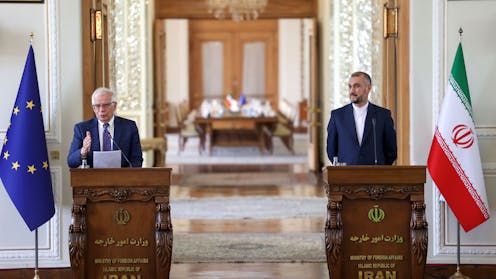
Iran Foreign Minister Hossein Amirabdollahian, right, attends a news conference with EU foreign affairs representative Josep Borrell in Tehran on June 25, 2022. Atta KenareAFP via Getty Images

The U.S. bombing of three Iranian nuclear facilities on June 22, 2025, sent shock waves around the world. It marked a dramatic reversal for the Trump administration, which had just initiated negotiations with Tehran over its nuclear program. Dispensing with diplomacy, the U.S. opted for the first time for direct military involvement in the then-ongoing Israeli-Iranian conflict.

European governments have long pushed for a diplomatic solution to Tehran’s nuclear ambitions. Yet, the reaction in the capitals of Europe to the U.S. bombing of the nuclear facilities was surprisingly subdued.

European Commission President Ursula von der Leyen noted Israel’s “right to defend itself and protect its people.” German Chancellor Friedrich Merz was equally supportive, arguing that “this is dirty work that Israel is doing for all of us.” And a joint statement by the E3 – France, the U.K. and Germany – tacitly justified the U.S. bombing as necessary to prevent the possibility of Iran developing nuclear weapons.

Europe’s responses to the Israeli and American strikes were noteworthy because of how little they discussed the legality of the attacks. There was no such hesitation when Russia targeted civilian nuclear energy infrastructure in Ukraine in 2022.

But the timid reaction also underscored Europe’s bystander role, contrasting with its past approach on that topic. Iran’s nuclear program had been a key focal point of European diplomacy for years. The E3 nations initiated negotiations with Tehran back in 2003. They also helped to facilitate the signing of the 2015 Iran nuclear deal, which also included Russia, the European Union, China, the U.S. and Iran. And the Europeans sought to preserve the agreement, even after the unilateral U.S. withdrawal in 2018 during President Donald Trump’s first term.

As a scholar of transatlantic relations and security, I believe Europe faces long odds to once again play an impactful role in strengthening the cause of nuclear nonproliferation with Iran. Indeed, contributing to a new nuclear agreement with Iran would require Europe to fix a major rift with Tehran, overcome its internal divisions over the Middle East and manage a Trump administration that seems less intent on being a reliable ally for Europe.

Growing rift between Iran and Europe

For European diplomats, the 2015 deal was built on very pragmatic assumptions. It only covered the nuclear dossier, as opposed to including other areas of contention such as human rights or Iran’s ballistic missile program. And it offered a clear bargain: In exchange for greater restrictions on its nuclear program, Iran could expect the lifting of some existing sanctions and a reintegration into the world economy.

As a result, the U.S. withdrawal from the deal in 2018 posed a fundamental challenge to the status quo. Besides exiting, the Trump White House reimposed heavy secondary sanctions on Iran, which effectively forced foreign companies to choose between investing in the U.S. and Iranian markets. European efforts to mitigate the impact of these U.S. sanctions failed, thus undermining the key benefit of the deal for Iran: helping its battered economy. It also weakened Tehran’s faith in the value of Europe as a partner, as it revealed an inability to carve real independence from the U.S.

A man with blond hair walks past a group of people in suits.
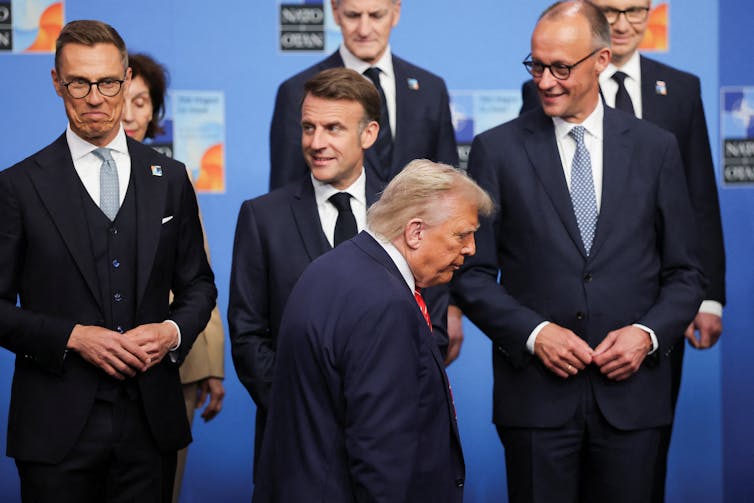
U.S. President Donald Trump walks past French President Emmanuel Macron, center, and German Chancellor Friedrich Merz, right, in The Hague, Netherlands, on June 25, 2025.
Christian Hartmann/AFP via Getty Images

After 2018, relations between Europe and Iran deteriorated significantly. Evidence of Iranian state-sponsored terrorism and Iran-linked plots on European soil hardly helped. Moreover, Europeans strongly objected to Iran supplying Russia with drones in support of Moscow’s invasion of Ukraine – and later on, ballistic missiles as well. On the flip side, Iran deeply objected to European support for Israel’s war in the Gaza Strip in the aftermath of the Oct. 7, 2023, attacks.

These deep tensions remain a significant impediment to constructive negotiations on the nuclear front. Neither side currently has much to offer to the other, nor can Europe count on any meaningful leverage to influence Iran. And Europe’s wider challenges in its Middle East policy only compound this problem.

Internal divisions

In 2015, Europe could present a united front on the Iranian nuclear deal in part because of its limited nature. But with the nonproliferation regime now in tatters amid Trump’s unilateral actions and the spread of war across the region, it is now far harder for European diplomats to put the genie back in the bottle. That is particularly true given the present fissures over increasingly divisive Middle East policy questions and the nature of EU diplomacy.

Europe remains very concerned about stability in the Middle East, including how conflicts might launch new migratory waves like in 2015-16, when hundreds of thousands of Syrians fled to mainland Europe. The EU also remains very active economically in the region and is the largest funder of the Palestinian Authority. But it has been more of a “payer than player” in the region, struggling to translate economic investment into political influence.

In part, this follows from the longer-term tendency to rely on U.S. leadership in the region, letting Washington take the lead in trying to solve the Israeli-Palestinian conflict. But it also reflects the deeper divisions between EU member nations.

With foreign policy decisions requiring unanimity, EU members have often struggled to speak with one voice on the Middle East. Most recently, the debates over whether to suspend the economic association agreement with Israel over its actions in Gaza or whether to recognize a Palestinian state clearly underscored the existing EU internal disagreements.

Unless Europe can develop a common approach toward the Middle East, it is hard to see it having enough regional influence to matter in future negotiations over Iran’s nuclear program. This, in turn, would also affect how it manages its crucial, but thorny, relations with the U.S.

Europe in the shadow of Trump

The EU was particularly proud of the 2015 nuclear deal because it represented a strong symbol of multilateral diplomacy. It brought together great powers in the spirit of bolstering the cause of nuclear nonproliferation.

Smoke is seen rising from a group of buildings
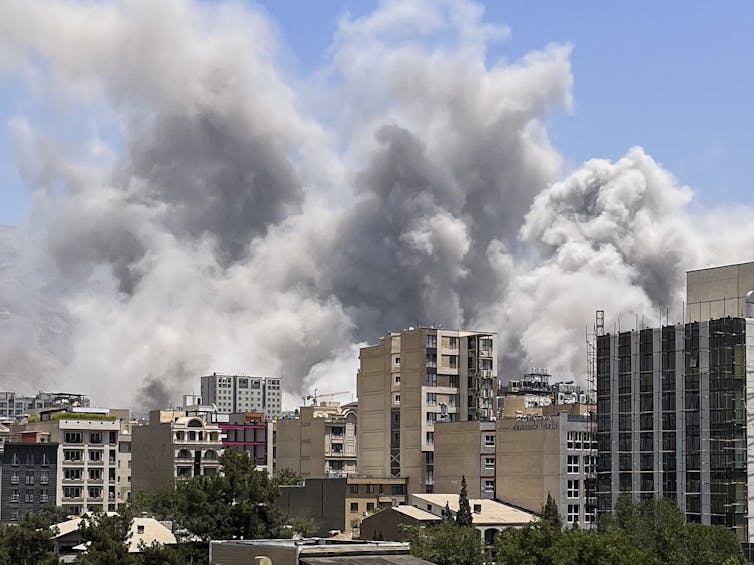
Smoke rises from a building in Tehran after the Iranian capital was targeted by Israeli airstrikes on June 23, 2025.
Elyas/Middle East Images/AFP via Getty Images

Ten years on, the prospects of replicating such international cooperation seem rather remote. Europe’s relations with China and Russia – two key signers of the original nuclear deal – have soured dramatically in recent years. And ties with the United States under Trump have also been particularly challenging.

Dealing with Washington, in the context of the Iran nuclear program, presents a very sharp dilemma for Europe.

Trying to carve a distinct path may be appealing, but it lacks credibility at this stage. Recent direct talks with Iranian negotiators produced little, and Europe is not in a position to give Iran guarantees that it would not face new strikes from Israel.

And pursuing an independent path could easily provoke the ire of Trump, which Europeans are keen to avoid. There has already been a long list of transatlantic disputes, whether over trade, Ukraine or defense spending. European policymakers would be understandably reticent to invest time and resources in any deal that Trump could again scuttle at a moment’s notice.

Trump, too, is scornful of what European diplomacy could achieve, declaring recently that Iran doesn’t want to talk to Europe. He has instead prioritized bilateral negotiations with Tehran. Alignment with the U.S., therefore, may not translate into any great influence. Trump’s decision to bomb Iran, after all, happened without forewarning for his allies.

Thus, Europe will continue to pay close attention to Iran’s nuclear program. But, constrained by poor relations with Tehran and its internal divisions on the Middle East, it is unlikely that it will carve out a major role on the nuclear dossier as long as Trump is in office.

The Conversation

Garret Martin receives funding from the European Union for the organization, the Transatlantic Policy Center, that he co-directs.

ref. Europe is stuck in a bystander role over Iran’s nuclear program after US, Israeli bombs establish facts on the ground – https://theconversation.com/europe-is-stuck-in-a-bystander-role-over-irans-nuclear-program-after-us-israeli-bombs-establish-facts-on-the-ground-260740

China’s insertion into India-Pakistan waters dispute adds a further ripple in South Asia

Source: The Conversation – Global Perspectives – By Pintu Kumar Mahla, Research Associate at the Water Resources Research Institute, University of Arizona

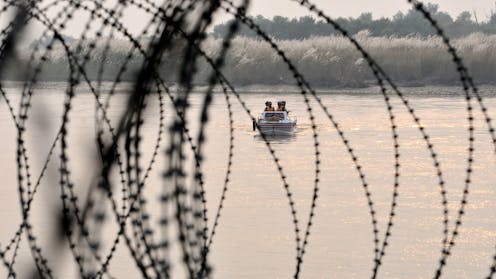
Indian Border Security Force soldiers patrol near the line of control in Kashmir. Nitin Kanotra/Hindustan Times via Getty Images

With the future of a crucial water-sharing treaty between India and Pakistan up in the air, one outside party is looking on with keen interest: China.

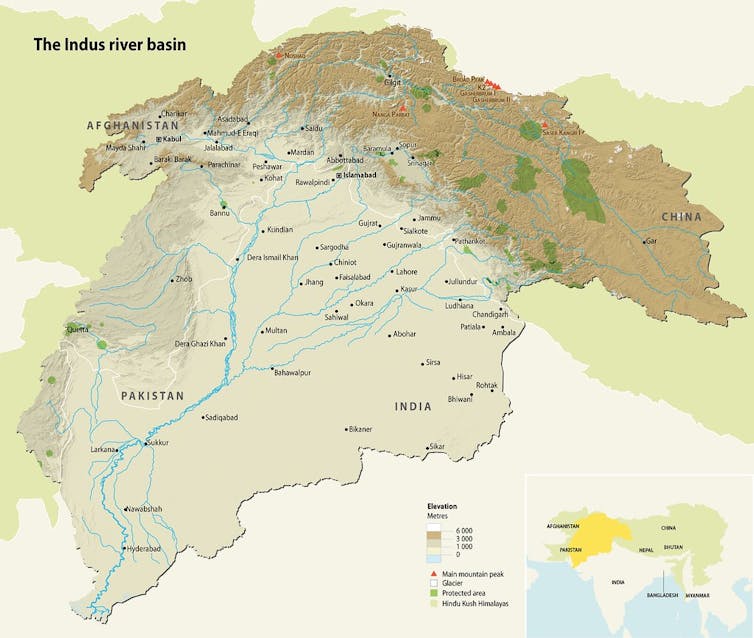
For 65 years, the Indus Waters Treaty has seen the two South Asian rivals share access and use of the Indus Basin, a vast area covered by the Indus River and its tributaries that also stretches into Afghanistan and China.

For much of that history, there has been widespread praise for the agreement as a successful demonstration of cooperation between adversarial states over a key shared resource. But experts have noted the treaty has long held the potential for conflict. Drafters failed to factor in the effects of climate change, and the Himalayan glaciers that feed the rivers are now melting at record rates, ultimately putting at risk the long-term sustainability of water supply. Meanwhile, the ongoing conflict over Kashmir, where much of the basin is situated, puts cooperation at risk.

With treaty on ice, China steps in

That latest provocation threatening the treaty was a terrorist attack in the Indian union territory of Jammu and Kashmir on April 22, 2025. In response to that attack, which India blamed on Pakistan and precipitated a four-day confrontation, New Delhi temporarily suspended the treaty.

But even before that attack, India and Pakistan had been locked in negotiation over the future of the treaty – the status of which has been in the hands of international arbitrators since 2016. In the latest development, on June 27, 2025, the Permanent Court of Arbitration issued a supplementary award in favor of Pakistan, arguing that India’s holding of the treaty in abeyance did not affect its jurisdiction over the case. Moreover, the treaty does not allow for either party to unilaterally suspend the treaty, the ruling suggested.

Amid the wrangling over the treaty’s future, Pakistan has turned to China for diplomatic and strategic support. Such support was evident during the conflict that took place following April’s terrorist attack, during which Pakistan employed Chinese-made fighter jets and other military equipment against its neighbor.

Meanwhile, in an apparent move to counter India’s suspension of the treaty, China and Pakistan have ramped up construction of a major dam project that would provide water supply and electricity to parts of Pakistan.

So, why is China getting involved? In part, it reflects the strong relationship between Pakistan and China, developed over six decades.

But as an expert in hydro politics, I believe Beijing’s involvement raises concerns: China is not a neutral observer in the dispute. Rather, Beijing has long harbored a desire to increase its influence in the region and to counter an India long seen as a rival. Given the at-times fraught relationship between China and India – the two countries went to war in 1962 and continue to engage in sporadic border skirmishes – there are concerns in New Delhi that Beijing may respond by disrupting the flow of rivers in its territory that feed into India.

In short, any intervention by Beijing over the Indus Waters Treaty risks stirring up regional tensions.

Wrangling over waters

The Indus Waters Treaty has already endured three armed conflicts between Pakistan and India, and until recently it served as an exemplar of how to forge a successful bilateral agreement between two rival neighbors.


Riccardo Pravettoni, CC BY-SA

Under the initial terms of the treaty, which each country signed in 1960, India was granted control over three eastern rivers the countries share – Ravi, Beas and Satluj – with an average annual flow of 40.4 billion cubic meters. Meanwhile, Pakistan was given access to almost 167.2 billion cubic meters of water from the western rivers – Indus, Jhelum and Chenab.

In India, the relatively smaller distribution has long been the source of contention, with many believing the treaty’s terms are overly generous to Pakistan. India’s initial demand was for 25% of the Indus waters.

For Pakistan, the terms of the division of the Indus Waters Treaty are painful because they concretized unresolved land disputes tied to the partition of India in 1947. In particular, the division of the rivers is framed within the broader political context of Kashmir. The three major rivers – Indus, Jhelum and Chenab – flow through Indian-administered Jammu and Kashmir before entering the Pakistan-controlled western part of the Kashmir region.

But the instability of the Kashmir region – disputes around the Line of Control separating the Indian- and Pakistan-controlled areas are common – underscores Pakistan’s water vulnerability.

Nearly 65% of Pakistanis live in the Indus Basin region, compared with 14% for India. It is therefore not surprising that Pakistan has warned that any attempt to cut off the water supply, as India has threatened, would be considered an act of war.

It also helps to explain Pakistan’s desire to develop hydropower on the rivers it controls. One-fifth of Pakistan’s electricity comes from hydropower, and nearly 21 hydroelectric power plants are located in the Indus Basin region.

Since Pakistan’s economy relies heavily on agriculture and the water needed to maintain agricultural land, the fate of the Indus Waters Treaty is of the utmost importance to Pakistan’s leaders.

Such conditions have driven Islamabad to be a willing partner with China in a bid to shore up its water supply.

China provides technical expertise and financial support to Pakistan for numerous hydropower projects in Pakistan, including the Diamer Bhasha Dam and Kohala Hydropower Project. These projects play a significant role in addressing Pakistan’s energy requirements and have been a key aspect of the transboundary water relationship between the two nations.

Using water as a weapon?

With it’s rivalry with India and its desire to simultaneously work with Pakistan on numerous issues, China increasingly sees itself as a stakeholder in the Indus Waters Treaty, too. Chinese media narratives have framed India as the aggressor in the dispute, warning of the danger of using “water as a weapon” and noting that the source of the Indus River lies in China’s Western Tibet region.

Doing so fits Beijing’ s greater strategic presence in South Asian politics. After the terrorist attack, China Foreign Minister Wang Yi reaffirmed China’s support for Pakistan, showcasing the relationship as an “all-weather strategic” partnership and referring to Pakistan as an “ironclad friend.”

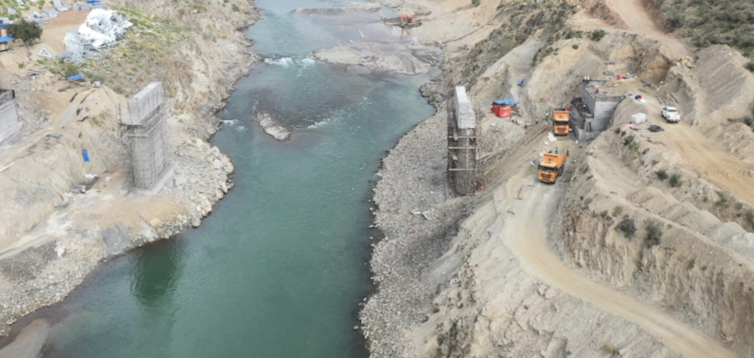
And in response to India’s suspension of the treaty, China announced it was to accelerate work on the significant Mohmand hydropower project on the tributary of the Indus River in Pakistan.

Two foundation stones are seen either side of a river.
Construction at the Mohmand Dam.
Pakistan Water and Power Development Authority

Chinese investment in Pakistan’s hydropower sector presents substantial opportunities for both countries in regards to energy security and promoting economic growth.

The Indus cascade project under the China-Pakistan Economic Corridor initiative, for example, promises to provide cumulative hydropower generation capacity of around 22,000 megawatts. Yet the fact that project broke ground in Gilgit-Baltistan, a disputed area in Pakistan-controlled Kashmir, underscores the delicacy of the situation.

Beijing’s backing of Pakistan is largely motivated by a mix of economic and geopolitical interests, particularly in legitimizing the China-Pakistan Economic Corridor. But it comes at the cost of stirring up regional tensions.

As such, the alignment of Chinese and Pakistani interests in developing hydro projects can pose a further challenge to the stability of South Asia’s water-sharing agreements, especially in the Indus Basin. Recently, the chief minister of the Indian state of Arunachal Pradesh, which borders China, warned that Beijing’s hydro projects in the Western Tibet region amount to a ticking “water bomb.”

To diffuse such tensions – and to get the Indus Waters Treaty back on track – it behooves India, China and Pakistan to engage in diplomacy and dialogue. Such engagement is, I believe, essential in addressing the ongoing water-related challenges in South Asia.

The Conversation

Pintu Kumar Mahla is affiliated with the Water Resources Research Center, the University of Arizona. He is also a member of the International Association of Water Law (AIDA).

Pintu Kumar Mahla has not received funding related to this article.

ref. China’s insertion into India-Pakistan waters dispute adds a further ripple in South Asia – https://theconversation.com/chinas-insertion-into-india-pakistan-waters-dispute-adds-a-further-ripple-in-south-asia-258891

Why is Israel bombing Syria?

Source: The Conversation – Global Perspectives – By Ali Mamouri, Research Fellow, Middle East Studies, Deakin University

Conflict in Syria has escalated with Israel launching bombing raids against its northern neighbour.

It follows months of fluctuating tensions in southern Syria between the Druze minority and forces aligned with the new government in Damascus. Clashes erupted in the last few days, prompting Israeli airstrikes in defence of the Druze by targeting government bases, tanks, and heavy weaponry.

Israel Minister Amichai Chikli has called the Syrian president Ahmed al-Sharaa

a terrorist, a barbaric murderer who should be eliminated without delay.

Despite the incendiary language, a ceasefire has been reached, halting the fighting – for now.

Syrian forces have begun withdrawing heavy military equipment from the region, while Druze fighters have agreed to suspend armed resistance, allowing government troops to regain control of the main Druze city of Suwayda.

What do the Druze want?

The Druze are a small religious minority estimated at over one million people, primarily concentrated in the mountainous regions of Lebanon, Syria, Israel, and Jordan.

In Syria, their population is estimated at around 700,000 (of around 23 million total Syrian population), with the majority residing in the southern As-Suwayda Governorate – or province – which serves as their traditional stronghold.

Since the 2011 uprising against the Assad regime, the Druze have maintained a degree of autonomy, successfully defending their territory from various threats, including ISIS and other jihadist groups.

Following Assad’s fall late last year, the Druze — along with other minority groups such as the Kurds in the east and Alawites in the west — have called for the country to be federalized.

They advocate for a decentralised model that would grant greater autonomy to regional communities.

However, the transitional government in Damascus is pushing for a centralised state and seeking to reassert full control over the entire Syrian territory. This fundamental disagreement has led to periodic clashes between Druze forces and government-aligned troops.

Despite the temporary ceasefire, tensions remain high. Given the core political dispute remains unresolved, many expect renewed conflict to erupt in the near future.

Why is Israel involved?

The ousting of the Assad regime created a strategic opening for Israel to expand its influence in southern Syria. Israel’s involvement is driven by two primary concerns:

1. Securing its northern border

Israel views the power vacuum in Syria’s south as a potential threat, particularly the risk of anti-Israeli militias establishing a foothold near its northern border.

During the recent clashes, the Israeli military declared

The Israeli Defence Forces will not allow a military threat to exist in southern Syria and will act against it.

Likewise, Prime Minister Benjamin Netanyahu, who has stated he will not allow Syrian forces south of Damascus:

We are acting to prevent the Syrian regime from harming them [the Druze] and to ensure the demilitarisation of the area adjacent to our border with Syria.

In line with these warnings, the Israeli Air Force has conducted extensive strikes against Syrian military infrastructure, targeting bases, aircraft, tanks, and heavy weaponry.

These operations are intended to prevent any future buildup of military capacity that could be used against Israel from the Syrian side of the border.

2. Supporting a federated Syria

Israel is backing the two prominent allied minorities in Syria — the Kurds in the northeast and the Druze in the south — in their push for a federal governance model.

A fragmented Syria, divided along ethnic and religious lines, is seen by some Israeli policymakers as a way to maintain Israeli domination in the region.

This vision is part of what some Israeli officials have referred to as a “New Middle East” — one where regional stability and normalisation emerge through reshaped borders and alliances.

Israeli Foreign Minister Gideon Sa’ar recently echoed this strategy, stating:

A single Syrian state with effective control and sovereignty over all its territory is unrealistic.

For Israel, the logical path forward is autonomy for the various minorities in Syria within a federal structure.

The United States’ role?

According to unconfirmed reports, Washington has privately urged Israel to scale back its military strikes on Syria in order to prevent further escalation and preserve regional stability.

The US is promoting increased support for Syria’s new regime in an effort to help it reassert control and stabilise the country.

There are also indications the US and its allies are encouraging the Syrian government to move toward normalisation with Israel. Reports suggest Tel Aviv has held talks with the new Sharaa-led regime about the possibility of Syria joining the Abraham Accords (diplomatic agreements between Israel and several Arab states), which the regime in Damascus appears open to.

US Special Envoy Tom Barrack has described the recent clashes as “worrisome”, calling for de-escalation and emphasising the need for

a peaceful, inclusive outcome for all stakeholders – including the Druze, Bedouin tribes, the Syrian government, and Israeli forces.

Given the deep-rooted political divisions, competing regional agendas, and unresolved demands from minority groups, the unrest in southern Syria is unlikely to end soon.

Despite another temporary ceasefire, underlying tensions remain. Further clashes are not only possible but highly probable.

The Conversation

Ali Mamouri does not work for, consult, own shares in or receive funding from any company or organisation that would benefit from this article, and has disclosed no relevant affiliations beyond their academic appointment.

ref. Why is Israel bombing Syria? – https://theconversation.com/why-is-israel-bombing-syria-261259

What makes ‘great powers’ great? And how will they adapt to a multipolar world?

Source: The Conversation – Global Perspectives – By Andrew Latham, Professor of Political Science, Macalester College

When greats clash! In this case, in the 1974 film ‘Godzilla vs. Mechagodzilla.’ FilmPublicityArchive/United Archives via Getty Images

Many column inches have been dedicated to dissecting the “great power rivalry” currently playing out between China and the U.S.

But what makes a power “great” in the realm of international relations?

Unlike other states, great powers possess a capacity to shape not only their immediate surroundings but the global order itself – defining the rules, norms and structures that govern international politics. Historically, they have been seen as the architects of world systems, exercising influence far beyond their neighborhoods.

The notion of great powers came about to distinguish between the most and least powerful states. The concept gained currency after the 1648 Peace of Westphalia and the Congress of Vienna in 1815 – events in Europe that helped establish the notion of sovereign states and the international laws governing them.

Whereas the great powers of the previous eras – for example, the Roman Empire – sought to expand their territory at almost every turn and relied on military power to do so, the modern great power utilizes a complex tapestry of diplomatic pressure, economic leverage and the assertions of international law. The order emerging out of Westphalia enshrined the principles of national sovereignty and territorial integrity, which allowed these powers to pursue a balance of power as codified by the Congress of Vienna based on negotiation as opposed to domination.

This transformation represented a momentous development in world politics: At least some portion of the legitimacy of a state’s control was now realized through its relationships and capacity to keep the peace, rather than resting solely on its ability to use force.

From great to ‘super’

Using their material capabilities – economic strength, military might and political influence – great powers have been able to project power across multiple regions and dictate the terms of international order.

In the 19th-century Concert of Europe, the great powers – Britain, France, Austria, Prussia and Russia – collectively managed European politics, balancing power to maintain stability. Their influence extended globally through imperial expansion, trade and the establishment of norms that reflected their priorities.

During the 20th century, the Cold War brought a stark distinction between great powers and other states. The U.S. and the Soviet Union, as the era’s two “superpowers,” dominated the international system, shaping it through a rivalry that encompassed military alliances, ideological competition and economic systems. Great powers in this context were not merely powerful states but the central actors defining the structure of global politics.

Toward a multipolar world

The post-Cold War period briefly ushered in a unipolar moment, with the U.S. as the sole great power capable of shaping the international system on a global scale.

This era was marked by the expansion of liberal internationalism, economic globalization and U.S.-led-and-constructed multilateralism.

However, the emergence of new centers of power, particularly China and to a lesser extent Russia, has brought the unipolar era to a close, ushering in a multipolar world where the distinctive nature of great powers is once again reshaped.

In this system, great powers are states with the material capabilities and strategic ambition to influence the global order as a whole.

And here they differ from regional powers, whose influence is largely confined to specific areas. Nations such as Turkey, India, Australia, Brazil and Japan are influential within their neighborhoods. But they lack the global reach of the U.S. or China to fundamentally alter the international system.

Instead, the roles of these regional powers is often defined by stabilizing their regions, addressing local challenges or acting as intermediaries in great power competition.

Challenging greatness

Yet the multipolar world presents unique challenges for today’s great powers. The diffusion of power means that no single great power can dominate the system as the U.S. did in the post-Cold War unipolar era.

Instead, today’s great powers must navigate complex dynamics, balancing competition with cooperation. For instance, the rivalry between Washington and Beijing is now a defining feature of global politics, spanning trade, technology, military strategy and ideological influence. Meanwhile, Russia’s efforts to maintain its great power status have resulted in more assertive, though regionally focused, actions that nonetheless have global implications.

Great powers must also contend with the constraints of interdependence. The interconnected nature of the global economy, the proliferation of advanced technologies and the rise of transnational challenges such as climate change and pandemics limit the ability of any one great power to unilaterally dictate outcomes. This reality forces great powers to prioritize their core interests while finding ways to manage global issues through cooperation, even amid intense competition.

As the world continues to adjust to multiple centers of power, the defining feature of great powers remains an unmatched capacity to project influence globally and define the parameters of the international order.

Whether through competition, cooperation or conflict, the actions of great powers will, I believe, continue to shape the trajectory of the global system, making their distinctiveness as central players in international relations more relevant than ever.

This article is part of a series explaining foreign policy terms commonly used but rarely explained.

The Conversation

Andrew Latham does not work for, consult, own shares in or receive funding from any company or organization that would benefit from this article, and has disclosed no relevant affiliations beyond their academic appointment.

ref. What makes ‘great powers’ great? And how will they adapt to a multipolar world? – https://theconversation.com/what-makes-great-powers-great-and-how-will-they-adapt-to-a-multipolar-world-260969

Muhammadu Buhari: Nigeria’s military leader turned democratic president leaves a mixed legacy

Source: The Conversation – Global Perspectives – By Kester Onor, Senior Research Fellow, Nigerian Institute of International Affairs

Nigeria’s former president, Muhammadu Buhari, who died in London on 13 July aged 82, was one of two former military heads of state who were later elected as civilian presidents. Buhari was the military head of state of Nigeria from 31 December 1983 to 27 August 1985 and president from 2015 to 2023.

The other Nigerian politician to have been in both roles is former president Olusegun Obasanjo . He was a military ruler between 1976 and 1979 and elected president between 1999 and 2007.

Buhari led Nigeria cumulatively for nearly a decade. His time as military head of state was marked with a war against corruption but he couldn’t do as much during his time as president under democratic rule.

As a political scientist who once served in the Nigerian Army, I believe that former president Buhari’s government’s war on terrorism was largely underwhelming, despite promises and early gains.

In his elected role, Buhari maintained a modest personal lifestyle and upheld electoral transitions. Nevertheless his presidency was marred by economic mismanagement, a failure to implement bold structural reforms, ethnic favouritism, and an unfulfilled promise of change.

He did leave tangible infrastructural footprints, a focus on agriculture, and foundational efforts in transparency and anti-corruption.

So his mark on Nigeria’s development trajectory was mixed.

Early years

Buhari was born on 17 December 1942, to Adamu and Zulaiha Buhari in Daura, Katsina State, north-west Nigeria. He was four years old when his father died. He attended Quranic school in Katsina. He was a Fulani, one of the major ethnic nationalities in Nigeria.

After completing his schooling, Buhari joined the army in 1961. He had military training in the UK, India and the United States as well as Nigeria.

In 1975 he was appointed military governor of North Eastern State (now Borno State), after being involved in ousting Yakubu Gowon in a coup that same year. He served as governor for a year.

Buhari later became federal commissioner for petroleum resources, overseeing Nigeria’s petroleum industry under Obasanjo. Obasanjo had become head of state in 1976 when Gowon’s successor, Murtala Muhammed, was assassinated in a failed coup that year.

In September 1979, he returned to regular army duties and commanded the 3rd Armoured division based in Jos, Plateau State, north central. Nigeria’s Second Republic commenced that year after the election of Shehu Shagari as president.

The coup that truncated the Shagari government on 31 December 1983 saw the emergence of Buhari as Nigeria’s head of state.

Buhari’s junta years

Buhari headed the military government for just under two years. He was ousted in another coup on 27 August 1985.

While at the helm he vowed that the government would not tolerate kick-backs, inflation of contracts and over-invoicing of imports. Nor would it condone forgery, fraud, embezzlement, misuse and abuse of office and illegal dealings in foreign exchange and smuggling.

Eighteen state governors were tried by military tribunals. Some of the accused received lengthy prison sentences, while others were acquitted or had their sentences commuted.

His government also enacted the notorious Decree 4 under which two journalists, Nduka Irabor and Dele Thompson, were jailed. The charges stemmed from three articles published on the reorganisation of Nigeria’s diplomatic service.

Buhari also instituted austerity measures and started a “War Against Indiscipline” which sought to promote positive values in the country. Authoritarian methods were sometimes used in its implementation. Soldiers forced Nigerians to queue, to be punctual and to obey traffic laws.

He also instituted restrictions on press and political freedoms. Labour unions were not spared either. Mass retrenchment of Nigerians in the public service was carried out with impunity.

While citizens initially welcomed some of these measures, growing discontent on the economic front made things tougher for the regime.


Read more:
Why Buhari won even though he had little to show for first term


Buhari, the democrat

Buhari’s dream to lead Nigeria again through the ballot box failed in 2003, 2007 and 2011. To his credit, he didn’t give up. An alliance of opposition parties succeeded in getting him elected in 2015.

The legacy he left is mixed.

Buhari’s government deepened national disunity.

His appointments, often skewed in favour of the northern region and his Fulani kinsmen, fuelled accusations of tribalism and marginalisation. His perceived affinity with Fulani herdsmen, despite widespread violence linked to some of them, further eroded public trust in his leadership.

His anti-corruption mantra largely did not succeed. While some high-profile recoveries were made, critics argue that his anti-corruption war was selective and heavily politicised.

Currently, his Central Bank governor is on trial for corruption charges.

The performance of the economy was also dismal under his tenure. Not all these problems could be laid at his feet. Nevertheless his inability to tackle the country’s underlying problems, such as insecurity, inflation and rising unemployment, all contributed. He presided over two recessions, rising unemployment, inflation, and a weakened naira.

He did, however, succeed on some fronts.

He tried with infrastructure. The Lagos-Ibadan expressway, a major road, was almost completed and he got the railways working again, completing the Abuja-Kaduna and Lagos-Ibadan lines. He also completed the Second Niger Bridge.

There was an airport revitalisation programme which led to improvements in Lagos, Abuja and Port Harcourt airports.

Buhari signed the Petroleum Industry Act after nearly 20 years’ delay. This is now attracting more investments into the oil industry.

He also initiated some social investment schemes like N-Power, N-Teach and a school feeding programme. They provided temporary jobs for some and gave some poor people more money in their pockets. N-Power is a youth empowerment programme designed to combat unemployment, improve social development and provide people with relevant skills.

These programmes later became mired in corruption which only became known after he left office.

There was also an Anchor Borrowers Scheme to make the country more sufficient in rice production. Again, it got enmeshed in corruption and some of its officials are currently standing trial.

In the fight against corruption, the Buhari administration made some progress through the Treasury Single Account, which improved financial transparency in public institutions. The Whistle Blower Policy also led to the recovery of looted funds.


Read more:
Why Buhari’s government is losing the anti-corruption war


Security failures

Buhari oversaw a deterioration of Nigeria’s security landscape. Banditry, farmer-herder clashes, kidnapping and separatist agitations escalated.

In 2015 Buhari campaigned on a promise to defeat Boko Haram and restore territorial integrity in the north-east. Initially, his administration made some progress. Boko Haram was driven out of several local government areas it once controlled, and major military operations such as Operation Lafiya Dole were launched to reclaim territory.

However, these initial successes were not sustained. Boko Haram splintered, giving rise to more brutal factions like the Islamic State West Africa Province. This group continued to launch deadly attacks.

Buhari’s counter-terrorism strategy was often reactive, lacking a clear long-term doctrine. The military was overstretched and under-equipped. Morale issues and allegations of corruption in the defence sector undermined operations.

Intelligence coordination remained poor, while civil-military relations suffered due to frequent human rights abuses by security forces. Community trust in the government’s ability to provide security dwindled.

Buhari’s second coming as Nigeria’s leader carried high expectations, but he under-delivered.

The Conversation

Kester Onor does not work for, consult, own shares in or receive funding from any company or organisation that would benefit from this article, and has disclosed no relevant affiliations beyond their academic appointment.

ref. Muhammadu Buhari: Nigeria’s military leader turned democratic president leaves a mixed legacy – https://theconversation.com/muhammadu-buhari-nigerias-military-leader-turned-democratic-president-leaves-a-mixed-legacy-261079