How narcissism ruins teamwork – and why it matters in the workplace

Source: The Conversation – UK – By Claire Hart, Associate Professor of Psychology, University of Southampton

BearFotos/Shutterstock

Teamwork can bring out both the best and the worst in people. Working together means sharing ideas and coordinating actions. But sometimes, it can also involve swallowing pride, particularly when people with strong personalities, such as those with narcissism, take charge.

In our new study, we explored how grandiose narcissism – the inflated belief that you’re brighter, bolder and more capable than everyone else – affects cooperation in a team.

Instead of running surveys in a lab, we took narcissism into the wild: with more than 100 people locked in commercial escape rooms, racing the clock to solve puzzles together.

Personality psychologists distinguish between two sides of grandiose narcissism. Narcissistic admiration is the charming, confident, magnetic side that wins people over. Narcissistic rivalry, by contrast, is the defensive, combative side – quick to take offence when its status feels threatened.

Both protect a grandiose self-image, but in different ways: admiration draws people in, rivalry pushes them away. We wanted to see which side helps or harms teamwork when the pressure’s on.

The escape-room experiment

Participants were split into small teams of four or five, most meeting for the first time. After a quick ice-breaker, they entered a jungle-themed escape room with 60 minutes to find clues and escape. Success depended on communication, trust and problem-solving: exactly what makes real-world teams thrive.

Before and after the escape-room challenge, players rated themselves and one another on traits like likeability, empathy and confidence. This let us see how first impressions held up when the pressure kicked in.

We also measured the two sides of narcissism – admiration (charm, confidence, leadership) and rivalry (defensiveness, competitiveness). Finally, we tracked how well the teams gelled together, how much conflict emerged and how successful they were – not just how successful they felt, but how many rooms they actually escaped.

This was what’s called a round-robin design: every team member rated both themselves and each of their teammates. This let us capture not just how narcissistic people see themselves, but how they’re actually seen by others – giving a rare glimpse into real-time reputation and perception within teams.

Rivalry wrecks performance

The findings were striking. Teams high in narcissistic rivalry performed worse than others, making around one-third less progress in the escape challenge. They solved fewer puzzles, reported less unity and generally found the experience more frustrating.

Why? Rivalry undermined team cohesion: the sense of unity that keeps people working towards a shared goal. Under pressure, rivalrous people tended to withdraw, dismiss others’ suggestions or hold back information. They didn’t always start arguments, but their defensiveness quietly slowed the group down.

The takeaway is simple: ego doesn’t just make teammates annoying, it breaks the collective bond that gets the job done.

The admiration side of narcissism told a more seductive story. Those high in admiration looked confident, likeable and ready to lead. Early on, they seemed to boost morale. But by the end of the task, teammates saw them as more arrogant and less empathic.

In other words, the charisma that first impressed others soon wore thin once teamwork required genuine give and take. It’s the office classic: the confident self-promoter who dazzles in the meeting, but frustrates everyone by the project’s end.

Modern workplaces run on collaboration: hybrid meetings, agile teams, constant “visibility”. Yet confidence and self-promotion are still too often mistaken for competence.

Our research shows that the wrong kind of confidence can quietly undermine trust, creativity and performance. As organisations rethink leadership and teamwork in the wake of the pandemic and remote work, it’s worth asking: are we rewarding charisma over collaboration? Are our “team players” actually playing for themselves?

Narcissistic business manager pointing to herself.
People get bored with narcissists in the end.
Nicoleta Ionescu/Shutterstock

The fix isn’t to sideline confident people. But it’s to value good listeners as much as good talkers. Leaders who prize only assertiveness risk breeding rivalry instead of cooperation.

Building psychologically safe teams, where members can speak up without fear of ridicule, helps counteract the corrosive effects of ego.

Even team-building games reveal this dynamic. Escape rooms, often sold as fun bonding exercises, also expose who dominates, who supports and who quietly gives up when they’re not centre stage. Those moments tell you far more about teamwork than any personality test.

The escape-room setting gave us a rare window into narcissism in motion. Participants couldn’t hide behind screens or polish their image: every decision, glance and interruption played out in real time.

What we saw was clear: rivalry isolates, admiration impresses but fades.
The most successful teams weren’t the loudest, but the ones that stayed cohesive, communicative and generous – even when the clock was ticking.

The Conversation

The authors do not work for, consult, own shares in or receive funding from any company or organisation that would benefit from this article, and have disclosed no relevant affiliations beyond their academic appointment.

ref. How narcissism ruins teamwork – and why it matters in the workplace – https://theconversation.com/how-narcissism-ruins-teamwork-and-why-it-matters-in-the-workplace-268460

How 18th-century politician Charles Fox mastered personality politics long before Trump and Farage

Source: The Conversation – UK – By Callum Smith, Historian of Modern British History & Head of Online Learning, Aberystwyth University

It’s hard to think about politics today without immediately picturing the face of a party’s leader, charismatic or otherwise. Whether delivering a rousing conference speech, squirming through a TV interview, or being caught by a “hot mic”, figures like Nigel Farage, Jeremy Corbyn, Donald Trump and Boris Johnson have dominated the political landscape in recent years.

We often talk about them more than the parties they represent. In many ways, the party has become a faction of its leader. But is this rise in personality politics really anything new? History – particularly 18th-century history – suggests otherwise.

Nobody embodied this form of politics better than Charles James Fox, as my latest book explores. Fox was as famous for his charisma and scandals as he was for his statesmanship. Though an aristocrat, he was known as the “man of the people”, with a loyal following within and outside of parliament.

Fox might technically have belonged to the Whig party, over its rival the Tory party. But such distinctions in his day were almost useless. Politics in Fox’s era was factional and centred around personality as much as politics.

So strong was the draw and bond of the Foxites’ leader, that when Fox died in 1806, his movement collapsed, and his followers scattered. A testament to the fragility of leader-based politics.

Rather than voting or speaking in terms of party we often talk of “Faragists”, “Corbynistas” or “Trumpites”. Just as with the Foxites, these terms can not only describe the popular following, but also the political group itself. These factions are often not united by a shared or defined political philosophy, but more by allegiance to their chosen leader.

Which raises the question, have we returned to the Foxite era of factionalism and the cult of personality? Modern case studies indicate that this trend is not just a phenomenon of the right or left, but a theme across the political spectrum. And it’s evident on both sides of the Atlantic.

From Fox to Farage and Corbyn

Take Nigel Farage. He led Ukip into mainstream notoriety in the early 2010s, but the party fractured as its leader grew. It was always more about brand Farage than brand Ukip.

In quick succession the party morphed into the Brexit party, and now Reform UK. Just as Fox did during the election of 1784, Farage positioned himself as the “man of the people”, never far from his trademark pint of ale, an enduring symbol of working-classness. He spoke not as the leader of a political machine, but as an individual apparently freed from the constraints of conventional internal party structures.

Former Labour leader Jeremy Corbyn essentially mirrored this approach. Momentum – created to mobilise his supporters – took on a life of its own. It expanded into Corbyn’s primary political and organisational body, faction in all but name. Rather than riding to victory under Corbyn’s popular appeal, the Labour party struggled with internal conflict, overshadowed by its leader.

Personality politics persists on the left, with the recent election of outspoken Zack Polanski beginning to dominate Green party output. The party’s traditional milder-mannered eco focus is transforming under Polanksi’s banner to become an insurgent electoral force and a threat to Labour. Are we seeing the genesis of the Polanski faction?

None of the aforementioned politicians – Fox included – ever reached the highest political office. But personality politics did catapult Boris Johnson to Number 10 and Donald Trump to the Oval Office. Both show how leader-led movements can insulate a figure from traditional political and media accountability.

Johnson’s carefully crafted popular appeal endured a number of scandals. It took a global pandemic, and public outcry at lockdown partying, to finally oust the then prime minister.


Read more:
The Conservatives always adapt to survive – or do they?


Much like the Foxites in 1806, the Tory party fractured in Johnson’s wake. Not only as a result of scandal, but because their previous electoral success was build on the bedrock of Johnson’s popularity.

Far from being a British phenomenon, Trump’s two terms in office are the very epitome of personality politics. You would be forgiven for forgetting that the president has any relationship with the Republican party. Maga has fast become the faction of Trump. As with Fox, the man eclipsed the institution.

An oil painting depicting Charles Fox in a suit and top hat holding a piece of paper.
Portrait of Charles Fox by Karl Anton Hickel from 1794.
Anton Hickel/National Portrait Gallery

The charisma trap

This form of politics was and is only possible because of the media attention awarded to individual leaders at the expense of party. In the 18th century, Fox was satirised and simultaneously promoted to the public. He could attract a cult following, because the media inflated his cult status.

Although forms of media have evolved from caricatures and broadside, television, tabloids and social media continue to favour individual charisma and controversy over collectivism and party unity.

But, as my book argues, as the importance of the factional leader grows, so too do the risks of sudden and dramatic downfall. History suggests that we are destined to repeat and follow the patterns of Fox’s era. But it also suggests that such factions rarely outlast their leaders. Which raises the question, what comes next?

The Conversation

Callum Smith has previously received research funding from the AHRC, a branch of UKRI, more specifically from the South, West and Wales DTP.

ref. How 18th-century politician Charles Fox mastered personality politics long before Trump and Farage – https://theconversation.com/how-18th-century-politician-charles-fox-mastered-personality-politics-long-before-trump-and-farage-267480

Bangladesh’s accession to the UN Water Convention has a ripple effect that could cause problems with India

Source: The Conversation – Global Perspectives – By Pintu Kumar Mahla, Research Associate at the Water Resources Research Center, University of Arizona

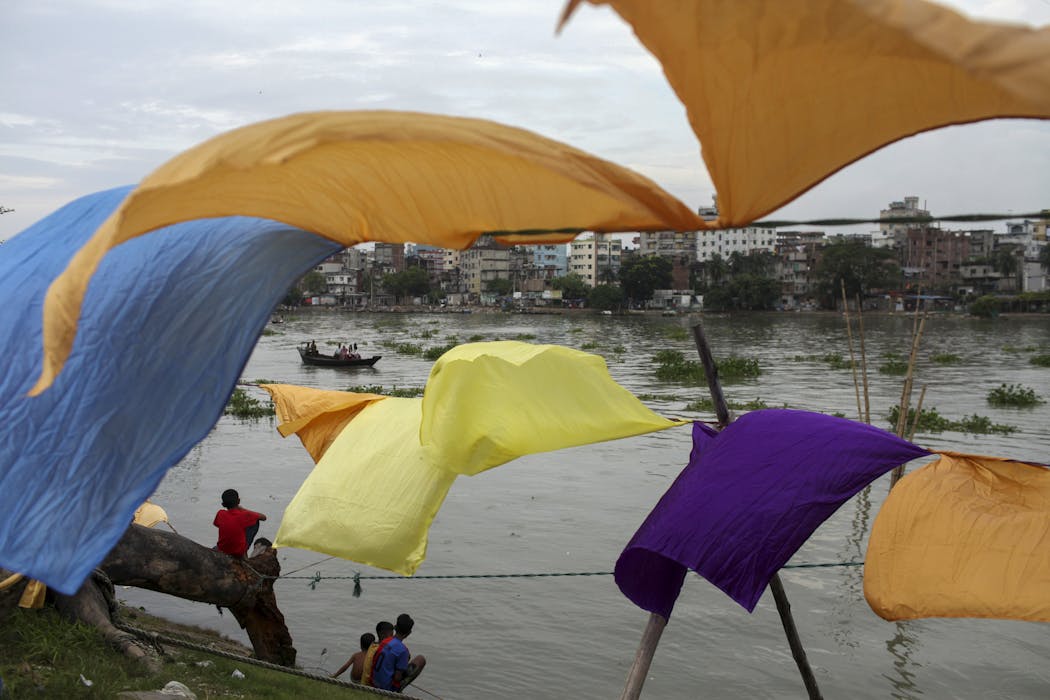
A boat crosses the Buriganga River in Dhaka, Bangladesh, on Oct. 5, 2025. MD Abu Sufian Jewel/NurPhoto via Getty Images

When Bangladesh became the first country in South Asia to join the U.N.’s Water Convention earlier this year, it was presented as a win-win.

Signing up to the Convention on the Protection and Use of Transboundary Watercourses and International Lakes would help Bangladesh safeguard and manage waterways that represent a “lifeline to peace and prosperity,” according to the United Nations. At the same time, it was hoped that the South Asian nation’s addition might encourage better cross-border cooperation in a region where shared rivers are often fought over.

As a scholar who works on issues of water security and grew up in South Asia, I understand the drivers behind Bangladesh’s decision to join the convention – recent hydro-political events have raised water security risks for the country of around 174 million.

But contrary to the intention of the convention, I believe Bangladesh joining could actually heighten tensions in South Asia, especially with India.

The need for water security

Bangladesh’s hydro challenges are multifaceted. Half of Bangladeshis live in areas that suffer severe drought. Around 60% of the population is vulnerable to high flood risks. And on average, floods inundate 20% to 25% of the country’s land each year. Moreover, more than 65 million residents still lack access to safe and properly managed sanitation facilities. These overlapping vulnerabilities show why water governance is such a key issue for security, diplomacy and development.

Additionally, the country’s rising population along with the effects of climate change add to this domestic water stress. At least 81 of the 1,415 rivers that flow through Bangladesh have either perished or are on the brink of extinction, according to a recent report.

At the same time, Bangladesh relies almost exclusively on rivers that cross borders. With India and China, it shares one of the world’s most complicated transboundary water systems: the Ganges-Brahmaputra-Meghna Basin.

Joining the UN Water Convention

A number of recent developments underscore the reasons Bangladesh sought greater legal and international protection.

In July 2025, China announced what is expected to be the world’s largest hydropower dam, the Motuo Hydropower Station in the Tibet Autonomous Region in southwestern China.

China starts construction on world’s biggest hydropower project in Tibet • FRANCE 24 English.

The Chinese government is promoting the dam as a clean energy project that will help the area’s economy grow, even though it will cost 1.2 trillion yuan (about US$167 billion) to build.

But countries close by are worried about how the dam will affect the region’s environment and politics.

Both Bangladesh and India have complained that the project could make the region less stable. The Yarlung Tsangpo River on which the dam is built runs into India’s Arunachal Pradesh state, which has long been a flashpoint in China-India relations. China claims the region as its own and calls it Zangnan.

Because of where it is situated, the dam could allow China to control or limit the flow of water into India. Similarly, Bangladesh, a downstream country, is concerned that Chinese upstream intervention could hurt its agriculture and make it harder to get water.

Already, the government of Bangladesh has limited control over the country’s water supply because only about 7% of the watershed area of the Brahmaputra, Meghna and Ganges – the three main rivers that flow into the country – are within Bangladesh. Moreover, the amount of water that ultimately reaches Bangladesh is significantly reduced because dam activities by China and India have limited the flow.

Climate change has made the situation worse by changing the way water flows across the Himalayas and the Ganges-Brahmaputra-Meghna basin. For instance, the Bangladesh delta, one of the most fertile and densely populated areas in the world, is already experiencing problems, including salinity intrusion, rising sea levels and the loss of arable land.

In 2019, the Bangladesh High Court ruled that the country’s rivers had the same status as a “legal person” in a bid to award them further protection. This was then followed by a decision by Bangladesh to join the U.N. Water Convention.

Created in 1996, the convention seeks to promote cooperation and sustainable management of shared water resources. At first, it was intended only for European and Central Asian countries. But in 2016, it became available to all U.N. member countries.

Bangladesh had initially delayed signing due to a mix of diplomatic, regional and institutional reasons and out of a concern over how it would affect relations with its powerful neighbor, India.

Implications for India

India has traditionally preferred bilateral agreements to resolve cross-border water issues, such as the Indus Waters Treaty with Pakistan and the 1996 Ganges water-sharing treaty with Bangladesh.

However, India’s bilateral strategy is fraying. The Indus Waters Treaty has been temporarily suspended following fighting between Pakistan and India.

Similarly, New Delhi’s water cooperation with Bangladesh is being tested. The sharing of water from the Teesta, a major tributary of the Brahmaputra, has long been a source of conflict between the two countries, with Bangladesh pushing for what it sees as a fairer distribution.

Bangladesh has also opposed Indian dams, such as the Tipaimukh on the Barak, over concerns about how they will affect the environment and people’s lives. For similar reasons, Bangladesh has objected to India’s plans to connect 30 rivers as part of a massive irrigation project.

The ripple effect

While India’s government has issued no official comment on Bangladesh’s joining the U.N. Water Convention, there are fears in New Delhi that it could undermine India’s negotiating power in future water disputes and when the Ganges River Treaty is due for renewal in 2026.

The original 1996 agreement sets out that India and Bangladesh would each get a guaranteed share of 35,000 cubic feet per second of water. The concern in New Delhi is that Bangladesh may ask for more water than originally specified and that being part of the U.N. Water Convention gives the Bangladesh government a more powerful negotiation platform. As such, Bangladesh’s proposition in September 2025 to create a new institutional framework to manage water-sharing agreements with India for 14 transboundary rivers was viewed with suspicion in India.

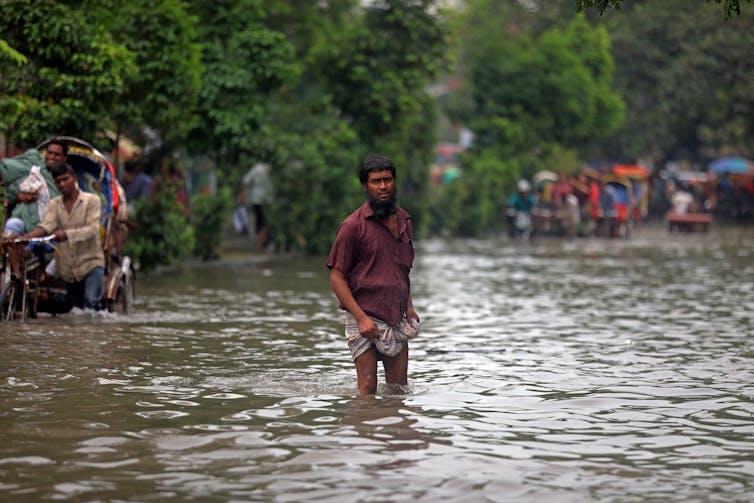
A man stands in a street flooded with water.
Incessant rainfall submerges the streets of Dhaka, Bangladesh, on Oct. 1, 2025.
Maruf Rahman/NurPhoto via Getty Images

Renewing the Ganges River Treaty with a framework that gives Bangladesh more water may put more stress on eastern India, an area already experiencing water scarcity, and test India’s water storage capacity, especially during dry seasons.

Shifting political currents

A further concern for India is that Bangladesh signing onto the U.N. Waters Treaty may set a precedent for other countries in the region, such as Nepal and Bhutan.

Meanwhile, Bangladesh has mulled the idea of forming a trilateral hydro-cooperation with China and Pakistan – two of India’s biggest rivals. A day before signing the U.N. convention, Bangladesh joined China and Pakistan in announcing a ‘trilateral cooperation’ on the economy, climate and social development.

For Bangladesh, the potential catastrophe of not tackling cascading environmental challenges justifies the risk of alienating its far more powerful neighbor. But where does this leave India? Ultimately, New Delhi must make a strategic choice: Either stick with bilateralism or adopt new multilateral norms to safeguard its water security and regional power.

The Conversation

Pintu Kumar Mahla is affiliated with the Water Resources Research Center, the University of Arizona.

He is also a member of the International Association of Water Law (AIDA).

Pintu Kumar Mahla has not received funding related to this article. The perspectives presented in this article reflect the personal positions of the author alone.

ref. Bangladesh’s accession to the UN Water Convention has a ripple effect that could cause problems with India – https://theconversation.com/bangladeshs-accession-to-the-un-water-convention-has-a-ripple-effect-that-could-cause-problems-with-india-264969

African countries need strong development banks: how they can push back against narrative to weaken them

Source: The Conversation – Africa – By Misheck Mutize, Post Doctoral Researcher, Graduate School of Business (GSB), University of Cape Town

A quiet but consequential contest is playing out in the global financial architecture. One that could determine Africa’s ability to finance its own development.

In recent months, powerful voices from the International Monetary Fund (IMF), the Paris Club and US investment bank JP Morgan have questioned the preferred creditor status of African multilateral development finance institutions. These institutions include the Africa Export-Import Bank (Afreximbank) and the Trade and Development Bank (TDB).

Preferred creditor status is a long-standing practice in global finance. It gives multilateral development finance institutions priority in being repaid when a country faces financial distress. The idea is simple. These institutions lend to promote development. During crises, they step in with counter cyclical lending – increasing support when commercial creditors pull out.

This reliability depends on their strong credit ratings, which in turn rest on the assurance that they will be repaid even when others are not. That assurance is what the preferred creditor status guarantees. The World Bank, IMF and regional development banks in Asia and Latin America all enjoy this protection as a matter of practice. Borrowers respect it because breaching it would threaten their access to future concessional lending – loans offered on much lower interest rates and other terms.

The voices against African multilateral finance institutions argue that they are too small to deserve preferred creditor status. Or that, unlike the World Bank and IMF, they do not lend at concessional rates. JP Morgan has even warned that Africa’s development banks might lose their status altogether.

The debate about the preferred creditor status of Africa’s multilateral development finance institutions may sound technical. It is not. If left unchallenged, this narrative could justify the continued high interest rates Africa faces on international markets.

Drawing on decades of researching Africa’s capital markets and the institutions that govern them, I recommend that African governments must reaffirm and defend the preferred creditor status of multilateral development banks. African multilateral development banks must also act collectively to defend their credibility. And the African Union must embed the preferred creditor status of the continent’s development banks in its financial sovereignty agenda.

Unwritten privilege vs law

For the IMF, World Bank and Paris Club, the preferred creditor status is an unwritten privilege. For African multilateral development banks, it is law.

The founding treaties of Afreximbank, the African Development Bank and TDB explicitly enshrine this status. These treaties are registered under Article 102 of the UN Charter, making them binding under international law. African member states have also ratified them into law, domestically.

This makes the status of African multilateral development banks more legally secure than that of Bretton Woods institutions. Yet it is the African banks whose status is now described as “uncertain” or “controversial”.

African governments must correct this perception. The African Union and its members have already endorsed this principle, but stronger, coordinated public statements are needed, especially from finance ministers and central banks. The aim will be to reassure investors that these protections are real, enforceable and backed by political will.

Collective action

Institutions such as Afreximbank, the AfDB, TDB, Shelter Afriqué Development Bank and the Africa Finance Corporation have grown rapidly. Together, they hold more than US$640 billion in assets, expanding by about 15% a year. They have mobilised billions from global capital markets and stepped up lending when global finance withdrew. They have diversified into the panda bonds in China, proving their resilience and capacity to tap into nontraditional capital markets.

Their success, however, has attracted resistance. International creditors and rating agencies have started questioning their preferred creditor status, describing it as “weak” or “shaky”. This has real consequences. It weakens investor confidence. Investors demand higher returns, raising the cost of borrowing for the banks and, by extension, for African countries, based on a risk factor that does not exist.

To counter this, African multilateral development banks must coordinate their responses. The newly formed Association of African Multilateral Financial Institutions is a promising platform. It should be more active and become the unified voice defending the preferred creditor status. It should be used to issue joint legal opinions, engage directly with credit rating agencies and Paris Club members, and run global investor education campaigns that clarify the legal standing and strong performance of African multilateral development banks. The continent’s development banks must speak with one voice. Silence allows others to define their credibility.

Continent’s financial sovereignty

Protecting preferred creditor status is about more than technical finance. It is about sovereignty. Africa is building its own financial ecosystem through the African Credit Rating Agency. The other financial institutions in the ecosystem – which aren’t yet operational – are the African Central Bank, African Investment Bank and African Monetary Fund. Their purpose will be to reduce dependence on external actors and keep Africa’s development agenda in African hands.

A battle of perception

Global finance runs on perception which is shaped by narratives. Those who control the narratives control the cost of money. If the preferred creditor status of African multilateral development banks continues to be misrepresented, Africa’s access to affordable finance will remain hostage to external opinion rather than legal reality.

It will also weaken African development banks just as they are becoming more effective. Their ability to borrow cheaply and on favourable terms depends on their credit ratings, which rest on the assumption that they will be repaid first in case of distress. If that assumption is shaken, borrowing costs will rise.

By reaffirming the legal basis of the preferred creditor status of African multilateral development banks, coordinating their response and embedding this status in the AU’s financial sovereignty framework, African governments and multilateral development lenders can protect one of the most important tools for affordable development finance.

This is not just about defending institutions, it’s about defending Africa’s right to finance its own future on fair terms.

The Conversation

Misheck Mutize is affiliated with the African Union – African Peer Review Mechanism as a Lead Expert on credit ratings

ref. African countries need strong development banks: how they can push back against narrative to weaken them – https://theconversation.com/african-countries-need-strong-development-banks-how-they-can-push-back-against-narrative-to-weaken-them-267989

Can a pro-federation win in Northern Cyprus revive the island’s stalled reunification?

Source: The Conversation – Canada – By Spyros A. Sofos, Assistant Professor in Global Humanities, Simon Fraser University

In the recent Northern Cyprus presidential election, an overwhelming majority of the Turkish Cypriot electorate rejected incumbent Ersin Tatar, backed by the Turkish government, and his hard-line two-state rhetoric.

Opposition leader Tufan Erhürman’s landslide victory has revived hopes for a settlement on the divided island.

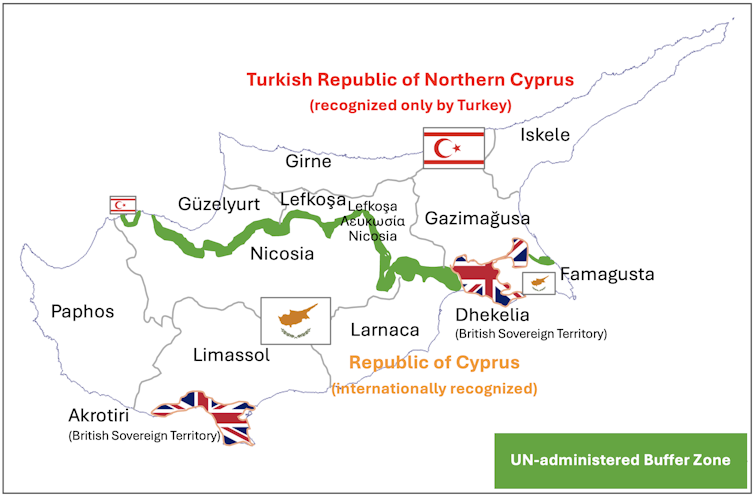
Cyprus is an independent country and a member of both the United Nations and the European Union. But it’s divided, with the internationally recognized Republic of Cyprus in the south and a self-declared state in the north, the Turkish Republic of Northern Cyprus, recognized only by Turkey.

A two-state solution calls for the island to remain divided between Greek Cypriots in the south and Turkish Cypriots in the north instead of reunifying.

This division was the result of Turkey’s 1974 invasion of Cyprus that followed a coup orchestrated by the Greek junta aimed at uniting the island with Greece. Turkey intervened, ostensibly to protect the Turkish Cypriot minority.

Decisive mandate

For the first time, a national leader openly embracing the UN’s model of a bi-communal, bi-zonal federation has secured a decisive mandate — almost 63 per cent of the vote in the first round of the election and majority support in every electoral district.

Erhürman represents the social-democratic and pro-unification tradition of the Republican Turkish Party (CTP). His platform focuses on rebuilding co-operation between the north and south and re-engaging the EU in a peace process to create a shared federation with a rotating presidency and equal political rights. It builds on decades of UN reunification efforts.

I have previously argued that Cypriot hopes for unification were on life support, but not doomed. That assessment still holds today now that there’s the first real chance in years to restart a meaningful process of reconciliation. The question is whether the Republic of Cyprus is willing to seize this opportunity or retreat once again into comfortable inaction.

This will determine whether Cyprus finally begins to heal the divisions that have endured since the Turkish invasion.


Read more:
Cypriot hopes for unification are on life support, but not doomed


Why this moment matters

Despite his carefully crafted campaign messages, Erhürman’s victory is a direct challenge to Turkey’s hold on North Cyprus — in particular its growing political, military and economic control.

It also comes as Devlet Bahçeli, leader of Turkey’s ultra-nationalist MHP and coalition partner to President Recep Tayyip Erdoğan, called for Northern Cyprus to be absorbed by Turkey within days of the vote.

The outburst revealed anxiety in Turkey: a pro-federation leadership in Lefkoşa — the Turkish Cypriot part of the city of Nicosia — could loosen the grip Turkey built through subsidies, security dependency and crony networks.

Yet the far greater uncertainty lies in the south.

The south’s long drift since 2004

In the referendum on the UN-brokered Annan Plan that would have allowed a united Cyprus to enter the European Union in 2004, 65 per cent of Turkish Cypriots voted in favour of reunification, while three-quarters of Greek Cypriots rejected it.

The Republic of Cyprus joined the EU a week later while the acquis communautaire — the full body of European Union rules and obligations — was suspended in the north.

The failure of the plan deflated Turkish Cypriots’ EU aspirations and ushered in an era of isolation during which the south’s political class no longer felt compelled to compromise.

In the two decades since, successive governments in Nicosia in the south have proclaimed support for a federal solution but acted as stewards of an ethno-national enclave with elites profiting from state-granted privileges, real-estate speculation and now-discredited “golden passport” schemes.

The oligarchic patronage that flourished under that system rewarded partition rather than reconciliation. Opportunities to move the process forward — most notably, talks in 2017 — were squandered.

For many in the south, the “Cyprus problem” is primarily a question of occupation; for many in the north, it’s about political equality and security.

A map with division lines of the island of Cyprus.
A map of divided Cyprus.
(Spyros A. Sofos, 2025), CC BY-NC

The real test: Political will

For reunification talks to restart, the internationally recognized Republic of Cyprus must do more than verbally welcome the election outcome. It must take positive action.

That means endorsing UN Secretary-General António Guterres’s proposal to resume negotiations “within the agreed UN framework” and engaging swiftly with measures like electricity interconnection, joint search-and-rescue co-ordination and cultural-heritage restoration.

These types initiatives — part of a power-sharing model in which divided communities share government through guaranteed representation, mutual vetoes and a degree of autonomy — are already working across the Cyprus buffer zone. That’s where the two communities have been co-operating on issues like the recovery and identification of victims of the 1974 war, basic infrastructure projects and the opening of crossing points at what used to be an impenetrable border.

But the Greek Cypriot leadership faces domestic constraints: a parliament where nearly half the parties oppose federation outright and voters have been conditioned to equate compromise with betrayal. Change will require moral and political courage — something no Cypriot president since Tassos Papadopoulos’s rejection of the Annan Plan has demonstrated.

Global significance

Cyprus represents far more than a local dispute. The island lies at the crossroads of eastern Mediterranean energy routes and has played a role in the tensions in NATO’s southern flank and the fraught relationship between the EU and Turkey.

Erol Kaymak, a Turkish Cypriot international relations expert, has argued that a revived peace process would open the door to co-operation on offshore energy and maritime boundaries, issues that increasingly affect regional stability.

He also points out that continued partition entrenches Turkey’s military presence and sustains a grey-zone economy vulnerable to corruption and organized crime.

For the international community, Cyprus offers lessons in peacebuilding: can outside entities promote post-conflict power-sharing and justice when one side depends more on the other? The Canadian UNFICYP — the UN peacekeeping force in Cyprus — has experience in facilitating precisely such co-operation.

Last opportunity?

Erhürman’s election is a remarkable assertion of autonomy by Turkish Cypriot voters who have endured decades of isolation from the international community.

But unless the Greek Cypriot political officials respond with a genuine initiative for talks, the window could close quickly. Erdoğan’s government is already signalling it will not tolerate any divergence of Turkish Cypriot policies from Turkey’s.

The election may be the last chance for Cypriots on both sides to build trust-based institutions, eliminate the need for external guarantors and troops and restore the island as a common home for all.

This requires perseverance, creativity and imagination. Officials need to look not just at what’s worked in the Cyprus peace process but also at power-sharing lessons from Northern Ireland and other places where inclusive coalitions helped stabilize divided societies.

It’s essential to strengthen co-operation and foster closer ties that can gradually erode mutual distance and suspicion. These efforts could make any future settlement easier to implement and could lay the groundwork for a more stable and mutually beneficial co-existence.

However Cypriots choose to share their island, this could be their last chance to ensure the many barricades that have divided them for more than 50 years are finally dismantled.

The Conversation

Spyros A. Sofos does not work for, consult, own shares in or receive funding from any company or organisation that would benefit from this article, and has disclosed no relevant affiliations beyond their academic appointment.

ref. Can a pro-federation win in Northern Cyprus revive the island’s stalled reunification? – https://theconversation.com/can-a-pro-federation-win-in-northern-cyprus-revive-the-islands-stalled-reunification-268138

Mark Carney’s apology to Donald Trump: Far from ‘elbows up,’ it seems Canada has no elbows at all

Source: The Conversation – Canada – By Stewart Prest, Lecturer, Political Science, University of British Columbia

Canadians have learned in recent days that Prime Minister Mark Carney did indeed apologize for an Ontario advertisement that used Ronald Reagan’s own words to correctly portray the late United States president’s views on the importance of free trade.

The subtext to such an apology is clear: “Sorry Ontario accurately described Ronald Reagan’s stand on free trade, Mr. President. We understand those words hurt your feelings and challenged your version of the truth, which of course is unacceptable. We promise we won’t let the facts get in the way of our relationship again.”

Last spring’s election was all about building insulation to Trump, using phrases like “Elbows up” and “Canada Strong.” But the attitude of both the federal government and the Official Opposition, then and now, has often been conciliatory to the point of obsequiousness.

Far from elbows up, Canada too often seems to have no elbows at all.


Read more:
Elbows down? Why Mark Carney seems to keep caving to Donald Trump


Implications of the apology

Carney apologized for something he didn’t do — and something that was completely defensible, at least in a normal period of Canada-U.S. relations.

Critics of Ontario Premier Doug Ford and defenders of Carney — often the same people — will say the ad should not have happened in the first place.

They would point out, not incorrectly, that though the ad accurately recounted Reagan’s words, those words aren’t relevant to Republican views anymore and that the ad unnecessarily poked the bear. This may be true, but it doesn’t justify the apology.

In normal times, there would be nothing wrong with the ad airing in the U.S. Traditionally, Americans have valued and encouraged free speech and reasoned argument, and respected the views of allies and partners. Canadian governments, accordingly, may resort to public advocacy south of the border to get the attention of decision-makers in the complex U.S. policymaking apparatus.

When institutions are working as they should in the U.S., power is disaggregated between federal and state levels and between executive and legislative branches, making advocacy a complex, multifaceted affair.

But we are not in that world anymore. The U.S. must be handled as a regime, not a democracy. As The New York Times editorial board accurately described things recently, democracy in the U.S. is under sustained threat due to the actions of Trump and his supporters. There are still democratic elements within the country, but the U.S. no longer responds to normal diplomacy.

The ad was therefore an unnecessary risk. The apology, however, was an unnecessary own-goal. An apology is due when someone has done something wrong, but that is not the case here. The ad might have been ill-advised, but it was not wrong.

Dealing with a bully

When dealing with a bully, don’t say or do anything you’re not willing to stand beside, even if it provokes a presidential fit of pique. Every climb-down is a defeat and an admission of weakness. Better to say nothing than to say something you have to take back. And if offence is taken, an apology will only make things worse in the long run.

It has been obvious for a long time that the only thing Trump respects is power, and the only thing he may be persuaded by is a transactional, personal payoff. While an apology might seem to provide a personal payoff him, what it really does is communicate a lack of power. That in turn invites further demands.

Bullies don’t stop bullying when you make it clear you’ll do what they ask. They stop when it’s clear that you won’t. As long as outrage is rewarded, Canada can expect more of the same.

The truth doesn’t matter

What’s more, Carney’s apology makes clear that truth won’t be an obstacle to Canadian compliance, not unlike when the country took the imagined fentanyl border crisis seriously. In both cases, Canada’s response communicated that its actions will be tailored to suit Trump’s version of reality, not facts on the ground.

Such deference is not only a betrayal of Canadian dignity, sovereignty and interests, it’s also not going to work. There is now ample evidence backing this up.

Retract the ads, and the tariffs go up anyway. Apologize, and the tariffs stay in place. Spend billions on cross-border security, including fentanyl interdiction, and the tariffs remain. Spend additional billions on defence spending, and the tariffs stay put. Fly to Mar-a-Lago as a supplicant and get a series of 51st state taunts for your pains.

Would-be autocrats thrive on the subjugation of facts to their will. Canada simply can’t afford to keep giving in to Trumpian demands or to allow the truth to be whatever the American administration says it is.


Read more:
Psychoanalysis explains why Donald Trump is taunting Canada and ‘Governor Justin Trudeau’


Public diplomacy in the Trump era

Canada’s best option, instead, is to stay consistent with a single message: it stands ready to be a partner. The two countries have always benefited from working together, and can again do so. Canada is not out to antagonize, but neither should it apologize for simply speaking the truth.

Going forward, it’s clear that Canada’s premiers must work more closely with the federal government on a single forceful message, not freelance in whatever direction suits their particular political interests at the moment. Canada needs one foreign policy, not 14. Multiple messages simply create opportunities to divide and conquer.

Similarly, Canada must deepen links with other allies and partners around the world as quickly as possible. Bullies pick on the weak and the isolated. Canada can’t afford to be either.

Above all, when the U.S. takes offence, or gives it, the country must politely but firmly stand its ground. Canada cannot allow the freedom to speak the truth or stand up for itself to become the latest casualties in Trump’s trade war against all.

The Conversation

Stewart Prest does not work for, consult, own shares in or receive funding from any company or organisation that would benefit from this article, and has disclosed no relevant affiliations beyond their academic appointment.

ref. Mark Carney’s apology to Donald Trump: Far from ‘elbows up,’ it seems Canada has no elbows at all – https://theconversation.com/mark-carneys-apology-to-donald-trump-far-from-elbows-up-it-seems-canada-has-no-elbows-at-all-268856

Is it healthier to only eat until you’re 80% full? The Japanese philosophy of hara hachi bu

Source: The Conversation – UK – By Aisling Pigott, Lecturer, Dietetics, Cardiff Metropolitan University

The principle of ‘hara hachi bu’ is to stop eating just before you get full. Only_NewPhoto/ Shutterstock

Some of the world’s healthiest and longest-living people follow the practice of “hara hachi bu” — an eating philosophy rooted in moderation. This practice comes from a Japanese Confucian teaching which instructs people to only eat until they’re around 80% full.

More recently, it’s been gaining attention as a strategy for weight loss. But while hara hachi bu might emphasise eating in moderation and stopping before you’re full, it shouldn’t really be as seen as a method of dietary restriction. Rather, it represents a way of eating that can help us learn to have awareness and gratitude while slowing down at mealtimes.

Research on hara hachi bu is limited. Previous studies have evaluated the overall dietary patterns of those living in regions where this eating philosophy is more commonplace, not the “80% rule” in isolation.

However, the available evidence does suggest hara hachi bu can reduce total daily calorie intake. It’s also associated with lower long-term weight gain and lower average body mass index (BMI). The practice also aligns with healthier meal-pattern choices in men, with participants choosing to eat more vegetables at mealtimes and fewer grains when following hara hachi bu.

Hara hachi bu also shares many similar principles with the concepts of mindful eating or intuitive eating. These non-diet, awareness-based approaches encourage a stronger connection with internal hunger and satiety cues. Research shows both approaches can also help reduce emotional eating and enhance overall diet quality.

Hara hachi bu may also have many advantages that go beyond losing weight.

For instance, hara hachi bu’s focus on awareness and eating intuitively may offer a gentle and sustainable way of supporting long-term health changes. Sustainable health changes are far easier to maintain in the long-term. This may improve health and prevent weight regain, which can be a risk for those who lose weight through traditional diet approaches.

The ethos of hara hachi bu also makes perfect sense in the context of modern life and may help us develop a better relationship with the food we eat.

Evidence suggests that around 70% of adults and children use digital devices while eating. This behaviour has been linked to higher calorie intake, lower fruit and vegetable intake and a greater incidence of disordered eating behaviours including restriction, binge eating and overeating.

As a dietitian, I see it all the time. We put food on a pedestal, obsess over it, talk about it, post about it – but so often, we don’t actually enjoy it. We’ve lost that sense of connection and appreciation.

A woman leans back from her plate at the table holding her stomach because she's eaten too much.
Hara hachi bu might help you improve your relationship with eating and your body.
Doucefleur/ Shutterstock

Being more aware of the food we eat and taking time to taste, enjoy and truly experience it as hara hachi bu emphasises, can allow us to reconnect with our bodies, support digestion and make more nourishing food choices.

Trying ‘hara hachi bu’

For those who might want to give “hara hachi bu” or taking a more mindful and intuitive approach to improve their relationship with food, here are a few tips to try:

1. Check in with your body before eating

Ask yourself: Am I truly hungry? And if so, what kind of hunger is it — physical, emotional, or just habitual? If you’re physically hungry, denying yourself may only lead to stronger cravings or overeating later. But if you’re feeling bored, tired, or stressed, take a moment to pause. Giving yourself space to reflect can help prevent food from becoming a default coping mechanism.

2. Eat without distractions

Step away from screens and give your meal your full attention. Screens often serve as a distraction from our fullness cues, which can contribute to overeating.

3. Slow down and savour each bite

Eating should be a sensory and satisfying experience. Slowing down allows us to know when we’re satiated and should stop eating.

4. Aim to feel comfortably full, not stuffed

If we think of being hungry as a one and being so full you need to lie down as a ten, then eating until you’re around “80% full” means you should feel comfortably satisfied rather than stuffed. Eating slowly and being attuned to your body’s signals will help you achieve this.

5. Share meals when you can

Connection and conversation are part of what makes food meaningful. Connection at meal times is uniquely human and a key to longevity.

6. Aim for nourishment

Ensure your meals are rich in vitamins, minerals, fibre and energy.

7. Practice self-compassion

There’s no need to eat “perfectly”. The point of hara hachi bu is about being aware of your body – not about feeling guilty over what you’re eating.


Read more:
People in the world’s ‘blue zones’ live longer – their diet could hold the key to why


Importantly, hara hachi bu is not meant to be a restrictive eating approach. It promotes moderation and eating in tune with your body – not “eating less”.

When viewed as a means of losing weight, it risks triggering a harmful cycle of restriction, dysregulation and overeating – the very opposite of the balanced, intuitive ethos it’s meant to embody. Focusing solely on eating less also distracts from more important aspects of nutrition – such as dietary quality and eating essential nutrients.

This practice also may not suit everyone. Athletes, children, older adults and those living with illness often have higher or more specific nutritional needs so this eating pattern may not be suitable for these groups.

While often reduced to a simple “80% full” guideline, hara hachi bu reflects a much broader principle of mindful moderation. At its core, it’s about tuning into the body, honouring hunger without overindulgence and appreciating food as fuel — a timeless habit worth adopting.

The Conversation

Aisling Pigott receives funding from Research Capacity Building Collaborative (RCBC) and Health and Care Research Wales. Aisling Pigott is a Non-Executive Director of the British Dietetic Association, the professional body and trade union representing dietitians in the UK.

ref. Is it healthier to only eat until you’re 80% full? The Japanese philosophy of hara hachi bu – https://theconversation.com/is-it-healthier-to-only-eat-until-youre-80-full-the-japanese-philosophy-of-hara-hachi-bu-268008

Why national parks and nature reserves don’t always safeguard ecosystems as expected

Source: The Conversation – UK – By Miguel Lurgi, Associate Professor in Computational Ecology, Swansea University

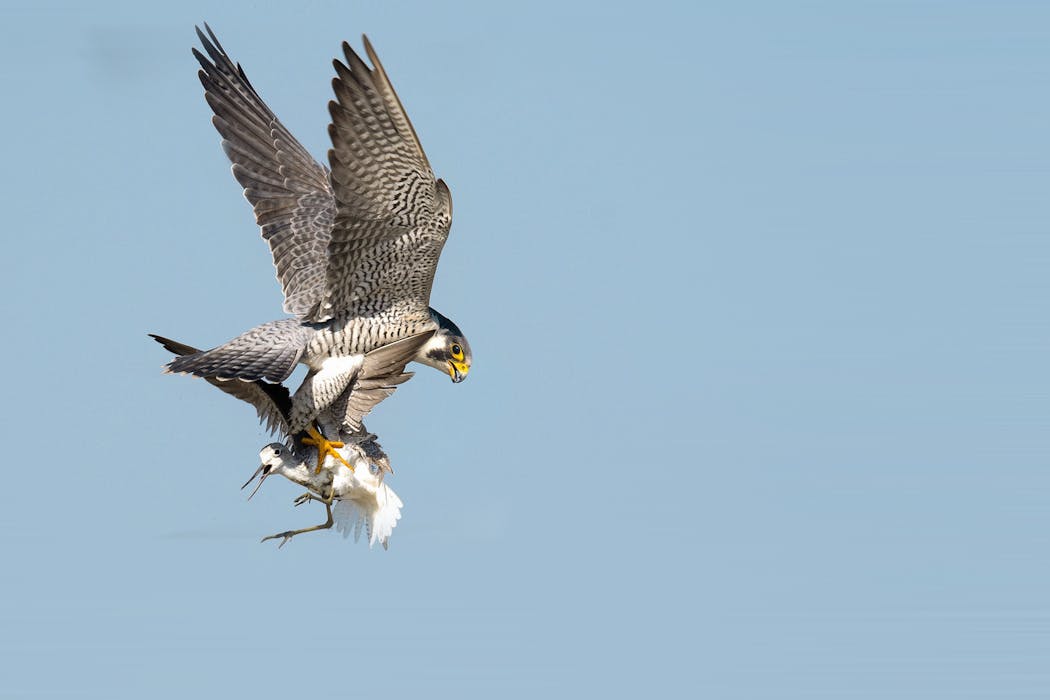
A peregrine falcon foraging in the forest. Wang LiQiang/Shutterstock

Setting aside land for nature is one of the main global strategies to conserve biodiversity. From national parks to local reserves, these areas are designed to give wildlife the space it needs to thrive. But my latest research with colleagues shows that these protected areas don’t always work in the way we expect.

They can help increase the number of species and provide habitats for large predators. But they don’t necessarily preserve the complex web of interactions that keeps ecosystems functioning. Our study found that the effectiveness of protected areas varies widely across Europe. This has mixed effects on the ecological relationships that sustain life.

Protected areas are central to international conservation policy. In 2022, governments at the UN biodiversity conference (Cop15) agreed to the Kunming-Montreal Global Biodiversity Framework. The framework aims to protect 30% of the world’s land and sea by 2030. The ambition is to halt biodiversity loss and safeguard the services that healthy ecosystems provide.

But while the number of protected areas continues to grow, there is still debate about how well they work. Most studies measure biodiversity success by counting species or tracking population trends. These are important, but they miss a crucial part of how ecosystems operate: the network of ecological interactions. Interactions between species such as predator-prey relationships connect species together in ecosystems and are crucial for their persistence.


Read more:
World’s protected natural areas too small and isolated to benefit wildlife – new study


We wanted to find out how effective protected areas are at maintaining these networks. Understanding this is central to ensuring that conservation measures protect not only individual species, but the relationships between them that support ecosystem stability and resilience.

We analysed 376,556 records of bird sightings gathered by citizen scientists from online databases. These records covered 509 bird species distributed across 45 protected networks stretching from the Mediterranean to Scandinavia.

By combining these observations with information on which species eats what, we built food webs, which are diagrams that map predator-prey interactions, for both protected and non-protected environments. We then compared the structure of these food webs to assess how well protection helped maintain their integrity.

We found that protected areas can have positive effects on the structure of food webs, but not always. In general, protected sites supported more bird species, particularly those in the middle of the food chain, and we also found larger predators within those areas. For example, less pristine or smaller habitats may only have a sparrowhawk. Whereas more diverse habitats may have a golden or a Bonelli’s eagle. That’s often a sign of a healthier ecosystem.

But for other important features, such as how many interactions each species has or how long the food chains are, the results were far less consistent. Some protected areas showed positive effects, while others showed neutral or even negative ones.

When protection doesn’t mean balance

This means that what works for conserving species does not necessarily work for conserving the ecological interactions between them. Preserving these relationships is crucial because they underpin ecosystem stability.

If predators decline or disappear altogether, their prey can grow, unchecked. This may disrupt the balance of an entire ecosystem. One striking example comes from the Aleutian Islands off Alaska, where the loss of sea otters led to an explosion in sea urchins and the near collapse of kelp forests.

The same principles apply across terrestrial ecosystems. The loss of pollinators, for instance, can have dramatic consequences for both wild plants and crops, threatening food security as well as biodiversity. These examples show why it’s not enough to conserve species in isolation. The connections between species also need protection.

Our study found that how well a protected area works depends a lot on where it is located and how it is managed. We found that factors such as remoteness, habitat diversity, human pressure and the amount of surrounding agricultural land were all linked to how well food webs were preserved.

A golden eagle flying in Spain.
A golden eagle soars.
David Collado/Shutterstock

Protected areas established under the EU Birds Directive, which specifically focuses on maintaining bird populations and habitats, showed the strongest positive effects. This suggests that having a clear conservation goal and strong management practices makes a real difference.

Protected areas that are more diverse in habitat types also tend to support richer ecological networks. This demonstrates the importance of maintaining habitat integrity. In comparison, areas with a lot of human activity or patchy habitats often find it harder to maintain the balance of species and interactions that make ecosystems thrive.

Rethinking how we measure conservation

Our study highlights the complexity of conservation action. Simply protecting land is not enough. To be truly effective, conservation must consider not only how many species live within an area, but also how those species interact.

These interactions are essentially the ecological glue of the natural world. They are what allow ecosystems to persist and perform vital functions such as pollination, pest control and nutrient cycling. Ignoring them risks overlooking early warning signs of ecosystem collapse.


Read more:
Protecting Brazil and Indonesia’s tropical forests requires political will, law enforcement and public pressure


To secure a sustainable future, conservation policies must go beyond species counts and focus on safeguarding the intricate networks that keep life in balance.

If we focus on how nature functions, not just which species live there, we can make sure protected areas really keep our ecosystems healthy.

The Conversation

Miguel Lurgi does not work for, consult, own shares in or receive funding from any company or organisation that would benefit from this article, and has disclosed no relevant affiliations beyond their academic appointment.

ref. Why national parks and nature reserves don’t always safeguard ecosystems as expected – https://theconversation.com/why-national-parks-and-nature-reserves-dont-always-safeguard-ecosystems-as-expected-266623

Earthshot prize’s request for a vegan menu for Prince William leaves a bitter taste in the Amazon

Source: The Conversation – UK – By Belinda Zakrzewska, Assistant Professor of Marketing, University of Birmingham

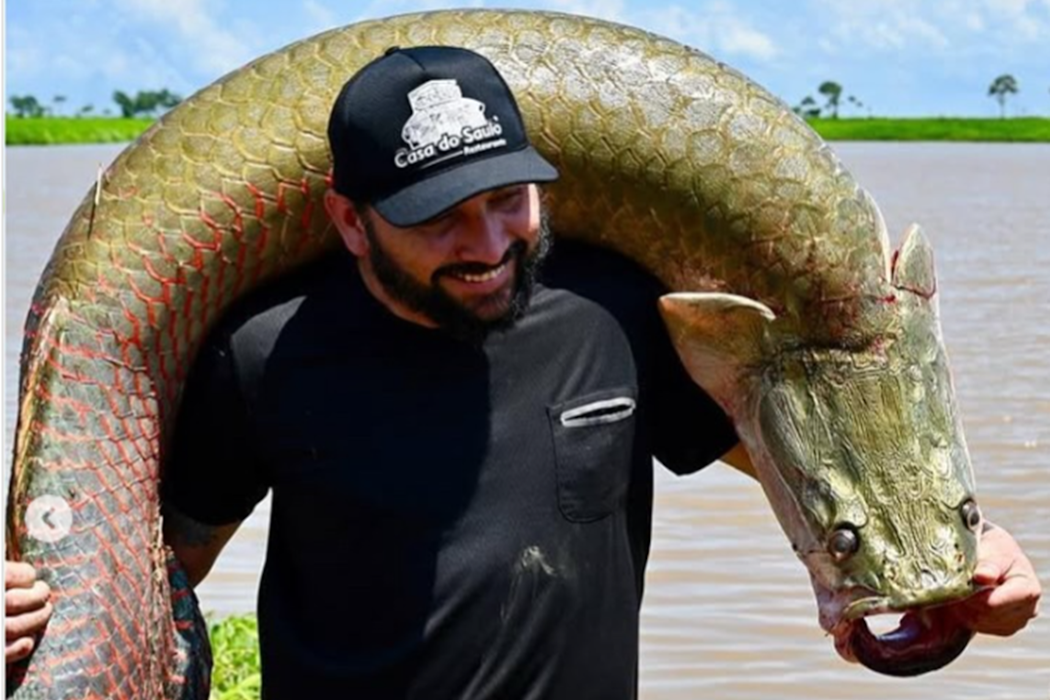
Brazilian chef Saulo Jennings is a champion of Amazonian ingredients including the pirarucu fish. Instagram

Saulo Jennings, an acclaimed Amazonian chef and UN gastronomy tourism ambassador, was reportedly outraged when organisers of Prince William’s Earthshot prize asked him to prepare an entirely vegan menu. For Jennings, being told to exclude pirarucu – the region’s iconic giant freshwater fish – was not merely a matter of preference but a lack of respect for his culinary traditions.

Prince William founded the Earthshot prize to celebrate innovative solutions to the planet’s greatest environmental challenges. This year’s ceremony takes place on November 5 at Rio de Janeiro’s futuristic Museu do Amanhã (Museum of Tomorrow), marking the first time the Earthshot’s award ceremony will be held in Latin America. It will serve as the opening act for Cop30, which begins on November 10 in Belém, in the heart of the Amazon, emphasising the region’s central place in climate discussions.

Jennings had agreed to create a selection of canapes for the awards ceremony, which was when the misunderstanding arose. He designed a menu with a vegan option but was then told the whole selection must be vegan, meaning he couldn’t include any dishes featuring pirarucu. “It was like asking Iron Maiden to play jazz,” he told the New York Times. “It was a lack of respect for local cuisine, for our culinary tradition.”

At the museum’s urging, Jennings agreed to design an Amazonian-inspired vegan menu using native ingredients. But by then the deal had collapsed and another team was selected to feed the awards ceremony.

Instead, Jennings has been commissioned to cook for the Norwegian and Chinese delegations at Cop30, and will also oversee the food for the Cop banquet, prepared for the heads of state attending the conference. For these occasions, he will be able to highlight the Amazon’s diverse flavours and, he has respectfully assured, will be serving pirarucu.

By insisting on a vegan menu, the Earthshot prize effectively equated veganism with sustainability. But while the two concepts can overlap, they are not the same. Some vegan foods, such as avocados, have large carbon footprints.

This is just one example of how well-intentioned western environmental initiatives can unintentionally clash with the values and food practices of the communities they aim to celebrate.

Impositions on sustainable food practices

Western impositions on Indigenous food cultures stretch back to colonial times. Early European settlers viewed their own staple crops, such as wheat and barley, as symbols of civilisation. On the other hand, they often dismissed Indigenous foods like Andean grains such as quinoa and amaranth as “primitive”.

This legacy still shapes food hierarchies today. In Peru, for example, communities in the Andes are swapping traditional potatoes for pasta and rice.

Nowadays, consumers – both in Brazil and globally – play a role in reinforcing western ideas through their purchasing choices and perceptions of “authentic”, “exotic” or “healthy” foods that shape the exchange of foods across different countries and market segments, while distorting local economies and traditions.

In Belém, açaí berries are a staple of local culinary custom, traditionally consumed by residents with manioc flour and fish. But in other Brazilian regions – and increasingly internationally – they have become known as a trendy powdered or frozen “superfood”, or are blended into açaí bowls.

In postcolonial nations, local elites – typically composed of non-Indigenous people who have historically aligned themselves with western tastes and values – can sometimes both reinforce and challenge these inequalities

In Brazil’s culinary scene, elite chefs have taken the lead in defining a new national haute cuisine that elevates Amazonian ingredients through fine-dining techniques. For example, renowned Brazilian chef Alex Atala elevates pirarucu by reinterpreting the fish using innovative techniques and presentations at his Sao Paulo restaurant, D.O.M.

However, this can detach ingredients from their original uses and create pressures on producers to deliver more, which could lead to unsustainable practices. Therefore, Atala is also committed to advancing sustainability, research and cultural preservation through Instituto Ata, which aims to showcase the diversity both of Brazil’s culture and its environment.

For Indigenous chef Tainá Marajoara, there’s a risk that elite Brazilian culture is borrowing heavily from Indigenous traditions – and using Amazonian ingredients without properly acknowledging the debt this modern food owes to the cultures from which it has been appropriated.

Marajoara – like Jennings, a UN ambassador for gastronomy – has sharply criticised what she perceives as the dominant mindset among Brazilian chefs. She told food magazine Saveur that some elite chefs believe “the food of dark-skinned people needs to be updated, as though we don’t have a wisdom and aesthetic of our own”.

Decolonising western ideas about sustainability

Many Indigenous communities adopt a “kincentric” view of the natural world, meaning they see humans, plants and animals as interconnected members of a shared ecological family, rather than separate entities.

According to Jennings, sustainability means living in harmony with nature’s rhythms – not imposing uniform dietary rules. As he told the New York Times: “We eat whatever the forests give us, whatever the rivers give us. Some days we eat fish; other days we eat nuts and açaí. This is also sustainable.”

True sustainability requires cultural and ecological respect. At Cop30, Jennings and Marajoara will design menus grounded in their cultures’ deep relationships with the natural world. Their aim is to show that sustainability should be a lived practice, not just politicians’ rhetoric.

Hopefully, their participation will reinforce the important message that meaningful climate solutions depend on Indigenous leadership and knowledge.

Bridging the gap between western assumptions and local ecological realities remains urgent. Marajoara warns: “As long as ancestral lands are violated and violence spreads across forests, rivers and fields, our people and our culture are being killed.”

The Conversation

The authors do not work for, consult, own shares in or receive funding from any company or organisation that would benefit from this article, and have disclosed no relevant affiliations beyond their academic appointment.

ref. Earthshot prize’s request for a vegan menu for Prince William leaves a bitter taste in the Amazon – https://theconversation.com/earthshot-prizes-request-for-a-vegan-menu-for-prince-william-leaves-a-bitter-taste-in-the-amazon-268597

Why some humans grow horns

Source: The Conversation – UK – By Dan Baumgardt, Senior Lecturer, School of Psychology and Neuroscience, University of Bristol

A cutaneous horn is a cone-shaped growth on the skin formed from compacted, dead keratin. Jojo via Wikimedia Commons, CC BY-SA

Equids, members of the horse family including horses, donkeys and zebras, share curious features called chestnuts. Found on every horse, they appear as toughened growths on their limbs, and can be clipped back if they grow too large. Anyone following the charming and rugged farrier Sam Wolfenden on TikTok will have seen his expert chestnut clipping.

Chestnuts are fascinating little entities – remnants of toe pads that were present in the prehistoric relatives of both domestic and wild horses. They’re also unique to each animal; you can think of them as an individual fingerprint.

Chestnuts are made of keratin, the same material found in the outer layer of skin. It’s protective, waterproof and durable, giving resilience and strength. It’s also found in hair and nails, which allow for important functions like trapping heat and providing sensory information to the brain.

Samuel Wolfenden is a farrier who often shares social media posts of chestnut removals.

The hooves and horns of animals are no different. Keratin-based and developed from the skin, they are designed for functions such as protection or even as weapons in battle.

Keratin therefore plays an important role across both human and animal species. And since we’re all built from similar biological materials, it may not surprise you that humans can develop horns too – though not quite like a horse or goat.

Human horns

Cutaneous horns, or cornu cutaneum, are compacted keratin masses that grow outward from a person’s skin. Their typically curved shape and hardened texture make them look like the horns of a goat, sheep or cow.

They can vary in colour from yellow to brown to grey. Their relative shade depends on the amount of pigment and dead cells trapped within the keratin as it builds up.

Cutaneous horns develop from skin lesions of various kinds, and many are harmless. Several common benign lesions such as seborrhoeic keratoses – warty swellings extremely common in older people – can develop into these “horns”. So can other warts, including those caused by the human papilloma virus (HPV), a group of viruses that infect the skin and mucous membranes and can lead to either warts or, in rarer cases, cancer.


Read more:
HPV: what you need to know about the common virus linked to cancer


Around 16-20% of cutaneous horns are malignant, developing from skin cancers such as squamous cell carcinoma. This form of cancer starts in the outer layer of the skin and can invade deeper tissues if left untreated.

Others arise from premalignant conditions: skin changes that have not yet become cancerous but have the potential to do so. A prime example is an actinic (or solar) keratosis, which can later develop into squamous cell cancer, sometimes forming a horn but often not.

In these cases, the cells within the lesion become denatured, losing their normal structure and function. This uncontrolled growth can lead to excessive keratin production, occasionally resulting in the formation of a horn.

People who develop cutaneous horns, whether benign, premalignant or cancerous, tend to share some similar risk factors. These horns are far more common in older adults and in those with fair skin, and they often appear on sun-exposed areas such as the head or face, suggesting that ultraviolet (UV) light plays a major role.

Sun damage is a key cause of all skin cancers including melanoma, the most dangerous form. Unlike squamous cell cancer, melanoma originates in pigment-producing cells and spreads more aggressively through the body if not caught early.

Grow to astonishing sizes

Some cutaneous horns appear in stranger places, including the chest and even the genitals. And because they can sometimes be linked to cancer, anyone who notices one should see a doctor.

Their appearance can be distressing, especially when they form on visible areas like the face, and they may also cause discomfort or irritation. Treatment usually involves surgical removal of the horn and a small amount of surrounding skin, a procedure known as excision.

Some cutaneous horns can grow to astonishing sizes. In 2024, an elderly woman in China made headlines because of a large cutaneous horn that grew from her forehead, reaching ten centimetres over seven years.

Others have earned nicknames like “unicorn horns” when they sprout from the centre of a person’s forehead. Alternatively, a patient in India was reported to have a “devil’s horn” growing from the top of his head.

However, the record for the biggest cutaneous horn probably belongs to Madame Dimanche, also known as Widow Sunday, in the early 19th century. This French woman’s horn stretched nearly 25cm, hanging past her chin before it was removed. A wax cast of both her face and the horn are now displayed among other anatomical curiosities in the Mütter Museum in Philadelphia.

If you ever notice a hard, growing bump that looks even faintly horn-like, don’t wait. Get it checked by your GP in order to guide the most appropriate treatment.

And to Sam Wolfenden, with his deeply satisfying hoof-trimming videos, keep on clipping, mate.

The Conversation

Dan Baumgardt does not work for, consult, own shares in or receive funding from any company or organisation that would benefit from this article, and has disclosed no relevant affiliations beyond their academic appointment.

ref. Why some humans grow horns – https://theconversation.com/why-some-humans-grow-horns-268370