What a bear attack in a remote valley in Nepal tells us about the problem of aging rural communities

Source: The Conversation – Global Perspectives – By Geoff Childs, Professor of Sociocultural Anthropology, Washington University in St. Louis

Dorje Dundul ponders a life living with increased risk of bear attacks. Geoff Childs, CC BY-SA

Dorje Dundul recently had his foot gnawed by a brown bear – a member of the species Ursus thibetanus, to be precise.

It wasn’t his first such encounter. Recounting the first of three such violent experiences over the past five years, Dorje told our research team: “My wife came home one evening and reported that a bear had eaten a lot of corn from the maize field behind our house. So, we decided to shoo it away. While my wife was setting up camp, I went to see how much the bear had eaten. The bear was just sitting there; it attacked me.”

Dorje dropped to the ground, but the bear ripped open his shirt and tore at his shoulder. “I started shouting and the bear ran away. My wife came, thinking I was messing with her, but when she saw the wounds, she knew what had happened.”

Researchers Dolma Choekyi Lama, Tsering Tinley and I spoke with Dorje – a 71-year-old resident of Nubri, a Buddhist enclave in the Nepalese highlands – as part of a three-year study of aging and migration.

Now, you may be forgiven for asking what a bear attack on a septuagenarian has to do with demographic change in Nepal. The answer, however, is everything.

In recent years, people across Nepal have witnessed an increase in bear attacks, a phenomenon recorded in news reports and academic studies.

Inhabitants of Nubri are at the forefront of this trend – and one of the main reasons is outmigration. People, especially young people, are leaving for education and employment opportunities elsewhere. It is depleting household labor forces, so much so that over 75% of those who were born in the valley and are now ages 5 to 19 have left and now live outside of Nubri.

It means that many older people, like Dorje and his wife, Tsewang, are left alone in their homes. Two of their daughters live abroad and one is in the capital, Kathmandu. Their only son runs a trekking lodge in another village.

Scarcity of ‘scarebears’

Until recently, when the corn was ripening, parents dispatched young people to the fields to light bonfires and bang pots all night to ward off bears. The lack of young people acting as deterrents, alongside the abandonment of outlying fields, is tempting bears to forage closer to human residences.

Outmigration in Nubri and similar villages is due in large part to a lack of educational and employment opportunities. The problems caused by the removal of younger people have been exacerbated by two other factors driving a rapidly aging population: People are living longer due to improvements in health care and sanitation; and fertility has declined since the early 2000s, from more than six to less than three births per woman.

These demographic forces have been accelerating population aging for some time, as illustrated by the population pyramid constructed from our 2012 household surveys in Nubri and neighboring Tsum.

A not-so-big surprise, anymore

Nepal is not alone in this phenomenon; similar dynamics are at play elsewhere in Asia. The New York Times reported in November 2025 that bear attacks are on the rise in Japan, too, partly driven by demographic trends. Farms there used to serve as a buffer zone, shielding urban residents from ursine intruders. However, rural depopulation is allowing bears to encroach on more densely populated areas, bringing safety concerns in conflict with conservation efforts.

Dorje can attest to those concerns. When we met him in 2023 he showed us deep claw marks running down his shoulder and arm, and he vowed to refrain from chasing away bears at night.

So in October 2025, Dorje and Tsewang harvested a field before marauding bears could get to it and hauled the corn to their courtyard for safekeeping. The courtyard is surrounded by stone walls piled high with firewood – not a fail-safe barrier but at least a deterrent. They covered the corn with a plastic tarp, and for extra measure Dorje decided to sleep on the veranda.

He described what happened next:

“I woke to a noise that sounded like ‘sharak, sharak.’ I thought it must be a bear rummaging under the plastic. Before I could do anything, the bear came up the stairs. When I shouted, it got frightened, roared and yanked at my mattress. Suddenly my foot was being pulled and I felt pain.”

Dorje suffered deep lacerations to his foot. Trained in traditional Tibetan medicine, he staunched the bleeding using, ironically, a tonic that contained bear liver.

Yet his life was still in danger due to the risk of infection. It took three days and an enormous expense by village standards – equivalent to roughly US$2,000 – before they could charter a helicopter to Kathmandu for further medical attention.

And Dorje is not the only victim. An elderly woman from another village bumped into a bear during a nocturnal excursion to her outhouse. It left her with a horrific slash from forehead to chin – and her son scrambling to find funds for her evacuation and treatment.
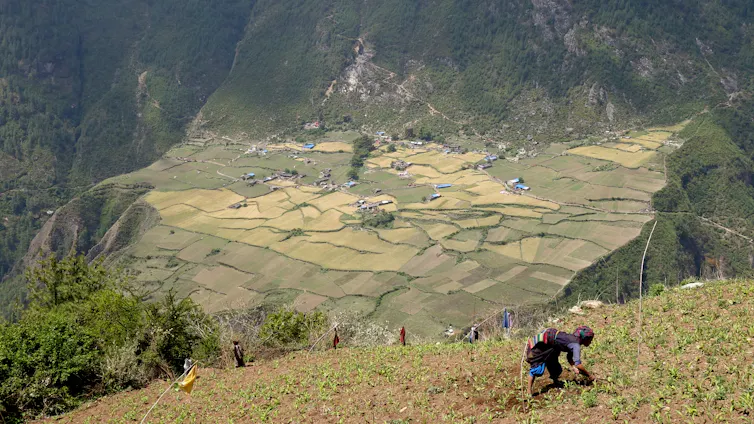
A woman in the foreground bendds over infront of a valley
A woman weeding freshly planted corn across the valley from Trok, Nubri.
Geoff Childs, CC BY-SA

So how should Nepal’s highlanders respond to the increase in bear attacks?

Dorje explained that in the past they set lethal traps when bear encroachments became too dangerous. That option vanished with the creation of Manaslu Conservation Area Project, or MCAP, in the 1990s, a federal initiative to manage natural resources that strictly prohibits the killing of wild animals.

Learning to grin and bear it?

Dorje reasons that if MCAP temporarily relaxed the regulation, villagers could band together to cull the more hostile bears. He informed us that MCAP officials will hear nothing of that option, yet their solutions, such as solar-powered electric fencing, haven’t worked.

Dorje is reflective about the options he faces as young people leave the village, leaving older folk to battle the bears alone.

“At first, I felt that we should kill the bear. But the other side of my heart says, perhaps I did bad deeds in my past life, which is why the bear bit me. The bear came to eat corn, not to attack me. Killing it would just be another sinful act, creating a new cycle of cause and effect. So, why get angry about it?”

It remains to be seen how Nubri’s residents will respond to the mounting threats bears pose to their lives and livelihoods. But one thing is clear: For those who remain behind, the outmigration of younger residents is making the perils more imminent and the solutions more challenging.

Dolma Choekyi Lama and Tsering Tinley made significant contributions to this article. Both are research team members on the author’s project on population in an age of migration.

The Conversation

Geoff Childs receives funding from the National Science Foundation.

ref. What a bear attack in a remote valley in Nepal tells us about the problem of aging rural communities – https://theconversation.com/what-a-bear-attack-in-a-remote-valley-in-nepal-tells-us-about-the-problem-of-aging-rural-communities-271377

Europe has five options for responding to Trump’s Greenland threats. None of them look good

Source: The Conversation – Global Perspectives – By Jun Du, Professor of Economics, Centre Director of Centre for Business Prosperity (CBP), Aston University

Johannes Madsen/Shutterstock

European negotiators believed they had bought stability in July 2025 amid the global trade turmoil sparked by Donald Trump’s liberation day tariffs. The EU’s deal with the US involved eliminating tariffs on American goods, purchasing US energy and committing to American investment. But six months later, as the US president made his intentions regarding Greenland clear, it collapsed.

Trump has now threatened new tariffs on eight European countries, the UK among them. The tariffs punish countries that sent military personnel to Greenland in support of Danish sovereignty.

The president has said 10% tariffs will apply to all goods entering the US from the eight countries from February 1, rising to 25% on June 1 until he is able to buy territory.

This isn’t an aberration. The US offered to buy Greenland in 1946. And before that it purchased Alaska (in 1867, from Russia), Florida (in 1821, from Spain) and Louisiana (in 1803, from France). What’s different now is the coercion mechanism – tariffs rather than a negotiated price.

Greenland offers Arctic shipping routes, rare earth deposits and missile defence positioning. Trump’s “Golden Dome” defence system needs more than military bases – it requires sovereign control to deploy classified systems without Danish oversight.

This is the same logic that drove pressure on Panama to renegotiate US control of the canal. This showed how existing arrangements aren’t enough – Washington wants exclusive control.

The tariff threats serve multiple purposes: punishing countries that showed solidarity with Denmark, testing whether economic pressure can fracture Nato from within, and of course generating revenue.

US tariff income hit US$264 billion (£197 billion) in 2025, up US$185 billion from 2024 after new tariffs kicked in. This is a windfall that makes security dependent allies who cannot retaliate reliable payers.

The usual playbook won’t work

When China faced US tariffs in 2025, it retaliated hard. China targeted soybeans from swing states, restricted rare earths with new export licences and slowed regulatory approvals for US tech companies. Beijing could absorb pain and inflict it back. That was a trade war fought with trade weapons.

Europe’s position is different. Brussels is now discussing the anti-coercion instrument – the so-called “trade bazooka”.

This law gives the EU teeth to hit back against economic blackmail from a non-EU country and overrides existing trade deals. In practice, this could restrict US companies from public procurement and impose retaliatory tariffs on €93 billion (£81 billion) of American goods.


Read more:
Tariffs may bring a US$50 billion monthly boost to the US government. But ordinary Americans won’t feel the benefit


But the EU requires unanimity for serious trade retaliation, and member states differ vastly in their US market exposure and Nato security dependence. Any serious escalation risks the security guarantee, a constraint China never faced.

And these tariffs aren’t really about trade anyway. Fighting a territorial objective with trade weapons is bringing the wrong tools to the job.

If trade diplomacy cannot solve a territorial problem, what can? The conventional playbook offers escalating retaliation — measured responses or catastrophic threats meant to deter a rational actor. But that assumes your opponent isn’t playing a game where brinkmanship is the point. Given those constraints, we have identified five options. None of them is comfortable.

1. Accept the new reality

Treat US tariffs as a permanent feature of transatlantic trade rather than a disruption to negotiate away. Price them into business planning and stop expending political capital on deals that probably won’t hold.

2. Diversify faster

The EU-Mercosur agreement signed in the same week between Brussels and the South American trading bloc wasn’t a coincidence. It was agreed in the knowledge that higher US tariffs were a distinct possibility one day.

For the UK, diversifying means accelerating its own negotiations (the Comprehensive and Progressive Agreement for Trans-Pacific Partnership – CPTPP, the Gulf and India). Every percentage point shifted from the US reduces Washington’s leverage.

3. Address the security dependence

European defence spending has risen sharply since Russia’s full-scale invasion of Ukraine — from €251 billion in 2021 to €343 billion in 2024. But capability takes longer than building up budgets. The Greenland tariffs illustrate the cost of dependence. When your security guarantor becomes your economic coercer, your options narrow dramatically.

4. Reconsider the UK-EU relationship

The crisis creates opportunity for both sides. These options require coordination across member states with vastly different US exposure and Nato dependence. Bringing Britain closer strengthens Europe’s negotiating position while giving the UK strategic options beyond an increasingly transactional US relationship.

The slow reset has been constrained by reluctance to make Brexit look costless. But when both face a direct challenge to the post-war order from their principal security guarantor, the calculation changes. Closer alignment becomes mutual strategic necessity.

5. Hold the line together

The worst outcome would be European countries peeling away from Denmark to escape tariffs. That is precisely what the policy is designed to achieve. This is the logic of political deterrence, which would suggest that showing solidarity will prevent further demands. If this cracks, there is likely to be more of the same from the US.

Whether Trump will ultimately acquire Greenland remains uncertain. Conventional wisdom says he won’t, but conventional wisdom has been wrong before. What’s clear is that this isn’t a tariff dispute requiring trade concessions. It’s a structural shift in transatlantic relations, and European strategy needs to adjust accordingly.

The Conversation

The authors do not work for, consult, own shares in or receive funding from any company or organisation that would benefit from this article, and have disclosed no relevant affiliations beyond their academic appointment.

ref. Europe has five options for responding to Trump’s Greenland threats. None of them look good – https://theconversation.com/europe-has-five-options-for-responding-to-trumps-greenland-threats-none-of-them-look-good-273885

Why Philly has so many sinkholes

Source: The Conversation – USA (2) – By Laura Toran, Professor of Environmental Geology, Temple University

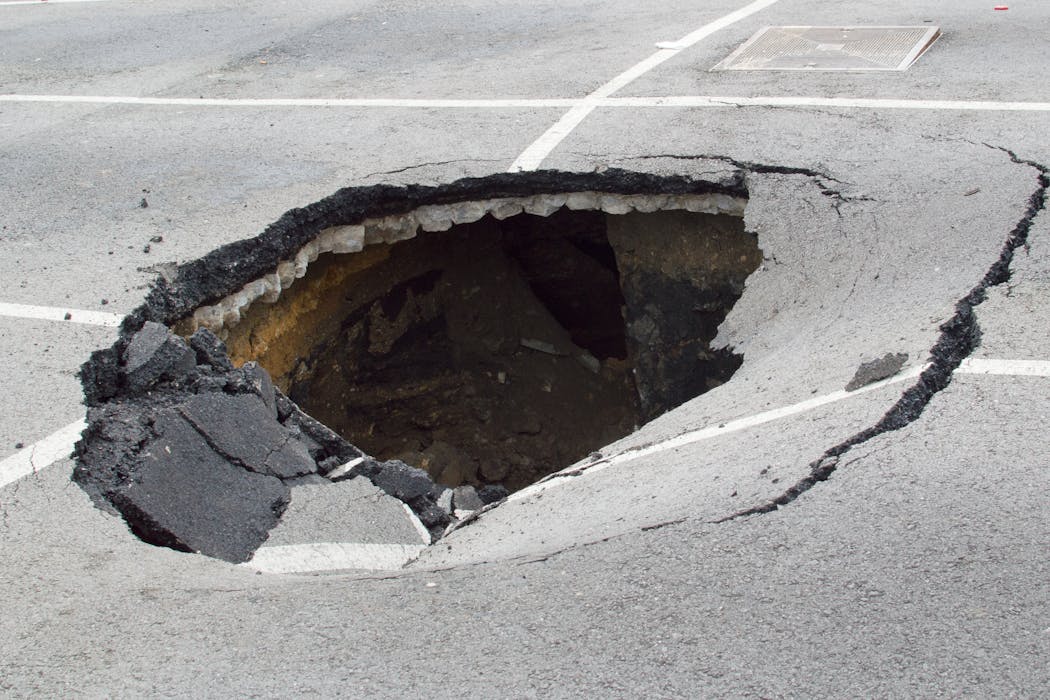
Sinkholes form when underground rock dissolves or sediment washes away and the surface collapses. Luis Diaz Devesa/Moment Collection/Getty Images

In early January, a giant sinkhole formed at an intersection in the West Oak Lane neighborhood of North Philadelphia after a water main break. Just two weeks earlier, the city reopened a section of the Schuylkill River Trail in Center City that had been shut down for two months due to a sinkhole. Last summer, some residents of Point Breeze in South Philly also waited two months for a sinkhole on their block to be repaired.

Laura Toran is a hydrogeologist and professor emeritus of environmental geology at Temple University. The Conversation U.S. asked her what causes sinkholes, whether Philly is particularly prone to them, and why repairs can take so long.

What are sinkholes and how do they happen?

A sinkhole is a hole that opens up in the ground due to some change in the subsurface.

There are two categories of change that create sinkholes. One type is associated with carbonate rock. This is a type of rock that can develop caves because the rock dissolves when underground water is even slightly acidic. When the bridge over one of these caves collapses, a sinkhole occurs.

The second type is associated with water supply or sewage pipes buried underground. The sediment next to the pipes can erode or wash away when there is a leak in the pipes. That leaves a gap, and if the collapse at the surface becomes big enough, it becomes a sinkhole.

What do we know about the sinkholes in West Oak Lane and on the Schuylkill River Trail?

West Oak Lane experienced two recent water main breaks. Debris from the flowing water made it hard to get to the leak.

A sinkhole formed while the water department attempted to fix a broken pipe in West Oak Lane.

Fixing a big leak is a complex job. You have to stop the leak, clear out the debris, get the parts for repair, do the pipe repair, then repair the road. This example also shows that repair teams need to look around to see whether other sections of pipe might be aging and repair them while they have a hole opened up, so you don’t want to rush the job.

The sinkhole on the Schuylkill River Trail late last year, which took two months to fix, was also the result of a pipe leak. The water department had to get involved in the repair, alongside the parks and recreation department. I should point out that the city has a limited budget for pipe repair. As one of the oldest cities in the country, Philadelphia has a lot of work to keep up with.

That said, I would rather try to fix a pipe leak than a carbonate rock sinkhole. With the cavities in carbonate rock, you don’t really know how big they are, and a typical solution is to fill them with concrete. Sometimes you have a much bigger cavity than your supply of concrete.

Is Philly prone to sinkholes?

The Philadelphia region has both types of sinkholes. Within the city, there isn’t carbonate rock present, but just outside the city, such as the King of Prussia area, we see carbonate rock that is subject to sinkholes.

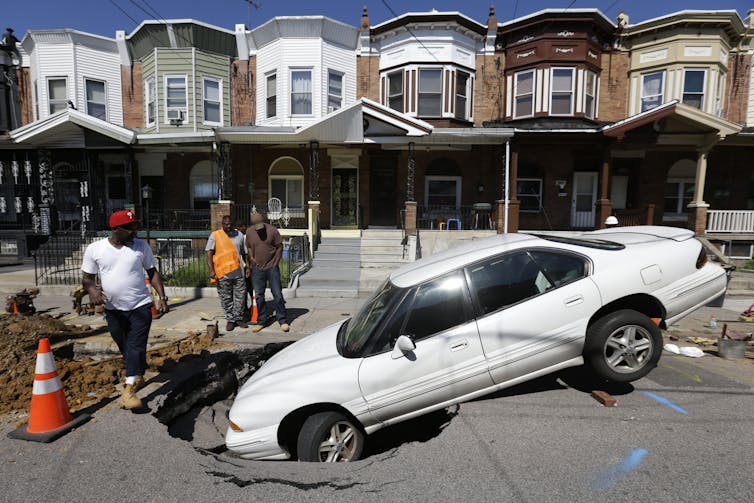
The sinkholes that occur in Philly are where pipes leak and the surrounding soil gets washed away. Because we have the right geology for sinkholes in our region and we have an extensive water network that is aging, sinkholes are somewhat common.

Some regions have even more sinkholes than we see here, however. Florida is entirely underlain by carbonate rock, and sinkholes are quite common.

Front half of white sedan in a sinkhole on residential street
Philly has been dealing with sinkholes for years. This one opened up overnight on a street in the city’s Hunting Park section in July 2013.
AP Photo/Matt Rourke

Can nearby residents know when a sinkhole is forming?

We have a map of carbonate rock in the state, but not all carbonate rock develops sinkholes. Where and when in the carbonate rock a sinkhole is likely to develop is unpredictable.

Sinkholes in Philadelphia tend to also be unpredictable because the driving factor is happening underground and out of sight. We don’t know when a pipe leak is going to occur. Sometimes there is a sagging at the surface before a bigger hole opens up. Sometimes we see the leak before the sinkhole occurs. But not all leaks or sagging ground will lead to a sinkhole, and there won’t necessarily be any warning.

That said, it is important to report leaks and sagging ground so that they can be investigated before getting worse. Report leaks to the Philadelphia Water Department by calling their emergency hotline at 215-685-6300.

If we could replace all the aging infrastructure in the city, we would have fewer sinkholes. However, that would be costly and disruptive, so it really isn’t practical. In the meantime, the city just has to fix new sinkholes as they occur.

Read more of our stories about Philadelphia and Pennsylvania, or sign up for our Philadelphia newsletter on Substack.

The Conversation

Laura Toran receives funding from the National Science Foundation (federal), the Pennsylvania Department of Transportation, and the William Penn Foundation (private).

ref. Why Philly has so many sinkholes – https://theconversation.com/why-philly-has-so-many-sinkholes-273082

Some hard-earned lessons from Detroit on how to protect the safety net for community partners in research

Source: The Conversation – USA (2) – By Carrie Leach, Research Assistant Professor, Wayne State University

To get seniors online, the author provided them with computers and internet access. David Goldman/AP Photo

For the past 10 years, I have worked on closing the communication gaps that keep older adults at arm’s length from research that could improve their lives.

I worked with Detroiters to bridge the digital divide by developing tools that make it easier for older adults to get online, allowing them to connect to health information and learn about benefits they’re eligible for. I have also codesigned projects with members of the community to help improve older residents’ access to services.

My overriding goal is to help older minority adults connect with research so they are not left out of the very studies meant to reduce health disparities in aging. My work has focused on older adults in Detroit, a majority minority city, to help improve health for all residents.

Despite my best intentions, I recently had an experience where my work created unintended harm for vulnerable people.

I want to share my experience as a cautionary example of how researchers can fail to understand the government benefits that low-income older adults rely on, especially when it comes to research stipends.

Detroit seniors, unplugged

Recently, I completed a project that aimed to bridge both the digital divide and the divide between Detroit residents and researchers.

This project was inspired by the COVID-19 pandemic, when it became clear how hard it was going to be to connect with Detroit residents. Delivering environmental education and outreach is part of my work at the Center for Urban Responses to Environmental Stressors, also known as CURES. In response to the disconnect caused by the lockdown, our team was fortunate to get funding to deliver computers to 1,700 older Detroiters. Our community partners and advisory board members helped us distribute them.

But we soon learned many of the recipients didn’t know how to use the computers, and some couldn’t get online. At the time, Detroit had one of the lowest internet connectivity rates in the nation. Rates were as low as 40% in 2020.

Detroit has used some creative approaches to getting its residents online.

Poor connectivity has been called a “super-determinant” of health. Not being able to access the internet harms individuals because they are cut off from resources that could make them healthier – such as telehealth appointments, for example. It also creates health inequities for groups of people when research lacks a diversity of perspectives.

Naturally, our next step was to develop tools to help the people who received computers get plugged in. We applied for funding, won it – and soon I was working alongside community health and aging advocates, researchers, service providers and housing administrators to develop and refine a technology tool kit.

Once the tool kit was ready, we distributed it widely. The tool kit is designed to cover the basics for older adults who are new computer users. For example, we included directions for connecting to Wi-Fi and creating an email account. We made this resource available for anyone who is interested in using it.

Intro to Research 101

Our community partners next gathered a cohort of 10 Detroiters who were 65 or older so they could learn how to get involved in virtual research. We developed an online research readiness curriculum to introduce them to the basics of how research is done.

Remembering the challenges of COVID-19, we set a goal of engaging the older adults entirely online. Our early meetings started with 45 minutes spent troubleshooting cameras and microphone connections. A few months later, we were all camera-ready in less than nine minutes.

Because I value their time, I budgeted to pay everyone involved in the project. It is difficult for people to take part in programs when they can’t afford to cover basic expenses, and payment can help relieve these financial pressures. What I didn’t realize is that these modest amounts of money could be treated by HUD as income and trigger increases in rent.

But that is exactly what happened.

The older adults involved in our project lived in HUD housing, and their rental costs are based on their income.

We paid residents $120 monthly. This stipend increased their incomes, which in turn led to increases in their rent, sometimes by the same amount as the stipend. Having higher housing costs left them in worse shape than before they joined our project. The stipends were designed to phase out after 10 months, but it was unclear when their rents would be adjusted again. By being involved, their finances became more precarious.

In my opinion, this illustrates how research involvement, even when designed to be fair and respectful, can create an unintended financial strain for people whose budgets leave no room for error.

My privilege was a blind spot.

Problem-solving through partnership

I would likely never have known about the problem if the housing administrator, who was one of my project partners, had not spoken up on behalf of the residents involved in the project. The residents did not come to me to report the issue. They went to a person they already knew and trusted to talk about the unexpected burden.

Some residents stopped accepting payments for their participation, but they still faced months of higher rental costs while we worked to get their money back.

That relief eventually came, thanks to a vigilant HUD administrator, weeks of calls and emails, and late nights spent reviewing HUD’s policies.

In the end, HUD emailed to say it had agreed to exempt the stipends from the residents’ income because we argued that the payments were “temporary, sporadic and nonrecurring.” In response, the HUD site administrator immediately made adjustments, and the overpayments were returned to the residents.

Everyone involved was hugely relieved.

Learning from my mistake

And that may have been the end of the story if one of my community partners, Zachary Rowe, hadn’t encouraged me to write about what happened so that others could learn from our experience.

In my view, this cautionary tale reveals a critical gap in how researchers engage and support people who are underrepresented in studies, including those who rely on housing assistance and other safety net programs. Without attention to these details, efforts to broaden participation in studies can unintentionally exclude or burden the very people researchers are working to include. Experiences like this reinforce that institutions must adapt their policies so paying people for their time never jeopardizes their basic needs.

Researchers, university research review boards and community partners could all benefit from plain‑language guidance about how earnings interact with safety net programs, benefits and income rules. Projects should start with collaborative efforts to anticipate the real-world implications of engagement.

This kind of persistent troubleshooting supports ethical practices and helps build the kind of trust that makes long‑term research partnerships possible.

I view the additional effort and advocacy required to take these precautions as part of the work of shaping who gets represented in research at all. If engaging people with complex lives and constrained resources were easy, our study samples would already be diversified.

Sharing these difficult experiences can be uncomfortable, but it can also help researchers, institutions and partners do better for those who might otherwise be harmed along the way.

The Conversation

Carrie Leach receives funding from NIH.

ref. Some hard-earned lessons from Detroit on how to protect the safety net for community partners in research – https://theconversation.com/some-hard-earned-lessons-from-detroit-on-how-to-protect-the-safety-net-for-community-partners-in-research-271361

What air pollution does to the human body

Source: The Conversation – USA (3) – By Jenni Shearston, Assistant Professor of Integrative Physiology, University of Colorado Boulder

I grew up in rural Colorado, deep in the mountains, and I can still remember the first time I visited Denver in the early 2000s. The city sits on the plain, skyscrapers rising and buildings extending far into the distance. Except, as we drove out of the mountains, I could barely see the city – the entire plain was covered in a brown, hazy cloud.

That brown, hazy cloud was mostly made of ozone, a lung-irritating gas that causes decreases in lung function, inflammation, respiratory symptoms like coughing, and can trigger asthma attacks.

Denver still has air pollution problems, due in part to its geography, which creates temperature inversions that can hold pollution near the ground. But since 1990, ozone has decreased 18% across the U.S., reducing the smog that choked many cities in the 1960s and 1970s. The concentration of tiny dustlike particles of air pollution called PM2.5 has also decreased, by 37% since 2000.

These decreases occurred largely because of one of the most successful public health policies ever implemented by the United States: the Clean Air Act, first passed in 1970. The Clean Air Act regulates air pollution emissions and authorizes the Environmental Protection Agency to set air quality standards for the nation.

For years, when the Environmental Protection Agency assessed the economic impact of new regulations, it weighed both the health costs for Americans and the compliance costs for businesses. The Trump administration is now planning to drop half of that calculation – the monetary health benefits of reducing both ozone and PM2.5 – when weighing the economic impact of regulating sources of air pollution.

I am an environmental epidemiologist, and one of the things I study is people’s exposure to air pollution and how it affects health. Measuring the impact of air quality policies – including quantifying how much money is saved in health care costs when people are exposed to less air pollution – is important because it helps policymakers determine if the benefits of a regulation are worth the costs.

What air pollution does to your body

Breathing in air pollution like ozone and PM2.5 harms nearly every major system in the human body.

It is particularly hard on the cardiovascular, respiratory and neurological systems. Numerous studies have found that PM2.5 exposure is associated with increased death from cardiovascular diseases like coronary heart disease. Even short-term exposure to either PM2.5 or ozone can increase hospitalizations for heart attacks and strokes.

What’s in the air you breathe?

In the respiratory system, PM2.5 exposure is associated with a 10% increased risk for respiratory diseases and symptoms such as wheezing and bronchitis in children. More recent evidence suggests that PM2.5 exposure can increase the risk of Alzheimer’s disease and other cognitive disorders. In addition, the International Agency for Research on Cancer has designated PM2.5 as a carcinogen, or cancer-causing agent.

Reducing air pollution has been proven to save lives, reduce health care costs and improve quality of life.

For example, a study led by scientists at the EPA estimated that a 39% nationwide decrease in airborne PM2.5 from 1990 to 2010 corresponded to a 54% drop in deaths from ischemic heart disease, chronic obstructive pulmonary disease, lung cancer and stroke.

In the same period, the study found that a 9% decline in ozone corresponded to a 13% drop in deaths from chronic respiratory disease. All of these illnesses are costly for the patients and the public, both in the treatment costs that raise insurance prices and the economic losses when people are too ill to work.

A smoggy view of a street with 1950s-vintage cars in downtown LA.
Smog defined Los Angeles for years, including in December 1956. The photo was taken looking down Grand Avenue.
Bettmann via Getty Images

Yet another study found that nationally, an increase of 1 microgram per square meter in weekly PM2.5 exposure was associated with a 0.82% increase in asthma inhaler use. The authors calculated that decreasing PM2.5 by that amount would mean US$350 million in annual economic benefits.

Especially for people with lung diseases like asthma or sarcoidosis, increased PM2.5 concentrations can reduce quality of life by worsening lung function.

Uncertainty doesn’t mean ignore it

The process of calculating precisely how much money is saved by a policy has uncertainty. That was a reason the Trump administration stated for not including health costs in its cost-benefit analyses in 2026 for a plan to change air pollution standards for power plant combustion turbines.

Uncertainty is something we all deal with on a daily basis. Think of the weather. Forecasts have varying degrees of accuracy. The high temperature might not get quite as high as the prediction, or might be a bit hotter. That is uncertainty.

The EPA wrote in a notice dated Jan. 9, 2026, that its historical practice of providing estimates of the monetized impact of reducing pollution leads the public to believe that the EPA has a clearer understanding of these monetary benefits than it actually does.

Therefore, the EPA wrote, the agency will stop estimating monetary benefits from reducing pollution until it is “confident enough in the modeling to properly monetize those impacts.”

This is like ignoring weather forecasts because they might not be perfect. Even though there is uncertainty, the estimate is still useful.

Estimates of the monetary costs and benefits of regulating pollution sources are used to understand if the regulation is worth its cost. Without considering the health costs and benefits, it may be easier for infrastructure that emits high levels of air pollution to be built and operated.

A woman wears a face mask to filter the air while standing on a subway platform.
On days with poor air quality, like this one in New York in June 2025, more cities are issuing alerts, and more people are wearing face masks to reduce their exposure to harmful particles.
Selcuk Acar/Anadolu via Getty Images

What the evidence shows

Several studies have shown the impact of pollution sources like power plants on health.

For example, the retirement of coal and oil power plants has been connected with a reduction in preterm birth to mothers living near the power plants. Scientists studied 57,000 births in California and found the percentage of babies born preterm to mothers living within 3.1 miles (5 kilometers) of a coal- or oil-fueled power plant fell from 7% to 5.1% after the power plant was retired.

Another study in the Louisville, Kentucky, area found that four coal-fired power plants either retiring or installing pollution-reduction technologies such as flue-gas desulfurization systems coincided with a drop in hospitalizations and emergency department visits for asthma and reduced asthma-medication use.

Reducing preterm birth, hospitalizations, emergency department visits and medication use saves money by preventing expensive health care for treatment, hospital stays and medications. For example, researchers estimated that for children born in 2016, the lifetime cost of preterm birth, including medical and delivery care, special education interventions and lost productivity due to disability in adulthood, was in excess of $25.2 billion.

Circling back to Denver: The region is a fast-growing data center hub, and utilities are expecting power demand to skyrocket over the next 15 years. That means more power plants will be needed, and with the EPA’s changes, they may be held to lower pollution standards.

The Conversation

Jenni Shearston has received funding from the National Institutes of Health.

ref. What air pollution does to the human body – https://theconversation.com/what-air-pollution-does-to-the-human-body-273456

What ‘hope’ has represented in Christian history – and what it might mean now

Source: The Conversation – USA (3) – By Joanne M. Pierce, Professor Emerita of Religious Studies, College of the Holy Cross

Pope Leo XIV closes the Holy Door of St. Peter’s Basilica’s to end the 2025 ordinary Jubilee year at the Vatican on Jan. 6, 2026. Yara Nardi/Pool photo via AP

Pope Leo XIV closed the door at St. Peter’s Basilica on Jan. 6, 2026, just days into the new year. The act formally brought the Vatican’s Holy Year 2025 – designated as “Pilgrims of Hope” – to an end.

In 2022, after the COVID-19 pandemic ended, Pope Francis announced his intention to proclaim a Jubilee year, urging the faithful to look to the future “with an open spirit, a trusting heart and far-sighted vision.” That is why, as Francis explained, he chose the motto of the Jubilee: “Pilgrims of Hope.”

Ironically, 2025 was a turbulent year the world over. After so much military aggression in Ukraine, rampant starvation in Gaza and increasing violence of all kinds within the United States, people in many parts of the world were left much more despairing than hopeful for 2026.

Religions typically try to offer hope in the face of despair. As a scholar of Catholicism, I know that even amid violent persecutions, devastating wars and staggering death tolls from epidemics, Christians have repeatedly turned to their holy texts for hope.

So what is the meaning of hope in the Christian tradition?

Western antiquity

Christianity was shaped by its roots in Judaism, but also its rejection of Greco-Roman religious culture, especially its polytheism.

Many ancient Greek authors wrote about a divine spirit of hope – Elpis. As early as the late eighth century B.C.E., the poet Hesiod composed a mythic poem, “Works and Days,” about Pandora and her box of woes. The god Zeus warned that Pandora was not to open the box, given to her as a gift. But in the end, she did – and released all of the entrapped evils to trouble the world. But Elpis – that is, Hope – had also been placed in the box and was kept inside when Pandora closed the lid quickly. The moral of the story is that hope still remains with humanity.

In ancient Rome, hope was venerated as a minor goddess, Spes, but usually on a communal, national level. Politically, Spes represented the collective hope for the Roman Republic or support for the semi-divine emperors of the later empire; temples were erected in her honor, and her image could be found on coins.

Hebrew Scriptures

But for monotheistic Judaism, hope was not an external divine spirit or goddess to be invoked in times of personal or communal need.

In the ancient Near East, the authors of books of the Hebrew Bible spoke frequently about hope. Often expressed with the word “tikvah,” hope is presented in the Bible as a human reaction to God’s promises, “an inner attitude of inner expectation”: a confident trust based on God’s past works.

Early in the Book of Job, the reader meets Job, a righteous man whose faith is tested through the sudden loss of his children, wealth and health. His friend Eliphaz urges him not to give up hope in the midst of Job’s terrible sufferings. He asks: “Is your fear of God not your confidence, and the integrity of your ways your hope?” Job is already living a life of faith and obedience; his reaction should not be to collapse in despair, but to carry on in hope, trusting in God’s wisdom and mercy.

The Psalms were composed as poems or hymns used in worship. In Psalm 62, the psalmist reminds himself and all God’s people of this hope: “My soul, wait in silence for God alone, for my hope is from Him. … Trust in Him at all times, you people.”

The prophets were understood to have been sent by God to chastise the people of Israel for falling into idolatry and other evils and to urge repentance. And some of them stress hope in God as the source for strength in rejecting these worldly temptations and turning back to following the teachings of the Scriptures. The prophet Jeremiah, for example, addresses God as “the hope of Israel” as they repent.

Christian Scriptures

The New Testament, compiled in the first century C.E. contains frequent references to the Old Testament as interpreted through the lens of Jesus’ teaching.

The Gospels rarely use the word hope itself, but imply it obliquely in connection with other elements of faith, such as belief and trust. The Epistles, or letters, by early Christian apostles and their followers, contain frequent references to hope.

For example, in several Epistles, the apostle Paul speaks often about the Christian hope in God through Jesus Christ. In the “Letter to the Romans,” Paul states that, even among difficulties, “hope does not disappoint us, because God’s love has been poured into our hearts.” He praises the Christians in Thessalonika for “your work of faith and labor of love and endurance in hope of our Lord Jesus Christ, before our God and Father.”

But in his first “Letter to the Corinthians,” Paul addresses different kinds of spiritual gifts – some very striking, such as speaking in tongues or healing others. But he then writes a section specifically exploring the most important gift of all, love – in Greek, “agape” – and refers to its relationship with both faith and hope. He closes with a frequently quoted text about what he described as the three greatest Christian virtues: faith, hope and love.

Contemporary hope

Throughout the next centuries, Christian theologians and popes reflected on the nature of hope – either in itself, or within the framework of all three of these virtues.

And so, on Dec. 24, 2025, Francis opened the door of St. Peter’s Basilica to declare the beginning of the Catholic Church’s celebration of the Holy Year, with hope as the special theme.

He would not live to close it. But Leo XIV did, with the following words at the final Jubilee Mass:

“Has the Jubilee taught us to flee from (the) type of efficiency that reduces everything to a product and human beings to consumers? After this year, will we be better able to recognize a pilgrim in the visitor, a seeker in the stranger, a neighbor in the foreigner, and fellow travelers in those who are different?”

From his very first speech after being elected pope, Leo called Christians to reach out to others, build bridges, engage in dialogue and be present to one another.

Perhaps this is what continuing to hope means for the world in 2026.

The Conversation

Joanne M. Pierce does not work for, consult, own shares in or receive funding from any company or organization that would benefit from this article, and has disclosed no relevant affiliations beyond their academic appointment.

ref. What ‘hope’ has represented in Christian history – and what it might mean now – https://theconversation.com/what-hope-has-represented-in-christian-history-and-what-it-might-mean-now-273097

American border crackdown forces Venezuelan migrants on a perilous journey back south

Source: The Conversation – Canada – By Guillermo Candiz, Assistant Professor, Human Plurality, Université de l’Ontario français

Since February 2025, thousands of Venezuelan asylum-seekers have been turned away from the United States-Mexico border and denied the right to apply for protection in the U.S. Along with other Venezuelans who were living in the U.S. and have been deported, they’ve been forced to head south, either back to Venezuela or to other countries in Central and South America.

This phenomenon — commonly described as reverse migration — raises important questions about the capacity or willingness of countries in the region to ensure the safety and security of these migrants.

As part of ongoing research, we talked to asylum-seekers and collected their insights during our field work in Costa Rica in November and December 2025. Our interviews revealed that those who abandoned the hope of crossing into the U.S. made the decision for many reasons.

Expecting a better life in Venezuela was not among them. Instead, many faced repeated obstacles along the way, which accumulated over time into what can be described as journey fatigue.

Exhaustion

The migrants we interviewed experienced physical exhaustion from long periods of waiting, economic hardship, fear and incidents of violence in Mexico, as well as fraud and theft, while access to institutional or humanitarian support steadily declined.

The final blow for most of them came from changes in the U.S. asylum and temporary protection policies. These included the termination of the two‑year humanitarian parole program, the freezing of asylum application processing for Venezuelans and nationals of 18 other countries and the inclusion of Venezuelans in travel bans restricting entry for citizens of 39 countries.

These policy shifts were combined with the abrupt cancellation of what was known as the CBP One mobile application and all previously approved appointments made using the app.

The U.S. Customs and Border Protection’s app allowed asylum-seekers to submit biographic information to set up an appointment prior to their scheduled arrival at a port of entry. This sudden change dashed the hopes of thousands who had been waiting for an opportunity to request asylum at the U.S. border.

Decisions to head back south rather than continue pursuing entry into the U.S. are made under conditions of high uncertainty. Migration regimes, support infrastructure and facilitation networks change rapidly — some disappearing as others emerge — and often without clear mechanisms for sharing information among migrants or those trying to help them.

In this environment, many people remain trapped for months in waiting spaces, with no real possibility of moving forward and no means of survival while waiting, resorting to begging or informal work.

A Venezuelan couple we interviewed at the Costa Rica–Panama border described how they often sang in restaurants or begged to feed their family, pay for bus travel between countries, and, at times, secure a roof over their heads when shelters run by religious organizations were unavailable.

Not safe to return

For international organizations and receiving countries, “voluntary return” is often presented as a preferred solution.

The International Organization for Migration (IOM) administers the Assisted Voluntary Return and Reintegration (AVRR) Program. As we learned during our Costa Rican field work, the IOM facilitates the return of Venezuelans to their home country when they reach Panama.

But whether a return is feasibile depends directly on conditions in the country of origin. Most Venezuelan migrants we interviewed didn’t think it was safe for them to return home.

U.S. intervention creates more uncertainty

The recent U.S. intervention in Venezuela and the capture of President Nicolás Maduro did nothing to change this political scenario.

Instead, it has injected regional uncertainty that transcends Venezuela’s borders. After Maduro’s capture, Vice President Delcy Rodríguez assumed the role of interim president, suggesting the country’s authoritarian regime can survive the U.S. intervention.


Read more:
The Colombian border is one of the biggest obstacles to building a new Venezuela


The Trump administration says it will oversee Venezuela during an unspecified transition period, but the implications are unclear.

The post-invasion situation does not include the transition of power to opposition leaders like González Urrutia or Corina Machado, even though Machado just handed over her Nobel Peace Prize to Trump.

Settling elsewhere

Within this tense and uncertain climate, many displaced Venezuelans heading south consider settling in Chile, Colombia or Costa Rica as alternative destinations.

That’s despite the fact that these countries lack the institutional capacity and infrastructure to absorb sustained reverse migration and are showing growing signs of rejecting Venezuelans.

This is evident with the recent election of Jose Antonio Kast in Chile, whose campaign focused on controlling “irregular immigration,” threatening mass deportations of migrants — mostly Venezuelans — and fuelling a climate of social hostility.

As we found during our research in Costa Rica, the country’s asylum system is stretched to the limit and appointments to put in a refugee claim can take more than two years to be scheduled, not counting the adjudication process.

These delays and the uncertainty of outcomes for migrants cause anxiety among displaced people and discourage them from attempting to seek protection in Costa Rica.

Research on transit migration to the U.S. or Europe has shown that these movements are fragmented, multi-directional and often circular. Policy changes — both in countries of destination and transit — new opportunities for social support or jobs, new intimate relationships or new information on possibilities of border crossing reshape migration trajectories.

Venezuelan reverse migration reflects similar dynamics, but unfolds in even more uncertain and precarious ways because the capacity of various states to meet the needs of displaced people is severely limited. This leads to even more severely fragmented routes for return migrants than for those travelling north.

Global North must step up

In light of these dynamics, it’s crucial to reaffirm the international protection regime and to recognize the historical responsibility of northern countries — including the United States, Canada and EU member states — to ensure effective access to asylum for people displaced by violence, conflict and persecution.

Any reform of regional migration governance must begin from this core principle.

We therefore call on governments, international organizations, humanitarian groups and civil society to uphold international protection regimes and to design responses that reflect the complex realities of shifting migration flows and the rights of people on the move.

The Conversation

Guillermo Candiz receives funding from Social Sciences and Humanities Research Council.

Tanya Basok receives funding from Social Science and Humanities Research Council of Canada

ref. American border crackdown forces Venezuelan migrants on a perilous journey back south – https://theconversation.com/american-border-crackdown-forces-venezuelan-migrants-on-a-perilous-journey-back-south-272974

Greenland: Staying with the Polar Inuit. How a secret military base helped trigger the silent collapse of an Arctic world

Source: The Conversation – France – By Ludovic Slimak, Archéologue, penseur et chercheur au CNRS, Université de Toulouse

Today, as Greenland once again becomes a strategic prize, history seems poised to repeat itself. Staying with the Polar Inuit means refusing to speak of territory while erasing those who inhabit it.

On 16 June 1951 Jean Malaurie was travelling by dog sled along the north-west coast of Greenland. He had set out alone, almost on a whim, with a modest grant from the French National Centre for Scientific research (CNRS), officially to study periglacial landscapes. In reality, this encounter with peoples whose relationship with the world followed an entirely different logic would shape a singular destiny.

That day, after many months among the Inuit, at the critical moment of the spring thaw, Malaurie was travelling with a few hunters. He was exhausted, filthy and emaciated. One of the Inuit touched his shoulder: “Takou, look.” A thick yellow cloud was rising in the sky. Through his binoculars, Malaurie first thought it was a mirage:

“A city of hangars and tents, of metal sheets and aluminium, dazzling in the sunlight, amid smoke and dust… Three months earlier, the valley had been calm and empty of people. I had pitched my tent there, on a clear summer day, in a flowering, untouched tundra.”

The breath of this new city, he would later write, “would never let us go.” Giant excavators hacked at the ground, trucks poured debris into the sea, aircraft circled overhead. Malaurie was hurled from the Stone Age into the Atomic Age. He had just discovered the secret American base of Thule, codenamed Operation Blue Jay.

The American base at Thule in the early 1950s.
U.S. Army, The Big Picture — Operation Blue Jay (1953), CC BY

Behind this innocuous name lay a colossal logistical operation. The United States feared a Soviet nuclear attack via the polar route. In a single summer, some 120 ships and 12,000 men were deployed to a bay that had previously known only the silent glide of kayaks. Greenland’s population at the time numbered barely 23,000 people. In just 104 days, on permanently frozen ground, a technological city capable of hosting giant B-36 bombers carrying nuclear warheads emerged. More than 1,200 kilometres north of the Arctic Circle, and in almost total secrecy, the United States built one of the largest military bases ever constructed outside its continental territory. A defence agreement was signed with Denmark in the spring of 1951, but Operation Blue Jay was already underway: the American decision had been taken in 1950.


A weekly e-mail in English featuring expertise from scholars and researchers. It provides an introduction to the diversity of research coming out of the continent and considers some of the key issues facing European countries. Get the newsletter!


The annexation of the Inuit world

Malaurie immediately grasped that the sheer scale of the operation amounted, in effect, to an annexation of the Inuit world. A system founded on speed, machinery and accumulation had violently and blindly entered a space governed by tradition, cyclical time, hunting and waiting.

The blue jay is a loud, aggressive, fiercely territorial bird. Thule lies halfway between Washington and Moscow along the polar route. In the era of intercontinental hypersonic missiles, once Soviet and now Russian, it is this same geography that still underpins the argument of “vital necessity” invoked by Donald Trump in his calls to annex Greenland.

The Thule base has a strategic position between the USA and Russia.
U.S. Army, The Big Picture — Operation Blue Jay (1953), CC BY

The most tragic immediate outcome of Operation Blue Jay was not military, but human. In 1953, to secure the perimeter of the base and its radar installations, authorities decided to relocate the entire local Inughuit population to Qaanaaq, roughly 100 kilometres further north. The displacement was swift, forced and carried out without consultation, severing the organic bond between this people and their ancestral hunting territories. A “root people” was uprooted to make way for an airstrip.

It is this brutal tipping point that Malaurie identifies as the moment when traditional Inuit societies began to collapse. In these societies, hunting is not merely a survival technique but an organising principle of the social world. The Inuit universe is an economy of meaning, made of relationships, gestures and transmission through the generations that confer recognition, role and place in relation to each individual. This intimate coherence, which constitutes the strength of these societies, also renders them acutely vulnerable when an external system suddenly destroys their territorial and symbolic foundations.

After the collapse of traditional structures

Today, Greenlandic society is largely sedentary and urbanised. More than a third of its 56,500 inhabitants live in Nuuk, the capital, and nearly the entire population now resides in permanent coastal towns and settlements. Housing reflects this abrupt transition. In the larger towns, many people live in concrete apartment blocks built in the 1960s and 1970s, often deteriorating and overcrowded. The economy is heavily dependent on industrial fishing geared toward export. Subsistence hunting and fishing are still commonplace. Modern rifles, GPS devices, snowmobiles and satellite connections now work hand in hand with old habits. Hunting remains a marker of identity, but it no longer shapes either the economy or intergenerational transmission.

The fallout on a human level from this shift is massive. Greenland today has one of the highest suicide rates in the world, particularly among young Inuit men. Contemporary social indicators, suicide rates, alcoholism, domestic violence, are widely documented. Many studies link them to the speed of social transformation, forced sedentarization and the breakdown of traditional systems of transmission.

American military maneuvers at Thule.
U.S. Army, The Big Picture — Operation Blue Jay (1953), CC BY

Spaces and radioactive contamination

The logic underpinning Thule reached a point of no return on 21 January 1968. During a continuous nuclear alert mission, a US Air Force B-52G bomber under the Chrome Dome programme, crashed into the sea ice some ten kilometres from Thule. It was carrying four thermonuclear bombs. The conventional explosives designed to initiate the nuclear reaction detonated on impact. There was no nuclear explosion, but the blast scattered plutonium, uranium, americium and tritium over a vast area.

In the days that followed, Washington and Copenhagen launched Project Crested Ice, a large-scale recovery and decontamination operation ahead of the spring thaw. Around 1,500 Danish workers were mobilised to scrape the ice and collect contaminated snow. Decades later, many of them initiated legal proceedings, claiming they had worked without adequate information or protection. These cases continued until 2018–2019 and resulted only in limited political compensation, without any legal recognition of responsibility. No comprehensive epidemiological study has ever been conducted among the local Inuit populations.

Now renamed “Pituffik Space Base”, the former Thule base is one of the major strategic nodes of the US military apparatus. Integrated into the US Space Force, it plays a central role in missile warning and space surveillance in the Arctic, under maximum security conditions. It is not a relic of the Cold War, but an active pivot of contemporary geopolitics.

In The Last Kings of Thule (1953), Malaurie shows that indigenous peoples have never had a place at the heart of Western strategic thinking. Amid the great manoeuvres of the world, Inuit existence becomes as peripheral as that of seals or butterflies.

Donald Trump’s statements do not herald a new world. They seek to generalise a system that has been in place in Greenland for seventy-five years. Yet the position of one man cannot absolve us of our collective responsibilities. To hear today that Greenland “belongs” to Denmark and therefore falls under NATO, without even mentioning the Inuit, is to repeat an old colonial gesture: conceiving territories by erasing those who inhabit them.

Portrait of a Greenlandic Inuit.
Popular Science Monthly Volume 37

The Inuit remain invisible and unheard. Our societies continue to imagine themselves as adults facing infantilised, indigenous populations. Their knowledge, values and ways of being are relegated to secondary variables. Difference does not fit within the categories that our societies know how to handle.

Following Jean Malaurie, my own research approaches humanity through its margins. Whether studying hunter-gatherer societies or what remains of Neanderthals once stripped of our projections, the “Other” remains the blind spot for our perceptions. We fail to see how entire worlds collapse when difference ceases to be thinkable.

Malaurie ended his first chapter on Thule with these words:

“Nothing was planned to imagine the future with any sense of elevation.”

What must be feared above all is not the sudden disappearance of a people, but their silent and radical relegation within a world that speaks about them without ever seeing or hearing them.

The Conversation

Ludovic Slimak ne travaille pas, ne conseille pas, ne possède pas de parts, ne reçoit pas de fonds d’une organisation qui pourrait tirer profit de cet article, et n’a déclaré aucune autre affiliation que son organisme de recherche.

ref. Greenland: Staying with the Polar Inuit. How a secret military base helped trigger the silent collapse of an Arctic world – https://theconversation.com/greenland-staying-with-the-polar-inuit-how-a-secret-military-base-helped-trigger-the-silent-collapse-of-an-arctic-world-273853

AI cannot automate science – a philosopher explains the uniquely human aspects of doing research

Source: The Conversation – USA – By Alessandra Buccella, Assistant Professor of Philosophy, University at Albany, State University of New York

Human scientists lay the foundations for every scientific breakthrough. Qi Yang/Moment via Getty Images

Consistent with the general trend of incorporating artificial intelligence into nearly every field, researchers and politicians are increasingly using AI models trained on scientific data to infer answers to scientific questions. But can AI ultimately replace scientists?

The Trump administration signed an executive order on Nov. 24, 2025, that announced the Genesis Mission, an initiative to build and train a series of AI agents on federal scientific datasets “to test new hypotheses, automate research workflows, and accelerate scientific breakthroughs.”

So far, the accomplishments of these so-called AI scientists have been mixed. On the one hand, AI systems can process vast datasets and detect subtle correlations that humans are unable to detect. On the other hand, their lack of commonsense reasoning can result in unrealistic or irrelevant experimental recommendations.

While AI can assist in tasks that are part of the scientific process, it is still far away from automating science – and may never be able to. As a philosopher who studies both the history and the conceptual foundations of science, I see several problems with the idea that AI systems can “do science” without or even better than humans.

AI models can only learn from human scientists

AI models do not learn directly from the real world: They have to be “told” what the world is like by their human designers. Without human scientists overseeing the construction of the digital “world” in which the model operates – that is, the datasets used for training and testing its algorithms – the breakthroughs that AI facilitates wouldn’t be possible.

Consider the AI model AlphaFold. Its developers were awarded the 2024 Nobel Prize in chemistry for the model’s ability to infer the structure of proteins in human cells. Because so many biological functions depend on proteins, the ability to quickly generate protein structures to test via simulations has the potential to accelerate drug design, trace how diseases develop and advance other areas of biomedical research.

As practical as it may be, however, an AI system like AlphaFold does not provide new knowledge about proteins, diseases or more effective drugs on its own. It simply makes it possible to analyze existing information more efficiently.

AlphaFold draws upon vast databases of existing protein structures.

As philosopher Emily Sullivan put it, to be successful as scientific tools, AI models must retain a strong empirical link to already established knowledge. That is, the predictions a model makes must be grounded in what researchers already know about the natural world. The strength of this link depends on how much knowledge is already available about a certain subject and on how well the model’s programmers translate highly technical scientific concepts and logical principles into code.

AlphaFold would not have been successful if it weren’t for the existing body of human-generated knowledge about protein structures that developers used to train the model. And without human scientists to provide a foundation of theoretical and methodological knowledge, nothing AlphaFold creates would amount to scientific progress.

Science is a uniquely human enterprise

But the role of human scientists in the process of scientific discovery and experimentation goes beyond ensuring that AI models are properly designed and anchored to existing scientific knowledge. In a sense, science as a creative achievement derives its legitimacy from human abilities, values and ways of living. These, in turn, are grounded in the unique ways in which humans think, feel and act.

Scientific discoveries are more than just theories supported by evidence: They are the product of generations of scientists with a variety of interests and perspectives, working together through a common commitment to their craft and intellectual honesty. Scientific discoveries are never the products of a single visionary genius.

Group of people wearing white lab coats and protective eye equipment working in a lab
Breakthroughs are possible through collaboration across generations of scientists.
Jacob Wackerhausen/iStock via Getty Images Plus

For example, when researchers first proposed the double-helix structure of DNA, there were no empirical tests able to verify this hypothesis – it was based on the reasoning skills of highly trained experts. It took nearly a century of technological advancements and several generations of scientists to go from what looked like pure speculation in the late 1800s to a discovery honored by a 1953 Nobel Prize.

Science, in other words, is a distinctly social enterprise, in which ideas get discussed, interpretations are offered, and disagreements are not always overcome. As other philosophers of science have remarked, scientists are more similar to a tribe than “passive recipients” of scientific information. Researchers do not accumulate scientific knowledge by recording “facts” – they create scientific knowledge through skilled practice, debate and agreed-upon standards informed by social and political values.

AI is not a ‘scientist’

I believe the computing power of AI systems can be used to accelerate scientific progress, but only if done with care.

With the active participation of the scientific community, ambitious projects like the Genesis Mission could prove beneficial for scientists. Well-designed and rigorously trained AI tools would make the more mechanical parts of scientific inquiry smoother and maybe even faster. These tools would compile information about what has been done in the past so that it can more easily inform how to design future experiments, collect measurements and formulate theories.

But if the guiding vision for deploying AI models in science is to replace human scientists or to fully automate the scientific process, I believe the project would only turn science into a caricature of itself. The very existence of science as a source of authoritative knowledge about the natural world fundamentally depends on human life: shared goals, experiences and aspirations.

The Conversation

Alessandra Buccella does not work for, consult, own shares in or receive funding from any company or organization that would benefit from this article, and has disclosed no relevant affiliations beyond their academic appointment.

ref. AI cannot automate science – a philosopher explains the uniquely human aspects of doing research – https://theconversation.com/ai-cannot-automate-science-a-philosopher-explains-the-uniquely-human-aspects-of-doing-research-272477

Iran’s universities have long been a battleground, where protests happen and students fight for the future

Source: The Conversation – USA – By Pardis Mahdavi, Professor of Anthropology, University of La Verne; University of California, Berkeley

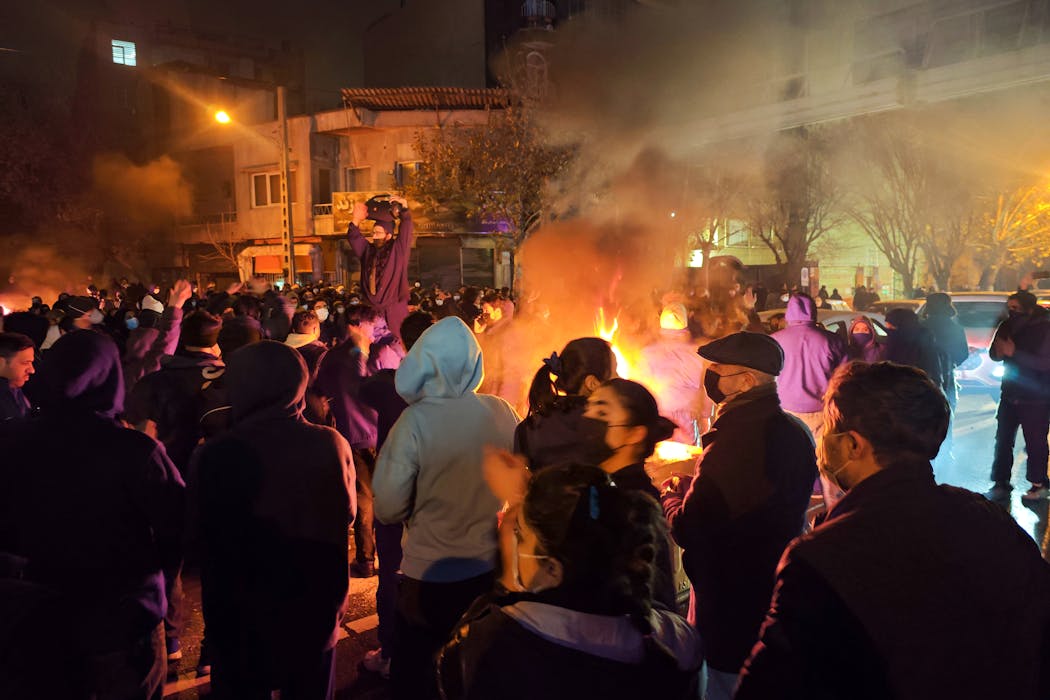
Anti-government Iranian protesters rally on Jan. 8, 2026, in Tehran. Anonymous/Getty Images

Iran’s current wave of protests continues to spread across the country, as the United States weighs military intervention. Meanwhile, many Iranian people continue to struggle to pay for basic necessities amid a collapsing currency.

The anti-government demonstrations began in Tehran’s Grand Bazaar, one of the largest and oldest covered markets in the world, in December 2025. From there, they quickly reached Iran’s university campuses.

The government’s response was swift and familiar: Authorities ordered universities to move classes online, citing weather concerns. When students continued organizing, the regime closed universities entirely.

I am an Iranian-American who has studied Iranian social movements for more than 25 years. As an educator, I have also led American universities, while maintaining ties to Iranian academic institutions.

I also witnessed firsthand the systematic assault on academic freedom during the presidency of Mahmoud Ahmadinejad from 2005 through 2013.

Iran’s universities tell the story of the nation itself: a story of persistent hope confronting relentless repression, and of intellectual life refusing to be extinguished even under extraordinary pressure.

Iranian universities have long been places of political reform and imagination – and where the Islamic Republic’s authoritarian impulses collide with people’s demands for freedom.

The heartbeat of reform

Iran has 316 accredited universities across the country, including the University of Tehran and Islamic Azad University.

Iranian universities have been hubs of political activity and protest since at least the mid-1900s.

Student-led protest movements emerged forcefully in the 1940s following the abdication of Reza Shah, an Iranian military officer who led Iran as its shah, or monarch, from 1925 to 1941.

These groups gained momentum during the oil nationalization movement led by the democratically elected Prime Minister Mohammad Mossadegh. Students supported Mossadegh’s promises of a democratic and free Iran, where the benefits of resources – like oil – would be reaped by Iranians first, before extending to the rest of the world.

The United States led a CIA-backed military coup that overthrew Mossadegh and reinstated Mohammad Reza Pahlavi as shah of Iran in 1953.

College campuses again became critical spaces for political consciousness and opposition.

A long-established pattern

This pattern continued for decades. Universities were central to the 1979 revolution, with students joining clerics, leftists and nationalists in overthrowing the monarchy.

Yet once consolidated, the Islamic Republic quickly turned against the institutions that had helped make the revolution possible.

The 1980s and 1990s saw widespread purges of faculty, with the imprisonment of professors in such numbers that the notorious Evin Prison came to be grimly nicknamed “Evin University.”

Academic life was tightly policed, books were routinely banned, and government surveillance became routine. As Azar Nafisi later documented in the 2003 book “Reading Lolita in Tehran,” intellectual engagement often survived only through clandestine reading groups and private gatherings.

Yet repression never succeeded in erasing student activism. When formal organizing became impossible, it moved underground. When campuses were locked down, ideas continued to circulate.

Thaw, reversal and academic repression

The election of Mohammad Khatami in 1997 briefly altered this trajectory of academic repression.

Khatami ran for office as a reformist candidate with strong support from young people. As president, he presided over a limited thaw in academic life. Universities reopened slightly as spaces for debate and research.

I conducted fieldwork on the youth movement and sexual revolution in Iran beginning in 1999 – research that would have been unthinkable just a few years earlier.

But the opening proved fragile. Ahmadinejad’s rise to power in 2005 marked a return to aggressive repression. Universities were again treated as ideological threats. Some faculty members were arrested or dismissed, student organizations were dismantled, and coursework and readings were heavily censored.

A group of young people, some of them with headscarves, sit on the grass near trees and look toward a man wearing a suit, with his finger in the air.
Iranian students listen to the lecture of a professor on the campus of Tehran University in October 2006.
ATTA KENARE/AFP via Getty Images

The irony was stark. By the mid-2000s, Iran had one of the highest literacy rates and highest proportions of college graduates per capita in the region.

Yet the government began restricting which majors women could study and which subjects could be taught. Entire fields, including engineering, education and counseling, were deemed suspect. Professors who resisted faced harassment and dismissal. Student protests were met with force and detention.

Despite this, youth-led mobilization persisted. Every major protest cycle over the past two decades – including the 1999 student uprising – has been driven by young people, many of them university students.

Universities in the current uprising

Recent Iranian university closures underscore the regime’s likely fears of resistance – not simply because of what is taught in classrooms, since curricula can be controlled – but also because of the power that young people can gain when they physically gather in shared spaces.

Dormitories, libraries and cafeterias are where political awareness coalesces, where individual grievances become collective demands, and where dissent acquires momentum.

Today, by systematically alienating young people through economic mismanagement, social repression and the erosion of academic freedom, the government has created its most formidable opposition: young protesters. Analysts have increasingly identified this pattern as one of the regime’s central strategic failures.

A group of young people push together against police in black, as seen through the spaces of a large fence.
Iranian students scuffle with police at the University of Tehran during a demonstration in December 2017.
STR/AFP via Getty Images

Universities are a lens into Iran

What happens inside Iran’s universities today is not a side story – it is one of the clearest indicators of where the country may be headed.

The freedom to teach, read, question and debate mirrors the freedom Iranian citizens seek in public life more broadly. Just as women have pushed back against state control of their bodies one millimeter at a time, universities have pushed back against intellectual confinement one page at a time – expanding the boundaries of permissible thought even under threat of punishment.

For decades, Iranian students and professors have demonstrated extraordinary courage in sustaining these small but vital acts of defiance. They have kept alive what Iranians call “koorsoo”: a small, stubborn flame of hope that endures even in darkness.

History suggests that societies which wage war on their intellectual institutions ultimately lose more than control – they lose legitimacy. Iran’s universities have long been the heartbeat of reform. Today, that heartbeat is growing louder – and it may once again shape the course of the nation’s history.

The Conversation

Pardis Mahdavi does not work for, consult, own shares in or receive funding from any company or organization that would benefit from this article, and has disclosed no relevant affiliations beyond their academic appointment.

ref. Iran’s universities have long been a battleground, where protests happen and students fight for the future – https://theconversation.com/irans-universities-have-long-been-a-battleground-where-protests-happen-and-students-fight-for-the-future-273742