England’s ‘once in a generation’ housing law takes effect as US housing legislation sits in congressional purgatory

Source: The Conversation – USA (2) – By Allyson Gold, Professor of Law, Wake Forest University

The U.K. Parliament passed legislation in an effort to control spiraling rental costs and reverse rising homelessness rates. Matt Cardy/Getty Image

Housing costs are eating up more and more of Americans’ monthly budgets.

Half of renters and a quarter of homeowners are cost-burdened, meaning they spend more than a third of their income to pay their rent or mortgage. Roughly 27% of renters are spending more than half of their income on rent.

In March 2026, the U.S. Senate passed a bipartisan housing bill to boost housing supply in the United States. More supply, the thinking goes, will staunch the surge in homes prices and rents. In the nation’s 50 biggest cities, for example, rents for one- and two-bedroom apartments have increased roughly 40%, not adjusted for inflation, since 2020. This legislation, however, is currently stuck in the House, overshadowed by issues like the Iran war and Supreme Court decisions.

While housing reforms in the U.S. remain gridlocked, the U.K. has been dealing with its own housing problems: 70% of Britons say housing unaffordability has become a national crisis. Across England, rents have spiraled, homelessness has risen and deteriorating and dangerous housing conditions have threatened the health of tenants.

In response, the U.K. Parliament passed the Renters’ Rights Act, a major housing law that officials described as a “once in a generation” set of reforms.

Young girl holds sign reading 'Rent Controls Now' as a large group of people march behind her while holding banners and signs.
Tenant groups and trade unions from across England marched through central London on April 18, 2026, to bring attention to the country’s housing crisis.
Guy Smallman/Getty Images

More power for tenants

The bill became law after receiving Royal Assent and took effect in England on May 1, 2026.

Its signature reform is to eliminate no-fault eviction, also known as Section 21 eviction. Under a Section 21 eviction, landlords were able to terminate a month-to-month or fixed-term tenancy without fault, even if tenants paid rent on time and complied with the lease. The only stipulation was they had to provide two months’ notice.

This will sound somewhat familiar to American readers: The vast majority of jurisdictions in the U.S. allow a landlord to terminate a month-to-month tenancy for any reason, as long as the landlord provides adequate notice.

In North Carolina, for example, where I live, a tenant with a month-to-month lease is only legally entitled to a seven-day notice of eviction under state law.

In England, Section 21 evictions were responsible for a 50% increase in the number of people experiencing homelessness from 2021 to 2022. Going forward, a landlord can still remove a tenant for a valid reason, but tenants will no longer be vulnerable to eviction when they have done nothing wrong.
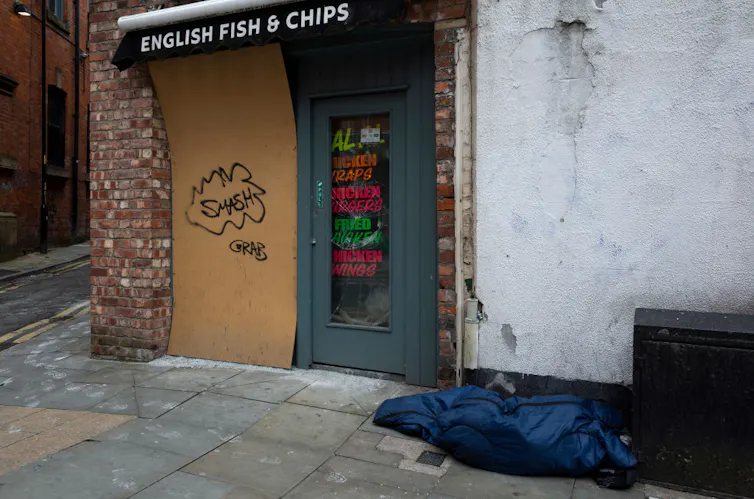
A person sleeps in a blue sleeping bag next to a boarded-up storefront.
No-fault evictions have led to a surge of homelessness in the U.K. in the 2020s.
Daniel Harvey Gonzalez/In Pictures via Getty Images

The legislation also limits rent increases. Under the new law, a landlord may only increase the rent to market price, must provide at least two months’ notice before an increase can take effect, and can only increase the rent once per year. A tenant who suspects their landlord has imposed an “above market” rent increase can bring the landlord to court.

It’s important that this change is occurring in tandem with the discontinuation of no-fault eviction. Without restrictions on rent increases, a landlord who lost the ability to use no-fault eviction could still empty a property by simply jacking up the rent to a rate that the tenant could not afford.

Finally, the law also takes steps to improve the conditions of England’s private rental housing stock by applying certain existing public housing standards, like strict timelines to address mold and damp, to the private rental sector.

It gives local housing authorities the ability to levy fines against private landlords who fail to meet these new standards. The new law also creates a rental housing registry that British tenants can search to get information about a prospective landlord or property. This will give tenants crucial information about a property before moving in and entering into a lease with a landlord.

A legislative pie in the sky?

Even though housing advocates have long pushed for these types of reforms to U.S. landlord-tenant law, the current legislation under consideration by Congress doesn’t directly address renters’ rights. Instead, it seeks to streamline costs and regulations for builders to boost the housing supply, while giving access to more financing for buyers.

One reason renters’ rights are often not addressed at the federal level is the U.S. system of federalism, which divides authority between the federal government and the states. By and large, landlord-tenant regulation falls within the realm of state or municipal government.

Middle-aged Black man wearing a suit and middle-aged white woman wearing a blue shirt smile while sitting at a dais.
Sen. Tim Scott, R-S.C., and Sen. Elizabeth Warren, D-Mass., attend a Senate Banking Committee markup of a proposed housing bill in July 2025.
Tom Williams/CQ-Roll Call via Getty Images

Some state and local governments have used this power to enact rental housing policy. For example, Oregon largely prohibits eviction without cause. Chicago keeps a Building Department registry that tenants can search to see if a prospective rental has a history of building code violations. And New York City’s rent regulations have survived multiple court challenges over the years. As recently as 2023, the U.S. Supreme Court reiterated that states have broad discretion to regulate the landlord-tenant relationship, which includes implementing rent control and rent stabilization arrangements.

This jurisdiction-by-jurisdiction approach means that an American tenant’s rights can vary dramatically based on where they happen to live.

When crisis expands the window of possibility

That said, the U.S. federal government has intervened to protect tenants during acute crises.

In 2009, during the mortgage foreclosure crisis, Congress passed legislation to prevent tenants from experiencing eviction if banks foreclosed on the homes they occupied.

During the COVID-19 pandemic, the Centers for Disease Control and Prevention used its public health powers to institute a nationwide eviction moratorium to slow the spread of infection. Though the Supreme Court struck down the order 11 months later, the fears that opponents to the moratorium raised didn’t pan out: There was no widespread, coordinated nonpayment of rents, nor did the rental housing supply collapse.

These reforms helped widen the Overton window – the range of policies deemed politically possible.

If unaffordability in the U.S. continues to worsen, perhaps rental housing issues will receive more political oxygen, with more legislation proposed at the federal level.

Until then, cities and states will have to continue leading the way.

The Conversation

Allyson Gold does not work for, consult, own shares in or receive funding from any company or organization that would benefit from this article, and has disclosed no relevant affiliations beyond their academic appointment.

ref. England’s ‘once in a generation’ housing law takes effect as US housing legislation sits in congressional purgatory – https://theconversation.com/englands-once-in-a-generation-housing-law-takes-effect-as-us-housing-legislation-sits-in-congressional-purgatory-281504

Cheers! Welcome to the Nepalese village where everybody knows how to distill

Source: The Conversation – USA (2) – By Geoff Childs, Professor of Sociocultural Anthropology, Washington University in St. Louis

Distilling is a way of life in in Nubri, Nepal. Geoff Childs, CC BY

Imagine a place where every home has paraphernalia for distilling spirits, where there is a toast for nearly any occasion, and where your taxes – paid in grain, not cash – are deposited straight into a communal still.

Welcome to Nubri.

A valley in northern Nepal, Nubri is home to roughly 3,000 Tibetan Buddhist highlanders. Over the course of three decades, I have spent a lot of time in Nubri studying the interplay of demographic trends and social change. Often that has been in the company of an ethnomusicologist colleague, Mason Brown, who studies local musical traditions.

While conducting research, we both became aficionados of the local intoxicants chang and arak, and we were taught how to brew and distill them by Nubri resident and research collaborator Jhangchuk Sangmo Thakuri.

Other scholars of Tibetan and Himalayan societies have commented on the importance of chang for ritual purposes and as a social lubricant. In Nubri, which is predominantly ethnic Tibetan, we learned firsthand the integral role both drinks had in maintaining local rituals, the economy and developing social relationships.

The basics of brewing

Let’s start with the basics. Chang is a fermented, noncarbonated beverage made from corn, barley or rice. A starter culture, partially derived from a previous fermentation, is added to warm, boiled grain, which is then stuffed into a container with water and sealed. The fermentation process takes a few days to two weeks, depending on variables such as temperature and one’s preference for the brew’s strength.

To make arak, the mash of fermented grain is transferred to a still that is placed over an open fire. The evaporated liquid – essentially concentrated alcohol – condenses and drops into a catch basin when it contacts a vessel at the top filled with cool water. The distillation process takes roughly an hour.

Chang is unfiltered and often contains a fair amount of sediments. It is low in alcohol – roughly 3% to 6% ABV, or equivalent to a European lager – and is considered a refreshing drink, especially while working in hot weather. Although it varies by brew, chang is generally slightly sweet, with a tinge or sourness.

Arak, by contrast, is clear and dry, similar in flavor and mouthfeel to Japanese sake. Based on taste and effect, we estimate that most batches clock in at 15% to 25% ABV – stronger than a glass of wine, but less potent than, say, whiskey.

All but the poorest households in Nubri own a still; those who don’t borrow one from neighbors when they have surplus grain.

To hell … or glory?

Evidence suggests that chang has been consumed by Tibetans for centuries. A story purportedly from the seventh century describes how court officials were dispatched by an emperor to find a boy with magical powers. When they encountered a child and asked where his parents were, he responded, “Father has gone to search for words. Mother has gone to search for eyes.” The father showed up carrying chang and the mother bearing fire.

Despite chang’s antiquity, Tibetans have their share of teetotalers and prohibitionists. For example, 15th-century Buddhist lama Ngorchen Kunga Zangpo argued, “Since one (who drinks) created and accumulated the karma of a mad person, one’s body will come to ruin, and after one has died, one will be born among the hell-beings of the lower realms of existence.”

The message is elegant in its simplicity – drink and you’ll go to hell!

A woman pokes a fiew under a big pot.
Nubri resident Tsewang Buti stokes a fire beneath a still.
Geoff Childs, CC BY

Kunga Zangpo’s warning aside, intoxicating beverages have long been valued in Nubri society.

Writing in the mid-18th century, Pema Wangdu, a Nubri lama famous for composing songs of spiritual realization, recounts how when seeking guidance from a local lama, he needed to present an offering, so he filched chang from home while his family members were working in the fields.

Pema Wangdu’s main teacher, Pema Döndrub, also from Nubri, describes a visit to a neighboring valley in which an official asks local villagers to bring the lama and his entourage some chang. Apparently they brought more than enough, because Pema Döndrub retorted, “We kept the tasty chang and sent the unappealing stuff away.”

Pema Döndrup, local lama and chang connoisseur.
Geoff Childs

Chang is also commonly mentioned in Nubri’s folk songs, which have been passed down for generations. In one, the singer rejoices that he has had multiple windfalls of good luck: He lives in a civilized country, inhabits a golden chamber and has an elegant foal and many sheep. Proclaiming that his prosperity is deserved, the singer commands his wife, “Don’t even think of giving me less chang!”

A drink for all occasions

Nowadays, people in Nubri prefer the more potent arak over chang. This is evident during Buddhist rituals where arak provides some participants with stamina and a bit of levity. Others, especially monks, abstain.

The drinks are procured through the local temple’s tax system. When a couple form a new household, they accept a mandatory loan of roughly 100 kilos of grain from the village temple. Every subsequent year they are required to repay one-third of the loan as interest.

Each ritual has an associated “Loan Document” that specifies what percentage of a household’s annual repayment is used to support that event. The system ensures that a tremendous amount of the harvest is acquired so that it can be fermented and then processed in the temple’s stills.

An associated document titled “Rules (Made By) the Monasteries” specifies when, how much and to whom arak should be distributed throughout the ritual.

Each serving event has a name. There is “connection chang” honoring the auspicious first gathering of ritual participants, “commencement chang” to mark the beginning of each day, and “bedtime chang” for the end of each day.

During an offering to the deities, participants are served “victory chang,” signaling a wish that their entreaties are successful, and “good fortune chang” in anticipation of positive outcomes.

Three people use wooden spatulas to stir rice.
Mason Brown, Jhangchuk Sangmo (right) and her mother, Tsewang Buti, mix a starter culture with boiled rice.
Geoff Childs, CC BY

One more for the road

A final vignette helps illustrate how chang and arak are woven into Nubri’s social and religious fabric.

In May 2023, we departed Nubri after completing a long research stint. Dorje Dundul, an old friend, accompanied us to a religious structure marking the outer boundary of his village. From the depths of his tunic, he extracted a flask filled with arak, inserted the stem of a medicinal herb into the liquid while chanting prayers, then sprinkled droplets into the four directions as an offering to ensure our safe passage.

Afterward, he handed us the flask and urged, “Chö, chö” (“Drink, drink”). We each took a long draft of the warming liquid.

He then capped the flask, placed it into the side pocket of our backpack and said, “This is lamchang (road beer). Travel safely.”

During the grueling descent to the lowlands, the parting gift fortified us while providing a constant reminder of Dorje’s concern for our well-being. “One for the road” never felt so good.

Ethnomusicologist Mason Brown and Nubri researcher Jhangchuk Sangmo Thakuri contributed to this article.

The Conversation

Geoff Childs receives funding from the National Science Foundation.

ref. Cheers! Welcome to the Nepalese village where everybody knows how to distill – https://theconversation.com/cheers-welcome-to-the-nepalese-village-where-everybody-knows-how-to-distill-271372

Syphilis cases in expectant mothers have dramatically risen since the pandemic – here’s what’s driving the trend

Source: The Conversation – USA (3) – By Casey Pinto, Associate Professor of Public Health Sciences, Penn State

A pregnant mother with untreated syphilis can pass it to the unborn fetus. Halfpoint Images/Moment via Getty Images

Syphilis is a sexually transmitted infection caused by the bacteria Treponema pallidum.

During pregnancy, this bacteria can pass from a mother with untreated syphilis, known as maternal syphilis, to her child in utero, causing the fetus to contract congenital syphilis.

In January 2026, the U.S. Centers for Disease Control and Prevention reported that the rate of maternal syphilis rose by 28% from 2022 to 2024, from just over 280 to nearly 360 cases per 100,000 births.

I’m a public health researcher and infectious disease nurse practitioner. I study disparities in sexually transmitted infections, or STIs, and I’m currently conducting a study on syphilis in pregnancy.

A perfect storm of factors behind the rise

Two factors in particular have to be taken into consideration to understand the steep rise in cases.

One is the rise in syphilis cases in the general population – which naturally leads to an increase in maternal syphilis – and the other is the specific variables such as funding and access to care barriers that affect pregnant women when it comes to the spread of this disease.

The overall trend of increasing syphilis rates is the result of what I would describe as a perfect storm of factors, from lack of funding to COVID-19. The rate of syphilis infections in the U.S. has been steadily increasing since 2000.

In 2018, there was a sharp increase in this rate, as the group predominantly affected by this STI shifted from men who have sex with men to the general population of both men and women.

This shift caused an increase in rates of maternal syphilis, which has led to a 700% increase in congenital syphilis cases since 2015.

Public health funding for all sexually transmitted infections, excluding HIV, has been stagnant for decades, at about US$160 million annually. When accounting for inflation and rising costs, this has resulted in a 40% reduction in spending power today.

Unfortunately, each year Congress suggests cutting funding to both STI and healthcare access programs. These cuts have largely not been implemented in the final appropriations packages.

But each year, further steep cuts are proposed. The 2026 appropriations recommend combining three programs – HIV, STI and tuberculosis – and cutting $70 million from the combined programs.

Gloved hand holding a vial labeled Syphilis with a test result next to it.
A cascade of factors during the COVID-19 pandemic limited screening and treatment services.
Kitsawet Saethao/iStock via Getty Images Plus

On top of this funding shortfall, the COVID-19 pandemic exacerbated many of the underlying barriers to healthcare access that allowed the steadily increasing syphilis rates to increase faster. During the pandemic, safety-net clinic staffing and hours were reduced, which limited the availability of screening and treatment services.

Another factor driving the increase in syphilis cases has been a change in sexual behaviors over the past 25 years. During the early days of the HIV epidemic in the 1980s, sexual behaviors that led to HIV rapidly changed, leading to safer sex habits. However, by the early 2000s, improved HIV treatments meant that HIV was no longer a death sentence, but a manageable chronic condition.

While this was, of course, good news, it also meant that safer sexual behaviors began to decline, resulting in increased chances of exposure to HIV and other STIs, including syphilis.

The role of stigma

Social stigma and biases from both healthcare providers and patients themselves can affect whether someone gets tested or seeks treatment for symptoms.

While this affects all patients, it is particularly problematic for pregnant patients. Pregnant people are supposed to be screened for syphilis in the first and third trimesters. But a healthcare provider may assume it’s unnecessary to ask questions about a patient’s sexual behaviors or to order the necessary tests, especially in the case of longtime patients known to be in monogamous relationships.

Furthermore, the patient may hesitate to admit to risky sexual behaviors, or may not realize they have been exposed through a partner’s infidelity.

Barriers to care

Another driver of the increase in maternal syphilis is the difficulty in accessing prenatal care: 1 in 4 pregnant people do not have access to prenatal care in their first trimester.

Barriers to accessing healthcare vary based on race and ethnicity, availability of transportation, economic status, rural or urban location and insurance status. Most of these factors exist across all health conditions, but for pregnancy, insurance status offers a particular obstacle. Pregnancy is a qualifier for enrolling in Medicaid if income requirements are met. However, this enrollment can sometimes take months, and some prenatal care clinics will not see patients until coverage is approved.

This means patients are beyond the first trimester before their syphilis screening is done. But that first-trimester screening and intervention has the greatest potential to reduce the risk of congenital syphilis

Knowing the symptoms to watch for and accessing care immediately can go a long way toward preventing congenital syphilis.

Knowing the symptoms

Syphilis is characterized by different symptoms in each of the four stages of the disease. During the primary stage, within a few days to a few weeks of infection, most patients develop a painless ulcer at the site of exposure. This sore may go unnoticed and resolve on its own. However, the infection remains.

The secondary stage occurs 3 to 6 months after exposure. Patients commonly have flu-like symptoms, possibly some weight loss, swollen lymph nodes and a rash that covers the chest and back. This rash doesn’t itch, and it can spread to the palms of the hands or soles of the feet. Other symptoms include hair loss, mouth lesions, hearing loss and vision changes, but these symptoms may not all appear. This phase typically lasts a few weeks and then resolves with or without treatment.

The disease then enters the latent phase, when the bacteria can still be active in the body without causing acute symptoms and can last for decades.

Finally, 40% to 60% of patients with untreated syphilis will progress to a tertiary phase of the disease that can lead to any number of negative outcomes, including seizures, heart defects, bone growths, skin growths, confusion and dementia.

Transmission and treatments

The syphilis bacteria can spread easily through the placenta as part of the shared blood supply between mother and fetus. This is more likely to happen within the first year that a person is infected with syphilis, although the syphilis bacteria can spread to a fetus at any stage of infection, causing the unborn baby to develop what’s known as congenital syphilis.

Congenital syphilis can result in a range of negative outcomes, the most serious of which is miscarriage or stillbirth. If the fetus survives, long-term developmental delays, blindness, hearing loss, permanent teeth and bone malformation, heart defects and rashes can occur. Symptoms of congenital syphilis can happen immediately at birth, or they may not be recognized until the child is over 2 years old, when molars erupt, or as bones grow and the changes become more pronounced.

Congenital syphilis is treatable with antibiotics, which will stop progression of the disease but cannot reverse any negative outcomes that have already occurred.

Luckily, syphilis is easily treated with antibiotics such as a long-acting penicillin injection into a muscle. Unfortunately, the long-acting intramuscular injection is in short supply. But anyone who is not pregnant and does not have neurological symptoms – which require intravenous penicillin – can be cured with a course of another antibiotic, doxycycline, for 14-28 days.

Preventing maternal syphilis

The mainstay of prevention is to use a condom when sexually active, or to ensure sexual partners have tested negative for all sexually transmitted infections and are exclusively having sex with each other. In some cases, a person might take doxycycline post-exposure prophylaxis, also called doxy PEP, within 72 hours of sexual activity to prevent syphilis, similar to the way Plan B can be taken to prevent pregnancy.

The most effective prevention method for congenital syphilis is universal screening of all pregnancies at three points: during the first trimester, the third trimester and at delivery.

However, some published studies and a paper currently under review show that only 80% to 90% of pregnancies with private healthcare insurance and [56% to 90% of those on Medicaid] are screened for syphilis at least one time during the entire pregnancy.

The Conversation

Casey Pinto has received funding from Hologic Inc. She has also received honorariums from Hologic and Roche in the past 24 months.

ref. Syphilis cases in expectant mothers have dramatically risen since the pandemic – here’s what’s driving the trend – https://theconversation.com/syphilis-cases-in-expectant-mothers-have-dramatically-risen-since-the-pandemic-heres-whats-driving-the-trend-275646

How close reading took over the internet via The Devil Wears Prada’s cerulean monologue

Source: The Conversation – UK – By Kate Travers, Leverhulme Early Career Research Fellow, Liberal Arts, University of Warwick

The Devil Wears Prada 2 is the sequel to a film that launched a thousand memes.

For the film’s New York premiere in April 2026, fashion designer Evan Hirsh decided to commemorate one of the original 2006 film’s most celebrated scenes. He embroidered Meryl Streep’s infamous monologue on the fictional fashion history of the colour cerulean into the bright blue train of his coat.

In the monologue, ice-queen fashion editor Miranda Priestly (Streep) lambasts ingenue Andy Sachs (Anne Hathaway) for her ignorance about the blue – I mean, cerulean – colour of her sweater.

The infamous cerulean monologue.

Equal parts derisive and incisive, this monologue nods to the “ballroom” tradition of reading the flaws of others, in order to deliver a devastating (and often hilarious) insult. Ballroom is an underground scene of competitive balls created by Black and Latinx LGBTQ+ communities centred on dance, fashion and performance. There, reading functions as both art form and social critique.

The monologue also encapsulates a skill practised in humanities classrooms around the world: close reading. This is the art of unpacking a detail and contextualising it within a broader history, to see how artistic choices and media landscapes come together to shape the world around us – often without us really noticing.

Although an old idea (arguably, even Aristotle was doing it), in the early decades of the 20th century, literary scholars in Britain and America began to emphasise the skills we now know as close reading. They argued that small details and specific choices come together to create the reader’s experience of the text.

In 2006, to see close reading on-screen was rare. Prior to the rise of social media, virtuosic displays of close readings were often confined to academic settings, or the occasional documentary. Now, close reading can be found everywhere in our content diets – in podcasts, YouTube videos and on TikTok.

Close reading proves an ideal technique for generating constant content. It allows creators to unpack artistic choices and the aesthetic histories of just about anything.

A scene from Pose, a drama about ballroom culture, in which a character ‘reads’ a woman in a restaurant.

Some of this content presents itself as educational programming, making use of expert academic hosts (for example, in Architectural Digest’s series Every Detail or the London Review of Books’ podcast Close Readings).

These podcasts and videos form part of the history of post-war educational media, along with Open University programming that used to fill the BBC airwaves in the early hours. Contributors to this programming included Stuart Hall, whose criticism defined the field of Cultural Studies by melding historical analysis with questions of how media such as TV and film communicate with viewers.

Expertise in close reading, however, does not lie only within academia. Close readings can be found in fashion content that highlights the history of specific items, such as the 99% Invisible podcast Articles of Interest. And they’re also evident in the videos of influencers who examine the history of specific looks and the publications that shaped them.

Fan videos providing a close analysis of their favourite singer’s lyrics are very popular online.

Videos and podcasts on pop music and culture hosted by musicologists, such as Vulture’s Switched on Pop, also rely on close reading. Fan videos and tweets unpacking the work of singers like Taylor Swift or Sabrina Carpenter perform this same skill.

Every video breaking down the difference between gen Z and millennial makeup, every outfit takedown, every analysis of a political speech – close reading is everywhere.

Close reading in The Devil Wears Prada

Let’s return to that blue sweater. While fashion editors have debunked the scene’s representation of how the fashion industry operates, that is not what is at stake for the characters. This scene dramatises the allure of shared cultural knowledge. This kind of knowledge represents what it takes to succeed at the fictional Runway magazine.

By understanding and valuing the history of a colour, Andy could become part of a glamorous in group. Now, our phones contain our own personal Miranda Priestlys, explaining how and why an object, an image, a text matters – and perhaps why we should buy it.

The Met Gala, an annual evening of fundraising for New York’s Metropolitan Museum of Art, is always a key date in the close-reading calendar. The event exemplifies what art and music has always done for its wealthy patrons and consumers: it provides an opportunity to see and be seen, to participate in the performance of connoisseurship.

Videos analysing Met Gala looks can garner millions of views.

Former Vogue editor-in-chief Anna Wintour, the perennially sunglasses-clad inspiration for Priestly, helped make first Monday in May (when the gala is held) a covetable event in the fashion calendar. Days after the theatrical release of the Devil Wears Prada 2 in May 2026, a flurry of content will emerge close reading the outfit choices at the gala.

The message of the cerulean monologue is that culture, and the business of culture, exempts no one. Simply because we do not care about a certain aspect of culture does not mean we can escape its influence.

Like the blue of Andy Sach’s sweater, the act of close reading “represents millions of dollars and countless jobs”, and probably more hours of your own time than you would care to admit. Perhaps most importantly, close reading is the skill that enables us to unpack art’s political statements.

So, in case you had any doubt, it’s important that you know: it’s not just blue, it’s cerulean.

The Conversation

Kate Travers receives funding from the Leverhulme Trust.

ref. How close reading took over the internet via The Devil Wears Prada’s cerulean monologue – https://theconversation.com/how-close-reading-took-over-the-internet-via-the-devil-wears-pradas-cerulean-monologue-281567

Coolcations: why people are heading away from the sun this summer

Source: The Conversation – UK – By Mehri Khosravi, Energy and Carbon Senior Research Fellow, University of East London

Planning summer holidays in Europe is beginning to involve more focus on avoiding high temperatures.

Destinations including the Greek islands and southern Italy have traditionally relied on warm, stable summers to attract tourists. But they have faced extreme temperatures causing mass evacuations, wildfires and putting lives in danger in recent summers.

Even without those conditions, high temperatures are changing the summer holiday experience. Tourists are often more exposed to heat risk than residents. They spend longer periods outdoors, take part in outdoor sports, and navigate unfamiliar environments without knowing where to find shade, or local healthcare. Yet despite this heightened exposure, tourists’ vulnerability to extreme heat remains relatively underexamined.

Recent summers have made these risks visible. During 2024, parts of southern Europe, including Greece, Italy, Spain and Cyprus, experienced temperatures exceeding 40°C. During Greece’s record-setting heatwave, several foreign visitors died or went missing including the British broadcaster Michael Mosley. Mosley went missing on the Greek island of Symi and a coroner found the cause of death could have been heatstroke. In response to these very high temperatures, countries including the UK, Germany, and Sweden issued travel advisories warning of extreme heat in popular destinations.

Heat is not just a safety issue; it is also reshaping the quality of the holiday itself. Extreme temperatures can shorten stays, reduce participation in outdoor activities, and lower overall satisfaction. Key tourist sites, such as the Acropolis in Greece, may close in extreme heat making trips less satisfying. As a result, rising temperatures are already influencing what tourists can do, when they travel, and how destinations function.

Shifting travel patterns

As heat intensifies, travel patterns are beginning to shift. A growing number of tourists are moving away from traditionally hot Mediterranean destinations towards cooler regions, a trend often described as “coolcations”. Emerging evidence points to declining tourist demand in parts of southern Europe during peak summer months, alongside increased interest in destinations with milder climates.

Elevated temperatures are also influencing when people take a trip. A recent report by the European Travel Commission found that 28% of travellers are planning to change the time of year that they travel. Avoiding extreme heat was cited as a key reason.

Regular intense heat in traditional summer holiday destinations may put tourists at risk.

Extreme heat also interacts with other climate-related pressures. Wildfires, drought and water shortages can disrupt tourism activities and local economies. As one participant in ongoing research at the University of East London described:
“Our reservoir was very low over the summer… boating, sailing, and water sports couldn’t run. The centre has now closed. You see those ripple effects.”

Climate is not the only factor shaping travel decisions this year. Geopolitical tensions, including the ongoing conflict involving the US, Israel and Iran, are contributing to rising fuel and travel costs. This is adding another layer of pressure, encouraging some travellers to reconsider long-distance or high-cost travel

These pressures can reinforce climate-driven trends. If southern destinations become both hotter and more expensive, travellers may be more likely to choose nearer, cooler alternatives.

Extreme heat is no longer a marginal issue for tourism; it is becoming a structural one. As heatwaves intensify and seasonal patterns shift, traditional peak holiday seasons may no longer align with safe or comfortable conditions.

Adapting will require more than incremental change. It means rethinking infrastructure, timing and visitor management, from providing shade and cool spaces, to redesigning tourism calendars. In some destinations, this is already happening, with attractions shifting opening hours to cooler periods of the day, a trend increasingly described as “noctourism”.

But adaptation is not only physical; it is also behavioural. A key part of this transition lies in how travellers perceive and respond to heat. Perception shapes behaviour: whether visitors adjust their plans, seek shade, stay hydrated, or recognise when conditions have become dangerous. This is particularly important for travellers from temperate countries, such as the UK, where awareness and experience of extreme heat remain relatively limited. Without a strong perception of risk, even well-designed warnings may fail to prompt action.

Clear and timely communication will therefore be essential. Travellers need support to interpret unfamiliar risks and take protective action when needed. This includes clearer public messaging, accessible guidance on heat safety, and better integration of tourists into national and local heat health alert systems.

At present, most heat alerts are designed with residents in mind. Yet tourists represent a highly exposed and often overlooked group. Integrating communication to visitors into heat action plans, through multilingual alerts and travel advisories, will be increasingly important as global travel continues. This kind of information needs to be developed for travellers and tour operators.

It is vital to improve our understanding of tourists perceptions of risk from heat, how to respond, and the effectiveness of communications.

Airlines, hotels, and travel websites could provide key ways to communicate in future. Providing heat-related guidance at the point of booking, before departure, and during the stay could help bridge the gap between awareness and action. In years ahead, if summer temperatures continue to intensify this could be vitally important.

The Conversation

Mehri Khosravi does not work for, consult, own shares in or receive funding from any company or organisation that would benefit from this article, and has disclosed no relevant affiliations beyond their academic appointment.

ref. Coolcations: why people are heading away from the sun this summer – https://theconversation.com/coolcations-why-people-are-heading-away-from-the-sun-this-summer-281452

Amid rising tensions, ‘friendshoring’ might keep global trade alive

Source: The Conversation – UK – By Carlo Pietrobelli, Professor of Economics, UNESCO Chair, United Nations University

Blossom Stock Studio/Shutterstock

The world economy is at a crossroads. International trade is slowing, economic uncertainty is rising, and trade between the US and China – the world’s two largest economies – risks pulling apart. And it is not just trade: the two countries also invest less in each other than they did just a few years ago.

What is driving this reconfiguration of trade? For some large economies, including the US under President Donald Trump, a desire for greater self-reliance is central. Between 2017 and 2023, American imports fell most sharply in the very products where the US had been most reliant on China – including industrial machinery, computers and computer parts, and other electronic equipment such as monitors.

This has important implications for global value chains (GVCs). GVCs are the backbone of international trade – production activities from research and product design to assembly are distributed across various locations, with “value” being added at each stage. This redistribution can take place across several countries, co-ordinated by multinational firms.

The reconfiguration of GVCs is accelerating, and so industrialised economies now have two main options. They can reshore production, bringing manufacturing back to their own countries (a stated priority for the current US administration).

Or they can “friendshore”, shifting imports and investments towards economies that are either geographically closer, or with which they have long-standing relationships.


Read more:
After a year of Trump, who are the winners and losers from US tariffs?


For developing countries, the balance between these two strategies is crucial. If advanced economies reshore a substantial share of production, developing countries could suffer as investment and jobs are lost.

And automation and digitisation now make it more convenient for advanced countries to produce goods at home, making this a greater risk to these poorer countries than it was a decade ago.

For consumers though, this reshoring could mean higher prices for everyday goods, at least in the short term, because of the higher costs of manufacturing in more advanced economies. It should be said, however, that the empirical evidence for this remains limited.

Risks and opportunities

But friendshoring offers an alternative. Early signals from countries like Mexico and Vietnam – which have recently seen an increase in investment and factory expansions from multinational firms – suggest that friendshoring can create opportunities. When paired with supportive government policies such as investment incentives or help to upgrade technology, these shifts can ensure that more production takes place domestically. This can lead to greater technology spillovers and learning.

To understand the risks and opportunities, we examined the specific products where US-China decoupling is most pronounced (that is, where trade is reducing). From this analysis, two broad clusters emerged, each with different implications for developing economies.

The first group mainly includes relatively complex goods – things like consumer electronics, vehicle components, chemicals and machinery. Here, the US is both diversifying its imports quickly and is already producing these goods competitively.

The products and sectors at the heart of the reconfiguration of GVCs

These products can easily be reshored, particularly if automation lowers costs. Semiconductors, for instance, are already the focus of major US reshoring efforts. Yet the risk to current producers of the US reshoring appears limited for now. While the US has reduced imports from China of these products, other developing regions have not experienced a similar trend.

In the second group, the US is diversifying but is not competitive enough to bring production home. This group accounted for just over 6% of finished products that the US imported in 2023 – roughly US$181 billion (£134 billion). This is a small share overall, but economically significant.

Within this group, two types of opportunity emerge. Technologically complex goods, such as electrical equipment, computers and car parts, offer the greatest potential for middle-income economies with strong manufacturing experience to win contracts and investments. Lower-tech goods like textiles and furniture are better suited to lower-income countries. In both cases, governments need to negotiate carefully to ensure investments add value locally, support skills development and avoid social or environmental harm.

For consumers worldwide, friendshoring offers a more benign outlook than reshoring or tariffs. Goods may simply be made in different countries, with prices remaining broadly stable.

Who could gain?

So far, east and south-eastern Asia – including Vietnam, Thailand, Malaysia and Indonesia – have captured the largest share of these friendshoring opportunities, particularly in high-tech sectors like computers. Their exports to China have also risen, reinforcing their central role in Asian manufacturing networks. But whether this momentum continues will depend on tariffs, production costs and the pace of automation.

Other beneficiaries could include Latin America and Caribbean nations, led by Mexico. Here, the automotive sector dominates export growth. South Asia could also benefit, with India expanding in both high- and low-tech products, and Bangladesh at the lower-tech end. In contrast, Africa and western Asia remain largely absent from the emerging friendshoring landscape.

The risk to these countries of large-scale reshoring remains limited for now but cannot be ignored amid shifting global trade and investment patterns. But friendshoring could offset or even exceed potential losses, offering new pathways for industrialisation.

As economic uncertainty and technology reshape global value chains, developing economies that invest in production capabilities – and implement smart industrial policies – will be best placed to harness opportunities. In some cases, friendshoring may even allow them to leapfrog into more sophisticated activities faster than traditional development paths would allow.

For consumers, there are benefits too. The label on our next laptop, charger or T-shirt might change, but prices will remain broadly stable – at least before tariffs kick in. In this sense, globalisation will not disappear. But it will take on a different geographical shape.

The Conversation

This article builds on UNIDO IID Policy Brief 28, “Navigating a fragmenting global economy: What GVC reconfiguration means for future industrial development”. The views expressed in the Policy Brief and in this article are those of the authors, based on their research and expertise, and do not necessarily reflect the views of UNIDO.

Carlo Pietrobelli and Nicolò Geri do not work for, consult, own shares in or receive funding from any company or organisation that would benefit from this article, and have disclosed no relevant affiliations beyond their academic appointment.

ref. Amid rising tensions, ‘friendshoring’ might keep global trade alive – https://theconversation.com/amid-rising-tensions-friendshoring-might-keep-global-trade-alive-276343

Hokum review: a gothic chiller set in a creepy Irish hotel that expertly weaves horror tropes

Source: The Conversation – UK – By Matt Jacobsen, Senior Lecturer in Film History in the School of Society and Environment, Queen Mary University of London

We are used to seeing the excellent Adam Scott (Severance, Parks and Recreation) in likeable nice guy roles. In Hokum, however, he plays a curmudgeonly and prickly bestselling novelist called Ohm Bauman. Deliberating over the ending to his series of popular novels, Bauman has decided to take a trip to the rural Irish inn where his parents stayed on their honeymoon, to scatter their ashes.

The remote Bilberry Woods Hotel in the off-season is a fantastically eerie horror location. Irish writer and director Damian McCarthy populates the hotel and its surroundings with excellent, likably eccentric locals who recount the spooky lore of the area to the sceptical writer.

Jerry (David Wilmot) lives in the woods, tinkers with moonshine and psychedelics and says he sees ghosts. Bellboy Alby (Will O’Connell) is a starstruck wannabe author treated with disdain by his hero. Fiona (Florence Ordesh) is the bartender whose disappearance motivates Bauman’s exploration of the twisty hotel and its grounds.

“Hokum,” says Bauman dismissively when he is told about the witch who supposedly haunts the honeymoon suite where his parents stayed. The film performs the neat trick of making us warm to this horribly flawed and unlikeable character as he is inevitably proven wrong.

A film with a fiction writer protagonist set in a haunted hotel inevitably suggests the influence of Stephen King, not just via The Shining but the short story 1408, made into a memorable film starring John Cusack in 2007. That story similarly features a sceptical writer staying in a supposedly haunted guest house who, like Hokum’s Bauman, experiences disturbing visions from his past. Hokum also recalls horror impresario Ti West’s brilliantly eerie New England-set The Innkeepers (2011), with which this film shares the atmosphere of an off-season haunted guesthouse.

Hokum is, at its core, a classic ghost story in the mode of English writer MR James. But it throws a lot of extra horror elements into the pot at the risk of becoming unwieldy and bloated.

McCarthy’s ambiguous film has a witch, a ghost or two, a missing woman, flashbacks of Bauman’s traumatic past and, in the weirdest and scariest scene, a nightmarish televised vision of a half-bunny, half-person creature. With so much in the mix, this could be a formless mess, so it is surprising that Hokum holds together as well as it does. With one or two stumbles where things get a touch convoluted, this is an enormously effective, well-crafted and proudly old-fashioned gothic chiller.

With a focus on character and mood, Hokum is an intelligent and, by the end, emotionally satisfying film. The strength of the film is not in its originality but in the execution of familiar conventions and plot points. How much you will enjoy the film depends on your tolerance and enthusiasm for old fashioned jump scares. An overused device in modern horror that can signal a sub-par film, it is hard here not to admire McCarthy’s commitment to making his audience gasp.

McCarthy’s talent is in building the hotel’s atmosphere of mystery with carefully placed light from lamps and candles that cast long shadows before leading to controlled scares carried out with technical skill and pinpoint timing. Strongly recalling the well-executed horror trickery of the now-classic stage adaptation of Susan Hill’s novel The Woman in Black, shocks are strongly telegraphed and built towards with inevitability. The director is telling the audience clearly what’s about to happen at every turn, but the film is no less effective for it.

The film was made in West Cork, and the Irish countryside is a beautiful, eerie backdrop for the maze-like guesthouse. Nevertheless, there is little in the film’s depiction of ghosts and witches in the Irish woodland that relies on culturally specific mythology or history.

Hokum is Irish writer and director Damian McCarthy’s third horror film after the critically acclaimed low-budget ghost stories Caveat (2020) and Oddity (2024). Those first two films were shown at film festivals before being released on horror streaming channel Shudder. This is McCarthy’s first full cinema release. Each of his films is better than the last, with the filmmaker sharpening his writing and directing a little more each time. Here he is aided considerably by the consistently brilliant Adam Scott.

Hokum is a horror film made by a director working to carry out horror conventions as well as he possibly can. The film is full of tongue-in-cheek, knowing nods to the genre. It doesn’t matter that all the major late-film plot reveals are telegraphed to the audience with a nod and a wink early in the film. Hokum has fun telling you what it’s going to do well ahead of time and remains scary and entertaining regardless.

The Conversation

Matt Jacobsen does not work for, consult, own shares in or receive funding from any company or organisation that would benefit from this article, and has disclosed no relevant affiliations beyond their academic appointment.

ref. Hokum review: a gothic chiller set in a creepy Irish hotel that expertly weaves horror tropes – https://theconversation.com/hokum-review-a-gothic-chiller-set-in-a-creepy-irish-hotel-that-expertly-weaves-horror-tropes-281921

People who are blind from birth never develop schizophrenia – what this tells us about the psychiatric condition

Source: The Conversation – UK – By Ahmed Elbediwy, Senior Lecturer in Cancer Biology & Clinical Biochemistry, Kingston University

Reshetnikov_art/Shutterstock.com

In 1950, two researchers noticed something that didn’t quite add up. Hector Chevigny, a writer who had lost his sight in adulthood, and psychologist Sydell Braverman were studying the psychological lives of blind people when they stumbled upon an intriguing pattern: schizophrenia, a serious mental illness affecting people across virtually every known society, appeared to be entirely absent in people who had been blind from birth.

The observation sat largely ignored for decades, held back by limited understanding of the disease and a lack of patient data. Then, in the early 2000s, large national health databases allowed researchers to follow entire populations from birth into adulthood, and the pattern held up.

The most rigorous evidence comes from a 2018 whole-population study tracking nearly half a million children born in Western Australia between 1980 and 2001. Of those, 1,870 developed schizophrenia, but not one of the 66 children with cortical blindness did.

That sample of blind children is small, but the pattern holds across more than 70 years of evidence: not a single congenitally blind person with schizophrenia has ever been reported. The protection seems to be specific to cortical blindness, which is caused by damage to the brain’s visual cortex.

People who lose their sight later in life, or whose blindness is caused by damage to the eyes rather than the brain, can still develop the condition. This makes it clear that blindness itself isn’t the deciding factor. Something specific about the visual brain is.

This might seem odd. Schizophrenia is most commonly associated with hearing voices or holding unusual beliefs, not with vision. But the explanation lies not in what people see, but in how the brain uses vision to make sense of the world.

Scientists now understand schizophrenia as, at least in part, a disorder of prediction. The brain is constantly generating expectations about its surroundings and checking them against signals from the senses. In schizophrenia, this process appears to go wrong. Weak or random signals are given too much weight. Coincidences feel significant. Thoughts can seem to come from somewhere outside oneself. The boundary between imagination and reality begins to blur.

A question of prediction

Vision plays a powerful role in shaping this system, particularly in early life. The visual cortex is one of the brain’s largest and most richly connected regions, involved not just in sight but in learning, attention and emotion. When it receives no input from birth, the brain develops differently. Brain imaging studies show that in people with congenital cortical blindness, this area is often repurposed for tasks such as language, memory and reasoning.

Some researchers believe this early reorganisation may offer a kind of protection. Without visual input generating a constant stream of ambiguous or unpredictable signals, the brain may settle into more stable ways of interpreting the world, reducing the risk of the misfiring predictions that characterise schizophrenia.

Timing matters enormously. Losing vision later in life, even in childhood, does not appear to offer the same protection. By then, the brain has already been shaped by years of visual experience.

None of this suggests that blindness could ever be a practical safeguard against schizophrenia. But it does open up new ways of thinking about the condition and potentially new ways of treating it.

Schizophrenia explained.

Most current treatments target brain chemistry, particularly the dopamine system. These drugs help many people, but they don’t work for everyone and can carry significant side-effects. If schizophrenia is partly about how the brain learns to predict and interpret reality, then future treatments might also address perception, learning, and how the brain weighs up uncertain information.

Research is now looking at drugs that act on glutamate, a brain chemical involved in learning and communication between nerve cells. Glutamate systems are particularly active in the visual cortex and in circuits that help the brain filter out what’s important from what can be ignored. These aren’t treatments based on blindness itself, but on what congenital blindness reveals about how a stable, well-organised brain develops.

The field is still at an early stage. But the hope is that by better understanding brain development from the very beginning, scientists might one day find ways to reduce the risk of schizophrenia or prevent its most severe forms from taking hold.

Nearly a century later, the curious observation that Chevigny and Braverman had accidentally made continues to shape how scientists think about one of the most complex and least understood medical conditions.

The Conversation

The authors do not work for, consult, own shares in or receive funding from any company or organisation that would benefit from this article, and have disclosed no relevant affiliations beyond their academic appointment.

ref. People who are blind from birth never develop schizophrenia – what this tells us about the psychiatric condition – https://theconversation.com/people-who-are-blind-from-birth-never-develop-schizophrenia-what-this-tells-us-about-the-psychiatric-condition-281369

How authoritarian regimes use education as a political tool

Source: The Conversation – UK – By Samson Maekele Tsegay, Research Fellow, School of Education, Anglia Ruskin University

School students in a National Day parade, Asmara, Eritrea. Angela N Perryman/Shutterstock

It’s often assumed that expanding access to education is progressive – that it’s a means of ensuring social, economic and political development. However, this is not always the case.

We’ve carried out research examining the relationship between education and authoritarianism with a focus on Eritrea. Eritrea has been under a single political party and leadership since its independence in May 1993. The country lacks a functioning or implemented constitution and freedom of the press.

Our research has concluded that, in countries under authoritarian rule, education is not necessarily a path to empowerment. Instead, it’s a fertile ground for the spread of authoritarianism. Governments can spread their ideas and principles through repressive and ideological state apparatus – the processes and organisations they use to maintain power. This includes education.

Authoritarian regimes such as Eritrea claim to address societal problems through social justice and cohesion. However, they consolidate power around a single or dominant regime, which restricts democratic institutions and erodes civic liberties. They also apply preferential treatment based on political loyalty. People are elevated to positions of power for allegiance rather than merit. This causes division and political polarisation in the name of protecting national security.

Expanding education

Authoritarian states use education to maintain political stability to ensure the survival of the regime. Although many authoritarian regimes expand access to education, it is often used as a means of control and a tool for manufacturing loyalty.

For example, since independence, the number of schools and student enrollment in Eritrea has increased around fourfold. However, such regimes also see education as an opportunity to impose their attitudes onto young people. They use education to keep students isolated from ideas that may differ from or be critical of the regime.

Authoritarian regimes use deception and misinformation to uphold their ideology and extend their control. In doing so, they attempt to ensure that citizens accept the legitimacy of their rulers without question.

Additionally, authoritarian regimes politicise the school curriculum. They manipulate content, such as in history and citizenship education. This is used to mislead citizens and make them supporters of the degradation of human rights.

Building with flags against blue sky
Flags on a government building in Asmara, Eritrea.
Angela N Perryman/Shutterstock

For example, Eritrea’s school curriculum normalises the creation of a militarised citizen who upholds the Eritrean People’s Liberation Front’s legacy and revolutionary culture. Similarly, North Korea uses school education to shape students’ behaviour, attitudes and beliefs to be compatible with and supportive of the regime. This is often supported by controlling the teaching and learning process and the academic environment.

Monitoring teachers and research

Authoritarian regimes recognise that safe education spaces can help students develop critical thinking and eventually question the country’s political system. They monitor teachers and school leaders, and promote those loyal to the regime’s ideas and principles. And, rather than encouraging critical thinking, they foster students’ sense of nationalism and patriotism.

Academic research is also a target of authoritarian regimes because of its scrutiny of government policies and actions. Researchers’ academic freedom is limited, and their choice of research topics is policed.

Most of these control measures are imposed in the name of protecting national security. For example, Eritreans are not allowed to conduct critical research that challenges the existing systems, inequalities and power structures of the country.

Researchers who cross the boundaries and criticise authoritarian regimes are silenced. Some are fired from their jobs while others face prison terms.

Meanwhile, authoritarian regimes rely on loyal academics to promote the state’s narrative. Loyal academics are also used to conceal authoritarian regimes’ failures by presenting selective evidence.

Many authoritarian states, such as China, Eritrea and North Korea, also incorporate military training into education. They blend political and ideological instruction to sustain their power. They teach students discipline and promote patriotism to develop loyal and obedient citizens.

Militarisation education sometimes places teachers and school leaders under military control. In Eritrea, all secondary school students complete their last year under military authority. This approach leads students to drop out of school. Additionally, it causes students and teachers to leave the country.

Authoritarian regimes manifest their true nature by spreading their ideas and principles. Our research shows that the education system is one of the most important levers in the propaganda machine for authoritarian countries.

The Conversation

Samson Maekele Tsegay is a Research Fellow at Anglia Ruskin University.

Zeraslasie Shiker is a PhD researcher at the University of Leeds.

ref. How authoritarian regimes use education as a political tool – https://theconversation.com/how-authoritarian-regimes-use-education-as-a-political-tool-270731

Our study looked at teens’ social media behaviour in 43 countries – those from disadvantaged backgrounds face greater harms

Source: The Conversation – Global Perspectives – By Roger Fernandez-Urbano, Ramón y Cajal Research Fellow (Tenure-Track) Department of Sociology, Universitat de Barcelona

EF Stock/Shutterstock

As social media becomes a central part of young people’s lives, concerns are growing about its impact on their mental health. Yet public debates and measures tend to treat adolescents as one homogeneous group. We frequently ignore the fact that social media use does not affect all young people in the same way – nor does it have the same impacts on their wellbeing.

In a recent chapter of the World Happiness Report 2026, published by the UN Sustainable Development Solutions Network in partnership with the University of Oxford, we have examined how problematic social media use relates to the wellbeing of adolescents from different socioeconomic backgrounds.

We looked at 43 countries spanning six broad regions – Anglo-Celtic, Caucasus-Black Sea, Central-Eastern Europe, Mediterranean, Nordic, and Western Europe – covering mainly European countries and their immediate neighbouring areas.

Using data from over 330,000 young people, we found a clear and consistent pattern: higher levels of problematic social media use – that is, compulsive or uncontrolled engagement with social media – are associated with poorer wellbeing.

Teenagers who report more problematic use tend to experience more psychological complaints, such as feeling low, nervous, irritable, or having difficulty sleeping. They also have lower life satisfaction, a measure of how positively they evaluate their lives as a whole.

This pattern appears across all countries in our study, but its strength varies from one country to another. It is particularly pronounced in Anglo-Celtic countries such as the UK and Ireland, while it is comparatively weaker in the Caucasus-Black Sea region.

Socioeconomic background matters

The story does not end with geography. Globally, teenagers from less advantaged backgrounds tend to be more vulnerable to the negative consequences of problematic social media use than their more advantaged peers.

This means socioeconomic status – the material and social resources available to a household, such as income and living conditions – actively shapes the risks and opportunities that young people experience as a result of online environments.

Interestingly, these inequalities are especially visible when we look at life satisfaction. Differences between socioeconomic groups are smaller when it comes to psychological complaints, but much clearer and more consistent for how adolescents evaluate their lives overall.

One likely reason is that life satisfaction is more sensitive to social comparisons. Social media exposes young people to constant benchmarks – what others have, do, and achieve – which can amplify differences in perceived opportunities and resources.

At the same time, these patterns are not identical everywhere. For instance, socioeconomic differences in psychological complaints tend to be modest in most regions including continental European countries such as France, Austria or Belgium, but are more clearly observed in Anglo-Celtic countries such as Scotland and Wales.

In contrast, socioeconomic gaps in life satisfaction appear across most regions, although they tend to be weaker in Mediterranean countries such as Italy, Cyprus and Greece.

A growing problem

We also examined how these patterns have evolved over time. Between 2018 and 2022, the link between problematic social media use and poor adolescent wellbeing became stronger.

This suggests that the risks linked to problematic use may have intensified in recent years, possibly reflecting the growing role of digital technologies in young people’s daily lives, particularly during and after the Covid-19 pandemic.

Importantly, this intensification has affected teenagers across socioeconomic groups in broadly similar ways in most regions. In other words, while inequalities remain they have not widened over this period.


Leer más:
Social media addiction disrupts the sleep, moods and social activities of teens and young adults


No one-size-fits-all solution

While public debates about social media and mental health often treat adolescents as a single demographic group, our results show a more complex reality. Problematic social media use is linked to poorer wellbeing across countries, but its effects are shaped by social realities. They vary depending on where young people live and what resources are available to them.

Not all teenagers experience the digital world in the same way, and not all are equally equipped to cope with its pressures. Recognising this is essential for designing policies that are not only effective, but also equitable, ensuring that interventions reach those adolescents who are most vulnerable to digital risks.


A weekly e-mail in English featuring expertise from scholars and researchers. It provides an introduction to the diversity of research coming out of the continent and considers some of the key issues facing European countries. Get the newsletter!


The Conversation

Roger Fernandez-Urbano receives funding from the Spanish Government’s Ministry of Science, Innovation and Universities and the State Research Agency through Ramón y Cajal (RYC) grant. Roger is a member of the International Society for Quality-of-Life Studies (ISQOLS).

Maria Rubio-Cabañez’s involvement in this research was supported by the DIGINEQ (Digital Time Use, Adolescent Well-Being and Social Inequalities) project (Grant agreement ID: 101089233), funded by the European Research Council Consolidator Grant.

Pablo Gracia’s involvement in this research was supported by the DIGINEQ (Digital Time Use, Adolescent Well-Being and Social Inequalities) project (Grant agreement ID: 101089233), funded by the European Research Council Consolidator Grant.

ref. Our study looked at teens’ social media behaviour in 43 countries – those from disadvantaged backgrounds face greater harms – https://theconversation.com/our-study-looked-at-teens-social-media-behaviour-in-43-countries-those-from-disadvantaged-backgrounds-face-greater-harms-279985