School’s out – but as young people paint, skateboard and play with their friends, they’re still learning

Source: The Conversation – UK – By Ioannis Costas Batlle, Senior Lecturer in Education, University of Bath

Evgeny Atamanenko/Shutterstock

School holidays are underway across the UK. But while young people might be getting a break from the classroom and having a chance to spend more time on their hobbies, they are still learning – whether they’re playing video games, painting toy soldiers or out on their bike.

Learning doesn’t just happen at school, college, or university. For Danish learning expert Knud Illeris, any process not caused by biological maturation (for instance, growing from a baby into a toddler) counts as learning. Learning is both inevitable and ubiquitous: it is part of being alive. We cannot “not learn”.

We can chunk the enormity of what learning is into smaller digestible portions. These three portions (called learning contexts) are formal learning, non-formal learning and informal learning. We can think of them as an iceberg, with some parts visible and others hidden below the water.

Iceberg illustration annotated with formal learning, non-formal learning and informal learning
Learning iceberg.
Runrun2/Shutterstock (edited)

Different contexts

Formal learning is the very tip of the iceberg. This aims to intentionally teach someone something. It is provided by an education or training organisation that will give you a certificate or diploma to show what you have learned. Schools, colleges and universities are examples of formal learning contexts.

Non-formal learning extends beneath the iceberg’s tip but remains above the water level. Like formal learning, it is learning as the result of some kind of teaching. However, non-formal learning is not necessarily provided by an education organisation, nor is it necessarily recognised with a certificate or diploma. Music lessons, sports clubs, cooking classes, developing skills at work, or museum tours all count as non-formal learning.

Beneath non-formal learning, shrouded under the sea, is the gargantuan base of the iceberg: informal learning. Unlike formal and non-formal learning, informal learning is generally unintentional, unplanned and unconscious. This could be absorbing social norms, such as how to greet someone you don’t know, or unexpectedly learning new words by listening to podcasts.

It’s a widely accepted assumption among academics that most of the learning we do is informal. And it makes sense when you think about how much young people’s development is unconscious and unplanned. For example, while being taught formally in school classrooms, they simultaneously informally learn values such as what it means to be – and behave like – a “good student”.

The iceberg illustrates why we often think of learning in a narrow way. We overvalue what is easily recognisable, such as the schooling that leads to an exam result. And we undervalue the much larger, but comparatively less visible remainder of the iceberg: non-formal and informal learning, such as through hobbies.

Young people, in particular, may overvalue formal learning for two reasons. First, it is tangible. It features physical buildings – schools, colleges and universities – where young people go almost every day to learn. In turn, they aim to leave these buildings with qualifications that “prove” what they have learned.

Second, even though across our lifespans we spend a tiny fraction in formal learning contexts compared to non-formal and informal ones, that tiny amount is disproportionately weighted towards our youth. Children and teenagers spend a huge amount of time being formally educated.

Learning through hobbies

To encourage young people to flourish as learners, we need to help them value non-formal and informal learning contexts. Hobbies are great for this. Hobbies are serious leisure activities which young people find interesting and fulfilling. They are serious because hobbies require perseverance to gain experience, a skillset and a knowledge base.

Whenever someone intentionally teaches a young person something hobby-related, that counts as non-formal learning. For instance, a coach explaining how to bounce a basketball, a music teacher describing how to hold a drumstick, or a friend explaining the rules to a board game.

Hobbies are equally infused with informal, unplanned and often unconscious learning. Playing video games inadvertently develops eye-hand coordination and cognitive function (storing and processing information). Stamp collecting can foster attention to detail. Skateboarding can improve resilience in the face of failure.

Part of the reason young people’s non-formal and informal hobby-related learning above is so difficult to recognise is because it is rarely described as “learning”. Instead, they “play” music and videogames; they “do” skateboarding and drawing.

Though play is one of the best ways young people learn, both young people and the adults in their lives may undervalue its impact. While adults may assume there is no relationship between play and learning, teenagers may perceive play as childish.

Too many young people think they are “bad learners” because they struggle in formal learning. However, I bet they are extraordinary learners when it comes to their hobbies. We simply need to help them recognise the value of non-formal and informal learning.

The Conversation

Ioannis Costas Batlle does not work for, consult, own shares in or receive funding from any company or organisation that would benefit from this article, and has disclosed no relevant affiliations beyond their academic appointment.

ref. School’s out – but as young people paint, skateboard and play with their friends, they’re still learning – https://theconversation.com/schools-out-but-as-young-people-paint-skateboard-and-play-with-their-friends-theyre-still-learning-261125

What will it take for China to arrest its declining birth rate?

Source: The Conversation – UK – By Ming Gao, Research Fellow of East Asia Studies, Lund University

China’s central government introduced a childcare subsidy on July 28 that will provide families with 3,000 yuan (around £312) a year for each child under the age of three. The announcement came days after plans were unveiled to roll out free preschool education across the country.

These developments mark a shift from previous years, when the government largely left the issue of addressing China’s declining birth rate to local authorities. Many of those efforts, which range from cash incentives to housing subsidies, have made little difference. By stepping in directly, Beijing has signalled that it sees the situation as urgent.

Fewer Chinese women are choosing to have children, and more young people are delaying or opting out of marriage. This has contributed to a situation where China’s population shrank for a third consecutive year in 2024. An ageing population and shrinking workforce pose long-term challenges for China’s economic growth, as well as its healthcare and pension systems.

Before the central government’s recent roll-out, regions in China had already been experimenting with policies to increase birth rates. These include one-time payouts for second or third children, monthly allowances and housing and job training subsidies.

One of the most eye-catching local policies came from Hohhot, the capital city of Inner Mongolia province. In March 2025, the authorities there began offering families up to 100,000 yuan (£10,400) for having a second and third child, paid annually until the children turn ten.

The authorities in some other cities, including eastern China’s Hangzhou, have offered childcare vouchers or subsidies for daycare. Policies like these have seen the number of births increase slightly in a few regions. But uptake is generally low and none have managed to change the national picture.

There are several reasons why incentive-based policies have not moved the needle. First, the subsidies are generally small – often equivalent to just a few hundred US dollars. This barely makes a dent in the cost of raising a child in urban China.

China ranks among the most expensive countries in the world for child-rearing, surpassing the US and Japan. In fact, a 2024 report by the Beijing-based YuWa Population Research Institute found that the average cost of raising a child in China until the age of 18 is 538,000 yuan (£59,275). This is more than 6.3 times as high as China’s GDP per capita.

The burden is so widely felt that people in China jokingly refer to children as tunjinshou, which translates to “gold-devouring beasts”.

Second, the incentives largely don’t address deeper issues. These include expensive housing, intense education pressures, childcare shortages and some workplaces that penalise women for taking time off. Many Chinese women fear being pushed out of their jobs simply for having kids.

Some local authorities have attempted to tackle the structural realities that make having and raising children in China difficult, and have enjoyed some success. In Tianmen, for example, parents of a third child can claim US$16,500 (£12,500) off a new home.

However, these policies are confined to specific districts and villages or are limited to select groups. Support remains fragmented and insufficient, while the prospects of scaling these piecemeal initiatives nationwide are slim.

Third, gender inequality in China is still deeply entrenched. Women carry most of the childcare and housework burden, with parental leave policies reflecting that imbalance. While mothers are allowed between 128 to 158 days of maternity leave, fathers receive only a handful – varying slightly by province. Despite public calls for equal parental leave, major legal changes seem far off.

These factors have together given rise to a situation where, as in east Asia more broadly, many young people in China simply are not interested in marrying or having children.

According to one online survey from 2022, around 90% of respondents in China said they wouldn’t consider having more children even if they were offered an annual subsidy of 12,000 yuan (£1,250) – far more than the recently announced 3,000 yuan subsidy.

Is Beijing too late?

The new measures show that Beijing is taking China’s declining birth rate seriously. But it might be too late. Fertility decline is hard to reverse, with research showing that social norms are difficult to snap back once they shift away from having children.

South Korea has spent decades offering its citizens generous subsidies, housing support and extended parental leave. Yet, despite a recent uptick, its birth rate has remained among the lowest in the world.

Projections by the UN paint a stark picture. China’s population is expected to drop by 204 million people between 2024 and 2054. It could lose 786 million people by the end of the century, returning its population to levels last seen in the 1950s.

Still, the recent announcements are significant. They are the first time the central government has directly used fiscal tools to encourage births, and reflect a consensus that lowering the cost of preschool education can help boost fertility. This sets a precedent and, if urgency keeps rising, the size and scope of support may increase as well.

However, if China hopes to turn things around, it will need more than cash. Parenting must be made truly viable and even desirable. Alongside financial aid and free preschool, families need time and labour support.

This also means confronting cultural expectations. Raising a child shouldn’t be seen as a woman’s job alone. A real cultural shift is needed – one that treats parenting as a shared responsibility.

My generation, which was born under the one-child policy, grew up in a time where siblings were heavily fined. I was one of them. But, just as fines didn’t stop all of those who wanted more children, cash rewards will not easily convince the many who don’t.


Get your news from actual experts, straight to your inbox. Sign up to our daily newsletter to receive all The Conversation UK’s latest coverage of news and research, from politics and business to the arts and sciences.

The Conversation

Ming Gao receives funding from the Swedish Research Council. This research was produced with support from the Swedish Research Council grant “Moved Apart” (nr. 2022-01864). Ming Gao is a member of Lund University Profile Area: Human Rights.

ref. What will it take for China to arrest its declining birth rate? – https://theconversation.com/what-will-it-take-for-china-to-arrest-its-declining-birth-rate-261717

Trump’s new tariff regime has begun after months of chaos and uncertainty. But is his approach working?

Source: The Conversation – UK – By Conor O’Kane, Senior Lecturer in Economics, Bournemouth University

The beginning of August marks the latest deadline for US president Donald Trump’s “liberation day” tariff policy. This era of chaos and uncertainty began on April 2 and the situation remaims fluid. With the deadline for partners to secure a deal with Washington now passed, it’s a good time to take a broader view and consider if Trump’s trade gamble is paying off.

The objectives of the tariff policy include raising tax revenues, delivering lower prices for American consumers, and boosting American industry while creating manufacturing jobs. The president has also vowed to get better trade deals for the US to reduce its trade deficit and to face down China’s growing influence on the world stage.

But recently the US Federal Reserve voted to keep interest rates unchanged at 4.25% to 4.5%, despite pressure from Trump to lower them. In his monthly press briefing, Federal Reserve chair, Jerome Powell, said they were still in the early stages of understanding how the tariff policy would affect inflation, jobs and economic growth.

On tariffs, Powell did say that revenues had increased substantially to US$30 billion (£22.9 billion) a month. However, only a small portion of the tariffs are being absorbed by overseas exporters, with most of the cost being borne by US import companies. In comments that will concern the Trump administration, the Fed said the cost of the tariffs was beginning to show up in consumer prices.

The Fed expects inflation to increase to 3% by the end of the year, above its 2% target. US unemployment remains low, with Powell saying the economy is at or very close to full employment.

While Powell’s decision to hold interest rates probably irritated Trump, economic theory suggests that lowering them with the US economic cycle at full employment would be likely to increase inflation and the cost of living for US consumers. A survey by Bloomberg economists suggests that US GDP growth forecasts are lower since April 2025, specifically because of its tariff policy.

In terms of boosting US employment, the US administration can point to significant wins in the pharmaceutical sector. In July, British-Swedish drugmaker AstraZenica announced plans to spend US$50 billion expanding its US research and manufacturing facilities by 2030. The announcement follows a similar pledge from Swiss pharmaceuticals firm Roche in April to invest US$50 billion in the US over the next five years.

Tougher times for US manufacturing

The impact of tariffs on traditional US manufacturing industries is less positive. The Ford Motor Company has warned that its profits will see a sharp drop. This is largely down to a net tariff impact that the firm says will cost it US$2 billion this financial year. This is despite the company making nearly all of its vehicles in the US.

Firms such as Ford are seeing an increase in tariff-related costs for imports. This dents their profits as well as dividends to shareholders.

In recent months the US has announced major new trade agreements, including with the UK, Japan, South Korea and the EU. Talks on a trade deal with China continue. But rather than trade deals, these announcements should be thought of as frameworks for trade deals. No legally binding documents have been signed to date.


Read more:
European gloom over the Trump deal is misplaced. It’s probably the best the EU could have achieved


It will take many months before a clear picture emerges of how these bilateral deals will affect the US trade deficit overall. Meanwhile, in Washington, a federal appeals court will hear a case from two companies that are suing Trump over the use of his International Emergency Economic Powers Act (IEEPA) of 1977.

VOS Selections Inc, a wine and spirits importer, and Plastic Services and Products, a pipe and fittings company, are arguing that the president has “no authority to issue across-the-board worldwide tariffs without congressional approval”.

With so much in play, it is difficult to judge whether Trump’s tariff policy can be viewed as a success. Higher tariff revenues from imports as well as significant investments from the pharmaceutical industry can be seen as clear wins.

But increasing consumer costs through rising inflation, as well as tariff costs hurting US manufacturers, are clear negatives. While several framework trade deals have been announced, the real devil will of course be in the detail.

Perhaps the greatest impact of the tariff policy has been the uncertainty of this new approach to trade and diplomacy. The Trump administration views trade as a zero-sum game. If one side is winning, the other side must be losing.

This view of international trade harks back to mercantilism, an economic system that predates capitalism. Adam Smith and David Riccardo, the founders of capitalist theory, advocated for free trade. They argued that if countries focused on what they were good at making, then both sides could benefit – a so called positive-sum game.

This approach has dominated global trade since the post-war period. Since then, the US has become the largest and wealthiest economy in the world. By creating and the institutions of global trade (the IMF, World Bank and World Trade Organization), the US has advanced its interests – and American-based multinationals dominate, especially in areas such as technology.

But China and others now threaten this US domination, and Trump is tearing up the economic rulebook. But economic theory clearly positions tariffs as the wrong policy path for the US to assert and further its economic interests in the medium to long term. That’s why Trump’s course of action remains such a gamble.


Get your news from actual experts, straight to your inbox. Sign up to our daily newsletter to receive all The Conversation UK’s latest coverage of news and research, from politics and business to the arts and sciences.

The Conversation

Conor O’Kane does not work for, consult, own shares in or receive funding from any company or organisation that would benefit from this article, and has disclosed no relevant affiliations beyond their academic appointment.

ref. Trump’s new tariff regime has begun after months of chaos and uncertainty. But is his approach working? – https://theconversation.com/trumps-new-tariff-regime-has-begun-after-months-of-chaos-and-uncertainty-but-is-his-approach-working-262448

Quantum scheme protects videos from prying eyes and tampering

Source: The Conversation – USA – By Yashas Hariprasad, Assistant Professor of Computer Science, California State University, East Bay


Quantum physics enables hack-proof video transmission.
sakkmesterke/iStock via Getty Images

We have developed a new way to secure video transmissions so even quantum computers in the future won’t be able to break into private video livestreams or recordings. We are computer scientists who study computer security. Our research introduces quantum-safe video encryption, which combines two complementary techniques: quantum encryption and secure internet transmission.

With our encryption system, a hacker wouldn’t be able to access or understand the video data because it’s scrambled using a quantum key that changes unpredictably. Cryptographic keys scramble data so that only someone with the correct key can unscramble it. If the hacker even tries to peek, the system detects it and raises an alarm. The video also travels in the digital equivalent of a locked box over the internet, so nobody can swap or tamper with it in transit.

Quantum encryption scrambles video data using truly random cryptographic keys based on quantum physics. Unlike traditional encryption that relies on mathematical complexity, quantum encryption uses the fundamental unpredictability of quantum states to generate unbreakable keys.

Quantum refers to the scale of atoms and molecules, which behave in counterintuitive ways. Quantum computers take advantage of these strange behaviors to solve problems that are difficult or impossible for ordinary computers.

We combine this quantum encryption scheme with secure transmission over the internet using transport layer security. This is the encryption scheme used to keep connections between web browsers and web pages private.

Our approach works by converting each video frame into a quantum image representation, essentially a mathematical framework that captures visual information in quantum states. We then scramble the data by combining it with quantum-generated random keys, making the encrypted video statistically indistinguishable from pure noise.

Quantum encryption explained.

And because quantum encryption is resistant to future technology such as quantum computers, that video is safe for years to come.

Why it matters

Today’s encryption works well, until tomorrow’s quantum computers arrive. These super-powerful machines will be able to crack most current encryption methods in seconds. That means today’s private videos, stored on cloud platforms or transmitted over the internet, could be decrypted years from now.

More dangerously, these stolen videos can be manipulated into deepfakes: AI-generated videos that can make anyone appear to say or do anything. A forged video can ruin reputations, sway decisions and even incite violence. A secure encryption system not only protects privacy, it helps protect truth.

What other research is being done

Researchers around the world are exploring quantum key distribution to securely share encryption keys. Others use chaos theory, deep learning or hybrid algorithms to secure video and image content.

But most existing work focuses on images, or only on key exchange, without fully securing live or stored video data.

What’s next

We’re working toward scaling this system to encrypt full video files and real-time video streams, such as those used in video conferencing and surveillance systems.

Next steps include reducing the performance overhead for smoother playback and testing the system in real-world environments. We’re also exploring how it can work alongside deepfake detection tools, so we not only stop hackers from accessing videos but also prove the videos haven’t been altered.

While our framework shows strong early results, practical use will depend on phased adoption as quantum systems become more accessible over the years.

The Research Brief is a short take on interesting academic work.

The Conversation

The authors do not work for, consult, own shares in or receive funding from any company or organization that would benefit from this article, and have disclosed no relevant affiliations beyond their academic appointment.

ref. Quantum scheme protects videos from prying eyes and tampering – https://theconversation.com/quantum-scheme-protects-videos-from-prying-eyes-and-tampering-261049

Historian uncovers evidence of second mass grave of Irish immigrant railroaders in Pennsylvania who suffered from cholera, violence and xenophobia

Source: The Conversation – USA – By William E. Watson, Professor of History, Immaculata University

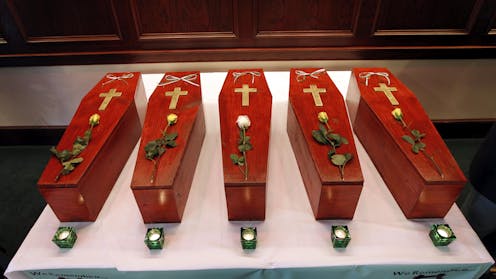
Caskets of Irish railroaders whose remains were excavated from a mass grave outside Philadelphia. AP Photo/Matt Rourke

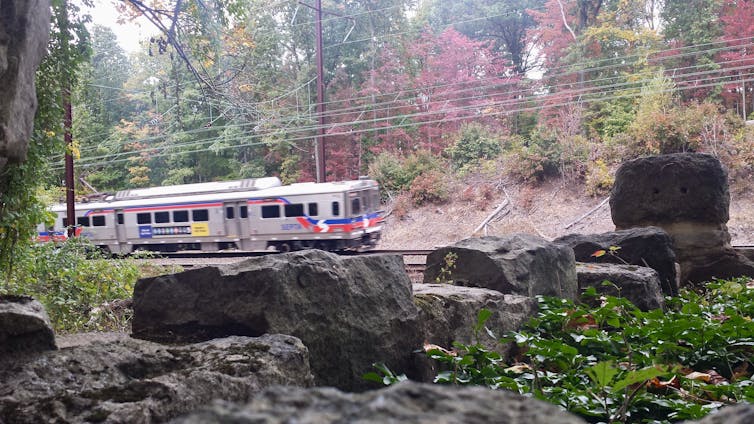
When commuters on the R5 SEPTA train that connects suburban Chester County to Philadelphia approach Malvern station, they might spot a square stone monument on the right side in a clearing surrounded by a thick stand of forest.

Above it, a sign paid for by the Amtrak electrical workers union and suspended from the trees reads:

BURIAL PLOT OF IRISH RAILROAD WORKERS: At this site, known as Duffy’s Cut, fifty-seven Irish immigrant railroad workers from the counties of Donegal, Tyrone, Derry and Leitrim died of cholera and murder in the summer of 1832.

I’m a historian at Immaculata University, about one mile west of Duffy’s Cut. In 2004, my colleagues and I were the ones to discover the mass grave when we excavated the site with the permission of the Pennsylvania Historical and Museum Commission.

My students, who were about the same age as Duffy’s workers in 1832, provided a great deal of the labor at the excavation.

More recently, in May 2025, we discovered human remains that suggest a second Irish immigrant railroader mass grave 11 miles west of Duffy’s Cut, in Downingtown.

Commuter train passes wooded area with large rocks
A SEPTA commuter train passes Duffy’s Cut in Malvern, Pa.
William E. Watson, CC BY-NC-SA

57 dead railroaders

Duffy’s Cut was named after an Irish Catholic immigrant railroad contractor named Philip Duffy, who lived from 1783-1871 and was probably from County Donegal in northwest Ireland.

I learned about the site and its possible mass grave from Pennsylvania Railroad documents that survived in my family.

A 1909 file, labeled “History of Duffy’s Cut Stone enclosure east of Malvern, Pennsylvania, which marks the burial place of 57 track laborers who were victims of the cholera epidemic of 1832,” was compiled by future Pennsylvania Railroad president Martin W. Clement when he was an assistant supervisor. My grandfather, who was Clement’s executive assistant and later director of personnel, obtained the file before the records were auctioned off in 1972, and my brother showed me the file in 2002.

The Philadelphia & Columbia Railroad, the predecessor of the Pennsylvania Railroad, wanted to shorten the travel time from Philadelphia to Pittsburgh from three to four weeks by Conestoga wagon to three to four days by rail, canal and river.

The file my brother had in his possession stated that the dead railroaders at Duffy’s Cut were young men, recently arrived from Ireland. It also said the cost of mile 59 was vastly more expensive than the typical Philadelphia & Columbia Railroad mile. Laying a typical mile of P&C railroad cost US$5,000 in the 1830s. But at mile 59, gouging the landscape with a “cut” to lay the tracks on level ground and bridging the valley with a fill – an earthen bridge – cost $32,000. Although the work was especially difficult, the common laborers received about 25 cents a day.

Artifact that looks like smooth stick with engraved with the word 'Derry'
Fragment of an Irish-made clay pipe unearthed near the Duffy’s Cut mass grave.
AP Photo/Matt Rourke

Most of the men had sailed from the city of Derry in the north of Ireland to Philadelphia from April to June of 1832 aboard the John Stamp. The ship pulled into the Lazaretto quarantine station on the Delaware River in Essington, Pennsylvania, before sailing on to Philadelphia.

No one on the John Stamp was reported to be ill. This was the height of the 1832 cholera epidemic that ultimately killed at least 10,000 people in the U.S.

Forty-seven laborers from the John Stamp ship joined 10 other Irish immigrant workers who were already living with Duffy in a rental house in Willistown, a mile south of the work site.

Yet almost as soon as they arrived to the work camp at mile 59, so did cholera, which had spread to Philadelphia from New York City.

Cholera in the camps

Americans could read about the spread of cholera across Europe in 1831 in the newspapers, but very little was known about the disease until decades later.

Cholera is a bacterial infection that spreads due to poor sanitary practices in which human feces get into drinking water, via excrement passed into streams or by seepage from outhouses to wells.

But in 1832, people believed cholera was linked to intemperance and vice, which were thought to weaken the body. According to the prevailing miasma theory, it caused outbreaks once airborne. Immigrants and the poor were thought to be especially susceptible to the disease and primary vectors for its spread.

Cholera causes extreme diarrhea and vomiting that lead to rapid electrolyte loss. In 1832 it was fatal in about 50% of cases. In the Delaware Valley, cholera cases mounted from July into August 1832. Philadelphia registered its peak number of cases, 173, on Aug. 6 and peak number of deaths, 76, on Aug. 7. The hardest-hit areas in the region were working-class neighborhoods and canal and railroad work camps.

A typical crew on a P&C mile numbered 100 to 120 men. However, the work by Irish immigrants was segregated along sectarian lines on the railroads in the U.S., as it was in the Belfast dockyards at the same time. The other half of the workers at mile 59, according to Canal Commission reports, were Irish Protestant immigrants who worked for an Irish Protestant contractor and did the less dangerous work of laying tracks. They did not die of cholera.

Four men working in wooded area
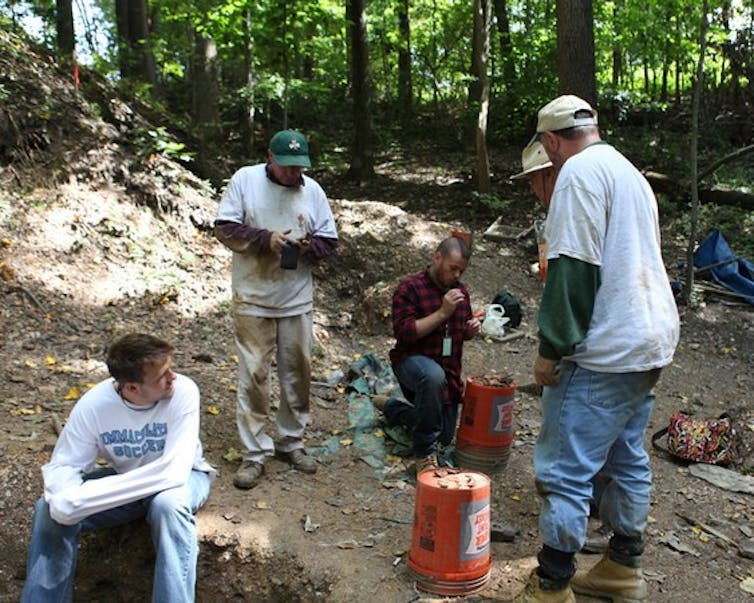
The author, second from left, and his team at the dig site at Duffy’s Cut in 2011.
William E. Watson, CC BY-NC-SA

Signs of a massacre

To excavate the site, we partnered with the Chester County Emerald Society, a law enforcement group that cleared our work with the county district attorney, and the coroner, in case we found human remains. The University of Pennsylvania Museum provided ground-penetrating radar, as well as archaeological and anthropological assistance for the dig. Staff trained my students in how to properly excavate and handle artifacts and bones.

Our research team uncovered seven sets of remains between 2009 and 2012 in the remaining eastern portions of the fill. The skeletons had been buried in coffins sealed with an exceptional number of nails, perhaps to contain the cholera.

Analysis at the UPenn Museum showed evidence of violence to each of the skulls – with one skull showing both an ax blow and a bullet encased in the skull. Researchers found no evidence of defensive wounds on any skeleton, suggesting that the men might have been tied up before being killed.

After our team analyzed the remains, we came to the startling conclusion that the men didn’t die from cholera – they were massacred.

I believe that fear of cholera, an epidemic that some clergymen in America and England called “a chastisement for the sins of the people,” and anti-immigrant sentiment fueled violence against them by native-born populations.

After forensic examinations of the remains, five of the skeletons were reburied during a ceremony at West Laurel Hill Cemetery in Bala Cynwyd in 2012. My team determined the identities of two of the deceased – 18-year-old John Ruddy from County Donegal and 29-year-old Catherine Burns, the daughter of one of the workers, from County Tyrone – and their remains were returned to their home counties in Ireland in 2013 and 2015.

Man wearing red, purple and white vestments shown incensing caskets as crowd of people look on
Bishop Michael J. Fitzgerald takes part in a funeral at West Laurel Hill Cemetery in 2012 for the five 19th-century Irish immigrants whose remains were excavated from the Duffy’s Cut site.
AP Photo/Matt Rourke

A second mass grave in Chester County

Historical records led us to what we believe is a second mass grave in Chester County.

An article in the Nov. 7, 1832, issue of the Village Record newspaper in West Chester reported that one man from Duffy’s Cut fled westward down the unfinished track line to another Irish immigrant railroader crew “near the line of East Bradford and East Caln.”

This was P&C mile 48 in Downingtown, Pennsylvania. It was under the direction of Irish immigrant contractor Peter Connor, whose crew of 100 to 120 men was reported to have all died around the same time as Duffy’s crew.

Forty years later, Charles Pennypacker’s 1909 “History of Downingtown” recorded that the dead Irishmen in Downingtown were carted north to a field where they were buried in a mass grave on the property of present-day Northwood Cemetery, “in the eastern part of the cemetery, near the gully.”

Fragments of bones shown in container lined with purple satin
File photo from March 24, 2009, shows bones recovered from the mass grave at Duffy’s Cut.
AP Photo/Matt Rourke, File

On May 15, 2025, the Duffy’s Cut team unearthed the first human remains from the Downingtown crew in the exact place reported by Pennypacker. This work has just started.

Up and down the East Coast, there are numerous mass graves of anonymous workers who died of epidemics and overwork in the 1820s and 1830s. Most of those people will never have their stories told.

At Duffy’s Cut, and now at the Downingtown site, we hope to humanize some of the hardworking immigrants who died building a crucial part of America’s industrial landscape.

Visitors can view artifacts found at Duffy’s Cut at the Duffy’s Cut Museum in the Gabriele Library at Immaculata University in Malvern, Pa.

Read more of our stories about Philadelphia and Pennsylvania.

The Conversation

William E. Watson serves as the unpaid director of the 501 c 3 educational non-profit and in 2016 served as director of an NEH summer teachers’ institute at Immaculata University. .

ref. Historian uncovers evidence of second mass grave of Irish immigrant railroaders in Pennsylvania who suffered from cholera, violence and xenophobia – https://theconversation.com/historian-uncovers-evidence-of-second-mass-grave-of-irish-immigrant-railroaders-in-pennsylvania-who-suffered-from-cholera-violence-and-xenophobia-261442

The World Court just ruled countries can be held liable for climate change damage – what does that mean for the US?

Source: The Conversation – USA (2) – By Lauren Gifford, Faculty, Ecosystem Science & Sustainability; Director, Soil Carbon Solutions Center, Colorado State University

Ralph Regenvanu, climate change minister of Vanuatu, speaks outside the International Court of Justice in The Hague on July 23, 2025. John Thys/AFP via Getty Images

The International Court of Justice issued a landmark advisory opinion in July 2025 declaring that all countries have a legal obligation to protect and prevent harm to the climate.

The court, created as part of the United Nations in 1945, affirmed that countries must uphold existing international laws related to climate change and, if they fail to act, could be held responsible for damage to communities and the environment.

The opinion opens a door for future claims by countries seeking reparations for climate-related harm.

But while the ruling is a big global story, its legal effect on the U.S. is less clear. We study climate policies, law and solutions. Here’s what you need to know about the ruling and its implications.

Why island nations called for a formal opinion

The ruling resulted from years of grassroots and youth-led organizing by Pacific Islanders. Supporters have called it “a turning point for frontline communities everywhere.”

Small island states like Vanuatu, Tuvalu, Barbados and others across the Pacific and Caribbean are among the most vulnerable to climate change, yet they have contributed little to global emissions.

Waves spend spray higher than houses and lap at the edges of homes, with palm trees in the background.
Waves hit the shore in Majuro, the capital of the Marshall Islands, during a storm on Nov. 27, 2019. Waves inundated parts of the island, washing rocks and debris into roads.
Hilary Hosia/AFP via Getty Images

For many of them, sea-level rise poses an existential threat. Some Pacific atolls sit just 1 to 2 meters above sea level and are slowly disappearing as waters rise. Saltwater intrusion threatens drinking water supplies and crops.

Their economies depend on tourism, agriculture and fishing, all sectors easily disrupted by climate change. For example, coral reefs are bleaching more often and dying due to ocean warming and acidification, undermining fisheries, marine biodiversity and economic sectors such as tourism.

When disasters hit, the cost of recovery often forces these countries to take on debt. Climate change also undermines their credit ratings and investor confidence, making it harder to get the money to finance adaptive measures.

A satellite image of the Maldives islands.
The Maldives, shown in a satellite image from 2020, has an average elevation of less than 5 feet (1.5 meters) above sea level. With limited land where people can live, the country has tried to build up new areas of its islands for housing.
NASA Earth Observatory

Tuvalu and Kiribati have discussed digital nationhood and leasing land from other countries so their people can relocate while still retaining citizenship. Some projections suggest nations like the Maldives or Marshall Islands could become largely uninhabitable within decades.

For these countries, sea-level rise is taking more than their land – they’re losing their history and identity in the process. The idea of becoming climate refugees and separating people from their homelands can be culturally destructive, emotionally painful and politically fraught as they move to new countries.

More than a nonbinding opinion

The International Court of Justice, commonly referred to as the ICJ or World Court, can help settle disputes between states when requested, or it can issue advisory opinions on legal questions referred to it by authorized U.N. bodies such as the General Assembly or Security Council. The advisory opinion process allows its 15 judges to weigh in on abstract legal issues – such as nuclear weapons or the Israeli occupation of the Palestinian territories – without a formal dispute between states.

While the court’s advisory opinions are nonbinding, they can still have a powerful impact, both legally and politically.

The rulings are considered authoritative statements regarding questions of international law. They often clarify or otherwise confirm existing legal obligations that are binding.

What the court decided

The ICJ was asked to weigh in on two questions in this case:

  1. “What are the obligations of States under international law to ensure the protection of the climate system … from anthropogenic emissions of greenhouse gases?”

  2. “What are the legal consequences under these obligations for States where they, by their acts and omissions, have caused significant harm to the climate system?”

In its 140-page opinion, the court cited international treaties and relevant scientific background to affirm that obligations to protect the environment are indeed a matter of international environmental law, international human rights law and general principles of state responsibility.

The decision means that in the authoritative opinion of the international legal community, all countries are under an obligation to contribute to the efforts to reduce global greenhouse emissions.

To the second question, the court found that in the event of a breach of any such obligation, three additional obligations arise:

  1. The country in breach of its obligations must stop its polluting activity, which would mean excess greenhouse gas emissions in this case.

  2. It must ensure that such activities do not occur in the future.

  3. It must make reparations to affected states in terms of cleanup, monetary payment and apologies.

The court affirmed that all countries have a legal duty under customary international law, which refers to universal rules that arise from common practices among states, to prevent harm to the climate. It also clarified that individual countries can be held accountable, even in a crisis caused by many countries and other entities. And it emphasized that countries that have contributed the most to climate change may bear greater responsibility for repairing the damage under an international law doctrine called “common but differentiated responsibility,” which is commonly found in international treaties concerning the environment.

While the ICJ’s opinion doesn’t assign blame to specific countries or trigger direct reparations, it may provide support for future legal action in both international and national courts.

What does the ICJ opinion mean for the US?

In the U.S., this advisory opinion is unlikely to have much legal impact, despite a long-standing constitutional principle that “international law is part of U.S. law.”

U.S. courts rarely treat international law that has not been incorporated into domestic law as binding. And the U.S. has not consented to ICJ jurisdiction in previous climate cases.

Contentious cases before international tribunals can be brought by one country against another, but they require the consent of all the countries involved. So there is little chance that the United States’ responsibility for climate harms will be adjudicated by the World Court anytime soon.

Still, the court’s opinion sends a clear message: All countries are legally obligated to prevent climate harm and cannot escape responsibility simply because they aren’t the only nation to blame.

The unanimous ruling is particularly remarkable given the current hostile political climate in the United States and other industrial nations around climate change and responses to it. It represents a particularly forceful statement by the international community that the responsibility to ensure the health of the global environment is a legal duty held by the entire world.

The takeaway

The ICJ’s advisory opinion marks a turning point in the global effort to hold countries responsible for climate change.

Vulnerable countries now have a more concrete, legally grounded base to claim rights and press for accountability against historical and ongoing climate harm – including financial claims.

How it will be used in the coming years remains unclear, but the opinion gives small island states in particular a powerful narrative and a legal tool set.

The Conversation

Lauren Gifford receives funding from the National Science Foundation and the US Department of Agriculture.

Daimeon Shanks-Dumont does not work for, consult, own shares in or receive funding from any company or organization that would benefit from this article, and has disclosed no relevant affiliations beyond their academic appointment.

ref. The World Court just ruled countries can be held liable for climate change damage – what does that mean for the US? – https://theconversation.com/the-world-court-just-ruled-countries-can-be-held-liable-for-climate-change-damage-what-does-that-mean-for-the-us-262272

From printing presses to Facebook feeds: What yesterday’s witch hunts have in common with today’s misinformation crisis

Source: The Conversation – USA (3) – By Julie Walsh, Whitehead Associate Professor of Critical Thought and Associate Professor of Philosophy, Wellesley College

An illustration from ‘The History of Witches and Wizards,’ published in 1720, depicting witches offering wax dolls to the devil. Wellcome Collection/Wikimedia Commons

Between 1400 and 1780, an estimated 100,000 people, mostly women, were prosecuted for witchcraft in Europe. About half that number were executed – killings motivated by a constellation of beliefs about women, truth, evil and magic.

But the witch hunts could not have had the reach they did without the media machinery that made them possible: an industry of printed manuals that taught readers how to find and exterminate witches.

I regularly teach a class on philosophy and witchcraft, where we discuss the religious, social, economic and philosophical contexts of early modern witch hunts in Europe and colonial America. I also teach and research the ethics of digital technologies.

These fields aren’t as different as they seem. The parallels between the spread of false information in the witch-hunting era and in today’s online information ecosystem are striking – and instructive.

Birth of a publishing empire

The printing press, invented around 1440, revolutionized how information spread – helping to create the era’s equivalent of a viral conspiracy theory.

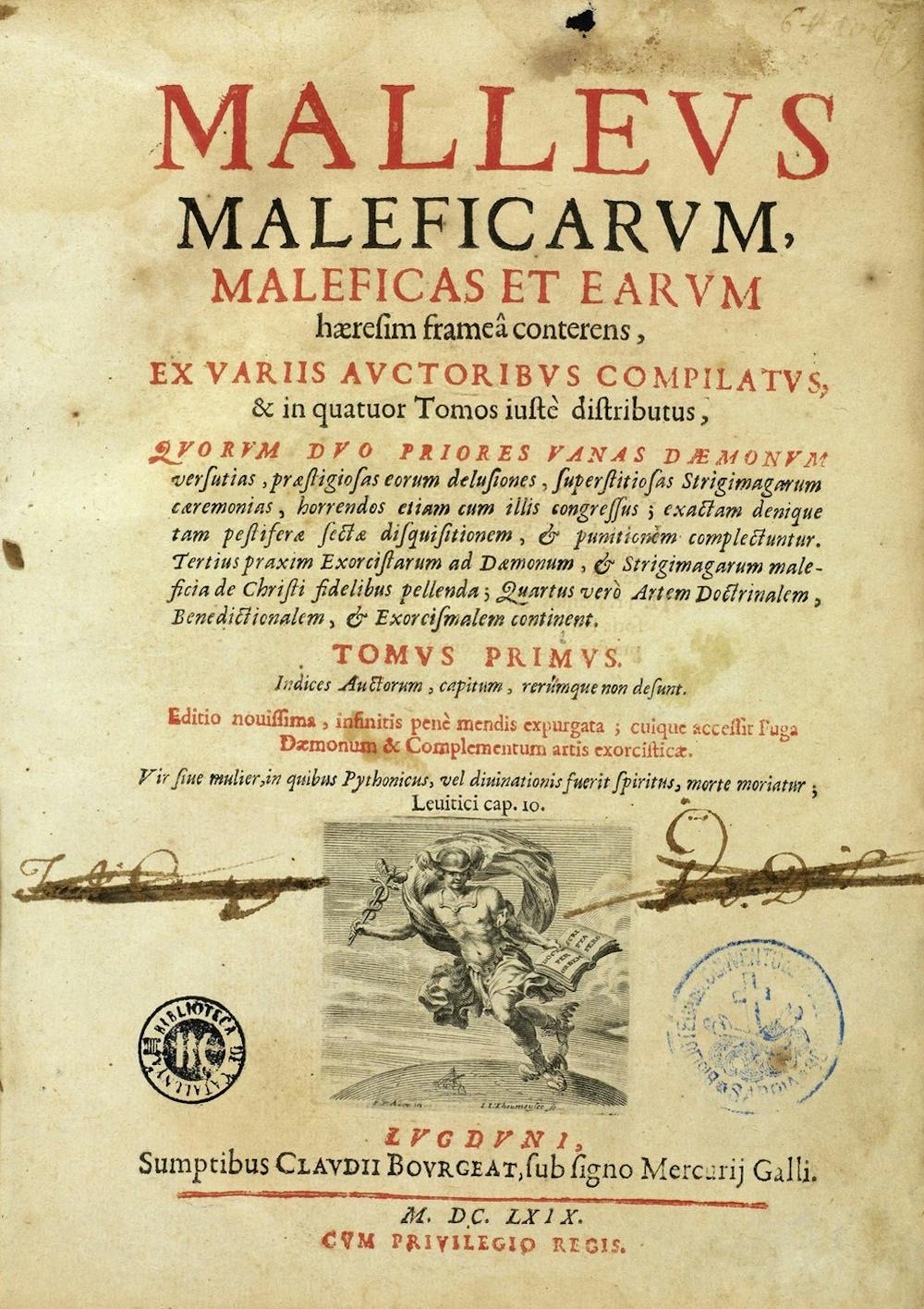
By 1486, two Dominican friars had published the “Malleus Maleficarum,” or “Hammer of Witches.” The book has three central claims that came to dominate the witch hunts.

A yellowed title page from a manuscript, with print in black and red ink.
A 1669 edition of ‘Malleus Maleficarum.’
Wellcome Collection/Wikimedia Commons, CC BY-SA

First, it describes women as morally weak and therefore more likely to be witches. Second, it tightly links witchcraft with sexuality. The authors claim that women are sexually insatiable – part of what leads them to witchcraft. Third, witchcraft involves a pact with the devil, who tempts would-be witches through pleasures such as orgies and sexual favors. After establishing these “facts,” the authors conclude with instructions for interrogating, torturing and punishing witches.

The book was a hit. It had more than two dozen editions and was translated into multiple languages. While “Malleus Maleficarum” was not the only text of its kind, its influence was enormous.

Prior to 1500, witch hunts in Europe were rare. But after the “Malleus Maleficarum,” they picked up steam. Indeed, new printings of the book correlate with surges in witch-hunting in Central Europe. The book’s success wasn’t just about content; it was about credibility. Pope Innocent VIII had recently affirmed the existence of witches and conferred authority on inquisitors to persecute them, giving the book further authority.

Ideas about witches [from earlier texts and folklore] – such as the fact that witches could use spells to make penises vanish – were recycled and repackaged in the “Malleus Maleficarum,” which in turn served as a “source” for future works. It was often quoted in later manuals and woven into civic law.

The popularity and influence of the book helped crystallize a new domain of expertise: demonologist, an expert on the nefarious activities of witches. As demonologists repeated one another’s spurious claims, an echo chamber of “evidence” was born. The identity of the witch was thus formalized: dangerous and decisively female.

Skeptics fight back

Not everyone bought into the witch hysteria. As early as 1563, dissenting voices emerged – though, notably, most didn’t argue that witches weren’t real. Instead, they questioned the methods used to identify and prosecute them.

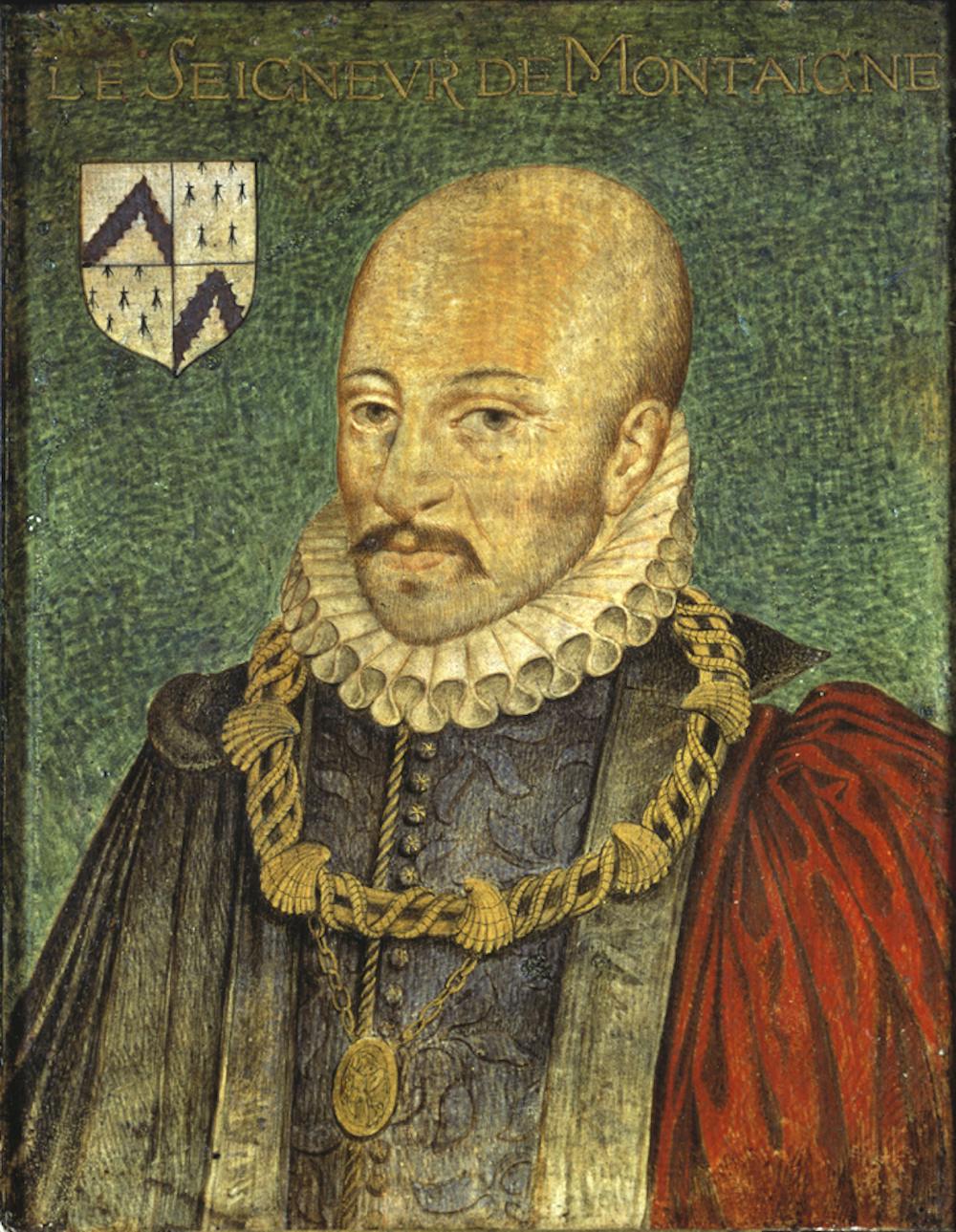
A faded painting of a bald man with a mustache, wearing a white ruff, heavy necklace, and red robe.
Essayist Michel de Montaigne, painted around 1578 by an unknown artist.
Conde Museum/Wikimedia Commons

Dutch physician Johann Weyer argued that women accused of witchcraft were suffering from melancholia – what we might now call mental illness – and needed medical treatment, not execution. In 1580, French philosopher Michel de Montaigne visited imprisoned witches and concluded they needed “hellebore rather than hemlock”: medicine rather than poison.

These skeptics also identified something more insidious: the moral responsibility of people spreading the stories. In 1677, English chaplain, physician and philosopher John Webster wrote a scathing critique, claiming that most demonologists’ texts were straightforward copy and paste jobs where the authors repeated one another’s lies. The demonologists offered no original analysis, no evidence and no witnesses – failing to meet the standards of good scholarship.

The cost of this failure was enormous. As Montaigne wrote, “The witches of my neighborhood are in mortal danger every time some new author comes along and attests to the reality of their visions.”

Demonologists benefited from the social and political status associated with the popularity of their books. The financial benefit was, for the most part, enjoyed by the printers and booksellers – what today we refer to as publishers.

Witch hunts petered out throughout the 1700s across Europe. Doubt about the standards of evidence, and increased awareness that accused “witches” may have been suffering from delusion, were factors in the end of the persecution. The skeptics’ voices were heard.

Psychology of viral lies

Early modern skeptics understood something we’re still grappling with today: Certain people are more vulnerable to believing extraordinary claims. They identified “melancholics,” people predisposed to anxiety and fantastical thinking, as particularly susceptible.

Nicolas Malebranche, a 17th-century French philosopher, believed that our imaginations have enormous power to convince us of things that are not true – especially fear of invisible, malevolent forces. He noted that “extravagant tales of witchcraft are taken as authentic histories,” increasing people’s credulity. The more stories, and the more they were told, the greater the influence on the imagination. The repetition served as false confirmation.

“If they were to cease punishing (women accused of witchcraft) and treat them as mad people,” Malebranche wrote, “in a little while they would no longer be sorcerers.”

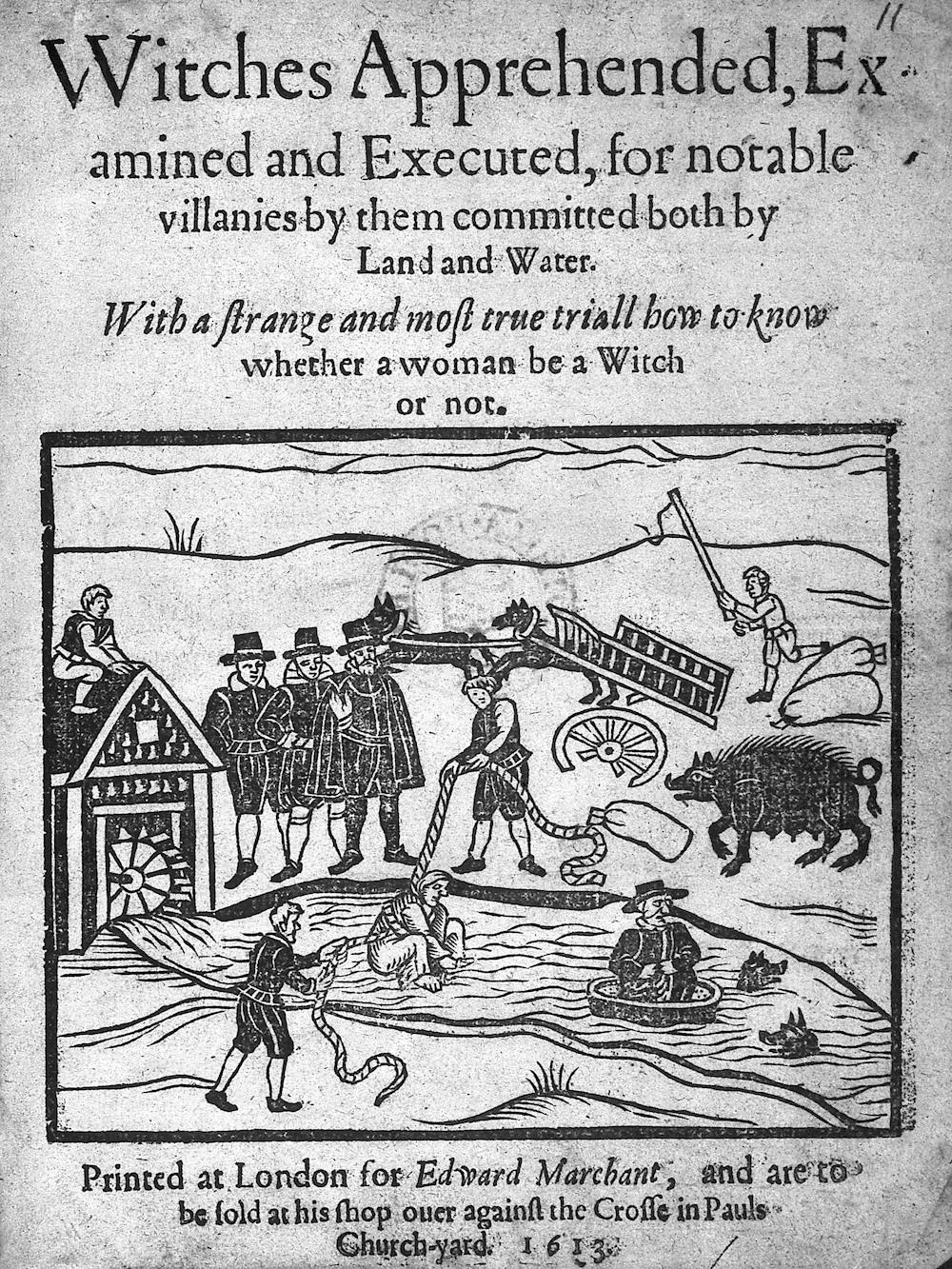
A printed book page labelled 'Witches Apprehended, Examined and Executed,' with a drawing of people submerging a woman in a river.
The title page of a treatise on witchcraft from 1613.
Wellcome Collection/Wikimedia Commons, CC BY-SA

Today’s researchers have identified similar patterns in how misinformation and disinformation – false information intended to confuse or manipulate people – spreads online. We’re more likely to believe stories that feel familiar, stories that connect to content we’ve previously seen. Likes, shares and retweets becomes proxies for truth. Emotional content designed to shock or outrage spreads far and fast.

Social media channels are particularly fertile ground. Companies’ algorithms are designed to maximize engagement, so a post that receives likes, shares and comments will be shown to more people. The more viewers, the higher the likelihood of more engagement, and so on – creating a cycle of confirmation bias.

Speed of a keystroke

Early modern skeptics reserved their harshest criticism not for those who believed in witches but for those who spread the stories. Yet they were curiously silent on the ultimate arbiters and financial beneficiaries of what got printed and circulated: the publishers.

Today, 54% of American adults get at least some news from social media platforms. These platforms, like the printing presses of old, don’t just distribute information. They shape what we believe through algorithms that prioritize engagement over accuracy: The more a story is repeated, the more priority it gets.

The witch hunts offer a sobering reminder that delusion and misinformation are recurring features of human society, especially during times of technological change and social upheaval. As we navigate our own information revolution, those early skeptics’ questions remain urgent: Who bears responsibility when false information leads to real harm? How do we protect the most vulnerable from exploitation by those who profit from confusion and fear?

In an age when anyone can be a publisher, and extravagant tales spread at the speed of a keystroke, understanding how previous societies dealt with similar challenges isn’t just academic – it’s essential.

The Conversation

Julie Walsh receives funding from the National Science Foundation

ref. From printing presses to Facebook feeds: What yesterday’s witch hunts have in common with today’s misinformation crisis – https://theconversation.com/from-printing-presses-to-facebook-feeds-what-yesterdays-witch-hunts-have-in-common-with-todays-misinformation-crisis-260995

Shingles vaccination rates rose during the COVID-19 pandemic, but major gaps remain for underserved groups

Source: The Conversation – USA (3) – By Jialing Lin, Research fellow in Health Systems, International Centre for Future Health Systems, UNSW Sydney

The CDC recommends shingles vaccination for all adults age 50 and older. xavierarnau/E+ via Getty Images

Vaccination against shingles increased among adults age 50 and older in the U.S. during the COVID-19 pandemic, but not equally across all population groups. That’s the key finding from a new study my colleagues and I published in the journal Vaccine.

Shingles is caused by the reactivation of the varicella-zoster virus, the same virus that causes chickenpox. It leads to a painful rash and potentially serious complications – especially in older adults – such as persistent nerve pain, vision loss and neurological problems. While antiviral treatments can ease symptoms, vaccination is the most effective way to prevent shingles.

We analyzed nationally representative survey data from almost 80,000 adults age 50 and over between 2018 and 2022, collected by the Centers for Disease Control and Prevention to monitor the health of the U.S. population. The survey tracked vaccination rates in people of different ethnic backgrounds as well as other factors such as sex, household income and the presence of chronic conditions like diabetes and cardiovascular disease.

The uptake of shingles vaccines rose notably during the pandemic – from 25.1% of people for whom it is recommended in 2018-2019, to 30.1% during 2020-2022. We observed this overall increase across nearly all groups in our study.

We saw the greatest relative increases among groups that historically have had lower rates of shingles vaccination. These included adults ages 50-64, men, people from racial and ethnic minority groups such as non-Hispanic Black adults, those with lower household incomes, current smokers and people without chronic conditions like cancer or arthritis.

Red bumpy skin rash caused by shingles
Shingles is caused by the same virus that causes chickenpox. It leads to a painful rash and other potentially serious complications.
Irena Sowinska/Moment via Getty Images

Why it matters

In the U.S., the CDC recommends shingles vaccination for all adults age 50 and older. However, uptake has been low, partly due to limited awareness, cost concerns and missed opportunities during routine health care visits.

The COVID-19 pandemic, while disruptive, may have inadvertently created new opportunities to improve adult vaccination uptake, particularly among groups with historically low uptake of the shingles vaccine. Factors contributing to this shift likely included heightened public awareness of the importance of vaccination, more frequent health care encounters, especially during COVID-19 vaccine rollouts, and the expanded availability of adult vaccines in pharmacies and primary care settings.

Replacing the older, less effective live attenuated zoster vaccine, called Zostavax, with the newer, non-live zoster vaccine, Shingrix, in 2020 also played a role. Public health campaigns that promoted co-administration of vaccines and launched targeted outreach to underserved populations further contributed to these gains.

However, major inequities persist. While shingles vaccination rates improved across the board, groups that had lower uptake before the pandemic continued to lag behind wealthier, non-Hispanic white populations with greater health care access. Overall, the vaccination rate for shingles is still low – below other vaccines such as the flu vaccine.

This gap reflects long-standing disparities in getting needed health care, which became even more prominent during the pandemic. It also highlights the need for fairer policies and customized outreach efforts to underserved communities that build trust and raise awareness about the health benefits of the shingles vaccine.

What still isn’t known

Although the upward trend we observed is encouraging, several questions remain. For example, we could not tell from the survey data we worked with whether participants received both doses of the Shingrix vaccine. Both are needed for full protection against shingles.

Nor could we tell whether participants received the shingles vaccine alongside their COVID-19 vaccination. Receiving multiple vaccines at a single health care visit makes vaccination more convenient and may boost vaccine uptake by reducing the number of needed visits. Also unknown is how immunocompromised people fared during this period. Current guidelines recommend that immunocompromised adults regardless of age also receive the shingles vaccine, but the data only included adults age 50 and over.

Addressing these questions in future studies would help public health experts develop strategies to encourage more eligible people to receive the shingles vaccine.

The Research Brief is a short take on interesting academic work.

The Conversation

Jialing Lin does not work for, consult, own shares in or receive funding from any company or organization that would benefit from this article, and has disclosed no relevant affiliations beyond their academic appointment.

ref. Shingles vaccination rates rose during the COVID-19 pandemic, but major gaps remain for underserved groups – https://theconversation.com/shingles-vaccination-rates-rose-during-the-covid-19-pandemic-but-major-gaps-remain-for-underserved-groups-262020

As wrestling fans reel from the sudden death of Hulk Hogan, a cardiologist explains how to live long and healthy − and avoid chronic disease

Source: The Conversation – USA (3) – By William Cornwell, Associate Professor of Cardiology, University of Colorado Anschutz Medical Campus

Hulk Hogan’s international fame as a wrestling superstar began in the 1980s. This photo is from 2009. Paul Kane via Getty Images Entertainment

On July 24, 2025, the American pro wrestling celebrity Hulk Hogan, whose real name was Terry Bollea, died at the age of 71. Hogan had chronic lymphocytic leukemia and a history of atrial fibrillation, or A-fib, a condition in which the upper chambers of the heart, or atria, beat irregularly and often rapidly. His cause of death has been confirmed as acute myocardial infarction, commonly known as a heart attack.

Hogan became a household name in the 1980s and has long been known for maintaining fitness and a highly active lifestyle, despite having had 25 surgeries in 10 years, including a neck surgery in May.

Hogan’s death has brought renewed attention to the importance of maintaining heart health through exercise. Many people think that bodybuilders are the “picture” of health. However, the truth is that too much muscle can increase strain on the heart and may actually be harmful. It may seem ironic, then, that people who exercise to extreme levels and appear healthy on the outside can, in fact, be quite unhealthy on the inside.

As the director of sports cardiology at the University of Colorado Anschutz Medical Campus, I see patients of all age groups and at varying levels of fitness who are interested in promoting health by incorporating exercise into their lifestyle, or by optimizing their current exercise program.

Two older women exercising together in a park.
More exercise and less sedentary behavior reduces the risk of heart disease, stroke, cancer and dementia.
andreswd/E+ via Getty Images

Exercise is the foundation for good health

When people think of vital signs, they usually think about things such as heart rate, blood pressure, temperature, breathing rate and blood oxygen levels. However, the American Heart Association also includes “fitness” as an additional vital sign that should be considered when determining a patient’s overall health and risk of heart disease, cancer and death.

While fitness may be determined in various ways, the best way is by checking what is known as peak oxygen uptake, or VO2 max, through a specialized evaluation called a cardiopulmonary exercise test. These can be performed at many doctors’ offices and clinics, and they provide a wealth of information related to overall health, as well as heart, lung and skeletal muscle function.

Exercise is one of the most effective interventions to prolong life and reduce the risk of developing chronic diseases throughout life – in effect, prolonging lifespan and improving health span, meaning the number of years that people spend in good health.

In fact, a large study done by the Cleveland Clinic found that a low level of fitness poses a greater risk of death over time than other traditional risk factors that people commonly think of, such as smoking, diabetes, coronary artery disease and severe kidney disease.

When it comes to brain health, the American Stroke Association emphasizes the importance of routine exercise and avoiding sedentary behavior in their 2024 guidelines on primary prevention of stroke. The risk of stroke increases with the amount of sedentary time spent throughout the day and also with the amount of time spent watching television, particularly four hours or more per day.

Regarding cognitive decline, the Alzheimer’s Society states that regular exercise reduces the risk of dementia by almost 20%. Furthermore, the risk of Alzheimer’s disease is twice as high among individuals who exercise the least, when compared to individuals who exercise the most.

There is also strong evidence that regular exercise reduces the risk of certain types of cancer, especially, colon, breast and endometrial cancer. This reduction in cancer risk is achieved through several mechanisms.

For one, obesity is a risk factor for up to 13 forms of cancer, and excess body weight is responsible for about 7% of all cancer deaths. Regular exercise helps to maintain a healthy weight.

Second, exercise helps to keep certain hormones – such as insulin and sex hormones – within a normal range. When these hormone levels get too high, they may increase cancer cell growth. Exercise also helps to boost the immune system by improving the body’s ability to fight off pathogens and cancer cells. This in turn helps prevent cancer cell growth and also reduces chronic inflammation, which left unchecked damages tissue and increases cancer risk.

Finally, exercise improves the quality of life for all people, regardless of their health or their age. In 2023, Hulk Hogan famously quipped, “I’m 69 years old, but I feel like I’m 39.”

7,000 steps is just over 3 miles – depending on your pace, that’s about 40 to 60 minutes of walking.

The optimal dose of exercise

Major health organizations, such as the American Heart Association, American Cancer Society and Department of Health and Human Services, all share similar recommendations when it comes to the amount of exercise people should aim for.

These organizations all recommend doing at least 150 minutes per week of moderate-intensity exercise, or at least 75 minutes per week of vigorous-intensity exercise. Moderate exercises include activities such as walking briskly (2.5 to 4 miles per hour), playing doubles tennis or raking the yard. Vigorous exercise includes activities such as jogging, running or shoveling snow.

A good rule of thumb for figuring out how hard a specific exercise is is to apply the “talk test”: During moderate-intensity exercise, you can talk, but not sing, during the activity. During vigorous intensity exercise, you can say only a few words before having to stop and take a breath.

There is a lot of solid data to support these recommendations. For example, in a very large analysis of about 48,000 people followed for 30 years, the risk of death from any cause was about 20% lower among those who followed the physical activity guidelines for Americans.

Life can be busy, and some people may find it challenging to squeeze in at least 150 minutes of exercise throughout the course of the week. However, “weekend warriors” – people who cram all their exercise into one to two days over the weekend – still receive the benefits of exercise. So, a busy lifestyle during the week should not prevent people from doing their best to meet the guidelines.

What about the number of steps per day? In a new analysis in The Lancet, when compared with walking only 2,000 steps per day, people who walked 7,000 steps per day had a 47% lower risk of death from any cause, a 25% lower risk of developing heart disease, about a 50% lower risk of death from heart disease, a 38% lower risk of developing dementia, a 37% lower risk of dying from cancer, a 22% lower risk of depression and a 28% lower risk of falls.

Historically, people have aimed for 10,000 steps per day, but this new data indicates that there are tremendous benefits gained simply from walking 7,000 steps daily.

It’s never too late to start

One question that many patients ask me – and other doctors – is: “Is it ever too late to start exercising?” There is great data to suggest that people can reap the benefits even if they don’t begin an exercise program into their 50s.

Being sedentary while aging will cause the heart and blood vessels to stiffen. When that happens, blood pressure can go up and people may be at risk of other things such as heart attacks, strokes or heart failure.

However, in a study of previously sedentary adults with an average age of 53, two years of regular exercise reversed the age-related stiffening of the heart that otherwise occurs in the absence of routine exercise.

And it is important to remember that you do not have to look like a body builder or fitness guru in order to reap the benefits of exercise.

Almost three-quarters of the total benefit to heart, brain and metabolic health that can be gained from exercise will be achieved just by following the guidelines.

The Conversation

William Cornwell does not work for, consult, own shares in or receive funding from any company or organization that would benefit from this article, and has disclosed no relevant affiliations beyond their academic appointment.

ref. As wrestling fans reel from the sudden death of Hulk Hogan, a cardiologist explains how to live long and healthy − and avoid chronic disease – https://theconversation.com/as-wrestling-fans-reel-from-the-sudden-death-of-hulk-hogan-a-cardiologist-explains-how-to-live-long-and-healthy-and-avoid-chronic-disease-262103

A university bookshop in Ibadan tells the story of Nigeria’s rich publishing culture

Source: The Conversation – Africa – By Tinashe Mushakavanhu, Assistant Professor, Harvard University

Driven by a desire to explore Nigeria’s literary and cultural history beyond the metropolis of Lagos, I took a road trip to Ibadan, once the most important university town in the country. Ibadan, in Oyo State, was the first city in Nigeria to have a university set up in 1948.

Ibadan is where the Mbari Club once gathered, an experimental space where Nigerian writers, artists and thinkers – among them Chinua Achebe, Wole Soyinka, JP Clark, Christopher Okigbo, Uche Okeke, Bruce Onobrakpeya, Mabel Segun and South Africa’s Es’kia Mphahlele – met, debated and dreamed in the 1960s and 70s.

It’s the city where celebrated Nigerian artist and architect Demas Nwoko imagined and built his utopias. Where the Oxford University Press and Heinemann Educational Books established their west African headquarters.


Read more:
Chimamanda’s Lagos homecoming wasn’t just a book launch, it was a cultural moment


Books have always been a form of cultural currency in Ibadan. The presence of major publishers meant that bookshops were not just retail outlets, but intellectual salons, sites of encounter and exchange.

So while in Ibadan I visited cultural spaces and independent bookshops but it was the charms of the University campus that mostly captured my imagination. And my favourite place was the University of Ibadan Bookshop. At this campus bookshop I lingered the most, in awe and wonder. Its eclectic range of books, journals, public lecture pamphlets, novels, poetry collections and monographs excited me.

Today, when the global publishing economy has increasingly digitised and centralised, the bookshop feels almost radical just by existing. It’s a reminder that intellectual life in Africa is not peripheral or derived from the west. It is present, prolific and profoundly local. To walk through the shelves of this bookshop was to encounter a history of African thought written and produced on its own terms.

As a scholar of African literature and archives, my research traces the hidden lives of spaces that have shaped publishing and archives. University bookshops have been overlooked but are essential nodes in the continent’s intellectual history.

A snapshot of Nigeria

This campus bookshop gives a snapshot of Nigeria as a print country. Here we witness the nation through its printed matter. A nation of prolific publishing. I found the literary output in the Ibadan campus bookshop not only vast but exuberant and unrelenting. It reflects the texture of the Nigerian personality: loud, boisterous, layered and insistent. Stacks upon stacks of books.

In these stacks, it dawned on me that beneath the surface lies a vibrant, ongoing literary discourse that is unmistakably Nigerian, and sadly not resonant far beyond its borders. These are books you don’t see on reference lists of “popular” and “influential” scholarship that privileges work produced and imported to Africa from the Euro-American academy.

I was especially intrigued with how the Nigerian academic and writer does not tire in producing academic and cultural journals. There are journals for every subject under the sun.

While the critical framework of African literature is too often shaped by the global north (see critiques by Ato Quayson, Biodun Jeyifo, Simon Gikandi and Grace Musila) in Ibadan, I saw a distinctly local and deeply African critical discourse rooted in place, language and lived experience. To walk into the University of Ibadan Bookshop is to step into legacy. Its shelves bear the weight of decades of African thought, theory and storytelling.

Despite being housed in an ageing building, it has stayed defiant. Even though floods destroyed books and computers worth a small fortune in 2019, the bookshop is still standing proudly. And there was pride too among the staff who were eager to help or answer any questions about the books.

More than bookshops

The University of Ibadan bookshop reminded me of the bookshop from my undergraduate days in Zimbabwe. Even though our campus bookshop was much smaller, I used to find pleasure going there in between lectures. It often felt like walking into a vault of African knowledge and memory.

Our bookshop at Midlands State University stocked old, canonical books alongside current literature. On occasion, rare, out-of-print secondhand books would appear on the shelves. The bargain sales also meant I spent most of my money there.

But to call these spaces on African university campuses “bookshops” hardly does them justice. They are hybrid cultural ecosystems that function as part bookshop, part print shop, stationer, library and sometimes even archive. They have long served as vital nodes in the circulation of African knowledge and thought.

Yet this ecosystem is rapidly eroding, undermined by the rise of internet culture, artificial intelligence, piracy and harsh economic conditions. The result is a slow but devastating disappearance of African intellectual memory. As scholars remind us, digital platforms are not neutral. They are structured by algorithms that often marginalise black and African knowledge. So, the loss of these analogue spaces is more than nostalgic, it is epistemic erasure.

In this digital age, there is something vital about the physical presence of bookshops on African campuses. Thanks to them, as a student, for me literature was the serendipity of discovery, the tactile feel of books, the beautiful persistence of a local knowledge system that was relatable and produced by people like me.


Read more:
Nigerian architect Demas Nwoko on his award-winning work: ‘Whatever you build, it should suit your culture’


On the way out of the city, we stopped at Bower’s Tower. From there you can see Ibadan’s sprawling layout, the ancient hills from which the settlement was built, and its red roofs.

The view reflected the complexity and density of ideas the city has nurtured. And despite shifts in Nigeria’s publishing geography from here to Lagos and Abuja, Ibadan still matters. It’s a city that remembers, that archives, that holds on to knowledge.

The Conversation

Tinashe Mushakavanhu does not work for, consult, own shares in or receive funding from any company or organisation that would benefit from this article, and has disclosed no relevant affiliations beyond their academic appointment.

ref. A university bookshop in Ibadan tells the story of Nigeria’s rich publishing culture – https://theconversation.com/a-university-bookshop-in-ibadan-tells-the-story-of-nigerias-rich-publishing-culture-262050