Why we still don’t understand what happens to women’s bodies during labour

Source: The Conversation – UK – By Anastasia Topalidou, Research Fellow (Perinatal Biomechanics and Health Technologies), University of Lancashire
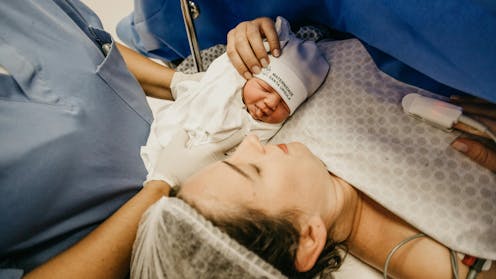
Photo by Jonathan Borba, CC BY-SA

Maternal and newborn deaths are rising globally, not just in low- and middle-income countries, but in wealthy nations too. Researchers have described the situation as a “global failure” and a “major scandal”.

In the UK, more women are now dying during pregnancy and childbirth than at any time in the past 20 years, despite a fall in the birth rate. A national maternity investigation has just been launched, and public concern is growing.

Yet while politicians and healthcare leaders debate staffing levels and service delivery, one major contributor to poor outcomes is being almost entirely overlooked: biomechanical complications during labour.

Biomechanics refers to how the body moves and responds to physical forces. During pregnancy, it describes how the body adapts to the increasing demands of carrying a growing baby. During labour, it involves some of the most physically intense and complex actions the human body can perform, as it prepares for and facilitates the delivery of a baby.

After analysing 87 studies from around the world, we discovered that not a single one had ever investigated the biomechanics of labour. None examined how women’s bodies actually move, adapt or respond during birth. All the research focused solely on pregnancy. And despite rising maternal deaths in the UK, not a single antenatal biomechanics study had been conducted here either.

This isn’t just an academic oversight. Labour is biomechanically intense, involving force, posture, motion, muscle control and joint loading. Without evidence on how positions, manoeuvres or techniques affect the birthing body, maternity care relies largely on tradition, anecdotal evidence and outdated assumptions.

A dangerous lack of diversity

Some pregnancy-related biomechanical changes have been documented, but these vary widely from person to person. There is no “typical” pathway. Yet standard guidance assumes a one-size-fits-all model, often failing to account for these variations.

Worse still, almost no studies included data on ethnicity. Only one mentioned participants’ ethnic background, but it did not analyse the data by group or explore any differences. That is a serious gap, given that anatomical features like pelvic shape, joint mobility, spinal alignment and culturally shaped movement patterns can vary across populations. These differences could significantly affect how women move and give birth, yet they remain completely overlooked.

This is a serious problem, especially in the UK. Mothers and Babies: Reducing Risk through Audits and Confidential Enquiries across the UK (MBRRACE-UK) – the national programme that investigates maternal and infant deaths – along with other official reports, consistently show that Black and Asian women are nearly three times more likely to die during childbirth than white women. If all the biomechanical knowledge we have is based on white bodies, yet clinical guidance is applied universally, we may be missing important risks or needs. This lack of inclusive data could be contributing to the persistent racial disparities in maternal outcomes.

We also found that even widely used techniques such as squatting or the McRoberts’ manoeuvre – a common emergency intervention – have never been biomechanically validated during labour. This means that no one has scientifically tested how these movements affect the body’s joints, muscles, and bones during actual childbirth. So, we don’t know if they help, hinder, or have no measurable impact on the birthing process.

A handful of studies tested some of these positions on pregnant women in static, controlled conditions, but none included women in active labour. Those studies revealed no measurable advantage for any of the positions tested. Even the McRoberts’ manoeuvre did not significantly change pelvic or spinal alignment.

That means decades of advice, clinical practice, and emergency response protocols may be based on theory and biomechanical guesswork, rather than evidence. And while these techniques are used every day – often in urgent situations – they have never been scientifically tested on women in active labour. So no clinical studies have examined how these interventions actually affect the birthing body in real time. We don’t know if they work as intended, or if they could be refined to improve safety.

Tradition over science

The consequences of this blind spot are not theoretical or a matter of academic curiosity. They’re about safety, dignity and fairness. Maternal and neonatal outcomes are getting worse. Stillbirths and deaths shortly after birth have increased. Behind these statistics are real families and real tragedies. Many of which may have been preventable.

So why haven’t we filled this gap? Part of the reason is technical: traditional biomechanical systems are difficult to use in clinical settings. But that’s no excuse. New technologies are being developed all the time. If we have the capability to launch rockets and explore space, we should surely be able – and arguably obliged – to understand the basic biomechanics of human birth.

The real barrier is structural neglect. Women were routinely excluded from clinical research until the 1990s, and even now, research into women’s health remains massively underfunded and overlooked. As a result, childbirth, one of the most common yet life-altering events in medicine, is still shaped by untested ideas.

This isn’t just a research gap. It’s a failure of safety, equity and scientific responsibility. We are delivering babies in the dark, and those most at risk are often the ones who are left behind.

The Conversation

Dr Topalidou received a Pre-Application Support Fund Award from the National Institute for Health and Care Research Applied Research Collaboration North West Coast (NIHR ARC NWC) to support this work. The views expressed in this publication are those of the author(s) and not necessarily those of the NIHR, NHS, or the Department of Health and Social Care.

ref. Why we still don’t understand what happens to women’s bodies during labour – https://theconversation.com/why-we-still-dont-understand-what-happens-to-womens-bodies-during-labour-261803

Why people ignore debt letters – and what it says about inequality today

Source: The Conversation – UK – By Ryan Davey, Lecturer in Social Sciences, Cardiff University

Thomas Andre Fure/Shutterstock

You get a payment reminder through the letterbox, maybe for a credit card, an overdraft, a bill, or a parking fine. You ignore it and leave the envelope unopened, or put it to one side to deal with later. Many of us will recognise this scenario.

Ignoring debts and other payment commitments is often dismissed as being irresponsible. But a closer look reveals that many people see things differently, reflecting a deeper point about inequality in Britain today.

To understand people’s experiences of debt problems better, I lived in a low-income community in the south of England for 18 months, where debt problems were commonplace. I also interviewed debt advisers and their clients across the UK. It gave me a unique opportunity to understand their situation and how they respond to debt, something which I detail in my new book.

While debt relative to income is falling, the total amount of unsecured household debt now far outstrips its peak during the 2008 global financial crisis.

Amid big rises in the cost of living, more and more people have been borrowing money to cover essentials like food, energy, rent or council tax. In October 2024, 4 million low-income households held loans they took out for this purpose, and nearly nine out of ten of them were going without essentials anyway.

Meanwhile, lenders continue to charge the highest interest to those least able to afford it. In 2024, an estimated 5.5 million people were falling behind on their bills or credit repayments.

In the community where I lived, many people worked, but their wages were not enough to afford what they needed. So residents borrowed money to make ends meet, claimed welfare benefits or did cash-in-hand work. This reflects a broader reality with labour markets in Britain today, where 4.5 million wage-workers are paid below the real living wage.

As a result, most of the residents I worked with were in arrears with one or more payments. They received phone calls, letters and knocks at the door from debt collectors, threatening court orders, or they had to deal with bailiffs trying to seize their possessions. Some worried about being evicted.

This is a distressing situation that can easily lead to mental health problems. Debt problems are strongly linked to diagnosed mental health disorders and even suicide. All of the debt advice clients I interviewed had experienced anxiety, depression, suicidal thoughts or other mental health issues.

Making light

However, in the community where I temporarily lived, many residents had found ways to try to stay optimistic despite the threats of debt enforcement. Some made light of their debts by joking about how bad they were at repaying or how poor their credit ratings were.

Many people focused on their home and family life. One woman worried about it being “a skint few weeks”, saying: “We’ll get through it. We always do. You just focus on what’s around you.”

An unemployed man in his late forties told me how his pride in his 12-year-old daughter kept him from “going suicidal”.

Most of all, though, people avoided their creditors. Residents often strained to meet repayment demands, but just as often they ignored them. They hung up the telephone when debt collectors called, left envelopes unopened or stashed away, or pretended not to be at home if bailiffs visited. One man said when he received a demand to pay his water bills: “Well, they can fuck off,” and threw the letter in the bin.

Trying to deal with debt head-on, in the sense of paying what debt collectors were demanding by the exact time they demanded it, could create immense anxiety and even physical health problems. One man told me: “You know, for a while I was trying to keep on top of them and eventually … well, it was making me ill [because of worrying about it]. So I couldn’t keep on like that. I just left them and got on with things.”

These accounts reveal a deeper point about inequality in Britain. Financial lending tends to extract wealth from those with less and transfer it towards the better-off. Debt is a systemic feature of our economy, and debt problems have complex causes. However, the threat of enforcement convinces many people they are single-handedly responsible for being in debt. This places the blame for poverty on the shoulders of those experiencing it, subtly implying the wealthy are morally superior.

Stigma

More than mere personal prejudice, the stigma around debt is hard-wired into the legal system. If we assume that every legally valid debt must be paid as a moral duty, no matter what, then we ignore the economic realities that make borrowing a necessity for so many. This simplistic assumption only reinforces the hardship of those in debt.

Take the example of people ignoring their debts. Usually they are labelled as irresponsible or lacking financial skills. But ignoring debts is often a deliberate response to a situation that people find immoral or harmful to their health.

It is tempting to think that if debt is the problem, the remedy is to reform it. Subsidising credit so lower-income groups pay lower interest, restoring funding for debt advice, amplifying the voices of those who have been in debt and widening access to insolvency and debt cancellation could all improve things.

But reliance on borrowing is also a symptom of broader issues. These may be better addressed by efforts to redistribute resources and curb coercive sanctions, such as taxing wealth, guaranteeing higher incomes (both wages and benefits), controlling the cost of rent and other essentials, protecting against eviction and abolishing bailiffs.

In the meantime, many indebted people on low incomes will continue to ignore debt collectors’ demands. Through their actions, I believe they question the widely held assumption that there is always a moral duty to pay in our unequal world.

The Conversation

Ryan Davey has received funding from the Economic and Social Research Council, the William Wyse Fund and the Cambridge Political Economy Society Trust at the University of Cambridge, and a Vice-Chancellor’s Fellowship at the University of Bristol.

ref. Why people ignore debt letters – and what it says about inequality today – https://theconversation.com/why-people-ignore-debt-letters-and-what-it-says-about-inequality-today-256293

Can Syria rebuild its economy from the ashes of war?

Source: The Conversation – UK – By Faek Menla Ali, Associate Professor in Finance, University of Sussex

More than a decade of devastating conflict has left Syria’s economy in tatters, its infrastructure in ruins and its population deeply fragmented. The fledgling transitional government in Damascus, which came to power following a lightning rebel offensive in December 2024, often speaks of a “new Syria”. But the pressing question remains: how long will recovery take?

The numbers are stark. In 2011, the year war broke out, the World Bank estimated Syria’s GDP at around US$67.5 billion (£50.7 billion). Its most recent estimate, for 2023, puts GDP at US$20 billion – a drop of more than 70%. And these figures don’t tell the whole story. Inflation and currency collapse make it difficult to compare over time.

Some organisations offer rough inflation estimates for Syria, but these are obscured by currency depreciation. The Syrian pound has lost more than 99.5% of its value against the US dollar since 2011, falling from 50 pounds per dollar to around 10,375 pounds per dollar today. This severe depreciation distorts the real domestic price picture.

To get a better sense of on-the-ground price trends, I recently conducted an informal survey of non-tradable goods and services across Syria. It included things like rent, haircuts and private clinic fees. The results of this exploratory approach suggest that, in US dollar terms, prices for such items have risen by about 50% since 2010.

In other words, inflation in Syria has been real and significant – not just a side effect of exchange rate collapse. Patterns varied sharply across the country. While prices have increased in areas of relative stability and refuge, they stagnated or declined in cities devastated by war.

With this inflation adjustment, I estimate that Syria’s real GDP in 2024 – measured in constant 2010 US dollars – is closer to US$13.3 billion, an 80% drop from its pre-war level. This figure more accurately reflects the economy’s actual performance, including wellbeing, living standards and productivity.

To put this figure in context, Syria’s GDP would now be around US$121.3 billion – excluding the anomalous pandemic year – had the economy continued growing at its pre-war average of 5% per year. The gap between this counterfactual and current output reflects the immense toll of the war.

Rebuilding Syria’s economy will be a monumental challenge. At a high growth rate of 7% per year, it would still take over 30 years for Syria to catch up to its pre-war trajectory. Even with exceptionally strong growth of 10%, the process would stretch over two decades.

Jump-starting growth

The causes of Syria’s economic collapse are well known. The war resulted in the destruction of much of its physical capital, the displacement of labour, the erosion of institutions and the imposition of sweeping international sanctions.

Some US and EU sanctions have been eased. But this alone won’t be enough to reverse Syria’s economic decline. Meanwhile, the Trump administration in the US has announced 41% tariffs on Syrian imports, hindering future trade with the US.

The Syrian government is betting heavily on foreign direct investment (FDI) to jump-start growth. This approach comes with risks. In weakly regulated markets, FDI can raise both operating and consumer costs – particularly in monopolistic or oligopolistic sectors such as utilities, telecommunications and ports. This may contribute to rising inflation and worsening inequality.

Syria’s pre-war economic model, which was characterised by crony capitalism and limited competition, raises further concerns about whether FDI will genuinely broaden opportunity or simply entrench existing elites. Without transparent policy frameworks, there is a danger that liberalisation could crowd out local firms, undermine capacity building and fail to diversify the economy.

The privatisation of state-owned enterprises in Syria is already underway, though the future of the social safety net remains unclear. Greater openness may attract capital and expertise, but it will also expose Syria to global market volatility. This is an unfamiliar dynamic for a country that has long been insulated.

The critical question is whether the Syrian government’s strategy can generate an export-driven recovery. A stronger current account and healthier foreign currency reserves would boost the capacity of Syria’s economy to withstand future economic shocks.

Agriculture, once a major contributor to GDP, should be a policy priority. So too should revitalising Syria’s once-globally competitive manufacturing sectors, such as the textile industry in Aleppo.

The oil and gas sector, which historically underpinned fiscal revenues, will also play a key role if stability returns. Other possible growth areas include boosting the tourism sector and positioning Syria as a powerhouse for light manufacturing.

Yet FDI, and the broader surge in capital inflows, cannot deliver financial stability on their own. Many post-conflict countries experience balance-of-payments pressures and renewed economic crises if capital flows are not well managed.

Research on global capital flow dynamics over the past four decades has provided strong evidence of boom-bust cycles in these flows, especially in developing and emerging market economies.

Rebuilding effective institutions, the rule of law and accountability mechanisms in Syria will thus be critical. These are essential not only to attract investment, but also to prevent the corruption and rent-seeking that often characterise post-war transitions.

A credible path forward must also include the active mobilisation of Syria’s diaspora – a deep reservoir of capital, skills and entrepreneurial energy. Approximately 400,000 Syrians have returned from neighbouring countries since December 2024, most from Turkey. This has included a handful of prominent businessmen.

A final point is that any sustainable recovery depends on political inclusion, especially given Syria’s ethnic and religious diversity. Economies that embrace pluralism tend to be more resilient and prosperous. Long-term prosperity will depend not only on sound policies but also on the kind of state Syria chooses to rebuild.

The coming years will be decisive. Syria’s economic trajectory hinges on whether it can strike the right balance between opening to global markets and protecting vulnerable domestic economic sectors from the shocks of rapid liberalisation.

With prudent policymaking, transparent governance and inclusive political solutions, Syria can begin to lay the foundation for long-term economic recovery. Much depends on the choices made in this pivotal chapter.

The Conversation

Faek Menla Ali does not work for, consult, own shares in or receive funding from any company or organisation that would benefit from this article, and has disclosed no relevant affiliations beyond their academic appointment.

ref. Can Syria rebuild its economy from the ashes of war? – https://theconversation.com/can-syria-rebuild-its-economy-from-the-ashes-of-war-262271

Researchers watched 150 episodes of Bluey – they found it can teach kids about resilience for real life

Source: The Conversation – Global Perspectives – By Bradley Smith, Senior Lecturer in Psychology, CQUniversity Australia

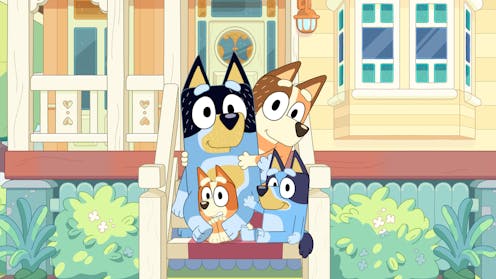
Dad (Bandit), Mum (Chilli), Bluey and Bingo. Ludo Studios

She’s six years old, lives in Brisbane and might just be one of the best resilience coaches on television.

We’re talking about Bluey, the animated Aussie pup whose adventures have captured the hearts of families around the world.

But as our new study reveals, Bluey isn’t just entertaining kids, she’s modelling how to to deal with life’s ups and downs.

Why is resilience so important?

Resilience isn’t just about “toughing it out”. It’s the ability to cope with challenges, adapt to setbacks and recover from difficulties. It’s a vital part of healthy child development.

Research shows resilience helps children manage stress, regulate their emotions, build better relationships, and even perform better at school. Without it, children may be more vulnerable to anxiety, depression and poor coping skills later in life.

Children today face growing mental health challenges, including around anxiety and emotional dysregulation. For example, a 2023 national resilience survey of almost 140,000 students found more than one in four primary and one in three secondary students reported high levels of psychological distress.

Research shows the earlier we support resilience-building, the better. Early interventions help build healthy coping skills before negative patterns take hold.

How TV can help

Storytelling in films, books and TV can show children how to navigate challenges – not through lectures, but by modelling behaviours like emotional regulation, problem-solving and empathy.

Animal characters in storytelling also offer valuable learning opportunities for children, who are naturally drawn to animals.

Bluey first aired in 2018. It has since become Australia’s most successful children’s program, with billions of views worldwide.

It is known for its realistic portrayal of young family life. Yet until now, no one had systematically examined how it – or any kid’s TV show – presents resilience on screen.

So we watched all 150 Bluey episodes

In our study, we analysed every episode of Bluey from seasons one to three. The 150 episodes added up to 18 hours of Bluey, Bingo, Chilli, Bandit and their friends.

For each episode, we looked closely at the storyline, characters and themes, identifying moments where a character faced a challenge and showed a resilient response.

To guide our analysis, we used the Grotberg Resilience Framework. This is a widely recognised model in psychology that breaks resilience into three key elements.

1. I have: involving the support systems around a child, such as family, friends, and community role models they can rely on.

2. I can: involving practical coping skills, like solving problems, managing emotions and asking for help when needed.

3. I am: involving a child’s inner strengths like confidence, optimism, emotional regulation and a sense of self worth.

‘It’s out of our hands’

Our research found nearly half of all episodes (73 out of 150) included a clear resilience message as either a primary or secondary theme.

Nearly two-thirds of the resilience moments were facilitated by a parent — most often Bluey’s mum. This fits with the “I have” category of resilience, which highlights how children draw strength from caring adults when things get tough.

For example in The Show (season two episode 19), Bingo accidentally drops a breakfast tray and bursts into tears. Mum gently models emotional coaching explaining her coping process: “I have a little cry, I pick myself up, dust myself off, and keep going.” Research shows that when caregivers model how to acknowledge distress, express feelings, and then recover with calm, children gradually learn to manage negative emotions effectively.

Later in the episode, Bingo repeats those exact words when things go wrong again.

‘Well, that was fun’

Bluey and her sister also frequently demonstrate practical coping skills on their own.

In Keepy Uppy (season one, episode three), the final balloon in a game pops. The kids pause, take it in, and smile. “Well, that was fun,” they say.

In a single moment, we see disappointment, emotional regulation, and reframing – the core of the “I can” category.

Everyday moments, powerful messages

We also see characters overcoming challenges with their own inner strength. In Seesaw (season two, episode 26) Pom Pom shows determination and self-confidence to get to the top of the seesaw and save her friends, in an example of “I am”. As she declares, “Pomeranians are a small but hardy breed”.

We found Bluey touches on almost all of the core elements of resilience: trusting relationships, emotional communication, problem-solving, self-regulation, empathy and more.

In Sheepdog (season three, episode 11), mum Chilli tells her family she needs “20 minutes” of alone time. Bluey is worried she’s done something wrong. Later, during play, Bluey gently echoes her mum’s words to a toy: “It’s hard work looking after you. I just need 20 minutes.”

That simple moment models self-care and perspective-taking as well as empathy. For kids, learning that grown-ups need rest too is a powerful message.

How to watch Bluey with your kids

Of course, no screen can replace real relationships. But when parents watch shows like Bluey with their kids, they become powerful teaching tools.

So the next time your child wants to watch an episode for the tenth time, don’t feel guilty – join them. When parents watch too, those moments become conversation starters. For example, “What do you think Bluey felt then?”, “Have you ever felt like that?” or “What would you do in that situation?”

Talking about what kids see on screen can help them reflect, process, and build the skills they need to cope, adapt and grow.


CQUniversity student Kelly Bohl and co-host of Bluey podcast Gotta Be Done Mary Bolling contributed to the original research on which this article is based.

The Conversation

Bradley Smith does not work for, consult, own shares in or receive funding from any company or organisation that would benefit from this article, and has disclosed no relevant affiliations beyond their academic appointment.

ref. Researchers watched 150 episodes of Bluey – they found it can teach kids about resilience for real life – https://theconversation.com/researchers-watched-150-episodes-of-bluey-they-found-it-can-teach-kids-about-resilience-for-real-life-262202

Why do I feel so emotional when I listen to music from my teenage years?

Source: The Conversation – Global Perspectives – By Sandra Garrido, NHMRC-ARC Dementia Research Development Fellow, Western Sydney University

stockbusters/Getty Images

Deep in your memory, your brain has created a playlist of music from your teenage years. Even though life has moved on, hearing that music now likely still brings up some really powerful emotions.

Why?

Well, as with anything to do with the brain and with emotions, it’s hard to say for sure. But it’s likely a bit to do with evolution, and a bit to do with some key neurological changes that occur in the teenage years.

Imagine the world of a prehistoric teenager

Changing hormones supercharge the limbic system, which is the emotional centre of the brain. Teens become emotionally sensitive and susceptible to intense mood swings.

At the same time, we start to become less reliant on our parents.

This increasing independence accelerates the need to forge close relationships with peers. We need to learn very quickly how to interpret the emotions of others, and develop strong memories of things that are safe or unsafe.

Imagine the world of a prehistoric teenager. No longer a child wholly dependent on their parents, the adolescent feels an instinctive drive to explore new territory and strike out on their own.

Away from their family’s protection, survival now hinges on bonds with peers.

Going it alone is fraught with danger. Belonging to a group becomes a matter of life or death.

The teen finds a new pack, which communicates crucial information to each other using body language or non-linguistic verbalisations. Variations in the voice pitch or the speed of speech signal urgency or excitement.

Strong emotional reactions – the fear of danger, the thrill of a successful hunt, an intense connection with a potential mate – ensure memories about what to fear and what to seek are deeply carved into this teenage brain.

The stronger the emotion, the deeper the memory.

The brains of modern teens aren’t much different

In today’s world, we seldom need to hunt for food or protect ourselves from predators trying to eat us. But modern teenage brains are still wired to react quickly and instinctively.

Modern teens will still strike out away from the safety of the family circle, learning to navigate the treacherous world of adolescent relationships.

As we all know – often from searingly painful personal experience – teenage brains are keenly attuned to non-linguistic social cues that signal acceptance or rejection by the pack.

We are evolutionarily wired to lay down deep memories in our brains of events that have had a strong emotional impact on us.

A young womand and a young man kiss.
The teen years are a time of many firsts.
Photo by cottonbro studio/Pexels

So what’s this got to do with teen music tastes?

Music can convey linguistic and non-linguistic emotion.

Lyrics can tell a story that makes us feel heard and understood. They might signal we belong and are connected – with the artist, with other fans, and with broader human experiences such as love, lust or loneliness.

The melody and beat communicate emotion too.

In fact, some scholars believe the very reason music exists is related to the non-linguistic elements of speech that our prehistoric ancestors may have used to communicate before spoken language developed.

Our brains may respond to these signals in music the way our prehistoric ancestors responded to expressions of urgency, excitement or peace from other members of the tribe.

The way music communicates and evokes emotion is what makes it so important in life, particularly during the teenage years.

Teenagers may spend several hours per day listening to music, particularly when going through periods of psychological distress.

During this period – when emotional experiences and the learning that comes from them are so crucial to learning to survive – music becomes a powerful tool.

It can act as a simulator for practising emotional skills, a guide to navigating emotional ups and downs and a key to finding connection and belonging.

In other words, the music that we hear in our teenage years becomes closely intertwined with the strong emotions we experience at that time.

An older man listens to music with a wistful look on his face.
Listening to the music of one’s youth can be bittersweet.
kupicoo/Getty Images

A time of many firsts

The music of your teens was likely the backdrop to your first kiss, the anthem you sang along to with friends, and a source of comfort when your heart was first broken.

Evolution has programmed you to feel every moment of your teenage years profoundly, so you can learn important lessons about how to survive, become independent and connect with others.

At the same time, music may be tapping into an ancient, pre-language part of our brains.

The music that accompanied high-stakes moments of your youth is forever linked to the powerful emotions you experienced then, and deeply embedded in the brain.

That is why, for the rest of our lives, those songs act as a kind of musical key to a neurological time capsule.

The Conversation

Sandra Garrido does not work for, consult, own shares in or receive funding from any company or organisation that would benefit from this article, and has disclosed no relevant affiliations beyond their academic appointment.

ref. Why do I feel so emotional when I listen to music from my teenage years? – https://theconversation.com/why-do-i-feel-so-emotional-when-i-listen-to-music-from-my-teenage-years-260819

World Athletics’ mandatory genetic test for women athletes is misguided. I should know – I discovered the relevant gene in 1990

Source: The Conversation – Global Perspectives – By Andrew Sinclair, Deputy Director of the Murdoch Childrens Research Institute, Murdoch Children’s Research Institute

World Athletics president Sebastian Coe recently announced a new rule for women athletes, requiring mandatory genetic tests to verify their biological sex.

This test must be done if athletes wish to compete in September’s World Athletics Championships in Tokyo.

World Athletics has said all athletes competing as women must have an SRY gene test to identify whether a male Y chromosome is present.

Any athlete whose test shows the presence of the SRY gene will be banned from competing in the women’s category in elite events.

Coe said the decision was made to ensure “the integrity of women’s sport” with World Athletics asserting:

The SRY gene is a reliable proxy for determining biological sex.

I argue the science does not support this overly simplistic assertion.

I should know, because I discovered the SRY gene on the human Y chromosome in 1990. For 35 years I have been researching it and other genes required for testis development.

A brief primer on testes and ovary development

If a human embryo has XY chromosomes, then at six weeks of development the SRY gene on the Y chromosome triggers a cascade of events involving some 30 different genes that lead to the formation of testes.

In simplest terms, the testes then produce hormones including testosterone, leading to male development.

However, if an embryo has XX chromosomes, a whole different group of genes come into play, ovaries form and the hormones produced result in a female.

We know making testes or ovaries requires a complex network of many interacting genes and proteins.

Some genes promote testis development while others promote ovary development.

Other genes either suppress ovary formation or antagonise testis formation.

Even once ovaries or testes are fully formed, we require other genes to maintain them. These genes don’t always function as expected, affecting the development of these organs.

How does this relate to sex testing of elite women athletes?

Changes or variants in the many genes that regulate the development of a testis or ovary can result in sex reversal or a non-functioning testis or ovary.

What do I mean by this?

If there is a change in the SRY gene so it does not function as usual, then a person can fail to develop testes and be biologically female. Yet they carry XY chromosomes and under the World Athletics tests they would be excluded from competition.

Other XY individuals may have a functioning SRY gene but are female – with breasts and female genitalia, for example – but have internal testes.

Importantly, the cells of these people are physically unable to respond to the testosterone produced by these testes. Yet, they would receive positive SRY tests and be excluded from competition.

At the 1996 Olympic Games in Atlanta, eight of 3,387 women athletes had positive test results for a Y chromosome. Of these, seven were resistant to testosterone.

The SRY test isn’t cut-and-dried

World Athletics asserts the SRY gene is a reliable proxy for determining biological sex. But biological sex is much more complex, with chromosomal, gonadal (testis/ovary), hormonal and secondary sex characteristics all playing a role.

Using SRY to establish biological sex is wrong because all it tells you is whether or not the gene is present.

It does not tell you how SRY is functioning, whether a testis has formed, whether testosterone is produced and, if so, whether it can be used by the body.

Other problems with the SRY testing process

World Athletics is recommending all women athletes take a cheek swab or blood sample to test for the presence of SRY.

Normally, the sample would be sent to a lab that would extract DNA and look for the presence of the SRY gene.

This may be easy enough in wealthy countries, but what is going to happen in poorer nations without these facilities?

It is worth noting these tests are sensitive. If a male lab technician conducts the test he can inadvertently contaminate it with a single skin cell and produce a false positive SRY result.

No guidance is given on how to conduct the test to reduce the risk of false results.

Nor does World Athletics recognise the impacts a positive test result would have on a person, which can be more profound than exclusion from sport alone.

There was no mention from World Athletics that appropriate genetic counselling should be provided, which is considered necessary prior to genetic testing and challenging to access in many lower- and middle-income countries.

I, along with many other experts, persuaded the International Olympic Committee to drop the use of SRY for sex testing for the 2000 Sydney Olympics.

It is therefore very surprising that, 25 years later, there is a misguided effort to bring this test back.

Given all the problems outlined above, the SRY gene should not be used to exclude women athletes from competition.

The Conversation

Andrew Sinclair receives funding from NHMRC

ref. World Athletics’ mandatory genetic test for women athletes is misguided. I should know – I discovered the relevant gene in 1990 – https://theconversation.com/world-athletics-mandatory-genetic-test-for-women-athletes-is-misguided-i-should-know-i-discovered-the-relevant-gene-in-1990-262367

Research: Endemic anoa and babirusa show surprising resilience on small islands

Source: The Conversation – Indonesia – By Sabhrina Gita Aninta, Postdoctoral research fellow, University of Copenhagen

● Small-island populations are thriving in their small numbers.

● Small islands can be natural refugia for endangered megafauna.

● Protecting ecosystems on small islands is crucial for national conservation plans.


Animal populations on small islands are often thought to be unlikely to survive in the long term. Continued exploitation of small islands—such as mining in Raja Ampat, West Papua—poses a serious threat to local wildlife.

Governments often overlook biodiversity in these island ecosystems. Some small Indonesian islands are even listed for sale on websites like Private Island.

However, our new study in the Proceedings of the National Academy of Sciences found that endemic large mammals on small islands may, in fact, be thriving.

This finding is based on the genomic sequencing of two endemic species from the Wallacea region: the anoa (a dwarf buffalo) and the babirusa (a pig with upward-curving tusks that resemble antlers).

Although their populations are small and genetically less diverse, anoa and babirusa appear to thrive better on smaller islands than on larger ones. This could help them survive in the long term—contrary to previous assumptions.

In other words, small islands can serve as natural refuges for their native biodiversity—provided their ecosystems remain undisturbed. Thus, protecting these ecosystems is essential for their survival.

Resilient small population of large mammals

In theory, large-bodied mammals on small islands are prone to extinction due to limited mating opportunities. Restricted movement can lead to inbreeding, which reduces genetic diversity and jeopardises long-term health.

However, that may not be the full story. Through genomic analysis, we explored the population history of the anoa and babirusa to uncover what has happened over the past few hundred generations.

We sequenced the whole genomes of 67 anoa and 46 babirusa from across the Wallacea islands, including the large island of Sulawesi (in the north and southeast regions) and nearby smaller islands such as Buton and Togean.

We found that anoa and babirusa on Buton and Togean had lower genome-wide diversity and higher levels of inbreeding. Surprisingly, however, these populations were more efficient at purging harmful mutations compared to those on the larger island.

This suggests that small-island populations, having been isolated for long periods, have undergone natural genetic filtering—leaving individuals that are genetically “safe” and capable of thriving.

In contrast, populations on the larger Sulawesi Island carry a higher “genetic load.” This is likely a consequence of external, human disturbances such as forest degradation, mining, hunting, and poaching, which have fragmented their habitats and populations. As a result, these groups may be more genetically compromised.

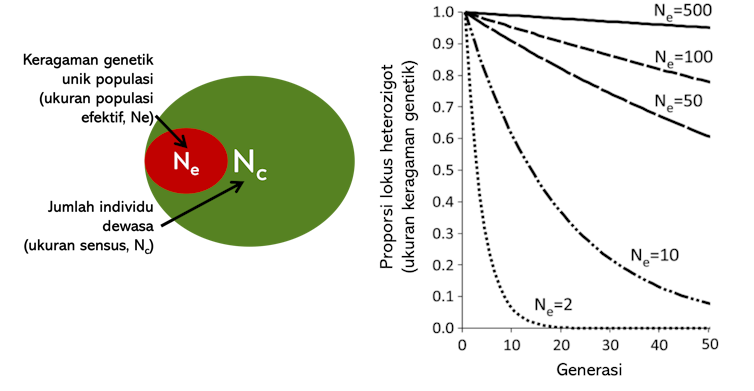
According to the Kunming-Montreal Global Biodiversity Framework (2022), maintaining a sufficient effective population size (Ne) is crucial for long-term species survival. To avoid the risk of extinction, an Ne of at least 500—or roughly 5,000 individuals in total census size—is recommended.

Illustration of time to extinction based on effective popualtion size (Ne), reproduced from Kunming-Montreal Global Biodiversity Framework metadata page for Target A4: https://www.gbf-indicators.org/metadata/headline/A-4. The smaller Ne, the faster the rate of genetic diversity loss. The left illustration showed not all individual in census (Nc) provide genetic contributions.
CC BY-SA

Interestingly, our findings show that even small populations can remain viable over the long term—so long as they are protected from intense external pressures such as habitat loss, hunting, or disease outbreaks.

Therefore, before conducting any animal translocation to boost genetic diversity, it’s critical to carefully assess the ecological and genetic context of each population.


Baca juga:
Membangun ‘big data’ keanekaragaman hayati kita


Small islands as refugia

Our study shows that mammals on small islands can be genetically resilient, even with small population sizes.

Unfortunately, small-island habitats are often overlooked in national development plans.

While conservation of small islands is legally regulated, the reality on the ground is starkly different. Indonesia’s outermost islands have frequently been allocated for resource exploitation—often without adequate protection of their ecosystems.

Wallacea is just one example among many island groups that act as a natural laboratory for evolution. These islands have nurtured unique species for millions of years—species that are irreplaceable once lost.

As an archipelagic nation, Indonesia must prioritise biodiversity conservation by putting greater focus on habitat protection in small islands.

These islands can serve as natural refuges for endemic species—offering a more cost-effective and ecologically sound alternative to artificial captive breeding programmes.

The Conversation

This research is a collaboration between researchers from Queen Mary University of London (QMUL), Ludwig Maximilian Munich (LMU) Germany, and Universitas Indonesia, with the support of joint funding from NERC-Ristekdikti. Sabhrina Gita Aninta were funded by QMUL for her doctoral study that resulted in this research.

ref. Research: Endemic anoa and babirusa show surprising resilience on small islands – https://theconversation.com/research-endemic-anoa-and-babirusa-show-surprising-resilience-on-small-islands-261063

Ubuntu matters: rural South Africans believe community care should go hand-in-hand with development

Source: The Conversation – Africa – By Simphiwe Gongqa, PhD candidate, Rhodes University

The failure of many development initiatives has led some scholars, especially those associated with the post-development and decolonial schools of thought, to call for alternatives to development.

The idea of development is a very influential way of explaining inequalities between different parts of the world. Most people think of some parts of the world as ‘developed’ and others as ‘developing’ and believe that those in the ‘developing’ world need to follow in the footsteps of those ahead of them on a universal path to development.

However, critics of development reject this way of thinking. They believe that development damages the environment and is a form of cultural imperialism and that people should rather look to Indigenous concepts and practices to find alternative ways to live a good life. The African concept of Ubuntu is often mentioned.

This term can be explained with reference to the isiZulu saying ‘umuntu ngumuntu ngabantu’ which means ‘a person is a person through other people’. It entails an ethics of care, compassion and cooperation.

Concepts like Ubuntu are often contrasted with the idea of development. Advocates of alternatives believe that people in the Global South can draw on these concepts, rather than the idea of development, in order to improve their lives.

We both study development and are interested in how communities in Africa understand development, including the question of whether or not people in Africa are pursuing alternatives to development.

Based on our work, we contributed a chapter to a recent book which explores the question of alternatives to development in the Global South. Our contribution to this book looks specifically at the question of how South Africans understand development and Ubuntu and whether they see Ubuntu as a possible alternative to development.

We spoke to people living in four marginalised communities in KwaZulu-Natal and the Eastern Cape. Such communities would be regarded by mainstream development thinkers as in need of development. These communities were also chosen because the people living there would be likely to have some understanding of the concept of Ubuntu as residents are isiZulu or isiXhosa speakers, two of the sociolinguistic groups commonly associated with the idea of Ubuntu.

We found that people in these communities value both development and Ubuntu and see the two concepts as related to each other, but not necessarily in the way that either development or post-development theorists imagine. This study supports our previous research suggesting that people continue to value development.

Respondents’ views on development and Ubuntu

There were some differences in the way in which the communities spoke about development and Ubuntu. The KwaZulu-Natal communities placed emphasis on infrastructure, education and health, when asked to define how they understand development.

Typical responses of KwaZulu-Natal residents to the question ‘What is development?’ included:

  • We want development … in order to have roads, [government housing], clinics and farming initiatives.

  • When we say that a place is developed, we see schools, libraries, roads, churches and clinics.

  • Things like water, houses [government housing], electricity, and sewerage systems.

  • There should be libraries, schools, houses [government housing], water, electricity, sewerage systems and hospitals.

In the Eastern Cape, where only rural respondents were interviewed, residents mentioned infrastructure (roads, houses and schools) less often than those in KwaZulu-Natal and placed greater emphasis on income-generation opportunities, employment opportunities and support for farming. Some of the responses are given below:

  • Development means the creation of jobs to me.

  • Development means building. For example, building creches in the village, planting crops and creating jobs.

  • Development is growth. For example, rearing chickens and other animals for you to grow financially.

When defining Ubuntu, respondents emphasised care, compassion, cooperation, helpfulness, mutual respect, harmony, consideration, dignity and a willingness to share.

Here are some of the typical responses given when people were asked to define Ubuntu:

It is being able to live with one another, you see. A person is a person because of other people kind of thing, and you must get along with all people and there shouldn’t be a person that you hate. You must be able to help another person in need if you can and there must be harmony with everyone.
Ubuntu is about unity and empathy and love, yes. If we speak of Ubuntu, we speak of thinking for each other, and helping each other.

When asked about the relationship between Ubuntu and development, most respondents suggested that Ubuntu and development can and should work together.

Respondents commonly argued that development could best be advanced if people showed Ubuntu, which was presented as an ethic of care and cooperation. Consider the following comment:

[Development and Ubuntu] go hand in hand because when I have something, I have to pull up a person that I see who is struggling and place them at an equal footing with me or maybe higher than me. I don’t look down on them because they are struggling, and I shouldn’t watch them walk to town everyday whilst I have a car that can help them because they are disadvantaged. If I have food, and a fellow person is hungry; I must give them food for free, yes, that is Ubuntu.

The strong sense from our interviews is that people want development (understood as the provision of basic services and the general improvement of their lives) and they want it to be brought about in a way that is characterised by an ethics of Ubuntu (understood as an ethic of care and cooperation).

Advocates of alternatives need to be cautious

Our research suggests that at least some Global South communities engage with concepts like Ubuntu and development in ways that do not support claims that people should abandon development and live according to Indigenous concepts and practices to have a better life. Rather than viewing Ubuntu as an alternative to development, the people we interviewed suggest that development and Ubuntu are complementary.

When seeking to articulate alternatives, it is important to be attentive to what people mean by development and Ubuntu so that activists and scholars from different communities can work together to build better lives for all.

We acknowledge the role of Nhlanhla Mkhutle who conducted the KwaZulu-Natal fieldwork for this study and who co-authored the chapter upon which this article is based.

The Conversation

The authors do not work for, consult, own shares in or receive funding from any company or organisation that would benefit from this article, and have disclosed no relevant affiliations beyond their academic appointment.

ref. Ubuntu matters: rural South Africans believe community care should go hand-in-hand with development – https://theconversation.com/ubuntu-matters-rural-south-africans-believe-community-care-should-go-hand-in-hand-with-development-259422

Drones, disinformation and guns-for-hire are reshaping conflict in Africa: new book tracks the trends

Source: The Conversation – Africa (2) – By Alessandro Arduino, Affiliate Lecturer, King’s College London

Alessandro Arduino has researched Africa’s security affairs with a particular focus on the use of private military companies and other guns-for-hire across the continent. In his latest book, Money for Mayhem, Arduino examines how military privatisation intersects with international power dynamics. Drawing on fieldwork, interviews and firsthand data, he tracks actors from Russia, China and the Middle East to explore how they profit from instability across Africa.

What war trends did you identify in your book?

In Money for Mayhem, I chart the rise of mercenaries, private military companies and hackers-for-hire, alongside emerging technologies like armed drones.

Nowhere does this rise ignite more readily than in Africa. The continent is flush with abundant natural resources that offer lucrative gains, but is hobbled by weak post-coup states desperate for foreign support. The continent has also been fractured by power vacuums, creating ineffective or weak regional and continental institutions that enable militant networks.

As a result, mercenaries and contractors have returned to the central stage in Africa. They were once the not-so-hidden hand in post-colonial civil wars, such as in Angola in the 1970s and Sierra Leone in the mid-1990s where highly trained mercenaries profited from the conflict.

Today, guns for hire wield profound geopolitical influence.

What did you find out about the key players?

Take Russia’s Wagner Group. It continues to be active from Libya to Sudan. The group is known for deploying paramilitary forces, conducting disinformation campaigns and supporting powerful political figures from Mali to the Central African Republic. Following its leader’s death in 2023, the Wagner Group shifted its operations. Rebranded as the Africa Corps,the group serves as a key instrument of Moscow’s influence on the continent.

Then there are Turkish private military outfits operating from Tripoli to Mogadishu. Turkey’s private military companies are fast becoming a key instrument in President Recep Erdogan’s foreign policy. What sets these companies apart is their ability to pair boots on the ground with Turkey’s battle-proven armed drones. This fusion of a rentable army and an off-the-shelf air force could become a powerful export, serving Ankara’s political and economic ambitions in Africa.

Then there are the Chinese private security companies, protecting Chinese investments and citizens in Africa. Their rise mirrors Beijing’s deepening footprint, where it is pouring billions into infrastructure and mining projects. In volatile nations like the Democratic Republic of Congo, Sudan and South Sudan, weak and unreliable local security forces have created a vacuum that’s being filled by Chinese security contractors.

Through the ages, the mercenary’s paradox has endured: despised yet indispensable. Their business thrives on perpetual chaos. Every ceasefire threatens their livelihood.

This dynamic was evident after Muammar Gaddafi’s fall in 2011 in Libya. Both the Government of National Accord in Tripoli and the rival Libyan National Army in the east turned to international mercenaries such as the Wagner Group and fighters from sub-Saharan Africa. This heavy dependence on foreign fighters obstructs national reconciliation.

The Wagner tale is instructive. Once a Kremlin proxy in resource-rich Africa, the group amassed its own power. It was dismantled when it outlived its usefulness. The dispatch of Russian generals to negotiate Wagner’s fate in 2023 from Libya to Niger was a lesson in power: the puppeteer remains firmly in control.

Russia’s foreign and defence ministries moved swiftly to reassure Middle Eastern and African partners that operations would continue uninterrupted after the death of Wagner’s leader. This signalled that unofficial Russian forces would maintain their presence on the ground.

What is happening that’s new?

The revolution in modern warfare is evident across Africa. Mercenaries, armed drones and AI-driven disinformation campaigns are redefining conflict. Today’s battlefields are evolving at such a dizzying pace that even seasoned military experts are routinely caught flatfooted.

The speed of change is unprecedented.

Drones, once the province of great powers, have become commonplace. Inexpensive, lethal, versatile and ever more autonomous, they patrol the skies daily, ushering in a remote-warfare era that upends ethical, strategic and tactical norms.

The cost of a suicide drone, for instance, typically runs into a few thousand US dollars. A battle tank averages US$3–4 million. Three such drones and a skilled pilot can destroy a single tank, dramatically shifting the cost-benefit equation on the modern battlefield.

Africa was an early proving ground: drones shaped the Libyan civil war. Since 2019, multiple incidents of precision air strikes conducted by unknown aircraft have occurred in apparent violation of a United Nations arms embargo.

In early 2025, drones served as an off-the-shelf air force in the bombing of Port Sudan. Explosions rocked the vital humanitarian gateway in Sudan’s ongoing civil war between the Sudanese Armed Forces and the paramilitary Rapid Support Forces.

Sudan’s army pinned these strikes on the Rapid Support Forces, highlighting the paramilitary group’s deadly embrace of drone warfare. Lacking a formal air force, drones offer the Rapid Support Forces a low-cost, high-lethality shortcut that delivers devastating blows while cloaking its operators in plausible deniability.

How else is the warfare landscape changing?

War is now being waged on other fronts as well.

Africa’s youthful population consumes information primarily via social media. This provides fertile ground for propaganda, disinformation and misinformation – amplified by artificial intelligence (AI) at minimal cost.

Deepfakes have burst onto the scene as a dire cybersecurity threat. AI-driven disinformation at an industrial scale is already a reality, magnifying hate speech and targeting the message to intended audiences with precision and at very low cost.

For example, TikTok’s own recommendation engine has already come under fire from African human rights groups for amplifying toxic rhetoric.

Already, false narratives thrive in Africa all on their own. AI’s true danger lies in its ability to turbocharge disinformation.

Governments recognise that defending the homeland no longer means guarding cables and servers alone. It also means safeguarding the integrity of information itself.

What needs to be done?

Based on my findings, I argue that the fractures today are tomorrow’s global crises. War has irrevocably changed, and its next phase is already upon us.

Marshalling global vigilance is a categorical imperative – or the world risks ceding control over violence. Building international consensus on already available enforcement mechanisms to regulate non-state armed actors is needed. There is also a need to strengthen global intelligence sharing to track the movements and influence of mercenaries across conflict zones.

The Conversation

Alessandro Arduino is an Associate Fellow at the Royal United Services Institute (RUSI)

ref. Drones, disinformation and guns-for-hire are reshaping conflict in Africa: new book tracks the trends – https://theconversation.com/drones-disinformation-and-guns-for-hire-are-reshaping-conflict-in-africa-new-book-tracks-the-trends-262256

Love in the age of WhatsApp – a philosopher explains how technology reduces the power of a relationship

Source: The Conversation – UK – By Tony Milligan, Research Fellow in the Philosophy of Ethics, King’s College London

antoniodiaz/Shutterstock

A sense of distance has always been part of romantic love. The experience of wanting to be with another person often requires separation, if only in the form of days apart for work and travel. Matters become more complicated, however, when that distance is mediated by technology – by dating app swipes, messaging on WhatsApp and FaceTime.

For myself, as a philosopher of love, there is no good reason to say that loving relationships of a mostly remote nature cannot endure – or that physical separation inevitably and eventually destroys love. Much of society’s collective understanding of love suggests this is simply not true. Longing for another human can continue at a distance, even if we want that distance to end.

That said, one of the most familiar uncertainties about romantic love is the fear that it is a drama played out within the self, and that the other person does not care in the same way. When technology mediates contact, this can strengthen familiar forms of scepticism about love – for example, about whether or not the other person is really who they seem to be. We want sincerity and depth of feeling. Not just a pleasing response.


Dating today can feel like a mix of endless swipes, red flags and shifting expectations. From decoding mixed signals to balancing independence with intimacy, relationships in your 20s and 30s come with unique challenges. Love IRL is the latest series from Quarter Life that explores it all.

These research-backed articles break down the complexities of modern love to help you build meaningful connections, no matter your relationship status.


If I am apart from my wife Suzanne for any length of time, I want our conversations over FaceTime and WhatsApp to be quite different from the interactions that might be possible with an AI girlfriend. I still want a real, tangible person at the other end of the technology, with whom I could share an embrace if only we were together.

In other words, our technologically mediated interactions do not stand alone – they are part of a life which is largely spent together. Location matters, and this is one of the aspects of love that accounts of the philosophy of love are generally bad at understanding (with the possible exception of some of the work on love by Japanese philosophers such as Nishida and Watsuji).

Two women holding hands and smiling
We expect our relationships to feel different in real life than they do digitally.
Anna Selle/Unsplash

I do not mention shared places at all in my own book on love. Yet they are central to being a couple. People do not typically just want to meet in some random location. We want to be together in a determinate series of places, including our homes. Too much technological mediation can undermine this sense of being somewhere together physically. Being together online is not the same.

Love and its limits

My thought then is not that technologically mediated love cannot endure, but that it becomes something second-rate if there is too much mediation and not enough actual being together in a shared physical place.

This is an unpopular thought for two reasons. First, it involves saying that Plato and a long line of western philosophers have been right: some kinds of love really are better than others. “Better” in the simple and obvious sense that they are geared towards meeting our needs, smoothing out the bad parts of life, and making sure there are also enough high points.

Scientists can see this at a neurophysiological level. Some kinds of love activate the brain’s feel-good attachment and reward networks more than others. Romantic love and parental love activate more of these networks than love for pets, though the latter does trigger a genuine response.

Second, it involves saying that love is not infinitely plastic – it cannot be just anything we want it to be. Romantic love has a social history reaching back at least a couple of thousand years and perhaps a good deal longer. Our few surviving remnants of prehistoric tales deal with loss and longing, played out across the night sky.

Yet love has an even larger history which is shared with other social animals. It is a mark of our creatureliness, our physicality as a special kind of animal. We are not ghosts flitting across the glaciers, embracing only in cyberspace.

Woman sad holding up a piece of paper that says 'I miss you' so it can be seen through her webcam.
The fact we are human sets limits on the kinds of love that can work well.
Drazen Zigic/shutterstock

Our heavily constructed romantic ideas about what we can mean to one another still depend upon a solid evolutionary foundation of wanting to be somewhere familiar with a special someone – and grieving when this is no longer possible. Dogs do it, chimps do it, and so do we.

And so, if anyone wants to say that a largely remote and mediated relationship can be just as good as being together in shared places, or that a romantic relationship with a holographic anime character can be just as good as a romantic relationship with a real person, then my response is “not for beings like us”.

The fact we are human sets limits to the kinds of love that can work well. As I explore in my research, love is not a democracy. All loves are not equal. There are limits to the ways in which technologies can mediate (or even take the place of) romantic relationships of the most fulfilling sorts.

None of which will stop Suzanne from texting me, or me texting Suzanne, with a suitable range of emojis. And none of which will stop us from video-meeting at every opportunity when we are separated by an ocean or two.

But as we do these things, the promise is always there of a return to the places where we exist physically together. Using technologies when separated by great distances is not a substitute for sharing these places. It is a way of saying that we are coming home.


This article features references to books that have been included for editorial reasons, and may contain links to bookshop.org. If you click on one of the links and go on to buy something from bookshop.org The Conversation UK may earn a commission.


Get your news from actual experts, straight to your inbox. Sign up to our daily newsletter to receive all The Conversation UK’s latest coverage of news and research, from politics and business to the arts and sciences.

The Conversation

Tony Milligan does not work for, consult, own shares in or receive funding from any company or organisation that would benefit from this article, and has disclosed no relevant affiliations beyond their academic appointment.

ref. Love in the age of WhatsApp – a philosopher explains how technology reduces the power of a relationship – https://theconversation.com/love-in-the-age-of-whatsapp-a-philosopher-explains-how-technology-reduces-the-power-of-a-relationship-254342